Part 1 of 3
June 3rd 2023
(Note : I’ve divided the blogs for Cape York into 3 parts, otherwise one would be far too long. So look out for parts 2 & 3 soon. I now have internet, we’re back in Cairns.)
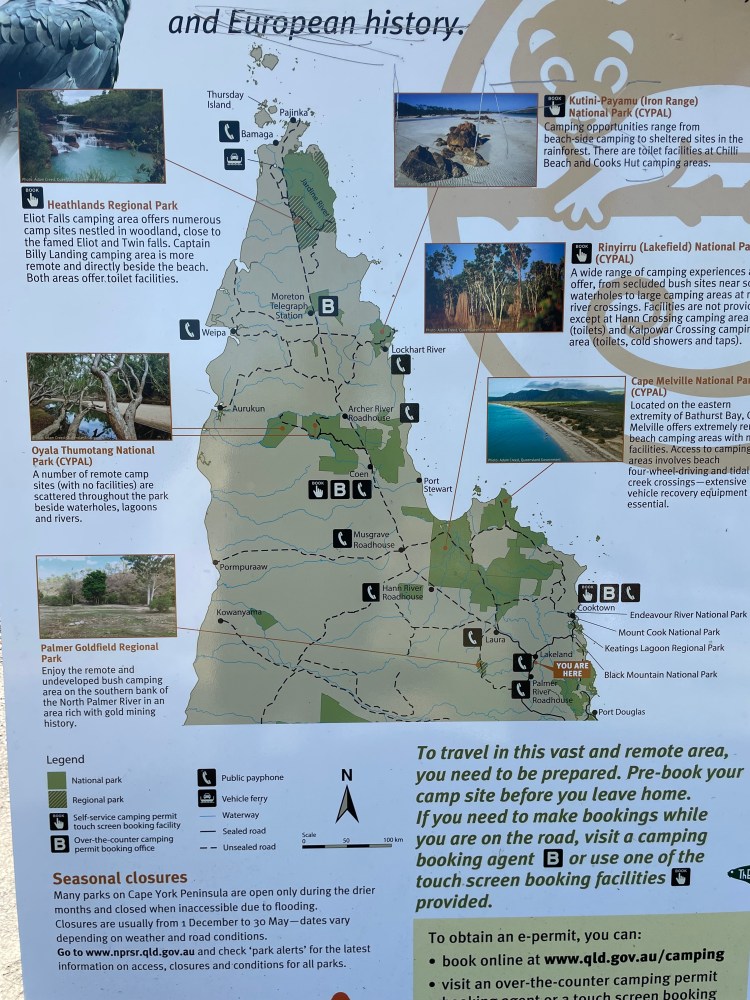
I am starting to write this blog from a pretty remote spot, nearly at the top of Queensland, just 100km short of the tip. It is mild, warm and extremely pleasant. We’re camping at Eliot Falls in the Jardine National Park, Heathlands Regional Park you can see on the map above. The travelling to get here has been memorable, but I won’t get ahead of myself, let’s go back to when we left Wonga Beach campsite, back on May 18th.
Accessing the Daintree was an awesome thing to do, maybe one day I’ll come back and stay longer to soak in the ambience of the lush tropical natural environment. Last of the wet tropics. But this trip keeps pushing us onwards and upwards.
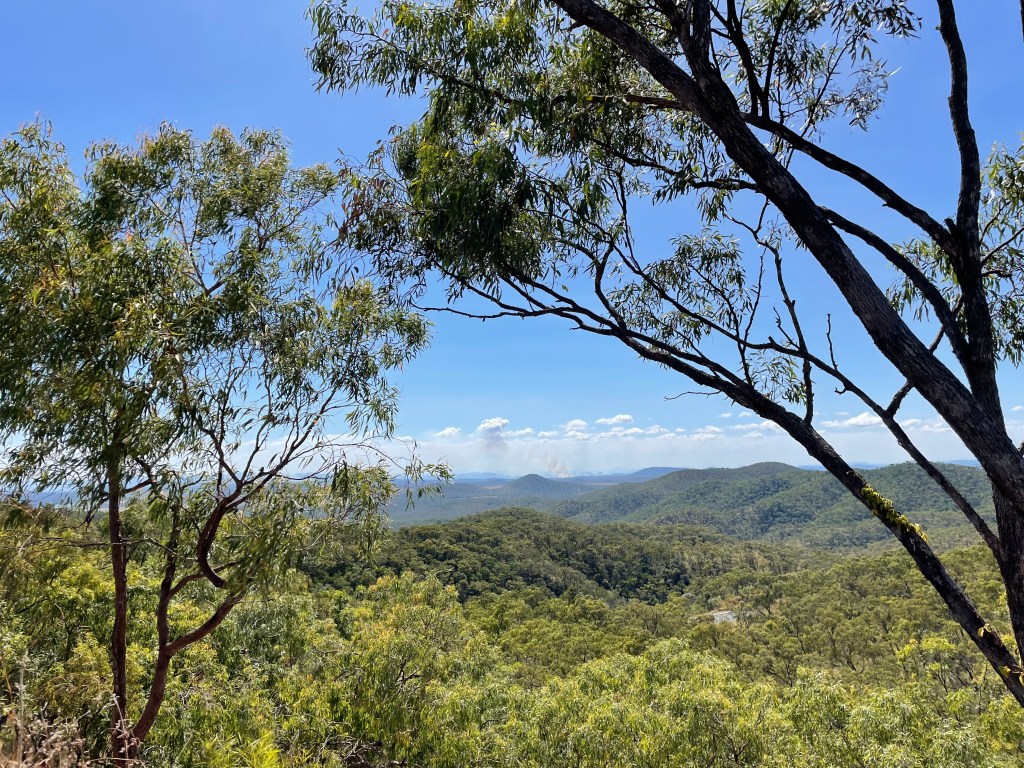
The drive to Cooktown was through some very hilly country, the most northern spur of the Great Dividing Range. Farms with bananas stretching for acres was a common site as well as paddocks with Brahmin cows of all colours and sizes, many with enormous horns. There was a fair amount of smoke in the air due to the slow burning grasses. The grasses themselves were so pretty, tall seed heads of pinks, burgundy, oranges with white trunked gums overhead with bushy crowns of leaves. You felt there had to have been a lot of water around to make such lush growth.

Coming into Cooktown mid afternoon, we settled for a delightful caravan park just near the centre of town. After a quick setup we explored the main street and foreshore area and stocked up at the IGA.
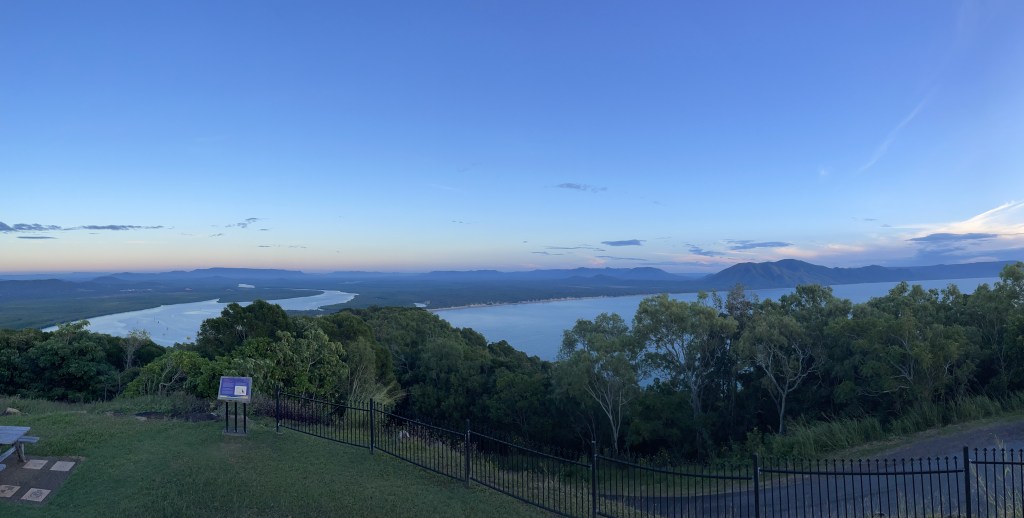
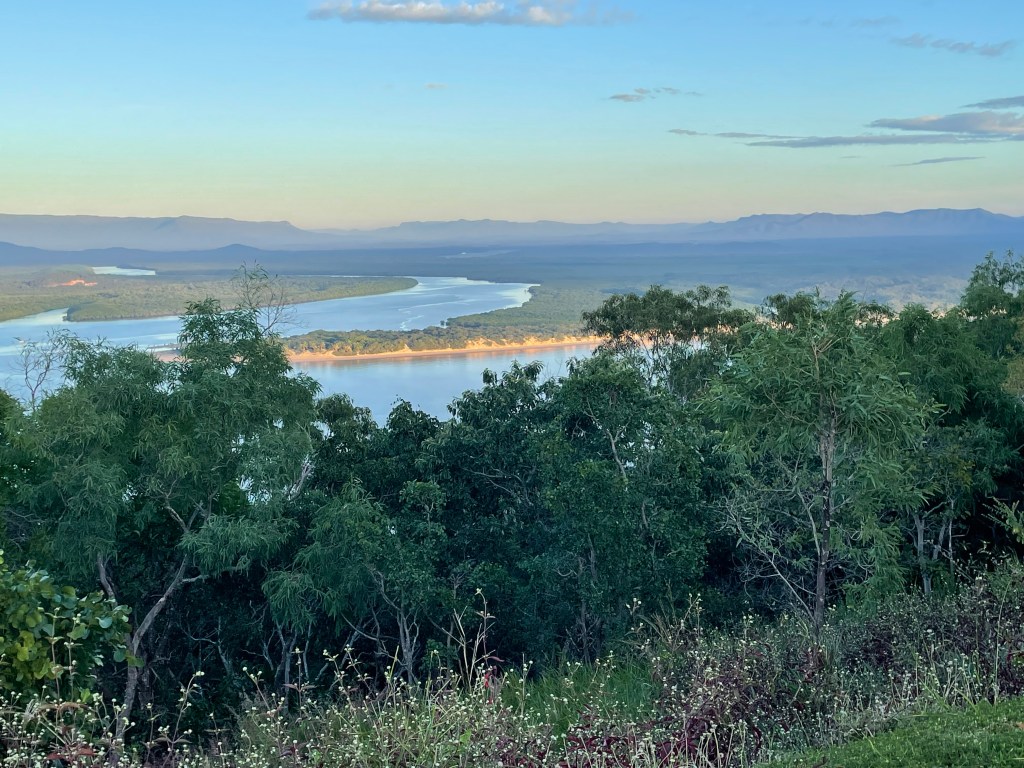
In the morning we rose early to see sunrise from Grassy Hill where the lighthouse is. This Hill is where Cook climbed to survey the land, while his men were mapping the coast and mending his marooned boat. He decided it was a good place for a brief visit, although the local xxx people already knew this was a perfect place to be. The Cooktown museum was particularly interesting, housed in what was the Convent school, built in 1889. The mix of displays, from a very comprehensive Indigenous history, to the gold mining history, Chinese history, to Cook’s arrival history and the convent’s history, meant that we staggered out of there overwhelmed by knowledge that probably most of us can’t remember now. My take away was the video of a local tribal woman explaining how the lore of the area decreed that no blood be lost in fighting of any sort and because of that Cook and his men survived…a very powerful comment.
I love going to Botanic gardens, and in Cooktown, there is one of the oldest in Australia, established in 1878. There were some very impressive coastal paperbarks amongst some other big trees I couldn’t recognise. One labelled tree was a massive Teak, showing the link to the Orient or perhaps the Indian sub-continent. Strolling amongst massive sentinels from the past makes us feel grateful to those who planted the trees and those who have tended them for so long. There was a Botanical art exhibition in Nature’s Powerhouse, a gallery located in the gardens. There were etchings from specimens of plants collected by Banks and Solander on their voyage, as well as some framed pressed leaves from Banks’ collection, out of storage from the Melbourne Herbarium.
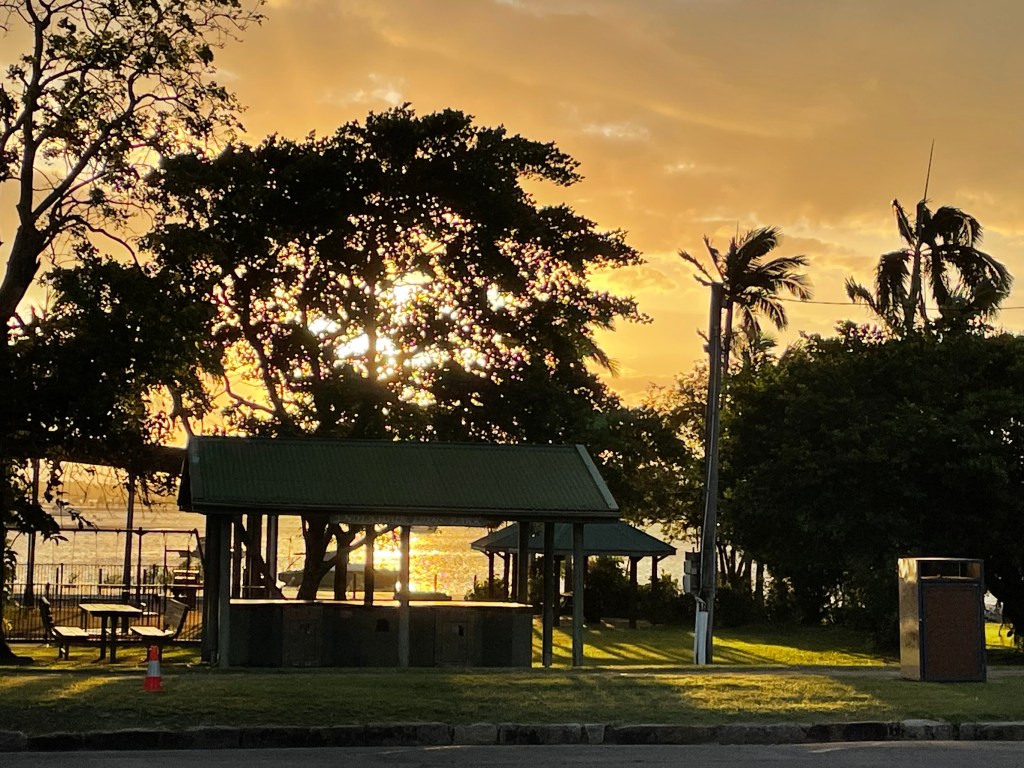
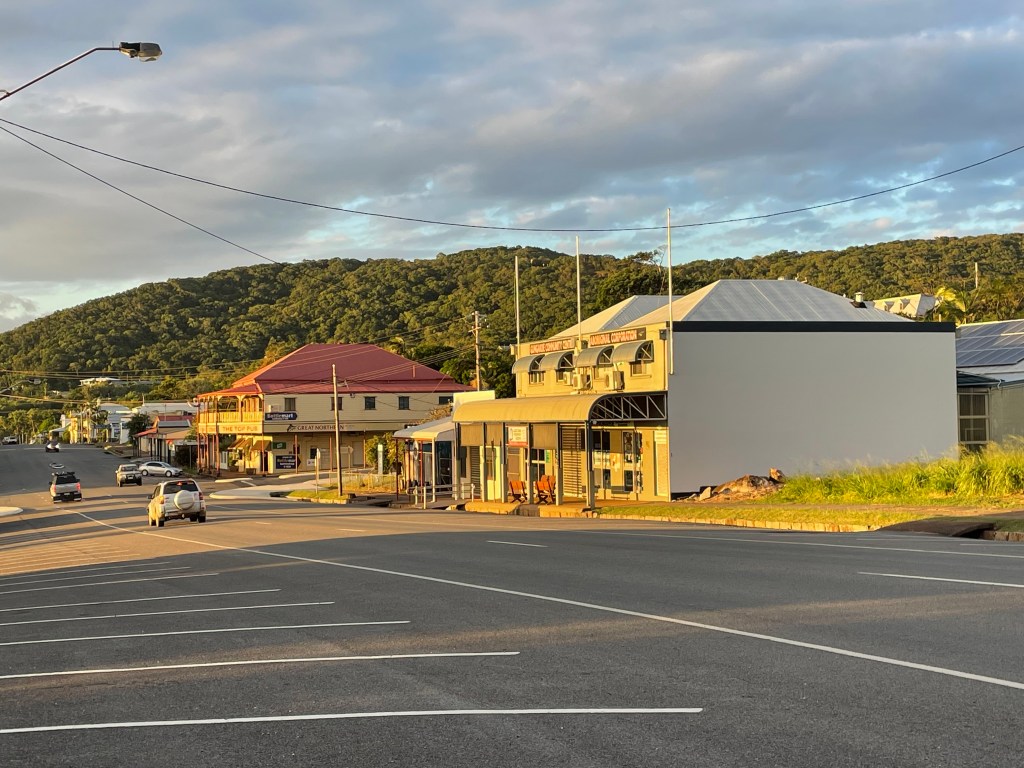
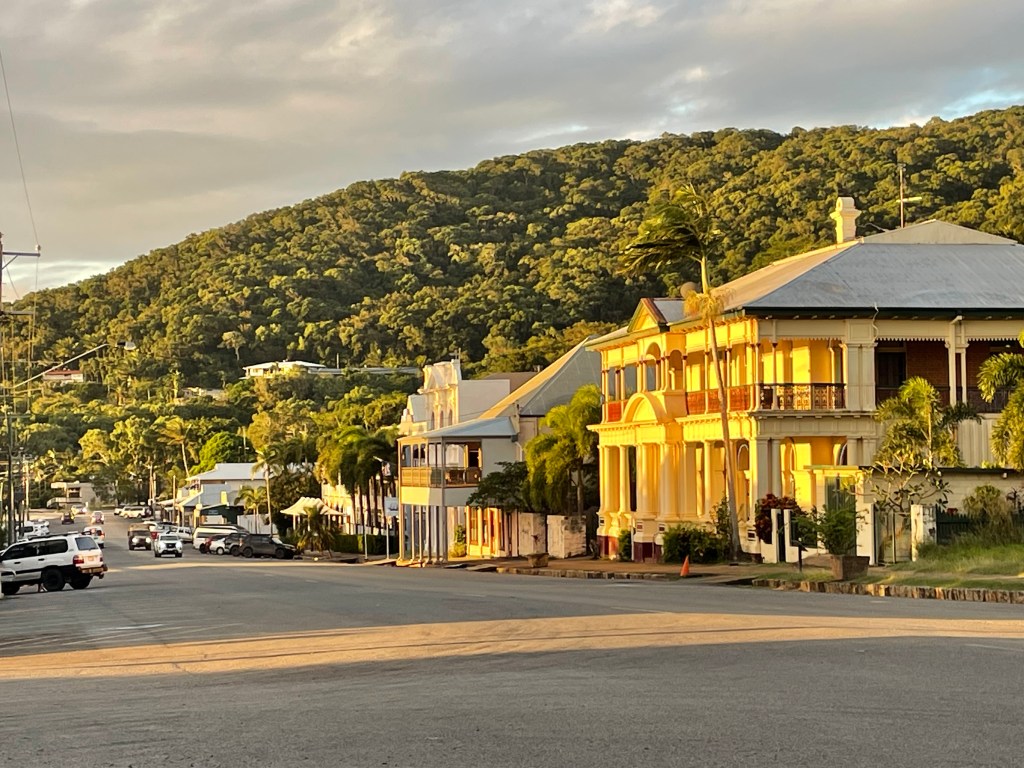
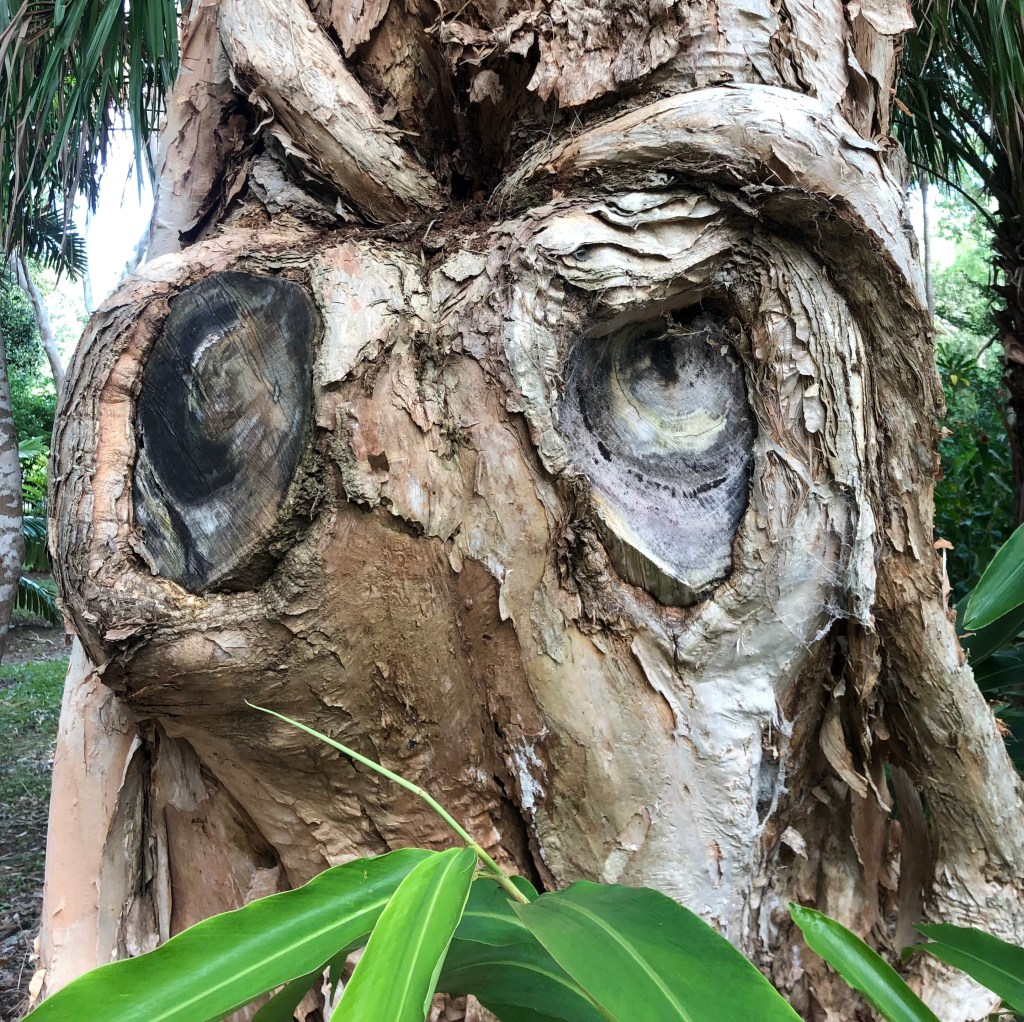
By dinner time we were flagging. The mobile fish van had passed through the park so we enjoyed a pre-dinner feed of prawns. For dinner this night we enjoyed Thai at Jacky Jacky’s, a shop built originally there in 1886, another reflection on the influence of the quite large Chinese population in Cooktown. The richness and diversity of Cooktown’s history needed more time, as with other places on this trip..hmm..another trip another time.
Off we set further north, with Laura being the first stop. It was May 22nd. There was quite a sombre air to this town, the well respected Publican had been taken by a croc the previous week, so the pub was closed and flowers were laid by a tree. Our stay here was brief. We expected the Peninsula Development Road to be gravel from Laura onwards, but actually I would estimate half of the road up is bitumen, and the gravelly red earth part was mostly smooth, very few corrugations, a lot of dips with some being water crossings, but generally a very easy ride. We ended this day at Coen.


Fuel has been getting progressively more expensive, like $1.85, but it was only in Laura that it cost more than Lennox prices. $2.50! It is outrageous what Northern rivers drivers pay for fuel. We’ve found diesel in Weipa today for $2.18.
The Coen pub served refreshing cold beer, most welcome by us all. The grassy area behind the pub sufficed for the night. We aimed for Bramwell Station the next day, but because we made such good progress we pushed on. At Moreton Telegraph Station we stopped for coffee and decided we would stay the night at Eliot Falls. Being a National Park we needed to book 3 sites. Well, anyone who has ever tried booking anything with Qld Nat Parks will know how frustrating the process can be on their website. Anyway, we sat with it and found Wendy at the coffee stop was very helpful, even gave us our official passes to show a ranger, if he happened to turn up.
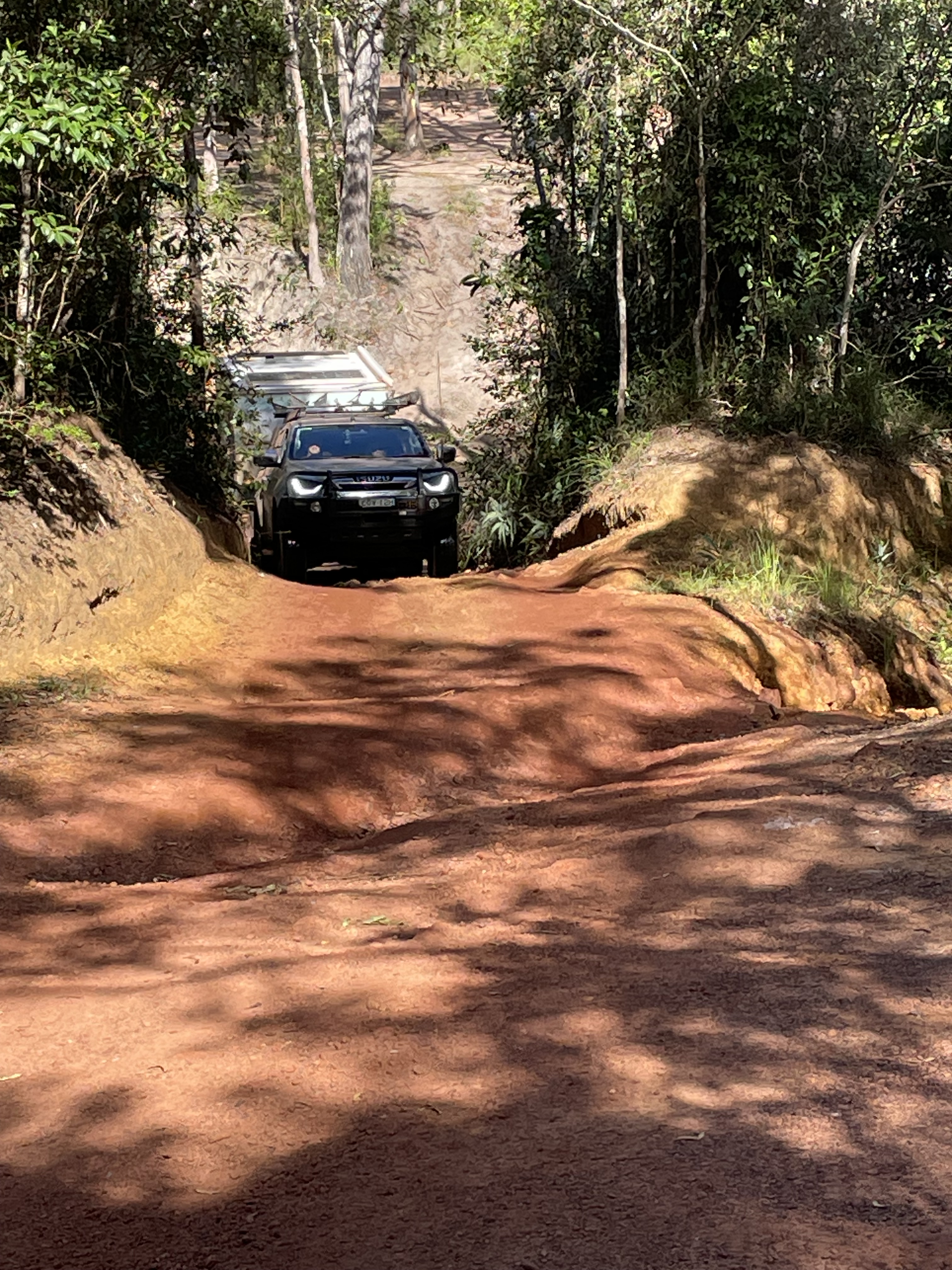
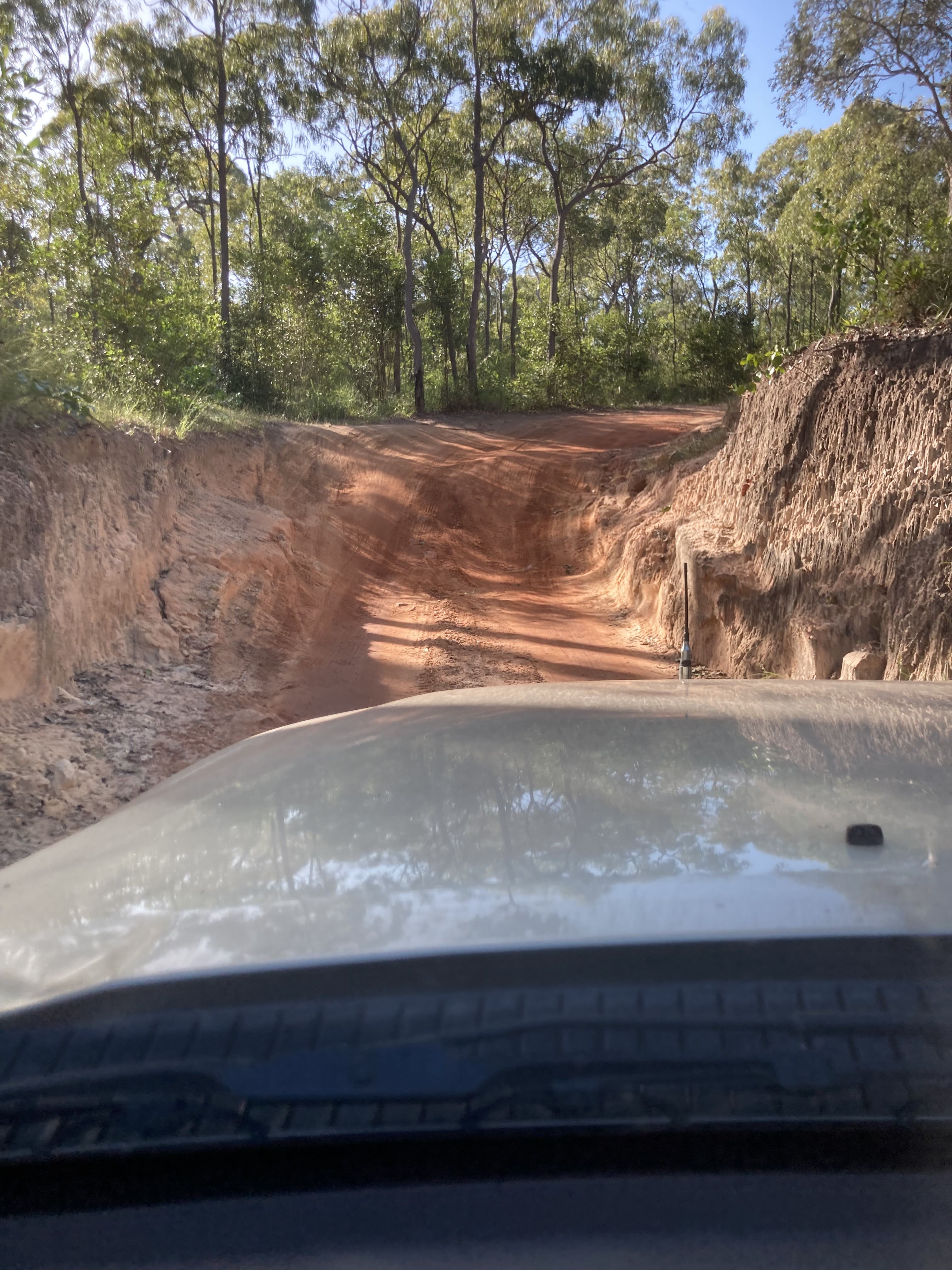
There’s a road up here called the Old Telegraph Line. It is legendary for 4WD extremists, it is so profoundly difficult that only the hardy types take it, and certainly not with trailers on the back. So we took the Bamaga road which by-passes that rough one, until we were 8km from our camping destination at Eliot Falls. OMG, it was rough and tricky in spots, very slow to travel. But all 3 of us managed with our trusty trailers to get there with cars and vans intact. “Towing” signs with mobile numbers were prominently posted in a couple of trees at the beginning of the track.

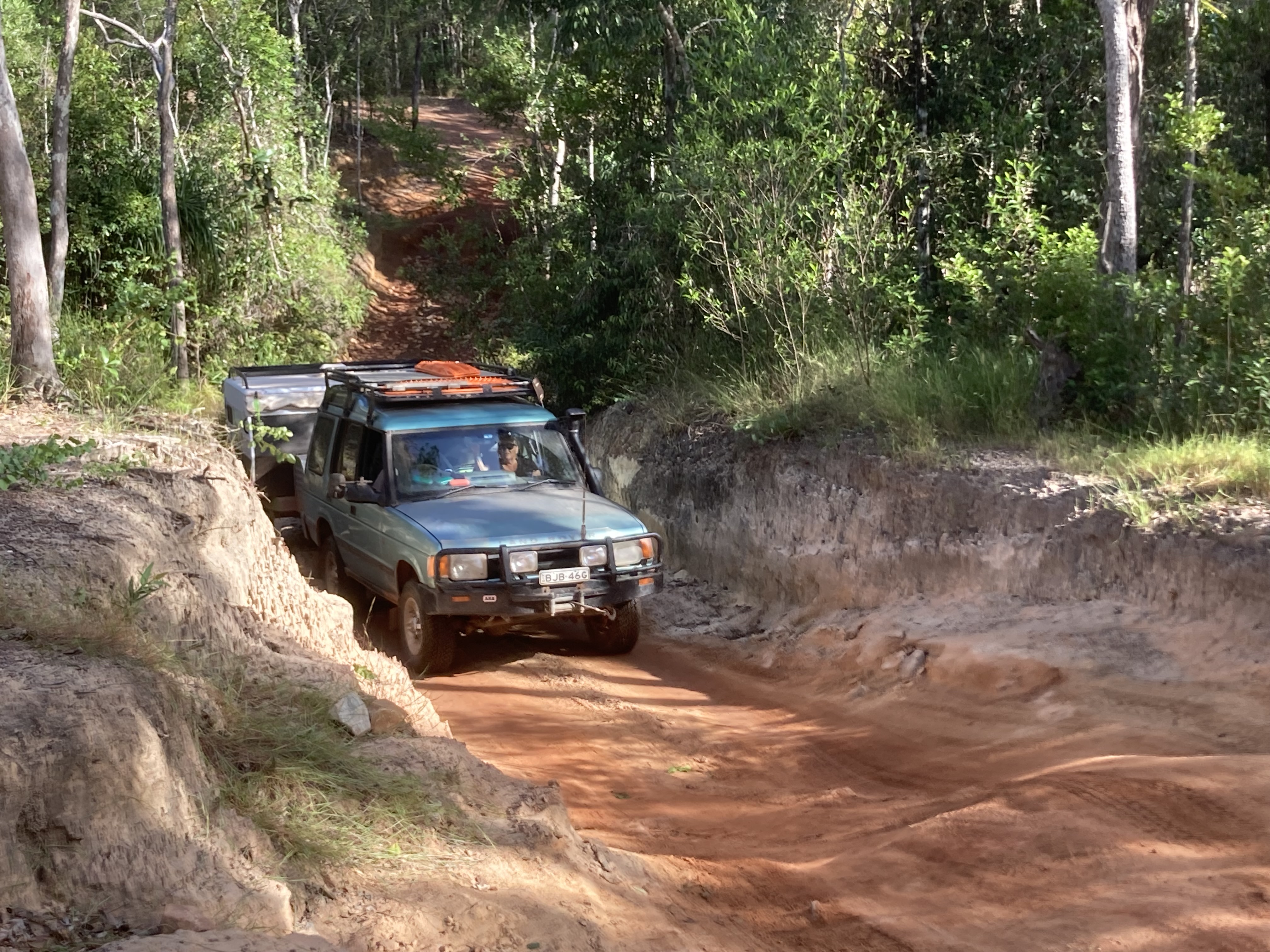
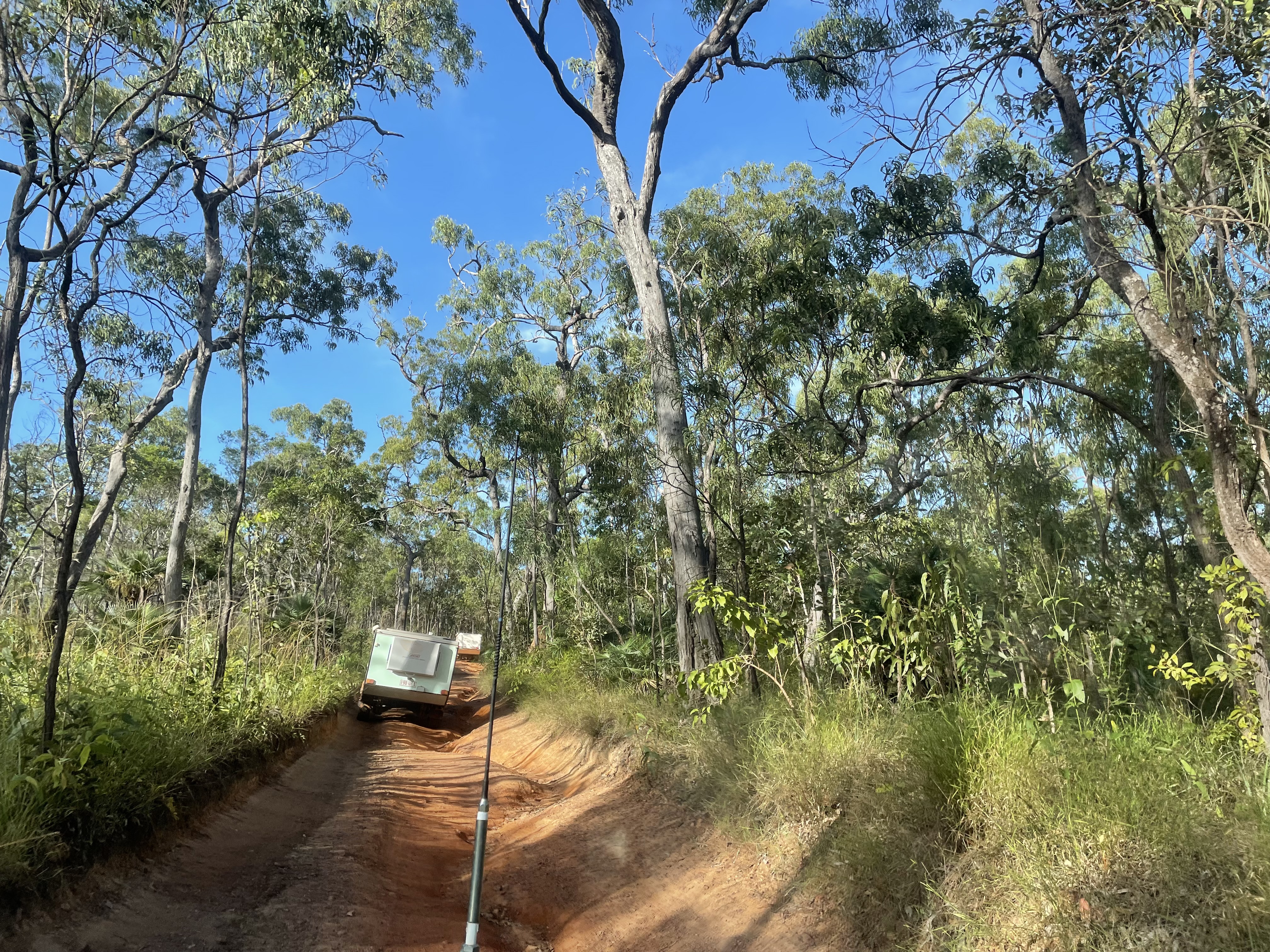

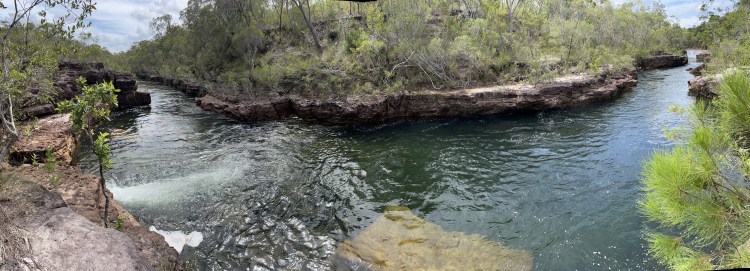
Eliot Falls was so worth it. Peace, serenity. And wonderful falls to wallow in…until the families arrived with many kids, tinnies in coolers and a ghetto blaster. No respect for that place. The night time was very special – no light pollution, no wind, a bright half moon with Venus nearby, the families departed. The lack of birds was noticeable, inexplicable.
All vehicles and vans have performed remarkably. And they’ve certainly been put through their paces. We rise early each day, go to bed soon after sunset, a great pattern to fall into.
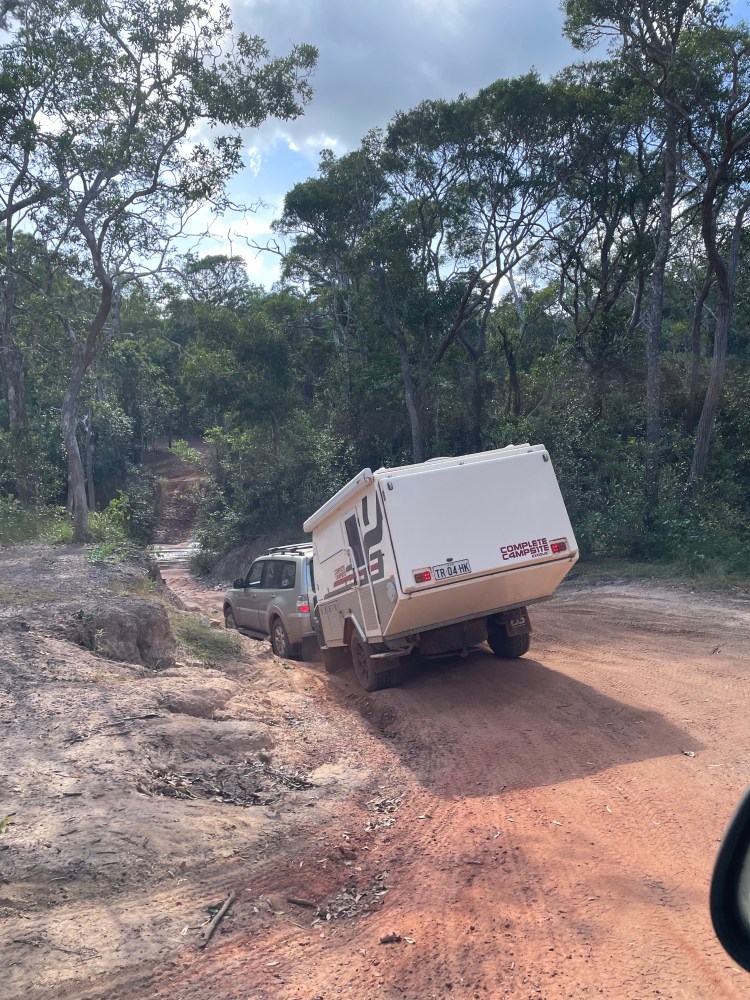
Cheers Everyone, love to get your comments.
Jen & Nick


 COME AWAY WITH ME
Leave a comment