Blog

  • The North Island, NZ.

    Wellington, Napier, Taupo, Cambridge/Hamilton, Orewa, Whangarei, Russell, Paihia, Muriwai Beach, Auckland.
    Today, May 22, 2026, I decided that I must write up the last blog for our NZ trip, partly to have a delightful trip back there through photos and memories, but also because the weather outside here at Lennox is foul, cold, windy and showery. Nice day to retreat to my office.

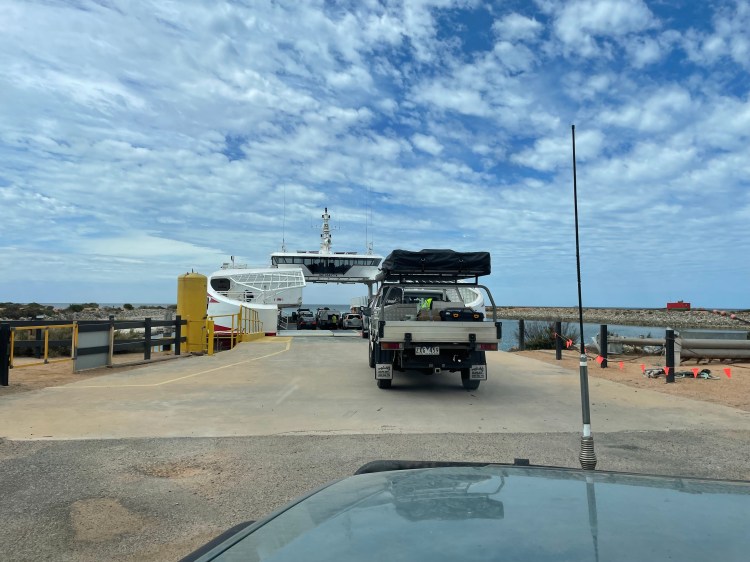
    So, we arrived into Wellington on the Interislander Ferry in the evening. The lights of Wellington sparkled over the harbour. As we disembarked from the bottom of the ferry, we were straight into navigation mode, as we faced multiple lanes of peak hour traffic. Our destination camp was not too far away, thankfully, but together we did a good job getting there without a major argument. Next day, I said we really should go into the capital city of NZ, look around, before we head north, but the discussion of coping with another peak hour of traffic in the van didn’t go well, so Wellington is a trip for another time.
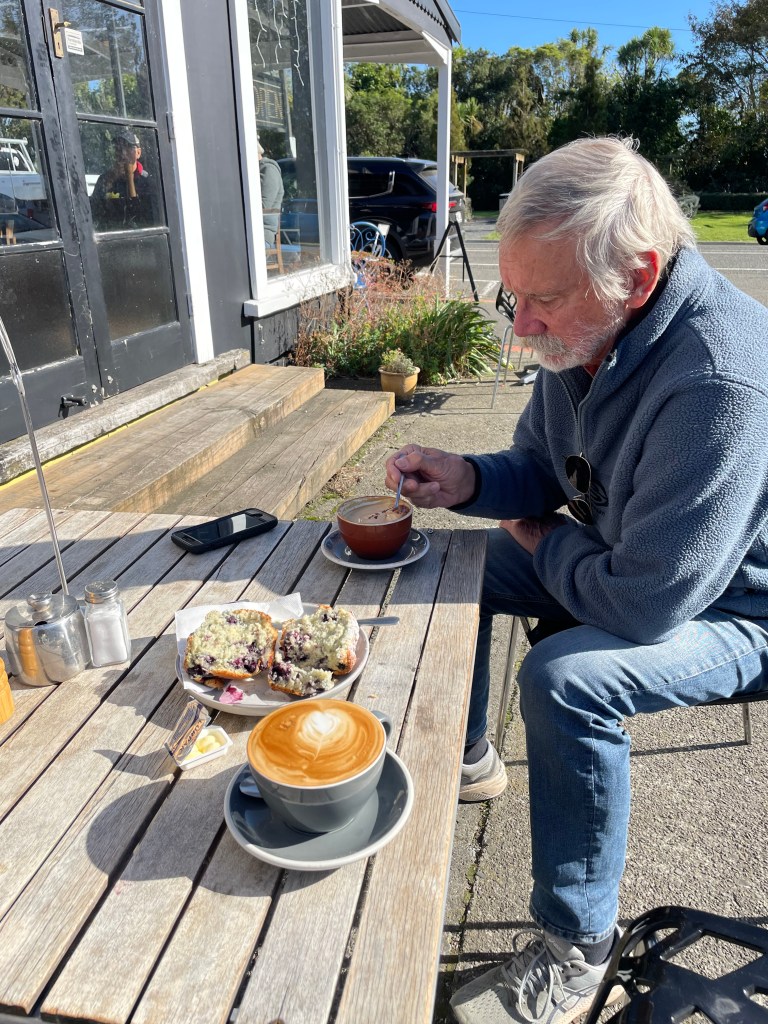
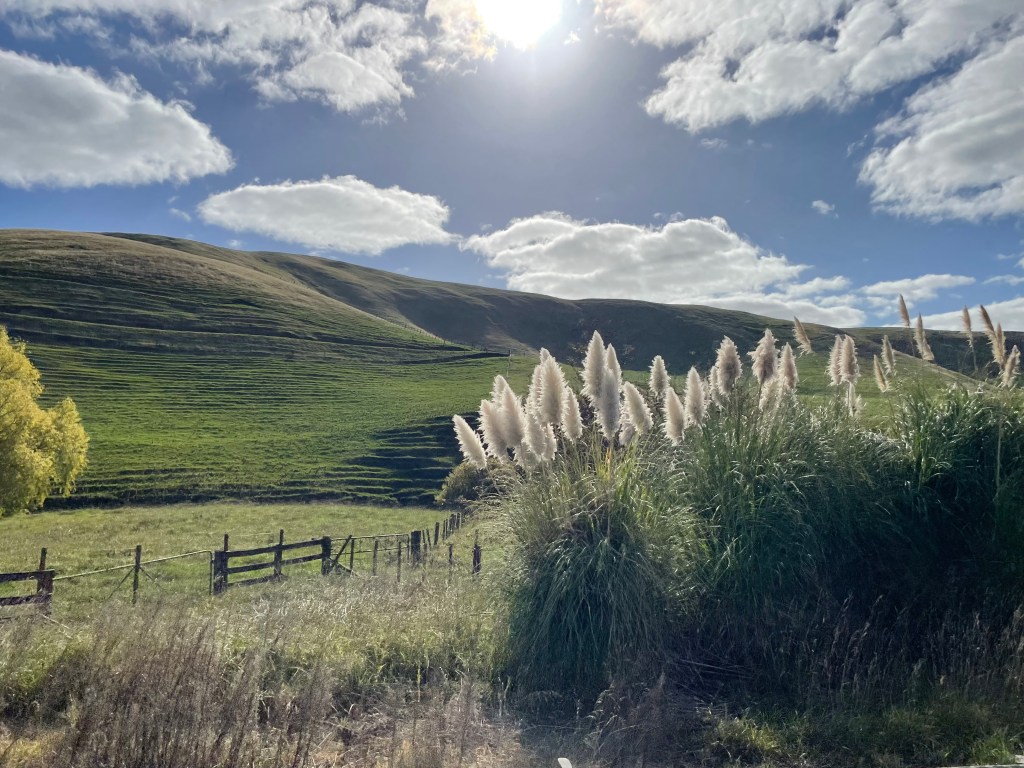
    So off we headed along Highway 1 once again, through the middle of the island via Palmerston North across to Napier. Stopping at cute little towns for coffee was mandatory. The mountains and hills were low and rolling now, not as picturesque as the south island, but gentle, full of sheep and cows and hedges, but also the dreaded pampas grass. Someone said it was a weed from Australia. But it is native to southern South America and is an invasive noxious weed in Australia too. Anyway, it was everywhere, at times I saw hillsides with young pine plantations, sprouting pampas grass all through the pines. What an environmental nightmare.

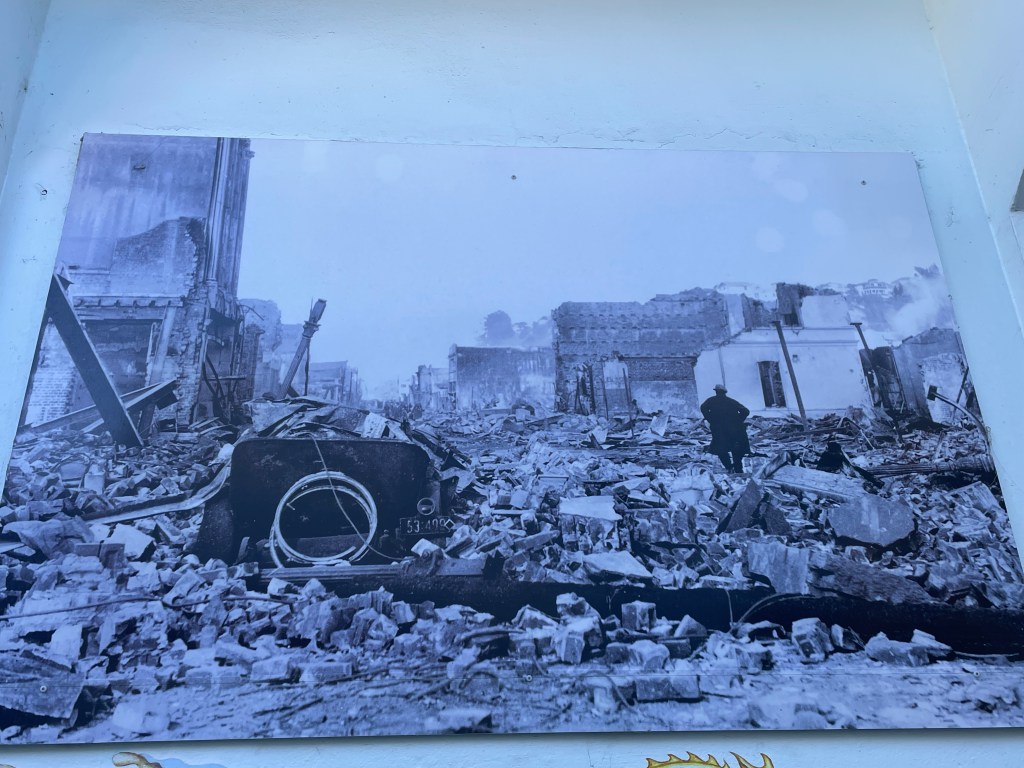
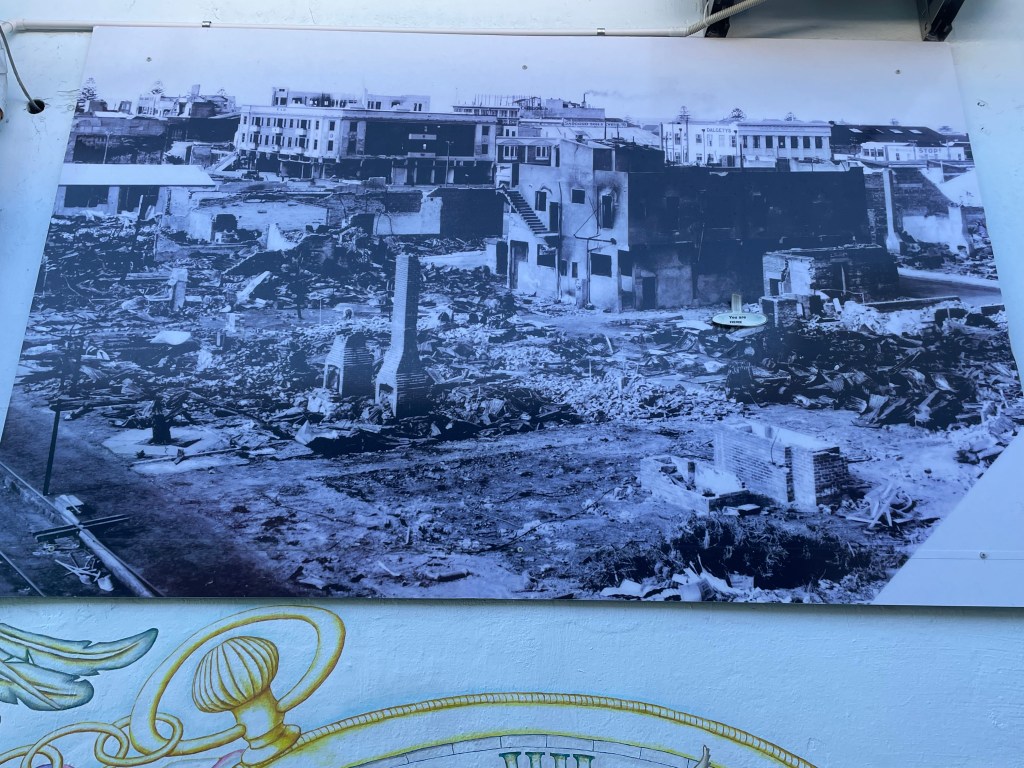
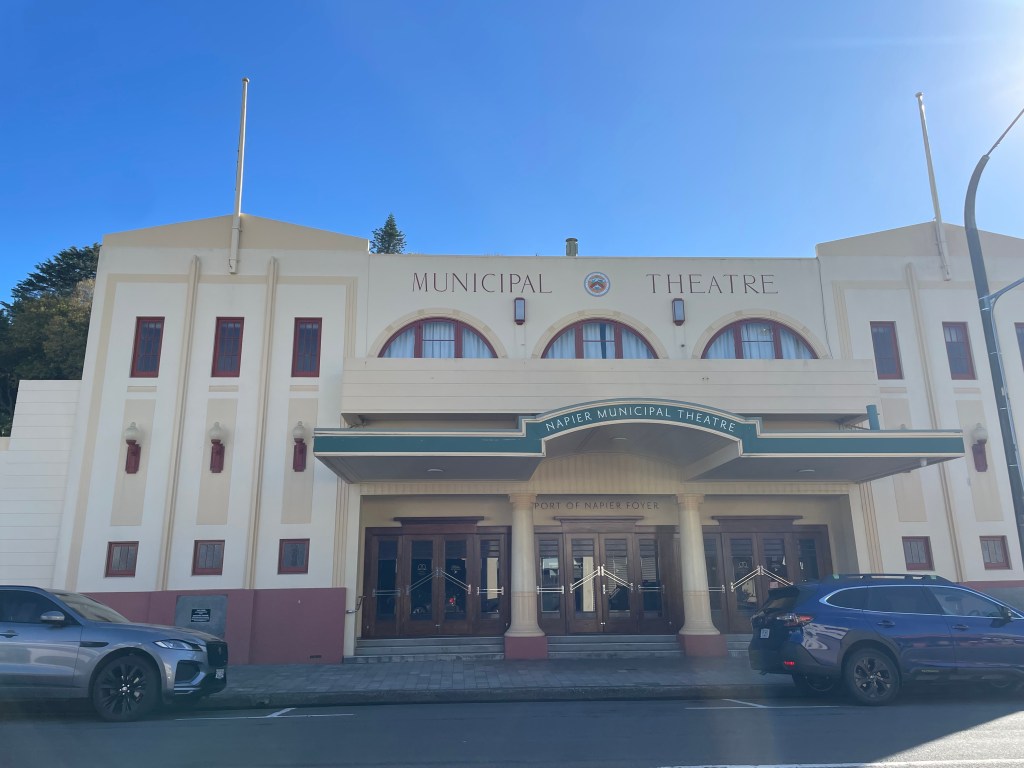
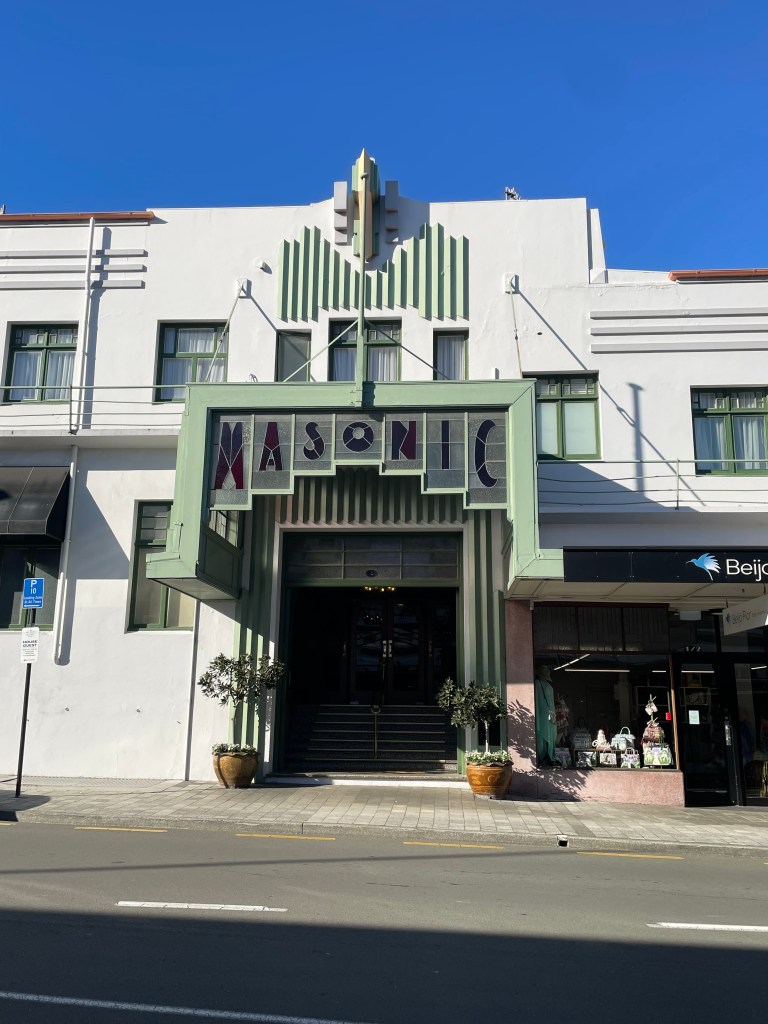
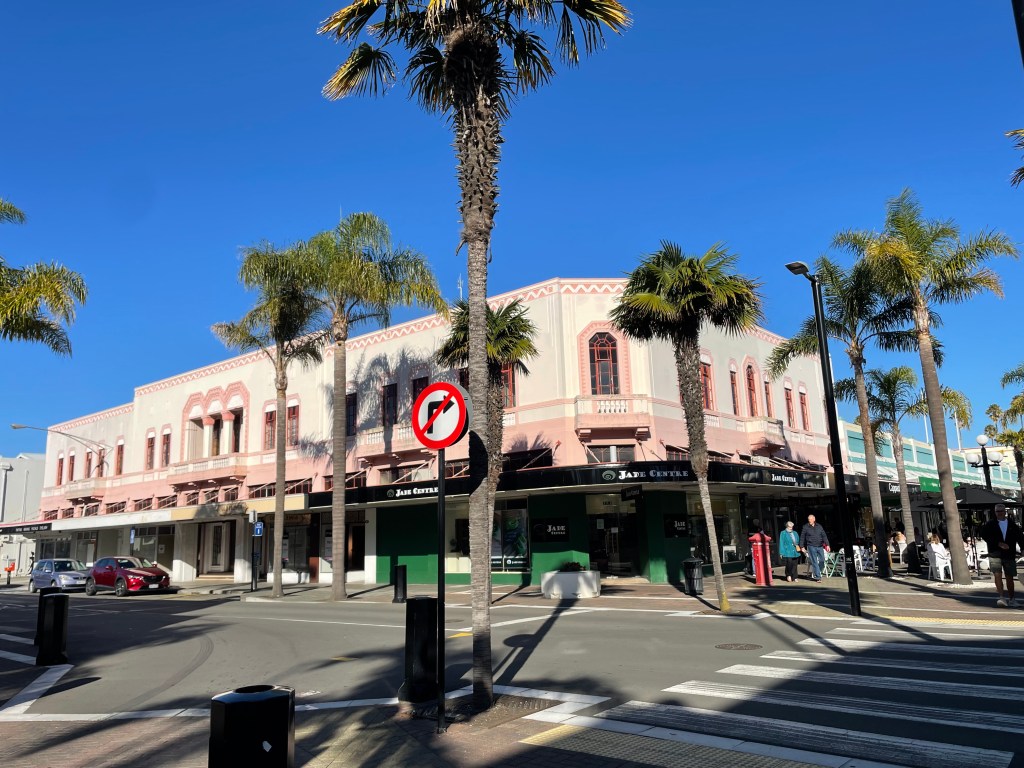
    Anyway, got to Napier and thoroughly enjoyed the art deco buildings in the main city area. We went to the Napier Quake museum and saw how devastated the town was in 1931. Quite an inspired move to make all the new buildings fit the same genre.
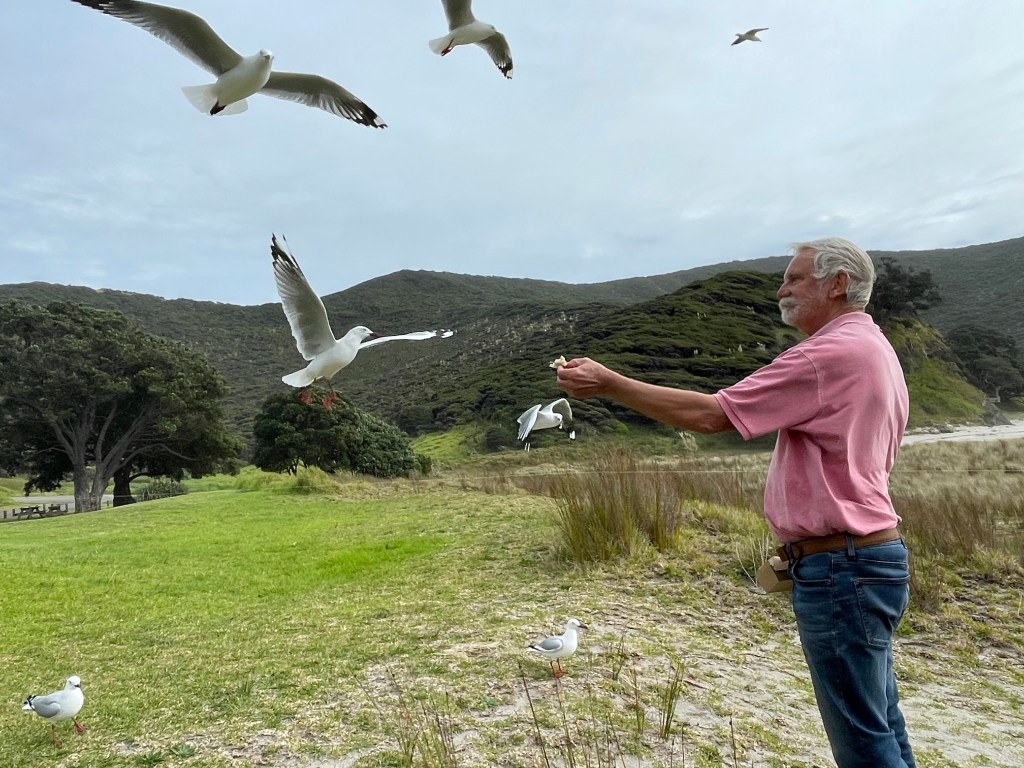
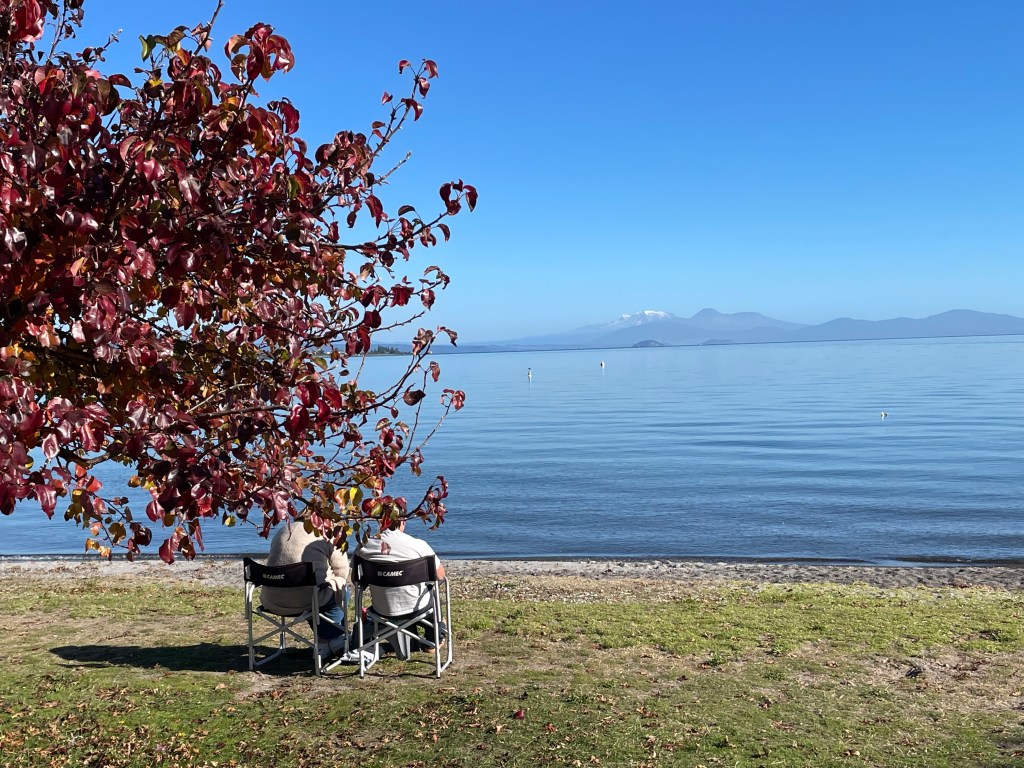
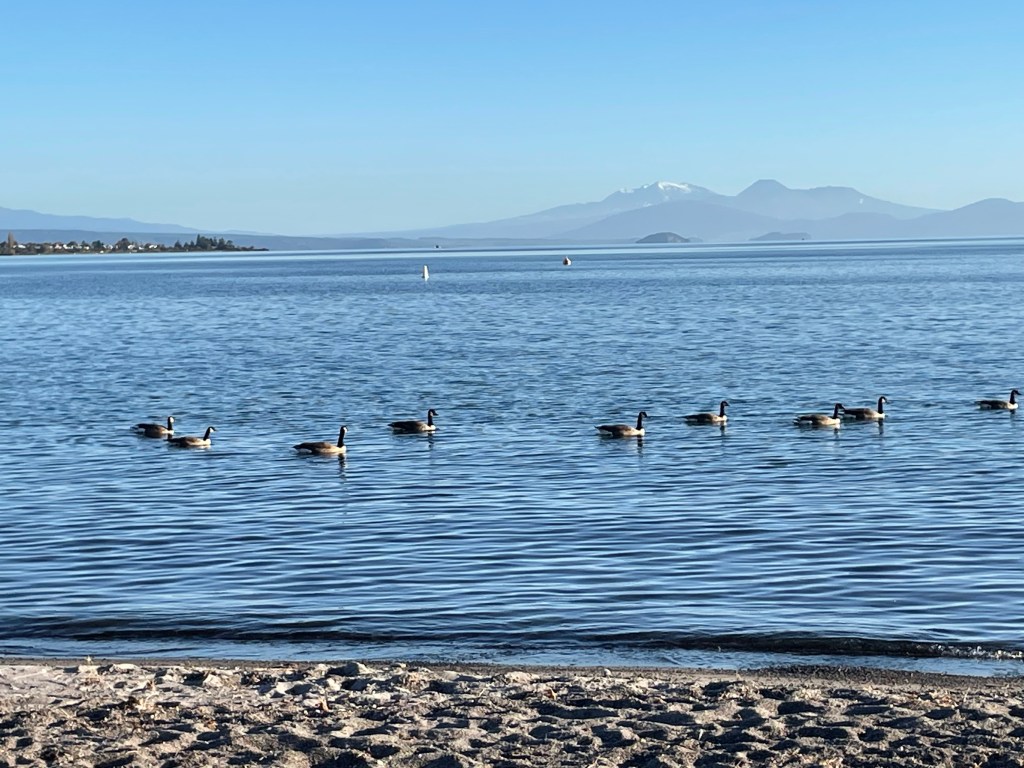
    Taupo was the next stop. It was a calm warm afternoon there so we pitched the camp chairs on the bank of the Lake, got out our afternoon snacks, and watched the birds for ages.
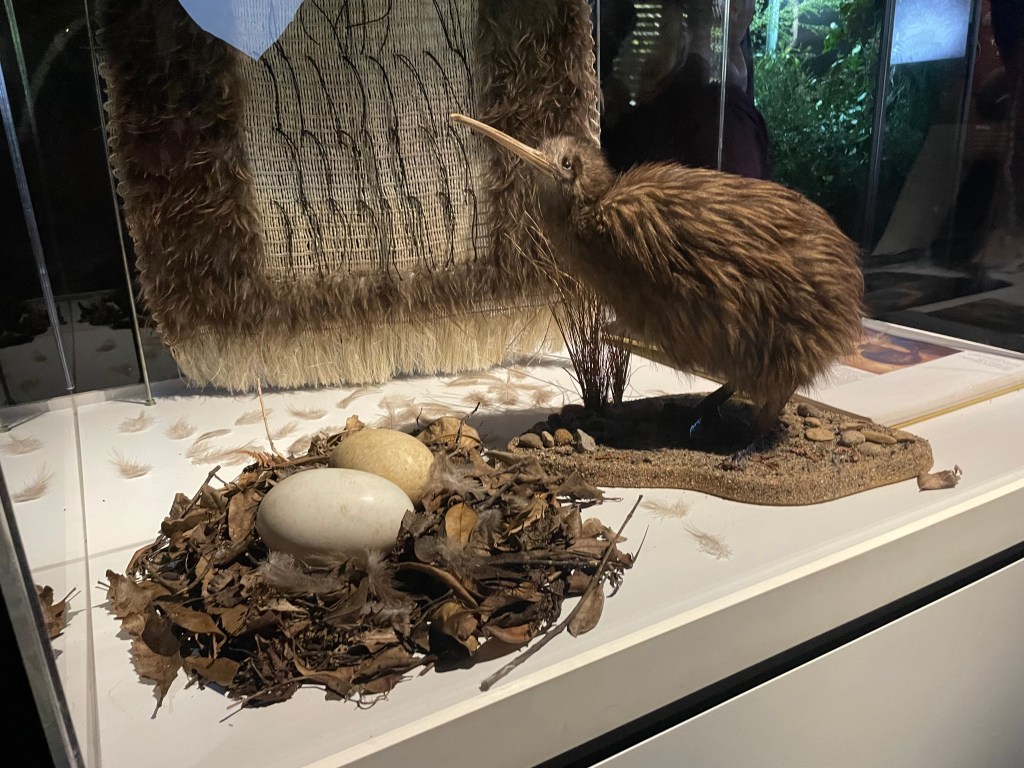
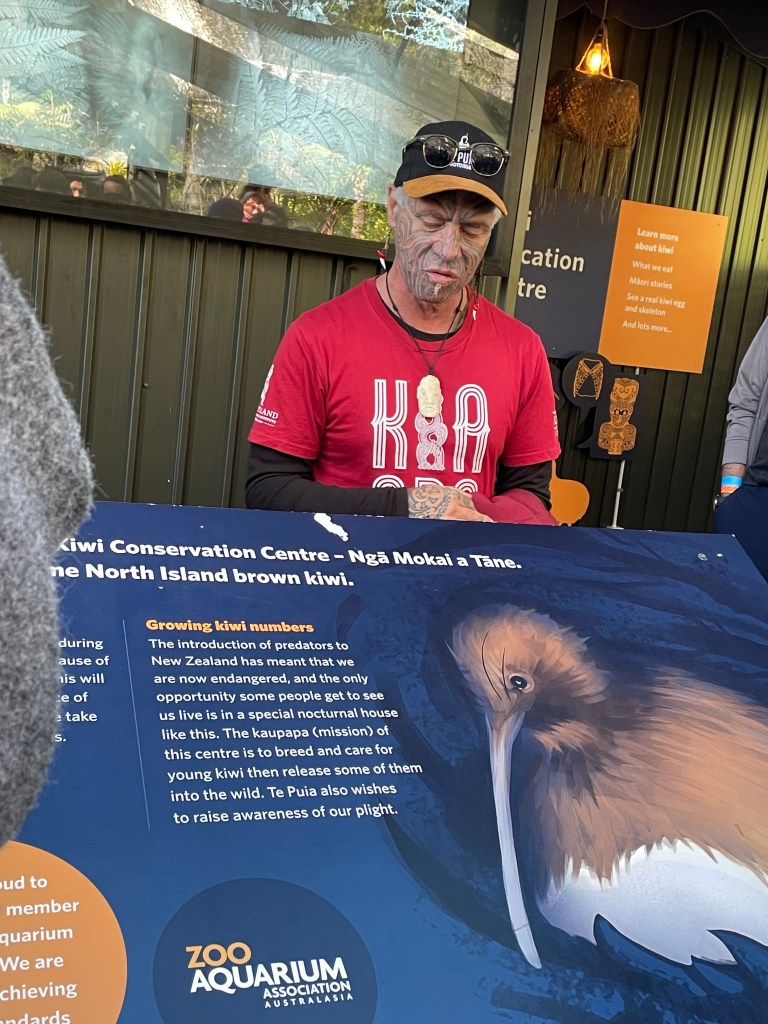
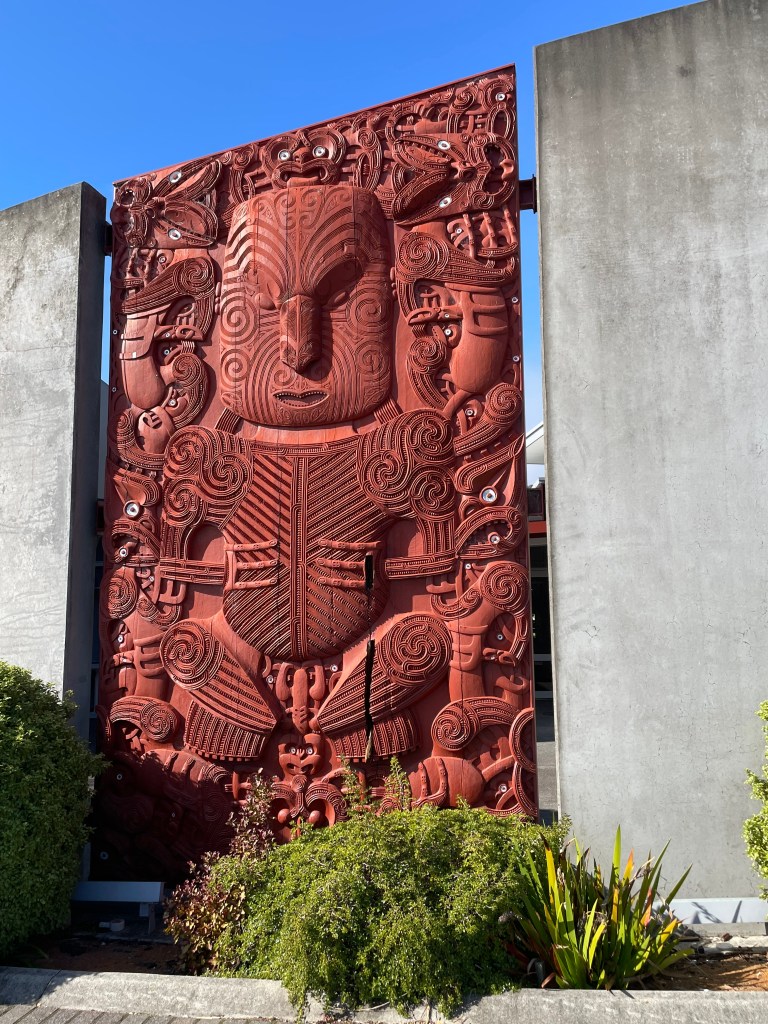
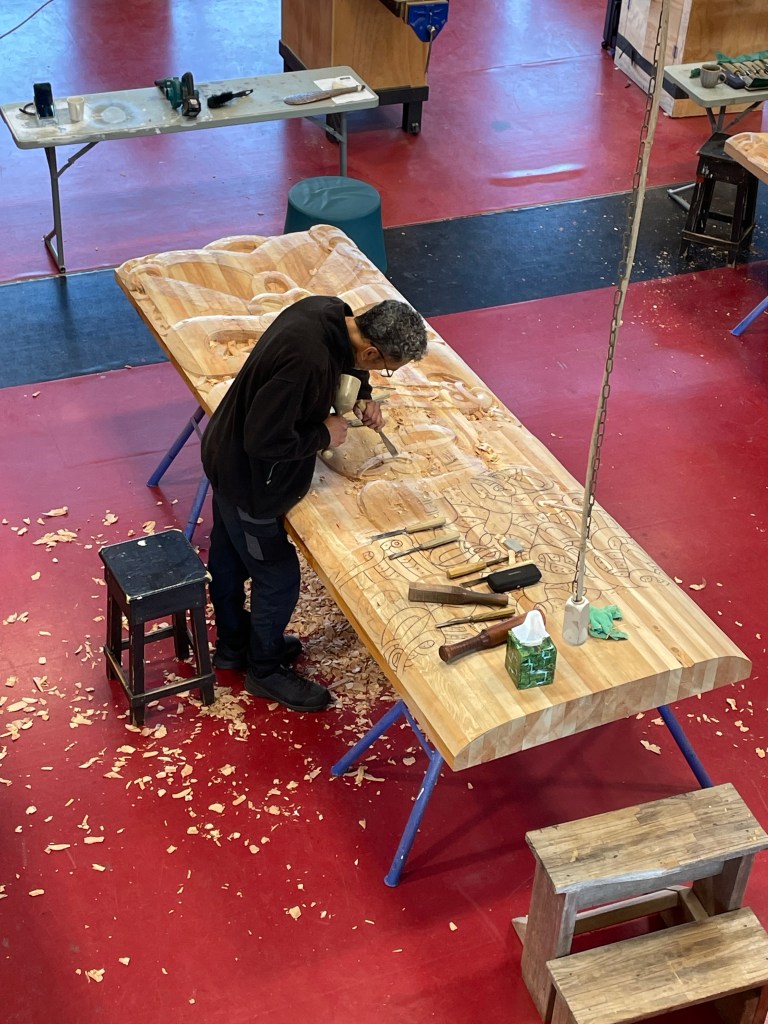
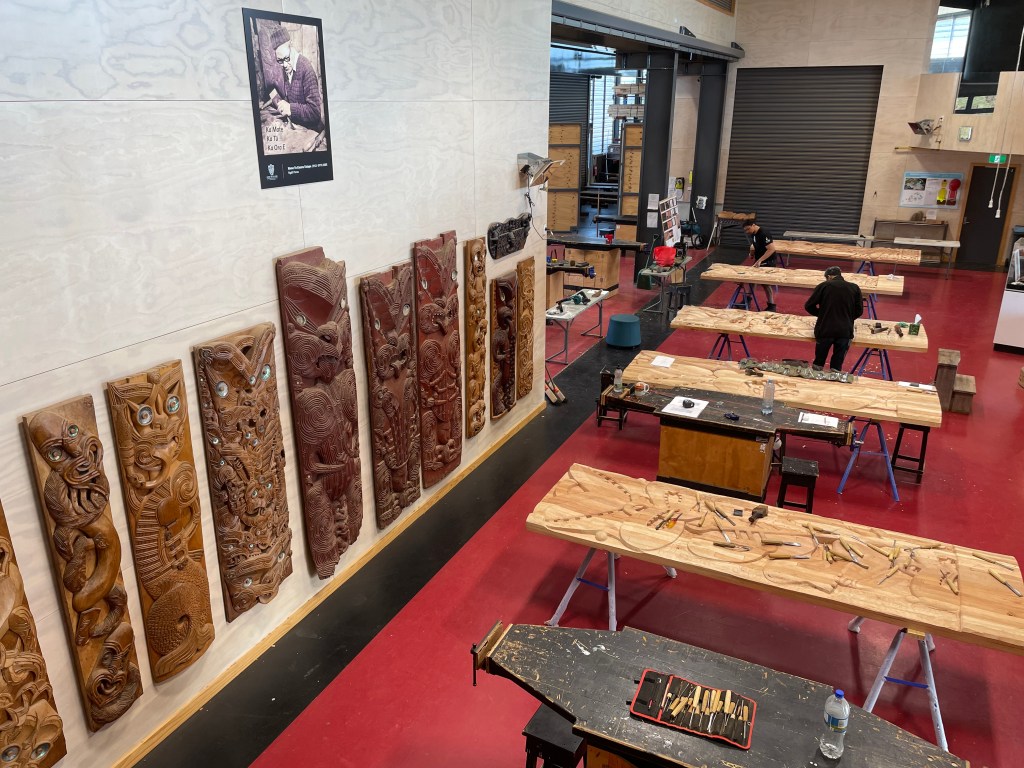
    We wanted to touch in to Maori culture. Headed to Rotorua. We chanced on Te Puia, home to the geothermal valley, as well as a Maori arts and crafts institute, where we could see wood carving, weaving, stone and bone carving. There was a Conservation centre where we saw Kiwi birds, a bit sleepy as they are nocturnal. Our excellent guide took us through the arts area and then onto the bubbling mud pools and gushing geysers. I wish I’d had my video camera on when he explained each of the tattooed lines on his face, that answered a question I would never feel comfortable asking a Maori person. After a concert performance and lunch, we pressed on further north.
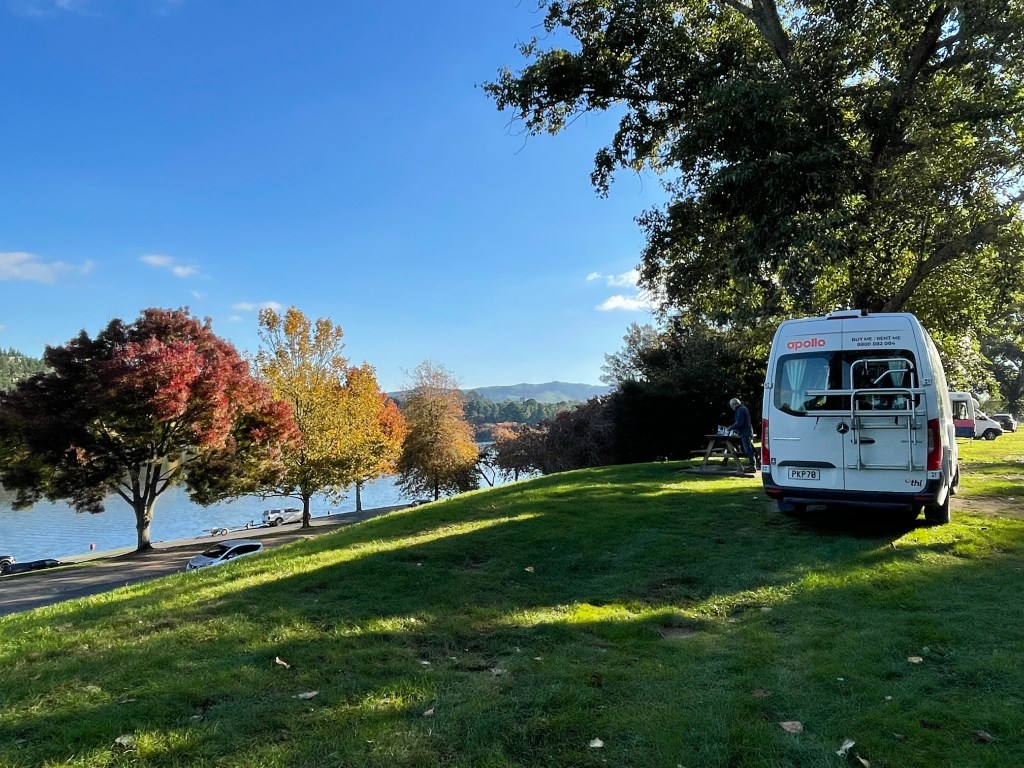
    Just before Cambridge, we found a beautiful free camp spot on the Waikato River. Rowers glided past silently and scoobi doos created a racket!
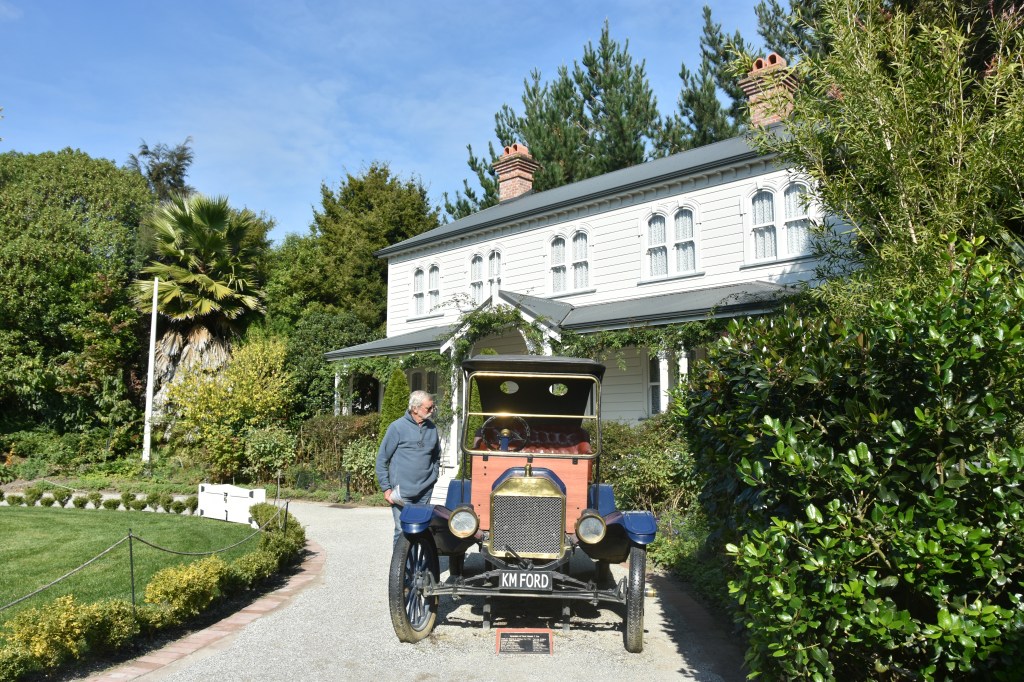
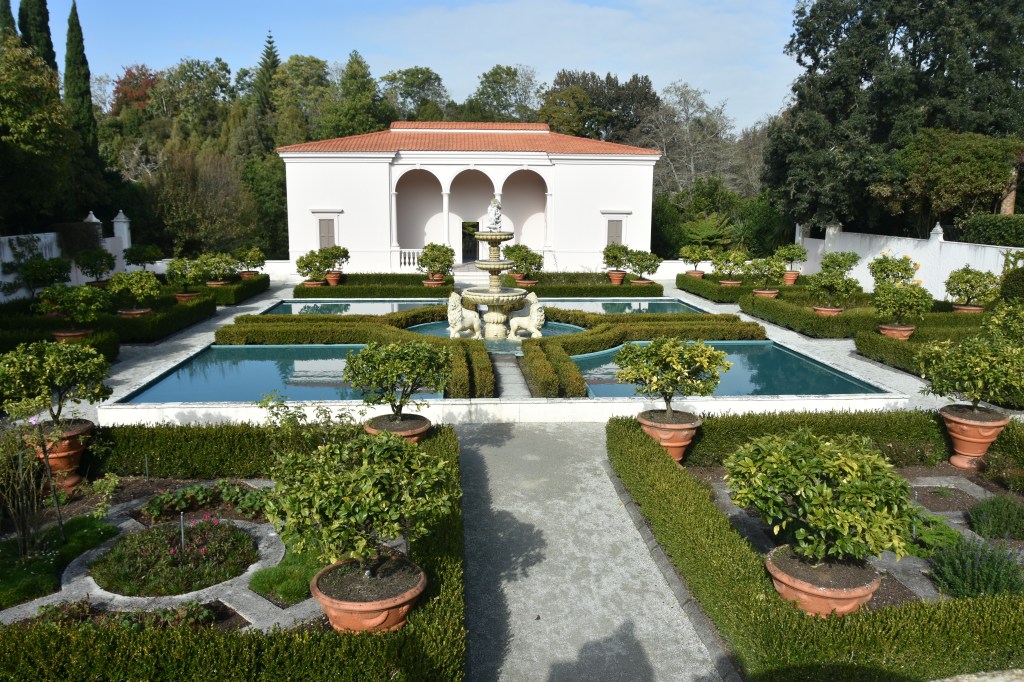
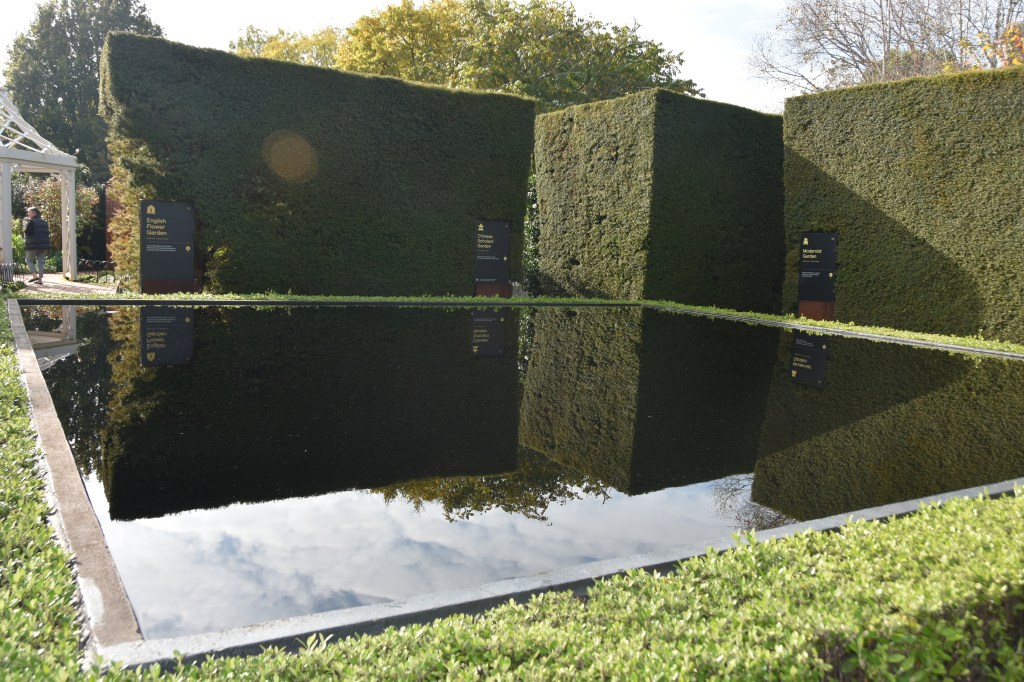
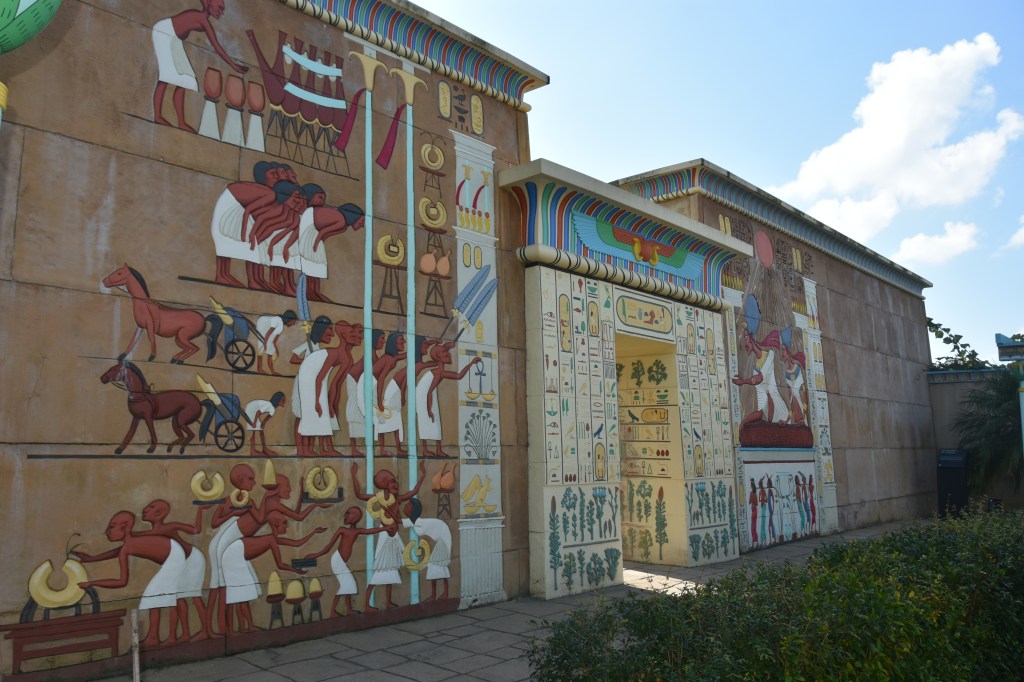
    I wanted to see Hamilton Gardens. So we decided to sacrifice the Coromandel Peninsular for another time. The Gardens “examine the evolution and meaning of gardens throughout history”. There are 18 different displays in either the Fantasy Garden Collection, Productive Garden Collection or the Paradise Garden collection. It began on waste land in the 1960’s. Council land was used to develop the 130 acres into the gardens as they are today. It was interesting but not amazing.
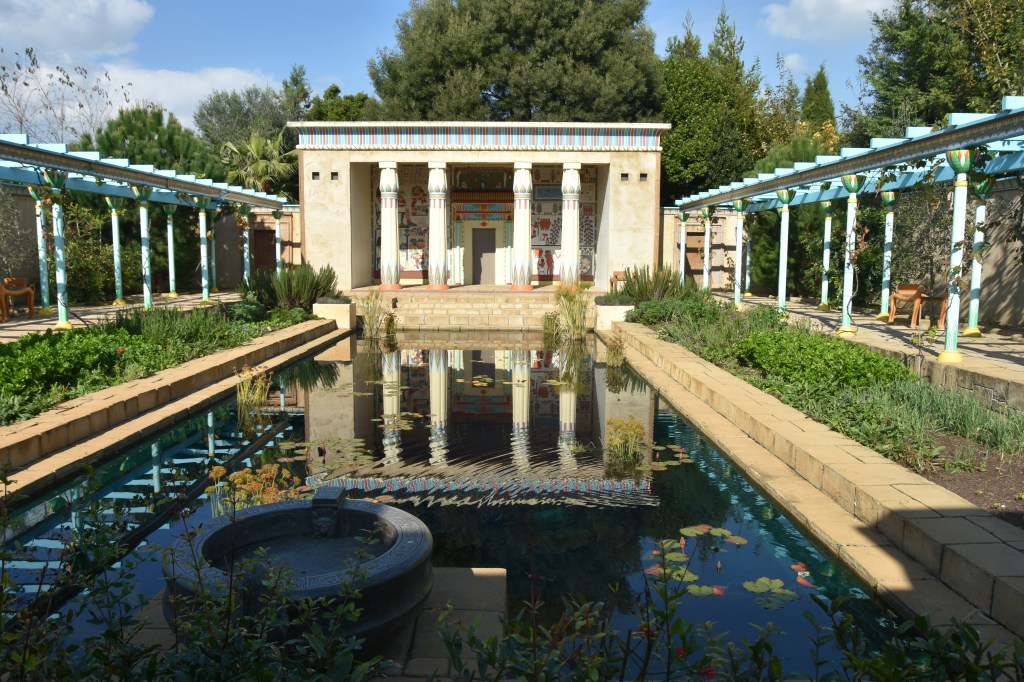
    After the gardens we pushed on around the outskirts of Auckland, which was a reasonably easy navigational feat. We went off the highway to Orewa for the night. Lovely town, obviously a resort/holiday destination for New Zealanders, right on the sea.
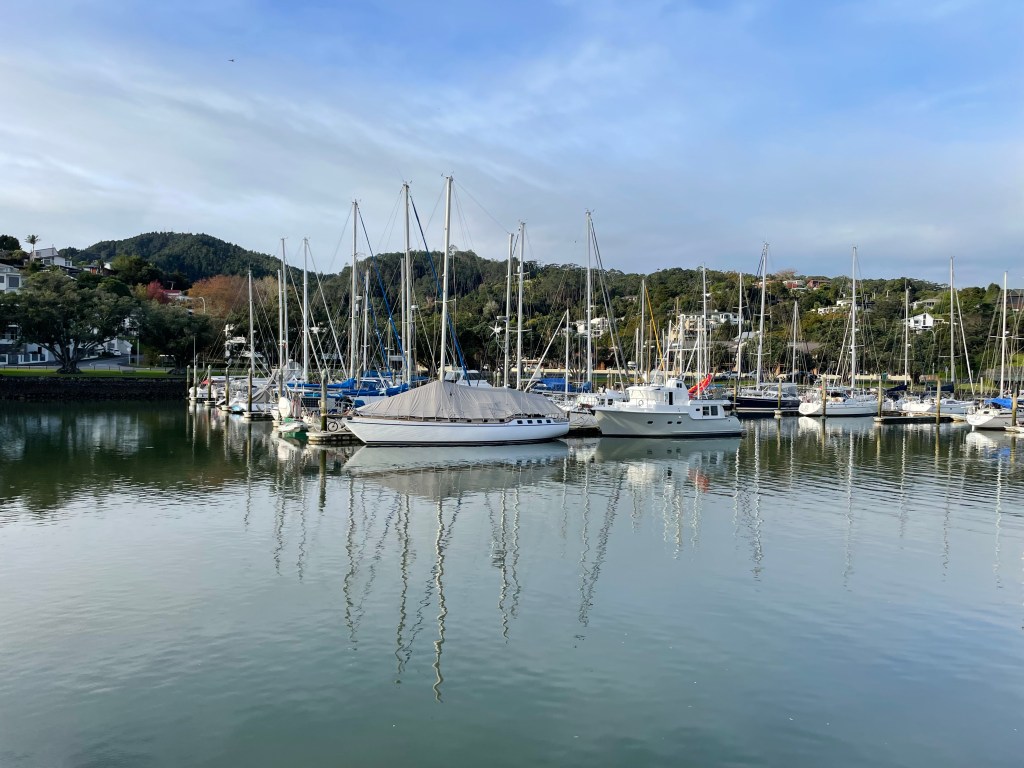
    Whangarei Harbour

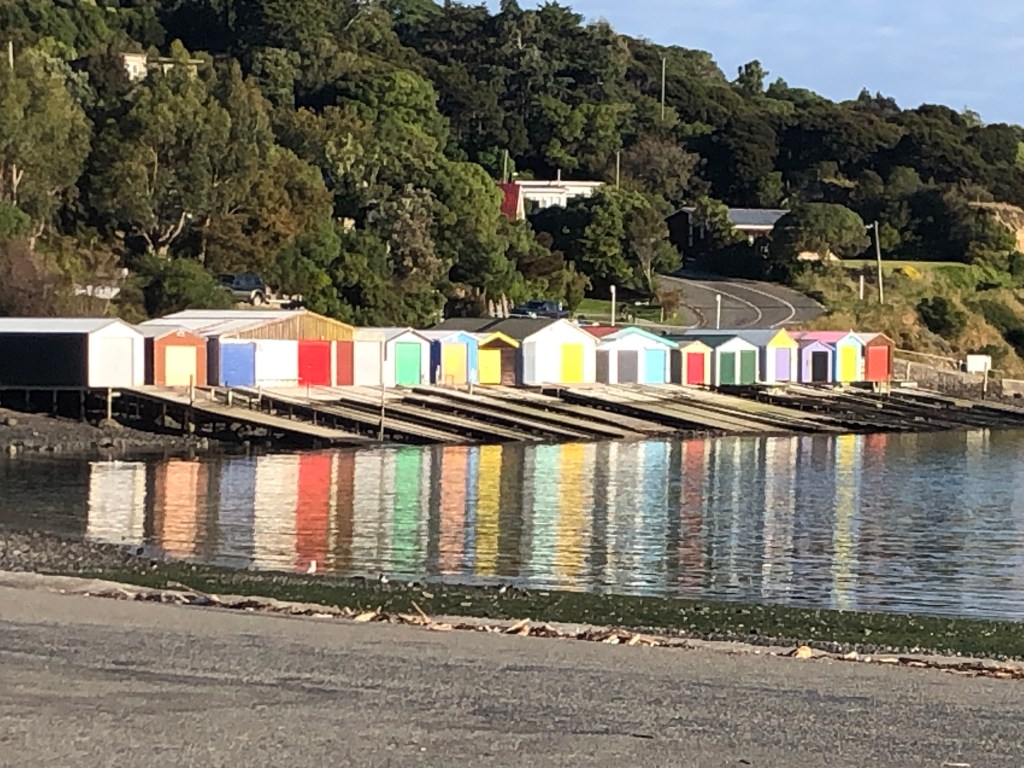
    Whangarei was our next stop. We had fun times trying to pronounce the name as the locals do. Wh becomes F and the g is silent, so it sounds like Fanerei. Anyway, there was a lovely little harbour here and cafes, pubs and galleries, but we’d arrived a bit late in the afternoon to enjoy the local buzz. It was still raining at times and cool, we were grateful for the heater in the van.
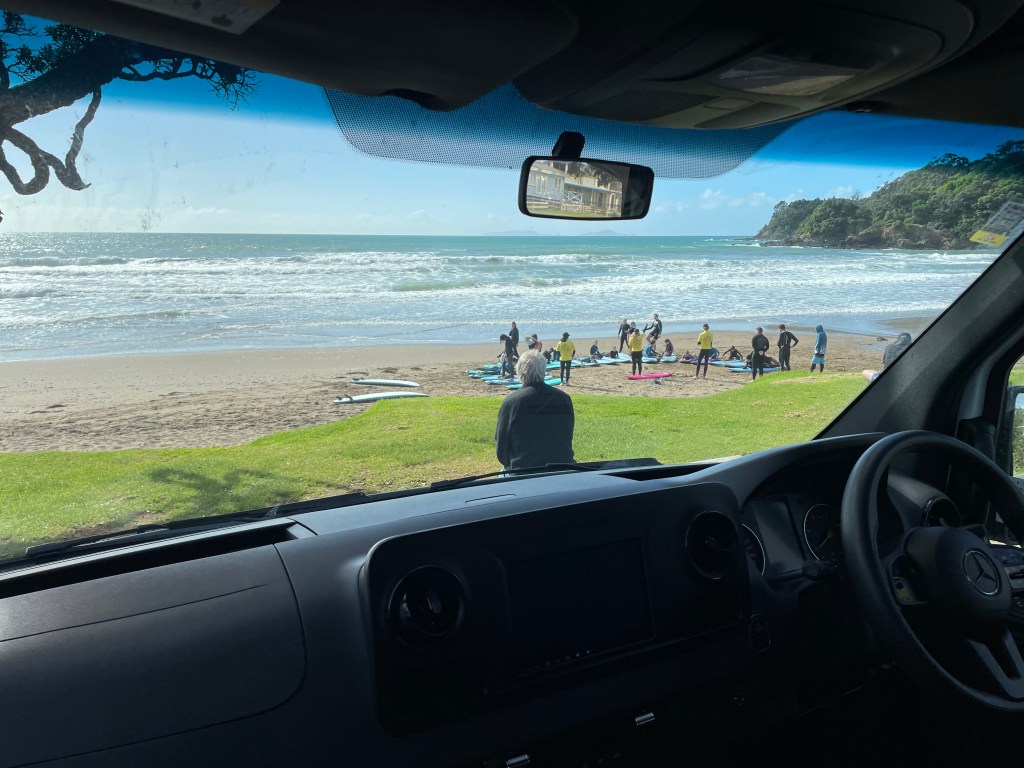
    Sandy Bay surf school, coffee stop.
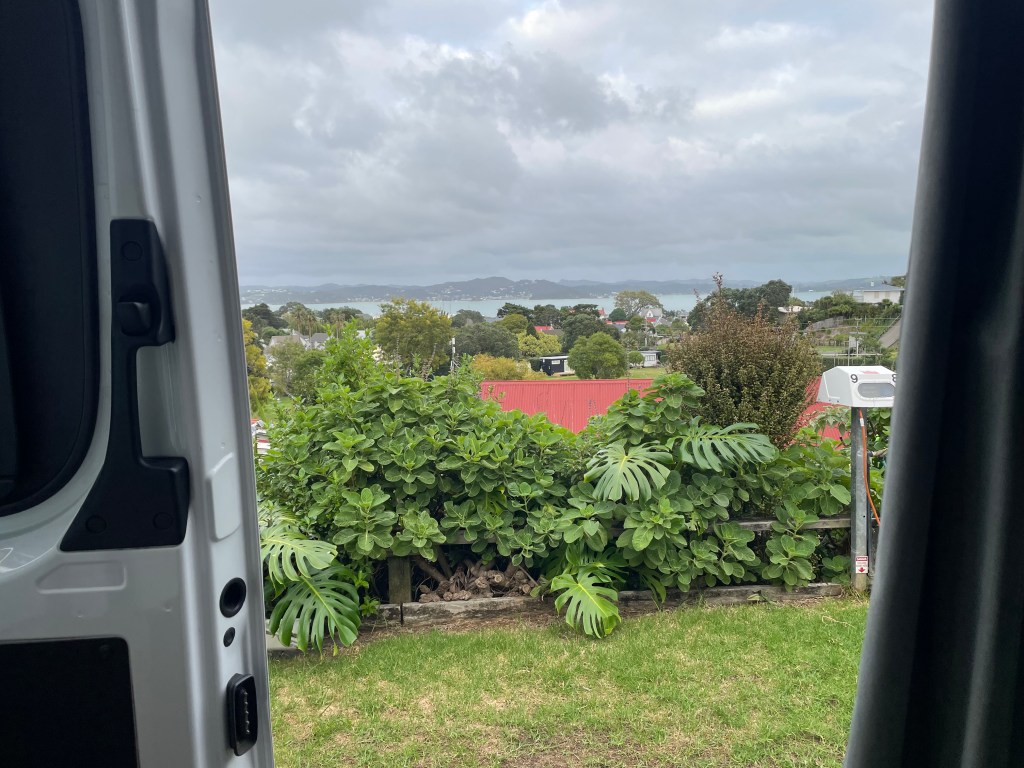
    View from Russell camp site….worth $100?

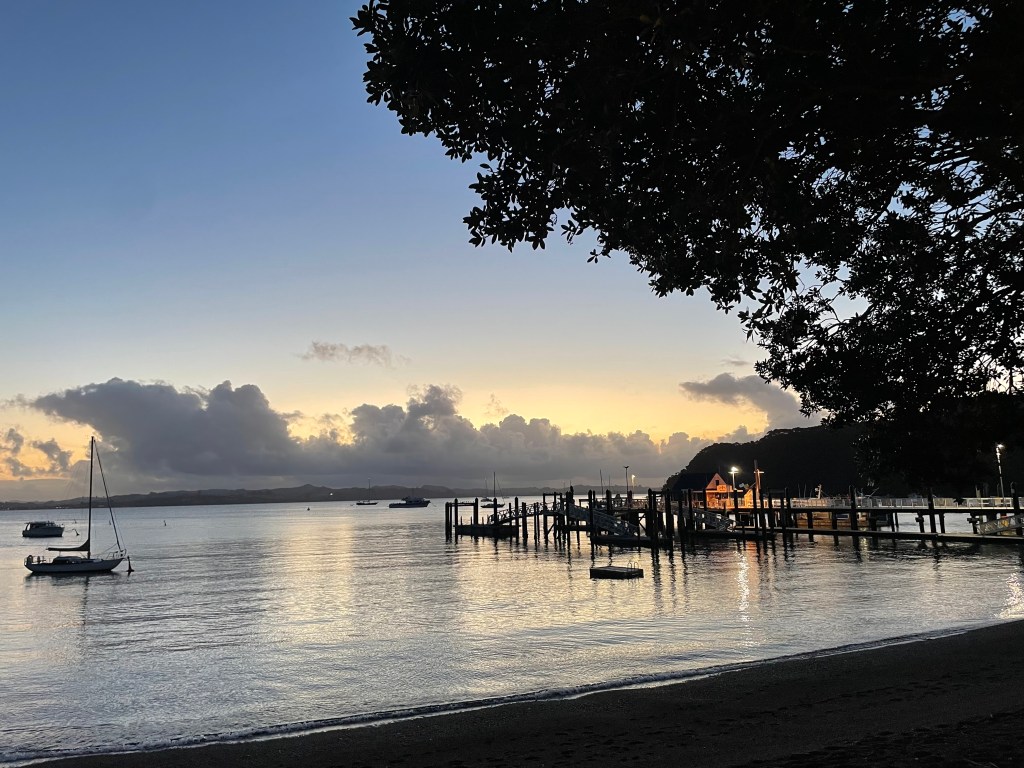
    We headed off Highway 1 towards Russell, which a number of people had suggested we visit. We climbed up and over steep hills, but it was worth it to reach the small sandy beaches, like Matapouri and Oakura where not many vans like ours would travel. We caught the car ferry across to Russell where we had the most expensive campground experience ever. $100 for the night. No wonder we were the only ones there! We should have stayed at Paihia and done a day trip over on the passenger ferry. Anyway, Russell was delightful although the sunset got lost behind the thick clouds. Dinner and wine on the bank of the beach was very welcome, expensive too!
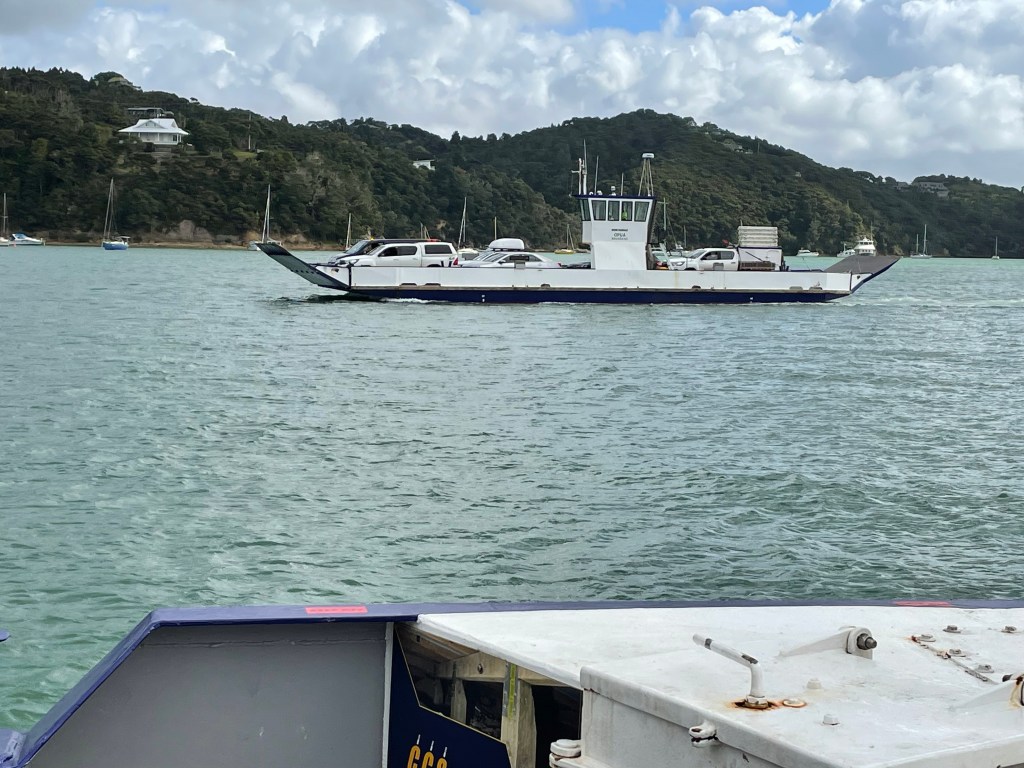
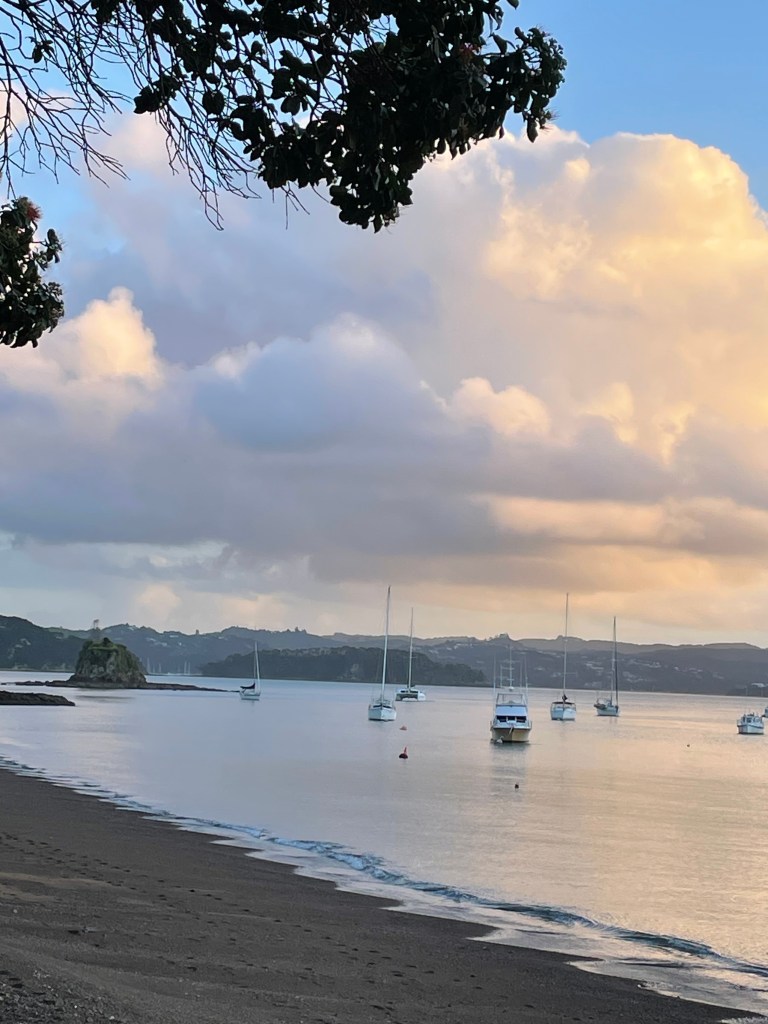
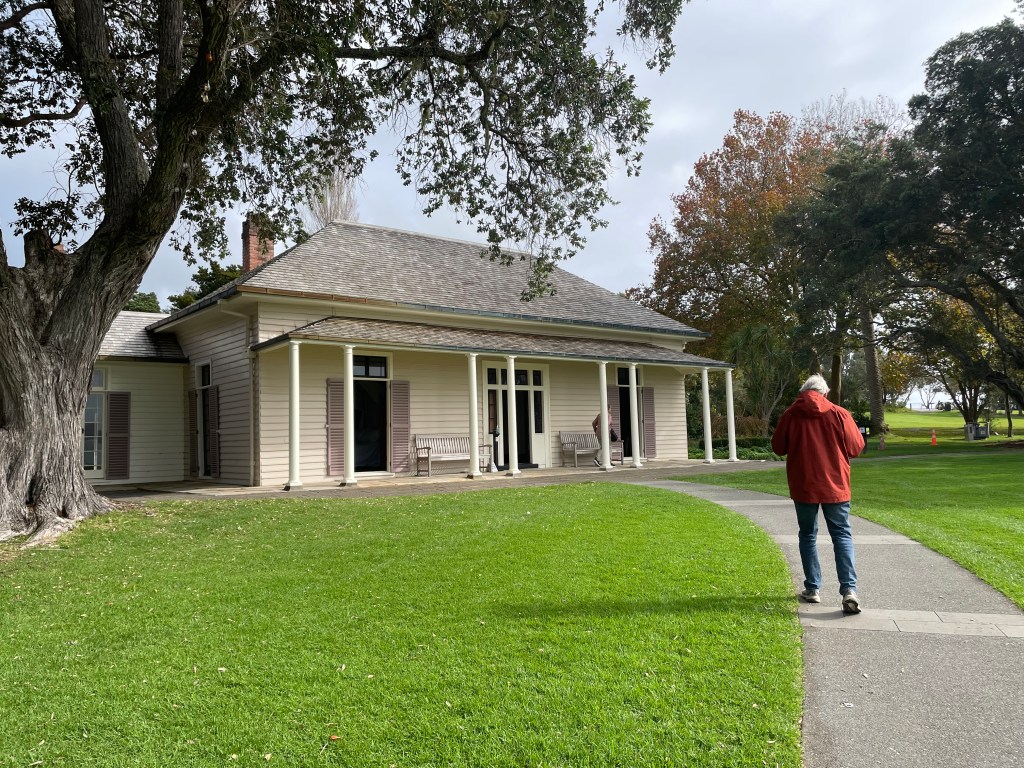
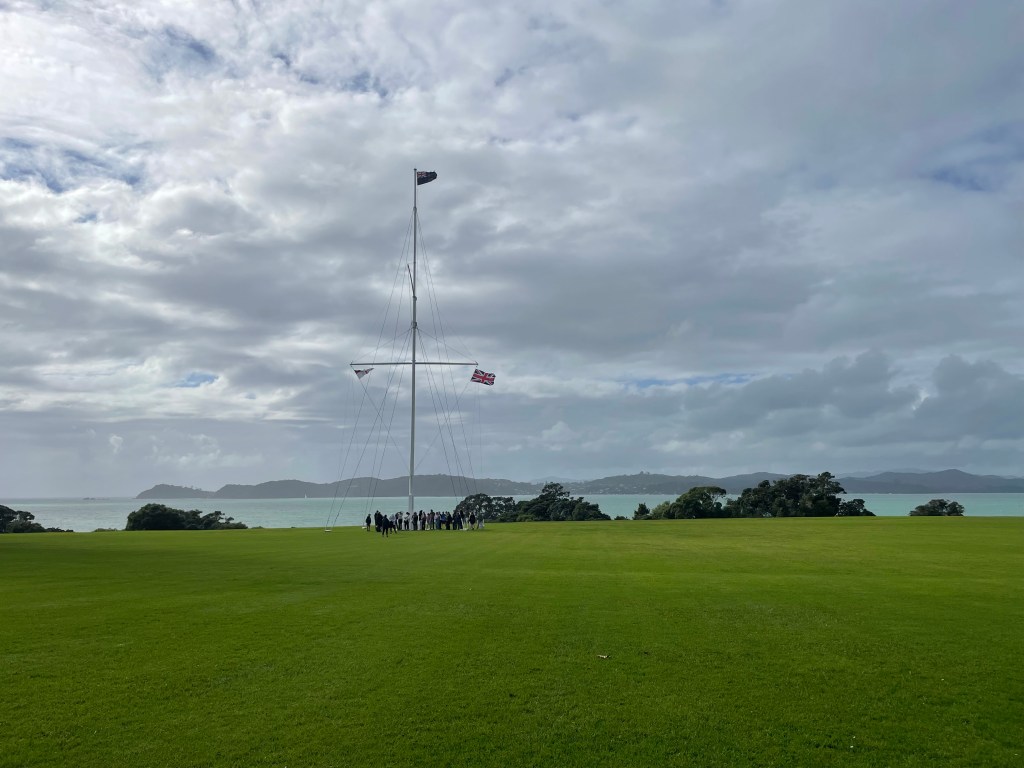
    We travelled to Opua to ferry back across to the other side of the bay. Today we went to Waitangi to learn some history of the signing of the Waitangi Treaty between 500 Maori chiefs and the British Crown, in 1840. The museum was very well resourced, even had sheets of signed documents of the Treaty. The fascinating thing is, one document was written in Maori language, the other a translation into English, but the translation didn’t match the original in some key facts about rights to lands and governance, which caused huge disruption in NZ over many decades. It has to be applauded that a Treaty was written in the first place, unlike in Australia where we still struggle to get a similar document accepted in our government.
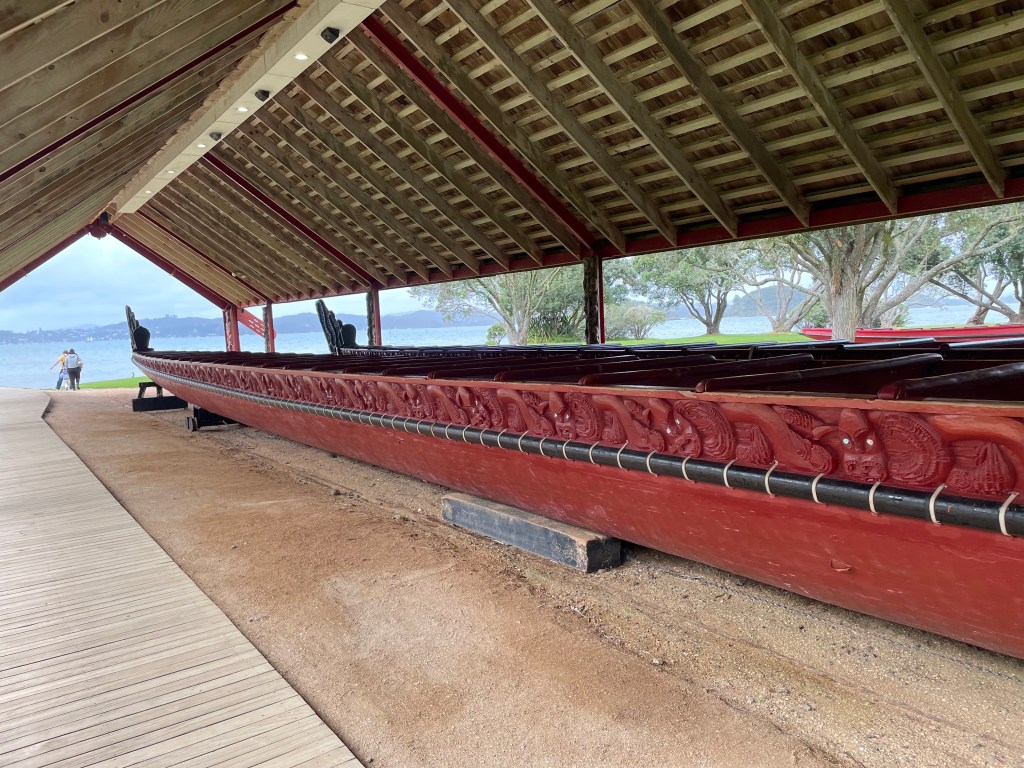
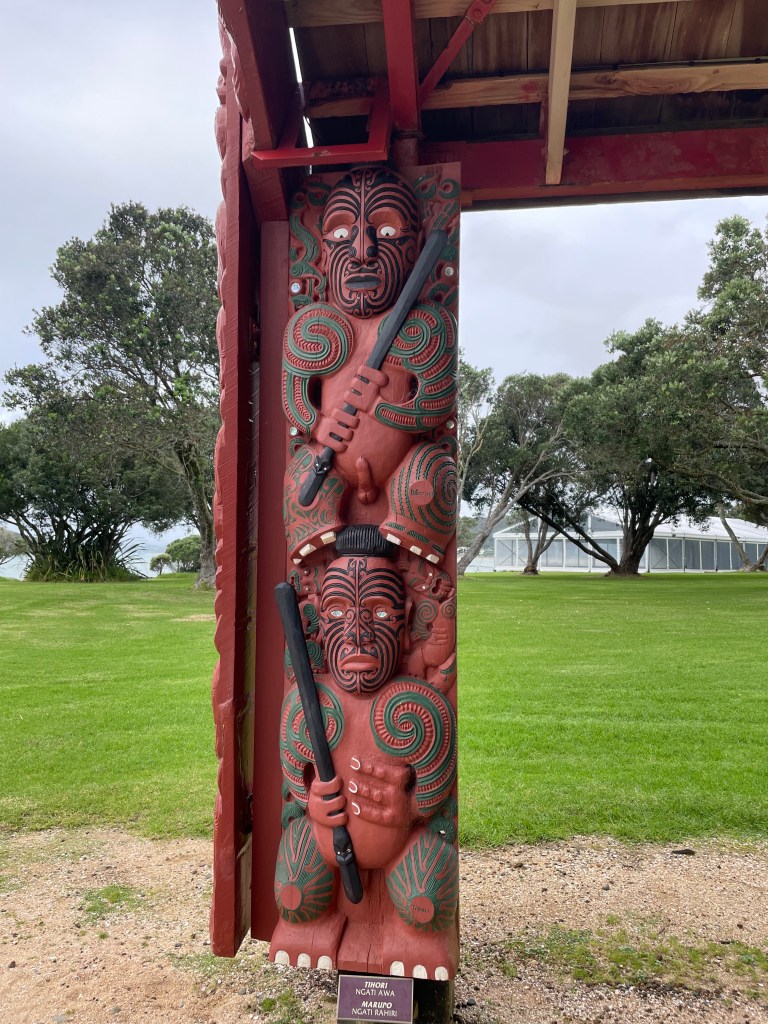
    We ended up at Paihia in a tiny campsite. The park owner was lovely there. When she heard we’d decided not to drive to the top of the island, she was horrified. So we were booked onto a tour bus for the next day.
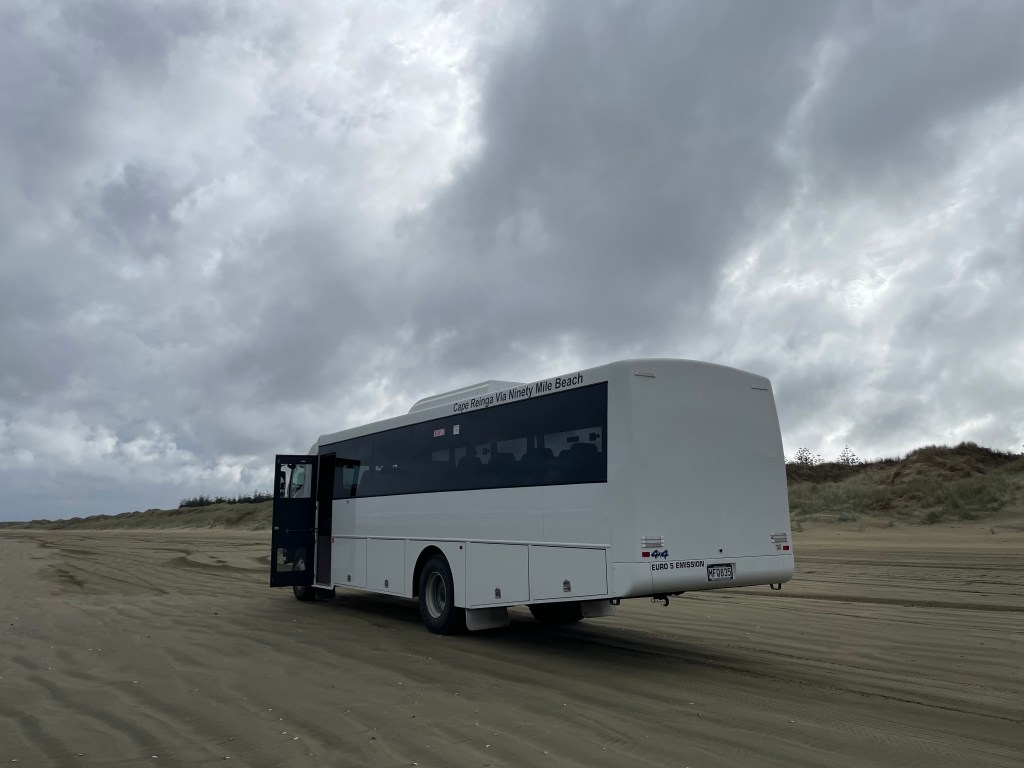
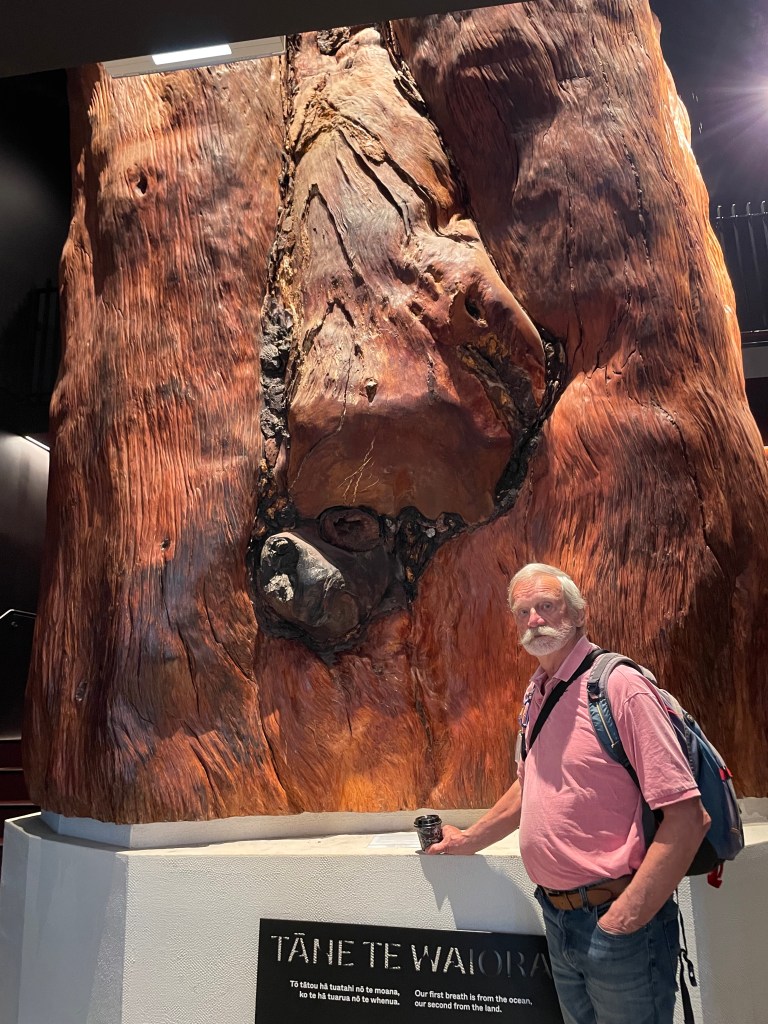
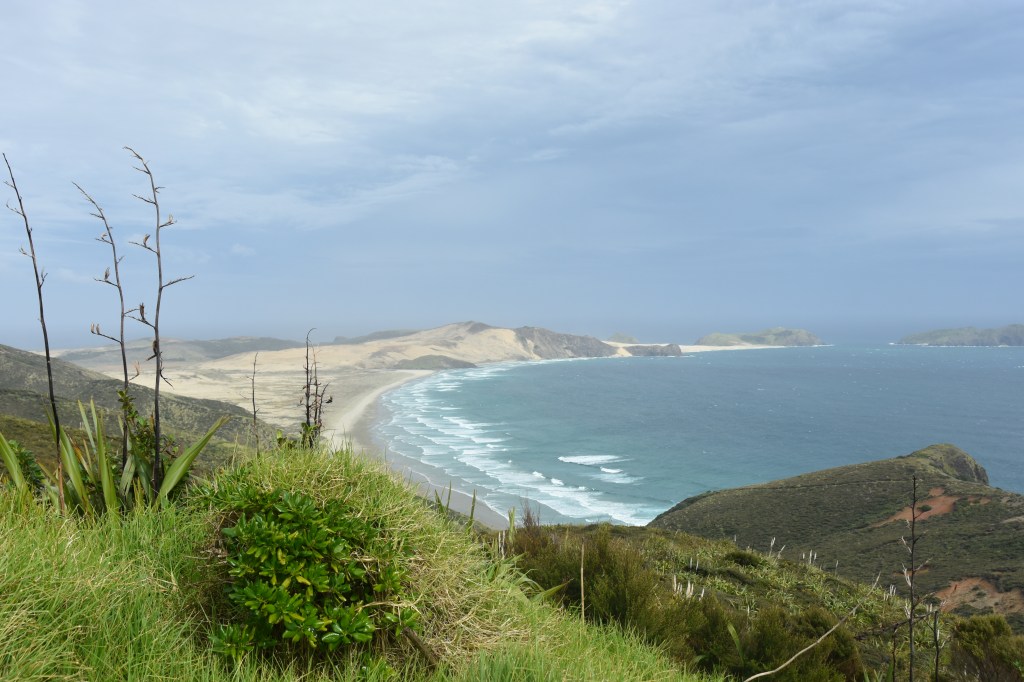
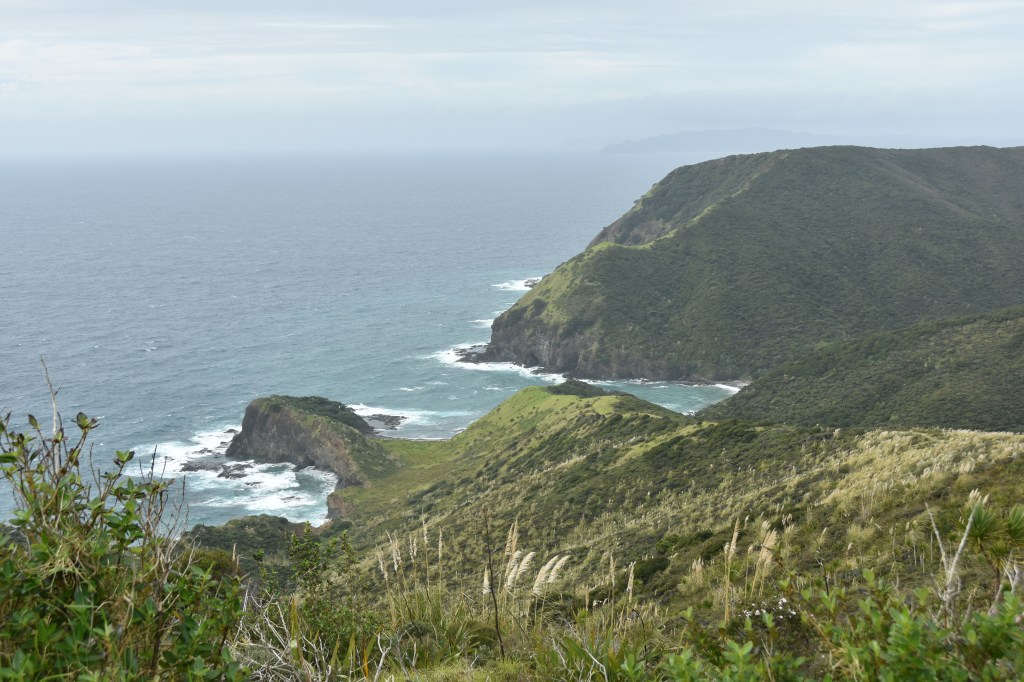
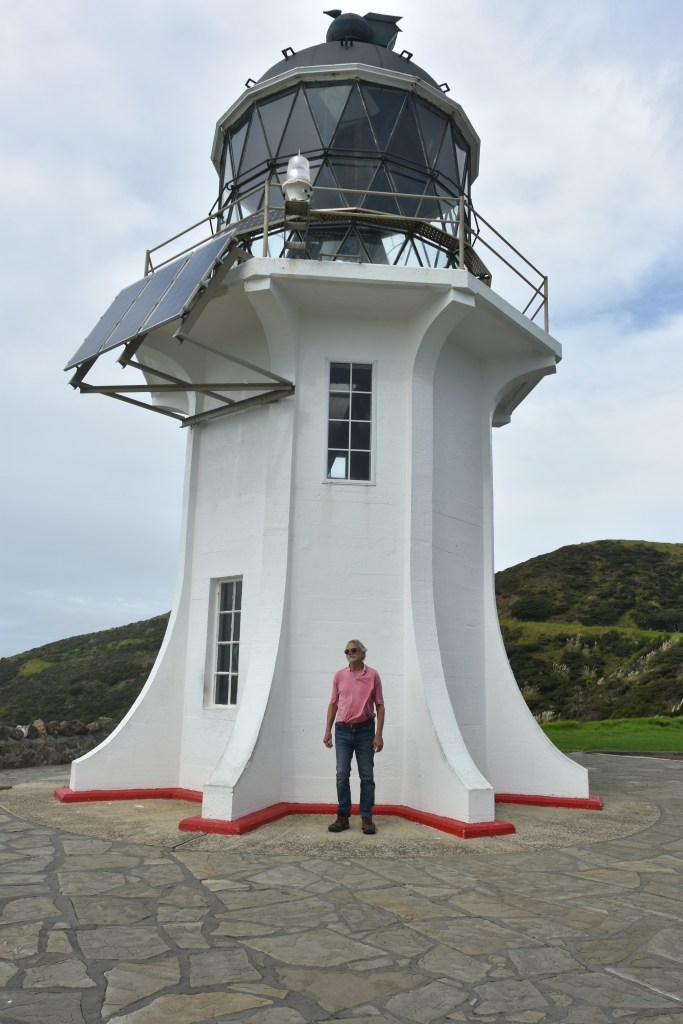
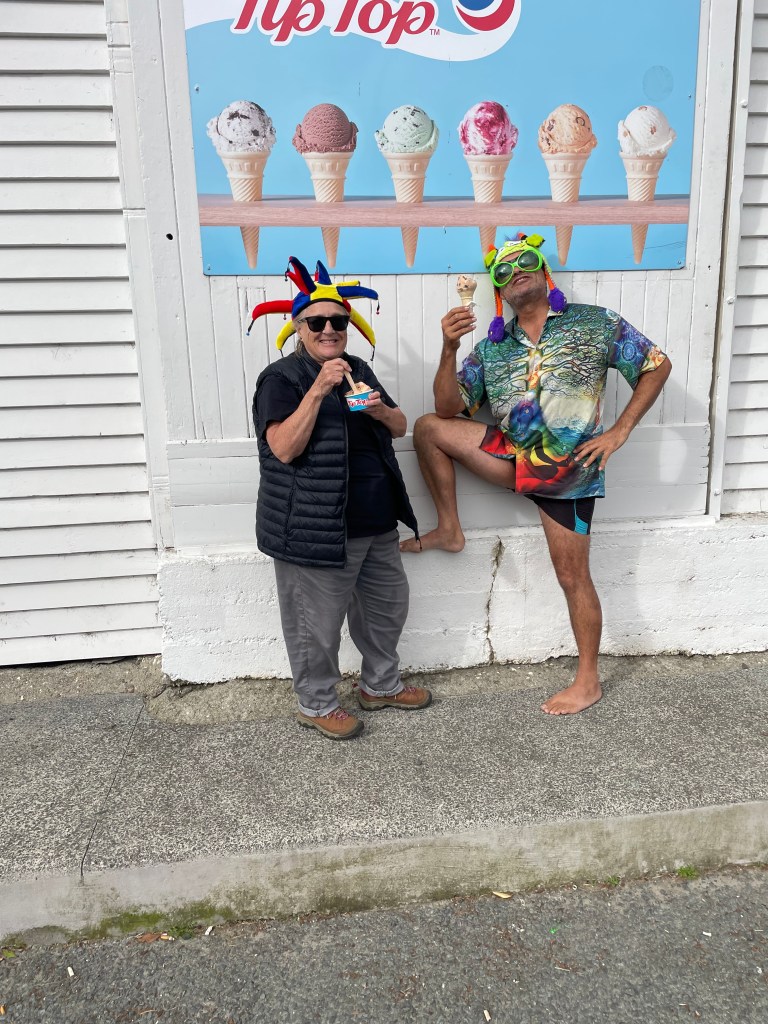
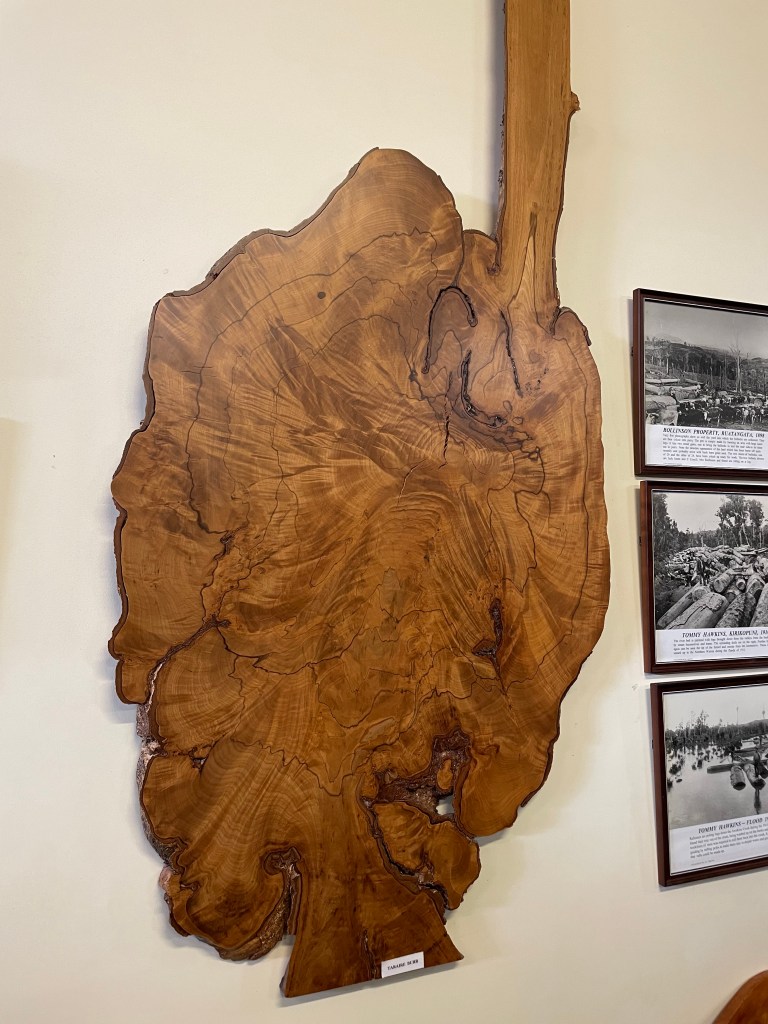
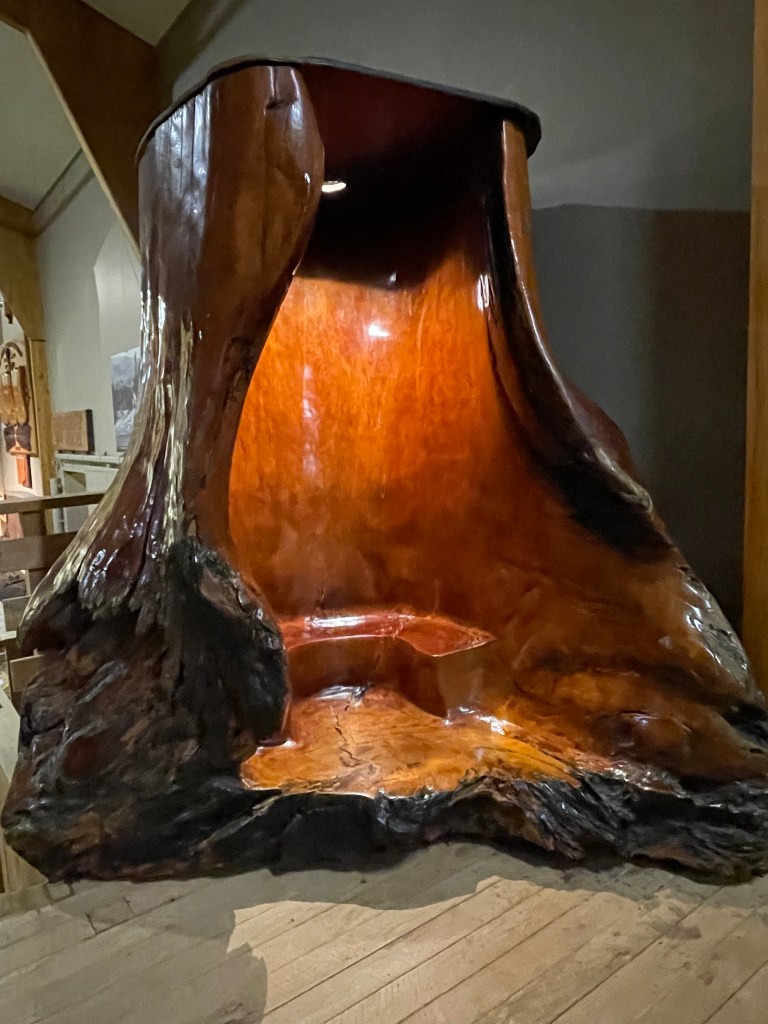
    It was great fun, but a long day. The driver definitely had his batteries charged, he didn’t stop talking or singing all day. He mentioned he’d been in the circus at one point in his life. He was a real performer. We travelled in a big bus up to a lovely gallery, Ka Uri Unearthed, for morning tea and a perusal of the wonderful gallery with exceptional woodwork. Here was the Kauri stairs, inside a tree stump that was sourced from the swamps after being buried for 40,000 years. We changed buses to a 4WD one which took us along the 90 mile beach. Here you had the option to sandboard down the dunes, not us!, and to hand dig for the abundant pipies. We cracked them open and ate the delicious raw seafood there and then. We continued by road on to Cape Reigna, the “place where spirits depart their long journey back to the homeland.” Here at the lighthouse, the Tasman Sea and the Pacific collide. Our guide continued to talk all the way home, trying to get us to sing karaoke, but it was a long day and most of us were over 60 so a nap was preferred to singing.
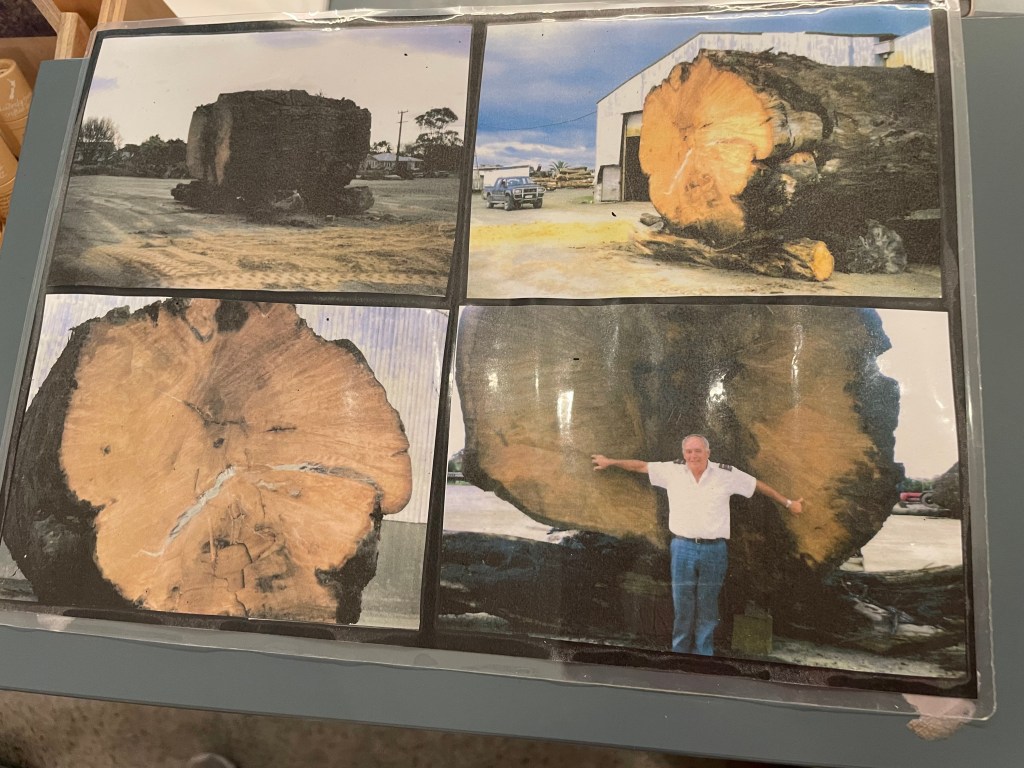
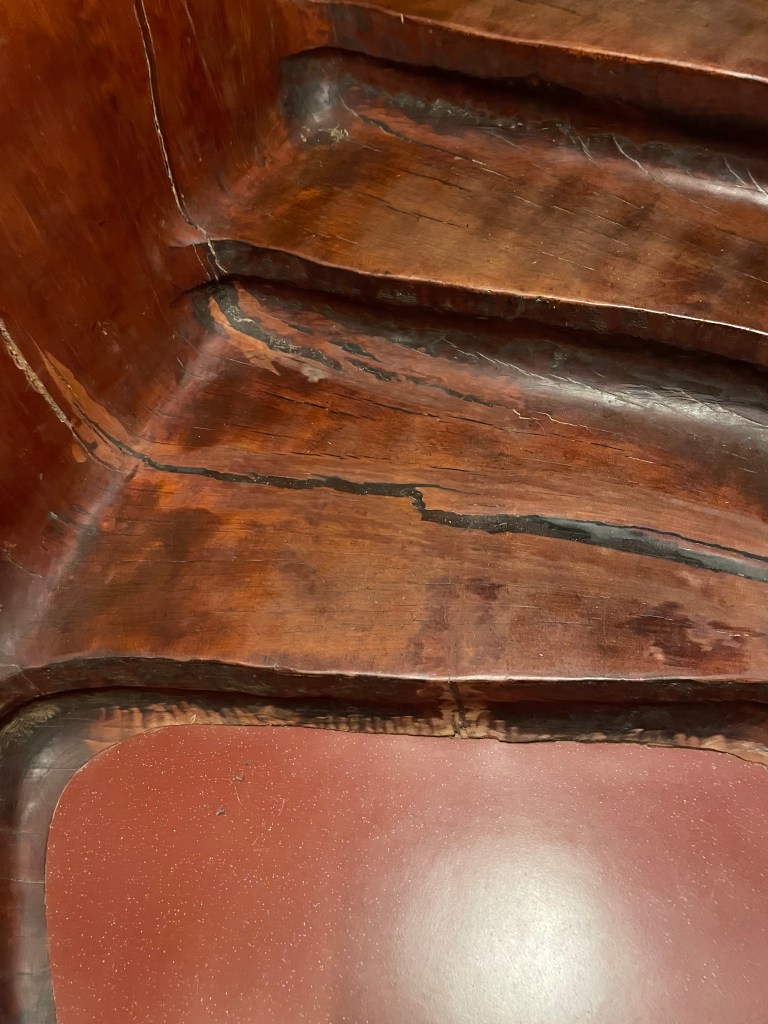
    The bus driver, me with his hat.

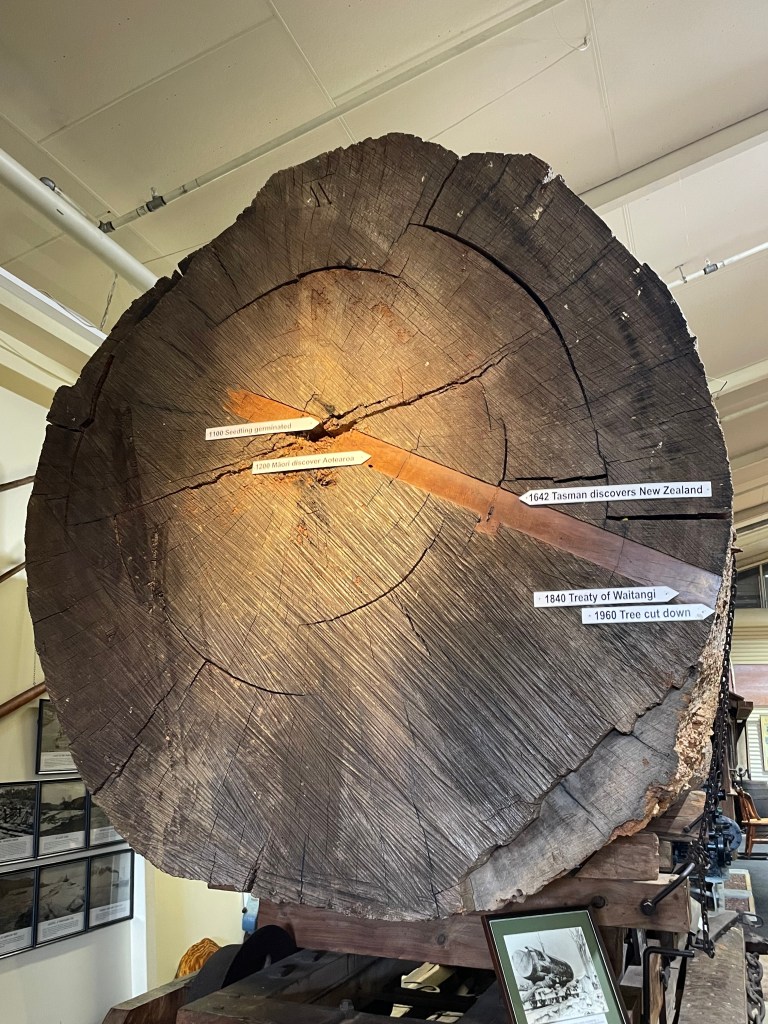
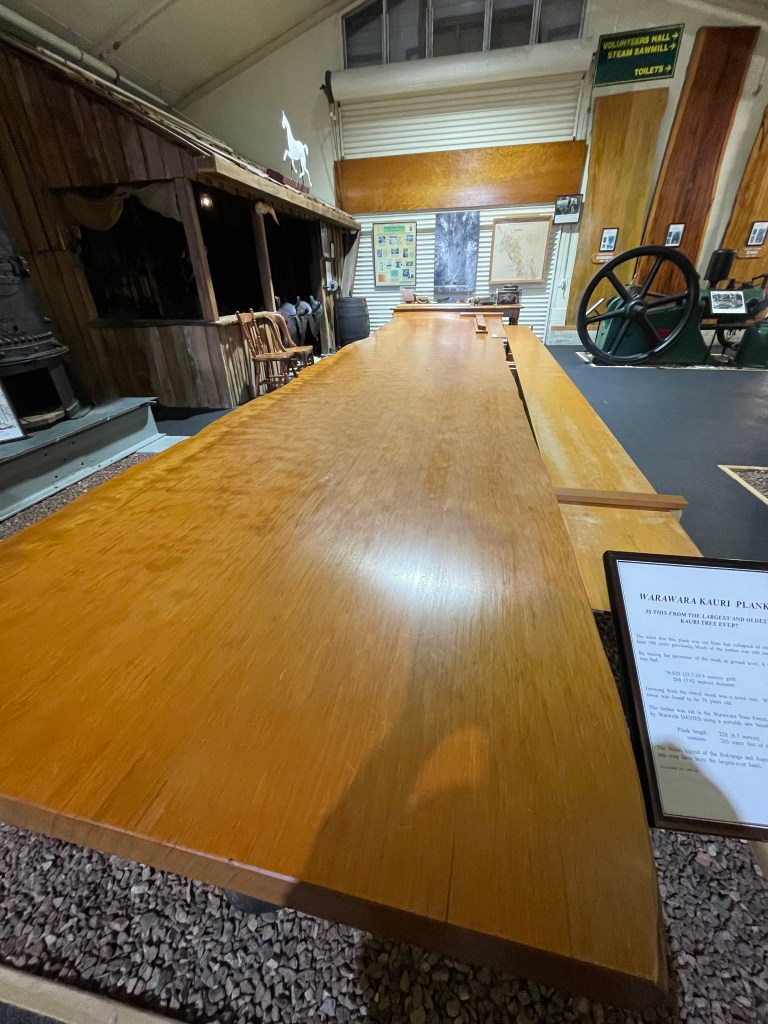
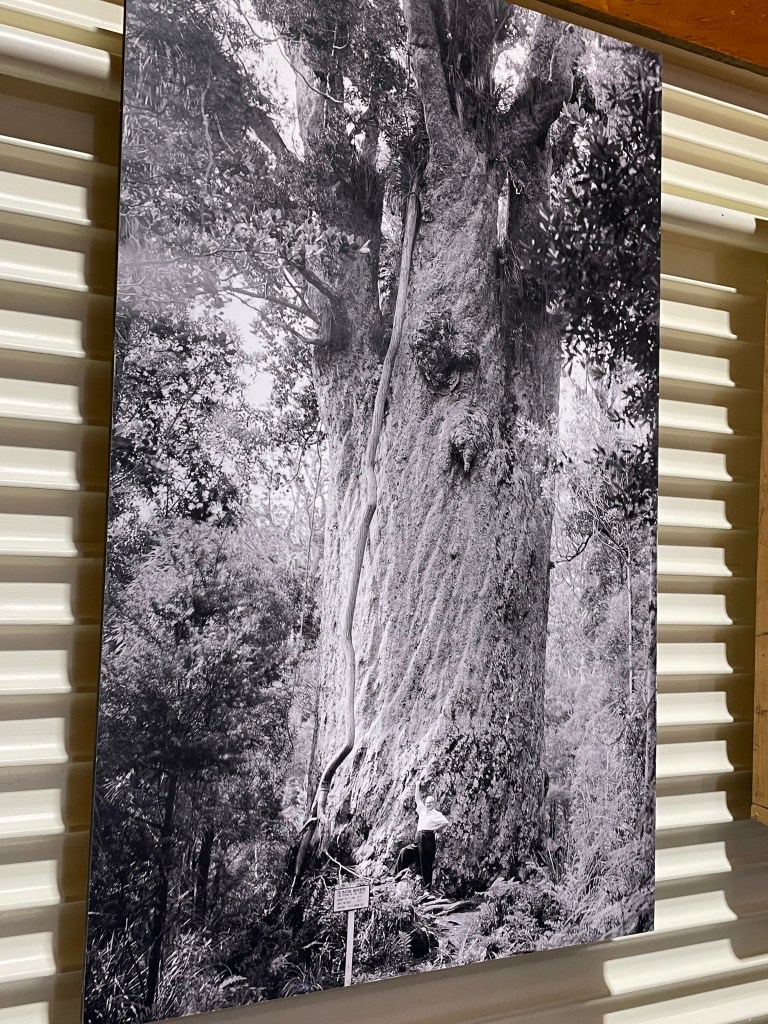
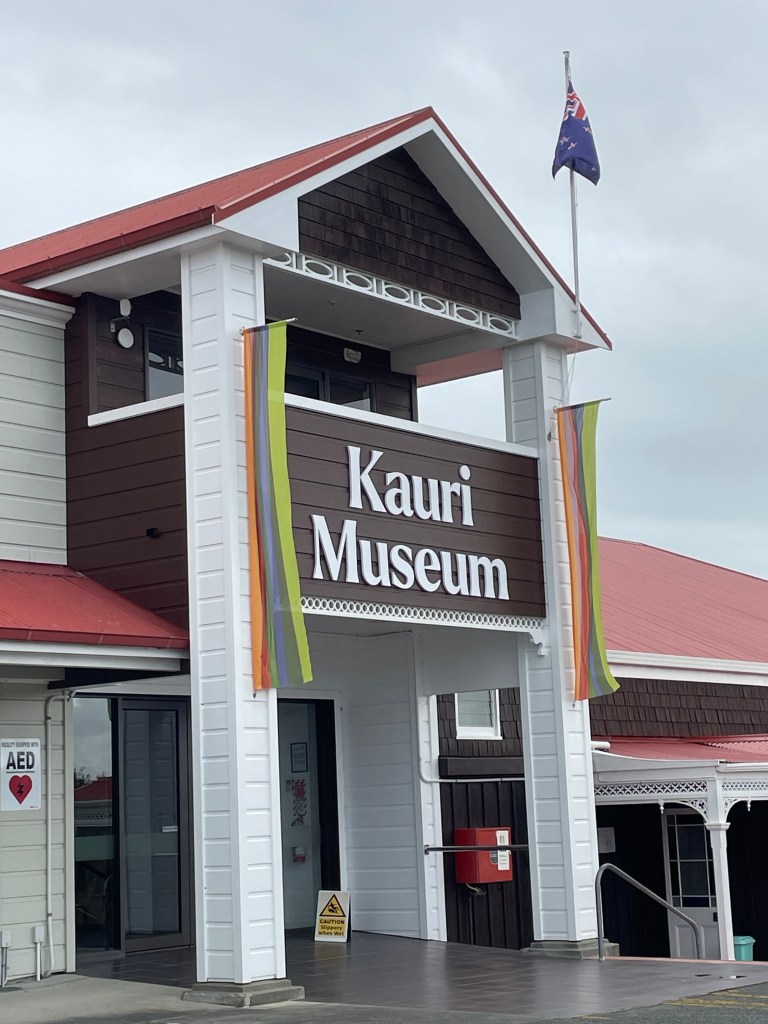
    It was time to head south. We’d heard about a Kauri museum on the west coast so headed there via Dargaville. The Matakohe museum was brilliant and I’d recommend to anyone. It took us about 3 hours in there before we both decided it was lunch time. The history was vast, in displays of timbers, photos, installations, and so much more. It made me sad to know most of the old growth Kauri had gone. At least the trees still standing would be protected. After a quick lunch we kept going south.
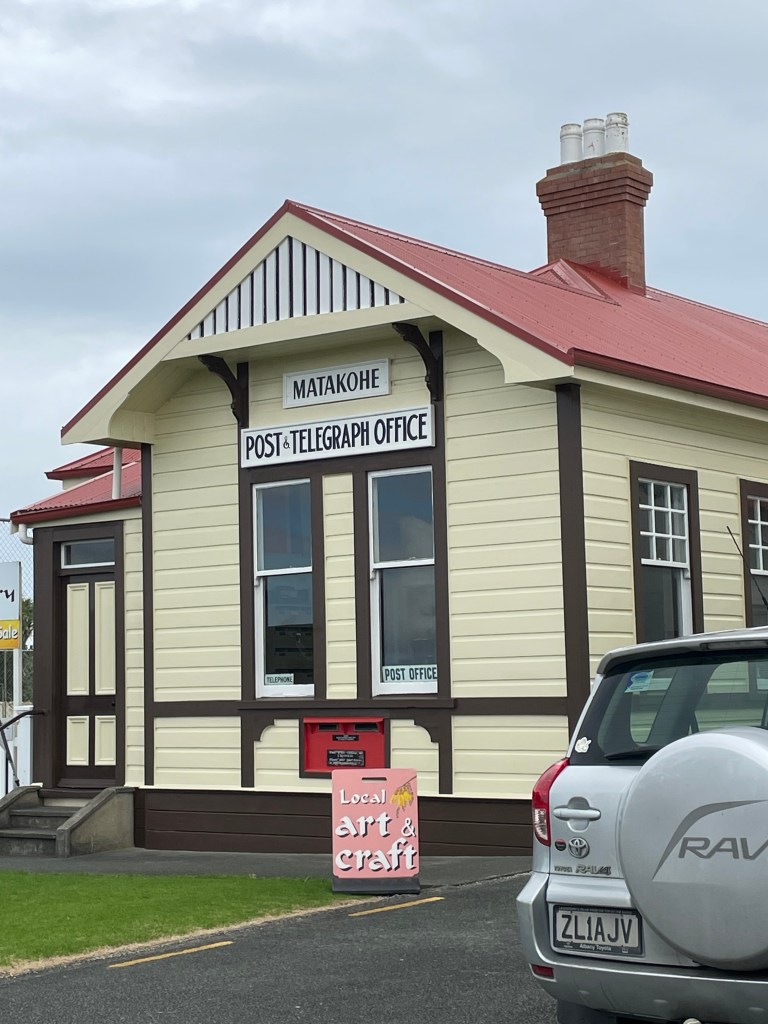
    NZ is such a compact country. We knew we had to return the van the next day to Auckland, so we stayed in a tiny surfing town called Muriwai Beach. It was the usual cold and wet, sloppy grass, slippery. And in the morning windy and misty, so I felt we were book-ending our NZ trip with challenging weather.

    We handed back the van and Ubered into Auckland. Nice to have a spacious room to properly pack our bags for the homeward flight. We opted not to do the tourist things here, instead just walked and walked – went to the Gallery for lunch and a lovely Italian restaurant for dinner.

    Our travels are over but our desire to return to NZ one day will always be there.
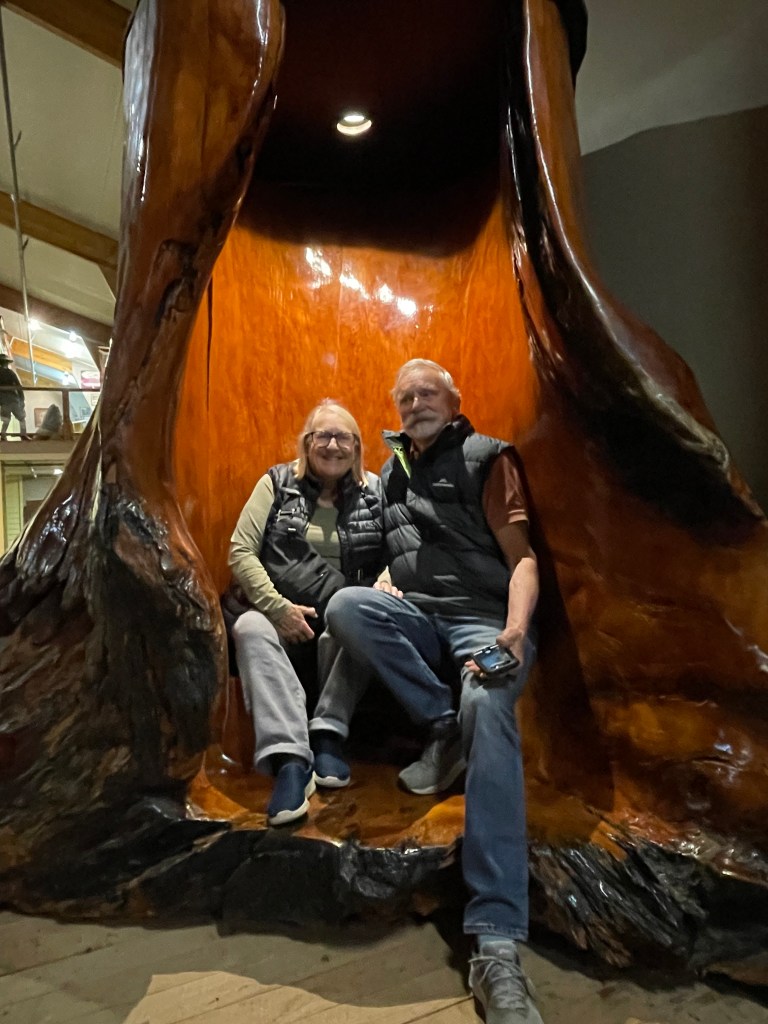
    Sitting in a massive Kauri tree.

    I realise your comments are not getting to me. Try the form below which could and should work.

    Cheers

    Jen & Nick
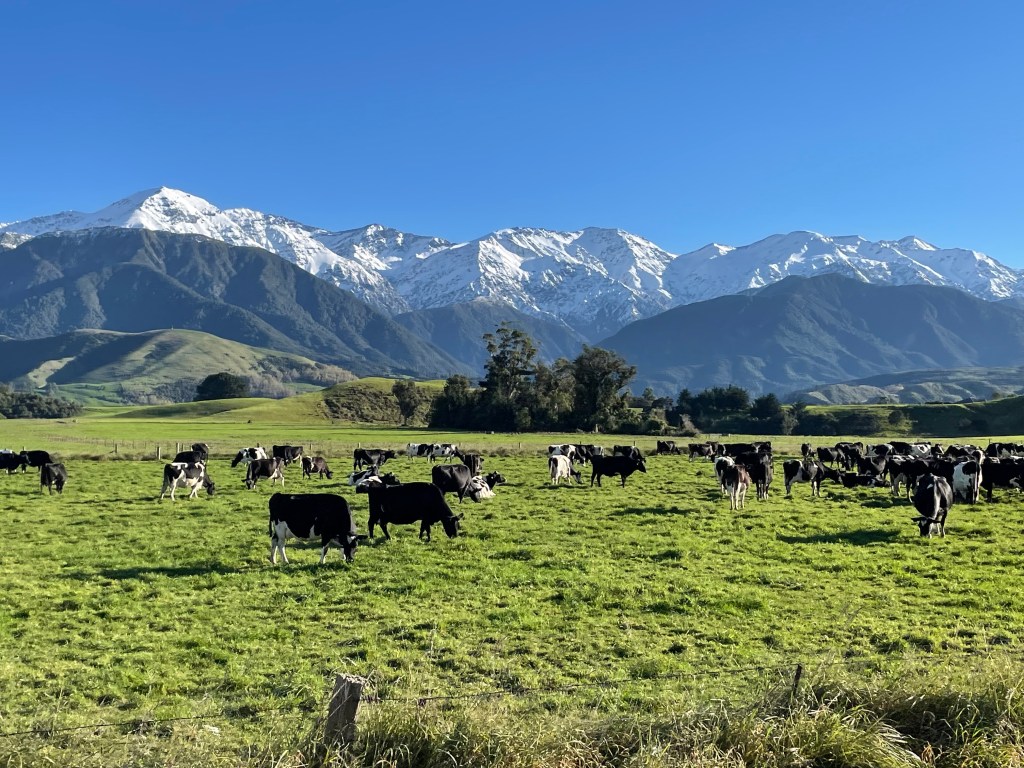
    Leave a comment

    This site uses Akismet to reduce spam. Learn how your comment data is processed.

  • New Zealand 3

    Dunedin, Temuka, Devauchelle, Kaikoura, Nelson.

    I am travelling faster than I can write, or for that matter, remember. I’ve had to list the towns we’ve stayed at in sequence to help me write this blog.

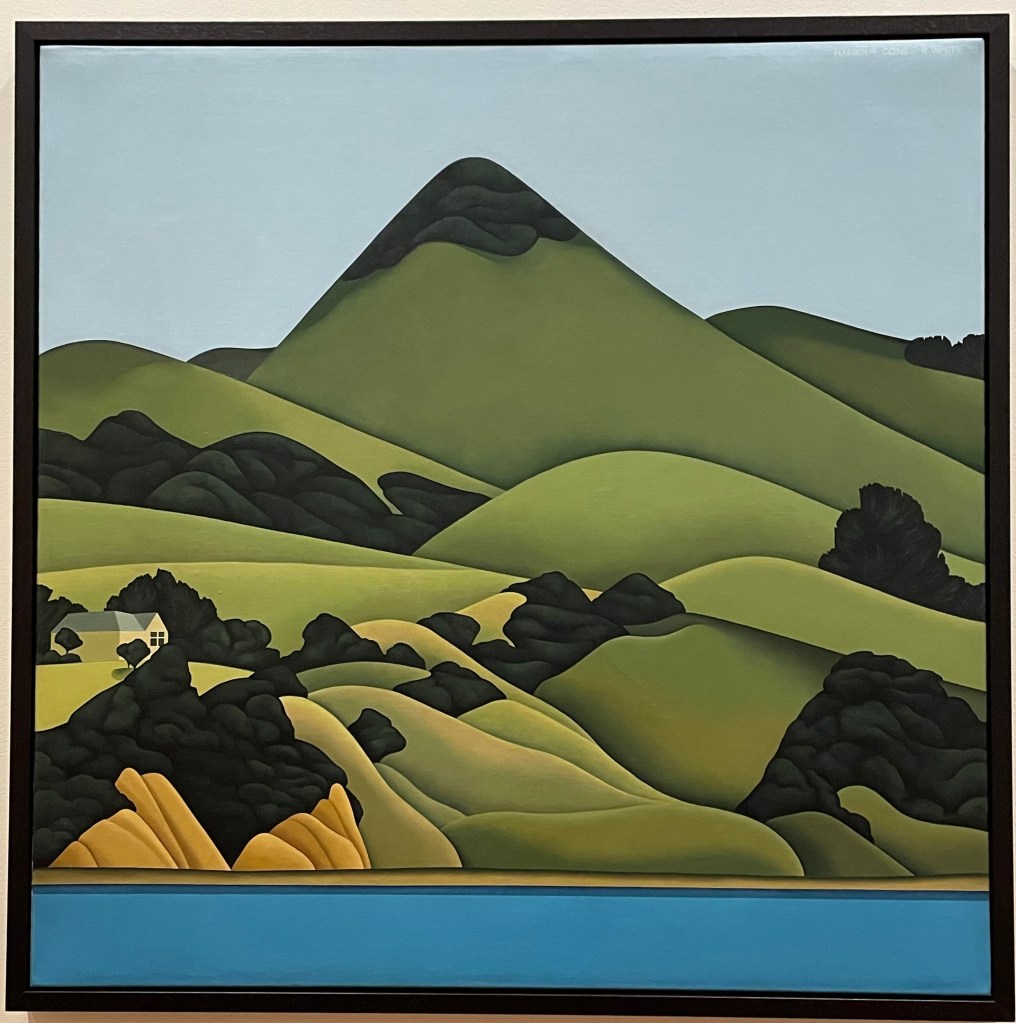
    Artist: Robin White. Harbour Cone 1972 Dunedin Public Art Gallery. Artist’s impression of landscape while she lived in Portobello, Otago Bay. This captured me when I saw it in the gallery.

    Dunedin. 

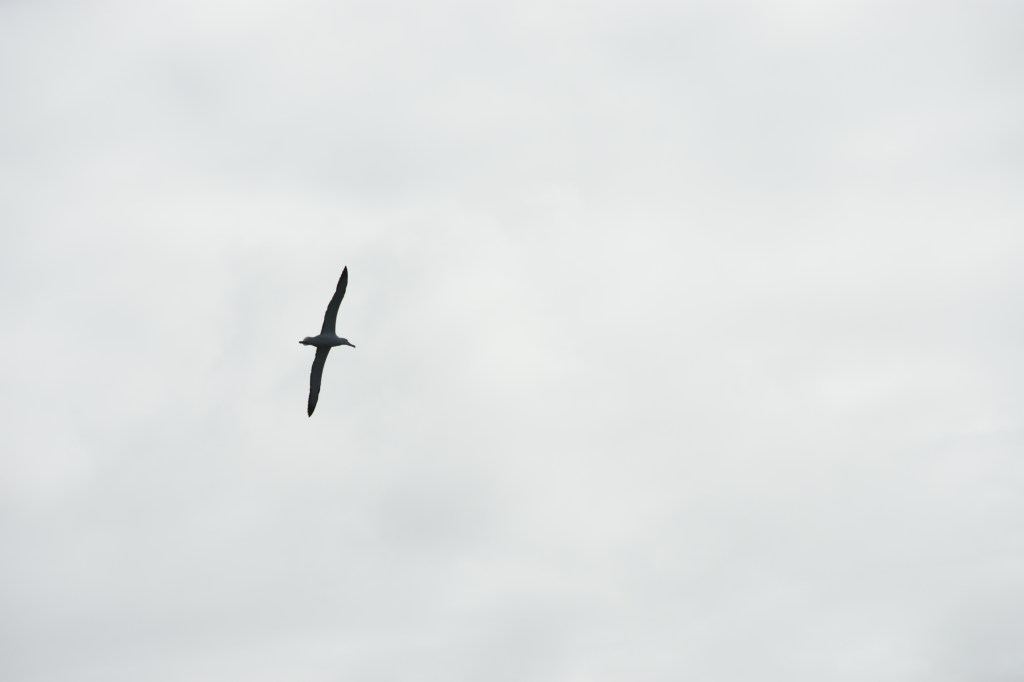
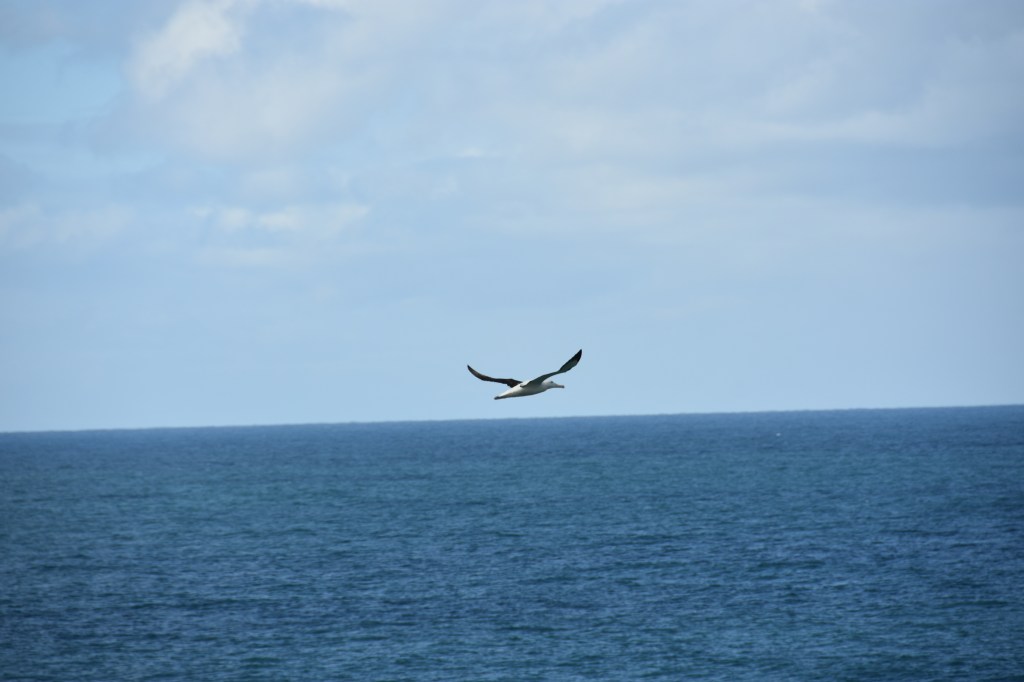
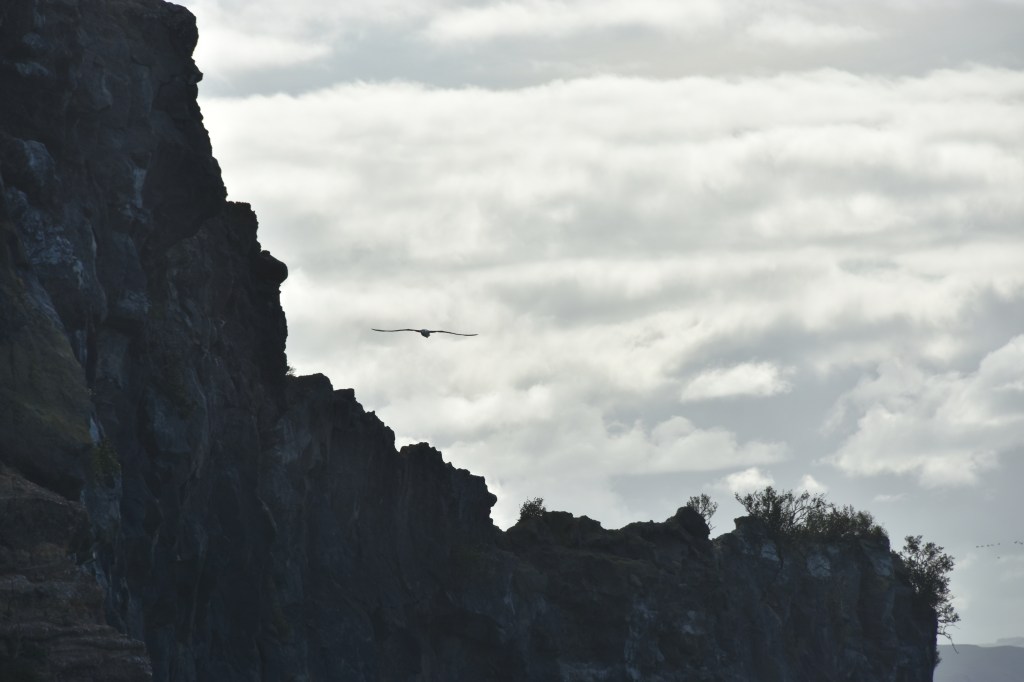
    It was still bitterly cold and at times wet. We camped at a place called St Kilda beach. The campground was just behind the high sandy banks of the ocean beach but well protected. The kids were back at school, so it was pretty quiet. We headed to the Royal Albatross Centre at the end of the Pukekura-Taiaroa Head on the south side of the Otago Peninsula. I LOVE albatross, ever since school I’ve always wanted to see them in their own habitat. I have been lucky enough to see them twice already, but each time is like a new magic experience. This NZ location is the only mainland colony in the world where the Royal Albatross breed successfully. This is due to the tireless work of a few individuals over more than 50 years, who have tagged them, measured them, observed them, and ensured their survival from predators including humans. I take my hat off to them. The birds in flight above us were amazing. I would volunteer here if I lived in Dunedin. And I’d get a longer lens for my camera! The drive along the shore of Otago Harbour, past a quaint town called Portobello, was very picturesque especially because the weather was calm, the sea glassy smooth.

    The next day we caught the local bus into Dunedin central. It was still freezing, the beanie and scarf were on as well as gloves! By the way, in the 1840’s the Scottish settlers called the town New Edinburgh, but the name was changed to Dunedin, which means Edinburgh in old Celtic language.

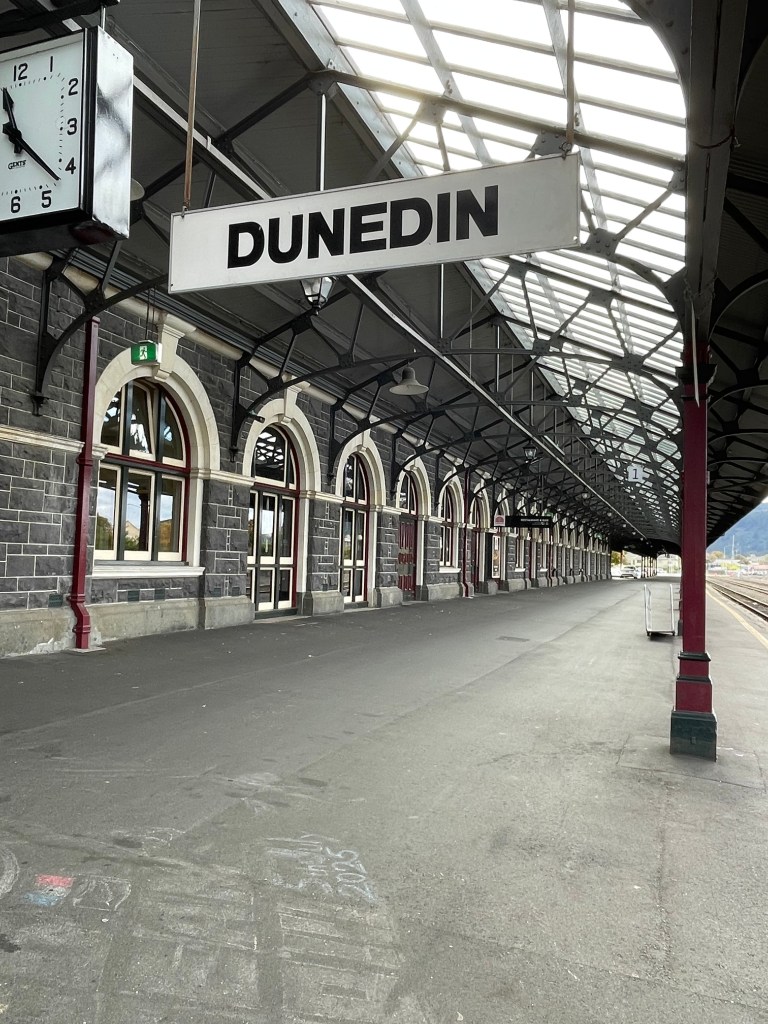
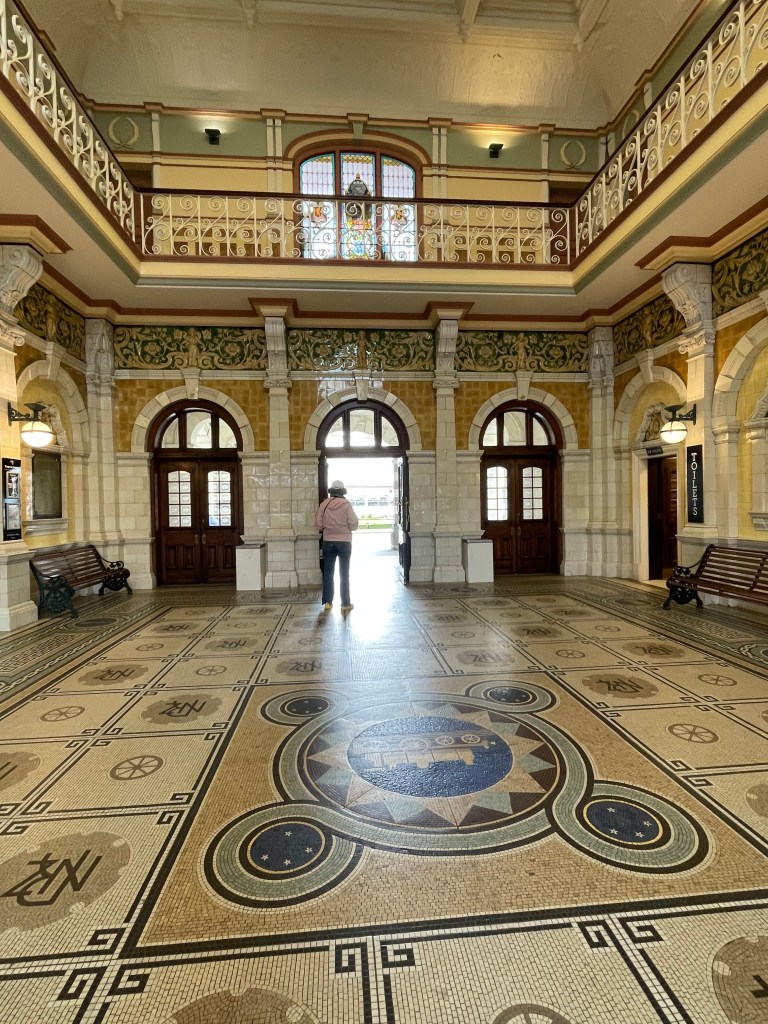
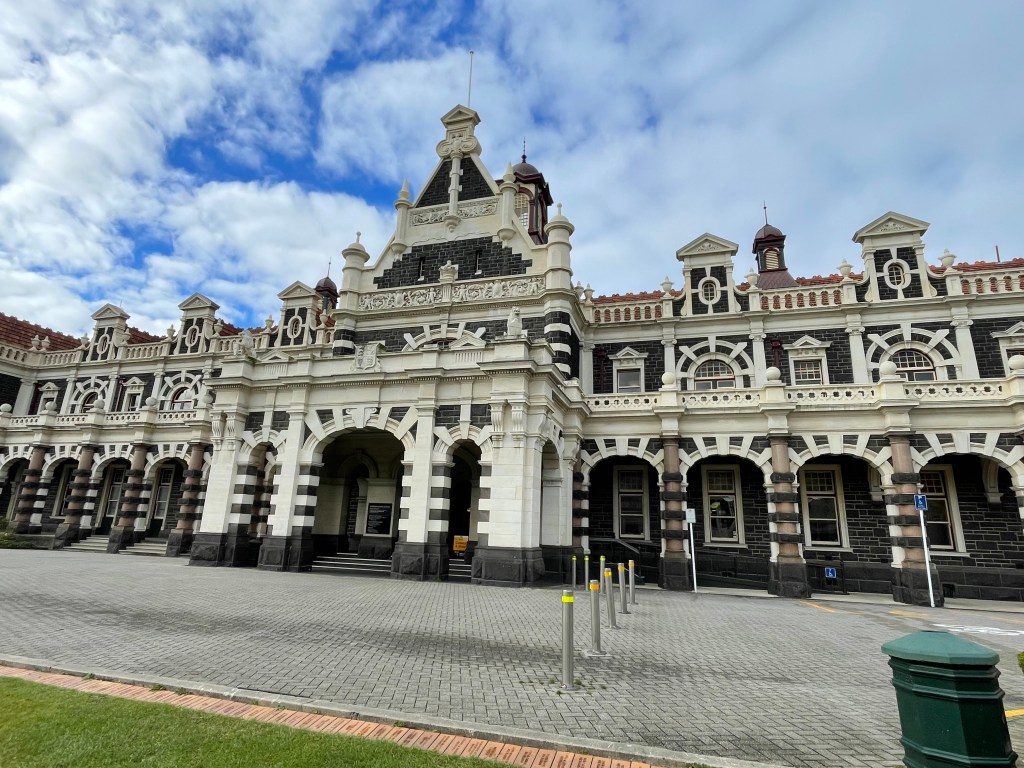
    From the bus stop in central Dunedin, we aimed for a warm cafe for coffee. Dunedin’s Public Art Gallery seemed the best choice. The artworks didn’t grab us, except one (see the picture above), but the coffee and cakes certainly did. We walked around the Octagon, or city centre, then headed for the historic train station. It was opened in 1906, nicknamed “the gingerbread house” for its distinctive Flemish renaissance design. 

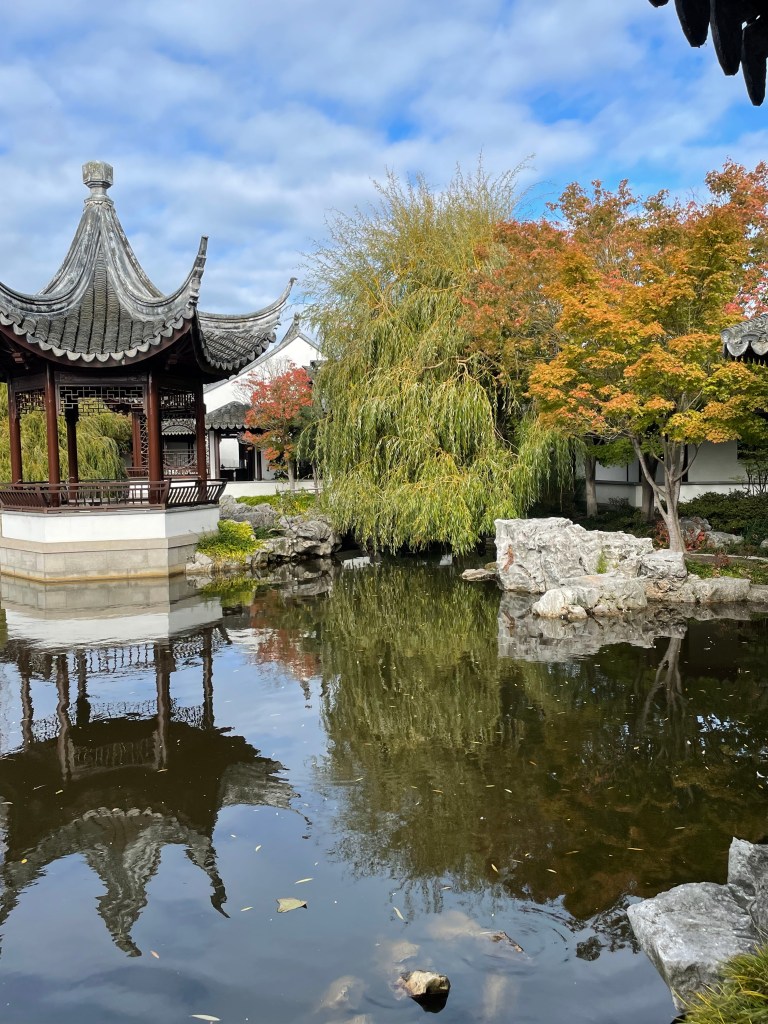
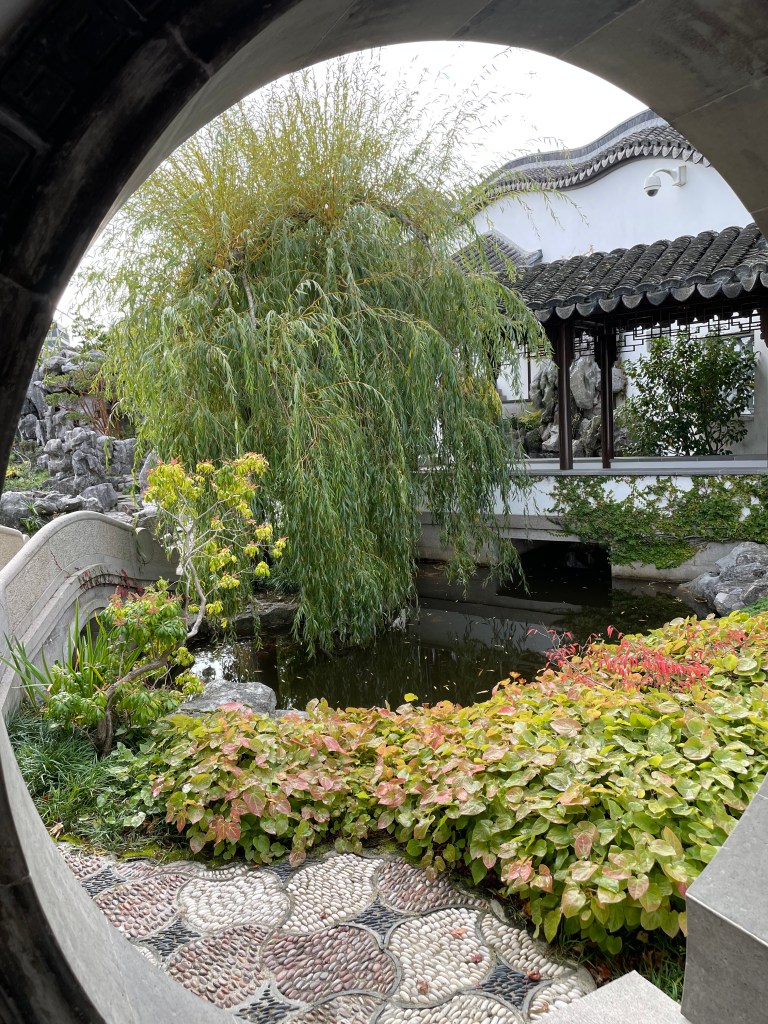
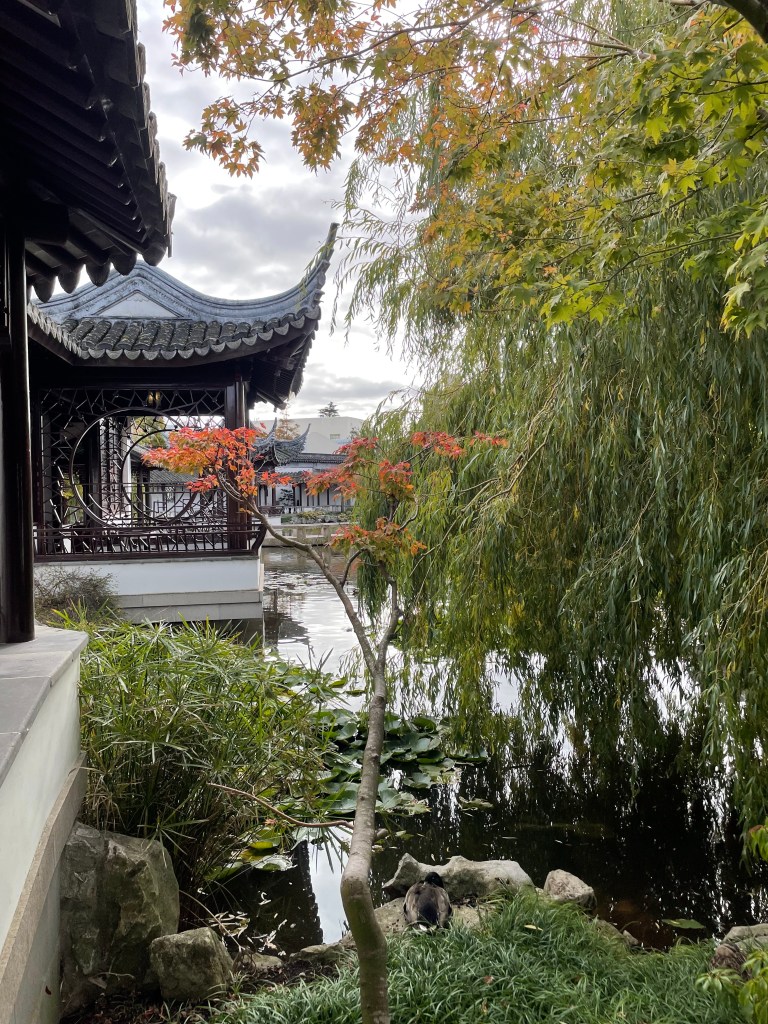
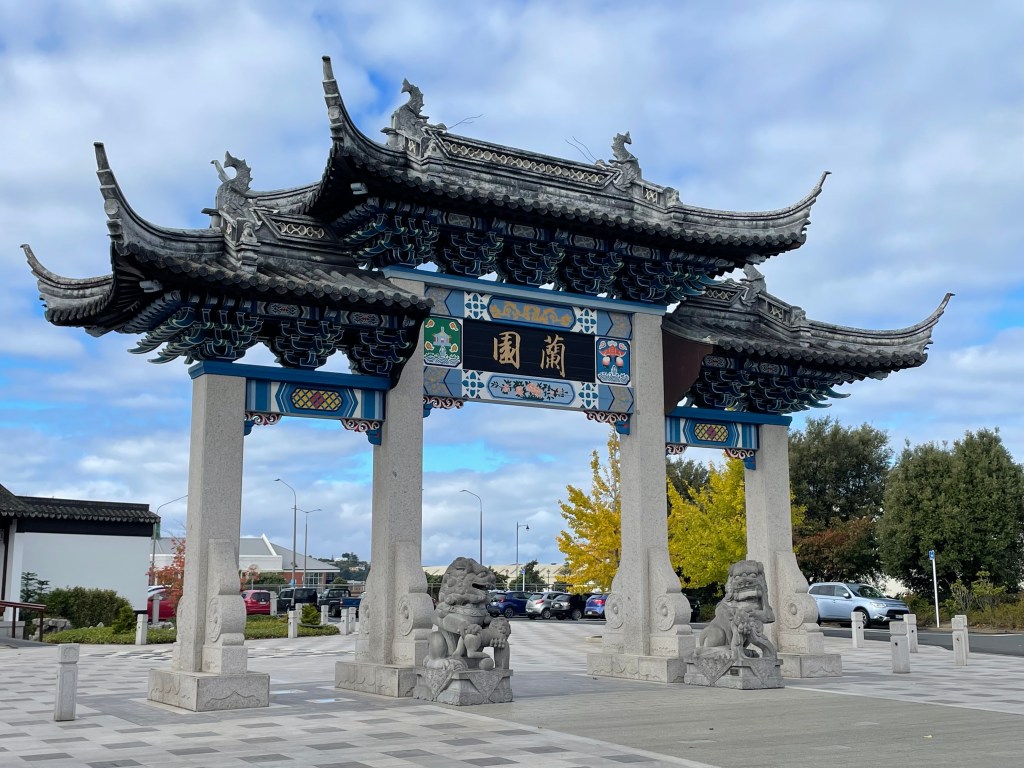
    Chinese Scholars Garden.

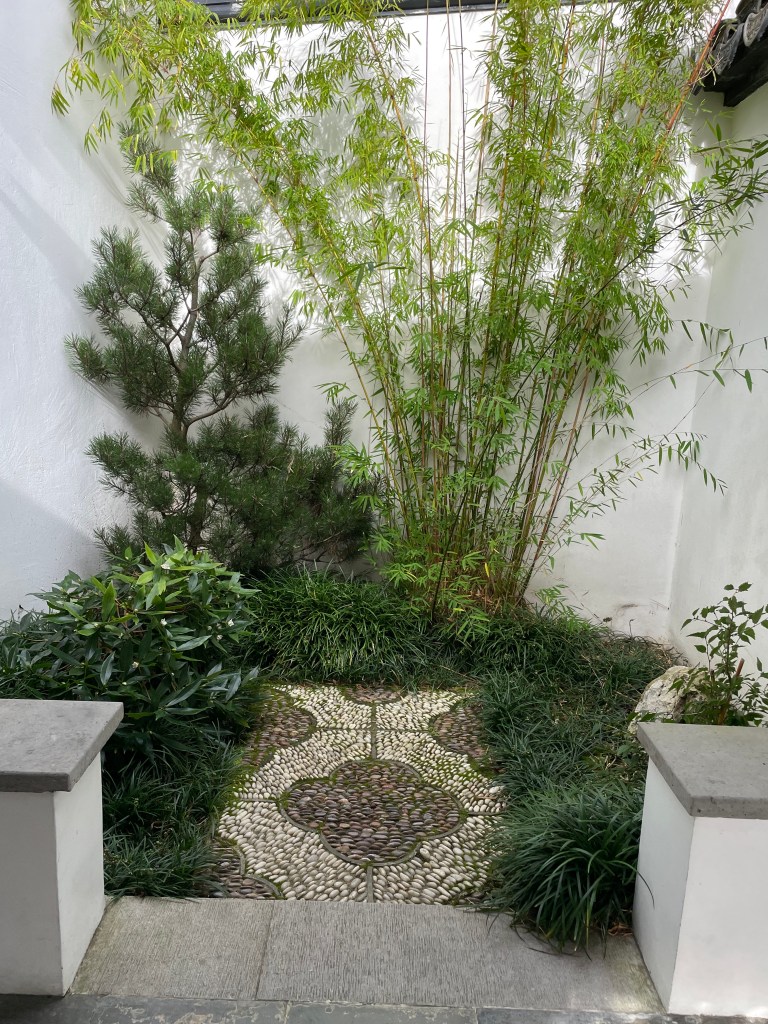
    We wandered around an authentic Chinese Scholars Garden. Dunedin and Shanghai are sister cities. The entire garden was built in Shanghai and assembled in Dunedin. All the rocks, plants, trees and timbers were specially chosen in China. There is a long history of Chinese settlement in Dunedin mainly due to gold mining, however many families remained, with some becoming esteemed in the New Zealand community.

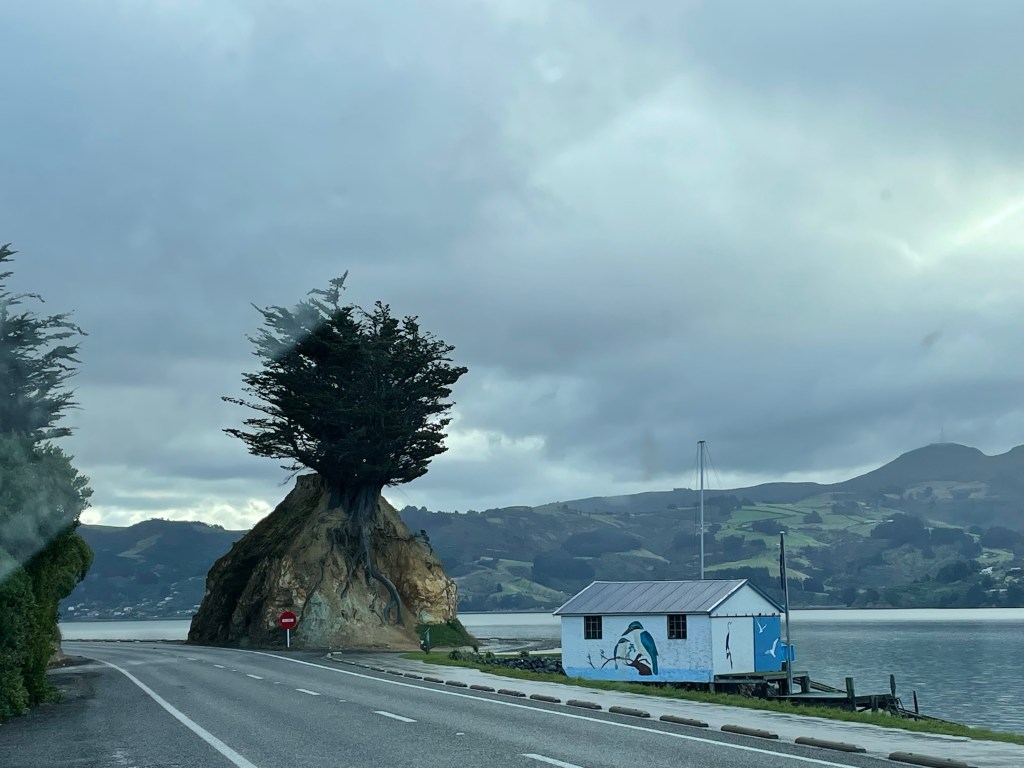
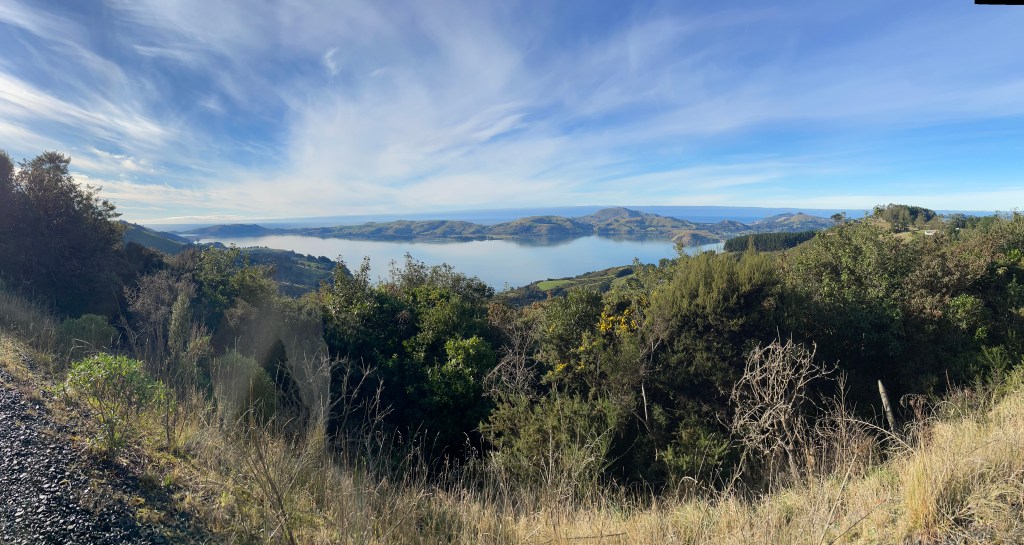
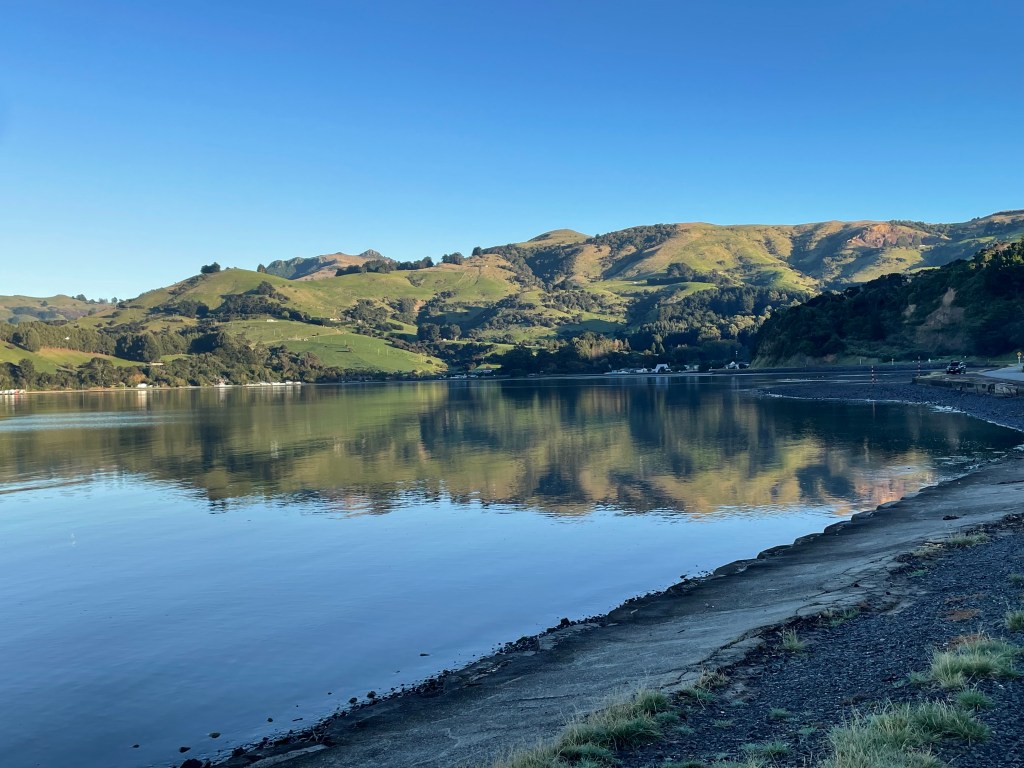
    View from north side of Otago Harbour.

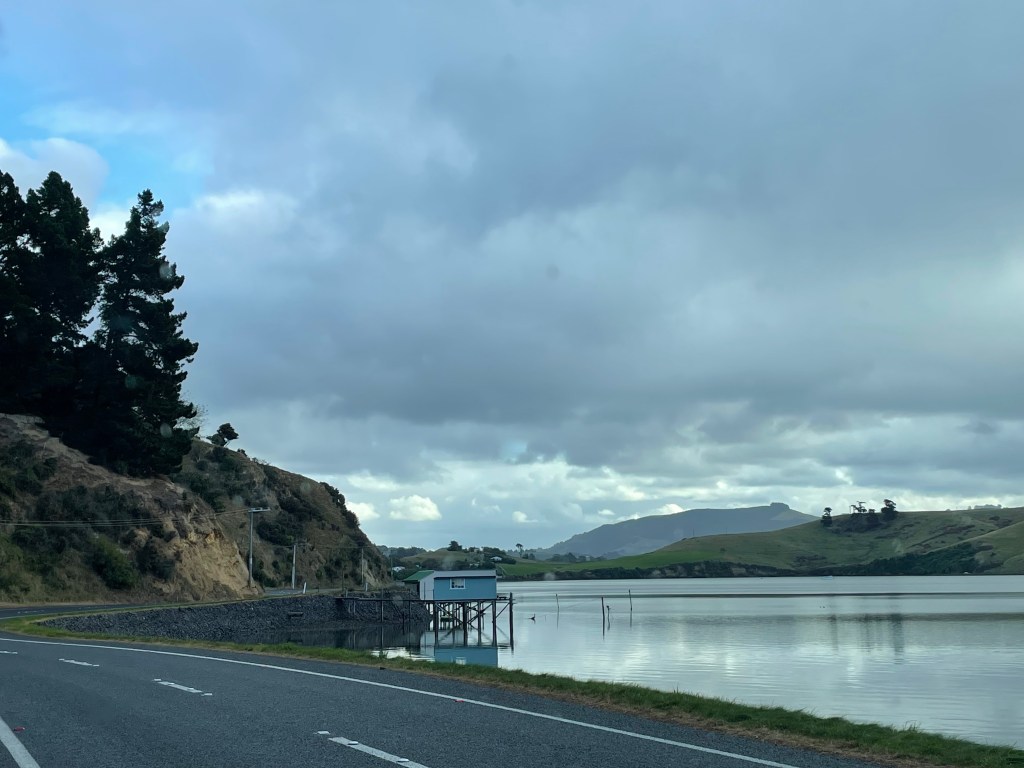
    There are plenty of other things to see and do in Dunedin but we needed to move on, there is always a next time…when I come to see the Albatross again. We travelled along the north shore of Otago Harbour to Port Chalmers and then wound our way up over the steep hills back to Highway 1.

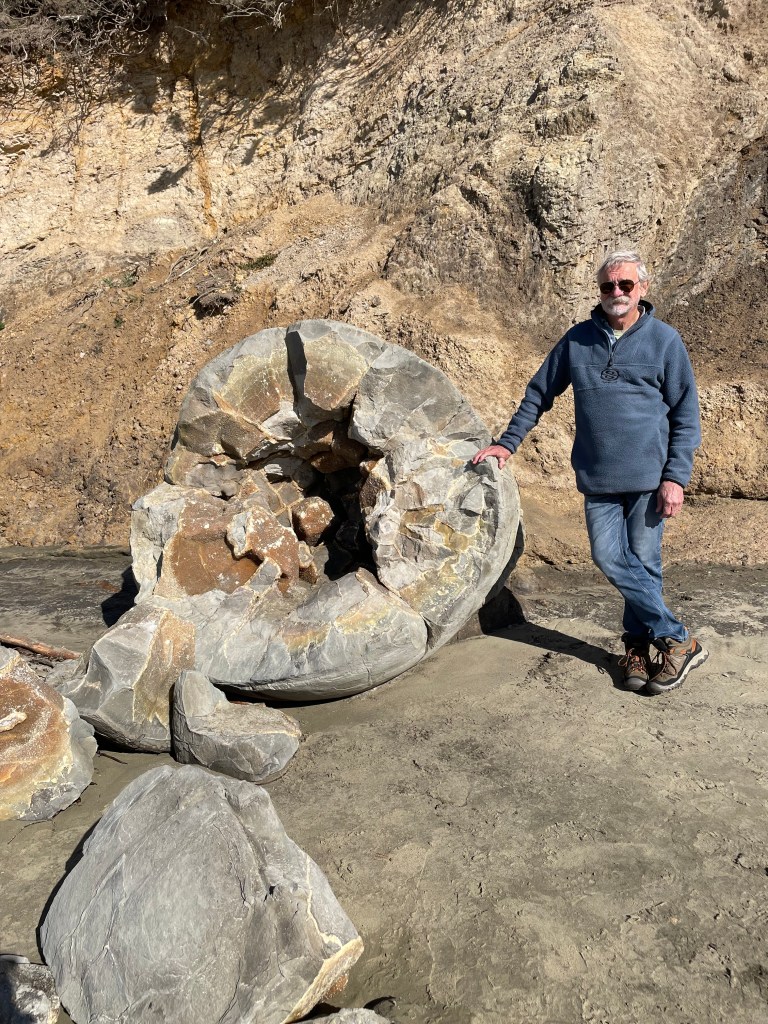
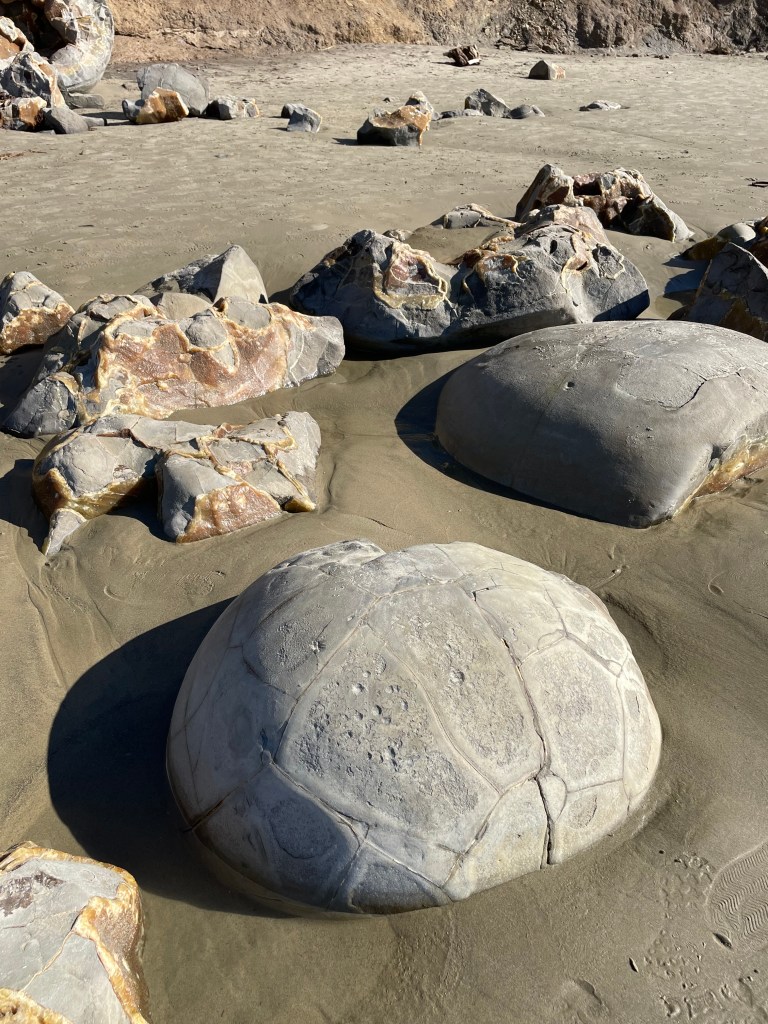
    Turtle shell?? Looks like it.

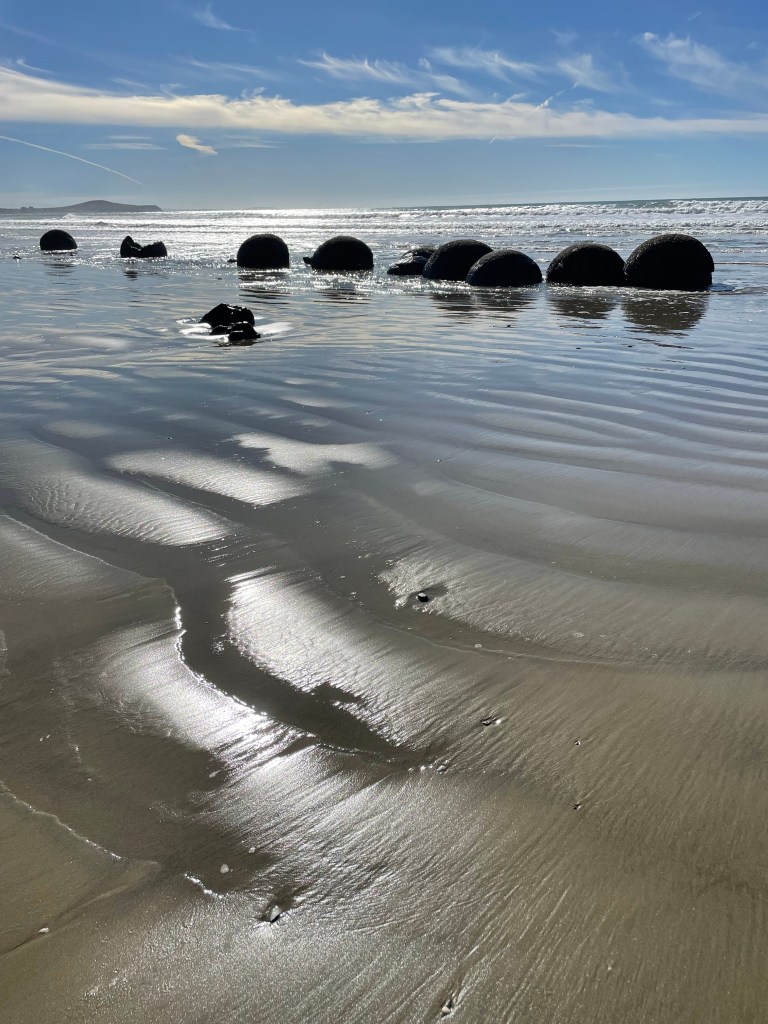
    Going north, we came across the Moeraki Boulders. These unique circular stones on the foreshore are from the age of the dinosaurs. There are 50 complete boulders, the largest weighing up to 7 tonnes and took 4 million years to form. I have to rely on the information brochure  to sprout these facts, but they were quite intriguing. Well worth the stop.

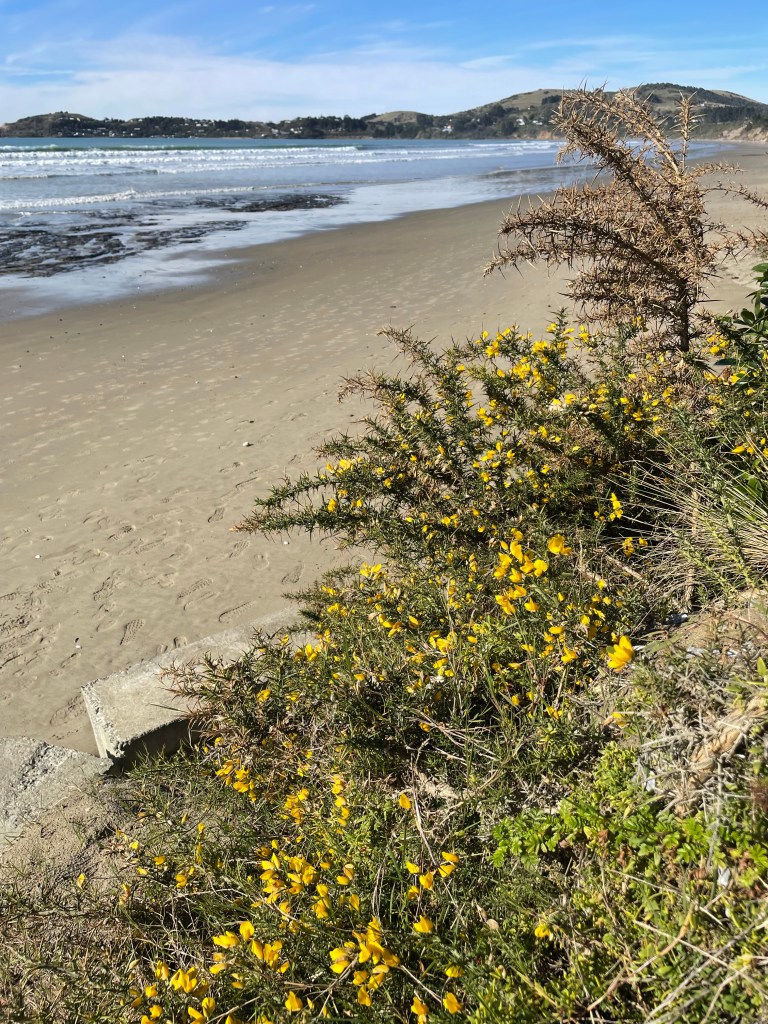
    Gorse. A terrible scourge on the landscape. Prickly, invasive, spreads like wildfire. Why didn’t the Scots bring Heath instead? But gorse is good for bees.

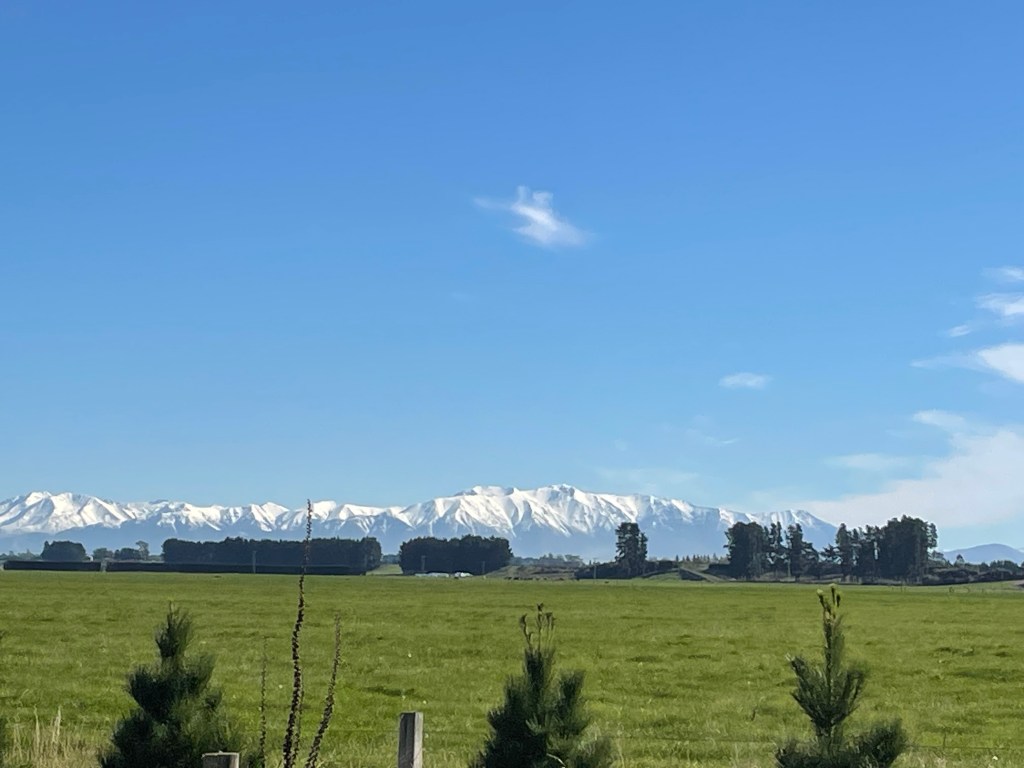
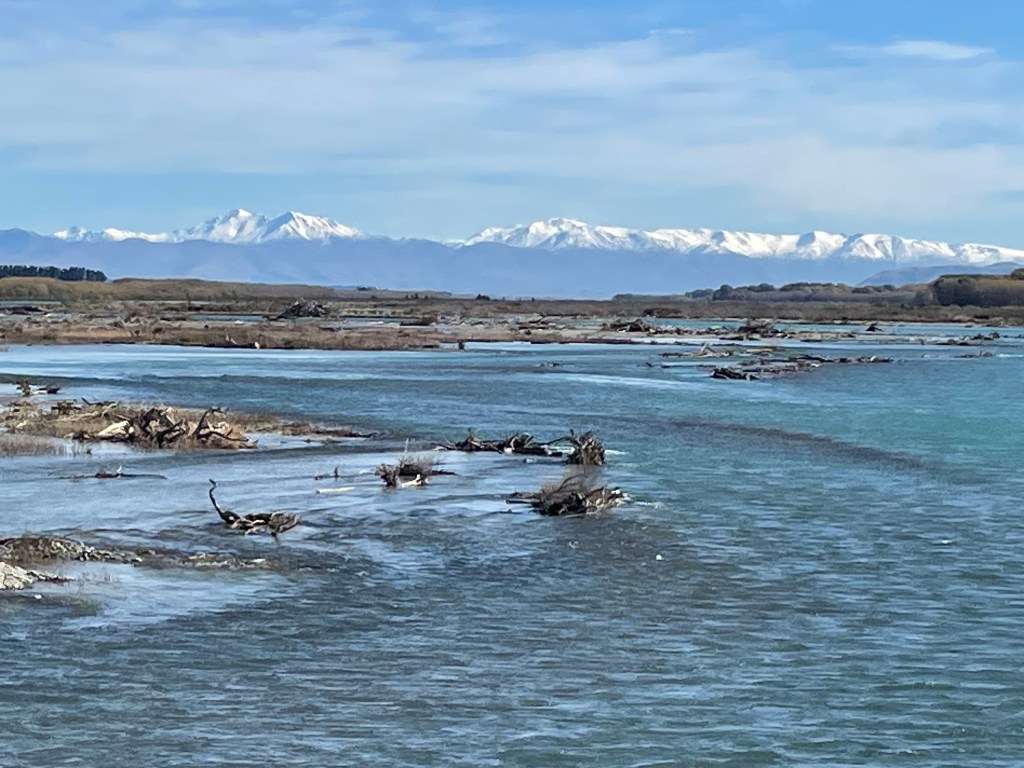
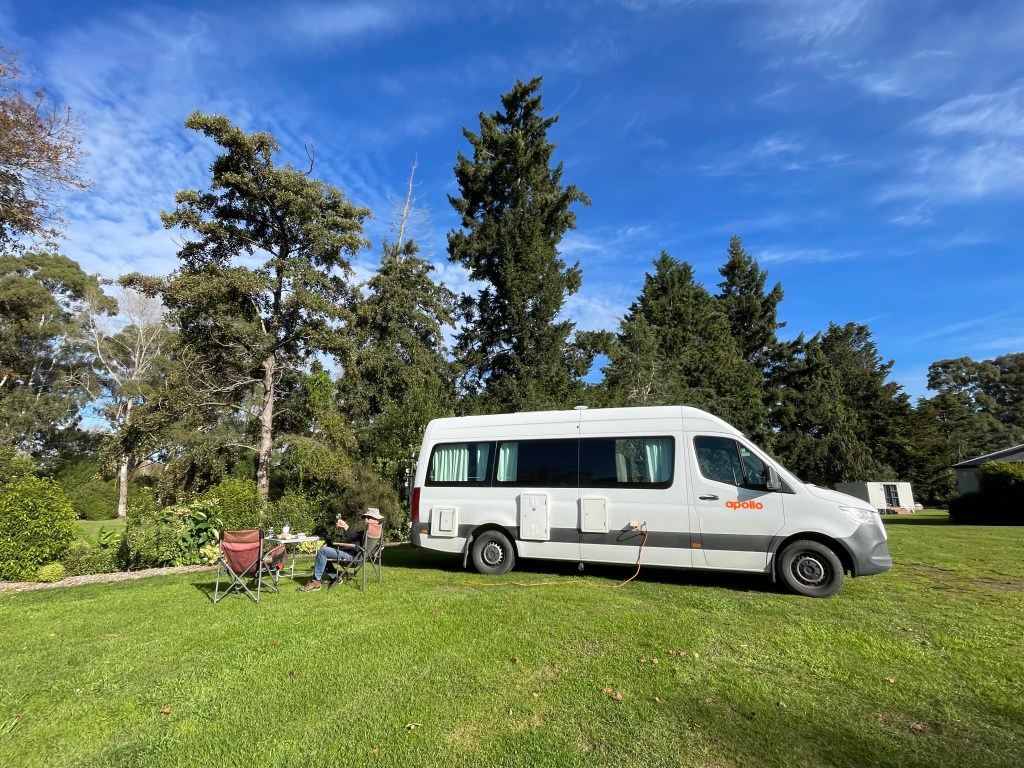
    Heading further north, we were accompanied for hundreds of kilometres by the picturesque snow capped mountains west of us. For Aussies who rarely see snow, they are captivating. We thought we’d stay at Timaru for the night, but it was a big bustling town so we continued on. Found a small campground at Temuka. Quiet, next to a golf course with established trees, good walks, and warm enough at last that we could break out the folding chairs to have a wine in the afternoon sun. 

    Our next destination was the Banks Peninsula, east of Christchurch. We’d been told it was worth going there and it didn’t disappoint. Fine warm weather helped enormously. We went to Akaroa which was quaint, bustling with holiday visitors, it reminded us of Sorrento in Victoria. However they discouraged parking of big vans like ours. So by the time we found a free campsite to park the van, we were a long way from the centre of town. Had we stayed, we would have been in a cramped gravel carpark with no view except of other campers. So we back-tracked to a quiet town called Duvauchelle. The lovely campsite overlooked a bay on Akaroa Harbour. The weather was calm, and warm. It was the Friday before the long weekend Anzac Day holiday, so campers with boats and kids pulled in after dark. We left the next day, but saw a constant stream of cars going to the Peninsula. It must be the holiday spot for Christchurchians. Why not? It’s so beautiful.

    Duvauchelle

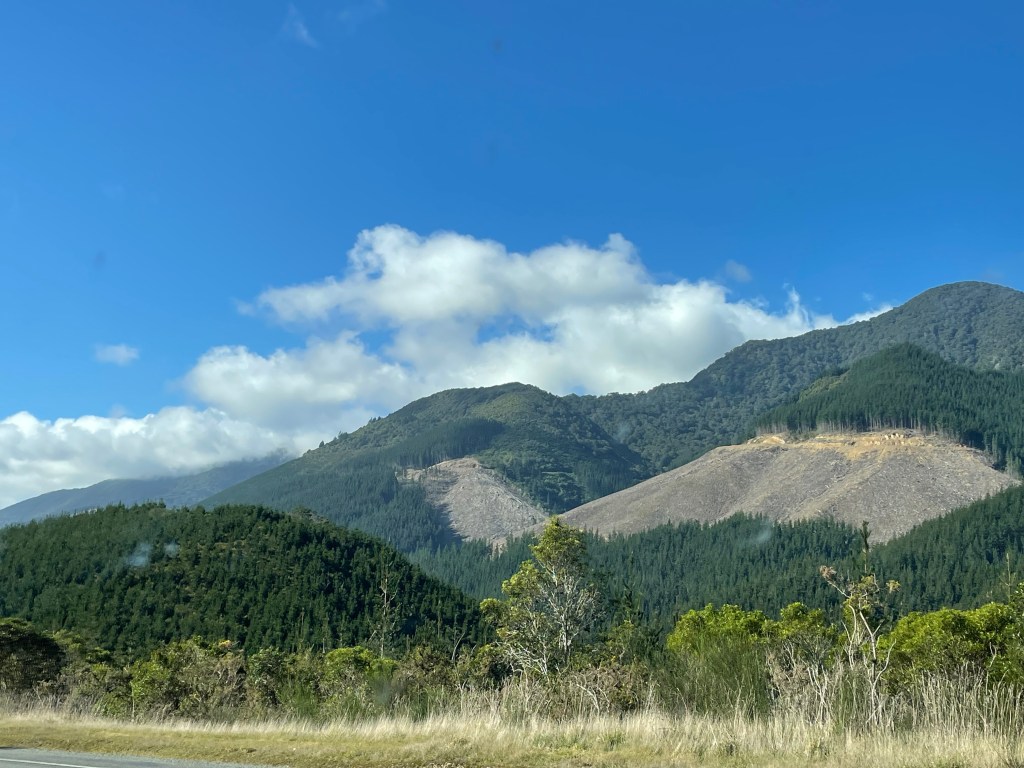
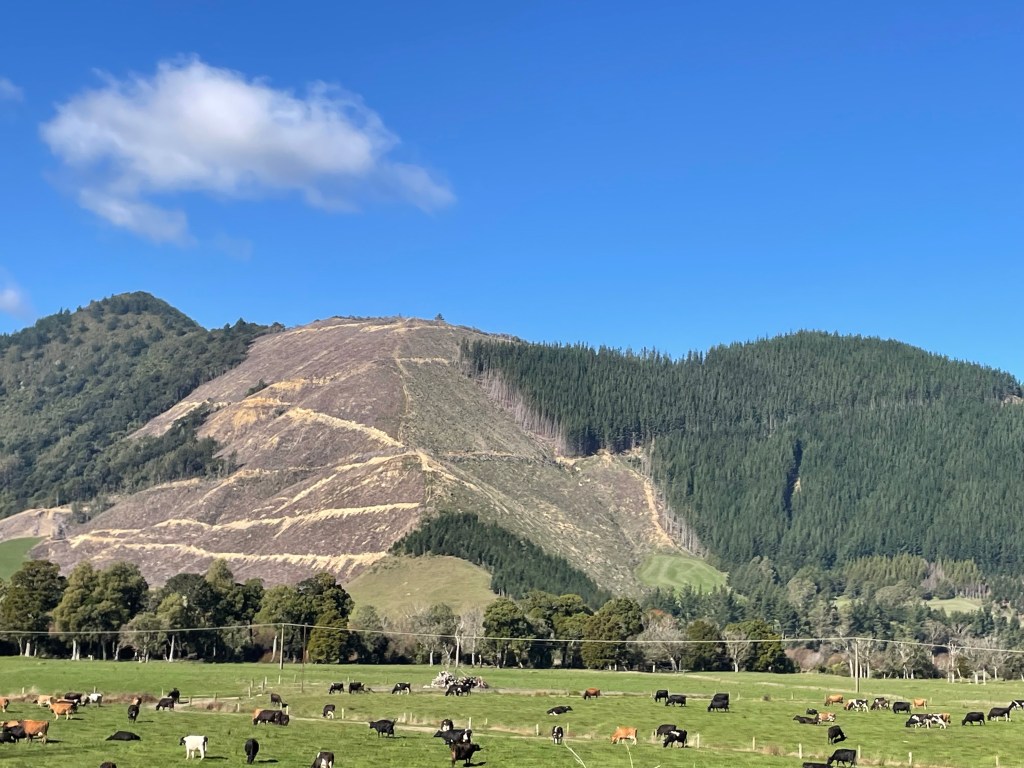
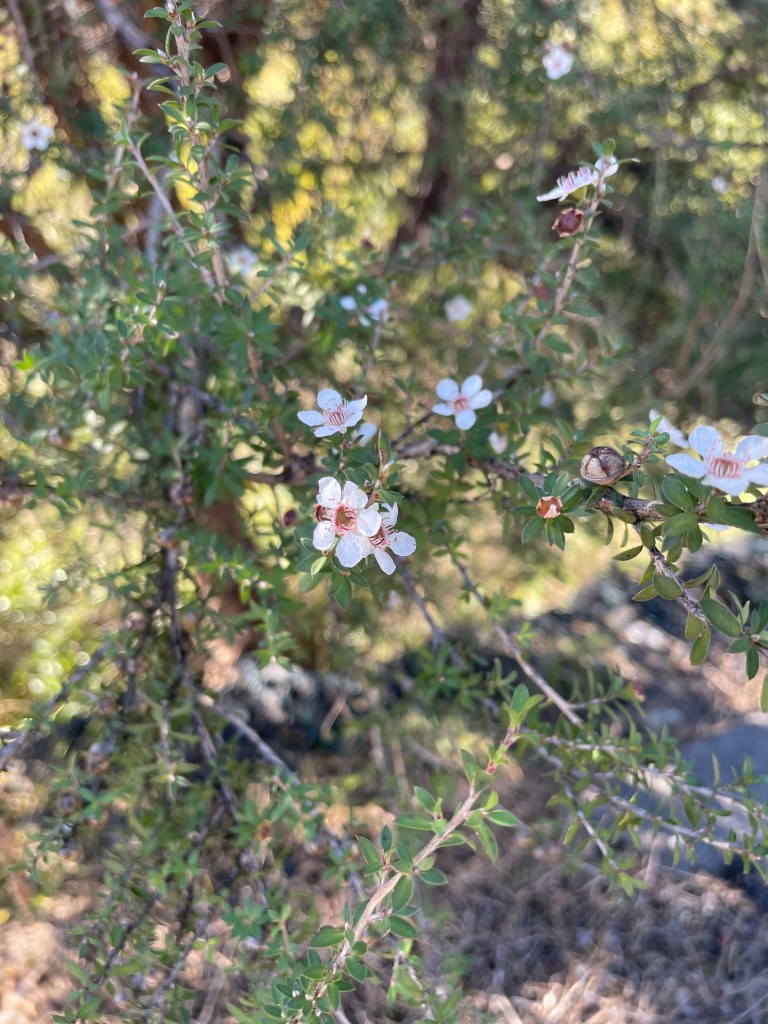
    We picked up highway 1 again and headed north with Kaikoura as the chosen destination. Winding roads through forests and along the coast were very scenic. It was like Victoria’s Great Ocean Road, but with no surf, the sea was dead calm. Pine plantations started to be prevalent, insidious. Steep hills either covered in growing pines or denuded to bare earth. What happened to the native forests I wondered? But I did find Manuka.

    Manuka shrub. Tea tree.

    Kaikoura was a bustling town, especially being a holiday weekend. We decided to walk into town for dinner and ended up in a delightful restaurant, called Strawberry Tree. I had a most delicious seafood chowder, a must when you’re in a fishing town. Our campground had spectacular snow clad mountains nearby, we were surprised to see these so far north. But it was cold!

    The scenery north of Christchurch is wonderful. I can see why people rave about the South Island, but I’m sure we’ll find great places in the North. 

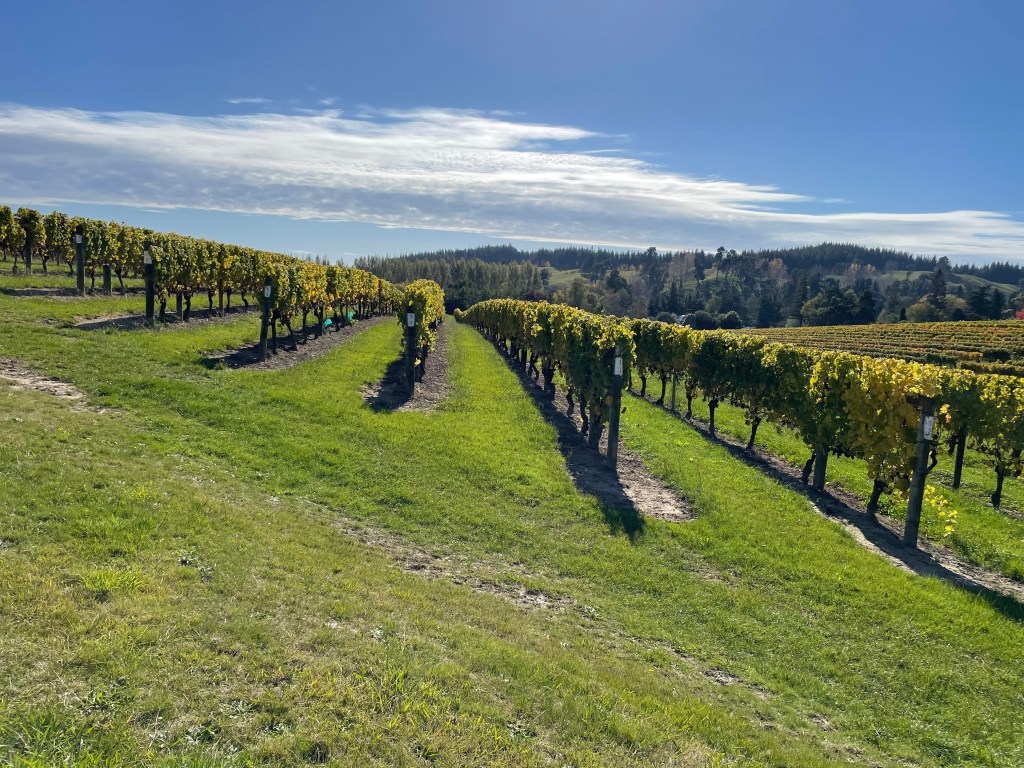
    From Kaikoura we travelled to Blenheim and began to see the infamous grape vines this Marlborough district is renowned for. Acres and acres of vines, all neatly trimmed at exactly the same height, flushed with yellow autumn leaves, mostly without grapes. Unlike the Yarra Valley, Clare Valley or Barossa, cellar doors were hard to find. We had agreed to visit at least one for a tasting but it took our second day in the region before we found one. Anzac Day holiday on the Monday didn’t help.

    From Blenheim to Nelson the road wound up and over steep hills and valleys for about 50km. Quite a challenge for our van and its driver. Once again I was staggered at the encroachment of pine plantations on the native bush landscape. Not only were the pines growing on the steepest of hillsides, they had also been harvested there too, leaving sad denuded scarred earth littered with the remaining detritus scraped up into piles. Along all the beach foreshores, piles of sticks and branches  in tidal lines had washed up in the storms. The theme of pines overtaking native bush rung over much of the mountains of the north of the south island. I suppose you’ve guessed I’m angry about this wanton destruction. (angry face).

    Anyway, we stayed in Nelson for a night, the town was “dead” being a Saturday afternoon  of a long weekend. We cooked on the van’s bbq for the first time, the evening was warm enough to be outdoors! 

    On the Sunday, equally the town was really quiet, but we did find the aforementioned cellar door for a tasting of Heaphy wine. Their Rose was worth buying a few bottles. We drove up the coast north of Nelson and found a delightful spot for lunch called Ruby Bay. I do like how we can pull into a carpark, open the “whizz-banger” door and make our lunch on the spot. We boiled the kettle for tea and sat on some driftwood with locals, enjoying the peace by the sea. 

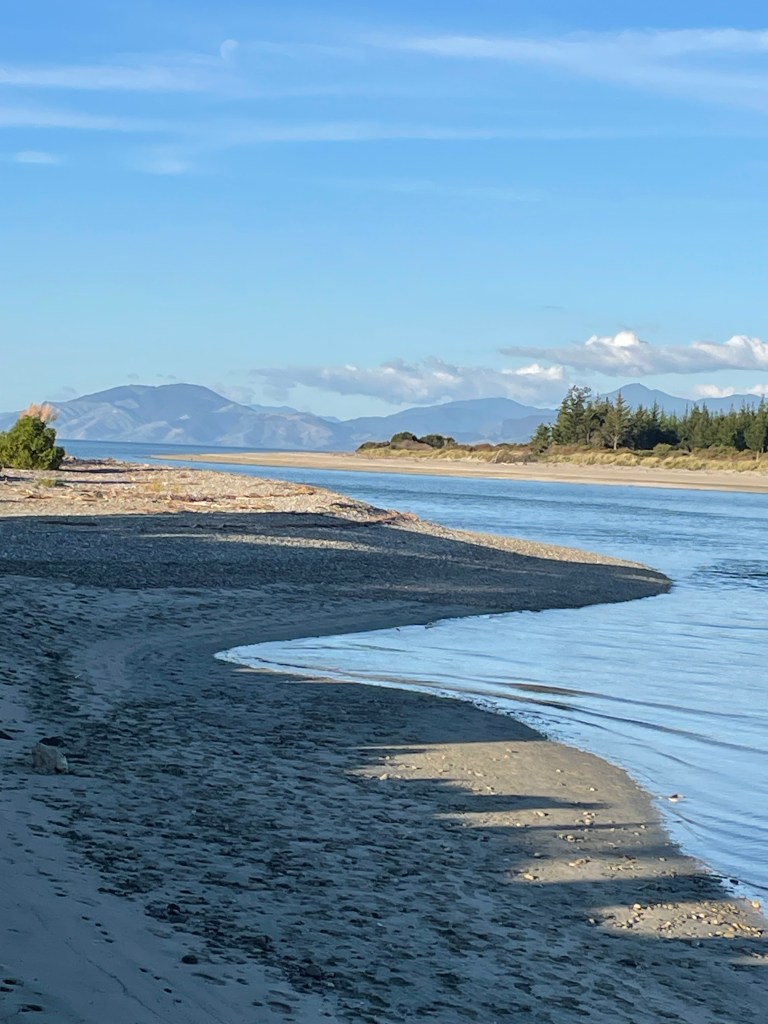
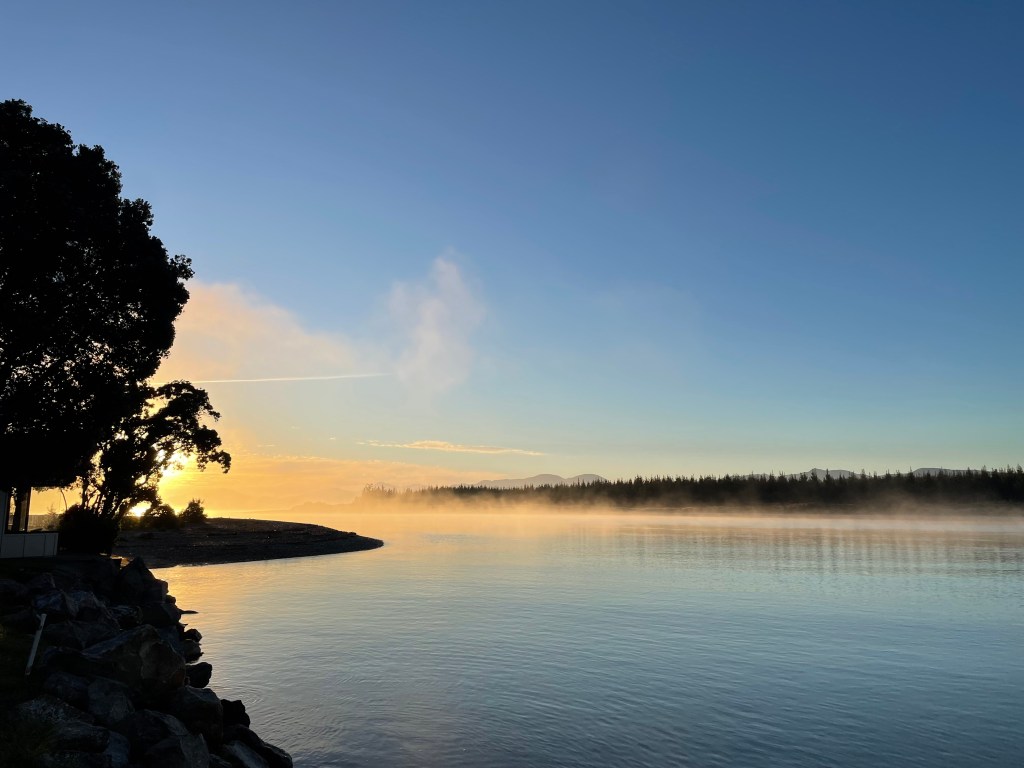
    I found a campground north of Nelson at Mapua which was promoted as a Leisure Camp. I was expecting kids play ground equipment, bouncy castles, a ferris wheel….turns out it was a clothes optional camp in Feb and March. The receptionist pointed out the demarkation lines where we could go naked – not us, especially as it was April! The camp was actually really lovely, with a tidal river beside us and a view of the misty sunrise that was wonderful.

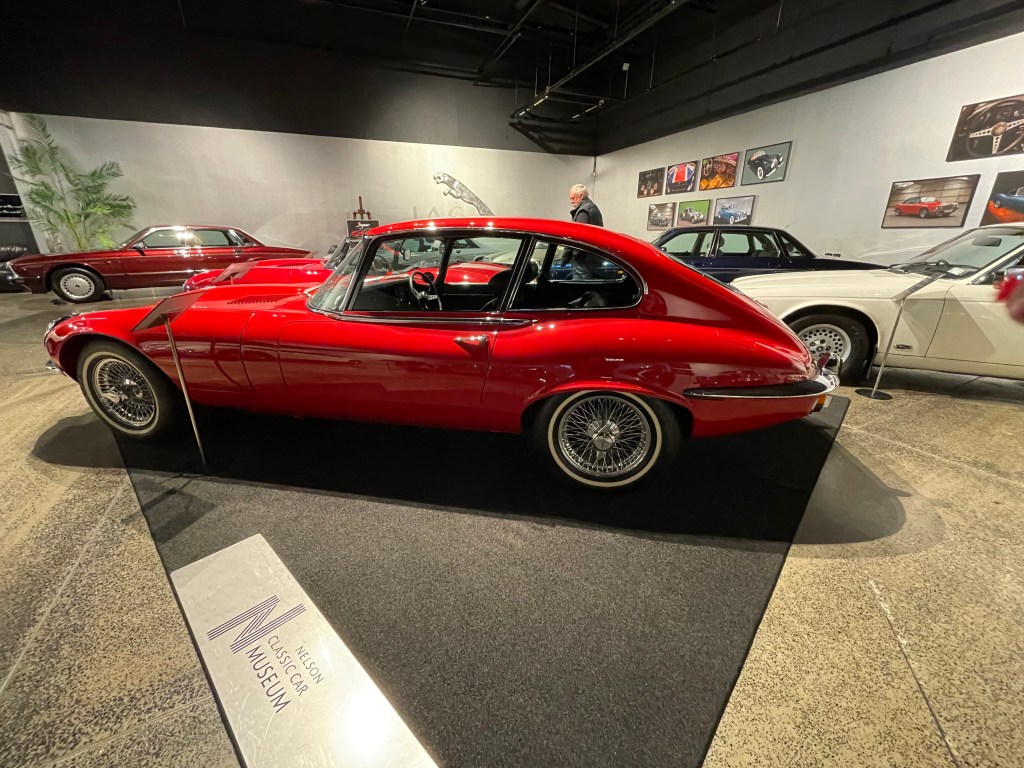
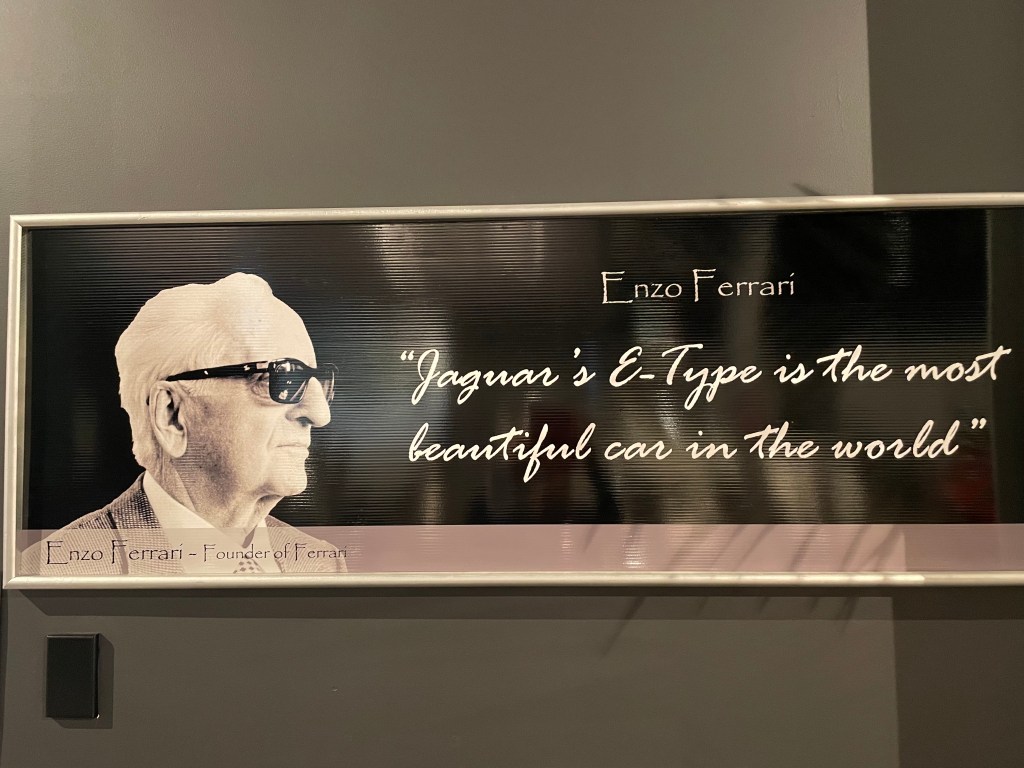
    E Type Jaguar. Was my favourite car…..

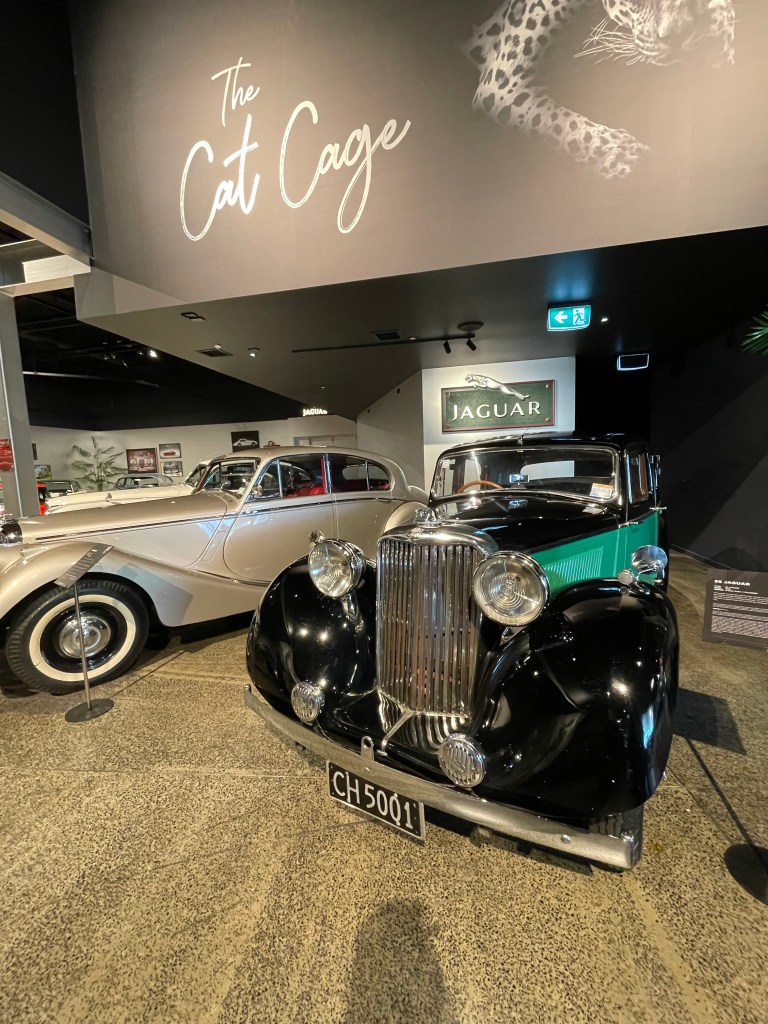
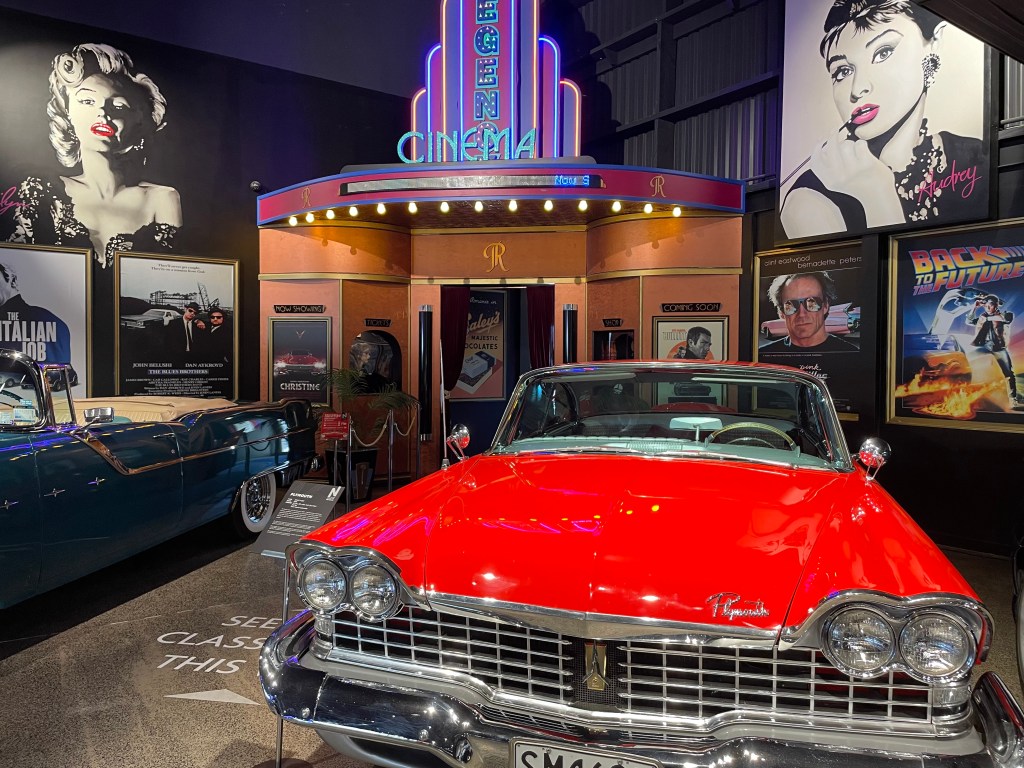
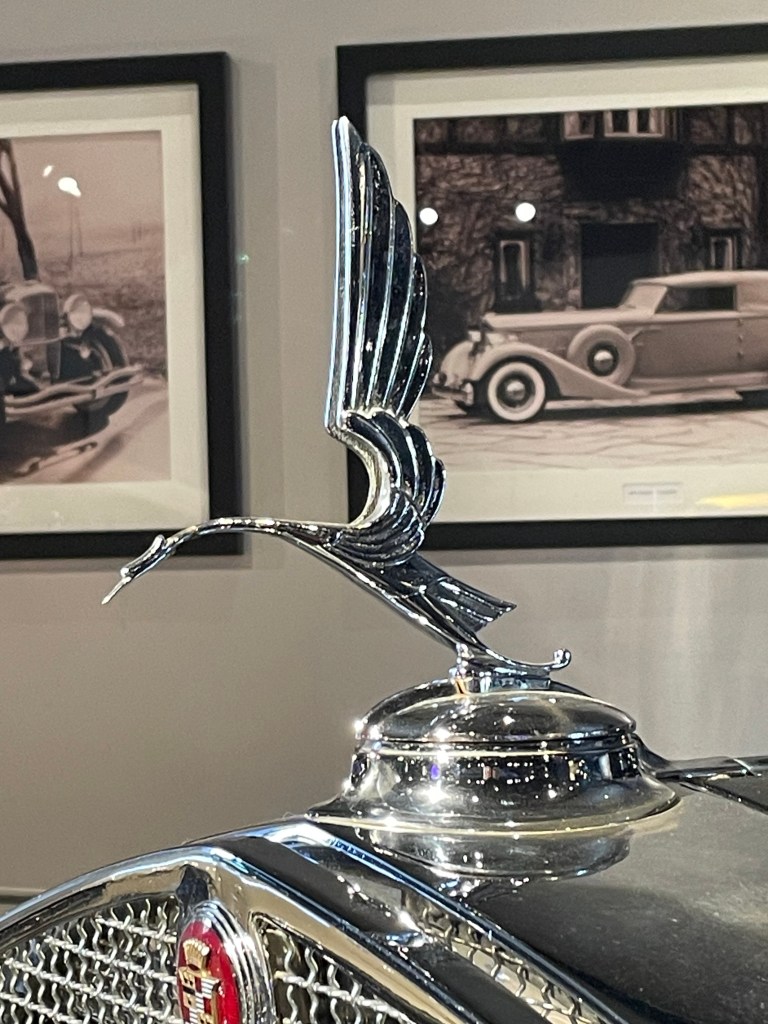
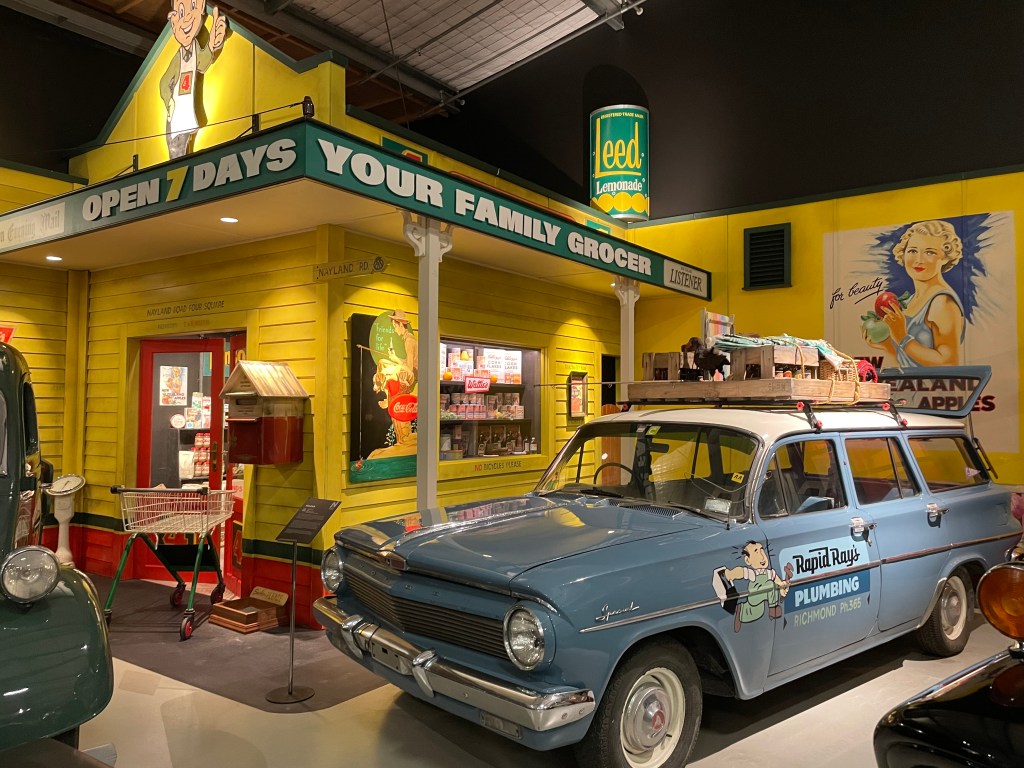
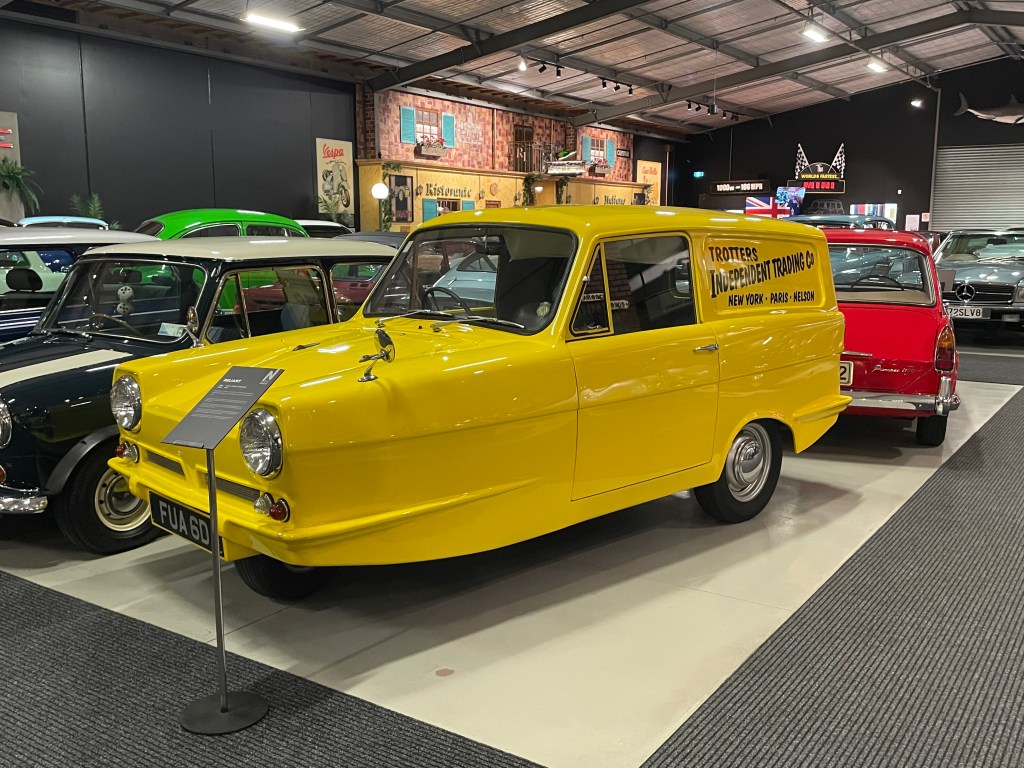
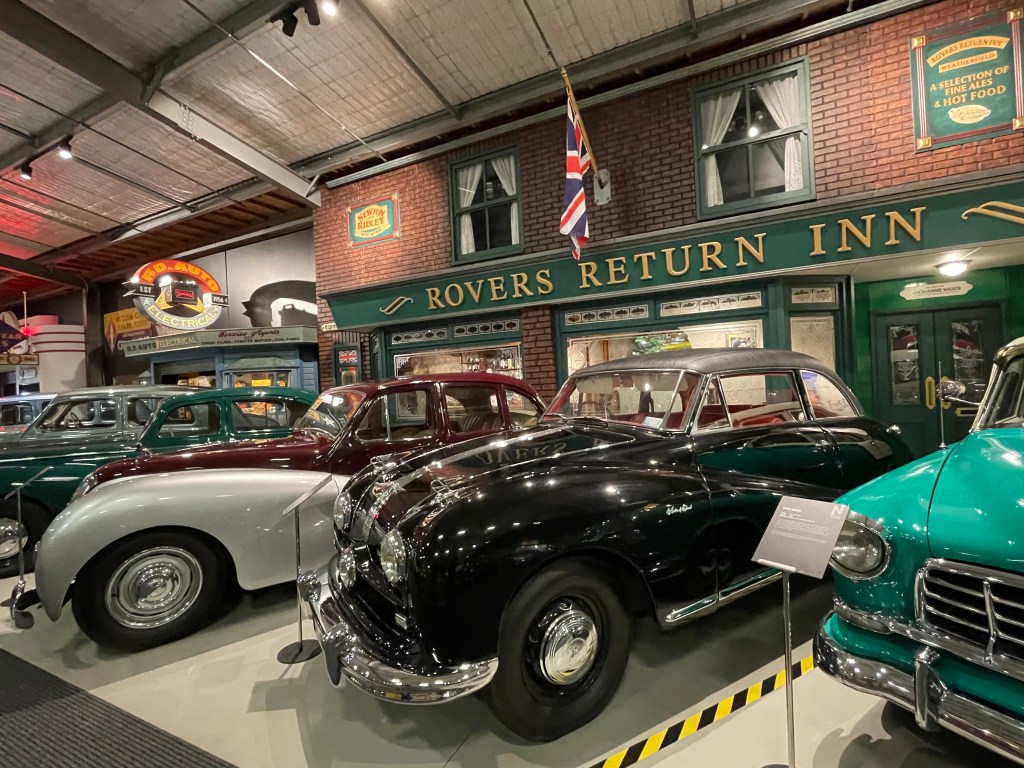
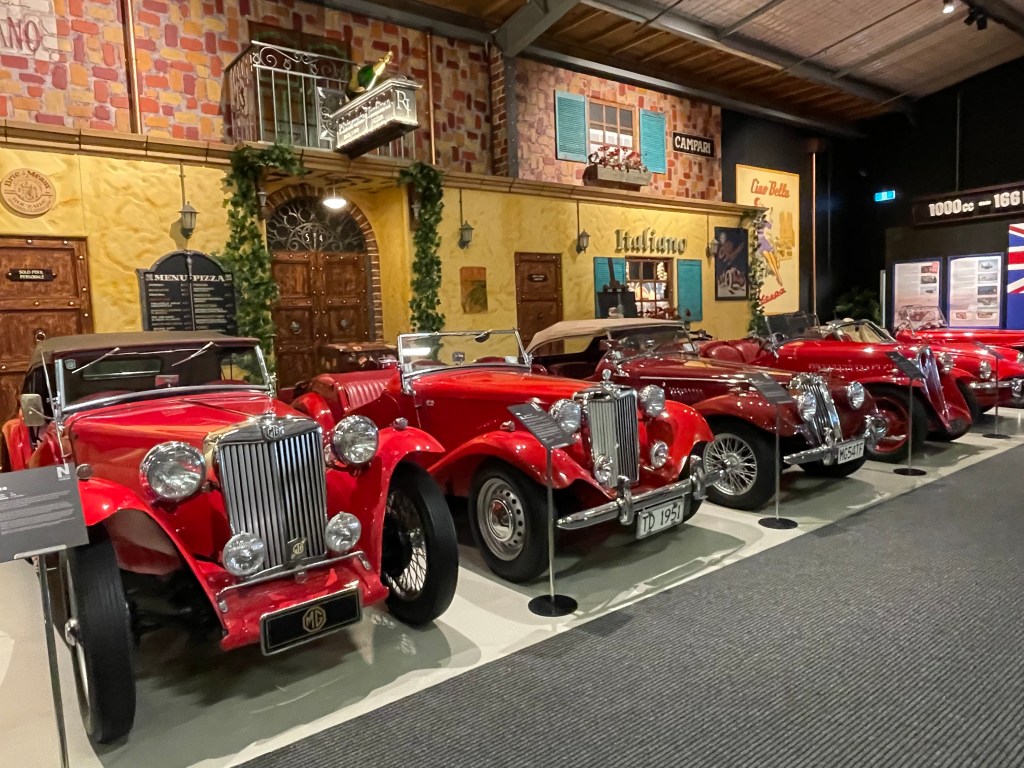
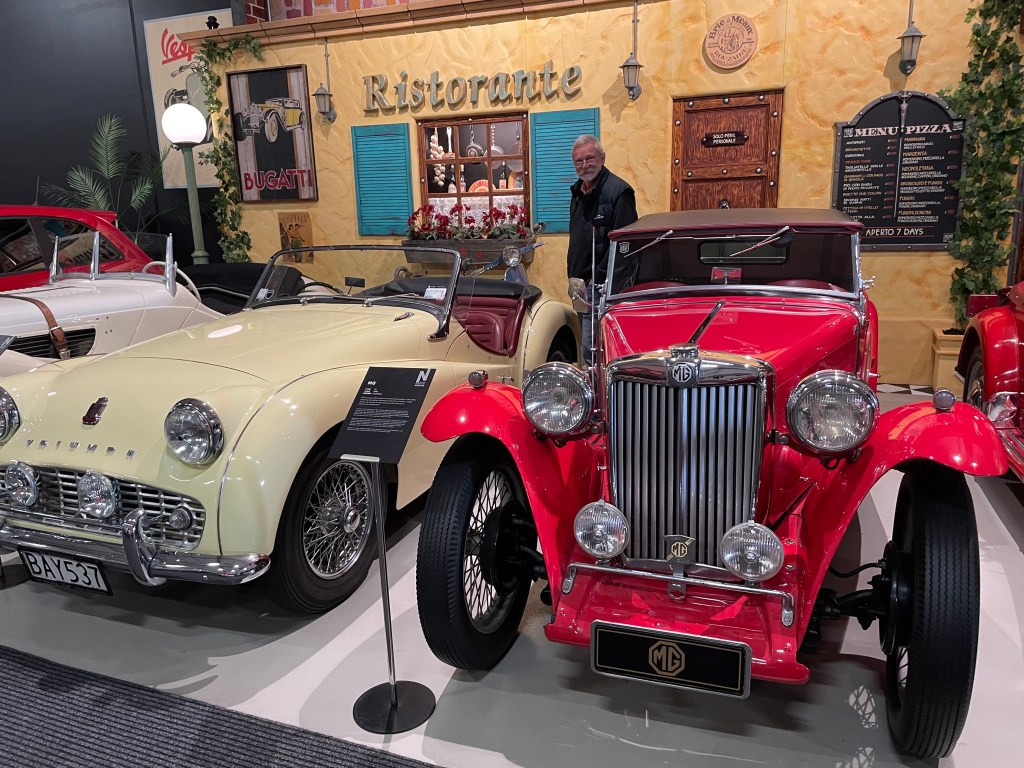
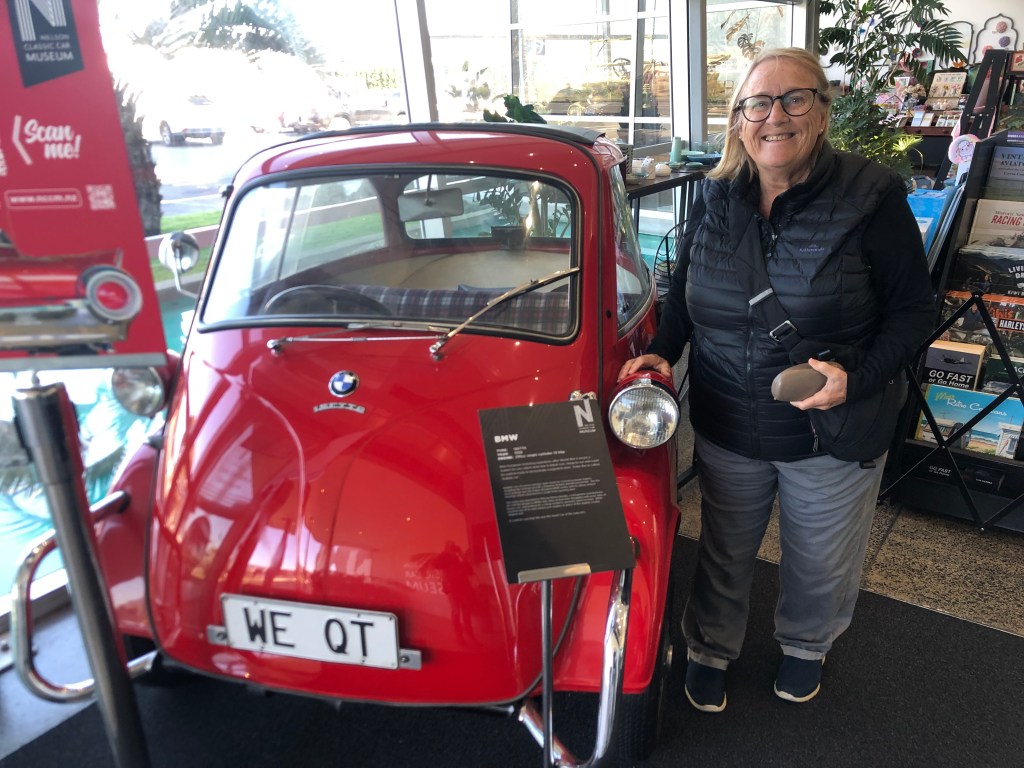
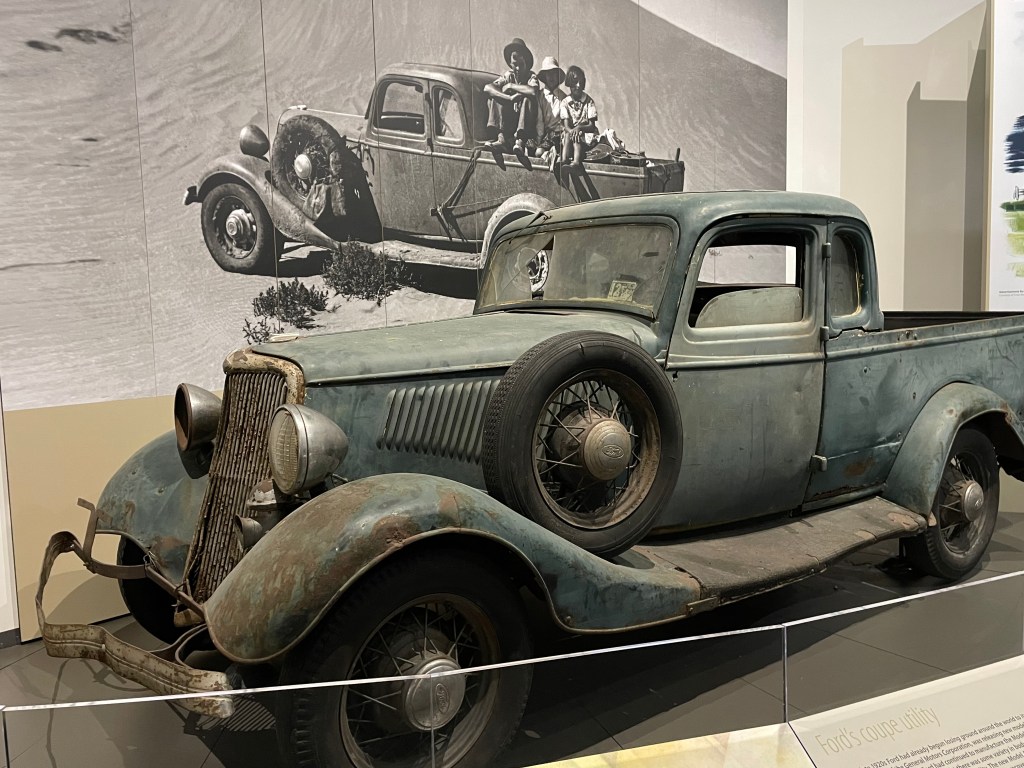
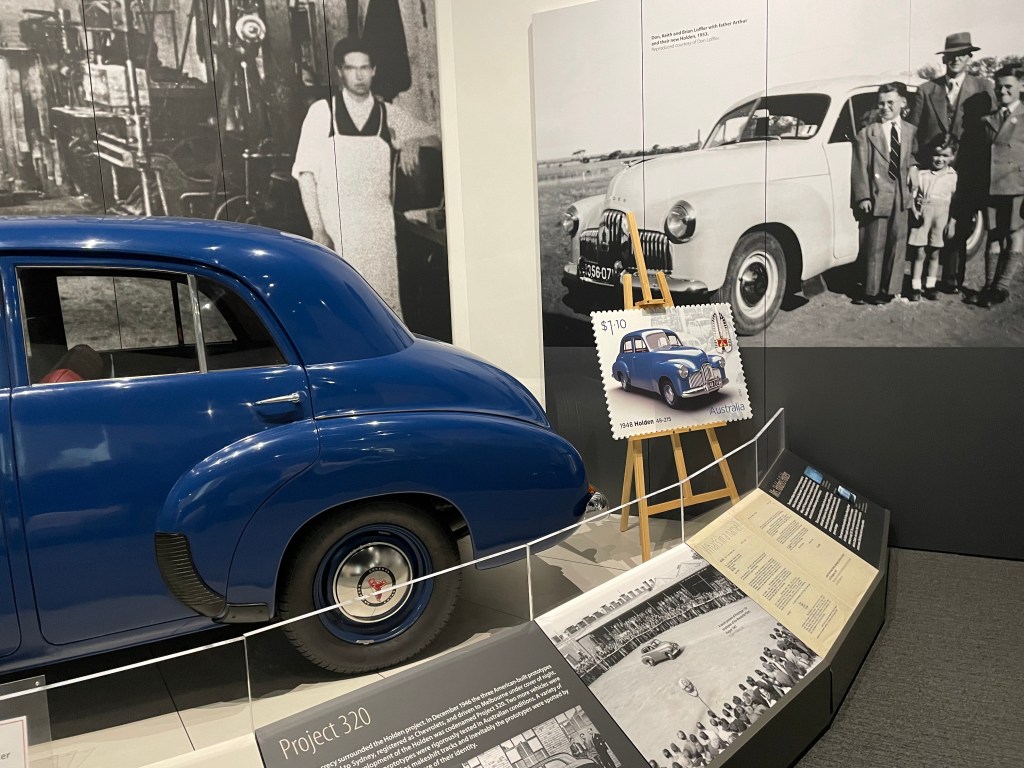
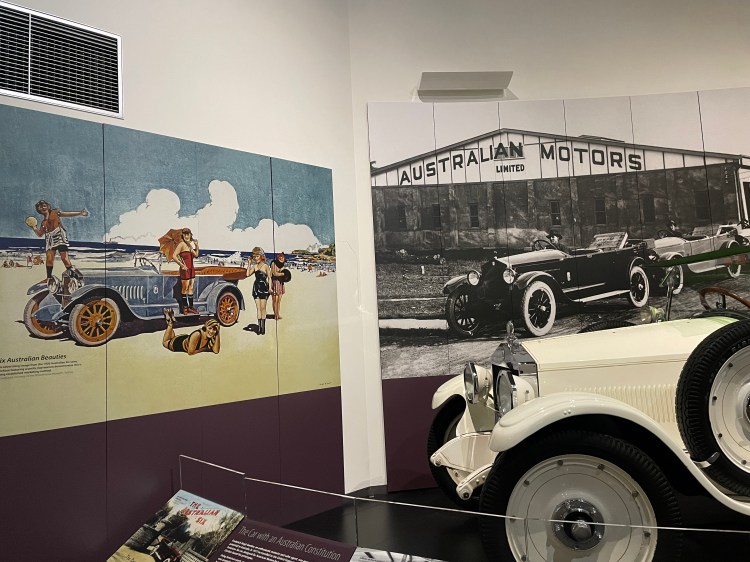
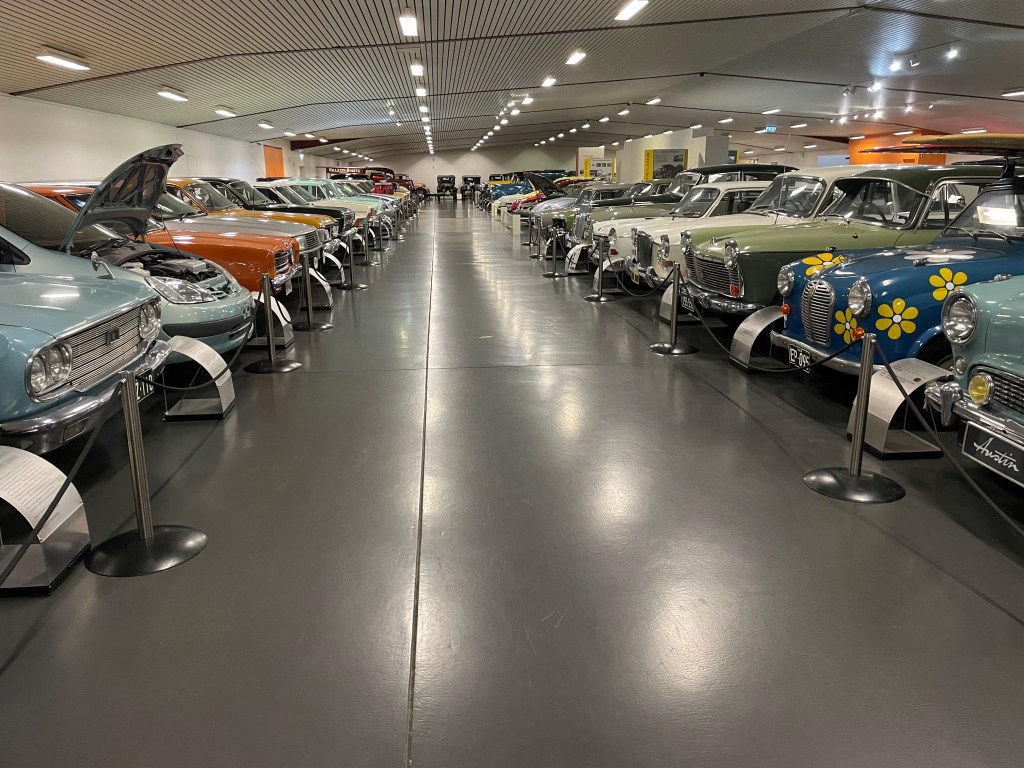
    Before leaving Nelson, we visited the Car Museum. What a treat! This one had award winning background displays associated with the cars. Some of the pictures may show what I mean. I’d recommend this one to anyone, and there wasn’t a Land Rover in sight.

    My sized car.

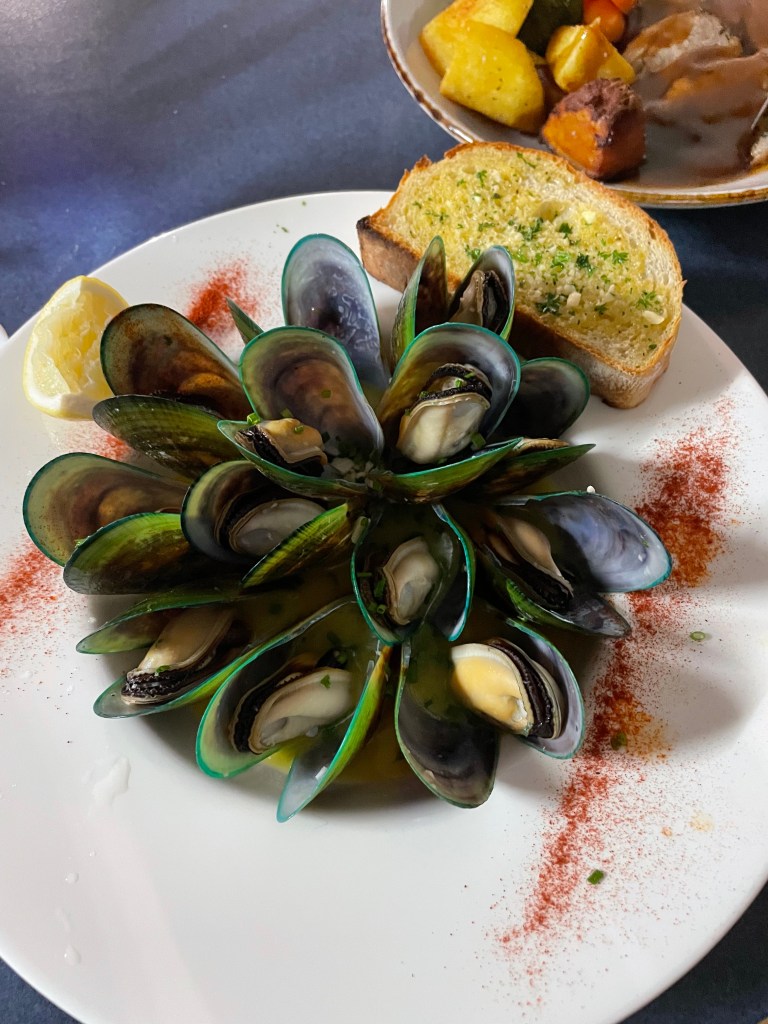
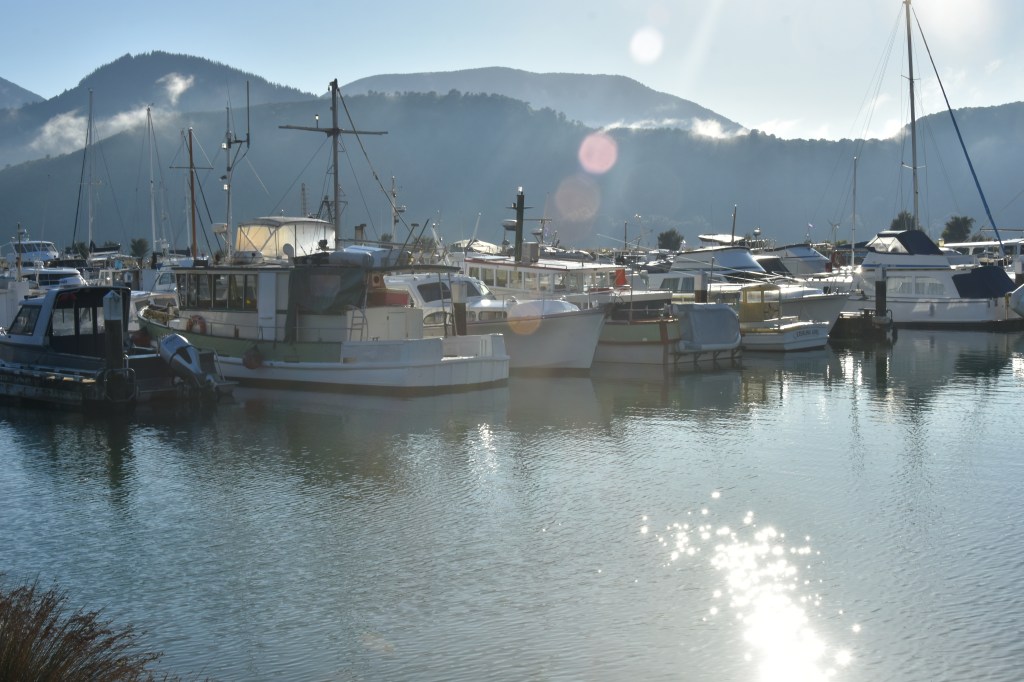
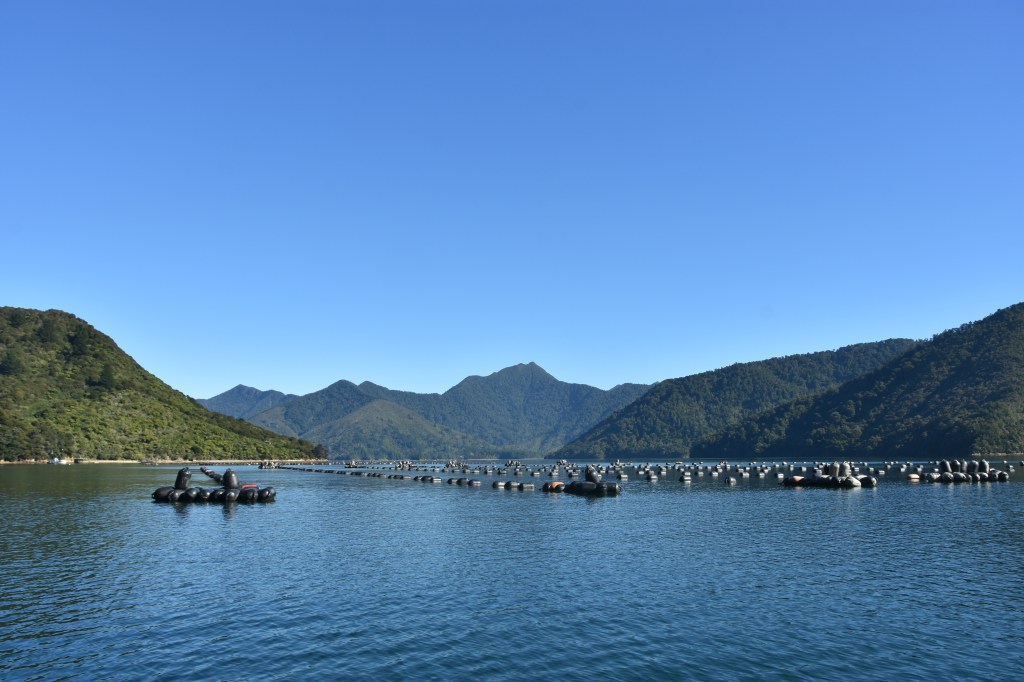
    We had booked the ferry to the North island on April 30th and had 2 nights to travel the short distance to Picton. Decided to go to Havelock. What an inspired move. Havelock is the green shell mussel capital, it’s a bustling little harbour town on the Marlborough Sounds.

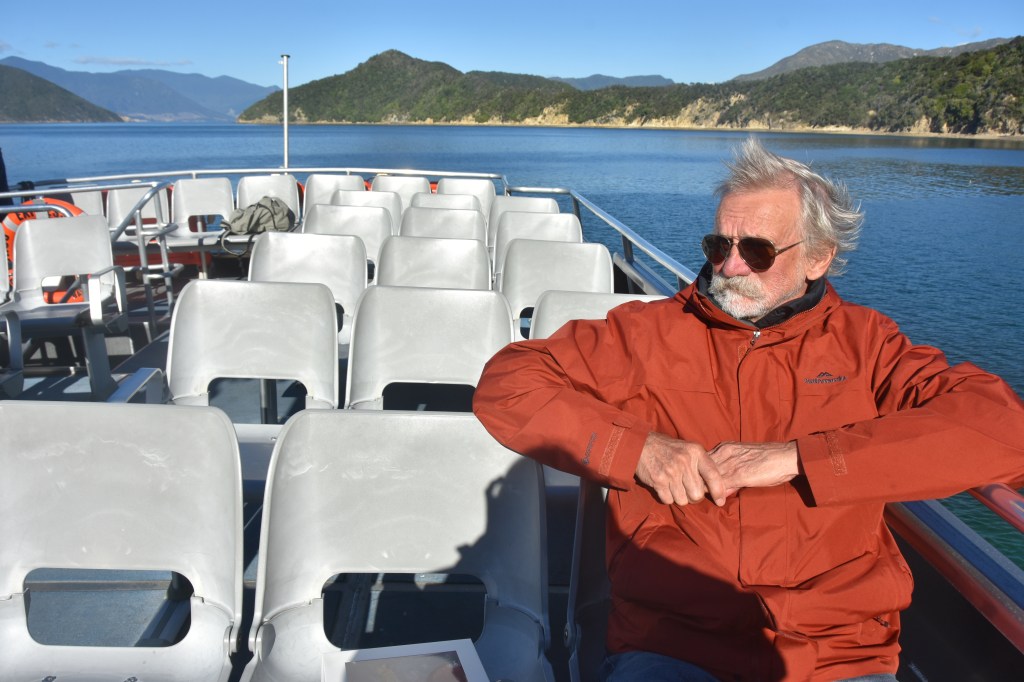
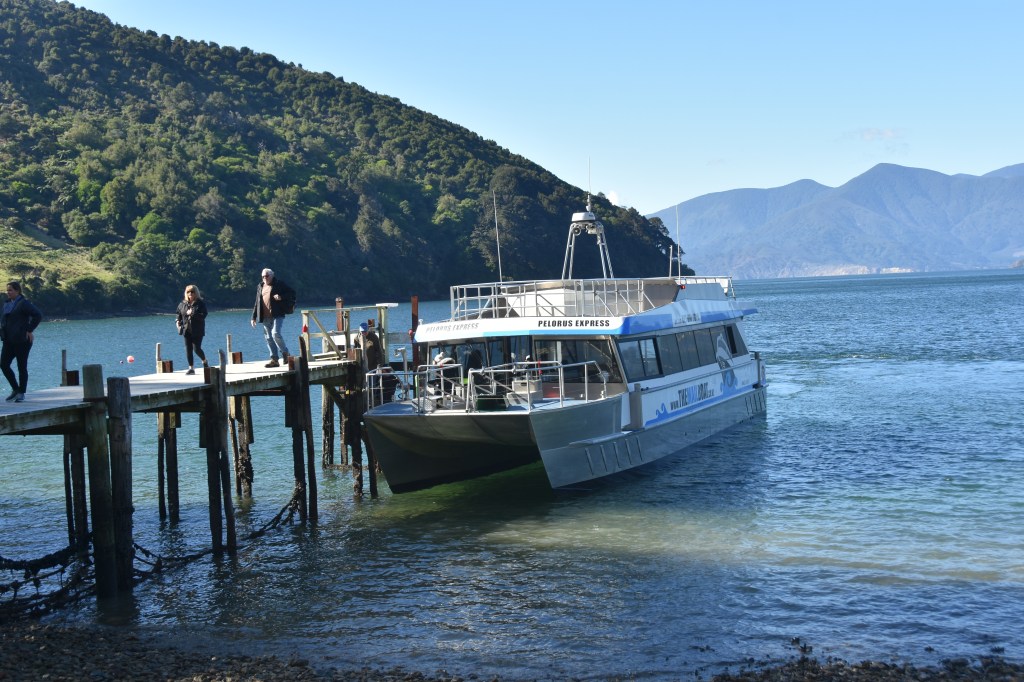
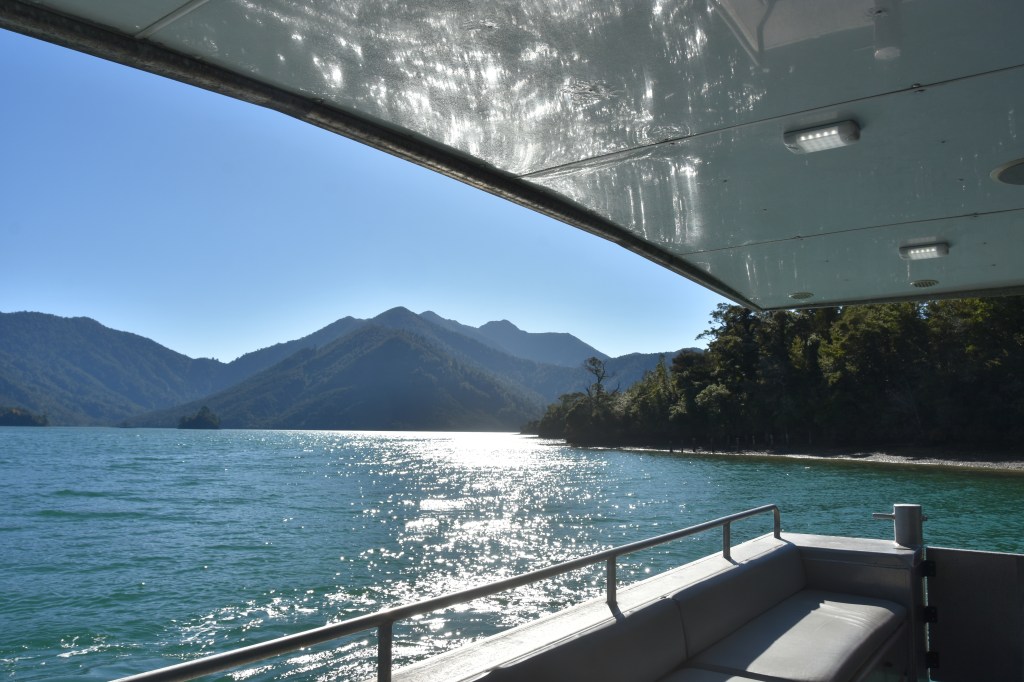
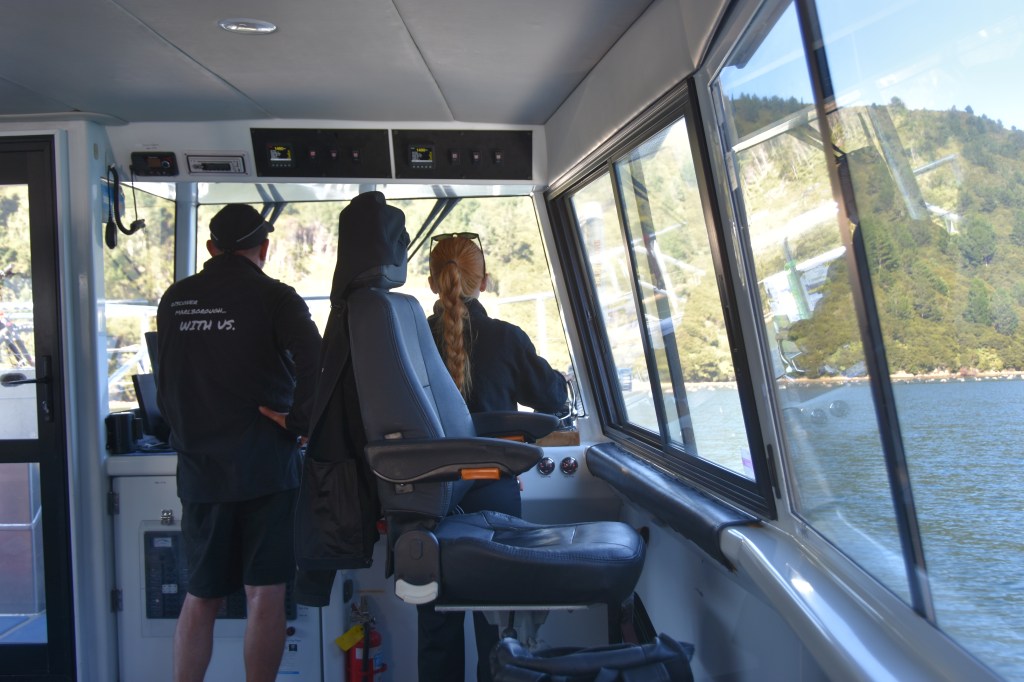
    A couple of Dutch people parked next to us, we got talking and they mentioned the mail boat cruise that was happening the next day, by chance. I quickly booked it. It was the best cruise, such a wonderful day.

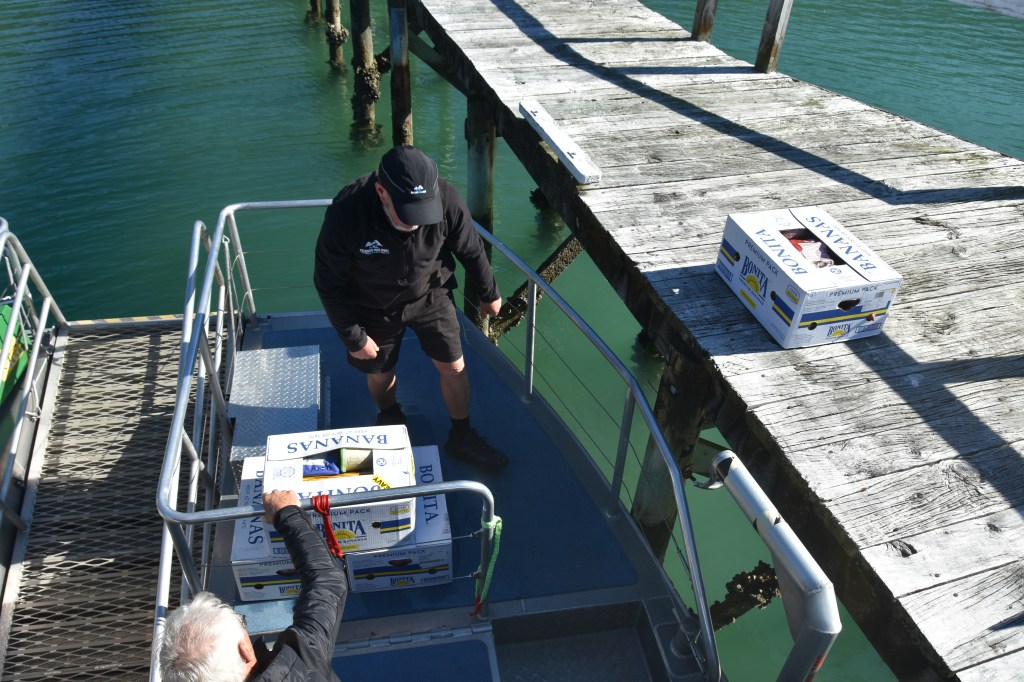
    Pelorus Mail boat

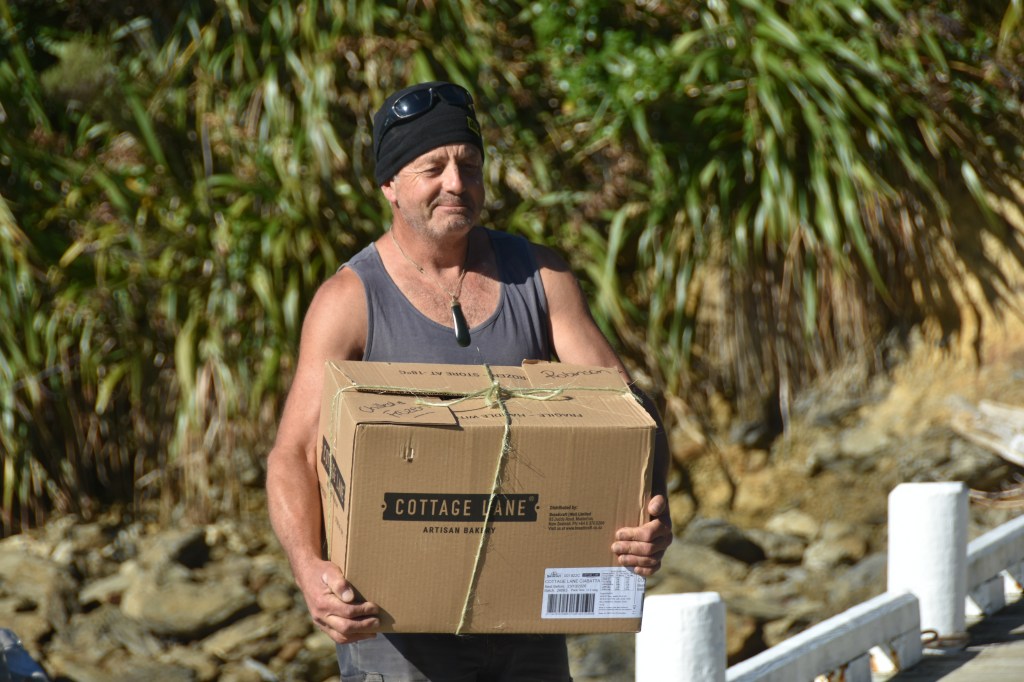
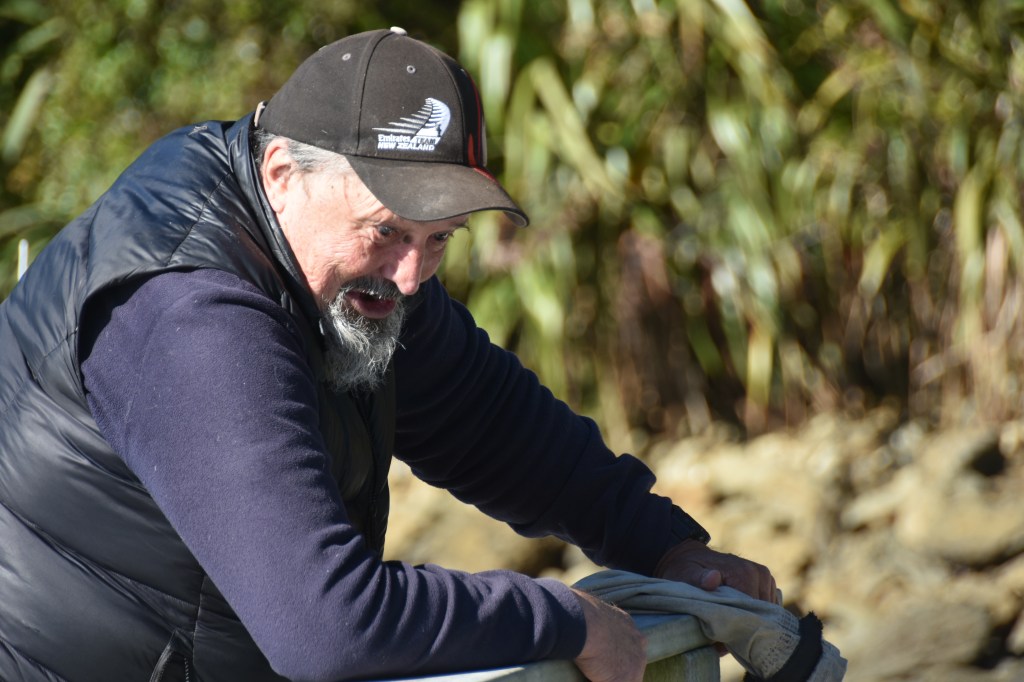
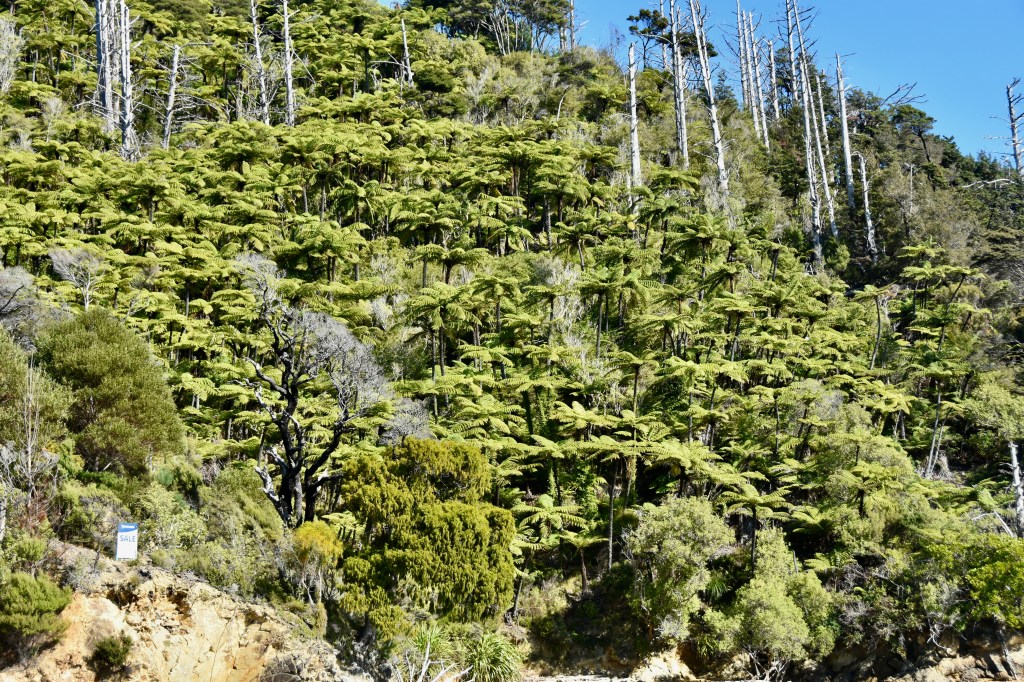
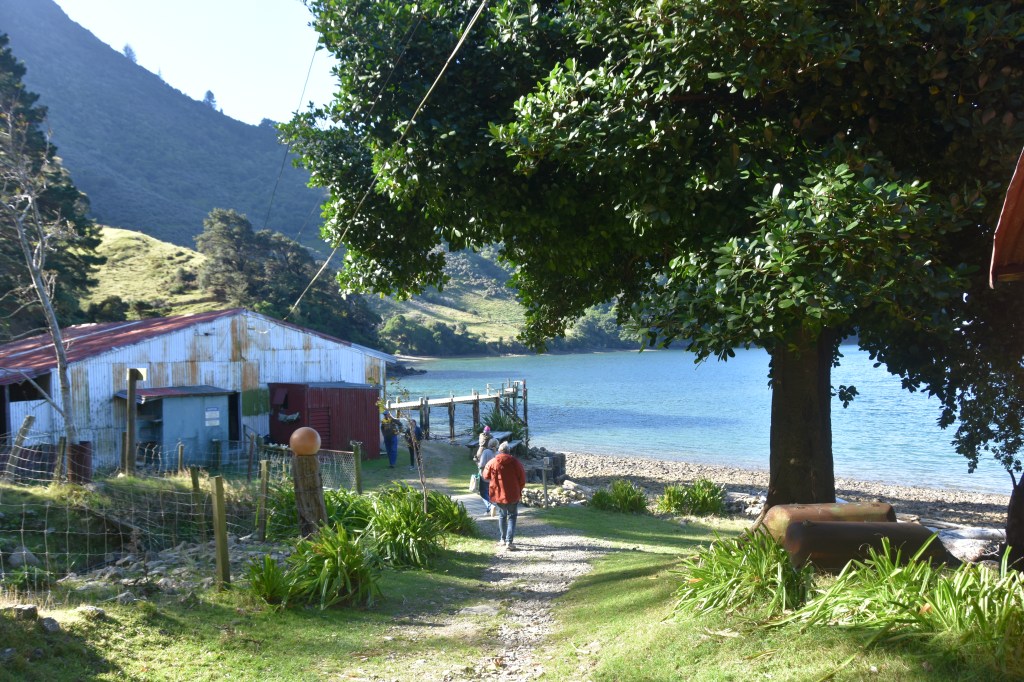
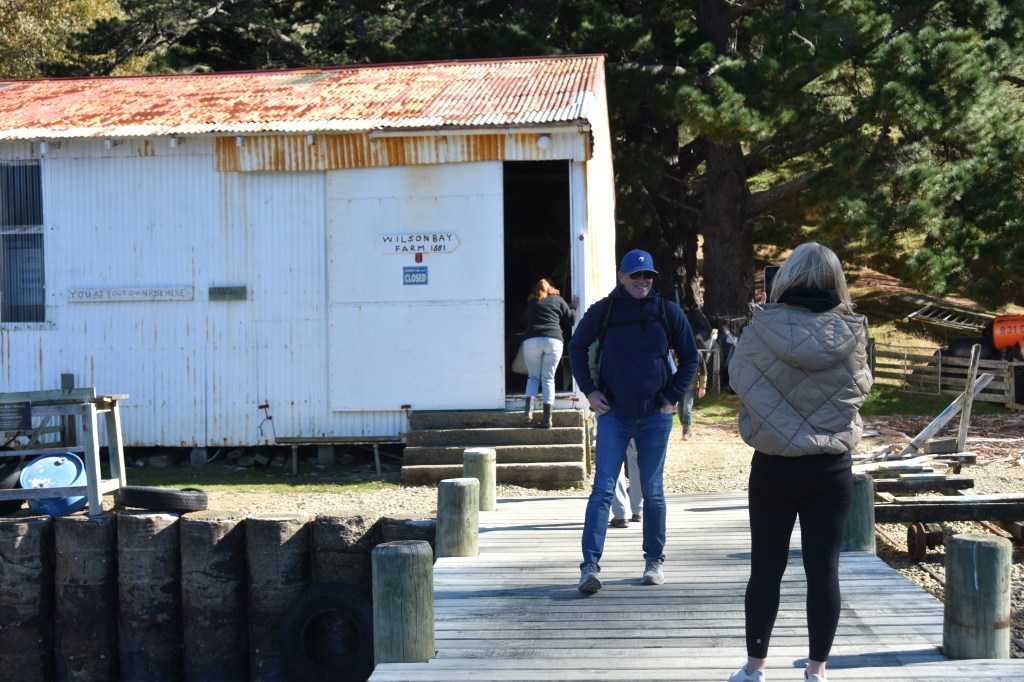
    Pelorus Sound is just one arm of the Sounds. Up to 2000 houses are dotted in remote locations around the Sounds, and each Wednesday the mail boat delivers mail, groceries and more to people waiting on little jetties or their beach. The highlight was a tour of a working farm where the man was fifth generation on that farm. They had raised 2 children there and have only had electricity for one year, there are no roads in. They raise Romney sheep and a few cattle. Nick and I had a long chat to the farmer, he was a man of few words, but everything he said came from a deep wisdom and experience of surviving in this remote place. We talked about the scourge of Aussie possums, but also other wild pests including pigs, stoats, cats, rabbits and more. He was furious about the proliferation of pine forests and has poisoned many trees on his property. His wife’s presentation to the group was down to earth, she was a woman who’d lived on the farm for over 20 years while home schooling, feeding the hungry shearers and surviving a subsistence way of life. The other startling fact, this was the last farm talk for the season. How lucky were we! Right place, right time again.

    Wilson Bay Farm 1881

    Before I end this quite long blog, Nick has a few words about our camper. Next blog will be about the North Island, where we are now.

    Nick:

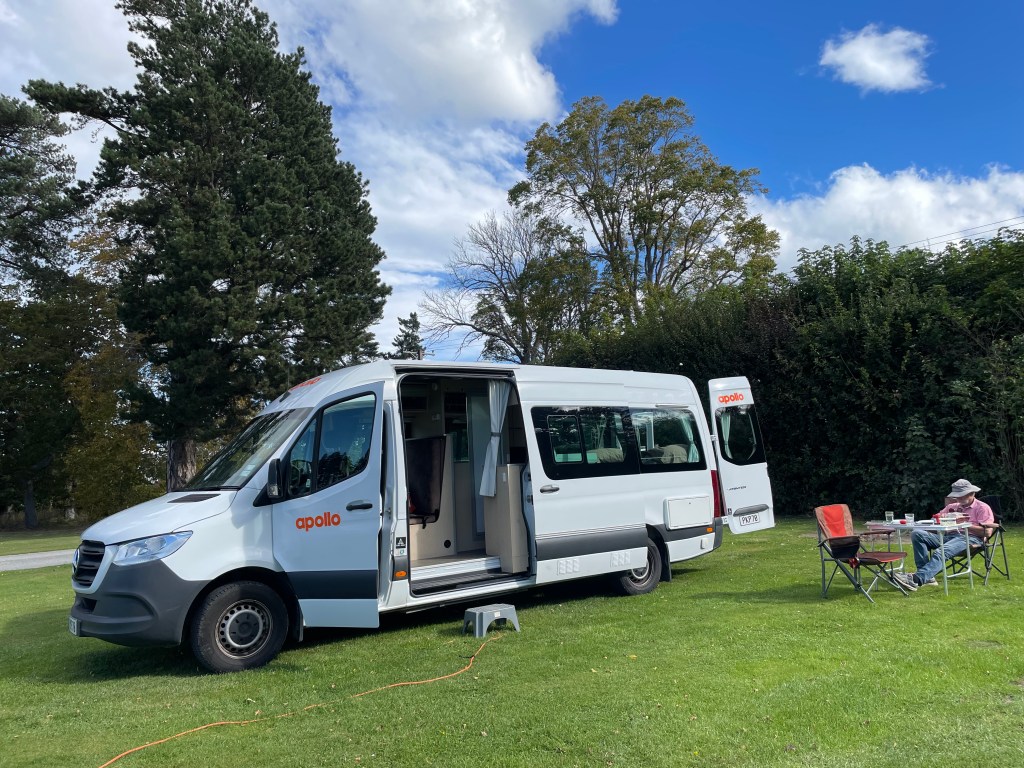
    The Mercedes Benz camper is big as opposed to what we are used to driving, it is 7.2 metres long, 2.8m tall and the back end of it cuts off the corners if one is not careful. It is easy to drive as all one has to do is accelerate and brake, it has a gear stick on the column, up for reverse and down for drive. It took me about a week to discover that it has paddles just like a formula 1 car hidden behind the steering wheel, now I am able to downshift on steep slopes and use engine revs instead of braking all the time. It is clever too as it will not start if the power cord is plugged in, it does all of the usual things ie not start or go into reverse if the foot is not on the brake. It has been doing 9.6 litres to the 100km which is pretty good considering the Land Rover Discovery does that without anything in it or towing.

    Interior design leaves a little to be desired as the kitchen area definitely only has room for one, the shower and toilet are microscopic and the water pump pulsates so you cannot get properly wet in the shower. There is a distinct lack of 240v power points and the ones that are provided are too far away from the needed location. To add to the grievances the cords on the kettle and the toaster when plugged in to the aforementioned 240v sockets only just reach the table and have to sit dangerously near the edge.

    To counter all the complaints we are being treated to a magnificent country with stupendously spectacular scenery as will be apparent from the photographs.

    Love

    Jen & Nick

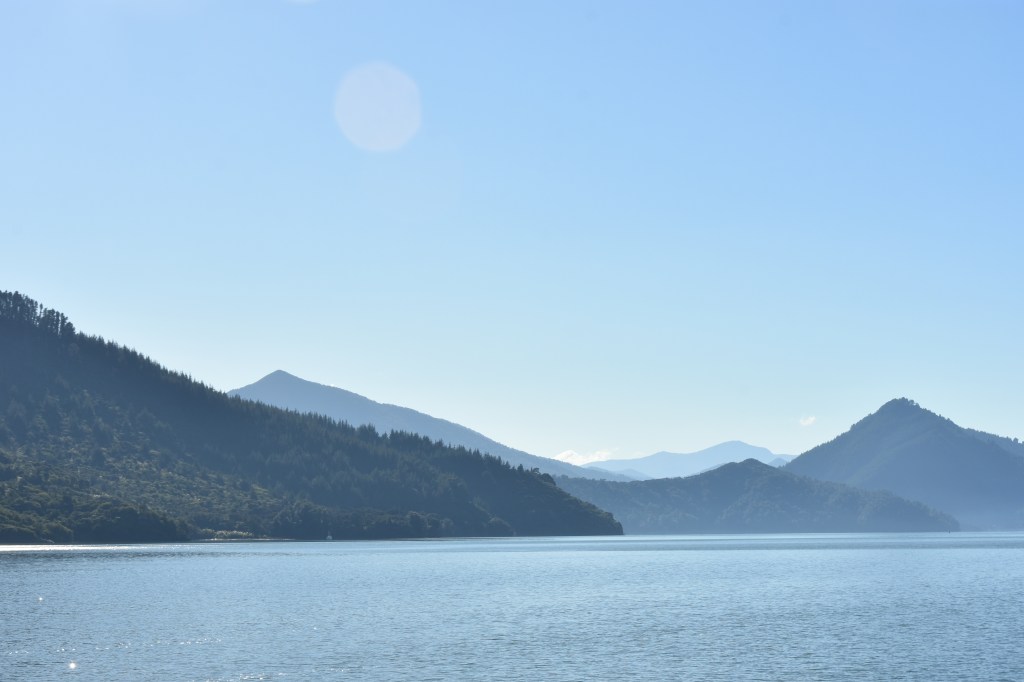
    Pelorus Sound

  • New Zealand No.2

    Wanaka, Queenstown, Gore, Dunedin. Posted 26.4.26

    Wanaka. 

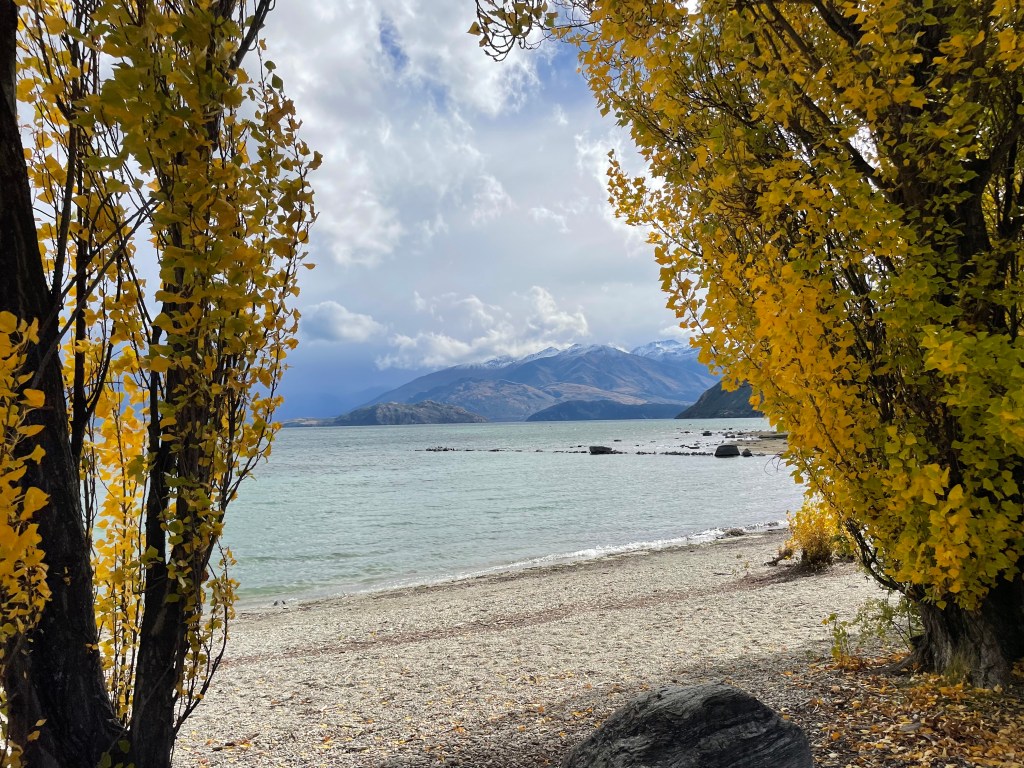
    What a lovely place Wanaka is, big houses, trendy shops, great cafes. Noosa at the snowfields. The town was packed, last weekend of the school holidays. As it was cold and damp, everyone in town congregated in the cafes or the heated shops. The autumn yellows of the poplars against the blue lake and snowcapped mountains were picture postcard images.

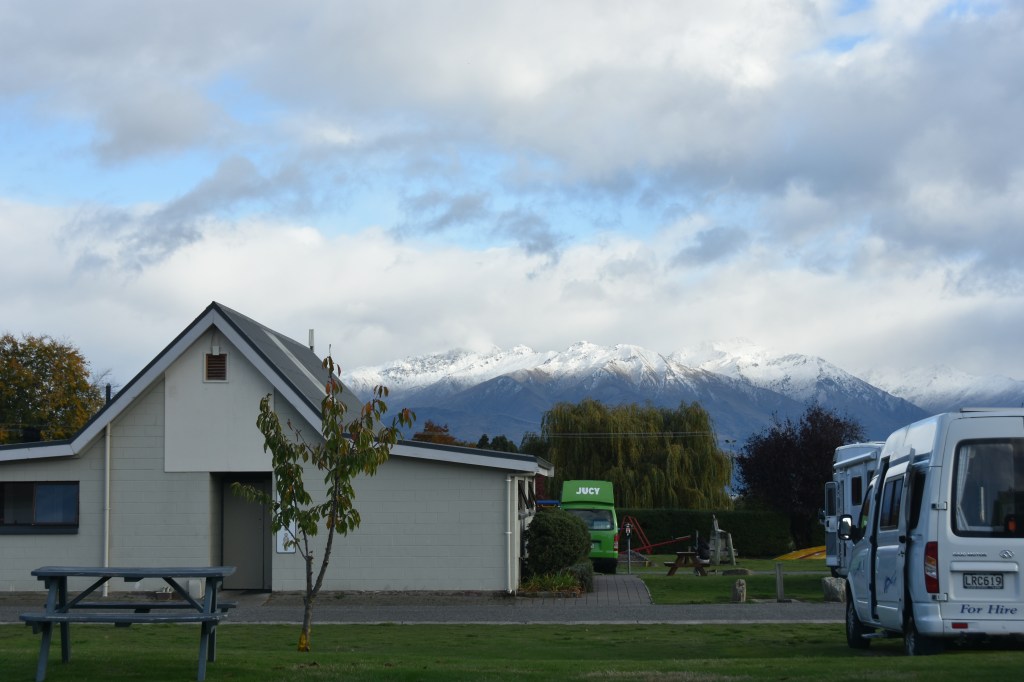
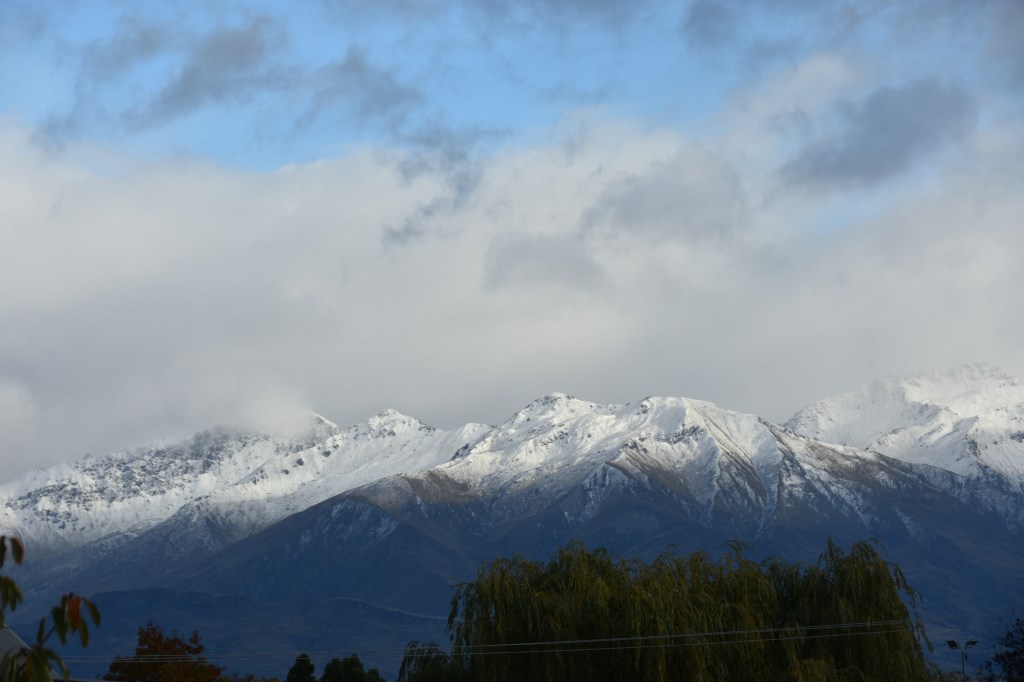
    We parked in the holiday park close to town. We could see the lake and the snow capped mountains from our site. Kids still ran around in shorts, screamed loudly on the bouncy trampoline and talked to each other on walky-talkies as they zoomed about on bikes. On the second morning, I lay snuggly in bed and watched the snow falling on the nearby hill. What a treat!  A local told Nick it was very unusual in May to see snow…it was April! He also said “snow fall in May never stays” is a local belief. But for us it was picture perfect. 

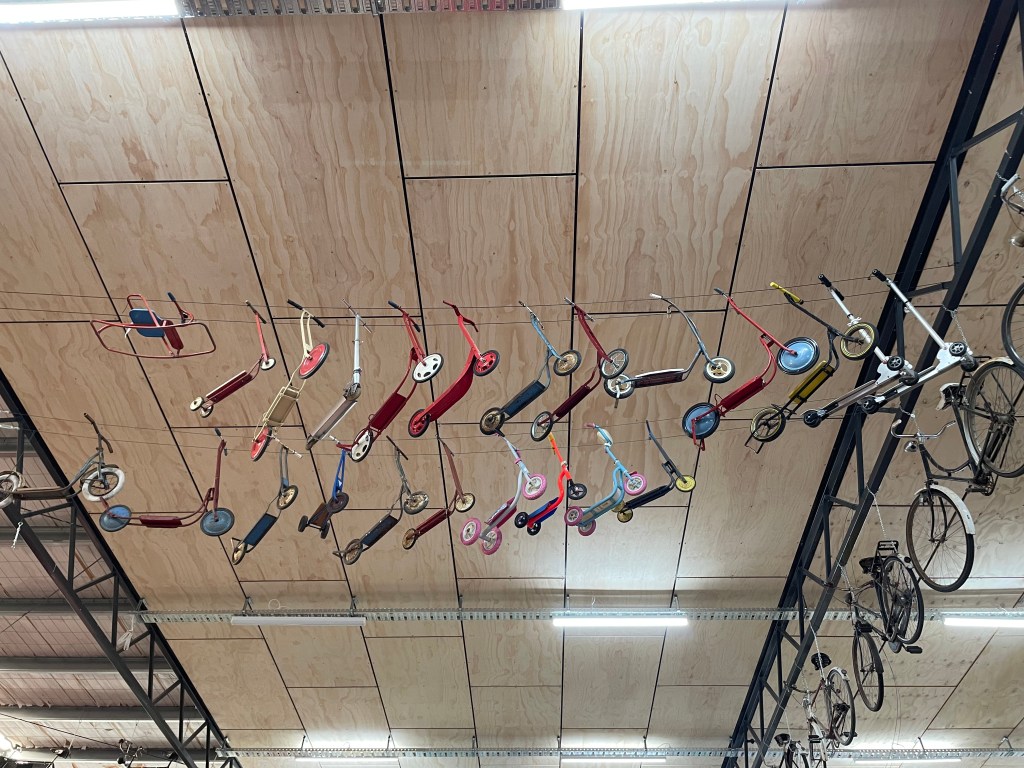
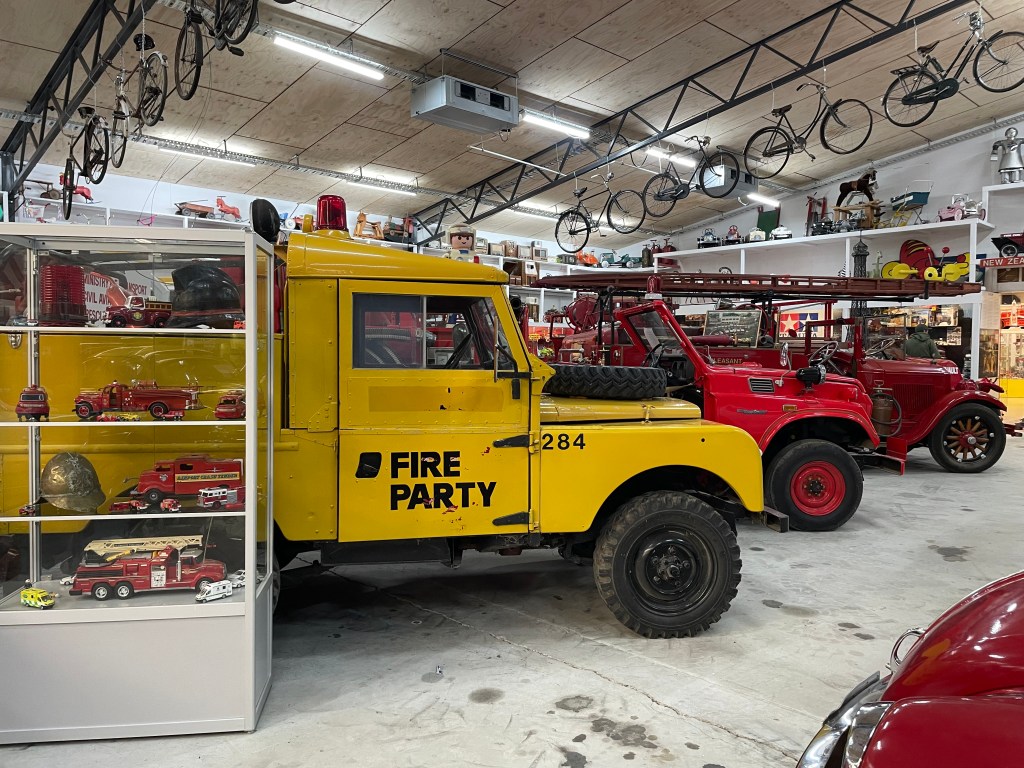
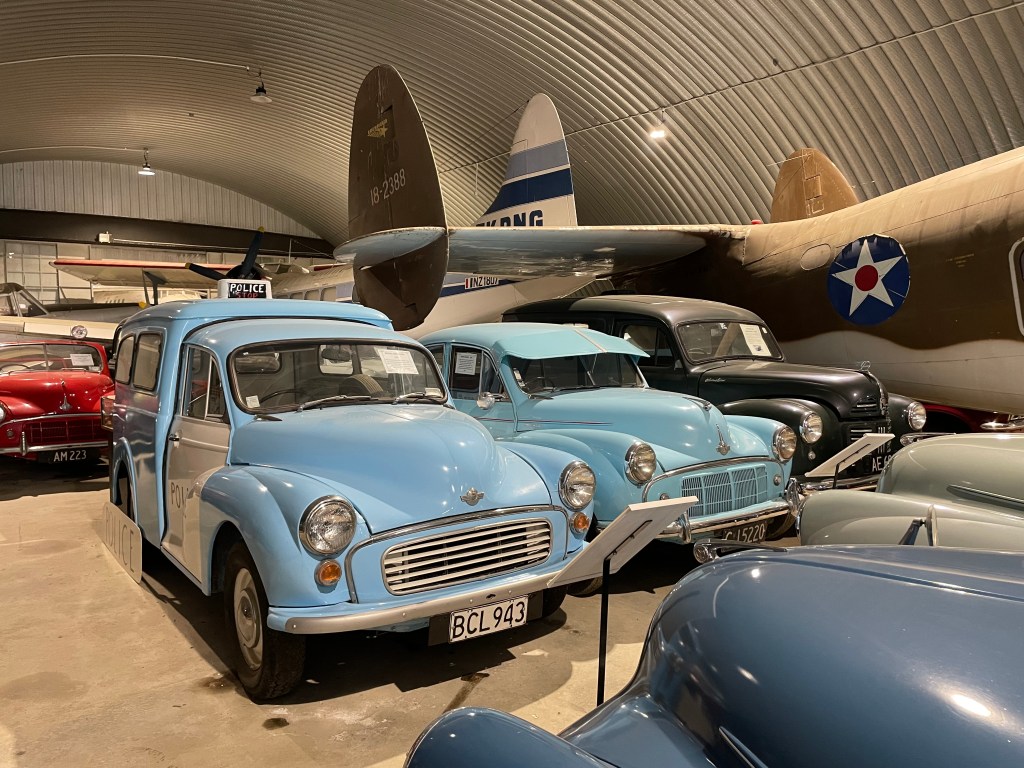
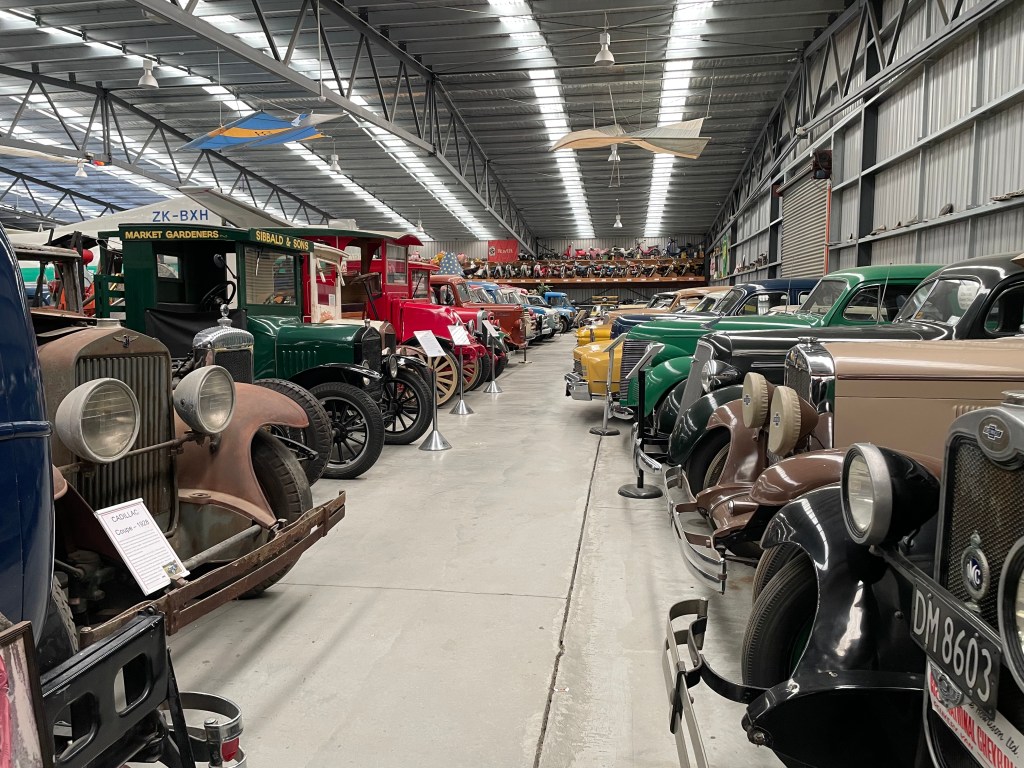
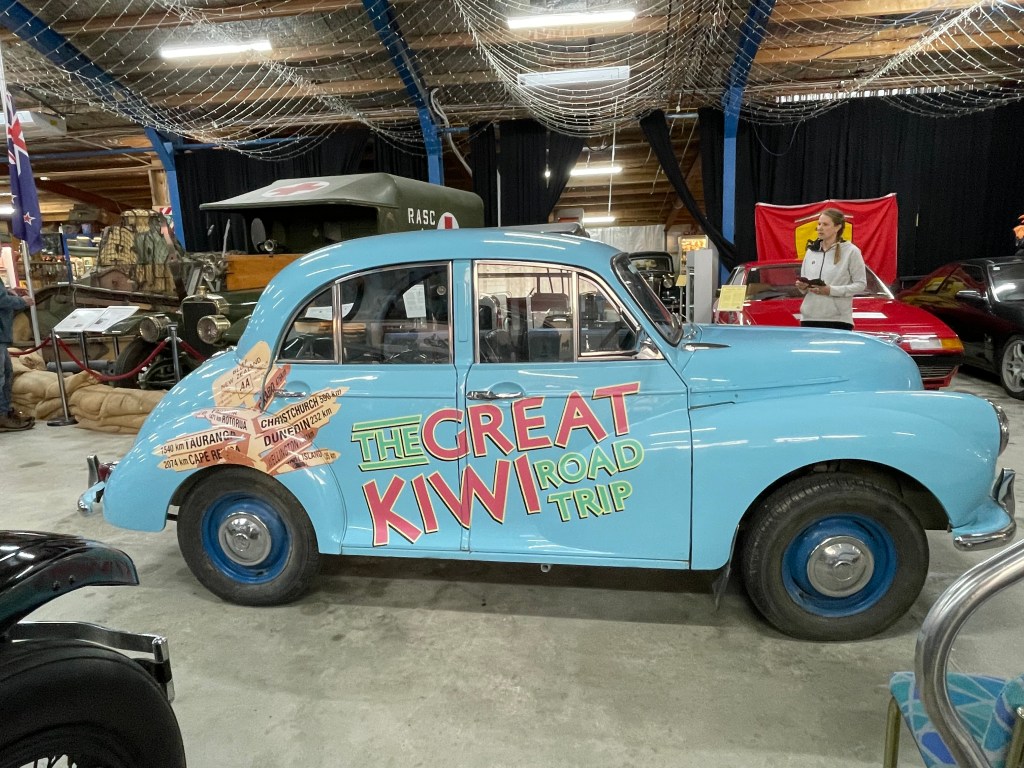
    I noticed there was a Toy and Vehicle Museum not far from Wanaka on the road to Queenstown. Grabbing my umbrella, we entered an Aladdin’s Cave for small children & car-addicts. Not just cars though, there were tanks, planes, heavy earth moving machinery, a huge number of old fire engines and row upon row of old cars. There were 4 monstrous sheds to go through. The toy display was equally impressive. Maybe some of the pictures will tell the story. We spent a couple of hours there despite there being only a couple of Land Rovers. We then drove about 10km down the road to Luggate for coffee; the lady serving coffee asked if we’d enjoyed the museum. She said she can’t recall how many times she took her son when he was young – he’s probably a hoarder now.

    Drove onwards towards Queenstown, decided to call into Arrowtown. Here we were with our 7.2m long campervan, winding down narrow streets with cars parked either side and people & kids streaming along the road towards the centre of this historic town. We never got past the temporary gate and still have no idea what was happening. Luckily we escaped without side swiping any vehicles or removing their rear view mirrors. Sad to have missed spending time there.

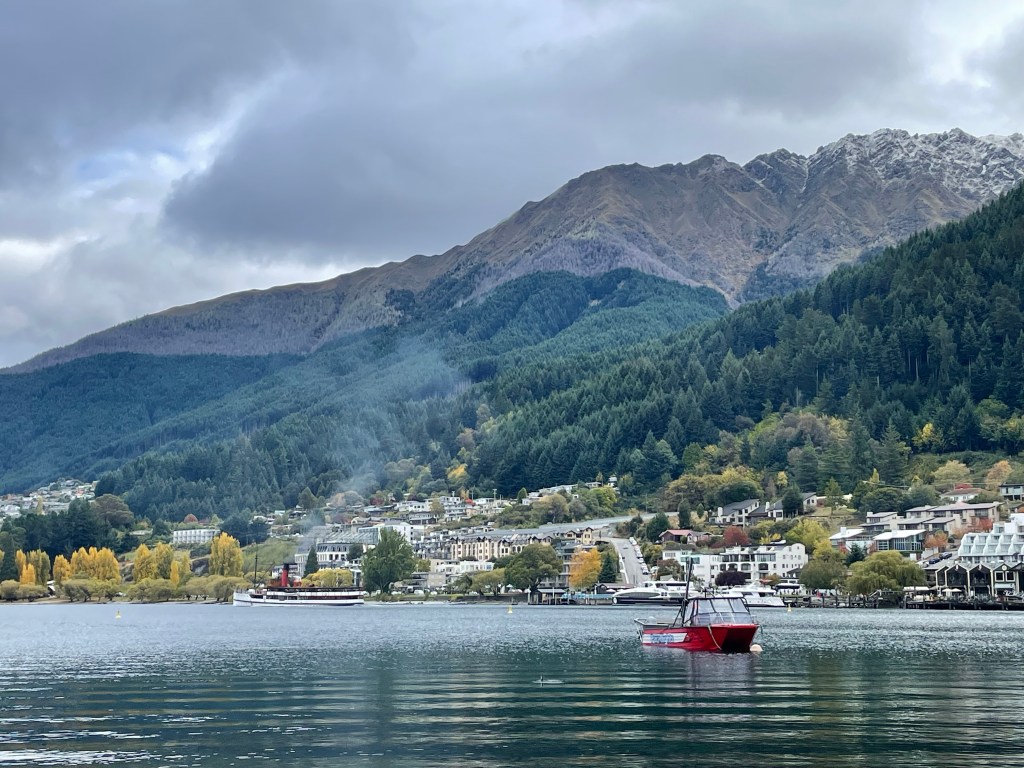
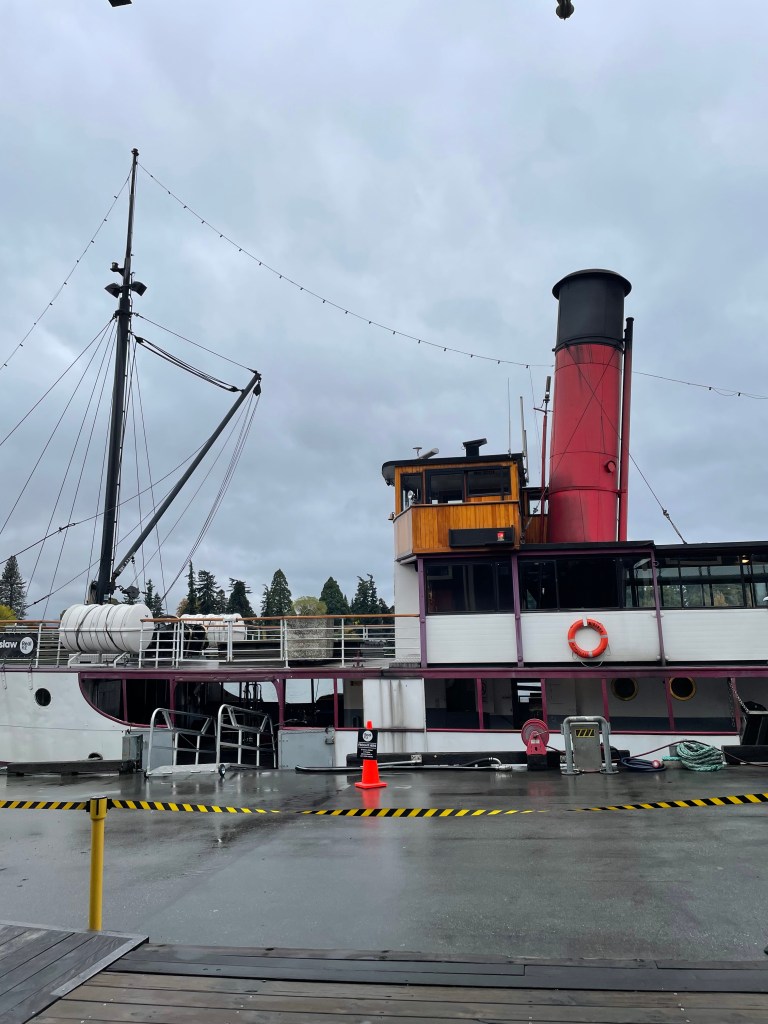
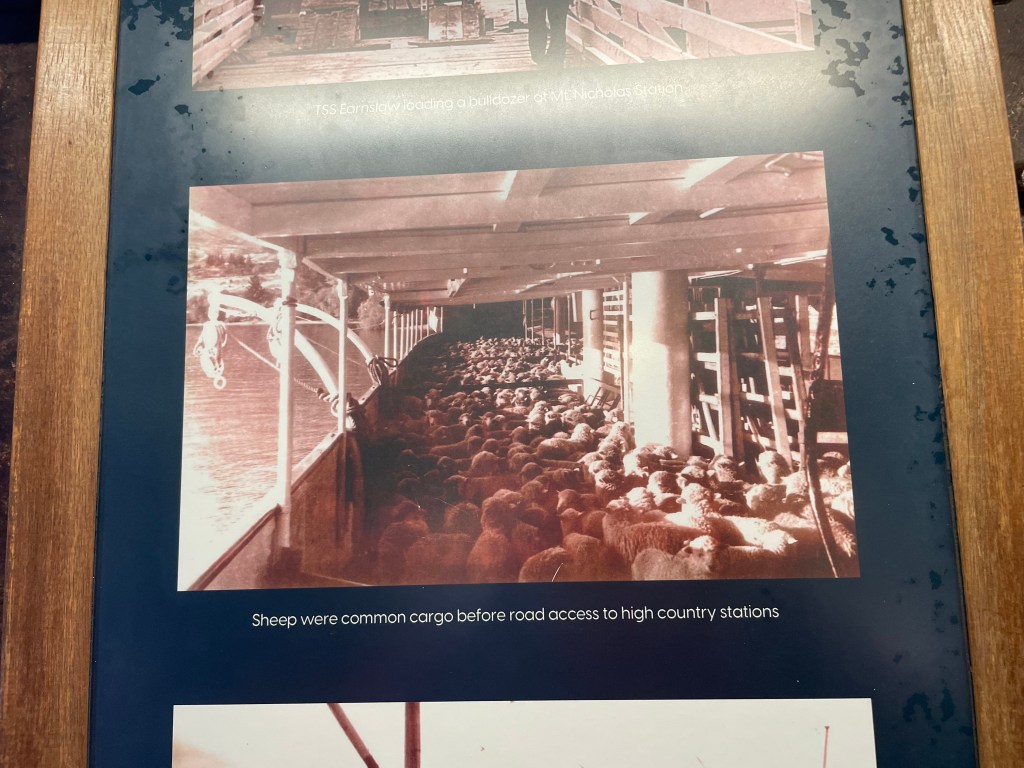
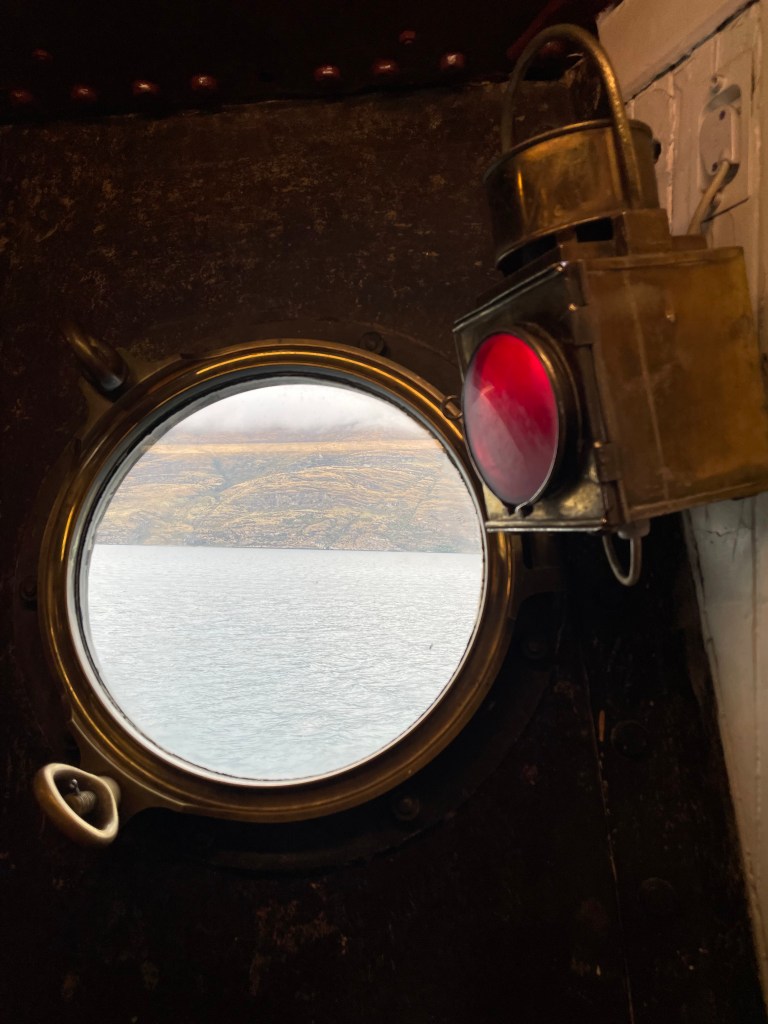
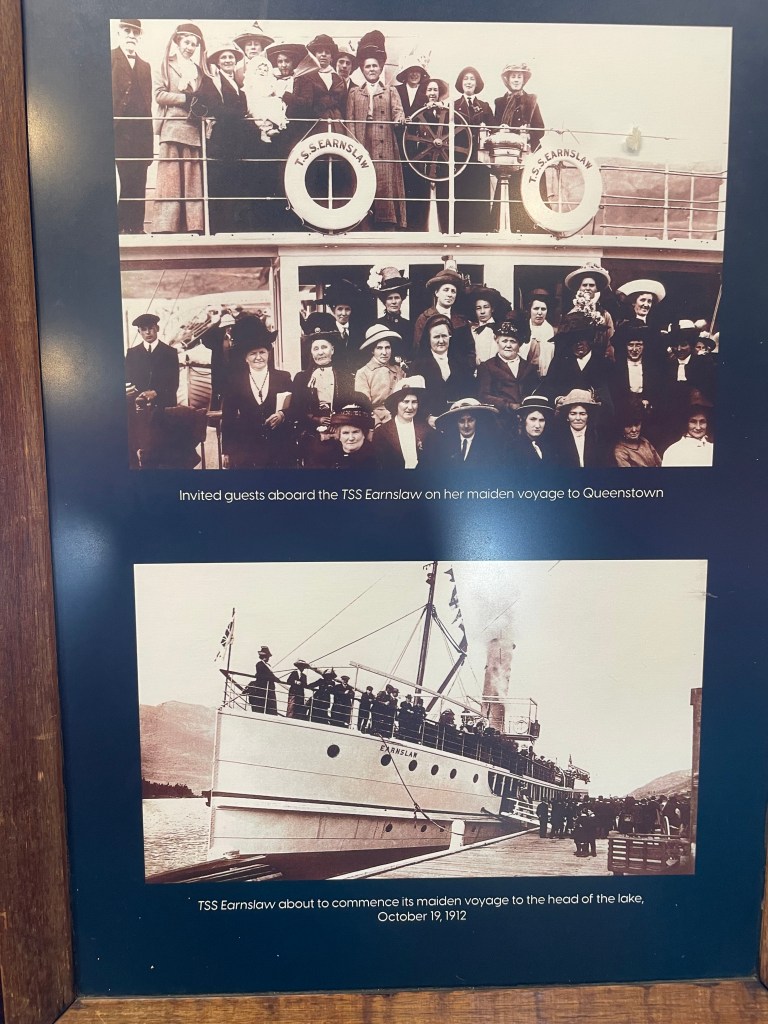
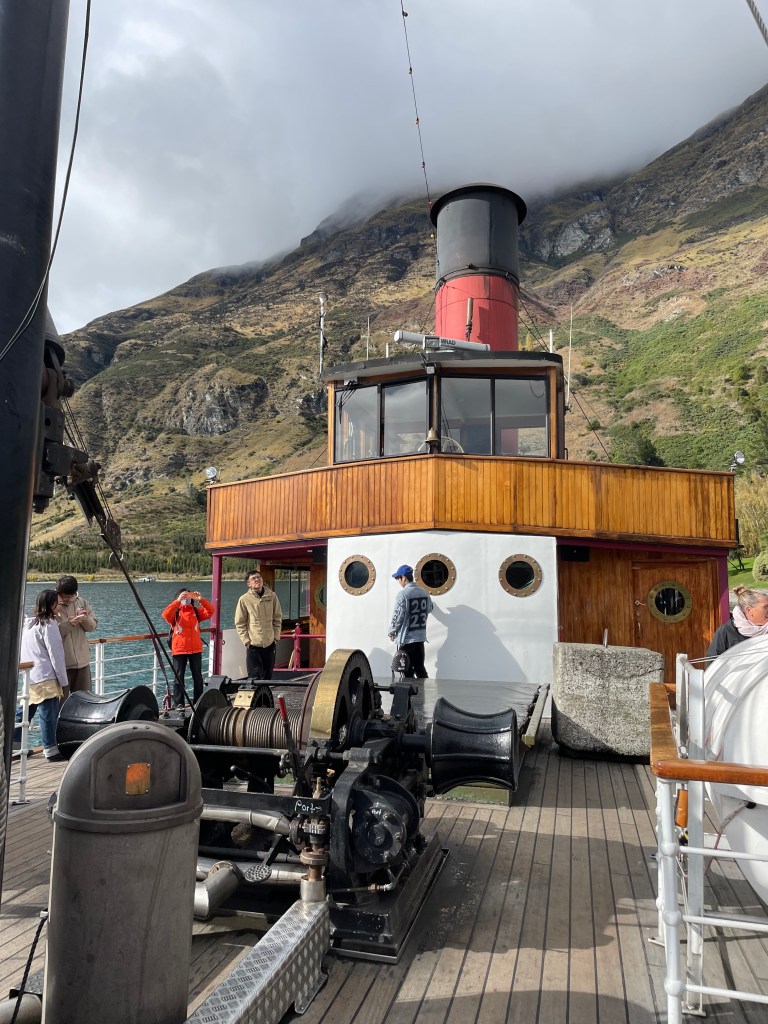
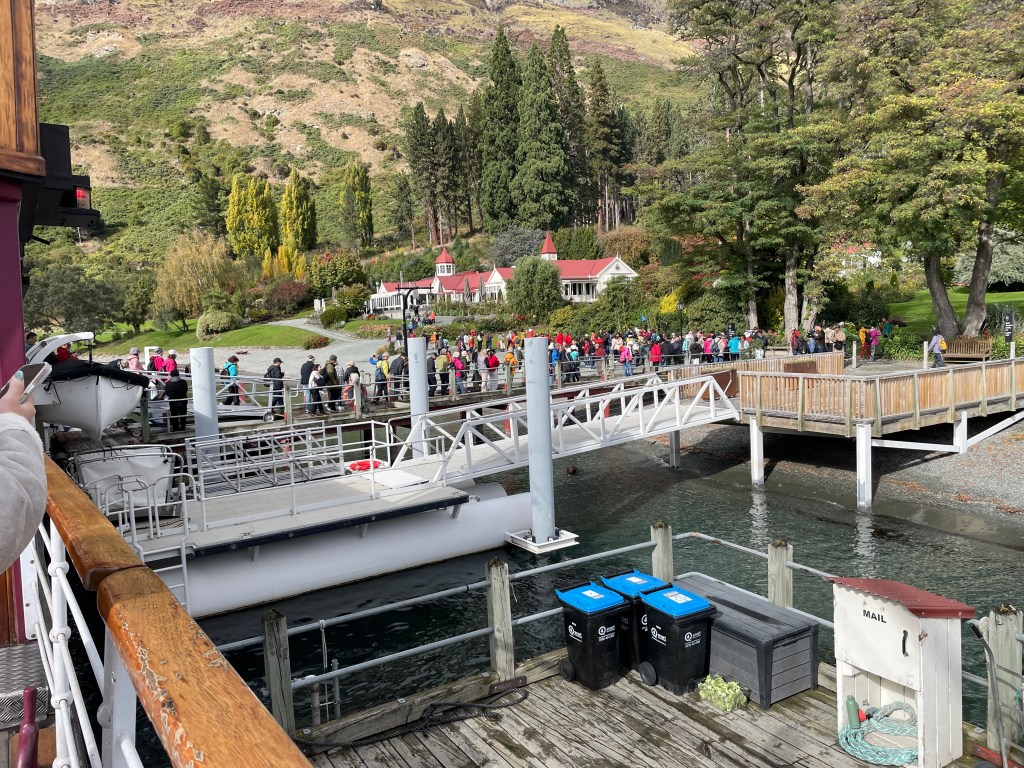
    Queenstown. What a lovely town, as trendy as Wanaka, much bigger and located on Lake Wakatipu. Here the snow season hadn’t begun but all the adventure activities were in full swing. It was still raining and very cold but we decided to take a slow cruise on the lake in the old TSS Earnslaw, a Twin Screw Steamer. Her maidan voyage was in 1912, with an initial passenger capacity of 1,035. She was affectionately called the “Lady of the Lake”.

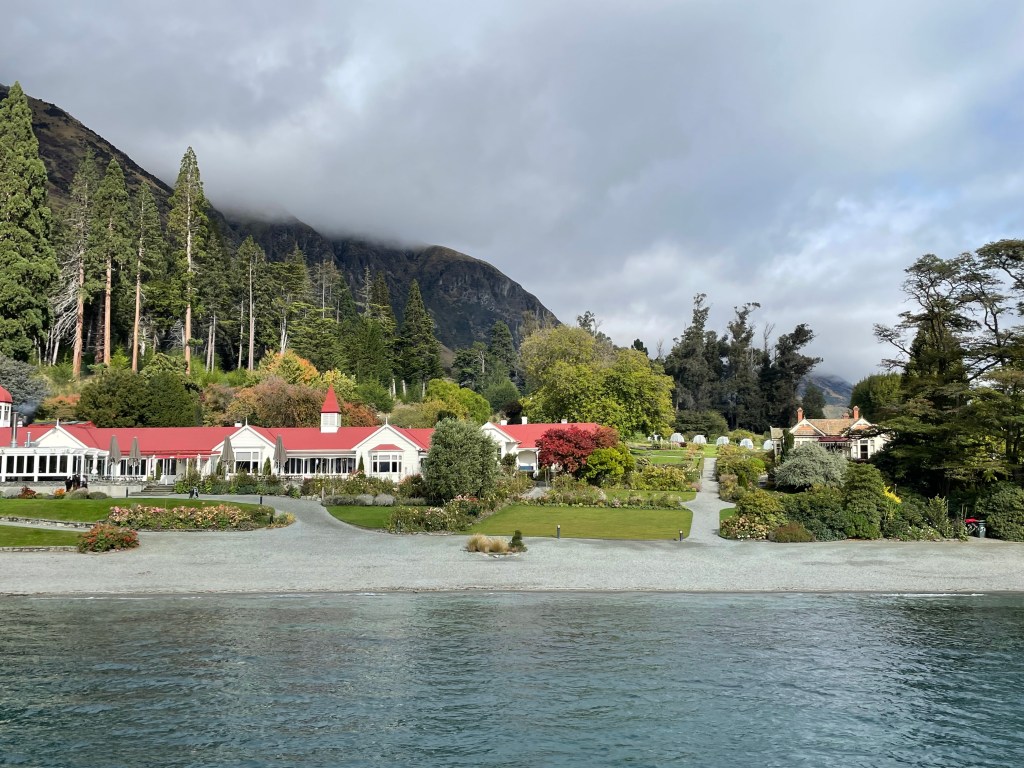
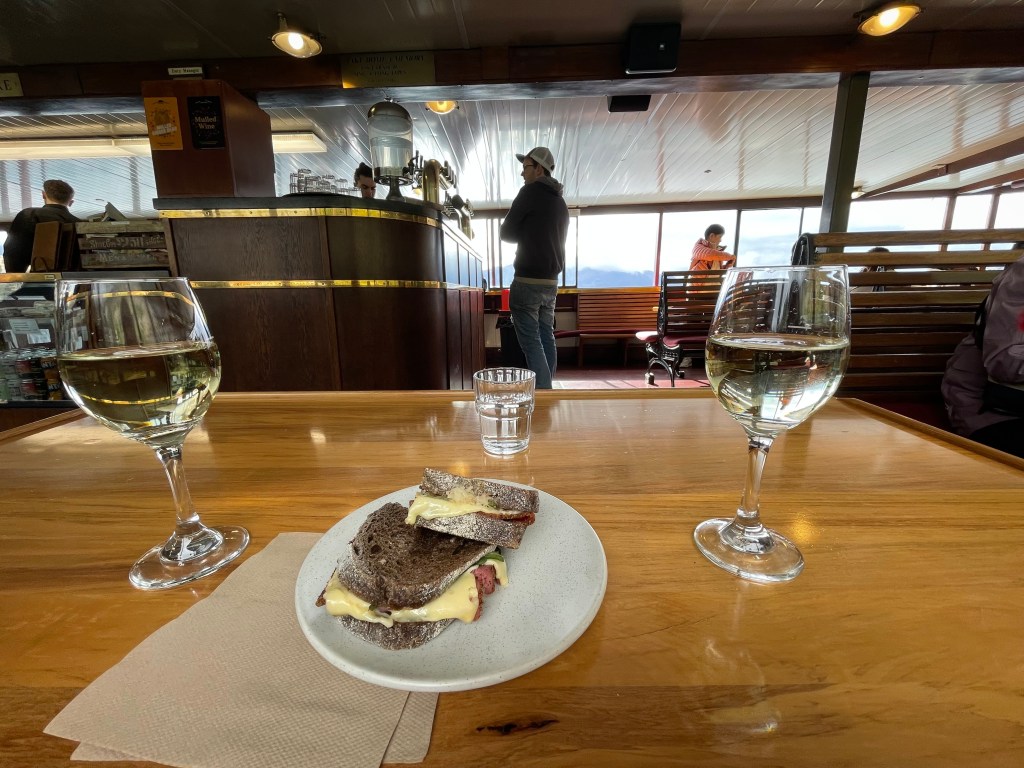
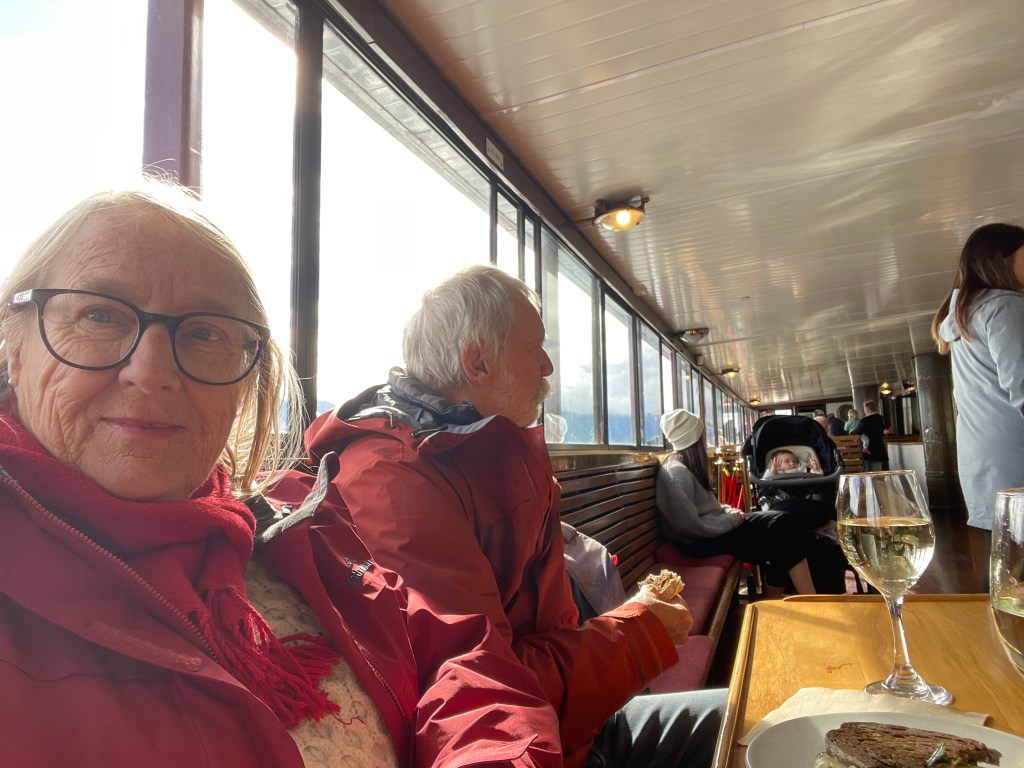
    We loved the trip, Nick was fascinated by the internal workings of the motors. We had a calm trip, just a bit crowded by holiday makers originating from Asia. The captain berthed the boat at Walter Peak High Country Farm, then announced that all those who’d paid for lunch and the cruise would disembark here at the charming early colonial restaurant at the edge of the lake. To our surprise, 99% of the aforementioned got off, then followed their guide with the blue flag and went to lunch. So our return cruise to Queenstown was peaceful, and definitely warranted a shared pastrami sandwich and a glass of wine.

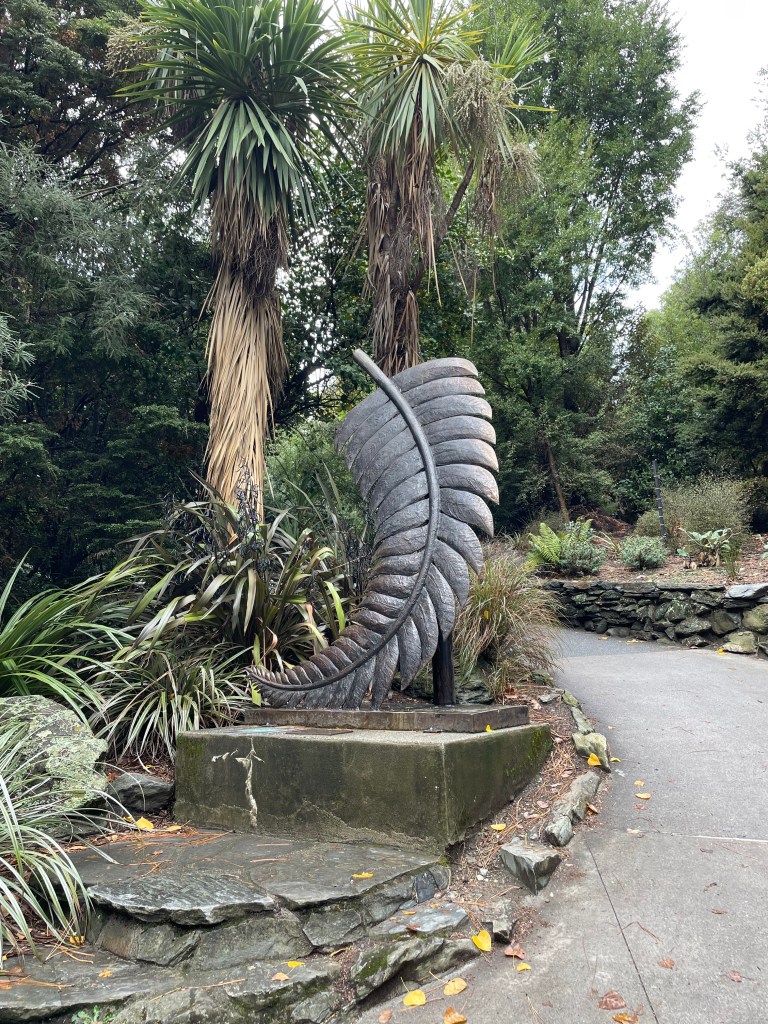
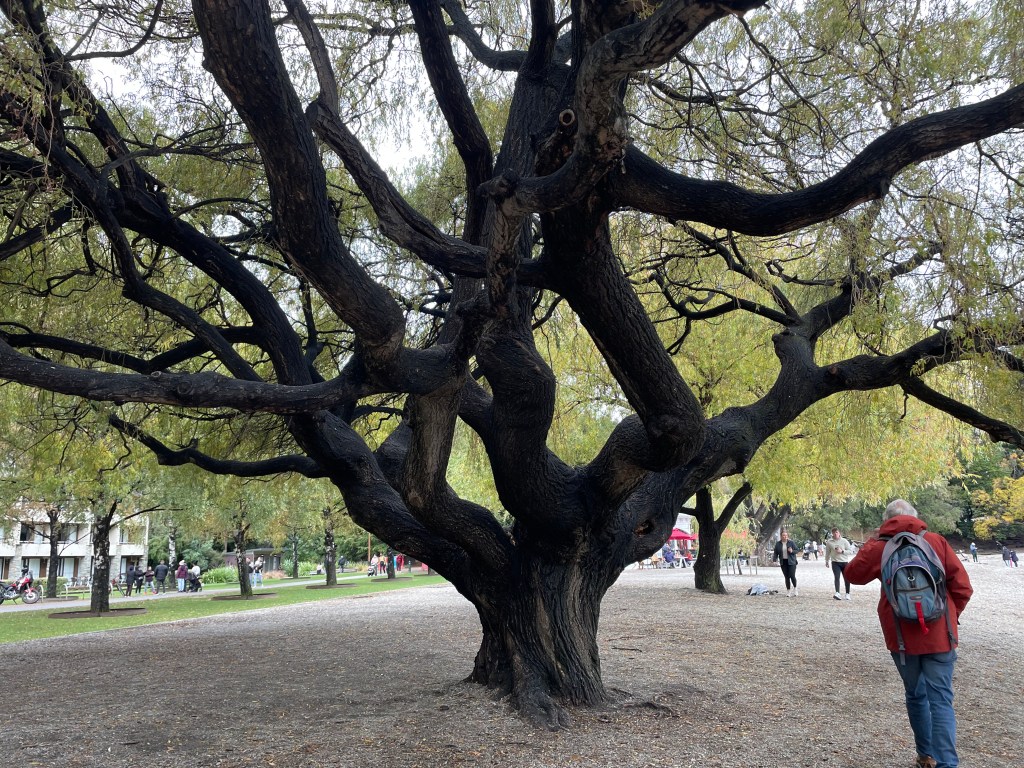
    After the cruise, the weather was marginally warming up so we walked around the Botanic gardens admiring more massive trees. A beer in an Irish bar with the wood fire warming all the patrons was a good choice before walking back to the van.

    Night times were very cold, heavy rain drenched the ground around the van. Heavy fog filled the valley in the morning. We were keen to have a fine day for our last in Queenstown. We had booked a fly/cruise/fly package to Milford Sound out of Queenstown on the Monday. One hour before we were due to fly, we got a message cancelling the trip due to the anticipated inclement weather later in the day. We were both pretty disappointed. I guess we’ll just have to return someday. The flight company said they’d been grounded for the past 5 days.

    So plan B for the day. Off we headed towards the east coast. The Remarkables live up to their name. This snow covered range dominates views towards the north of Lake Wakatipu. We took route 6 south along the Lake which by now was choppy from the wind springing up.

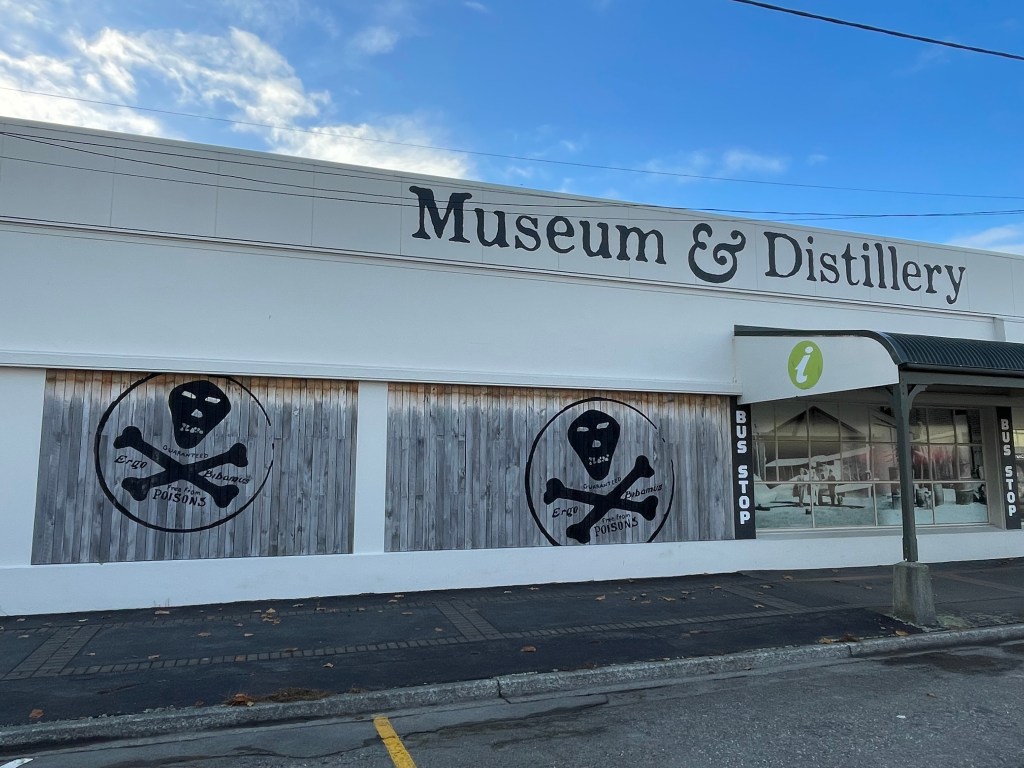
    The country was flattening out a bit, sheep were everywhere. We chose not to visit Invercargil, save that for summer time. From Lumsden we headed to Gore. On my camping App it said there were 2 free camp sites. One was closed for good, the other was in the rundown showgrounds. Not sure what to do next, we decided to visit the visitor information centre, which was also a museum and distillery. Great choice. The girl told us about a great camp ground just out of Gore. Also, we loved the museum which was all about the Prohibition of the early 1900’s, the settlement of the Scottish there after the Highland Clearances and their making of “Hokonui” or hooch as we know it. The end of the museum tour was a tasting of Hokonui, more accurately fire water, which we both did. I have a small bottle to bring home for any game visitors!

    The camp at Dolamore near Gore was perfect. In the forest, almost no others there, silent at night.

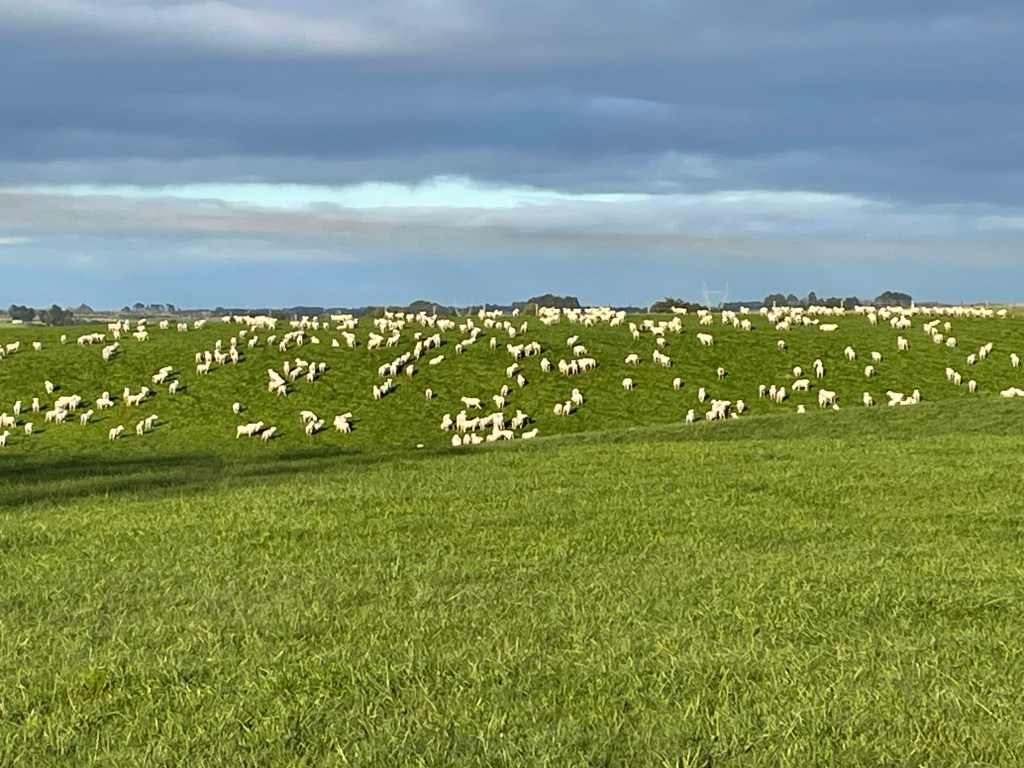
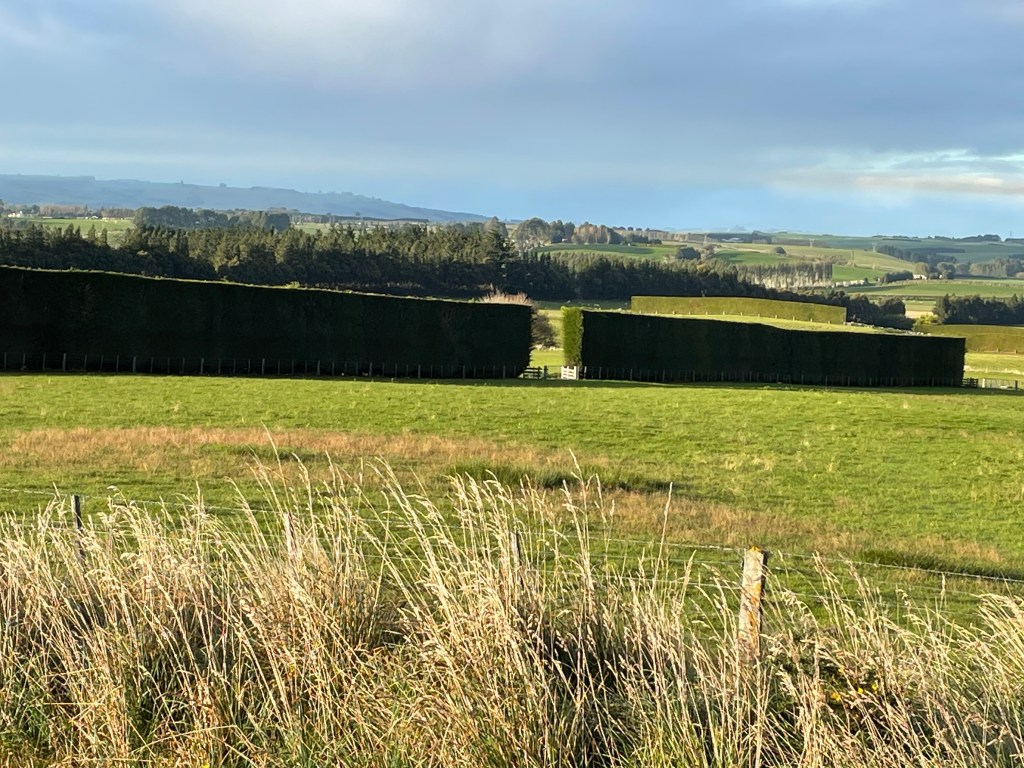
    My lasting thoughts about this trip so far….there are sooo many sheep and cows here and they graze on grass that looks like a bowling green or golf course. There are hedges everywhere, never have I seen an industry like it, especially when you include the job of trimming the hedges laser straight. Someone, years ago, must have proved that hedges increased production on farms, because the sheep are very happily munching their golf course green tucked in behind towering hedges. Windbreaks are not necessarily cypress pines, there are eucalypts and poplars, sometimes pampas grass or even the dreaded gorse. I feel sad that there is not an easy way to see the original forest, that early settlers cleared so much of it, except the mountains I suppose. My next aim is to see a Manuka tree, seeing as their honey is famous from here.

    That’s it for now. I’m writing this from Nelson. We’ve done lots of lovely things since Gore, and remarkably….the sun is shining, blue sky all day, calm seas. Idyllic. I’ve found Manuka and seen original forests.

    Jen & Nick xx

  • New Zealand. April 12th to May 12th, 2026

    A camping holiday with a difference.

    Posted April 22nd 2026

    This is a new concept for us, having a “camping” holiday without Swifty. It feels easy in some ways, not having to pack Swifty with all our food, bedding, clothes, camping gear, and doing car maintenance jobs, all that is done for us this time. Being self contained in a camper van with a loo and shower is novel for us too. I always said if I found myself dragging a container of our effluent through a campground, that then my camping days were over. So to remain true to myself, I’ll get Nick to do it.

    We departed from Gold Coast airport on Air New Zealand bound for Christchurch. On a world level there is a war in the Middle East, initiated by Trump and Netanyahu, with the aim to create regime change in Iran and free the desperate people of Iran from a repressive government. After 6 weeks it looks like a fizzer. The upshot is, there’s a fuel supply crisis because the Iranians have chosen to close the waterway where oil tankers would normally freely travel to supply the world with petroleum products. Flights could be impacted, prices could sky rocket, International travel could be out of the question for us normal people. But we’ve snuck in ahead of any disruptions. Phew. Years ago we booked a holiday to NZ then Covid 19 hit, holiday cancelled!!

    On top of a “fuel crisis” we were heading off to NZ which was facing a cyclone in the North island. We were going to the South. Flights were still departing to that cyclonic region so I thought it couldn’t be too bad.

    Arriving at Christchurch mid afternoon we settled into our 3 star accommodation, not very classy but great location. A low hanging mist shrouded the suburbs, by 5.00pm it was dark, it looked like the UK but it was warmish. We walked and walked, stretched our legs as we debated what sort of meal we’d have, as there were many choices along Riccarton road. Settled for a pub meal of roast pork. 

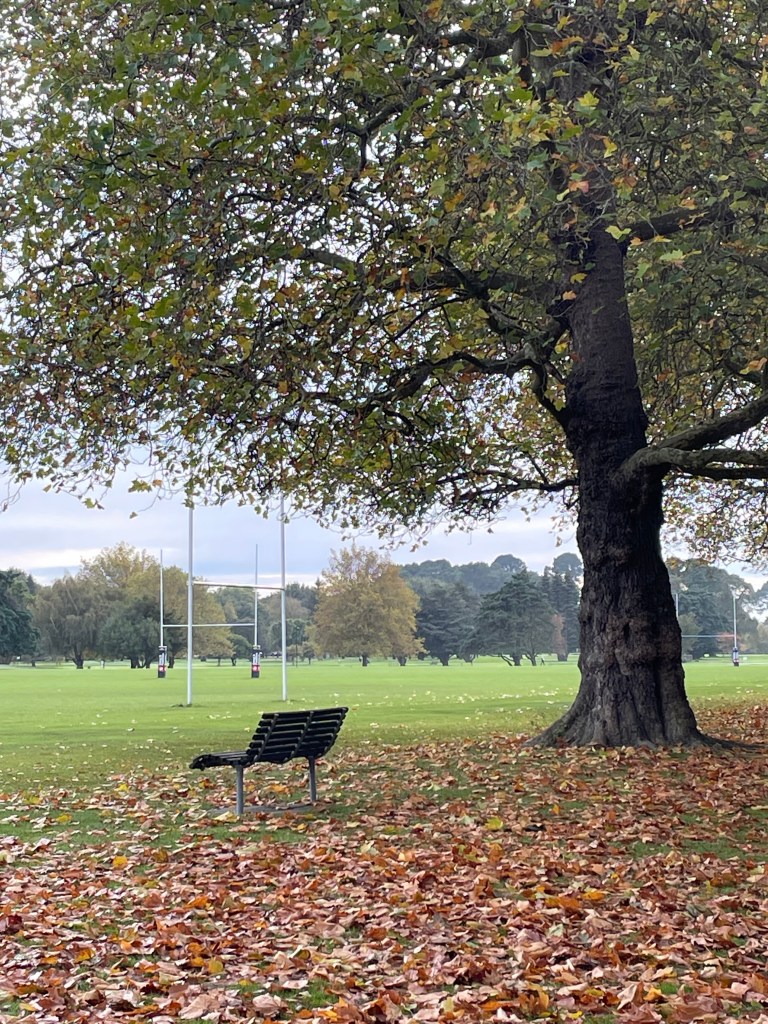
    Next morning the mist had cleared but clouds hung about all day. We set off walking into town, through Hagely Park, kicking up piles of autumn leaves and marvelling at the enormous Plane trees and Oaks that lined the path. We were both lost in childhood memories of true autumns past, with coloured leaves and chilly faces. 

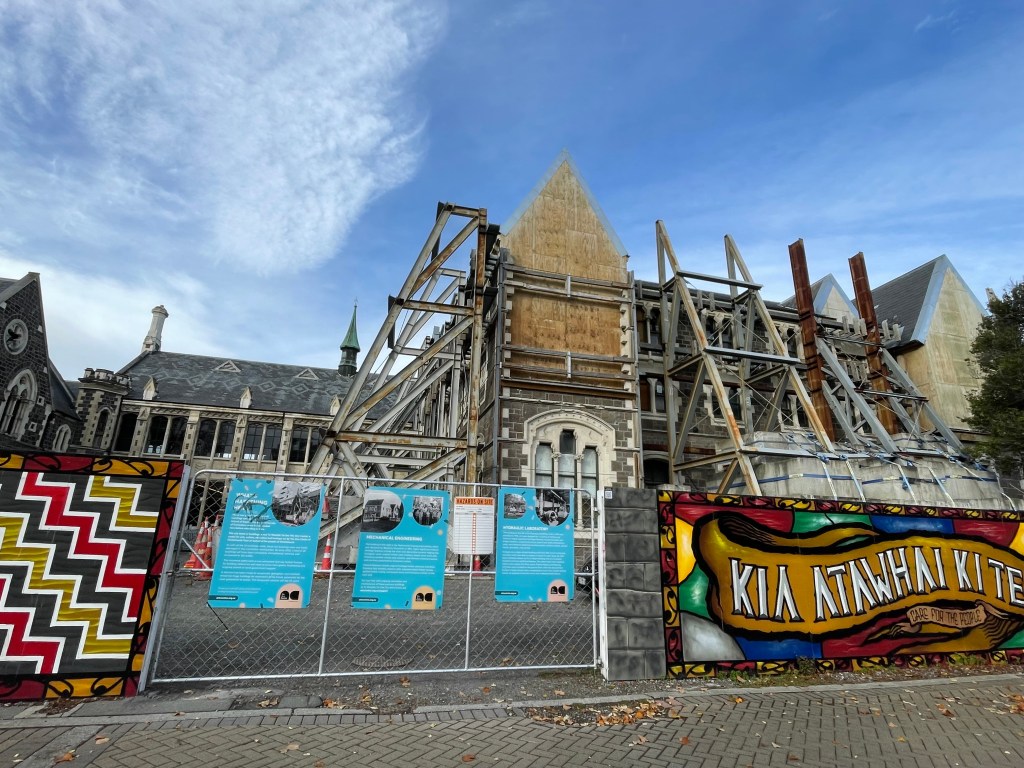
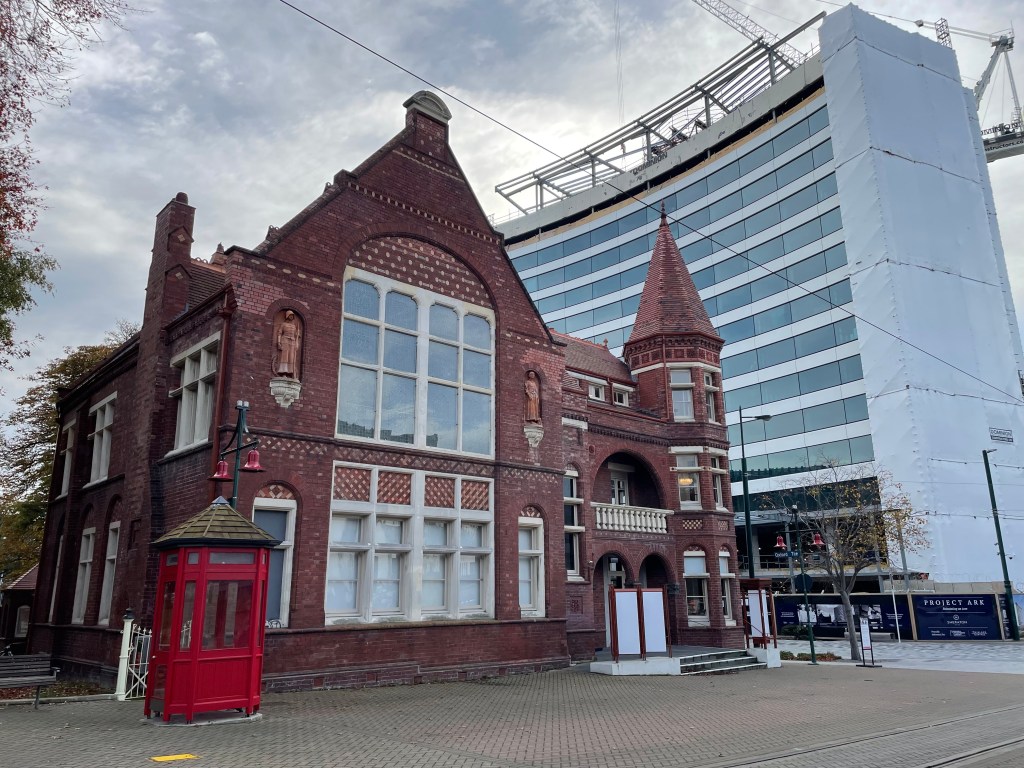
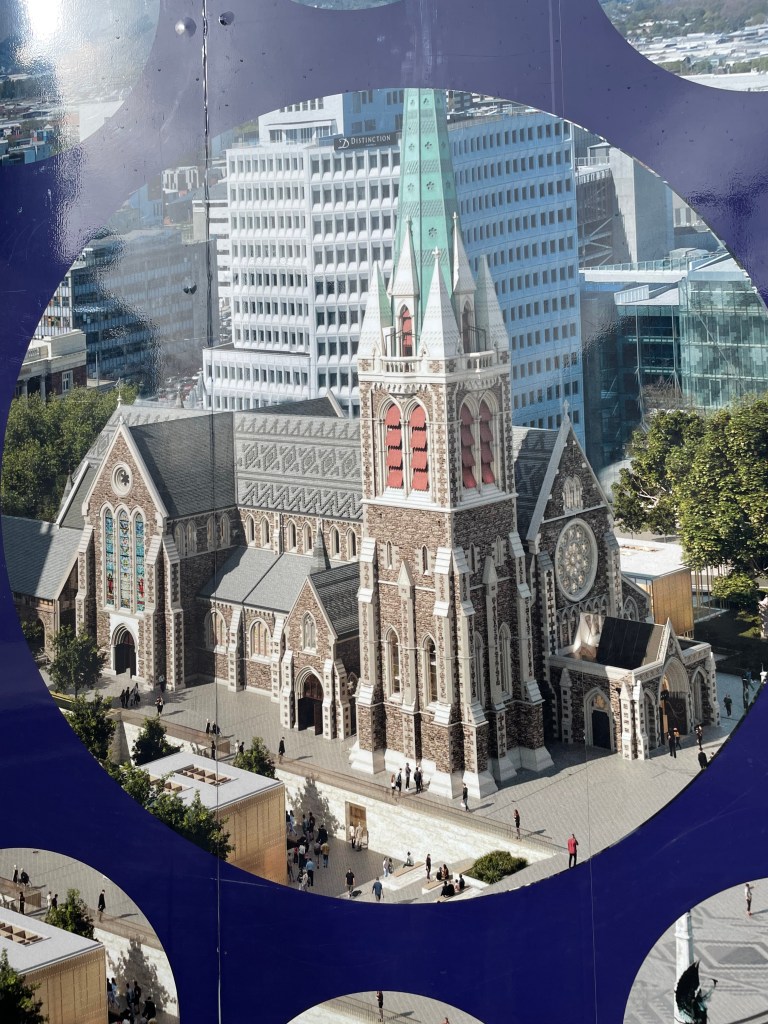
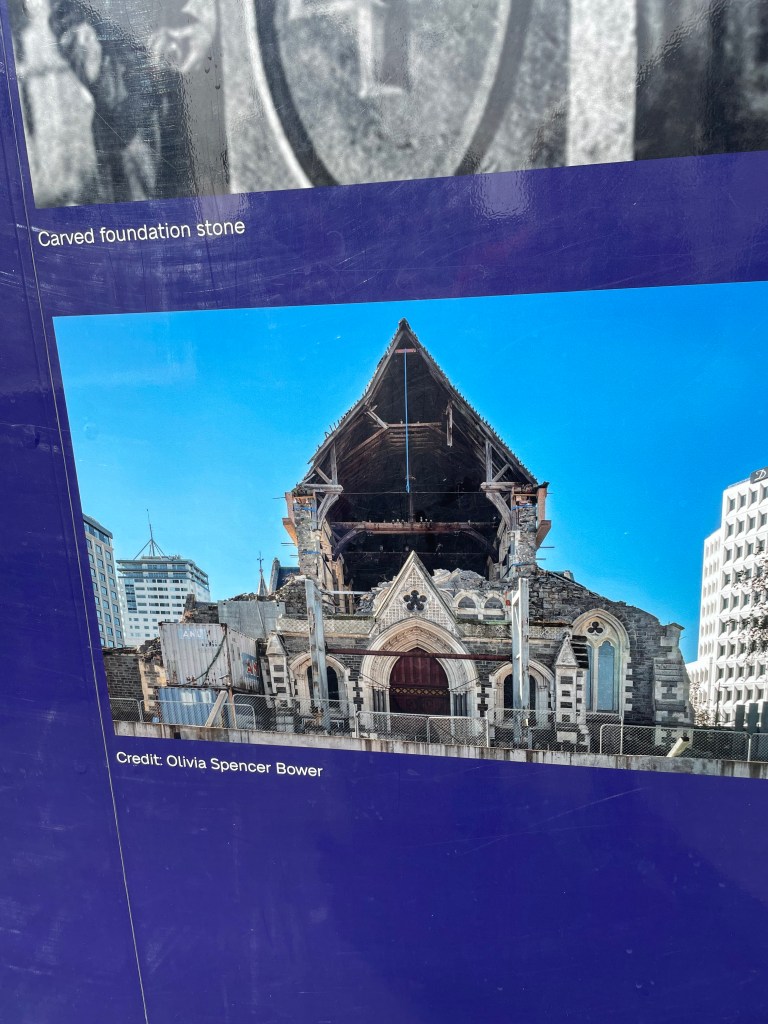
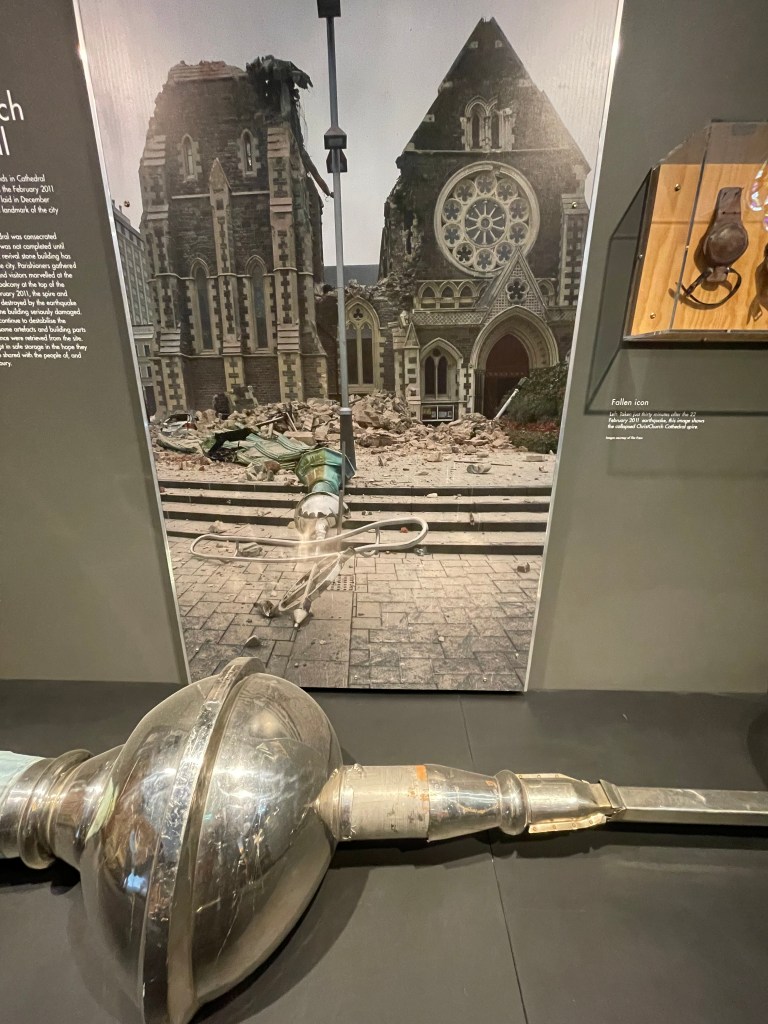
    My first impression of Christchurch was a city of contrasts, old vs new. Some old bluestone buildings were covered in scaffold, new buildings supported massive cranes overhead, vacant gravel parking lots were dotted between stunning new glass architectural marvels. And then we came to Christchurch Cathedral, once a dominant presence in the heart of the city, now a fenced in ruin. No workers noisily worked on the site, the city had run out of funds to complete the restoration. However the Anglican church has promised funds now to restore the front nave, which can seat 100 people.

    After the 2011 earthquake Christchurch was said to be the biggest reconstruction site in the world, until Notre Dame caught fire and took the lead. 

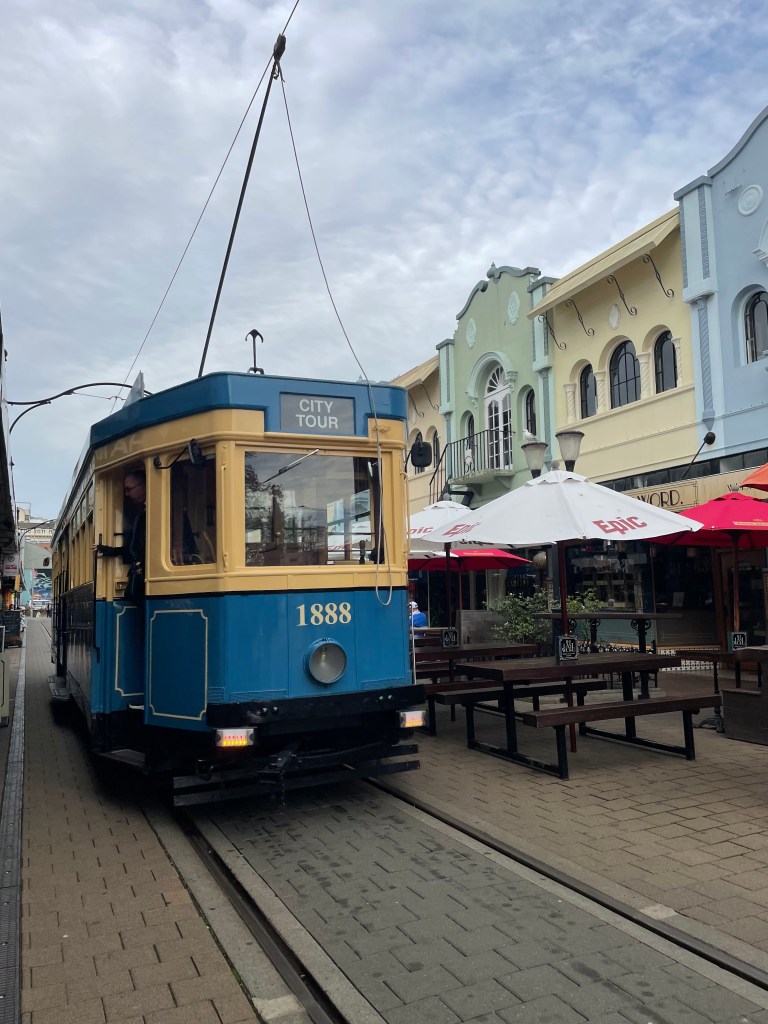
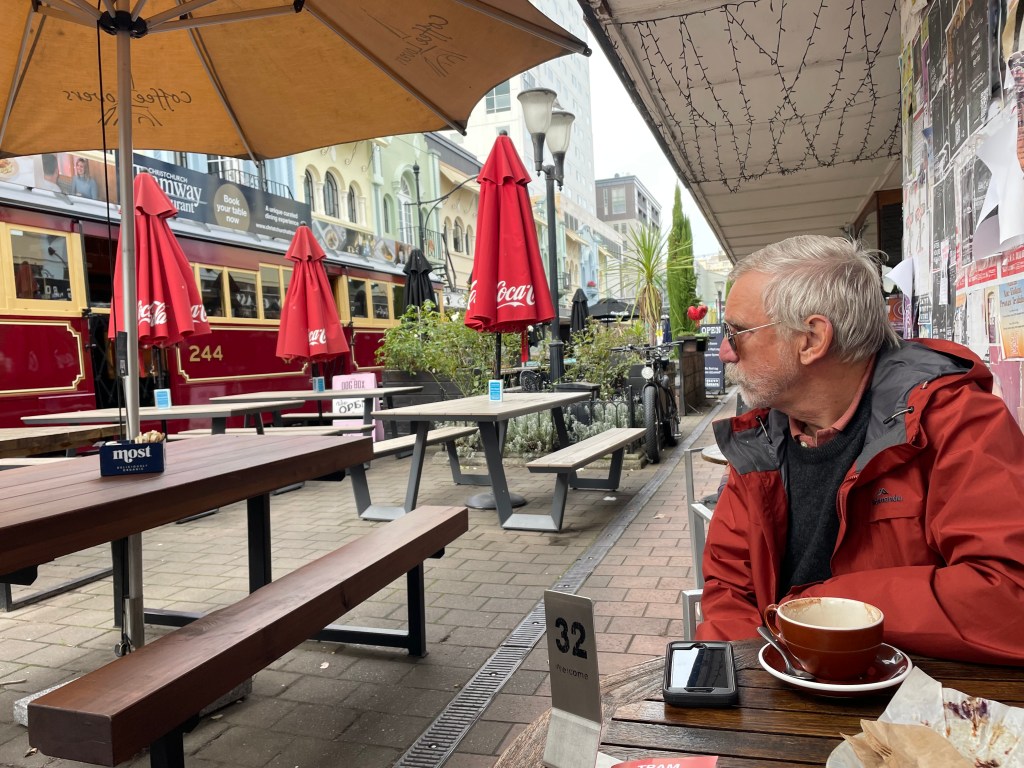
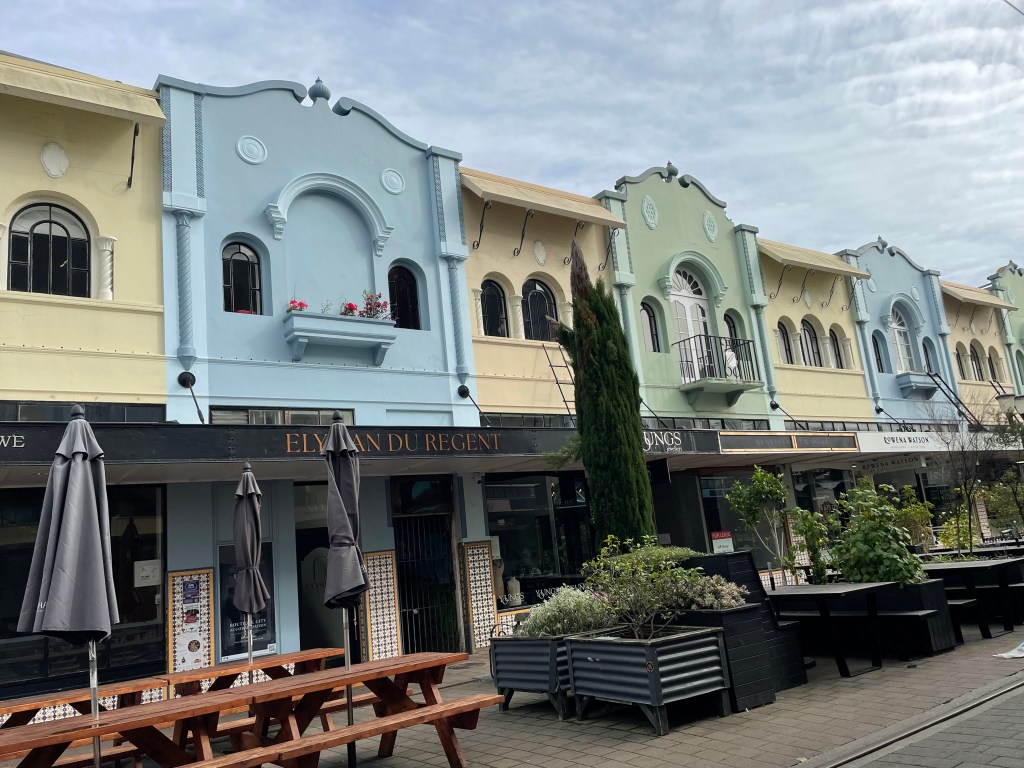
    We boarded the city circle tram seeking a good coffee stop. We weren’t disappointed, stop 18 was New Regent Street, a very quaint street with colourful 2 storey houses and shops where the tram drives down the middle of the road. Suitably buzzing after our coffees and muffin, we walked back to the town centre, and rode another tram through the shopping precinct. Great to hear the commentary from people who’d been witness to the 2011 earthquake. They pointed out which places had survived from the 90% destruction of the city. We decided to visit the Quake Museum. I felt it would be triggering for a local but maybe after 15 years they’re ok. The videos, interviews, photos, remnants of structures, all combined as a lasting memory of just how severe the quake was and how resilient the people have been to rebuild their city. Glad we chose to go there.

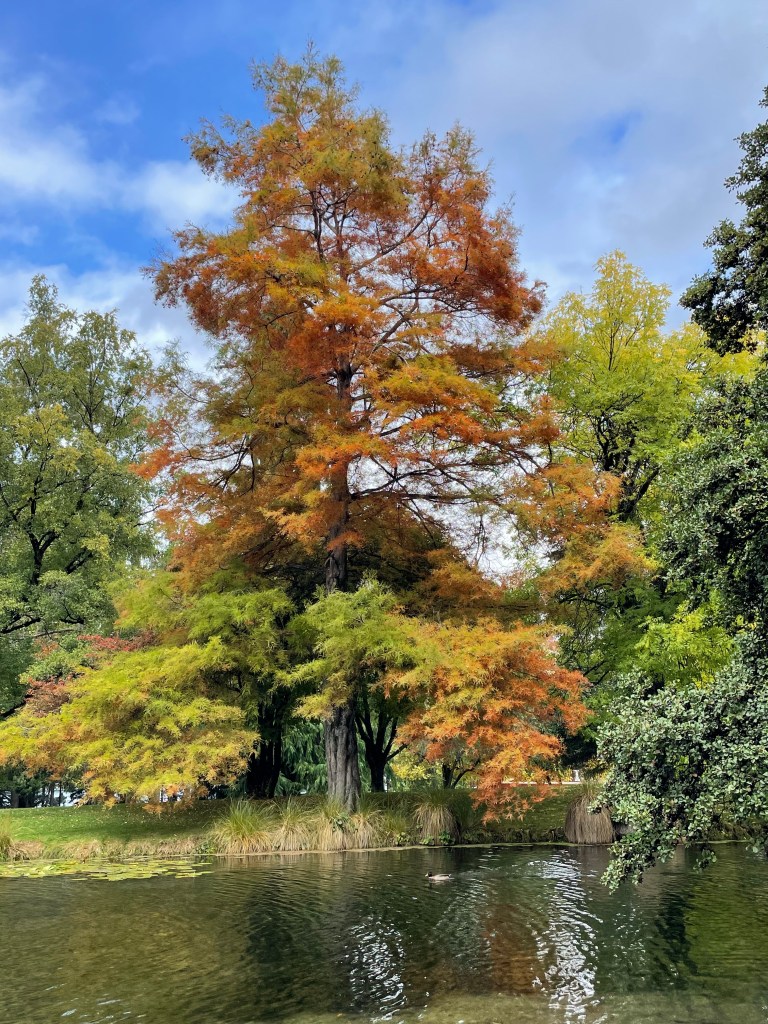
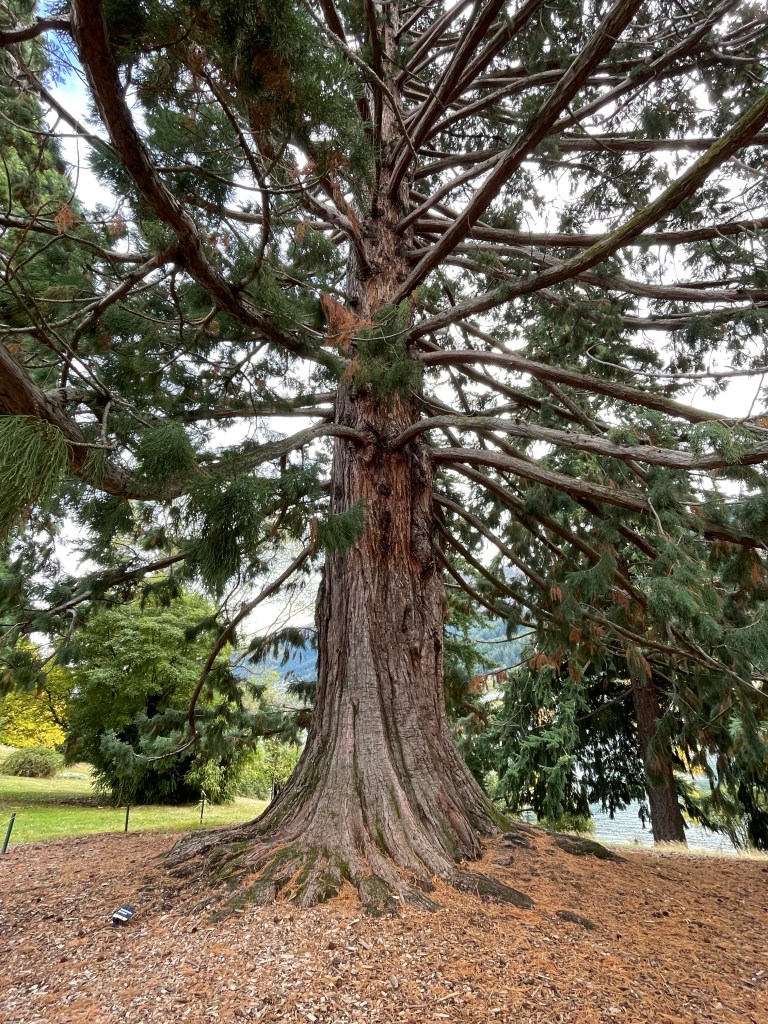
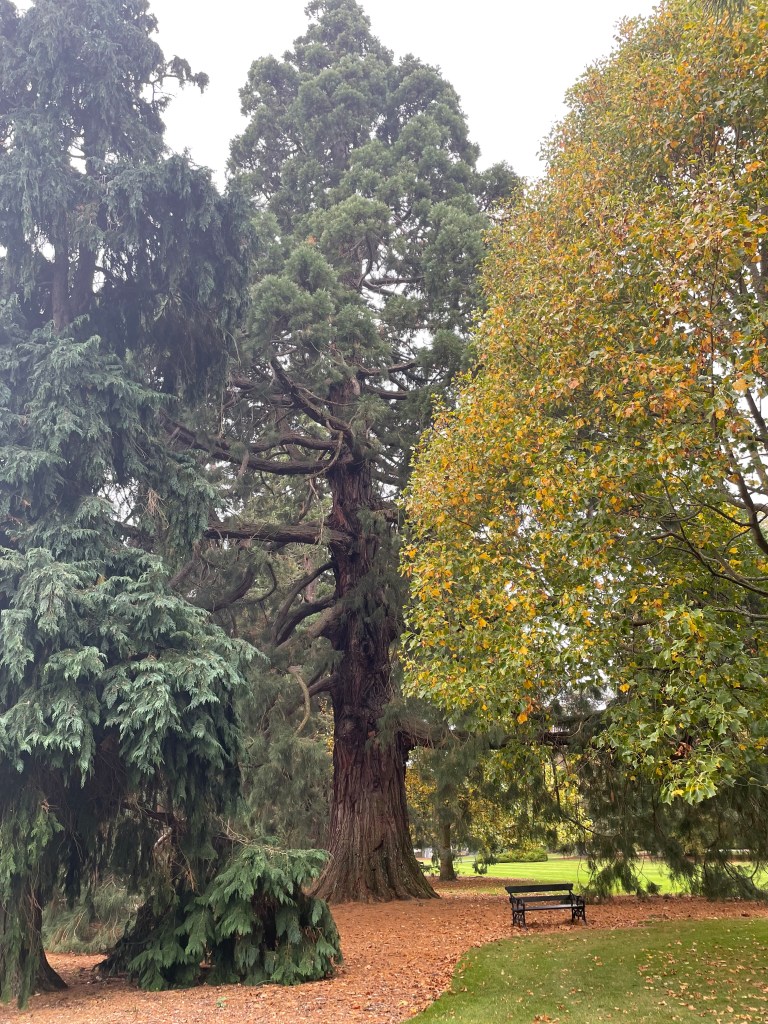
    To finish the day we walked back through the Botanic Gardens, adjoining Hadley Park. I loved all the significant trees, especially the towering Sequoias from California, the Ginkgos from Japan, as well as the Oaks, Cedars, Redwoods, Pines, Elms and even a Wollemi Pine. Many were planted as Commemorative trees by notorieties like Dalai Lama, and the late Queen Elizabeth. It’s so energising to stand by a towering tree and look up into the branches and feel tiny…. surrounded by the giants of Nature. There’s very little built by humans that exude such a powerful presence, that make me want to stay in it’s aura for a long time. 

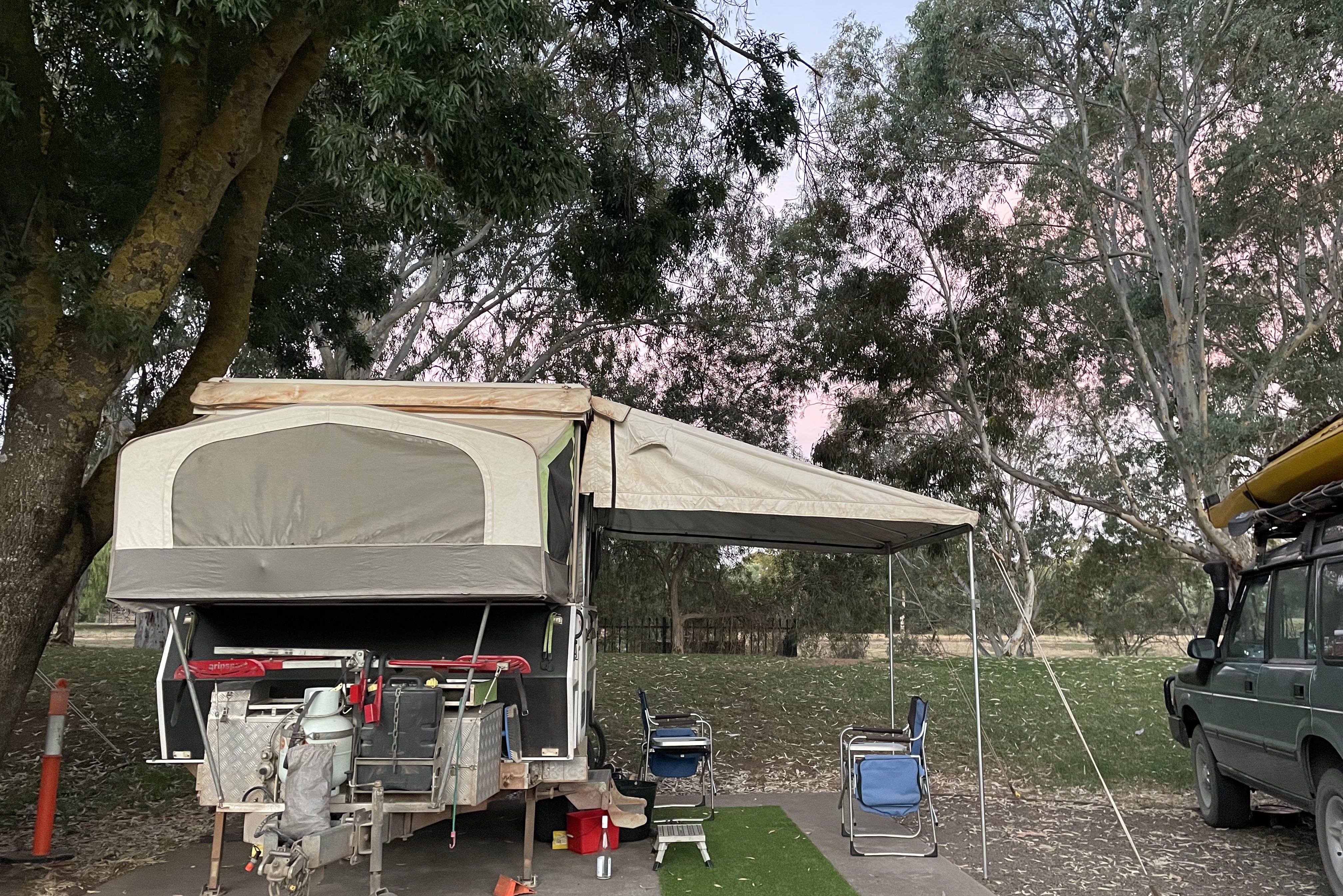
    Big day today, pick up our camper van. Time to experience camping like we’d never done before. 

    After the prolonged briefing, going bit by bit through the van with a lovely German backpacker, we finally set off towards Arthur’s Pass. Below the Pass we stopped for the night in a park, to power up our battery, and learn how to make the bed, switch things on and off, all pretty straight forward actually! The cold night taught us to close the vent over the bed and add an extra blanket.

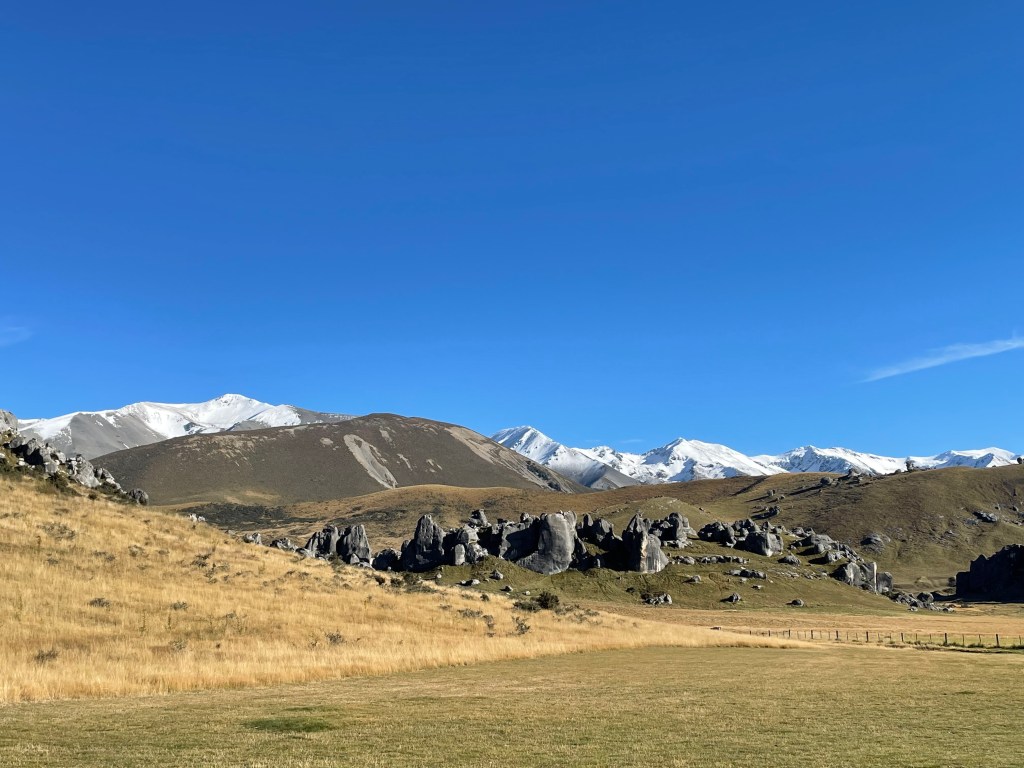
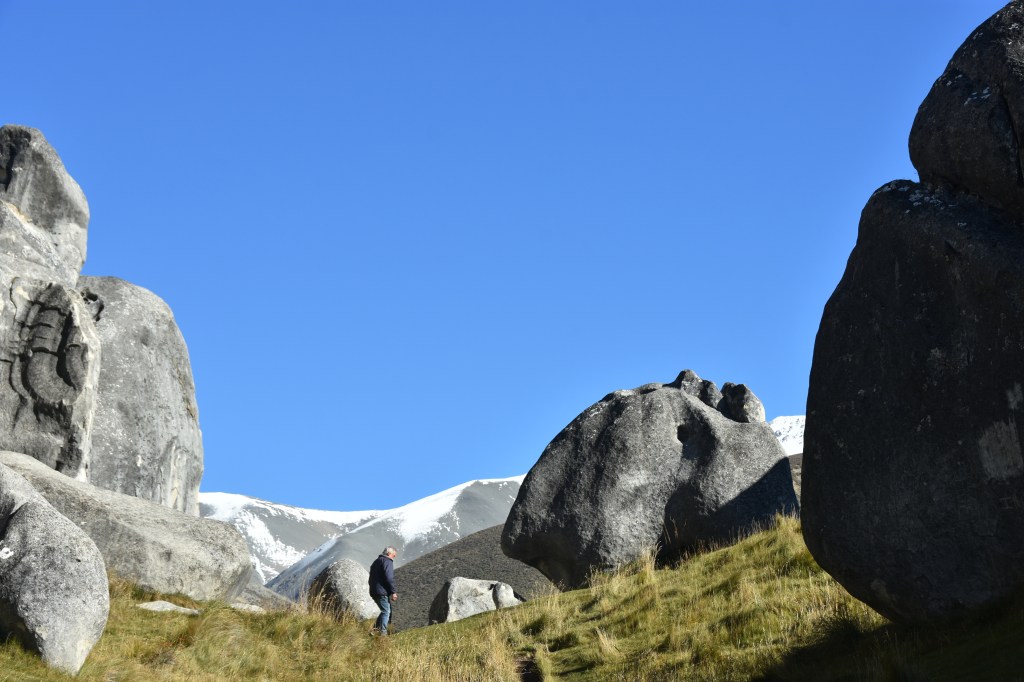
    Castle Rocks

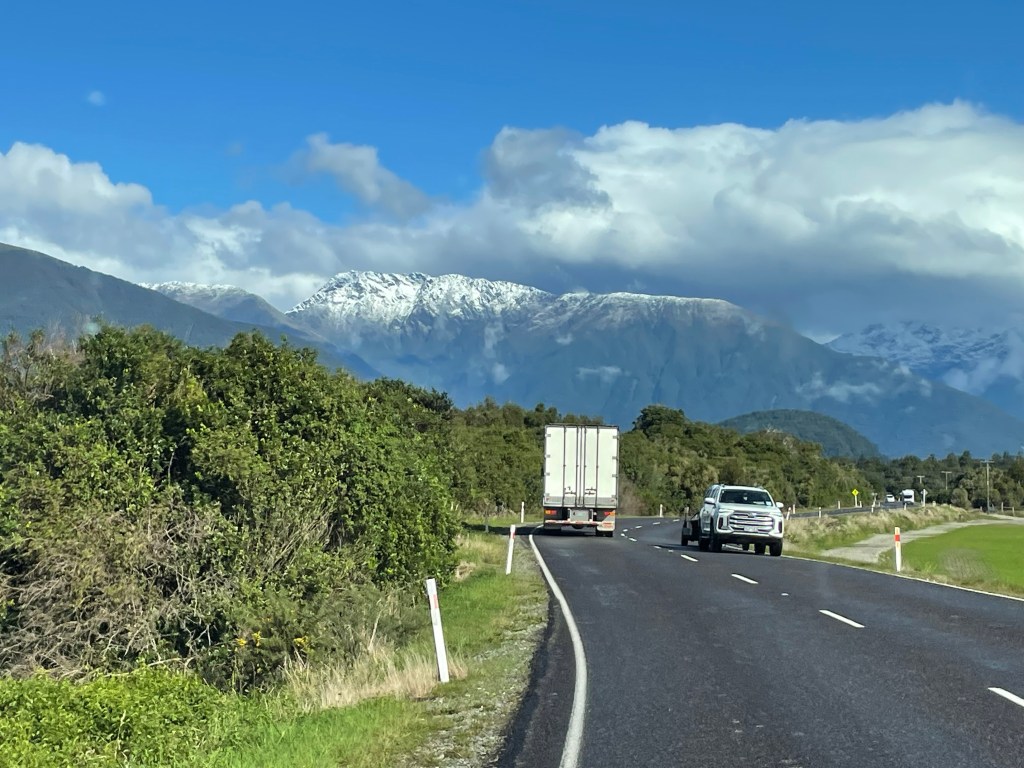
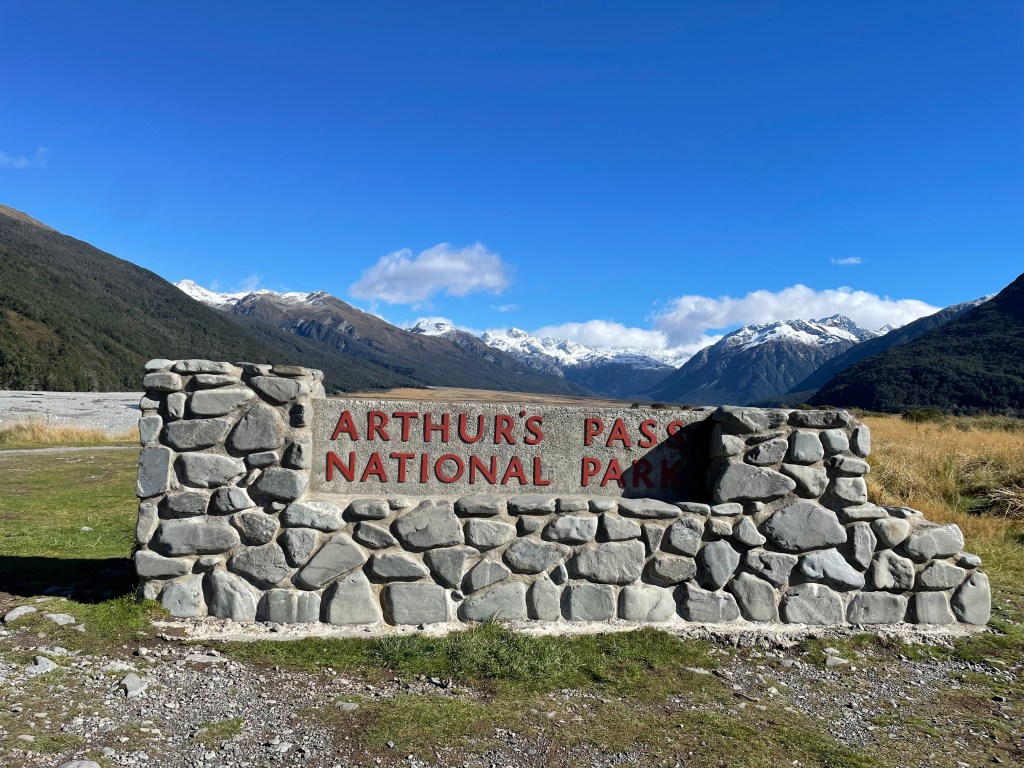
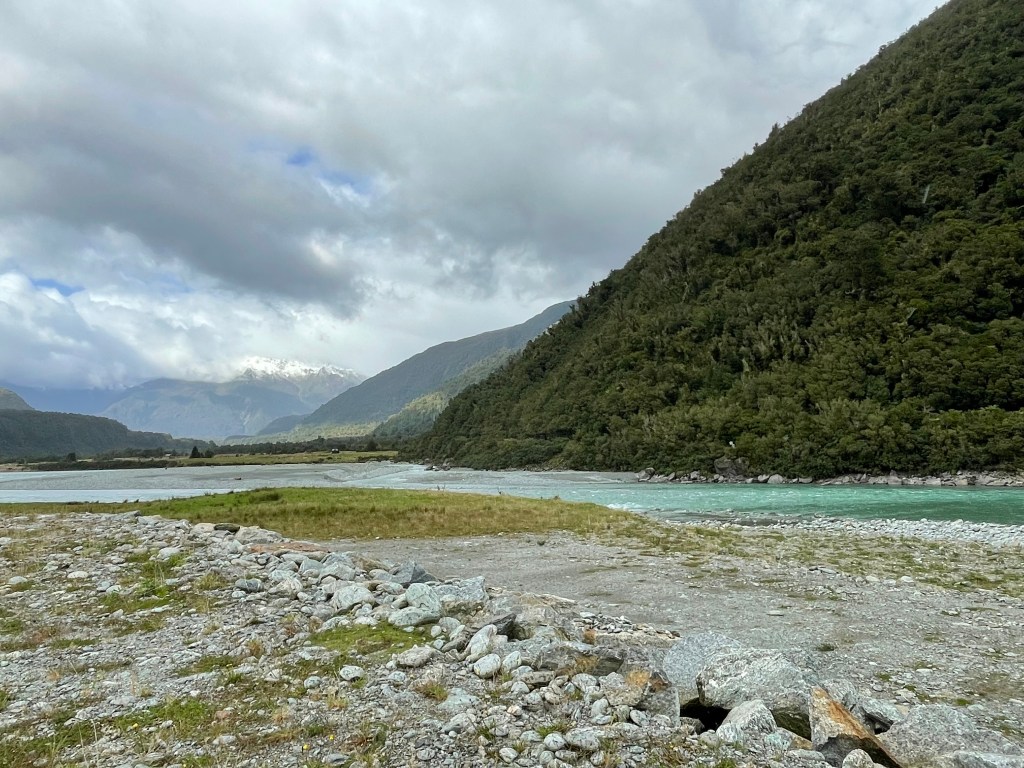
    With snow capped mountains already visible, we headed for Arthur’s Pass. I think we were both expecting somewhere like Charlotte’s Pass in the Aussie Alps, a narrow pass with snow all about us. But no, it was a small non-descript town with a railway station. Over the western side of the Pass was a narrow steep winding road with a huge gorge of violently rushing aqua glacial water. We took a shortcut turn off to Greymouth, our destination for the night. 

    Nick writes: 

    “Greymouth is situated in the Grey District which is much the same as the naming of the Northern Rivers or a prefecture in Japan. Named after the then Governor Sir Somebody Grey who also had the Grey river named after himself, later the town Greymouth was named after him with much fanfare. It is a very apt name as the hills that surround the place are grey, the river is grey and you guessed it the weather is grey as well. There is an information board in town that states that ‘A week without rain in Greymouth is very unusual’. As soon as we got there it started to rain and it continued all night with gusto.”

    The only photo I took in Greymouth. Says it all!

    We parked in a free camping spot on a spur of the headland, close to the sea. Overnight, I estimate 30 more vans joined us. We parked as far from the sea as possible. After the battering we got in Swifty at Crescent Head in 2025, we will never trust a coastal campsite again, we made the right choice this night. The wind howled, rocking our van, the rain was torrential. I was not envious of the row of vans facing the sea. 

    There’s local folklore about the wind:

    “The “Greymouth Barber” is a famous, cold katabatic wind that blows down the Grey River valley in New Zealand. Occurring at night, this gravity-driven wind brings dense, cold air from the mountains down the valley, often creating a, “long white cloud” or fog known to feel as sharp as a razor, or “cutting your hair”. We had a short back and sides….and a shave!

    The morning after was surprisingly calm, as often happens after a storm bash. We quickly ate our brekky as we knew the west coast of the South Island was due to have more rain and wind. In fact the weather forecasts were not good, so we headed down to Wanaka, with only brief pauses at Franz Joseph and Fox Glaciers.

    This should do for this first NZ blog. My thoughts so far….we are doing really well in the cold….giving thanks daily that we are not in Swifty. As a first taste of a country many Aussies have visited often, we are skimming the country, but whetting our appetites for another trip…..in summer!!!!

    Jen & Nick xx

  • Surviving in the Flinders Ranges.

    The end for Swifty……

    September 11th 2025

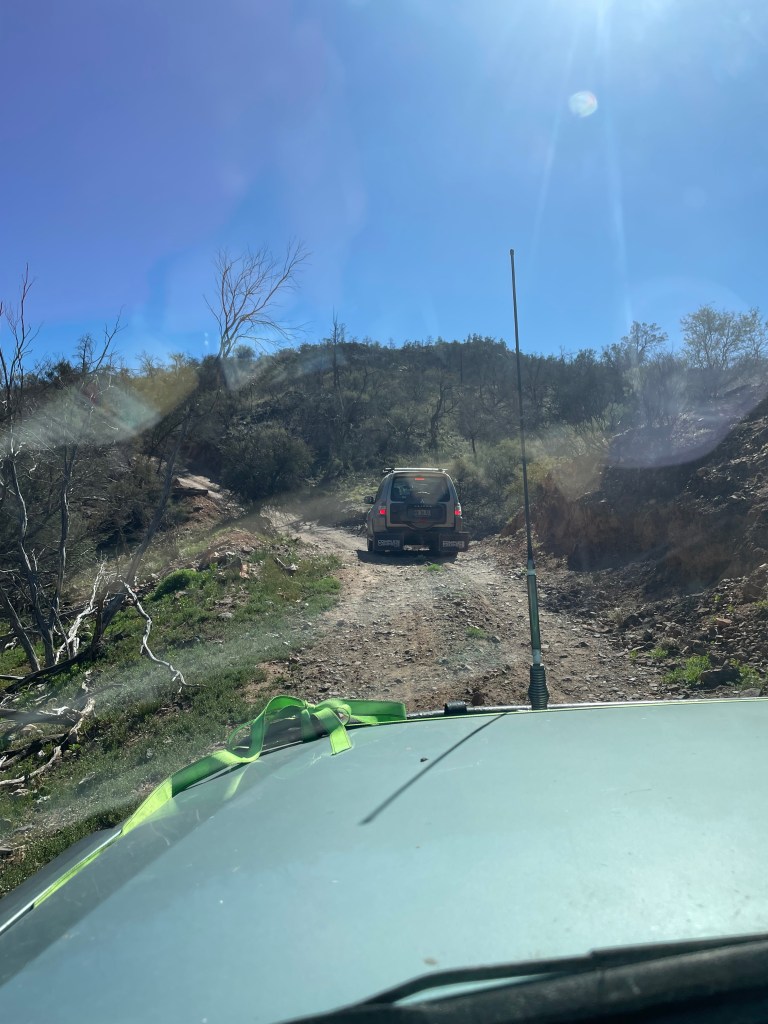
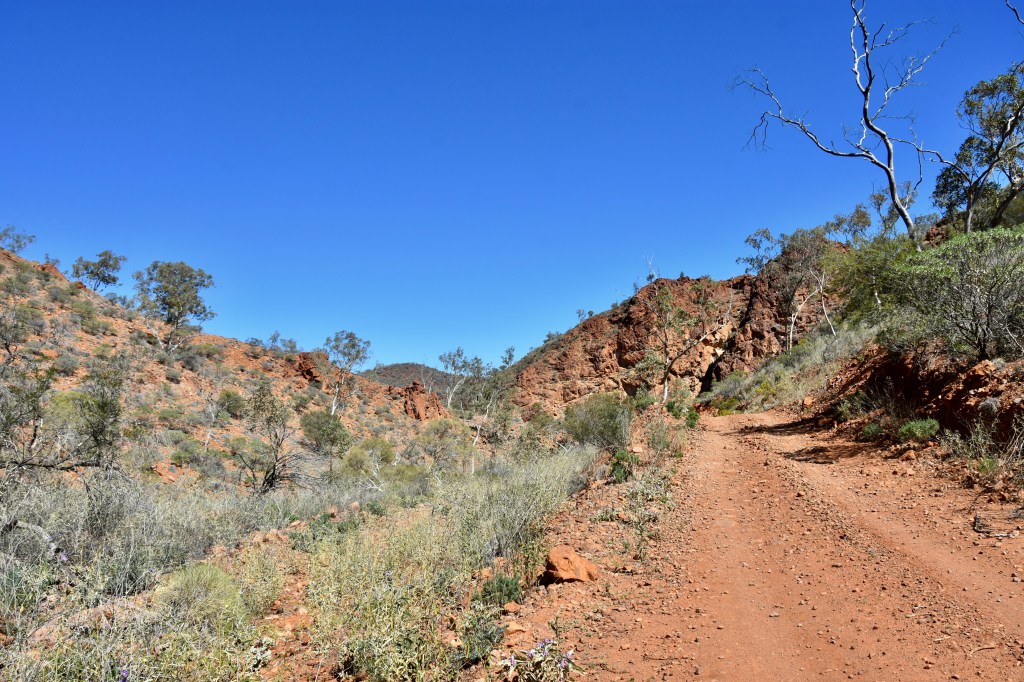
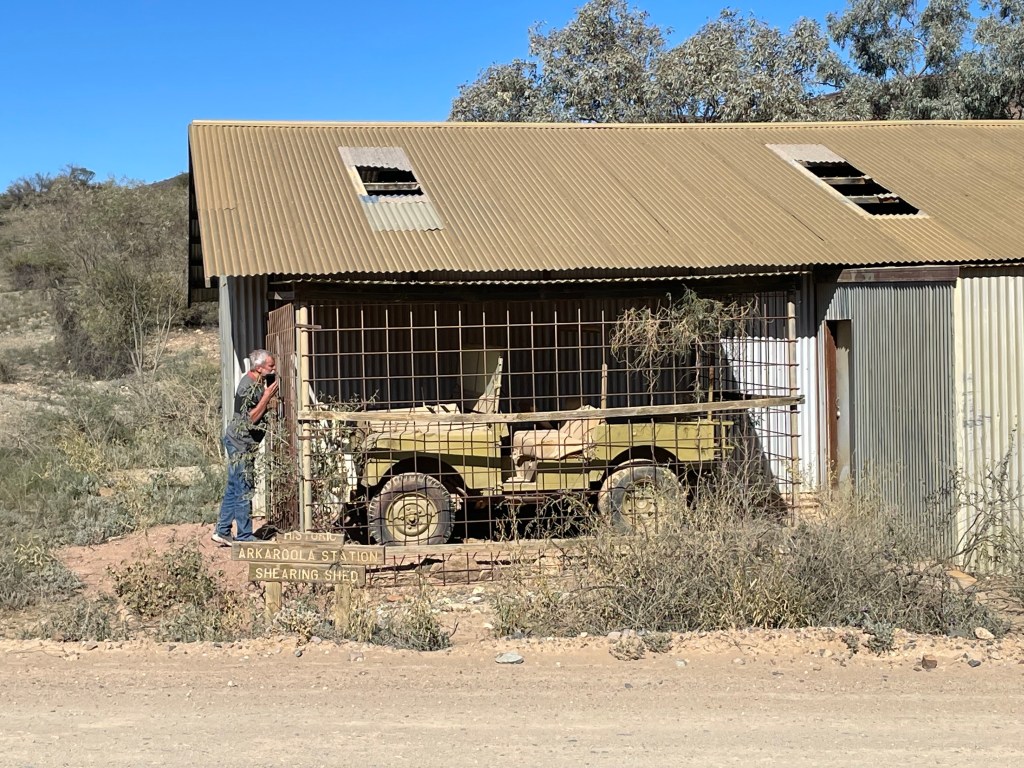
    Still at Arkaroola , we set out on the third day for the Echo Camp Backtrack self drive. You pay the fee to get the track notes and the key to the locked gate along the way. It’s a 4 hour round trip.

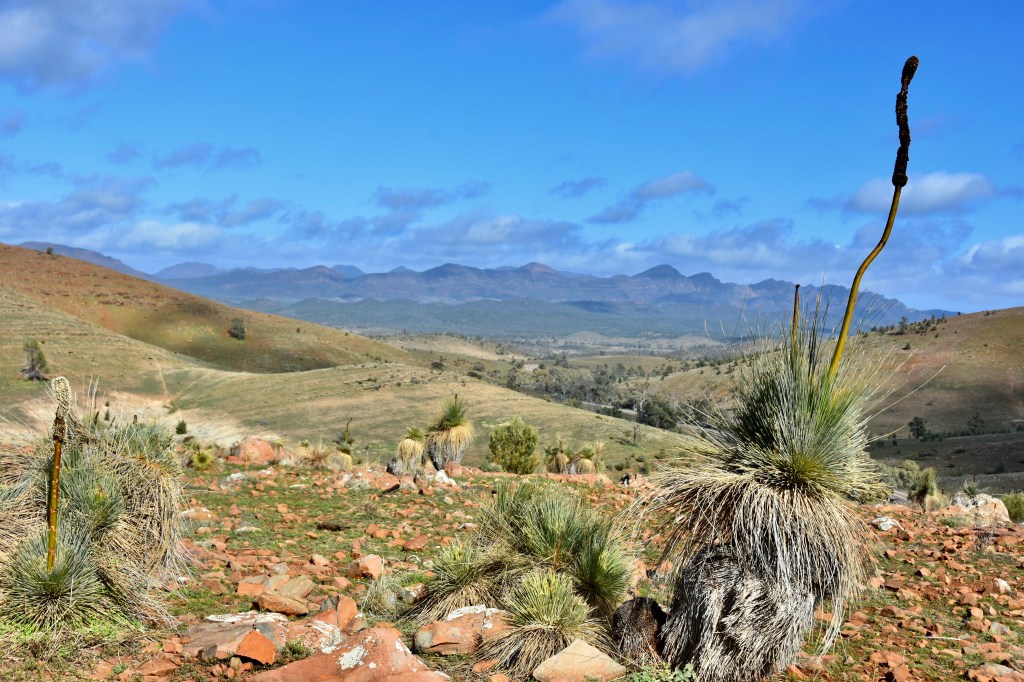
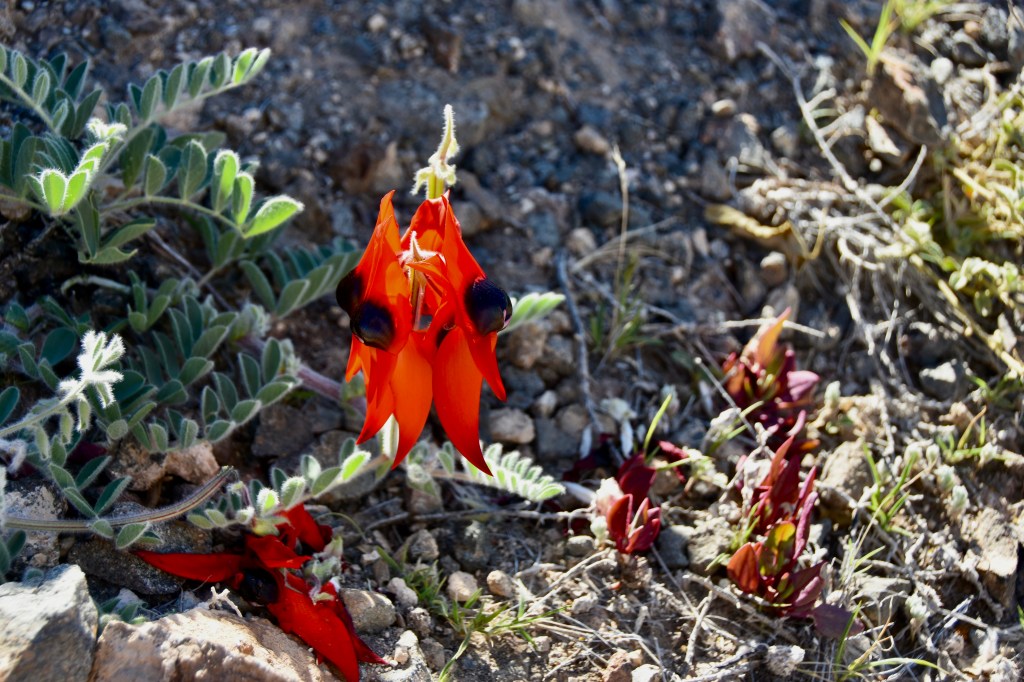
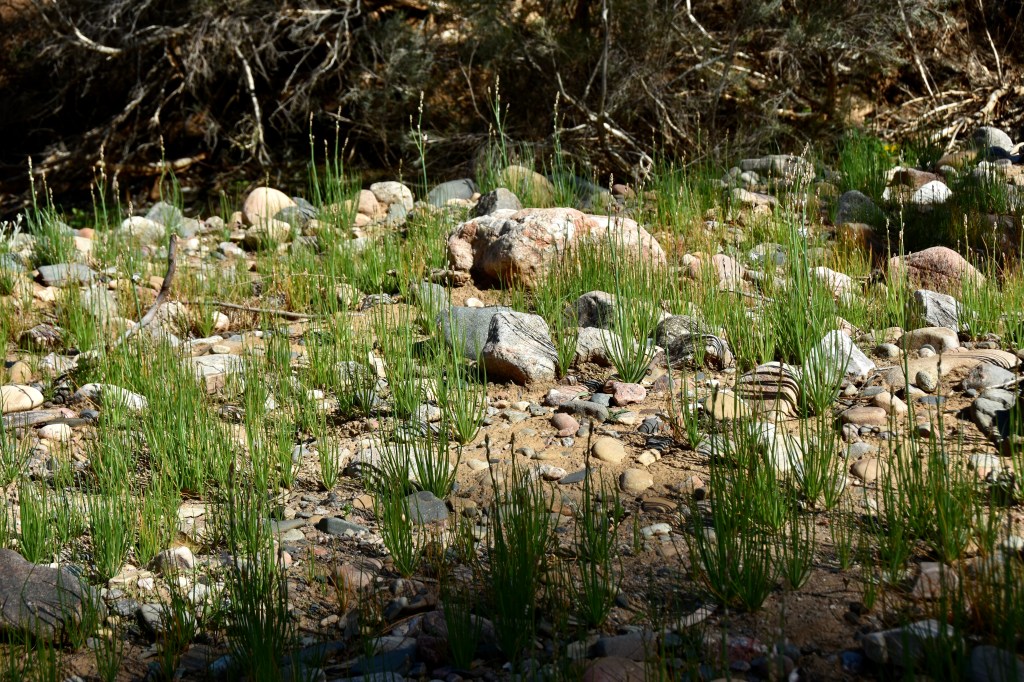
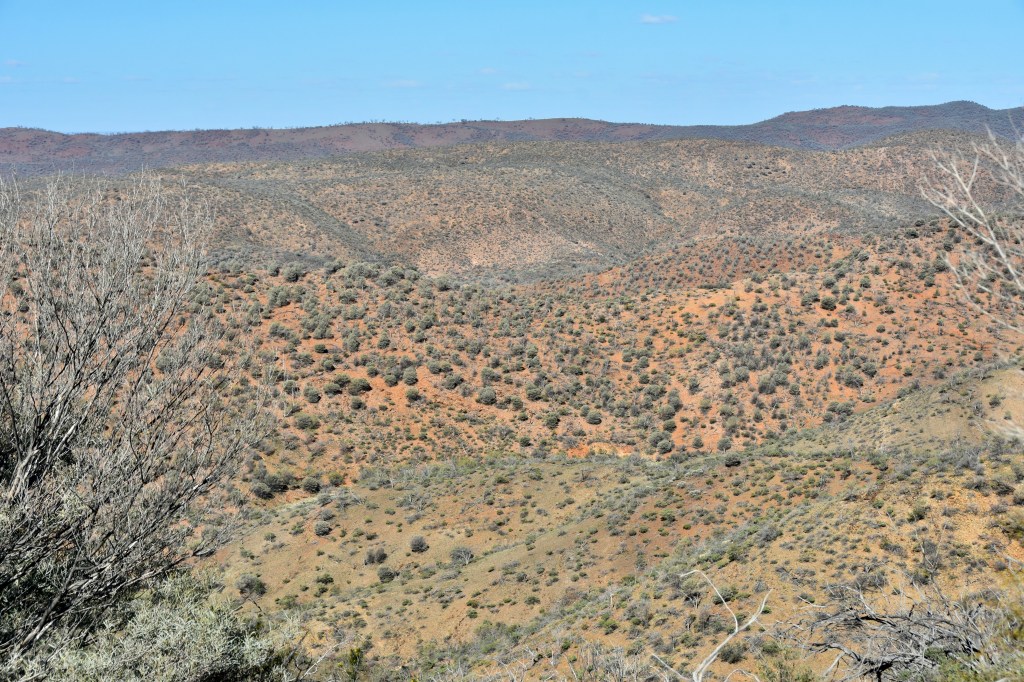
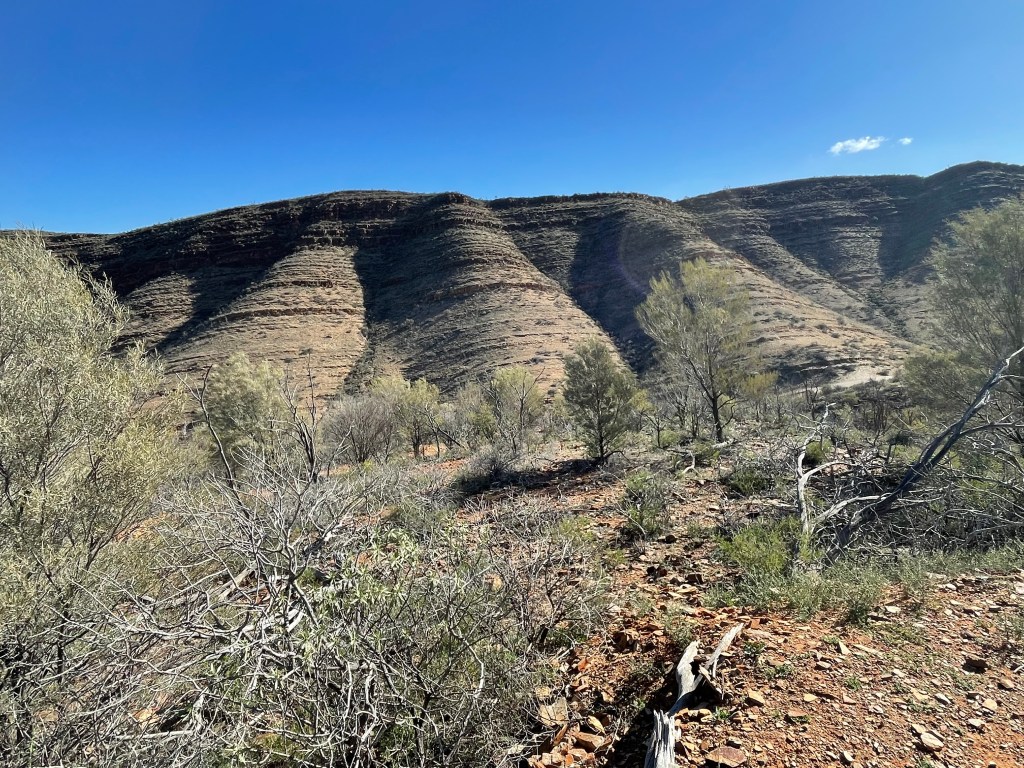
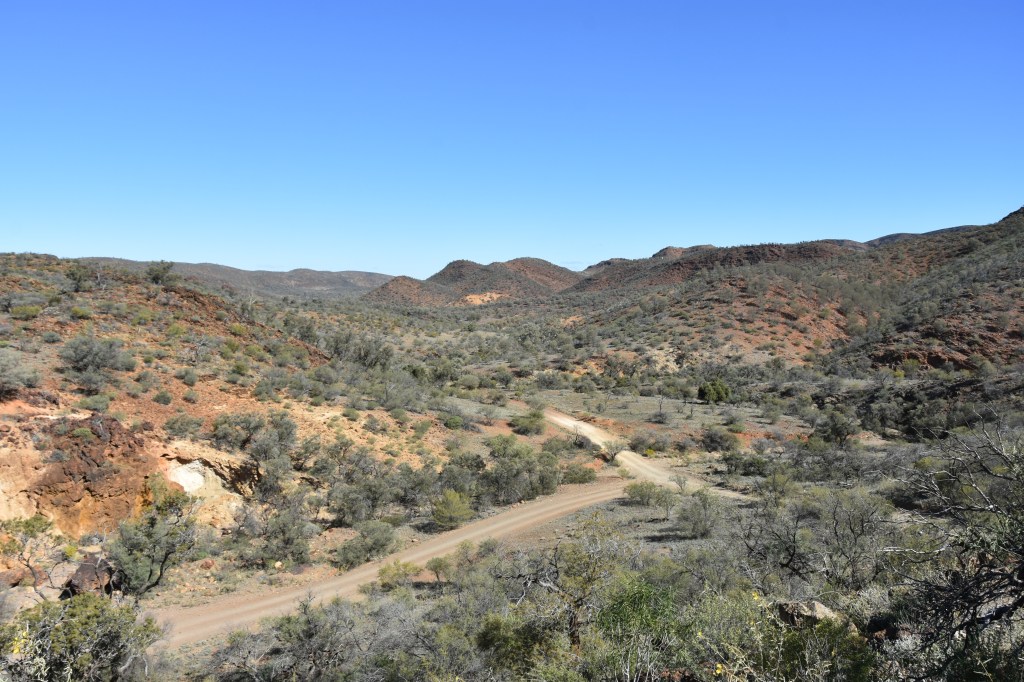
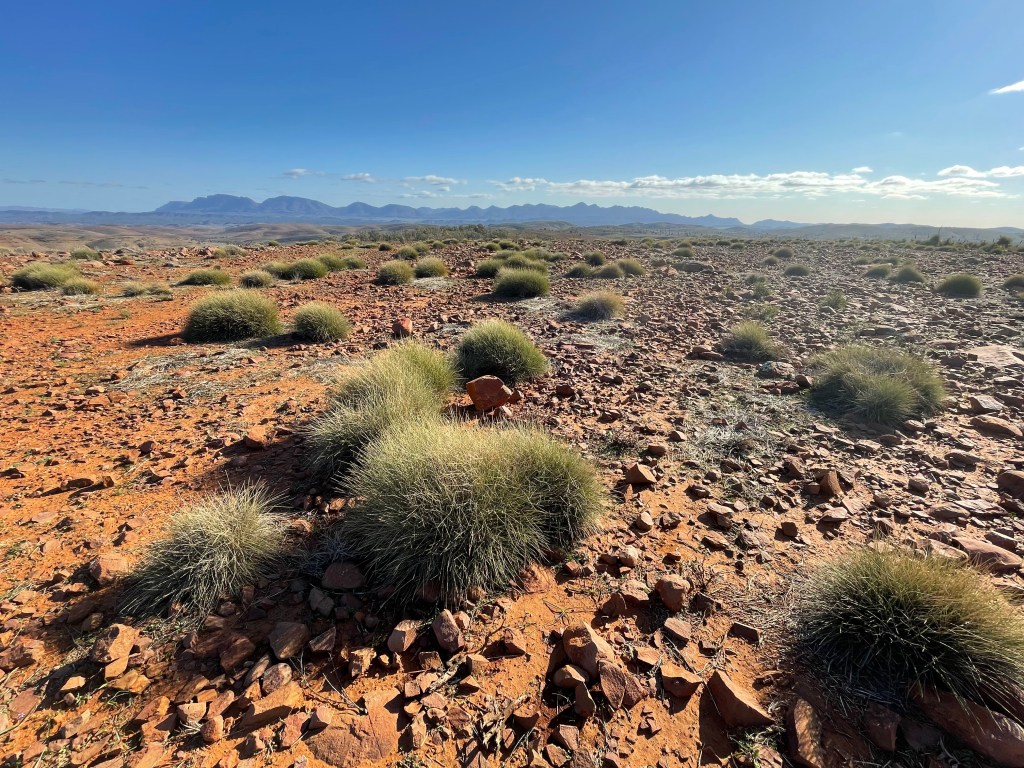
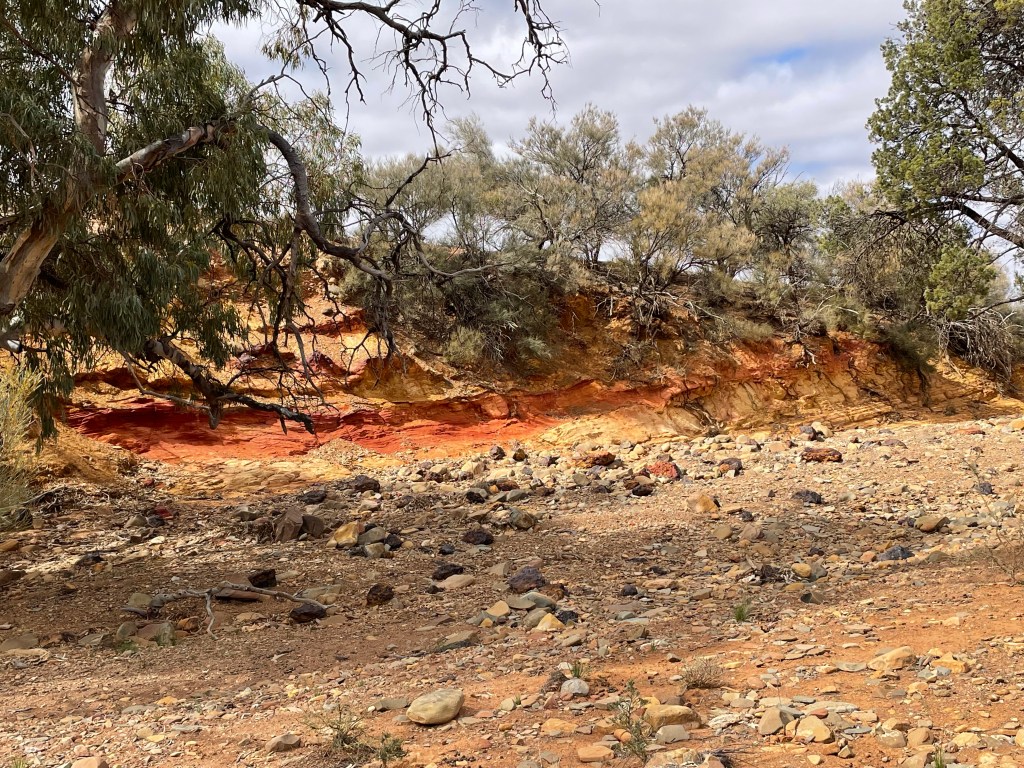
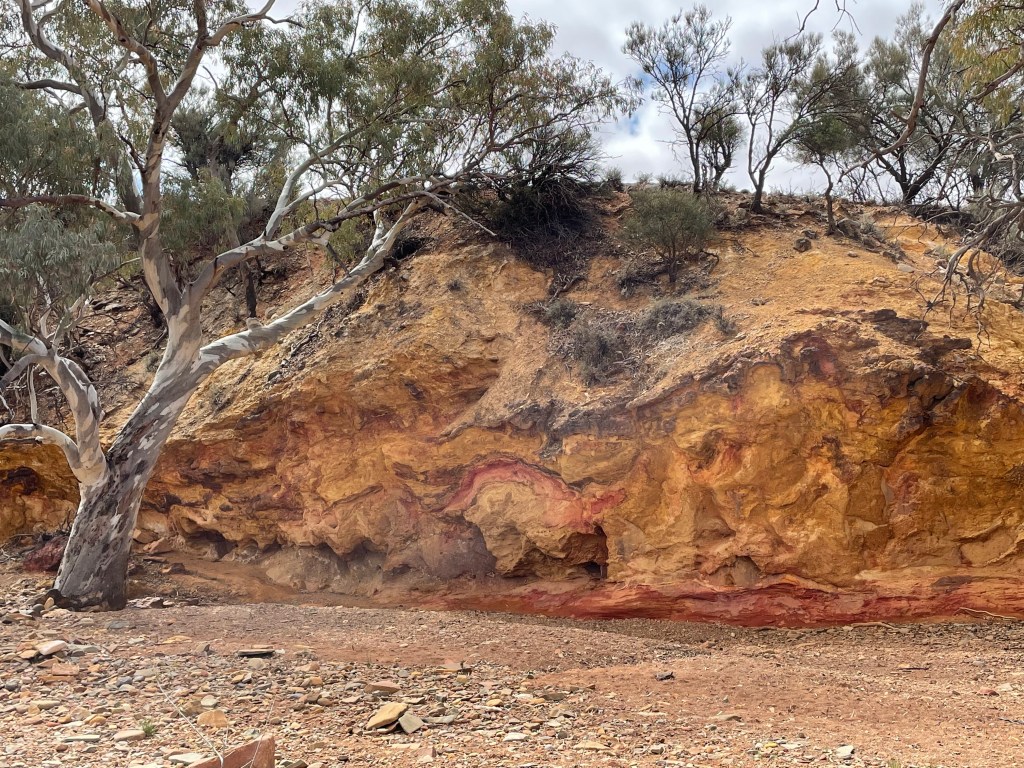
    This was a 4WD adventure that had some quite difficult terrain, however we were rewarded with some stunning scenery and a great oversight of the history of Arkaroola station. All the waterholes were dry despite high rainfall during winter around this inland northern corner of SA. Generally the area was dry and dusty with a sprinkling of green showing through from more recent rains. The massive River Red gums dominate the valleys and watercourses while the remainder of the landscape has the hardy dry country shrubs like Mulga, Black Cypress, Bullock trees and Acacias. There were a few kangaroos and emus, not many birds.

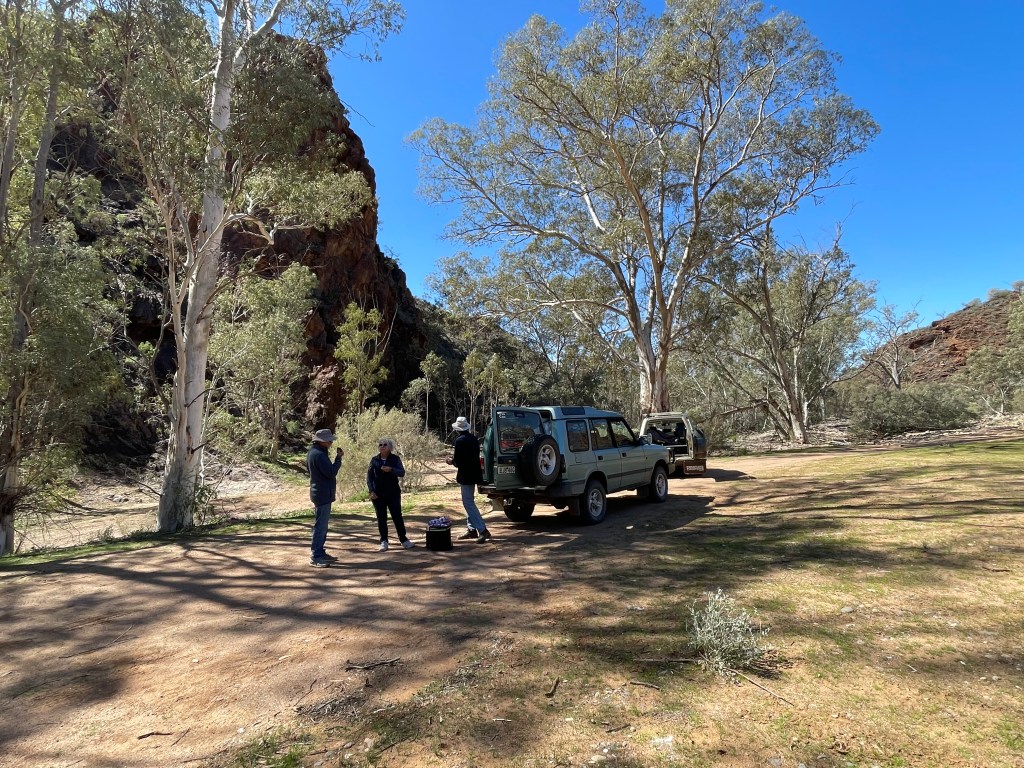
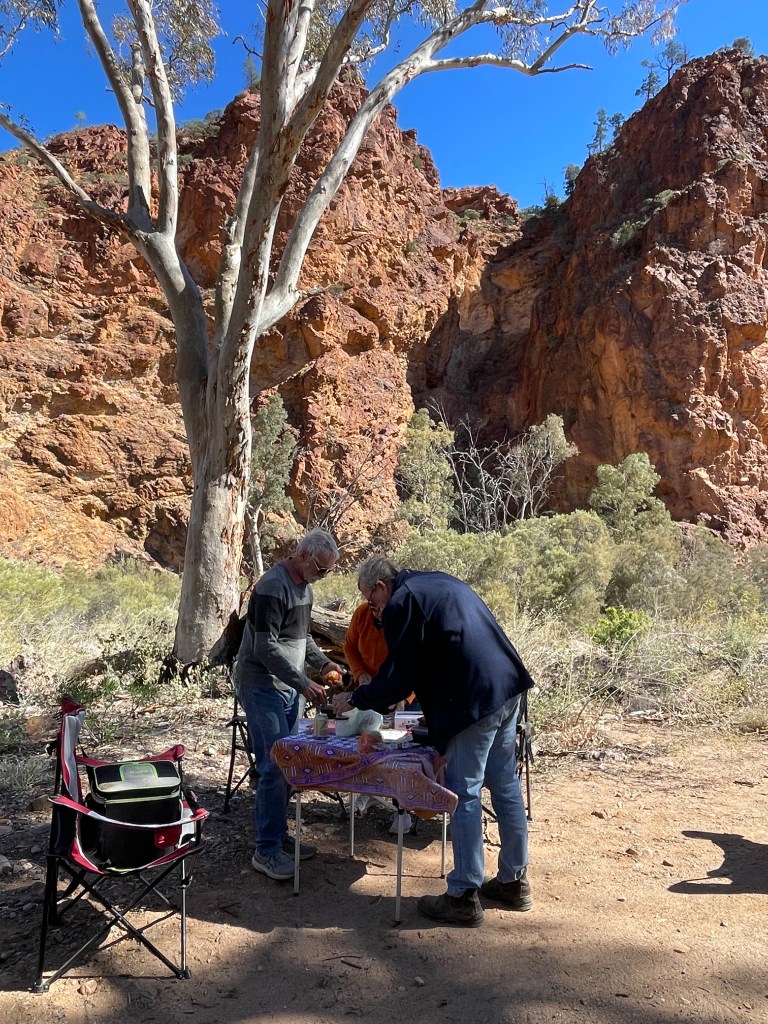
    Lunch stop Barraranna Gorge.

    We found a great spot for lunch where we duly broke out the table cloth, zero beers and snacks, thoroughly enjoying the peace beside the towering red ochre cliffs.

    Echo Camp Backtrack

    The pictures will tell you how stunning the landscape was, although photos don’t really do it justice.

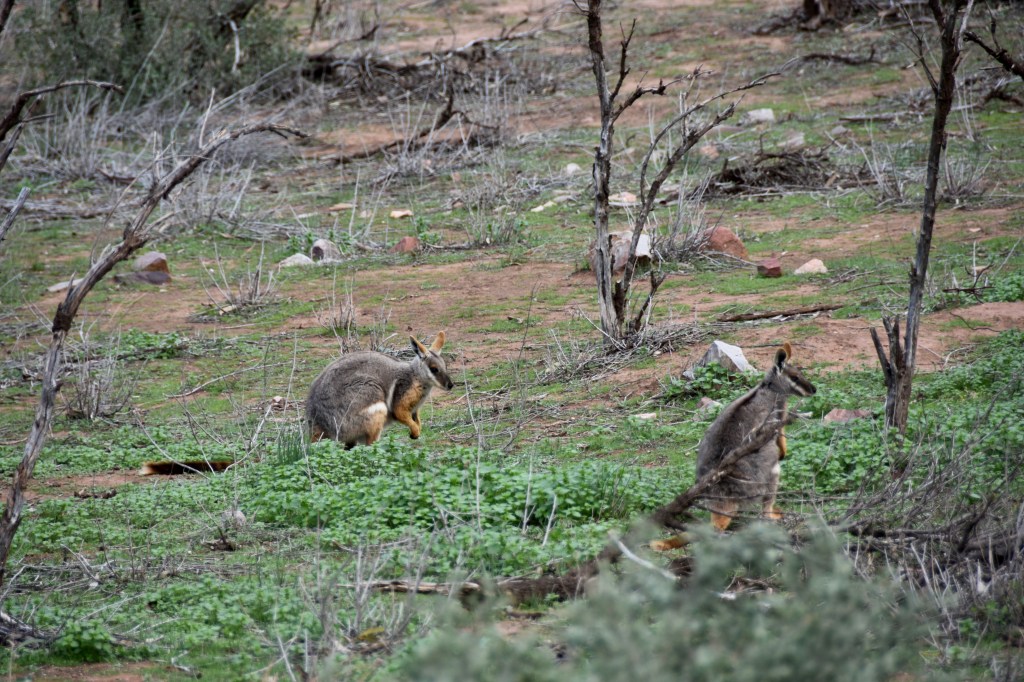
    It had been a big day, much bouncing over rocky roads, inhaling dust. Andrew & Marilyn went to see the Yellow Footed Rock Wallabys being fed, with Doug Sprigg, the son of the original settlers at Arkaroola, sharing his story about living there, which was most entertaining. 

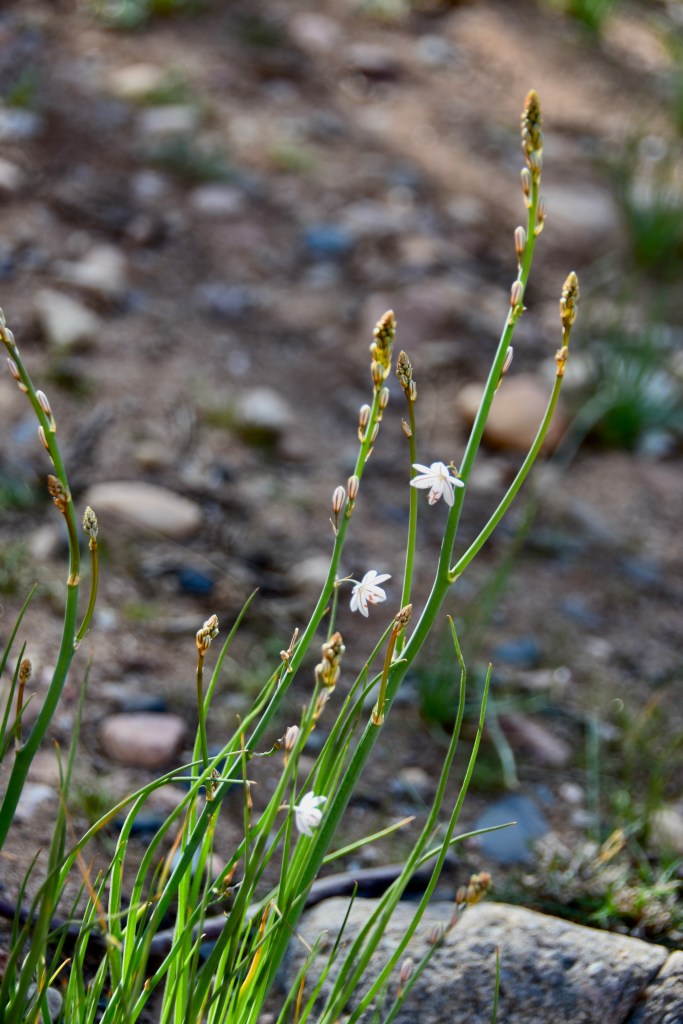
    Look what Nick found……..

    We had made the best of Arkaroola. It was time to move on. We knew a severe cold weather blast was expected across southern Australia. The predictions were horrible. We rendezvoused with Neil and Erica in Blinman, then settled for the night at Alpana Station. Neil had nicely placed the Penguin beside an ensuite between 2 buildings…our site was out in the open paddock with a couple of small gums surrounding us. The wind was strong, it was already very cold. We were preparing for a repeat of the night at Arkaroola. Fortunately, it wasn’t toooo windy or wet. We enjoyed a lovely fire in the camp kitchen and survived another night.

    A fraction of the 360 degree view from the hilltop at Alpana Station

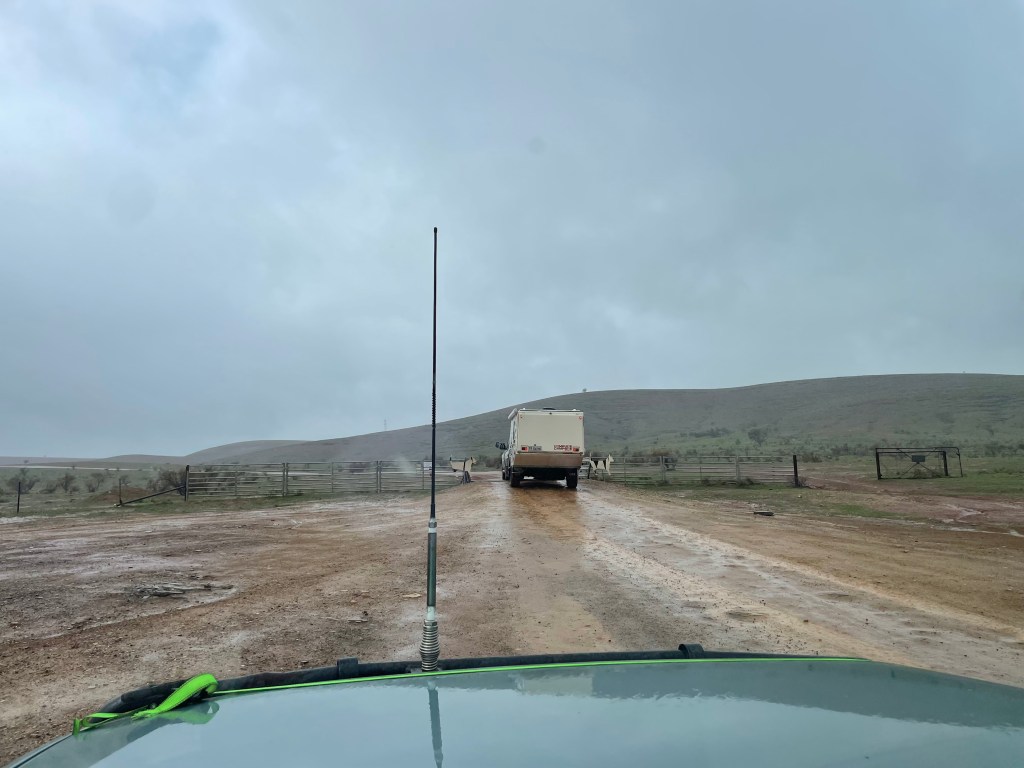
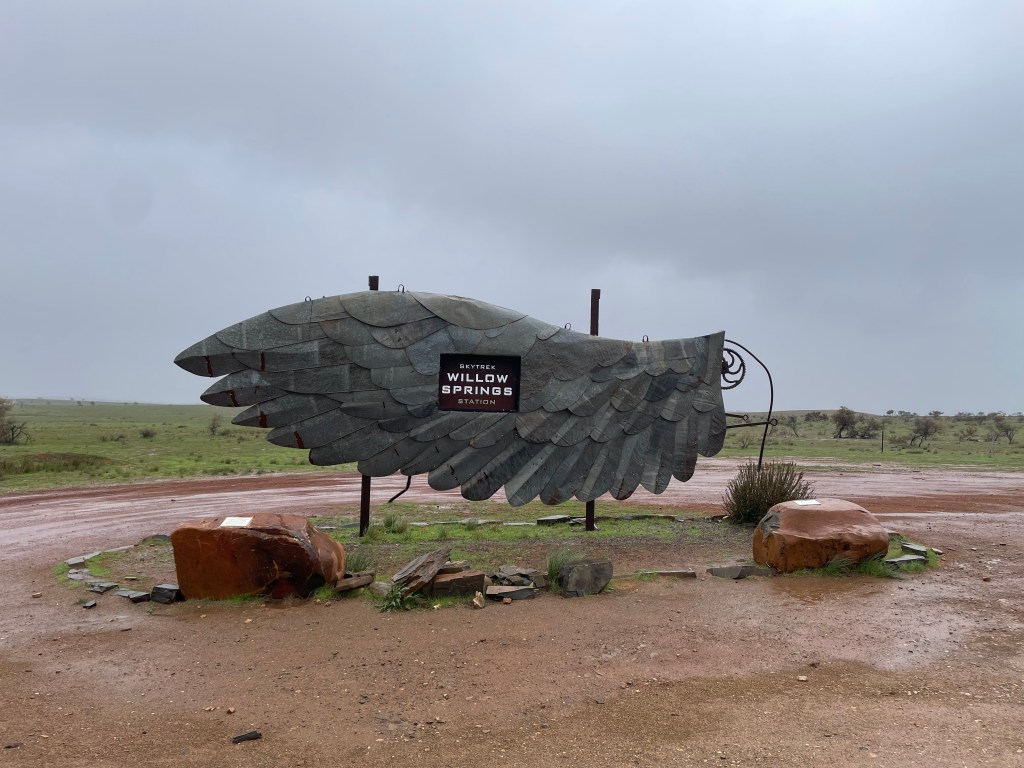
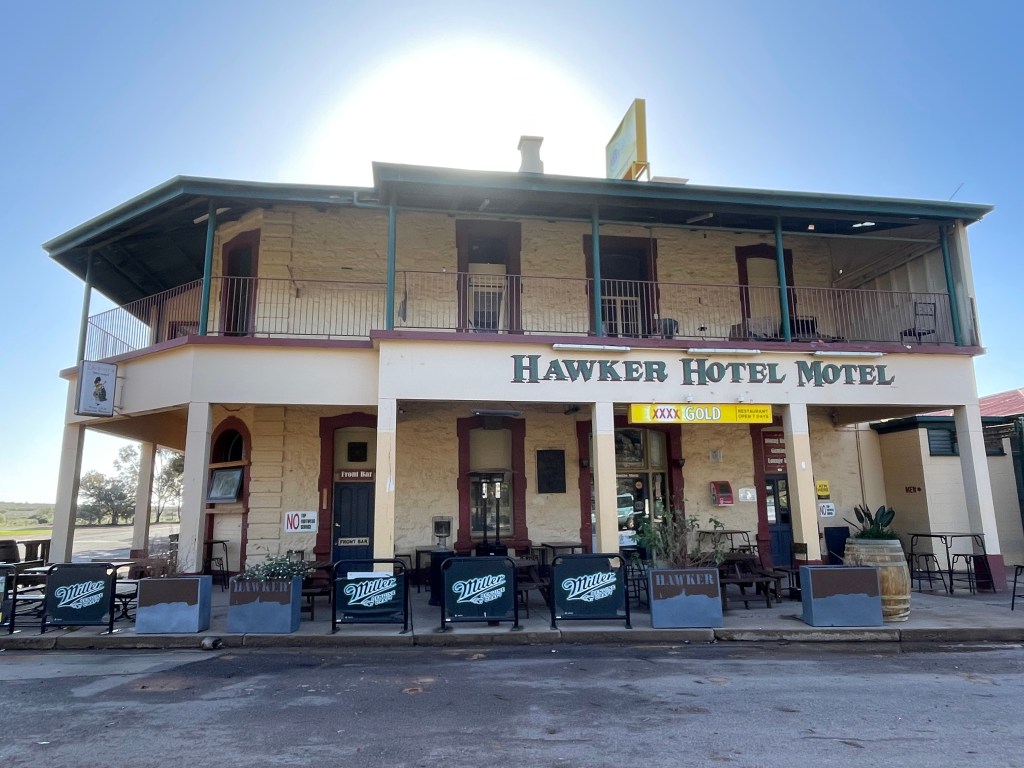
    The next day we all headed off to Willow Springs Station. After coffee and cakes, huddled in the warmth of Blinman’s cafe, we set off. This morning was very cold, almost Arctic! The sky ahead was black, the rain constant and the cold wind buffeted the car. We wouldn’t have been surprised to see snow. Driving into Willow Springs over red muddy roads in the rain, morale was low. We checked in with reception, not sure we really wanted to stay. At the camp kitchen we used the wifi and found we could make a booking at Hawker Hotel, about 60 km further south. It was a joyful few moments for everyone when we realised we would be dry for the night, in a room with the toilet nearby, out of the wind, with a heater, with a pub meal onsite. And no red gluey mud to deal with.

    Entrance to Willow Springs

    Erica was a bit sick with the flu. They had done the Flinders Ranges on other trips, so they decided to hightail it back home to Byron. We 4 felt we had come this far, silly not to see the rest of what the Flinders had to offer. So back to Willow Springs Station. It had stopped raining by now and the bitter Antarctic cold had passed. We had a good campsite near the amenities and a great camp kitchen and laundry, so we were happy.

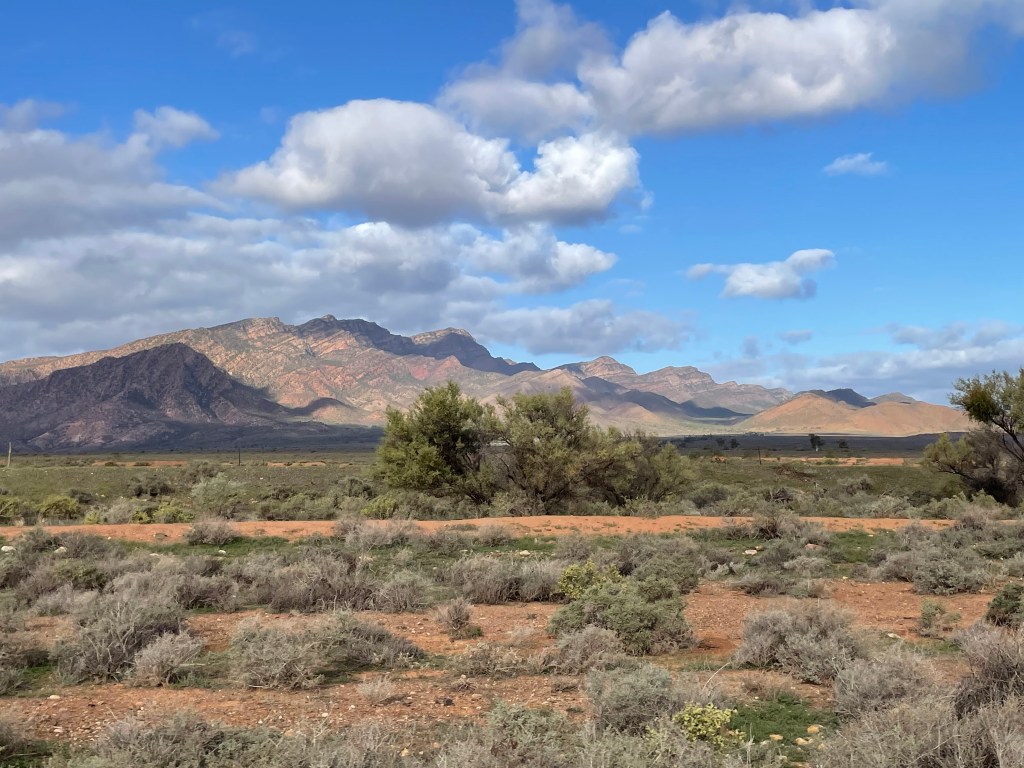
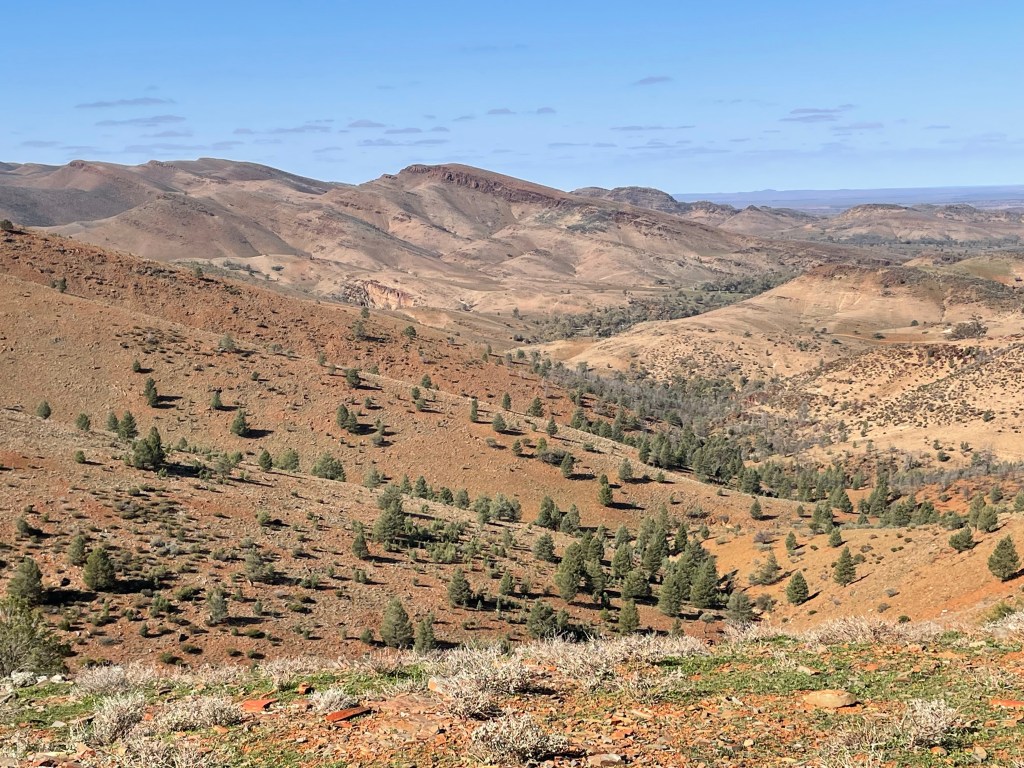
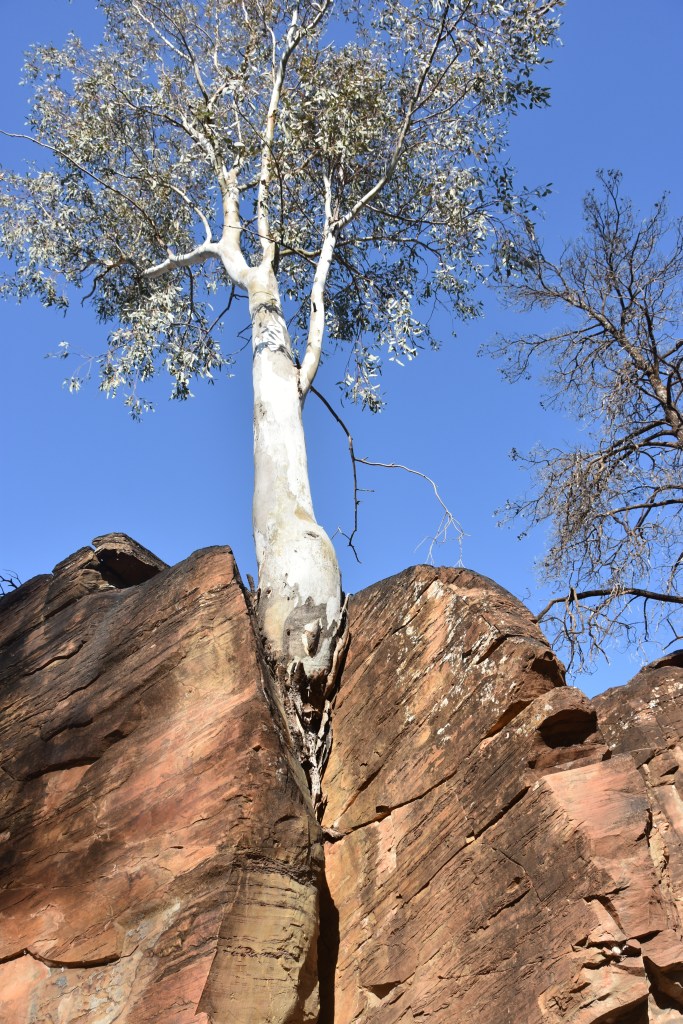
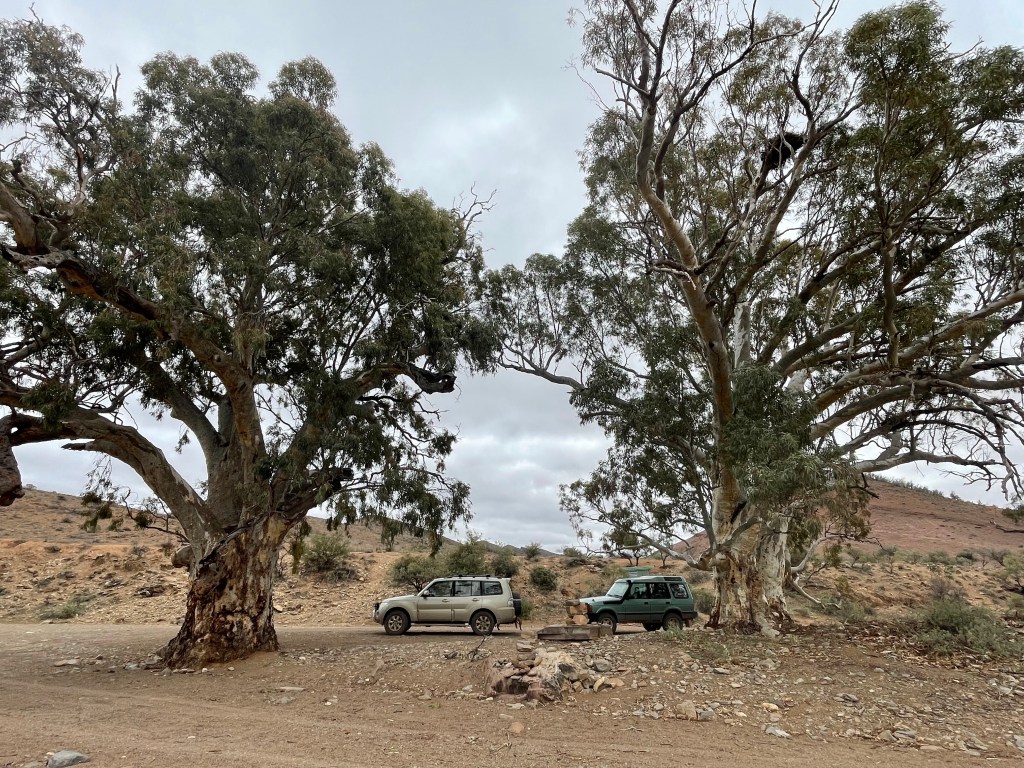
    We took a few hours driving around the spectacular Ranges. We took the Bunyeroo Gorge track and the Brachina Gorge track. The vistas over layered mountains with multicoloured hues, misty distances with dirt roads winding through, were an artist’s dream. I can see why Hans Heysen hung around the gorges painting such beautiful scenes. The red rocky gorges with the massive red gums capture the essence of outback Australia. How can such enormous trees live without water? How can they grow out of rock crevices? We went to Parachilna pub for a beer. I was impressed with the artwork adorning the pub walls. There’s quite a sophistication at this remote pub, it does cater for all sorts of visitors. We drove home along the Moralana Scenic Route.

    View from the Outback Highway.

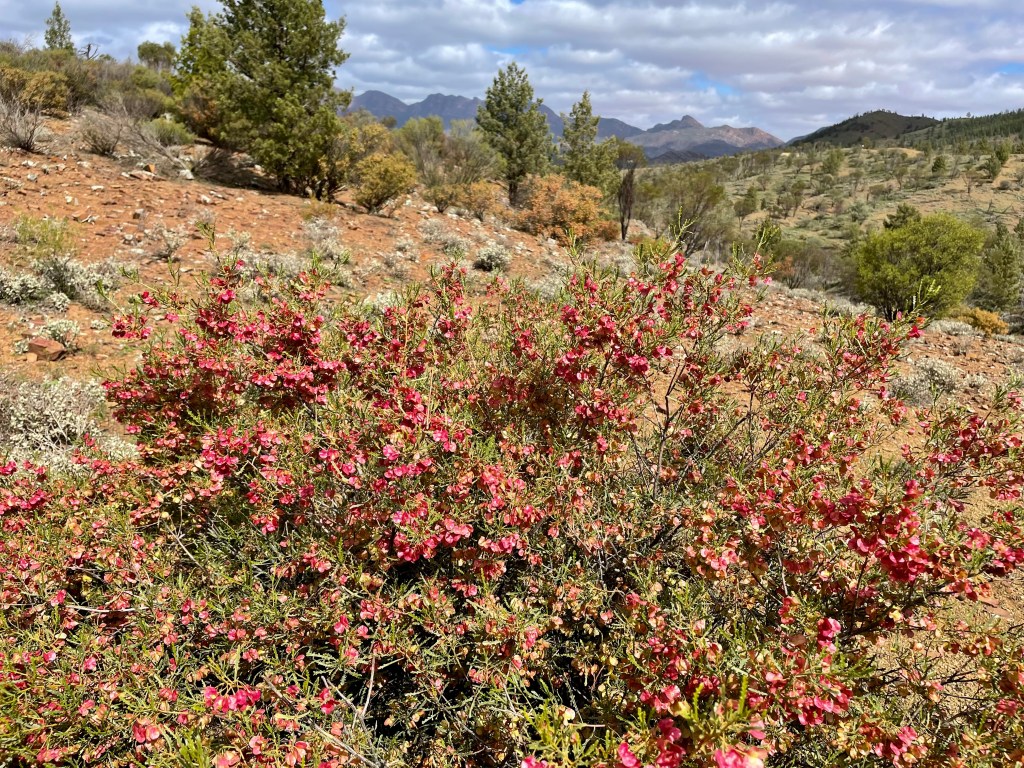
    Greeness is everywhere, there is a sense that this is rich pastoral country. That’s a false assumption, most of the green plants are weeds. I see all the beautiful reds and oranges of the rocks amongst my photos and get a shock when I see a green picture, and yet that is the norm not the exception.

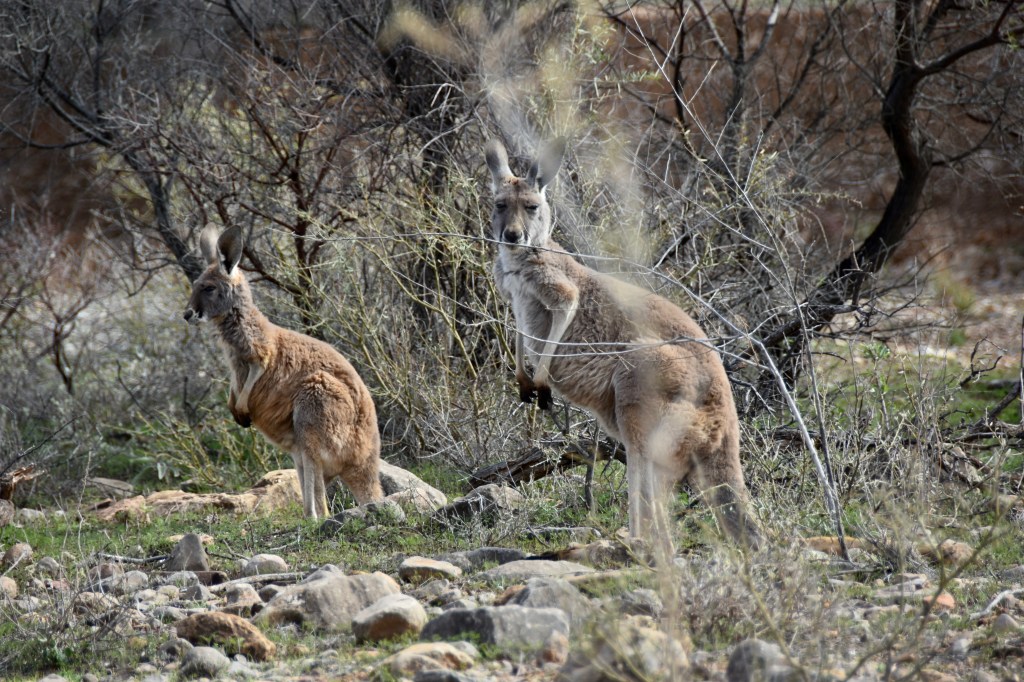
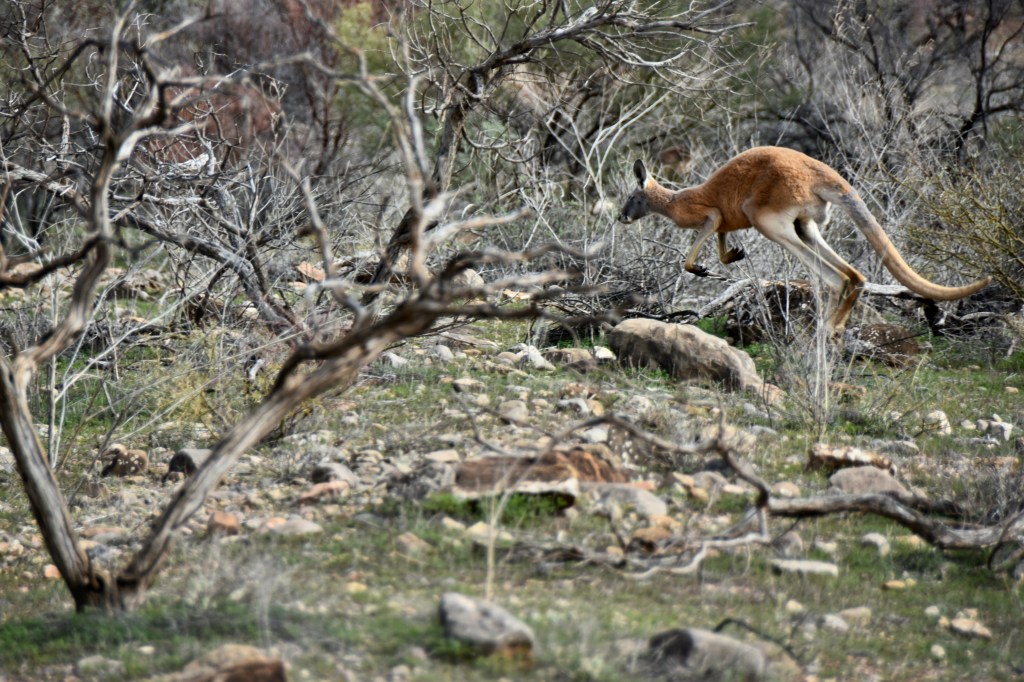
    Gorgeous red kangaroo.

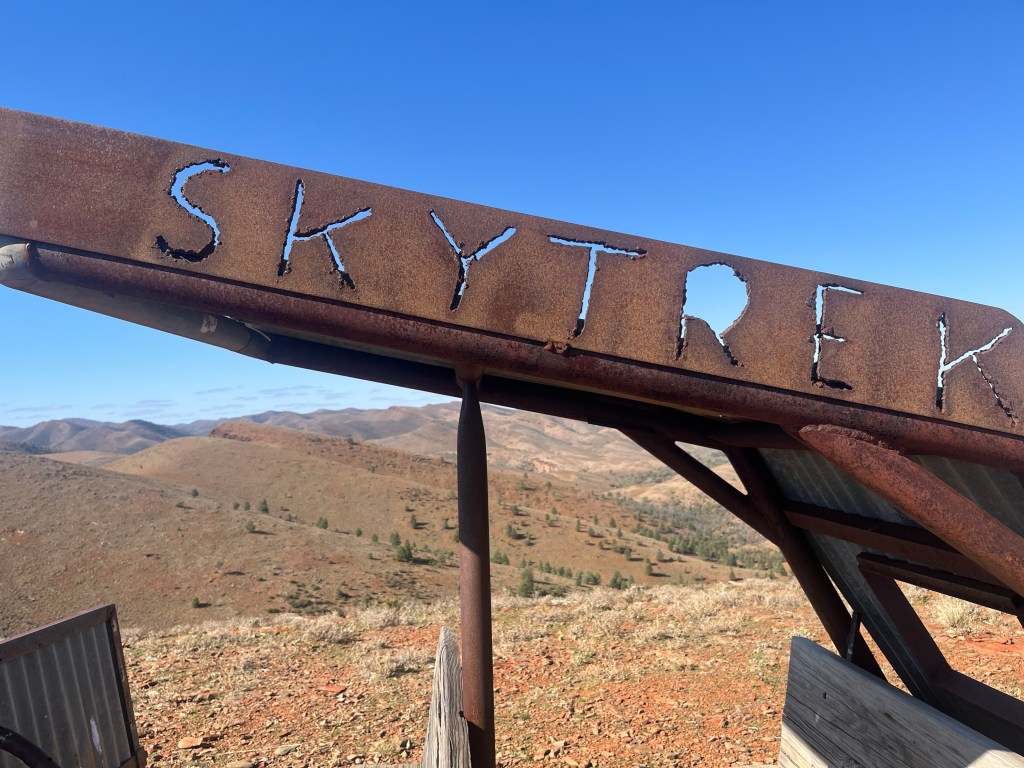
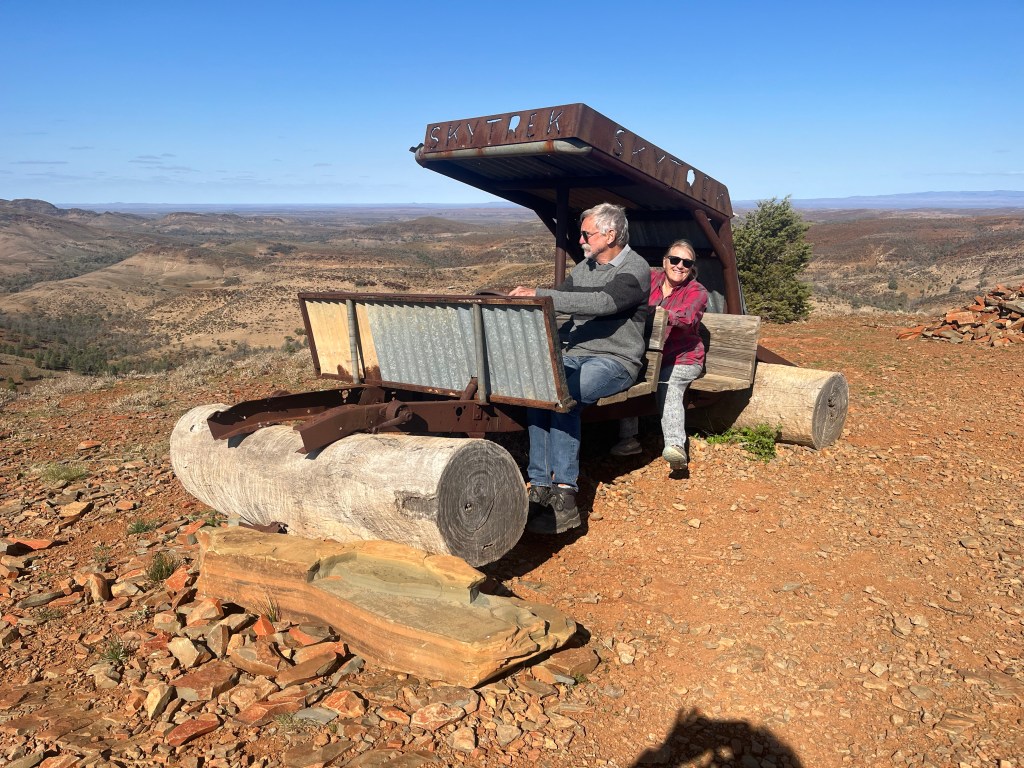
    The next day was the BIG one. Still at Willow Springs, we take the Skytrek self guided tour over the valleys and mountains of the station. Paying our $75 fee, we get some very comprehensive notes and a key to the locked gate.

    We left at 8.30am. 8 hours later we returned from the 80km circuit. The first third of the day was amazing, many interesting places to see, history to discover, plants to learn about, wildflowers to find. The last third after the locked gate was when the instructions said, “engage 4WD”. We thought we’d done a lot of rough track, but now we were doing probably the hardest track we’ve ever ever done and it was relentless. Long steep upward gradients on a slippery gravelly surface to a high point, with a stunning vista, then long very steep downward slope over the edge before another steep climb reared up in front of us. The track had sharp rocks, boulders, deep holes, slippery slates, never ending. I was expecting to have whiplash by the end. But the scenery around us was breathtaking, the trip was worth it in the end. On the last highest hill on the property, there was a guest book you could sign and leave a comment. Nick read one out to me, it simply said “terrifying”. So enjoy the pictures, they were hard to come by.

    Lunch stop under the giant red gums.

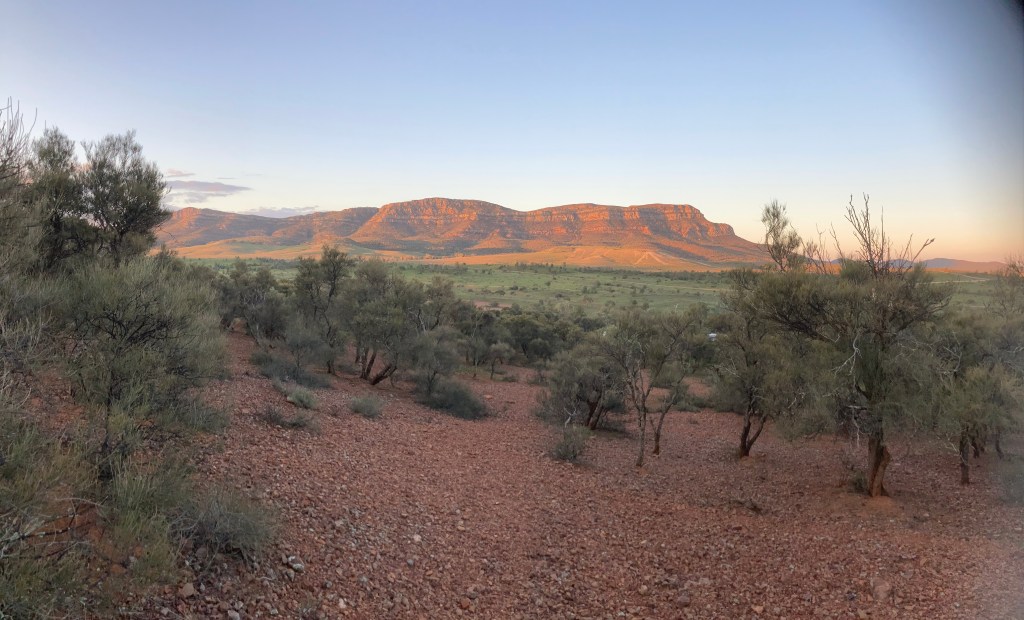
    Next day we moved to Rawnsley Springs Station, instead of Wilpena Pound campground as we’d planned. Excellent move to come here. We had the best campsite, on a high spot looking out at the rocky escarpment of Wilpena Pound. The sunsets were brilliant. Great amenities, a campfire at night, even a takeaway pizza on our second night.

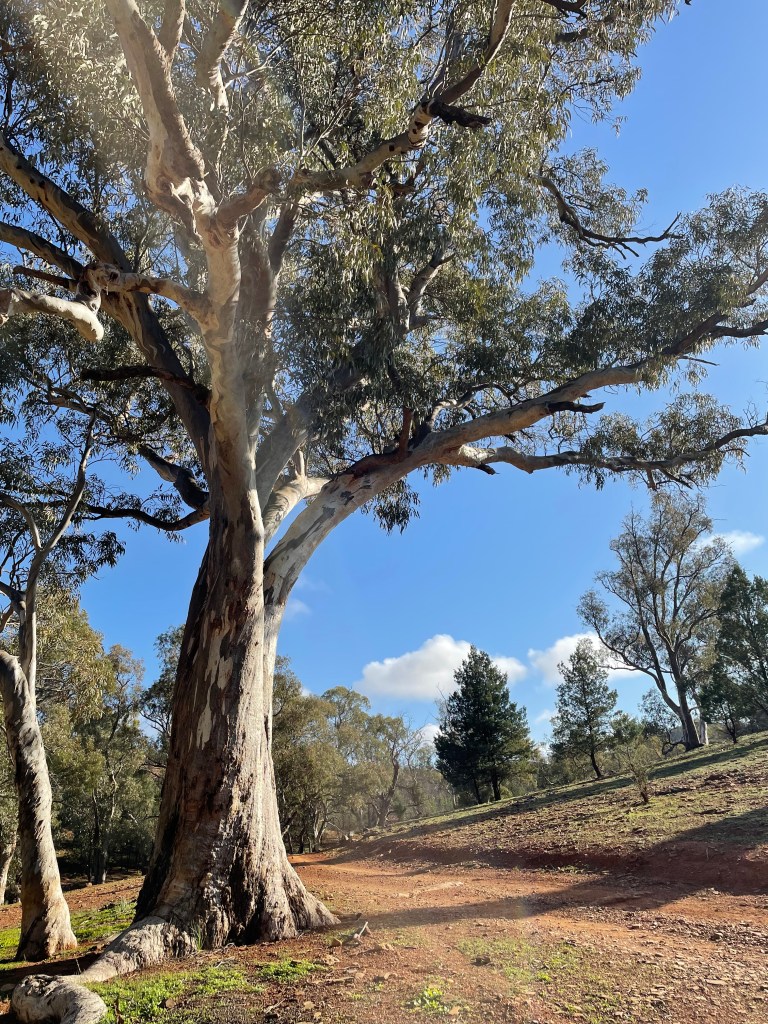
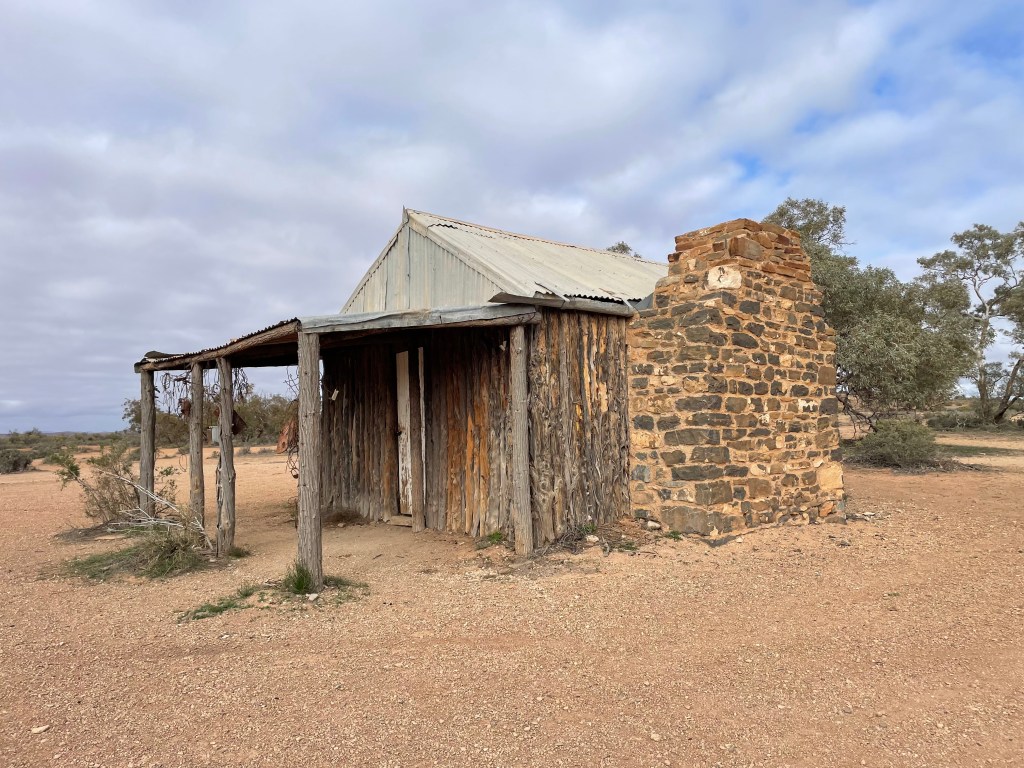
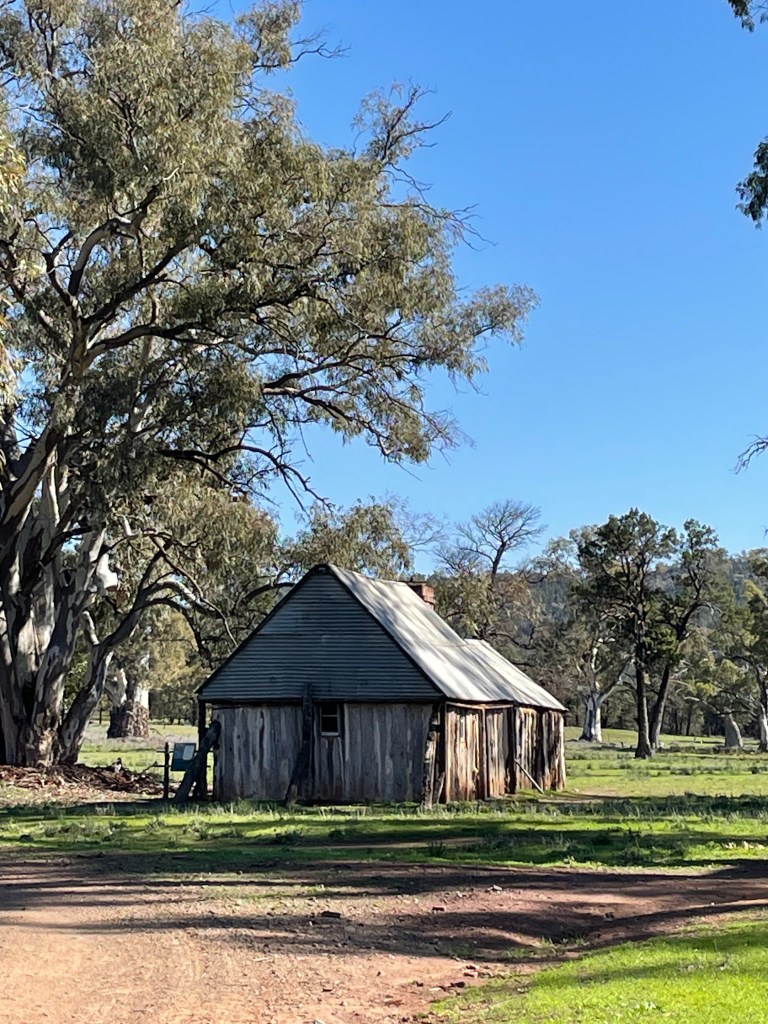
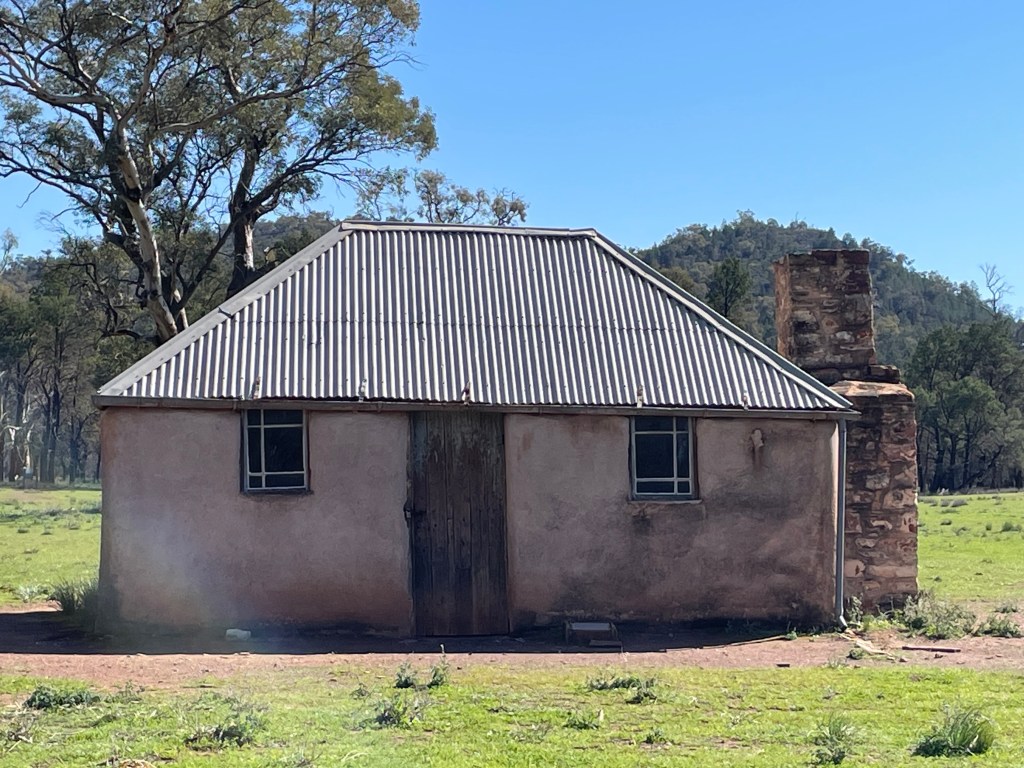
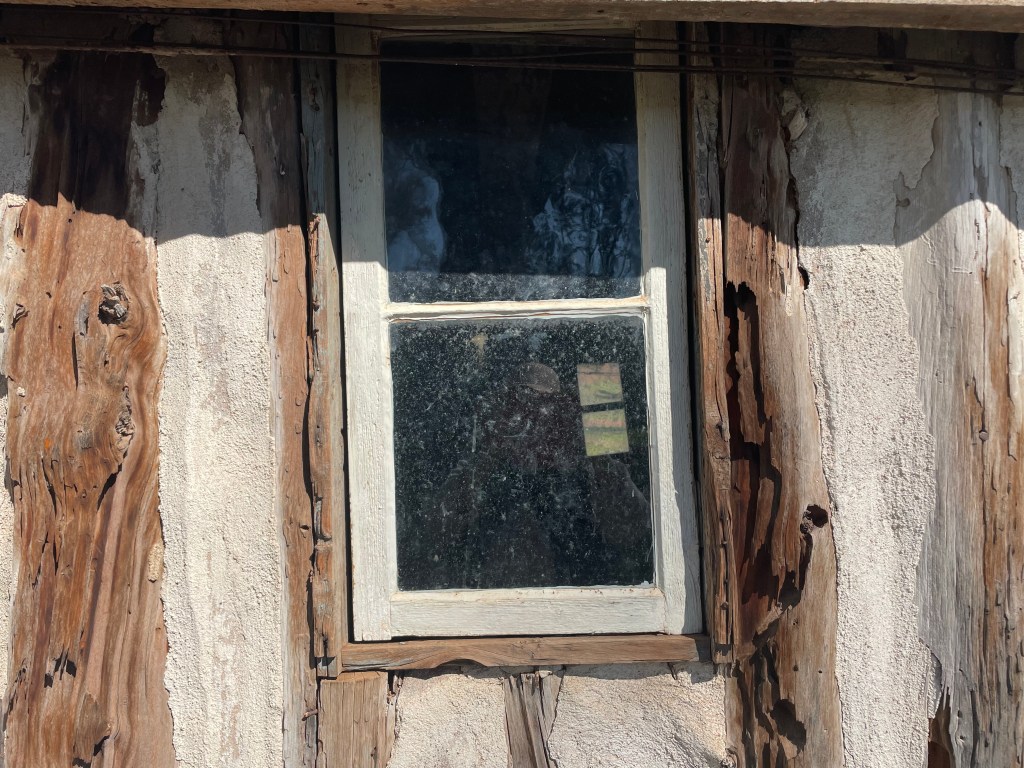
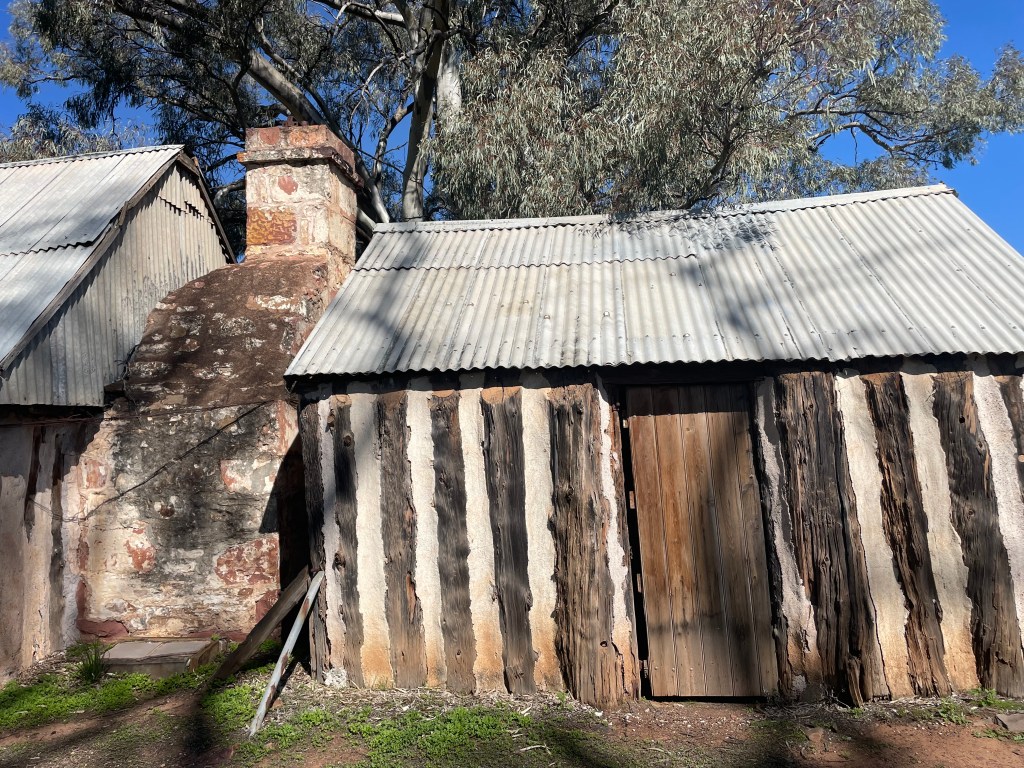
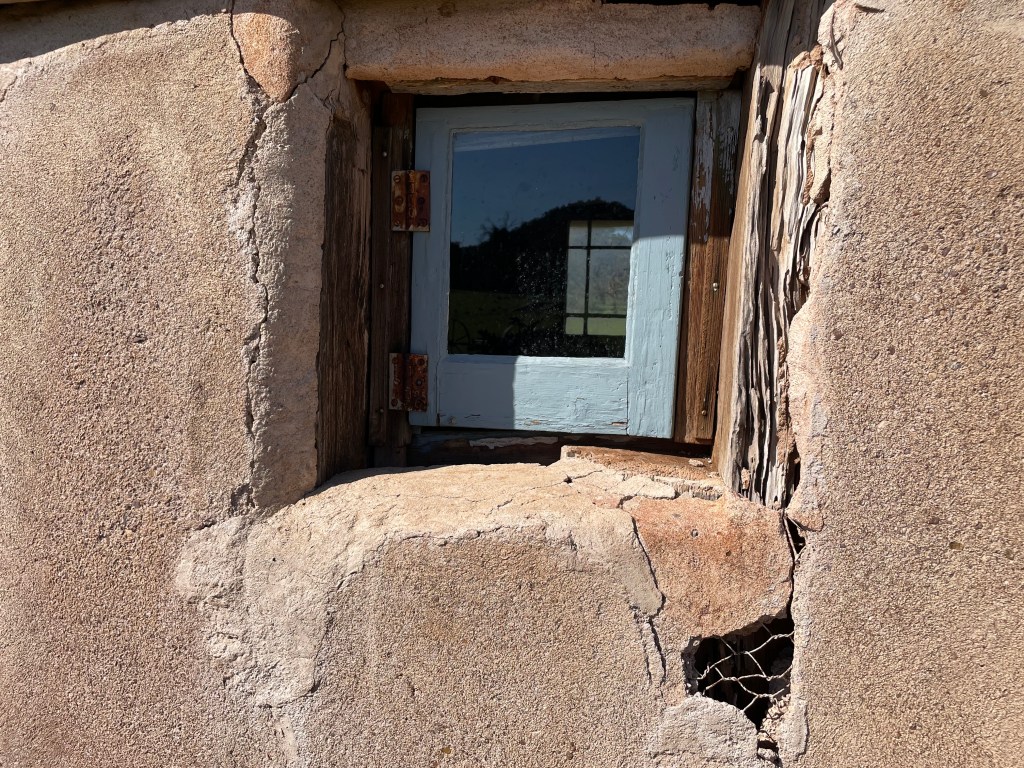
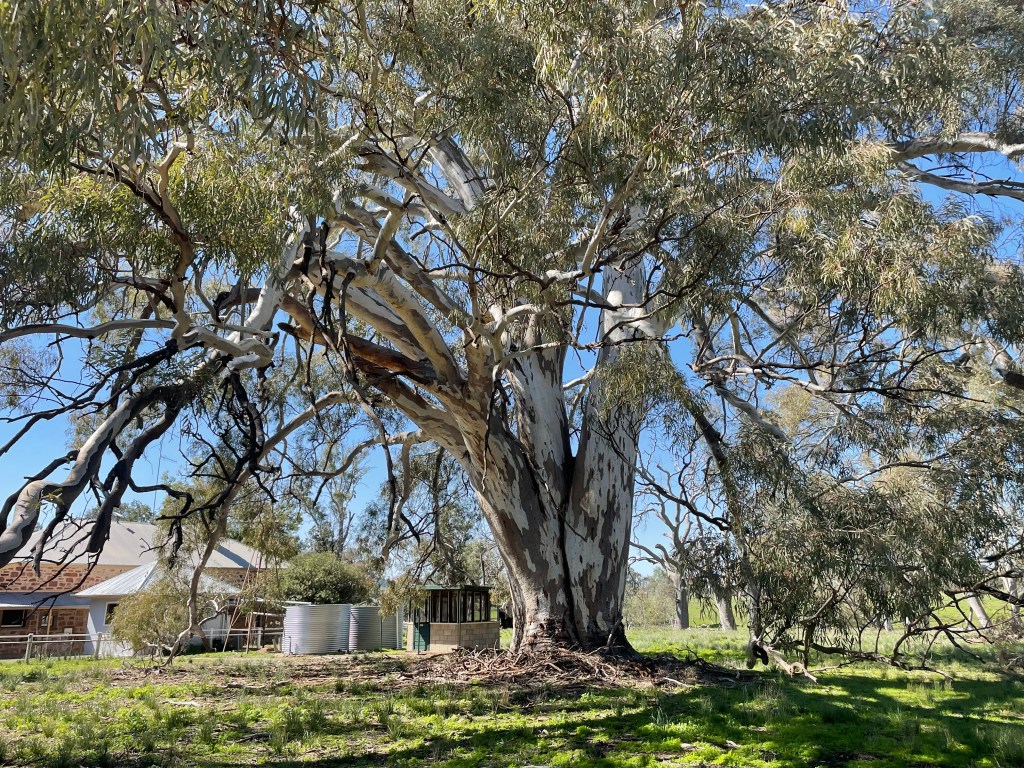
    We did a day trip to Wilpena just a short distance from Rawnsley Springs. The stop at the old homestead was delightful. The wattle and daub house was the best preserved we’ve ever seen and the red gum in the front garden was sooo big, it was magnificent.

    We drove on to Wilpena Pound store, had lunch there and looked about. If you’re not able to do the walks, you can’t actually explore the Pound properly, although there was a shuttle bus we could have taken, which still involved walking at the end….one of us was a little incapacitated. Fortunately we had all been to the lookout at the Pound on another occasion.

    Next came the last part of our trip. The long 1,935km to Lennox Head will be slowly paced to take advantage of this outback region. We started early with a coffee at the very good cafe in Hawker. Between Hawker and Broken Hill is endless open landscape, flushed with green but very few trees.

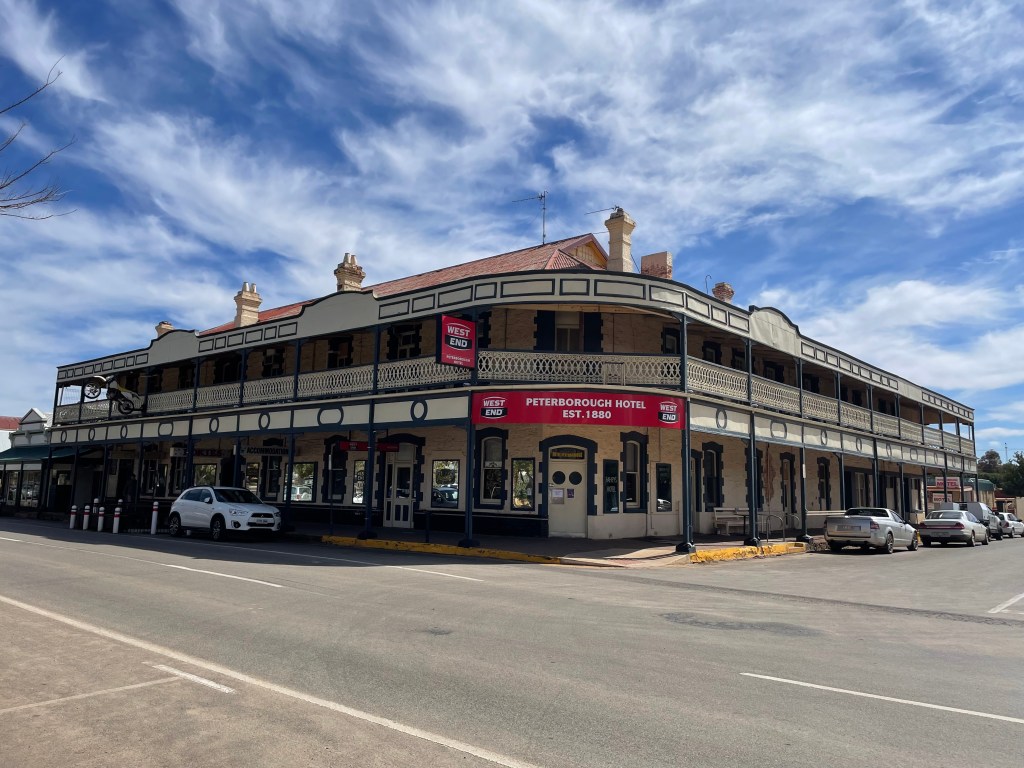
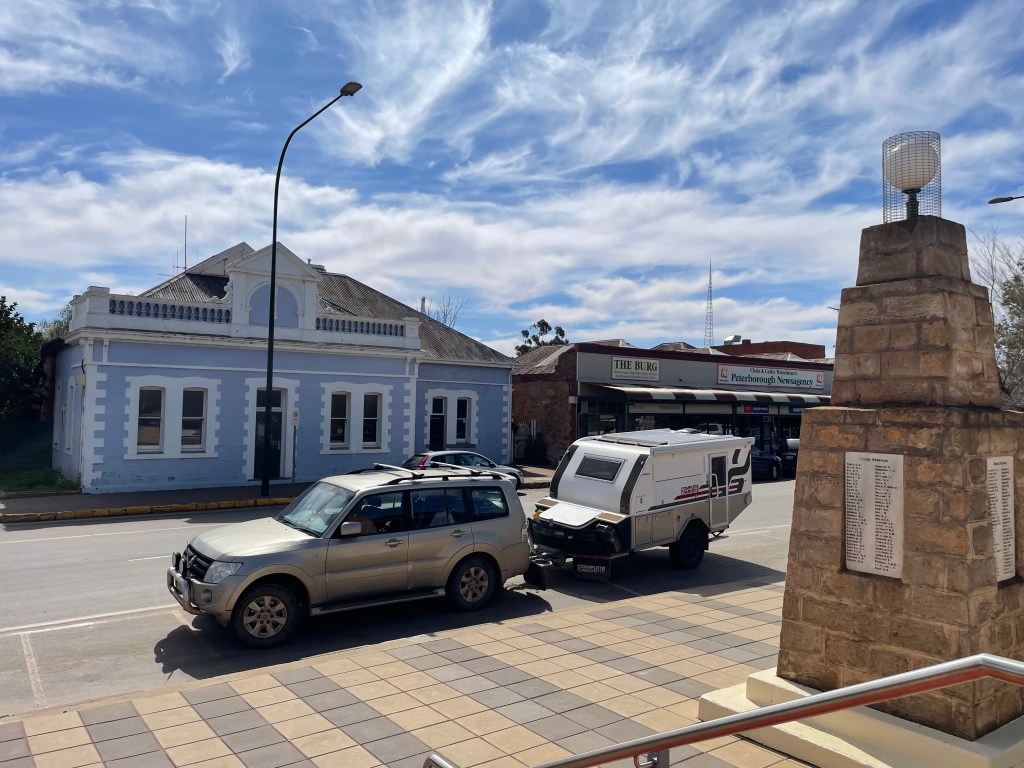
    Peterborough was quite a bustling town. This is wheat country with a still active train service passing through twice a day. The wide main street has grand architecture with 4 pubs and numerous smaller shops and houses dating back to the late 1800’s. After lunch here, we continued to Broken Hill, where we found a delightful “resort” at Mt Gipps. Here there was a large restaurant which could cater for events, but it also serves dinner and lunch every day. We were tucked up in the unpowered sites on a flat grassy bank. The shower facilities were second to none, although a bit of a hike to get to. The night was warm and calm.

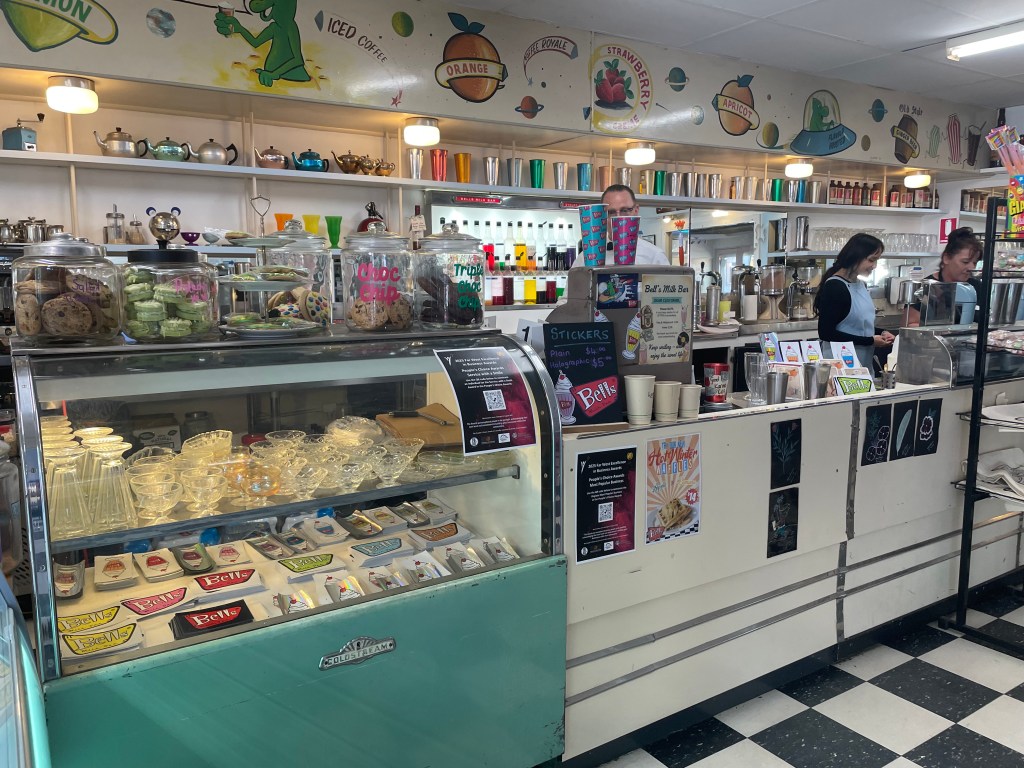
    We spent a relaxed day in Broken Hill, a place that holds memories from a previous trip when we were stuck there with a hole in the petrol tank that needed repairing. This time we re-visited a favourite cafe, Silly Goat, the Regional Art Gallery which is fabulous, and the Memorial to the miners of BHP. Lunch at the retro cafe, Bells, plus a visit to a smaller gallery, and we’d done Broken Hill as best we could in one day.

    Next day, the plan was to get to Nyngan for the night. This is a 580km trip on mostly dead straight roads with not much to see except millions of goats, denuding the landscape…. such a pity to witness this. Many roadkill kangaroos, all in all, a sad scene.

    Flat open country with green grass, after Broken Hill.

    Wilcana park was a fair place to stop for a break. The Darling River was high and flowing unlike last time when we passed through here and it was dry. We pressed on to Cobar for lunch in a cafe we knew from a previous visit. Stocked up with food and drinks for the night, I took over driving for the last 130kms.

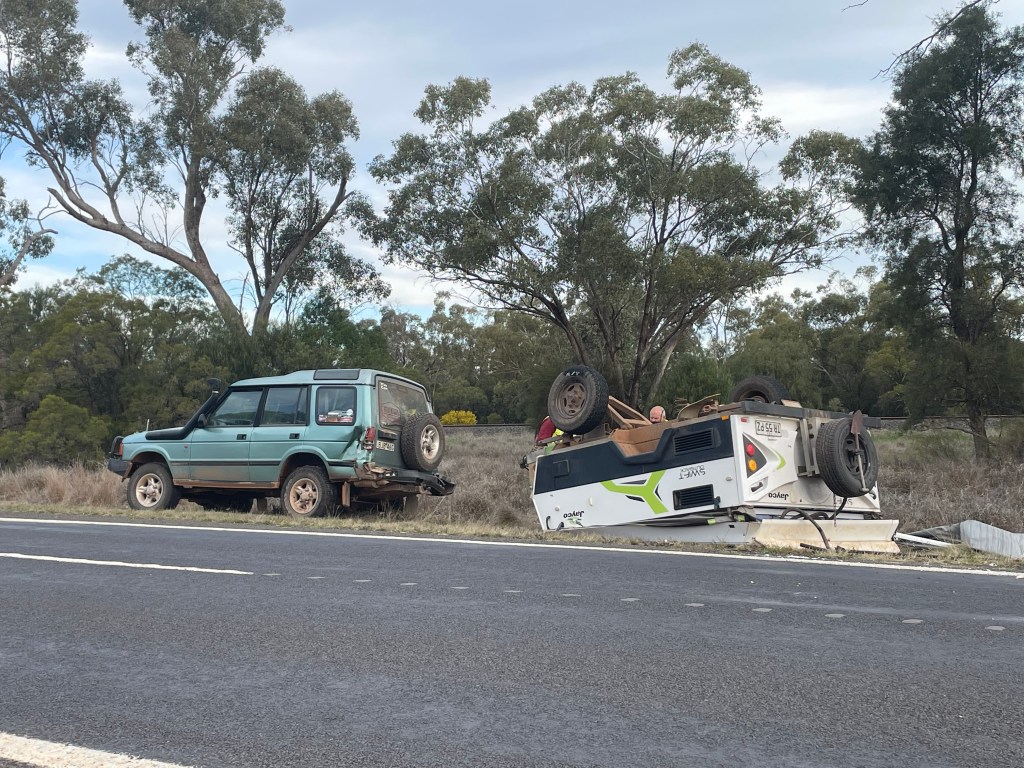
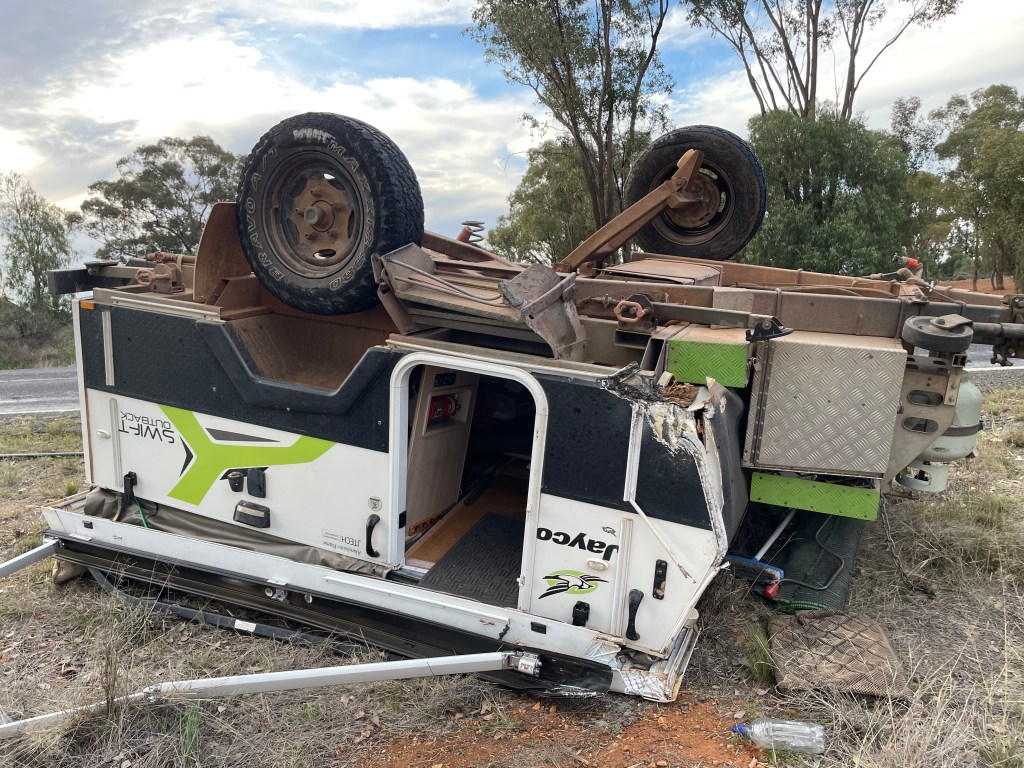
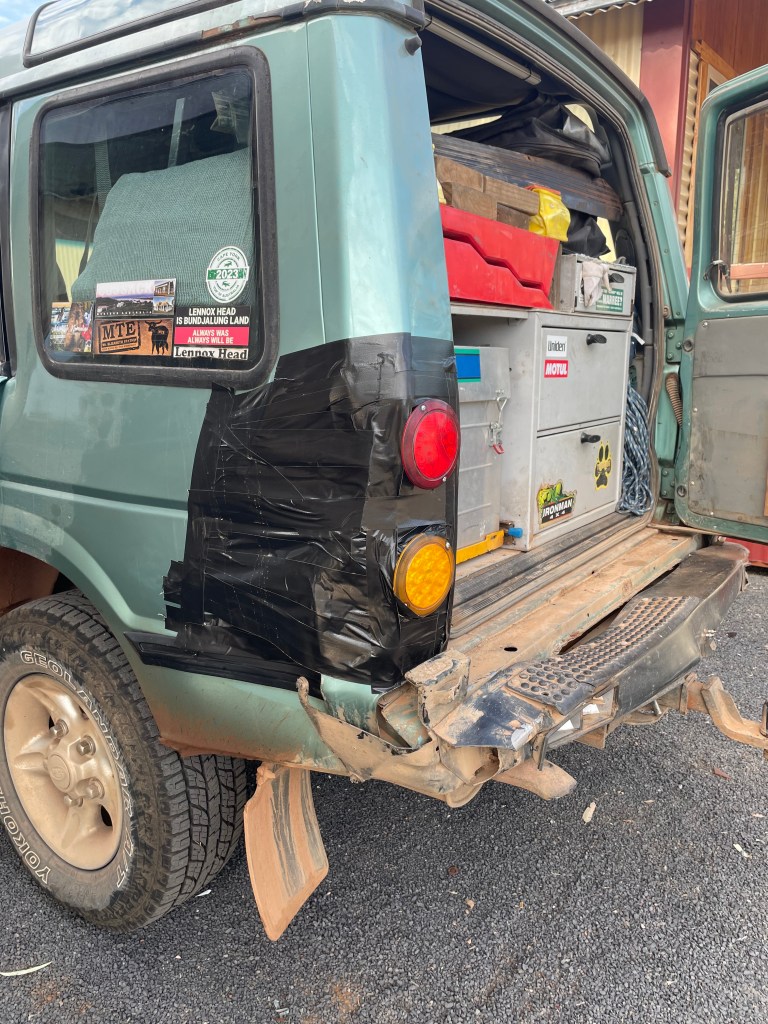
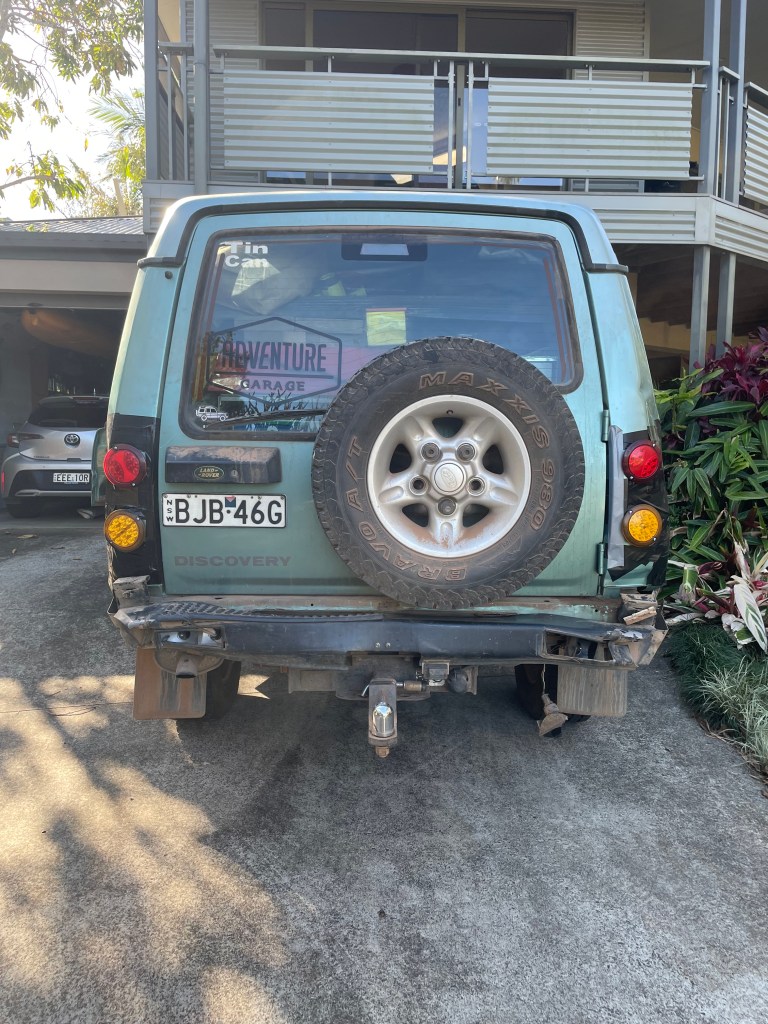
    5 kms from Nyngan, I over-corrected when I was heading into the gravel on the left, causing the caravan to fish-tail. I was doing 100kmh at the time. It’s a strange sensation losing control. I thought “how am I going to stop this!” Then clunk, the van had tipped over onto its roof. This slowed down and ultimately stopped the car. I was facing the on-coming traffic in the right hand side, but only the back of the van was on the road. A man in an on-coming small truck who saw it all happening stopped to assist. He was a local and called the tip truck driver. Within an hour we were in a cabin in Nyngan caravan park, poor Swifty had gone to caravan heaven in a paddock with other wrecks and some lovely horses nearby for company. Next day we salvaged what we could from inside, mostly the food in the cupboards. The fridge contents were slathered with yoghurt. The tomato sauce bottle squirted it’s contents making it look like someone had been badly injured. My big regret was forgetting to get the gin, rum and coffee out….I’ll think of those as the sacraments to bless the van on its next journey wherever.

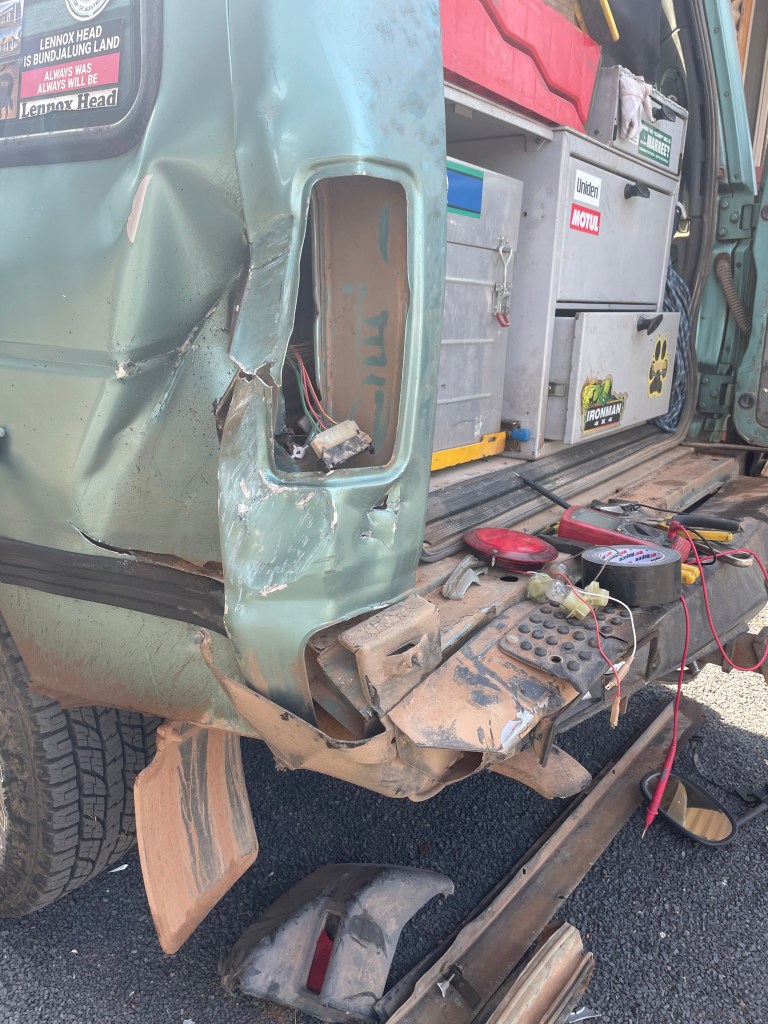
    My lesson from this is not to drive late in the afternoon. This was just the second time I had driven the car with the van on…in all our time travelling around Australia, I never drove. The blessing was the tow-hitch that could swivel 180 degrees without tipping the car. The damage to the car was not minor, the lights on the back were wrecked. The boys rigged up an amazing substitute set, using Swifty’s rear lights. This made the car roadworthy enough to drive home even though it looks odd.

    Home safe and sound, albeit a bit battered.

    From Nyngan to Tamworth to Lennox Head. The journey ends and probably our caravanning days could be over. We’ve had years of adventures with Swifty, it’s sad he’s so battered about but looking at the silver lining, we can begin afresh in different ways. We’ve thoroughly explored Australia, now it is time to see a few International destinations we’ve always wanted to visit. All in good time.

    This will be the very last blog. Thank you for taking the journey with us, it’s been thrilling, awesome and unforgettable. Our wonderful fellow travellers Andrew and Marilyn have saved us through thick and thin in so many ways, with mechanical help, meals, laughter and a great friendship, thank you. Neil & Erica, was a pity not to go the full distance with you this time, but what we did with you was so much fun, a little edgy at times, spectacular, hilarious and rich with memories.

    Jenny & Nick

    Setting off in style for new adventures without Swifty.

  • Flinders Ranges

    Getting there…………

    August 2025

    Here we go again. Ready for adventures, awesome scenery, friends, campfires and lots of driving. Because the weather in southern Australia has been so unpredictable lately, we are not sure of our itinerary, except we’re aiming for the majestic Flinders Ranges in South Australia. The rain has caused havoc with the gravel roads, flooding them and washing away edges. The positives are that we’re expecting a “green” desert with lots of wildflowers. We’ve set aside up to a month to be away.

    We set off on 20th August 2025 in the middle of a rain bomb from the East Coast of NSW. By the time we reached Lismore the rain had passed, but it wasn’t the last of rain for us that day. Tenterfield for morning tea is a normal indulgence, but we couldn’t loiter as we had more than 550 kms to cover that first day. Rain it did, heavily at times.

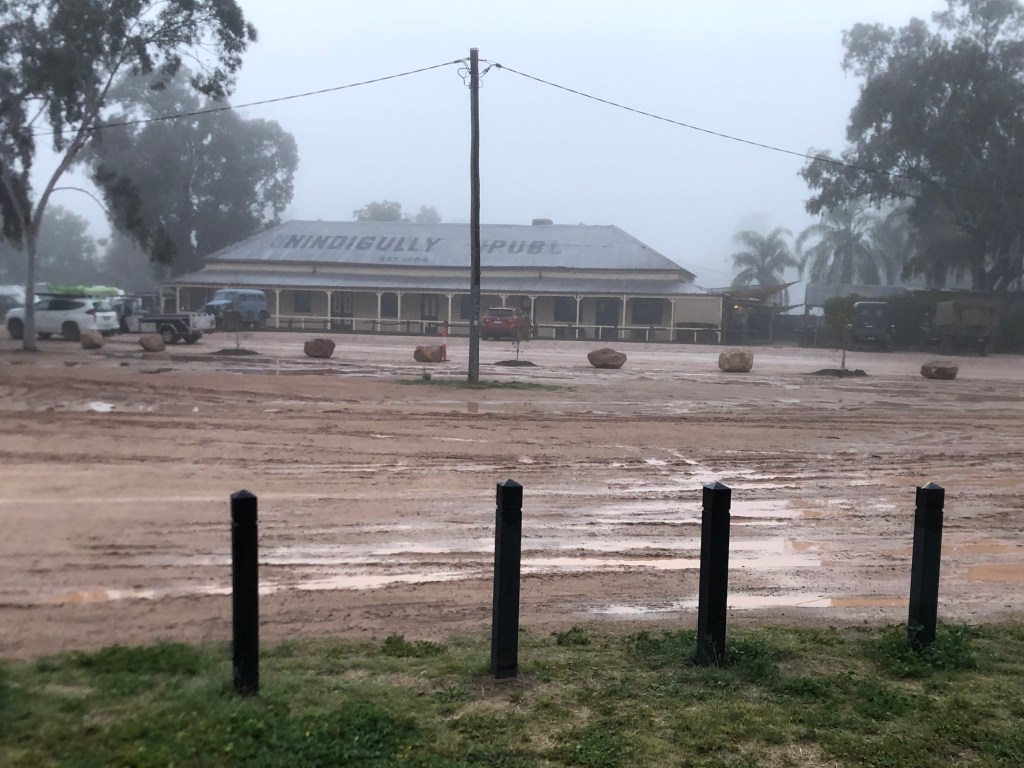
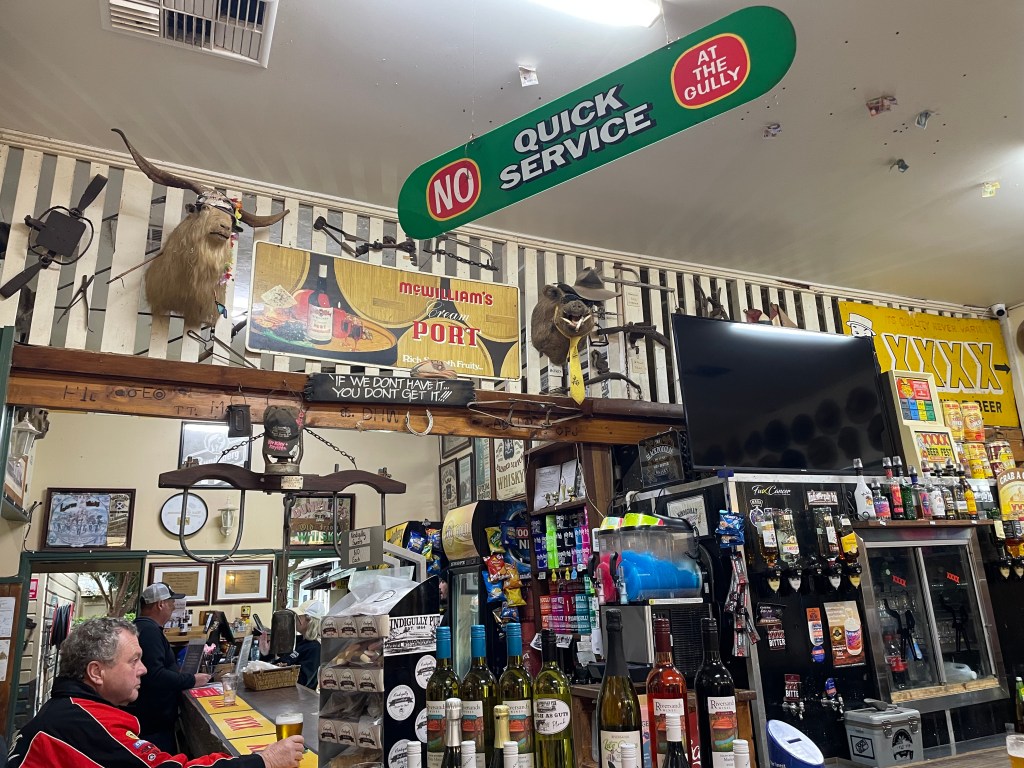
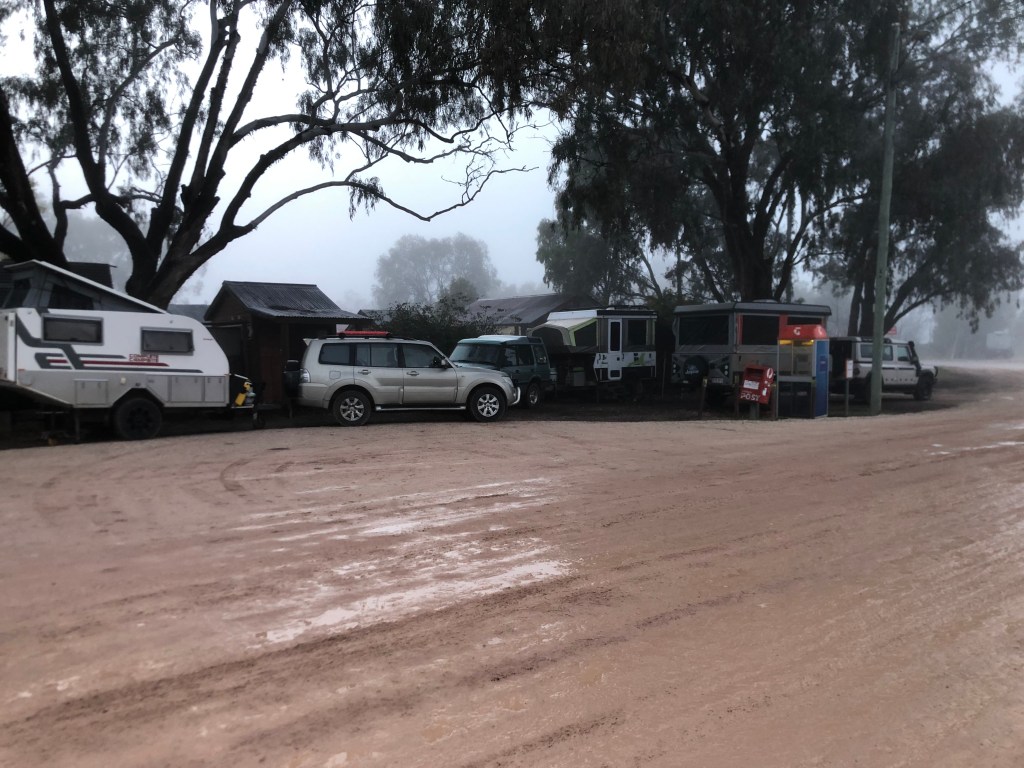
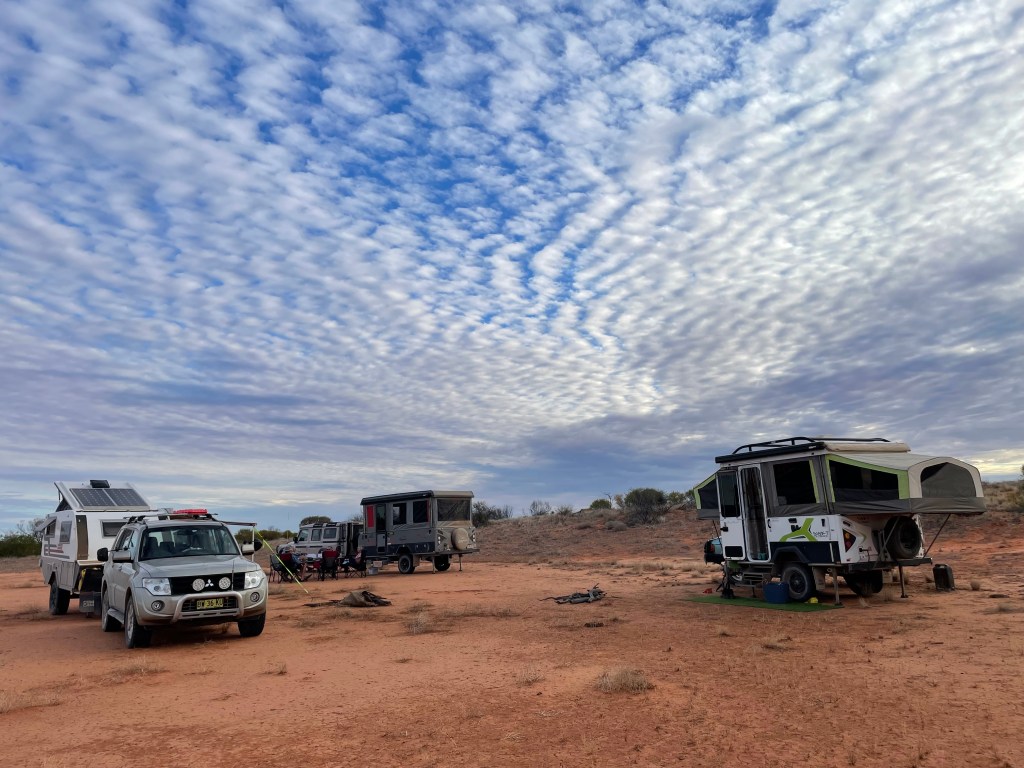
    Arriving at Nindigully Pub close to dusk, we had planned a campsite in the Council grounds surrounding the pub, but mud and slosh drowned out any chance of finding  a dry site. In Neil’s usual fashion, he parked beside the telephone box near the pub fence on “dry” grass and we wedged our 2 vans in close to his Penguin. In the morning, an irate owner of the pub informed us we were camped on private property, her’s in fact. We apologised profusely and left. St George was not too far away, so off we drove in the cold and thick fog.

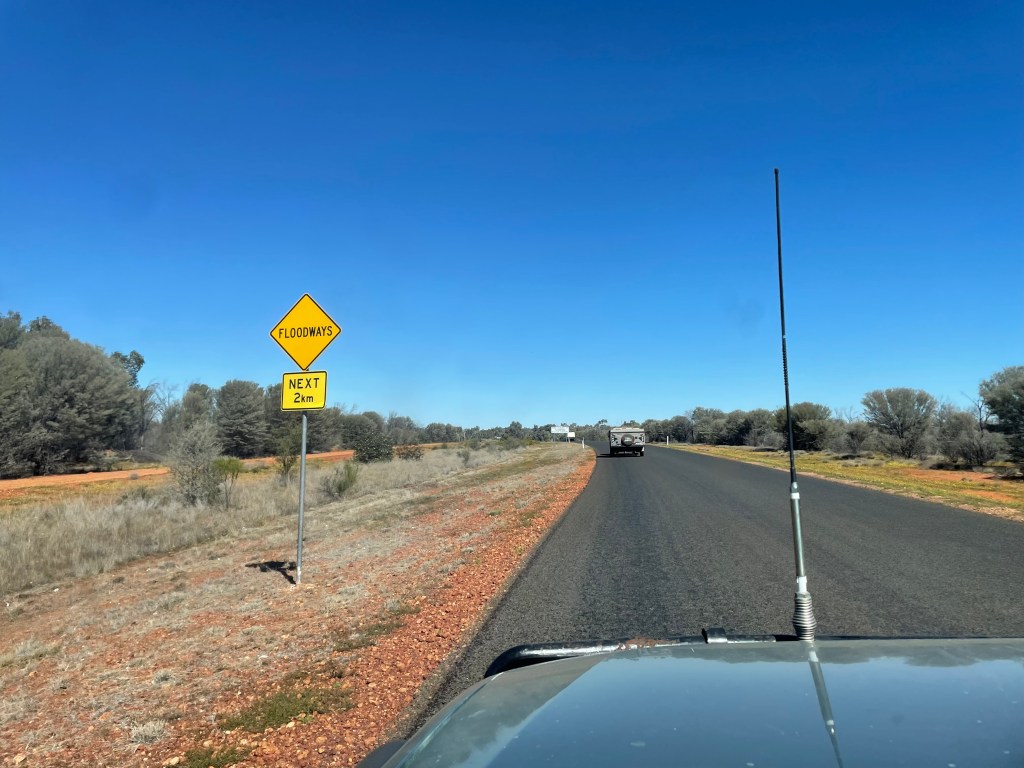
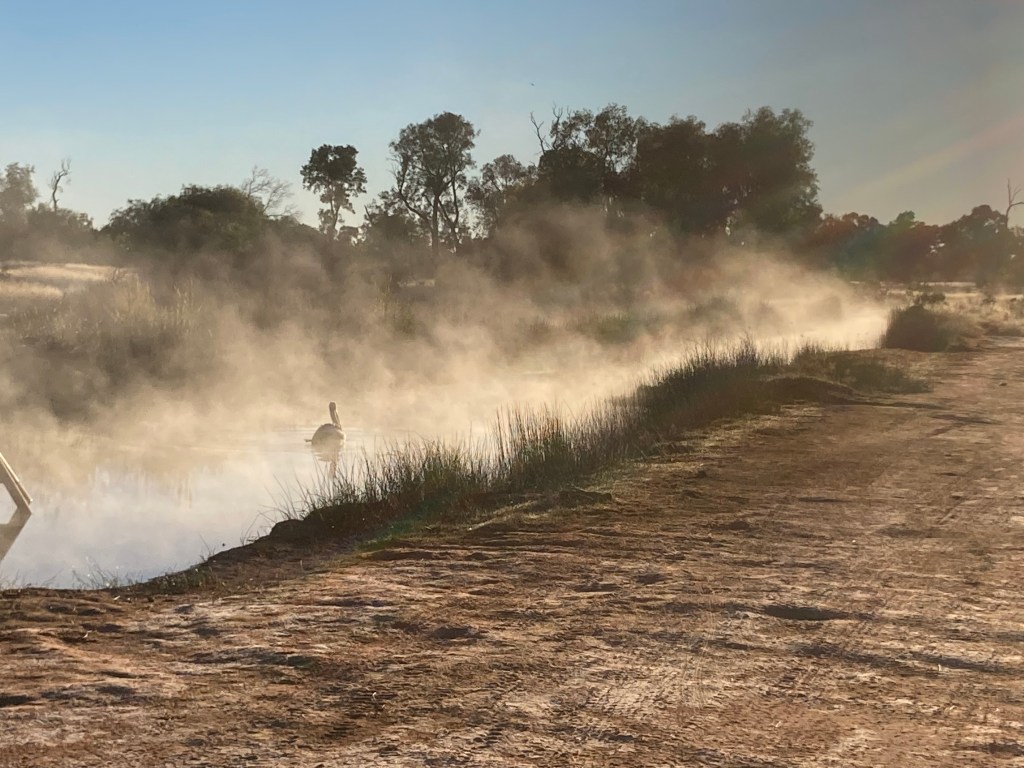
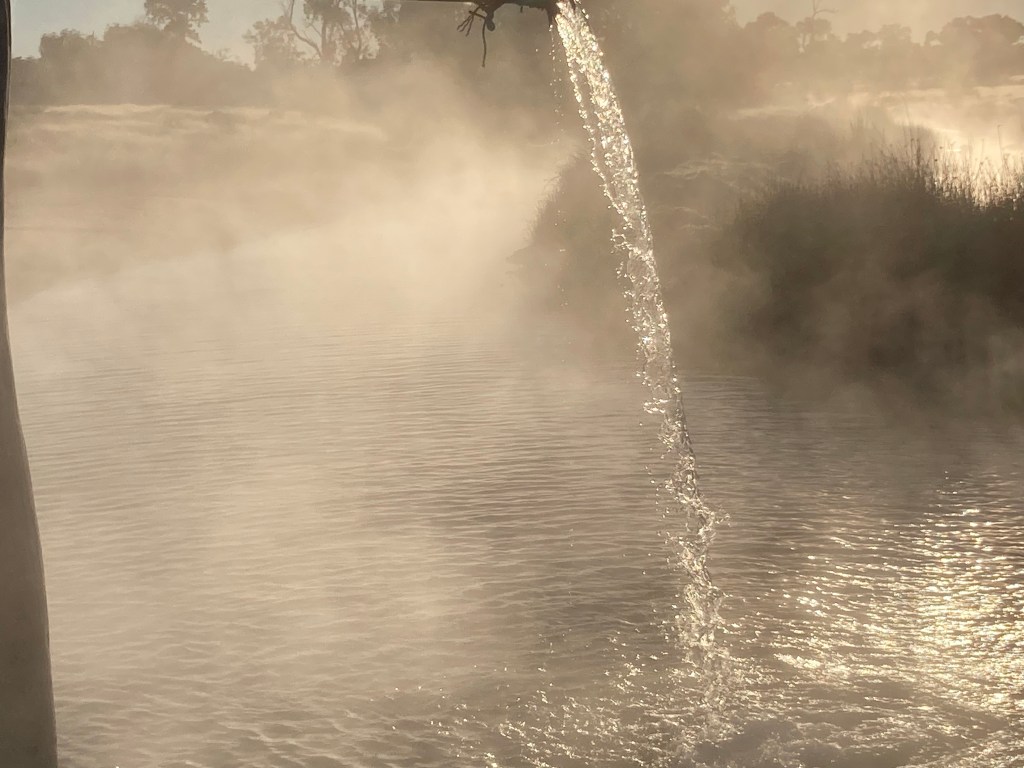
    Wildflowers were beginning to appear on the sides of the road, vast carpets of yellow, then white, all with a background of deep russet red earth. Again we loaded the kms onto the car, pushing hard to reach our destination, Charlotte Plains Station just out of Cunnamulla. What a gem this place was compared to the barren landscapes we had travelled past for hours that day. The 27,000 hectare sheep property is one of the few stations that did not cap their bore. They have developed a unique unpowered campsite complete with a dozen or so bathtubs you can freely wallow in at 31C or hotter, until you are fully saturated. There are some large pools as well, heated to about 48C, which is a bit too hot. The mornings with steam rising in the glow of sunrise are really atmospheric. We spent 2 days here. There was a video show at sunset with Robyn Russell, the current owner, giving us a good overview of the history of the farm and family; she was a bit long winded however.

    Charlotte Plains campsite

    Day 4 we headed to Thargomindah, the visitor centre first, as we still didn’t know if the road down to the Flinders Ranges was open. There have been vast floods affecting roads, bridges and creating driver hazards, but the Strezlecki Track had just opened and we could follow our desired route. Poor Thargomindah had been awash the previous weeks, but looked like they were back to normal.

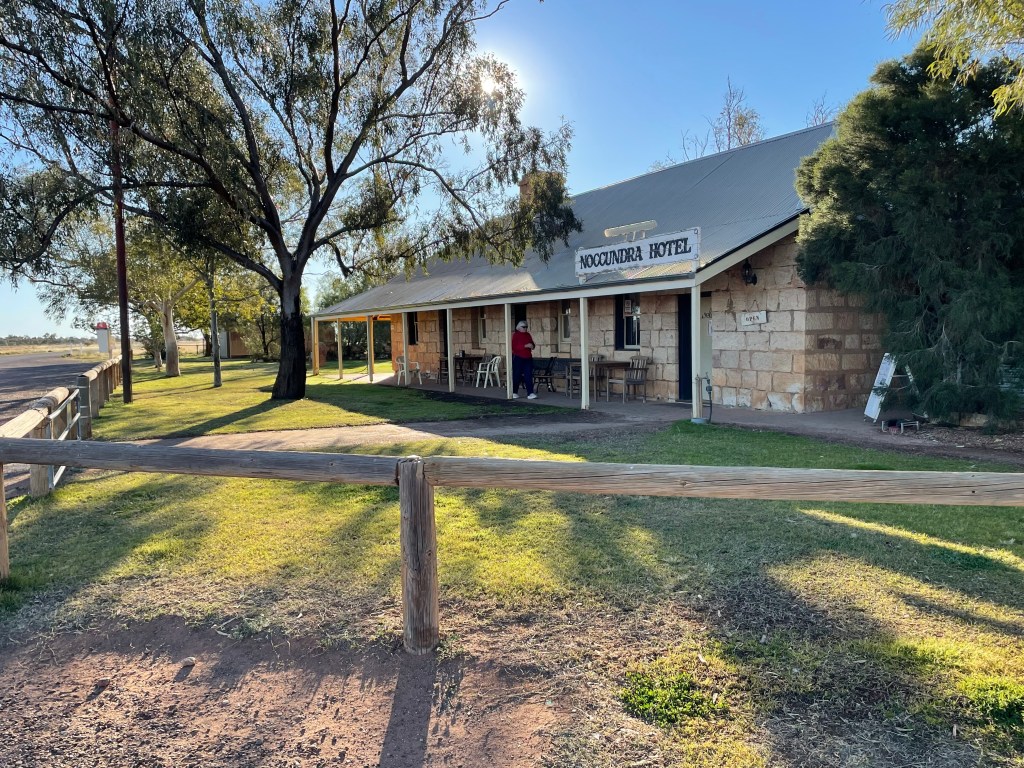
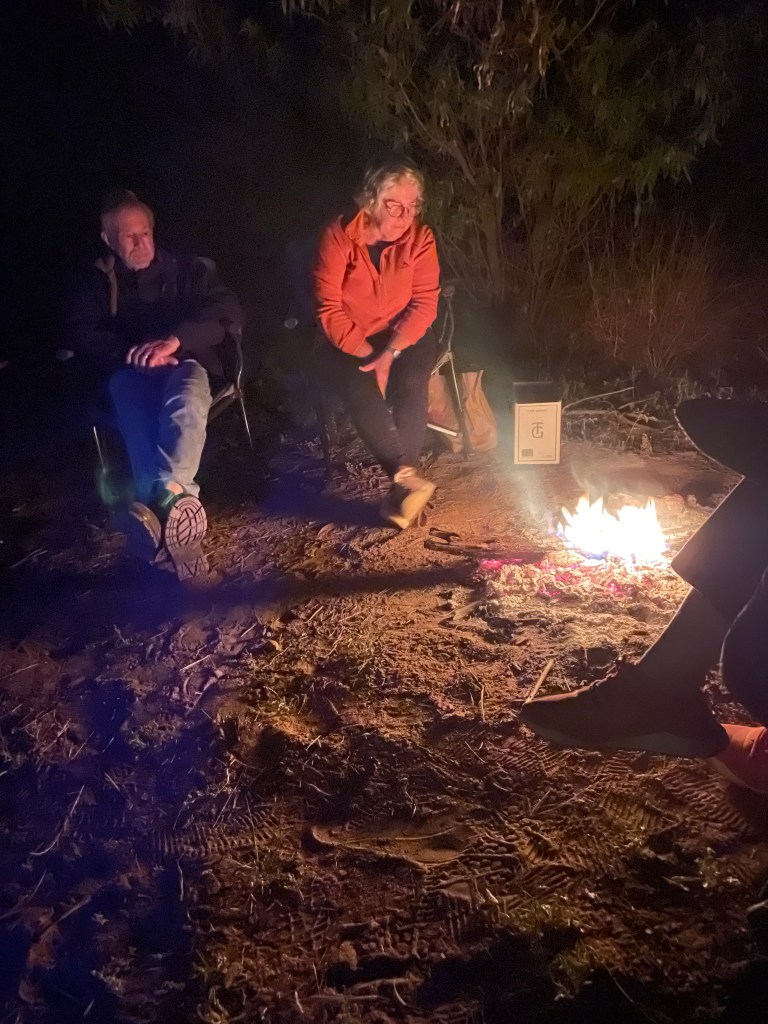
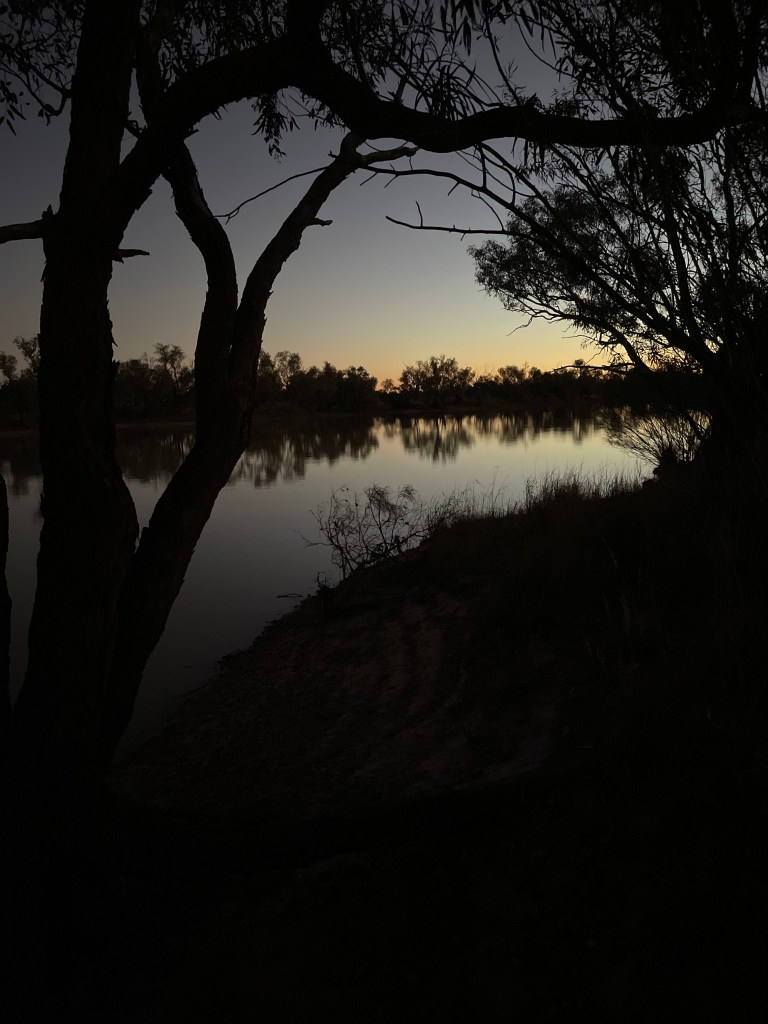
    This night we made it to Noccundra, a one pub town and nothing else. The 1882 sandstone pub was a nice place for a lazy afternoon beer, but we had chosen a terrific campsite on the bank of the Wilson River. Peaceful, quiet, no wind or rain, we loved relaxing into this spot. The little campfire kept us warm, the stars were spectacular, although I need more practise to get my astrophotography working.

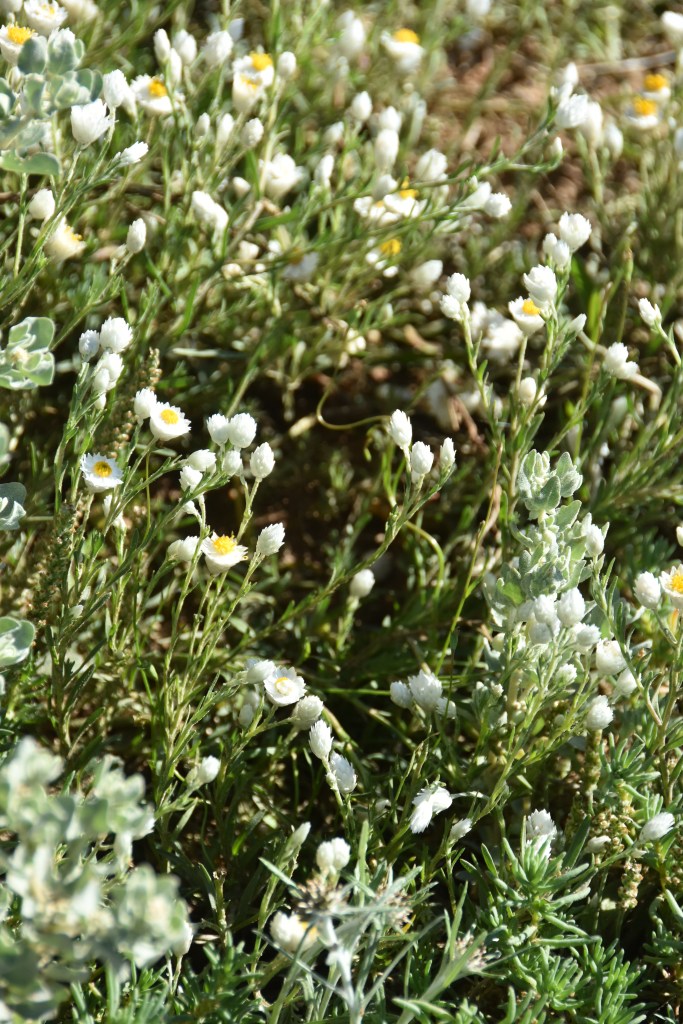
    The next day we aimed for Cameron’s Corner, the historic border intersection of SA, QLD & NSW. The roads were now a mix of corrugations to rattle your false teeth, smooth red earth and grey dusty gravel. At a morning tea stop, we met a twitcher, carrying his very long-lensed camera. He showed us some excellent images of various birds including a red chat which is very rare. His wife wandered up from a walking path, didn’t engage with us, probably knowing her husband loved showing off his pictures whenever the opportunity arose. The wildflowers at this stop were lovely, some very small, others more showy but all contributing to the floral display. 

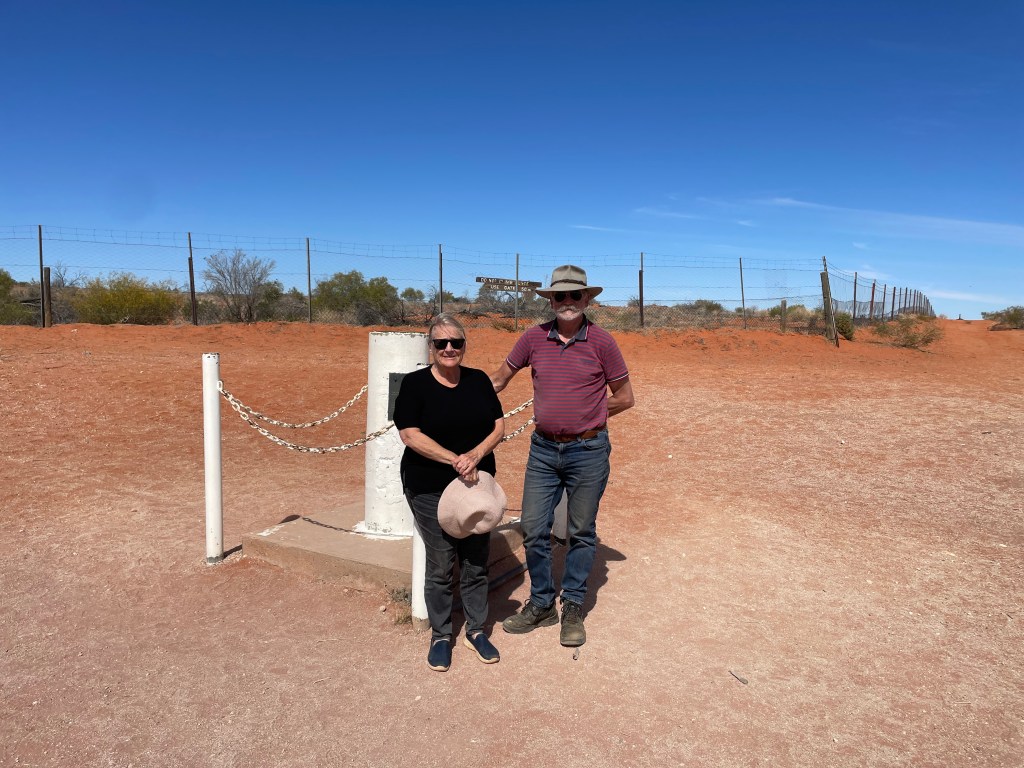
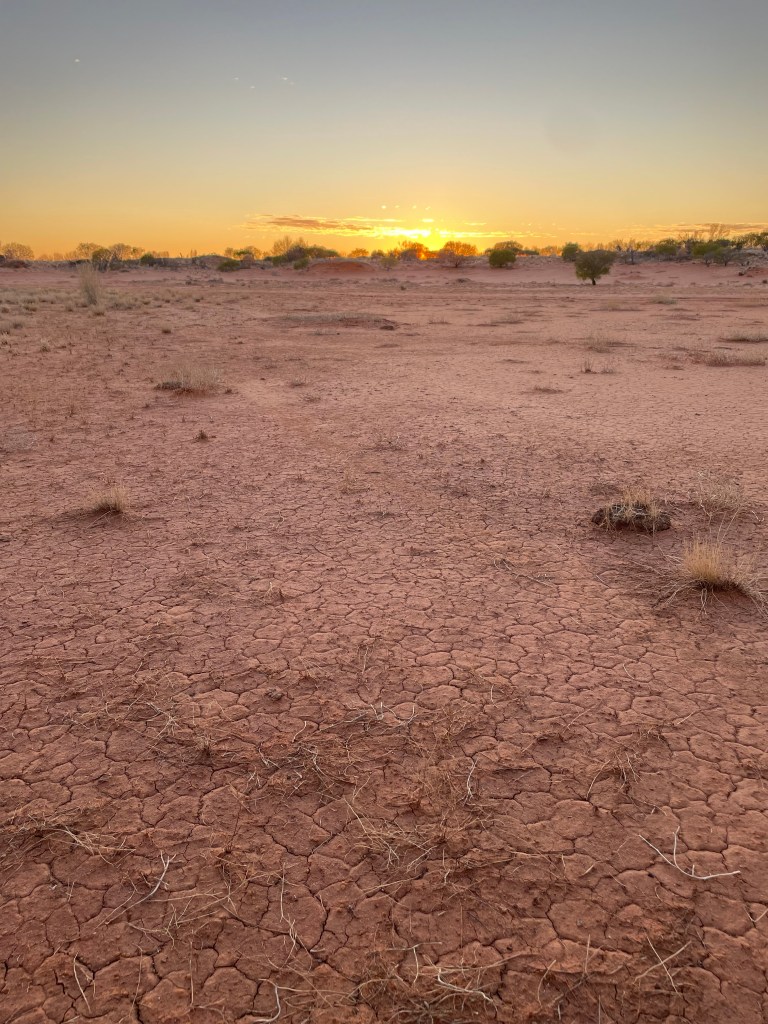
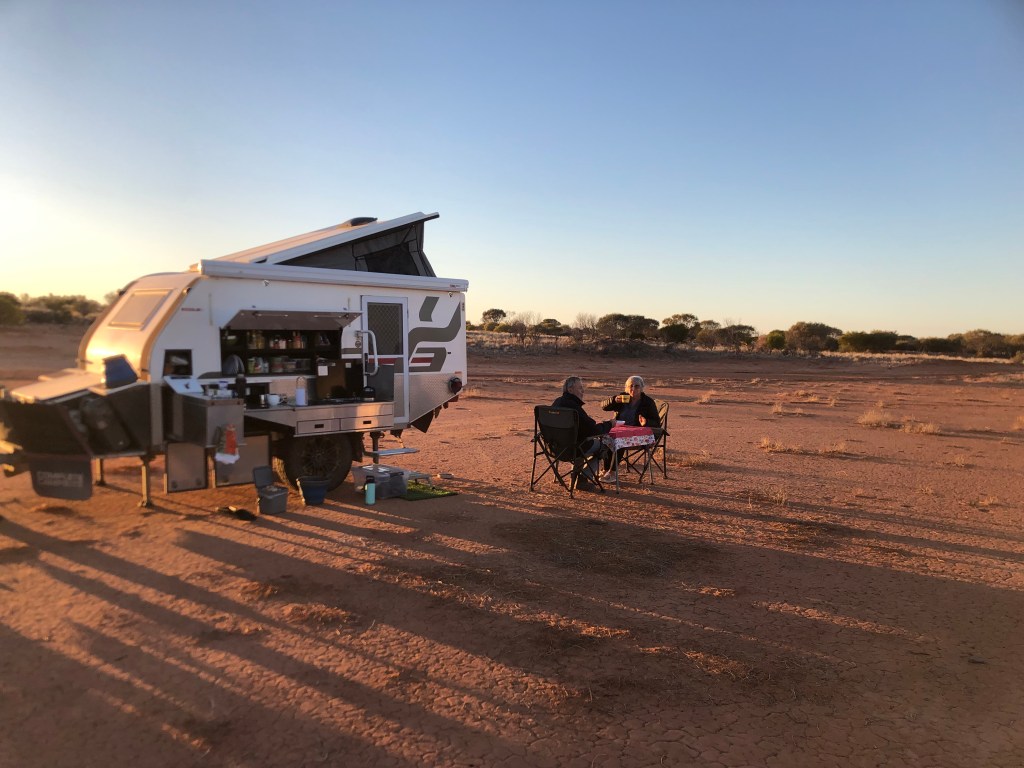
    Cameron’s Corner now has a pub, unlike the first time we came here in the 1990’s. We took the mandatory photos, read the information boards and then set off in search of a campsite. A clay pan tucked out of view of the road was ideal. A magical camp.

    Car Report

    Deflating tyre pressure.

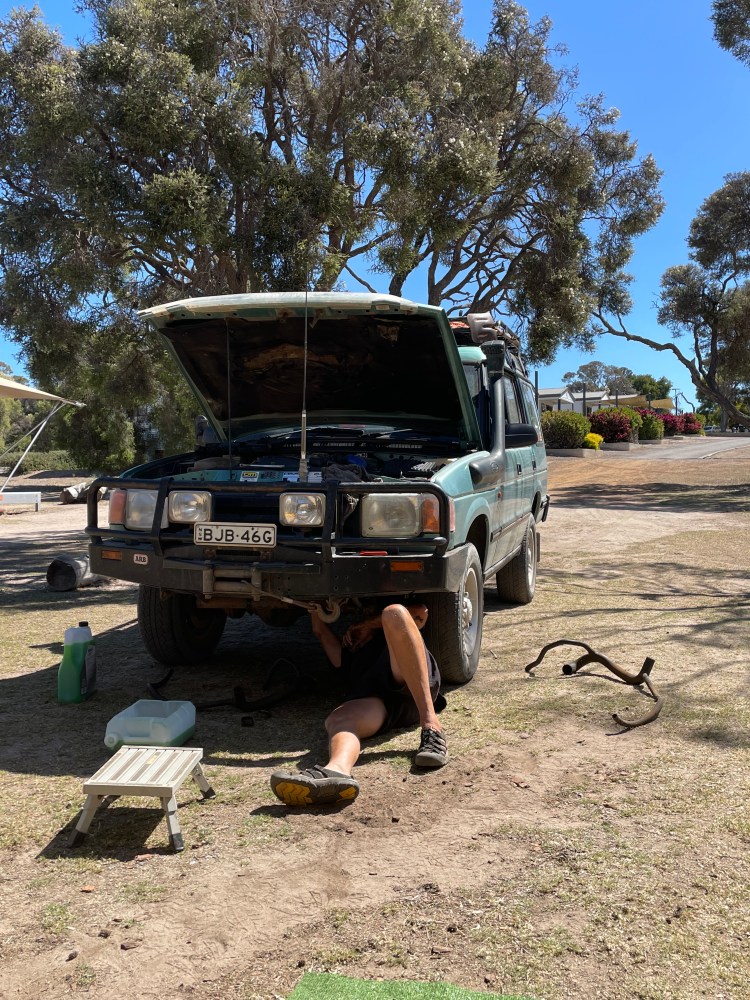
    Car-wise, it’s not been all plain sailing. Mechanically, no worries. However the extremely bumpy roads and endless corrugations finally shook a little spring loose in the bonnet catch. Without a spare parts store down the road, we’ve gone for the old tried and true remedy, tie down strap across the front of the bonnet, a nice rosette was added for presentation. We do now get weird looks in the towns, people wondering why we’ve got our bonnet held down. It’s rare to see cars nowadays being held together with simple devices and still driving about.

    Also, for no obvious reason, the heater/aircon fan began to make a loud insistent whizzing noise. It was just another noise to add to an already rattly racket that we drive with all the time, but this one was next level! So I cracked it and turned it off and went for the old fashioned air con and opened the window. Ahh, the serenity. That afternoon Nick was under the front dashboard unscrewing the culprit. It was full of leaves like a birds nest. Years and years of debris. Now the fan is completely silent and actually pumps air.

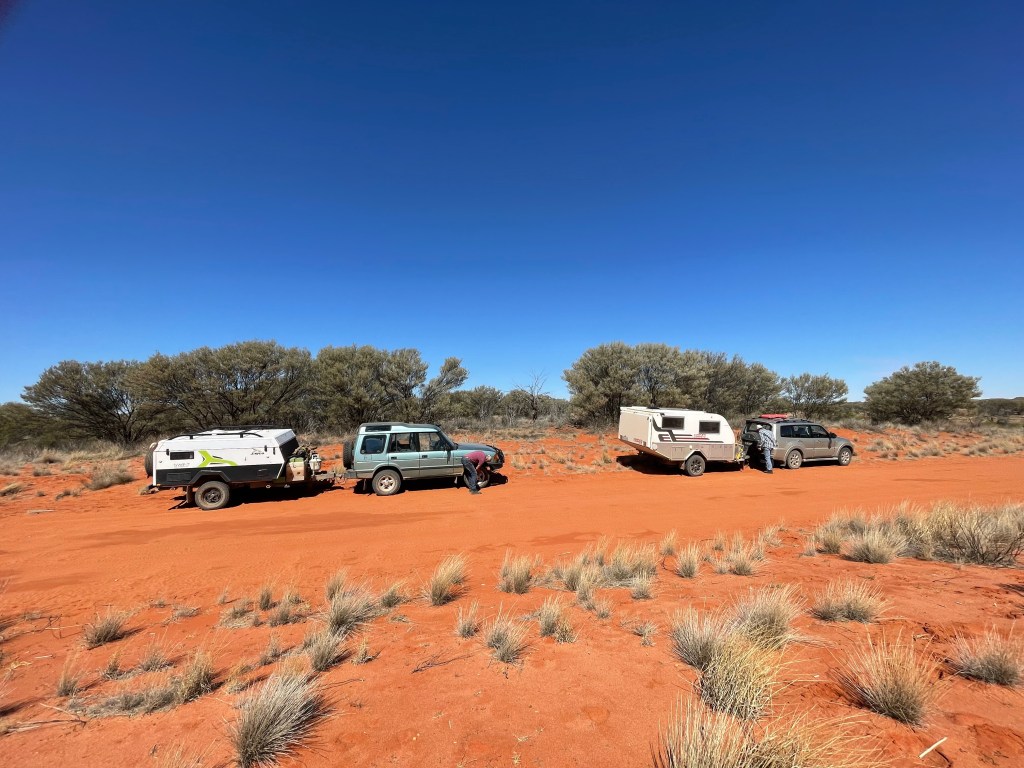
    This road from Cameron’s corner camp was a multiple series of up and over sand dunes, with crests and falls, possibly 50 or more of them, with some badly churned up on the blind side over the crest. Our two-way radios proved useful to warn each other of the dangers. For the whole day we saw about 4 cars, 4 motorbikes and a couple of cattle trucks. The Strezlecki Track was sealed more than we expected but it was still primarily corrugations on white gravel. The landscape was dotted with small pale yellow dunes with scrub on top, hides for bush creatures no doubt. We only saw a few emus, no kangaroos and surprisingly a group of huge camels.

    Flinders Ranges

    Pulling in to Arkaroola mid afternoon, we had around 2000km on the clock already. The day was warmer than expected. We set up camp amongst the gums on a dry riverbed. We did a communal dinner of marinated pork, stir fried vegetables and rice. We retired early, everyone was tired and 3 of us were carrying a bit of a cold. The wind came up, slowly at first, rattling the awning, shaking the van a bit. The next thing we knew we were living in a full scale gale, with wind howling down the gullies like a train, first one direction then the other. Just when you thought it was over, off it went again. No-one slept. It’s just one of those camping moments when you ask “why are we doing this?” But we survived and I thanked all the big trees we were camped under for holding onto all their limbs throughout the night.

    Suffice to say, the next day was at zombie pace, weary, just soaking up all that is on offer around the Arkaroola homestead . It was warm, sunny and calm, for a change. Neil and Erica did a walk on the Barraranna track for 8km, I admire their fortitude but the rest of us were not feeling that fit after a rough night. The next morning Neil & Erica departed Arkaroola while we stayed another day to do the Echo Camp Backtrack drive. I’ll leave this blog here. There are lots of adventures to come as we thoroughly explored the Flinders Ranges.

    The next blog is written so will follow soon, provided I can get an internet signal.

    Cheers for now

    Jenny & Nick & Co.

  • Limestone Coast, SA. Great Ocean Road, Vic.

    The last blog finished at Strathalbyn, so the journey now takes us along the south coast of Australia and into Melbourne, where this blog series will end.

    Posted April 8th 2024

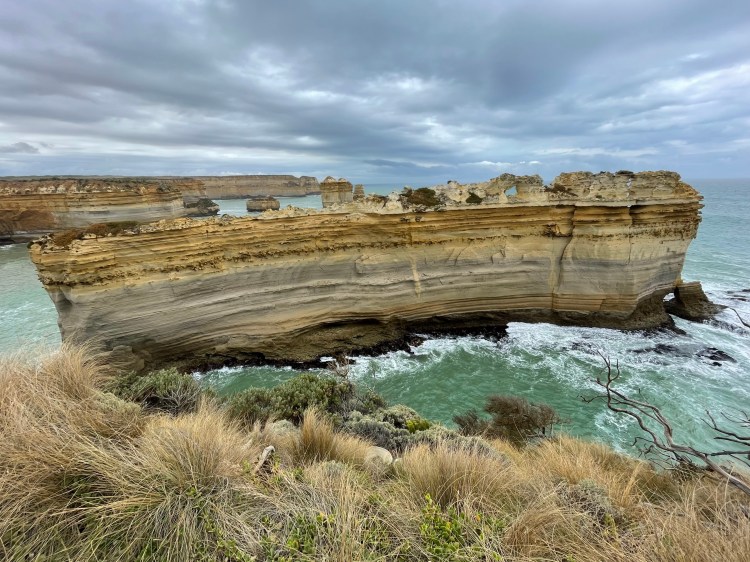
    The Razorback, Port Campbell National Park

    Robe. We pressed on to Robe, knowing we were passing the Coorong, made famous by the  movie Storm Boy. It was a hot day again, all around us was crackly dry, no clouds, dark blue sky. The Coorong needs to be appreciated by camping in the National Park on the edge of the lakes, but we felt more inclined to go to Robe to avoid the mozzies and sandflies this time, and stay close to the coast where it is cooler.

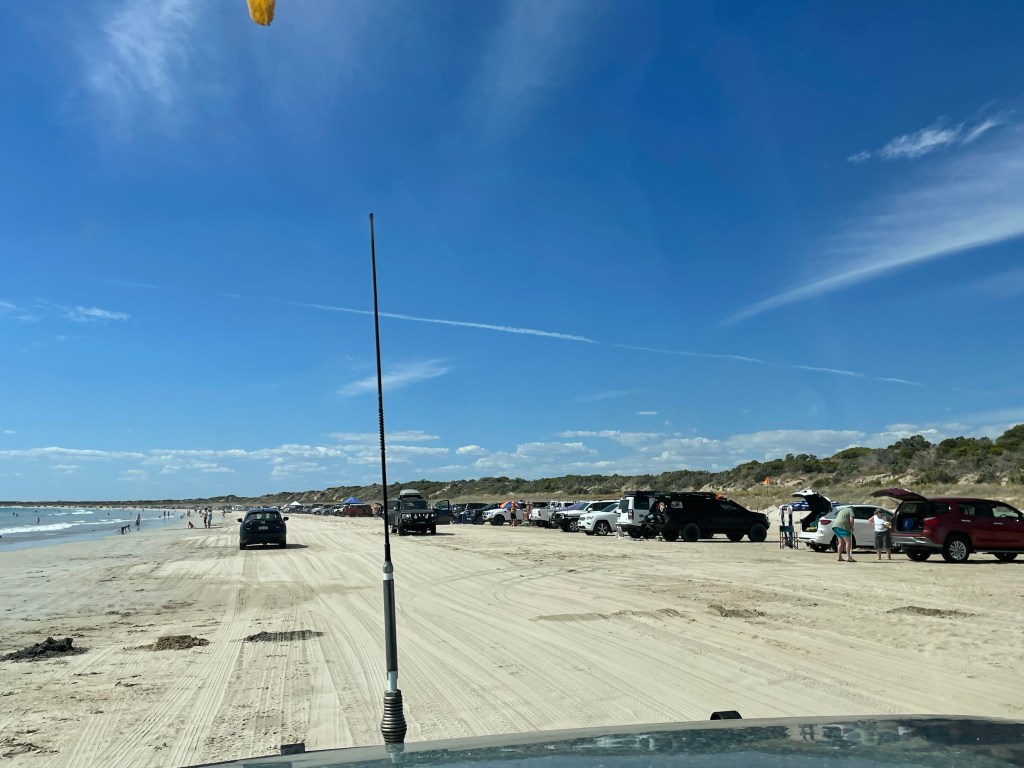
    Robe was bustling, being a holiday long weekend probably contributed to that. We had a lovely campsite in the shade beside the ski lake. We decided to have an ocean swim, found Long Beach where you can drive your car on the sand, and OMG…I have never seen so many cars and people lined up on the beach along the shore. The water was cold so most people were just sunning or drinking or playing cricket. Big family groups hunkered under gazebos or awnings attached to their cars. Quite impressive how a seaside can draw so many people! I had a swim and so did Nick….but he wore his wetsuit! 

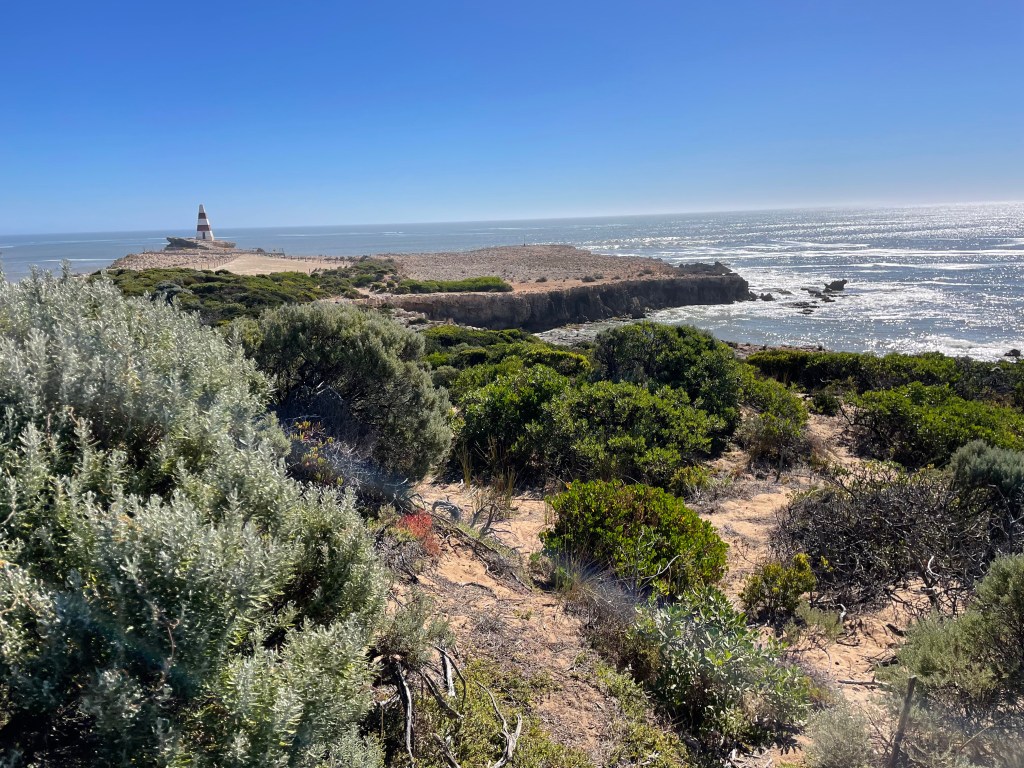
    Cycling around the Robe foreshore and up to the Obelisk was a good way to see the sights. Given the notoriety of this coast for shipwrecks, the Obelisk, built in 1855, was strategically placed to store rockets which were fired to distressed ships, with a line attached, to facilitate some pretty risky rescue operations. The Obelisk is now teetering at the edge of the weathered limestone cliff. Another key historical event at Robe was the arrival of 16,262 Chinese people, who then walked to the Goldfields in Victoria, thus avoiding the landing tax imposed on foreign nationals in Victoria. 

    I’d like to visit Robe at a quieter time, if that ever happens. It does look like a bolt hole used by Adelaidians who’ve built beach houses amongst the tea tree and over the sand dunes.

    Mt Gambier.

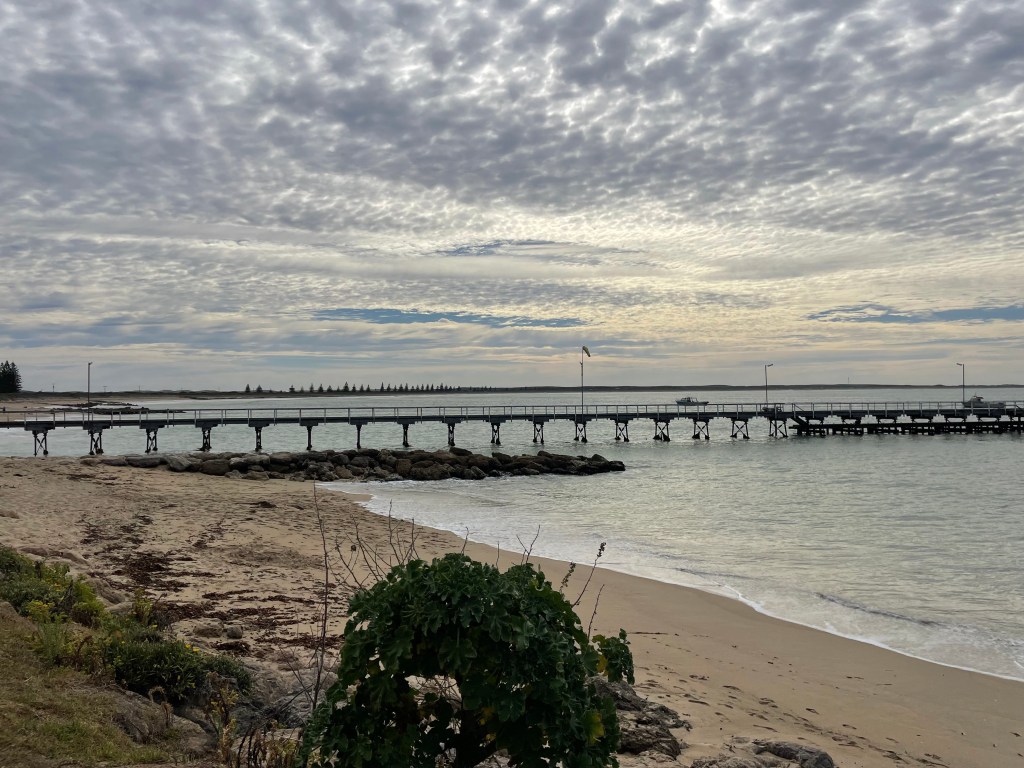
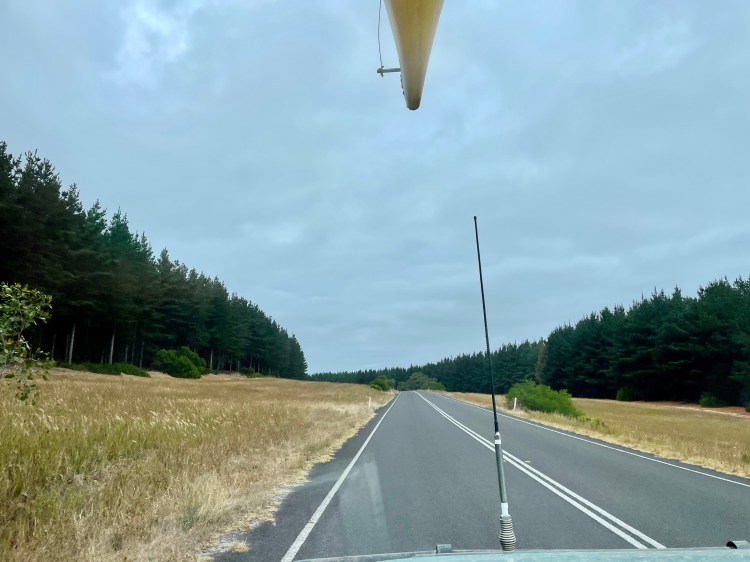
    After Robe we travelled to Beachport for morning tea. It was a nice town, again with history obvious in the old stone houses and the timber jetty. After being adequately charged up on coffee and cake, we continued towards Mt Gambier. Our booking for the night was at “Pine Country” caravan park. Why “Pine Country” I thought. It soon became blatantly obvious…there are squillions of acres of pine plantations lining both sides of the highway, with a small National Park tucked in between the pine trees. There were self seeded pine trees growing in the National Park, some had been lopped, but it would seem to be a losing battle to get them all, from what I saw. Jumping ahead a little, we came across an enormous timber mill north of Mt Gambier, with pallets stacked with plastic wrapped timber ready for a Bunnings store near you. The scale was mind boggling.

    Pine trees everywhere.

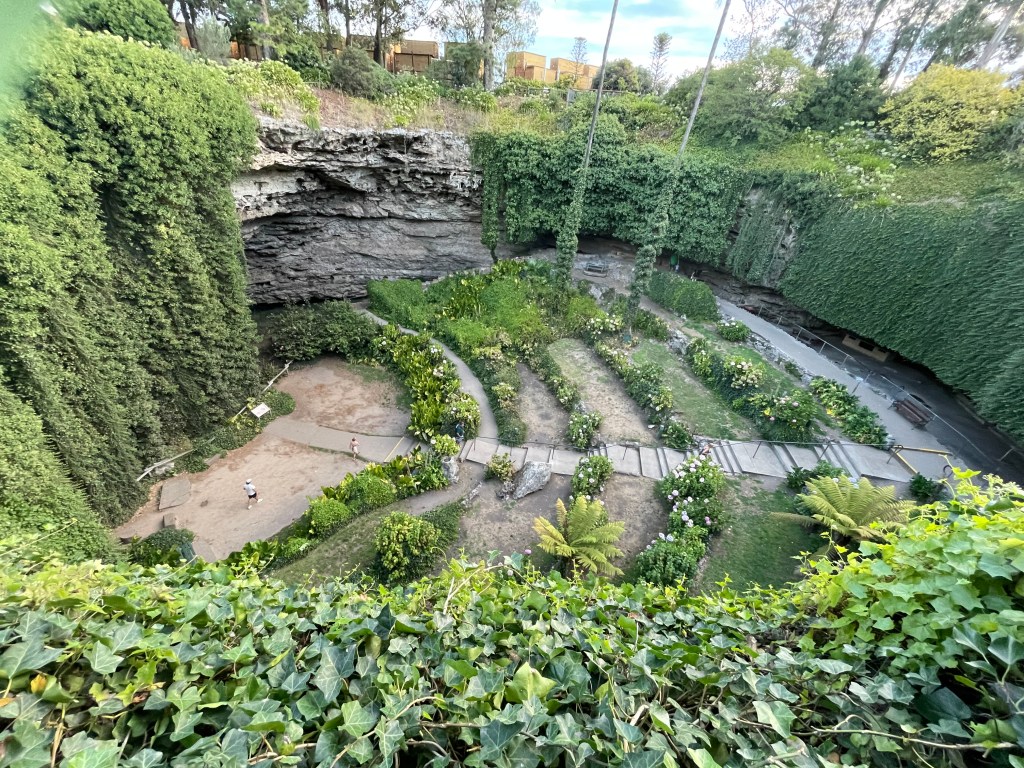
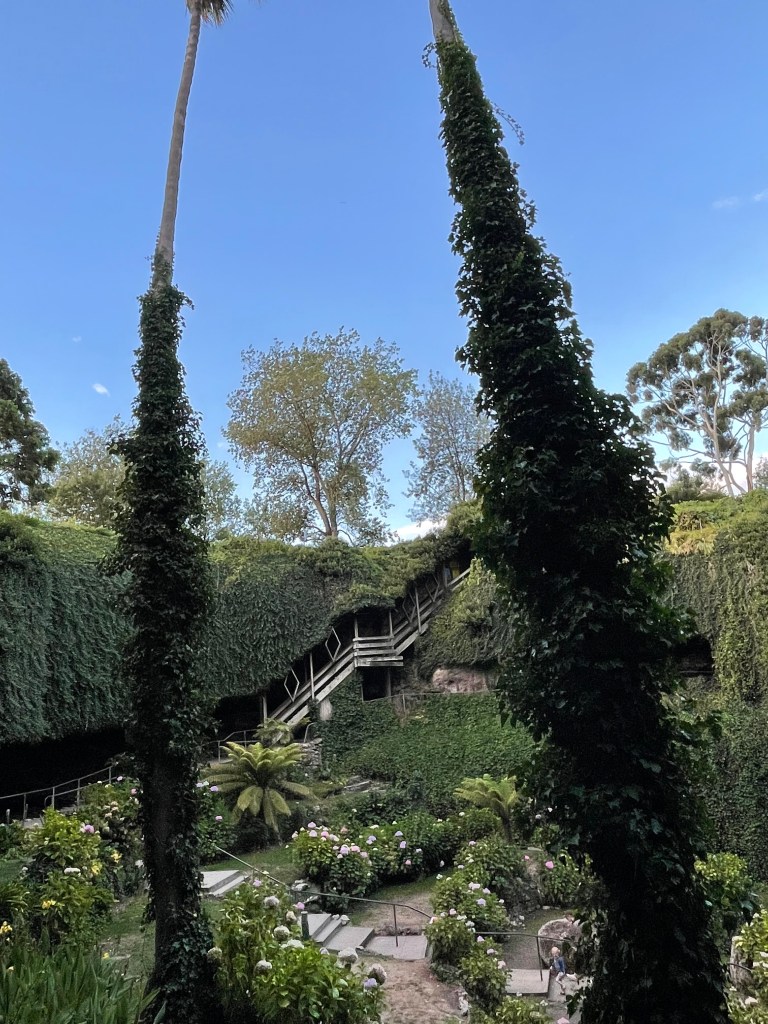
    When we’d setup our van in Mt Gambier, we were exhausted. It was 40C and there was no-where for us to get relief, like a swimming pool. We chose to have dinner in the air-con at a pub. In the dusk we went to the Umpherston Sinkhole. In the late 1800’s it was turned into a botanical garden for promenading. There was a lake at one time but that’s dry now. It’s amazing sometimes to see what the British aristocrats thought was a good idea for a hole in the ground! The garden was suffering from the dryness, the planting was a bit ordinary.

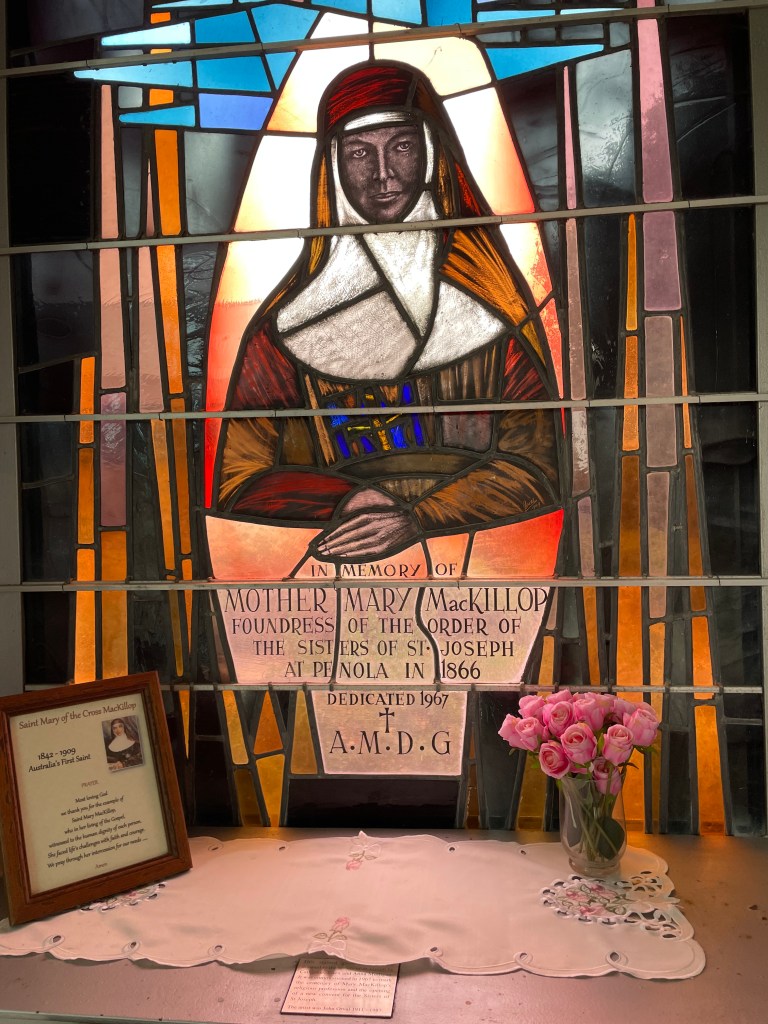
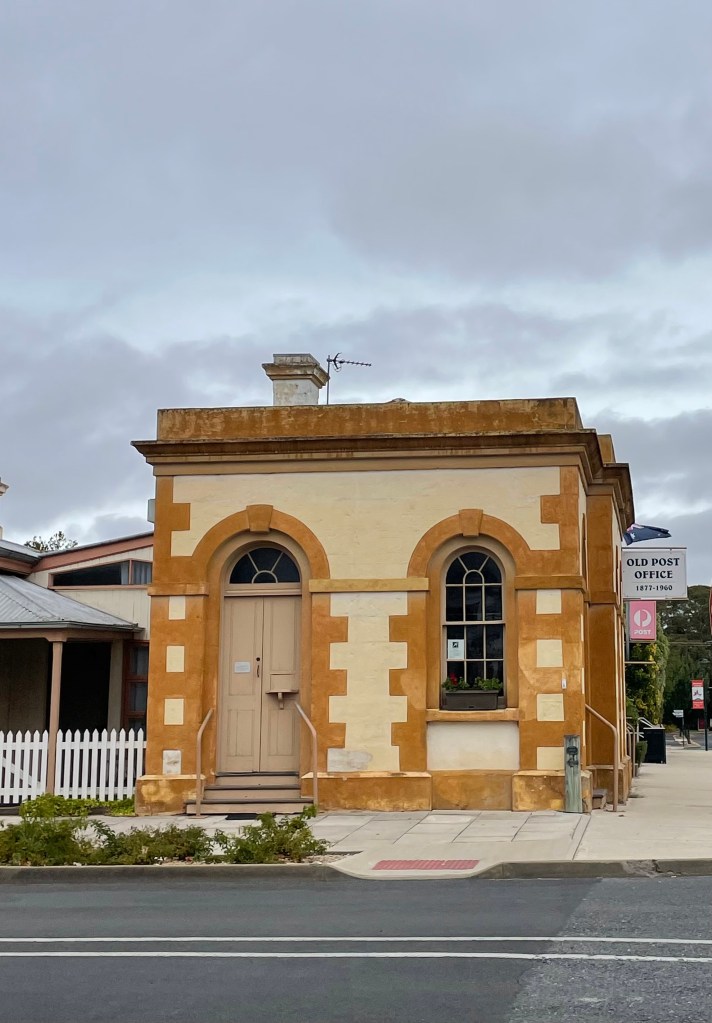
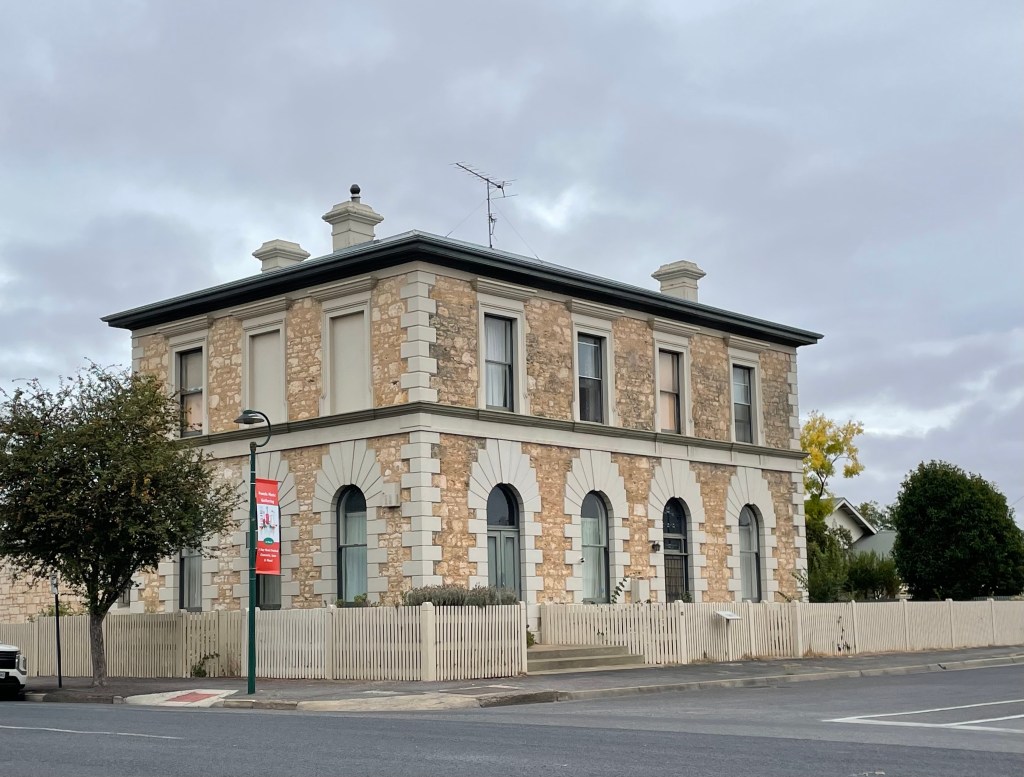
    The weather changed, it was back to respectable, bearable. So we chose to drive 50 kms north to Penola in Coonawarra country for a day trip. Penola is yet another quaint historic town, well preserved with signs telling us about its heritage. This was the town Saint Mary MacKillop lived in.  In the 1860’s she created her school for under privileged children. There’s an historic precinct we could walk about, where her school house still exists. The church had a foyer dedicated to her sainthood. We chose to miss her extensive informative history centre in favour of the wineries.

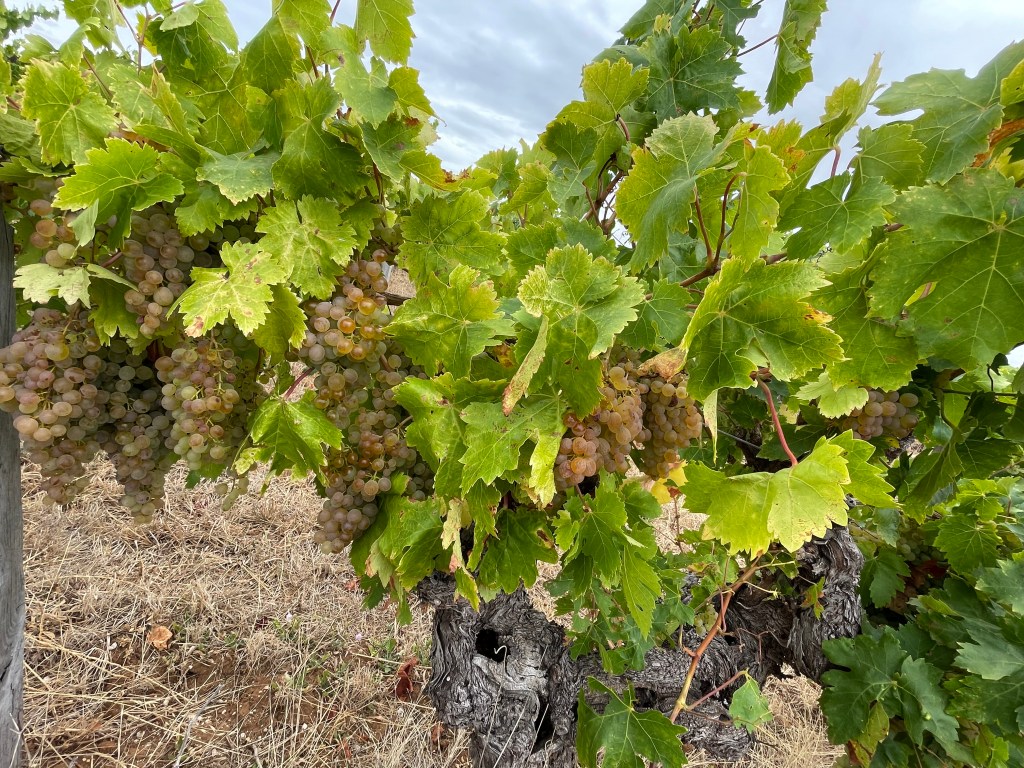
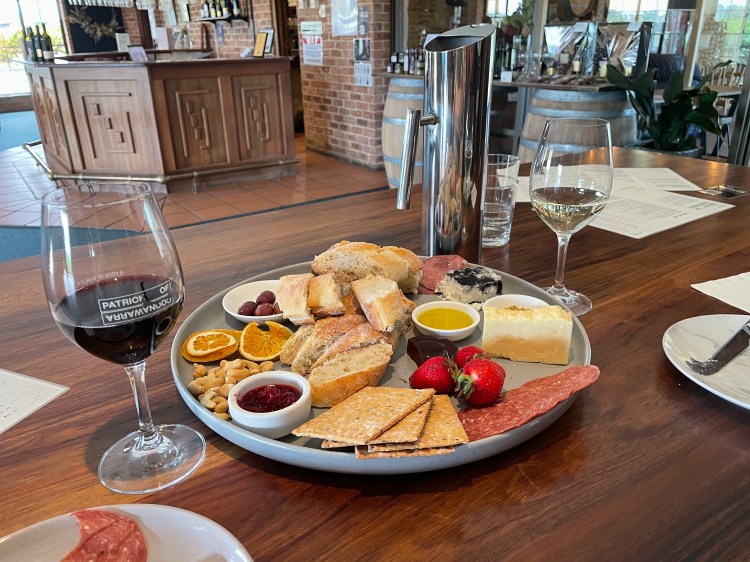
    So many wineries to choose from! We just followed our noses and ended up at Wynns, a very old, established and impressive cellar door display and tasting room. Vines outside were 150 years old. For lunch we went to Patrick’s of Coonawarra, where you can get 2 glasses of wine and a tasting platter so big we couldn’t finish it, for under $50. It was delicious. 

    Lunch platter at Patrick’s of Coonawarra

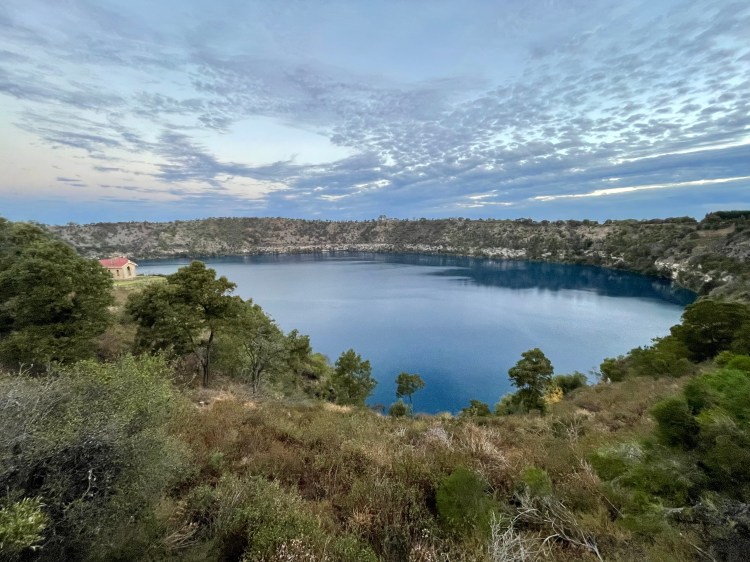
    The blue lake was another must see place according to our brochures. It’s just one of four craters and two lakes, caves and sinkholes forming the remarkable topography of the city and close surrounds of Mt Gambier. 

    Blue Lake, Mt Gambier

    It was time to move on, to leave the Limestone Coast of SA and arrive at the Shipwreck Coast of Victoria.

    Portland.

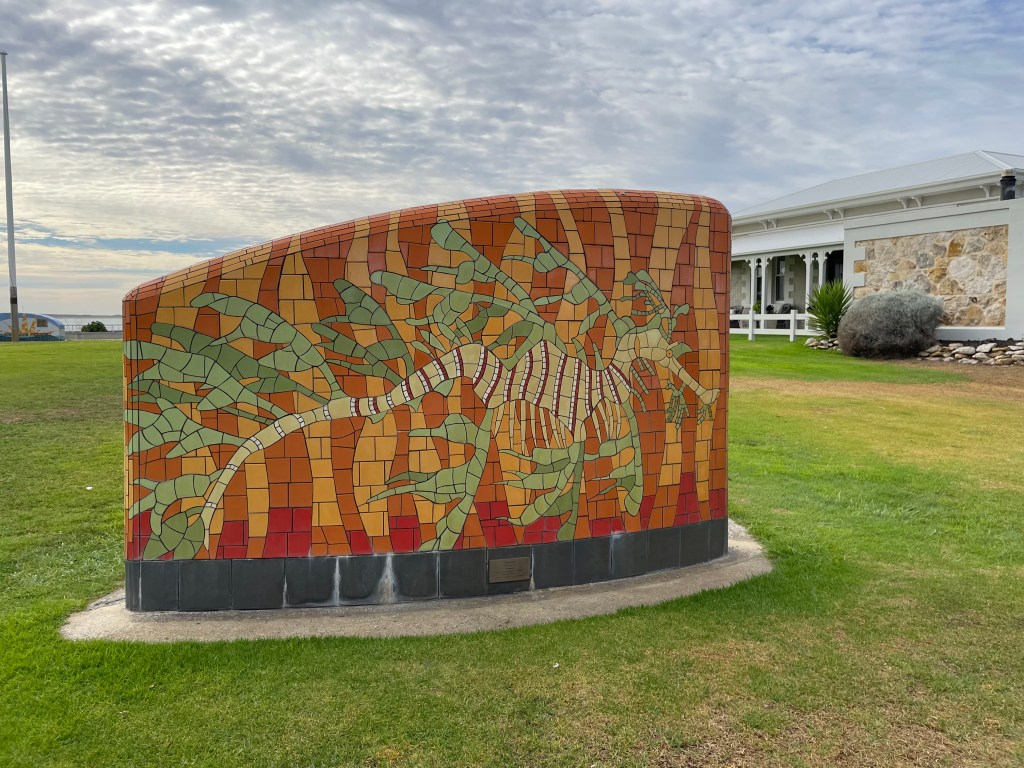
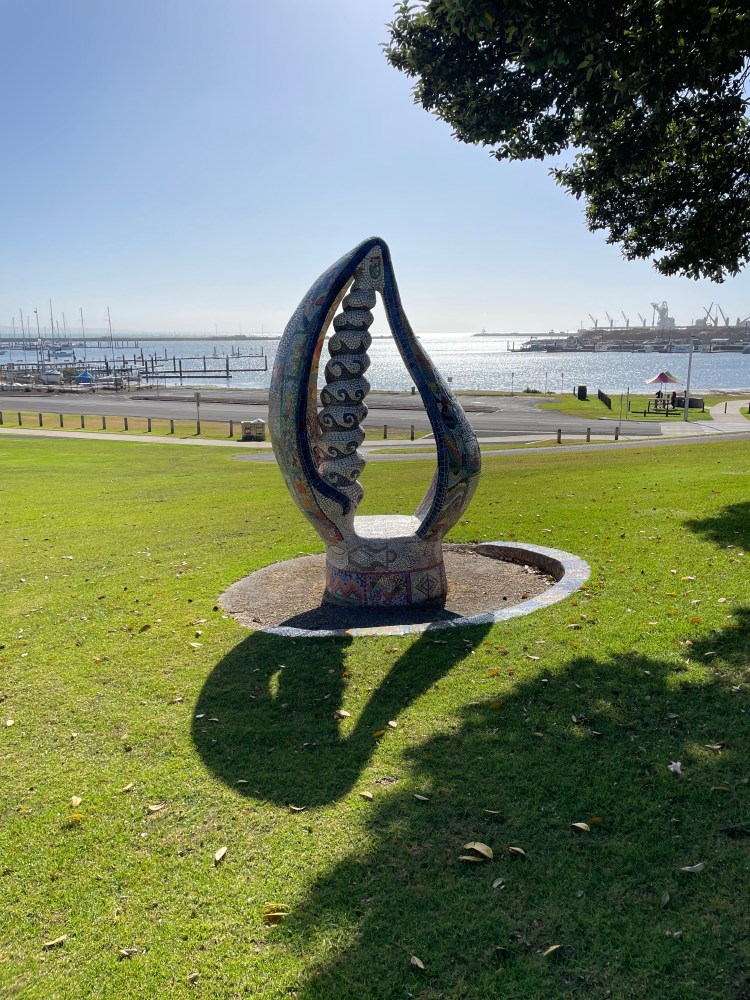
    Portland foreshore mosaic shell

    The drive to Portland via Nelson was again wall-to-wall pine plantations and not much else. 

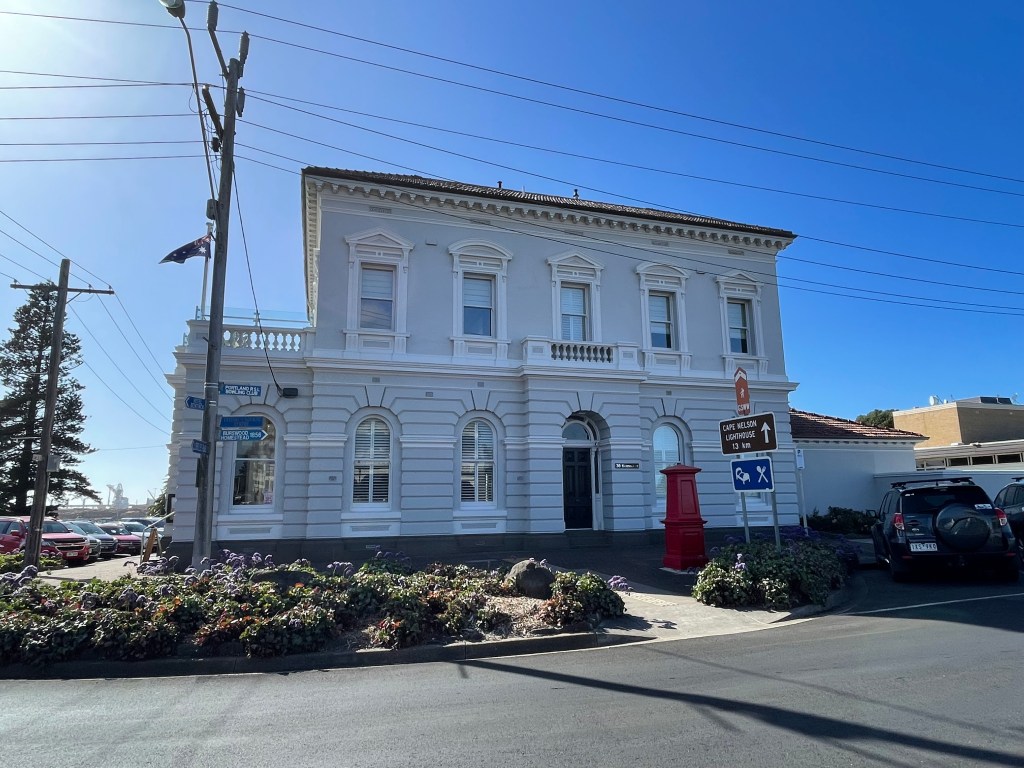
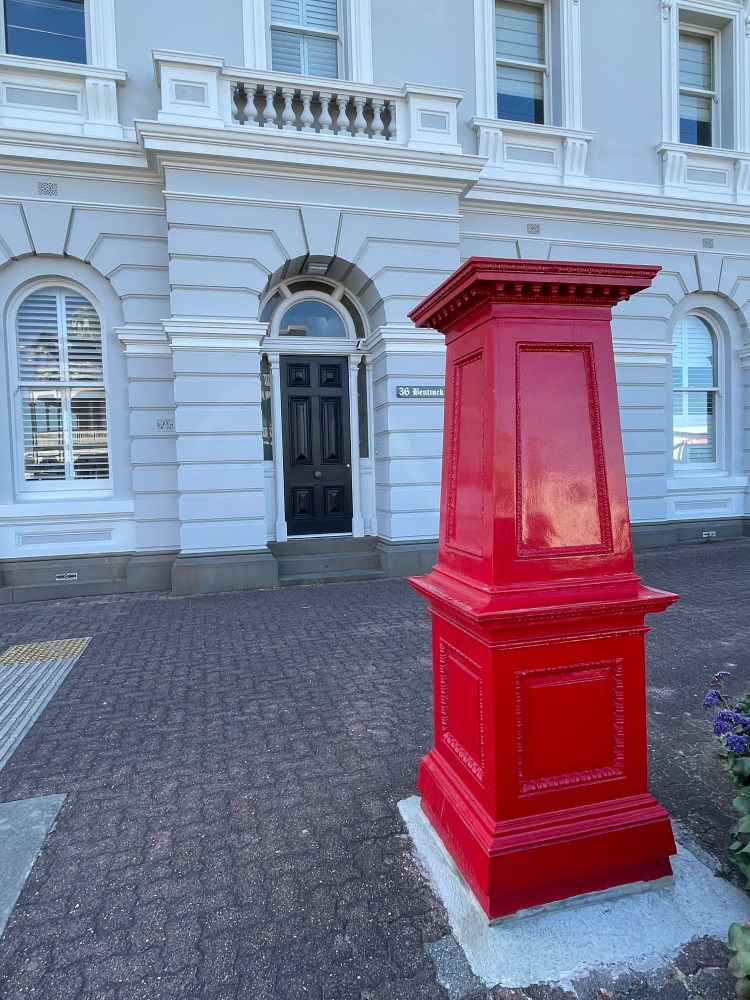
    Portland has a family connection for me. My great grand-father was the postmaster in Portland from 1920 to 1924. The Post Office is a charming 2 storey solid building, converted now into a fine dining restaurant and private living quarters upstairs. I had already done some research about great grandpa many years ago, so my visit to History House didn’t turn up any new information.

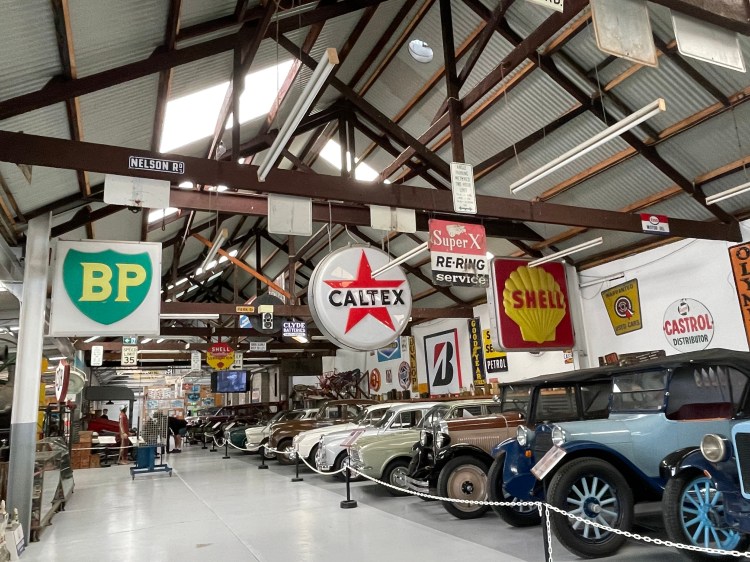
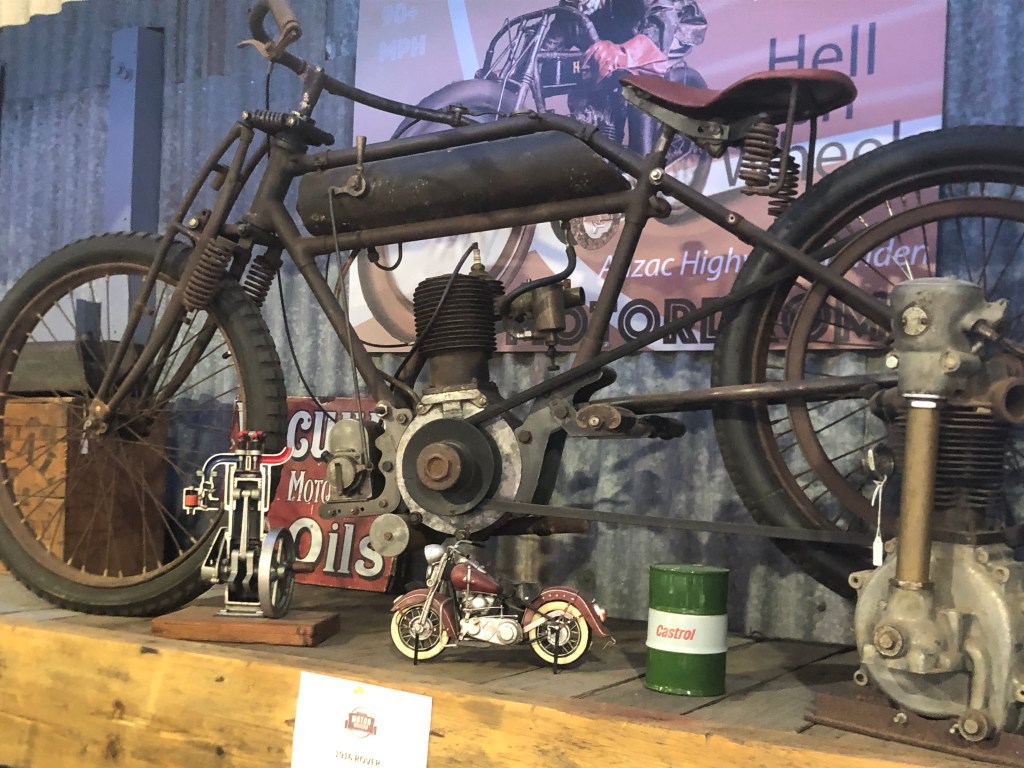
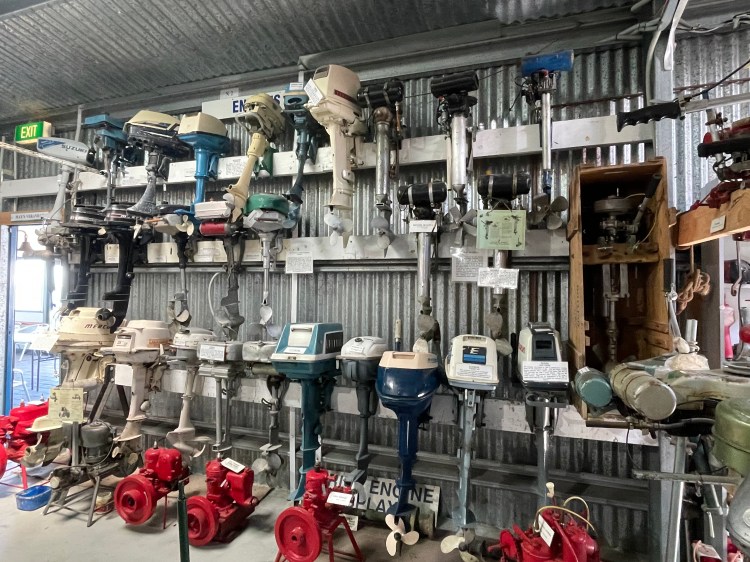
    Nick had sussed out the Portland Powerhouse Motor and Car Museum, so I joined him looking at yet more old motors and stuff. Here’s his take on this small museum:

    Portland just happened to have a motor museum which was unexpected. While I went to the museum and Jen went to History House. As I entered the place I saw an old boy sitting behind the counter who didn’t seem to be alive but who did stir after I spoke to him. I said I would like to see the museum and he said “Concession or adult”? “Concession” I said. “Four dollars then” said he. I said “Can I use the card”? “No it don’t work”.  “Ok I will come back later then”. He mumbled something back and I went to find Jen and some cash. She had finished doing her stuff so we went back to the museum together. Exactly the same thing happened, same questions, obviously short term memory loss, I thought that I might have to check his pulse at one stage. 

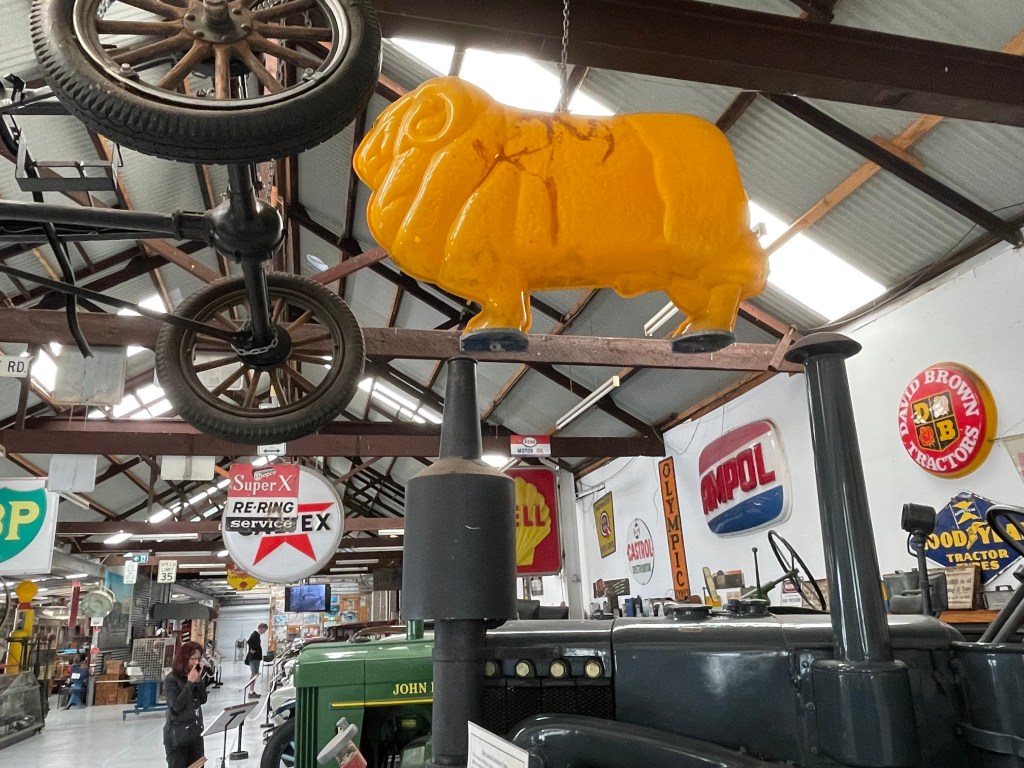
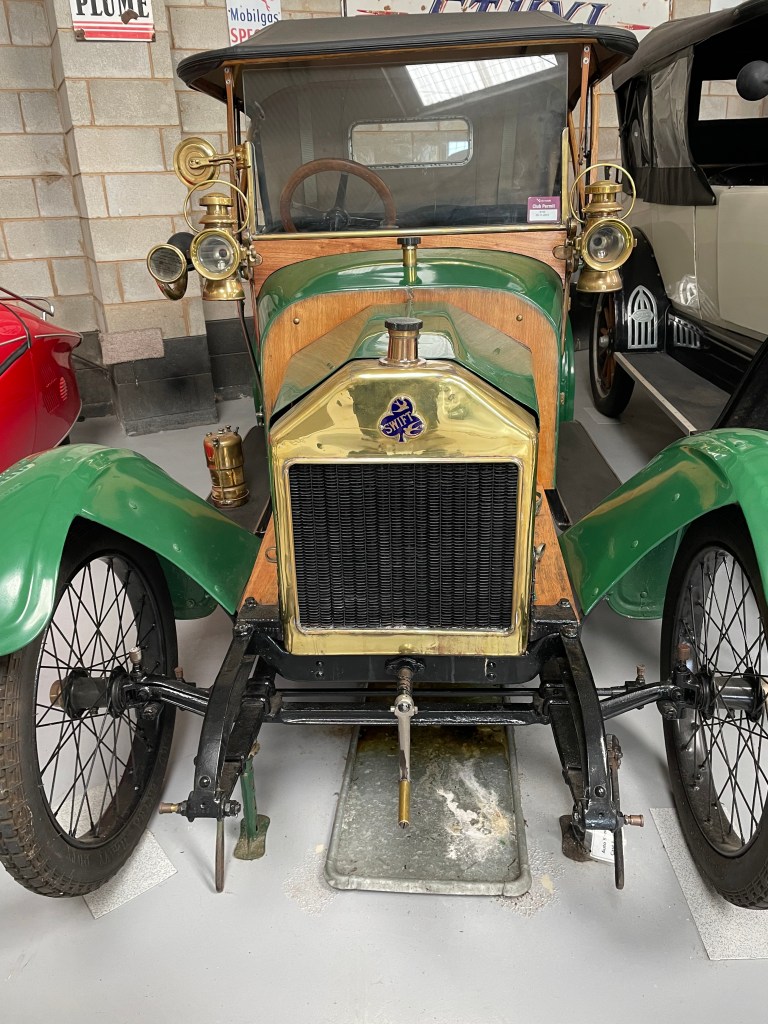
    The museum was good with lots of old service station illuminated signs, tool boards, tractors etc. The oldest there was a 1914 Swift Cycle Car that is obviously an ancient relative of our Swift pop up van. 

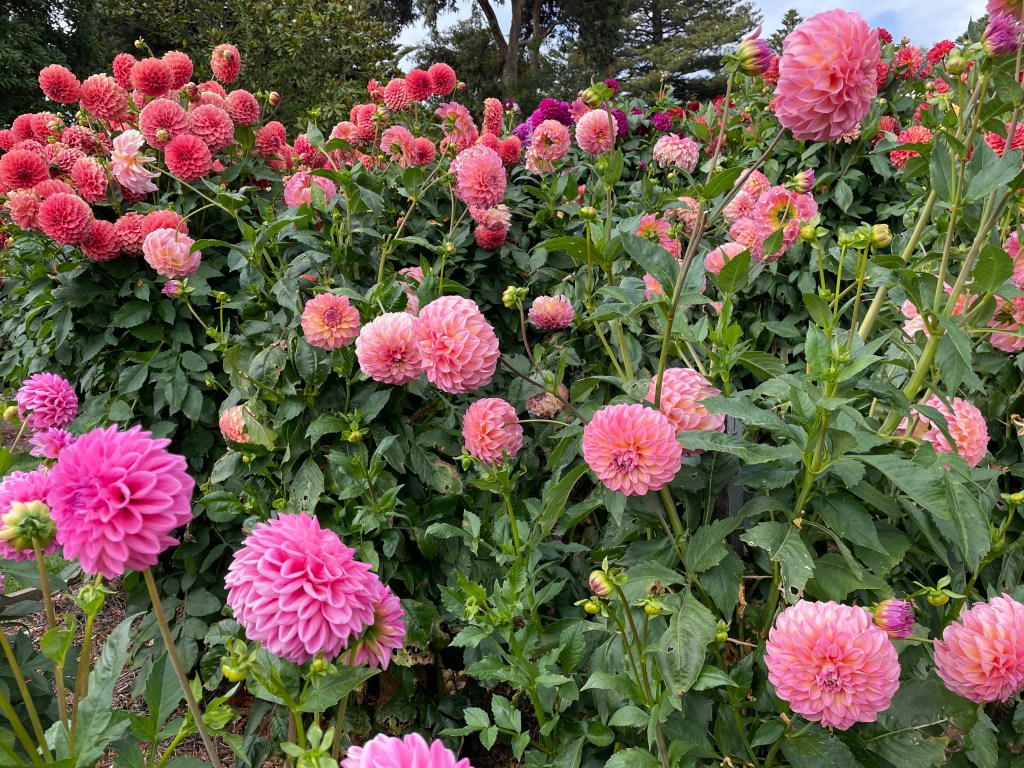
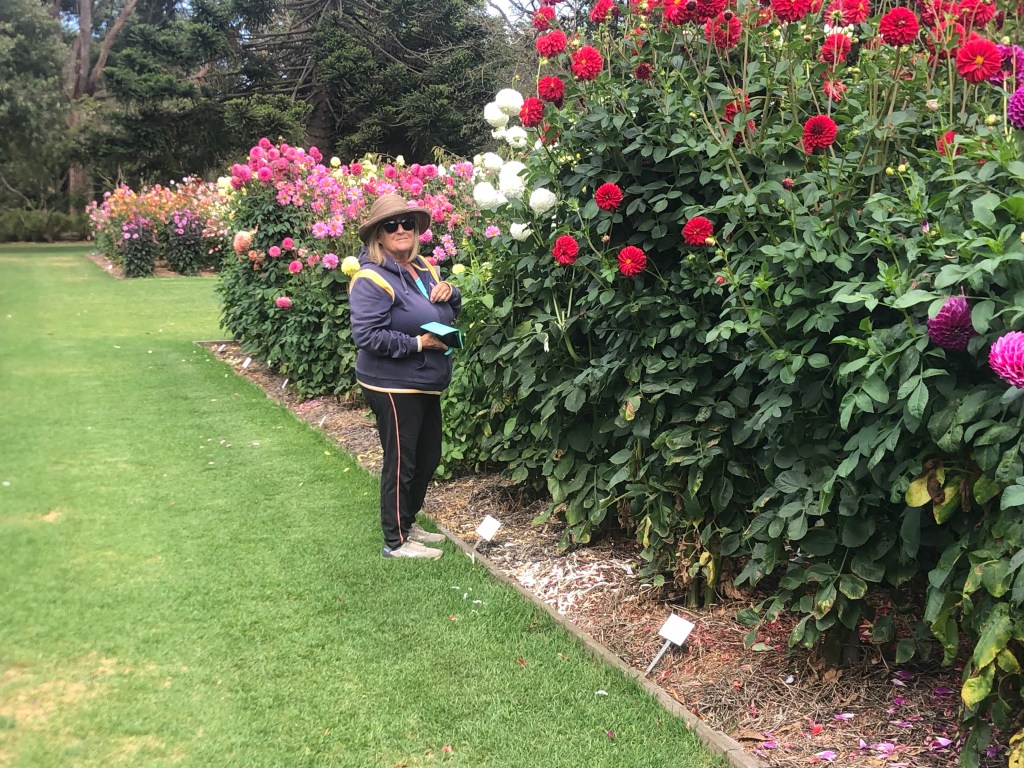
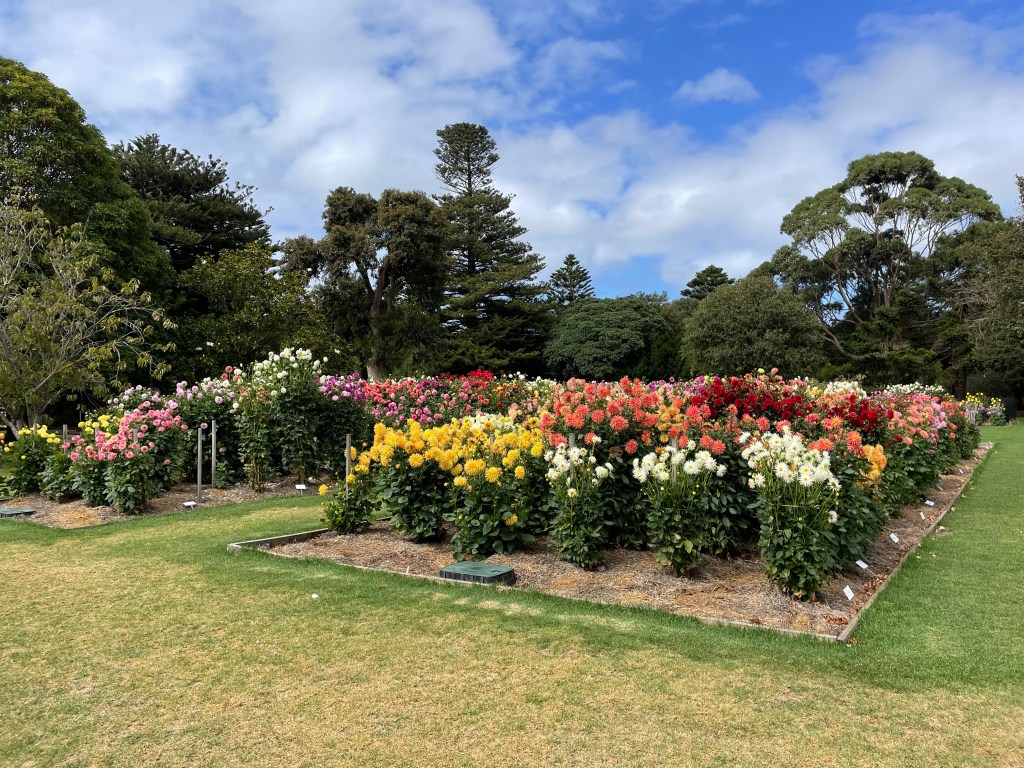
    Jen: I think I’ve done enough car museums to last me forever. So when I heard there was the annual dahlia display at the Botanic Gardens, I knew it was a must see – fresh air, colourful, alive, all the things a museum is not. 

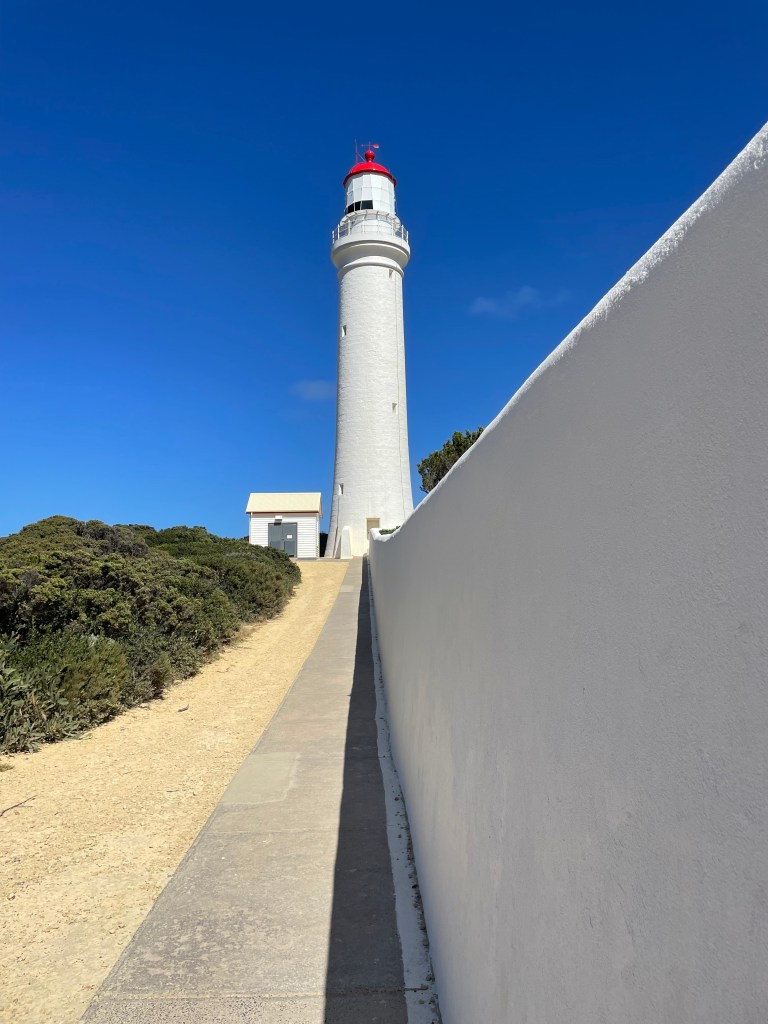
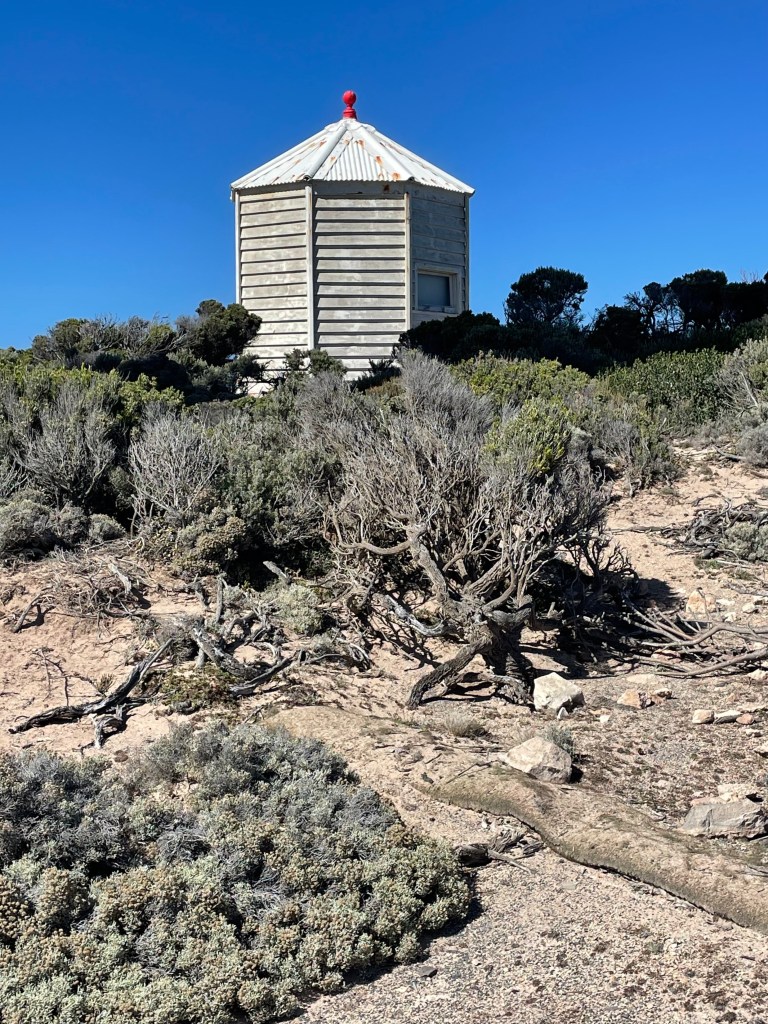
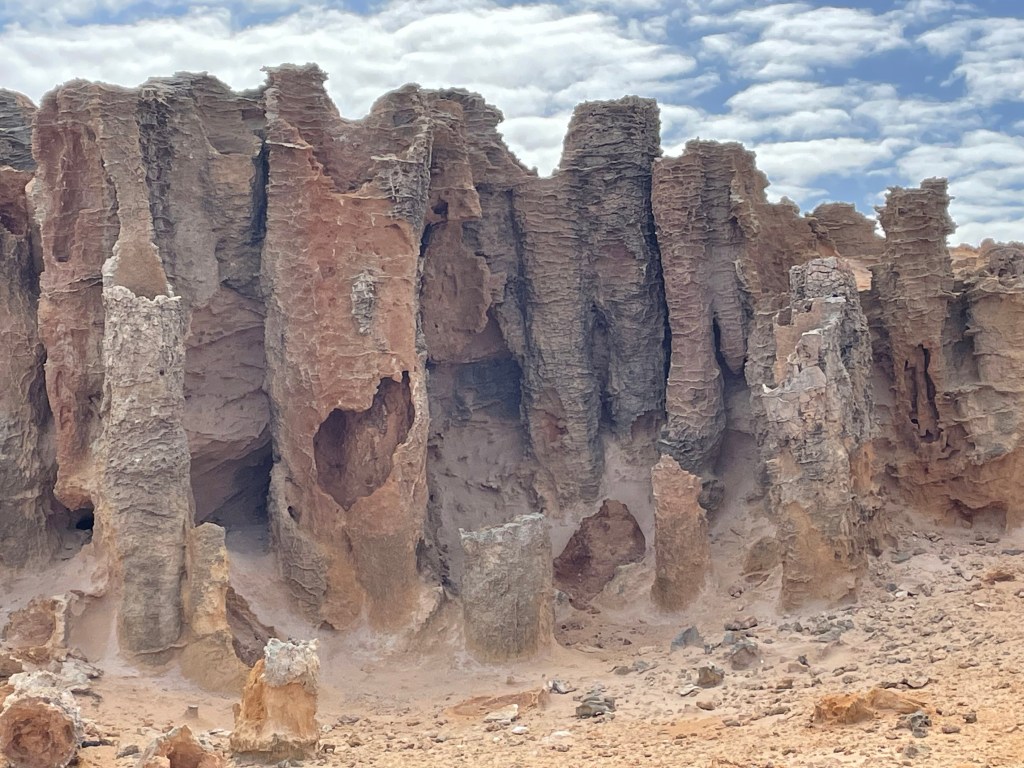
    We watched fishermen on the wharf, ships in dock loading wood chips (pine of course), and found a great seafood outlet. We climbed the war memorial tower for a long view across the town. On our way to Cape Bridgewater and Cape Nelson lighthouse we did a couple of coastal walks. One had a landscape of what was called a Petrified Forest. They are hollow tubes of limestone eroded by millions of years of rainfall, the sand gathers in the pan forming cement which creates hard trunk shaped pipes. Maybe the Pinnacles in WA formed this way?

    There are three large wind farms around Portland, we happened upon a maintenance man hanging from the end of one of the propellors. Not my idea of fun.

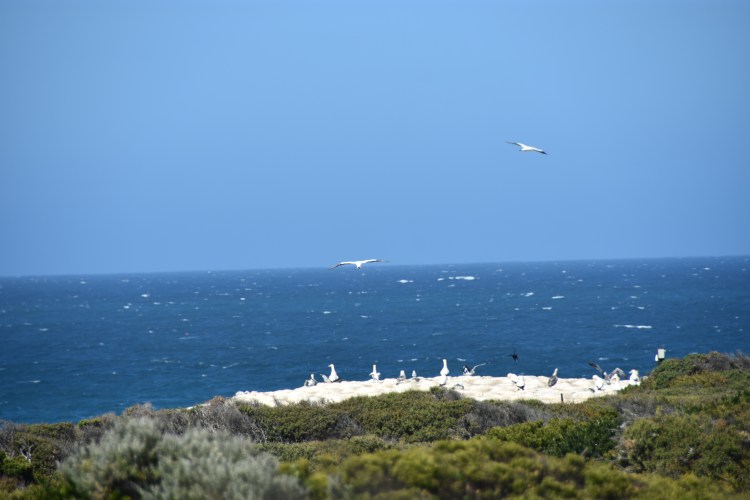
    Portland has the only mainland based Gannet colony in Australia, where up to 7000 breeding pairs sit on this tiny piece of coast until the babies fledge. We saw just a few who still remained at the end of their season. A wire fence kept us quite a distance from the birds, for good reason.

    Gannet colony

    Warrnambool.

    Port Fairy

    Port Fairy is a quaint fishing village on the coast that we stopped at on the way to Warrnambool. It was Saturday morning as we passed through, the town was very busy, the market was on. We saw a lady buying three lobsters at $90 per kg, from the fisherman. One day I’d like to go to the Folk Festival, but judging by the people and shops we saw, it will be a very expensive event.

    We carried on to Warrnambool and found our booked van site was right beside a large family group of Chinese people, we suspect this might have been their first camping experience. We tolerated their loud voices, loud children and wandering through our campsite for most of the day, but by 10.00pm when they sat in a circle of maybe 15 adults chatting noisily, we had to read them the riot act…well in fact we calmly told them time for bed. They never made another sound and quietly did as we asked. I can’t imagine some other campers we’ve met on this journey being so obliging. 

    The bike paths along the foreshore were a good place to begin exploring Warrnambool. Lots of people, dogs, kids on scooters to swerve around! A bit nerve wracking for me, who still feels a little vulnerable after my fall weeks ago.

    Foreshore cafe Warrnambool

    We drove out to Tower Hill Nature Reserve and did a 2km wander looking for wildlife. We came across two Americans who were so thrilled to see a pair of galahs high in a tree, they couldn’t stop talking about the “gaaalaaaahs”. It made me realise how blasé we are about our beautiful birds, especially galahs which we often see in large screeching flocks. They wanted to see a koala, and bingo, there was one in the fork of a tree, snoozing of course. We got back to the carpark and found there were 3 koalas in different trees there, all being adored by International visitors.

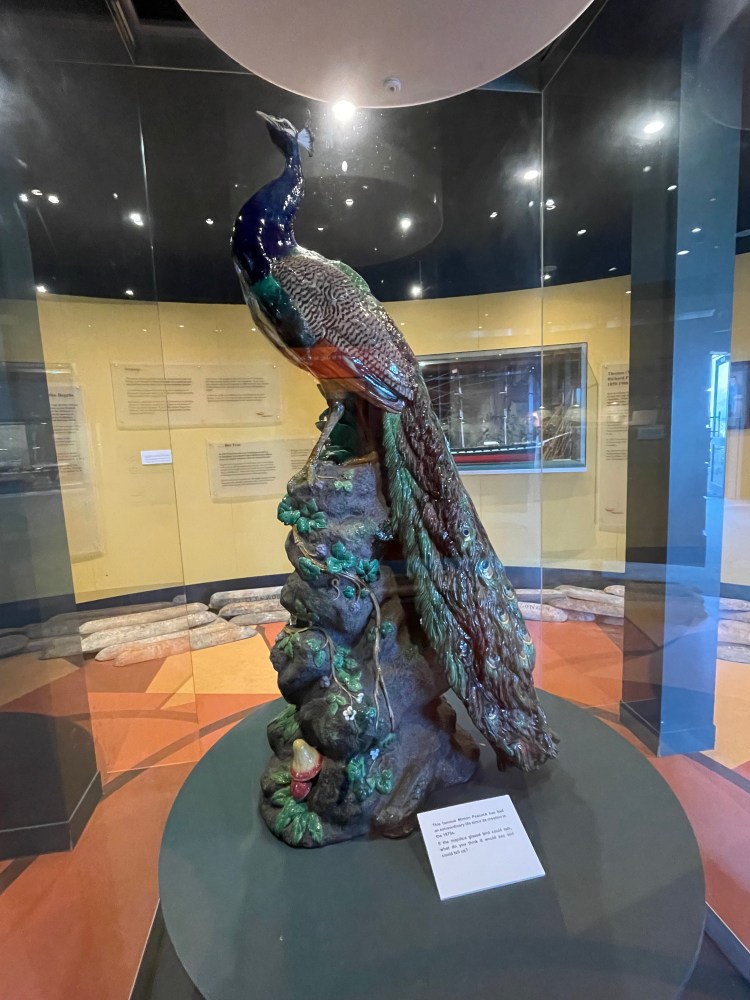
    Flagstaff Hill is an extensive museum and reconstructed village from the pioneering days. Inside the museum, there was a lot of information about Loch Ard Gorge and the shipwreck where just 2 people survived. What we didn’t know was that there was a statue of a peacock, about 2 metres tall, made by Minton Majolica in 1875, which was on that shipwreck, obviously well packaged for the journey. It was destined for the International Exposition in Melbourne in 1880. It was salvaged off the beach, but the story of it’s being handed from person to person over many years, being put up for auction, and sitting in an antiques shop, before being purchased by Flagstaff Hill in 1975, is fascinating and can be found on the net.

    The Minton ceramic peacock

    Being suitably impressed by all we saw and did in Warrnambool, we were ready for the Great Ocean Road.

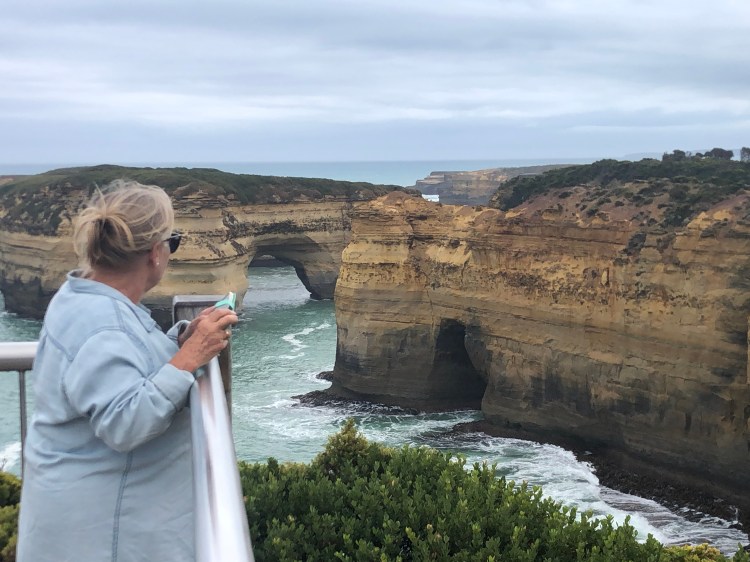
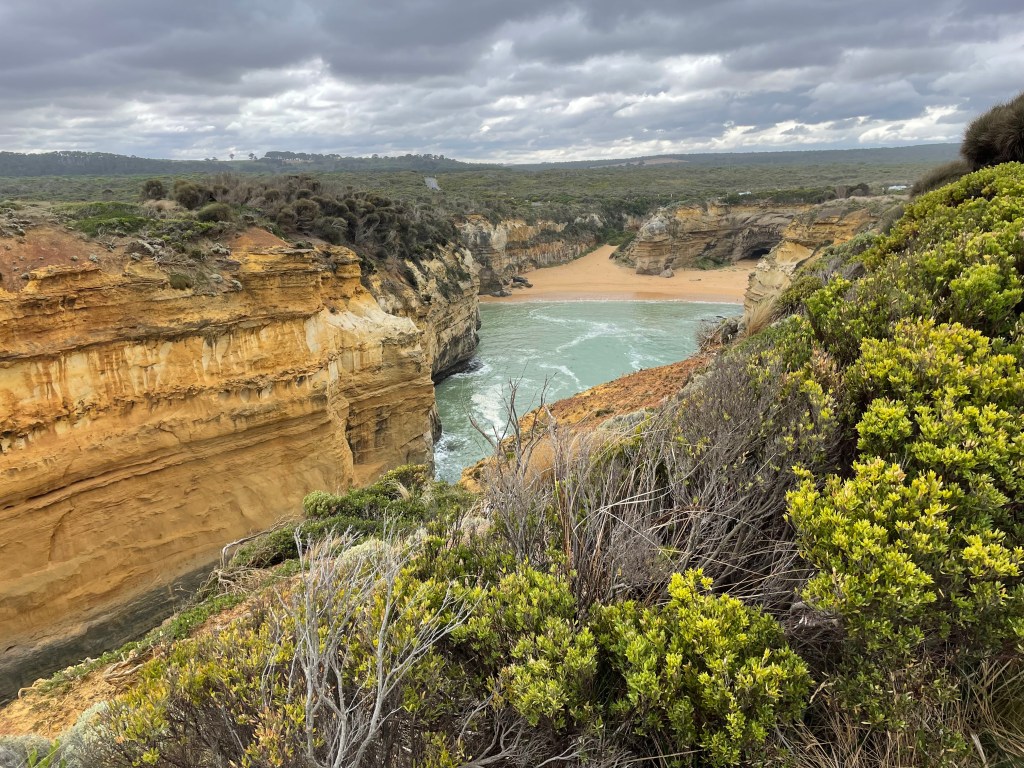
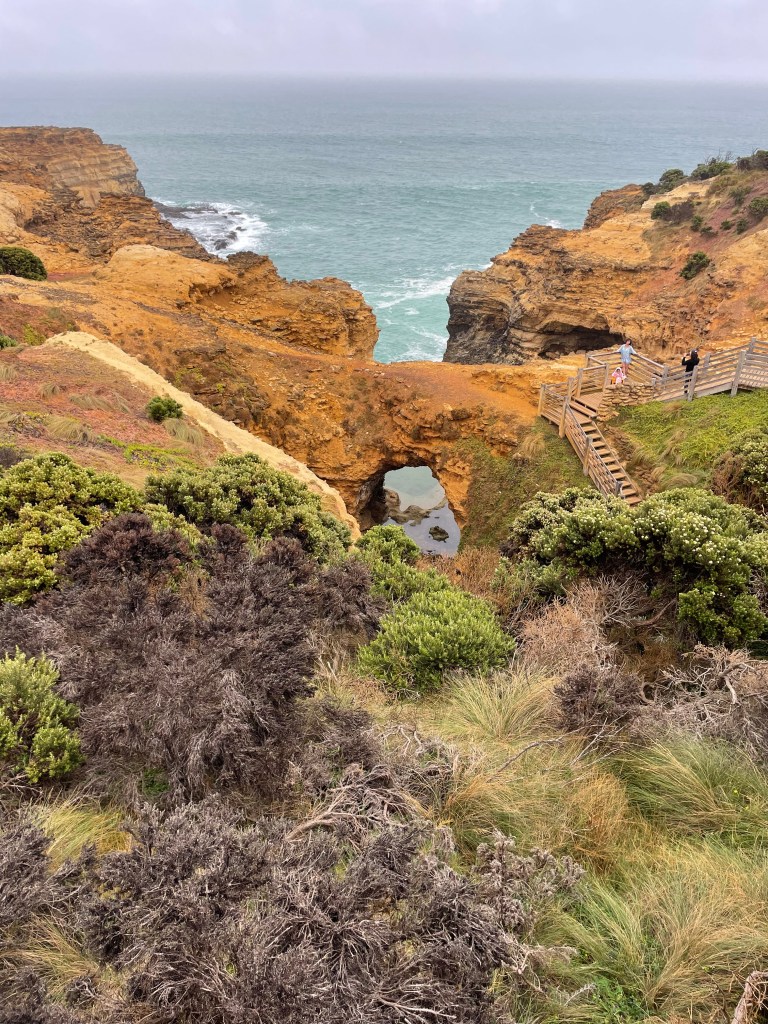
    Over 10 years or so in the 1990’s, we worked taking tours in our 1950’s Jaguars along this road. It was lovely to come back again to see how it was coping with hundreds of tourists daily. Pretty well actually. The weather as is typical on this southern coast of Australia, had become chilly and damp.

    Marengo (Apollo Bay)

    Marengo is a couple of kms from Apollo Bay and our camp was nicely tucked behind a hedge out of the wind. It rained heavily through the night, something we’d barely experienced in 11 months away.

    Apollo Bay looks like it will be the next Lorne. Shops are looking trendy, the foreshore is tastefully adorned with sculptures and the once tiny village has now become a town. 

    Wye River.

    This little village which has just a pub and a general store is also attracting wealthy home-owners, or more accurately, landlords. There are a few hundred houses doted around the very steep hillside, overlooking the pristine surf beach at Wye River. A bushfire destroyed one side of the hills and all the houses there, 7 years ago. Now there are massive new steel-on-steel houses replacing them. They are forbidden to even have redgum sleepers to retain their garden beds.

    My childhood was spent at Wye River every school holiday until I was a teenager. My grandparents built one of the first houses in Wye..in 1934..it still stands behind the pub, but my cousin’s family inherited it. 

    The pub in town has had several iterations since the old dark timber version I remember. It did burn down at one time. There used to be a row of massive cypress pines along the roadside. They were cut down and now the tables in the pub are cypress pine beauties from those trees. 

    Needless to say, to finish our trip here for me is completing a circle of adventures. Memories of the past are very comforting especially if the present isn’t too changed, as with Wye. 

    Next we head into Melbourne for a month of family and friends catching up. I will call this the last post! I have really enjoyed writing this diary for my own record and have loved sharing it with everyone. What I will do with the blogs is unknown at this point.

    Nick: I have loved every minute of this trip and even though you only see me writing about cars and fixing the Land Rover, I have been in the background supporting the editor, checking spelling and grammar, doing the dishes etc. I want to thank Jen immensely for putting up with me in close quarters for 12 months, watching me get bored when there is not a job to do on the car, getting in the way in our tiny van, I think that we are still friends! I have read so many books that I vow to not read any books in the near future except for repair manuals. The car has been magnificent even though we did have some issues but let’s not forget it is 26 years old and with the 33,000 kms on the clock this trip, it now has 433,000kms. It will need a rebuild of the suspension when we get back as it has taken a decent hammering on our way around. Many people have asked ‘What is the best thing about the trip? I have to say it has been spending time with Jen and sharing our experiences together.

    Jen: After reading what Nick has written, just before I publish this, I’d better respond. I am so grateful that he was such an expert with all aspects of fixing our car, our caravan and any other vehicles within cooee that needed fixing. We would have been carted home on a tow truck very early in the trip if he had not been capable of keeping the car progressing forward. I think back to Cape York Peninsula when the alternator cracked it and we drove for a thousand kms with the solar panels strapped to the roof with leads into the motor. Such an achievement!

    I have lovely fond memories of being with our fellow travellers on the road and think of those times as being among the best. Staying with family in WA was also a great way to know a new place and to have heartfelt connections with them.

    Surviving in a tiny caravan compared to the big vans we saw has amazed me. I am over walking 100 metres to the toilet at 6.00am, and also showers shared by the masses.

    My highlights: very hard to narrow down as there are many. The Pilbara is visually stunning especially Hammersly Gorge. Reaching Cape York tip was a great achievement, and going to Thursday Island was an unexpected treat. The WA coast from Cape Leveque down to Perth is amazing, but Francois Peron NP at Shark Bay was pretty special. I need to return there someday to Ningaloo to swim with whale sharks.

    But now I’m ready for home. Nick is desperate for some garage time and I miss my garden and friends. Although the trip has enriched our relationship enormously, we need some space, some time to be creative, and time to pick up the threads of our old life and transform it with our new perspectives.

    So cheers, love and blessings 

    Jen & Nick & Swifty.
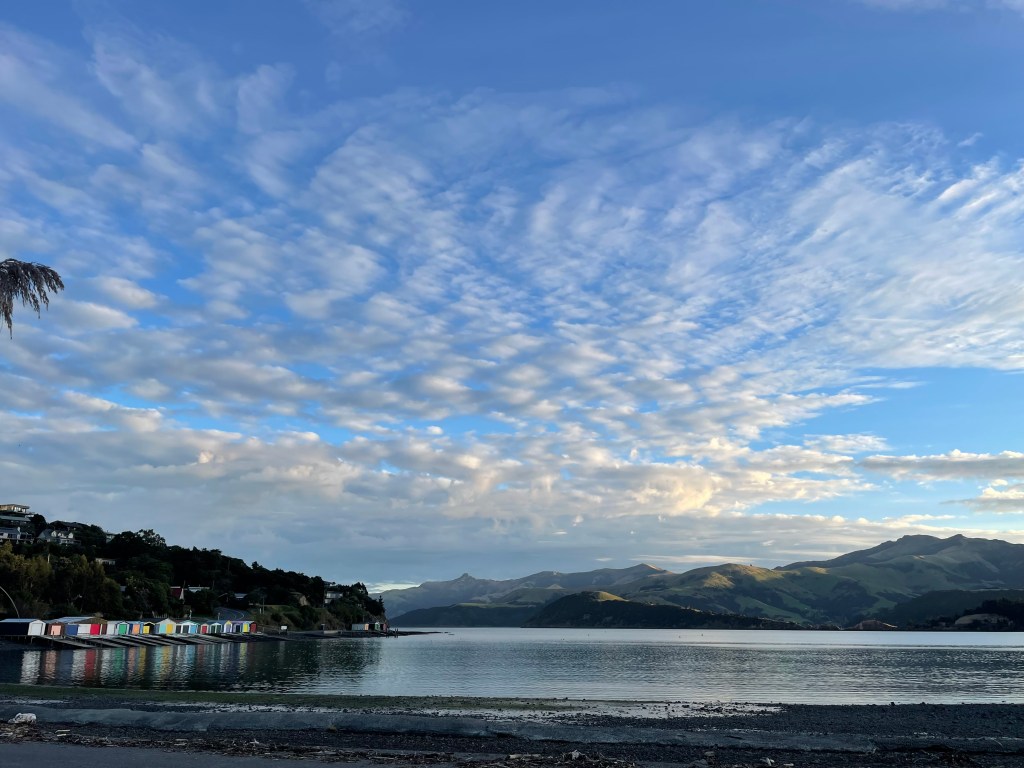
  • Adelaide, Fleurieu Peninsula.

    Posted March 24th 2024

    This is certainly a blog for boys and girls who like classic cars. In between car museum reports, there are some lovely discoveries, highlights and delights. 

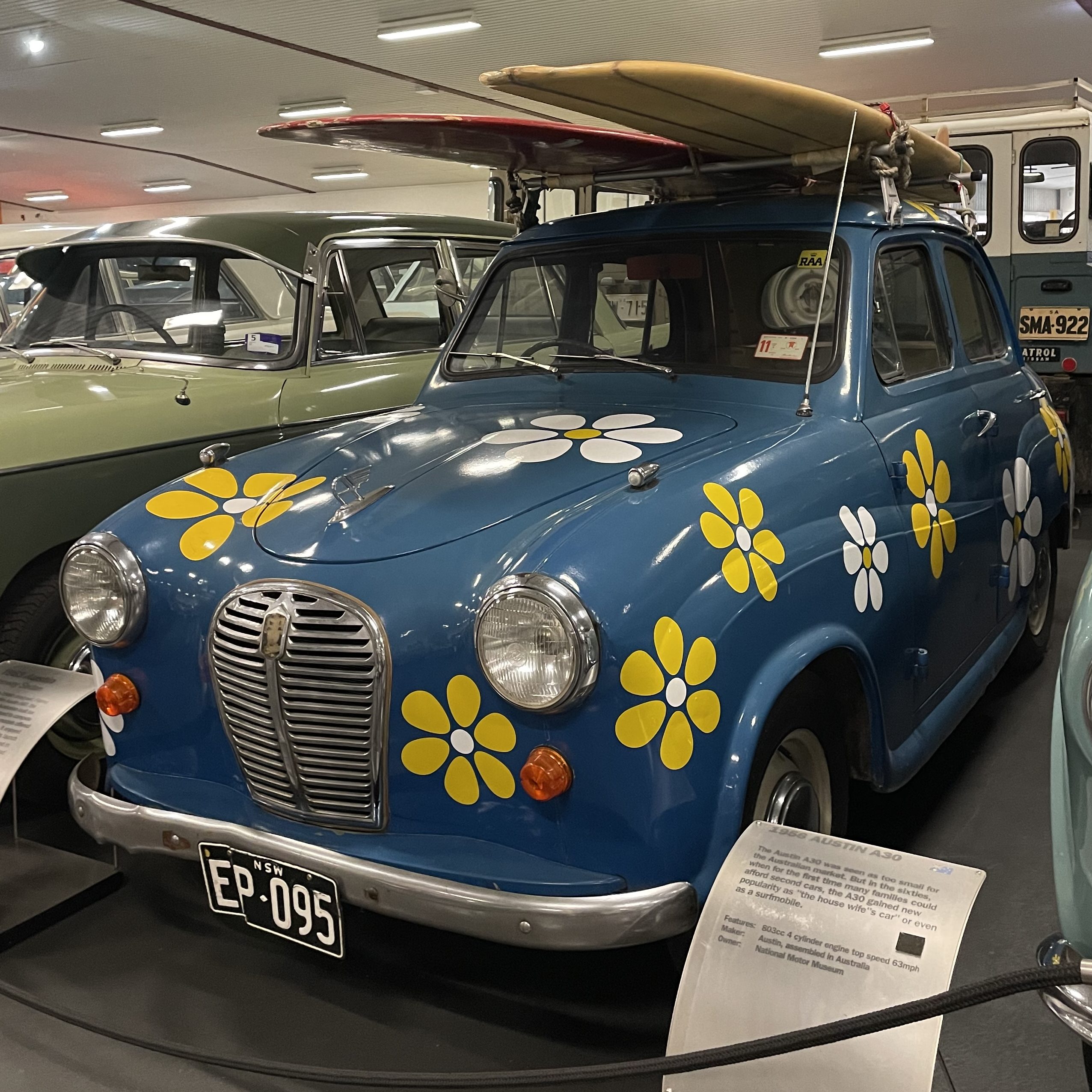
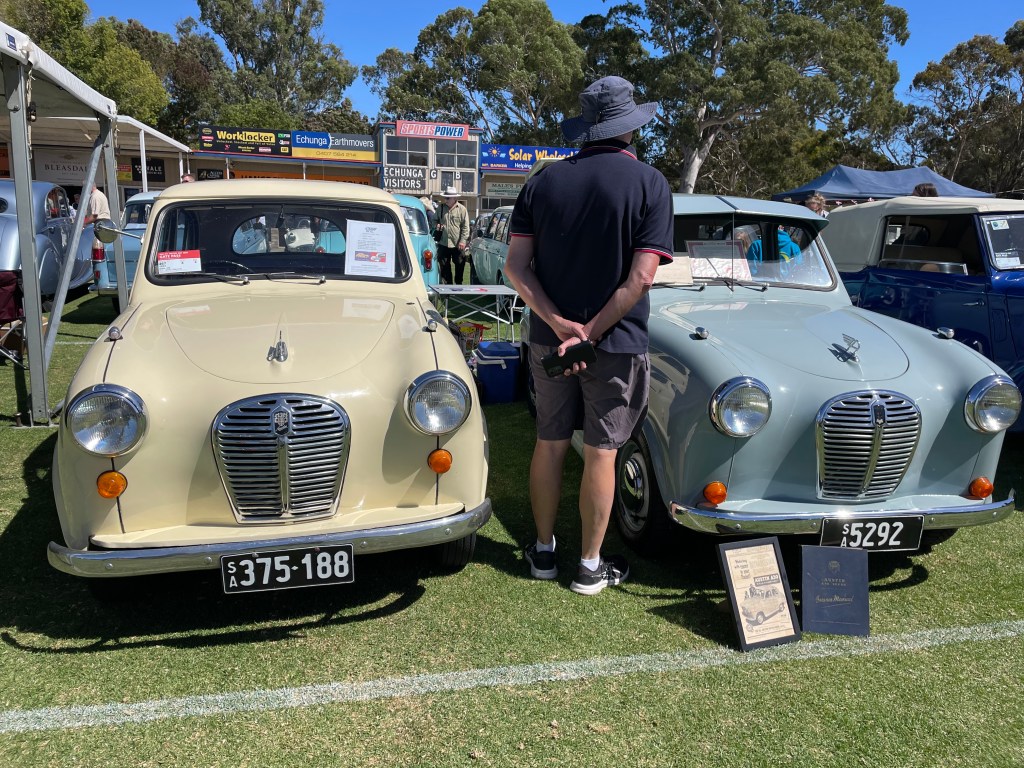
    Austin A30

    We chose to camp at Gawler due to its proximity to Adelaide. I wonder if we are a bit desensitised to traffic, people etc and prefer the quiet, noise free, light free, clean air of the “country”. On our entire journey, we’ve visited just two capital cities that were new to us. The other city was Darwin. Both of us have driven around Adelaide a few times but never got to the heart centre to see what made it tick. 

    So on our first day in Gawler, we decided to cycle the paths, before breakfast, around some lovely bushland near our van park, near the Para river. Gawler wasn’t too bad, but parched dry like all of SA, only the inner gardens near the town were afforded a bit of water to keep them green. 

    Gawler campsite

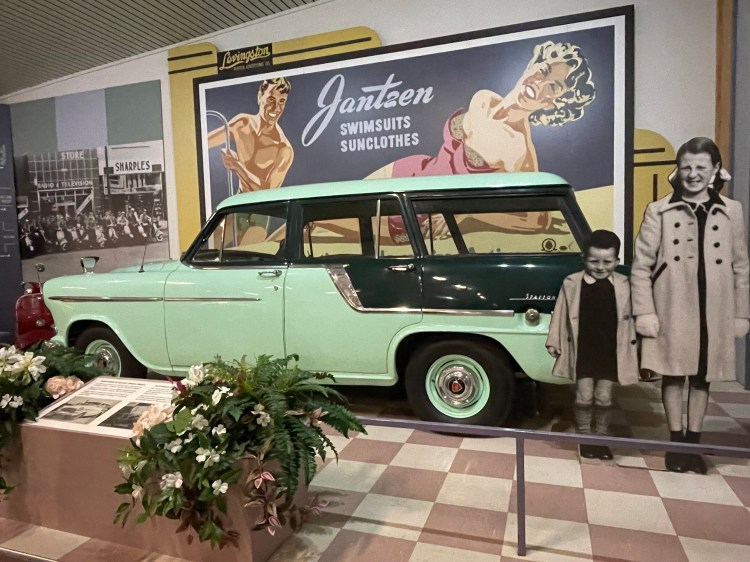
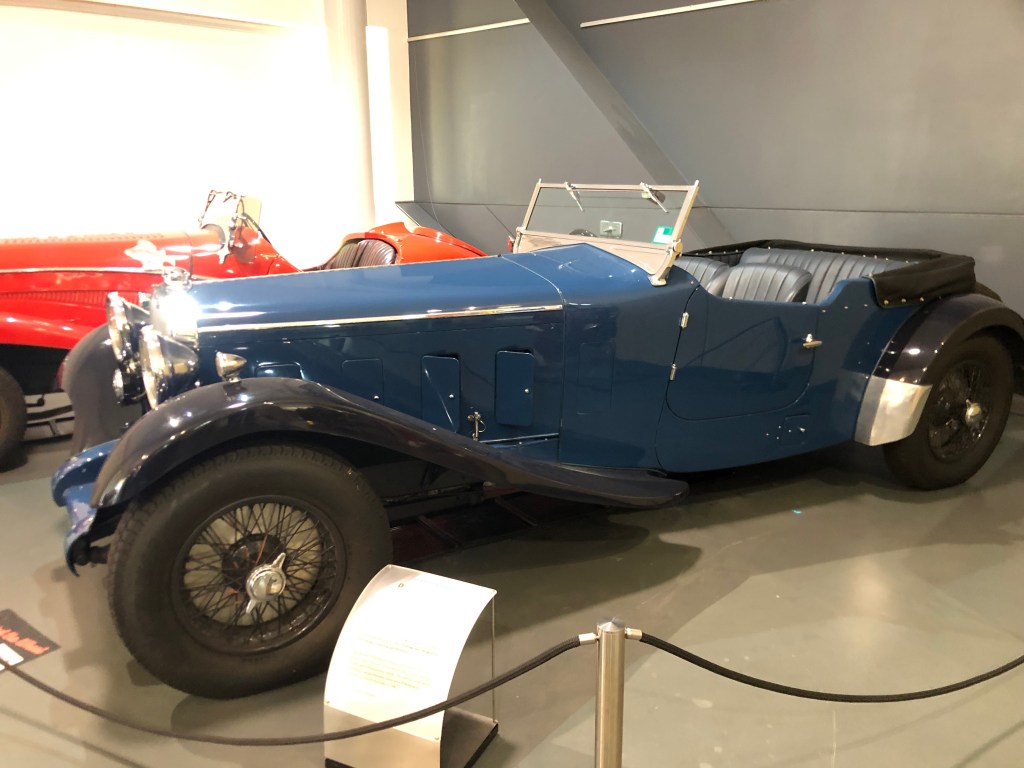
    We took a trip to Birdswood Motor Museum, a planned destination we’d made months ago. And what a treat it was, even I was thoroughly impressed. The displays were excellent, it provided a feast of memories of times past, motoring with my parents, with boyfriends and even a mini like my first car.

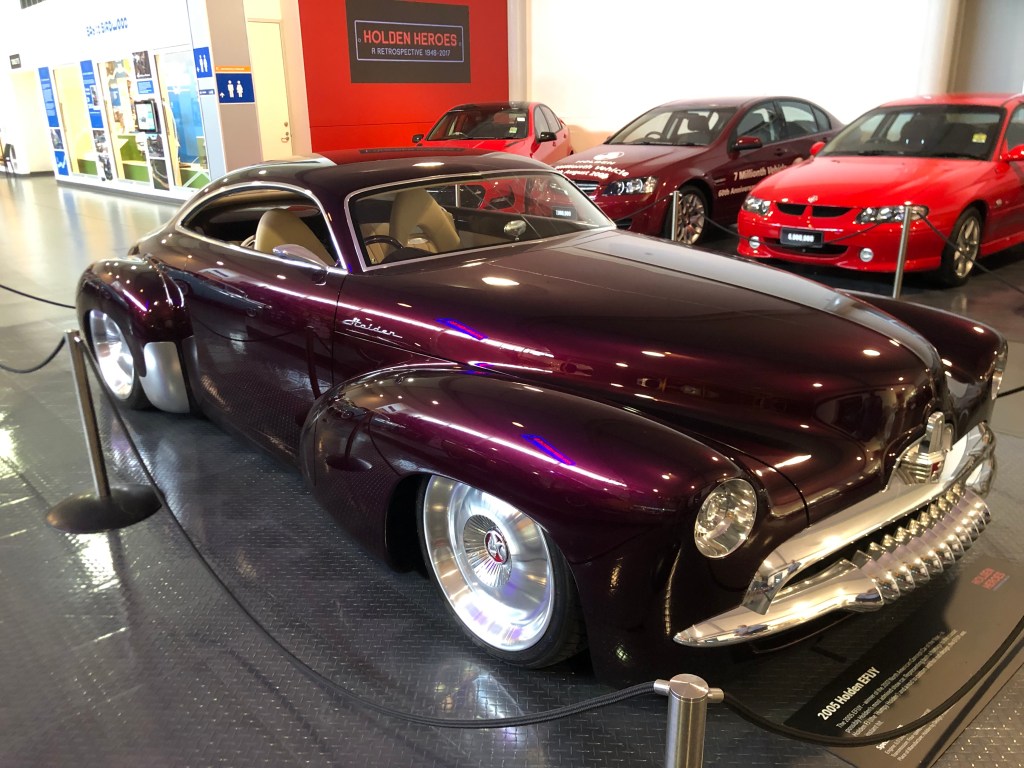
    My dad changed cars every two years, so the full gamut of Holdens I remember as a kid were there. I used to date fellas in the MG car club, some of those lovely cars were there, and of course being with Nick, there were always old cars he’s either restored or driven or ridden in as a child that he waxed lyrical about. 

    Could be a picture of me, my little brother and dad’s Holden. Maybe mum in the swimsuit.

    Nick: Birdswood is a very nice place to visit and being owned by the State it is well funded and maintained. Holden have donated part of their production line to the museum, so if you look up you can see parts of Holdens being carried along to the next assembly stage, all now static but you get the idea.

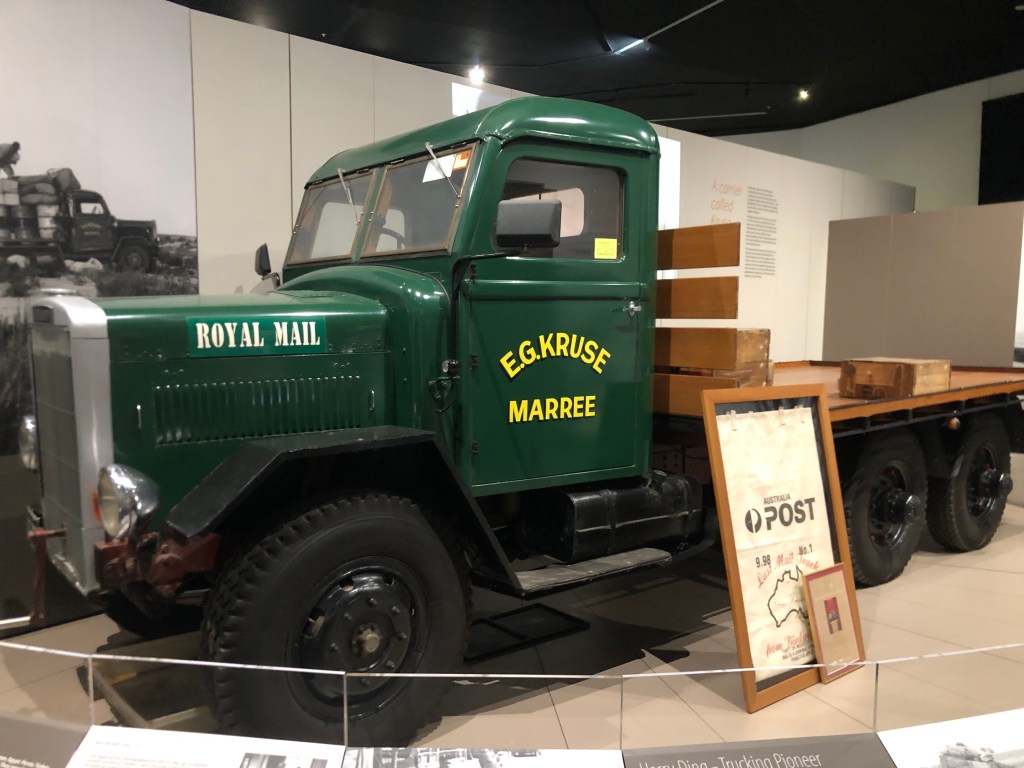
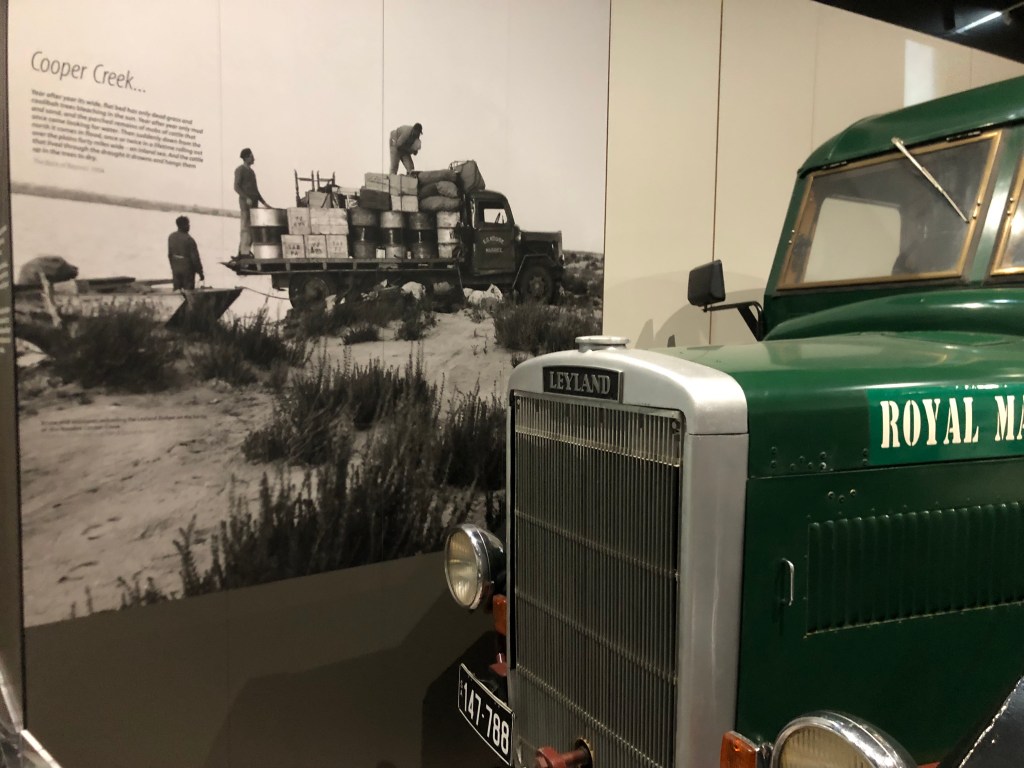
    Of particular interest was Tom Kruse’s truck. Tom was the Birdsville mailman for many years running from Maree to Birdsville over very harsh country. In the late 90’s he retrieved his truck from a station outback and helped with the restoration and after one last drive to Birdsville he donated it to the museum where it takes pride of place along with much film footage of his exploits.

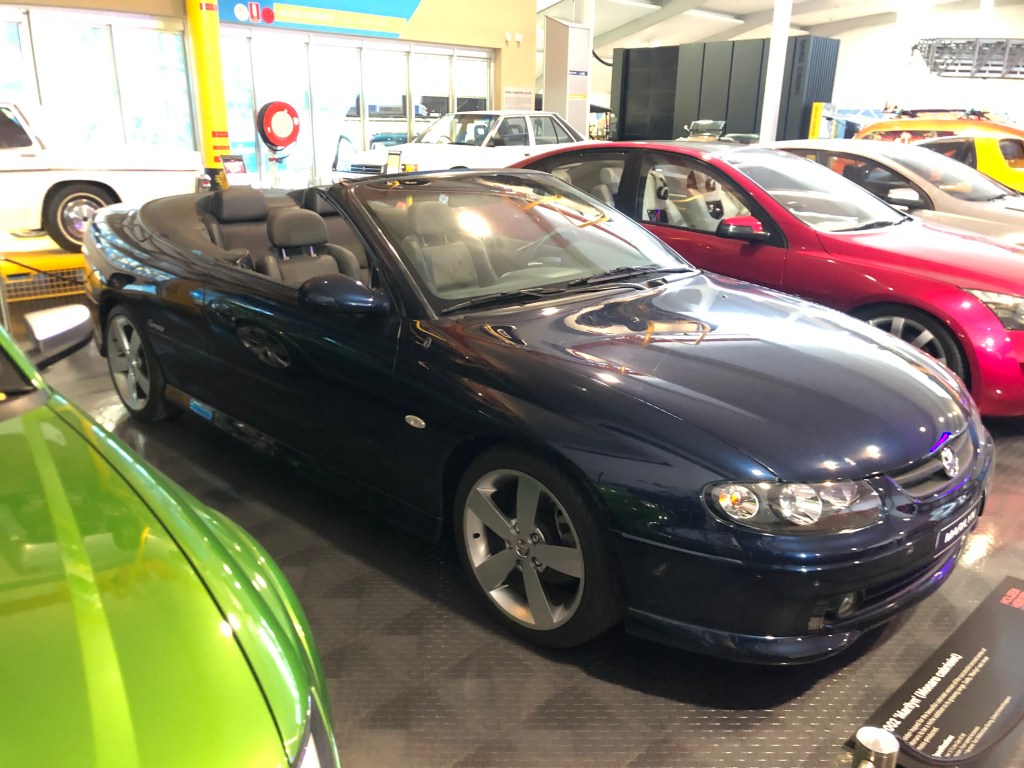
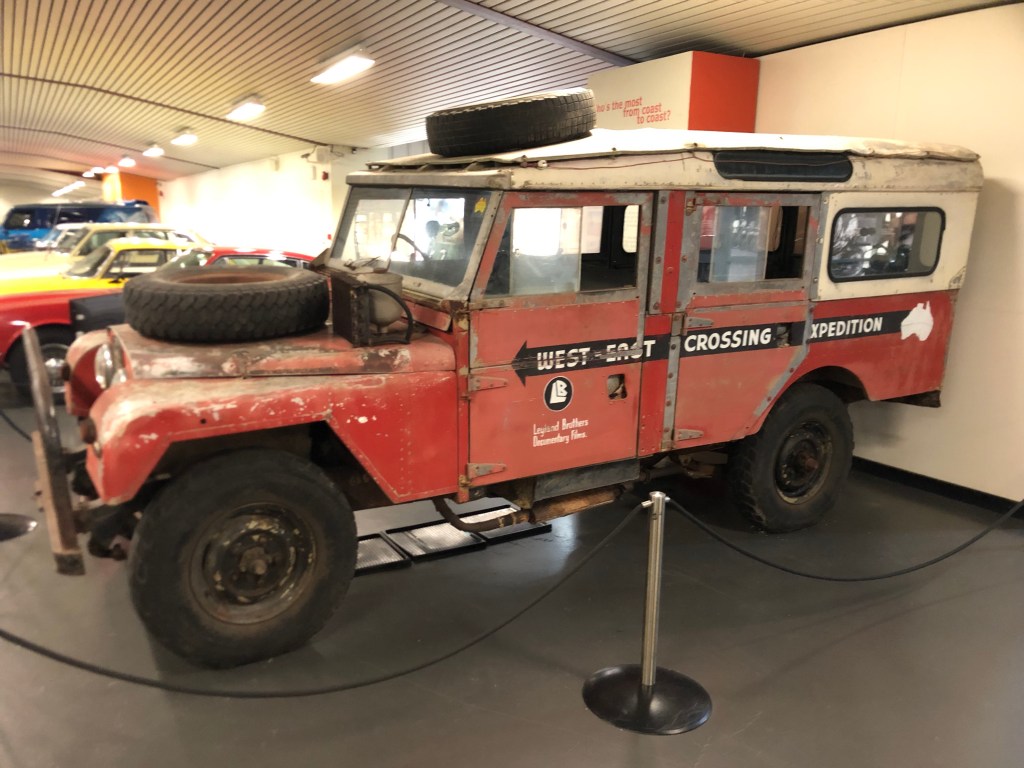
    Holden donated or loaned many of their concept cars to the museum as well, cars that you will never see on the road. There is a convertible Commodore called ‘Marilyn’ and a beautiful retro FJ concept made in the factory. There are many ordinary cars in the museum that you don’t see on the road anymore much the same as the Haynes museum in the UK. The Leyland Brothers Series 3 Station Wagon is there that they crossed Oz from west to east in. A very good collection of Motorbikes as well.

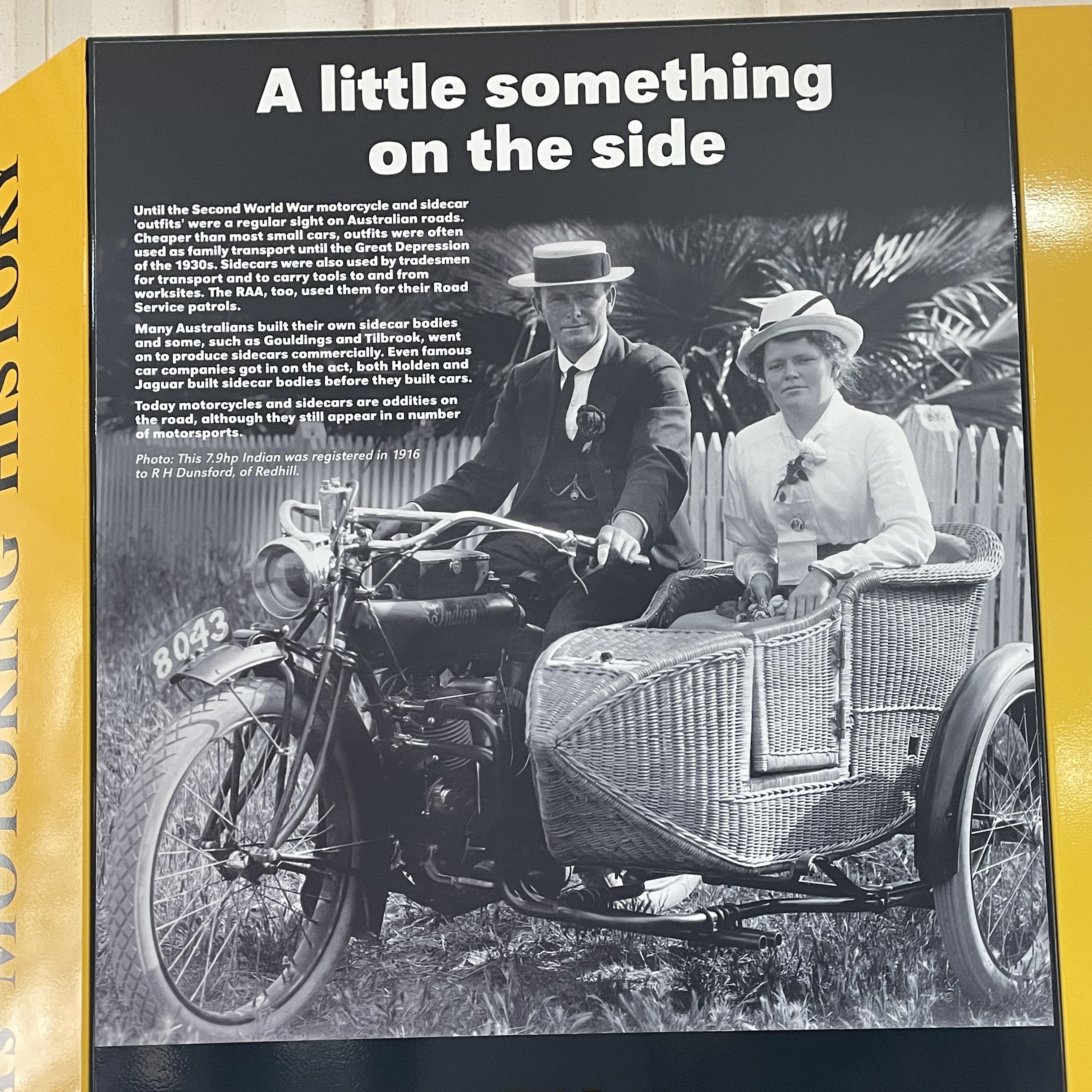
    Advertising back in the day. Is it the basket sidecar or the woman they mean?

    The next day we drove to Adelaide to get a feel for the city. We went out towards the coast and passed through the suburb of Port Adelaide. Knowing the footy team based here, we expected a pretty rough town, but it was beautiful, with a long street of heritage buildings, cafes and boutique stores, reminded us of Port Melbourne. We continued down the coast aiming for Glenelg, only because that’s the town you often hear people talk about. It certainly was worth the visit for a nice walk, lunch and a beer in the pub.

    Each of Adelaide’s coastal suburbs that we stopped at were charming and trendy and probably expensive to buy into. Later that afternoon we met up with Alistair & Loren and kiddies and Grandad John, a chance for the blokes to talk Land Rovers. We had “stored” Alistair’s 1973 Landy on our nature strip at Lennox for at least 3 years, it was nice to see it garaged and used weekly by Alistair.

    Next day we chose to take the local train to Adelaide for the day. Train travel is a great way to experience the locals as well as the scenery. Passing through Elizabeth which was formerly the home of the Holden factory, there was a sense of going through Geelong, former home of the Ford factory. 

    Once we’d had the mandatory coffee in Rundle Place, we caught the free bus looping around the city. North Adelaide was like driving through Toorak, such amazingly beautiful heritage mansions, streets lined with deciduous trees, cafes heaving with trendy people and dogs.

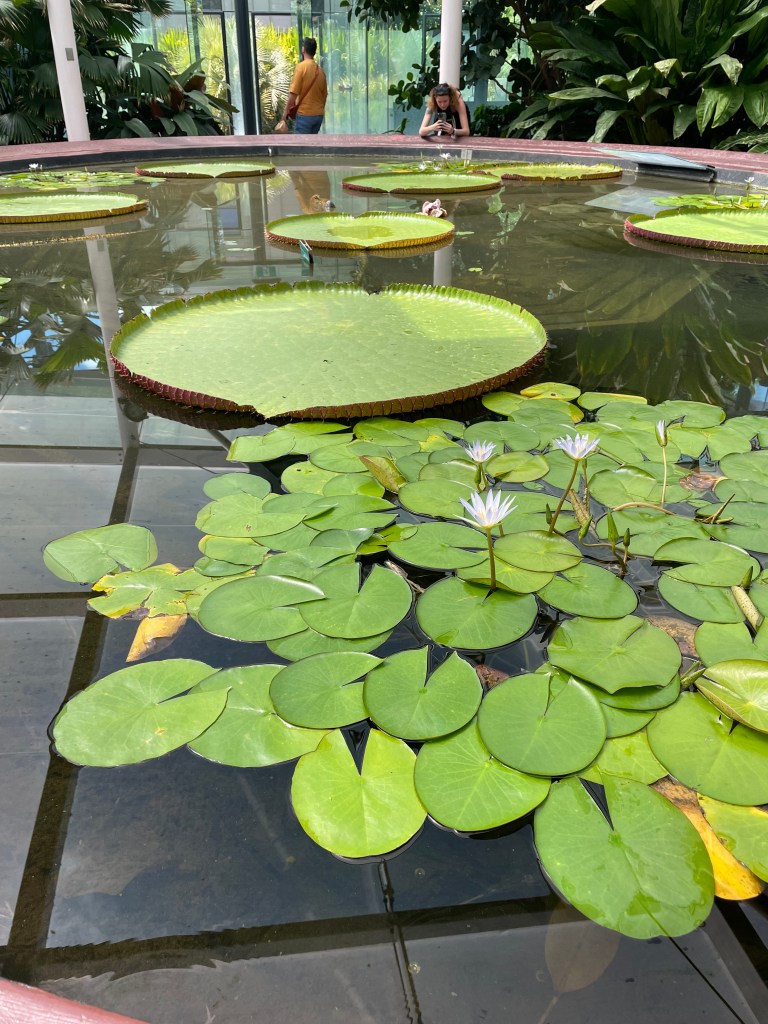
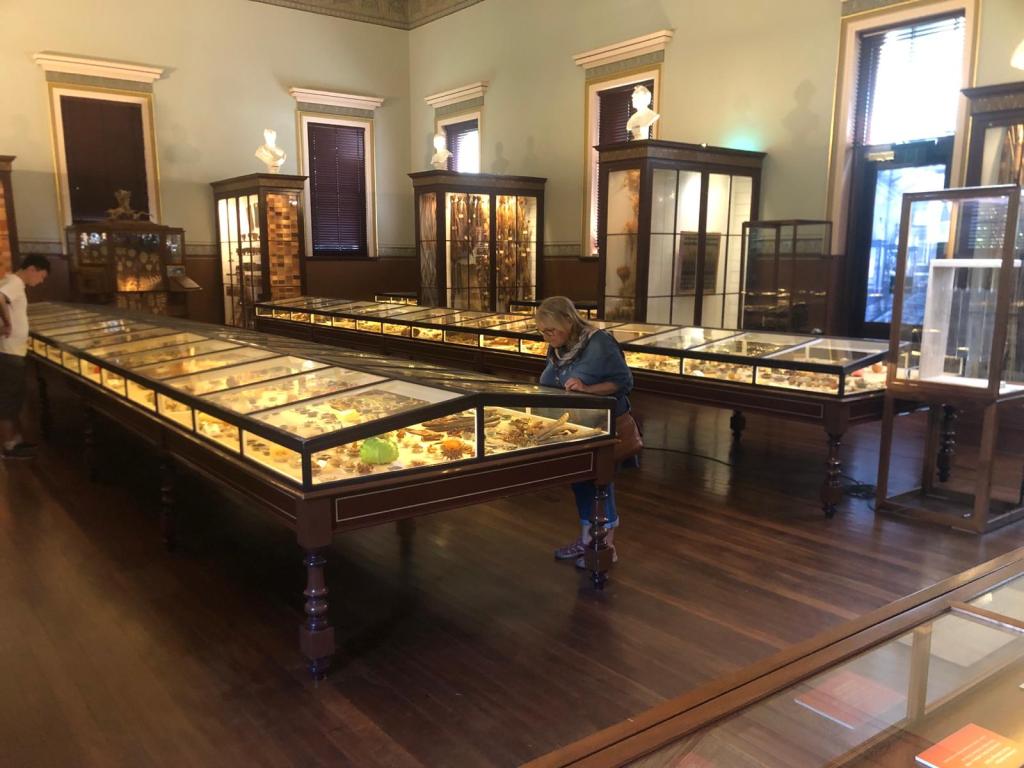
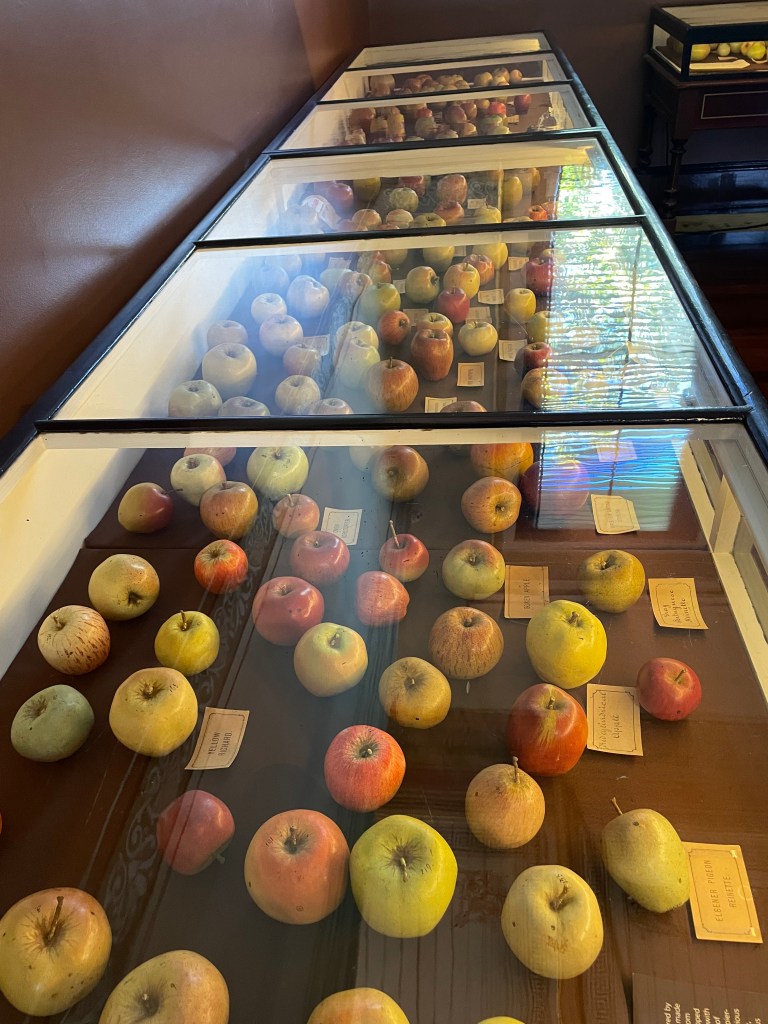
    We eventually got off the bus at the Botanic Gardens. We always free-range on a day like this without any plans, but I was wanting to go into a museum or gallery of some kind to get a feel for Adelaide. Nick was a bit reluctant I could tell. Low and behold, there in the middle of the Botanic gardens was the Museum of Economic Botany. Walking in the door was a wow moment for both of us. The building was completed in 1881 and is the last museum of its kind in the world. I thought the large glass Palm House was fabulous, as was the Amazon waterlily Pavilion, but this Botany museum was on another level. I’ll include some pictures which don’t do it justice… you need to smell the musty cavernous room, feel the polished timbers and gaze into the collections to truely understand this place. Eventually the volunteers asked us to leave, they had no replacement volunteers for the afternoon session so had to close.

    I certainly have a better understanding of Adelaide now, but feel a longer stay is in order sometime in the future.

    Nick felt the need to change the donut under our Landy on our last evening in Gawler. Seems we almost shattered this one, better changed now than on the road in the middle of nowhere.

    Alistair’s Landy on left.
    John, Alistair and Nick

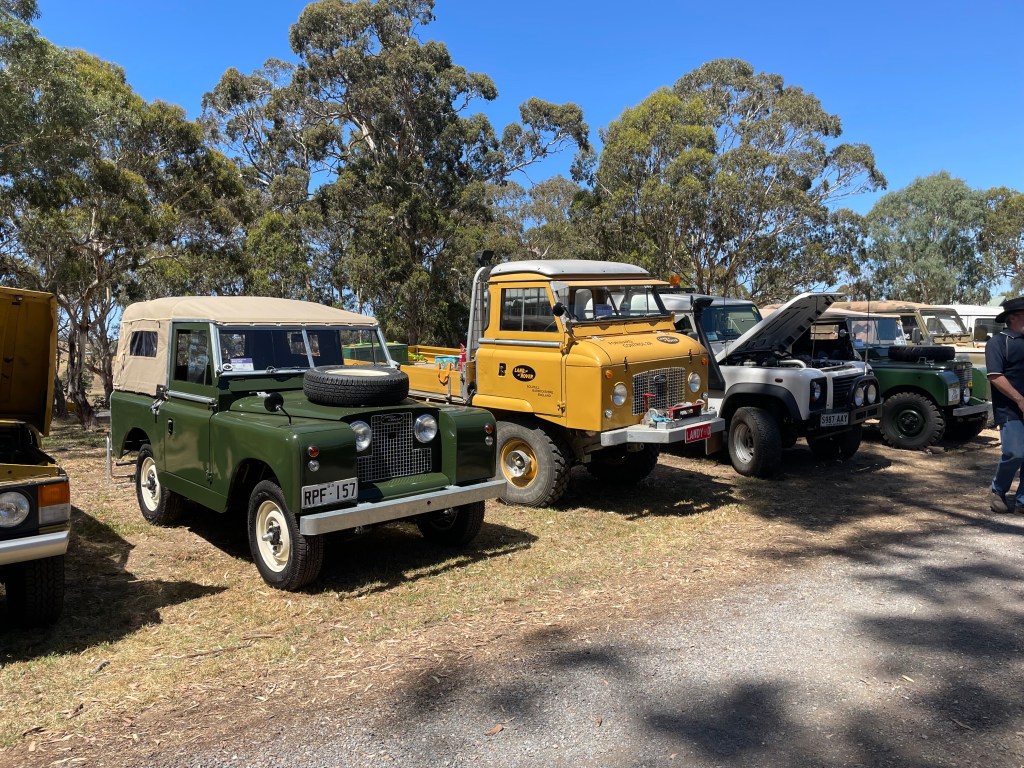
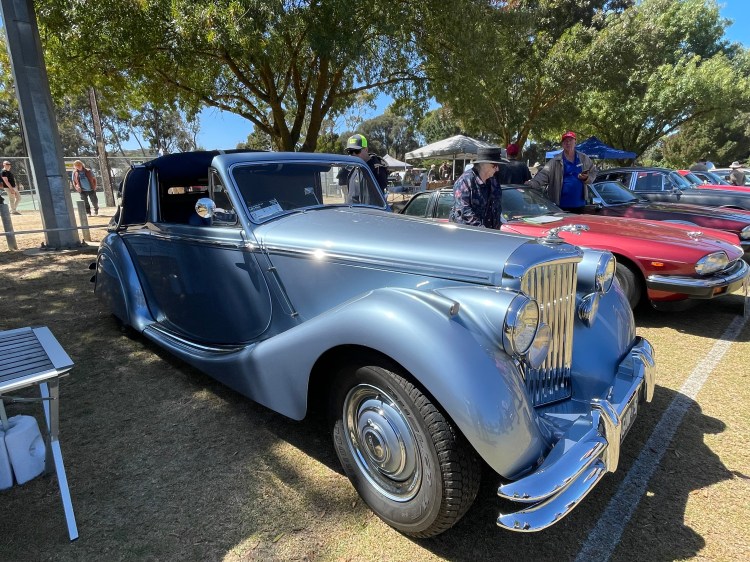
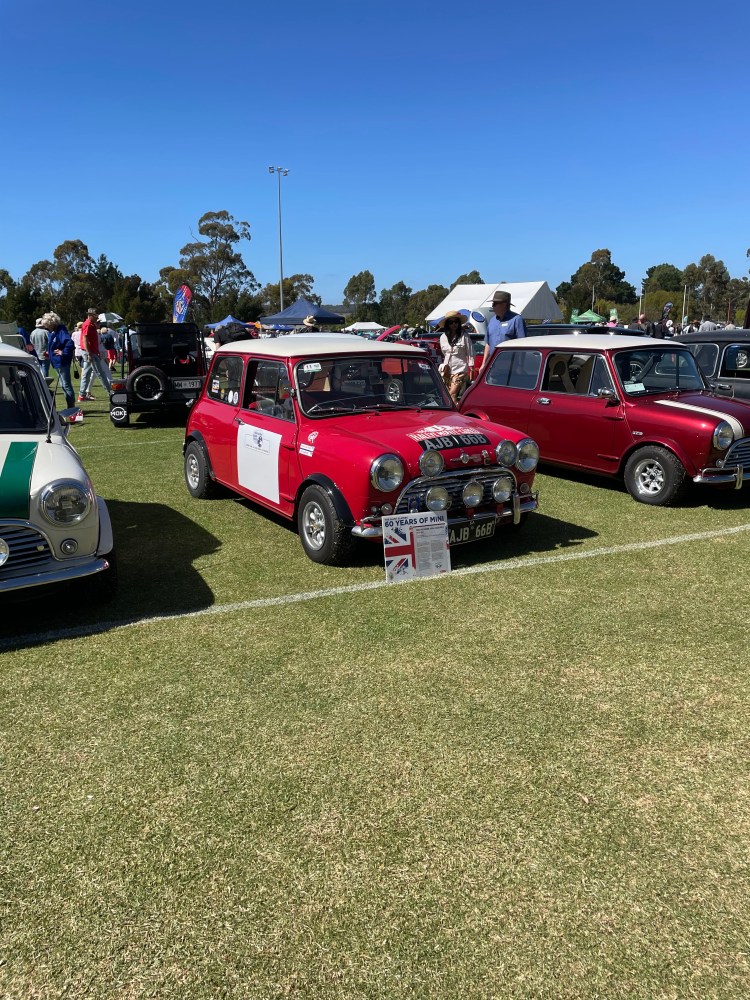
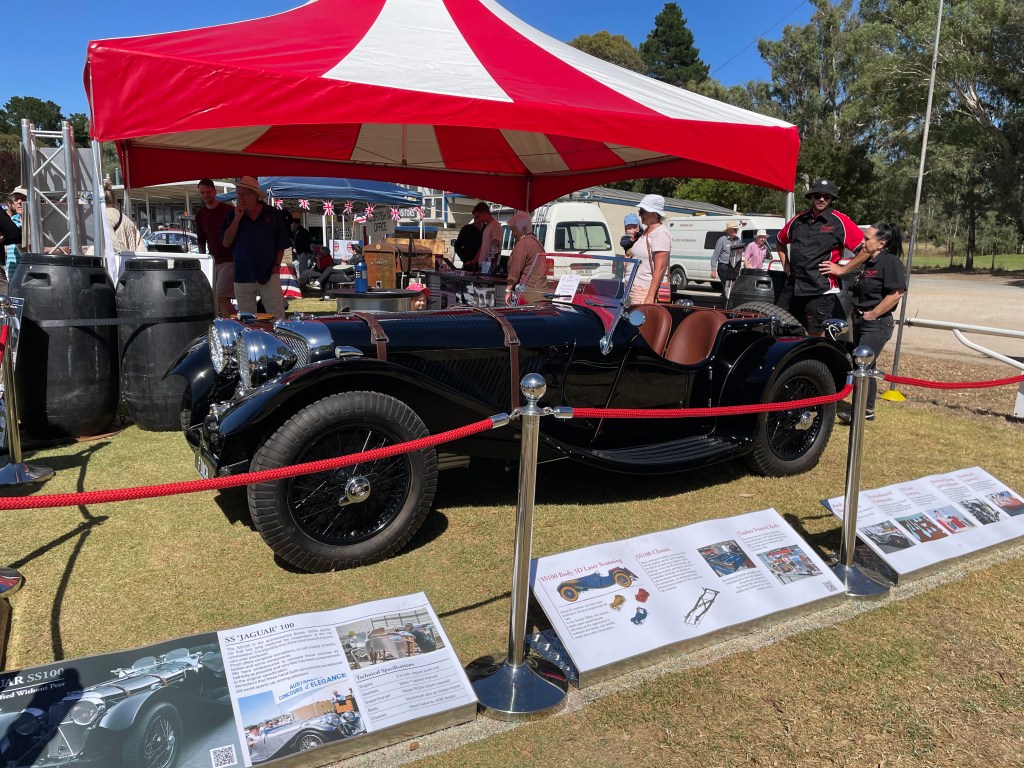
    The next day we packed up early and drove south to meet Alistair and John at the All British Car Day, an annual event which attracts hundreds of cars and thousands of spectators. Located in a sports ground at Euchunga with plenty of space to properly display the wonderful vehicles, the day was warm and sunny, a success for all concerned. Alistair took Shorty (his 1973 Landy). It’s hard to pick a favourite from this show, but I did like the Jaguar MK5 drop head like ours, sad that we still don’t have it. 

    Jaguar MK V

    Nick: Fabulous, heaps of cars 200 – 300 on display. There were lines of Minis, Sunbeams, Jaguars, Morris’, Bristol, MG, Land Rover, Vauxhall, Singer, Bentley, Rolls Royce, Trucks and tractors etc etc. Good weather and good organisation. A recommended day if you are in Adelaide.

    Victor Harbour, Fleurieu Peninsula.

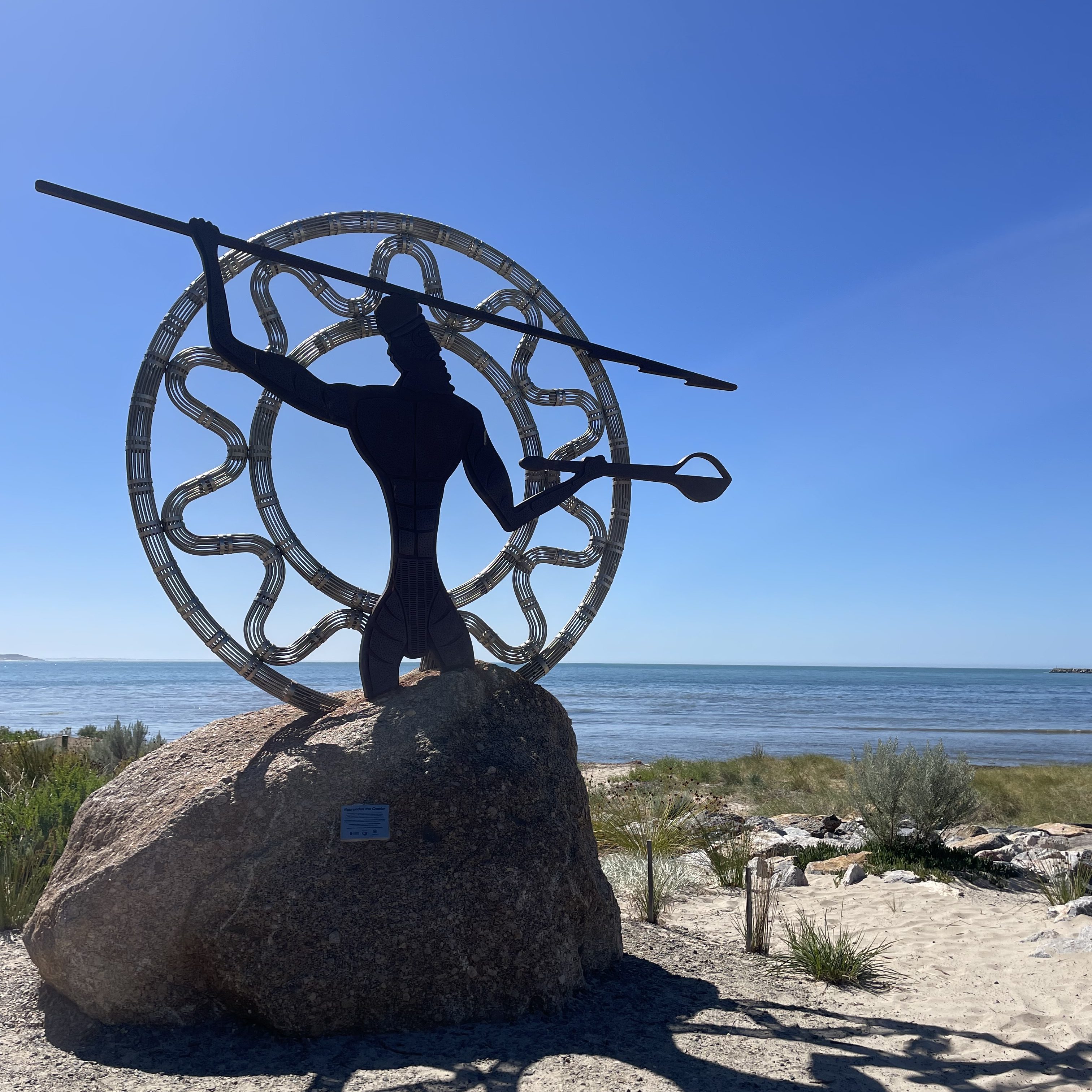
    Ngurunderi the Creator

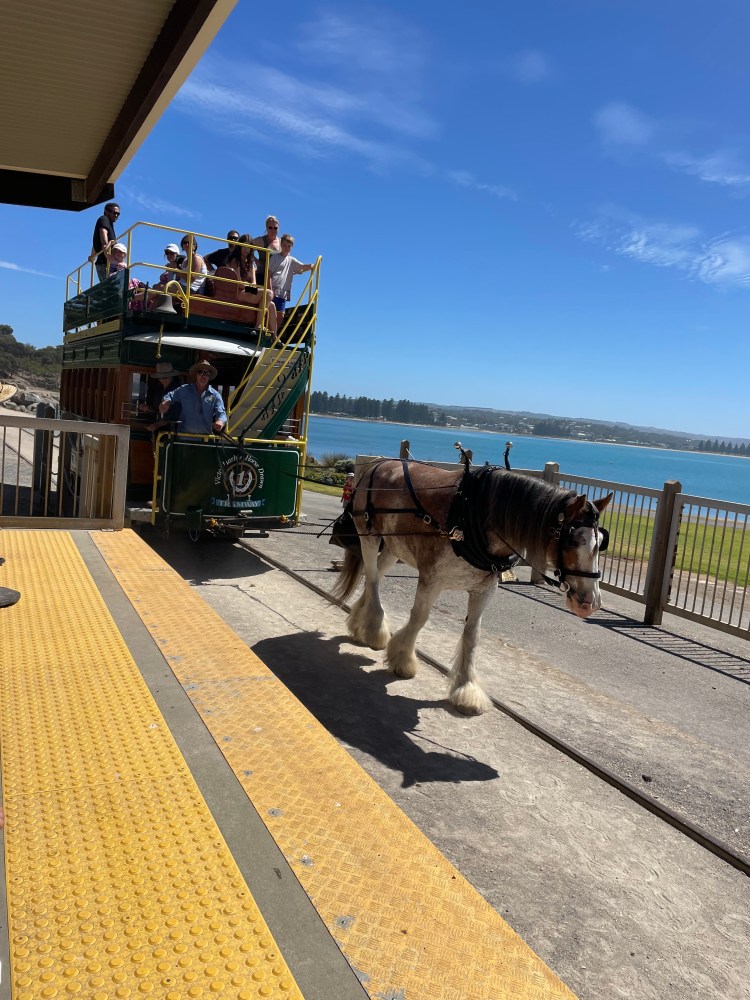
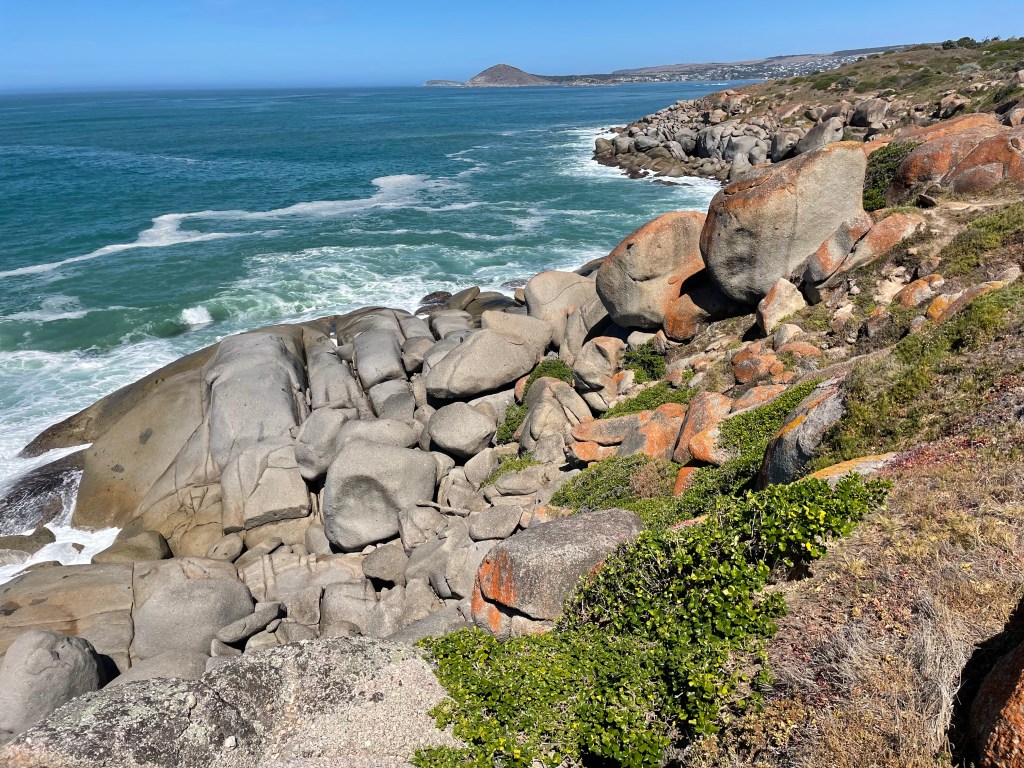
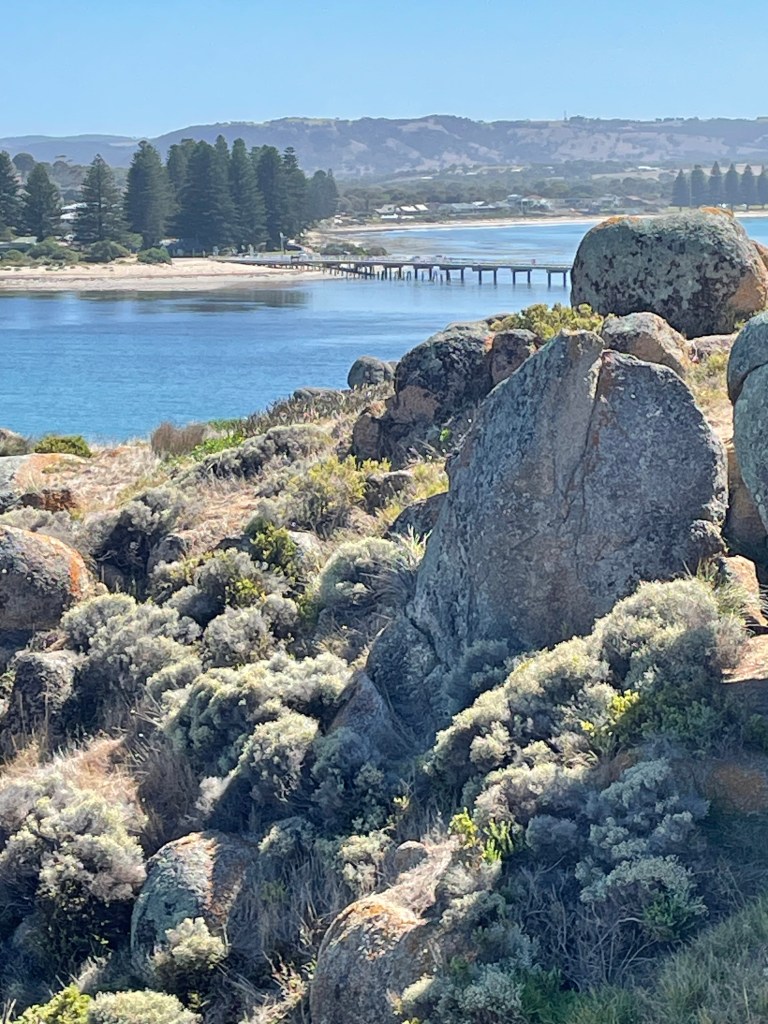
    Great town, shops, ambience and history. Being part of the extensive Shipwreck coast, the National Trust museum featured many treasures salvaged off wrecks nearby. However, the feature attraction of Victor Harbour is the horse drawn carriage that crosses regularly across the causeway, linking to Granite island where once the ships docked with goods and passengers. 

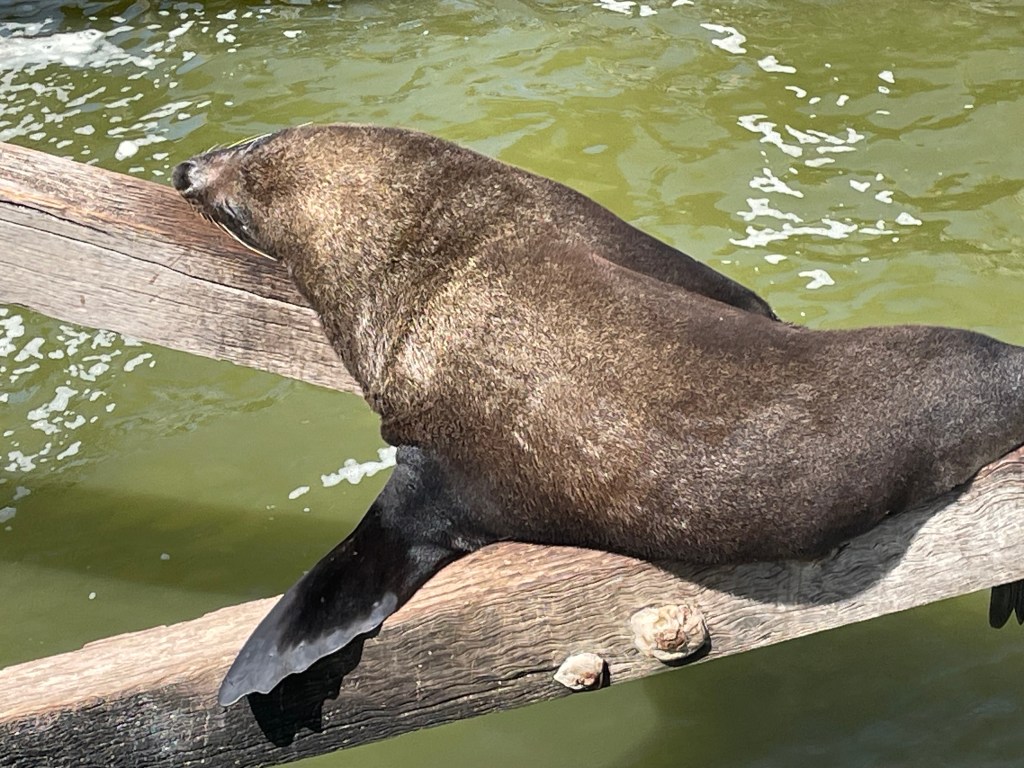
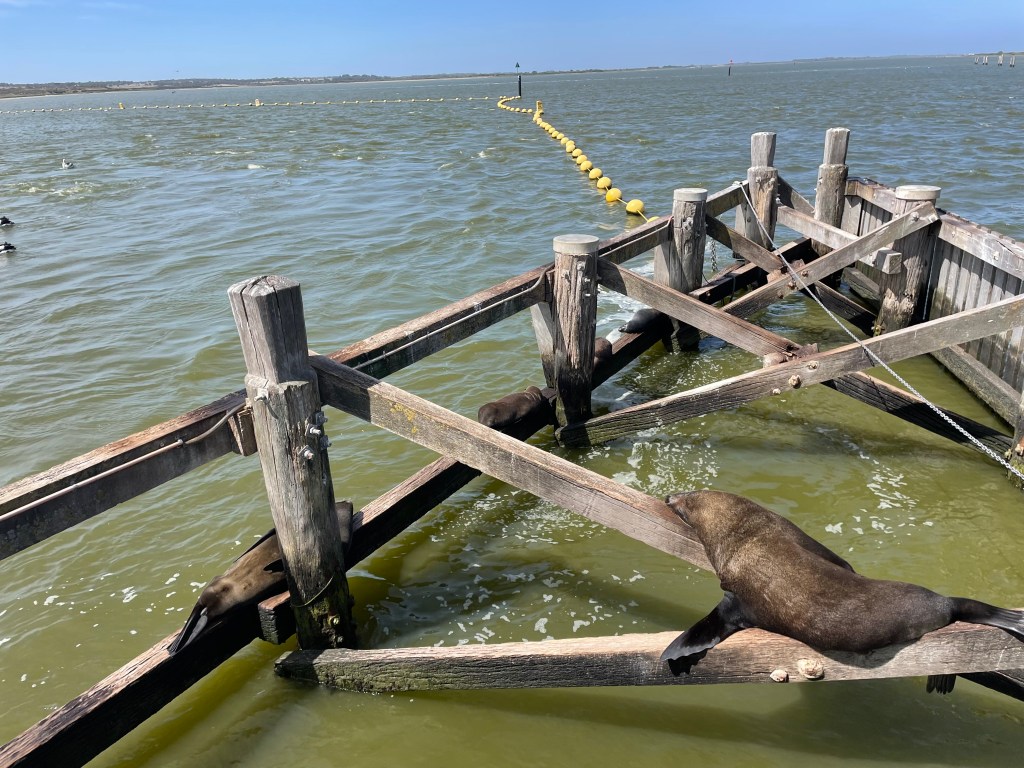
    The town of Goolwa is about 30km from Victor Harbour along the coast. We drove around to the mouth of the Murray which was being dredged, then found one of the five Barrages –  barriers built to seperate the waters of the salty Coorong and fresh water Lower Lakes, maintaining a supply of fresh water to the lower reaches of the Murray. Whilst walking on the barrage we came across some very lazy Australian fur seals, basking in the sun on the wooden beams under the jetty. 

    Strathalbyn. 

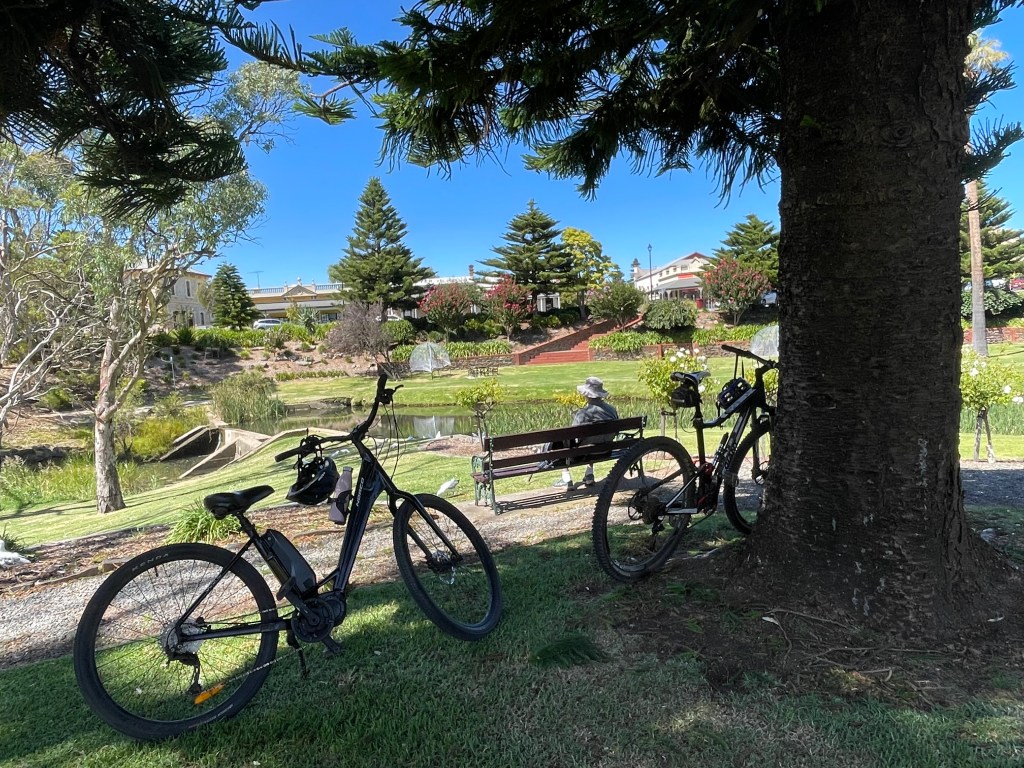
    I had heard this was a beautiful town with many heritage buildings, but I didn’t realise just how good it was. The streets lined with deciduous trees had stunning Victorian and Georgian houses, tucked behind large clipped cypress hedges, perfectly restored, with amazing cottage gardens. The main street was adorned with period buildings, mostly in great nick. We cycled around the town, it was quite hot, but that didn’t matter, we loved what we saw. 

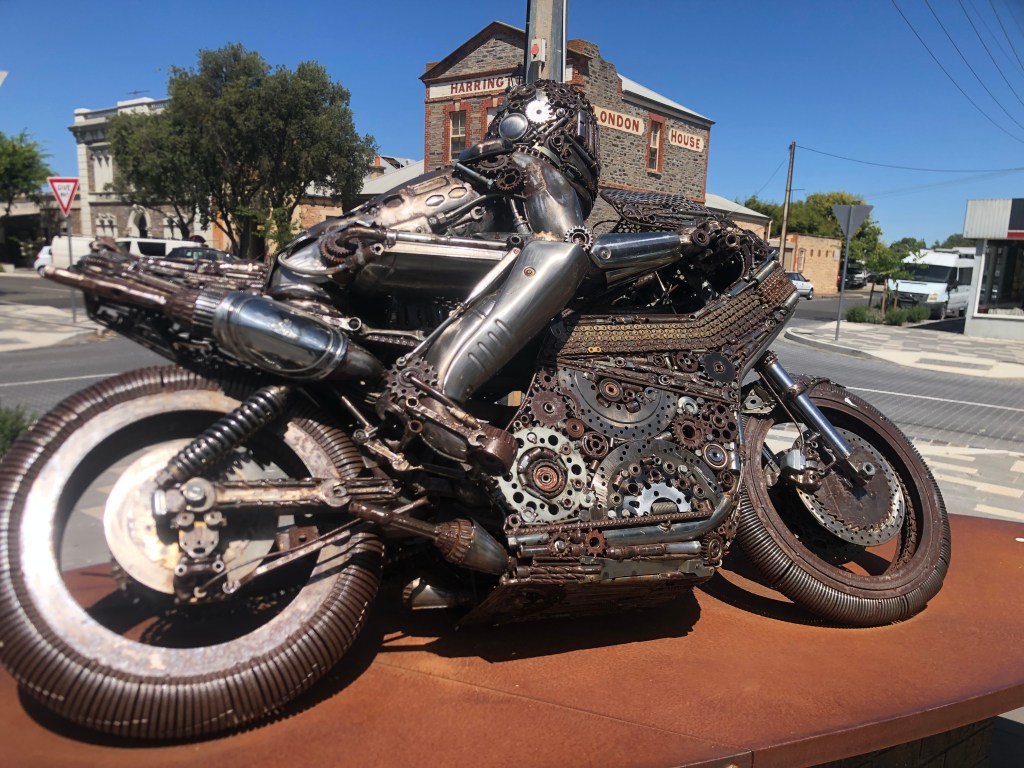
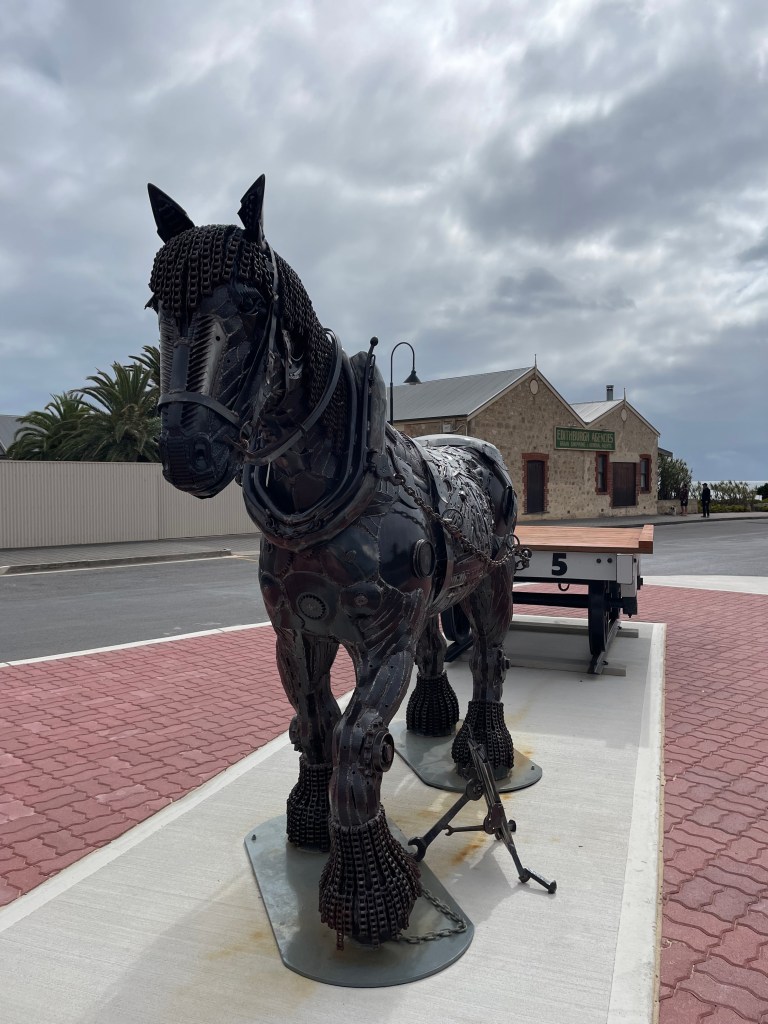
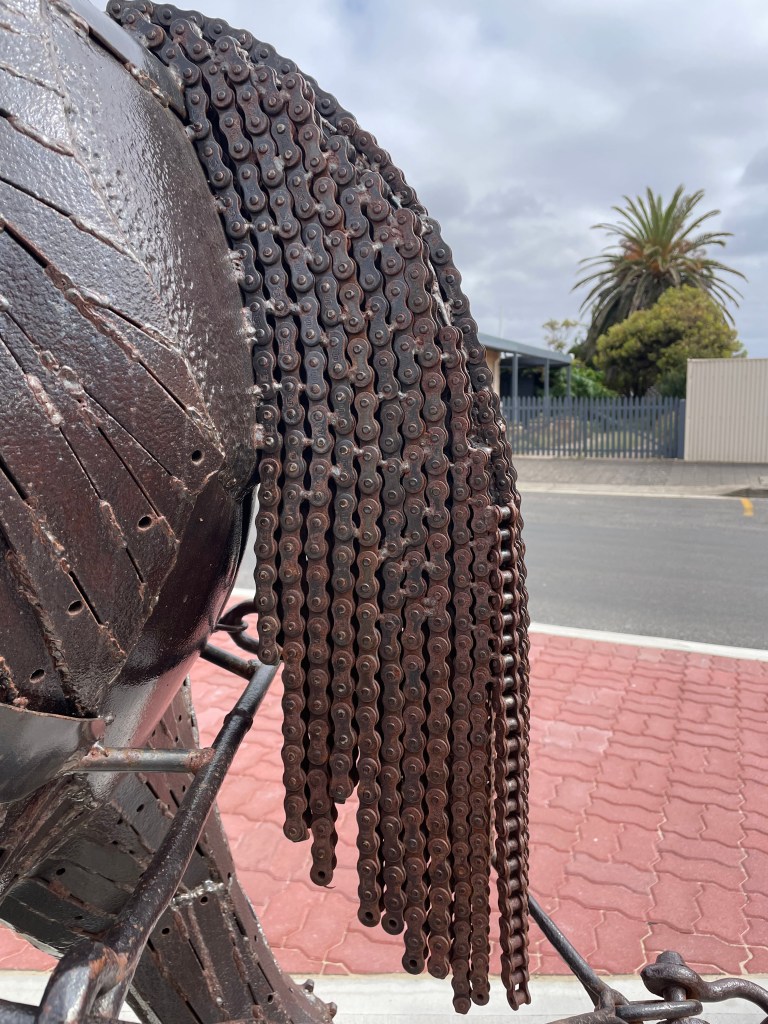
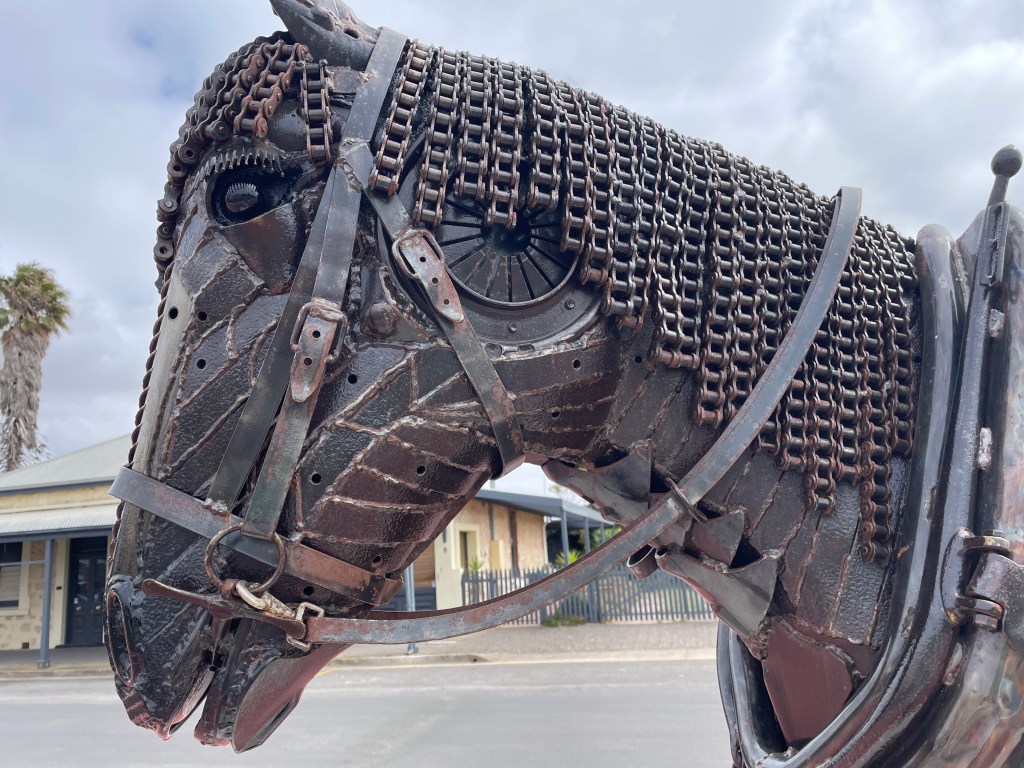
    Found a magnificent sculpture of a champion motor cyclist, Ken Blake, who beat the 11 times world champion Giacomo Agostini in the Australian GP. The pictures show you how it is made by the same artist who made the metal horse in Edithburgh.

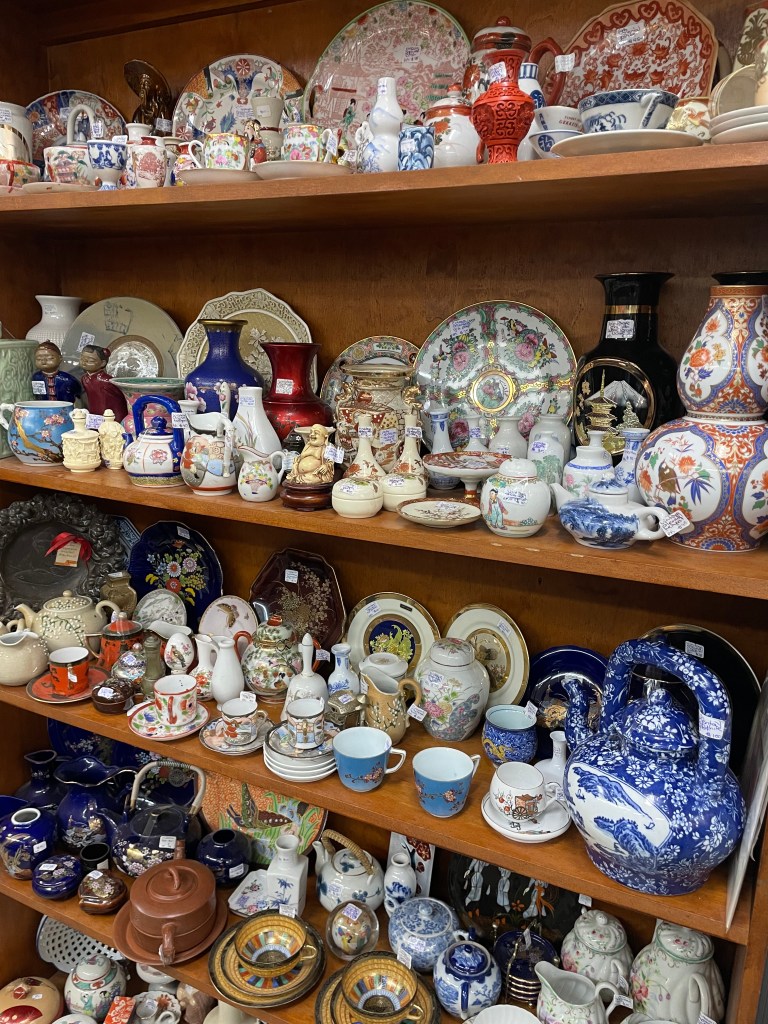
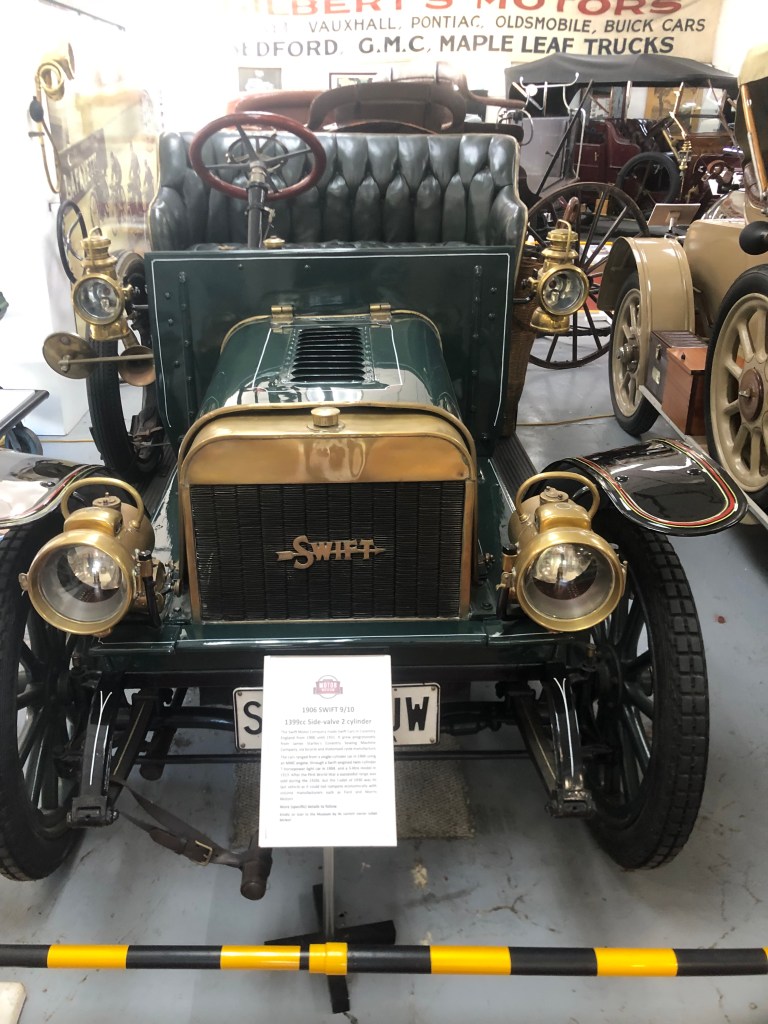
    Nick was keen to visit Gilberts Motor Museum, so I went to the Antiques Bazaar across the road. It was mind blowing to see the quantity of stuff in there and I came away with a piece of Spode china to go with mum’s set she gave me. 

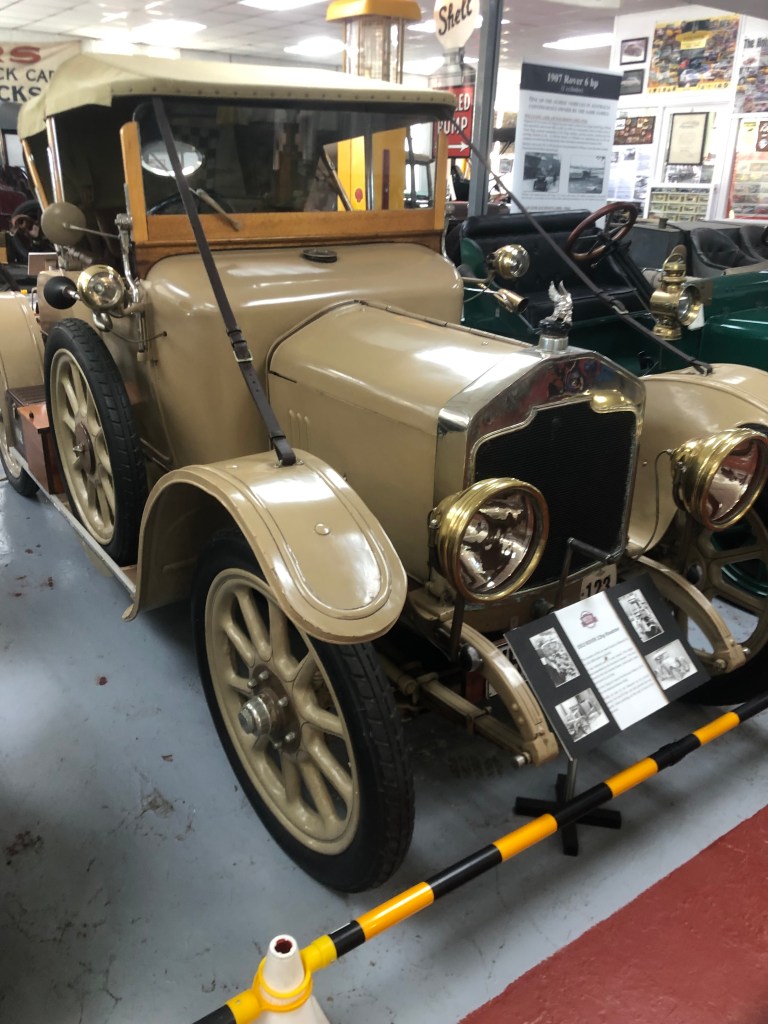
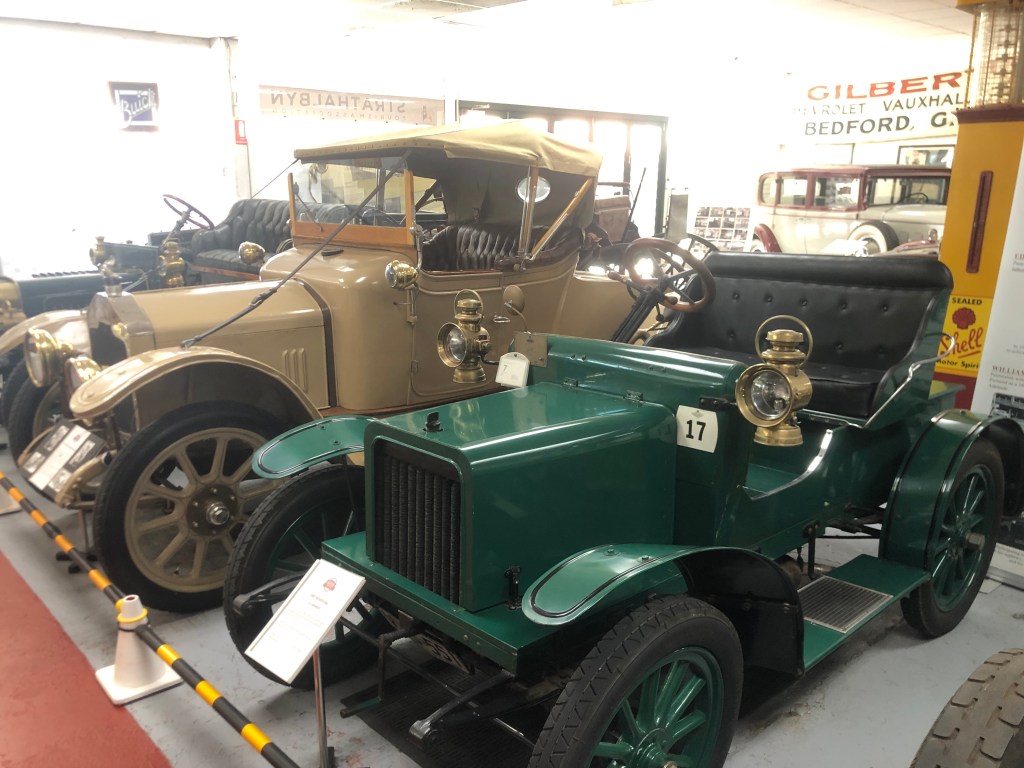
    Nick: I knew that there was a car museum in Strathalbyn and they had some very nice stuff in there, of most interest were the Rovers. A 1913 12hp model, a 1907 6hp model and a 1916 Rover motorcycle. Also there were four Sunbeams, a Tiger Mk 2 prototype, a Venezia Superleggera and a saloon. There was also an American pick up truck with an Indian Motorcycle in the back both in fabulous condition.  

    Only one night in Strathalbyn, but it was very worthwhile. Heading south again, but that will be on the next blog which will follow quite soon. It’s written, just needs to be assembled into a blog.

    Love and blessings to all

    Jen & Nick
  • Yorke Peninsula, SA

    Posted March 10th 2024

    We asked random people as we travelled, “what should we do on the Yorke Peninsula”. Many said forget it, not much of interest there. Even the tourist information officer in Ceduna seemed vague and only directed us to the National Park right down on the southern tip as a place with great beaches. So the challenge was on. 

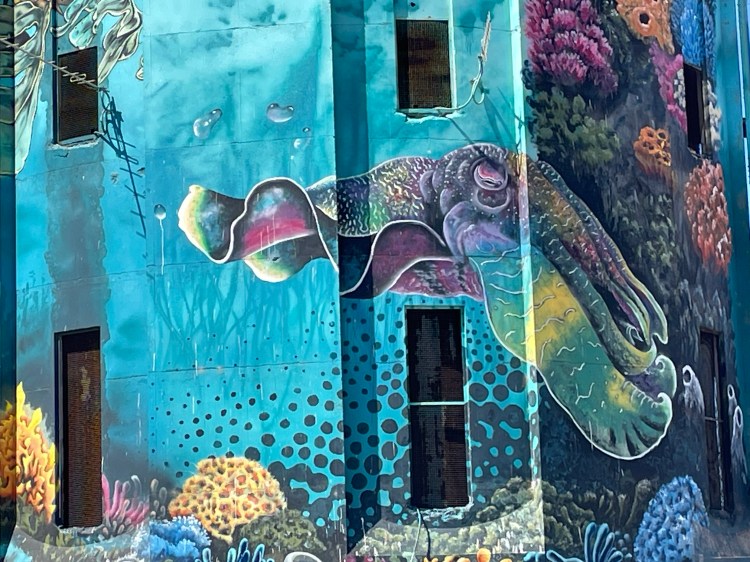
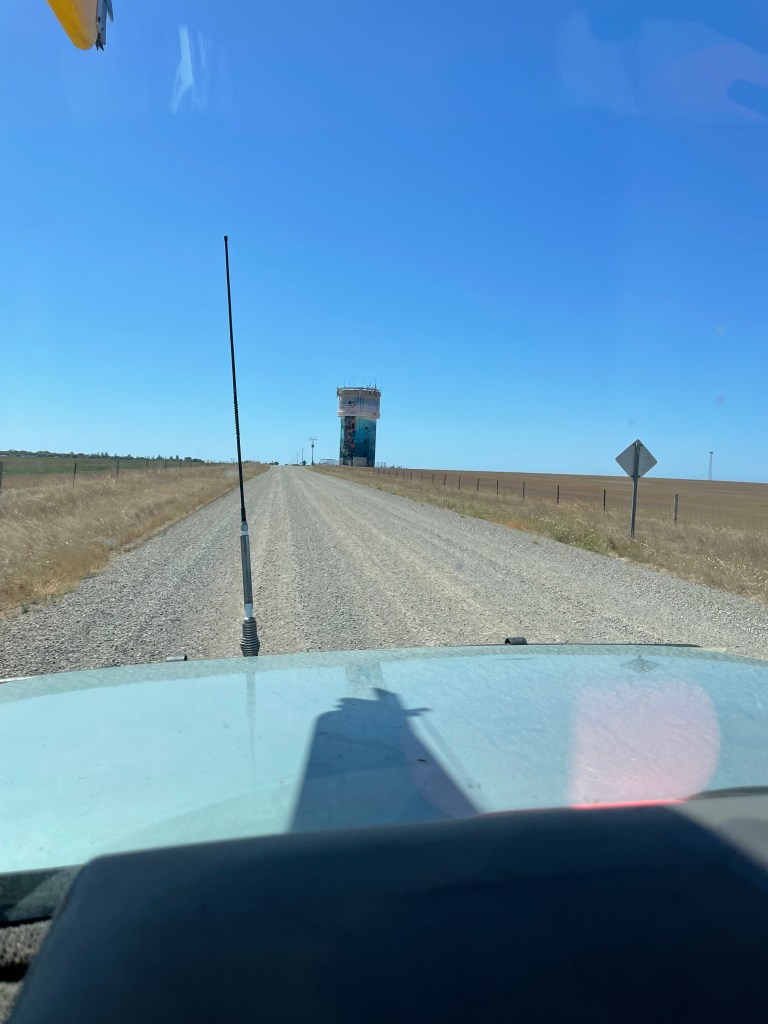
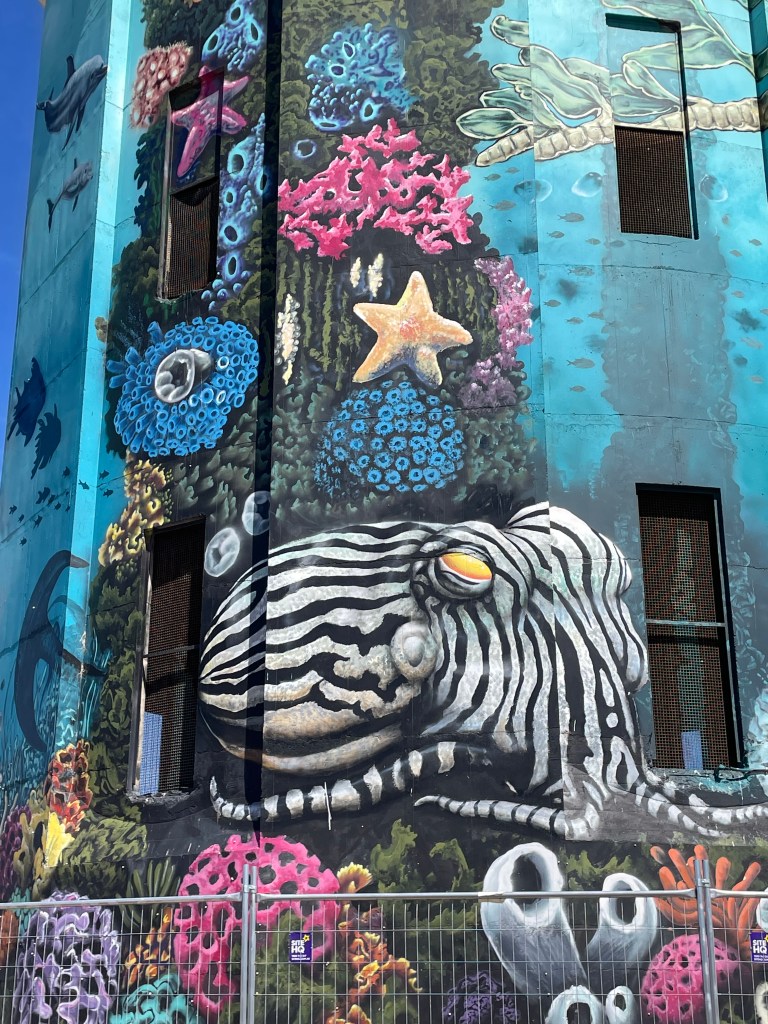
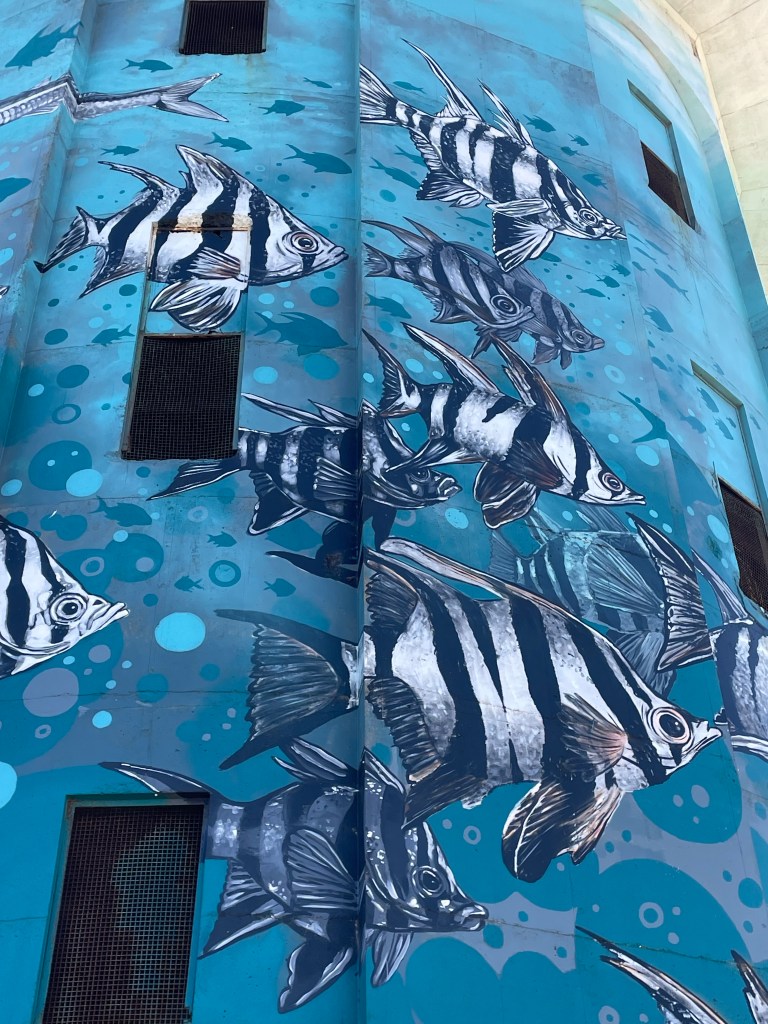
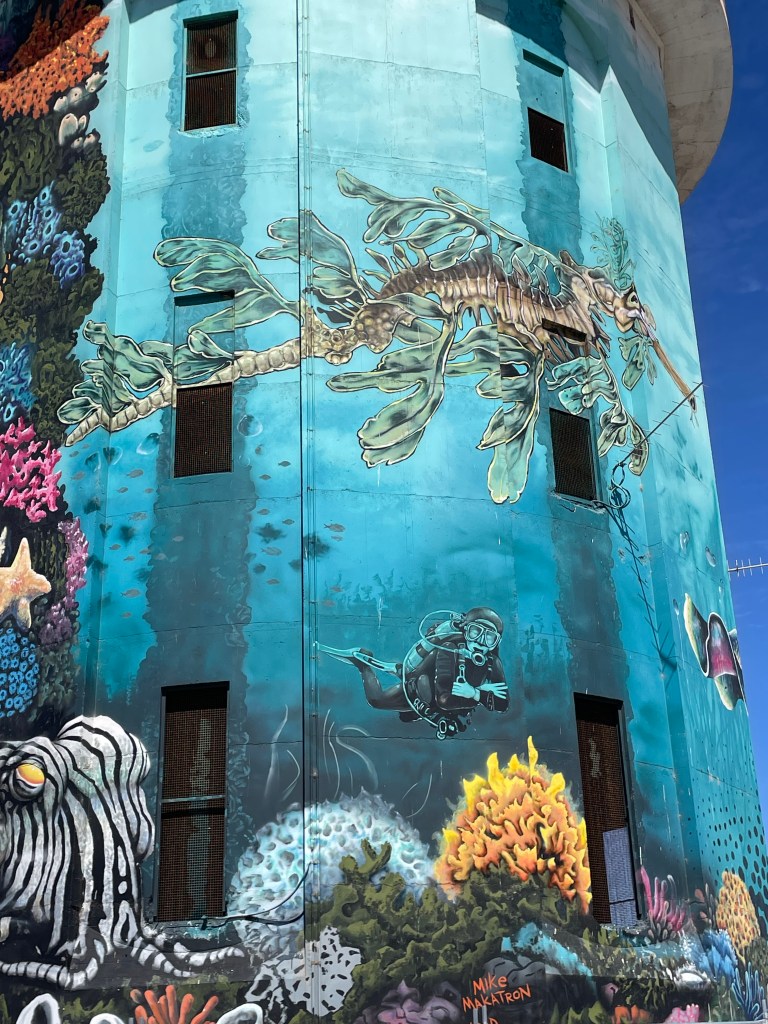
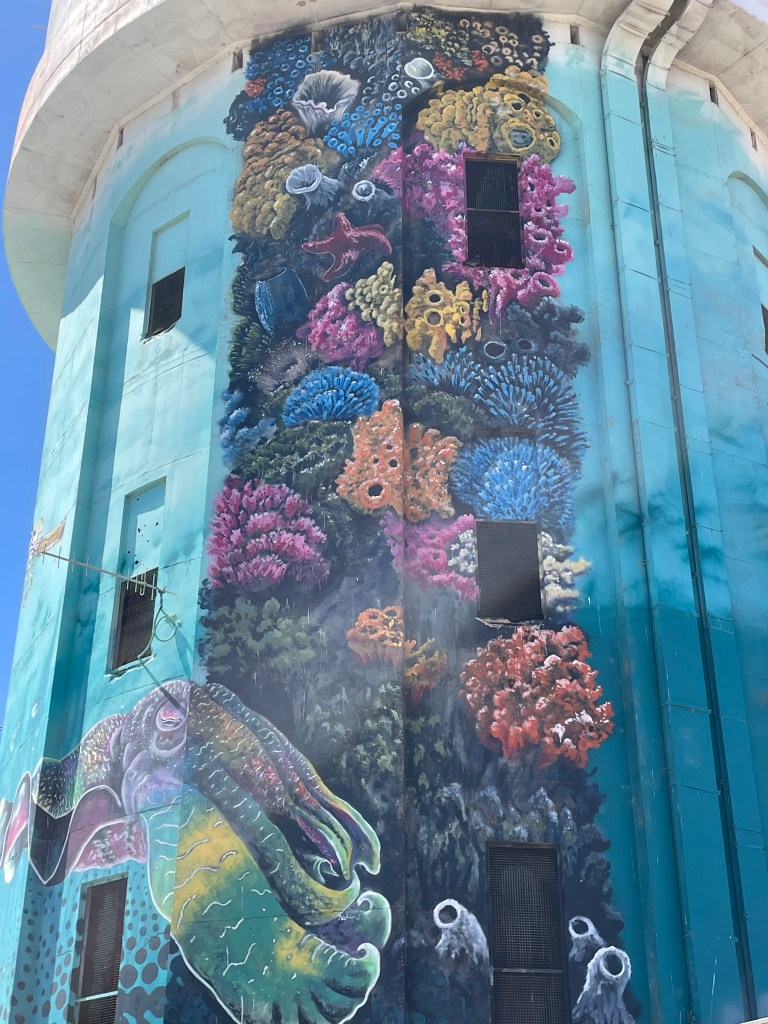
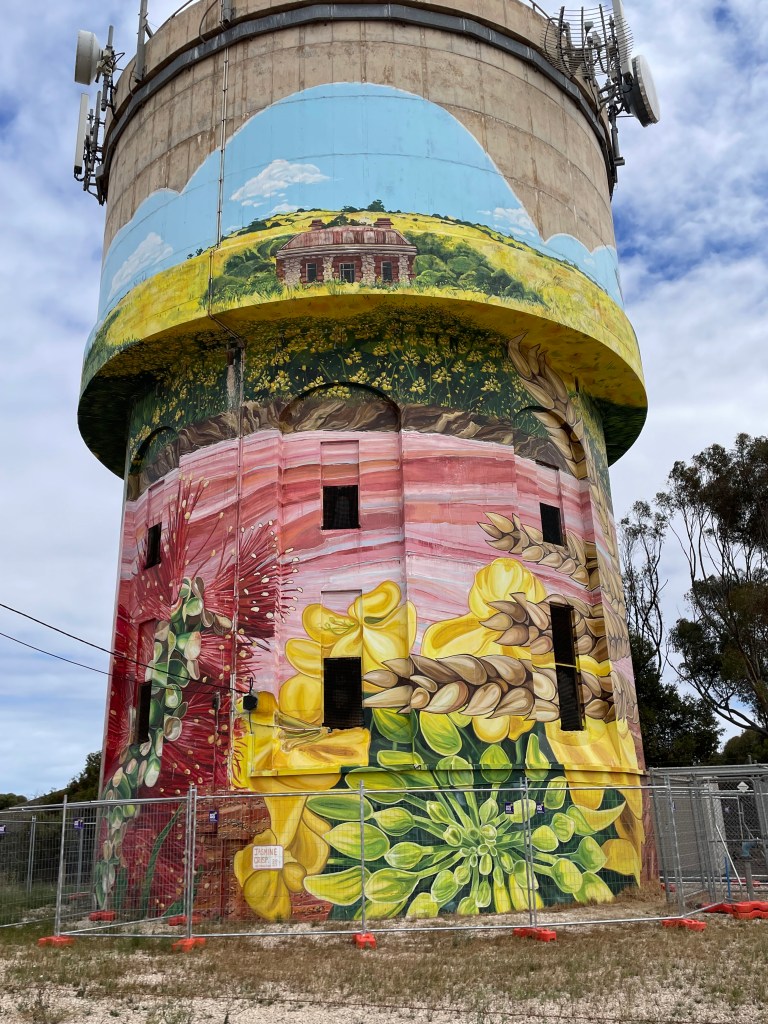
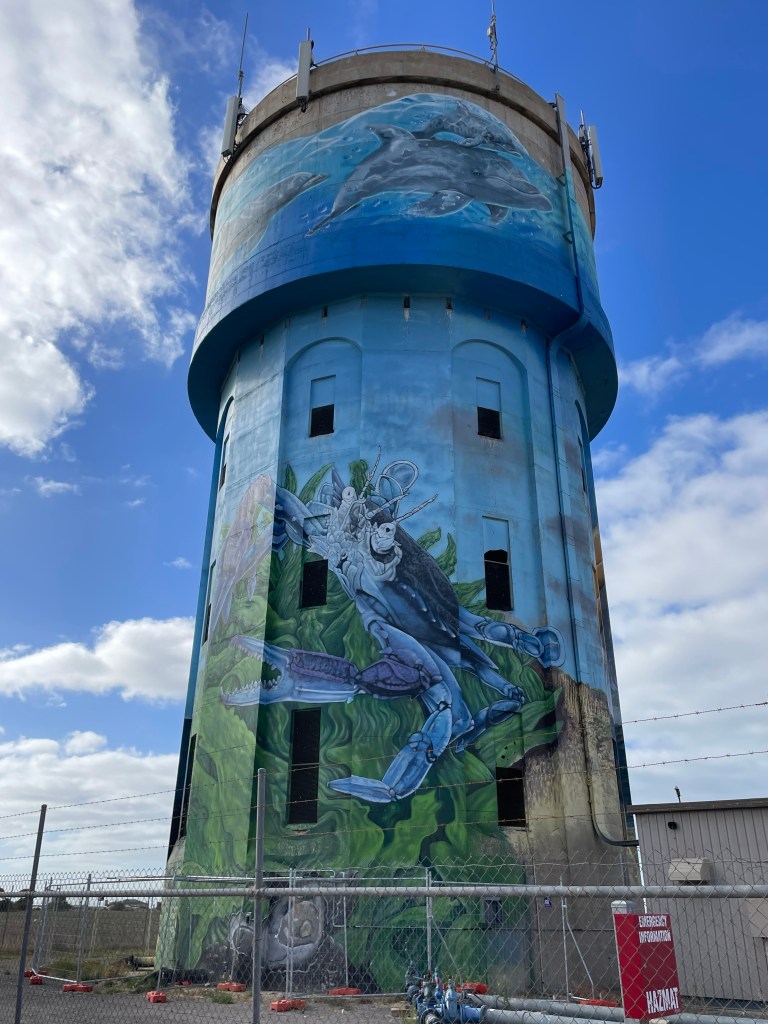
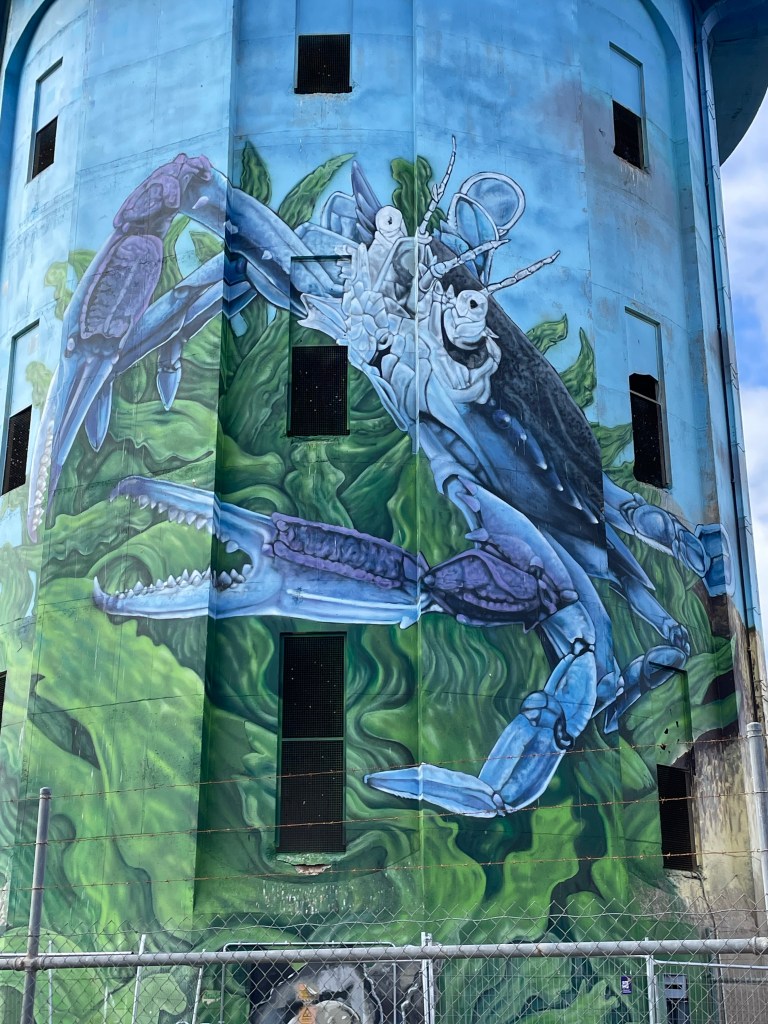
    One of the best water tank murals, at Edithburgh.

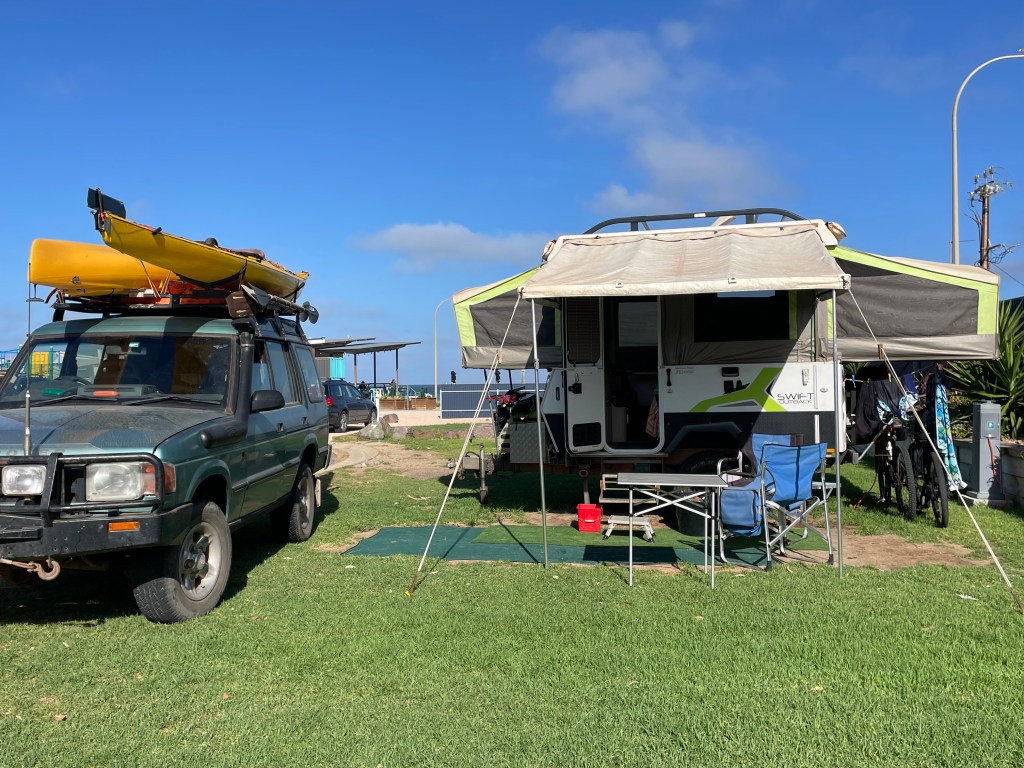
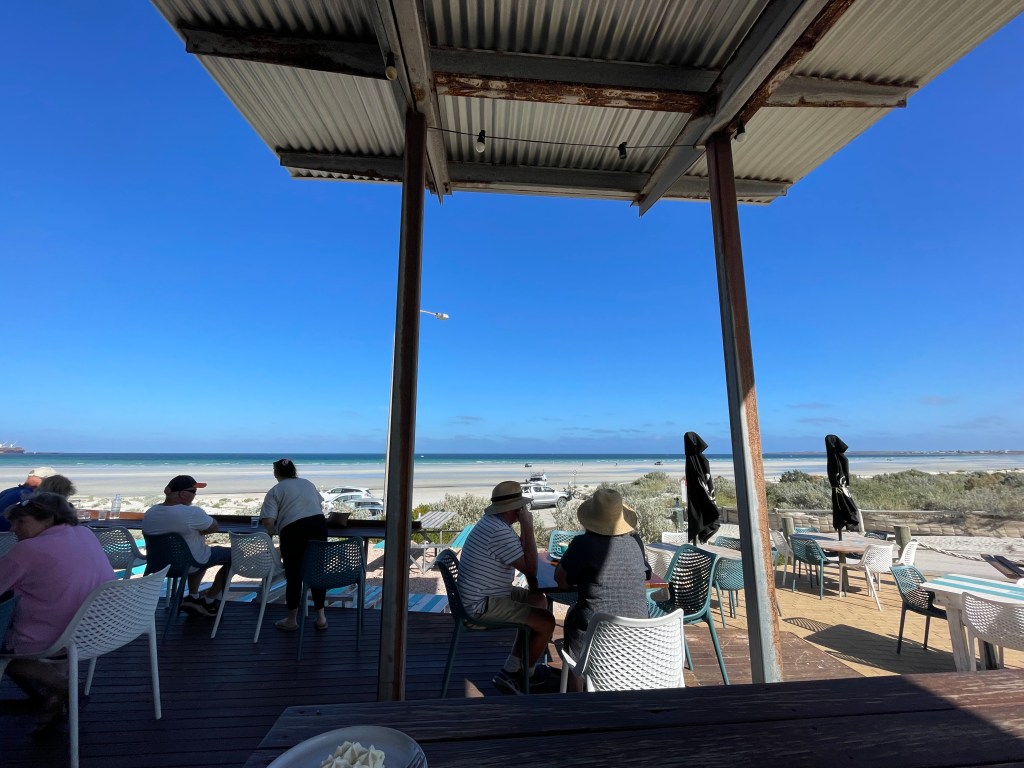
    I scanned all the glossy brochures and determined a route for us to take. First off we landed at Wallaroo, after a smooth ferry trip across Spencer Gulf from the Eyre peninsula. We hadn’t pre-booked any accommodation, so were prepared to wing it and camp wherever we could. First campground we came across was fully booked and crammed cheek by jowl. The suggestion was to try North beach van park, which luckily had plenty of room for us and our site was a gem. We asked for unpowered on grass. We were located right at the back of the park on thick green grass, right beside the beach with a cafe 50 paces away. It was quite hot so we swam late in the day. You could drive on the beach, it was almost like Cable Beach in Broome without the hordes of cars, camels and people. Sunset was towards the west, what a treat each evening for us to see from our van.

    Anyway, still scanning the brochures I realised that many towns on Yorke had art installations or murals mostly on water tanks, so we started with a goal to find and photograph as many as possible. Each painting had an interpretive board, helping us to get a deeper understanding of the history of the area. The painting above at Wallaroo station was about 50 metres long, but this picture shows an empty jetty, in memory of the 1917 Spanish flu pandemic and the arrival of Covid 19, while this mural was being painted.

    Probably almost my favourite mural, found in Kadina. She is the May Queen holding a sheath of wheat and a piece of copper. Reference to the Cornish history of the area.

    So from Wallaroo, we did a quick day trip to Kadina, the biggest town on Yorke, where I found a couple of lovely murals. The town was a good service area for the north of the Peninsula.

    We took the main road south to Moonta, Maitland and Port Victoria. They were each quite nice towns which could warrant a short stop, but we chose Port Victoria for a coffee and cake stop. Wrong decision. We opted for the boxed cold coffee as there was nothing else on offer. 

    The towns are only about 20km apart. The whole Peninsula is just 40km wide. The landscape was dry, wheat stubble everywhere, poor sheep again nibbling the dirt.

    We drove into Minlaton, where we should have had our coffee, anyway, we found a display about Harry Butler. Not the naturalist who was popular in the ’70’s, but Harry Butler the aviator. He was an army Captain and Chief Flight instructor during WW1. Here in Minlaton was his aircraft, the Red Devil, the sole remaining Bristol MC1 fighter plane out of 130 made in England. In 1919, he flew the first over-water mail run in the southern hemisphere across Gulf St Vincent. Sadly he crashed his plane on a later flight and died aged 34.

    As we drove southwards, the landscape was a little repetitive, so many dun coloured fields. Many pretty farm houses made with sandstone blocks and red brick corners dotted the horizons, but not much greenery. Maybe people were right about “boring” Yorke Peninsula.

    White (pink) lake

    We came in Yorketown, quite a big well populated bustling town. Reputably it is surrounded by pink lakes. We looked and looked but only found white salt lakes, dry and nothing like pink. Since leaving Wallaroo in the morning we had barely travelled 150kms and yet we were close to the south coast. So we decided on Edithburgh for a couple of nights. This was instead of the National Park at the end of the Peninsula, mainly because we had seen lots of great beaches and bush scenery and we didn’t care to camp in the dunes as it was quite hot. 

    Edithburgh was perfect for us. A quite historic town on the south east coast almost directly across the Gulf from Adelaide. It once had a bustling port, it’s biggest export being salt from the alleged pink lakes. We took off on the bikes when we first arrived to do a reccy of the town and to my delight I found a sea pool built into the cliff. We spotted a couple of pubs – possibilities for dinner and a great art installation of a horse in the main street.

    So straight away, seeing as it was 34C, I headed to the pool. A group of school boys were there so I swam in the small pool until they left. Then pure heaven. Being in the sea, over rocks and corals and seaweeds with a shark net around the edge and I was in my element. Very hard to get out, but Nick doesn’t do cold water, (which it wasn’t), so he sat in the shade for the hours that I swam and chatted to a local. 

    After Edithburgh, the Vincent Highway took us up the east coast. The cliffs along this coast are fairly low and the shore seems to have been eroded. Seaweed mountains line the beaches and the smell knocks you over. Tiny cheap shacks huddle together on the edge in these remote fishing towns.

    At Stansbury, quite a big town, we got coffee and I saw and photographed some lovely murals. At Port Vincent I bought some local green prawns from the fisherman….and it was Sunday! How good was that! We kept a lookout for more art and were not disappointed. Some artists were very good, others not quite, but each mural brightened up some pretty dull walls.

    We decided to stop at Ardrossan for the night. We had no booking but snagged a grassy spot without any noisy neighbours for 3 nights. Ardrossan is quite a substantial port where they still ship out dolomite. There’s a long jetty where people throw nets out to catch the blue swimmer crabs or the squid, like we saw at Edithburgh. 

    The crash

    There are some lovely bike paths along the foreshore cliffs. We headed off towards the north one morning, I’m quite confident now on my E bike, probably too confident. I crashed as I squeezed between 2 bollards, down onto the gravel knee first. The bike ended on top of me, wedged between the bollards. I instantly knew where the main damage to my body was…the end of the handlebar went straight into my boob. I had my mobile in my pocket, hence a large bruise on my thigh. Two weeks after that day, the scabs are better but the bruises persist. It took a couple of days of aches to realise I had more sore points than I thought, but all’s well now and I’m back on the bike.

    Nick considering replacing the Landy with a stump jump plough.

    There’s a history connected to the stump jump plough and Ardrossan. The National Trust museum in town is excellent with a great variety of memorabilia. A full history of Clarence Smith and his pioneering work to develop the stump jump fills the museum. It’s staggering to think that all the thousands of acres of wheat paddocks were once covered in Mallee scrub that had to be cleared. The physicality of such a feat on such a large scale  is reaping benefits today with massive wheat harvests but at the cost to the environment that could never be measured.

    So the verdict about Yorke Peninsula…. definitely was worthwhile, very different from Eyre, glad we went there.

    The weather was hotting up. 37C on the day we ventured across to Clare, north of Adelaide, for our next stop. The car did well, we survived. We drove along some small dusty backroads, still seeing acres of wheat stubble, until we reached the hills of the Clare valley. Suddenly, rising up off the flat plains, everything just compacted into small quaint villages, narrow roads lined with grape vines, very charming stone cottages and enormous gum trees. Such an instant contrast to where we’d been. The pool was fabulous at the caravan park, shaded by huge gums, surrounded by lush lawns. 

    As you do in Clare, we visited wineries, until we got to realise it was an expensive luxury and the car drawers were filling up fast. At Sussex Squire winery, the lady said they’d had no rain since late January and relied on tank water. The vines weren’t withering and the harvest was coming in, but the aridity seemed heartbreaking, even if the grapes were going to produce a good vintage.

    Next we considered a history stop and chose to visit the oldest winery in Clare, Sevenhills, founded in 1851 by a Jesuit priest and named in honour of the seven hills of Rome. The historic information on display was terrific. It reminded me of the book club novel we did called Devotion by Hannah Kent, which featured the pioneering Lutherans.

    There was a 3km walking trail around Sevenhills property, which would have been informative if you could manage the hot dusty weather. But we did look through St Aloysius’ Church and the crypt, which had 42 Jesuits entombed. Apparently no other parish church in Australia has a crypt. The shaded lawns under huge plane trees, cypress’ and oaks is a welcome venue for outdoor and theatre events for the Clare community.

    The next planned stopover was at Gawler. We wanted access to Adelaide but not to be too close to busy streets. It was a short distance from Clare. We stopped on the way at Martindale Hall, a remnant of the early squattocracy of the region.

    Built in 1879, costing 30,000 pounds, it’s opulence must have stunned the average battlers at the time. Edmund Bowman Jnr brought 50 craftsman from England and 10 carpenters from Victoria to build it. In 1965 the Hall with 45 acres was handed over to the SA Government. The photos might give you an idea of it’s magnificence. The huge billiard table was placed in the library before the north wall was completed. It was another worthwhile stop to see how the other half lived, but still they were not immune to hardships like drought and the depression, even in their lavish Georgian fortress.

    I’ll end here, even though I am writing this today from Robe. We’ve had some fun since Clare, lots of car pictures coming soon, and Nick’s write-up about them. We begin what feels like the homeward journey as we traverse the south coast of SA and Vic. There’s probably one more blog in me, maybe two!! In 8 weeks we’ll be back in Lennox. Where’s the year gone?

    Lotsa love to all

    Jen & Nick xxx
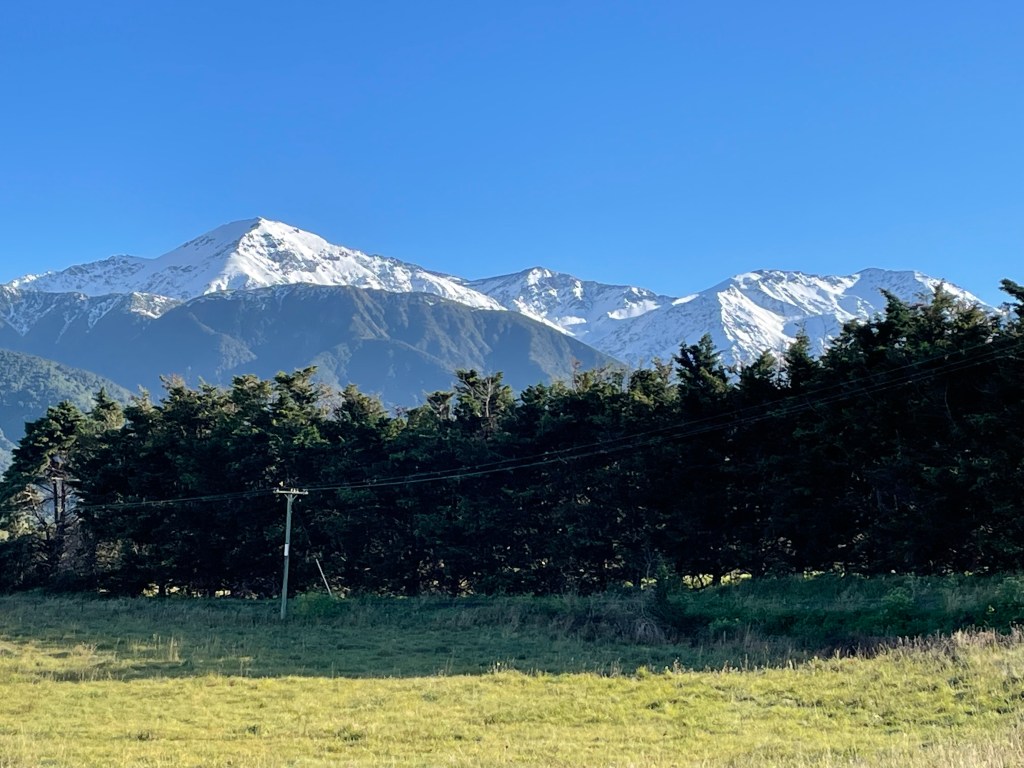
  • Eyre Peninsula,S.A

    The hunt for seafood. Posted March 3, 2024

    Pink Lake MacDonnell

    This blog will begin at Cactus Beach, SA. We’d often heard Cleon & Ben rave about their stay there when they circumnavigated Australia years ago. Cactus is just south of Penong, the windmill town. There’s a pink lake – Lake Macdonnell – along the way to Cactus, that did have a pink hue, unlike some others we’ve been to recently. Cactus was discovered in the 60’s by surfers, and offers three great breaks. Our Ballina family were chuffed when we let them know we’d made it there.

    We motored along to Ceduna, a town best known for a fuel and supplies stop once you’ve crossed either way over the Nullarbor. The unfortunate presence of desperate people wandering the main street didn’t enhance Ceduna for us. Loaded up with our supplies, we headed off to Streaky Bay, about an hour south down the west coast of the Eyre, for 3 nights. There was very little to see along the Flinders Hwy except extremely dry paddocks, sheep huddled together for shade in a treeless landscape and lots of caravaners heading west.

    Streaky Bay

    Lovely town. But we are finding that arriving on Saturday afternoon, most places are closed, and on Sunday also. We had decided to be pescatarians for the entire Eyre Peninsula, seeing as it has a reputation as a seafood haven. I wanted to shop from seafood co-ops for fresh locally caught fish, but it was closed until Monday. Even the supermarket only had the usual packets of seafood from who-knows-where! So we went to the pub for nice local whiting fish and chips. Next night, I resorted to a tin of salmon with pasta – very nice but not local. On Monday, we bought local whiting from the co-op, was a bit underwhelming, missing out on the freshness I expected, probably frozen for too long.

    There was a good bike track from our caravan park around the bay to the boat launching ramp, which we did each morning. We saw a cheeky sea lion poke his head up near the ramp. The bird life along the shore line was ever present and the squeaky pink and greys boisterously squawked in the caravan park. It was very hot here in Streaky, but the bay in front of our van was so shallow for so far out that swimming was not an option.

    There are 2 driving loops around the ocean cliffs from Streaky Bay, the Westall Loop and the Cape Bauer Loop. The first stop on the Westall loop, Smooth pools, had beautiful lichen covered rocks and deep pools with all sorts of sea life.

    The views from the cliff tops of the loop, with the pounding waves and turquoise sea were spectacular. Matthew Flinders first sighted these cliffs in 1802 from HMS Investigator. He named Point Westall after the landscape painter on board his ship.

    Back beach Steaky Bay. The most beautiful beach I didn’t swim in, still regret that.

    The Cape Bauer loop further emphasised how dramatic the coastline is here on Eyre Peninsula.

    We packed up and headed south along the west coast, stopping at a wonderful natural feature called Murphy’s Haystacks. From a distance it looked like a henge common to the UK, but in fact they are Inselbergs, 15 million years old at least. They are formed by the uneven weathering of the crystalline rock, called pink Hilbata Granite, which forms pillar or boulder shapes. It felt like Picnic at Hanging Rock walking through the narrow entrance to who knew where? Such a worthwhile stop.

    We chose to spend a night at Elliston next, a very small coastal village with a pleasant caravan park tucked behind the dunes. Here, there was another loop drive around the coast, but this one featured art installations. Quirky describes some of them, not very good describes others. One was particularly good, mainly due to it’s placement and it’s simplicity. Can you guess our favourite?

    We scanned the Elliston supermarket fridges for fresh seafood, but alas nothing was to be found. We settled for smoked salmon and cream cheese in some very fresh bread rolls, bought from a roadside bakery that randomly popped up on our journey. A man and his wife bake in a wood fired oven and have a small stall with loaves and rolls hot from the oven available for passers-by. What a treat.

    From Elliston, Coffin Bay further south was the next destination. Oyster HQ, guaranteed fresh oysters, at least. But again, no seafood outlet except for oysters. We talked to the manager of IGA about our sea food search and she just shrugged her shoulders as if saying, here you have a boat and catch your own, we don’t cater to non-fishermen.

    Oyster HQ, so good.

    One afternoon, we took a lovely boat tour with Experience Coffin Bay oyster tours, fabulous commentary, local wines and gins could be purchased to accompany our 6 freshly shucked oysters. Heavenly.

    Coffin Bay National Park sits off the western tip of the Peninsula (see the map), so we decided to do a day trip there. Packed our lunch, got a SA park pass and set off.  Almonta beach had a sealed road to the great carpark where we had morning tea and saw the amazing waves going in 2 directions.

    Waves breaking in 2 directions at Almonta Beach

    I know Nick loves 4WD and putting the Landy through its paces, but on this day he certainly tested my tolerance limit as a passenger. Coffin Bay National Park and some of it’s bays like Golden Islands, are stunning and amazing. But at Nick’s insistence, we were to drive along the Peninsula towards Point Sir Isaac, reported to be a 6 hour round trip. The warning bells should have sounded in my head by now! So off we set, tyres deflated with rescue gear on board. For an hour and a half, I endured a head crunching, neck jerking, spine crushing ride over a rocky, potholed, sometimes slippery sandy road. I have travelled lots of 4WD tracks with Nick. I’d compare this to a combination of Moreton Island inland track with its corrugation jumps in the sand, Mt Elizabeth Station boulders/rocks, and Cape Francois Peron for its deep sand. We met a couple of blokes in cars coming back from the coast, one said it was certainly worth the effort to go on to Seven Mile beach to the whale skull and beyond. So we pressed on and on and on. Eventually we reached the beach and found the whale skull, which was impressive. I had a killer headache, until we stopped driving. The beach was pristine and water fairly warm, but I wasn’t in the mood for a swim. After lunch we headed back to camp, another hour and a half on the dreadful track. When we got to the bitumen I realised I’d been gritting my teeth hard, they were aching. Probably unconsciously I was trying to avoid sending my teeth through my tongue. Back at camp I needed to re-align my vertebrae and crunch my neck bones back into place. A massage of the muscles in my neck and back and a welcome hot shower and g&t were wonderful. I’m a little bit over this type of adventure.

    I also think it wasn’t fair on the car – remains to be seen if the donut cracks the shits again. Next time a trip like this looms, I’ll carefully weigh up the pluses before I join the driver!

    On our last afternoon at Coffin Bay, I saw Nick under the car, a position he loves. The part at the side has travelled from Lennox.

    Nick: “I found a very small coolant leak from the small hose that you see lying on the ground coming off the big bit on the left. A locating bracket had chafed a very small hole in the pipe in Eucla but it was impossible to buy green coolant there so we pushed on with a small piece of raw rubber held on with two cable ties which actually stopped the leak, to my surprise, all the way to Coffin Bay where I spotted some coolant in the servo and decided to change the old hose out. So it was worth bringing the big cardboard box with all the rubber spares after all.”

    From Coffin Bay it was a very short hop to Port Lincoln, the fishing capital of the Southern Hemisphere so they say. We loved this town. Arrived on Saturday afternoon for 2 nights, bad planning once again! Chose to eat out at a fancy delightful Italian restaurant for prawns and mussels, overlooking the lovely bay on the Saturday night. The fresh seafood outlets again were all closed on the weekend. 

    We visited a unique little museum, Axel Stenross Maritime Museum, on Port Lincoln’s foreshore. It was originally the boat building shed and residence of 2 Finnish immigrants named Axel and Frank. Over 40 years they built wooden boats, as per the list above. After they died, the Port Lincoln Council and townsfolk raised the capital to purchase the site for posterity, and volunteers now run the museum. Great history, so much old stuff, it was a bit like a seafarers version of Margaret Ollie’s house. It looked like the men just up and died and nothing has changed. The museum had a great collection of maritime memorabilia, including outboard motors, which I remembered from fishing with my dad on Port Phillip Bay.

    Our campsite at Port Lincoln was probably one of the best we’ve had on the trip so far. We were perched on the grassy hill overlooking Boston Bay, about a 180 degree view of water. Yachts with colourful spinnakers raced in our view, fishing trawlers motored past, small boats too, it was like Nick’s boating heaven. He sat for hours, thoroughly contented in a camp chair with the binoculars, giving a running commentary, until the boats all went in for the night. 

    Next day we bicycled to the boat harbour and that was another huge treat. Very large fishing fleet moored in the canals, people with boats of all sorts rigging their sails, a dragon boat with pink clad ladies. Many old houses have sea views, are built in pale sandstone and reflect a long history of a profitable township. There is a lot of wealth around the harbour, big houses, big boats, but no seafood outlets open on the weekend.

    Final destination on the Eyre Peninsula was Cowell, another small town with a fishing (mostly oysters) industry. We wedged into a very ordinary campsite, surrounded by campers with boats, mainly tinnies. We discovered a local place to buy oysters direct from the fishermen – at $10 per dozen, caught that morning, what a joy. Sitting quietly with a beer at our campsite, the neighbour gave us a bag of crabs he’d just steamed. Dinner well and truely sorted on the last day of being pescatarians. 

    Post office building 1908 compared to today.

    The next morning we caught the ferry across to the Yorke Peninsula to see what adventures awaited us there. 

    Ferry crossing over Spencer Gulf from Cowell (Lucky Bay) to Wallaroo.

    We are moving along now and are heading along the south coast of SA. So I had better write up the Yorke Peninsula, Clare and Adelaide for the next blog.

    Love to all

    Jen & Nick xxx