Here we go again. Ready for adventures, awesome scenery, friends, campfires and lots of driving. Because the weather in southern Australia has been so unpredictable lately, we are not sure of our itinerary, except we’re aiming for the majestic Flinders Ranges in South Australia. The rain has caused havoc with the gravel roads, flooding them and washing away edges. The positives are that we’re expecting a “green” desert with lots of wildflowers. We’ve set aside up to a month to be away.
We set off on 20th August 2025 in the middle of a rain bomb from the East Coast of NSW. By the time we reached Lismore the rain had passed, but it wasn’t the last of rain for us that day. Tenterfield for morning tea is a normal indulgence, but we couldn’t loiter as we had more than 550 kms to cover that first day. Rain it did, heavily at times.
Arriving at Nindigully Pub close to dusk, we had planned a campsite in the Council grounds surrounding the pub, but mud and slosh drowned out any chance of finding a dry site. In Neil’s usual fashion, he parked beside the telephone box near the pub fence on “dry” grass and we wedged our 2 vans in close to his Penguin. In the morning, an irate owner of the pub informed us we were camped on private property, her’s in fact. We apologised profusely and left. St George was not too far away, so off we drove in the cold and thick fog.
Parked around phone boxNindigully pub
Wildflowers were beginning to appear on the sides of the road, vast carpets of yellow, then white, all with a background of deep russet red earth. Again we loaded the kms onto the car, pushing hard to reach our destination, Charlotte Plains Station just out of Cunnamulla. What a gem this place was compared to the barren landscapes we had travelled past for hours that day. The 27,000 hectare sheep property is one of the few stations that did not cap their bore. They have developed a unique unpowered campsite complete with a dozen or so bathtubs you can freely wallow in at 31C or hotter, until you are fully saturated. There are some large pools as well, heated to about 48C, which is a bit too hot. The mornings with steam rising in the glow of sunrise are really atmospheric. We spent 2 days here. There was a video show at sunset with Robyn Russell, the current owner, giving us a good overview of the history of the farm and family; she was a bit long winded however.
Charlotte Plains campsiteCharlotte Plains Hot SpringsSoaking in the bath
Day 4 we headed to Thargomindah, the visitor centre first, as we still didn’t know if the road down to the Flinders Ranges was open. There have been vast floods affecting roads, bridges and creating driver hazards, but the Strezlecki Track had just opened and we could follow our desired route. Poor Thargomindah had been awash the previous weeks, but looked like they were back to normal.
The Cunnamulla Fella
This night we made it to Noccundra, a one pub town and nothing else. The 1882 sandstone pub was a nice place for a lazy afternoon beer, but we had chosen a terrific campsite on the bank of the Wilson River. Peaceful, quiet, no wind or rain, we loved relaxing into this spot. The little campfire kept us warm, the stars were spectacular, although I need more practise to get my astrophotography working.
Noccundra pubNoccundra vehicle parkSunset on the Wilson river
The next day we aimed for Cameron’s Corner, the historic border intersection of SA, QLD & NSW. The roads were now a mix of corrugations to rattle your false teeth, smooth red earth and grey dusty gravel. At a morning tea stop, we met a twitcher, carrying his very long-lensed camera. He showed us some excellent images of various birds including a red chat which is very rare. His wife wandered up from a walking path, didn’t engage with us, probably knowing her husband loved showing off his pictures whenever the opportunity arose. The wildflowers at this stop were lovely, some very small, others more showy but all contributing to the floral display.
Morning tea stop
Cameron’s Corner now has a pub, unlike the first time we came here in the 1990’s. We took the mandatory photos, read the information boards and then set off in search of a campsite. A clay pan tucked out of view of the road was ideal. A magical camp.
Cameron’s Corner with dingo fence behind
Car Report
Deflating tyre pressure.
Car-wise, it’s not been all plain sailing. Mechanically, no worries. However the extremely bumpy roads and endless corrugations finally shook a little spring loose in the bonnet catch. Without a spare parts store down the road, we’ve gone for the old tried and true remedy, tie down strap across the front of the bonnet, a nice rosette was added for presentation. We do now get weird looks in the towns, people wondering why we’ve got our bonnet held down. It’s rare to see cars nowadays being held together with simple devices and still driving about.
Also, for no obvious reason, the heater/aircon fan began to make a loud insistent whizzing noise. It was just another noise to add to an already rattly racket that we drive with all the time, but this one was next level! So I cracked it and turned it off and went for the old fashioned air con and opened the window. Ahh, the serenity. That afternoon Nick was under the front dashboard unscrewing the culprit. It was full of leaves like a birds nest. Years and years of debris. Now the fan is completely silent and actually pumps air.
Campsite in the dunesDry mud flat at sunriseDawn
This road from Cameron’s corner camp was a multiple series of up and over sand dunes, with crests and falls, possibly 50 or more of them, with some badly churned up on the blind side over the crest. Our two-way radios proved useful to warn each other of the dangers. For the whole day we saw about 4 cars, 4 motorbikes and a couple of cattle trucks. The Strezlecki Track was sealed more than we expected but it was still primarily corrugations on white gravel. The landscape was dotted with small pale yellow dunes with scrub on top, hides for bush creatures no doubt. We only saw a few emus, no kangaroos and surprisingly a group of huge camels.
Strezlecki TrackStrezlecki Track
Flinders Ranges
Pulling in to Arkaroola mid afternoon, we had around 2000km on the clock already. The day was warmer than expected. We set up camp amongst the gums on a dry riverbed. We did a communal dinner of marinated pork, stir fried vegetables and rice. We retired early, everyone was tired and 3 of us were carrying a bit of a cold. The wind came up, slowly at first, rattling the awning, shaking the van a bit. The next thing we knew we were living in a full scale gale, with wind howling down the gullies like a train, first one direction then the other. Just when you thought it was over, off it went again. No-one slept. It’s just one of those camping moments when you ask “why are we doing this?” But we survived and I thanked all the big trees we were camped under for holding onto all their limbs throughout the night.
CorellasCampsite amongst the gums
Suffice to say, the next day was at zombie pace, weary, just soaking up all that is on offer around the Arkaroola homestead . It was warm, sunny and calm, for a change. Neil and Erica did a walk on the Barraranna track for 8km, I admire their fortitude but the rest of us were not feeling that fit after a rough night. The next morning Neil & Erica departed Arkaroola while we stayed another day to do the Echo Camp Backtrack drive. I’ll leave this blog here. There are lots of adventures to come as we thoroughly explored the Flinders Ranges.
The next blog is written so will follow soon, provided I can get an internet signal.
The last blog finished at Strathalbyn, so the journey now takes us along the south coast of Australia and into Melbourne, where this blog series will end.
Posted April 8th 2024
The Razorback, Port Campbell National Park
Robe. We pressed on to Robe, knowing we were passing the Coorong, made famous by the movie Storm Boy. It was a hot day again, all around us was crackly dry, no clouds, dark blue sky. The Coorong needs to be appreciated by camping in the National Park on the edge of the lakes, but we felt more inclined to go to Robe to avoid the mozzies and sandflies this time, and stay close to the coast where it is cooler.
Long Beach, cars along the beach.
Robe was bustling, being a holiday long weekend probably contributed to that. We had a lovely campsite in the shade beside the ski lake. We decided to have an ocean swim, found Long Beach where you can drive your car on the sand, and OMG…I have never seen so many cars and people lined up on the beach along the shore. The water was cold so most people were just sunning or drinking or playing cricket. Big family groups hunkered under gazebos or awnings attached to their cars. Quite impressive how a seaside can draw so many people! I had a swim and so did Nick….but he wore his wetsuit!
Nick braving the sea with wet-suitVan for hire on Robe beach
Cycling around the Robe foreshore and up to the Obelisk was a good way to see the sights. Given the notoriety of this coast for shipwrecks, the Obelisk, built in 1855, was strategically placed to store rockets which were fired to distressed ships, with a line attached, to facilitate some pretty risky rescue operations. The Obelisk is now teetering at the edge of the weathered limestone cliff. Another key historical event at Robe was the arrival of 16,262 Chinese people, who then walked to the Goldfields in Victoria, thus avoiding the landing tax imposed on foreign nationals in Victoria.
The Obelisk perched on the limestone cliff.
I’d like to visit Robe at a quieter time, if that ever happens. It does look like a bolt hole used by Adelaidians who’ve built beach houses amongst the tea tree and over the sand dunes.
Mt Gambier.
Beachport heritage buildingPierBeachport mosaic
After Robe we travelled to Beachport for morning tea. It was a nice town, again with history obvious in the old stone houses and the timber jetty. After being adequately charged up on coffee and cake, we continued towards Mt Gambier. Our booking for the night was at “Pine Country” caravan park. Why “Pine Country” I thought. It soon became blatantly obvious…there are squillions of acres of pine plantations lining both sides of the highway, with a small National Park tucked in between the pine trees. There were self seeded pine trees growing in the National Park, some had been lopped, but it would seem to be a losing battle to get them all, from what I saw. Jumping ahead a little, we came across an enormous timber mill north of Mt Gambier, with pallets stacked with plastic wrapped timber ready for a Bunnings store near you. The scale was mind boggling.
Pine trees everywhere.
When we’d setup our van in Mt Gambier, we were exhausted. It was 40C and there was no-where for us to get relief, like a swimming pool. We chose to have dinner in the air-con at a pub. In the dusk we went to the Umpherston Sinkhole. In the late 1800’s it was turned into a botanical garden for promenading. There was a lake at one time but that’s dry now. It’s amazing sometimes to see what the British aristocrats thought was a good idea for a hole in the ground! The garden was suffering from the dryness, the planting was a bit ordinary.
Umpherston Sinkhole
The weather changed, it was back to respectable, bearable. So we chose to drive 50 kms north to Penola in Coonawarra country for a day trip. Penola is yet another quaint historic town, well preserved with signs telling us about its heritage. This was the town Saint Mary MacKillop lived in. In the 1860’s she created her school for under privileged children. There’s an historic precinct we could walk about, where her school house still exists. The church had a foyer dedicated to her sainthood. We chose to miss her extensive informative history centre in favour of the wineries.
Church foyer dedicated to Mary MacKillopPenola buildings
So many wineries to choose from! We just followed our noses and ended up at Wynns, a very old, established and impressive cellar door display and tasting room. Vines outside were 150 years old. For lunch we went to Patrick’s of Coonawarra, where you can get 2 glasses of wine and a tasting platter so big we couldn’t finish it, for under $50. It was delicious.
150 year old vines at WynnsExquisite table, with Coonawarra inlaidLunch platter at Patrick’s of Coonawarra
The blue lake was another must see place according to our brochures. It’s just one of four craters and two lakes, caves and sinkholes forming the remarkable topography of the city and close surrounds of Mt Gambier.
Blue Lake, Mt Gambier
It was time to move on, to leave the Limestone Coast of SA and arrive at the Shipwreck Coast of Victoria.
Portland.
Portland foreshore mosaic shell
The drive to Portland via Nelson was again wall-to-wall pine plantations and not much else.
Quite rare three storey pubPortland Post office
Portland has a family connection for me. My great grand-father was the postmaster in Portland from 1920 to 1924. The Post Office is a charming 2 storey solid building, converted now into a fine dining restaurant and private living quarters upstairs. I had already done some research about great grandpa many years ago, so my visit to History House didn’t turn up any new information.
Nick had sussed out the Portland Powerhouse Motor and Car Museum, so I joined him looking at yet more old motors and stuff. Here’s his take on this small museum:
Portland just happened to have a motor museum which was unexpected. While I went to the museum and Jen went to History House. As I entered the place I saw an old boy sitting behind the counter who didn’t seem to be alive but who did stir after I spoke to him. I said I would like to see the museum and he said “Concession or adult”? “Concession” I said. “Four dollars then” said he. I said “Can I use the card”? “No it don’t work”. “Ok I will come back later then”. He mumbled something back and I went to find Jen and some cash. She had finished doing her stuff so we went back to the museum together. Exactly the same thing happened, same questions, obviously short term memory loss, I thought that I might have to check his pulse at one stage.
The museum was good with lots of old service station illuminated signs, tool boards, tractors etc. The oldest there was a 1914 Swift Cycle Car that is obviously an ancient relative of our Swift pop up van.
Jen: I think I’ve done enough car museums to last me forever. So when I heard there was the annual dahlia display at the Botanic Gardens, I knew it was a must see – fresh air, colourful, alive, all the things a museum is not.
We watched fishermen on the wharf, ships in dock loading wood chips (pine of course), and found a great seafood outlet. We climbed the war memorial tower for a long view across the town. On our way to Cape Bridgewater and Cape Nelson lighthouse we did a couple of coastal walks. One had a landscape of what was called a Petrified Forest. They are hollow tubes of limestone eroded by millions of years of rainfall, the sand gathers in the pan forming cement which creates hard trunk shaped pipes. Maybe the Pinnacles in WA formed this way?
Cape Nelson lighthousePetrified forest
There are three large wind farms around Portland, we happened upon a maintenance man hanging from the end of one of the propellors. Not my idea of fun.
Portland has the only mainland based Gannet colony in Australia, where up to 7000 breeding pairs sit on this tiny piece of coast until the babies fledge. We saw just a few who still remained at the end of their season. A wire fence kept us quite a distance from the birds, for good reason.
Gannet colony
Warrnambool.
Port Fairy
Port Fairy is a quaint fishing village on the coast that we stopped at on the way to Warrnambool. It was Saturday morning as we passed through, the town was very busy, the market was on. We saw a lady buying three lobsters at $90 per kg, from the fisherman. One day I’d like to go to the Folk Festival, but judging by the people and shops we saw, it will be a very expensive event.
We carried on to Warrnambool and found our booked van site was right beside a large family group of Chinese people, we suspect this might have been their first camping experience. We tolerated their loud voices, loud children and wandering through our campsite for most of the day, but by 10.00pm when they sat in a circle of maybe 15 adults chatting noisily, we had to read them the riot act…well in fact we calmly told them time for bed. They never made another sound and quietly did as we asked. I can’t imagine some other campers we’ve met on this journey being so obliging.
The bike paths along the foreshore were a good place to begin exploring Warrnambool. Lots of people, dogs, kids on scooters to swerve around! A bit nerve wracking for me, who still feels a little vulnerable after my fall weeks ago.
Foreshore cafe Warrnambool
We drove out to Tower Hill Nature Reserve and did a 2km wander looking for wildlife. We came across two Americans who were so thrilled to see a pair of galahs high in a tree, they couldn’t stop talking about the “gaaalaaaahs”. It made me realise how blasé we are about our beautiful birds, especially galahs which we often see in large screeching flocks. They wanted to see a koala, and bingo, there was one in the fork of a tree, snoozing of course. We got back to the carpark and found there were 3 koalas in different trees there, all being adored by International visitors.
Flagstaff Hill is an extensive museum and reconstructed village from the pioneering days. Inside the museum, there was a lot of information about Loch Ard Gorge and the shipwreck where just 2 people survived. What we didn’t know was that there was a statue of a peacock, about 2 metres tall, made by Minton Majolica in 1875, which was on that shipwreck, obviously well packaged for the journey. It was destined for the International Exposition in Melbourne in 1880. It was salvaged off the beach, but the story of it’s being handed from person to person over many years, being put up for auction, and sitting in an antiques shop, before being purchased by Flagstaff Hill in 1975, is fascinating and can be found on the net.
The Minton ceramic peacock
Being suitably impressed by all we saw and did in Warrnambool, we were ready for the Great Ocean Road.
Over 10 years or so in the 1990’s, we worked taking tours in our 1950’s Jaguars along this road. It was lovely to come back again to see how it was coping with hundreds of tourists daily. Pretty well actually. The weather as is typical on this southern coast of Australia, had become chilly and damp.
London Bridge fallen downLoch Ard GrogeThe GrottoThe Islands
Marengo (Apollo Bay)
Marengo is a couple of kms from Apollo Bay and our camp was nicely tucked behind a hedge out of the wind. It rained heavily through the night, something we’d barely experienced in 11 months away.
Apollo Bay looks like it will be the next Lorne. Shops are looking trendy, the foreshore is tastefully adorned with sculptures and the once tiny village has now become a town.
Wye River.
This little village which has just a pub and a general store is also attracting wealthy home-owners, or more accurately, landlords. There are a few hundred houses doted around the very steep hillside, overlooking the pristine surf beach at Wye River. A bushfire destroyed one side of the hills and all the houses there, 7 years ago. Now there are massive new steel-on-steel houses replacing them. They are forbidden to even have redgum sleepers to retain their garden beds.
Wye River beach
My childhood was spent at Wye River every school holiday until I was a teenager. My grandparents built one of the first houses in Wye..in 1934..it still stands behind the pub, but my cousin’s family inherited it.
New steel house overlooking SeparationView from the family’s house over the pub.
The pub in town has had several iterations since the old dark timber version I remember. It did burn down at one time. There used to be a row of massive cypress pines along the roadside. They were cut down and now the tables in the pub are cypress pine beauties from those trees.
The house above the pubFavourite seat for lunch
Needless to say, to finish our trip here for me is completing a circle of adventures. Memories of the past are very comforting especially if the present isn’t too changed, as with Wye.
Next we head into Melbourne for a month of family and friends catching up. I will call this the last post! I have really enjoyed writing this diary for my own record and have loved sharing it with everyone. What I will do with the blogs is unknown at this point.
Nick: I have loved every minute of this trip and even though you only see me writing about cars and fixing the Land Rover, I have been in the background supporting the editor, checking spelling and grammar, doing the dishes etc. I want to thank Jen immensely for putting up with me in close quarters for 12 months, watching me get bored when there is not a job to do on the car, getting in the way in our tiny van, I think that we are still friends! I have read so many books that I vow to not read any books in the near future except for repair manuals. The car has been magnificent even though we did have some issues but let’s not forget it is 26 years old and with the 33,000 kms on the clock this trip, it now has 433,000kms. It will need a rebuild of the suspension when we get back as it has taken a decent hammering on our way around. Many people have asked ‘What is the best thing about the trip? I have to say it has been spending time with Jen and sharing our experiences together.
Jen: After reading what Nick has written, just before I publish this, I’d better respond. I am so grateful that he was such an expert with all aspects of fixing our car, our caravan and any other vehicles within cooee that needed fixing. We would have been carted home on a tow truck very early in the trip if he had not been capable of keeping the car progressing forward. I think back to Cape York Peninsula when the alternator cracked it and we drove for a thousand kms with the solar panels strapped to the roof with leads into the motor. Such an achievement!
I have lovely fond memories of being with our fellow travellers on the road and think of those times as being among the best. Staying with family in WA was also a great way to know a new place and to have heartfelt connections with them.
Surviving in a tiny caravan compared to the big vans we saw has amazed me. I am over walking 100 metres to the toilet at 6.00am, and also showers shared by the masses.
My highlights: very hard to narrow down as there are many. The Pilbara is visually stunning especially Hammersly Gorge. Reaching Cape York tip was a great achievement, and going to Thursday Island was an unexpected treat. The WA coast from Cape Leveque down to Perth is amazing, but Francois Peron NP at Shark Bay was pretty special. I need to return there someday to Ningaloo to swim with whale sharks.
But now I’m ready for home. Nick is desperate for some garage time and I miss my garden and friends. Although the trip has enriched our relationship enormously, we need some space, some time to be creative, and time to pick up the threads of our old life and transform it with our new perspectives.
This is certainly a blog for boys and girls who like classic cars. In between car museum reports, there are some lovely discoveries, highlights and delights.
Austin A30
We chose to camp at Gawler due to its proximity to Adelaide. I wonder if we are a bit desensitised to traffic, people etc and prefer the quiet, noise free, light free, clean air of the “country”. On our entire journey, we’ve visited just two capital cities that were new to us. The other city was Darwin. Both of us have driven around Adelaide a few times but never got to the heart centre to see what made it tick.
So on our first day in Gawler, we decided to cycle the paths, before breakfast, around some lovely bushland near our van park, near the Para river. Gawler wasn’t too bad, but parched dry like all of SA, only the inner gardens near the town were afforded a bit of water to keep them green.
Gawler campsite
We took a trip to Birdswood Motor Museum, a planned destination we’d made months ago. And what a treat it was, even I was thoroughly impressed. The displays were excellent, it provided a feast of memories of times past, motoring with my parents, with boyfriends and even a mini like my first car.
My dad changed cars every two years, so the full gamut of Holdens I remember as a kid were there. I used to date fellas in the MG car club, some of those lovely cars were there, and of course being with Nick, there were always old cars he’s either restored or driven or ridden in as a child that he waxed lyrical about.
Could be a picture of me, my little brother and dad’s Holden. Maybe mum in the swimsuit.
Nick: Birdswood is a very nice place to visit and being owned by the State it is well funded and maintained. Holden have donated part of their production line to the museum, so if you look up you can see parts of Holdens being carried along to the next assembly stage, all now static but you get the idea.
Rows of ordinary cars amongst the extraordinary
Of particular interest was Tom Kruse’s truck. Tom was the Birdsville mailman for many years running from Maree to Birdsville over very harsh country. In the late 90’s he retrieved his truck from a station outback and helped with the restoration and after one last drive to Birdsville he donated it to the museum where it takes pride of place along with much film footage of his exploits.
Holden donated or loaned many of their concept cars to the museum as well, cars that you will never see on the road. There is a convertible Commodore called ‘Marilyn’ and a beautiful retro FJ concept made in the factory. There are many ordinary cars in the museum that you don’t see on the road anymore much the same as the Haynes museum in the UK. The Leyland Brothers Series 3 Station Wagon is there that they crossed Oz from west to east in. A very good collection of Motorbikes as well.
FJ Retro concept carMarilyn convertible CommodoreDelageLeyland Bros Landy, with drip trays.Advertising back in the day. Is it the basket sidecar or the woman they mean?
The next day we drove to Adelaide to get a feel for the city. We went out towards the coast and passed through the suburb of Port Adelaide. Knowing the footy team based here, we expected a pretty rough town, but it was beautiful, with a long street of heritage buildings, cafes and boutique stores, reminded us of Port Melbourne. We continued down the coast aiming for Glenelg, only because that’s the town you often hear people talk about. It certainly was worth the visit for a nice walk, lunch and a beer in the pub.
Heritage houses abutting new towersGlenelg foreshore
Each of Adelaide’s coastal suburbs that we stopped at were charming and trendy and probably expensive to buy into. Later that afternoon we met up with Alistair & Loren and kiddies and Grandad John, a chance for the blokes to talk Land Rovers. We had “stored” Alistair’s 1973 Landy on our nature strip at Lennox for at least 3 years, it was nice to see it garaged and used weekly by Alistair.
Next day we chose to take the local train to Adelaide for the day. Train travel is a great way to experience the locals as well as the scenery. Passing through Elizabeth which was formerly the home of the Holden factory, there was a sense of going through Geelong, former home of the Ford factory.
Once we’d had the mandatory coffee in Rundle Place, we caught the free bus looping around the city. North Adelaide was like driving through Toorak, such amazingly beautiful heritage mansions, streets lined with deciduous trees, cafes heaving with trendy people and dogs.
Palm HouseAmazonian waterlily Pavilion
We eventually got off the bus at the Botanic Gardens. We always free-range on a day like this without any plans, but I was wanting to go into a museum or gallery of some kind to get a feel for Adelaide. Nick was a bit reluctant I could tell. Low and behold, there in the middle of the Botanic gardens was the Museum of Economic Botany. Walking in the door was a wow moment for both of us. The building was completed in 1881 and is the last museum of its kind in the world. I thought the large glass Palm House was fabulous, as was the Amazon waterlily Pavilion, but this Botany museum was on another level. I’ll include some pictures which don’t do it justice… you need to smell the musty cavernous room, feel the polished timbers and gaze into the collections to truely understand this place. Eventually the volunteers asked us to leave, they had no replacement volunteers for the afternoon session so had to close.
Apple collectionBrazil nuts
I certainly have a better understanding of Adelaide now, but feel a longer stay is in order sometime in the future.
Nick felt the need to change the donut under our Landy on our last evening in Gawler. Seems we almost shattered this one, better changed now than on the road in the middle of nowhere.
Alistair’s Landy on left.Mustard one is a Foward ControlLandy trailer.John, Alistair and Nick
The next day we packed up early and drove south to meet Alistair and John at the All British Car Day, an annual event which attracts hundreds of cars and thousands of spectators. Located in a sports ground at Euchunga with plenty of space to properly display the wonderful vehicles, the day was warm and sunny, a success for all concerned. Alistair took Shorty (his 1973 Landy). It’s hard to pick a favourite from this show, but I did like the Jaguar MK5 drop head like ours, sad that we still don’t have it.
Jaguar MK V
Nick: Fabulous, heaps of cars 200 – 300 on display. There were lines of Minis, Sunbeams, Jaguars, Morris’, Bristol, MG, Land Rover, Vauxhall, Singer, Bentley, Rolls Royce, Trucks and tractors etc etc. Good weather and good organisation. A recommended day if you are in Adelaide.
SS 100 Replica
Victor Harbour, Fleurieu Peninsula.
Ngurunderi the Creator
Great town, shops, ambience and history. Being part of the extensive Shipwreck coast, the National Trust museum featured many treasures salvaged off wrecks nearby. However, the feature attraction of Victor Harbour is the horse drawn carriage that crosses regularly across the causeway, linking to Granite island where once the ships docked with goods and passengers.
Japanese touristsRocks on Granite island.Causeway
The town of Goolwa is about 30km from Victor Harbour along the coast. We drove around to the mouth of the Murray which was being dredged, then found one of the five Barrages – barriers built to seperate the waters of the salty Coorong and fresh water Lower Lakes, maintaining a supply of fresh water to the lower reaches of the Murray. Whilst walking on the barrage we came across some very lazy Australian fur seals, basking in the sun on the wooden beams under the jetty.
The Goolwa barrageAustralian fur sealSeal with his mates
Strathalbyn.
I had heard this was a beautiful town with many heritage buildings, but I didn’t realise just how good it was. The streets lined with deciduous trees had stunning Victorian and Georgian houses, tucked behind large clipped cypress hedges, perfectly restored, with amazing cottage gardens. The main street was adorned with period buildings, mostly in great nick. We cycled around the town, it was quite hot, but that didn’t matter, we loved what we saw.
Found a magnificent sculpture of a champion motor cyclist, Ken Blake, who beat the 11 times world champion Giacomo Agostini in the Australian GP. The pictures show you how it is made by the same artist who made the metal horse in Edithburgh.
Nick was keen to visit Gilberts Motor Museum, so I went to the Antiques Bazaar across the road. It was mind blowing to see the quantity of stuff in there and I came away with a piece of Spode china to go with mum’s set she gave me.
Nick: I knew that there was a car museum in Strathalbyn and they had some very nice stuff in there, of most interest were the Rovers. A 1913 12hp model, a 1907 6hp model and a 1916 Rover motorcycle. Also there were four Sunbeams, a Tiger Mk 2 prototype, a Venezia Superleggera and a saloon. There was also an American pick up truck with an Indian Motorcycle in the back both in fabulous condition.
Only one night in Strathalbyn, but it was very worthwhile. Heading south again, but that will be on the next blog which will follow quite soon. It’s written, just needs to be assembled into a blog.
We asked random people as we travelled, “what should we do on the Yorke Peninsula”. Many said forget it, not much of interest there. Even the tourist information officer in Ceduna seemed vague and only directed us to the National Park right down on the southern tip as a place with great beaches. So the challenge was on.
One of the best water tank murals, at Edithburgh.
I scanned all the glossy brochures and determined a route for us to take. First off we landed at Wallaroo, after a smooth ferry trip across Spencer Gulf from the Eyre peninsula. We hadn’t pre-booked any accommodation, so were prepared to wing it and camp wherever we could. First campground we came across was fully booked and crammed cheek by jowl. The suggestion was to try North beach van park, which luckily had plenty of room for us and our site was a gem. We asked for unpowered on grass. We were located right at the back of the park on thick green grass, right beside the beach with a cafe 50 paces away. It was quite hot so we swam late in the day. You could drive on the beach, it was almost like Cable Beach in Broome without the hordes of cars, camels and people. Sunset was towards the west, what a treat each evening for us to see from our van.
Wallaroo campsiteWallaroo cafeMural at Wallaroo station.Sunset on Wallaroo north beach
Anyway, still scanning the brochures I realised that many towns on Yorke had art installations or murals mostly on water tanks, so we started with a goal to find and photograph as many as possible. Each painting had an interpretive board, helping us to get a deeper understanding of the history of the area. The painting above at Wallaroo station was about 50 metres long, but this picture shows an empty jetty, in memory of the 1917 Spanish flu pandemic and the arrival of Covid 19, while this mural was being painted.
Probably almost my favourite mural, found in Kadina. She is the May Queen holding a sheath of wheat and a piece of copper. Reference to the Cornish history of the area.
So from Wallaroo, we did a quick day trip to Kadina, the biggest town on Yorke, where I found a couple of lovely murals. The town was a good service area for the north of the Peninsula.
Notice the swing includedOutside a jewellers in KadinaFake jewels stuck on his feathers.
We took the main road south to Moonta, Maitland and Port Victoria. They were each quite nice towns which could warrant a short stop, but we chose Port Victoria for a coffee and cake stop. Wrong decision. We opted for the boxed cold coffee as there was nothing else on offer.
The towns are only about 20km apart. The whole Peninsula is just 40km wide. The landscape was dry, wheat stubble everywhere, poor sheep again nibbling the dirt.
We drove into Minlaton, where we should have had our coffee, anyway, we found a display about Harry Butler. Not the naturalist who was popular in the ’70’s, but Harry Butler the aviator. He was an army Captain and Chief Flight instructor during WW1. Here in Minlaton was his aircraft, the Red Devil, the sole remaining Bristol MC1 fighter plane out of 130 made in England. In 1919, he flew the first over-water mail run in the southern hemisphere across Gulf St Vincent. Sadly he crashed his plane on a later flight and died aged 34.
As we drove southwards, the landscape was a little repetitive, so many dun coloured fields. Many pretty farm houses made with sandstone blocks and red brick corners dotted the horizons, but not much greenery. Maybe people were right about “boring” Yorke Peninsula.
White (pink) lake
We came in Yorketown, quite a big well populated bustling town. Reputably it is surrounded by pink lakes. We looked and looked but only found white salt lakes, dry and nothing like pink. Since leaving Wallaroo in the morning we had barely travelled 150kms and yet we were close to the south coast. So we decided on Edithburgh for a couple of nights. This was instead of the National Park at the end of the Peninsula, mainly because we had seen lots of great beaches and bush scenery and we didn’t care to camp in the dunes as it was quite hot.
Road to water tank EdithburghStriped pygmy squidLeafy sea dragonCuttlefish and coralsArtist: Mike Makatron. Commenced March 2021, took 15 days to complete. Highlights the striking beauty of the underwater view at Edithburgh jetty.
Edithburgh was perfect for us. A quite historic town on the south east coast almost directly across the Gulf from Adelaide. It once had a bustling port, it’s biggest export being salt from the alleged pink lakes. We took off on the bikes when we first arrived to do a reccy of the town and to my delight I found a sea pool built into the cliff. We spotted a couple of pubs – possibilities for dinner and a great art installation of a horse in the main street.
Look closely at how he’s made. Very clever craftsmanship.
So straight away, seeing as it was 34C, I headed to the pool. A group of school boys were there so I swam in the small pool until they left. Then pure heaven. Being in the sea, over rocks and corals and seaweeds with a shark net around the edge and I was in my element. Very hard to get out, but Nick doesn’t do cold water, (which it wasn’t), so he sat in the shade for the hours that I swam and chatted to a local.
Public sea water poolSea water poolEdithburgh pubSquid caught on the jettyBeautiful house in townWind farm powering the town.
After Edithburgh, the Vincent Highway took us up the east coast. The cliffs along this coast are fairly low and the shore seems to have been eroded. Seaweed mountains line the beaches and the smell knocks you over. Tiny cheap shacks huddle together on the edge in these remote fishing towns.
Stansbury murals
At Stansbury, quite a big town, we got coffee and I saw and photographed some lovely murals. At Port Vincent I bought some local green prawns from the fisherman….and it was Sunday! How good was that! We kept a lookout for more art and were not disappointed. Some artists were very good, others not quite, but each mural brightened up some pretty dull walls.
Artist Jasmine CrispPort VincentFamous for Blue Swimmer crabs
We decided to stop at Ardrossan for the night. We had no booking but snagged a grassy spot without any noisy neighbours for 3 nights. Ardrossan is quite a substantial port where they still ship out dolomite. There’s a long jetty where people throw nets out to catch the blue swimmer crabs or the squid, like we saw at Edithburgh.
The port and the cliffsArdrossan jettyArt everywhere.
The crash
There are some lovely bike paths along the foreshore cliffs. We headed off towards the north one morning, I’m quite confident now on my E bike, probably too confident. I crashed as I squeezed between 2 bollards, down onto the gravel knee first. The bike ended on top of me, wedged between the bollards. I instantly knew where the main damage to my body was…the end of the handlebar went straight into my boob. I had my mobile in my pocket, hence a large bruise on my thigh. Two weeks after that day, the scabs are better but the bruises persist. It took a couple of days of aches to realise I had more sore points than I thought, but all’s well now and I’m back on the bike.
Nick considering replacing the Landy with a stump jump plough.Inside the Nat Trust Museum
There’s a history connected to the stump jump plough and Ardrossan. The National Trust museum in town is excellent with a great variety of memorabilia. A full history of Clarence Smith and his pioneering work to develop the stump jump fills the museum. It’s staggering to think that all the thousands of acres of wheat paddocks were once covered in Mallee scrub that had to be cleared. The physicality of such a feat on such a large scale is reaping benefits today with massive wheat harvests but at the cost to the environment that could never be measured.
So the verdict about Yorke Peninsula…. definitely was worthwhile, very different from Eyre, glad we went there.
The weather was hotting up. 37C on the day we ventured across to Clare, north of Adelaide, for our next stop. The car did well, we survived. We drove along some small dusty backroads, still seeing acres of wheat stubble, until we reached the hills of the Clare valley. Suddenly, rising up off the flat plains, everything just compacted into small quaint villages, narrow roads lined with grape vines, very charming stone cottages and enormous gum trees. Such an instant contrast to where we’d been. The pool was fabulous at the caravan park, shaded by huge gums, surrounded by lush lawns.
As you do in Clare, we visited wineries, until we got to realise it was an expensive luxury and the car drawers were filling up fast. At Sussex Squire winery, the lady said they’d had no rain since late January and relied on tank water. The vines weren’t withering and the harvest was coming in, but the aridity seemed heartbreaking, even if the grapes were going to produce a good vintage.
Sevenhills WineryBarrel room cellar
Next we considered a history stop and chose to visit the oldest winery in Clare, Sevenhills, founded in 1851 by a Jesuit priest and named in honour of the seven hills of Rome. The historic information on display was terrific. It reminded me of the book club novel we did called Devotion by Hannah Kent, which featured the pioneering Lutherans.
There was a 3km walking trail around Sevenhills property, which would have been informative if you could manage the hot dusty weather. But we did look through St Aloysius’ Church and the crypt, which had 42 Jesuits entombed. Apparently no other parish church in Australia has a crypt. The shaded lawns under huge plane trees, cypress’ and oaks is a welcome venue for outdoor and theatre events for the Clare community.
St Aloysius ChurchThe cryptLawn area
The next planned stopover was at Gawler. We wanted access to Adelaide but not to be too close to busy streets. It was a short distance from Clare. We stopped on the way at Martindale Hall, a remnant of the early squattocracy of the region.
Built in 1879, costing 30,000 pounds, it’s opulence must have stunned the average battlers at the time. Edmund Bowman Jnr brought 50 craftsman from England and 10 carpenters from Victoria to build it. In 1965 the Hall with 45 acres was handed over to the SA Government. The photos might give you an idea of it’s magnificence. The huge billiard table was placed in the library before the north wall was completed. It was another worthwhile stop to see how the other half lived, but still they were not immune to hardships like drought and the depression, even in their lavish Georgian fortress.
Entrance hallOne of 7 bedroomsBilliard tableCeiling detail
I’ll end here, even though I am writing this today from Robe. We’ve had some fun since Clare, lots of car pictures coming soon, and Nick’s write-up about them. We begin what feels like the homeward journey as we traverse the south coast of SA and Vic. There’s probably one more blog in me, maybe two!! In 8 weeks we’ll be back in Lennox. Where’s the year gone?
This blog will begin at Cactus Beach, SA. We’d often heard Cleon & Ben rave about their stay there when they circumnavigated Australia years ago. Cactus is just south of Penong, the windmill town. There’s a pink lake – Lake Macdonnell – along the way to Cactus, that did have a pink hue, unlike some others we’ve been to recently. Cactus was discovered in the 60’s by surfers, and offers three great breaks. Our Ballina family were chuffed when we let them know we’d made it there.
We motored along to Ceduna, a town best known for a fuel and supplies stop once you’ve crossed either way over the Nullarbor. The unfortunate presence of desperate people wandering the main street didn’t enhance Ceduna for us. Loaded up with our supplies, we headed off to Streaky Bay, about an hour south down the west coast of the Eyre, for 3 nights. There was very little to see along the Flinders Hwy except extremely dry paddocks, sheep huddled together for shade in a treeless landscape and lots of caravaners heading west.
Streaky Bay
Lovely town. But we are finding that arriving on Saturday afternoon, most places are closed, and on Sunday also. We had decided to be pescatarians for the entire Eyre Peninsula, seeing as it has a reputation as a seafood haven. I wanted to shop from seafood co-ops for fresh locally caught fish, but it was closed until Monday. Even the supermarket only had the usual packets of seafood from who-knows-where! So we went to the pub for nice local whiting fish and chips. Next night, I resorted to a tin of salmon with pasta – very nice but not local. On Monday, we bought local whiting from the co-op, was a bit underwhelming, missing out on the freshness I expected, probably frozen for too long.
There was a good bike track from our caravan park around the bay to the boat launching ramp, which we did each morning. We saw a cheeky sea lion poke his head up near the ramp. The bird life along the shore line was ever present and the squeaky pink and greys boisterously squawked in the caravan park. It was very hot here in Streaky, but the bay in front of our van was so shallow for so far out that swimming was not an option.
There are 2 driving loops around the ocean cliffs from Streaky Bay, the Westall Loop and the Cape Bauer Loop. The first stop on the Westall loop, Smooth pools, had beautiful lichen covered rocks and deep pools with all sorts of sea life.
The views from the cliff tops of the loop, with the pounding waves and turquoise sea were spectacular. Matthew Flinders first sighted these cliffs in 1802 from HMS Investigator. He named Point Westall after the landscape painter on board his ship.
Back beach Steaky Bay. The most beautiful beach I didn’t swim in, still regret that.
The Cape Bauer loop further emphasised how dramatic the coastline is here on Eyre Peninsula.
We packed up and headed south along the west coast, stopping at a wonderful natural feature called Murphy’s Haystacks. From a distance it looked like a henge common to the UK, but in fact they are Inselbergs, 15 million years old at least. They are formed by the uneven weathering of the crystalline rock, called pink Hilbata Granite, which forms pillar or boulder shapes. It felt like Picnic at Hanging Rock walking through the narrow entrance to who knew where? Such a worthwhile stop.
We chose to spend a night at Elliston next, a very small coastal village with a pleasant caravan park tucked behind the dunes. Here, there was another loop drive around the coast, but this one featured art installations. Quirky describes some of them, not very good describes others. One was particularly good, mainly due to it’s placement and it’s simplicity. Can you guess our favourite?
We scanned the Elliston supermarket fridges for fresh seafood, but alas nothing was to be found. We settled for smoked salmon and cream cheese in some very fresh bread rolls, bought from a roadside bakery that randomly popped up on our journey. A man and his wife bake in a wood fired oven and have a small stall with loaves and rolls hot from the oven available for passers-by. What a treat.
From Elliston, Coffin Bay further south was the next destination. Oyster HQ, guaranteed fresh oysters, at least. But again, no seafood outlet except for oysters. We talked to the manager of IGA about our sea food search and she just shrugged her shoulders as if saying, here you have a boat and catch your own, we don’t cater to non-fishermen.
Oyster HQ, so good.
One afternoon, we took a lovely boat tour with Experience Coffin Bay oyster tours, fabulous commentary, local wines and gins could be purchased to accompany our 6 freshly shucked oysters. Heavenly.
Nick heads off in his kayakOyster farm on the tour
Coffin Bay National Park sits off the western tip of the Peninsula (see the map), so we decided to do a day trip there. Packed our lunch, got a SA park pass and set off. Almonta beach had a sealed road to the great carpark where we had morning tea and saw the amazing waves going in 2 directions.
Almonta morning tea stopWaves breaking in 2 directions at Almonta Beach
I know Nick loves 4WD and putting the Landy through its paces, but on this day he certainly tested my tolerance limit as a passenger. Coffin Bay National Park and some of it’s bays like Golden Islands, are stunning and amazing. But at Nick’s insistence, we were to drive along the Peninsula towards Point Sir Isaac, reported to be a 6 hour round trip. The warning bells should have sounded in my head by now! So off we set, tyres deflated with rescue gear on board. For an hour and a half, I endured a head crunching, neck jerking, spine crushing ride over a rocky, potholed, sometimes slippery sandy road. I have travelled lots of 4WD tracks with Nick. I’d compare this to a combination of Moreton Island inland track with its corrugation jumps in the sand, Mt Elizabeth Station boulders/rocks, and Cape Francois Peron for its deep sand. We met a couple of blokes in cars coming back from the coast, one said it was certainly worth the effort to go on to Seven Mile beach to the whale skull and beyond. So we pressed on and on and on. Eventually we reached the beach and found the whale skull, which was impressive. I had a killer headache, until we stopped driving. The beach was pristine and water fairly warm, but I wasn’t in the mood for a swim. After lunch we headed back to camp, another hour and a half on the dreadful track. When we got to the bitumen I realised I’d been gritting my teeth hard, they were aching. Probably unconsciously I was trying to avoid sending my teeth through my tongue. Back at camp I needed to re-align my vertebrae and crunch my neck bones back into place. A massage of the muscles in my neck and back and a welcome hot shower and g&t were wonderful. I’m a little bit over this type of adventure.
Whale jaw boneSeven Mile Beach
I also think it wasn’t fair on the car – remains to be seen if the donut cracks the shits again. Next time a trip like this looms, I’ll carefully weigh up the pluses before I join the driver!
On our last afternoon at Coffin Bay, I saw Nick under the car, a position he loves. The part at the side has travelled from Lennox.
Nick: “I found a very small coolant leak from the small hose that you see lying on the ground coming off the big bit on the left. A locating bracket had chafed a very small hole in the pipe in Eucla but it was impossible to buy green coolant there so we pushed on with a small piece of raw rubber held on with two cable ties which actually stopped the leak, to my surprise, all the way to Coffin Bay where I spotted some coolant in the servo and decided to change the old hose out. So it was worth bringing the big cardboard box with all the rubber spares after all.”
From Coffin Bay it was a very short hop to Port Lincoln, the fishing capital of the Southern Hemisphere so they say. We loved this town. Arrived on Saturday afternoon for 2 nights, bad planning once again! Chose to eat out at a fancy delightful Italian restaurant for prawns and mussels, overlooking the lovely bay on the Saturday night. The fresh seafood outlets again were all closed on the weekend.
Axel Stenross Museum
We visited a unique little museum, Axel Stenross Maritime Museum, on Port Lincoln’s foreshore. It was originally the boat building shed and residence of 2 Finnish immigrants named Axel and Frank. Over 40 years they built wooden boats, as per the list above. After they died, the Port Lincoln Council and townsfolk raised the capital to purchase the site for posterity, and volunteers now run the museum. Great history, so much old stuff, it was a bit like a seafarers version of Margaret Ollie’s house. It looked like the men just up and died and nothing has changed. The museum had a great collection of maritime memorabilia, including outboard motors, which I remembered from fishing with my dad on Port Phillip Bay.
Campsite at Port Lincoln overlooking Boston Bay
Our campsite at Port Lincoln was probably one of the best we’ve had on the trip so far. We were perched on the grassy hill overlooking Boston Bay, about a 180 degree view of water. Yachts with colourful spinnakers raced in our view, fishing trawlers motored past, small boats too, it was like Nick’s boating heaven. He sat for hours, thoroughly contented in a camp chair with the binoculars, giving a running commentary, until the boats all went in for the night.
Houses on the canalPrawn boats
Next day we bicycled to the boat harbour and that was another huge treat. Very large fishing fleet moored in the canals, people with boats of all sorts rigging their sails, a dragon boat with pink clad ladies. Many old houses have sea views, are built in pale sandstone and reflect a long history of a profitable township. There is a lot of wealth around the harbour, big houses, big boats, but no seafood outlets open on the weekend.
Final destination on the Eyre Peninsula was Cowell, another small town with a fishing (mostly oysters) industry. We wedged into a very ordinary campsite, surrounded by campers with boats, mainly tinnies. We discovered a local place to buy oysters direct from the fishermen – at $10 per dozen, caught that morning, what a joy. Sitting quietly with a beer at our campsite, the neighbour gave us a bag of crabs he’d just steamed. Dinner well and truely sorted on the last day of being pescatarians.
Post office building 1908 compared to today.Some nice old Cowell buildingsCowell silo artTumby Bay artTumby bayArt work on abandoned Tumby Bay pavilion
The next morning we caught the ferry across to the Yorke Peninsula to see what adventures awaited us there.
Ferry crossing over Spencer Gulf from Cowell (Lucky Bay) to Wallaroo.
We are moving along now and are heading along the south coast of SA. So I had better write up the Yorke Peninsula, Clare and Adelaide for the next blog.
Albany, Bremer Bay, Esperance, Nullarbor. Arriving in South Australia.
Posted February 20th 2024
The last post was sent out on Nov 29th 2023. Almost three months later, I’m now ready to get going again with blogs. I’ve had this one prepared for a while, but haven’t had good wifi to allow me to publish.
If you read these blogs because of the car updates and breakdowns, stop now! Nothing untoward has happened with the Landy – it’s performing perfectly. No leaky undercarriage, no broken donuts, zip.
I’ll start with a recap of some memorable moments over our 3 months in Albany.
Firstly, it was quite cool most of the time we were there, cooler than the locals remember a summer being. I had anticipated many swims in lovely Middleton beach or one of the other glorious nearby coves. The locals were swimming, but I’m just too accustomed to our warmer waters at home. A couple of times I braved the cold water, which I will say was crystal clear and very bracing, but there was no way Nick would join me.
Two People’s Bay. My solo swim.Goode Beach, the best.Little Beach, idyllic.
We ate out quite often and Little Italy became our favourite along with the upmarket Garrison restaurant. We braved a cool windy evening beachside to listen to live music, along with a hundred other hardy locals. However, seeing the Shantymen singing in a crowded pub was a far more comfortable and entertaining outing. They sang the types of shanties reminiscent of the seafaring pioneers of Albany, especially the Irish ones.
Whale skeleton the big one is a Pygmy Blue WhaleBest shell collection I’ve ever seen.
We went to the Anzac Memorial Museum (spectacular), the Whaling Station museum (excellent), the Albany historic museum (very interesting), the Prison (a bit challenging); giving us a combined overview of Albany’s past. Always I saw the struggle for First Nations people. The ocean environment was pillaged by the whalers, there’s a strong history showing Albany as the launching ground for soldiers in WW1; and the township built by the early settlers, looked like olde England. The arrival of the railway to service the port cut the township off from the harbour, making the rattle of trains and heavy trucks a constant background noise, to this day. The large port complex with ships loading grain and wood chips, works day and night. Even the odd cruise ship stopped by sometimes.
One of my best memories of Albany was the people we met, the neighbours, the relatives of our relatives, friends from Perth, friends of friends. We enjoyed evenings over dinner, games in the parlour, movie outings, breakfasts out and so much more. People have stories, memories, and gardens they shared with us, while they love hearing about our travels. For them, someday we will return.
Forward Control
Nick found a few Land Rover buddies, his nose is always close to the ground. One bloke pictured above had a collection of 14, yes 14! in his garages and garden (scrub actually). Another local who was once the radio voice of Albany, took Nick off to view a Series 3 and another local enthusiast’s car….they’re everywhere to be found!
My Christmas wreathWA Christmas Bush
Over Christmas and New Year the house renovations took a break. The boys had made quite a lot of progress on the derelict back end of the house, and by the time we left, the bathroom was being fitted out, the floor tiled. I know we both had lasting memories of our restoration effort in Lennox 10 years ago…hence we were grateful we could drive away at the end of our stay because we know just how much work still is ahead of them.
We kayaked up the Kalgan river once and Nick kayaked on Oyster Bay with George before Christmas, but the wind blew so strongly so often that it was hard to find even 2 good days over 3 months. We bicycled once or twice a week, along a lovely trail beside the sea, 11km to Emu Point for a coffee.
Our wonderful bike path through the bush overlooking King George Sound.
Earlier on our trip we questioned why we bought the bikes especially along the dirt roads of the Kimberley, but here they were perfect. And when we reach little townships on our journey east, I know we’ll ride them often.
Middleton beach coffee stop, with kids pirate ship playground.Emu beach coffee stopAmazing cliff top walk under Albany’s wind powered giants.
Thank you so much to Biddy and Nick for letting us stay to experience so many different aspects of Albany. We wish you best of luck while renovating the old “lady” and I look forward to enjoying a wallow in your green clawfoot bath one day. The location and the house will serve you well into the future.
The House
The wildflowers mostly faded away, but the red flowering gums over December and January were wonderful replacements. The bushland lost its sparkle when the unique little flowers were gone.
I joined the Albany Summer school programme for a week of watercolour painting. Thoroughly enjoyed it and now need to follow through with more practise.
So the January long weekend was our most enjoyable finale with Charlie and Lynda at Narrogin. We had a birthday with cake and lots of bubbles for Charlie and then more of both for me 3 days later. We ate and drank and watched tennis and cricket through the dreadful heat wave enveloping WA. The countryside was parched dry, the wheat stubble remained, the sheep nibbled it. Summer in the wheatbelt is harsh, families leave for the coast, Narrogin was almost deserted. Thank you for such lovely long conversations, unbridled laughter, great meals together and the endless love.
Bremer Bay
Bremer Bay
First stop after finally leaving Albany was Bremer Bay, a 2 hour drive on a 40C day, but the car did well despite the heat and its heavy load. The beaches there are amazing, surf beaches as well as the bay. The water was so refreshing, clear and gorgeous, the finest white sand was squeaky, and the sky a dark blue. Idyllic. The reason for coming here was to tour with Cape Naturalist Charters to see the killer whales or orcas at the Bremer Canyon, 25 nautical miles off the coast at the Continental shelf. It was a cloudy day when we set off, after two scorchers. The crew said it was better to have cloud so we could sit on deck all day, except Nick forgot the suncream for an hour or so and looked like a beetroot that night. He took plenty of sea sickness pills and managed to only feel queazy on the trip home. There was a considerable swell which made a few people seasick but the crew said it was the best you’d ever get…it was a 1 metre swell, he said they get 3 metres….that would make it hard to stand up.
Male and female
Anyway, the amazing Orcas were on show, as soon as we got to the “hotspot”. Some of my photos were ok, but couldn’t really convey just how marvellous it was being out there. I loved every minute of the 7 hours on the boat. To have a wonderful Albatross gliding around the boat many times blew me away.
Albatross. Magnificent.
Next we moved on to Hopetoun, 200kms further east. A very small town. We had cycled to the pub for a beer, then looked out the window and OMG, it was raining! Didn’t see that coming. Raced back to camp, wet clothes and smudged glasses, to shut the van windows. But alas the storm passed quickly. Barely settled the dust. The cooler temperatures were welcome for a good night’s sleep.
Found some great Banksias near Hopetoun, in Fitzgerald Nature Reserve, part of the vast Biosphere Park. Because of the danger of visitors spreading the deadly Phytophera disease through the trees in the park, we didn’t venture down the dirt tracks. Around Ravensthorpe there was a Farmgate sculpture trail. Farmers love welding up any junk in their shed to make an eye catching creation at their front gate.
Silo art
Next day, another 200kms to Esperance, our last beach destination in WA. Esperance is a big town like Albany with a port, a lot of history and Bunnings. We parked up for 3 nights and explored the coast mainly, towards the west first, then the east. The small coves with whiter than white sands, enticing clear blue sea and gigantic orange algae boulders were so picturesque. I thought about Freycinet in Tassie, but here we saw bay after bay all as good as Freycinet, and warm enough for a swim.
EsperanceBlue Haven BeachTwilight Beach, Esperance WA
We drove 22km along the beach to Cape Le Grande NP. I tried booking us a campsite there back in November but failed. The crammed full campground at Lucky Bay had a wonderful outlook, all the vans were tucked behind the bush. It’s a pity we couldn’t spend time there. On the day we visited, it was warm enough to swim and Hellfire Bay was my choice, after we’d perused them all. Absolutely icy cold, the coldest swim I’ve ever had, straight from Antarctica. I’ll never forget the brilliance of the water, and the sense of accomplishment and exhilaration I felt. Nick watched on, too cold for this Brit! It’s hard to photograph the feeling you get in such pristine nature, and hard to explain it in words. Those who’ve been here know what I mean.
Hellfire BayHellfire Bay
We departed before 7.00am from Esperance. WA doesn’t have daylight saving. We tended to wake every day with the sun at 5.30 am. Our WA family loved sleeping in until 7.00, except Charlie. I love daylight saving!!! Once we were on the Nullarbor, the time will change back 2 1/2 hrs when we enter SA, sanity will return.
The 200km drive from Esperance to Norseman was uneventful except for seeing the beautiful salmon gums at the small town called Salmon Gums. The trunks of the gums are a deep salmon colour, almost red/orange. Very eye catching. Norseman was a sleepy town, probably past its heyday, when prospecting was still profitable, and before corporate mining companies over-rode the town by making their mine sites mini self-contained towns.
We still try to buy a coffee and cake from the small towns, it’s the least we can do to prop up their business. But they need to sell a lot of coffees to stay afloat I’m sure.
At the end of this day, we’d driven 580kms across open country, flourishing with low level plants hardy enough for the dry conditions. Caiguna is no more than a roadhouse with a dusty campground out the back. It suited us for one night.
Photo out the car window, not a very good example!
Caiguna to Eucla, a journey of 300kms was easy enough. The car is not missing a beat…hope I haven’t put the mozz on it. We don’t travel fast, all the b-triples pass us, we barely travel faster than 90km/ph, and we never pass anyone. The most noticeable feature of this part of the Nullarbor is the Casuarina trees (above). I was fascinated by their form, just like umbrellas, with most of the leaves on the top. The tree has an open growth pattern below, like a vase shape. I was reminded of the trees I’ve seen photos of in the African Serengeti …. I am not sure if they are related.
Whale SanctuaryNullarborThe Bight in all its magnificence.
A stop at Eucla for the night was pleasant, even had hot showers for $1. The old Telegraph station was almost buried completely by sand. What hardy souls must have lived there, exposed to winds straight off the Southern Ocean.
Old Telegraph Station
John Eyre walked across this piece of Oz in 1840, one wonders how or why he did it! Stupid man.
I’ll finish off with the windmills of Penong, a large collection of working machines trying to keep the town fertile. This was our last town across the Nullarbor for a pitstop.
I’ve already written some of the next blog about the Eyre Peninsula, so hopefully the next blog will be following this one soon. Love and best wishes to all of you who make it to the end of this. Not having the spectacular scenery like in the Pilbara makes for a different focus to the blog, I hope you’re still liking travelling with us.
“For all of the time that we have been travelling up north in this great continent I had been concerned about the oil leaks from the diffs, the gearbox and transmission. I can hear you saying it is a Land Rover and it is supposed to leak! Upon inspection in Kalbarri I discovered that a switch on the transfer case was leaking but of course one cannot buy Land Rover parts up north so whilst in Perth I purchased a new switch and installed it, no more gearbox leaks. Upon arrival in Narrogin I serviced the car, changing all of the oils, filters and greased all of the bits that are supposed to be greased. I changed the pinion oil seal on the front diff and that worked well, but there was a persistent leak from the rear diff so I took the diff centre out and replaced the gasket between the housing and the centre as well as the pinion oil seal, took it for a drive and realised that the oil was leaking from the dome on the rear of the casing. Upon close inspection we realised that there was a crack in the housing. Charlie and I tried to weld it up but the heat opened up a 180 degree crack on the casing. No option but to pull the whole diff out of the car and strip it completely, Charlie then did lots of short tack welds and then I threw it back into the car and assembled all of the bits again. We have done over a thousand Kms since then and we have been oil leak free which is a bit of a first for an old Land Rover. It was a big job, made easier with Charlie’s extensive range of equipment and welding skills. “
Not looking good.Tack welds over the crackWhat we going to do now, bro?
We took a drive to test the car. Charlie showed us a huge Wandoo tree which is only known to the rangers who work there. Dryandra National Park is not famous for massive trees like those down at Walpole, so this was a pretty special specimen. We came across some lingering spreads of wildflowers, despite the hot dry conditions. But we never found that elusive Numbat that Charlie calls a Neverbat.
Flag lilyYellow paper daisiesLynda at huge Wandoo treeNarrogin Show. Magnificent Eagle, what a party trick!
After a wonderful month in Narrogin, most of October in fact, we said a fond farewell to Charlie and Lynda. We headed to Busselton to meet up with our friends, Marilyn and Andrew (Mandy). Andrew had just completed 4 gruelling days of cycling the Cape Leeuwin to Cape Naturaliste competition, and for an old boy, did remarkably well.
We stayed on the foreshore of Geographe Bay in a shady campground. There was a cycle track along the foreshore, so 4 of us cycled the 12 km return trip to the jetty a couple of times for coffee and snacks. Marilyn was on a hired ebike that had a weird way of taking off like a rocket when least expected. Needless to say, Marilyn was the one who fell off, but it was the train tracks on the jetty that got her. After already having 2 broken ankles, it was a relief to see she’d survived this mishap with all bones intact.
Busselton cafe precinctBike trip for coffee
In Busselton, we did the usual things like the walk to the end of the jetty. The foreshore precinct was terrific with nice cafes, a brewery and tourist shops. Charlie and Lynda joined us for 2 evenings. We enjoyed an exceptional dinner in Dunsborough at the Blue Manna Bistro. And the next day did a tour of wineries, a brewery and assorted attractions around the Great Southern region as it is now called. For each winery visited, we passed at least 5. Needless to say, we now have some special wines to bring to the Christmas table. But the fun had to end, as Marilyn and Andrew headed back to Suffolk Park and Charlie and Lynda back to Narrogin, leaving us and Swifty to carry on with our trip around Australia.
Being November now, we seem to choose campsites where large school groups congregate for end of the year activities. At Margaret River we stayed in a Nature Park, tall timbers, birdlife, a few wildflowers, fresh air, bike tracks and hiking trails, and a group of rowdy year 6’s. The camp kitchen complete with table tennis was open, rustic and noisy, right beside our camper. Oh well, we could escape during the day. The famed surf beach at Margaret River was heaving, very windy, sunny, spectacular but lacking in surfers. We indulged in a couple more wineries, some of them with an atmosphere of wealth, marble pavers, clipped rosemary hedges, roses galore, long polished timber bars, towering warehouse cellars and very expensive wines.
Margaret River beachHills dotted with wildflowers
We took a day trip to Cape Leeuwin. On the way we stopped in at Hamelin Bay, a small holiday spot that we’d stayed at in 2001. Memories of very young grandchildren (Jeremy) crawling, and being covered in black sand, and manta rays, sprang to mind. We pressed on to Cape Leeuwin Lighthouse. The sense of danger in the rough seas, the persistent howling wind and the remoteness made me realise just how resilient the early pioneers had to be. The children living in the rudimentary houses near the lighthouse were driven in an open horse and cart for 10 kms to Augusta for school. We had lunch in the pub at Augusta, but morning tea in a cafe with the weirdest arrangement of chairs that I’d seen anywhere. It was like they’d been given 8 or 10 dining room tables and chairs, then mixed them all so no chairs matched at the same table. I suppose you then have a choice, like Goldilocks, to sit on the most comfortable for you. It was a lovely day out, so we could handle the children’s noise at the camp in good spirits.
Historic locationCafe chairsHamelin Bay
It was time to move on to Albany where Nick (brother-in-law) and Biddy’s (Nick’s sister) house awaited us. Biddy showed us as much of Albany as possible in the few days she was there before heading back to Fremantle to work. Many dog walks on beaches, cafe breakfasts and meeting her friends for g&t’s on the verandah.
View of AlbanyEntertainment Centre
Then the real work began. Nick and Nick…so confusing….got into house renovations. Their 1897 house overlooks Princess Royal Harbour and is a short stroll to the centre of Albany.
Nick and NickHanging the latticeView out side door
“My” Nick and I love Albany and find it a very active community, with most weekends crammed with events. Such as the monthly car rally on the foreshore, the annual Ag Show the next weekend, regular farmer’s markets, an annual vintage motorbike rally and hill climb event, and we haven’t begun with the Christmas celebrations yet. There are a few pubs nearby, often with live music and many good restaurants that we’ll slowly sample during our 3 months here.
WA SymphonyMonthly car showVintage Hill climbCourthouse archwayTown hall Christmas decor
The Entertainment Centre is just walking distance away..we spent a delightful afternoon listening to the WA Symphony orchestra playing Mozart, Beethoven and Dvorak. It felt like a small version of the Lincoln Centre in NY.
View from window of ANZAC memorial, knitted poppies on the ledge.
One of the abiding strengths of Albany and surrounds is its glorious harbour and its historical roots to early settlement in WA. There are hundreds of old houses, most well restored, fitting memorials to the early days of the mostly English migrants. There are many museums, all recording in minute detail aspects of early settlement, like the whalers, the convict past, and the WW1 departure of troops in ships going to the Middle East. The National Anzac Memorial is particularly well done with stunning views over King George Sound. The Fortress nearby has great displays also, including the women’s rose garden. This is the only time I’ve walked into a garden and been knocked over by the rose perfume without leaning down to smell an individual rose.
Women’s rose gardenRugosa roses
The Museum of Albany has a poignant history of white settlement and its impact on the first nations people. The importance of the birds, animals, plants and sea creatures to the indigenous people in creating their stories in this naturally rich environment struck me, and now I’m seeing so many references to endangered species here and feel ashamed at the destruction white settlers have caused.
Carnaby Cockatoo
The Stirling Ranges, just 100km north of Albany, are highly regarded as wildflower hotspots. So we set off, full of anticipation. But alas, the peak had passed and we didn’t see any massed displays of colours as we’d expected. However, some of the views were visually beautiful and the overcast day probably helped with the photos. There were some small treasures I found which always makes the drive worthwhile.
Around Albany there are many coves and beaches to explore, all within an hour of where we are staying. One morning we drove west past Cosy Corner and Shelley beaches to West Cape Howe National Park. A 4WD only track of steep hills and deep sand, it tested my metal, but Nick wasn’t phased as he guided the Landy up, over and through some pretty formidable tracks. We saw no-one else who was as determined as us to get to this most south westerly point in WA. The destination was stunningly awesome, isolated and blowing a gale as is typical along this coast. I was glad to get back to a firm gravel road after this little adventure.
West Cape HoweShelley BeachLonely us in the carparkBreathtaking cliffs
Going east around Princess Royal Harbour out towards the Whaling station is Torndirrup National Park. Here we found The Gap and Natural Bridge, along with many other tourists and day trippers, then further along to Salmon Pools, all rugged coastlines with white sandy bays, rough white capped dark blue seas and azure water near the shore. Further on we got to Misery Beach, apparently voted the best in WA! I’m not sure about that, there are so many to choose from.
The GapNatural BridgeSalmon Pools beach
We took a day trip with Biddy and Nick to Mutton Bird island beach. It was sensational, I’d vote that my favourite so far. I would add that the winery we later visited in Denmark called Single File was outstanding – the waiter bought the wine for tasting to our table out on the lawns, he served generous amounts and didn’t request payment as was normal at most other wineries. Bid’s dogs were welcomed and a bowl of water provided. It’s the small things that matter and make you want to buy their wine, which was very good.
Mutton Bird Island beachWine tasting at Single File
We have spent quite a few hours in Albany on our bicycles. I’m so glad we’ve carted them all this way, through the dusty Pilbara and Kimberley when we doubted we’d done the right thing. There’s a great track from Bid’s house around to Emu Point, a delightful breakfast place, and the 18km ride is a good bit of exercise. Once the weather warms up a bit, a swim at Middleton beach on the bike track will definitely be a winner.
Walpole
After a week on our own, we decided to hook up Swifty and park at Walpole for 6 nights.
It’s only about 115kms west of Albany on the other side of Denmark. Our quiet spot under the Peppermint trees not far from Nornalup inlet was a perfect base camp. The bikes came in useful again to explore the area with the Munda Biddi Trail linking up most of the villages. We took the kayaks out one day along the Frankland river, considered so beautiful that in the early 1900’s the Minister for Lands and Agriculture James Mitchell made an on-the-spot decision to set aside the area for conservation. Hence the beginning of the Walpole Wilderness. Anyway, after I’d gone upstream with Nick for a few kms, we returned to Nornalup launching ramp, put my boat back on the car, then Nick paddled 9kms to the river entrance and along the inlet to Coalmine beach where we were camped. Once on the inlet, the wind was gale force, pushing him along on white water waves, surfing. My dare-devil husband!!! He did the 9kms in 70 minutes!
Frankland RiverBeside the banksia
There are many beaches along this sw coast, the best for swimming has to be Greens Pool. But others we visited included Peaceful Bay, Conspicuous Cliff, and my favourite for visual appeal was Mandalay.
Greens PoolMadfish BayConspicuous Cliff beachMandalay Beach panorama taken in the wind, hence bulging horizon.
I have always loved Banksias and love their forms – not only the flowers but also the leaves. Here are a few I’ve found recently.
The other big drawcard for Walpole is the Valley of the Giants Tree Top Walk. This walk over the crowns of giant red Tingle trees is truely awesome but more impressive is the Ancient Empire walk around the bases of these huge trees. How could the early explorers not value such amazing specimens and feel ok about clear felling hundreds of hectares of Native bushland? However, there is a sense that this whole region is a tinder box waiting to burn. The saving grace is that most Tingles will survive, as is evident by the hollow burnt out roots of some 50 metre high thriving trees.
Tree Top WalkGrandma Tingle treeKing TingleGiant Tingle treeAttempt to show size
One other important track is the Bibbulmun, a 1000km walking trail from Albany to Perth. Many times we’ve come across this track during our time in the Great Southern region. Once again we encountered a school group. Two buses parked alongside Swifty at 6.00am with the motor running for 20 mins while about 60 Wesley College boys loaded their packs and boarded for the trip home, having walked the Bibbulmun during the week. That was friday morning. On sunday afternoon the same 2 buses pulled up beside us and disgorged another large group of Trinity boys. I’m so pleased they are able to experience this wonderful area, slowly, on foot, no doubt without technology in their packs one would hope.
Tour boatGary MuirThe cake for morning tea.
One other fabulous tour we did at Walpole was WOW wilderness ecocruise. For 2 1/2 hrs we were thoroughly entertained by Gary Muir. He could have been a circus performer, a comedian, a teacher, but he was an historian, environmentalist, and harbinger of so much local knowledge that I felt exhausted as well as exhilarated by the end of the tour. I sought out his book at the Visitor Centre the next day, with the bizarre true story about the suitcase discovered in a local boatshed that had papers, letters and photos from the early 1900’s about a local man who was a friend of Tolstoy. The Russian connection is fascinating and when Gary tells it, it is pure theatre.
Whilst on the boat we were served homemade cake for morning tea. Gary says it was made by 4 generations of his family – his mum, his niece, his grandfather and himself. What a man.
I’ve probably reached my limit putting this blog together, and you dear friend and reader, probably have also. I’ll sign off now and wish everyone a Merry Christmas and Happy New Year. Next blog will be in 2024.
This blog is a wildflower extravaganza, I can’t help but show you just how beautiful, unique, prolific and awesome they are. I hope that you can see their awesomeness too, through my camera lens. I’ve attempted to name most of them, but cannot guarantee 100% accuracy.
Pink lake near Port GregoryLynton Heritage site prison cellsGrevillea
We headed down the coast road from Kalbarri to Port Gregory, an insignificant place where the pink lake was more interesting than the town. Not far from the lake was the old remains of the Lynton Heritage Site where, from 1853 – 1856 they would hire out convicts for service to the early settlers. It was a bleak place, where we could read haunting stories of known convicts and the wretched life they led. We happily left there for a lunch pitstop by the sea at Horrocks, nice little holiday spot.
Helen Ansell GalleryHelen’s artwork
The aim then was to head inland to search for wildflowers. Mullawa to Mingenew was written up as “the true heart and soul of Wildflower Country”. Along the roadsides we spotted some small drifts of flowers, but felt a bit cheated in our search. At Mullawa, there was a lovely gallery open as part of an “Open Studios” week. The artist, Helen Ansell, was there, her paintings were bright and bold and very flowery, and the coffee and cakes were great. But we were informed that it was a bad year for wildflowers in this region due to a lack of rain. We saw that even the papery everlastings were wilting. Not to be deterred, we pressed on towards Mingenew, and bang…STOP the car!!! there was a fabulous patch with native blue everlasting daisies…the only ones we’ve seen all the trip. As we found numerous times, each stop revealed far more than we’d expected, or could see from the car as we raced past at 95kmh.
Native blue cornflowersLeschenaultia – pale blueBoth searching…Stylidium – Trigger plant
We spent an entertaining night at Three Springs pub, a quiet town famous for its Talc factory. We’d parked Swifty in a free camp site managed by the local council. It was the night of an AFL semi final with Port Adelaide and Brisbane, I think. The few ragged characters propping up the bar agreed with us and supported anyone who could beat Port. Not much happens in Three Springs, we were obviously ring-ins, but the locals liked to have a yarn with us. I’m sure they had no idea where we’d come from even though we told them. We all had a win, Port Adelaide was finished for the year.
Saturday night, Three Springs pub.Great patch of Geraldton WaxSpot me!
From there it was random where we went, but we found some great patches of flowers as we headed back to the coast via Eneabba and ended up at Leeman on the coast. Even less was happening in Leeman than in Three Springs we discovered. We were one of 2 campers in the entire park. It was the week before school holidays and we were assured this place was now fully booked until Easter!! Found that hard to believe.
Melaleuca seriataPetrophile glauca
Leeman was our base to explore magnificent Lesueur National Park, world renowned as a global diversity hotspot, and this proved to be true. The Park contains 10% of WA’s known flora. The 18km one way drive was spectacular. We walked around the 3km Gairdner Loop Trail and found a black Kangaroo Paw much to our delight, along with many more stunning gems. Nick enjoys the searching for small treasures as much as I do and strides away while I take photos…then I’ll hear…”come over here.” Then he’ll stride off again while I take the photos and the process repeats and repeats. I’ll let the pictures from there tell the story.
View to the seaRose coneflowerCat’s PawBlack Kangaroo PawIsopogon sphaerocephalusEnamel orchidsVerticordiaVerticordiaIsopogon dubious. Pincushion Cone FlowerSmoke bush & verticordiaStackhousia monogynyBanksiaVerticordia endlicherianaBlack Kangaroo Paw
Next we stayed at Lancelin, after popping in to see what Green Head, Jurien Bay, and Cervantes had to offer, which was mostly crowded caravan parks without vacancies. We did a quick pitstop at Lake Thetis to see thrombolytes, living fossils, like the strombolites at Hamelin Pools near Shark Bay.
ThrombolitesScaevola globulifera. Fanflower
But of course, the must see destination on this part of the Coral Coast near Cervantes is The Pinnacles. It’s hard to say what was there, what we saw, even the displays in the visitor centre said that the experts really don’t know what the Pinnacles are. To us they looked like petrified wood, a forest fossilised in time in an isolated desert environment…a pretty weird but awesome place in fact.
The Pinnacles
Lancelin was only a couple of hours from Perth. We needed to do the mandatory detour to the Land Rover shop in Perth for car parts, then we had to drop Nick’s bike in for repairs. Arriving back in lovely Fremantle, we settled in with Nick’s sister Biddy and her husband Nick and two boisterous dogs for a few nights.
King’s Park wildflower garden displayKing’s Park
We took ourselves for a tour around old haunts where both of us had lived, like Cottesloe, Shenton Park, and Claremont, back in the 60’s and 70’s. We spent an afternoon at beautiful King’s Park for the ultimate wildflower experience of Perth. Yes, they were stunning in the flower beds, but I do prefer finding gems out in the countryside, along back lanes, and in small conservation parks. We rode our bikes along the Fremantle foreshore, enjoyed the seaside coffee shops and mingled with the crowds at the historic old market. The Applecross market on Saturday morning was most enjoyable, and gave us a glimpse into the wealthy suburbs of Perth.
King’s Park everlasting meadowThylosanotus manglesianus. Fringed LilyEremophyllaGum nutsBoronia heterophyllaPerth over the Swan Brewery building
We moved on to Narrogin to stay with Nick’s brother and sister-in-law. Narrogin is in the heart of the wheatbelt, it’s a conservative Liberal town where 90% of people turned away from us when they saw our “YES” badges. The purpose of staying here for 4 weeks was for Nick to help Charlie get one of his fleet of inactive vehicles working again. His garden has 4 old Land Rovers and the tractor, his shed has 2 Land Rovers (one being Rosie the fire engine), also Alice the Sunbeam Alpine, a 1976 P6 Rover, and a Wolseley 6/80 from 1953. His shed complex is like Aladdin’s cave, mysterious, filled with wonderful boy toys and machinery. Nick and Charlie are a great team and will both be rewarded with a rest after we leave.
RosieSoggy and 49, a series 2 military jobThe back of Fergus
About 30kms away is Dryandra Woodland National Park. This 28,000ha woodland is Charlie’s workplace. He took Nick and I out one day in search of wildflowers, of which there was an abundance, but also looking for the elusive Numbat. He eluded us this time but a sweet little echidna was a good substitute for now. Narrogin has another great little parkland at Foxes Lair, walking distance from the house, where orchids and wildflowers are sprouting everywhere.
White everlastingsDampiera sacculataMirbelia dilatataKangaroo pawsPink everlastings on roadsideDonkey orchidBanksia sessilisCaladenia sp Pink Fairy orchidsDampiera eriocephalaCowslip orchid Caladenia flavaBanksia nobilisBlue sun orchid
We took a day trip to Bunbury. Morning tea in Collie, a well known coal producing town. It was a clean charming town, bigger than I expected with an historic feel around the train station. The rolling hills, lush farmlands with freshly mown hay and roadside wildflowers made for a very pleasant drive to Bunbury. Lovely to sit in a cafe on the beach whilst enjoying a seafood lunch. A visit to St Aidan’s winery was a treat, furnishing us with a box of prize wines, of course.
Trigger plants
While the boys worked on Landrovers, I visited Foxes Lair again with my camera. Being now the second week into October, the orchids are just about gone, but another wave of flowers were showing their tiny faces. Trigger plants, many not higher than 1-2cm, were spreading like a carpet under the trees and shrubs. Very hard to photograph, my poor knees can’t cope with getting down low, and if I did, I would probably get stuck there. But I do appreciate now how the plants change as Spring rolls on, and I’m most grateful I can spend a few months in WA seeing so many different flowers.
I’ll end this blog with a report on our visit to Barna Mia, a predatory-proof animal sanctuary nestled in Dryandra Woodland. There are 5 species of native marsupials there … bilby, boodie, woylie, quenda and mala..their indigenous names. Using special red torches, we sat quietly waiting for one to appear. Bilby, boodie, woylie and mala all showed up and they are very cute. Bilby came hopping up the path towards us, what a treat to see him! There is a challenge out now to see a numbat, which is not nocturnal, so our last week in Narrogin will be an interesting search.
MalaWooylie
As we begin to experience 35C days here, we know summer is on the way. Hayfever season is in full swing, so Nick will love being down by the sea in Albany in a couple of weeks.
Before departing from Point Samson, we took a couple of day trips. One was to Cossack, an historic town where gold was discovered briefly, but pearling became it’s prime industry. The delightful little museum in a solid ironstone building built in the 1890’s, displayed stories of key figures in the establishment of the town. Malays, Aboriginals and Japanese people exerted a strong influence on the survival of the town, which at one stage had 3000 people. However the pearling industry lost out to Broome’s larger businesses, and the death rate amongst the Asians who dived for shell was particularly high, so the town declined to just a few families. I appreciated the display cabinet with broken crockery, not what your normal museums would show off. The mother-of-pearl buttons was a memory from long ago.
Mother of Pearl buttonsGallery/Museum CossackBroken crockerySturt Desert Pea
Another day trip was to Karratha, a large regional town that even had traffic lights. It was Sunday, so the town was quiet. I wanted to go to Murujuga National Park on the Burrup Peninsula. I knew it was threatened by mining expansion. In 2020 it was added to Australia’s World Heritage Tentative List, “the first step to have the unique cultural, spiritual and archaeological values of the area internationally recognised.” Before venturing into the Park, we had a cuppa at Soak Cafe in Dampier, a very civilised town with red dog featuring at it’s gateway.
Then on to Murujuga. What an eye popper…the most massive Woodside gas plant was on the west shore of the narrow Peninsula, on the east was the NP and a beach we could access. From the shore we could see the gas flame peeping over the sandhills. The walk to the apparently thousands of rock art was a little underwhelming. They were petroglyphs, etchings into the rocks, but only a small number were obvious where the boardwalks were. I really hope the status of the Park’s art works is high enough to justify the World Heritage rating.
Woodside Gas PlantView from beach to shoreBeach flatsRock piles with artEmu petroglyphBeach meets rocksMulla mulla
Leaving Karratha we had about 500kms to get to Bullara, so free camped amongst the gum trees on the first night. Bullara Station stay is a well oiled machine, catering to probably 200 campers at a time. There’s a terrific cafe for homemade cakes, scones, bread and meals, they serve dinner every night. We were parked out on the back boundary, next to a 1951 Austin truck wreck, much to Nick’s delight. He sneakily salvaged a windscreen wiper motor from the truck which will fit perfectly in an 80” Land rover! The wind blew, the dust permeated everything. We’d planned to spend a day in Exmouth and Cape Range NP, but alas, a truck with LPG on board crashed on the one road into Exmouth, closed the road for 24 hours. That was that!
Two old trucksFoggy morning campA walking trackInside the cafe
Bullara to Coral Bay was about 250kms, mostly past dry dead looking scrub, flat country with no charm at all, except the occasional red sand dune. So coming into Coral Bay was like walking onto a movie set, it felt unreal. Here was a very small enclave of houses, shops, caravans and restaurants, nestled into white sandy dunes with a vivid turquoise bay complete with fishes, coral and turtles. Just burying my feet in the fine white sand as I walked to the warm water for a swim was heaven.
Lookout at Coral BayWalk to the beach
We stayed 4 nights here and relaxed fully into a seaside holiday mode. Bill’s Bar did an excellent meal one night and the Bakery had all the vanilla slices and cheesecake that Nick loves with his coffee.
Sandy beachFather’s DaySwimming with the fishes
We took a 2 hour tour in a glass-bottom boat to view the coral and fishes. Snorkelling was also part of the tour. Nick declined – too cold he said. I had one of those experiences Julia Baird talks about while snorkelling, one of awe! The massed tropical fishes and the diverse collection of corals was a sight to behold. I couldn’t get my GoPro to work so I have no photos, but I have the richest of memories to call on.
We spent a couple of hours in our kayaks on Coral Bay, but the wind had come up and I was a little wary about venturing too far off-shore. Just lolling about on the sand, people watching, is an easy pastime on such a lovely beach. But once again we had to move along, heading south, knowing we wanted to be in Fremantle in 20 days time.
The drive was once again dead boring, flat country, no trees, and shrubs not as high as the car, most of them appeared dead, although I suspect they perk up when it rains. But now we were seeing carpets of wildflowers. I’m lucky that Nick is happy to stop when I yell STOP.
White paper daisiesClose upPink wildflowers
We arrived next at Quobba Station, a rundown ex-sheep property, perched on a red rocky cliff above the Indian Ocean, which was pounding the cliffs. The Blowholes nearby are blowing mist high above the sea, just like the whales off-shore, who are loving the rough windy conditions. The wind was most annoying, but gave us an insight into the power of the sea on this remote shore.
Blowhole at QuobbaQuobba note to surfersWild landscapeQuobba campsite & station house. Us on the right.
Hamelin Pools Caravan Park was our next stop. What a place! Very close to the 3.5 billion year old Stromatalites. These ancient landforms slowly grow on the tide line in the highly saline bay. Unfortunately, a cyclone had wrecked the boardwalk to view the stomatalites, and a view from the beach behind the wire barrier didn’t cut it. But the experience at the caravan park was unique. It was formally the Telegraph station for communications between Perth and Broome, and is now the only remaining station on that line. The museum housed many and varied dusty old relics of pre mobile phone days. The delightful old dear who ran the park had a shop for supplies – imagine an overstocked Mullumbimby Op-shop. Another quirky feature of this park was the shell block quarry. In the early days, buildings were constructed with these blocks but nowadays only historic buildings in Shark Bay use them.
Closeup of shell blockNick in the quarry
We decided to drive to Steep Point, the most westerly point in Australia. It was 154km from Hamelin Pools – let’s do a day trip we thought as we packed the thermos and sandwiches. It was overcast and very windy. Off we set, managing quite well for the first 100km, then over the causeway onto Steep Point. Tyres deflated, we knew it was going to be rough….hell, not that rough…the corrugations were monsters, it was doing my head in. I wanted out so we turned, about 40km short of Steep Point. Nick was disappointed, the car was delighted. We went over to the Blowholes and False Entrance and called it our mostly westerly point of the trip, even brought out Priscilla to celebrate, like we did at Cape York.
Road to Steep PointBlowhole beachOur most westerly point of the tripMauve daisies – like Michaelmas.Yellow daisies – like dandelionsSwathes of colour amongst the dry mulgaBanksia
We booked 3 nights at Denham on Shark Bay, could have stayed more, it’s such a lovely little town. The ghastly wind had dropped and the azure blue seas were calm. The Discovery Centre Museum in town was excellent and gave us a good start to explore Shark Bay, apparently named by Dampier because of all the sharks he saw!
Galli-Curci, built 1929, a pearling lugger.Cycling along Denham coastDenham foreshore
It was AFL finals and the Dees played, and lost, to Collingwood. There was a fabulous community space at the Seaside caravan park, with large screen TV and a couple of comfy couches. We sat in the back row on chairs, some crusty old fishermen/locals sat on the couches. Nick was a bit disappointed losing the game. Anyway, next night was another final, there on the couches were the same people. And again for the two other games the next day. We asked them who their team was…”we don’t have a team, we just like watching footy!” Reminded us of the old codgers at the bar in ‘Jack Irish’ who followed Fitzroy. A young girl came in one evening, a bit like the lolly girl at the pictures, offering free cockles she’d collected and cooked with her dad…yummy. Such a nice atmosphere.
Anyway, first morning we got to Monkey Mia by 7.45 to watch the dolphins being fed. Quite a large crowd, very regimented experience, absolutely no touching the dolphins, who were only given one fish and told to go off and find their own food in the wild.
Big LagoonIsolated beach for lunch
In the afternoon we kayaked on Big Lagoon, in Francois Peron National Park. The lagoon was multi shades of turquoise, white sandy beaches lined the shore below the red ochre cliffs. We had the water to ourselves. Such a special time.
Sandy corrugationsBirrada – clay pan
Next day was the bigger drive to Cape Peron at the top of Shark Bay. Some road corrugations but not too bad, very sandy though. What a thrill to be there though, the colours were vibrant, the day was calm, warm, perfect. From Skipjack Point we watched fishes, a shark, stingray and maybe a dugong swimming in the crystal clear water. It was very hard to leave there, but we went to South Gregories beach, parked on the sand with our lunch, and swam, all by ourselves. And to cap off a great day, we found some Desert Kurrajong trees as we drove back. We’d read an ABC article about them and had been searching the landscape for these trees, with lime green leaves more like maples than an Aust native.
Cape Peron beachCape Peron – cormorant colonyCape PeronSkipjack point viewSkipjack PointAt lookoutSkipjack point lookoutPurple desert wildflowersDesert KurrajongDesert Kurrajong treePapery wildflowers
The 375km drive to Kalbarri from Denham was reasonably smooth considering we weren’t stuck in a headwind. More and more wildflowers appeared, especially along the road into Kalbarri. Our campsite was close to the Murchison River.
SkywalkNature’s WindowLayers of Colours
We took a drive out to the Skywalk and Nature’s Window, in Kalbarri National Park. It was a hot day, the landscape was almost treeless, but the wildflowers and shrubs were prolific. I must have jumped in and out of our car 30 times to bend down and take a photo of a flower, my body was wracked that night, but my heart was filled with joy.
Flowers everywhereNature’s show pieceGrevilleaGrevilleaWoody pear plantKalbarri Claw flowerSmoke bush & banksiasAcorn BanksiaRed Bluff overlooking KalbarriCoastlineBlue holesPot Alley coast
Kalbarri has an awesome coastline, wild, rocky and pristine. Early one morning we launched the kayaks to explore the Murchison river. The river was mirror calm, fish were leaping, I felt very peaceful paddling until my flippers got stuck in a sandbar. But now I feel confident to fix the situation on my own. Later we drove to and explored many of the coastal inlets and particularly loved the Blue Holes, rock pools with many fishes and sponges that is a designated Marine Reserve. Our friends arrived this afternoon and stayed in the same park as us. We dined out for Julie and Nick’s birthdays at Finlay’s, a quirky seafood/brewery restaurant, a great night for us all.
Kayaks on the Murchison RiverTree uprooted by cycloneKalbarri before the stormCar wash in the rain
Today the weather has turned. It is the first time we’ve seen rain, since Cairns, 4 months ago at least. Nick washed the car in the rain. The wind is gale force, so I’ve taken advantage of being stuck inside our little rocking van to write this blog.
This might be the last blog for sometime, maybe not. We are heading inland of Geraldton in search of wildflower meadows and orchids in a couple of National Parks not far from Kalbarri. Then we reach Perth next week and end our months in the little caravan while we stay with relatives. Thanks for all your comments, I do appreciate them and am aware of the struggle wordpress presents to some of you.
The magic of Broome at sunset is legendary. We “east-coasters” have magic sunrises over water, here it is the sunset over the sea that dazzles us. Having a 4WD beach and a long convoy of camels at sunset, sets the scene for some great photos. I think I enjoyed being on the sand taking pictures more than I would have enjoyed being up on a camel – did that once, in Mongolia!
Cable Beach sunsetReflecting redBeach ride
On our last evening in Broome, we had dinner at the ‘Roey’ (Roebuck Hotel) then took ourselves to the historic “Sun Pictures” cinema. What a unique experience to sit in deck chairs in the open air cinema, in the longest continuously operating theatre in the world, and have an A320 Airbus fly above us at approximately 300 feet with all the strobe lights and engine noise, whilst watching the movie and gazing at the Southern Cross, all at the same time. We saw “The New Boy” by Warrick Thornton, a most appropriate film for where we were, and one I’d recommend to my more astute film loving friends.
However, I was pleased to leave the very crowded Broome caravan park the next morning. It’s saving grace was a great pool which we loved so we could cool down in the searing heat.
Morning teaSmithy’s Beach. Drone shot by Vic
We decided to head north up the Dampier Peninsula towards Cape Leveque, a place we had stayed 9 years ago. The first joy was the sealed road. Memories of the rust red sandy road were revived once we turned off the bitumen and headed to the coast along Middle Lagoon road. Same ruts and sand as before. We went to Smithy’s beach this time and what a treat that was. Our camper was perched on the cliff over the beach – unencumbered views north, east and west. Sunsets were bright red and lingered long after the sun had slid down behind the red ochre cliffs. But for me, the best sight was sometime between midnight and dawn, black sky with a myriad of twinkling stars, and over the calm water a red crescent moon was rising in the east, casting a golden glow across the water. A photograph could never do this justice, I just had to stare awestruck. Nick had got up to pee about 10 minutes before me and the moon hadn’t risen, how lucky was I!! We both lay in our bed and looked out at the moon.
At Smithy’s we finally got the kayaks in the water. This was just the second time on the trip. Supposedly there were sharks and crocs in the water, but we didn’t see any. Nick and George did a couple of long paddles to coves around the point. We swam despite people catching sharks along the beach. There were sometimes up to 40 caravans parked on the beach and another 20 up on the cliff. We spent a lovely evening singing along with George and others around the campfire. It was an idyllic camp. After 4 nights there we at last headed south for the first time.
Amazing sandstone rock for my collection. From Barn Hill beach. Picasso? The Scream?
We’d heard Barn Hill Station was worth a visit. It’s about 100km south of Broome on the west coast. It was heaving at the seams with people, mostly with WA number plates, mainly from Mandurah we discovered. We tucked our van into a small spot and made the most of 2 nights here. The usual entertainment was on, an old bloke and woman with electronic backup music and singers, singing old 60’s songs. The crowd watching on their deck chairs loved it, we listened from a distance. The morning walk along the beach was quite spectacular, the rock formations were other worldly, like a mini Bungles but sea, wind and sand worn. I found it very hard not to fill my pockets with stones to bring home. The colours are simple gorgeous. The coffee shop selling homemade coffee scrolls and bread was first class. Pizzas and a homemade dinner was offered every night. After 2 nights we farewelled George & Julie, they loved this place so much and stayed another 4 nights.
Barn Hill Beach rocksRock formationsWalk to the sunset
Next stop was Eighty Mile Beach for 3 nights.
Nick: “At Eighty Mile Beach about an hour before dawn on 17th August I got up for a pee. I looked up to the sky at the myriad of stars. I saw a line of lights travelling approximately south to north about the width of a held up little finger apart, mine in particular. They were travelling fairly quickly and took about 1 minute to go from my right to my left and disappear. They were about as bright as a good satellite and easily visible. They were equidistant apart and there were between 10 and 15 of them except the penultimate one was missing. I thought that they were birds at first but then the thought occurred to me that birds do not fly in straight lines and they do not illuminate themselves at night, night birds tend toward stealth as a characteristic to prey upon the unfortunate. Next I thought that they were aeroplanes but why would there be 12 or so of them all going the same way unless the RAAF was delivering planes to Ukraine or some such similar exercise, but there wasn’t any propellor, turbine or jet engine noise, so not a flight path then. So I assumed then that they were satellites and that they must be on some sort of surveillance or spying mission. A very interesting thing to see and I would encourage you all to to stay up at night looking at the sky. I can hear your brains ticking over and asking the question, “How long has he been seeing these lights in the sky?” Discovered in the news next day it was the Chinese doing surveillance!”
A stew, Rockefeller or parcel of Pied Oyster CatchersIn flight80 mile Beach rideGrevilleaWildflowersSea urchin shellUnderside of this shell
Back to 80 mile beach. This camp site was full as expected. It’s a fisherman’s paradise. 4WD’s drive along the beach, park and throw a line, and haul in decent amounts of fish. The sea is turquoise blue, the sand is white, shells are prolific, and Godwit shore birds from Siberia use this as a landing spot in summer. So we enjoyed long strolls collecting many shells, a long bicycle ride along the tidal flats, bird watching, sunset drinks with other campers and a few beach drives of course.
Moving on, we’d run out of food after 9 days of no shopping, so had to do a pitstop at Port Hedland. Almost the worst camping site so far, for different reasons compared to Darwin which still holds the record. We were parked on an intersection on gravel, tiny site, no trees. Around mid afternoon a 50 seater tourist bus arrived at the intersection, disgorged about 45 over 50’s who tottered off to the cabins near us. Before dawn the next morning, we could hear the wheelie suitcases coming towards the intersection. Nick got out to pee and found the group standing in a circle at the intersection. He didn’t pee into the middle of the circle, but was tempted! The bus removed them all at 5.30am. We gladly scooted away as soon as we could. But we did enjoy a beer at The Esplanade in Port Hedland after doing the shopping and sat watching a giant ship being escorted up the river. There were 17 ships on the horizon waiting to come dockside to be filled with the stuff being dug out of our country. Houses in PH were covered in red dust, nothing desirable about living there.
On the road to Marble BarDusty, windy, burnt desolate.
We headed east of PH to Marble Bar next, famous for being the hottest place in Australia. The wind was howling, dust storms were whipped up where the ground had been burnt and left bare. The 250kms was a slow boring grind through remote flat country. We travelled along the East Pilbara Geoheritage Route. Marble Bar however was an interesting town, rich in mining, indigenous and pioneering history. The marble bar itself was a beautiful work of art by Mother Nature. The colours of the Jasper rocks were dazzling. The day was hot and windy so we escaped into the iconic Iron Clad Hotel built in 1893 for a beer and half a burger each. To Nick’s great joy, the owner was a Melbourne AFL supporter and had an eclectic mix of footy memorabilia mixed in with typical outback pub stuff, like cow skulls with horns, stubby holders and caps nailed to the rafters, number plates, foreign currency and so much more. The camp site in Marble Bar was small and grassy with lovely white trunked ghost gums all around us.
Amazing marble (Jasper) barThe pub
We’d been told about Carawine Gorge by Neil as a must visit, so off we headed almost 200kms east, not seeing anyone the whole drive except a few mining road trains. At the Gorge, about 5 vans were camped. We looked, we walked about, had a cuppa and a biscuit and decided to move on. The edge of the water was slimy, not inviting for a swim. The way out meant letting the tyres down to get through the deep loose river pebbles and sand, very taxing for the car to drag Swifty through. Hence another stop to replace another totally disintegrated donut.
Carawine GorgeCarawine GorgePebbly riverbedFixing the donut again. Red earth yoga.
Onwards to Running Waters Waterhole, on Warrawagine Station, recommended by Patrick. We camped in a lovely wooded spot with just one other van quite a distance away. There was a “road” down to the Oakover River edge, very 4WD, muddy, rocky, not recommended for towing vehicles according to the mudmap we had. As we walked down, here was a couple dragging their Goldstream like Cle & Ben’s, along this track. Must have taken them 2 hours of strain to eventually get over about 100 mtrs. I hope they allowed half a day to get out! Anyway, we walked to the river, had a wonderful swim, and thoroughly enjoyed our silent camp surrounded by white-trunked gumtrees.
Next, we knew there was a long drive ahead. Karijini National Park was the aim. The first 134kms along Skull Springs Rd was arduous but sooo spectacular. I felt as though I was in a Namatjira painting at times, or a Hans Heysen of the Flinders Ranges. The road was mostly good and we arrived at Nullagine for morning tea. On a Sunday, nothing is open – glad I made the thermos.
Great roadsMounts of all shapesSubtle coloursGot to paint this!Nullagine pub
We then had 192kms to get to Newman, unsealed road. We decided to go for it, google maps said 3 hours plus, but we did it in 2. Most of it was sealed! Roy Hill mine was big – even diverted the road around it.
Roy Hill MinePink truck for the ladies
Newman was covered in red dust, so we filled up with diesel, grabbed an ice cream and headed out of town. By now it was mid afternoon – a very long day of driving for us. Looked for a camping spot that Patrick had recommended but ended up at the train line, a dead end. Another 50 kms further along we found a 24hr free camp in the middle of no-where, but who cared at that stage, at least we could stop! The enormous skies here and the red rocks beside us were awesome, we’re almost alone, there’s a loo, and the road trains rattle by but not too closely. We took a day off. Needed rest, a few car and van repairs, read a book, drink some wine, catch up on calls thanks to Gina providing great 4G for the mines and us.
Mt Robinson free campLong views, sunset glows
Karijini National Park.
This is a destination I’d wanted to visit forever, and it didn’t disappoint in the slightest. We met up with George & Julie at the visitor centre in Karijini, we had booked a campsite, they hadn’t. The whole Park was full, so they nestled in beside us on our site, just as well I booked the bigger site this time. Nick did a few running repairs for George on his car & van. The evenings were balmy, our dinners together were hilarious, but short. We exhausted ourselves each day and retired by 8.00pm at the latest.
Fortescue Falls GorgeFern PoolLayered rocks beside the steps
On the first afternoon, we walked to Fortescue Falls and a little further on to Fern Pool – a fabulous swimming hole. It was freezing, but crystal clear and beckoning us to get in. Such a treat! The climb back to the top of the gorge – 285 steps – was good exercise. I’m so glad my new hip gives me no issues at all.
Awesome sceneryGeorge & Us on gorge walkClass 4 steps down to gorgeFortescue Falls poolNaturally paved path
The second morning, we 4 did the Gorge Rim walk which had some gnarly steps – 200 uneven Class 4 rocky ones – to take us down to the gorge level. Along the bottom of the gorge we traipsed through water, over sharp rocks and ledges, but mostly walked under shady trees along “naturally paved” paths. A swim in Fortescue falls gorge was so refreshing at the end, still very cold water, but cooled us down ready for the 285 steps back to the top. We all decided Karijini was a fabulous place.
Looking into Hamersley GorgeColoured layersGorge swim
But we still had to go to Hamersley Gorge. Oh my, what a truely stunning place, a marvel of Nature on a grand scale. The rocks looked like swirling marble cake, coloured by a red palate of infinite colours. The gorge pool, again freezing, was a great place to swim in and gaze up at the towering coloured rocks above. I took a lot of photos, it is hard to cull down to a couple for this blog. Our free campsite above the gorge was magic. I loved the views of Hamersley Range, the sunset and sunrise bouncing off the rocks, the serenity there, as well as the joy of being with our friends for one more night.
Campsite Hamersley GorgeSunriseSunset
Next morning we parted company. George and Julie went to Tom Price direction. We headed north along the mining road beside the train tracks, for which we needed a permit from Rio Tinto. It was a long arduous day of driving, about 350kms, much of the time with vast open plains. We did drive the Manuwarra (Red Dog) Highway.
Red Dog highwayOne of many trains crossing back and forth across the Pilbara.
We arrived by the seaside, a most welcome smell after a week in dust. I couldn’t wait to wash the clothes, and my hair which had become like straw. So here at Point Samson, we enjoy relative luxury.
I will finish now, once again the blog has become quite long. Next we travel down the Coral Coast. It is getting hotter here now, we are ready for a cooler climate. Can’t finish without one of my favourite wildflowers.
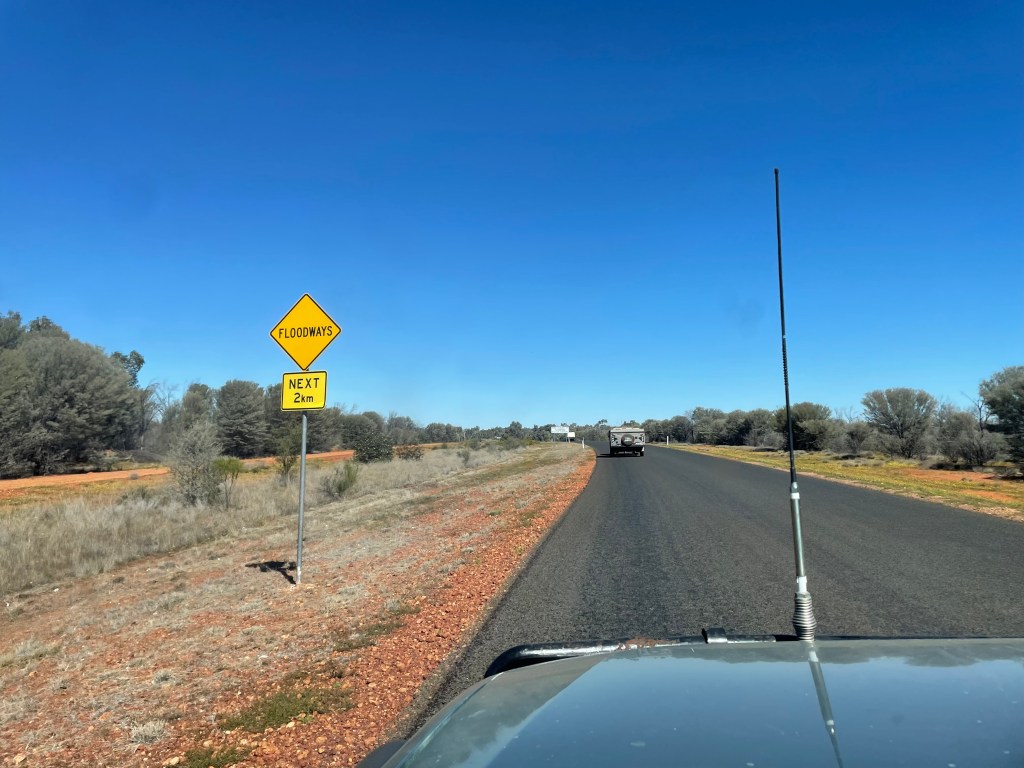
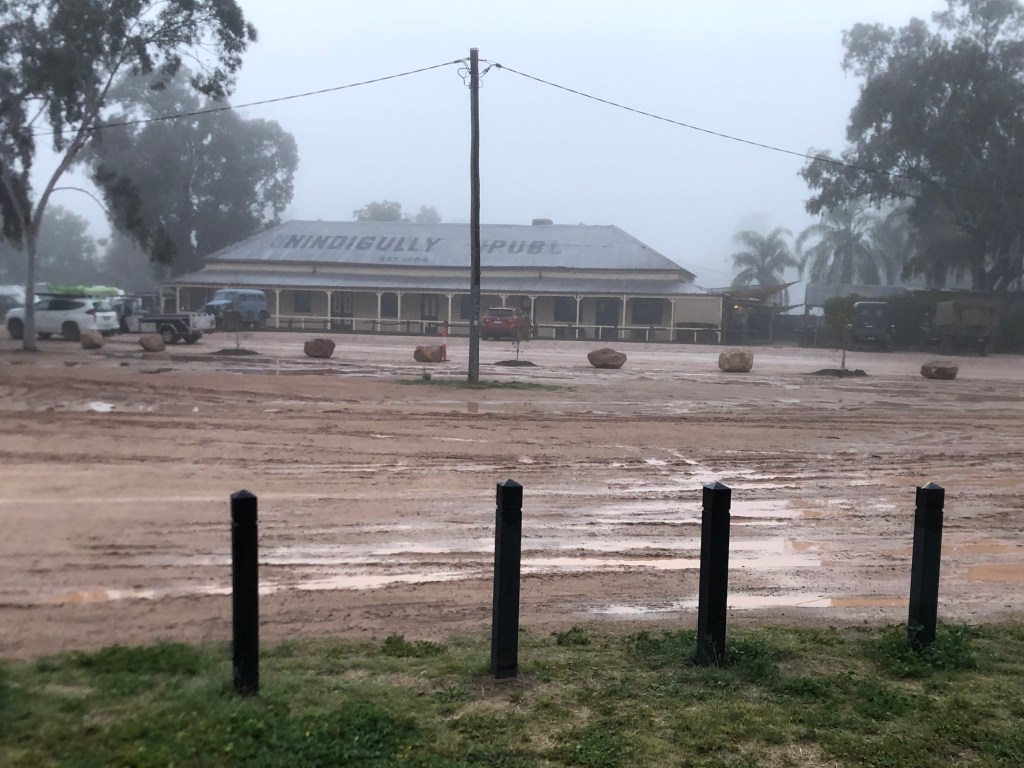
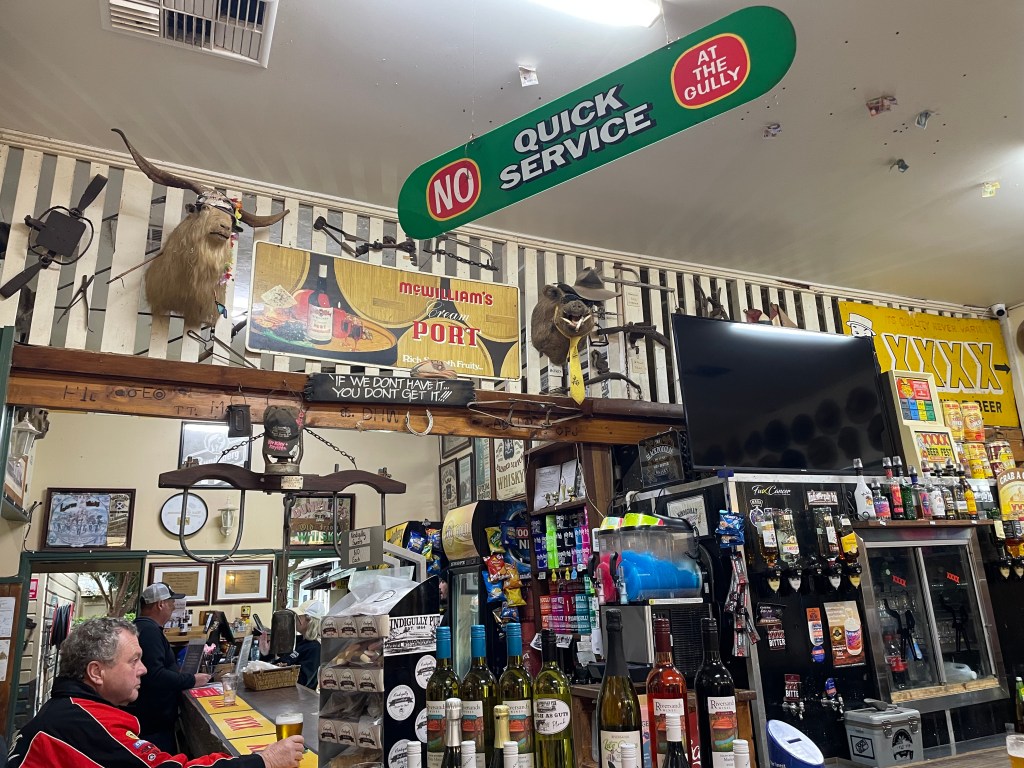
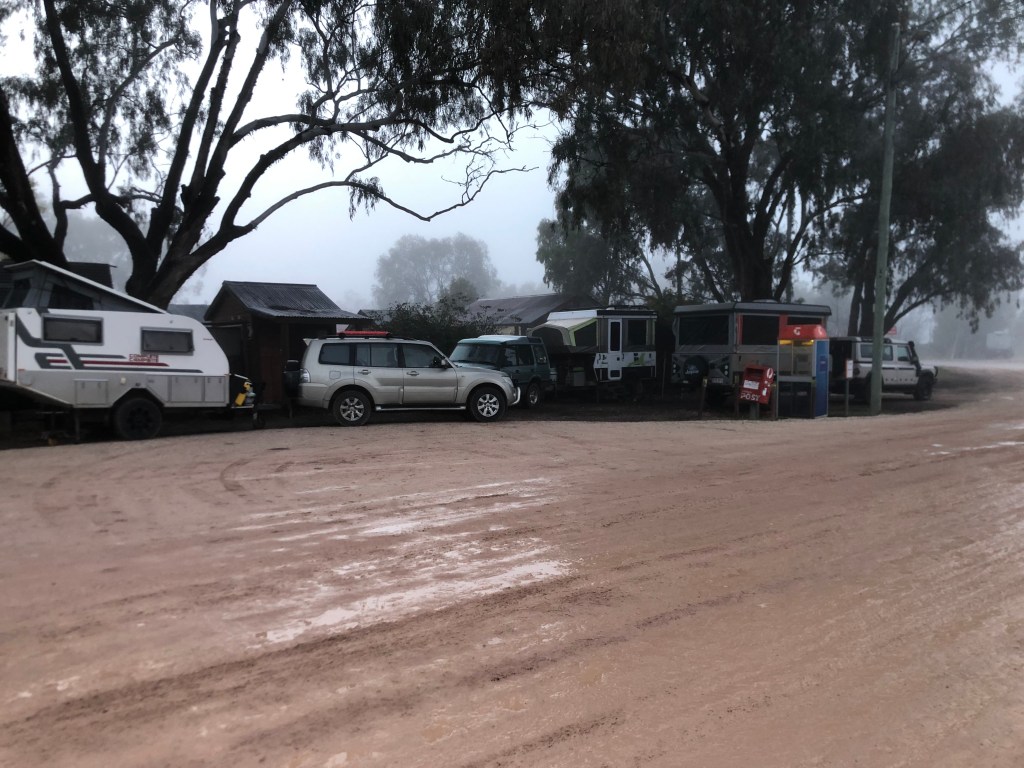
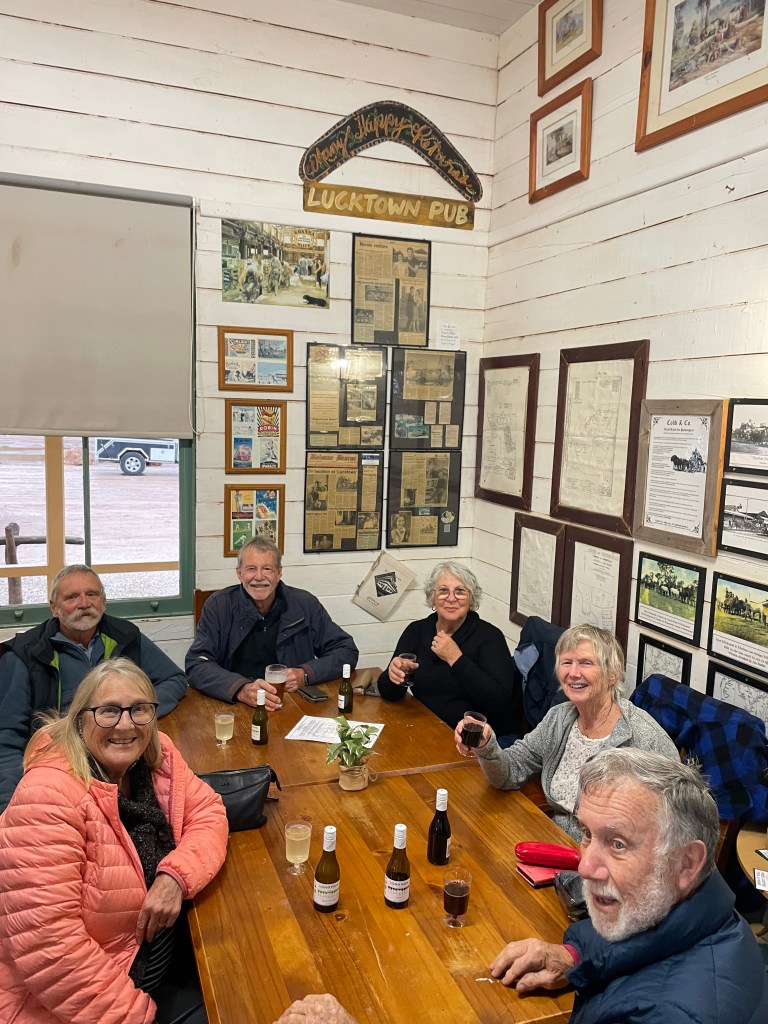

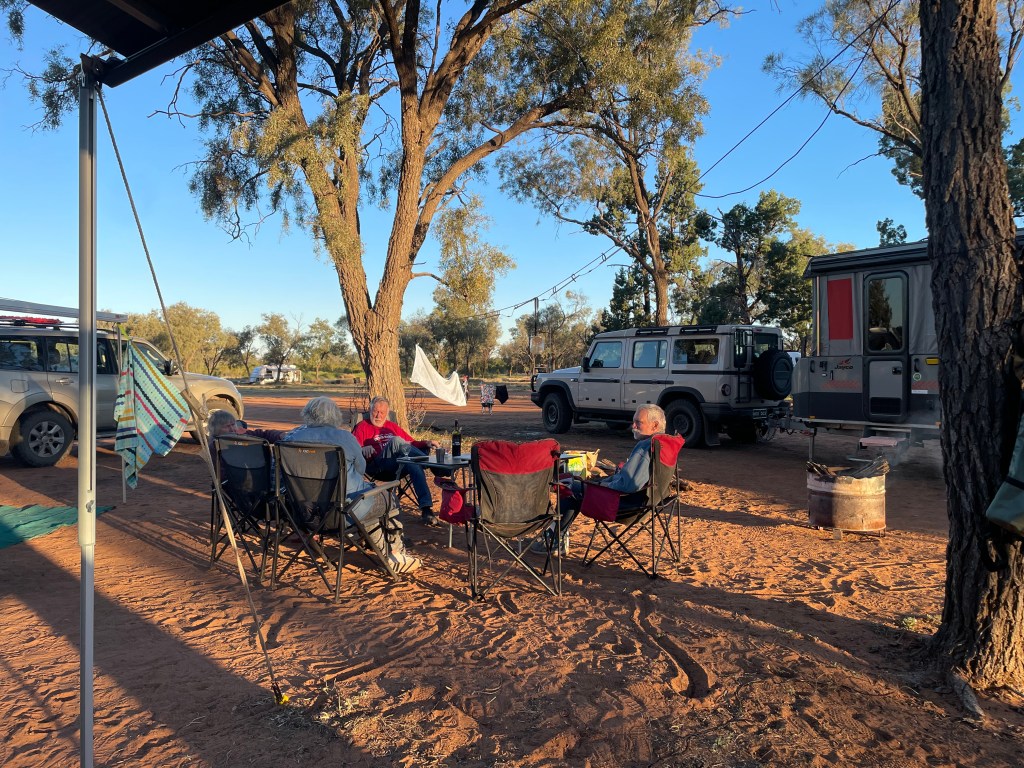
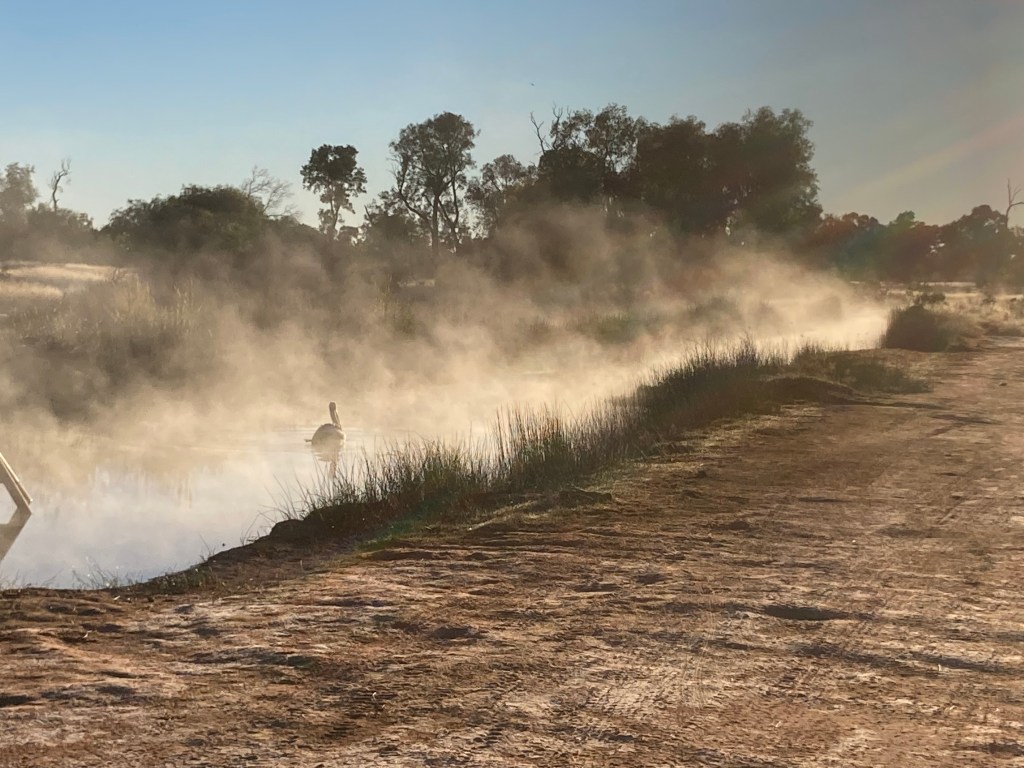

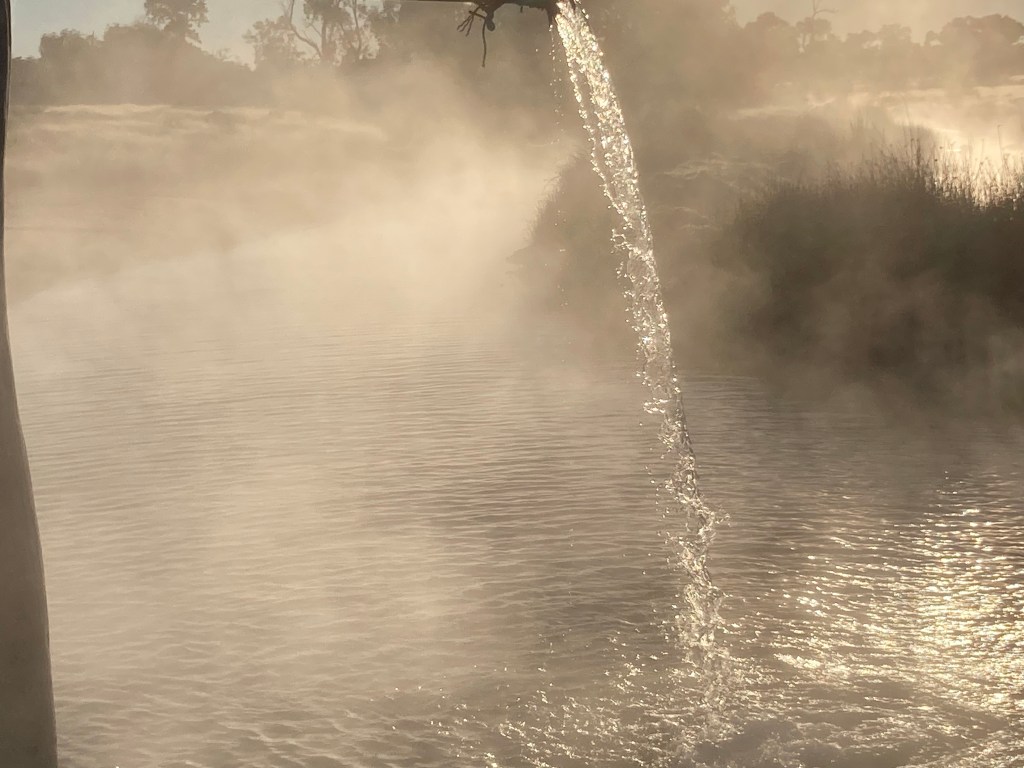
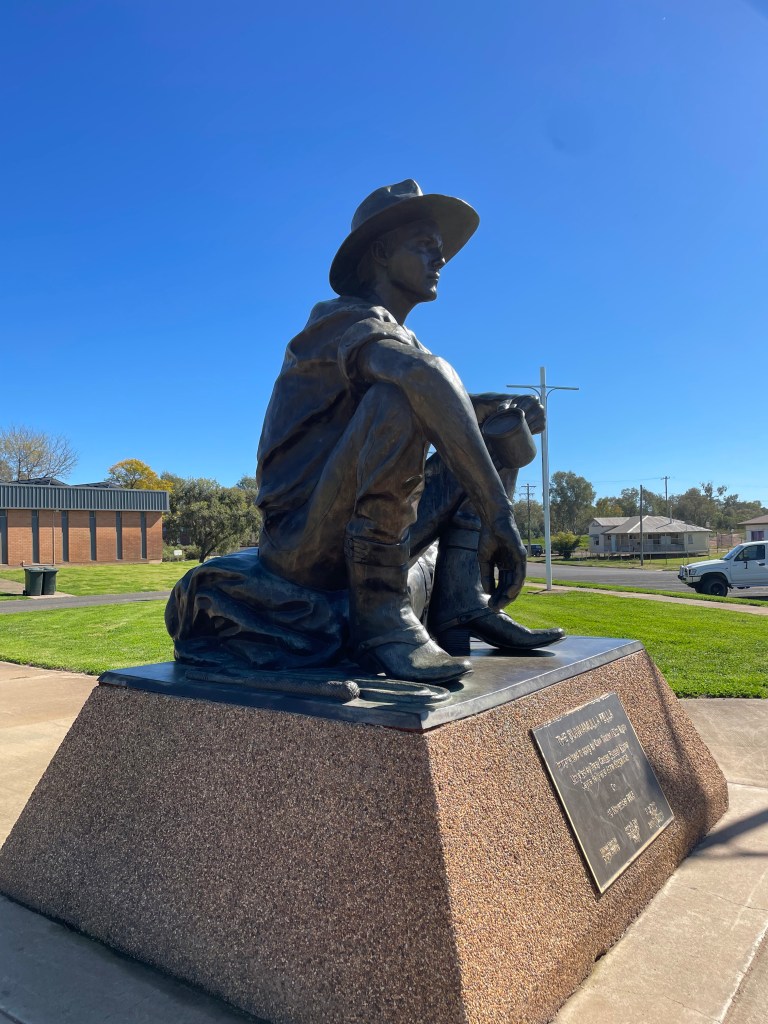
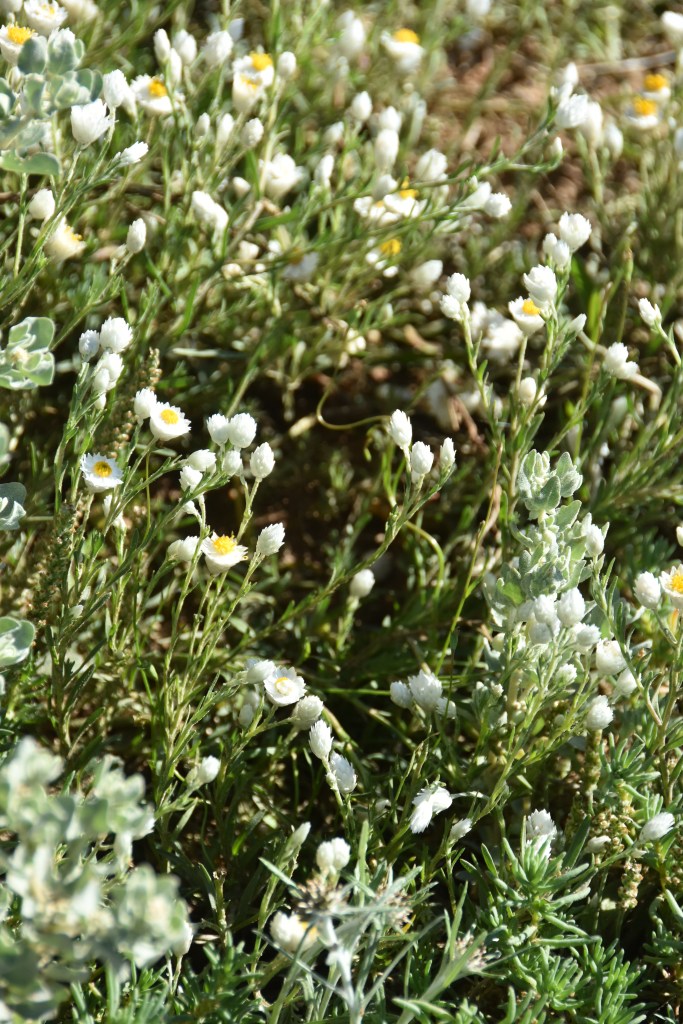
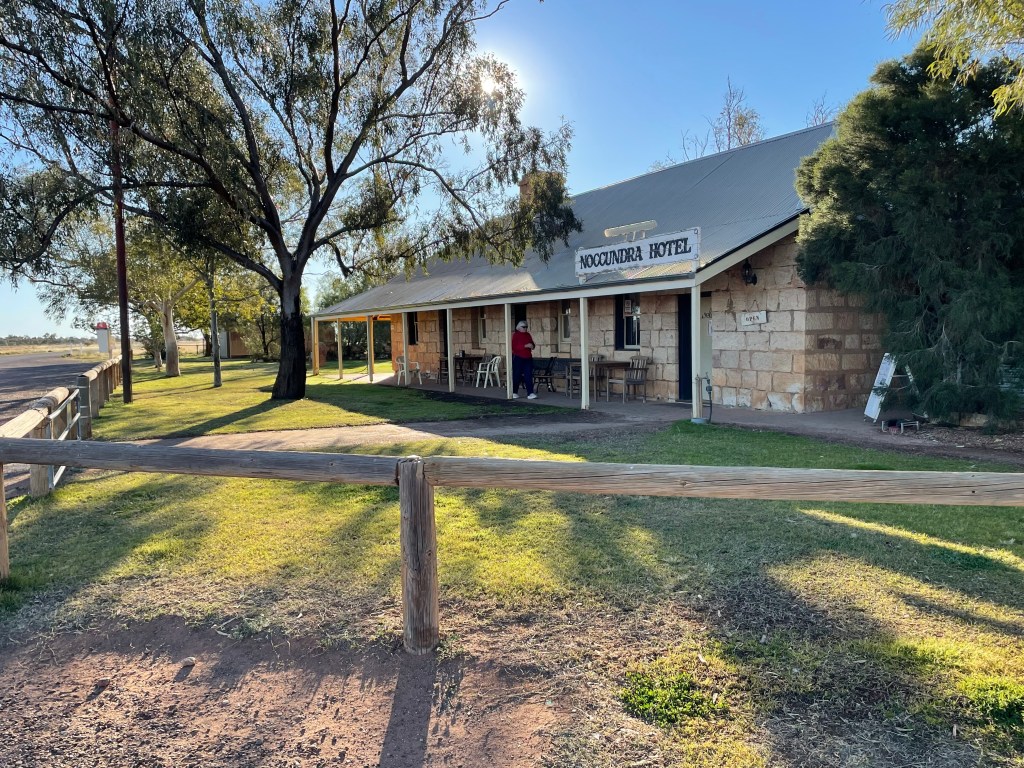
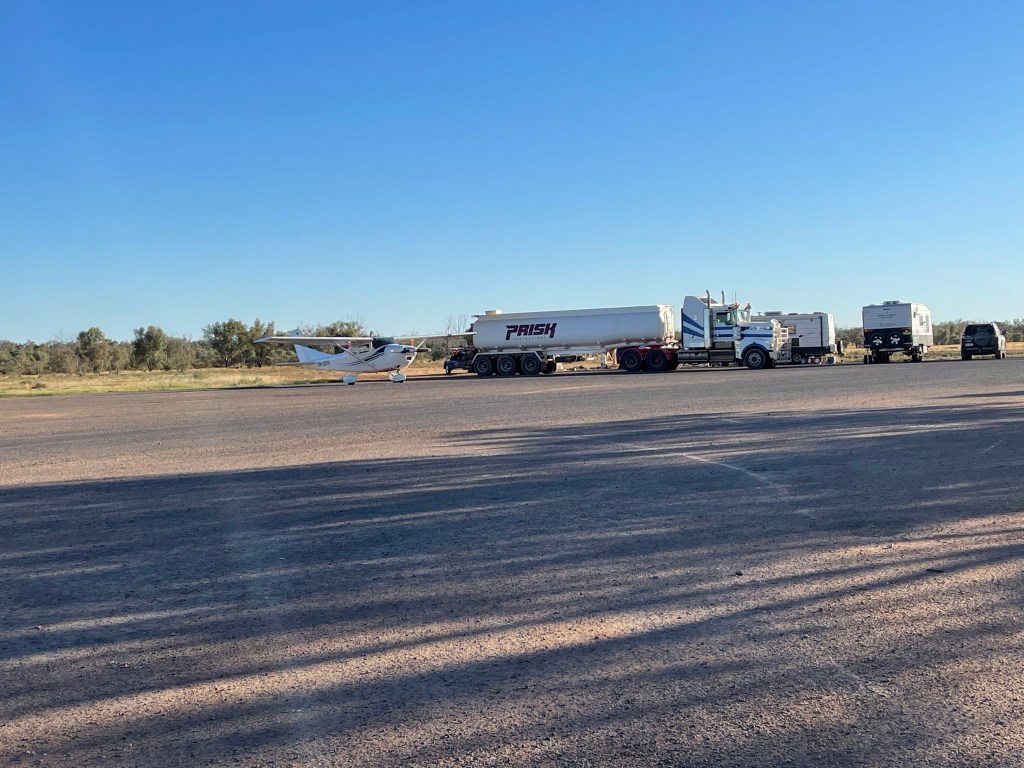
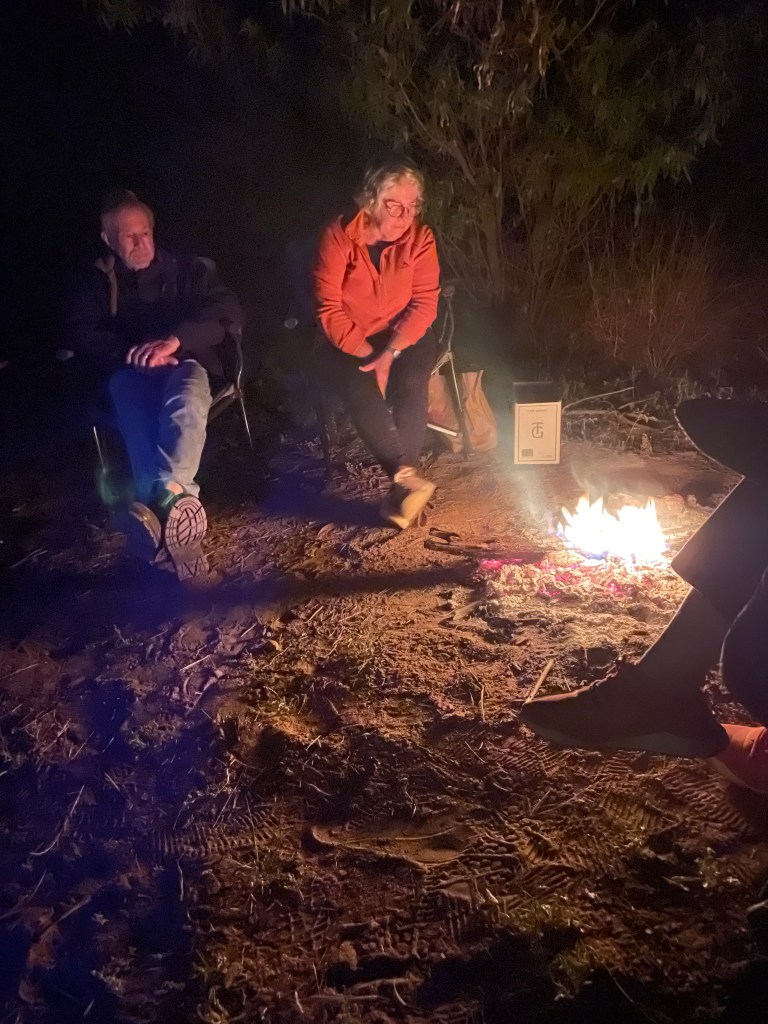
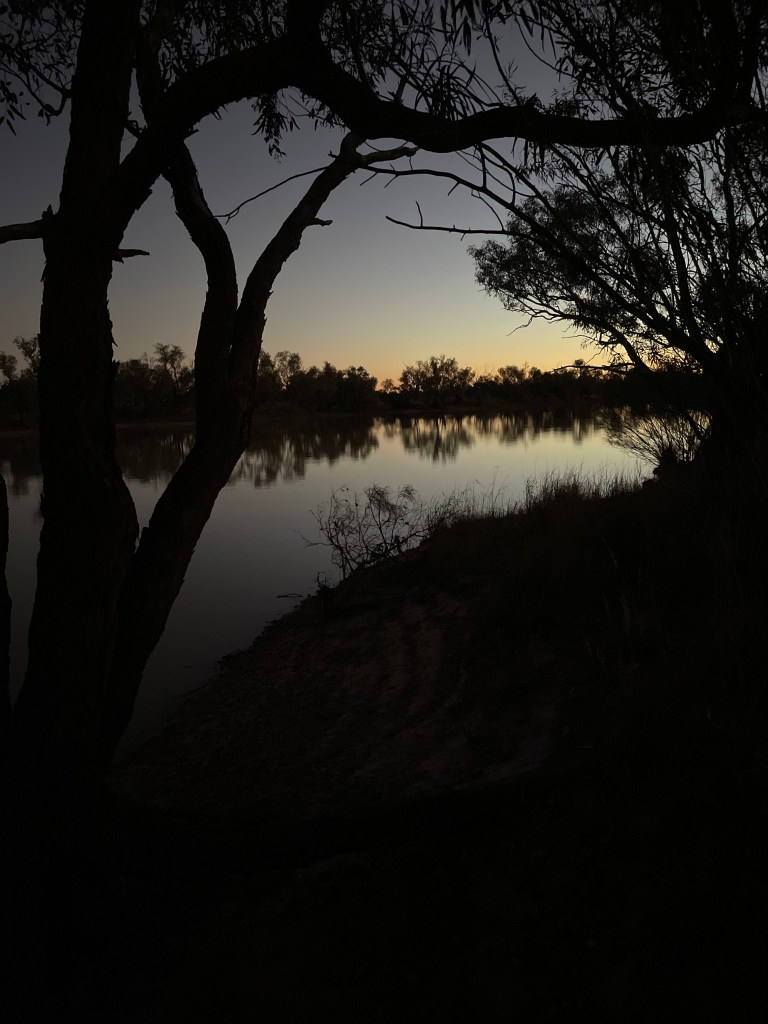
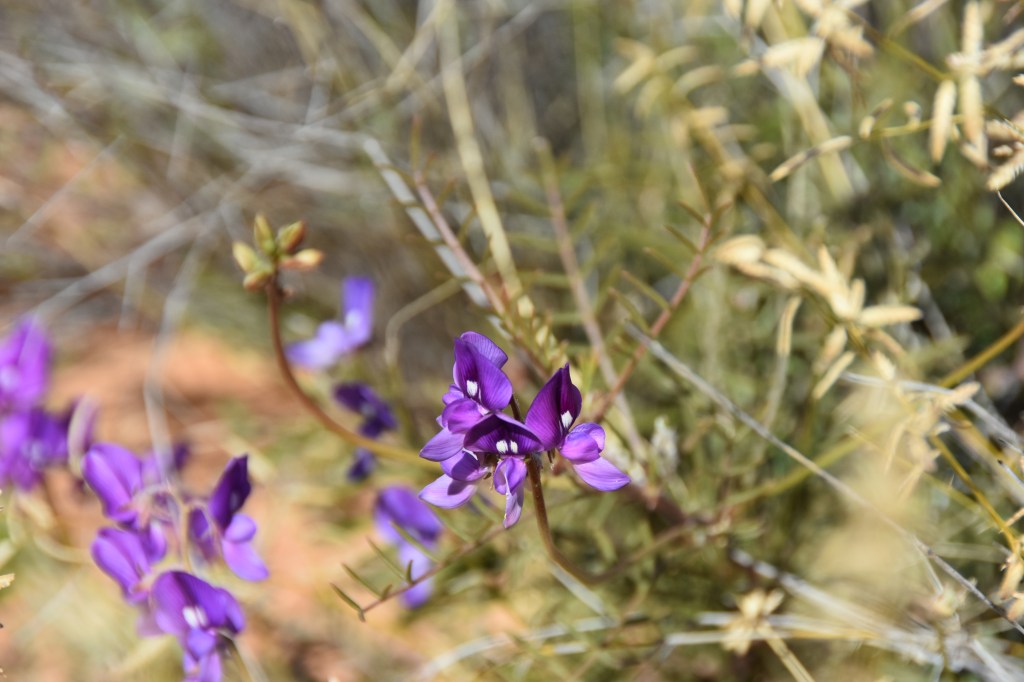
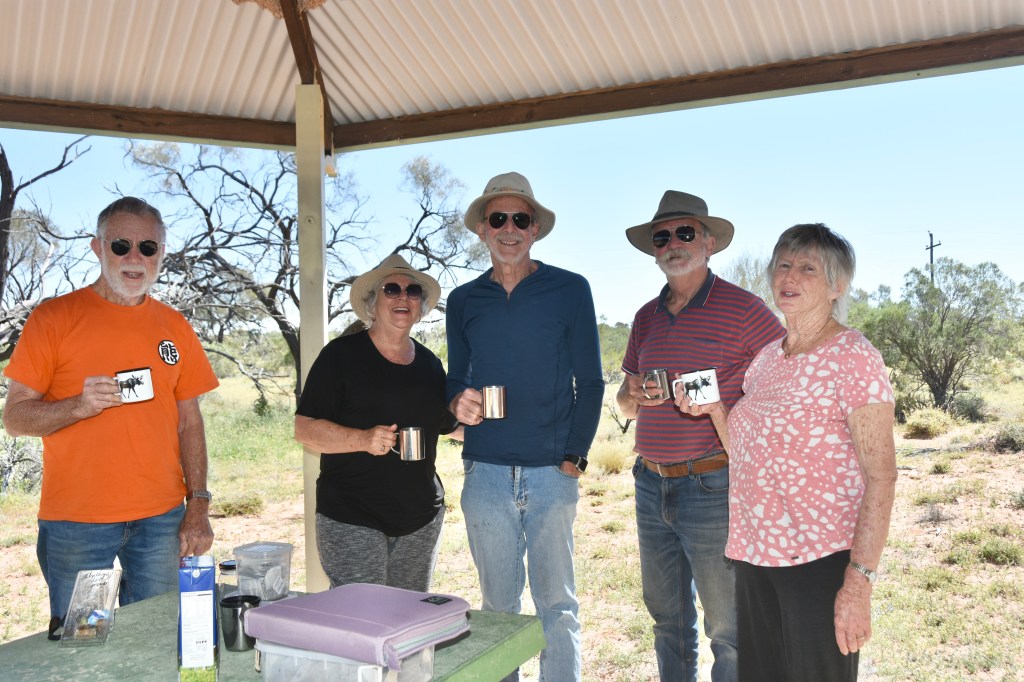
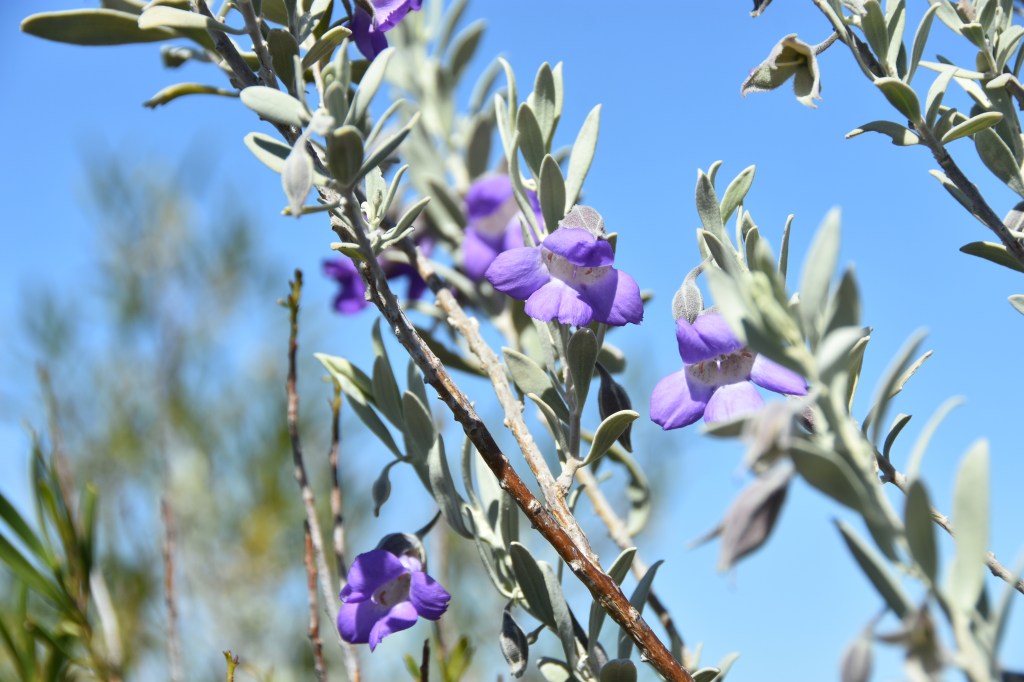
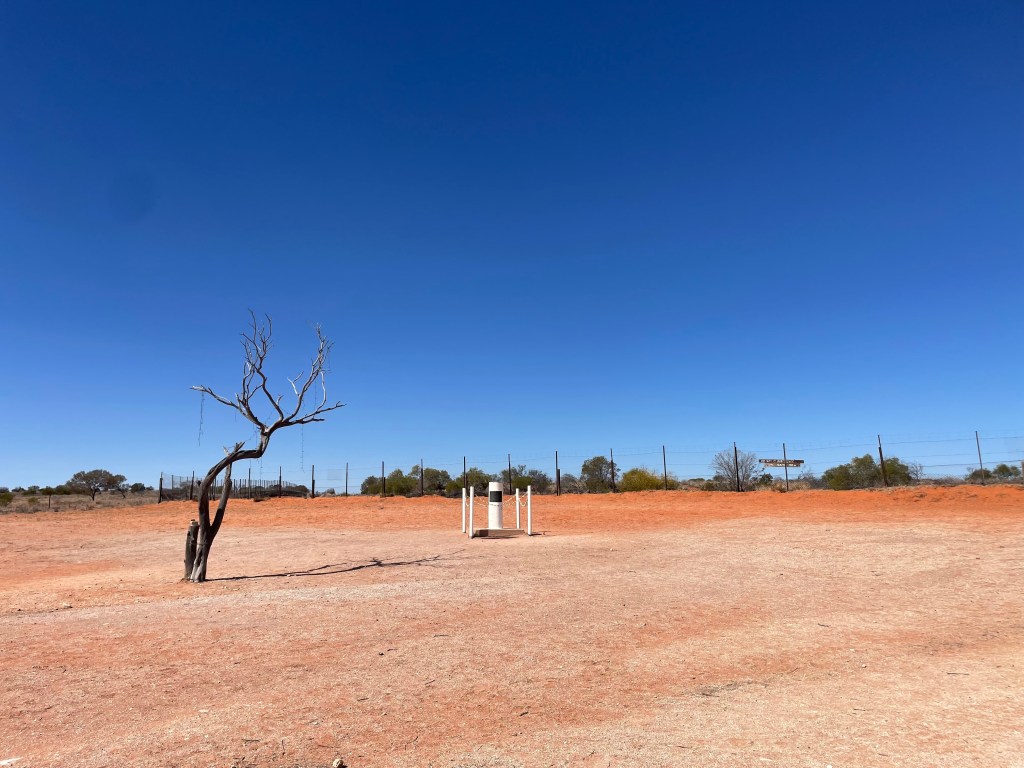
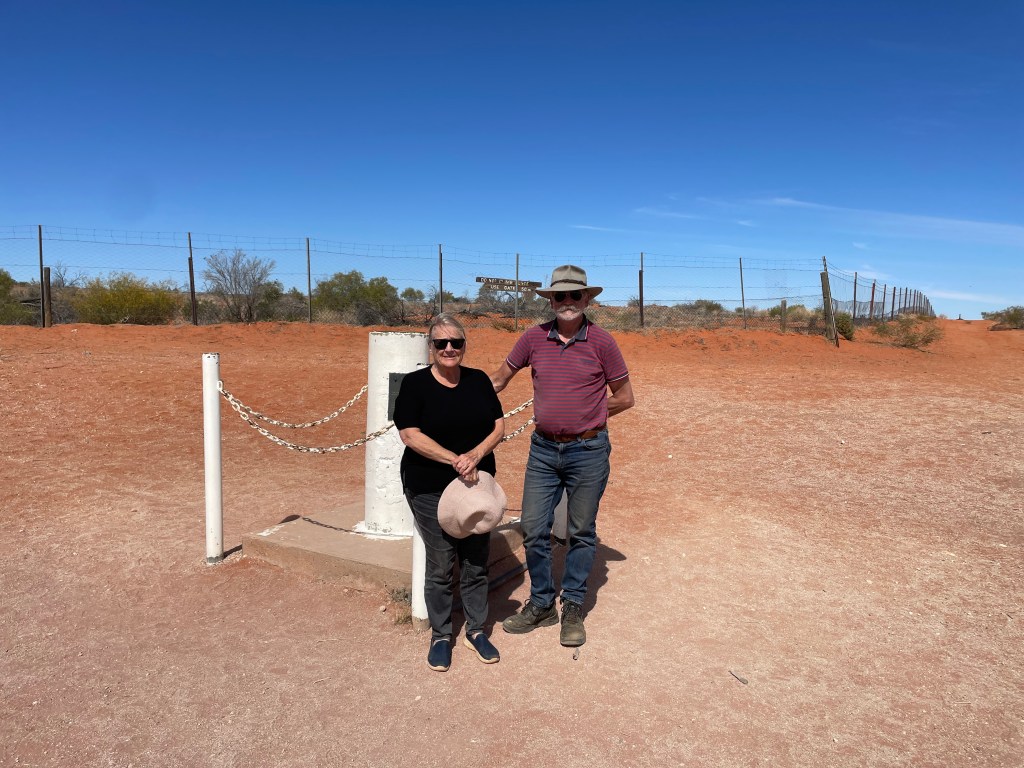
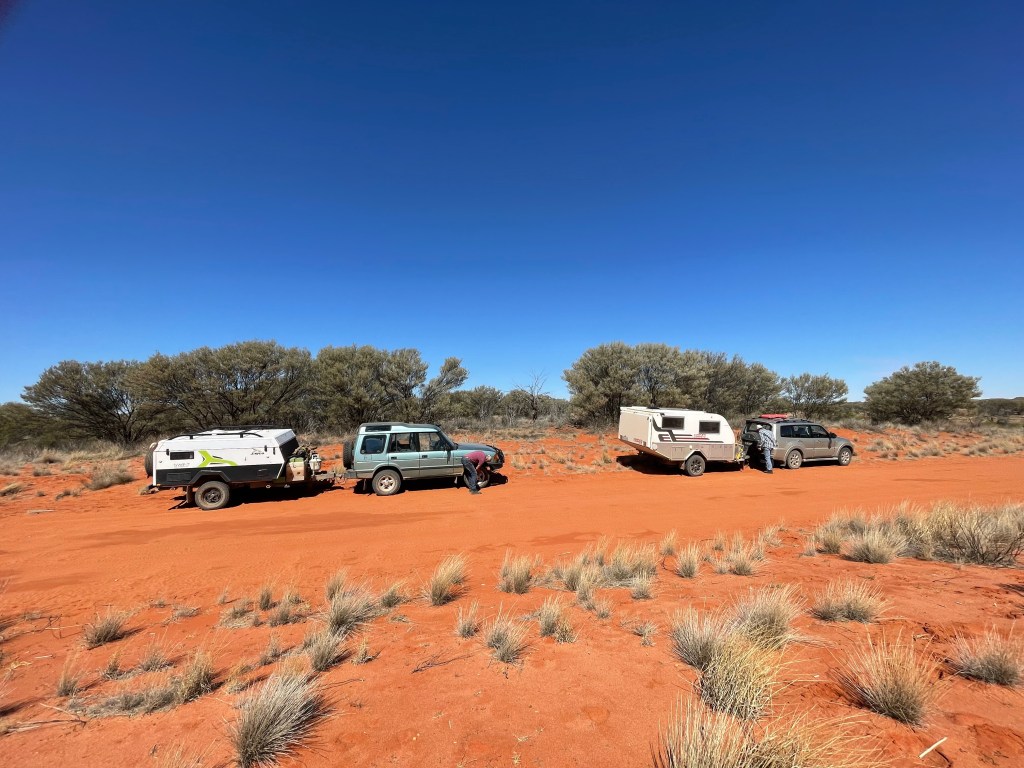

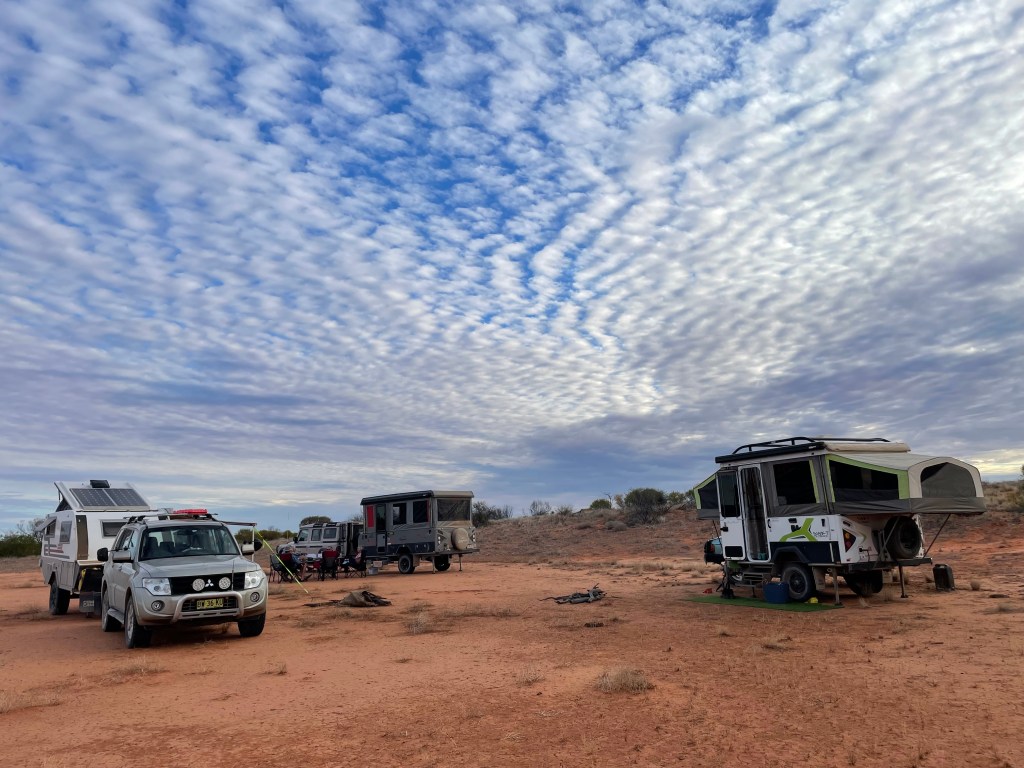
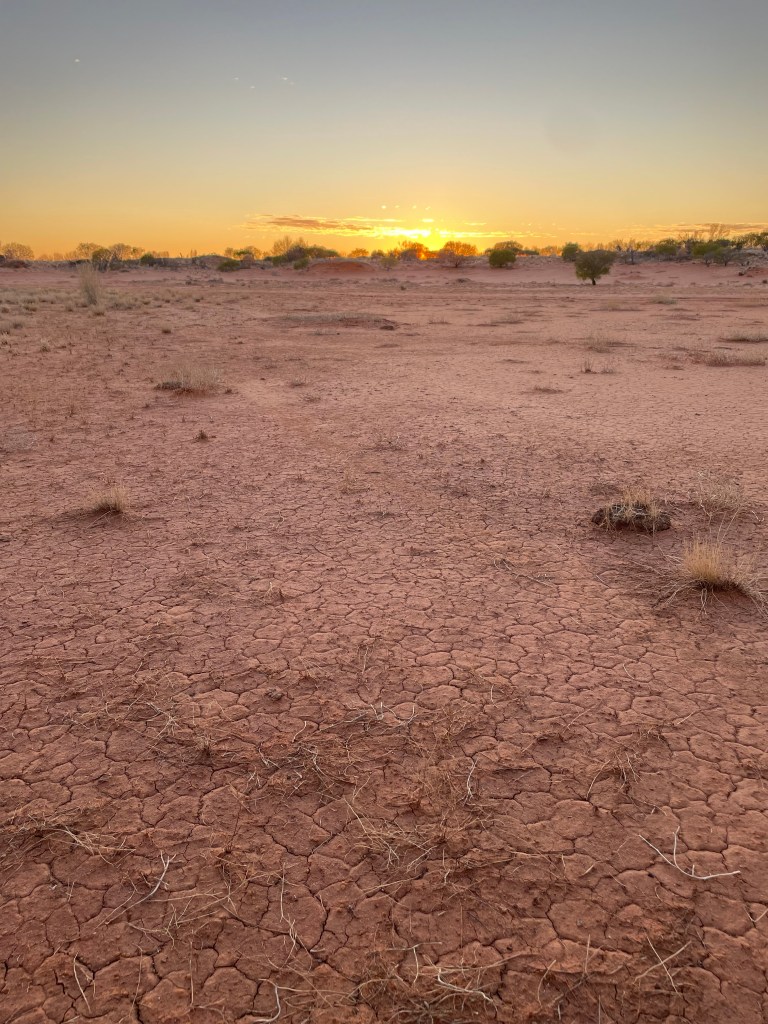
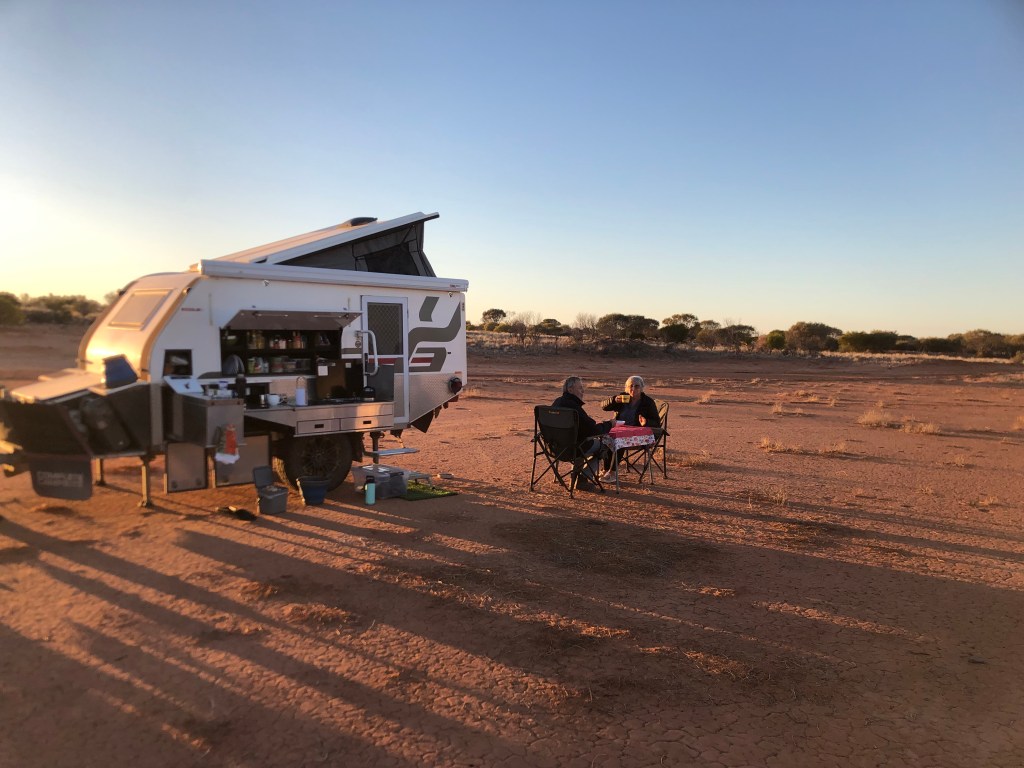
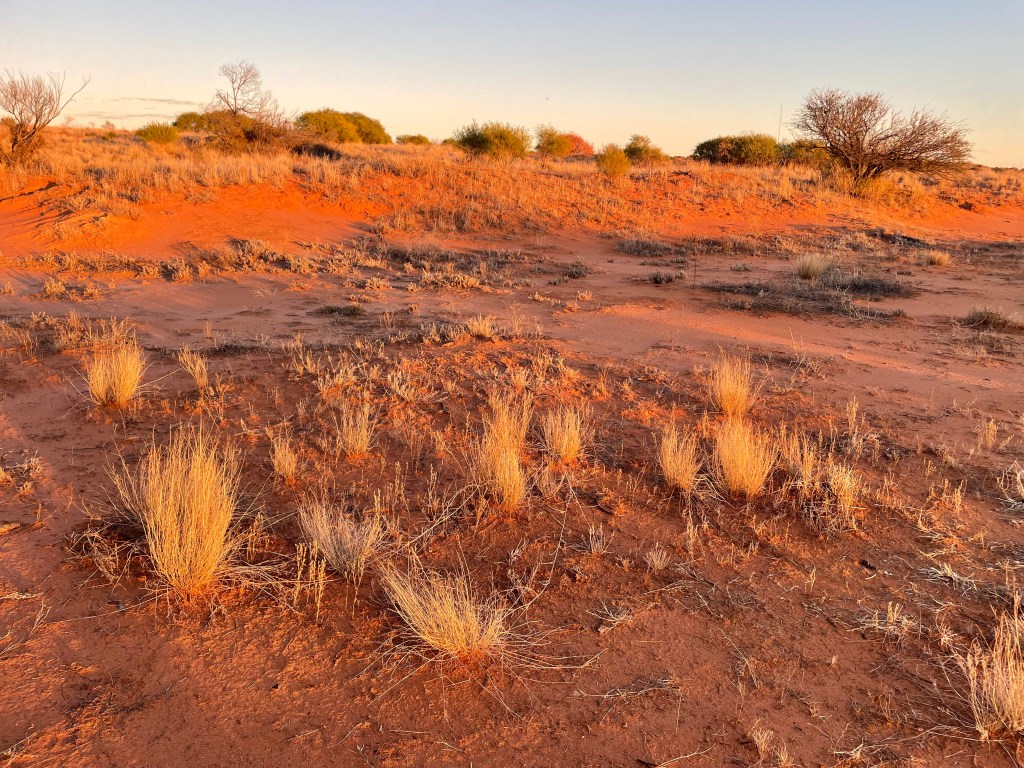
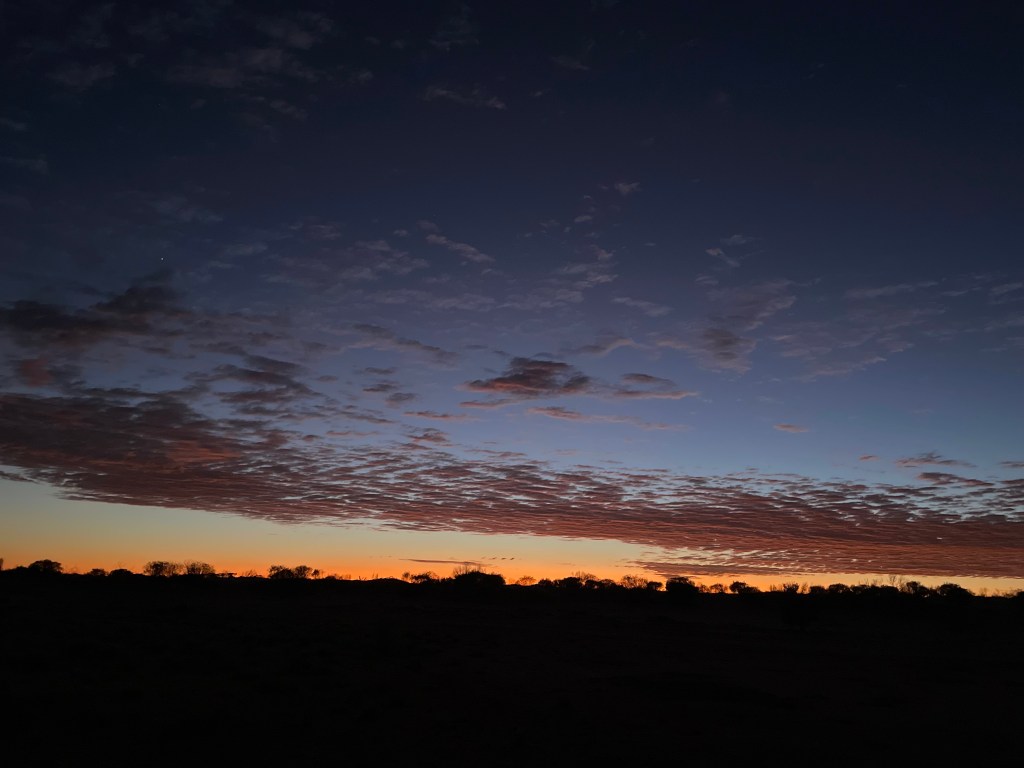
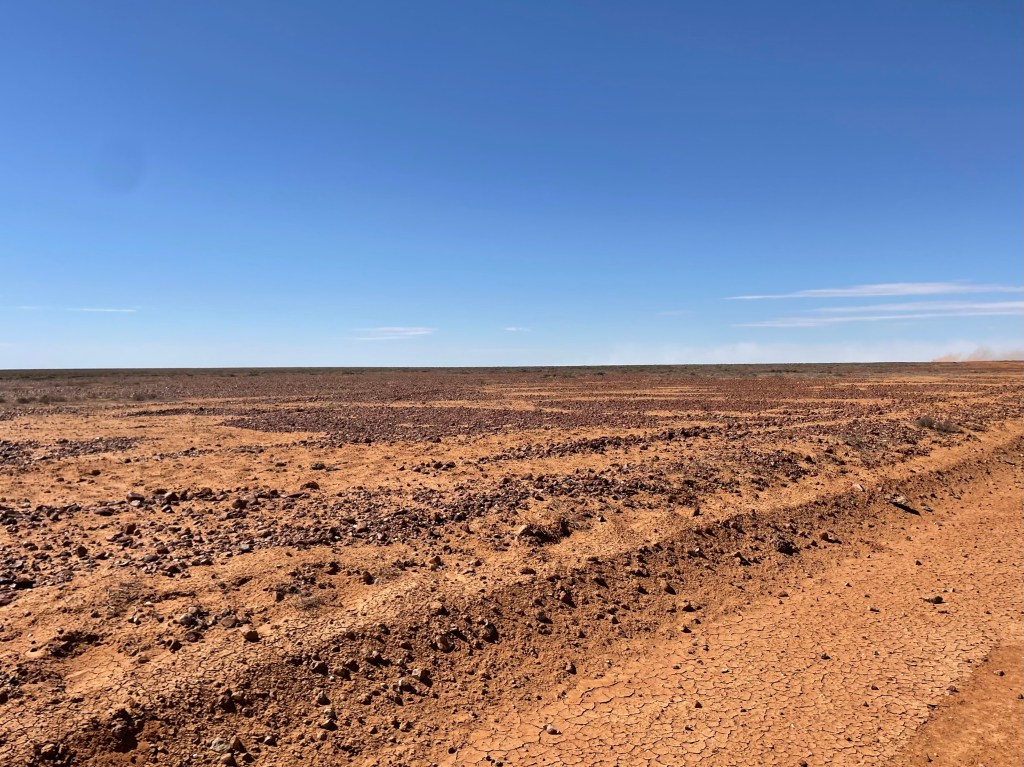
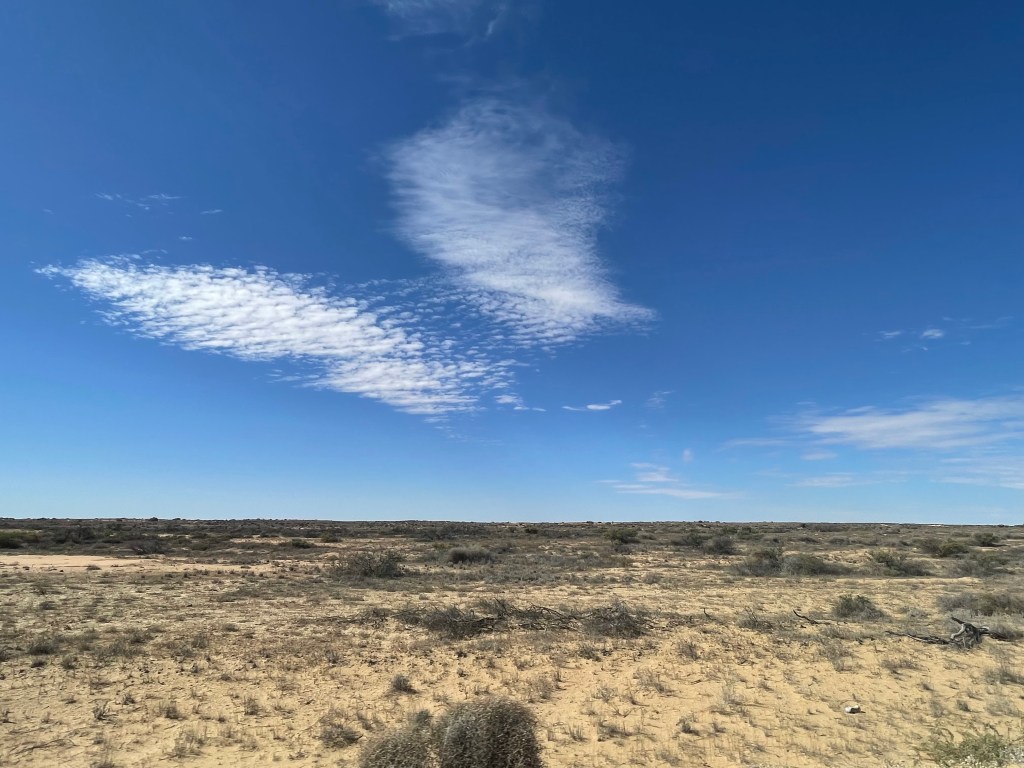
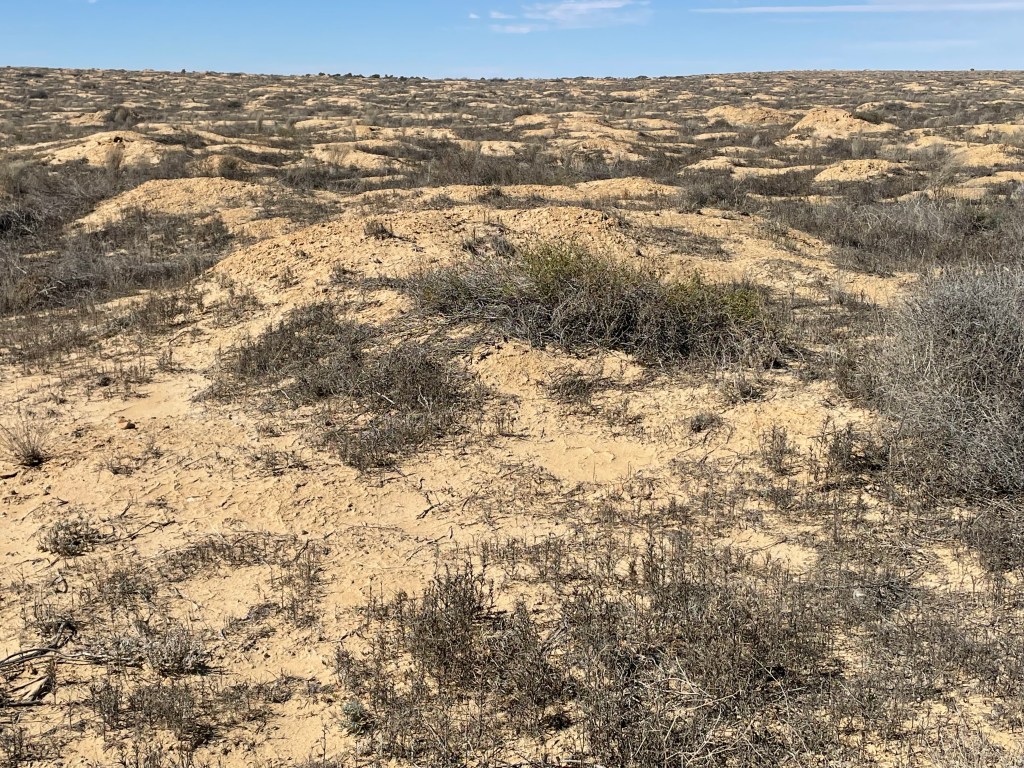
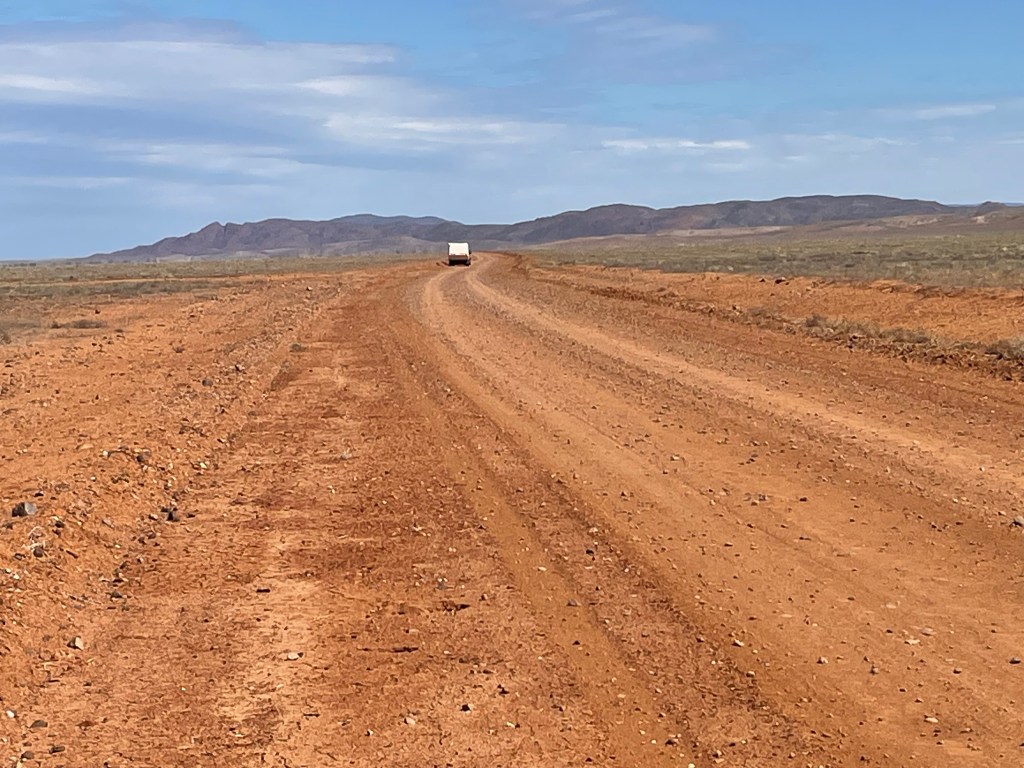


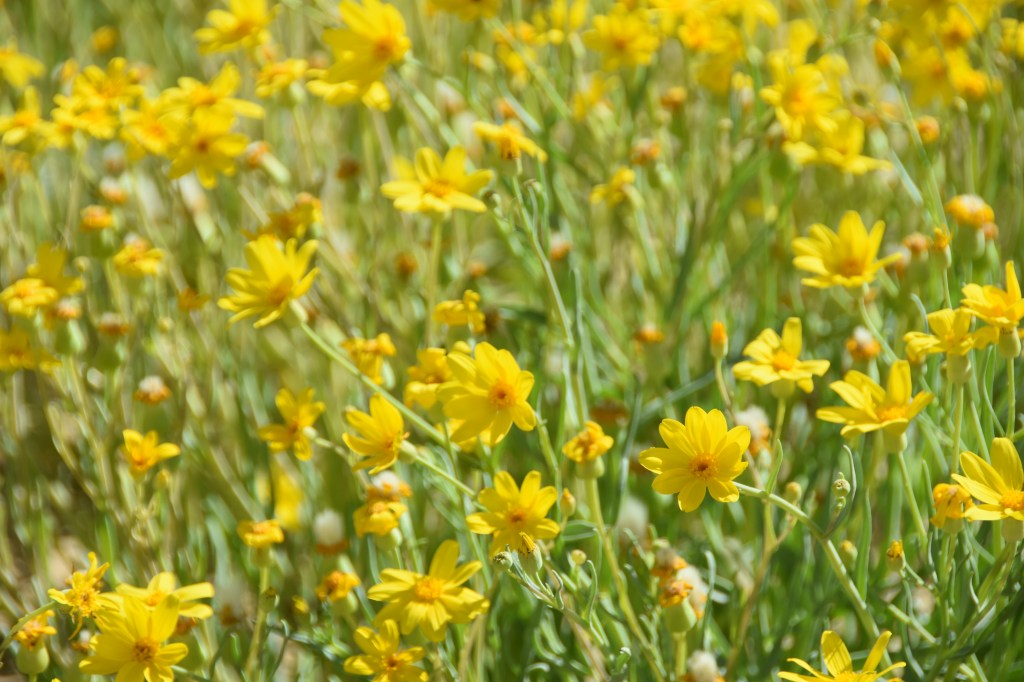
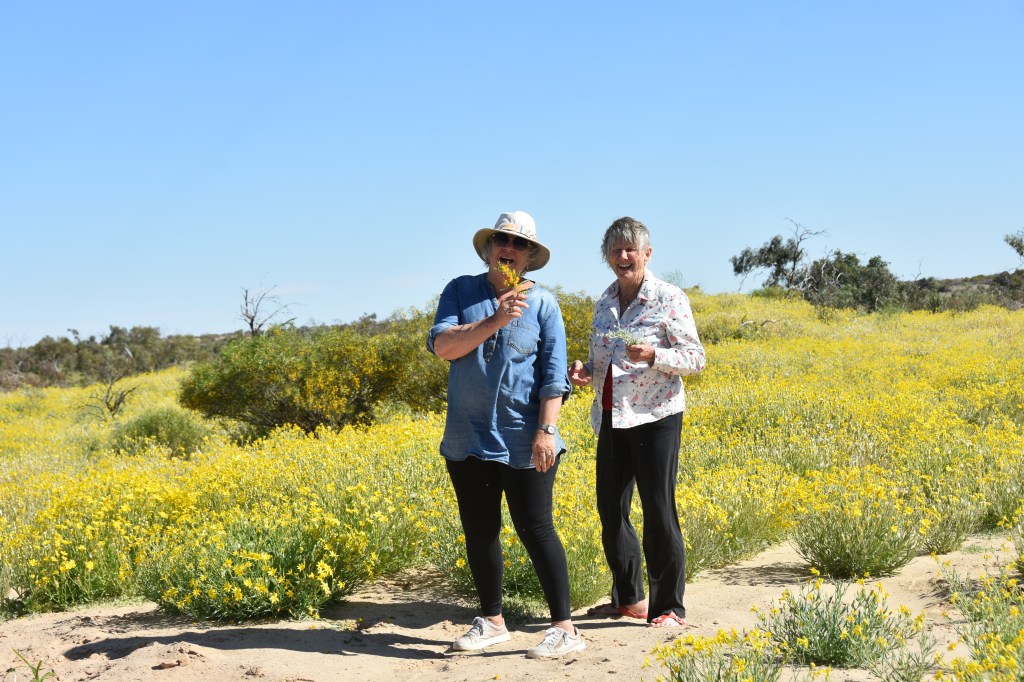
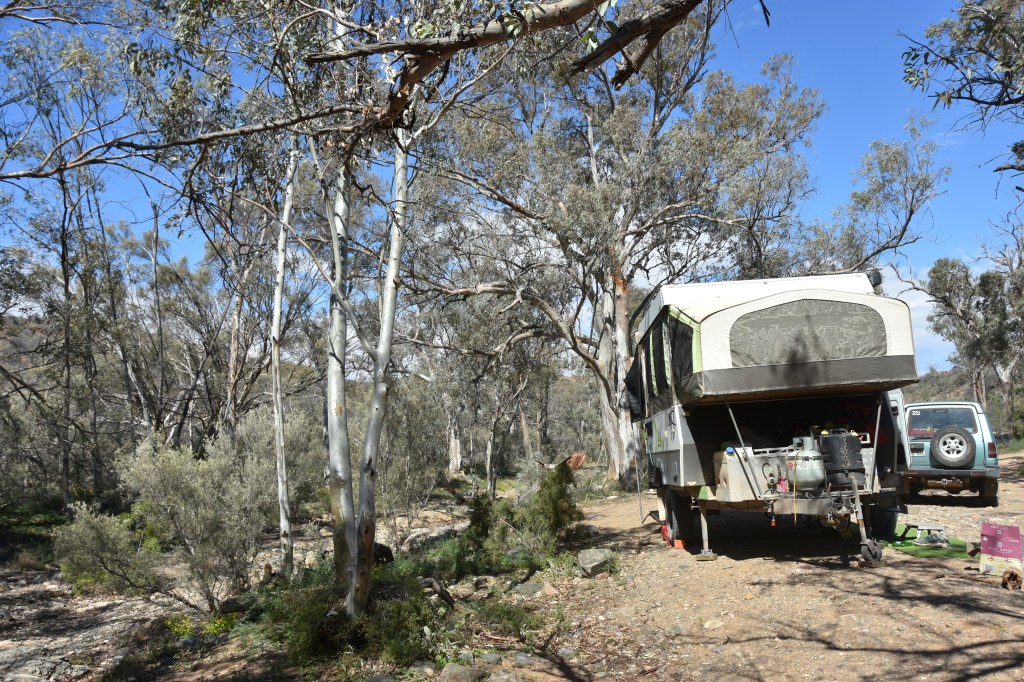
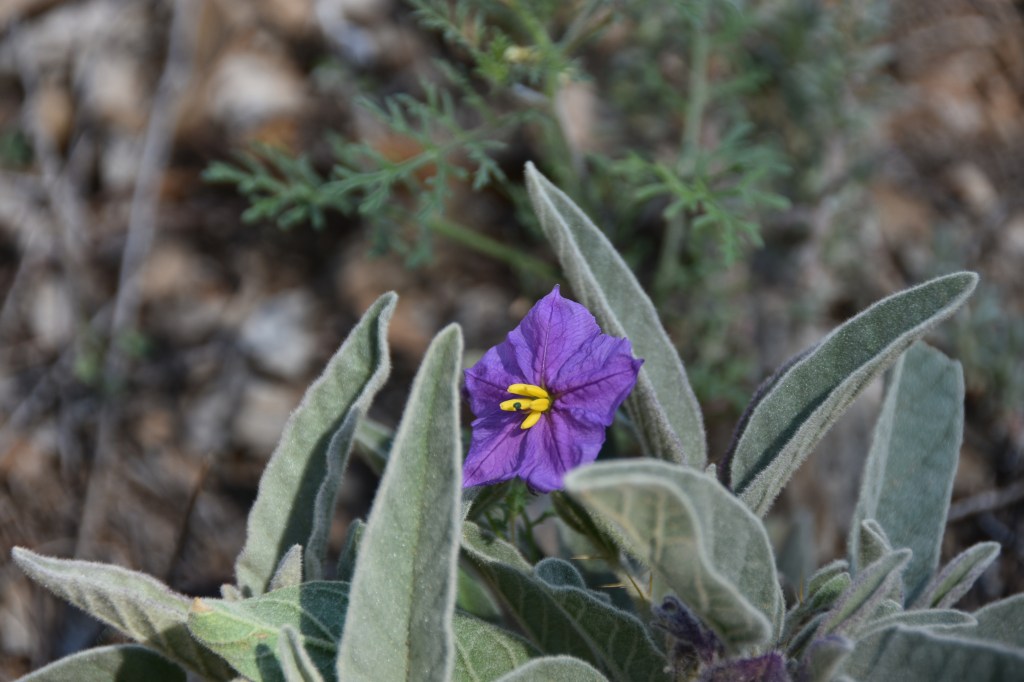
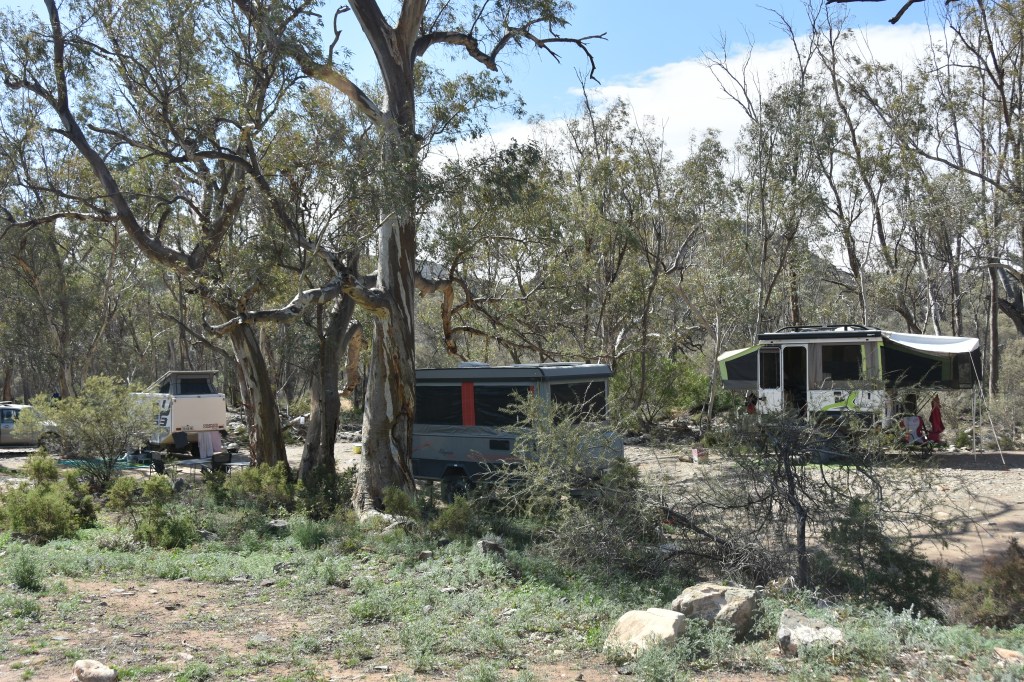
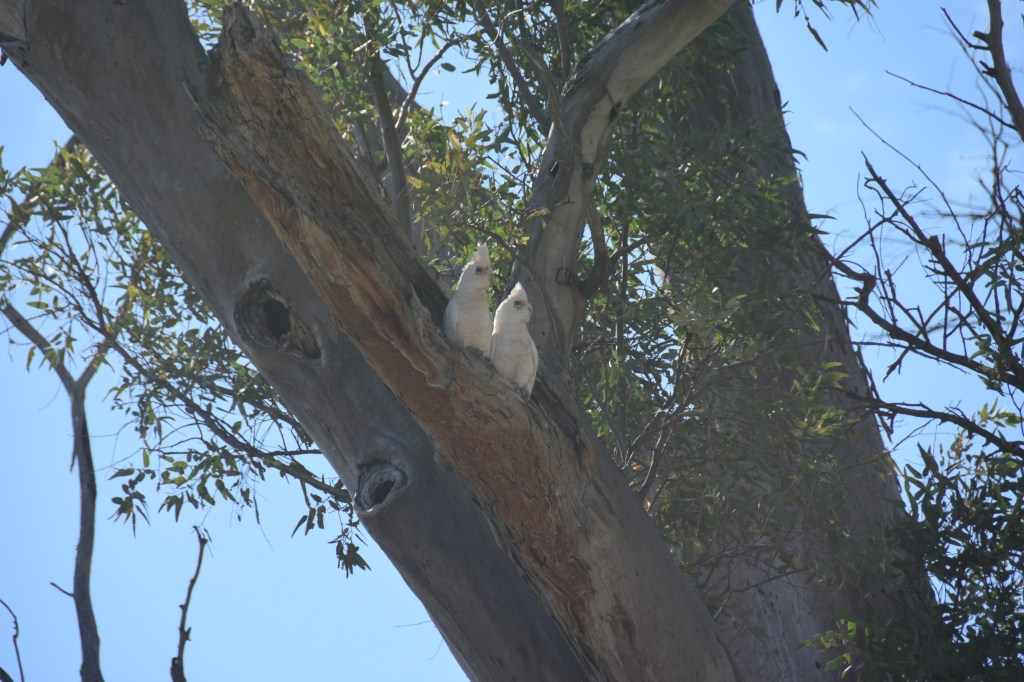
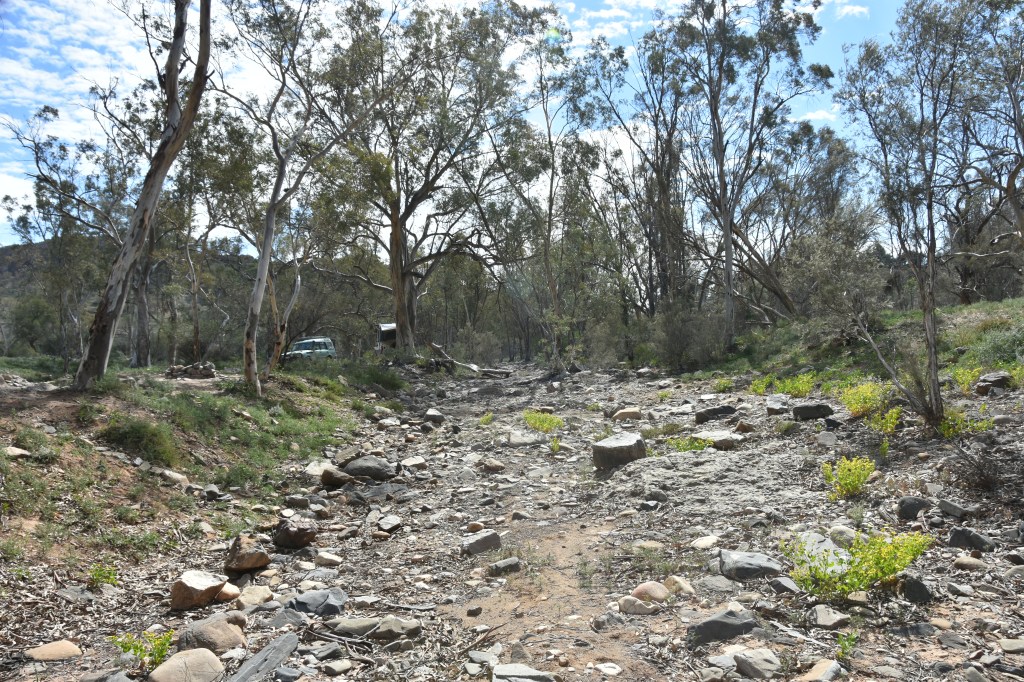
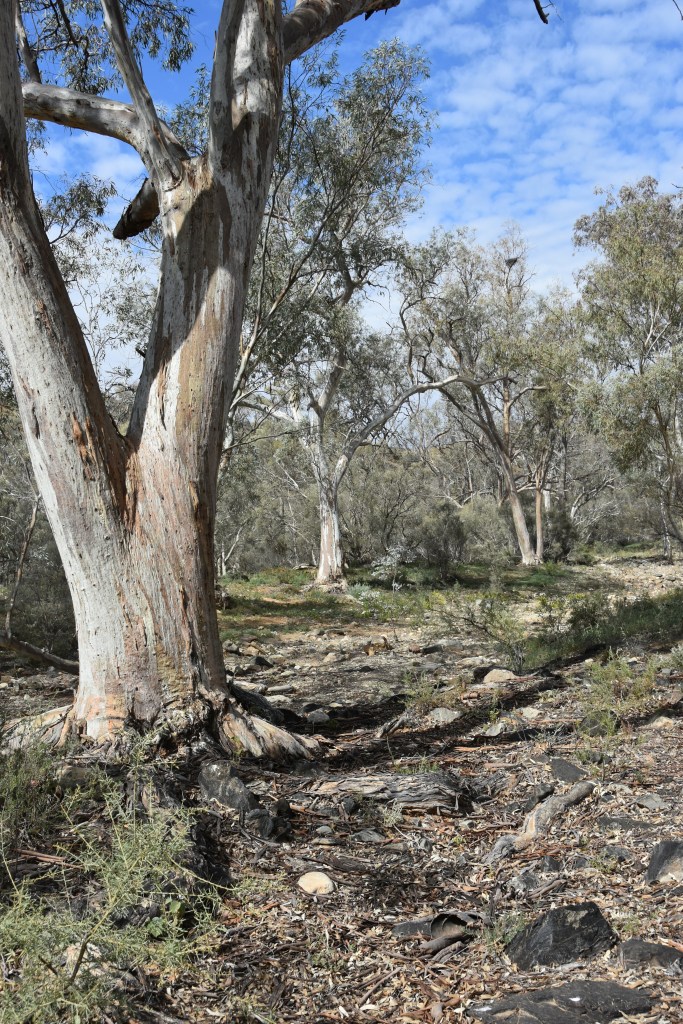
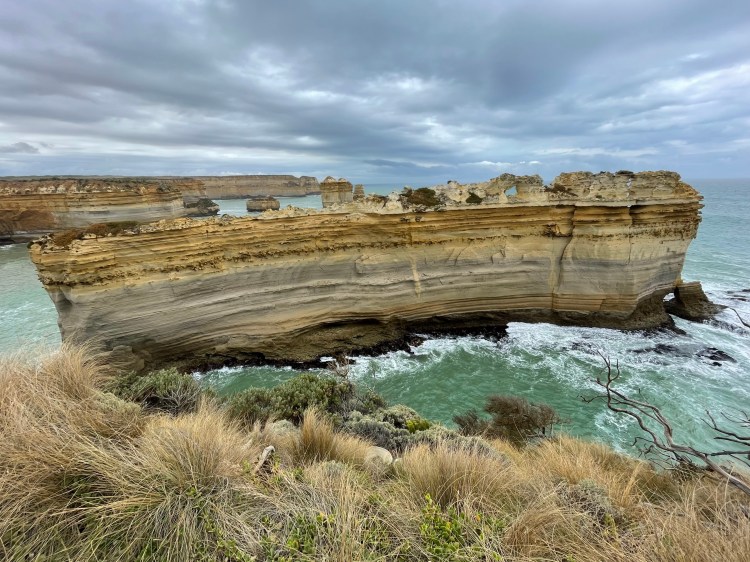
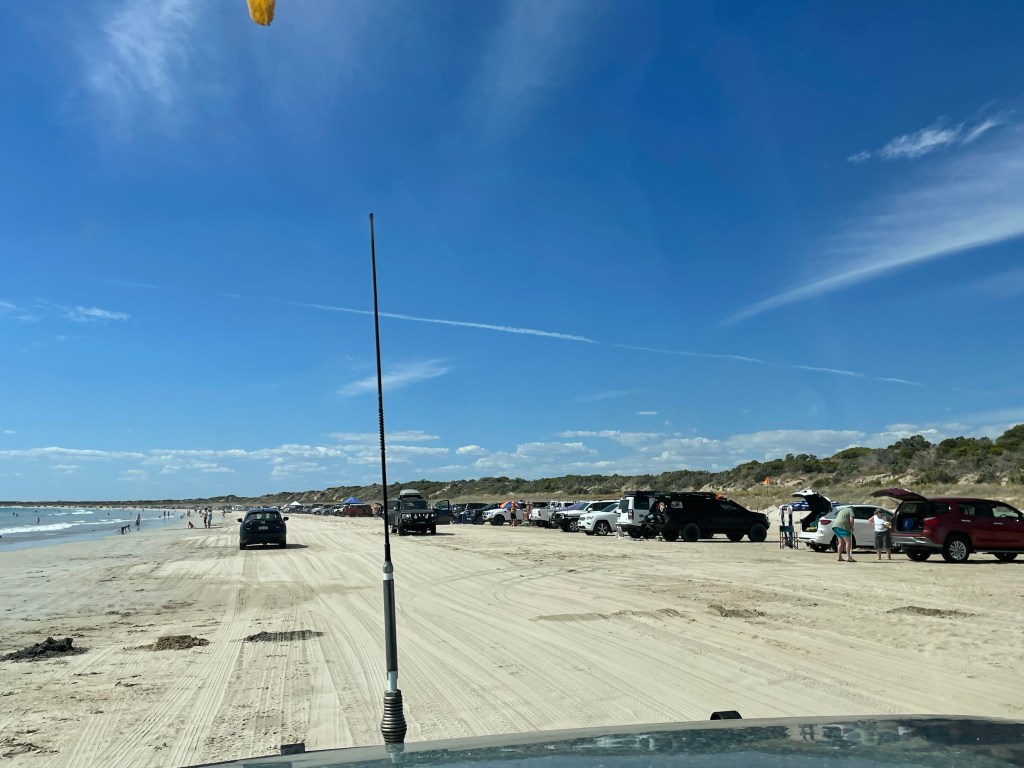

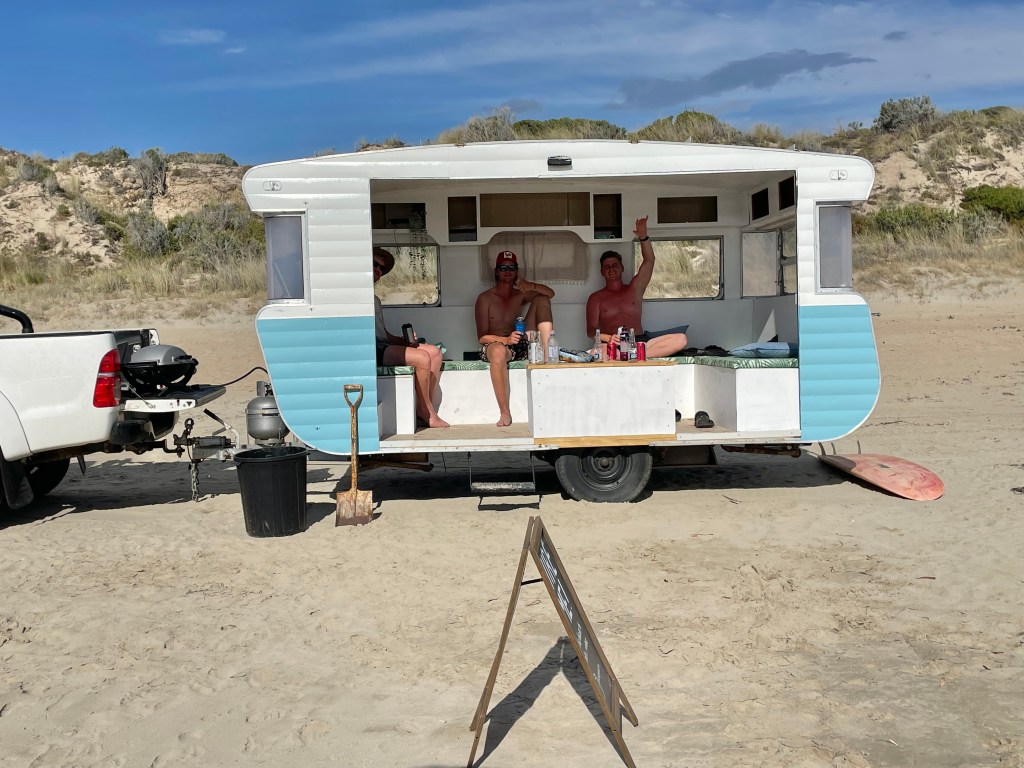
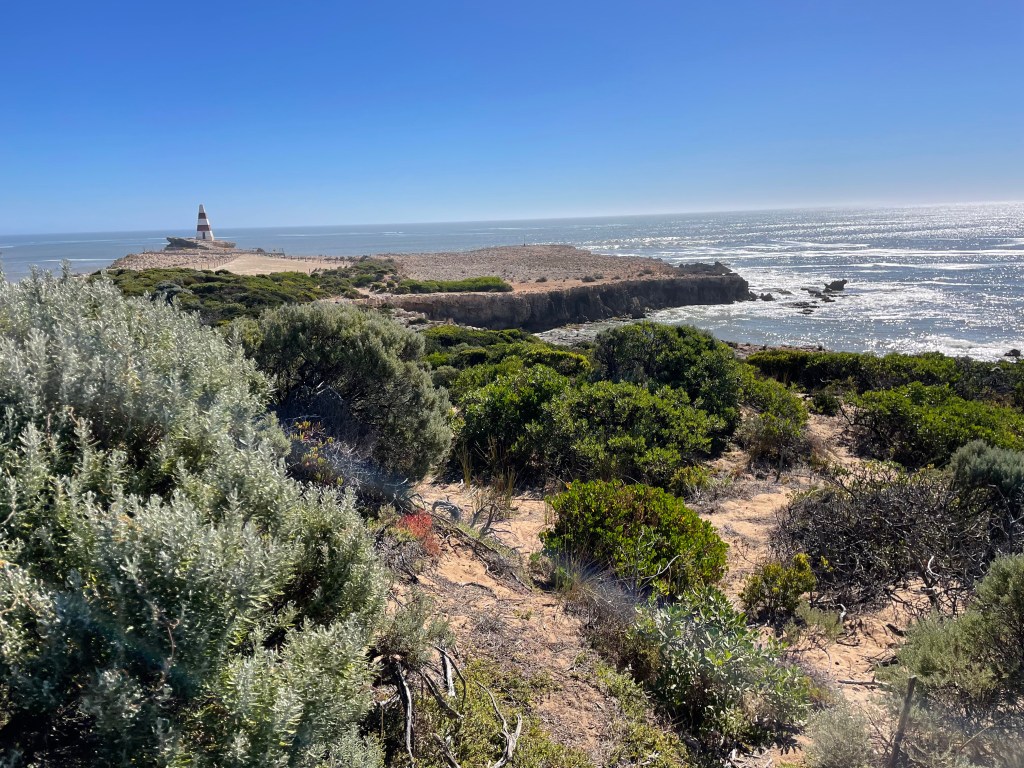

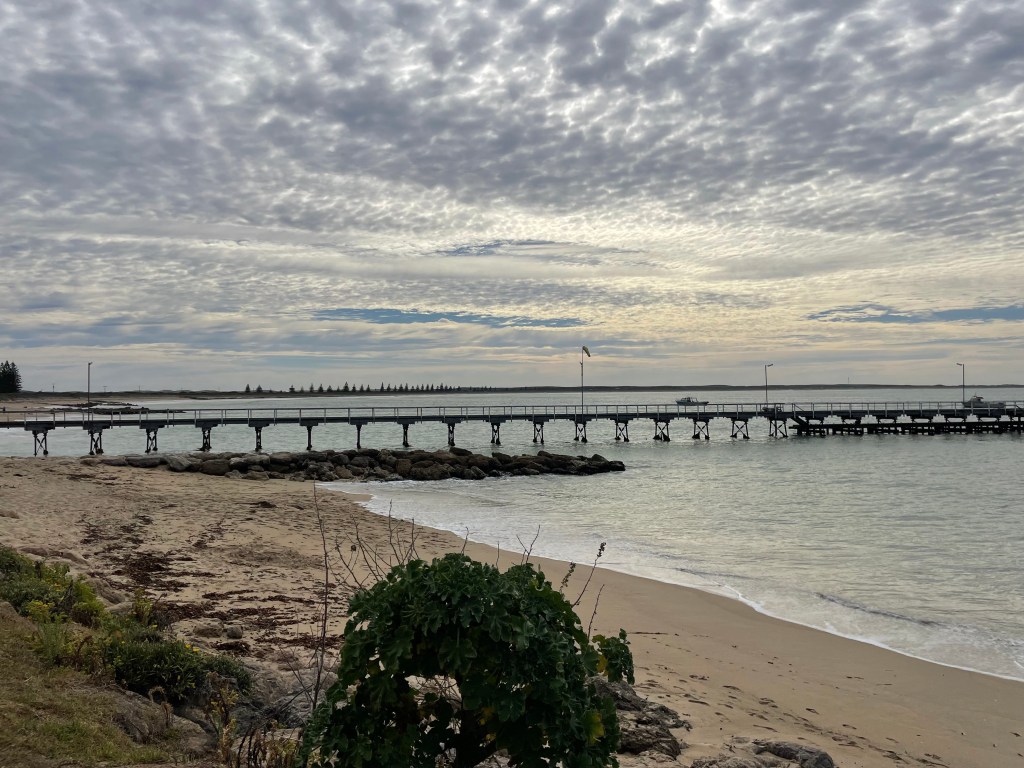
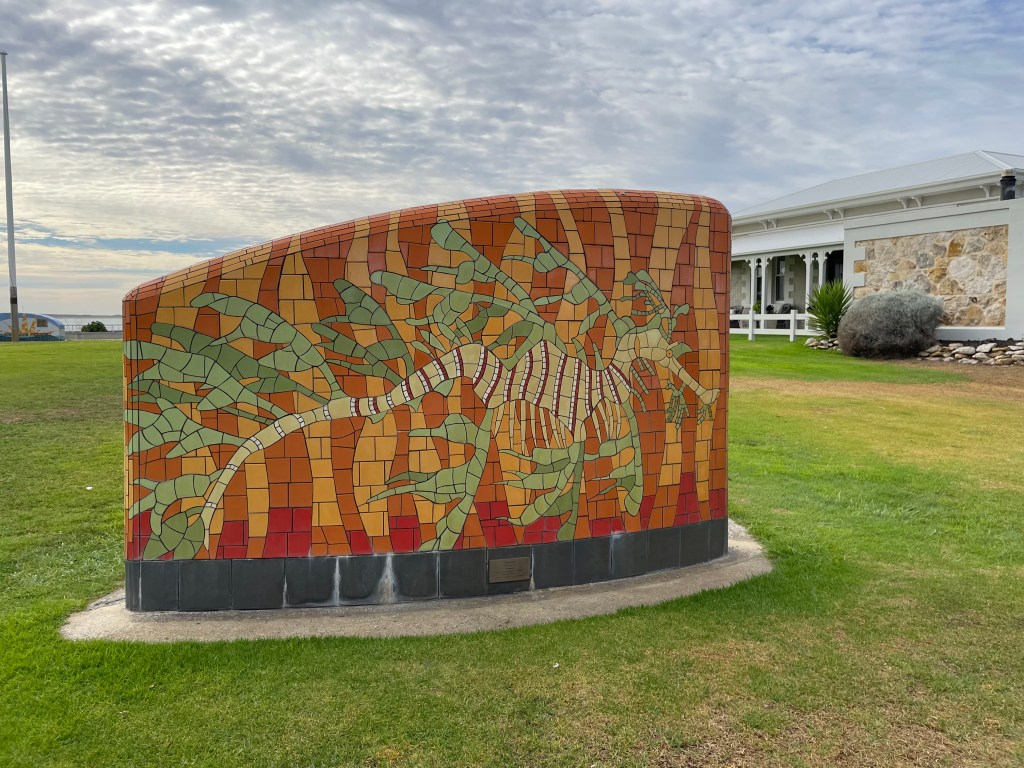
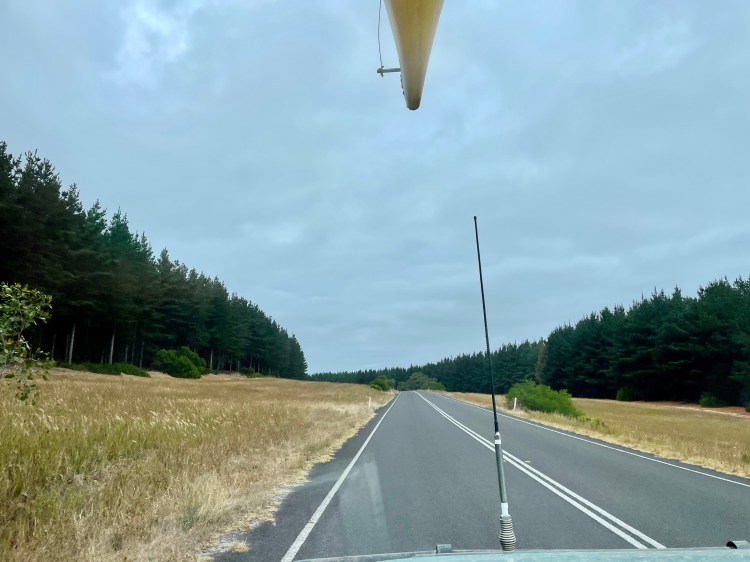
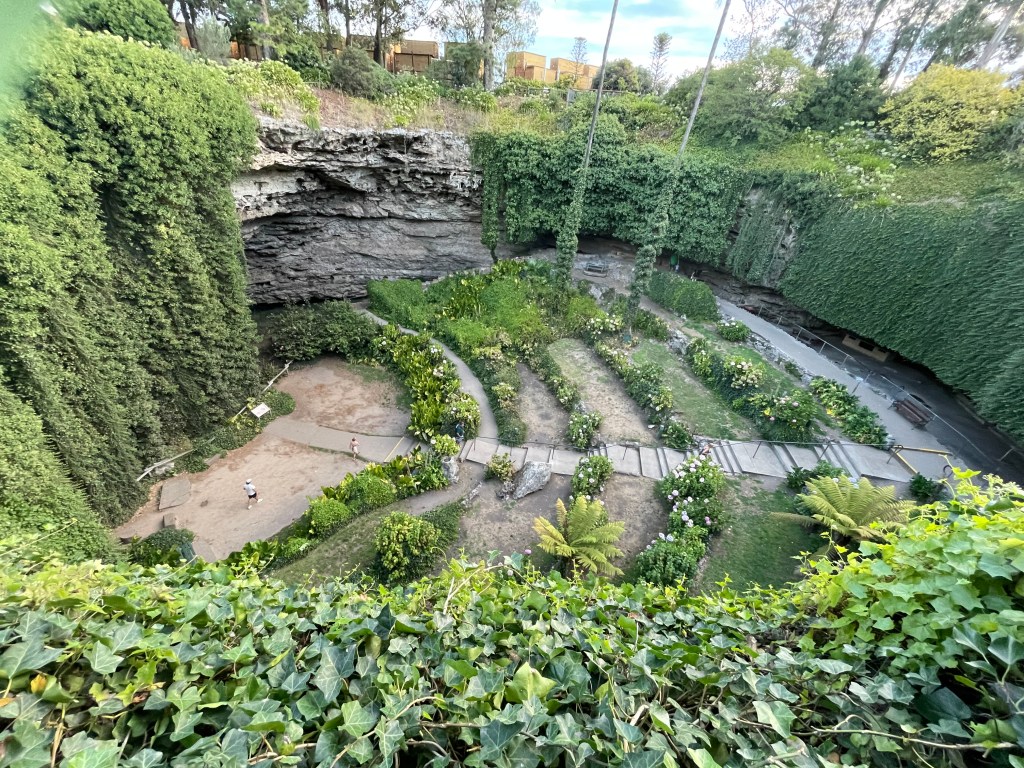
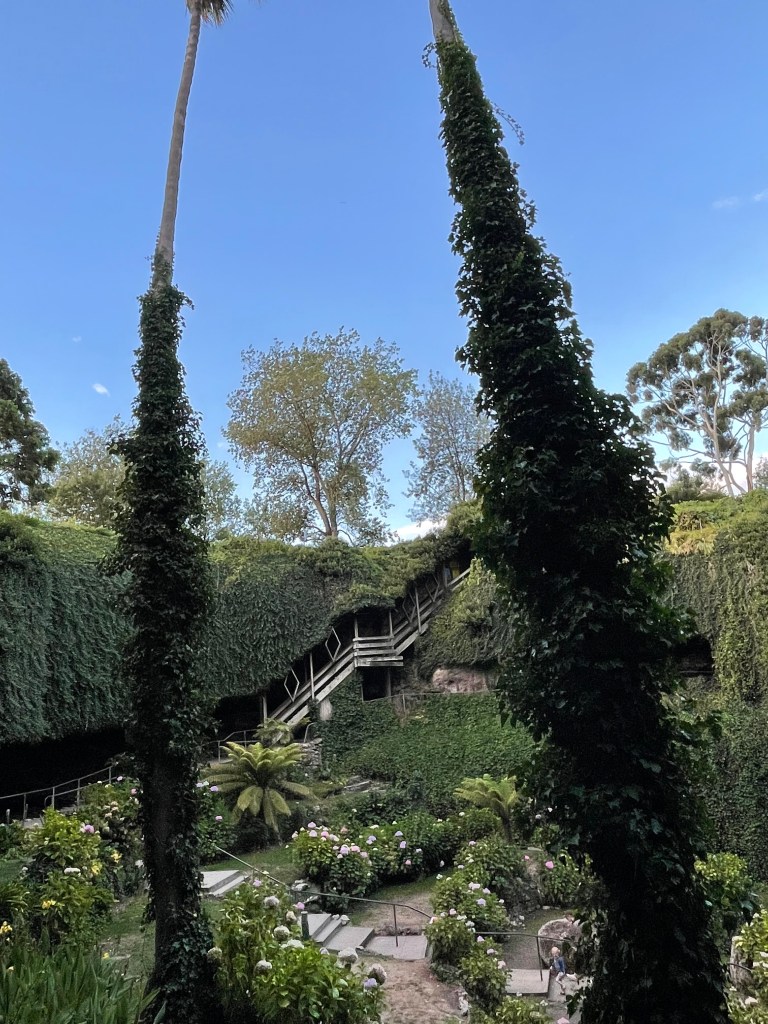
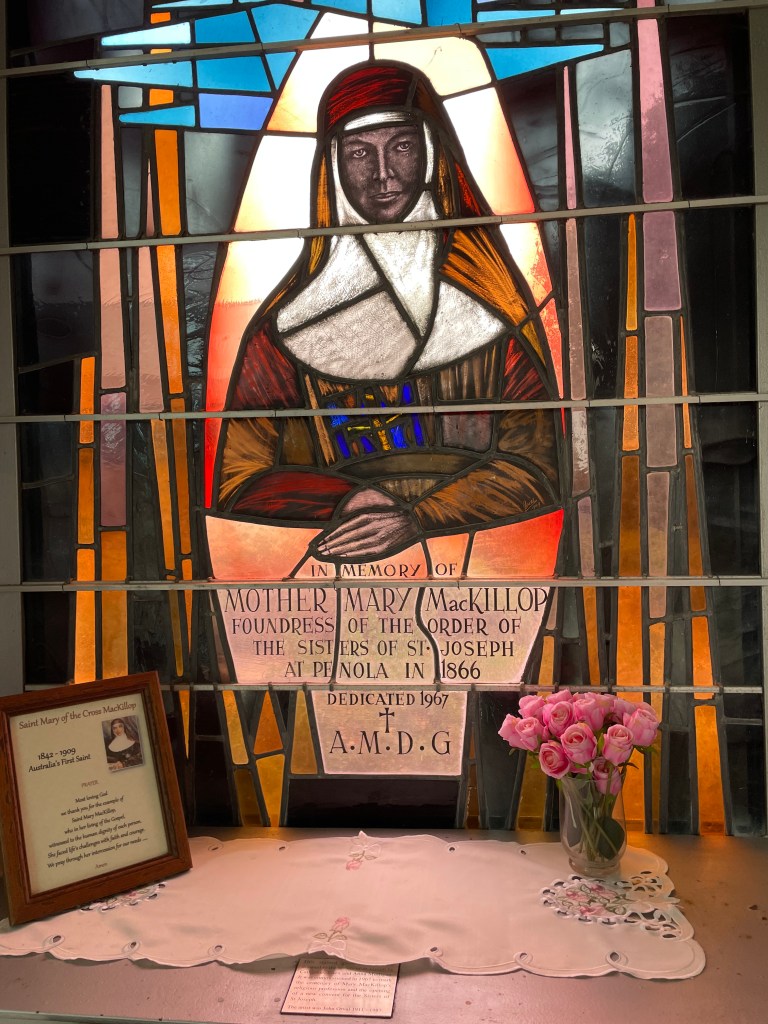
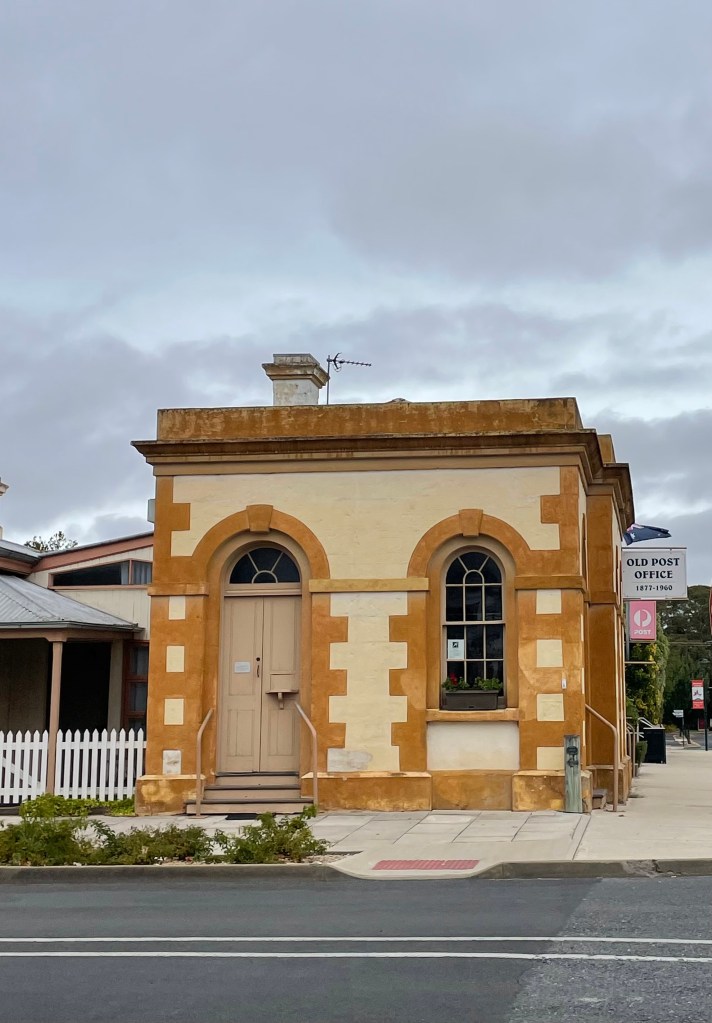
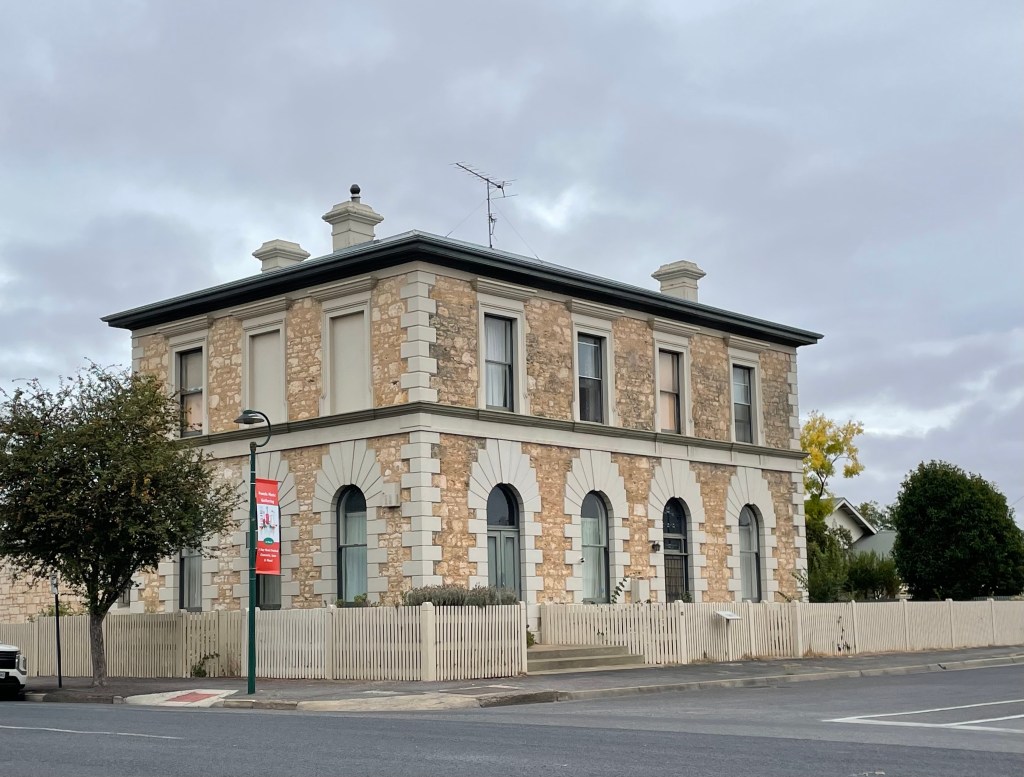
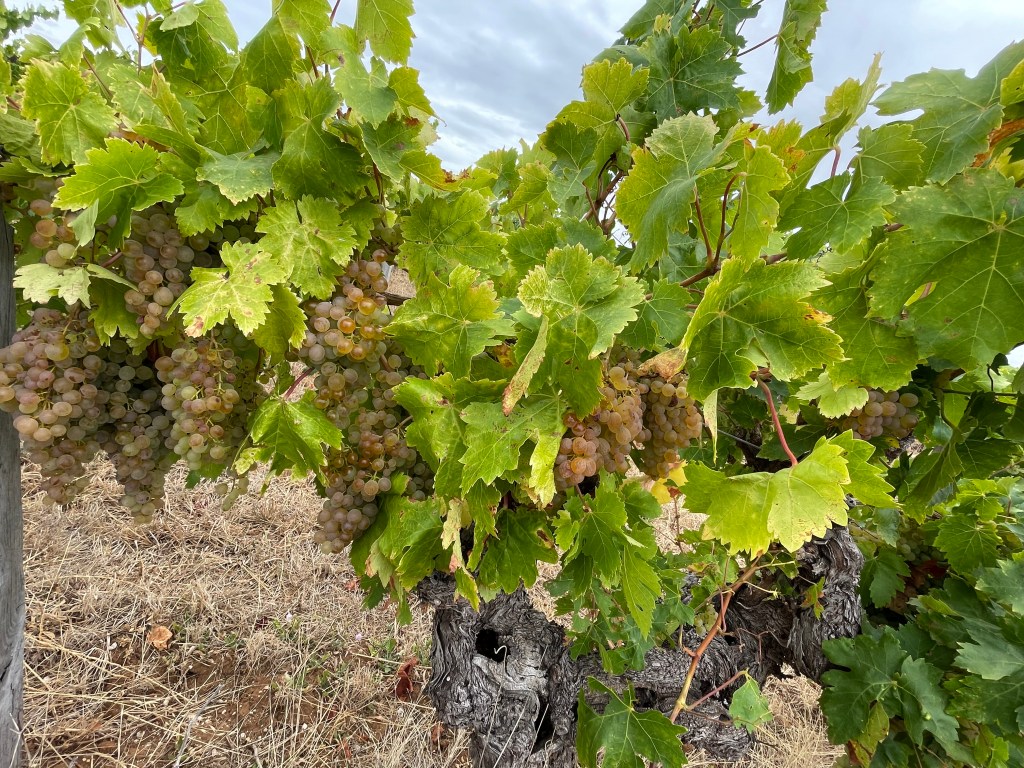
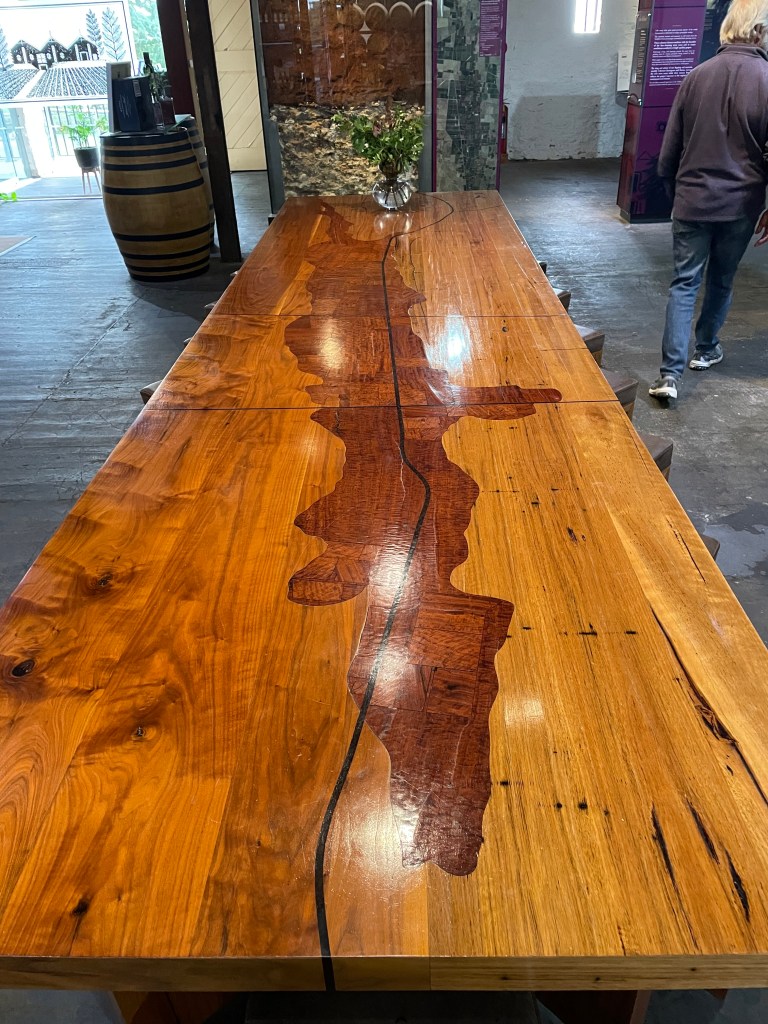
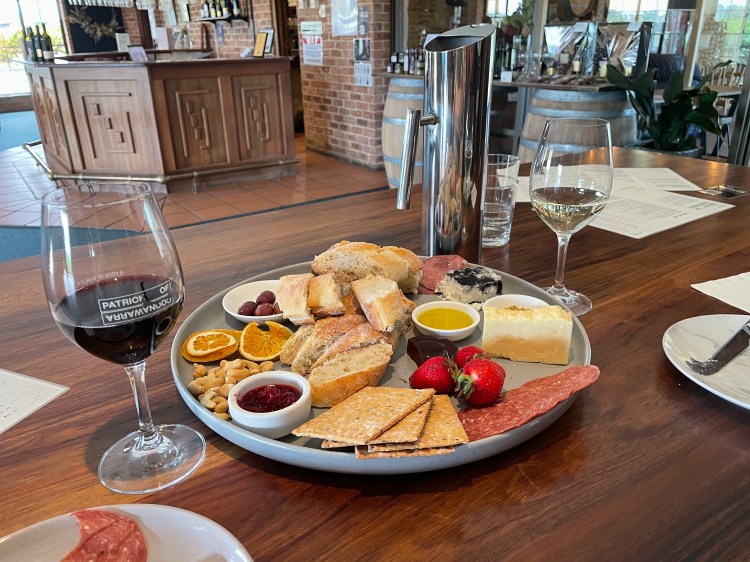
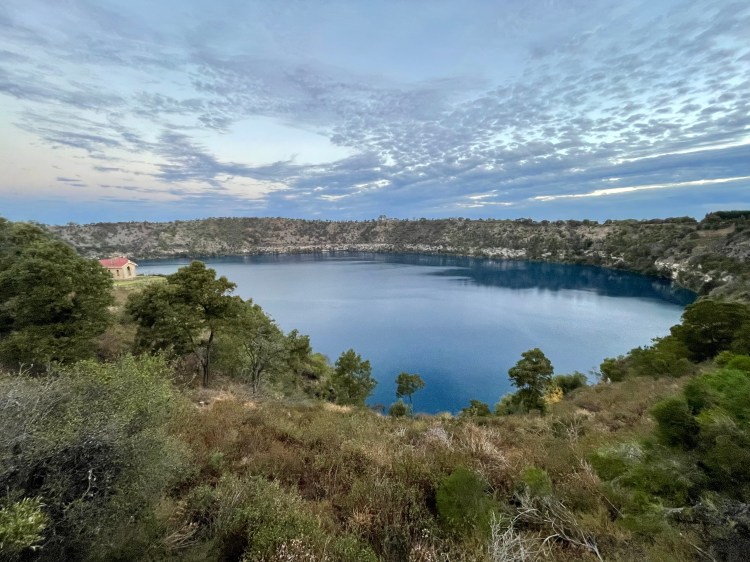
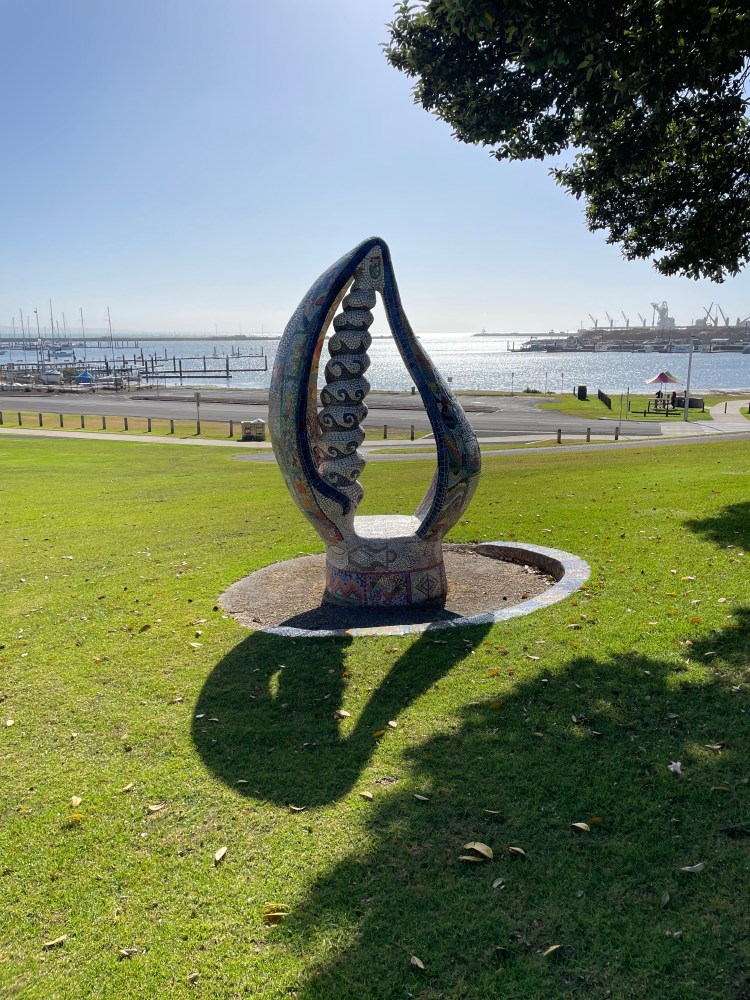
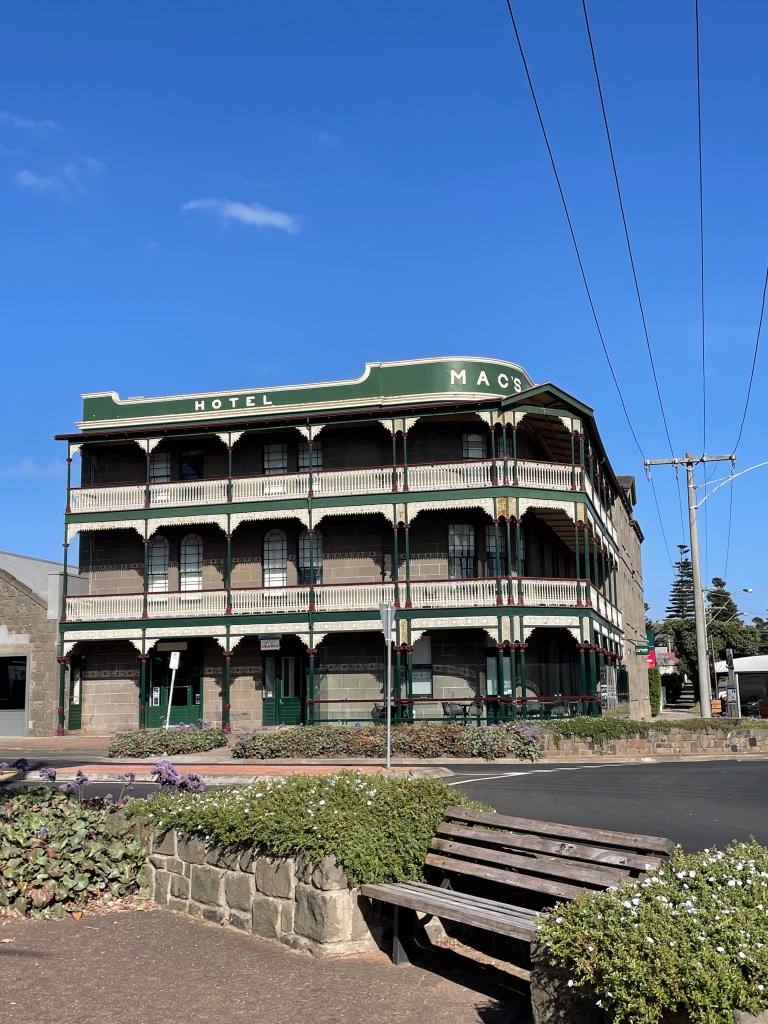
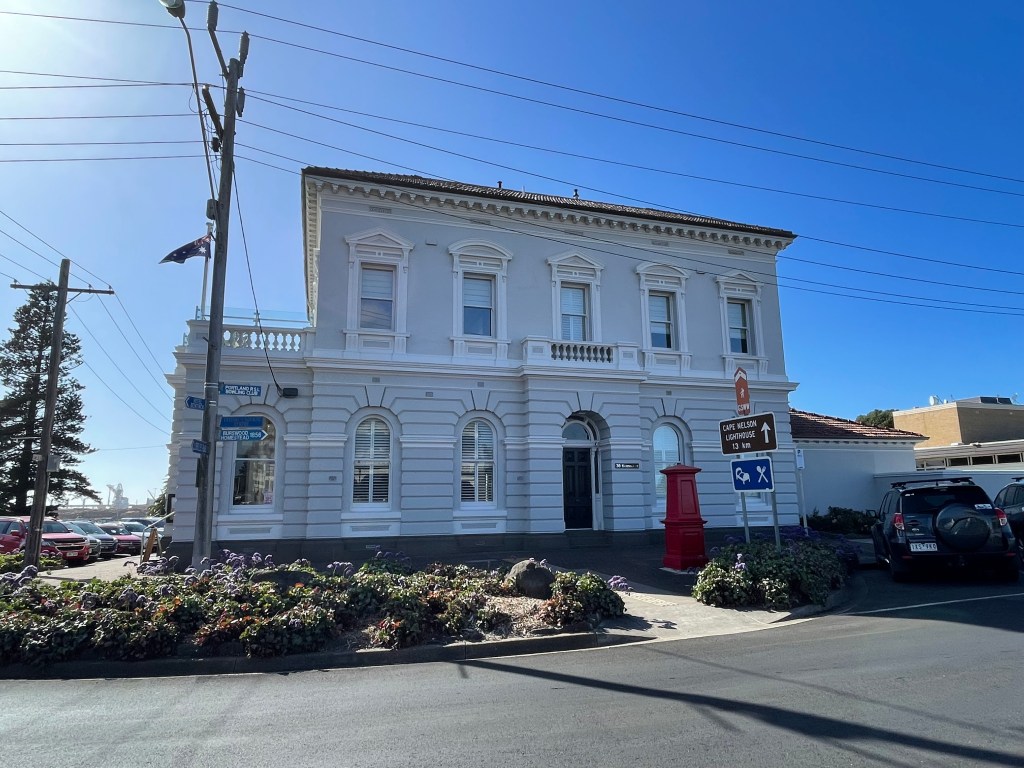
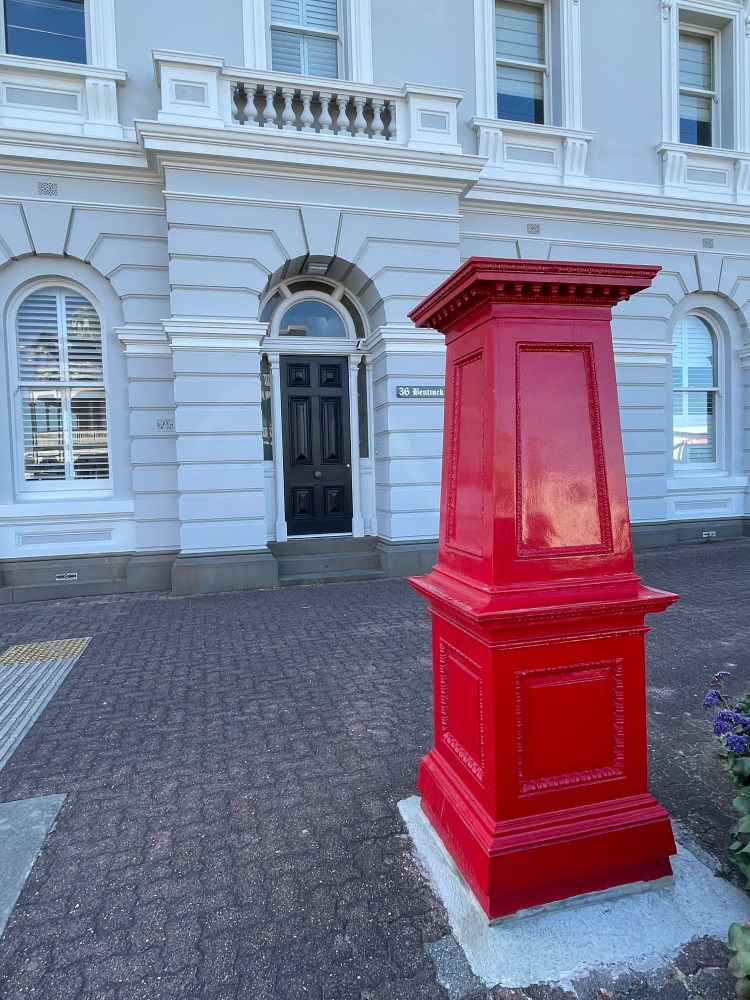
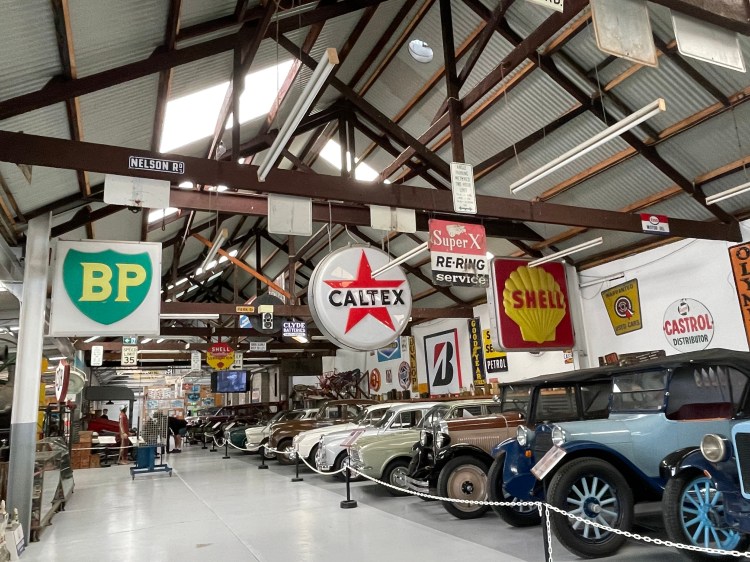
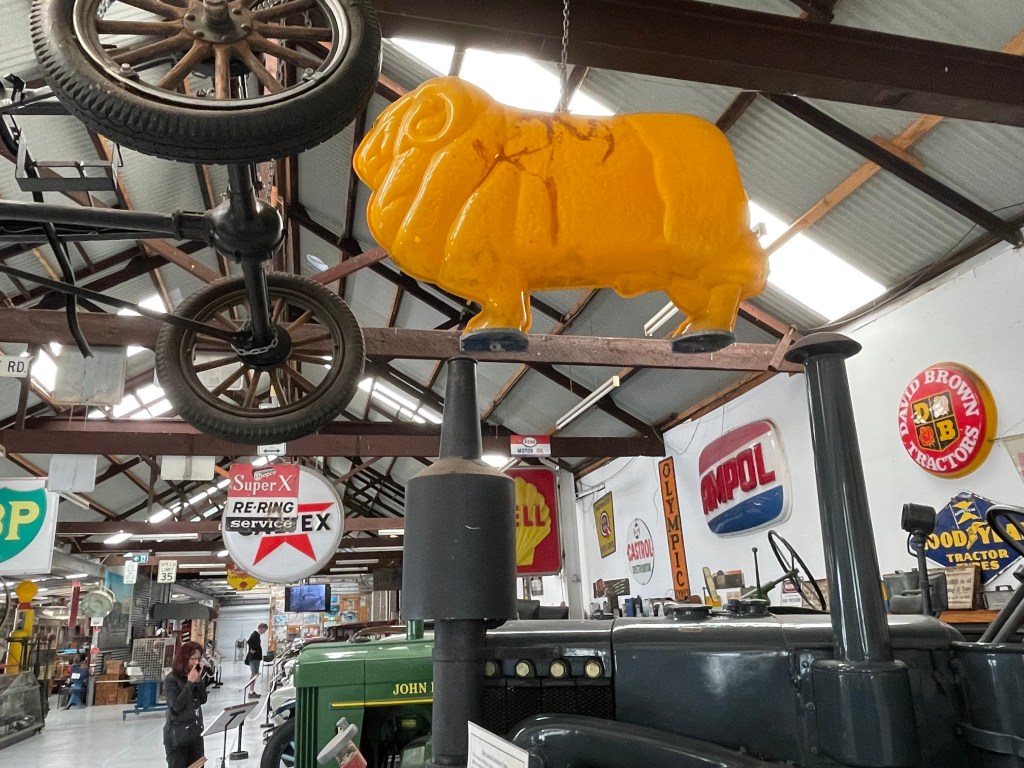
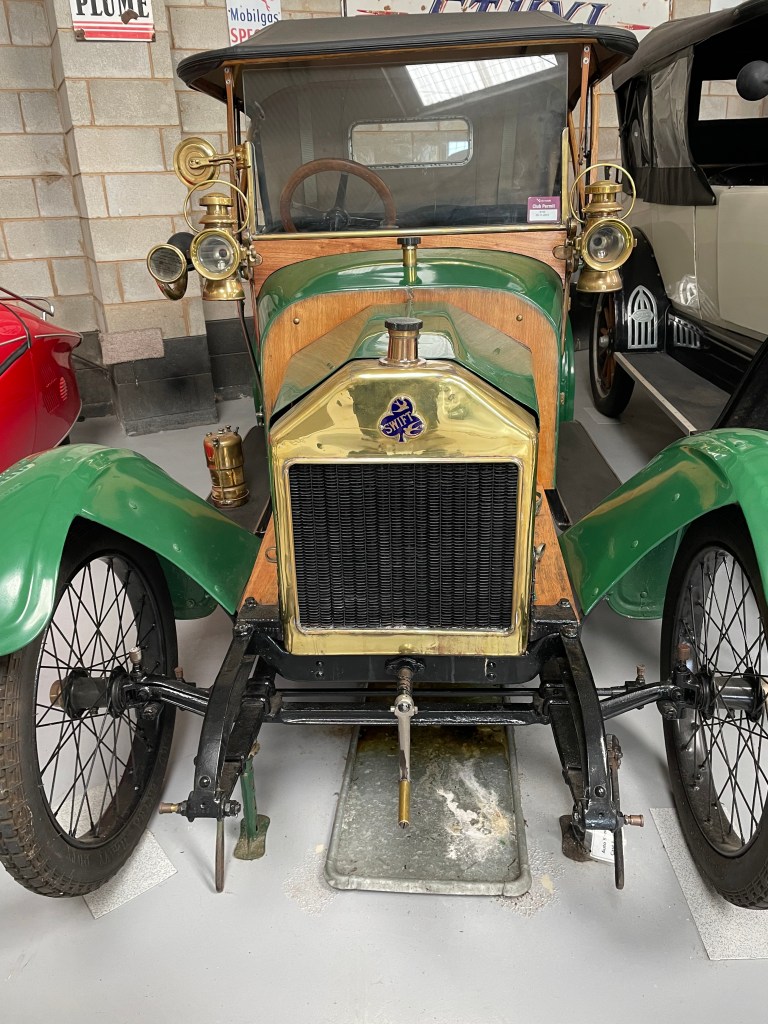

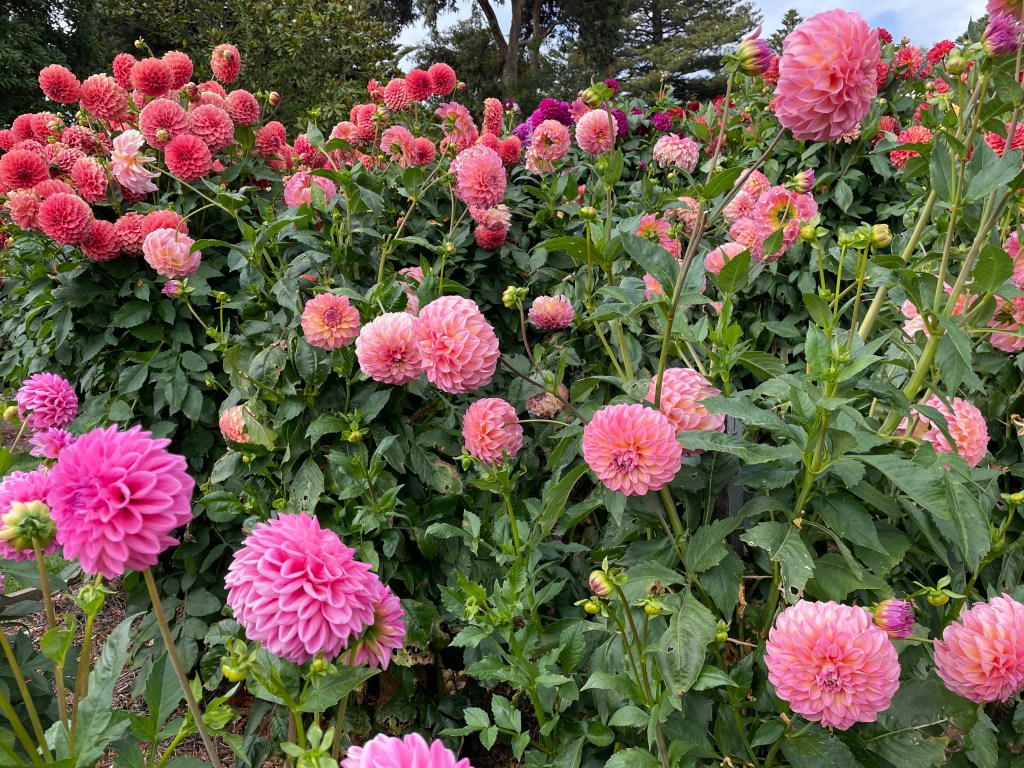
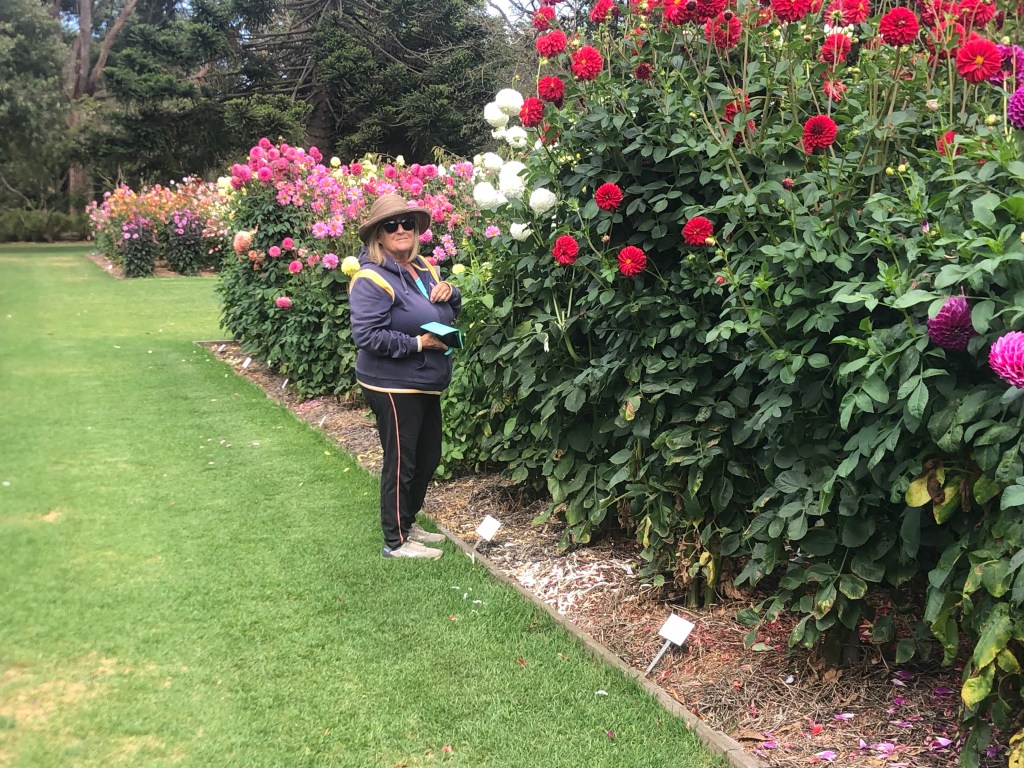

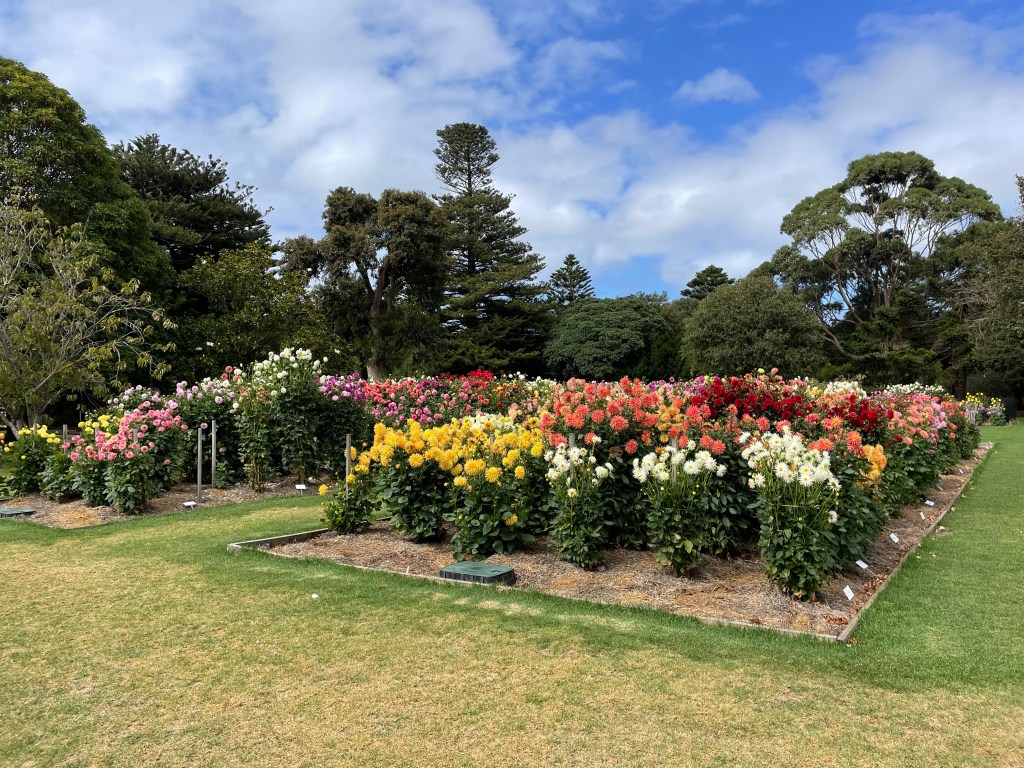
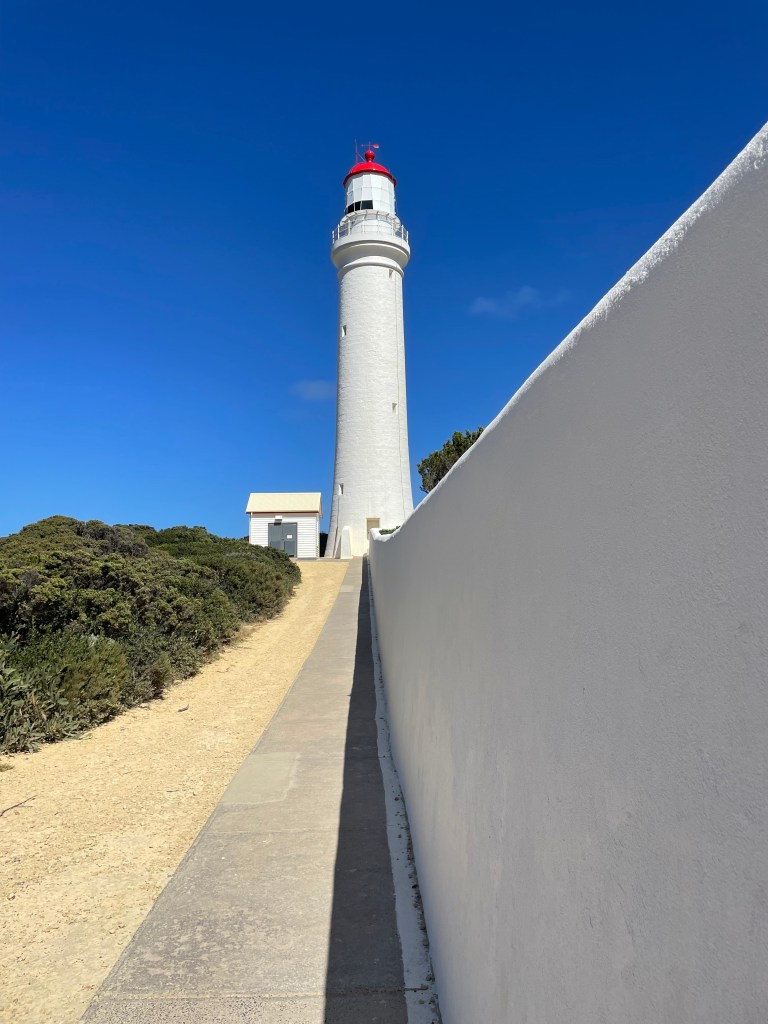
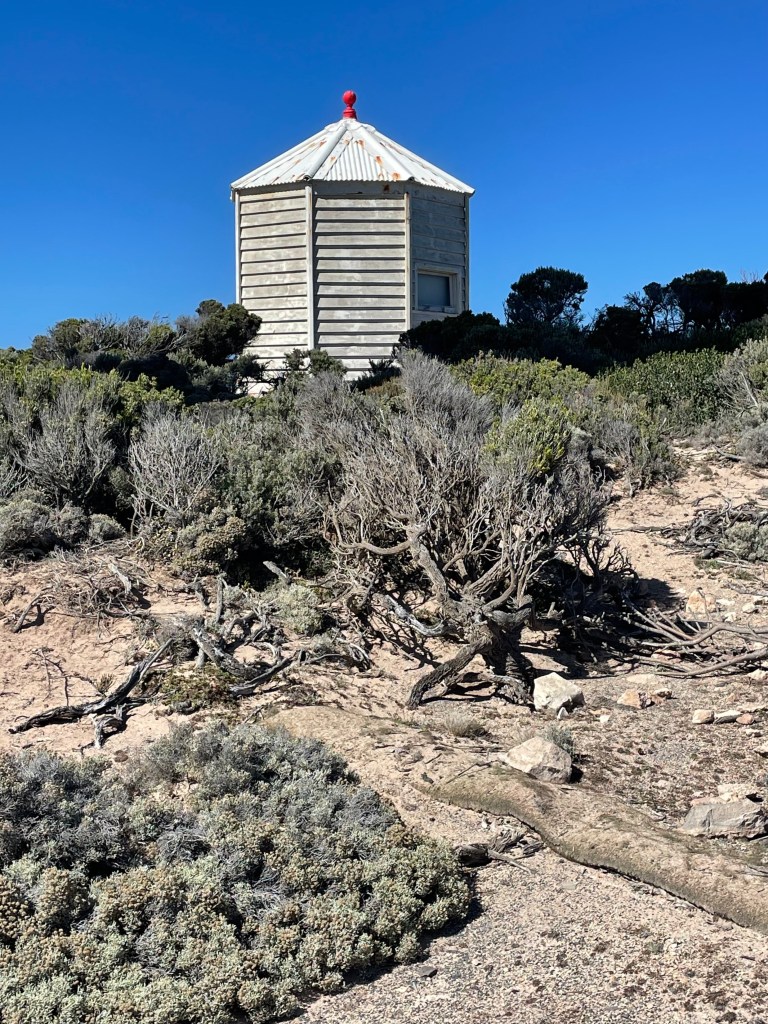
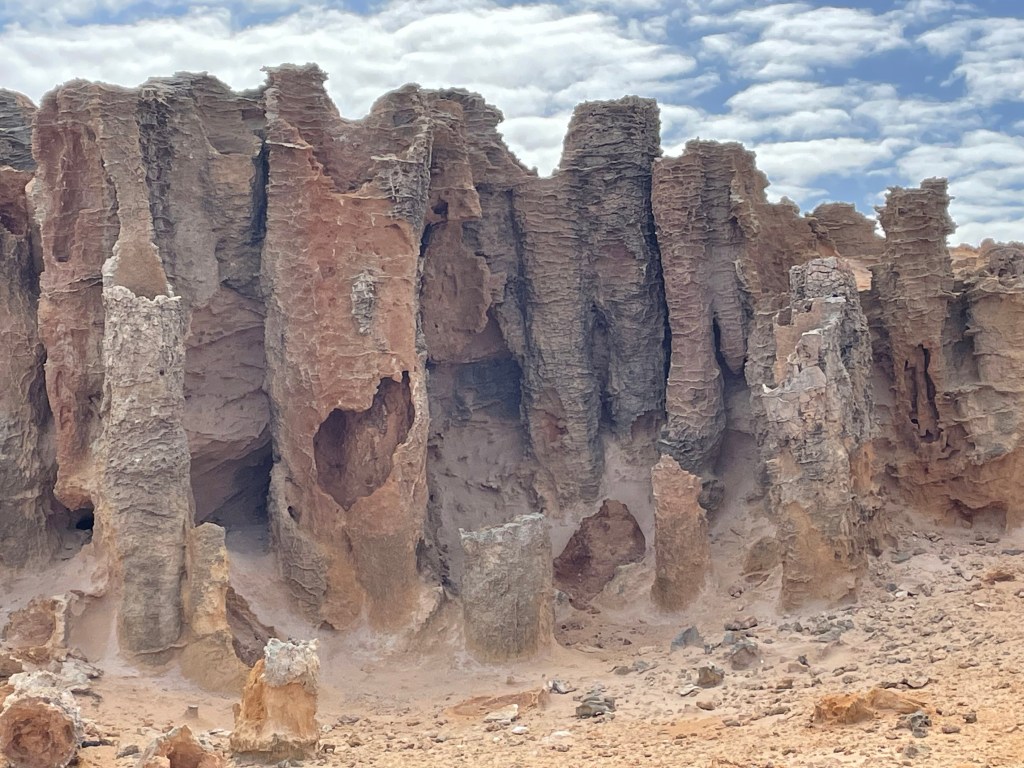

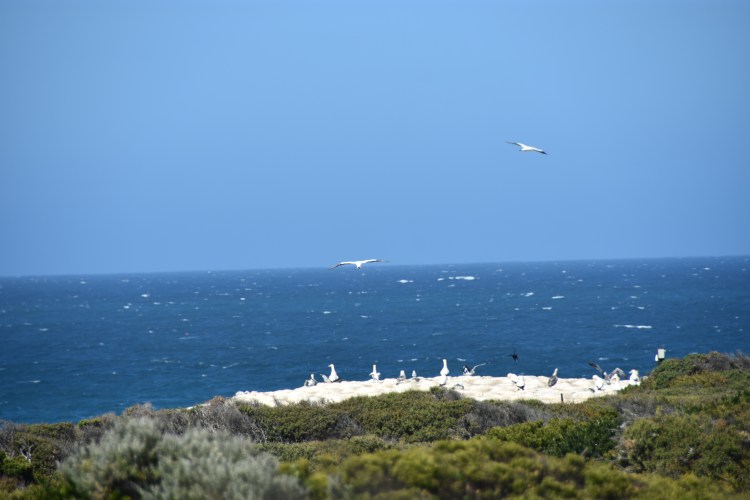
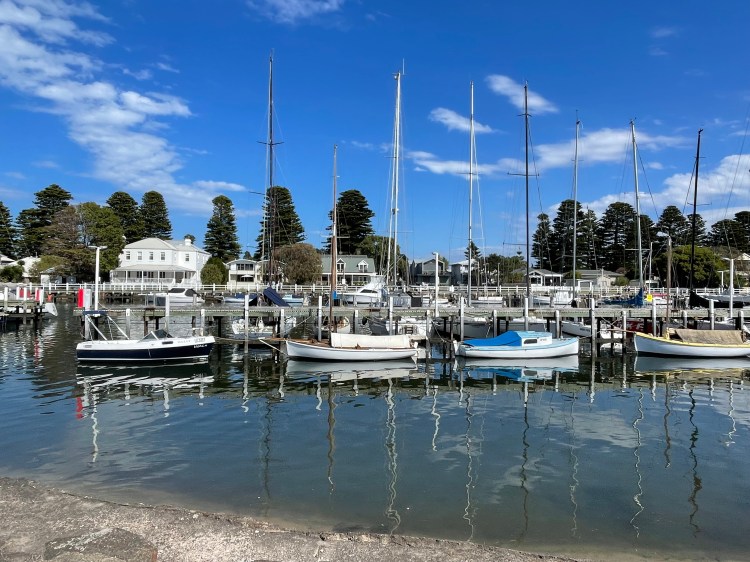
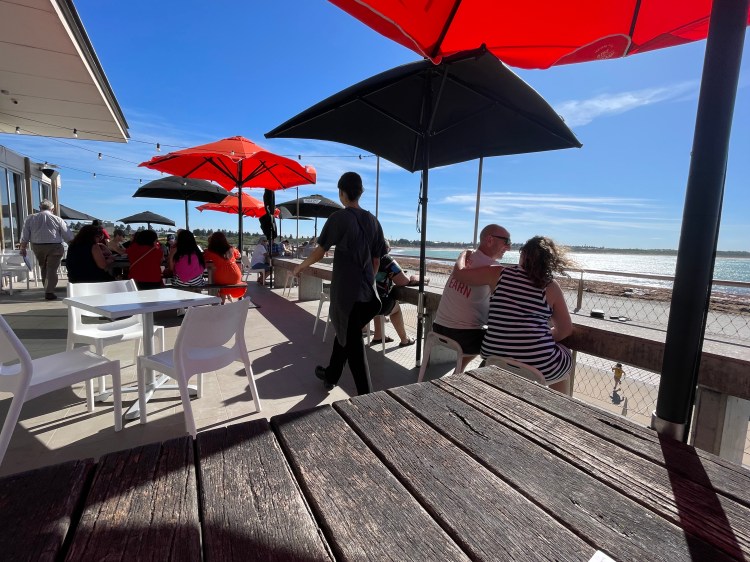

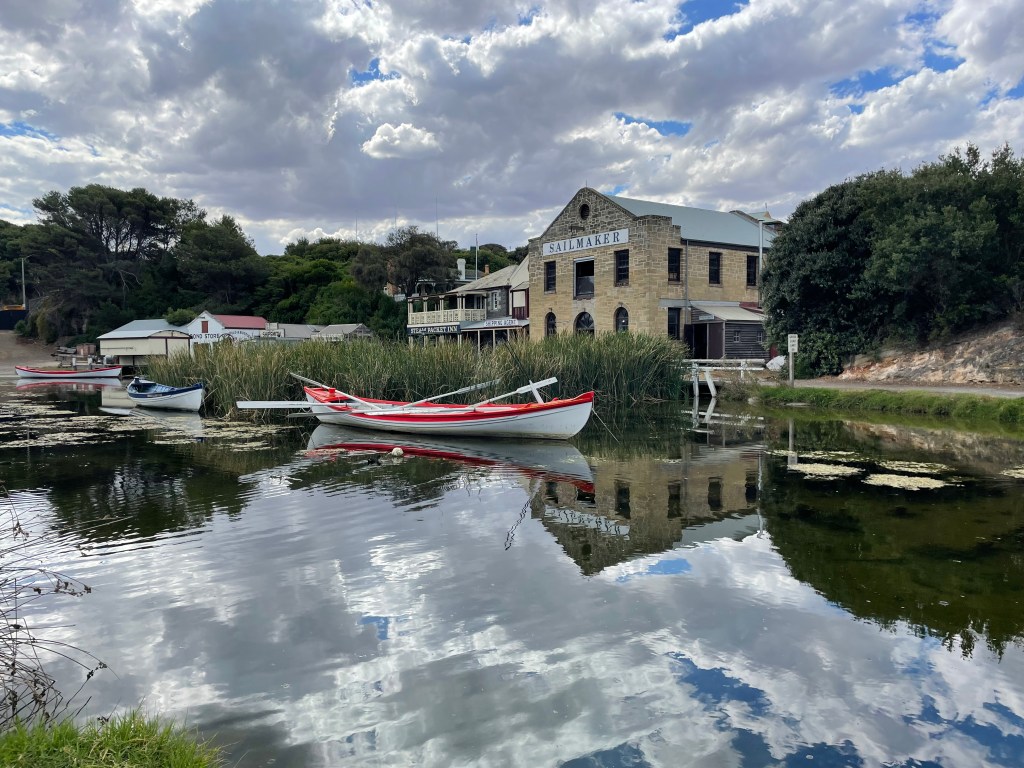
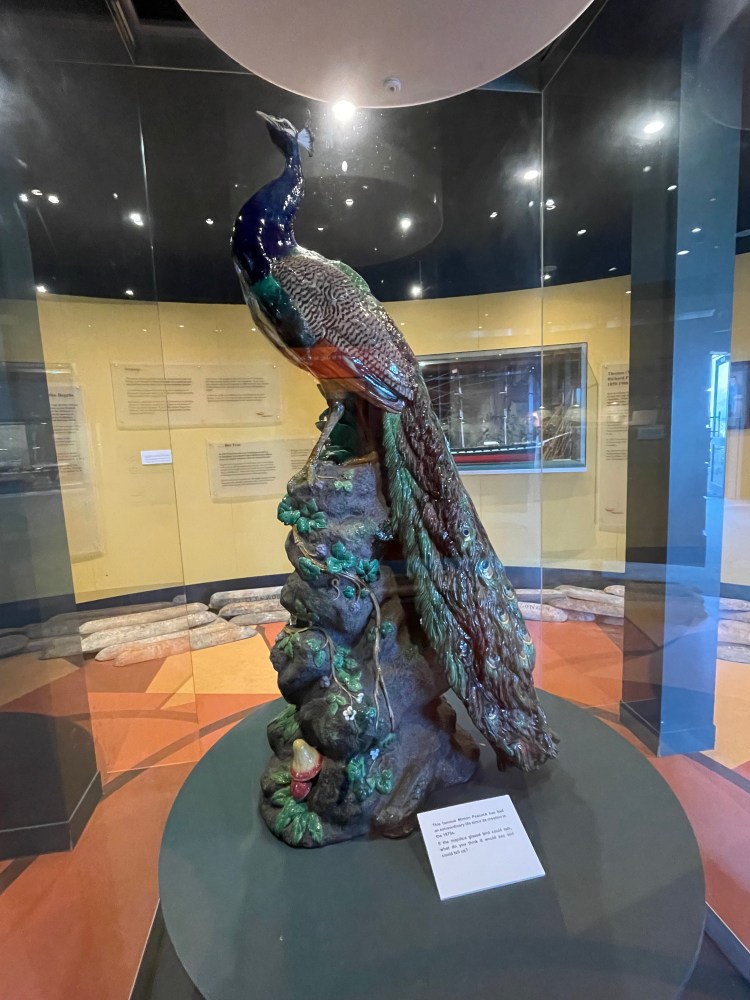
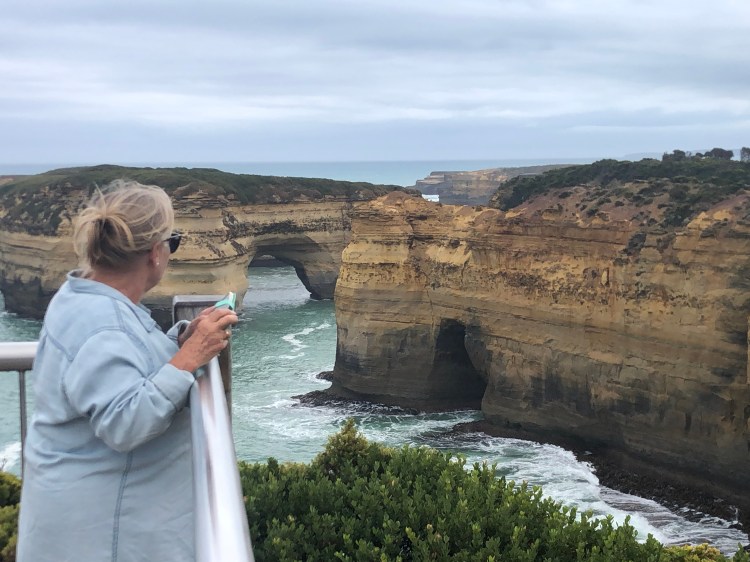

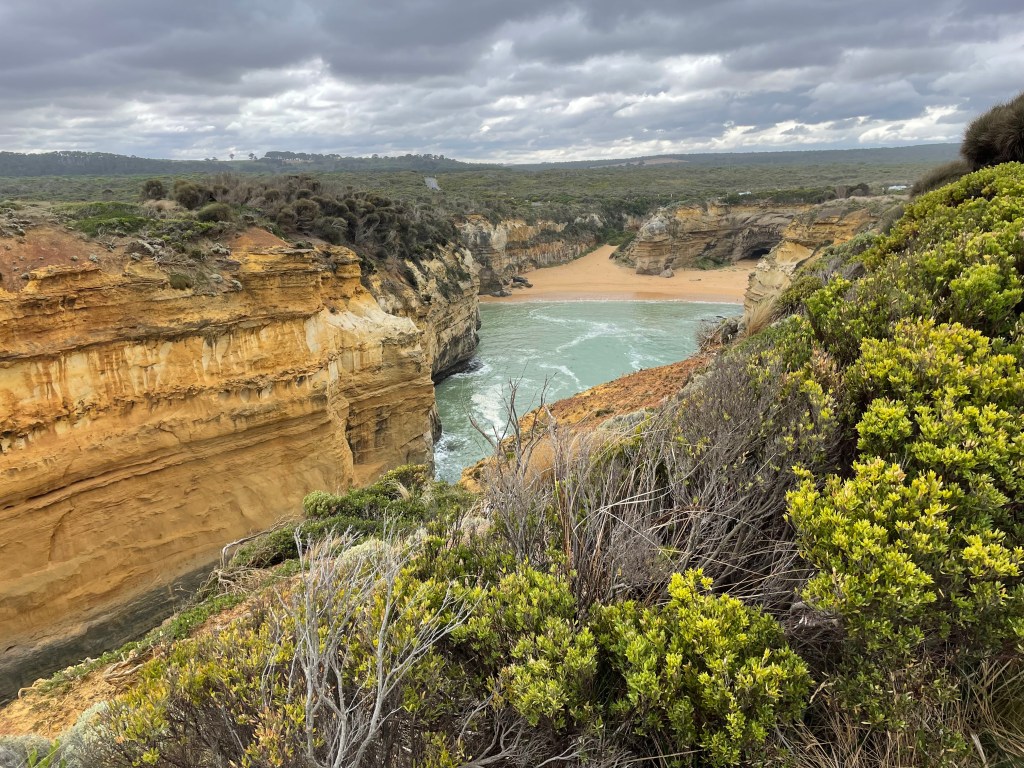
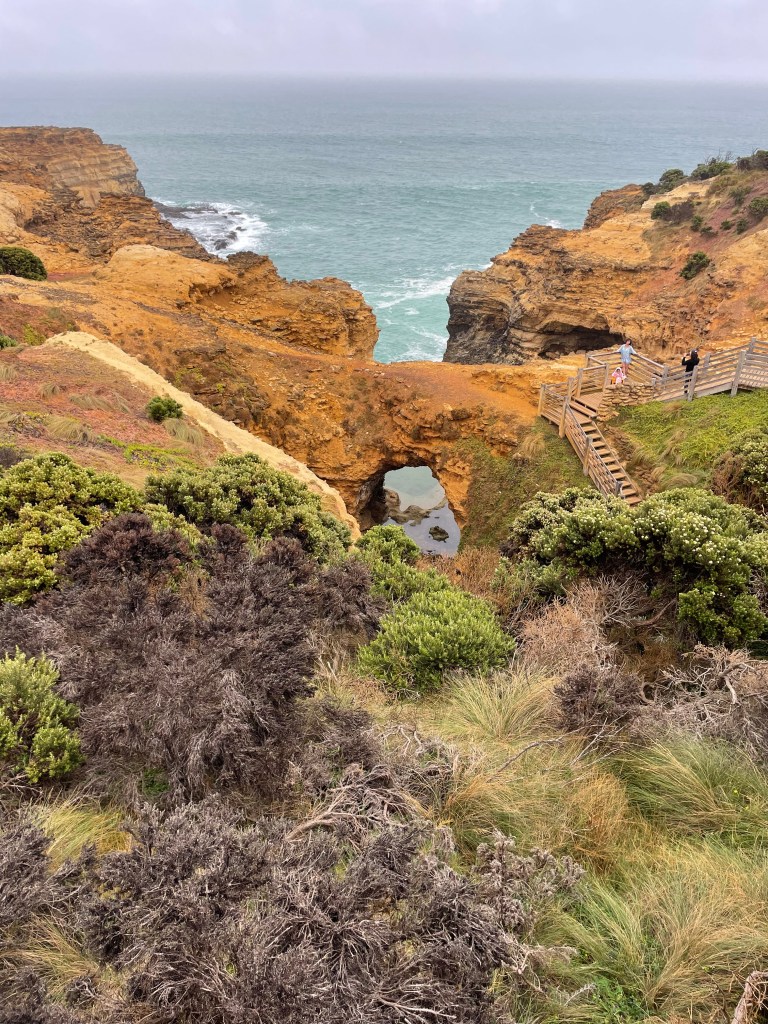
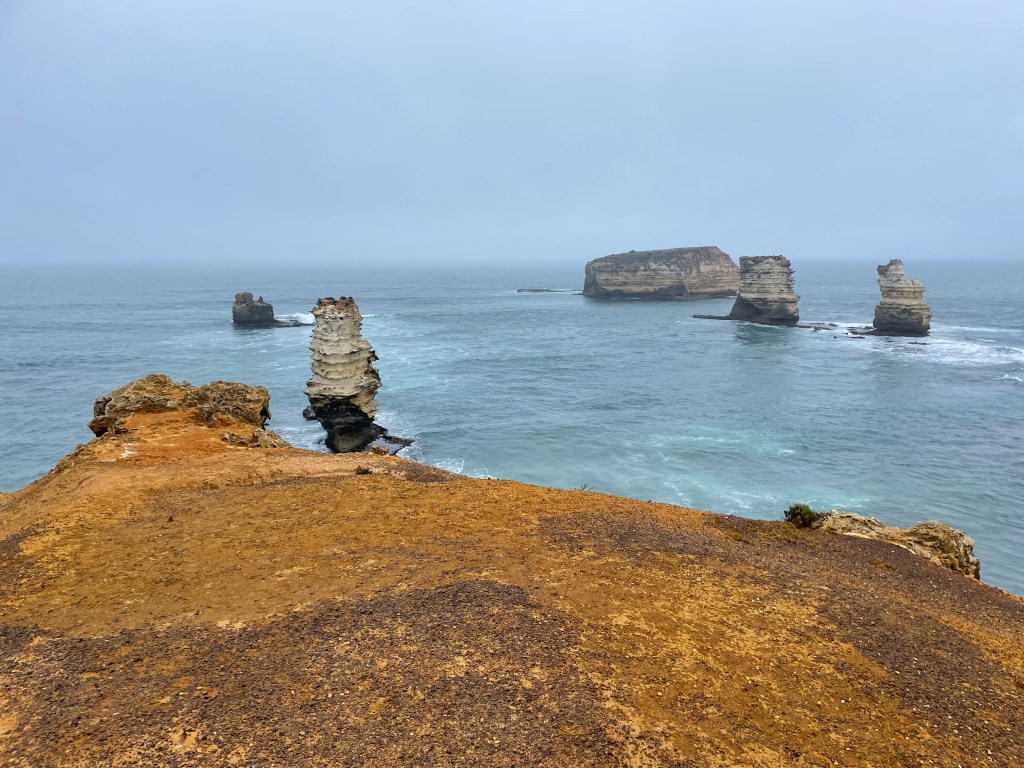
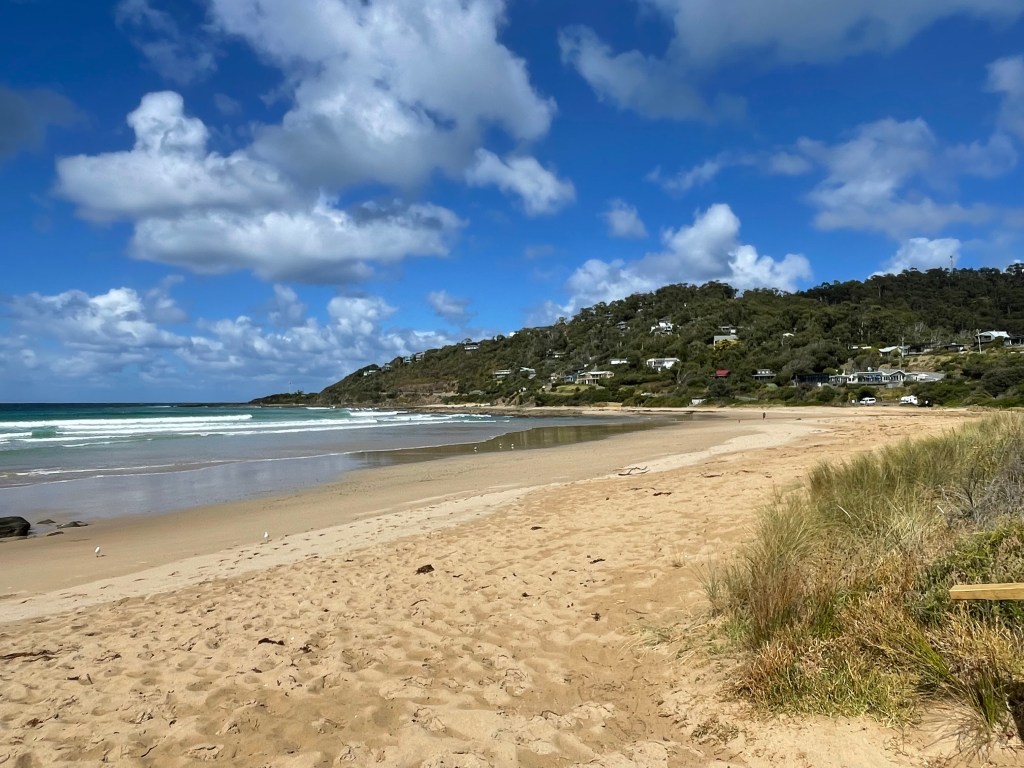
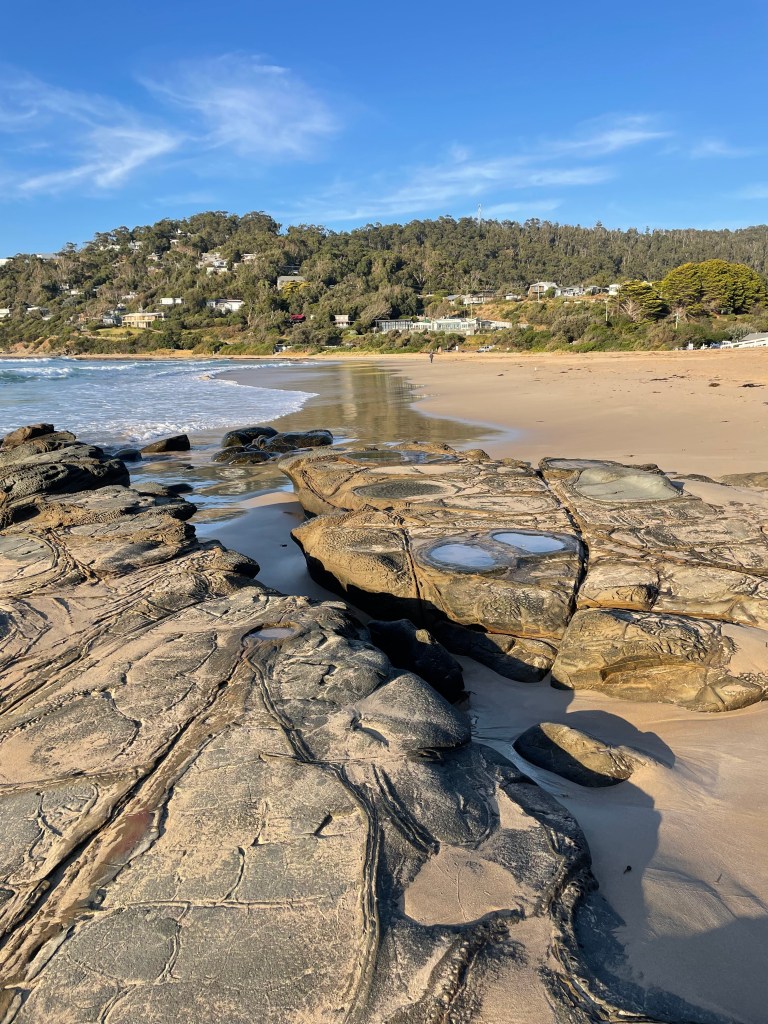

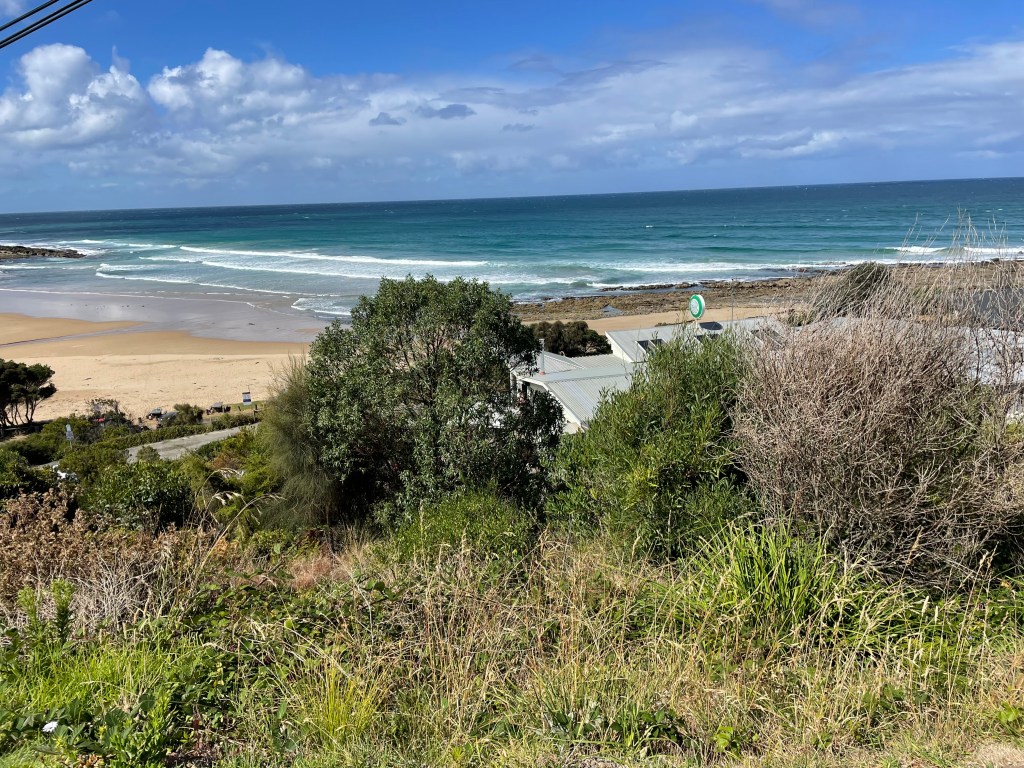
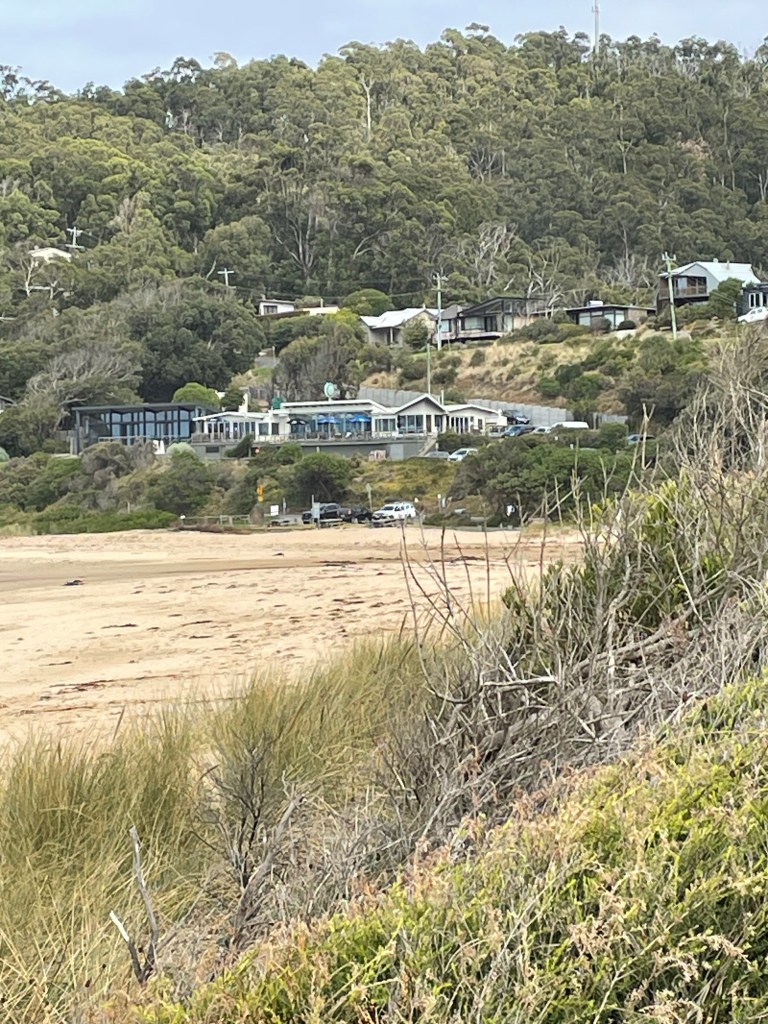
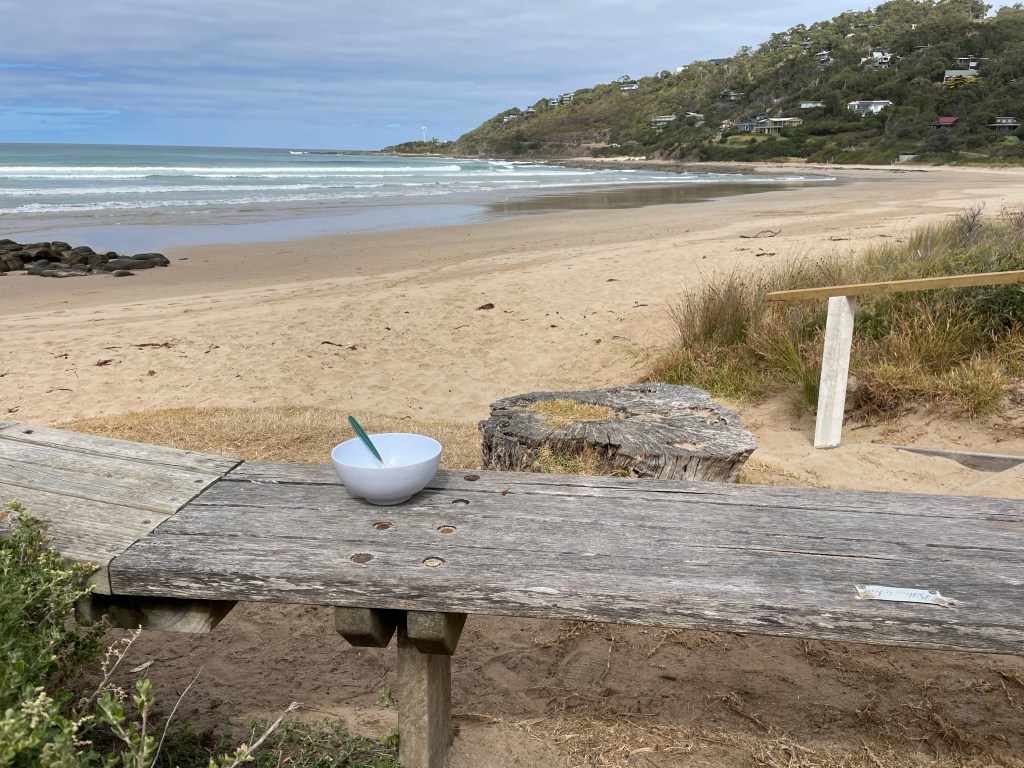
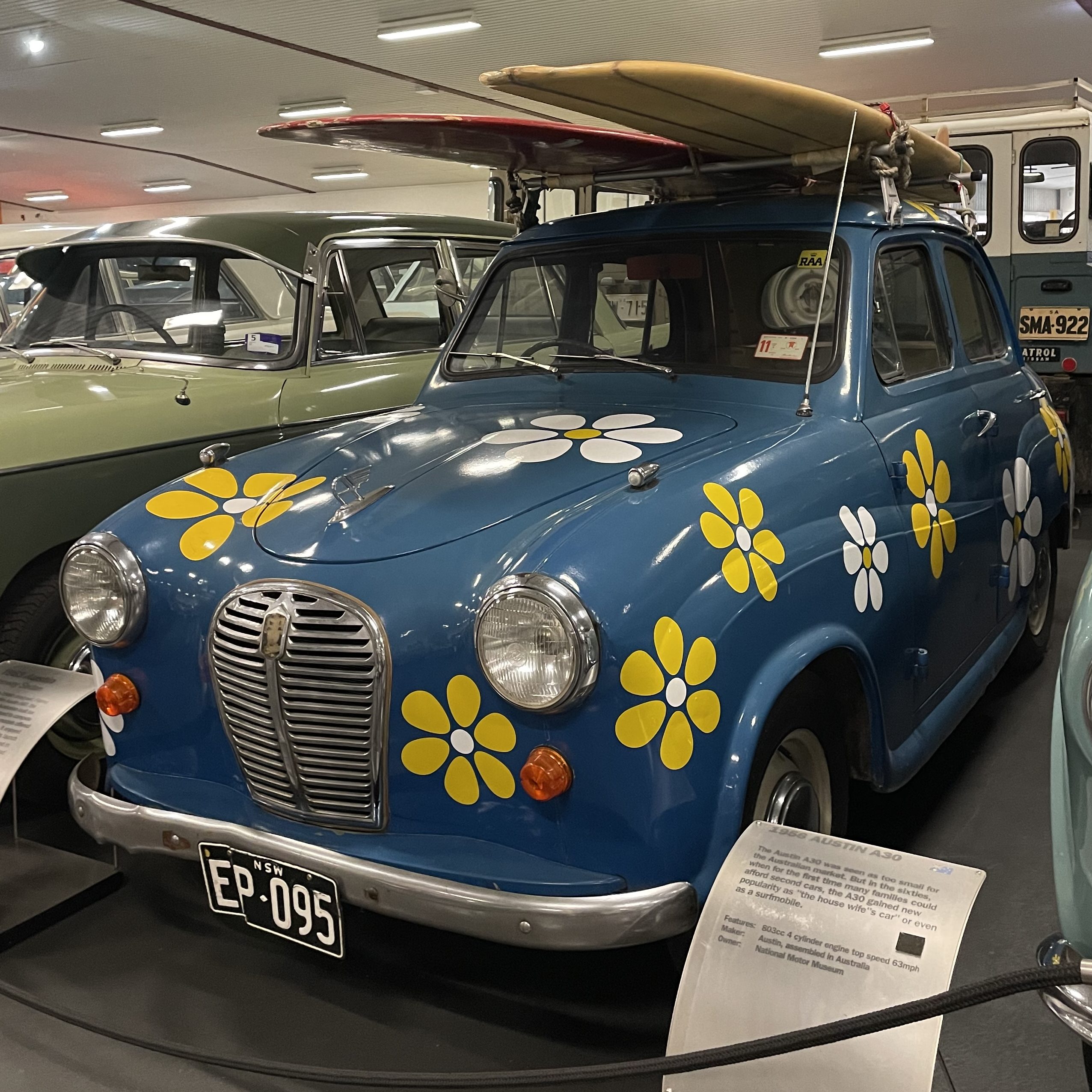
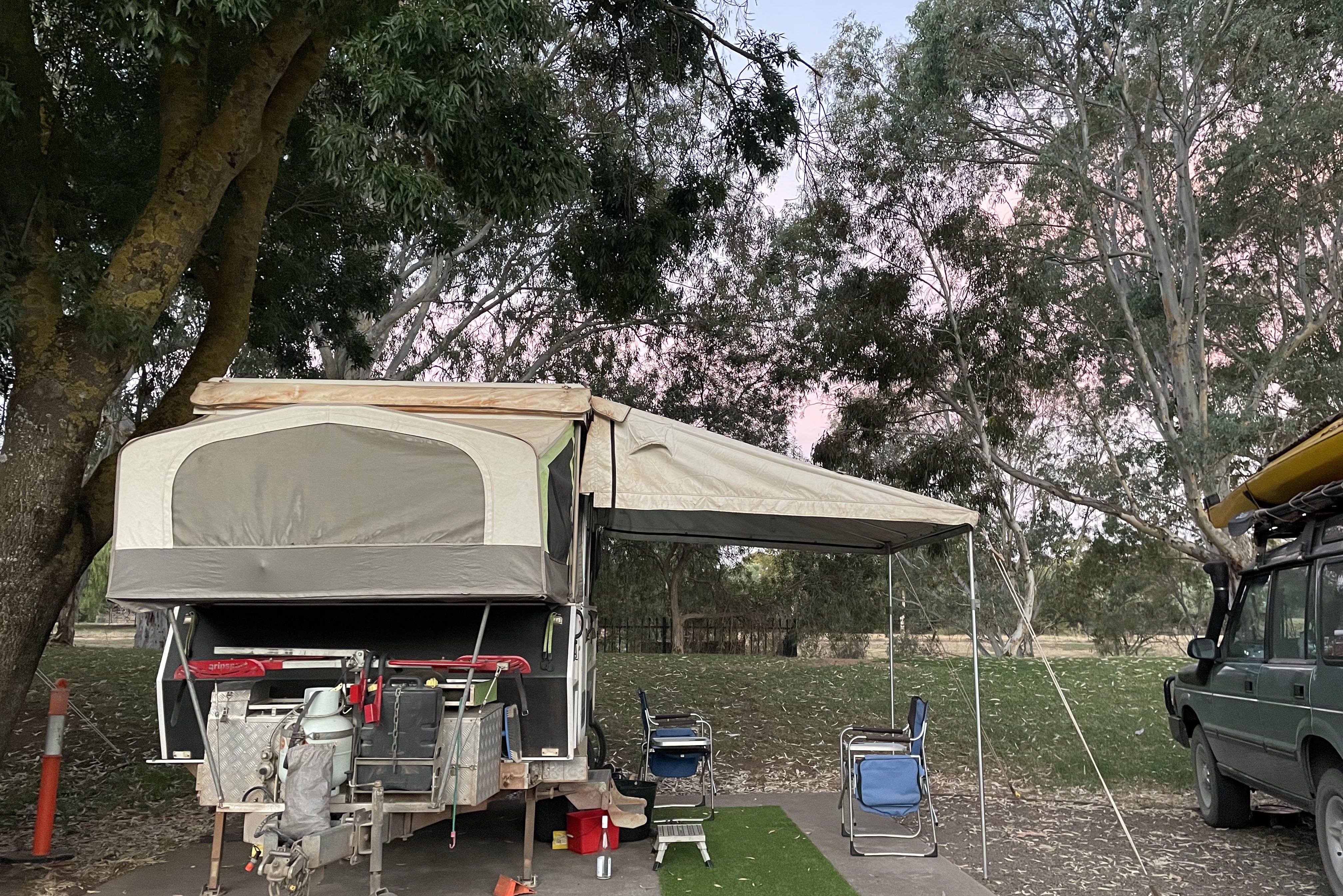
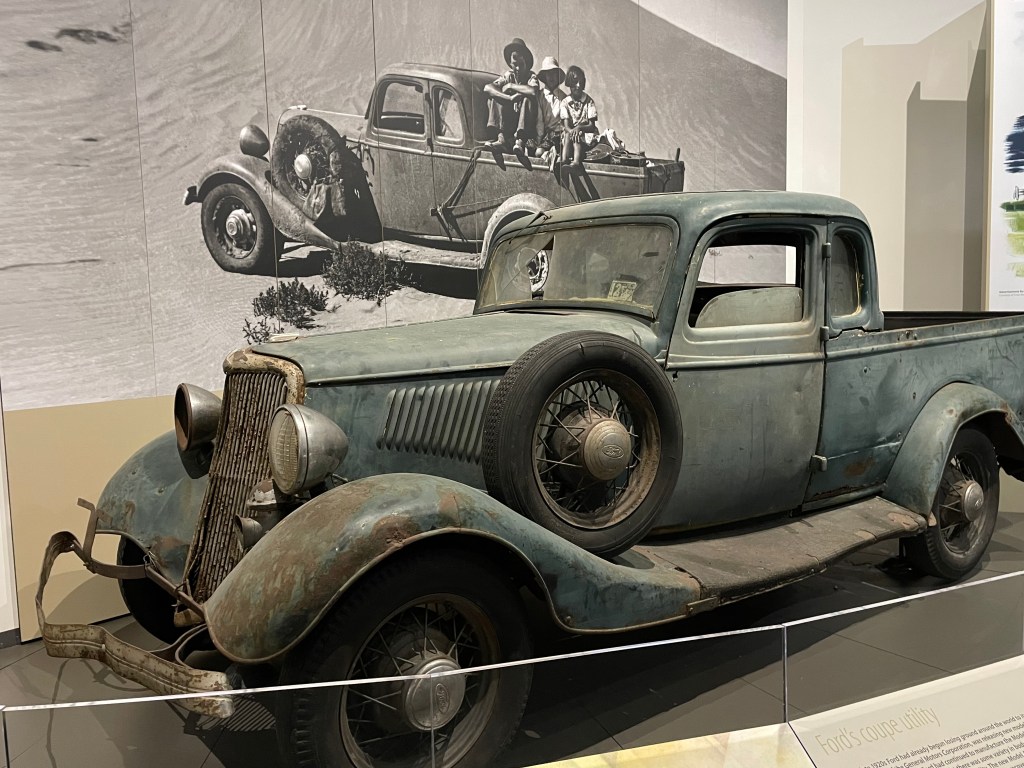
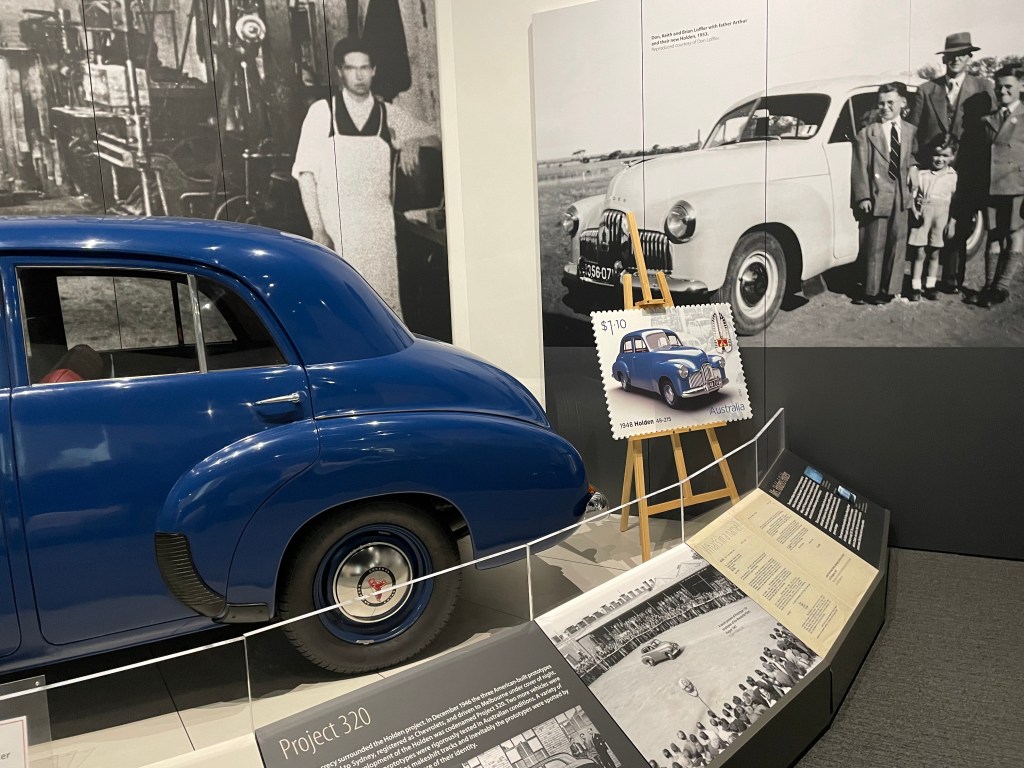
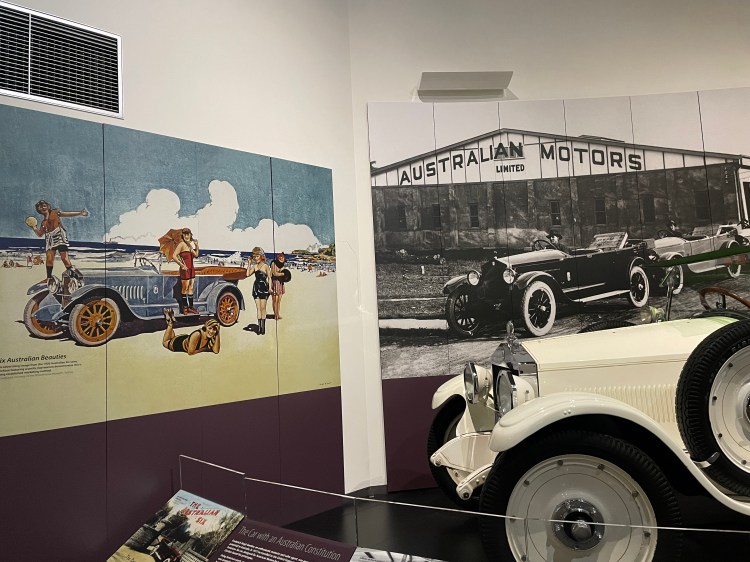
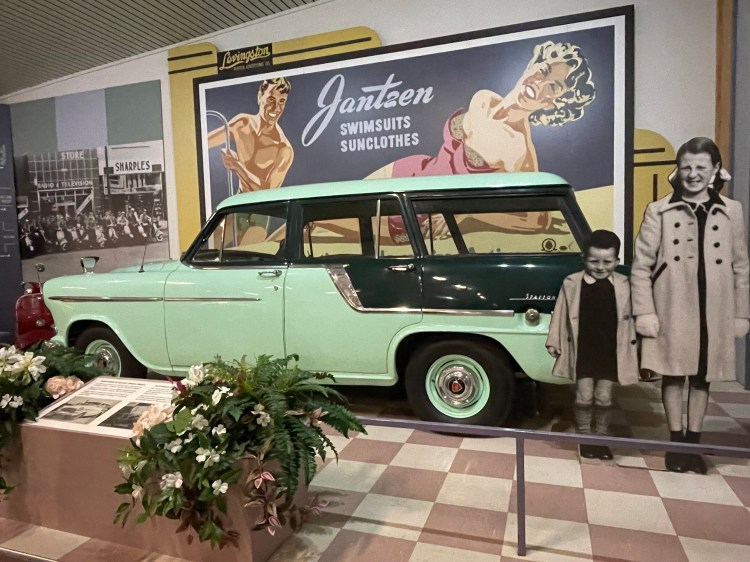
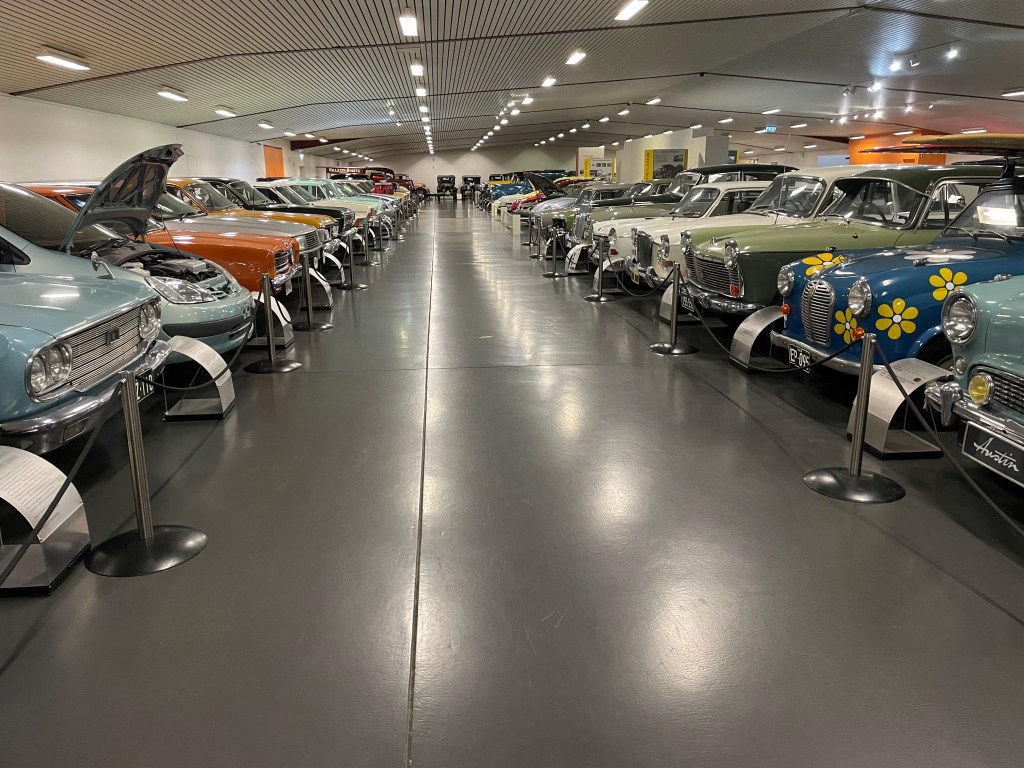
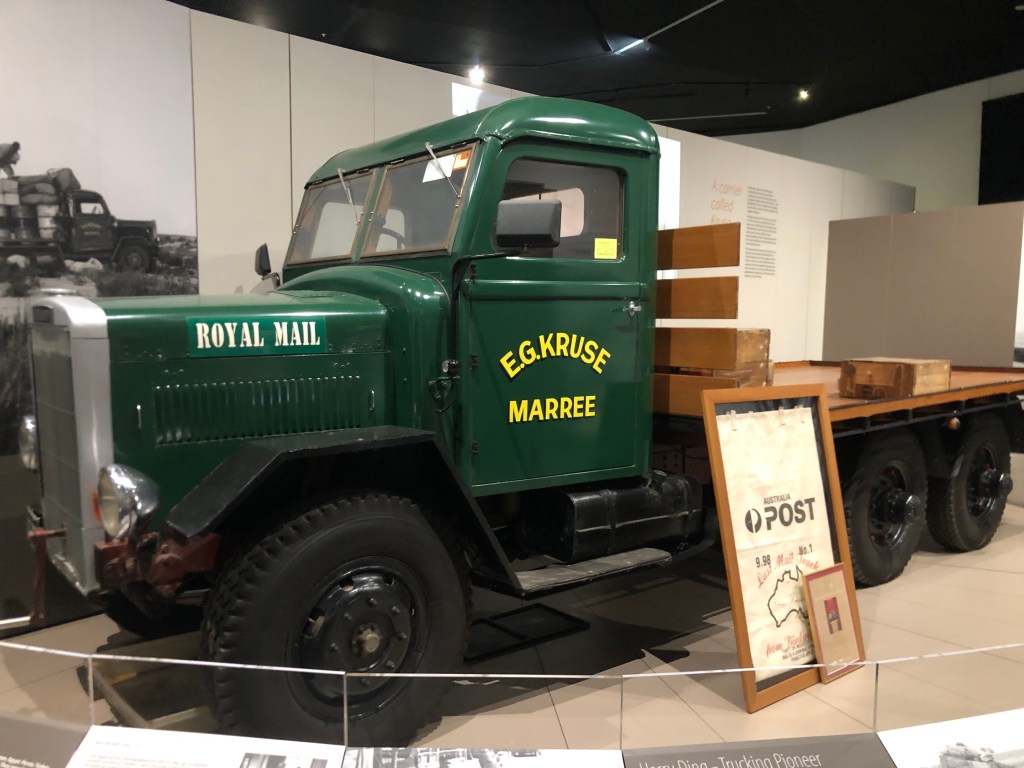
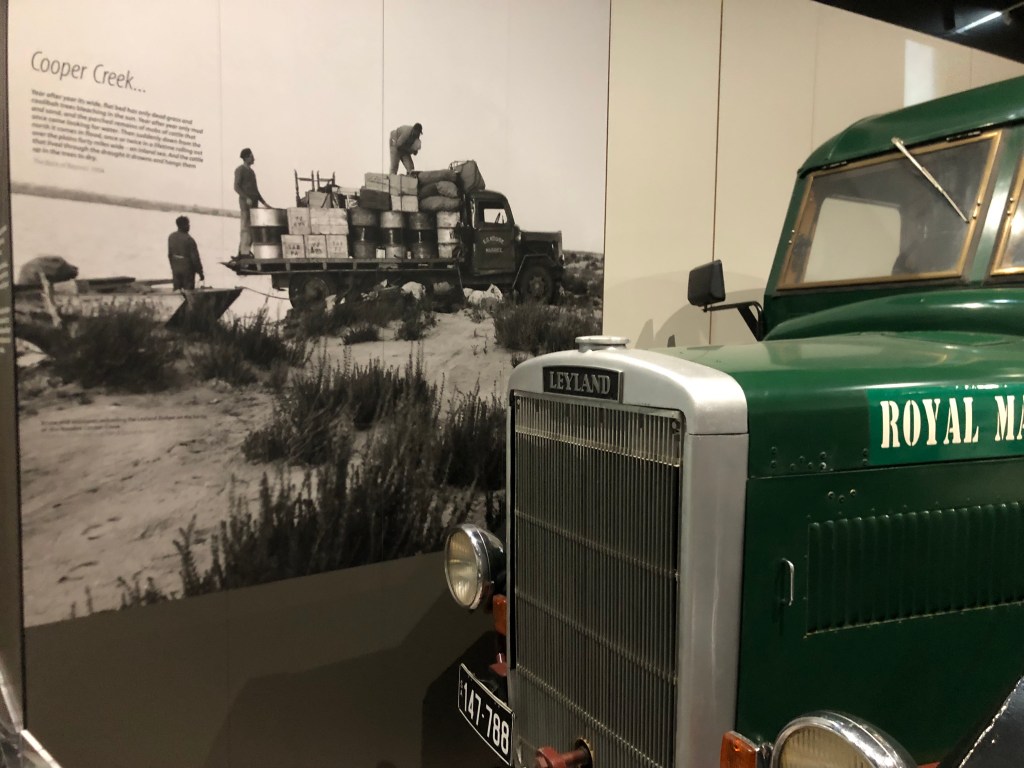
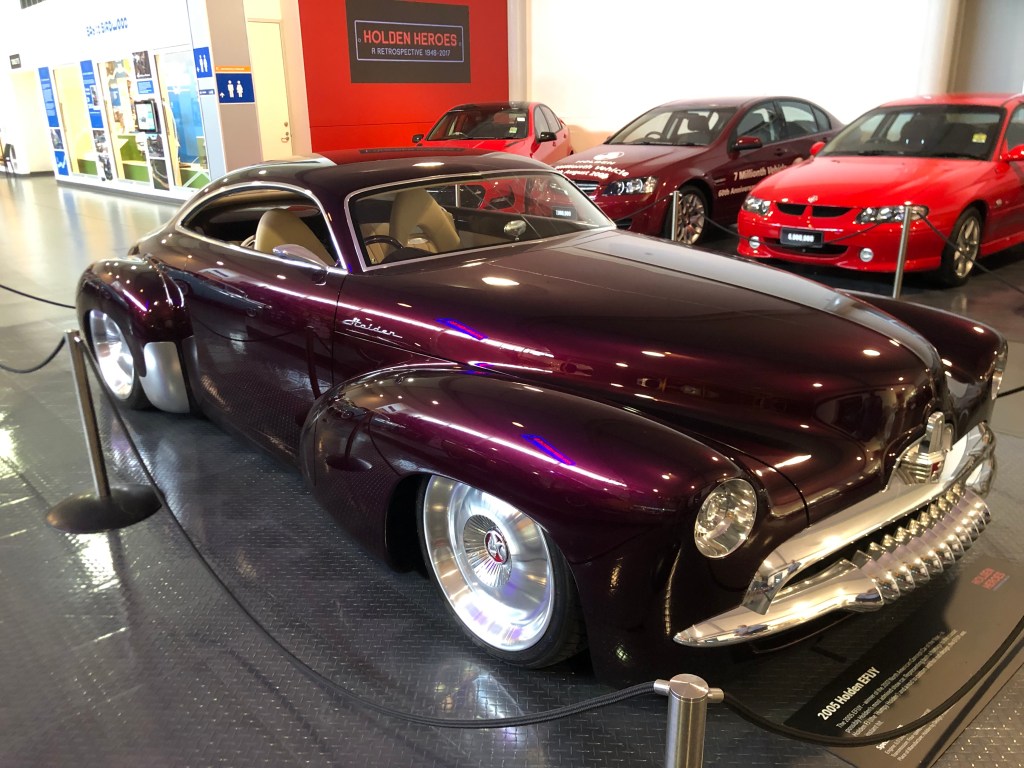
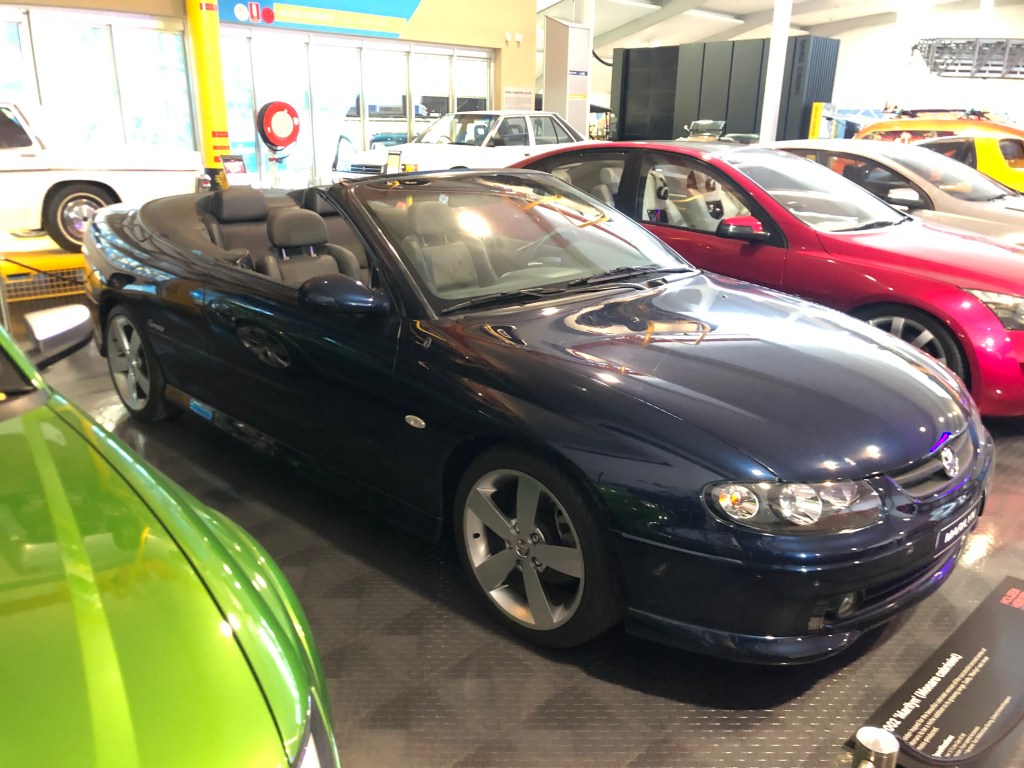
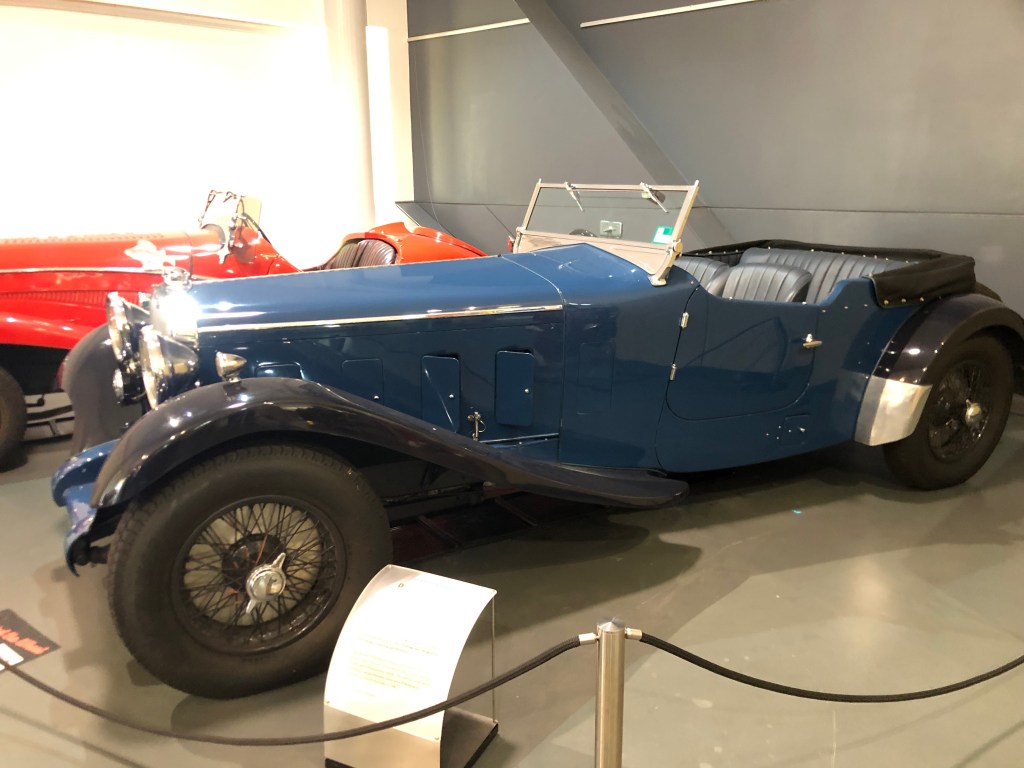
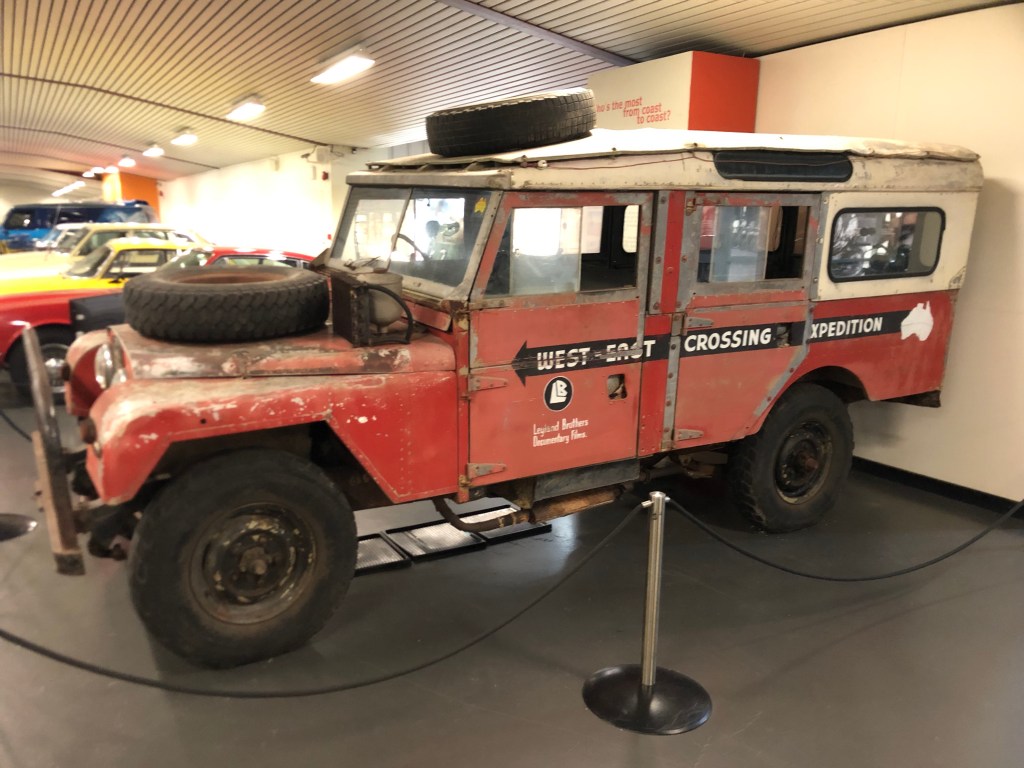

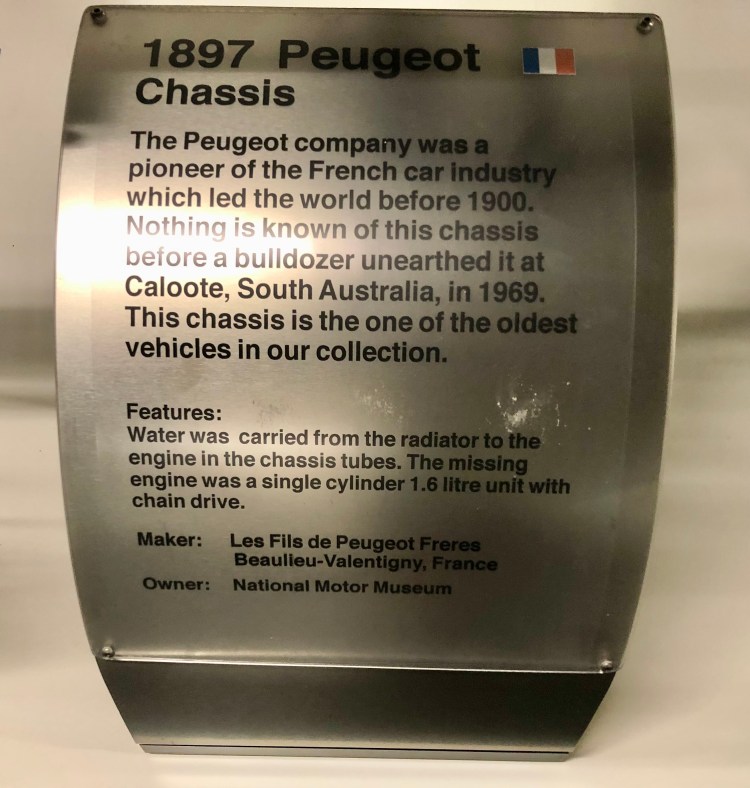
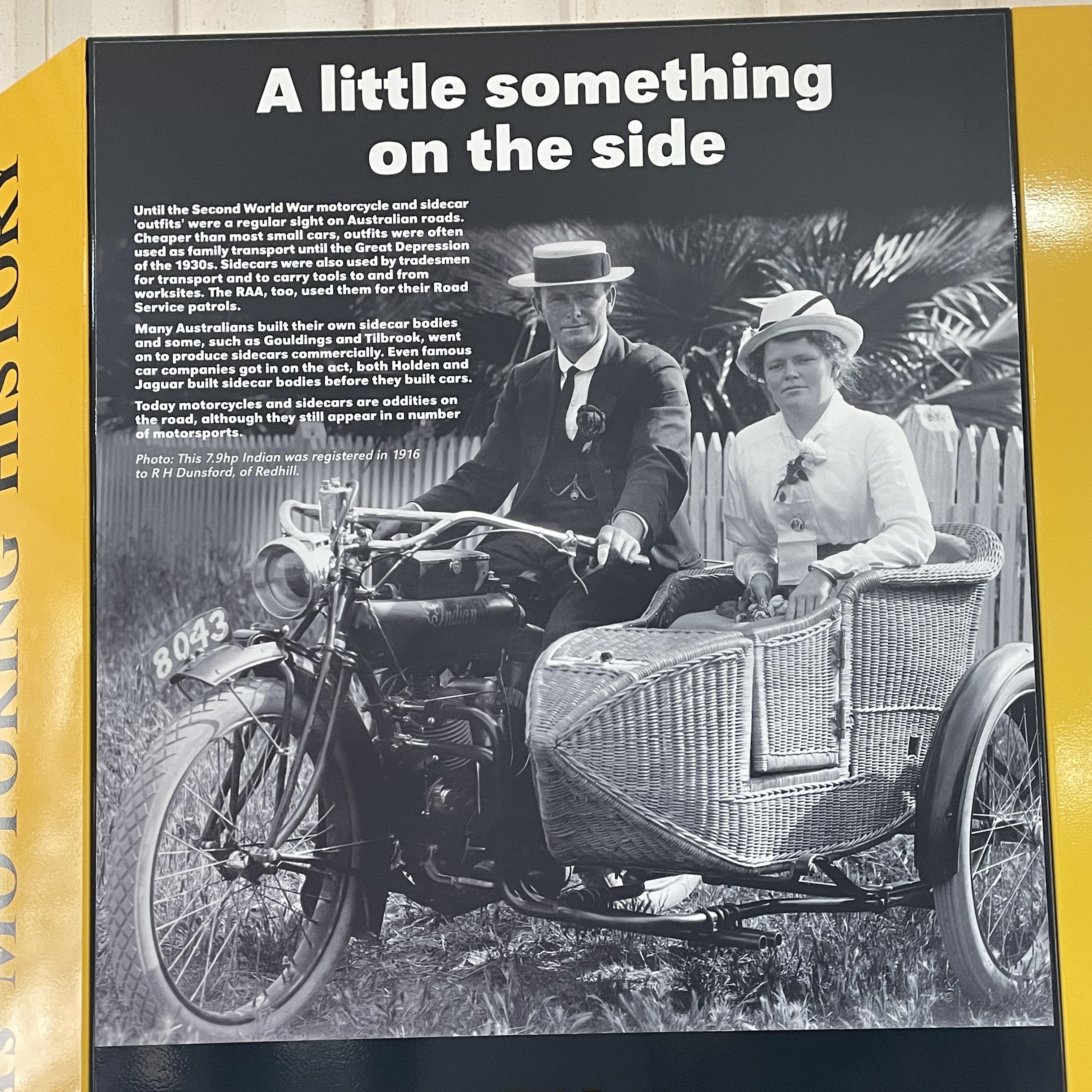
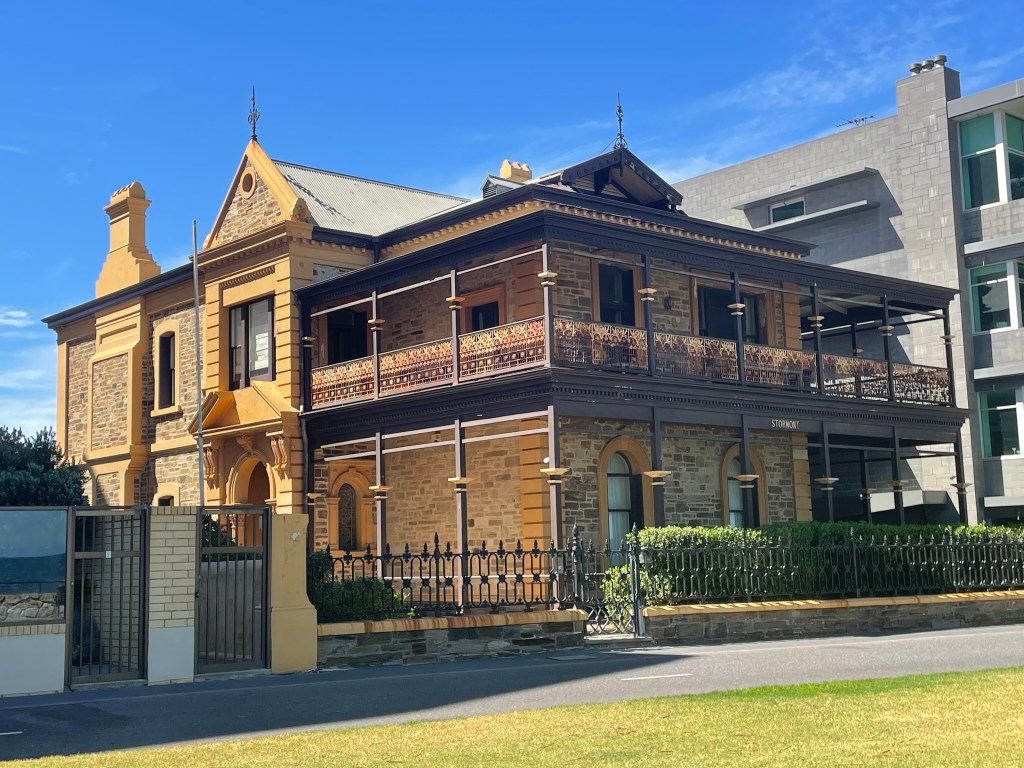
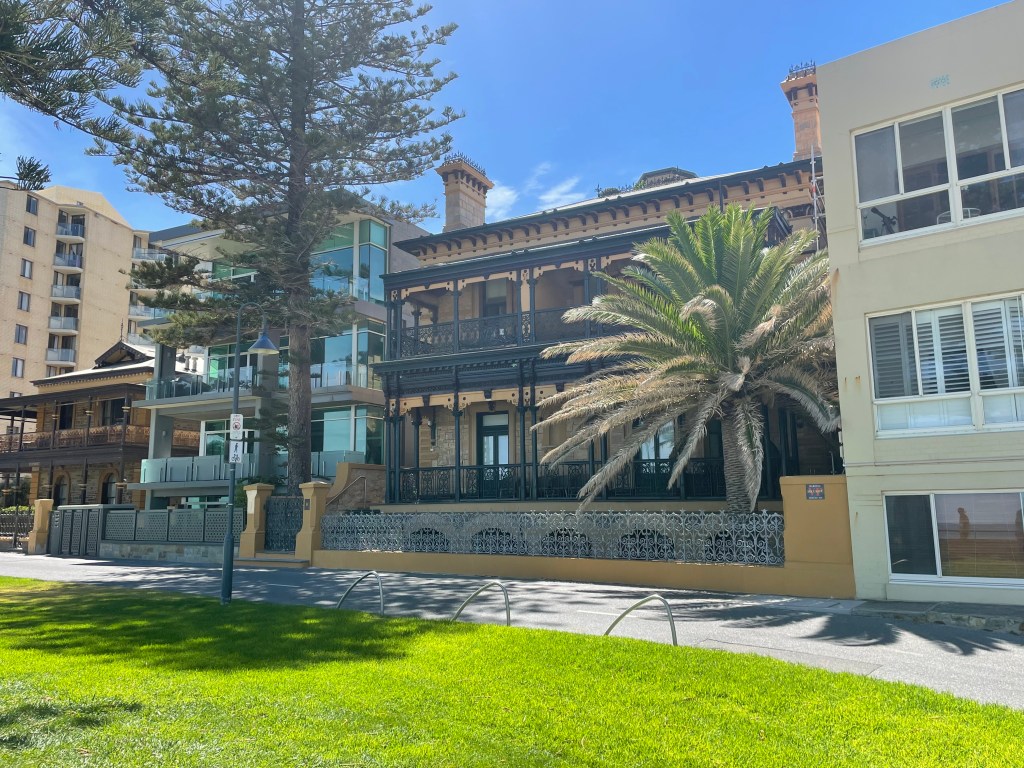
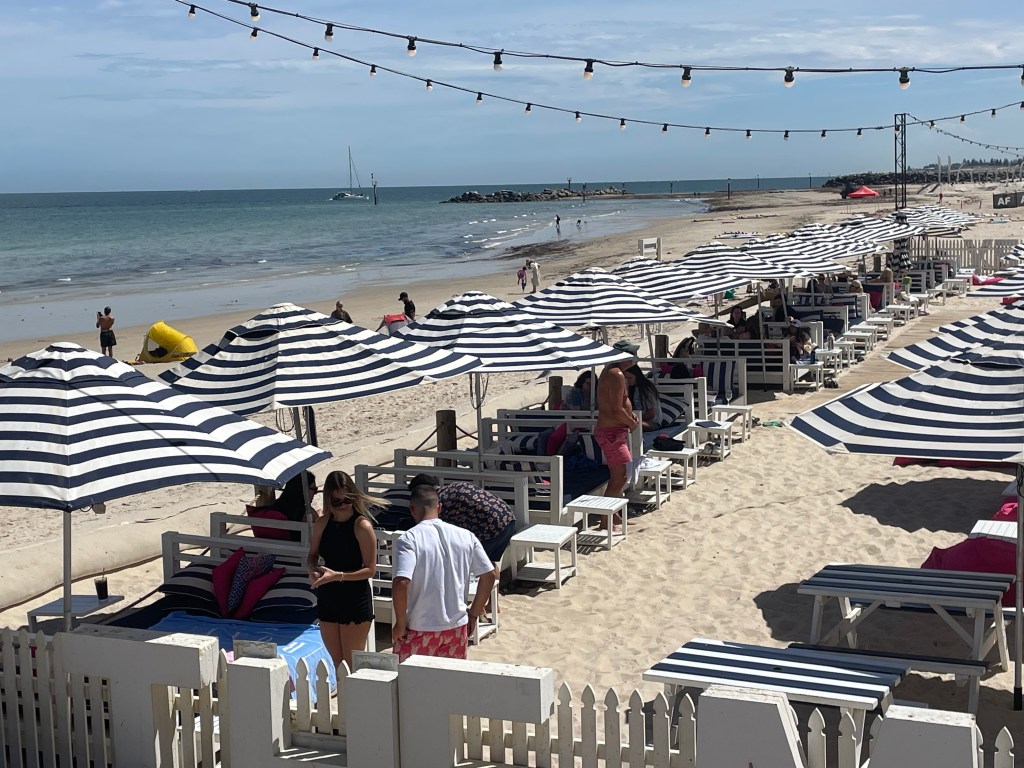
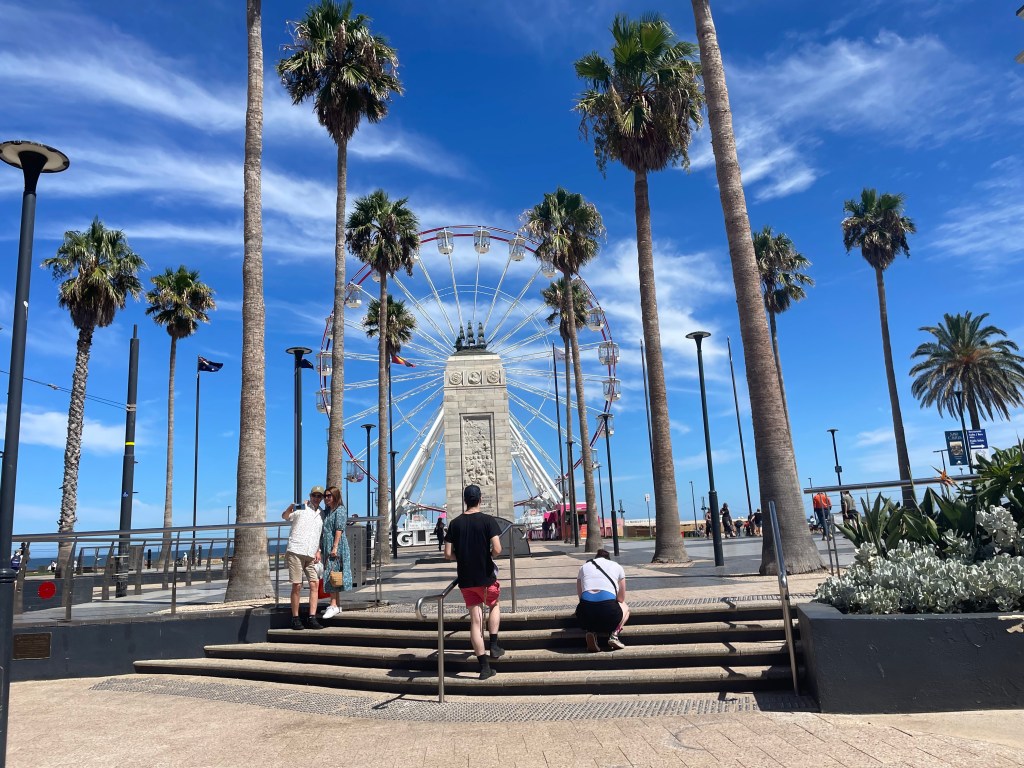

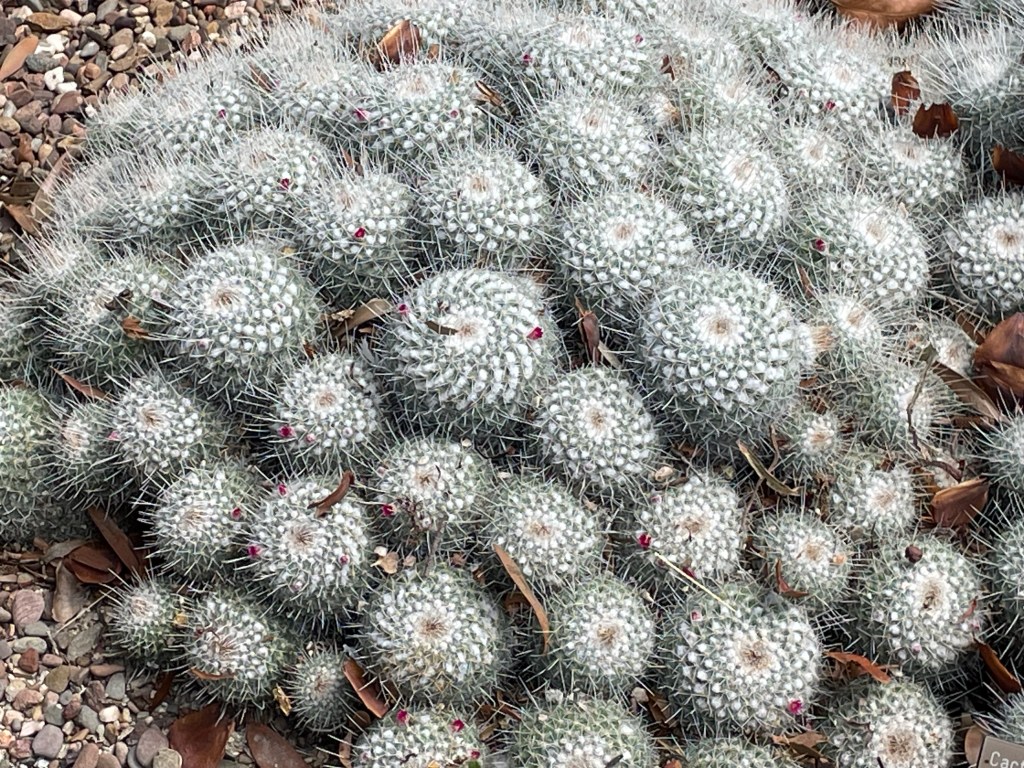
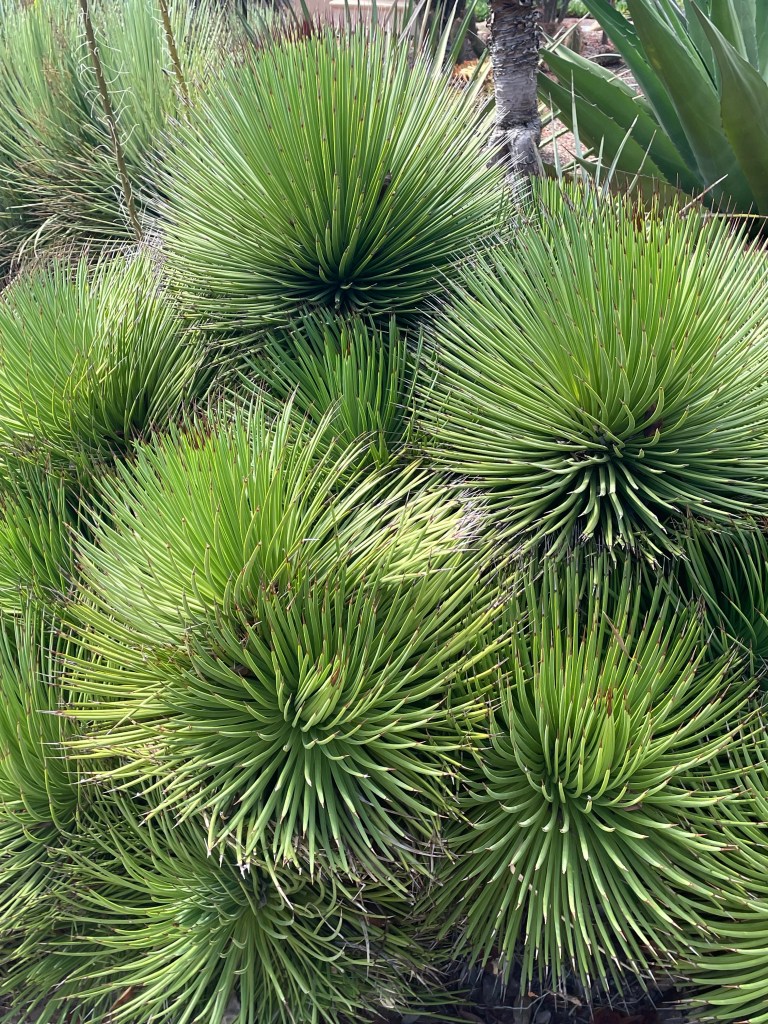
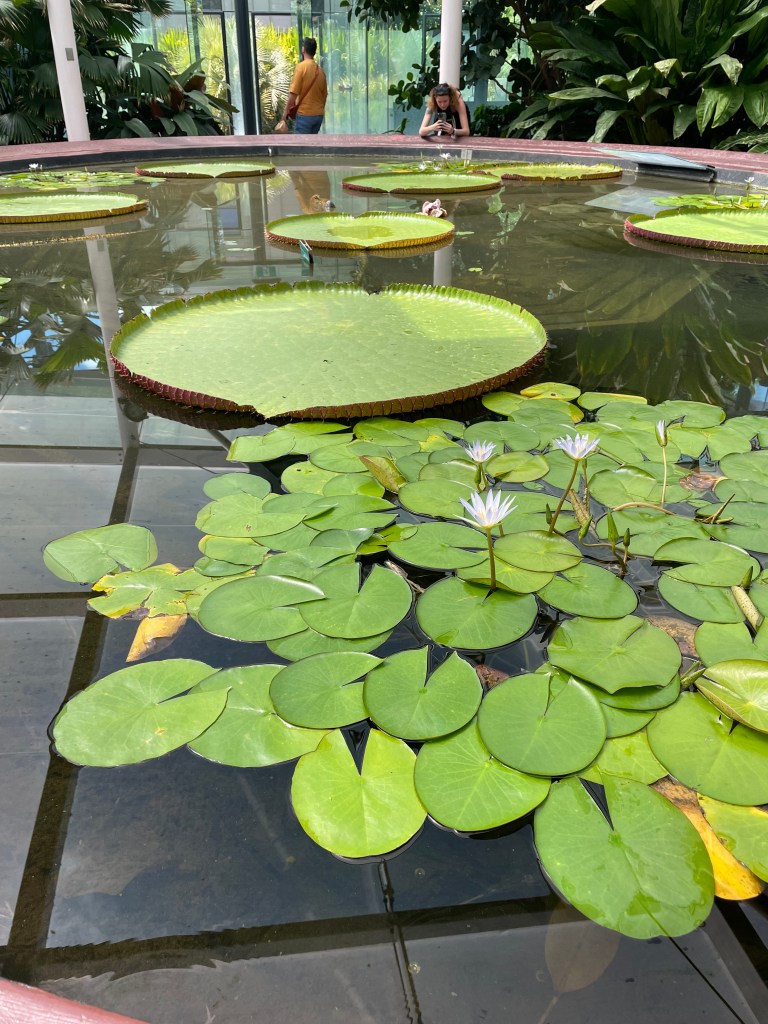
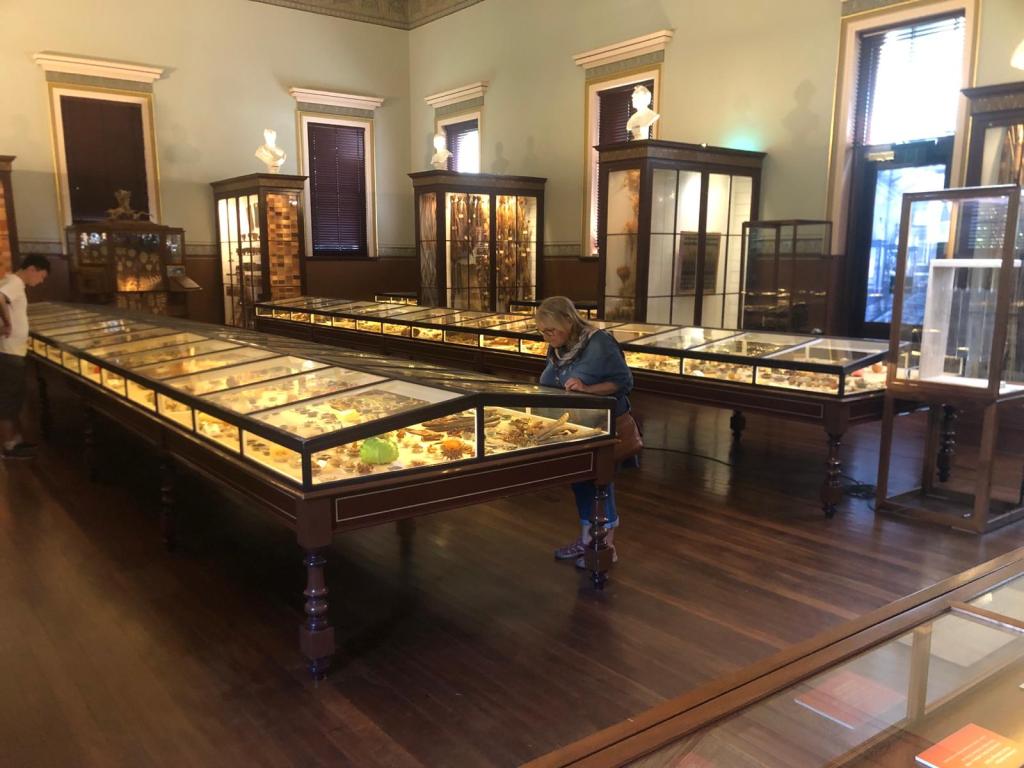
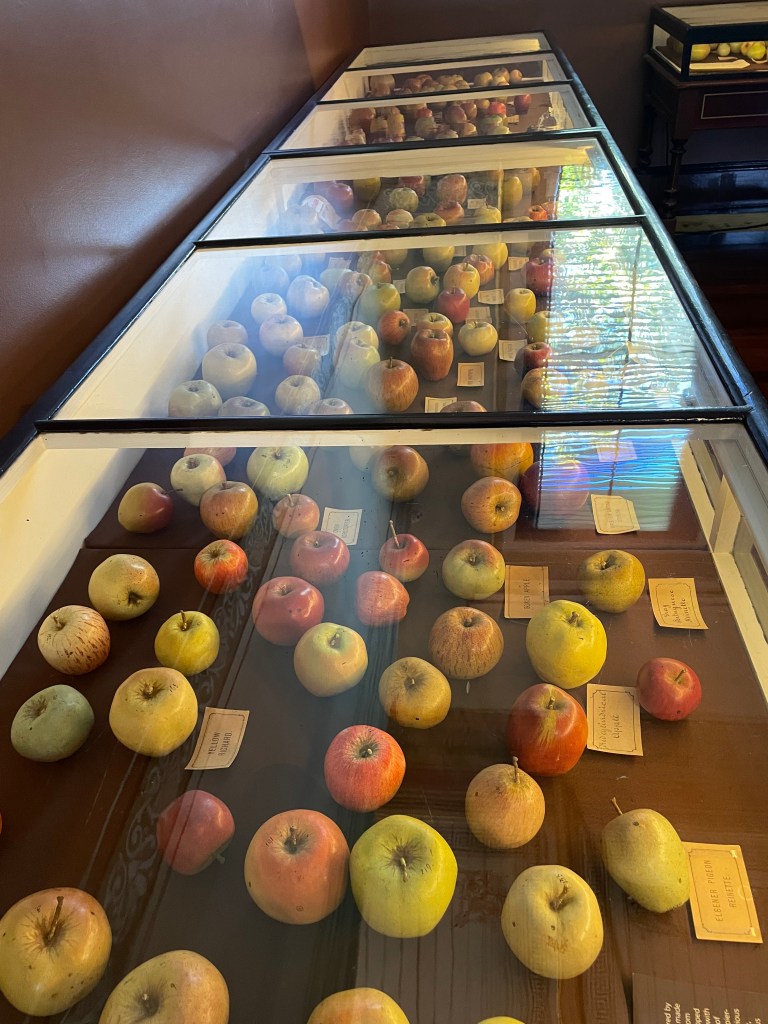


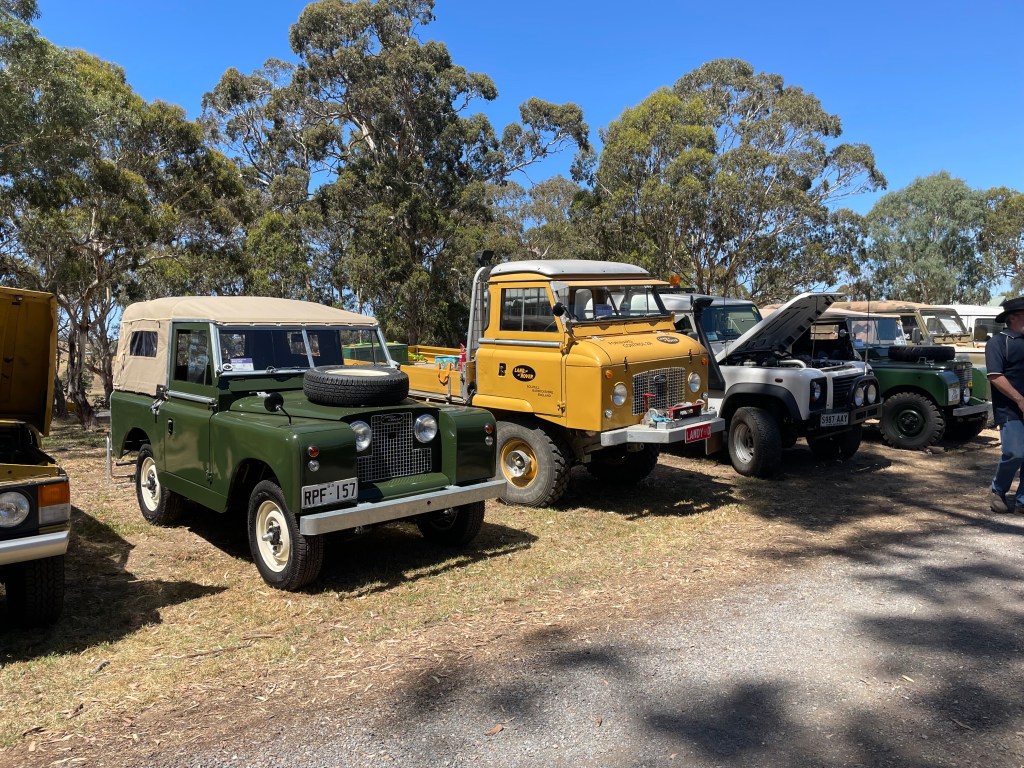
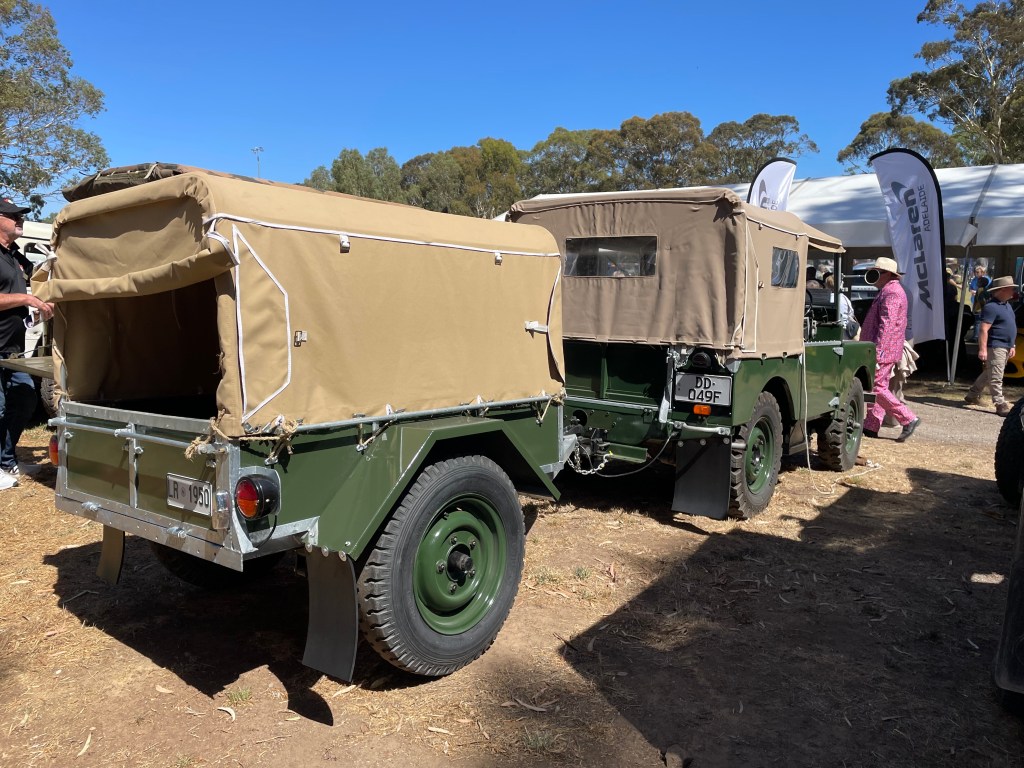
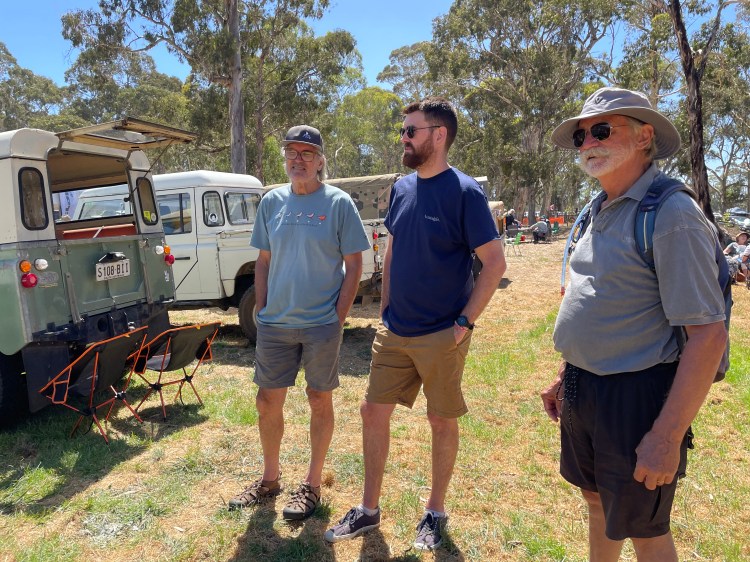
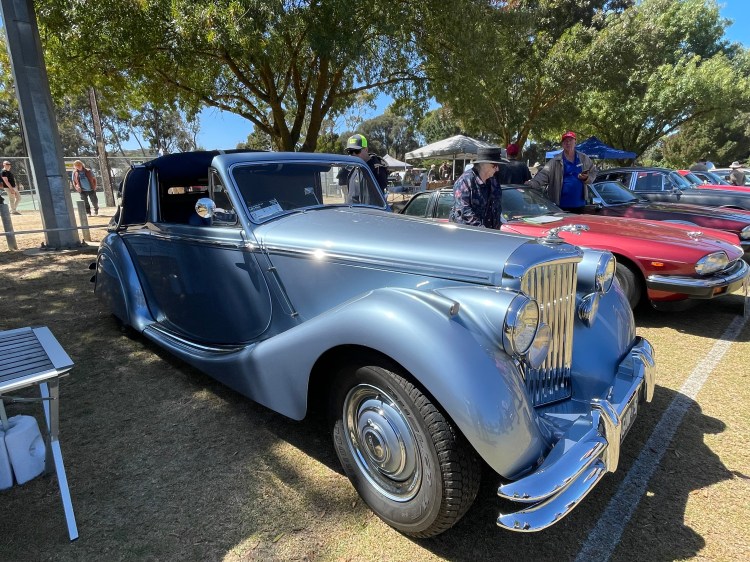
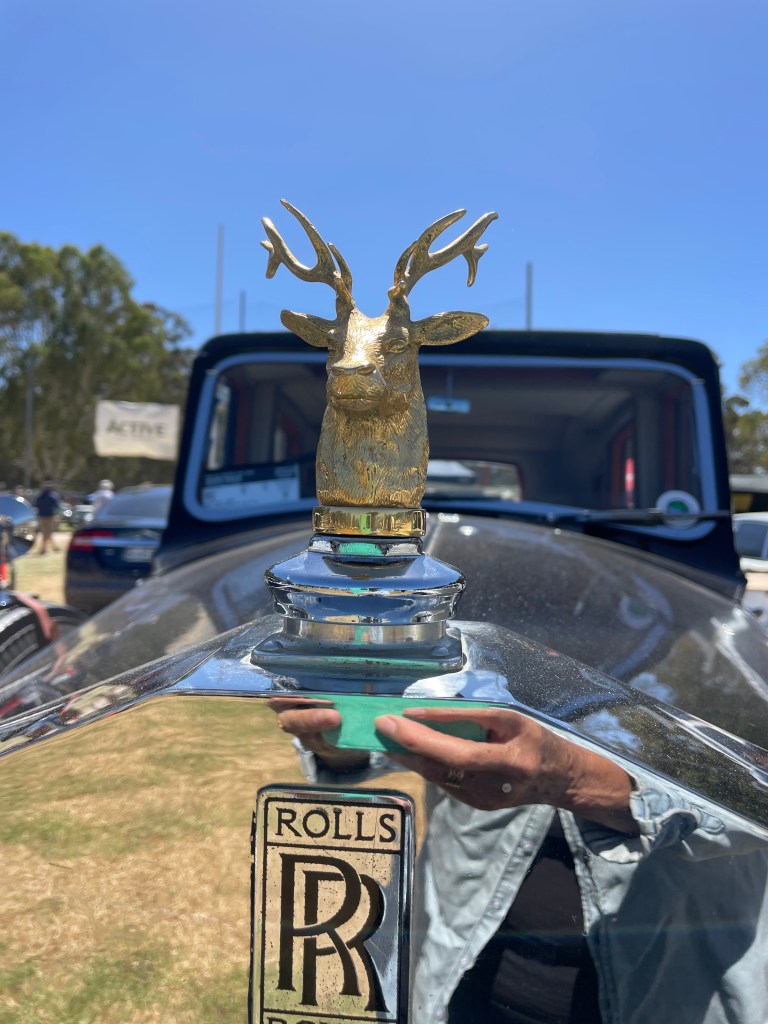
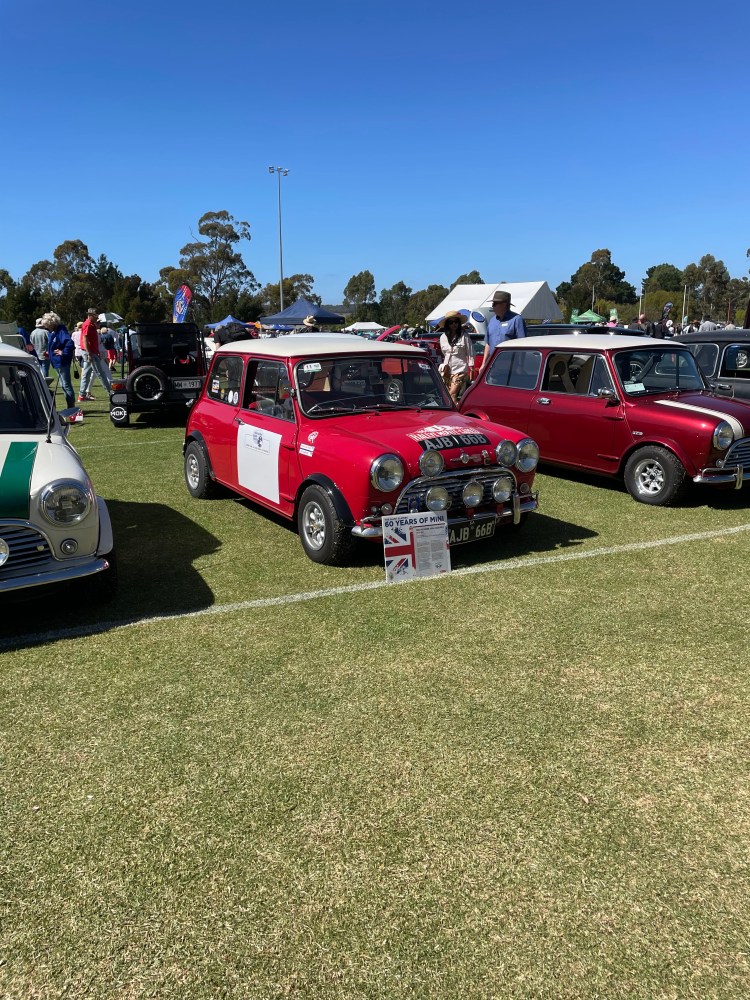
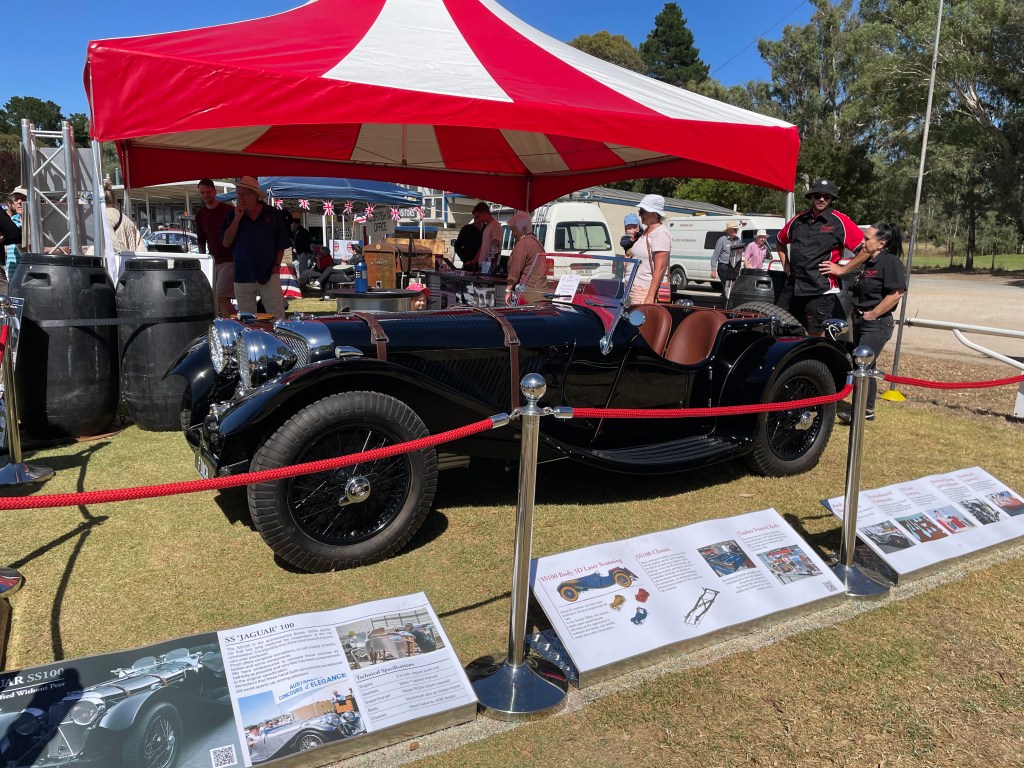
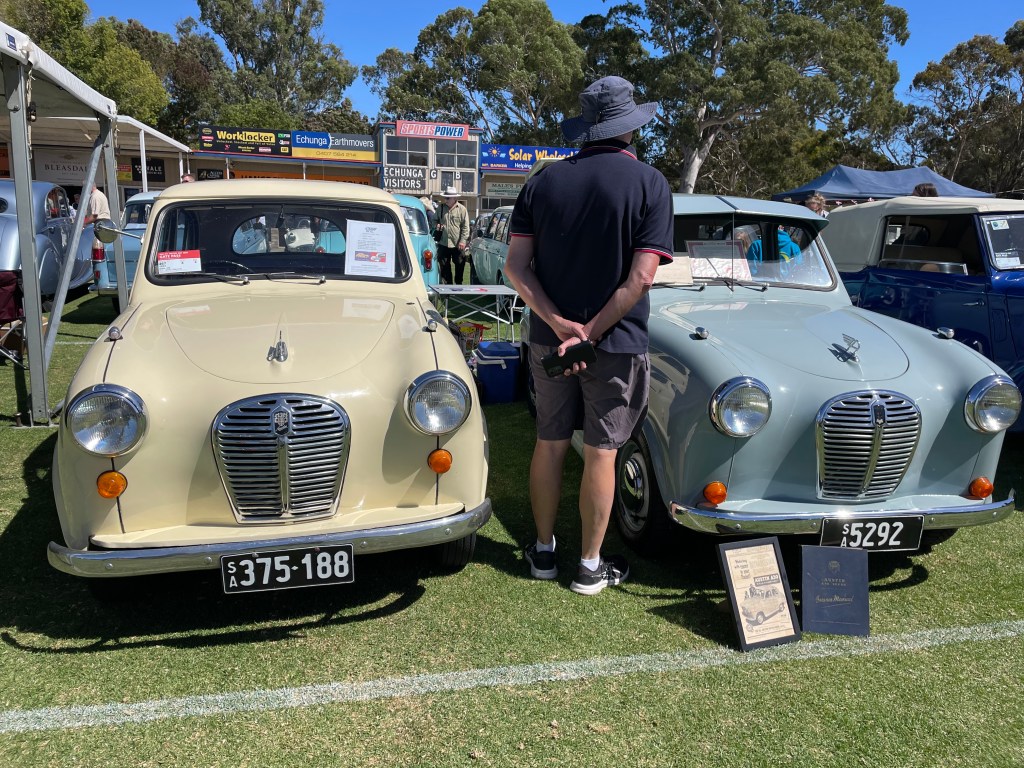
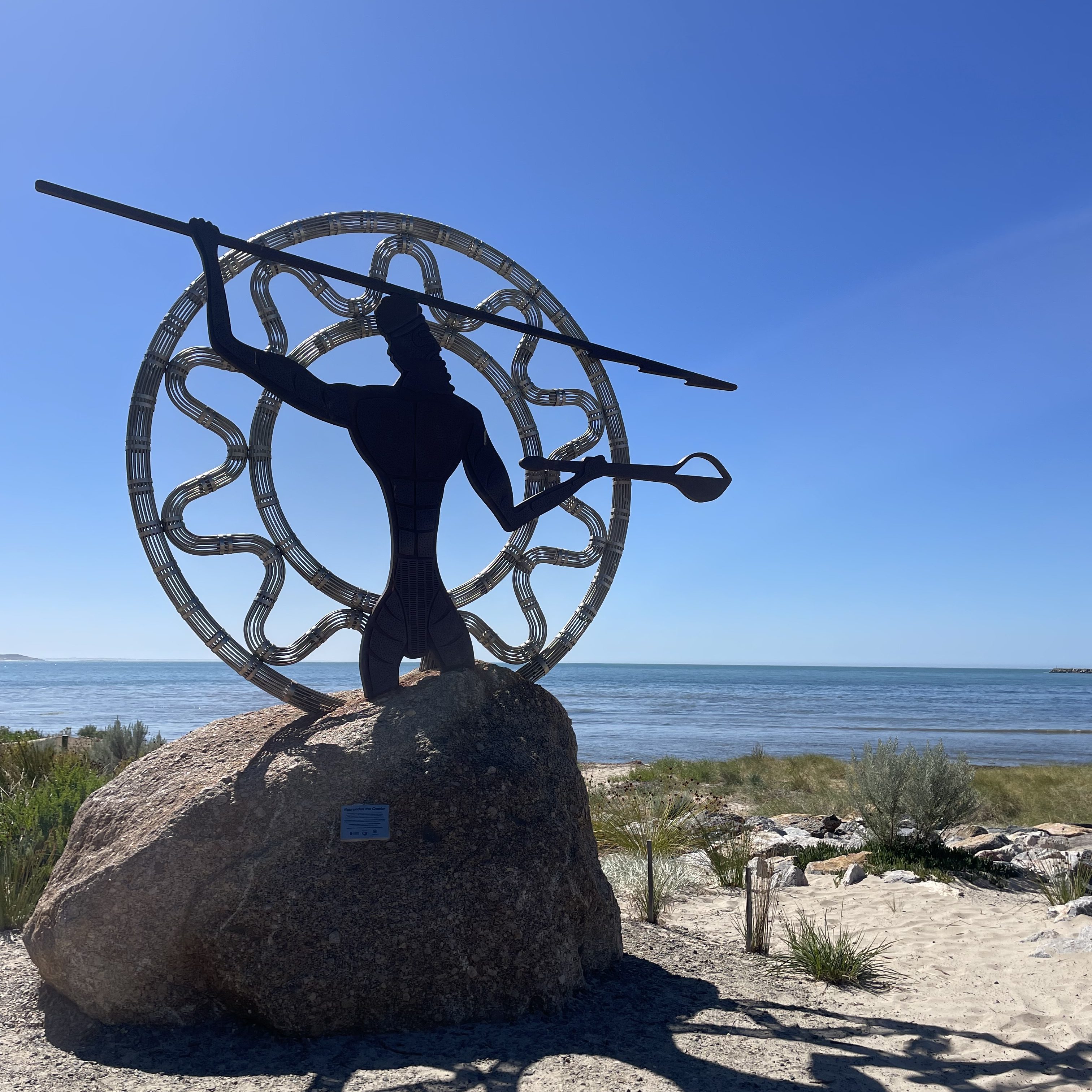

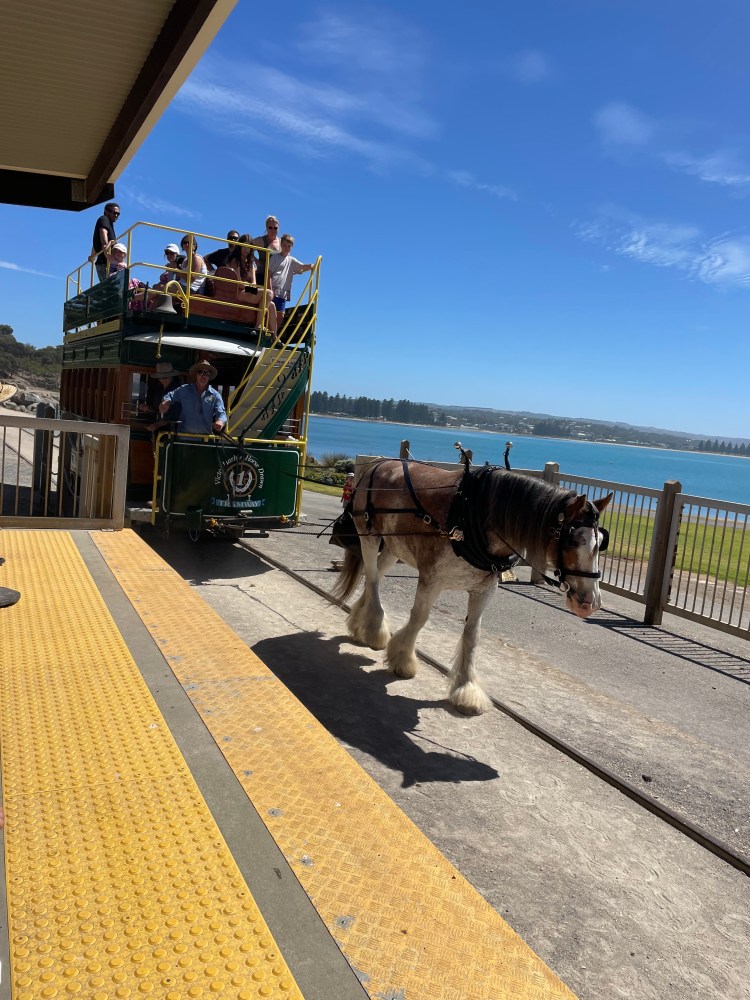
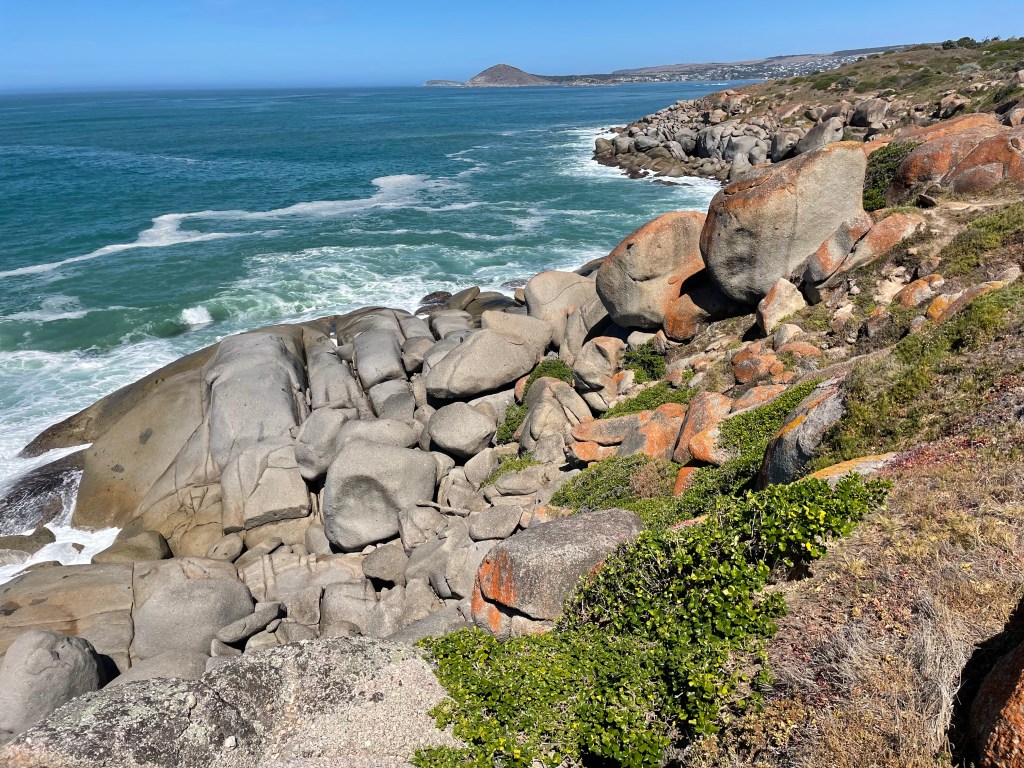
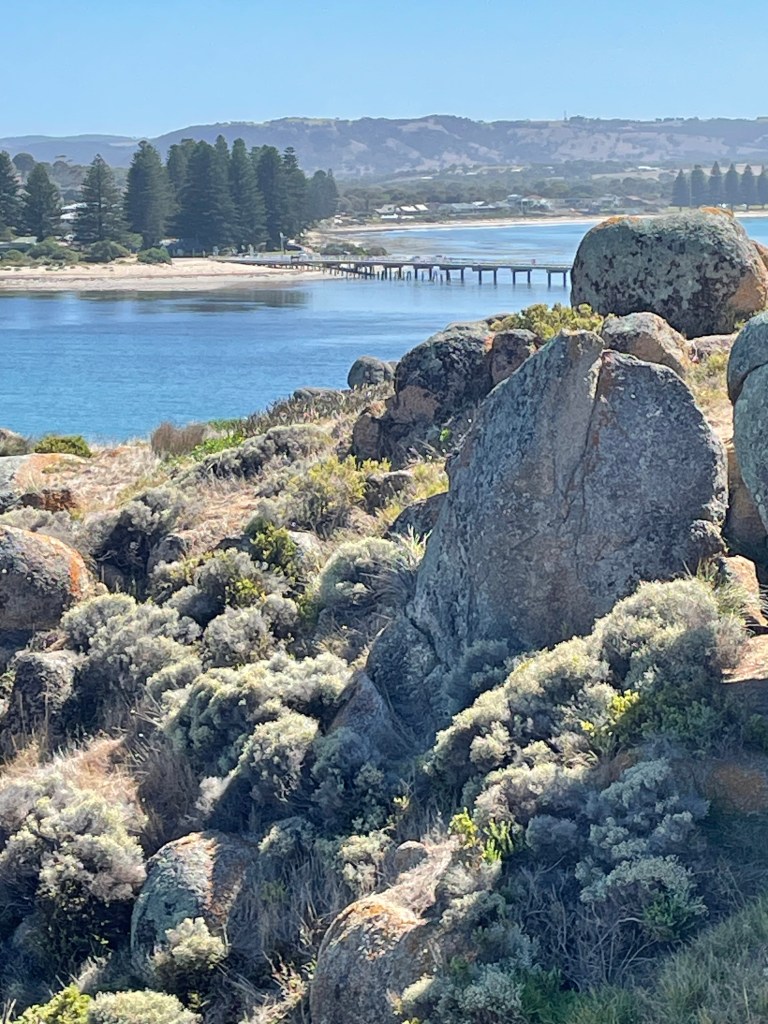

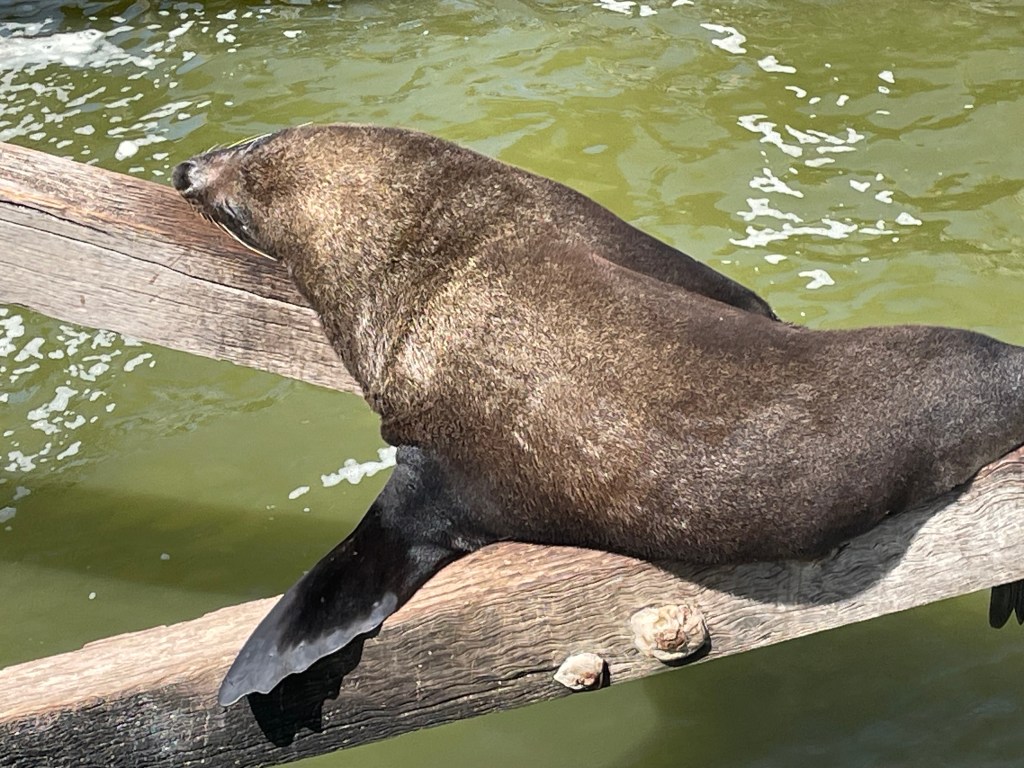
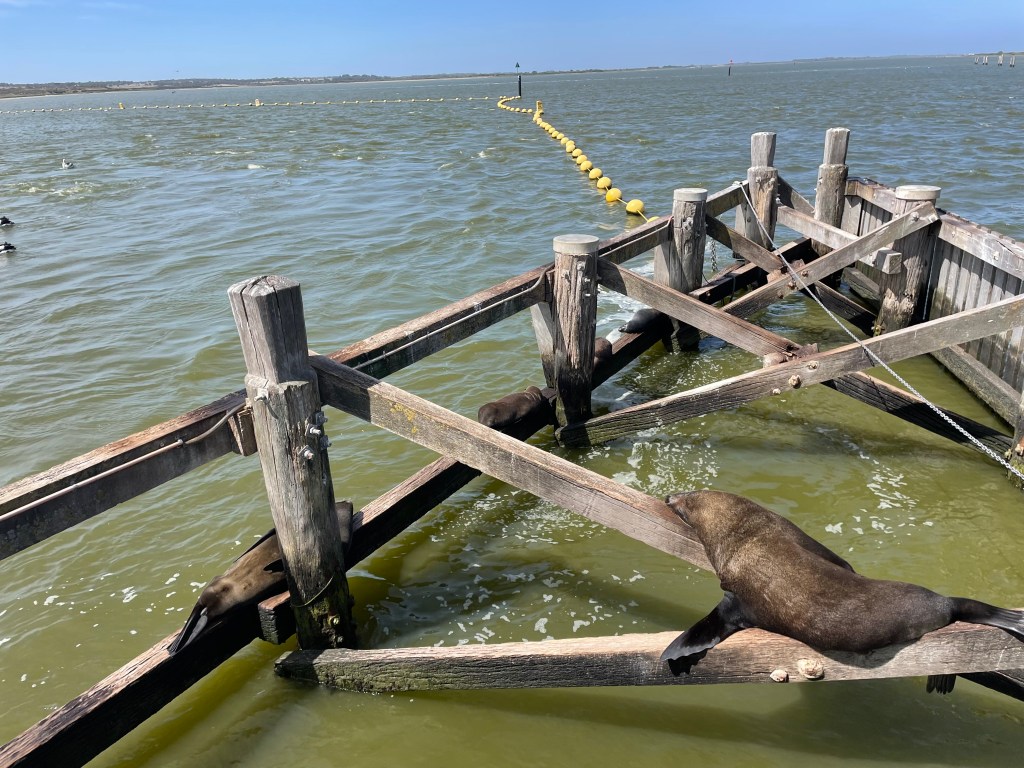
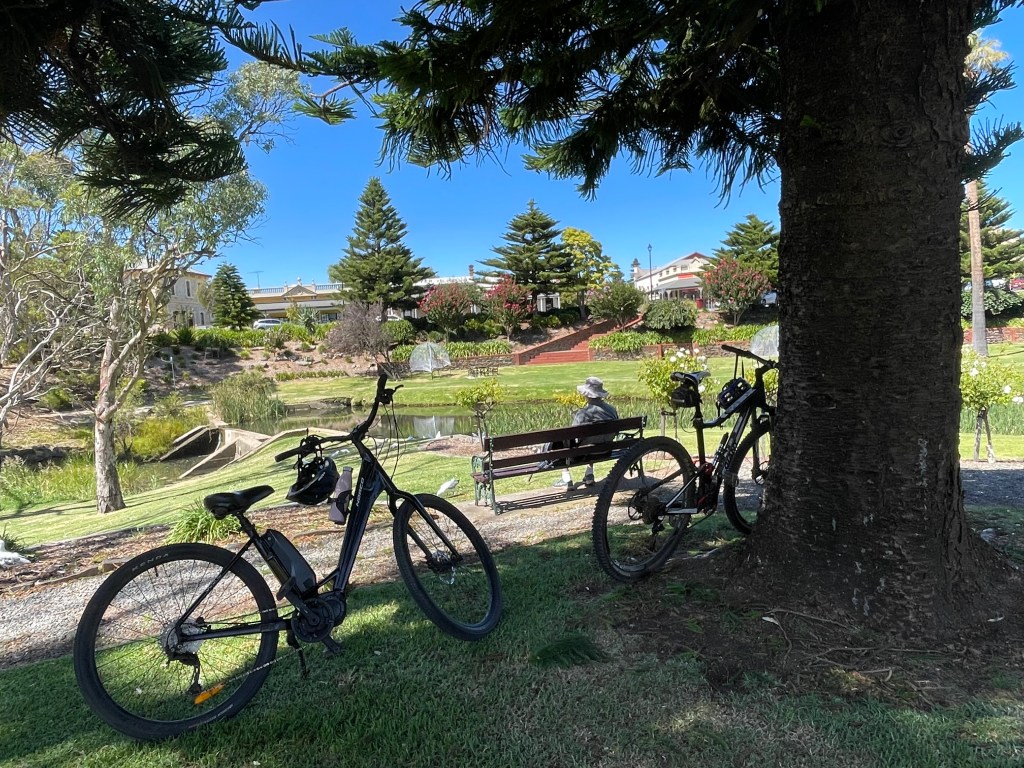


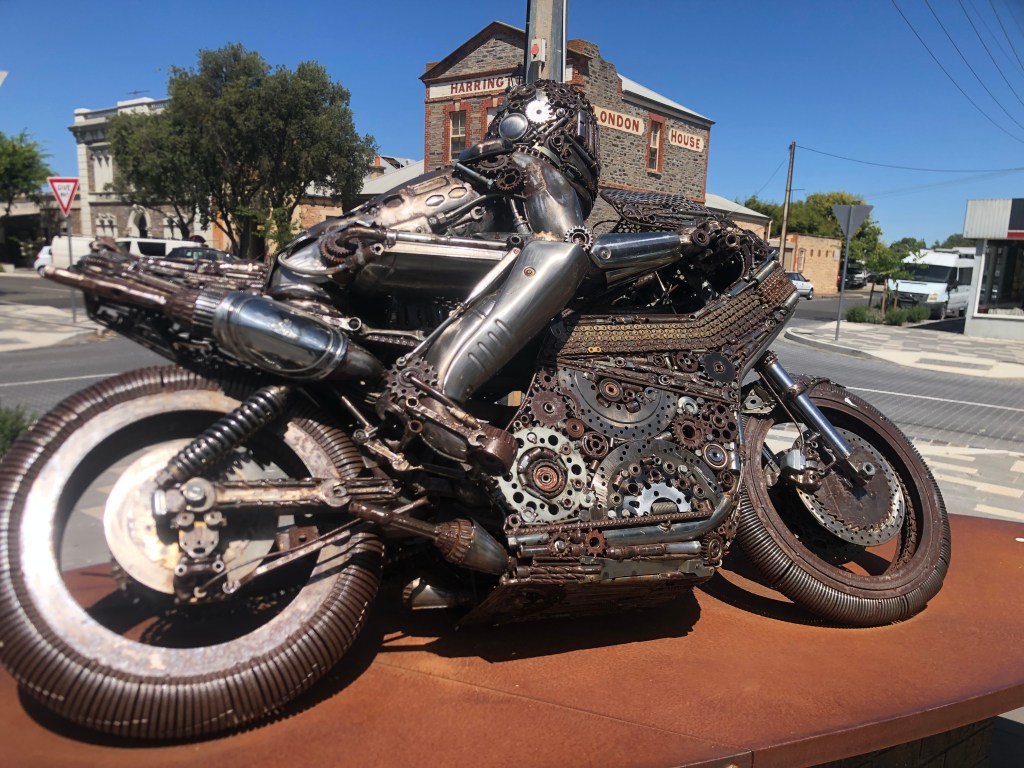


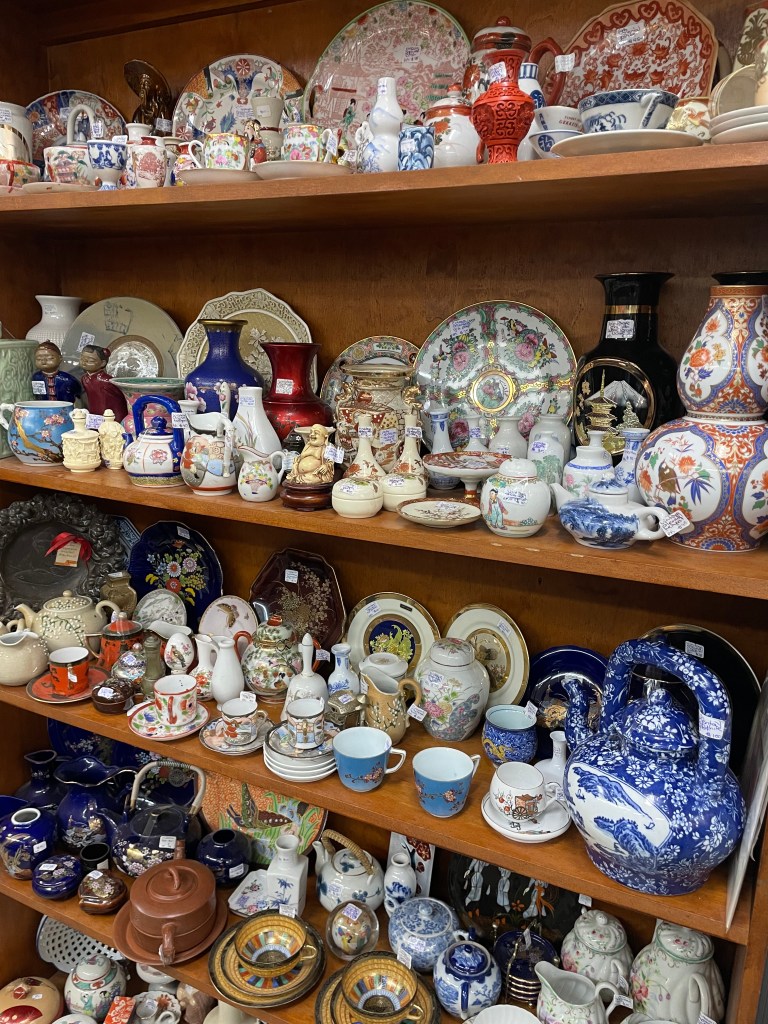
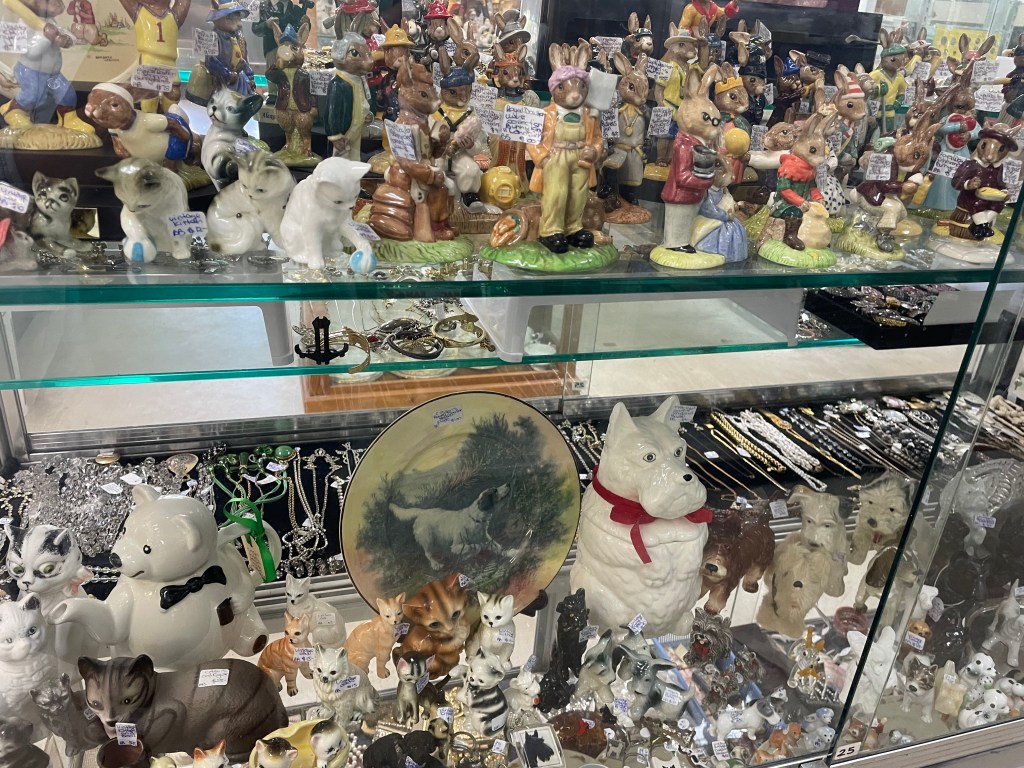


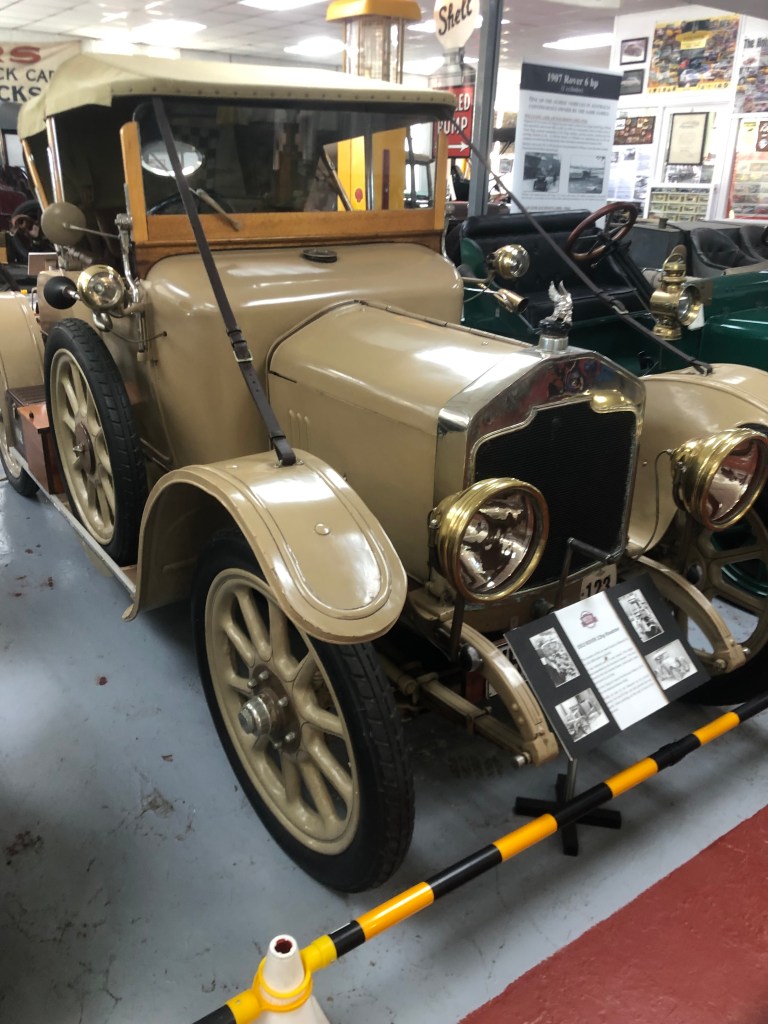


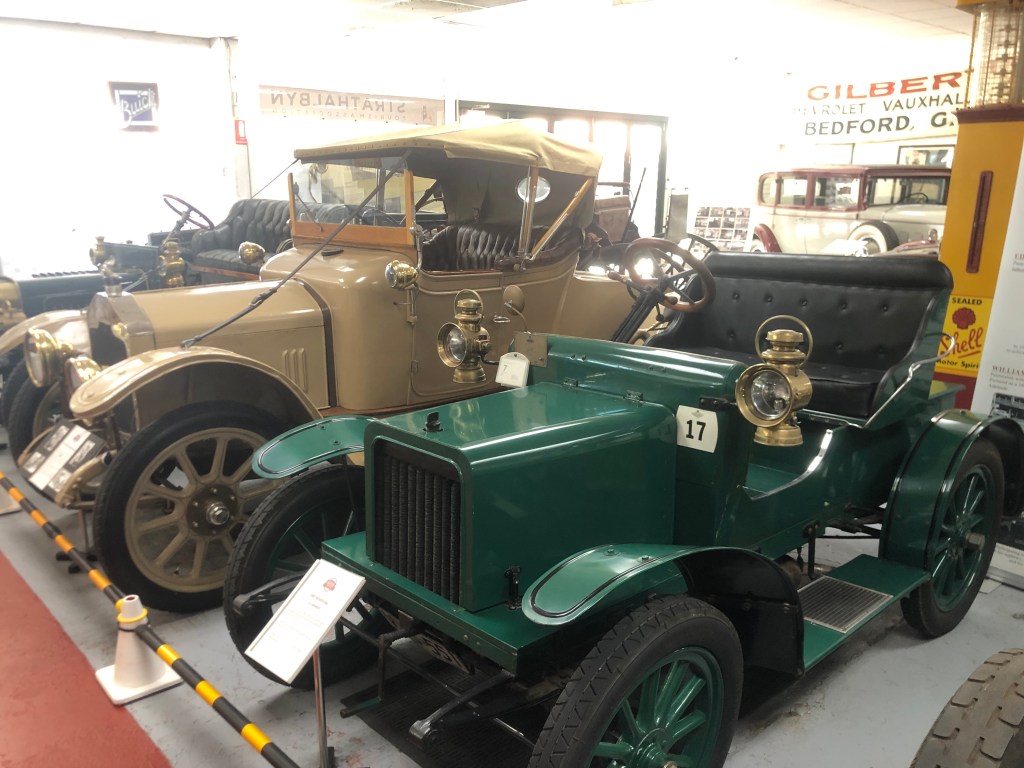
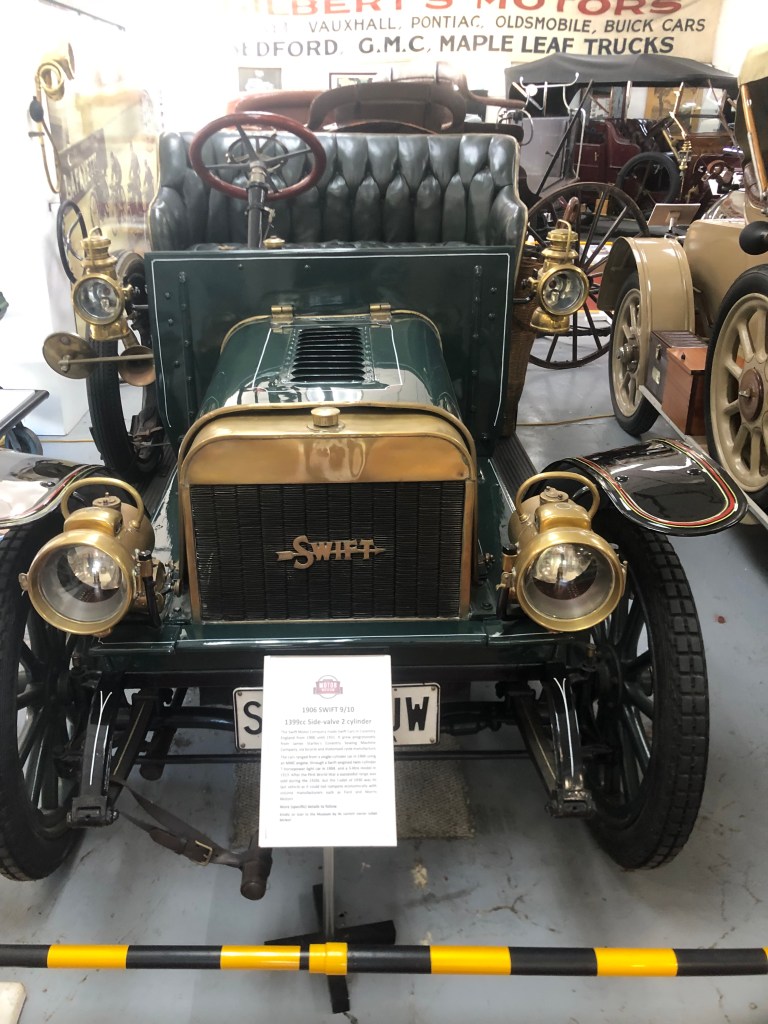
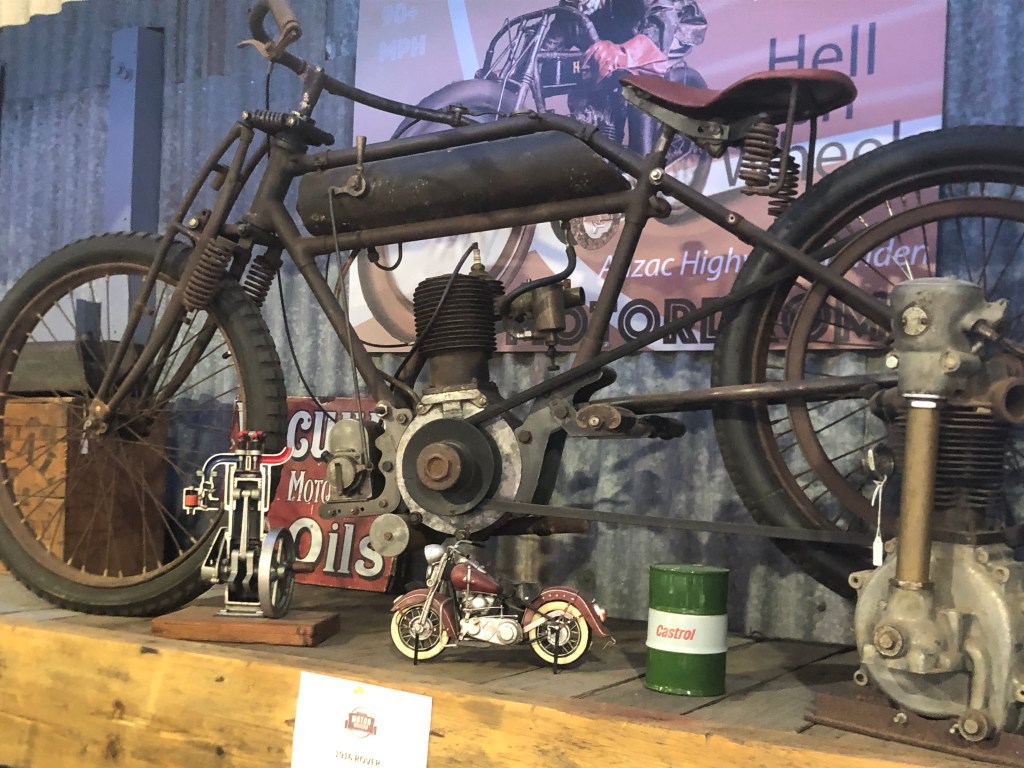

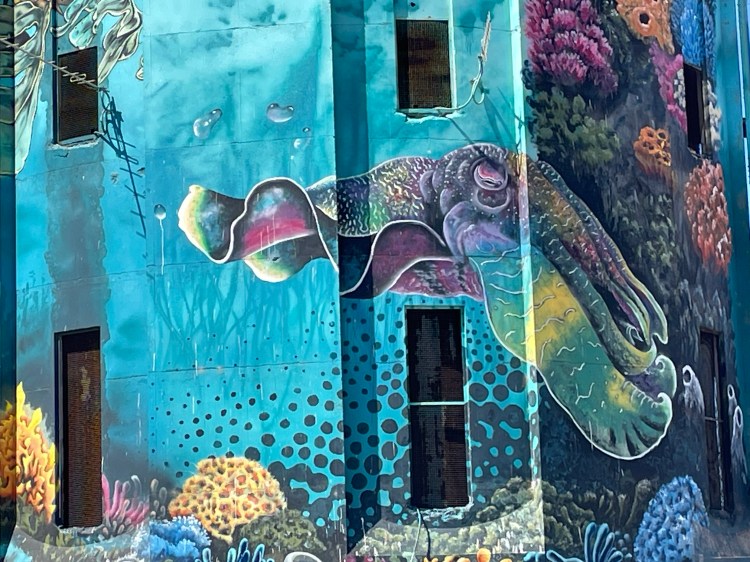
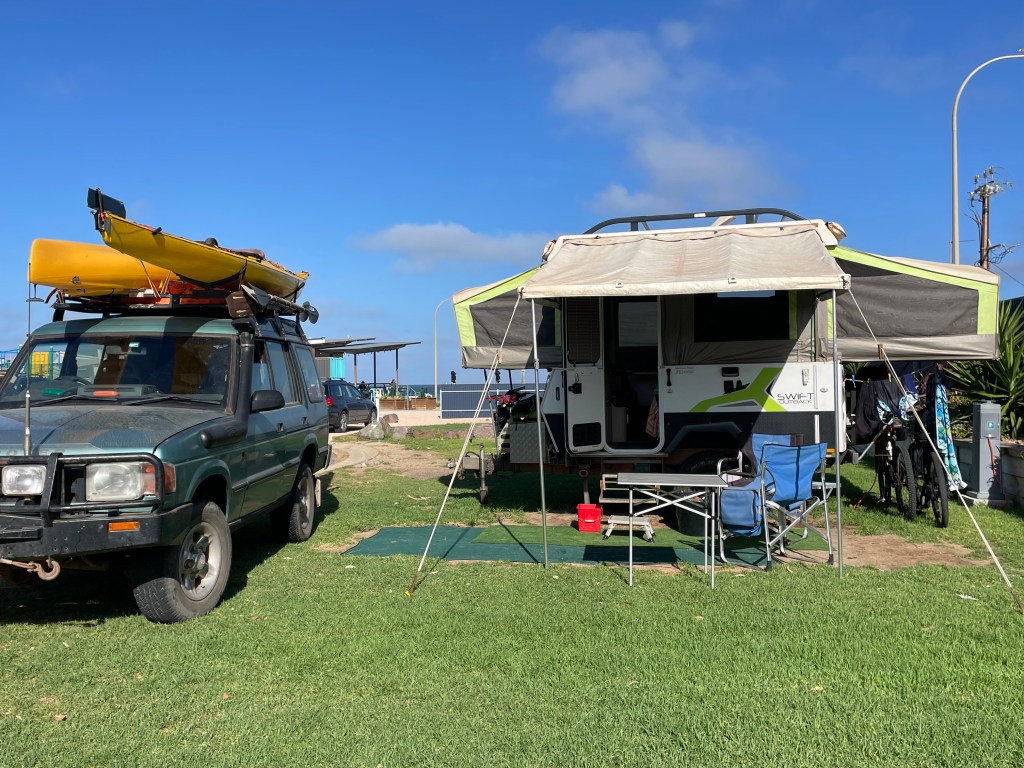
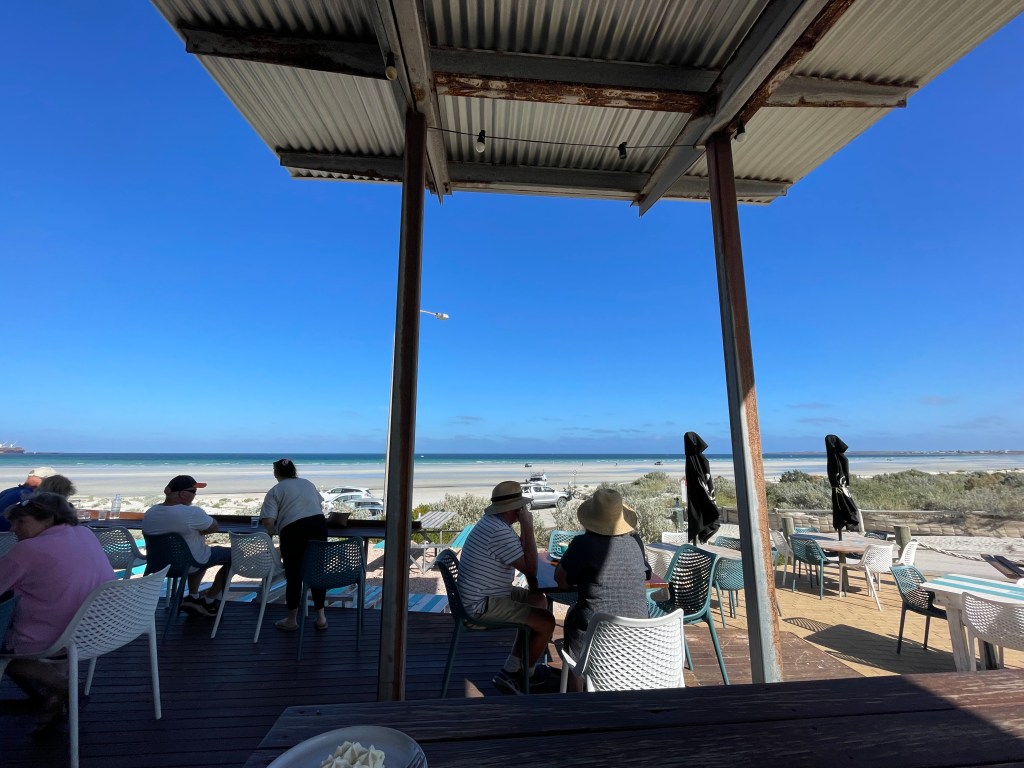
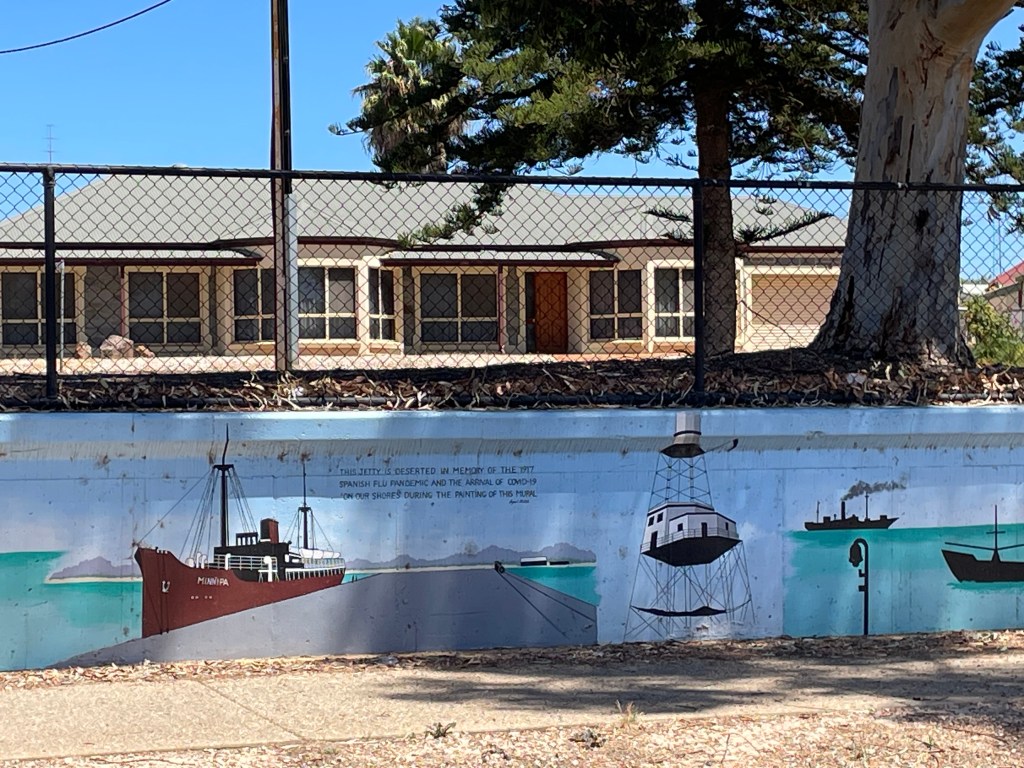

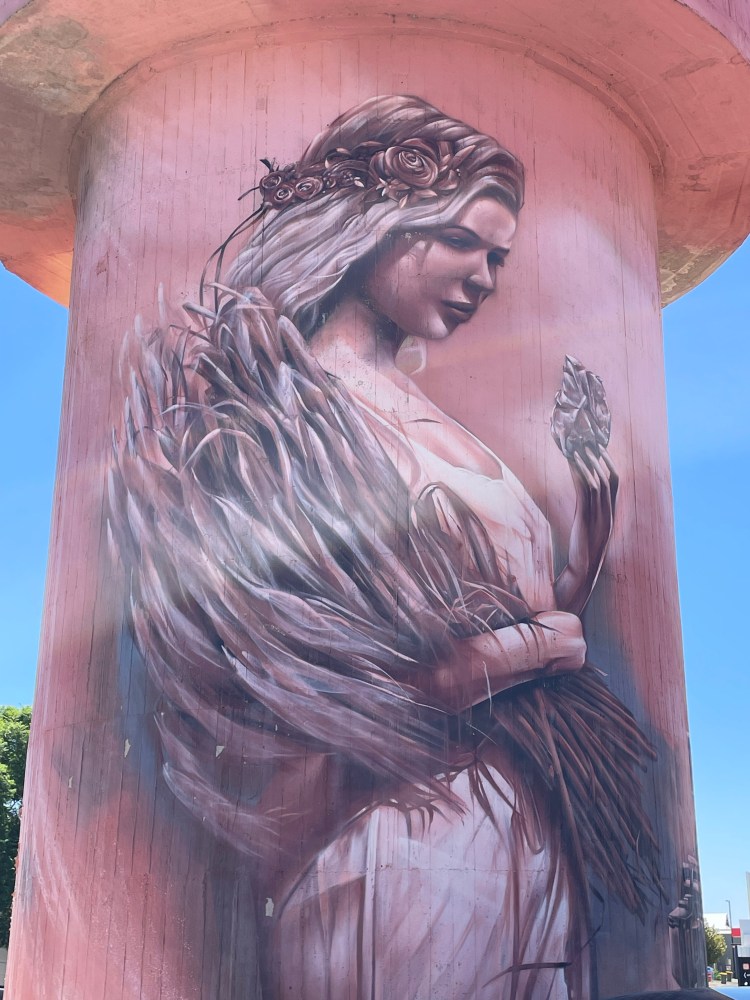
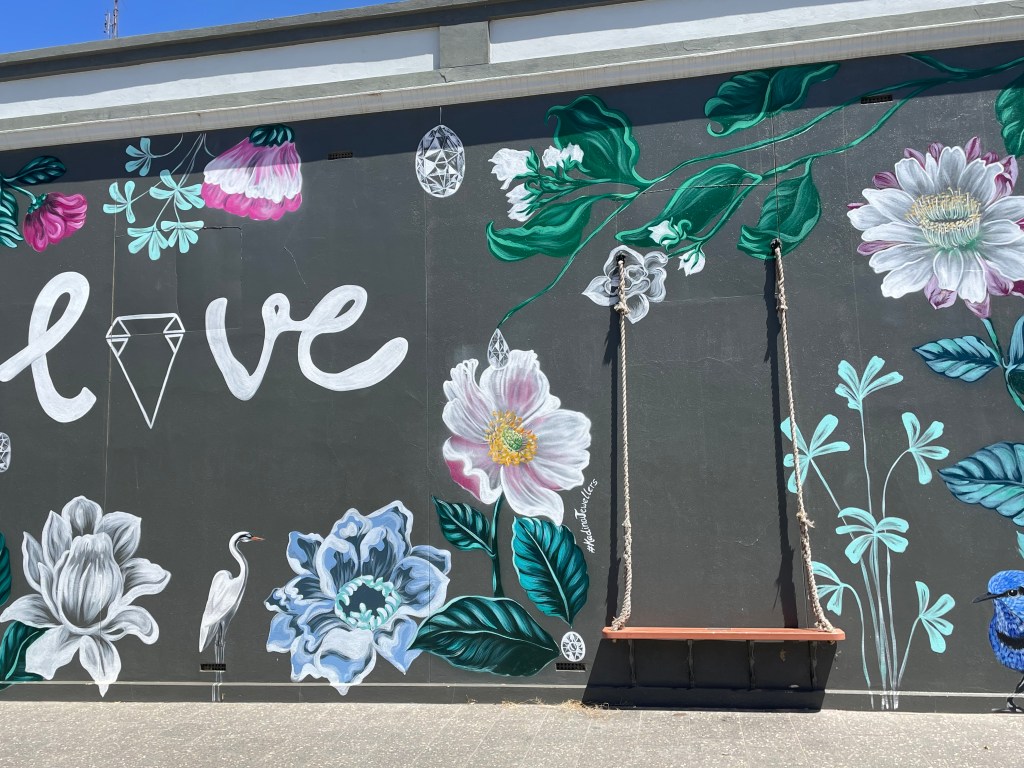
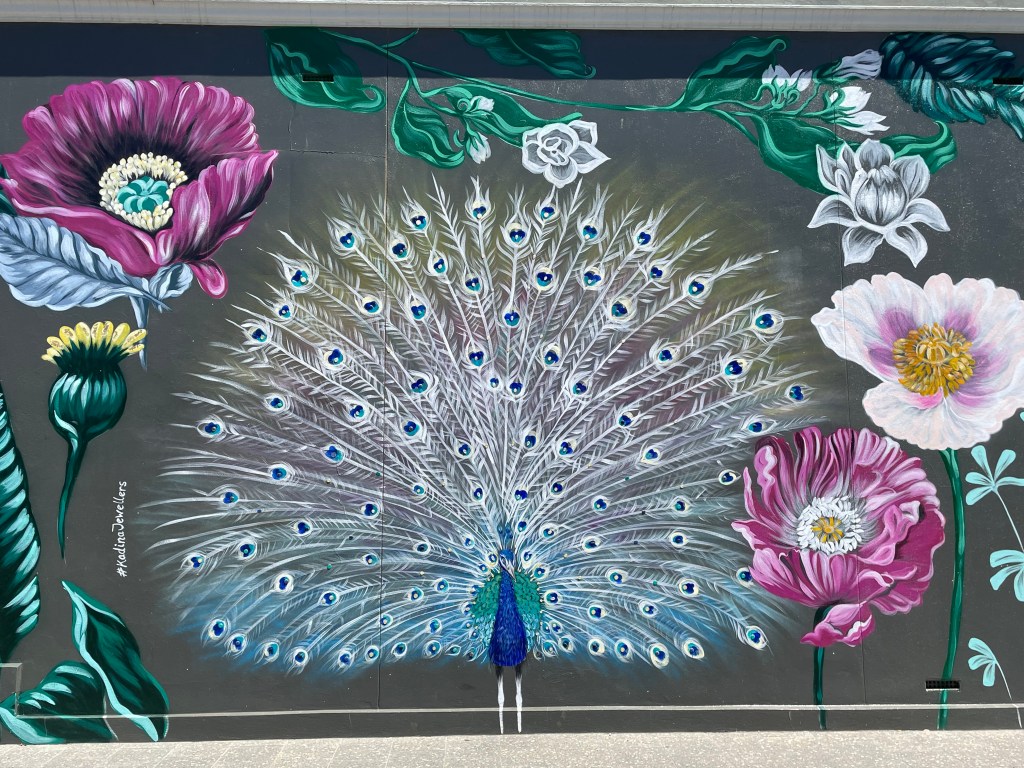
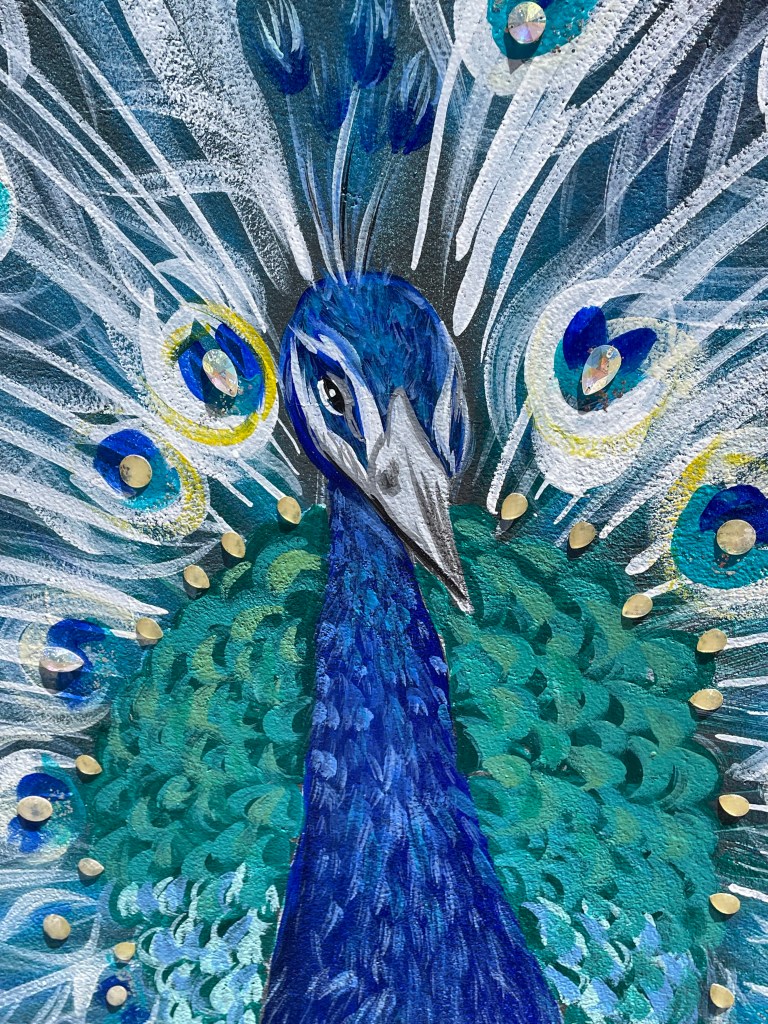
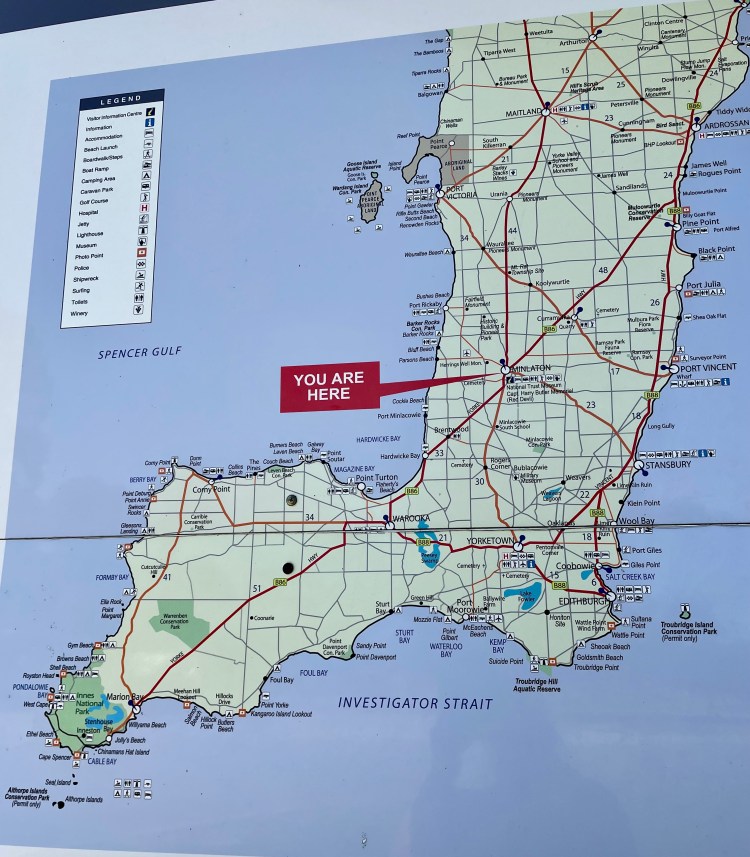
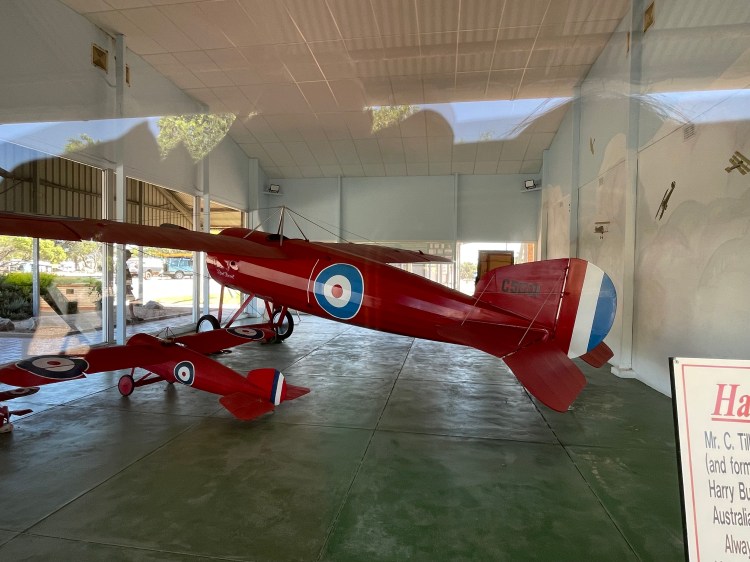
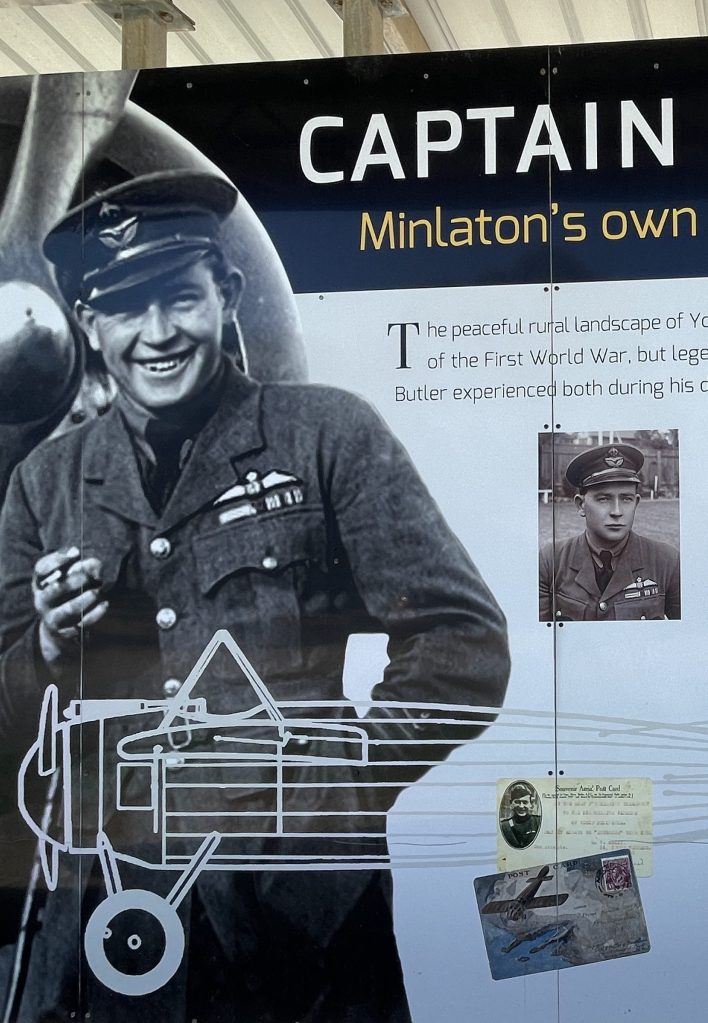
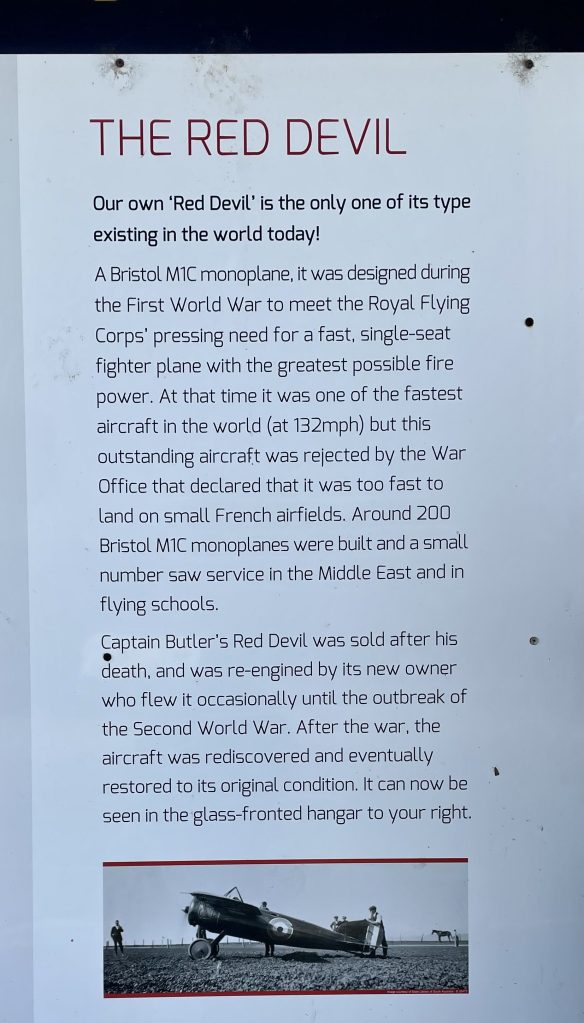

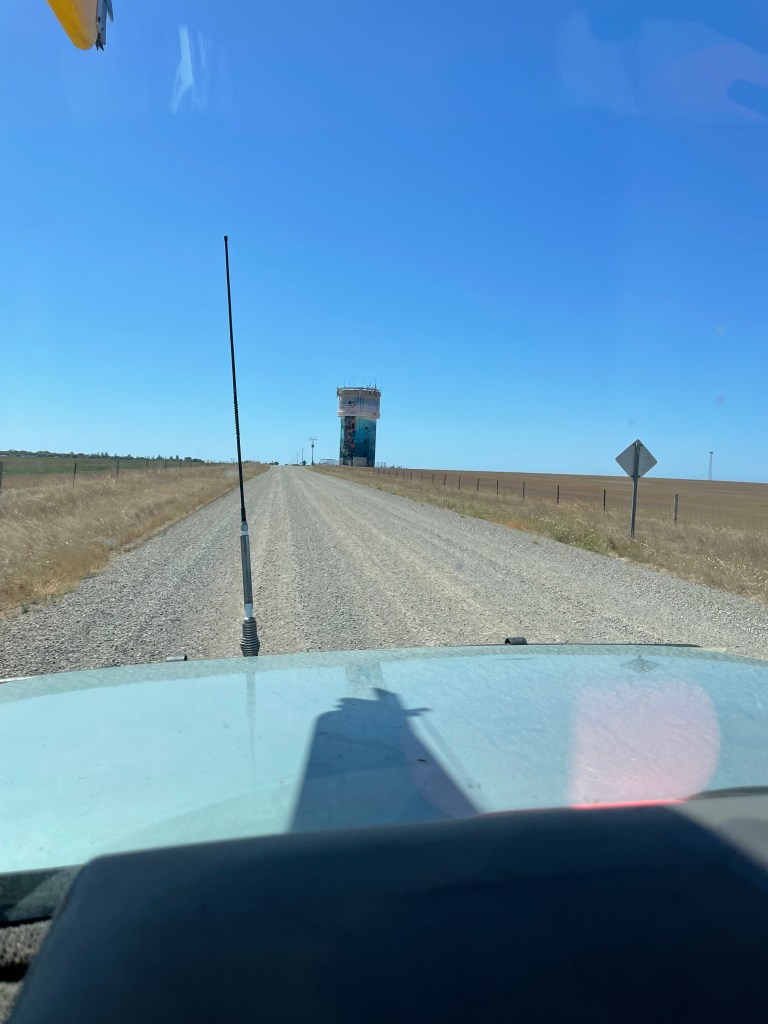
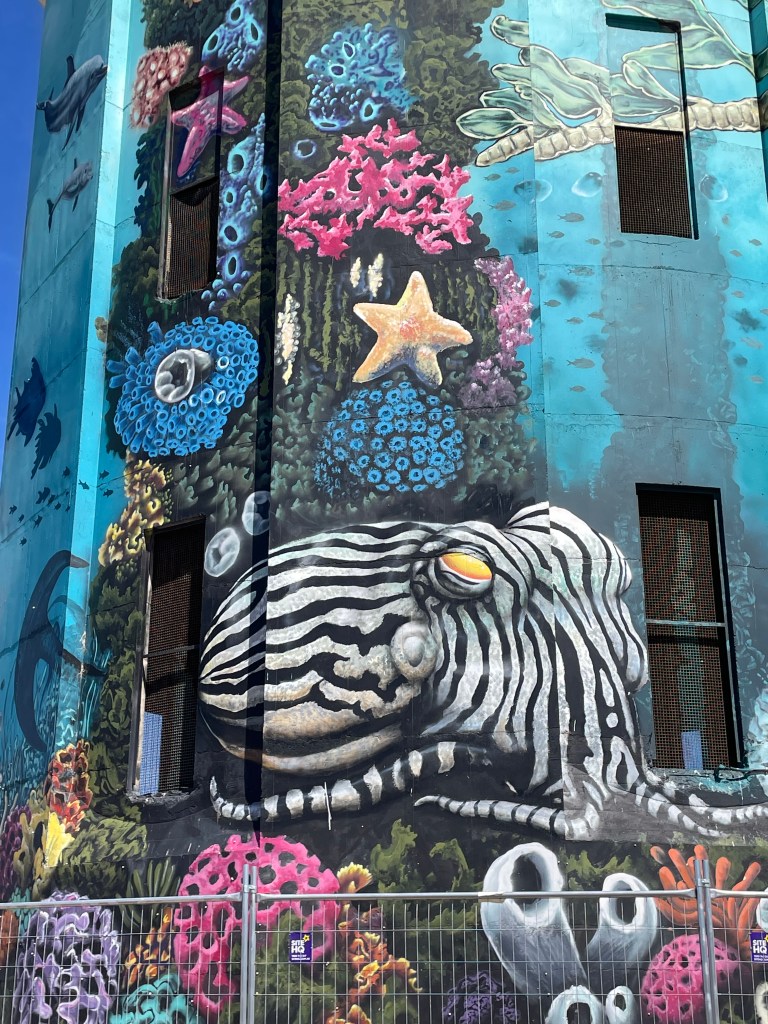
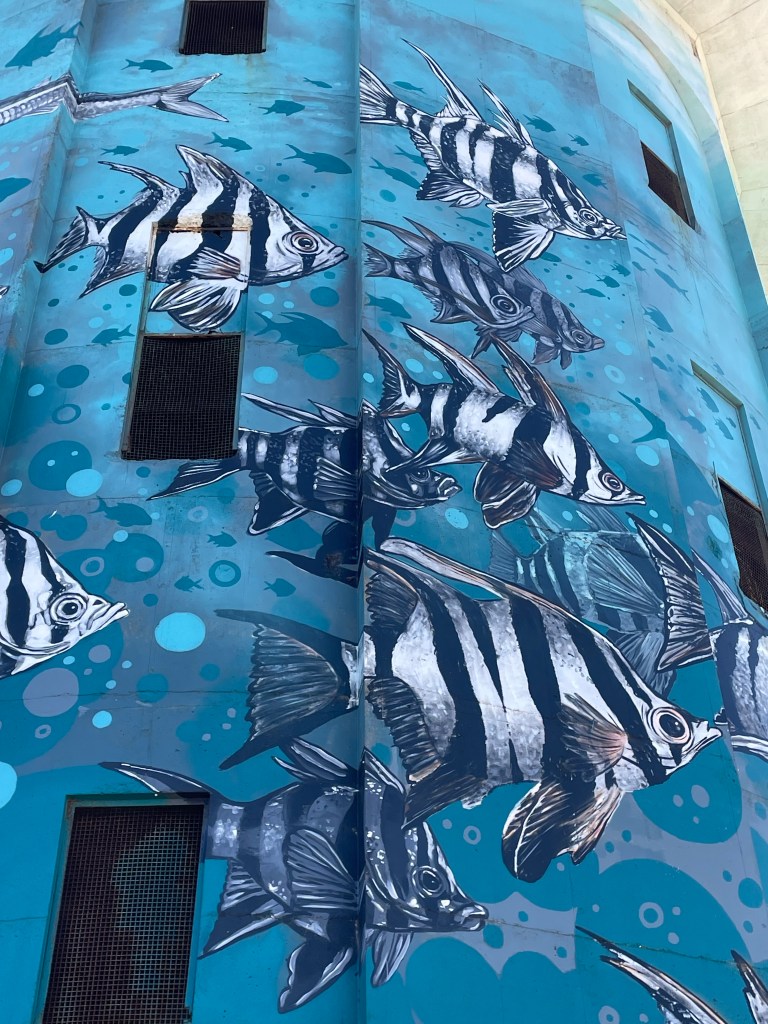
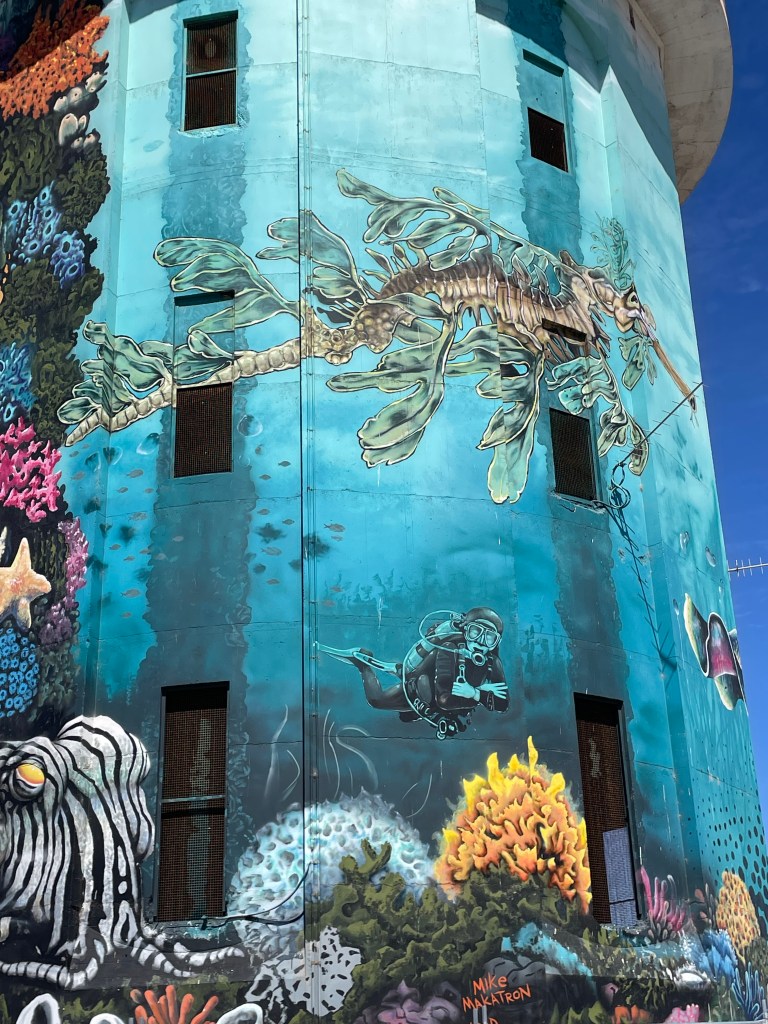
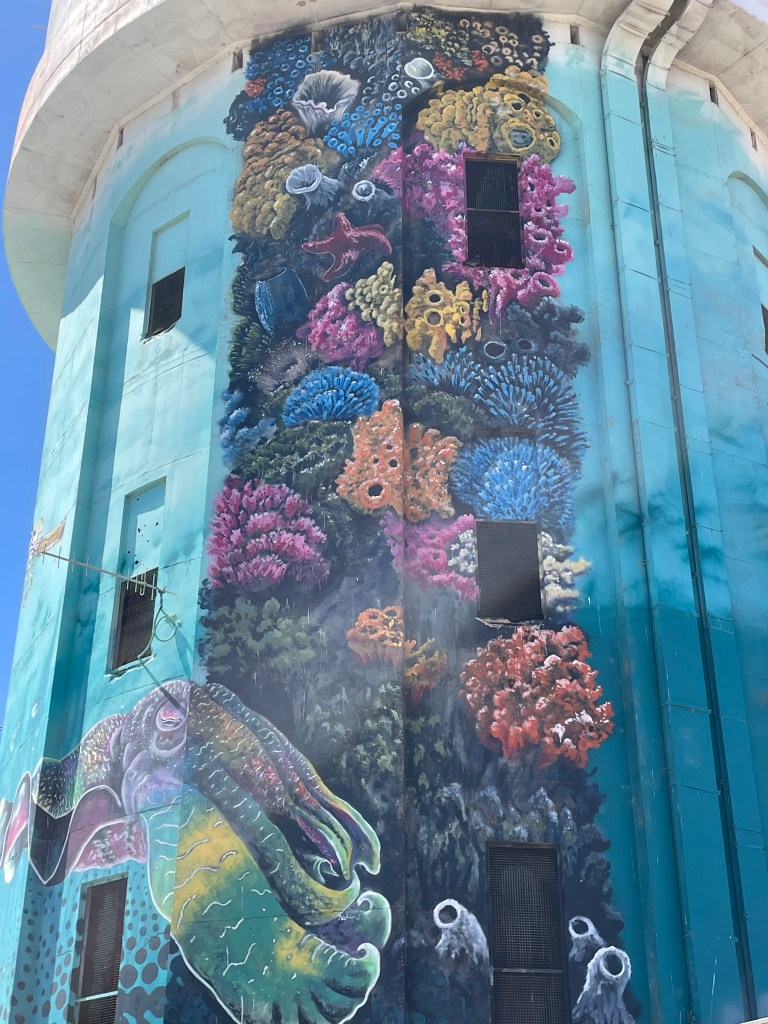
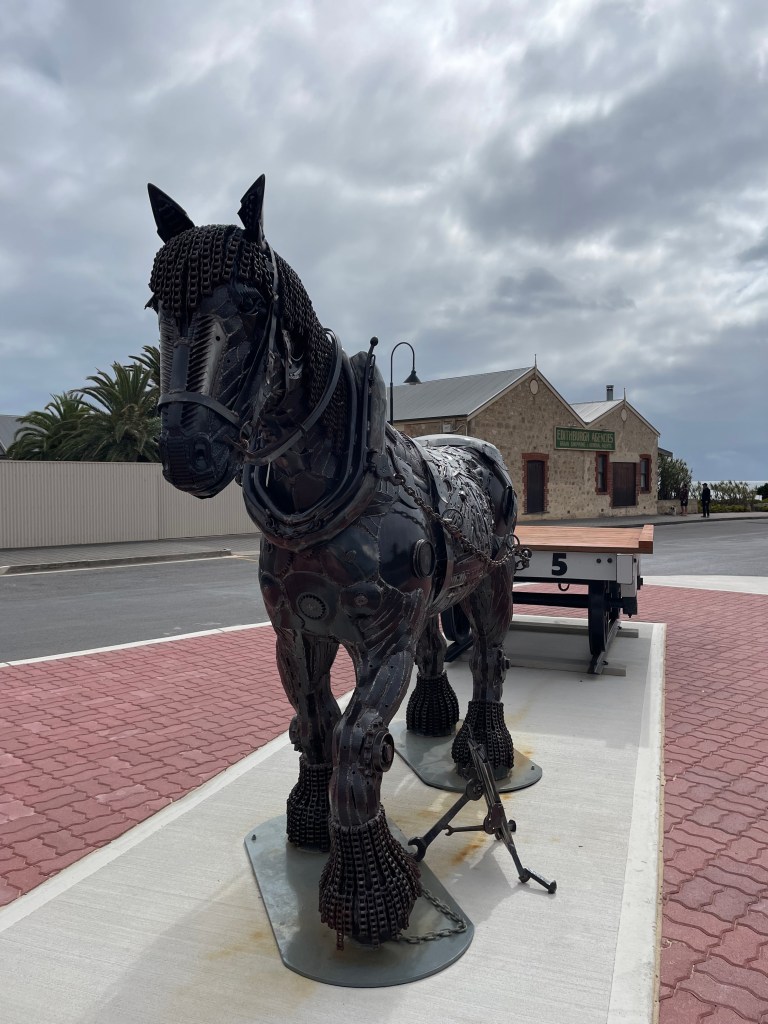

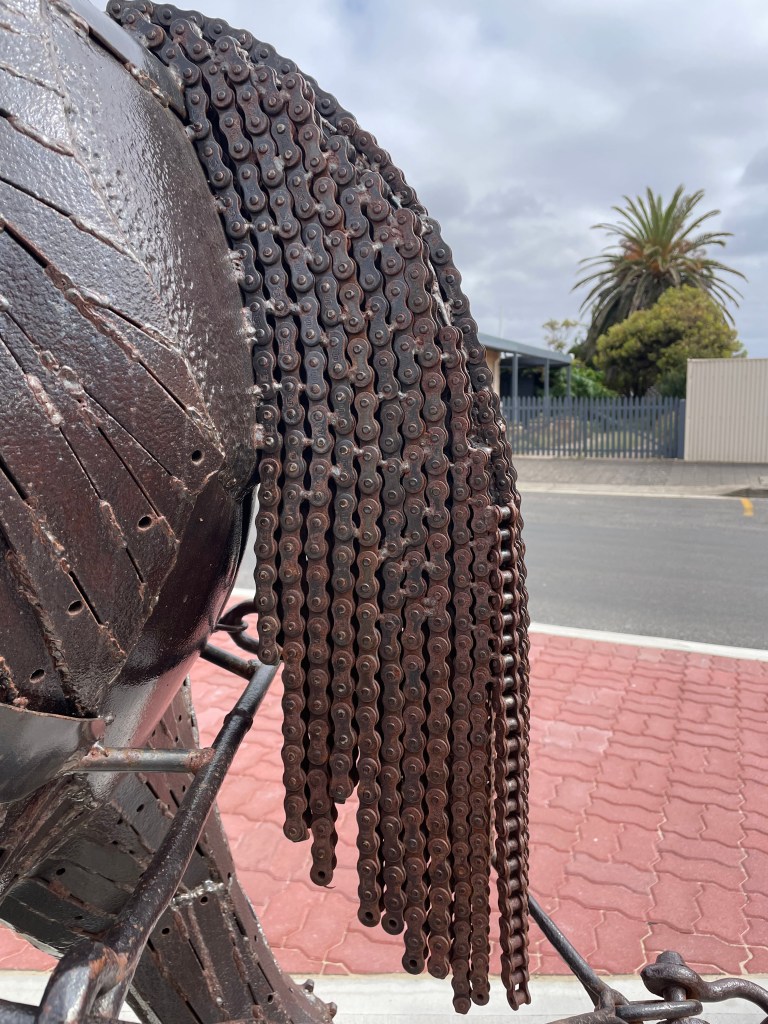
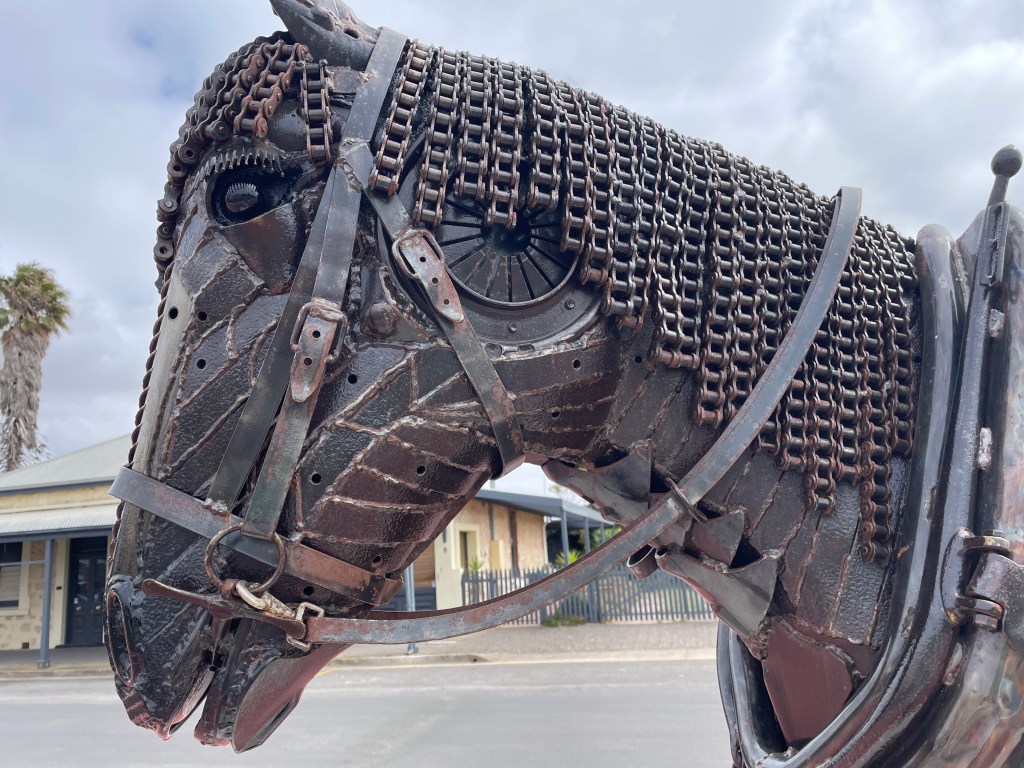
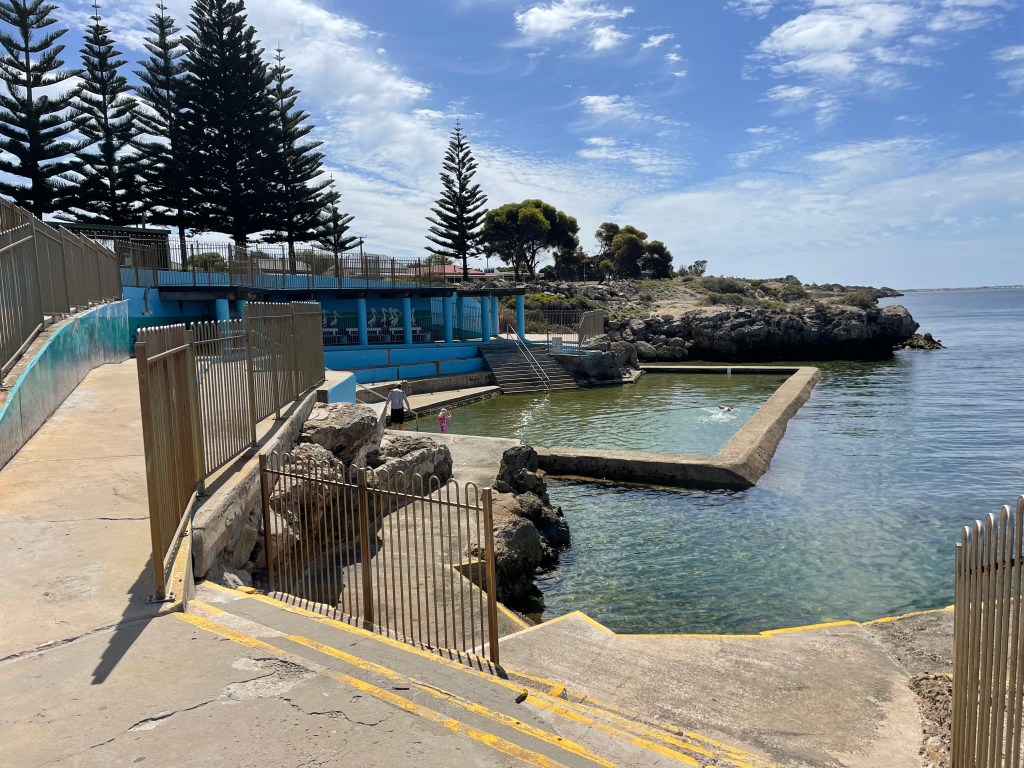
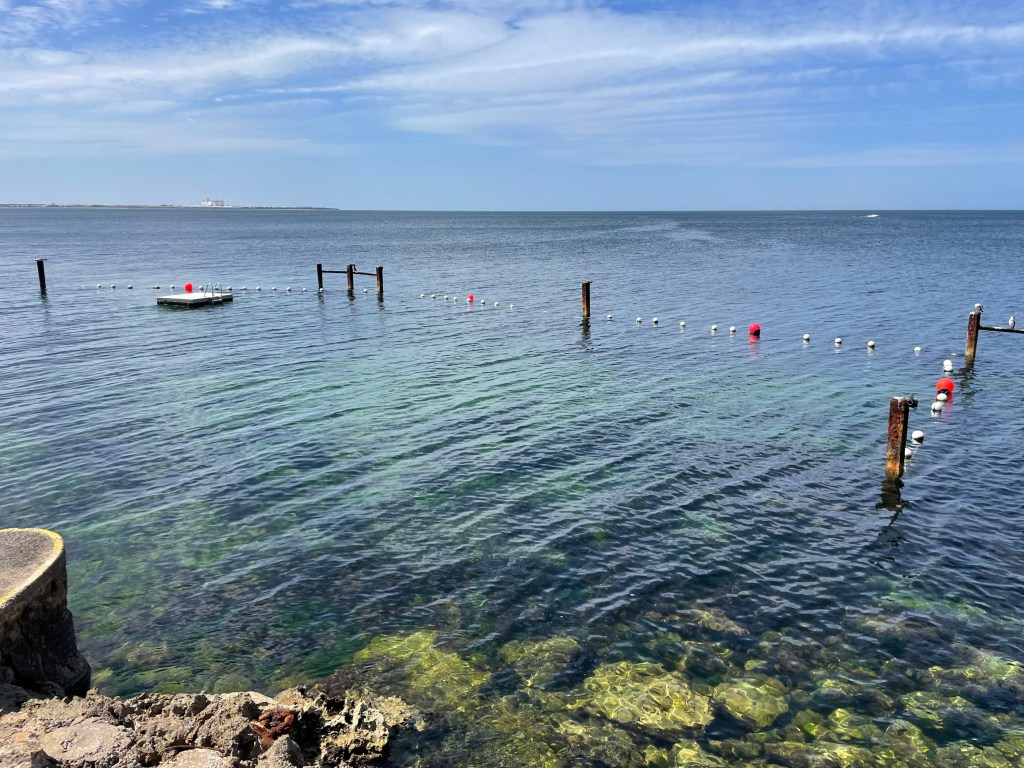
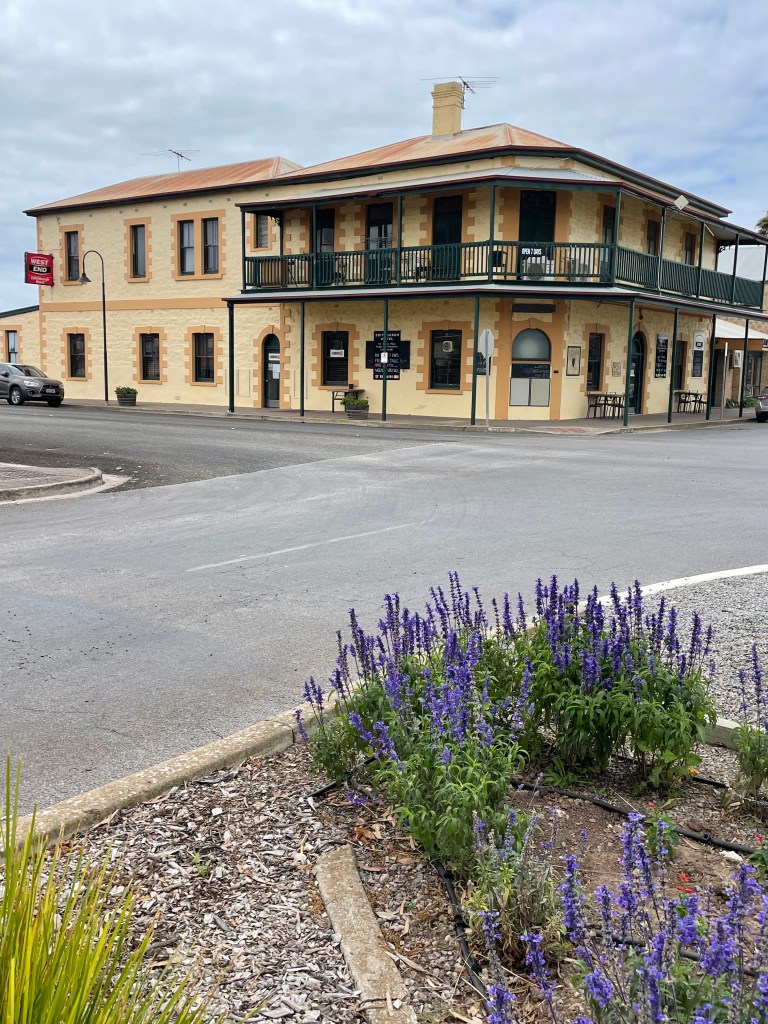
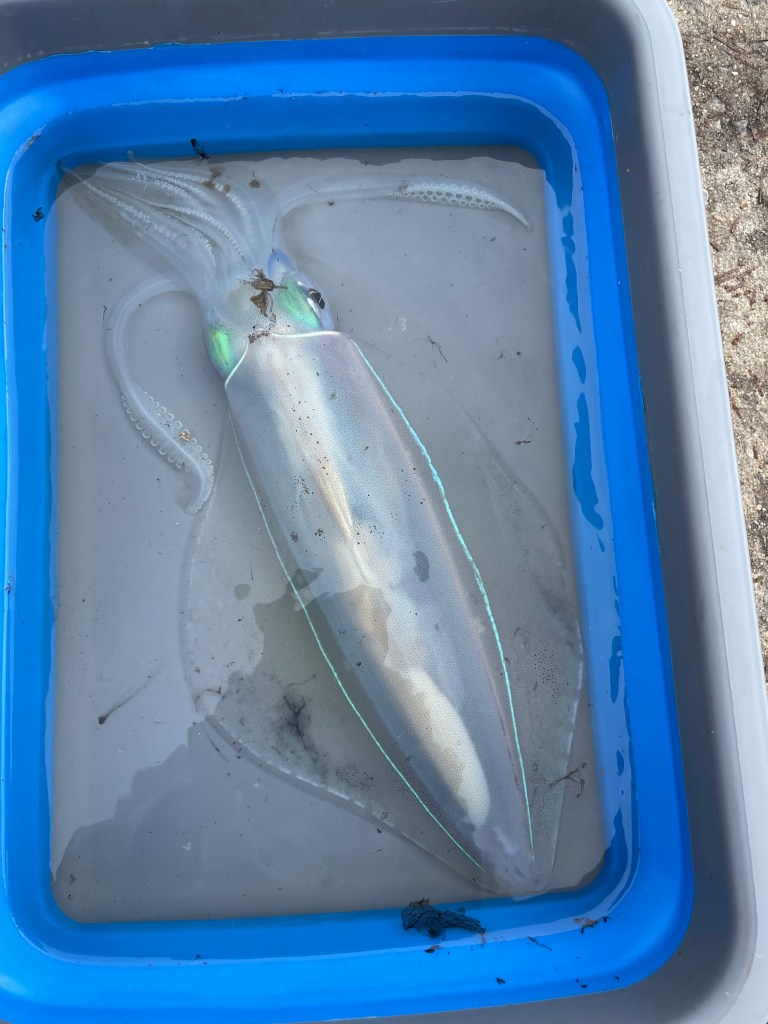
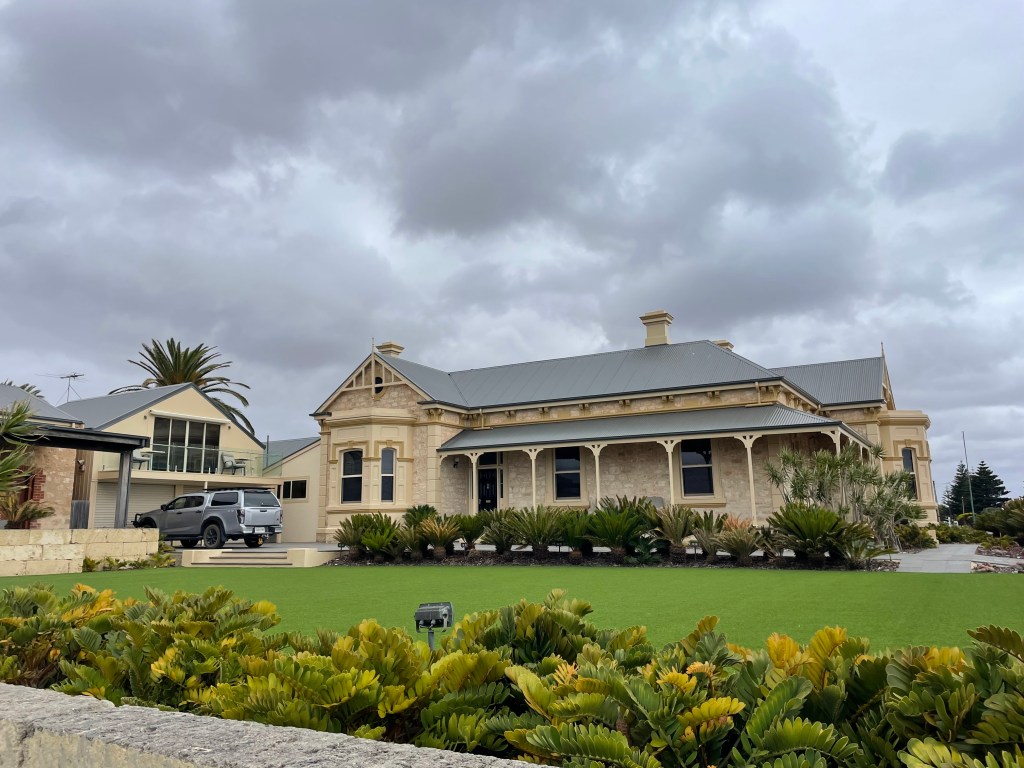

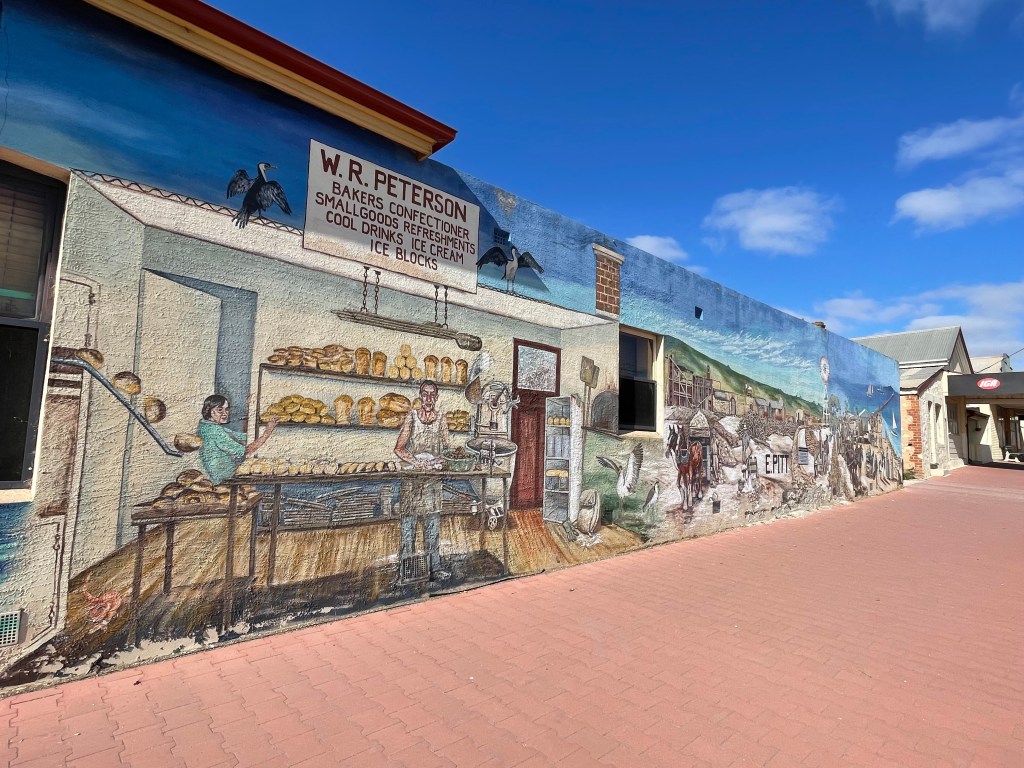


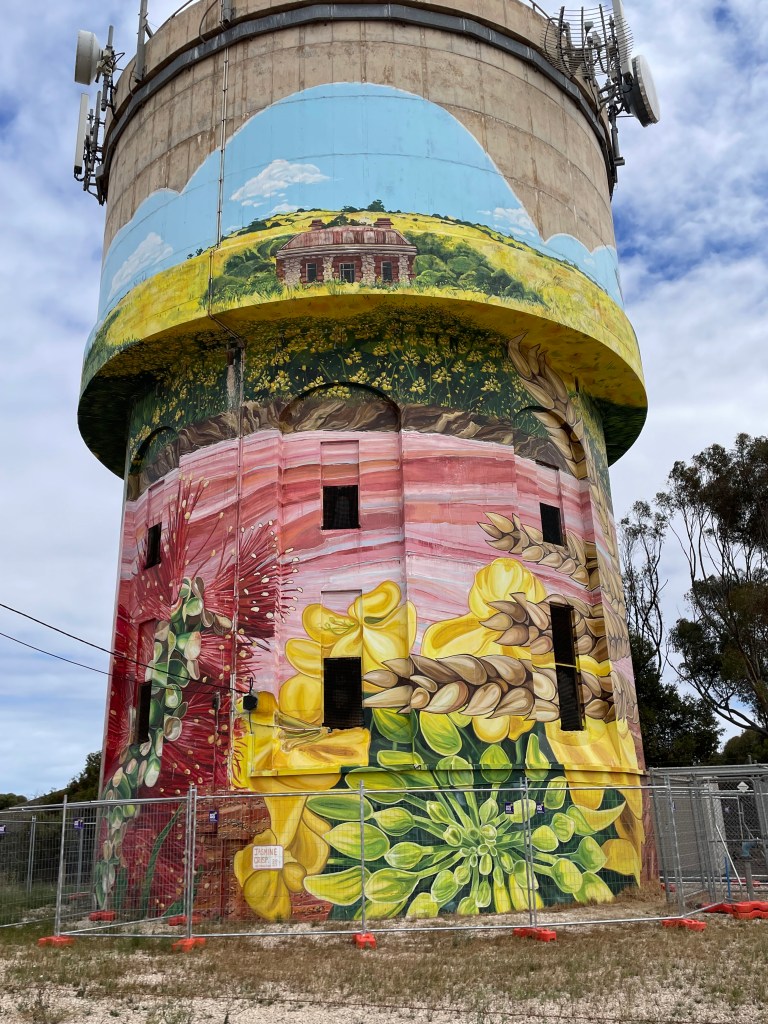
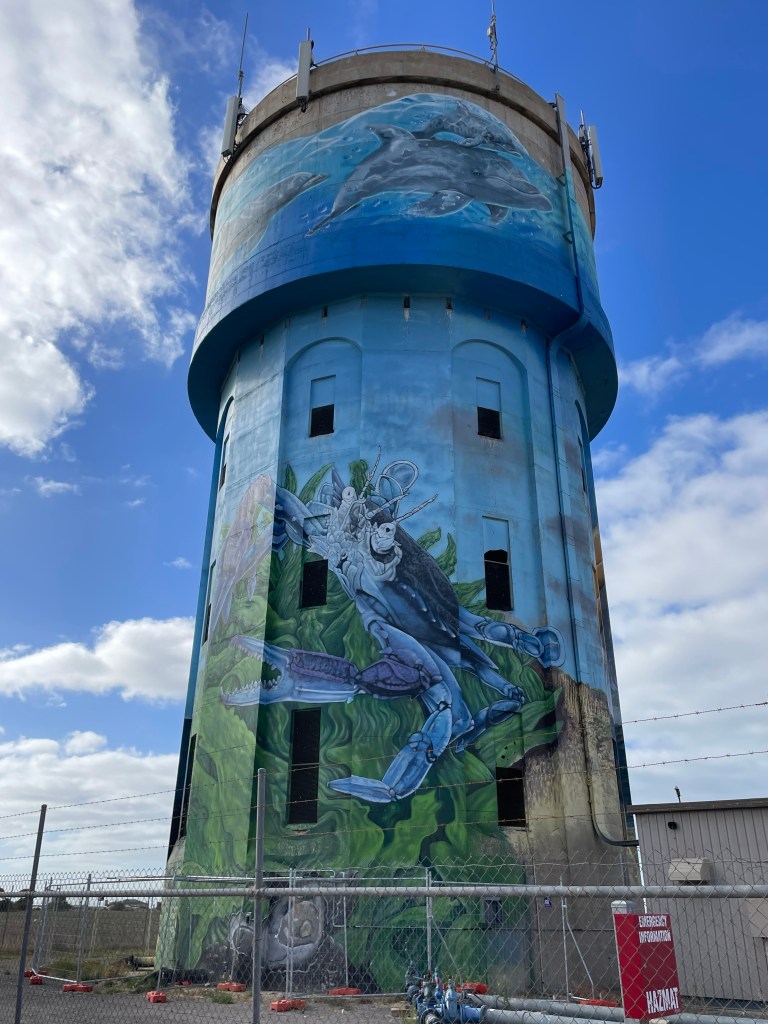
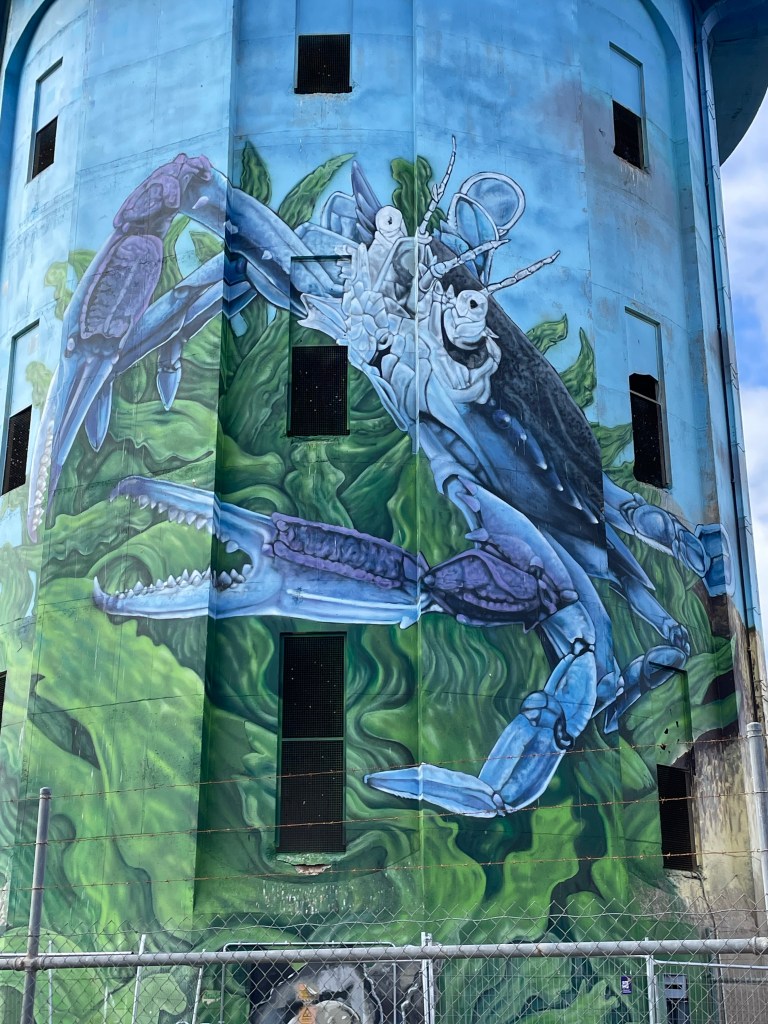
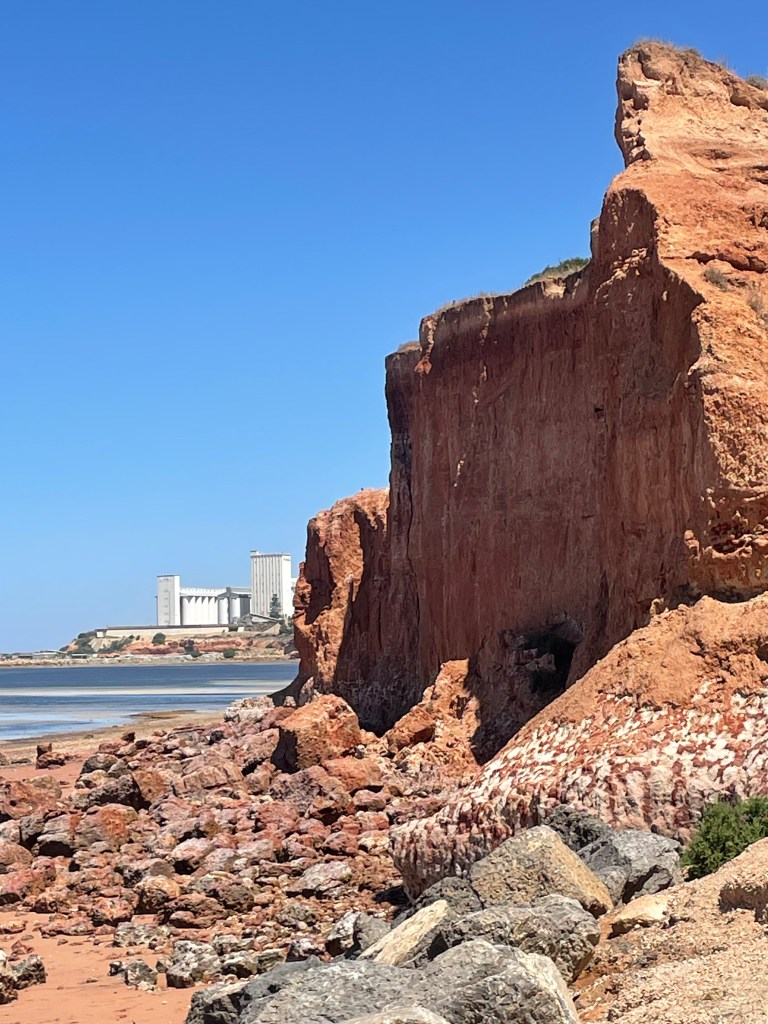
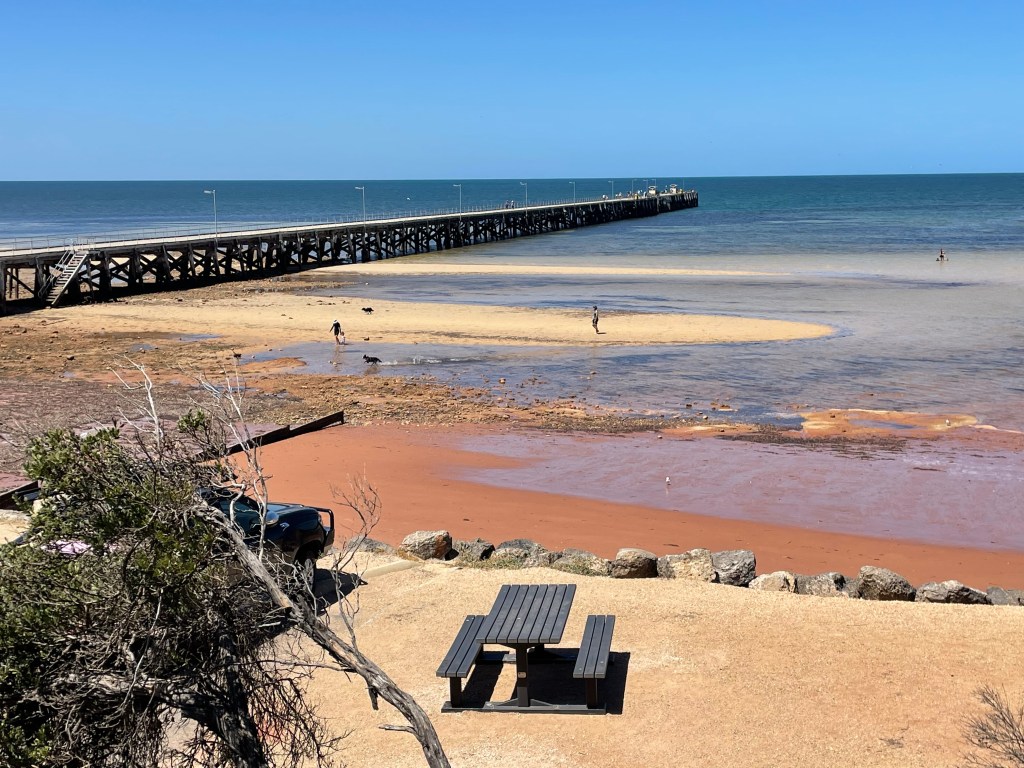
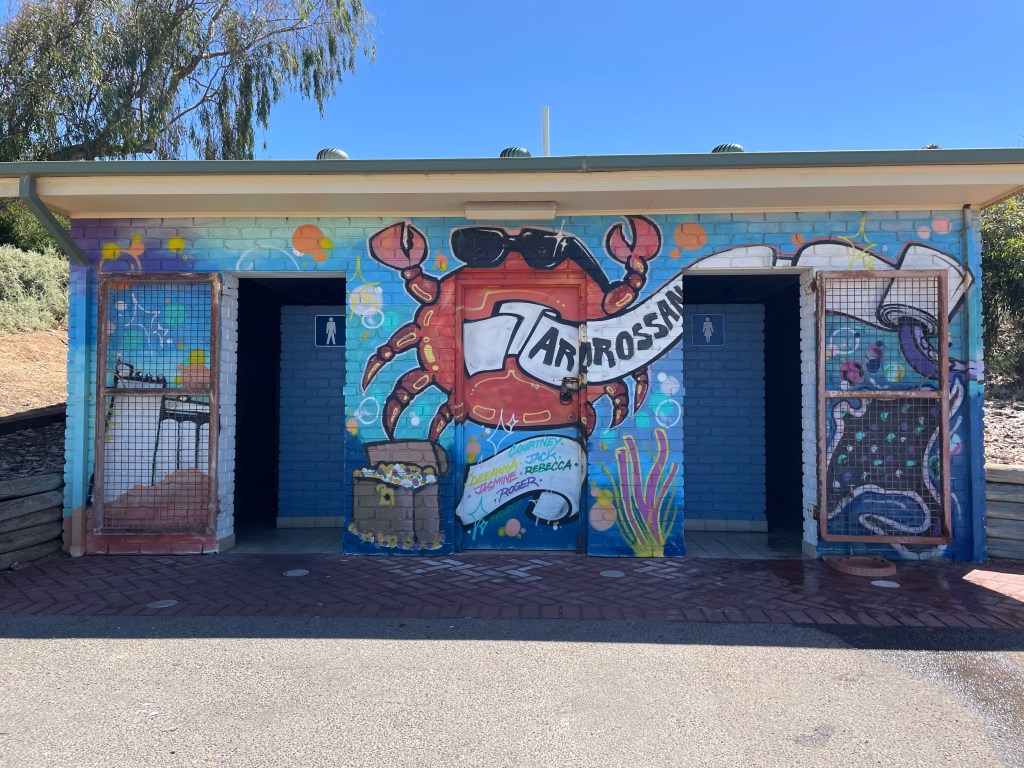
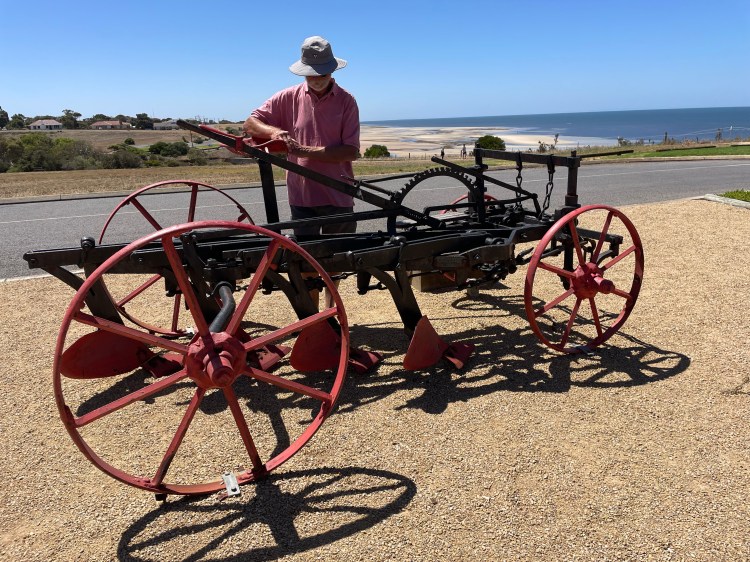

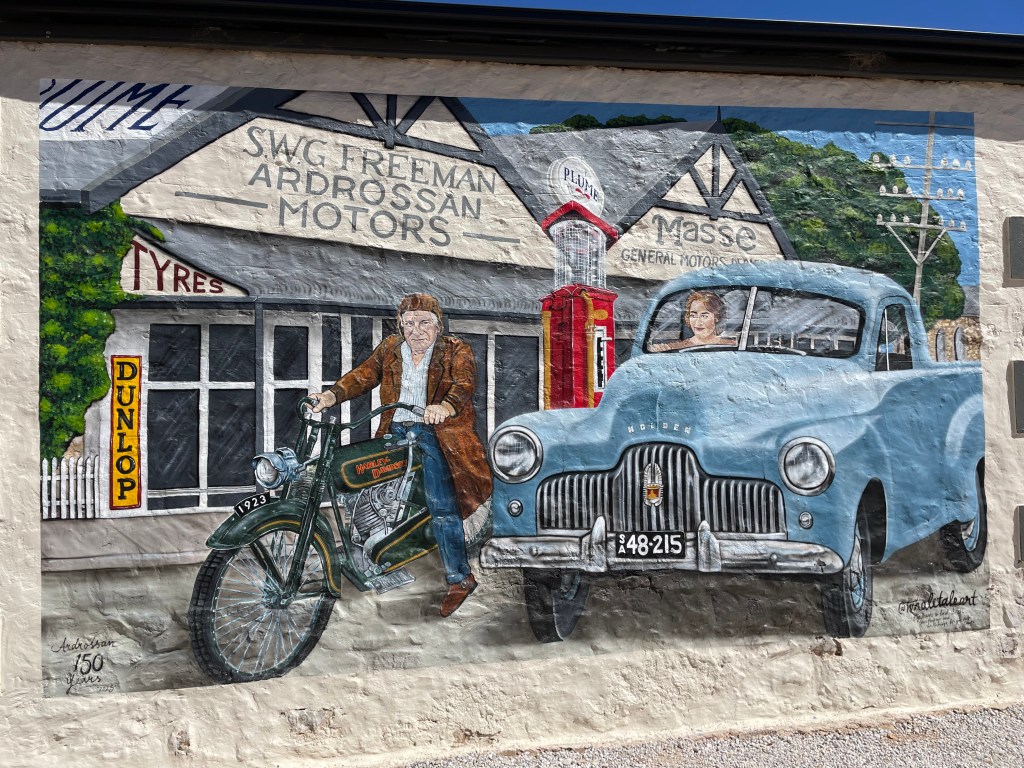

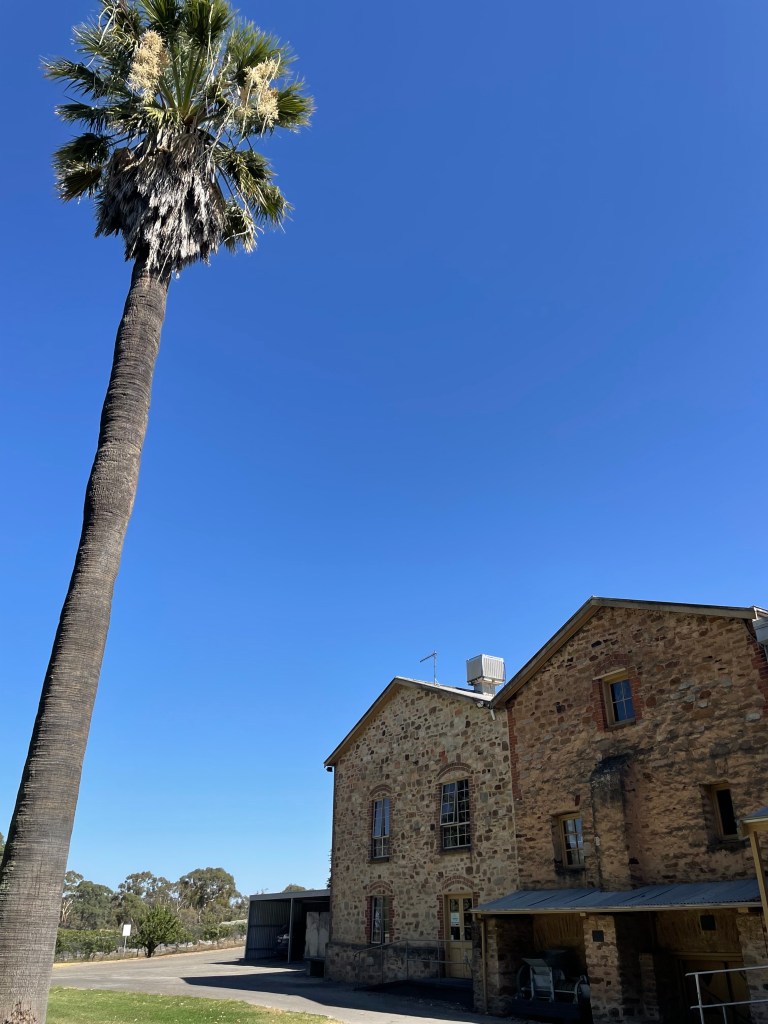
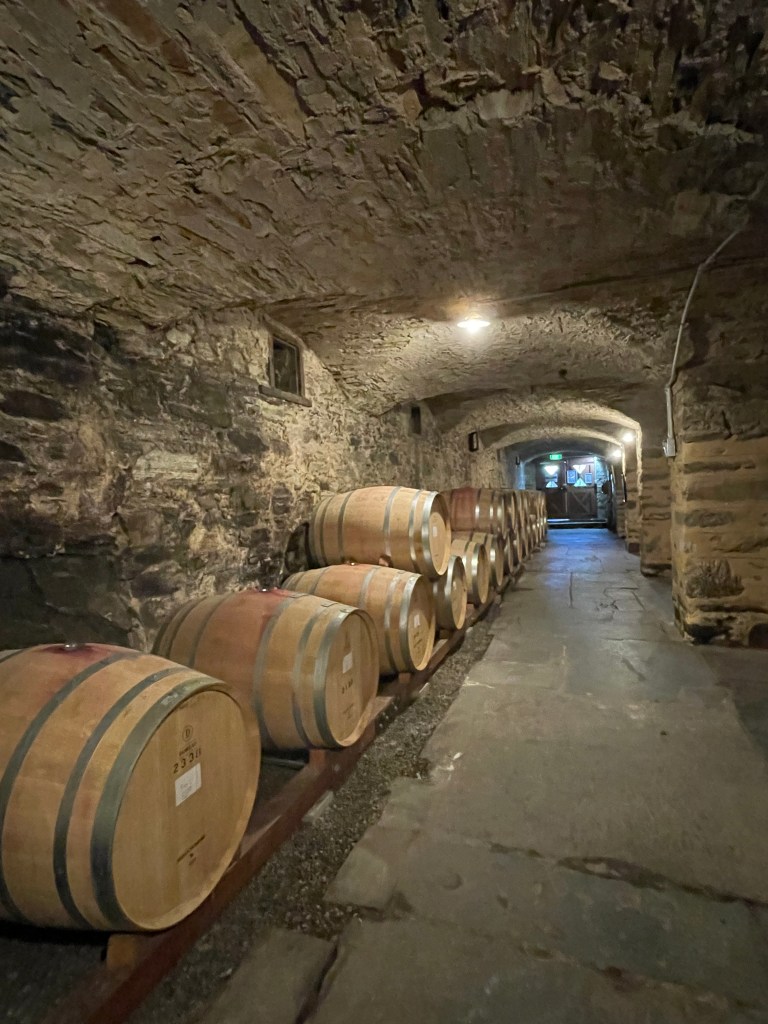
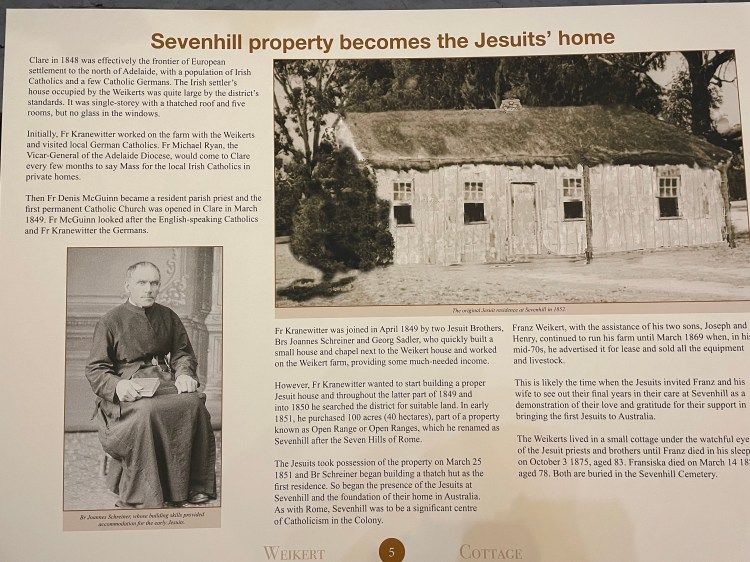
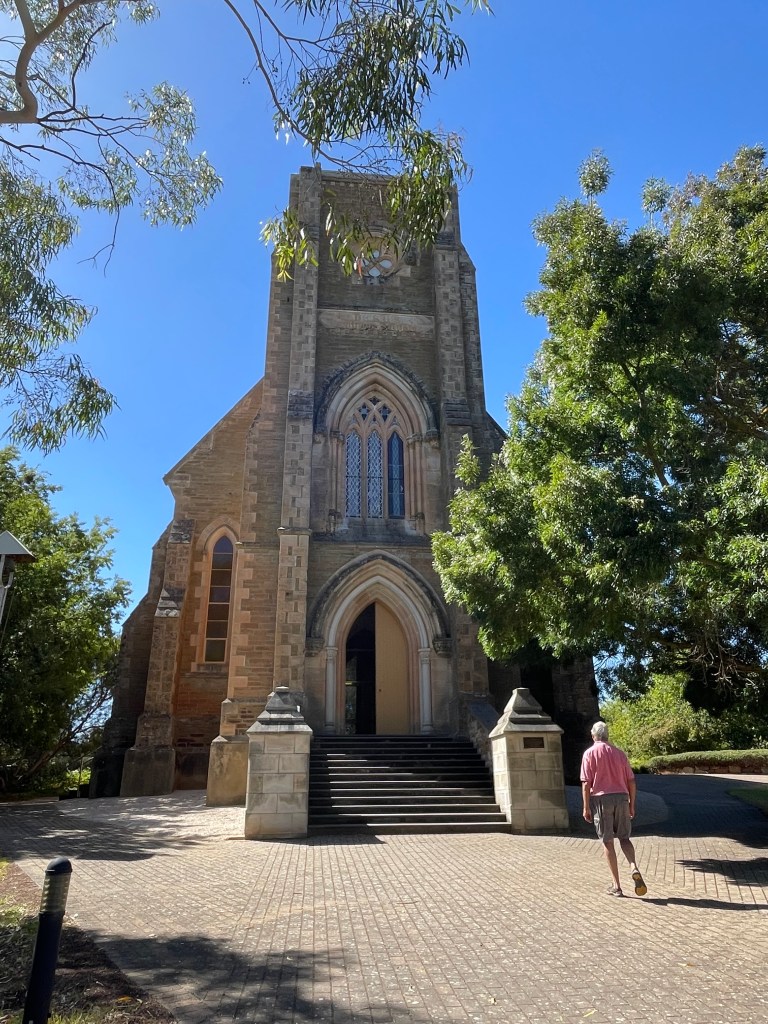
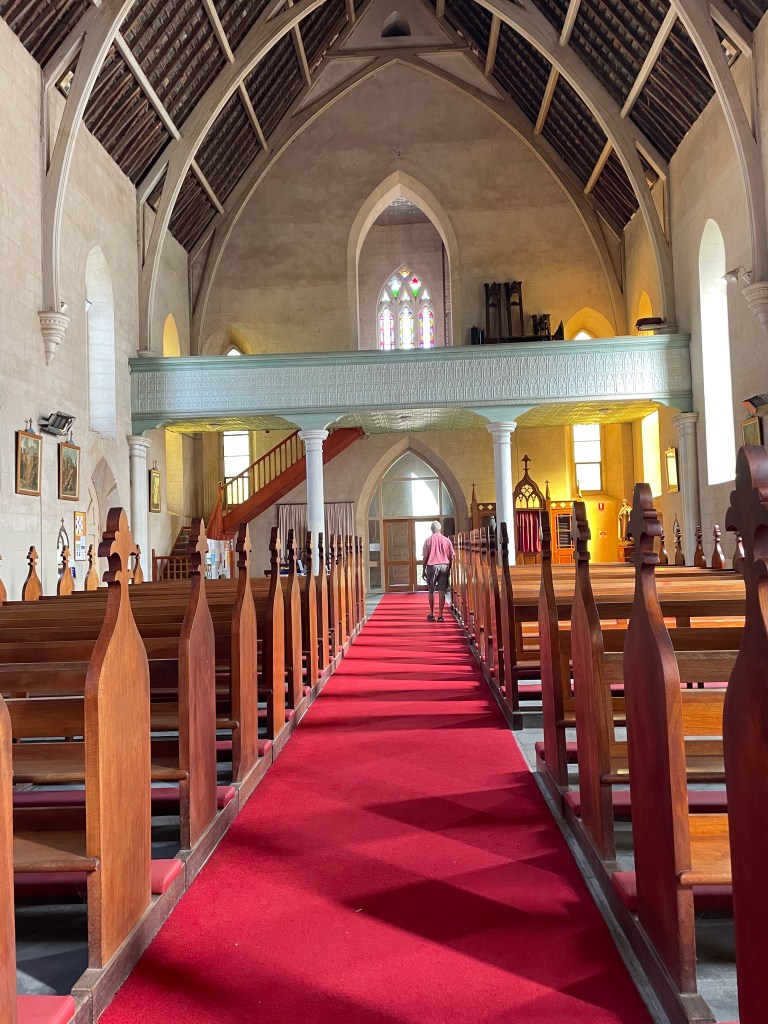
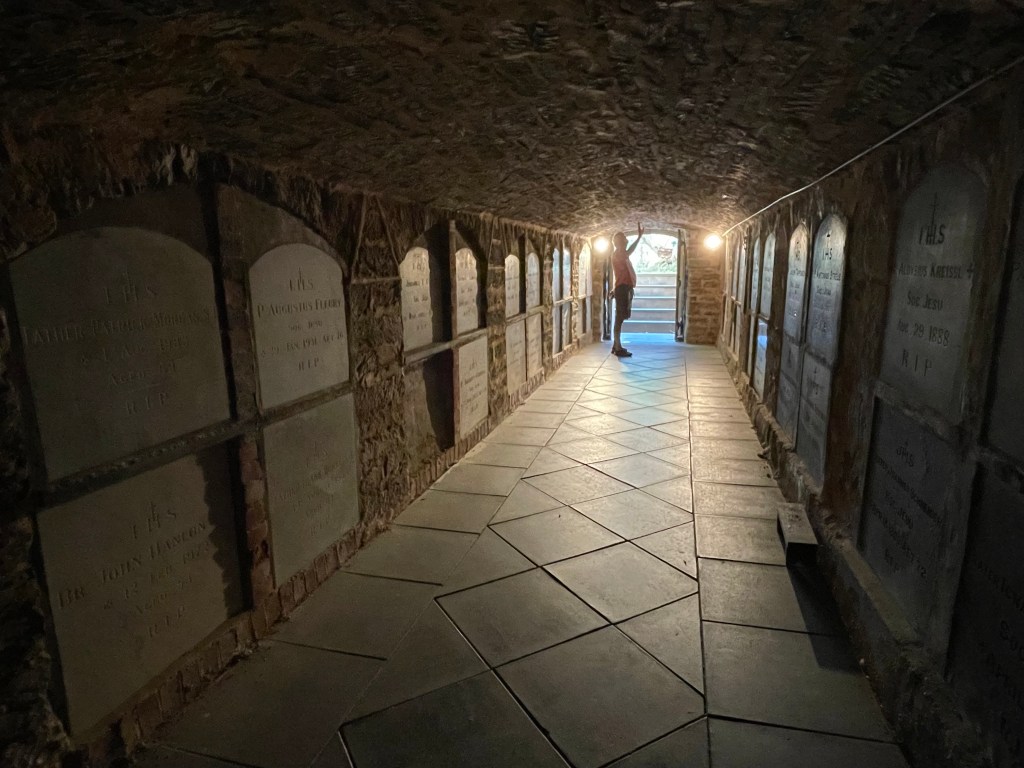
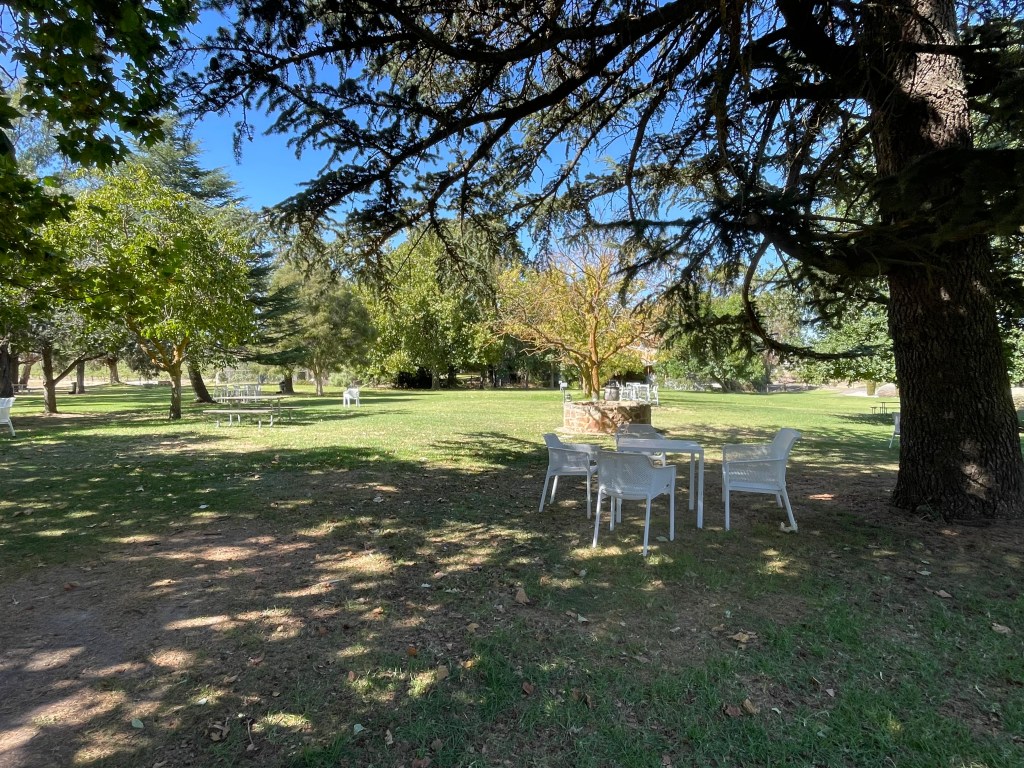
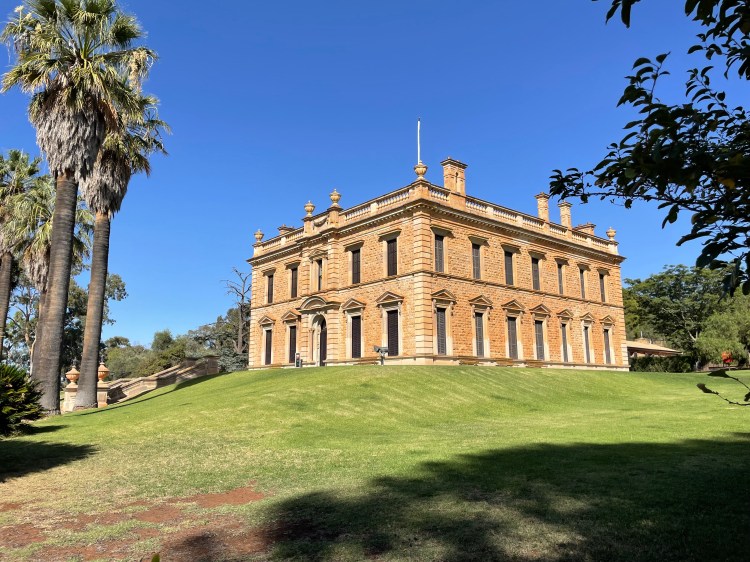
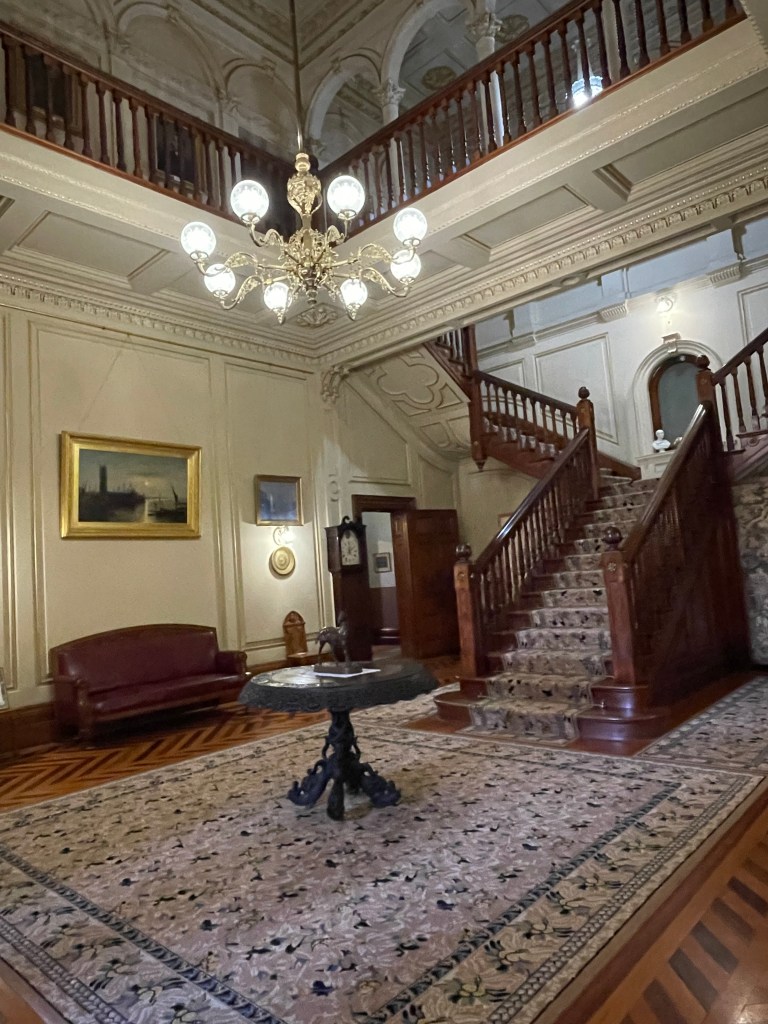
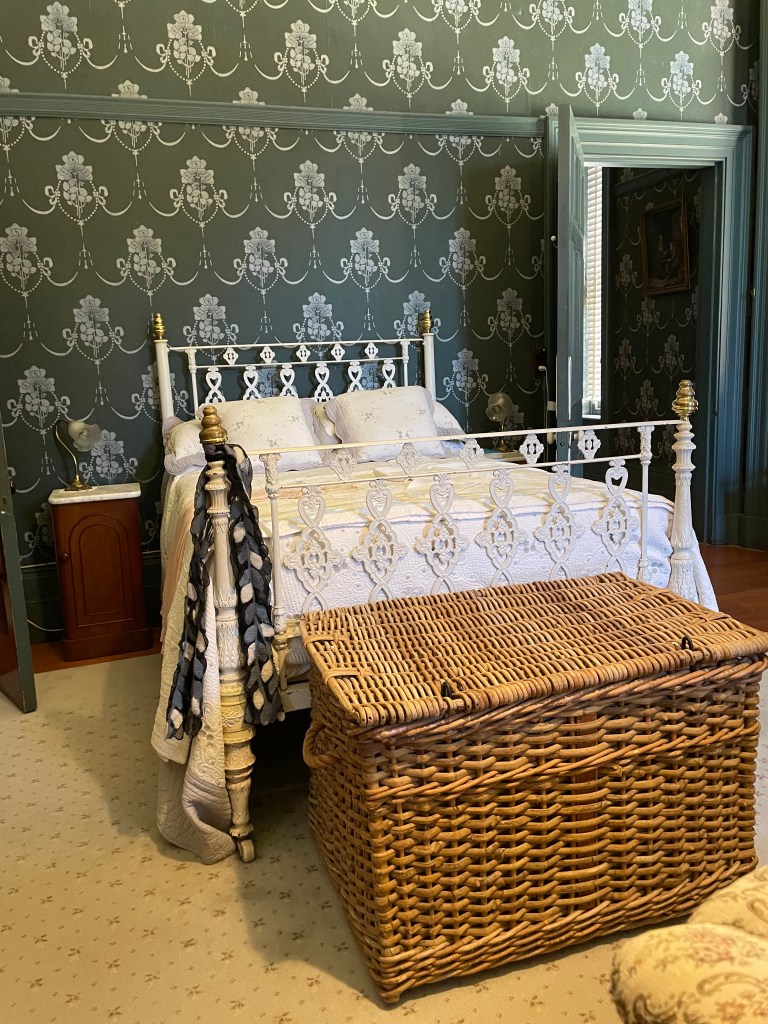
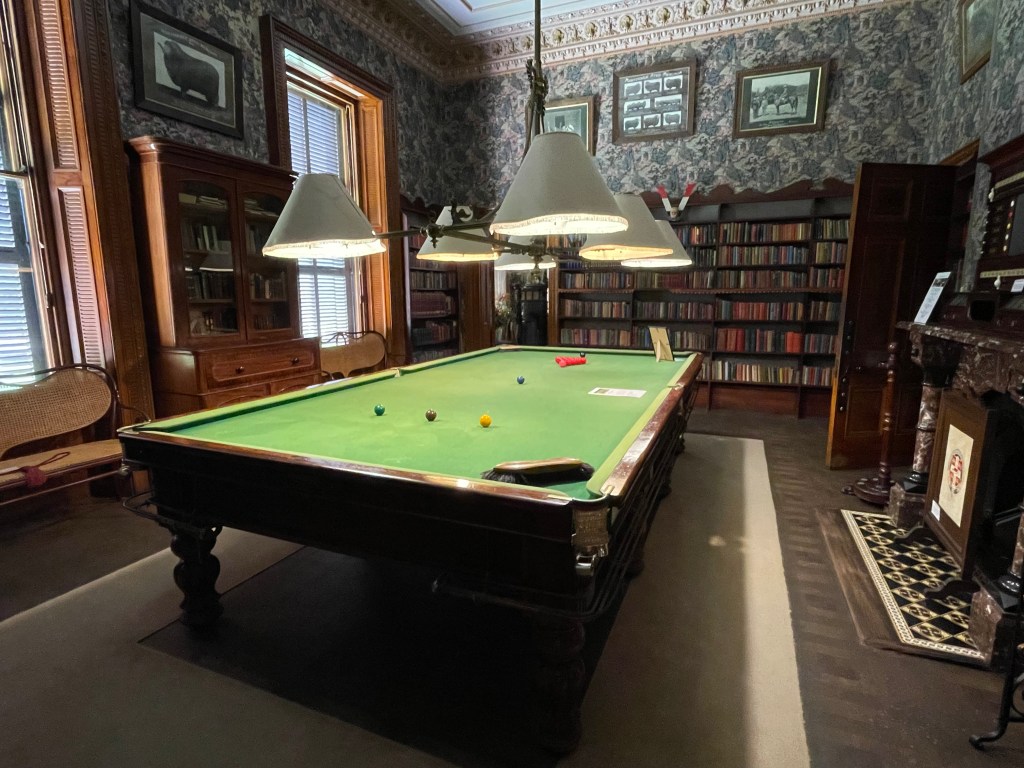
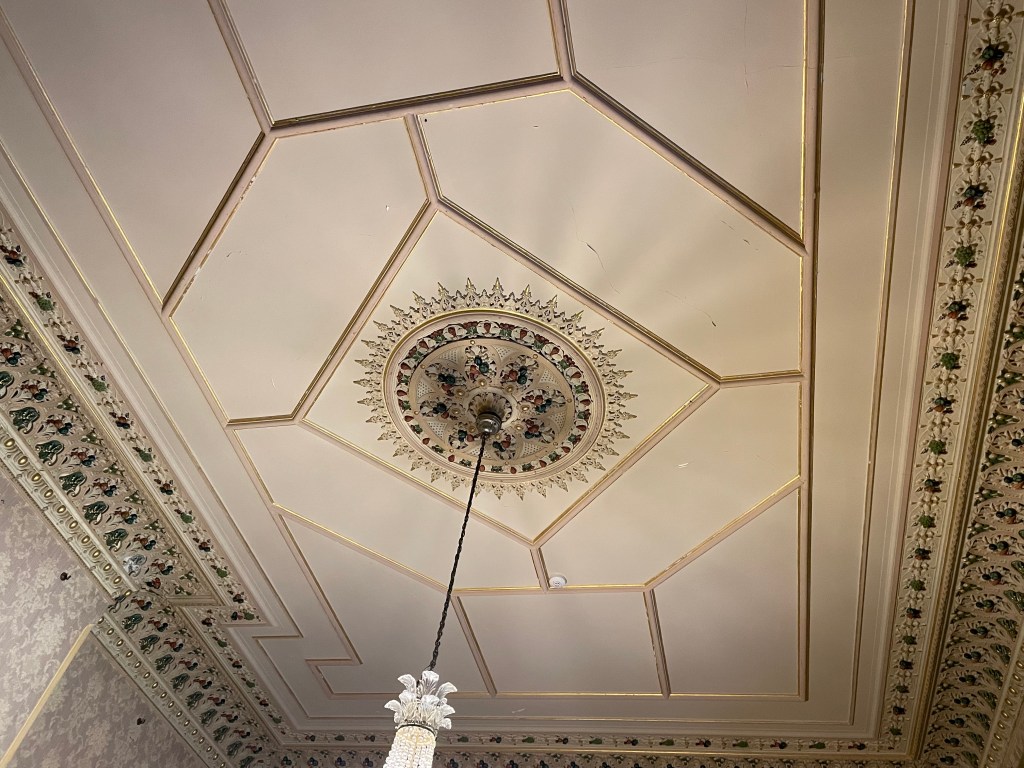
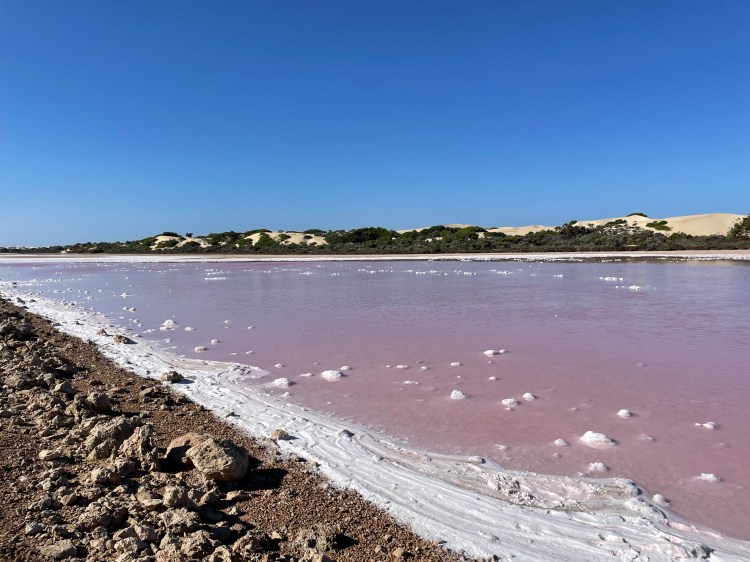
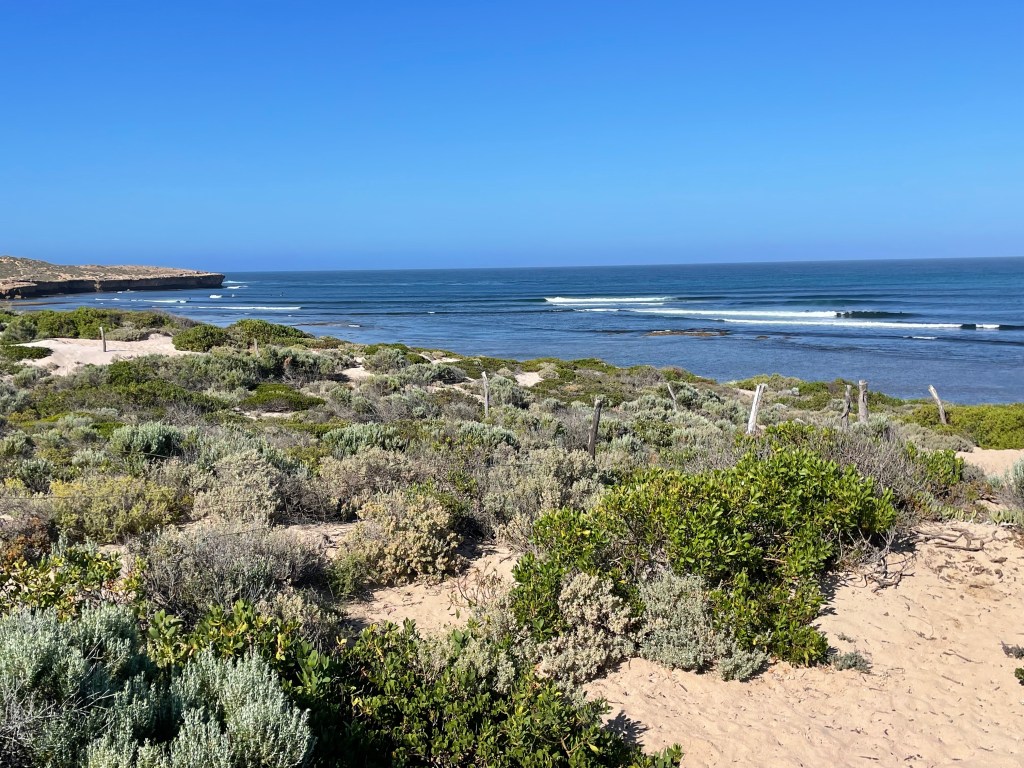
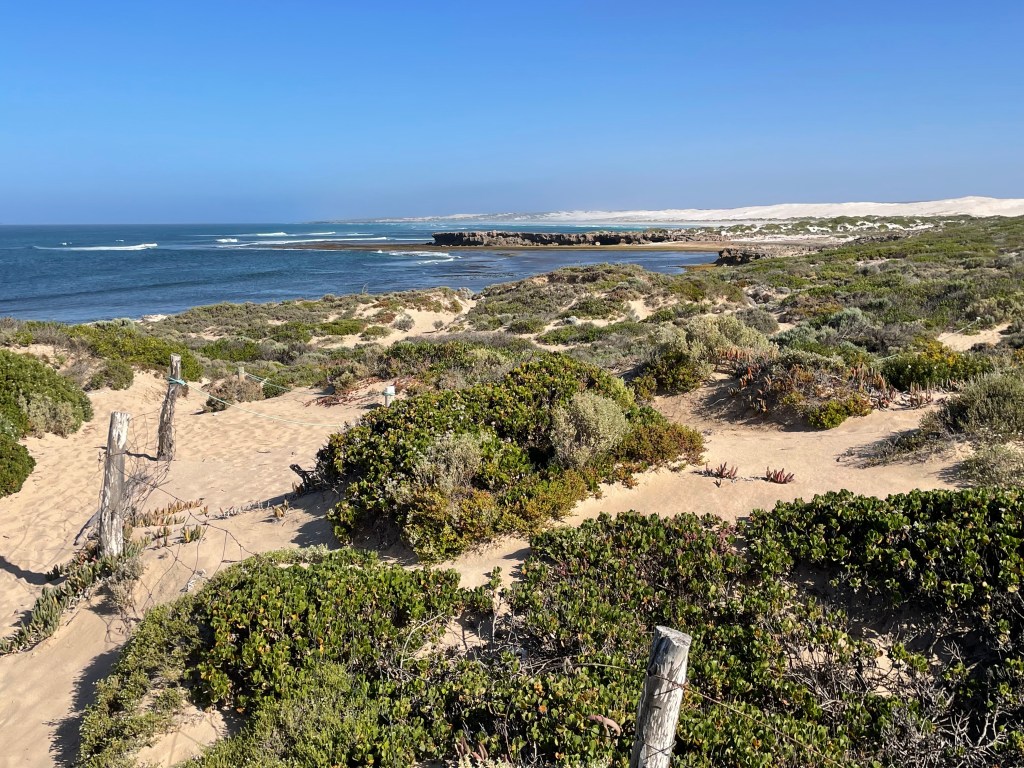
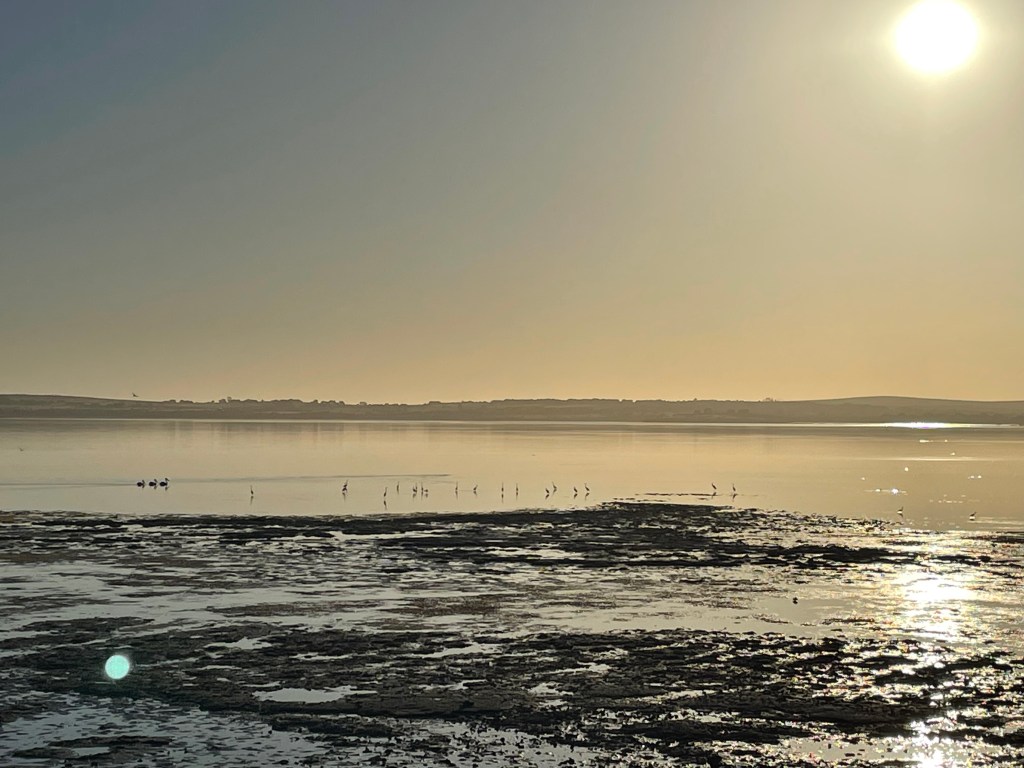
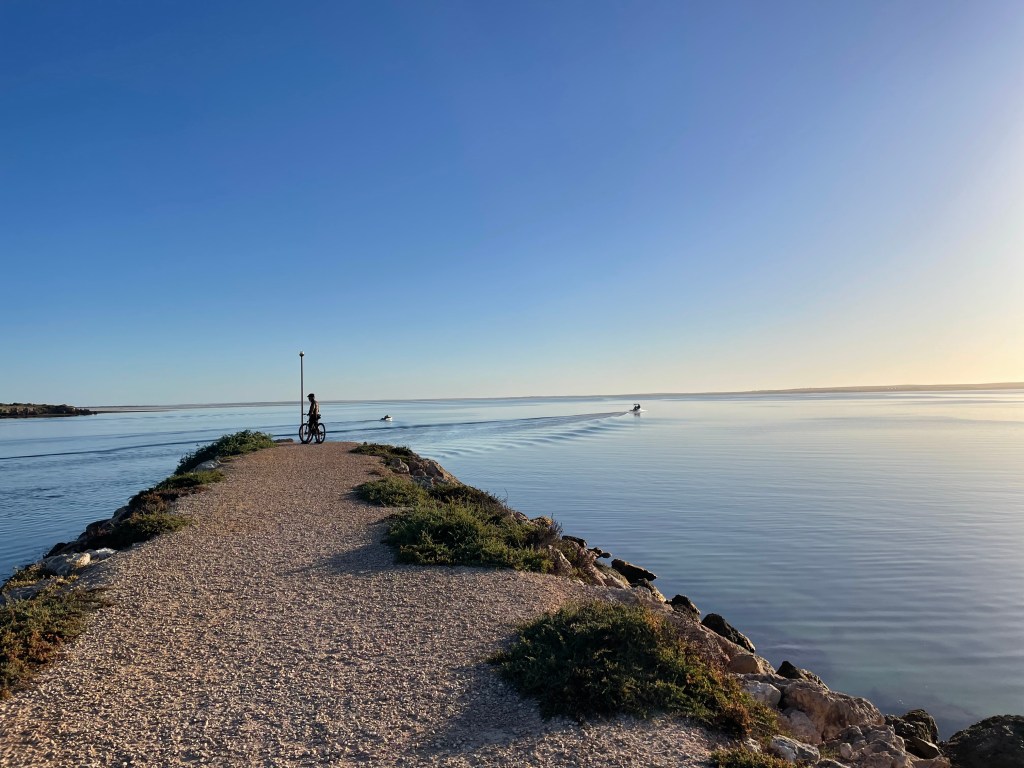
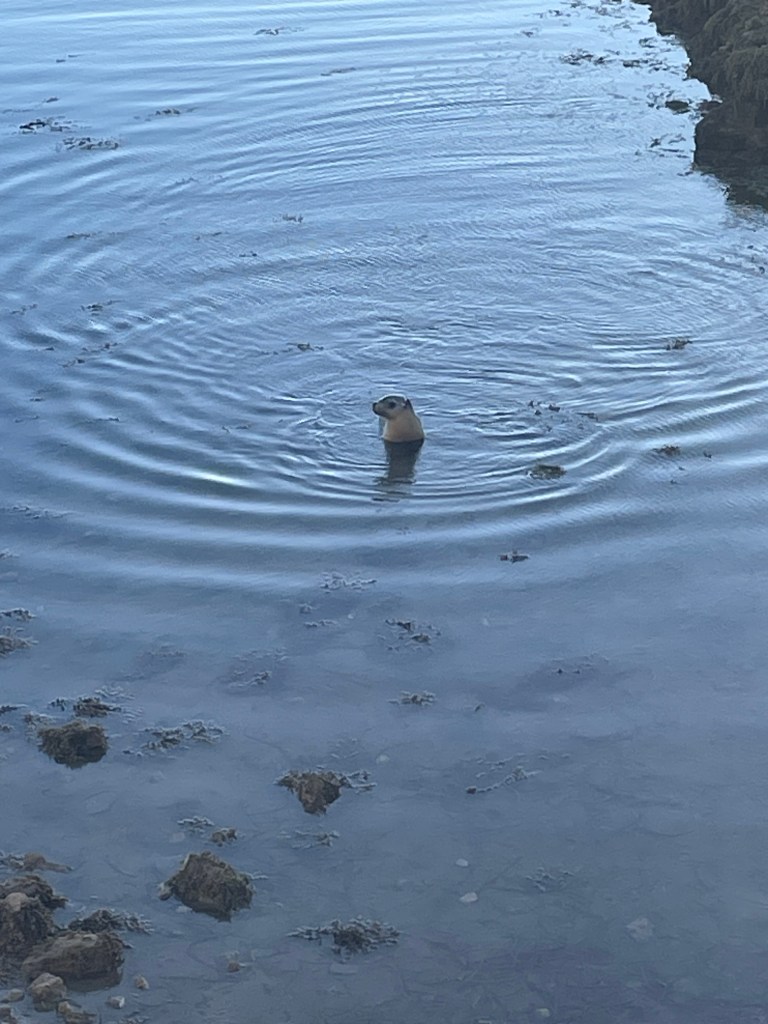
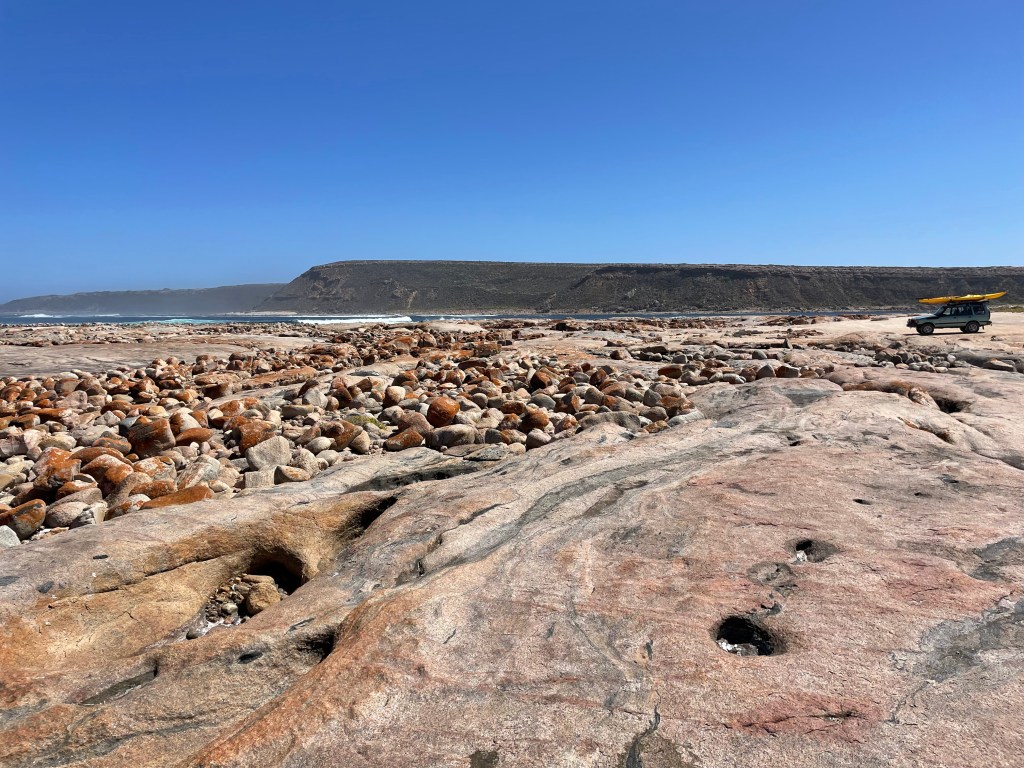
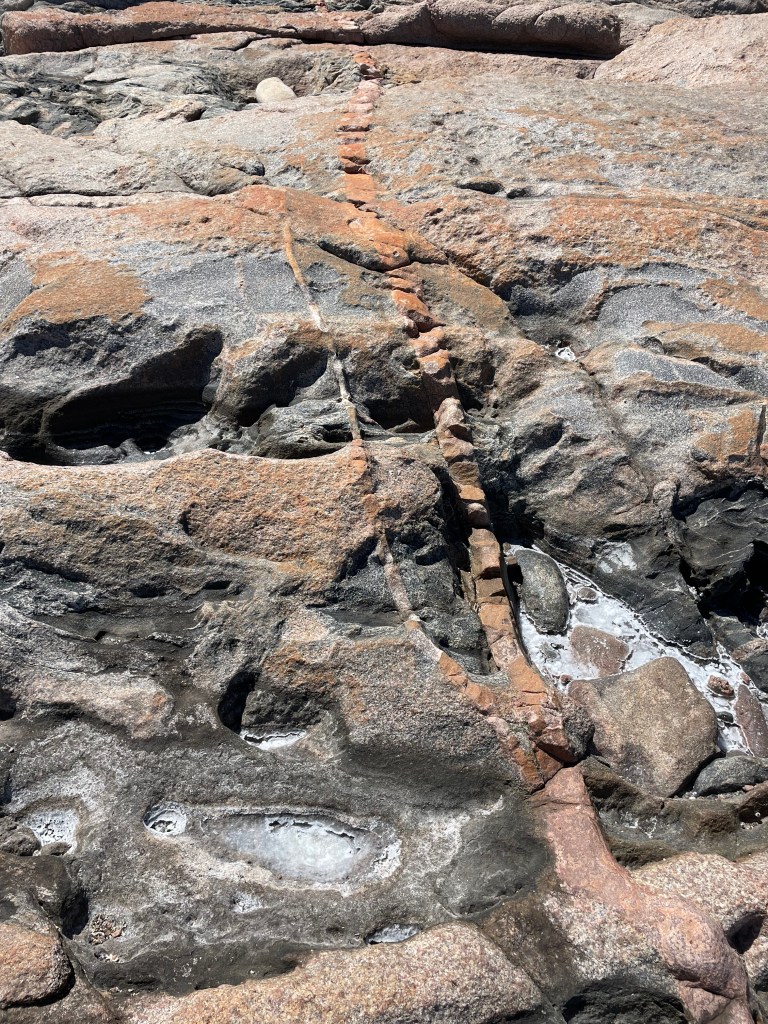
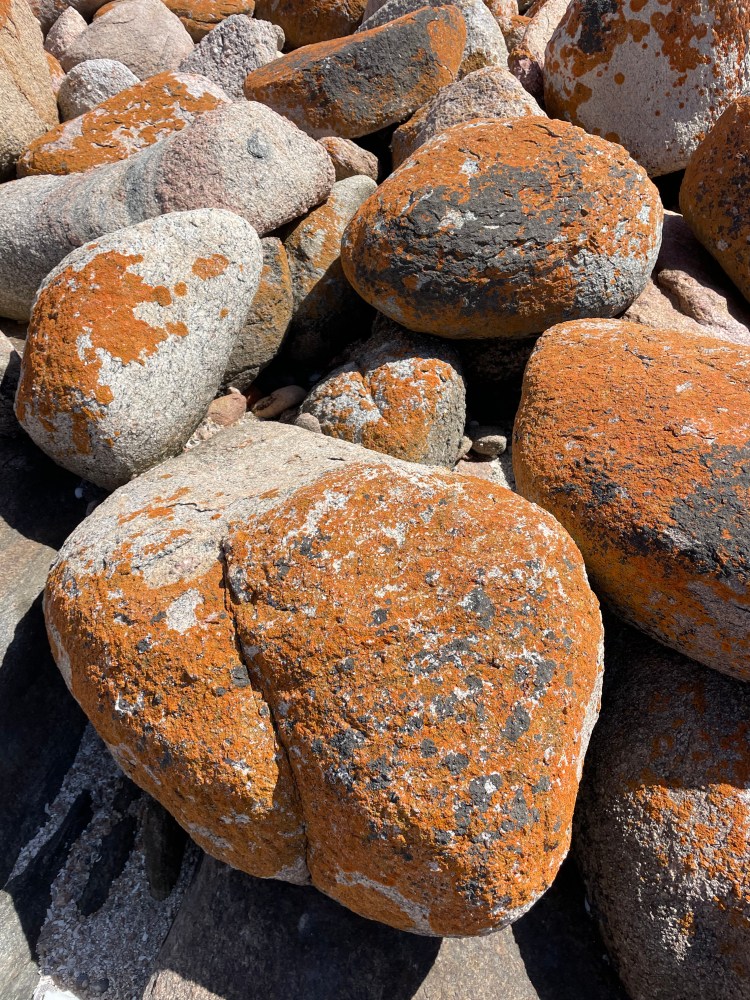
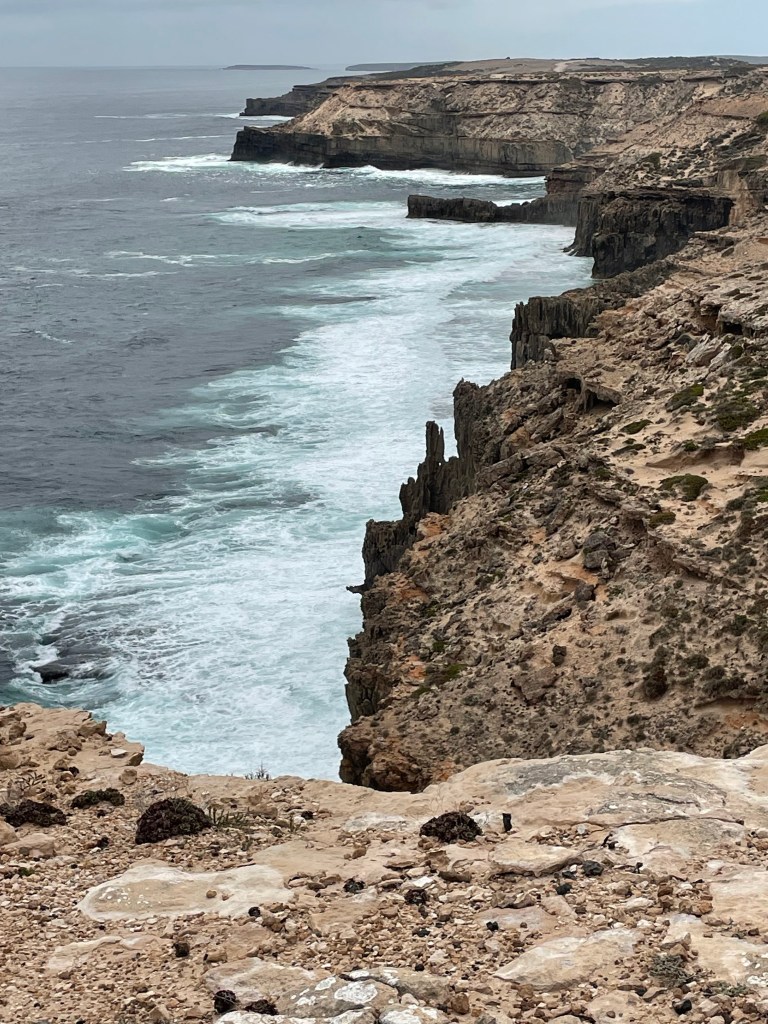
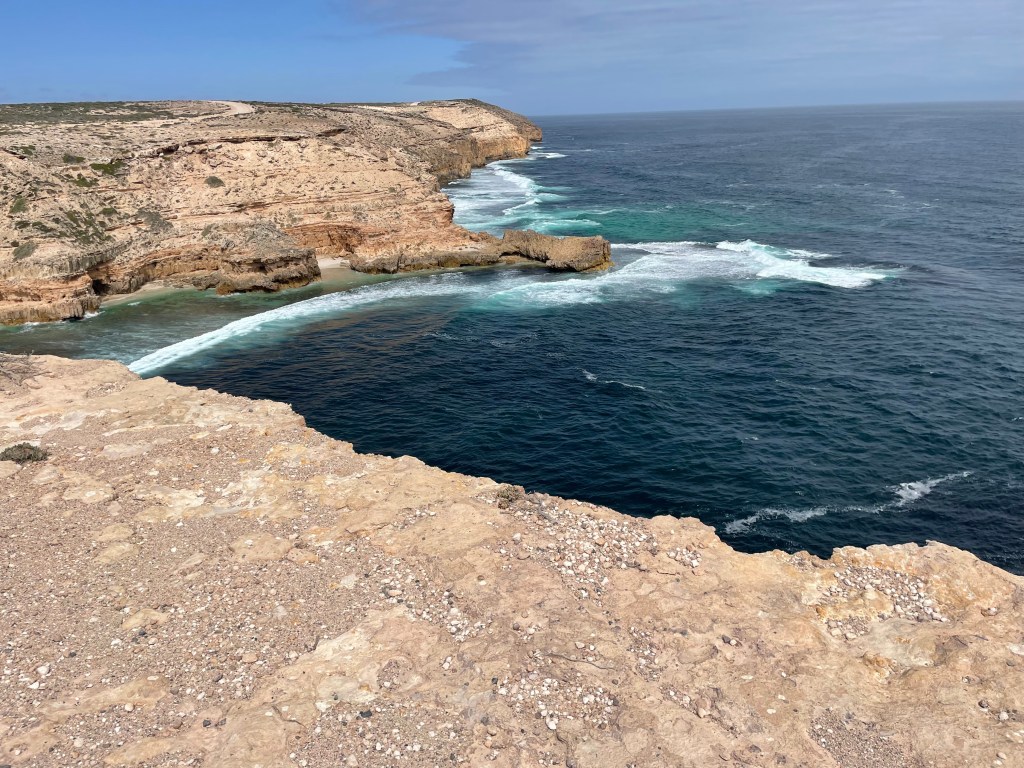

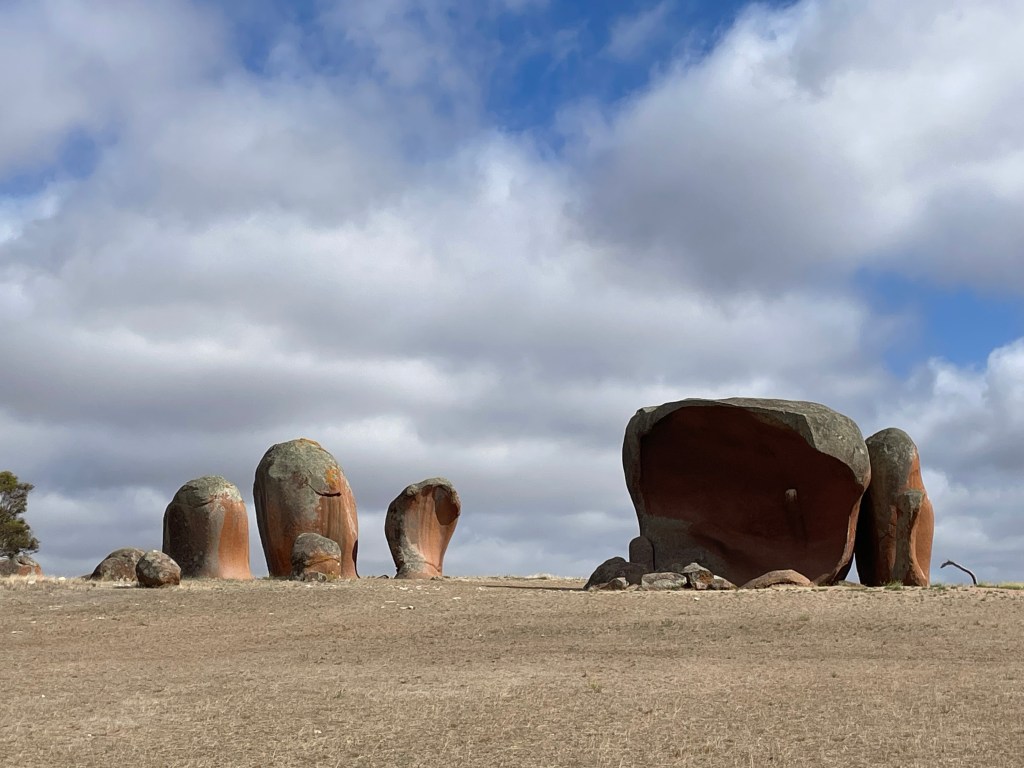
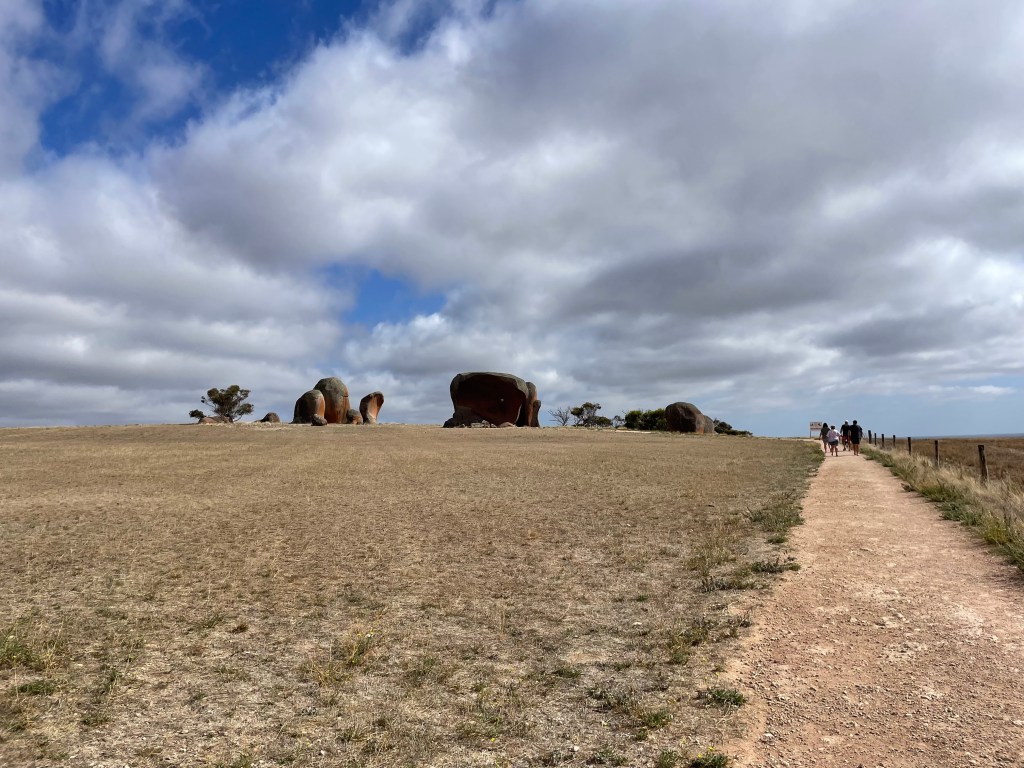
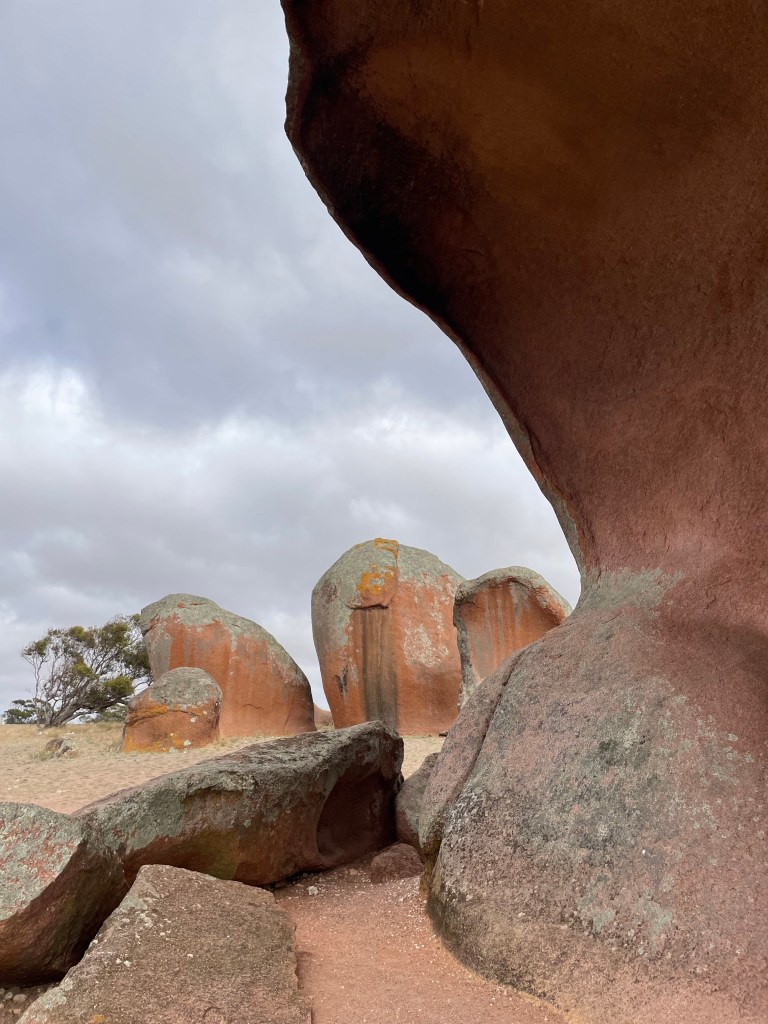
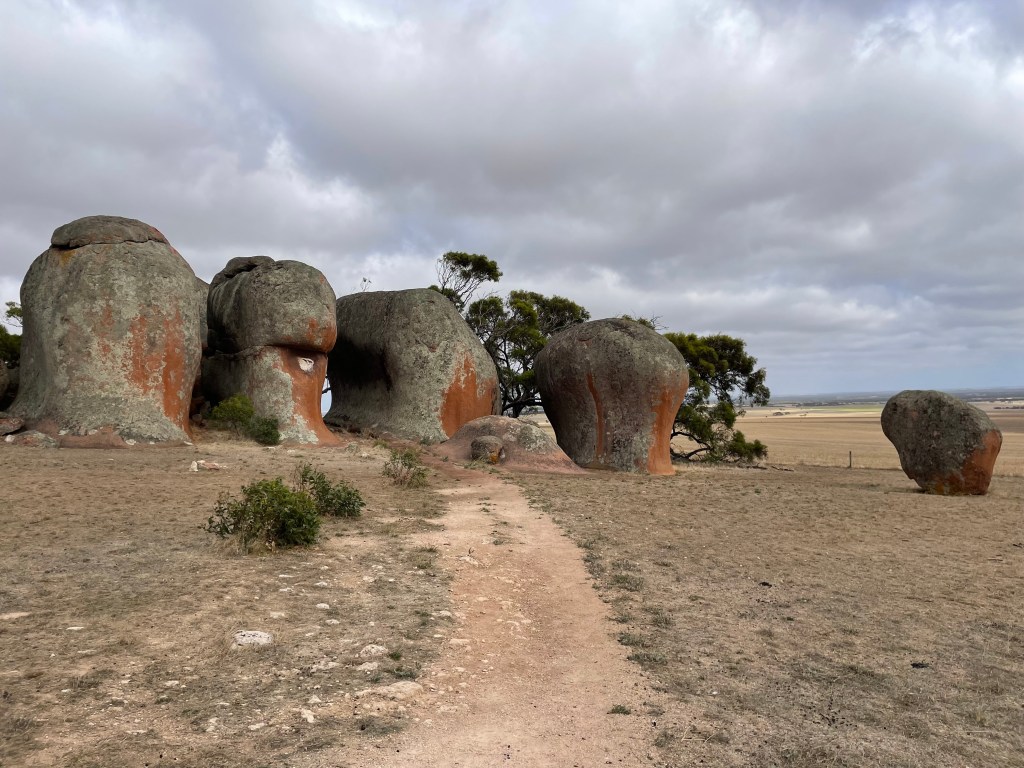
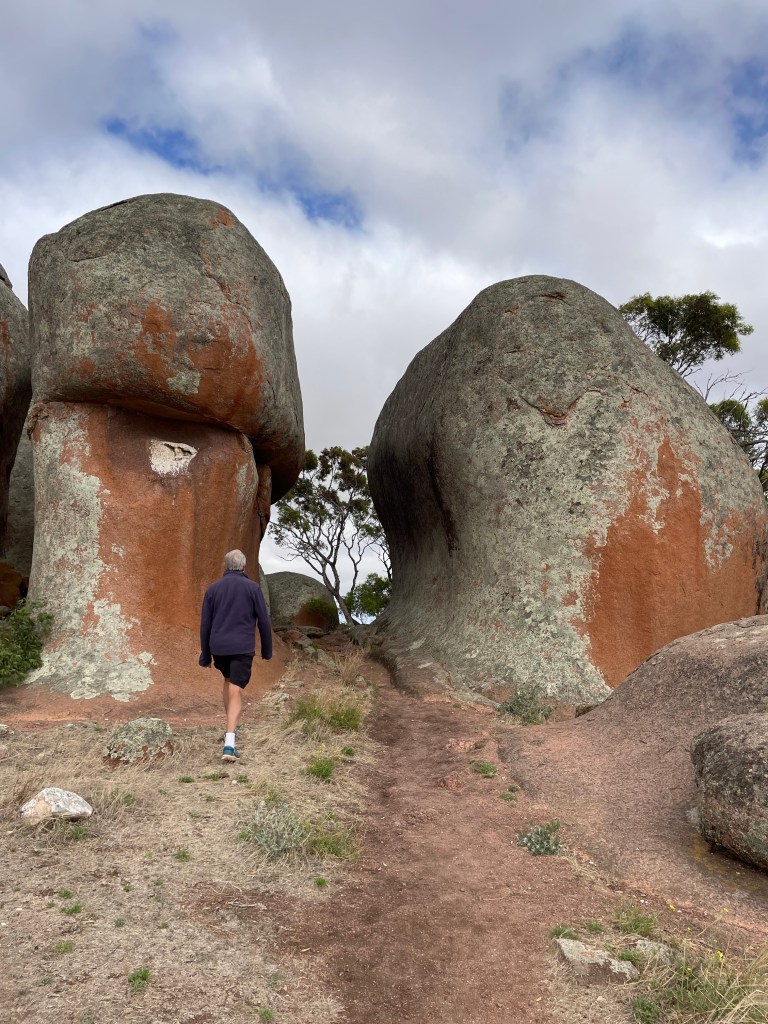

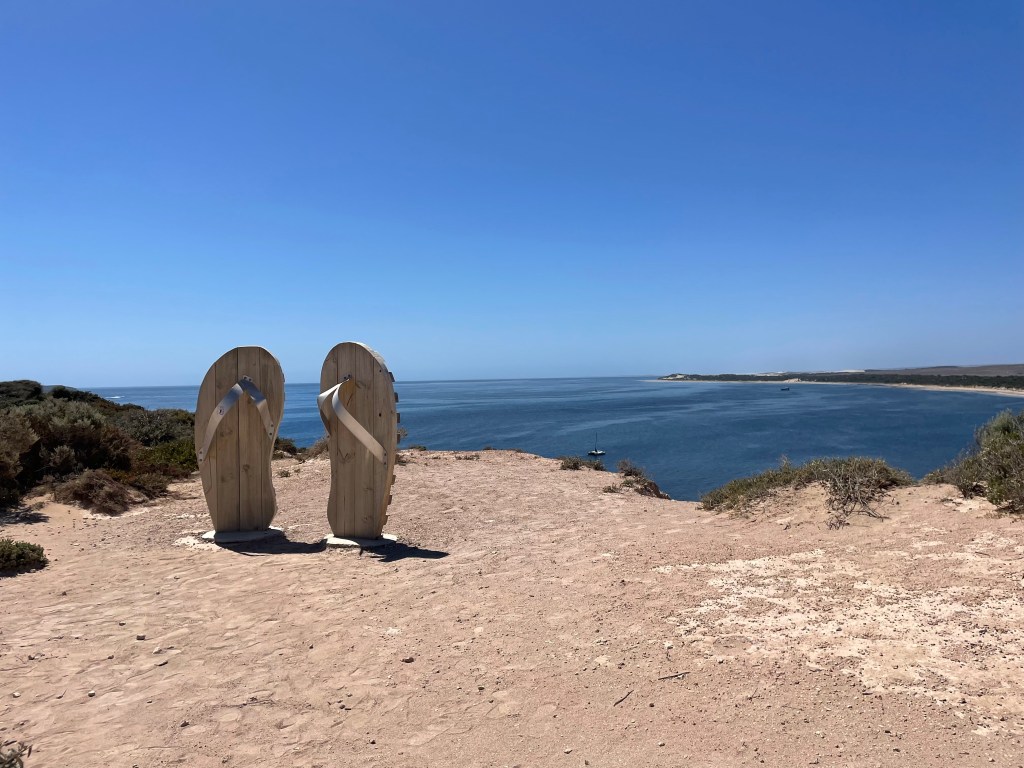
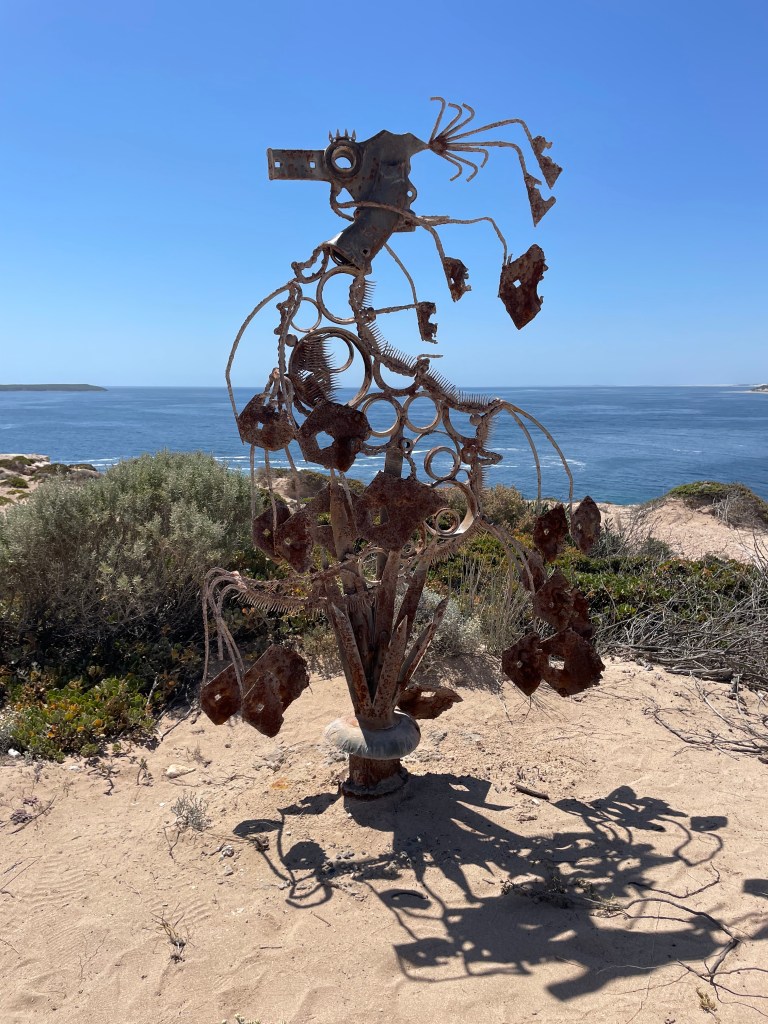
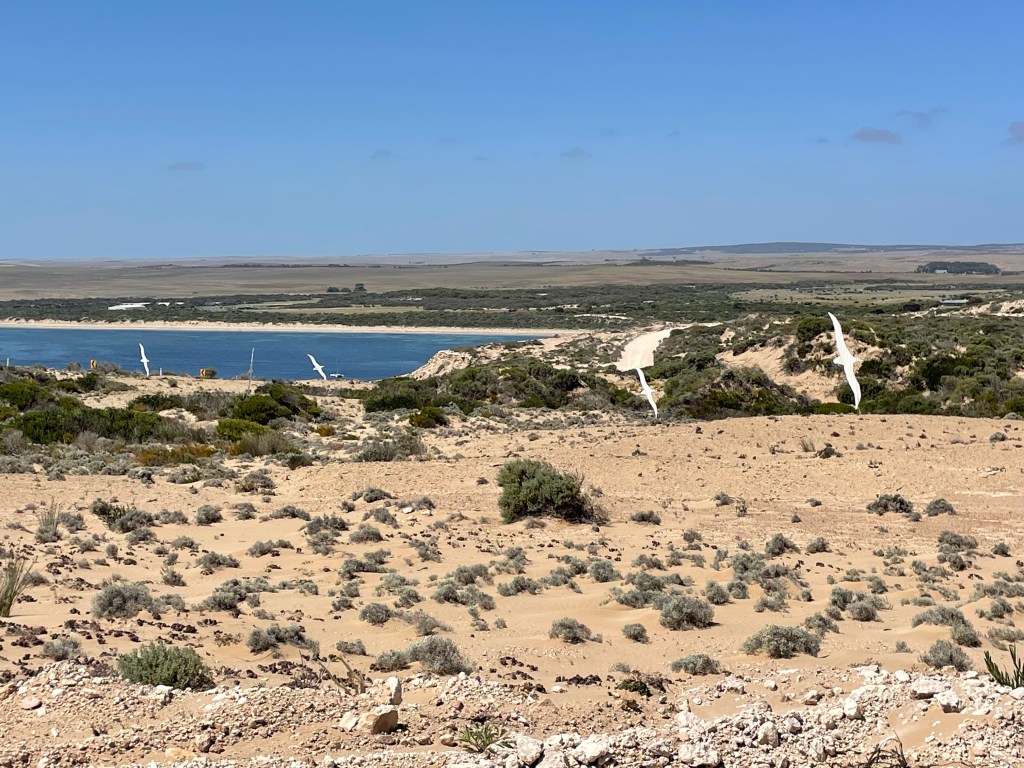
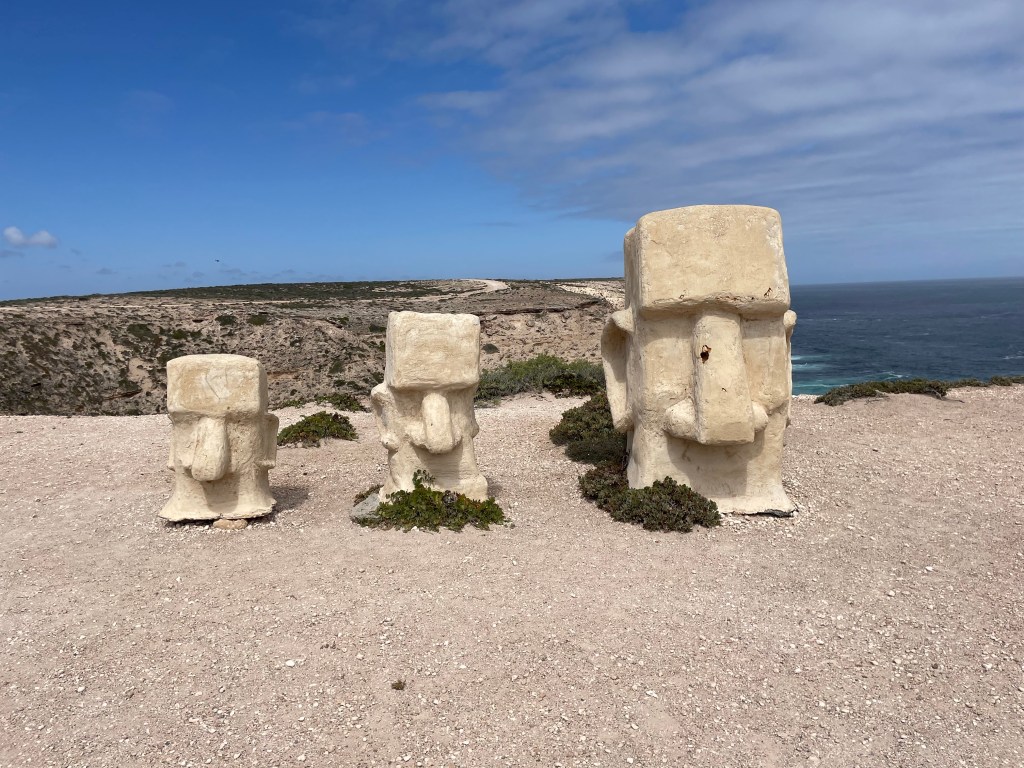

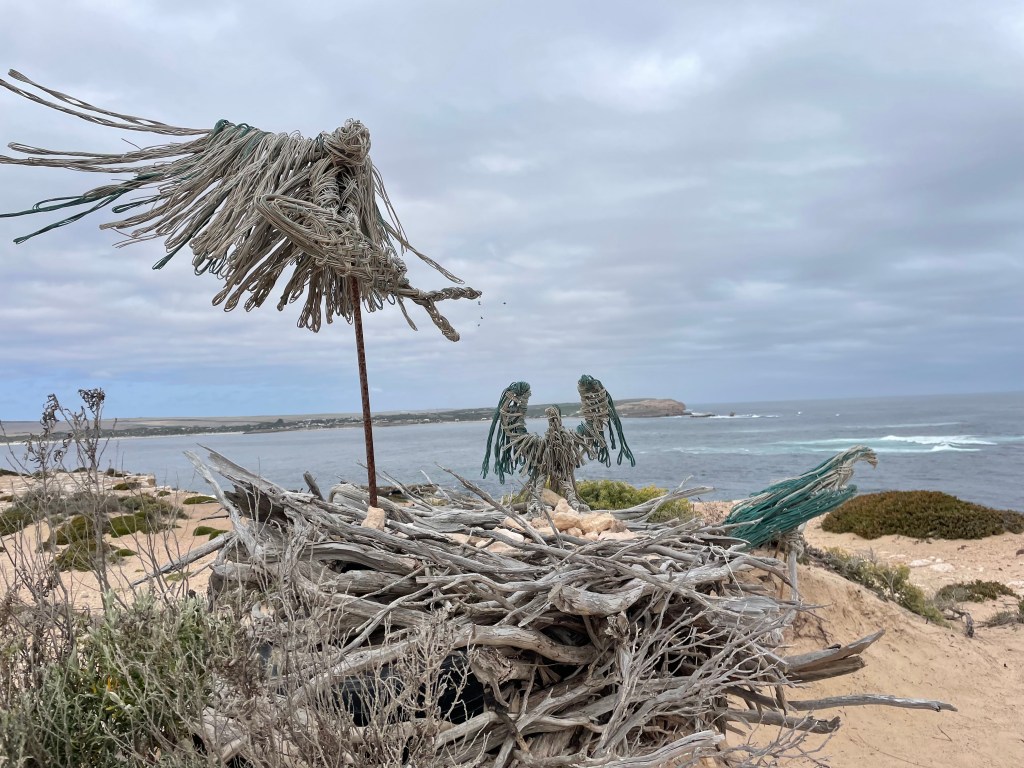
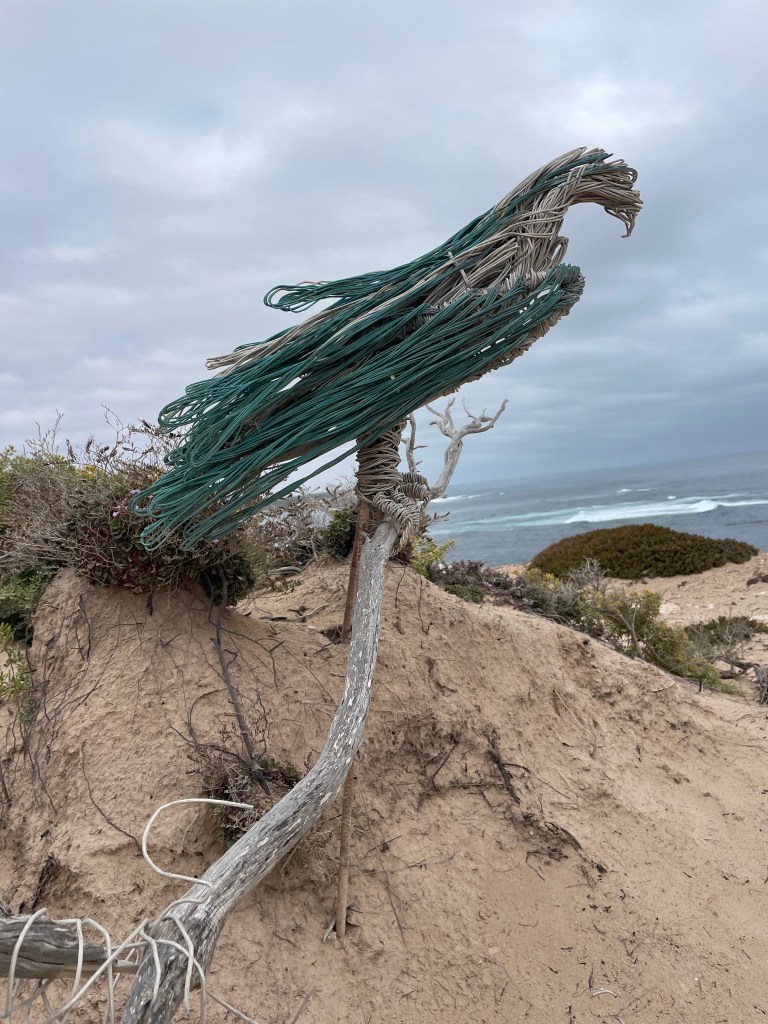
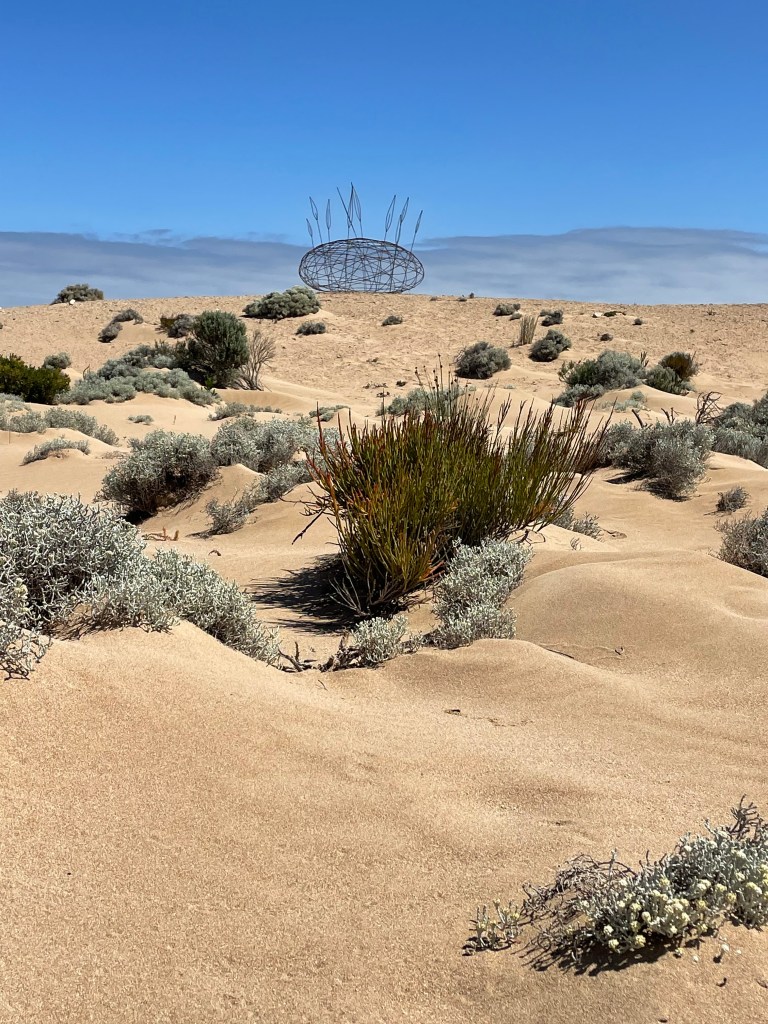
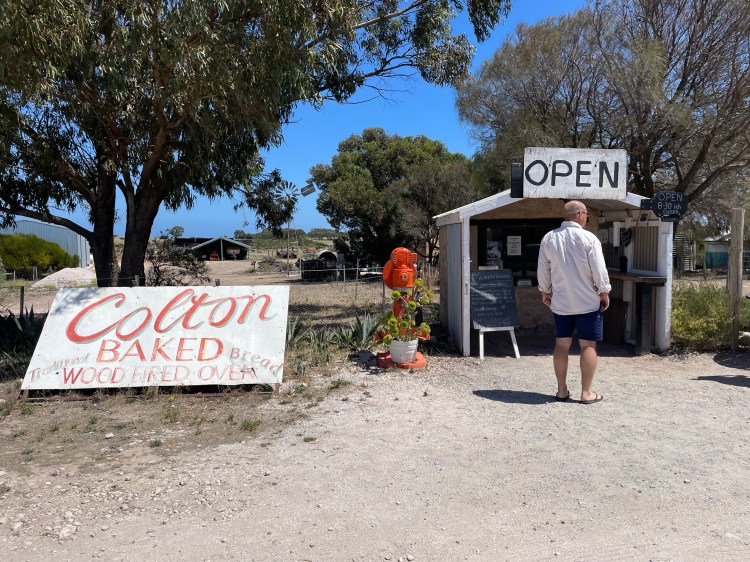
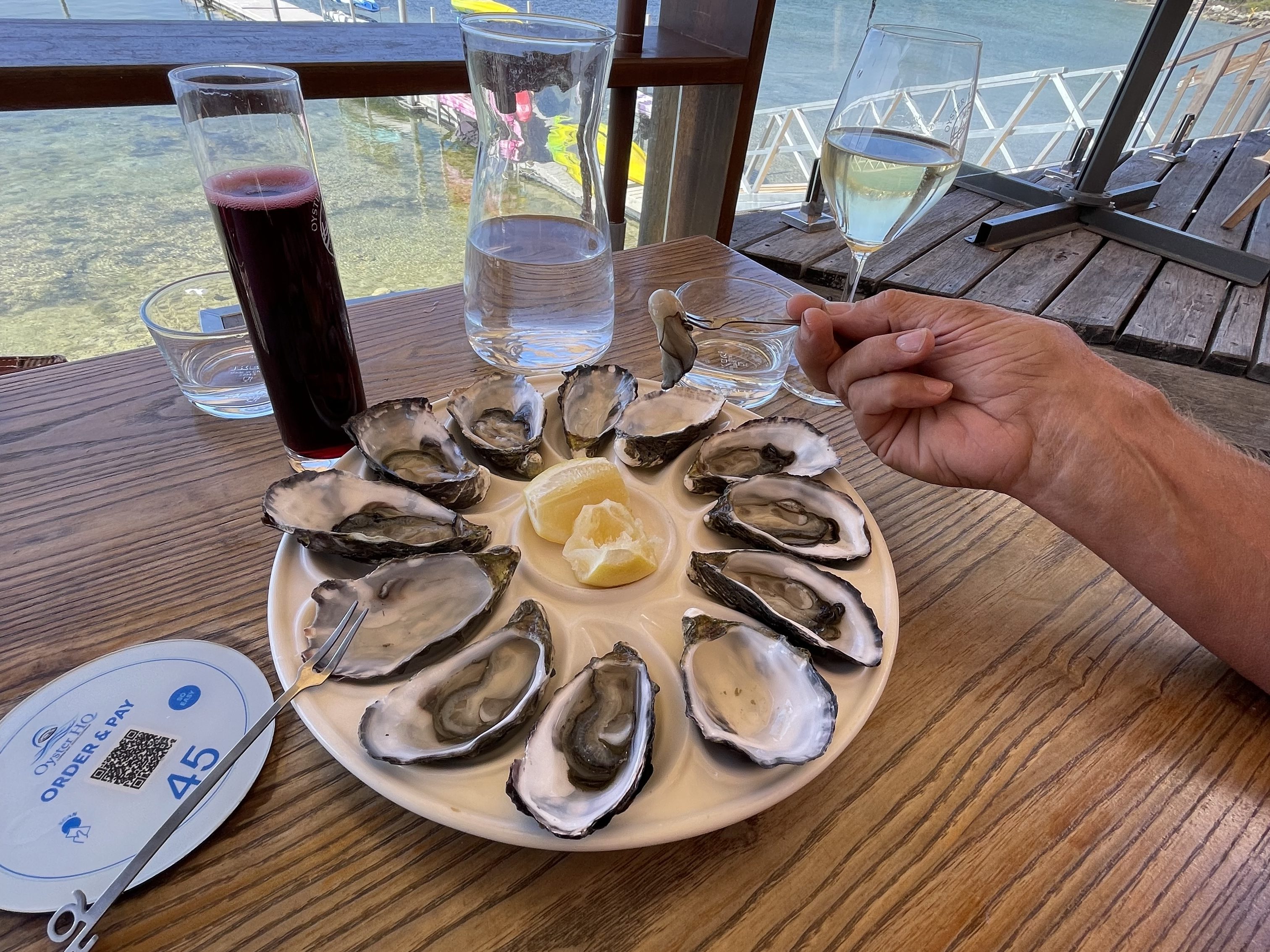
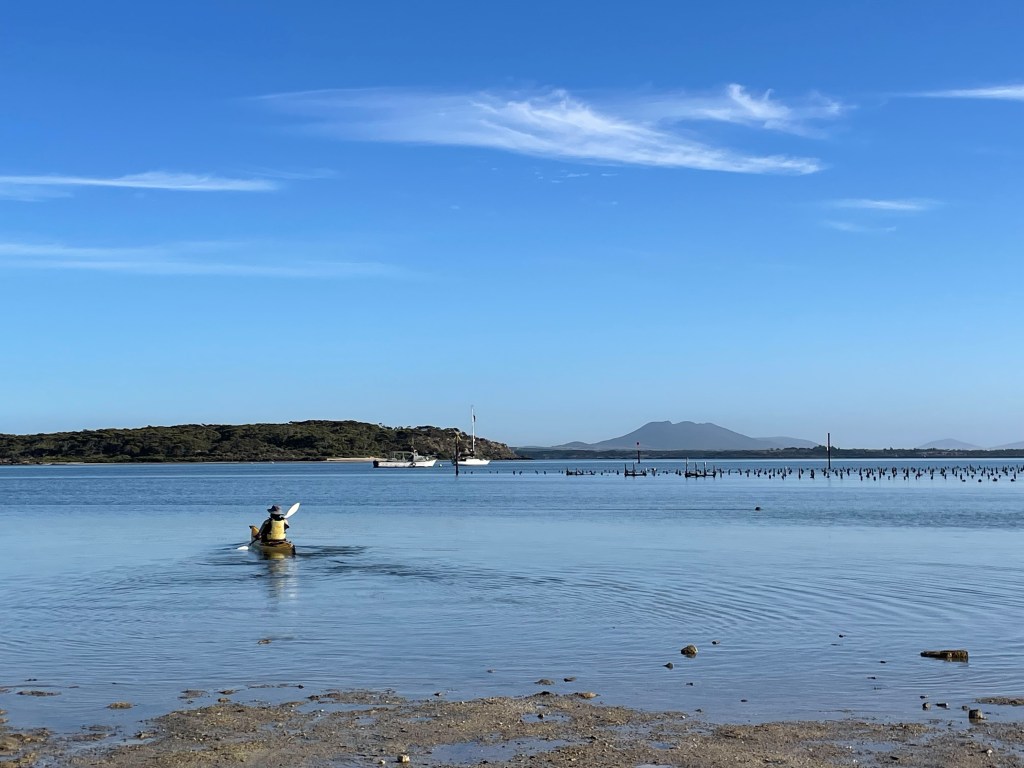
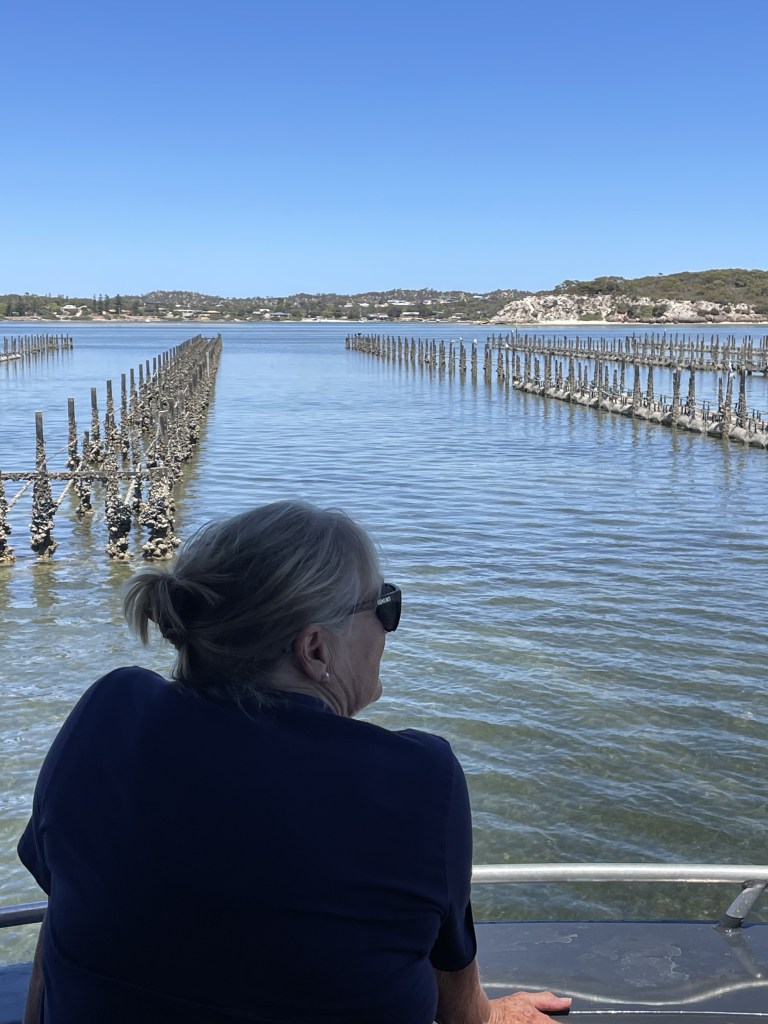
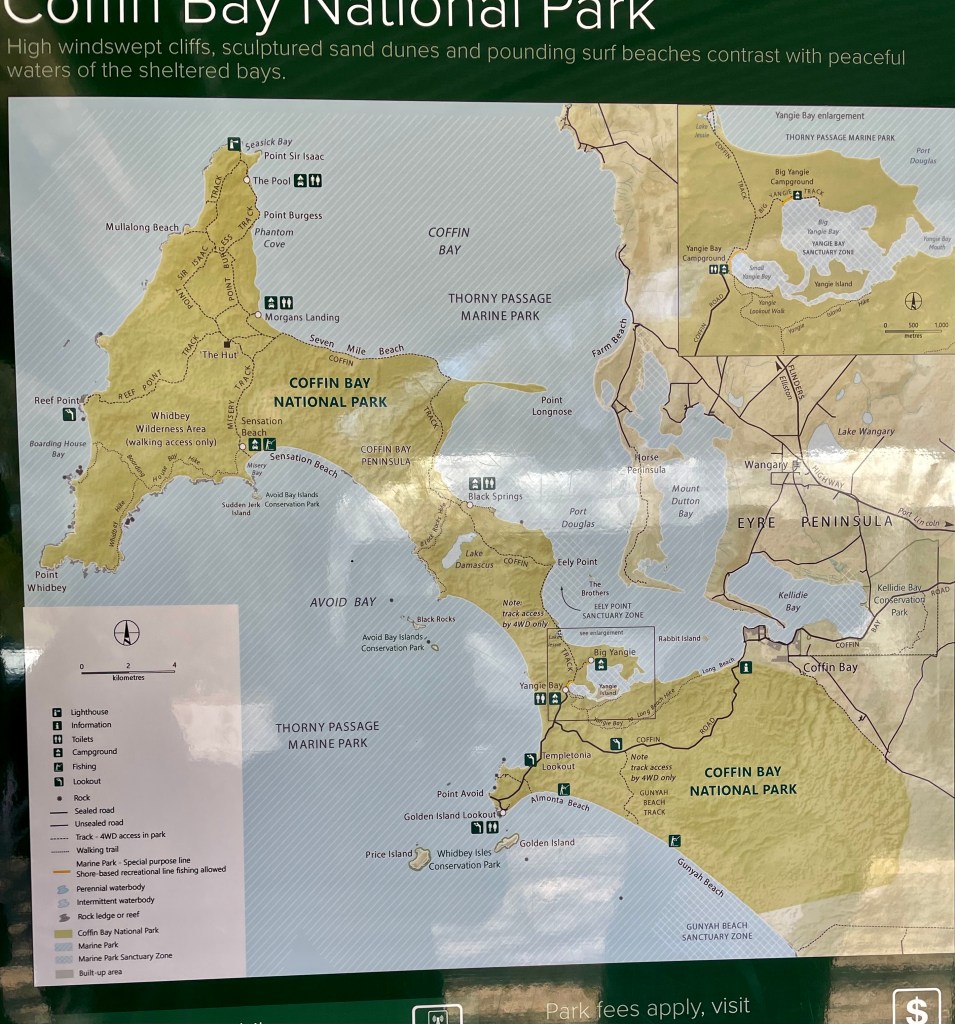
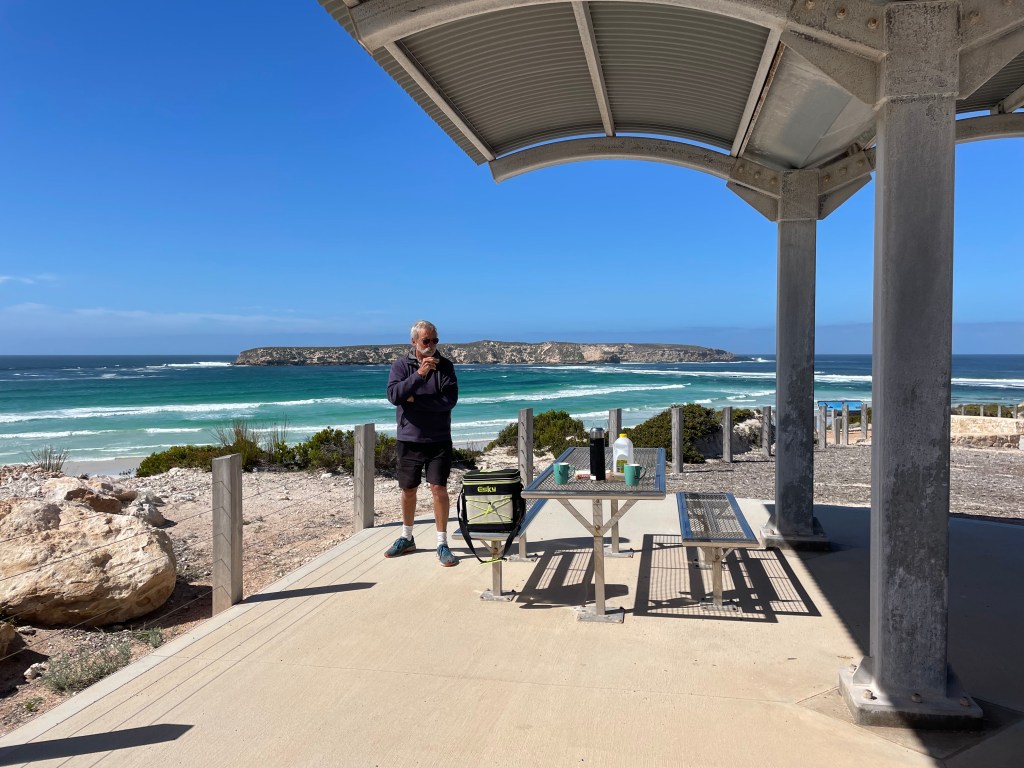

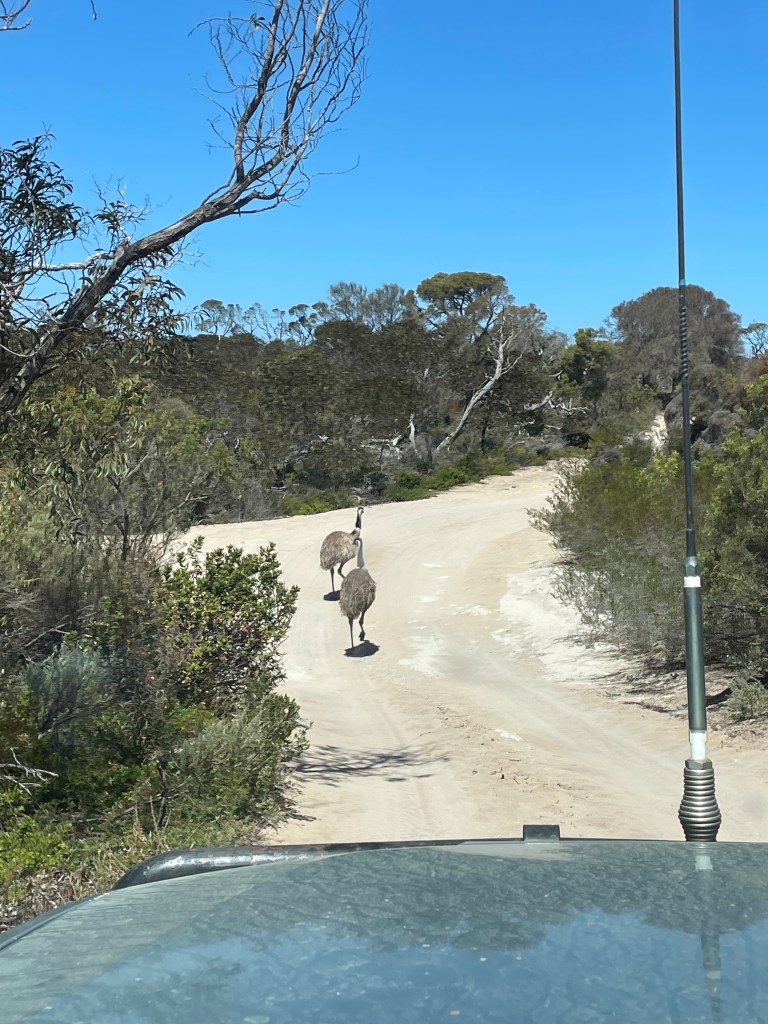
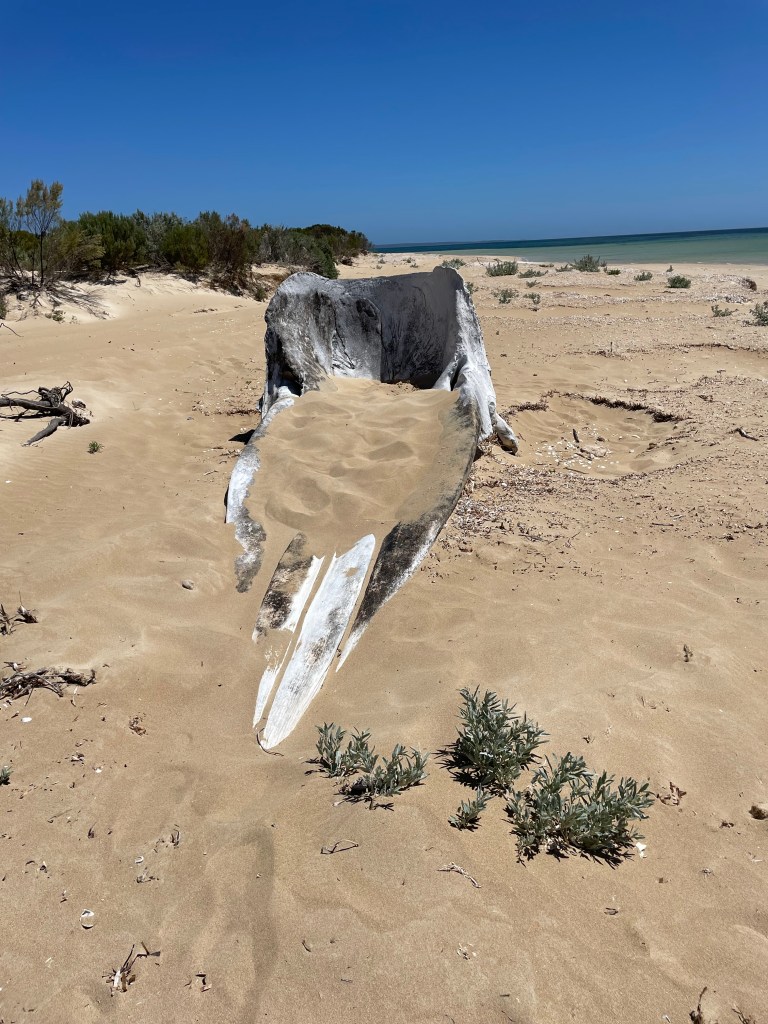
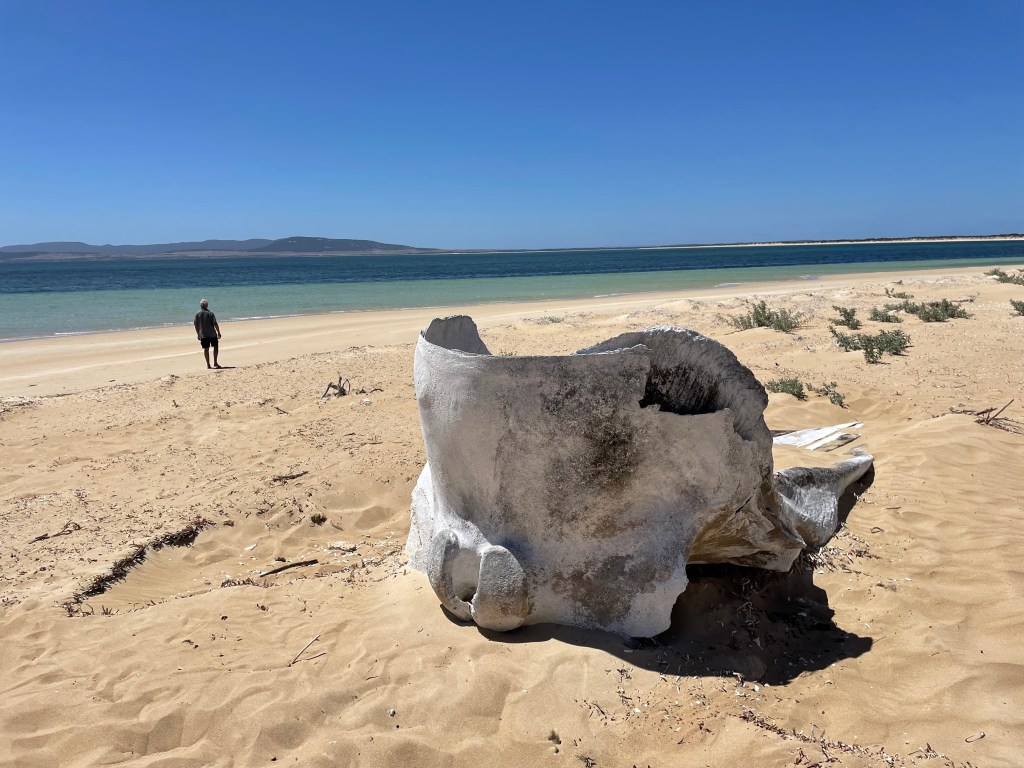
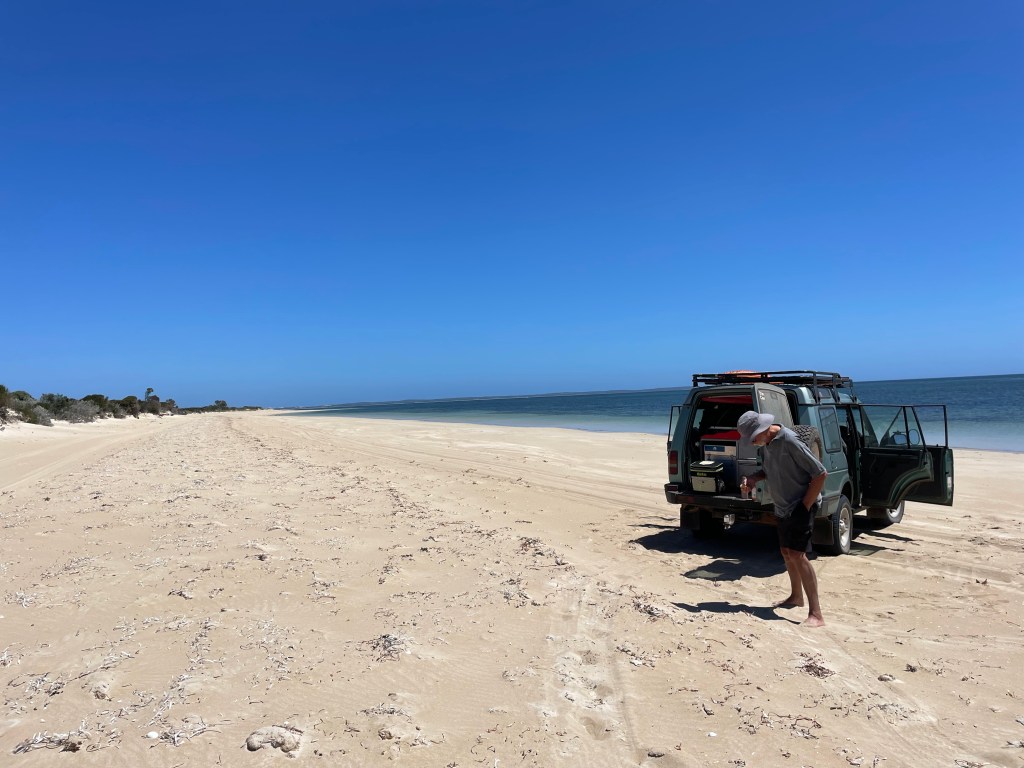
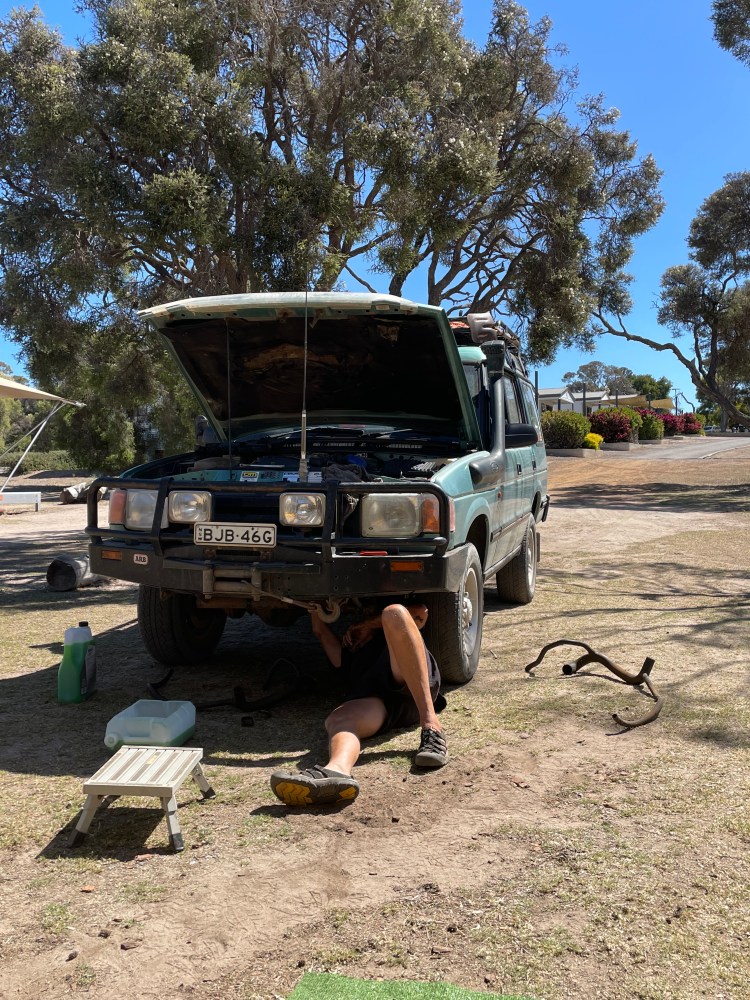
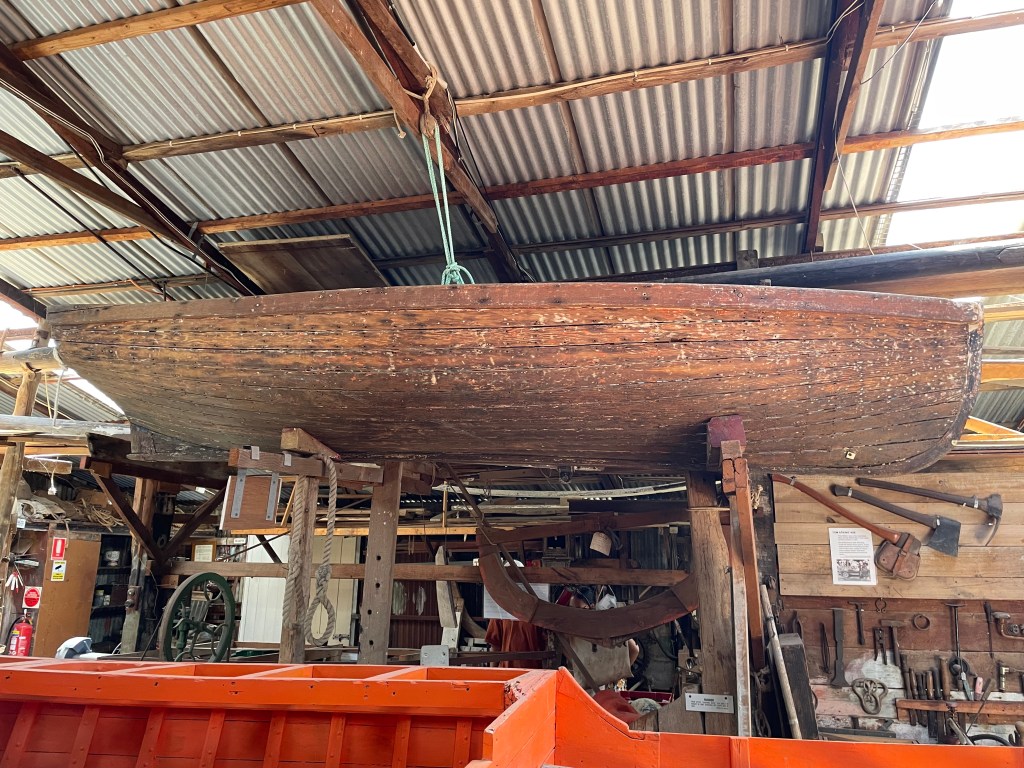

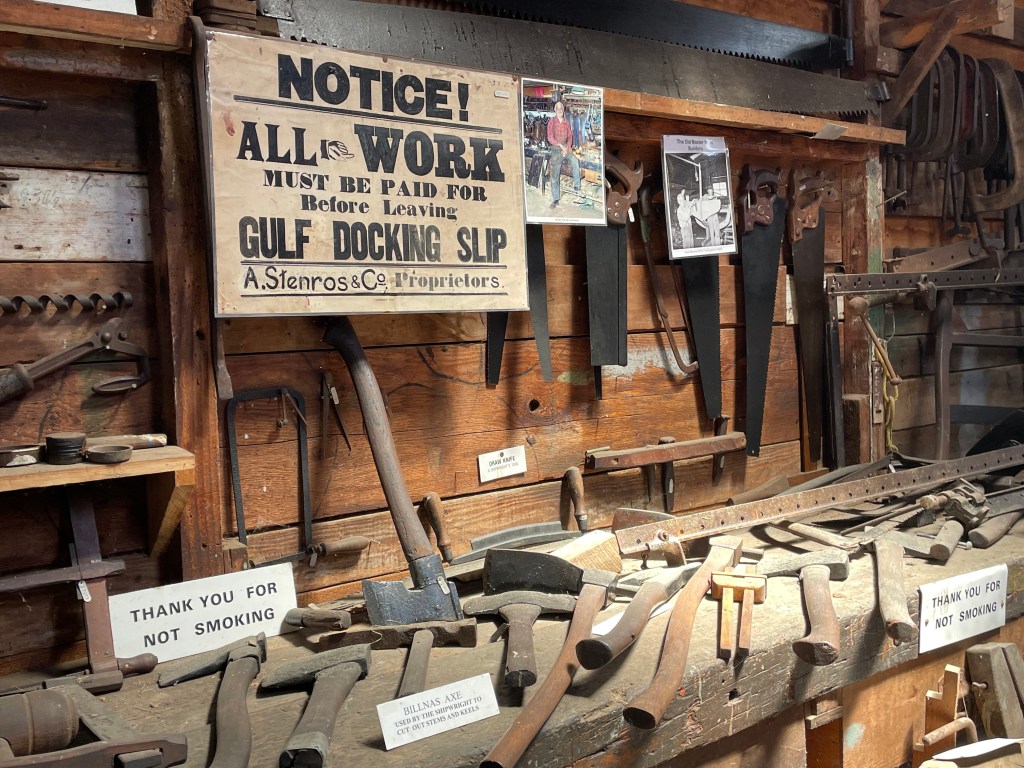
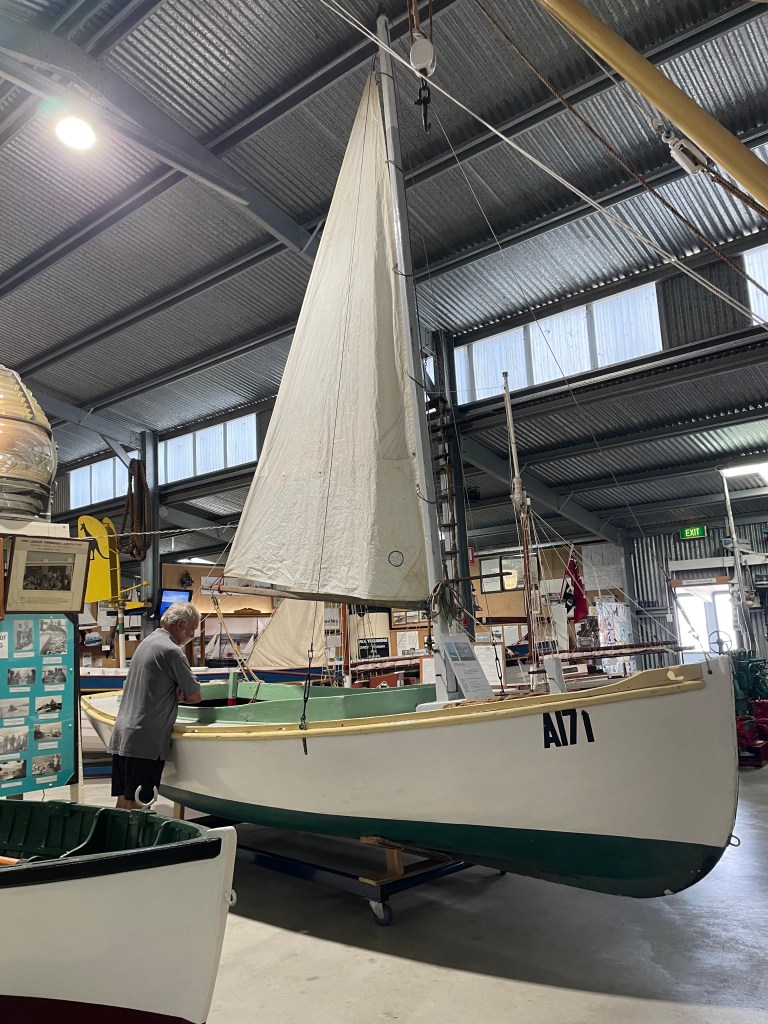
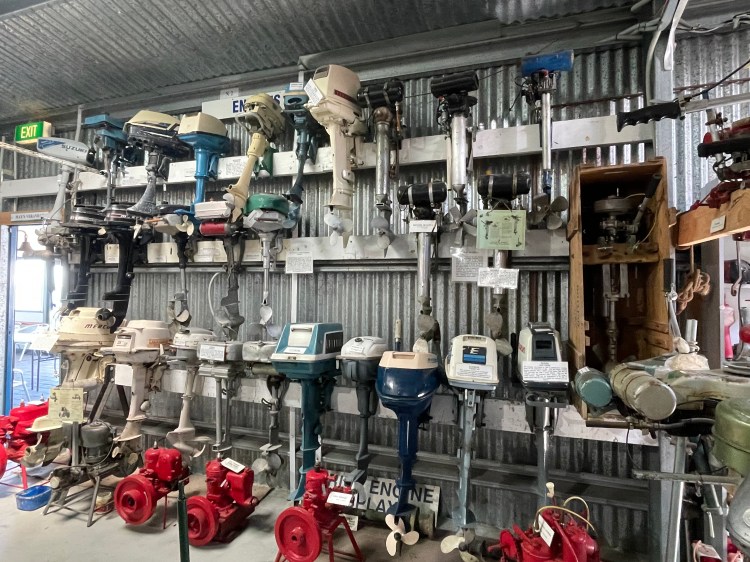

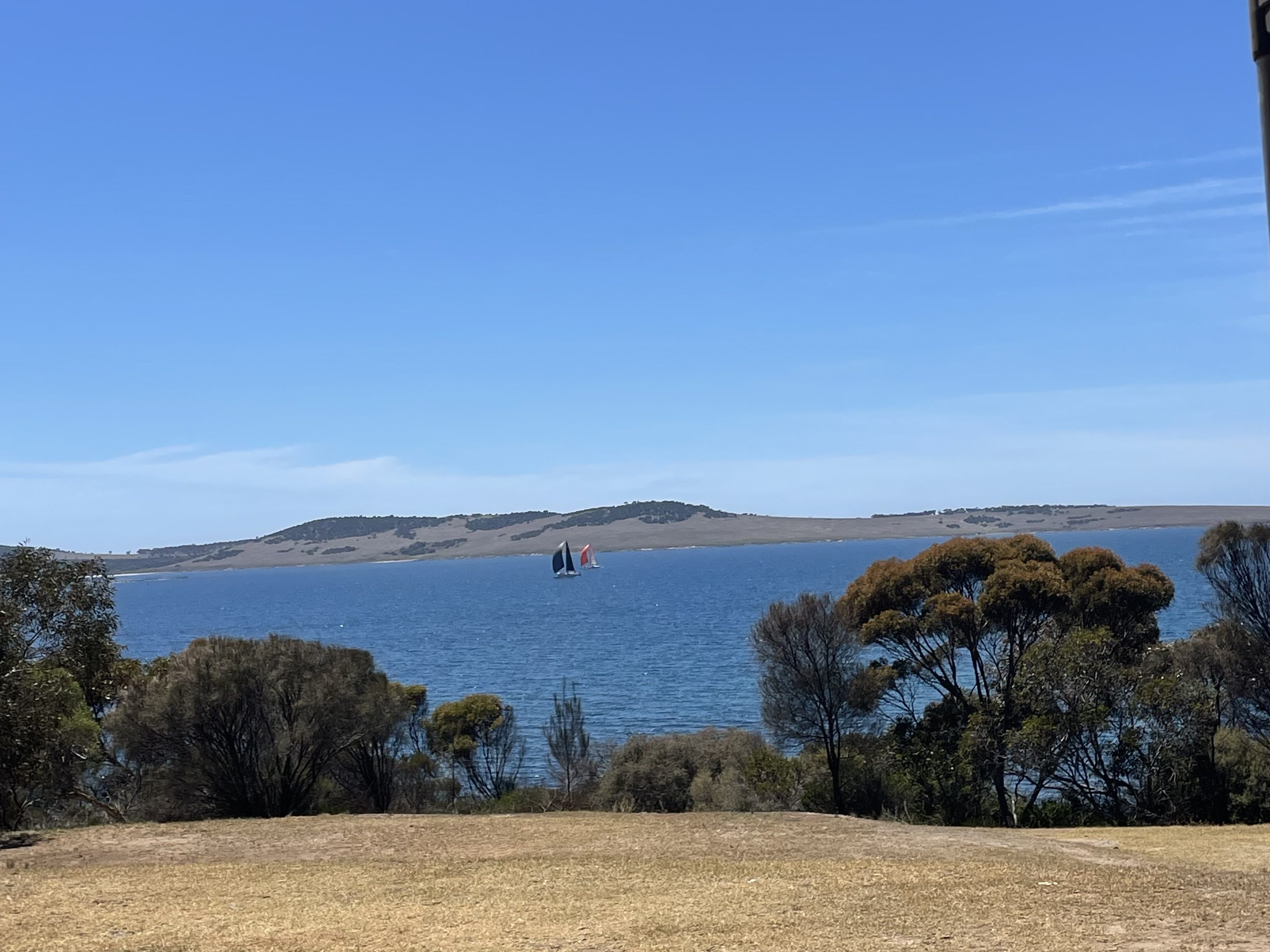
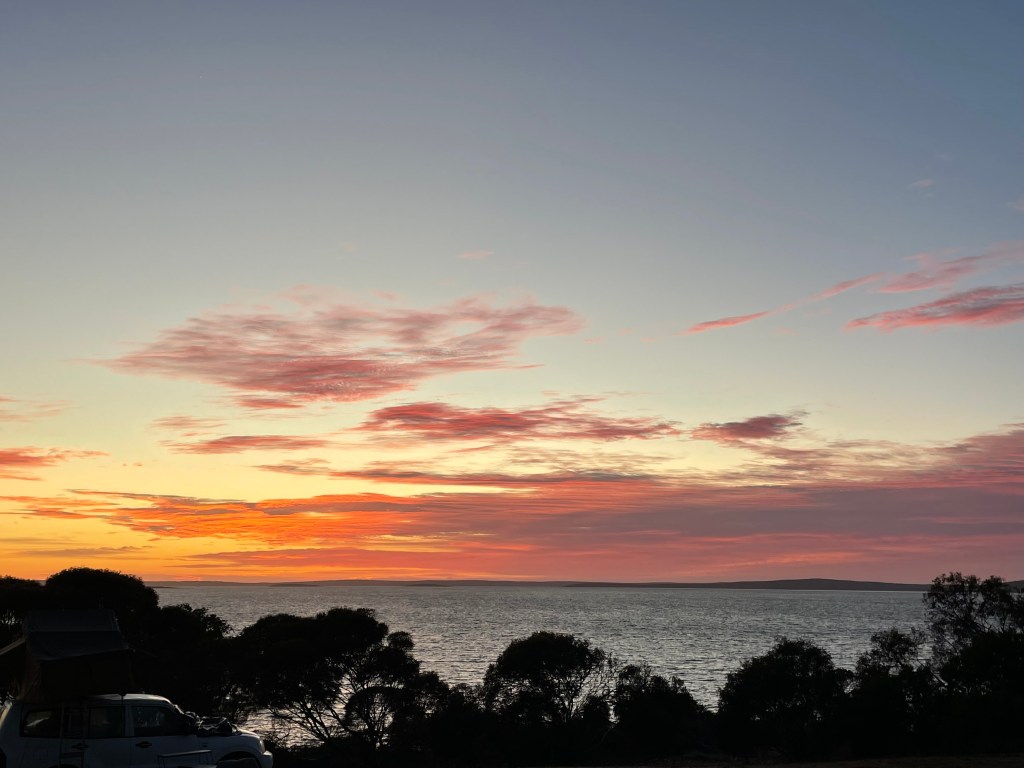
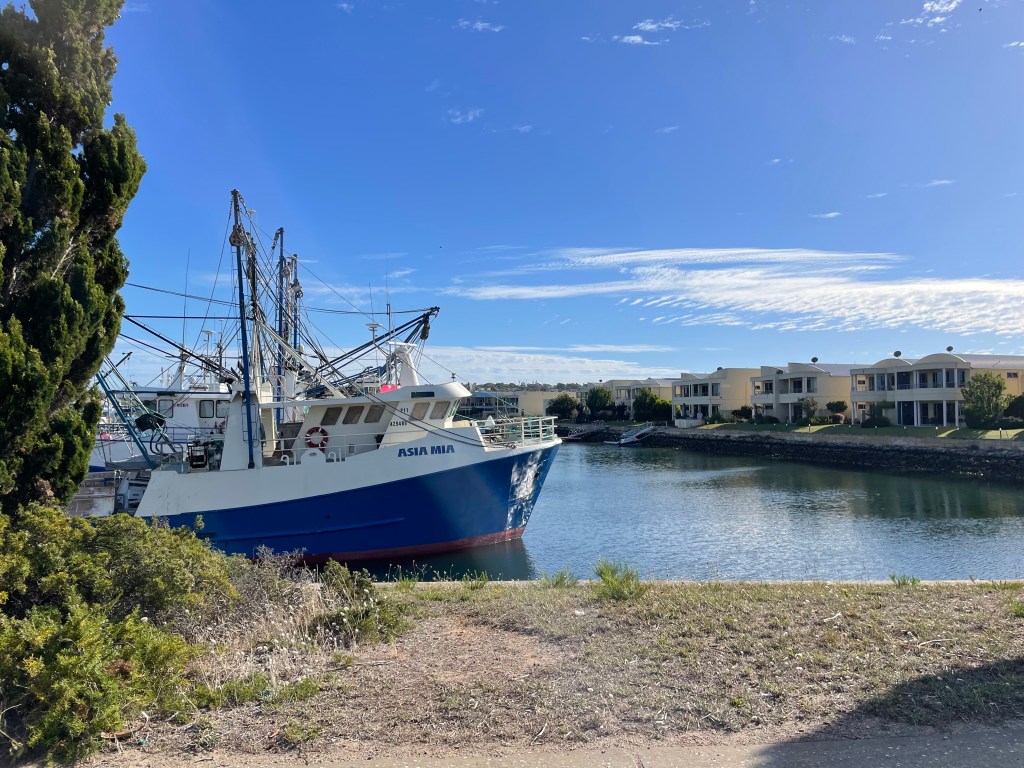
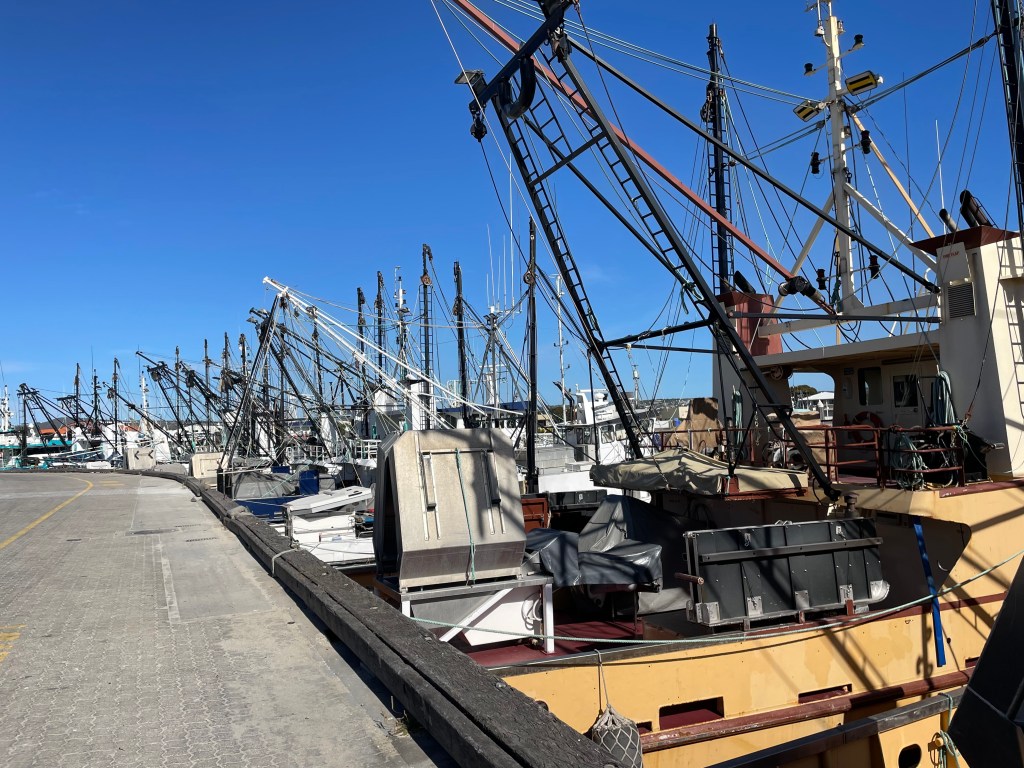
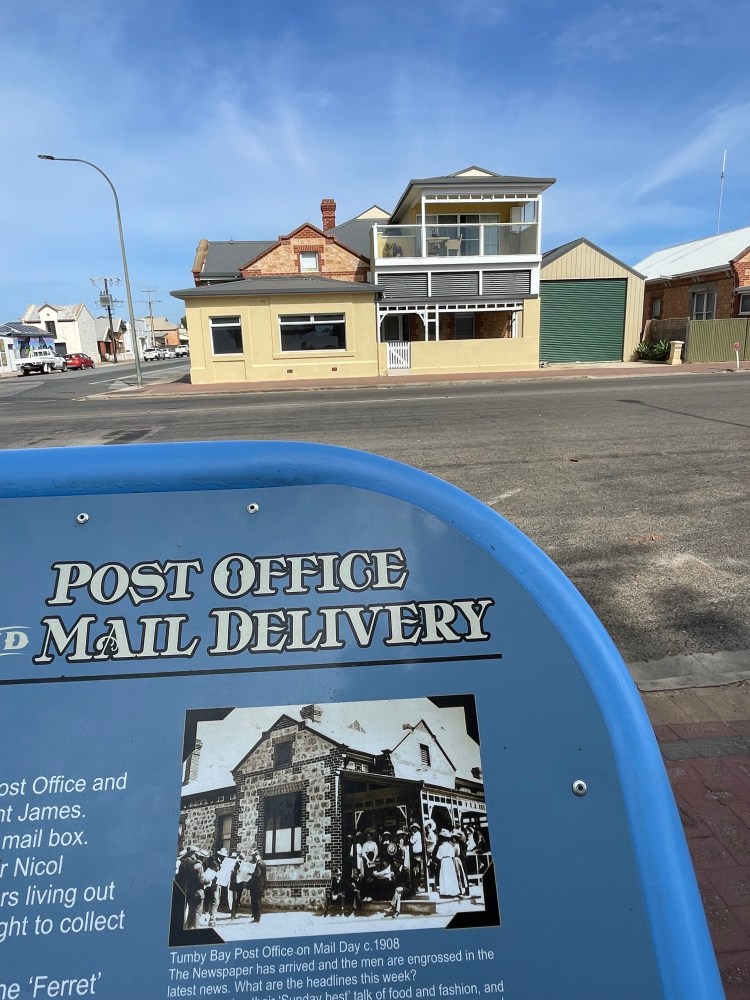
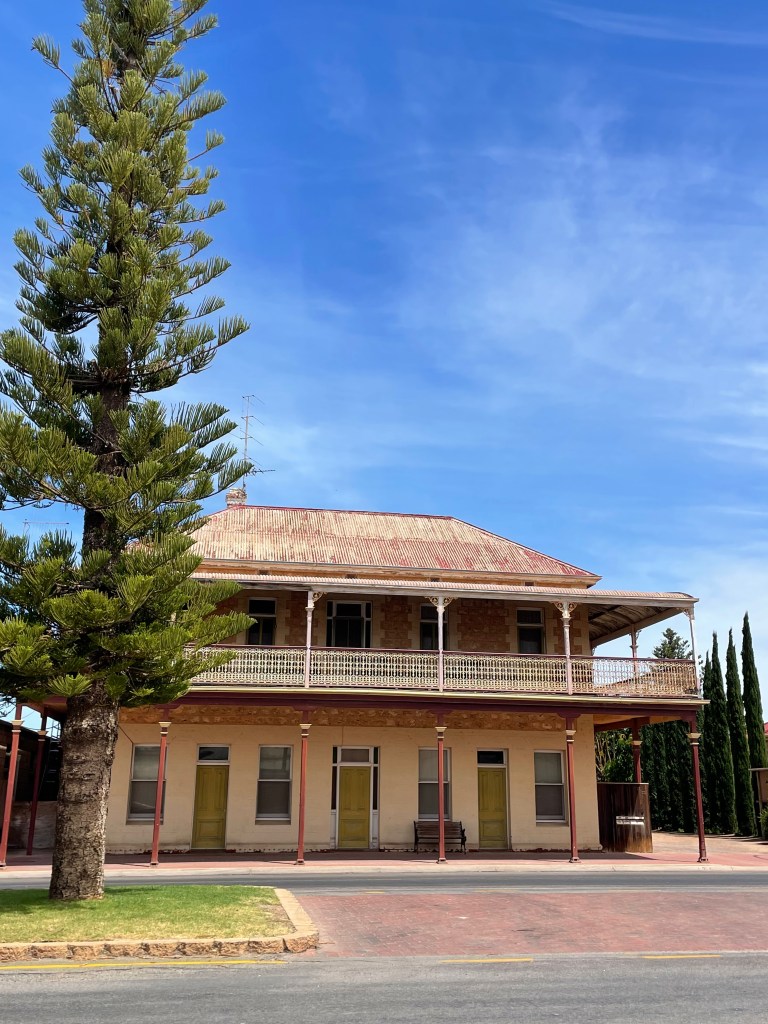
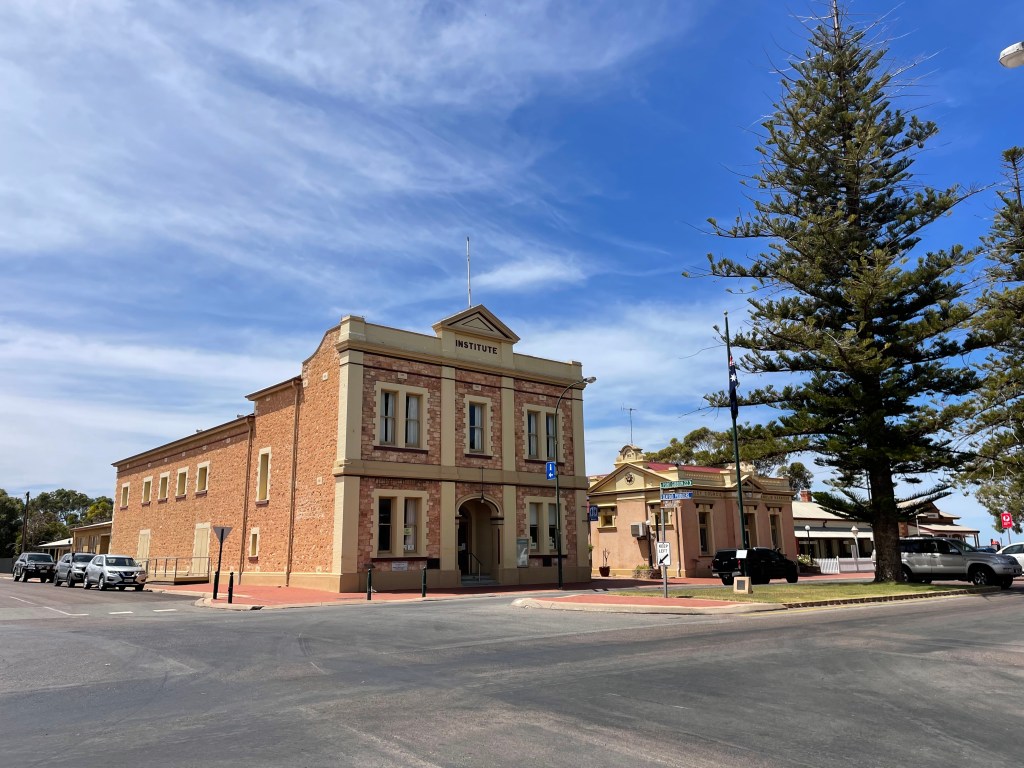
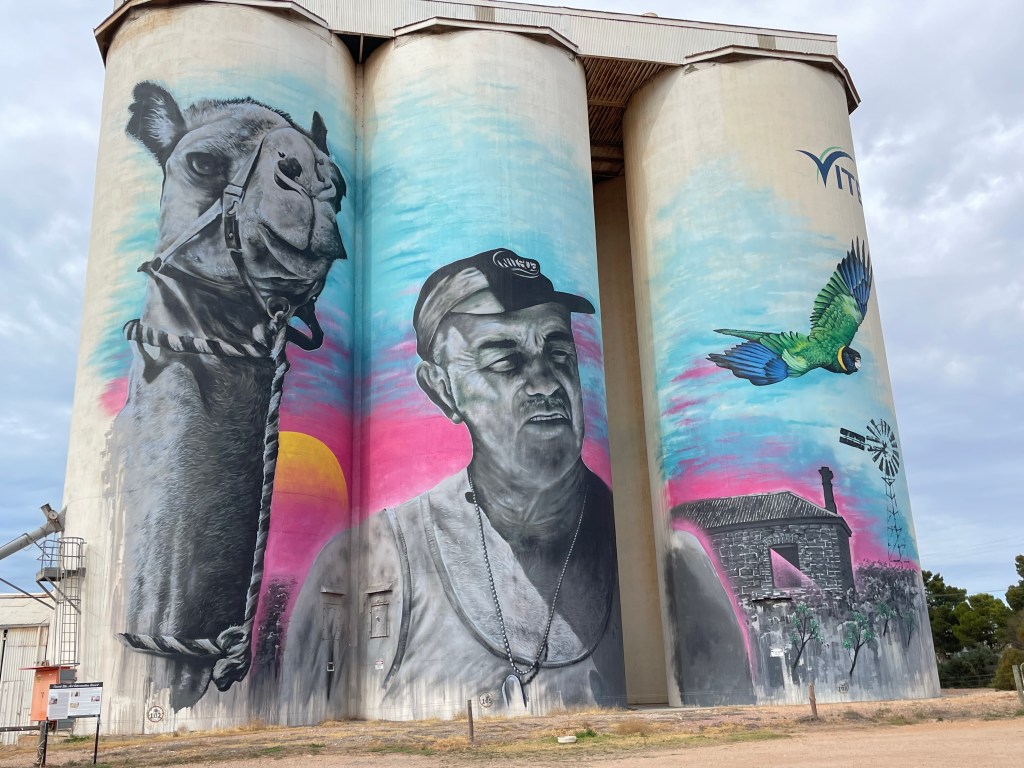
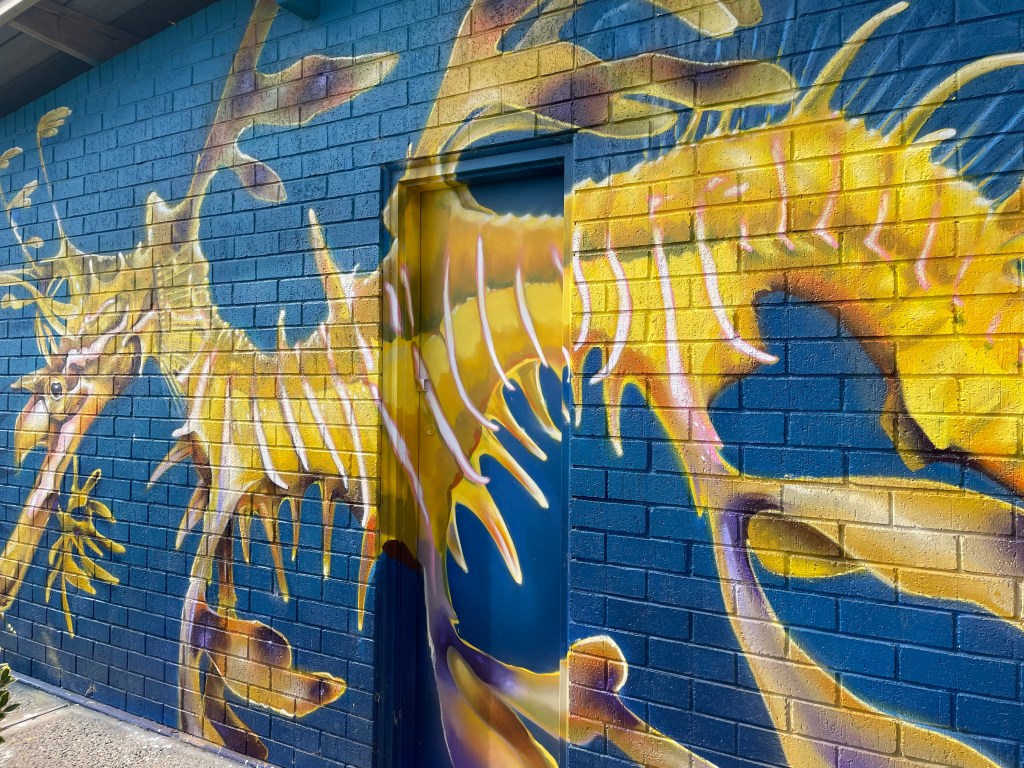
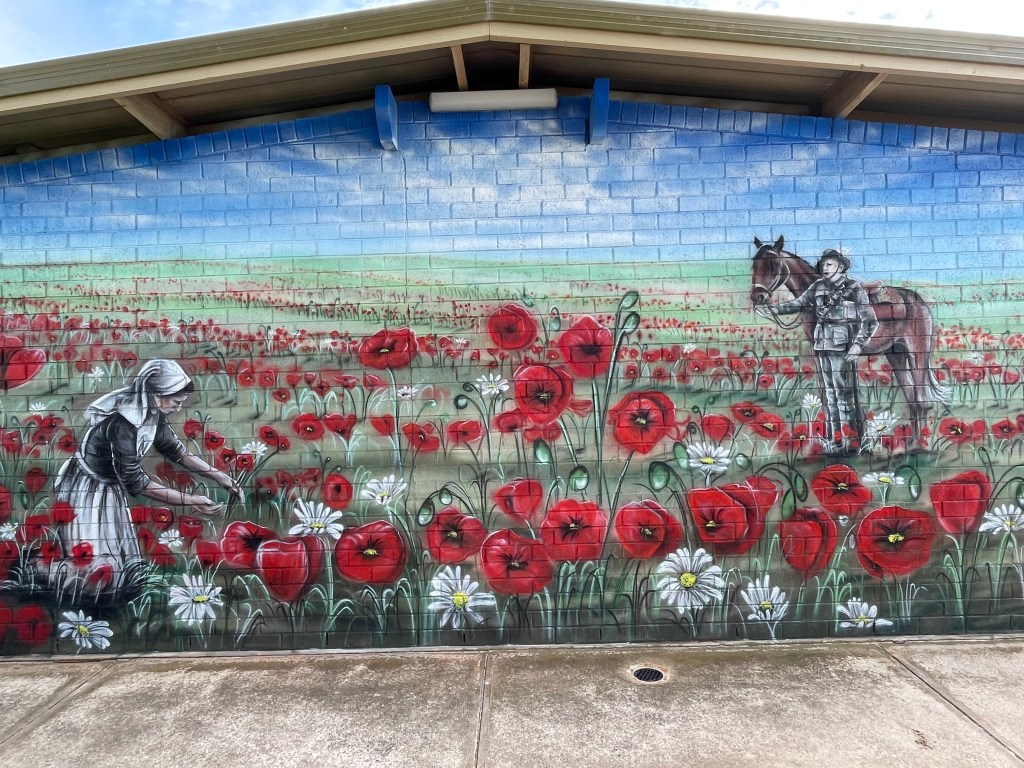
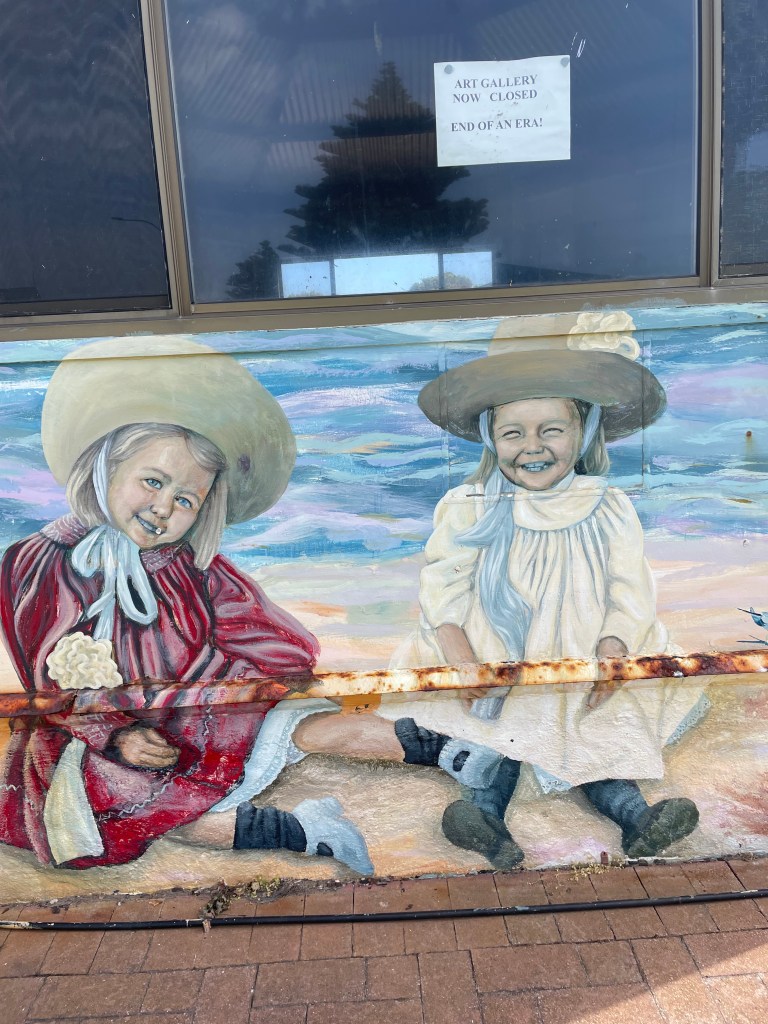
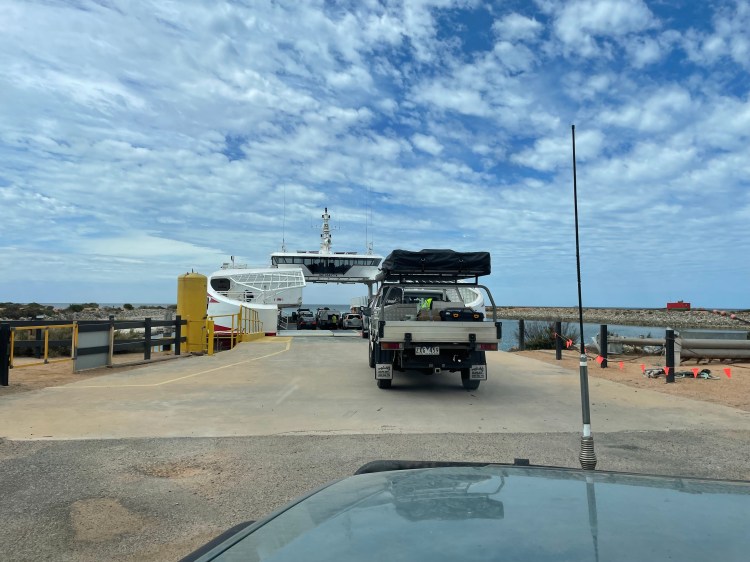
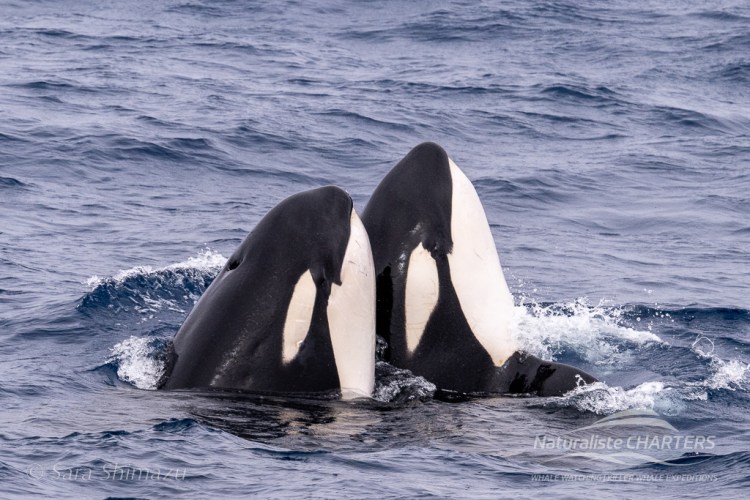
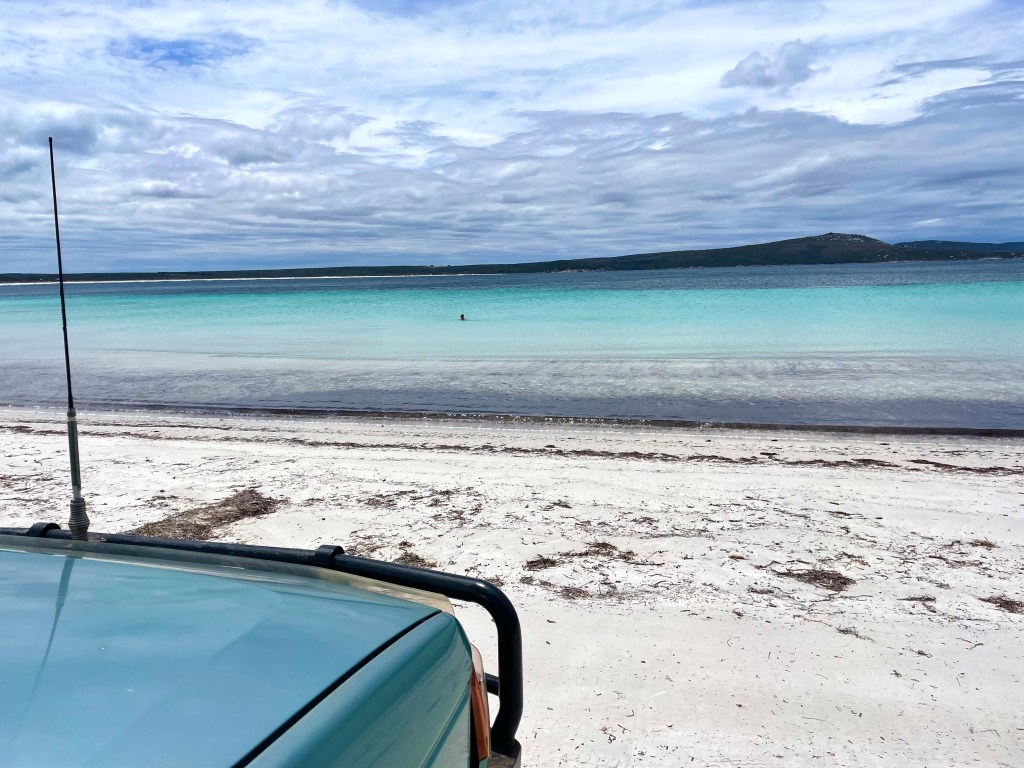
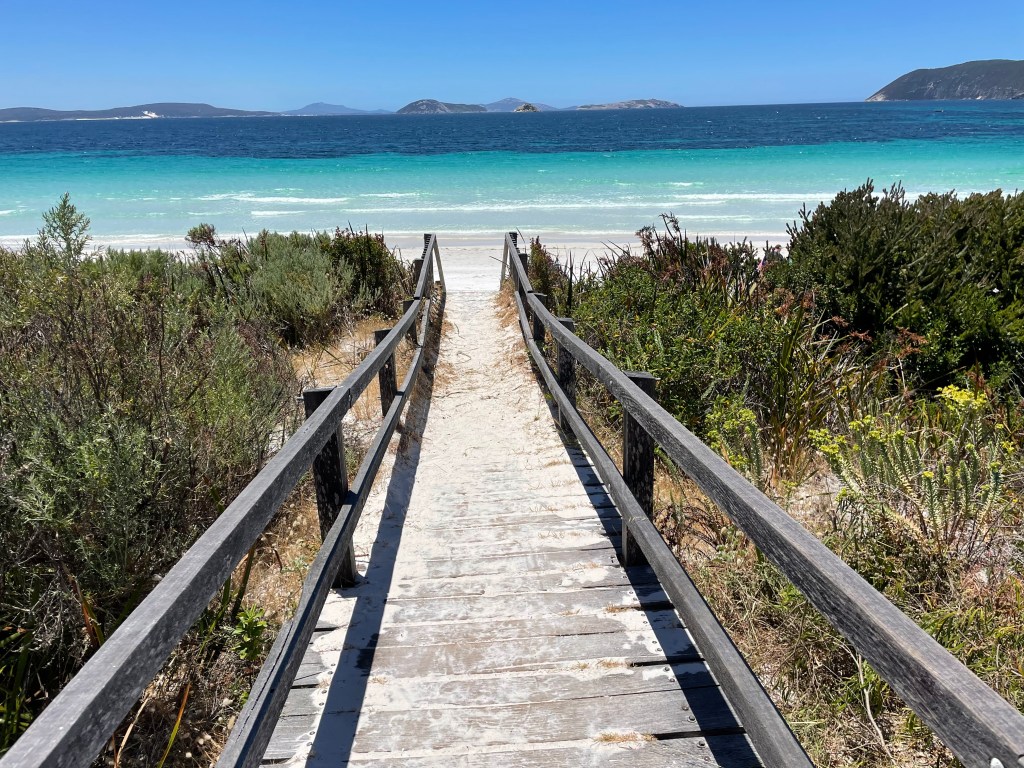
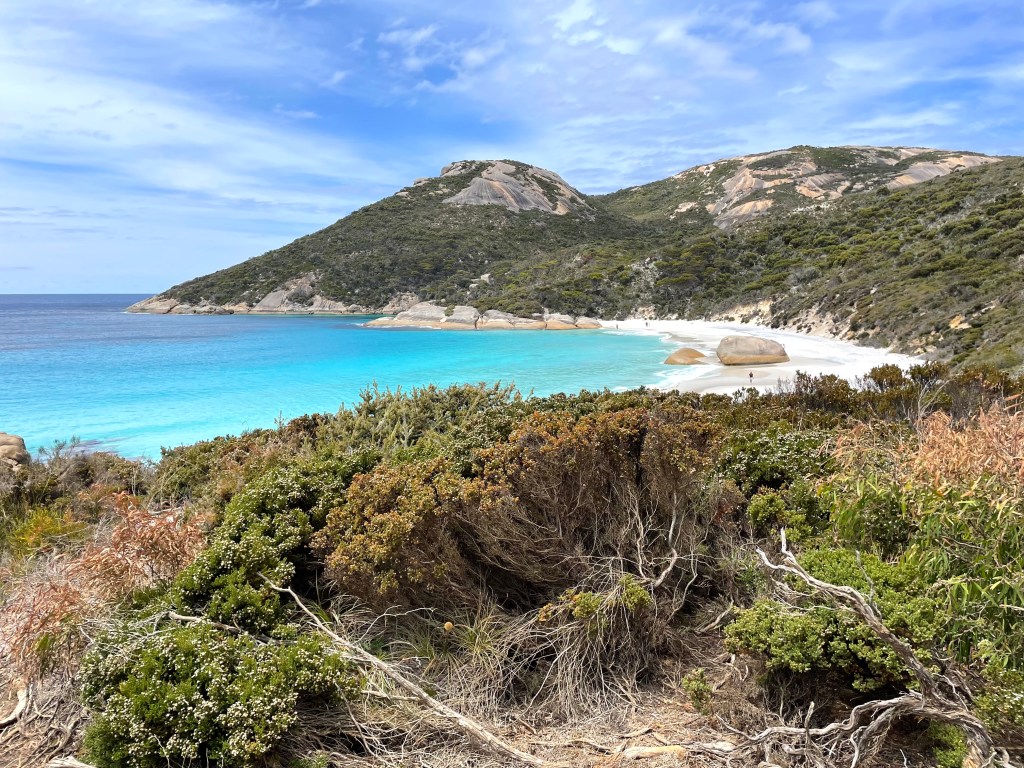
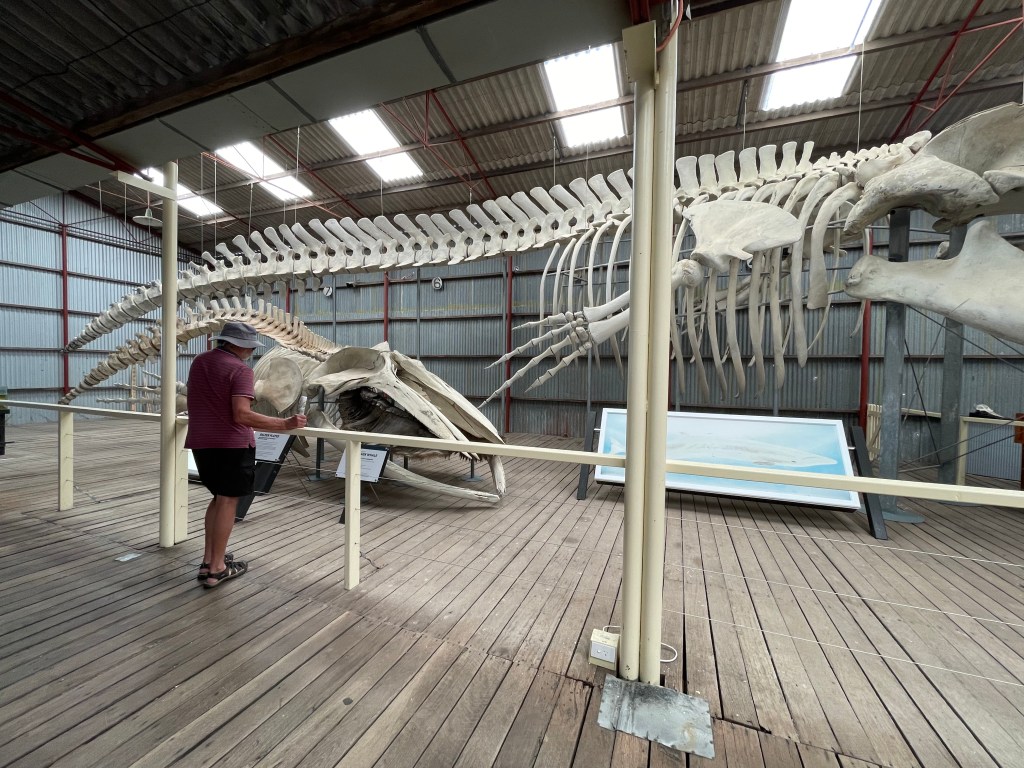
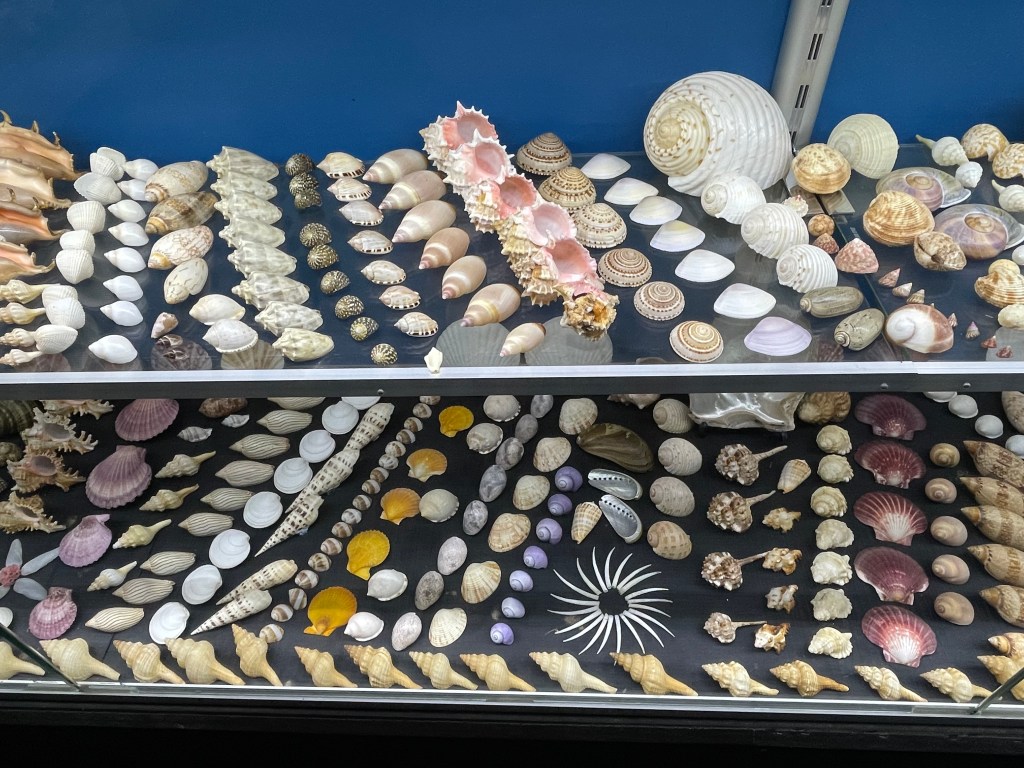
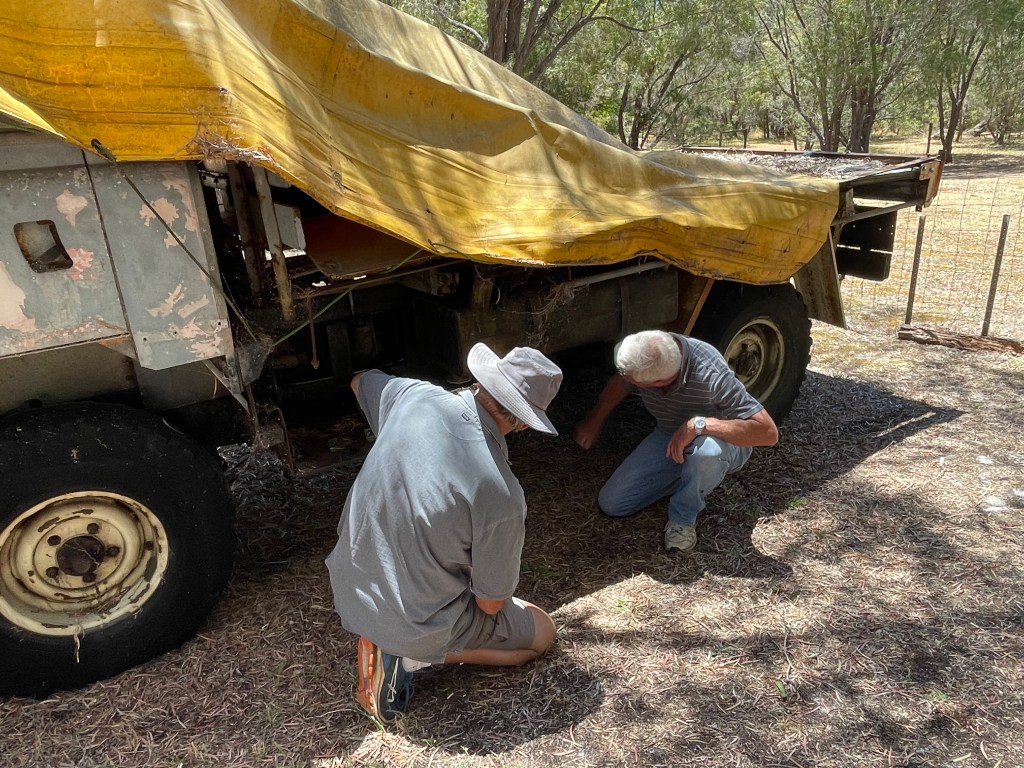
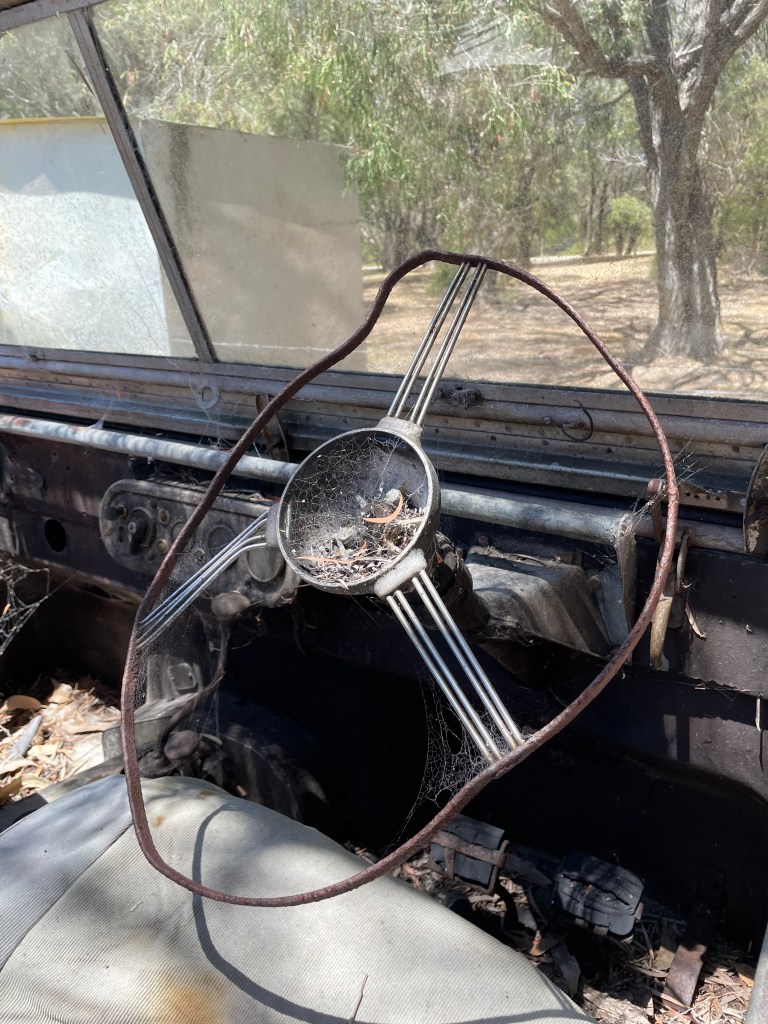
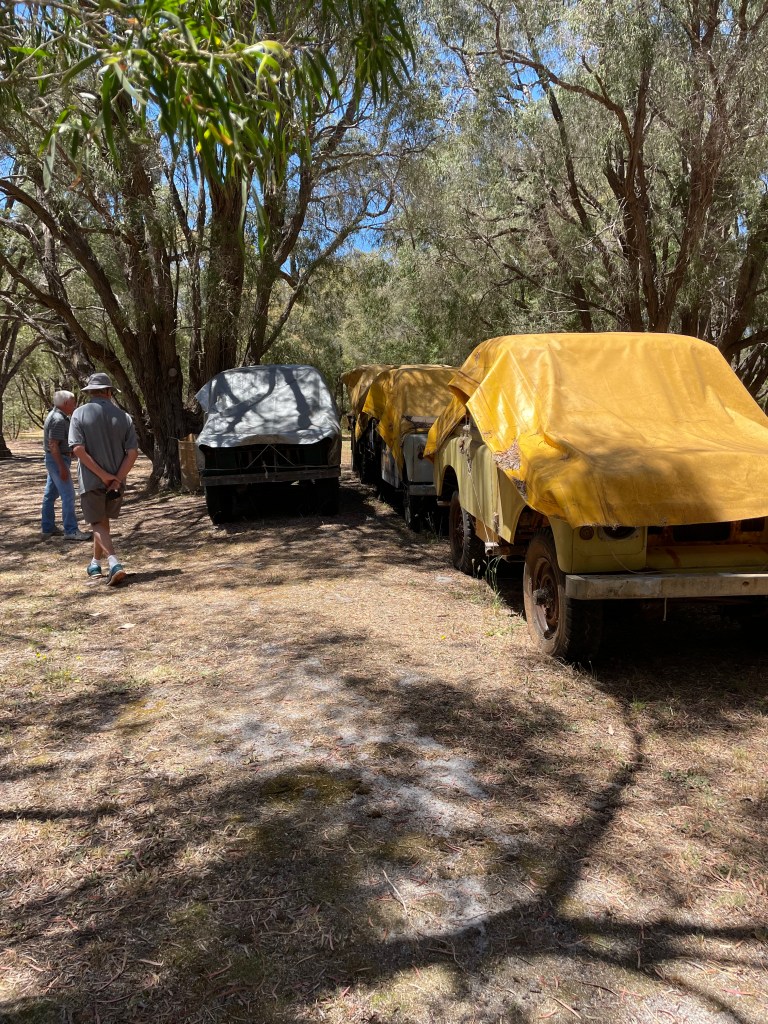

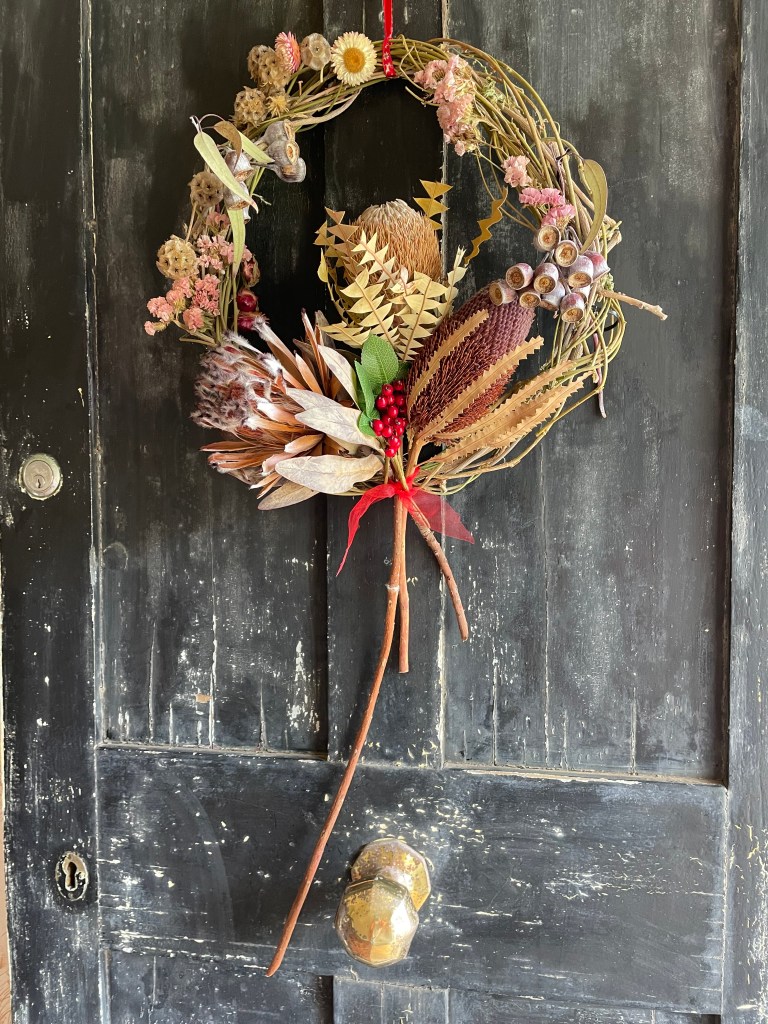
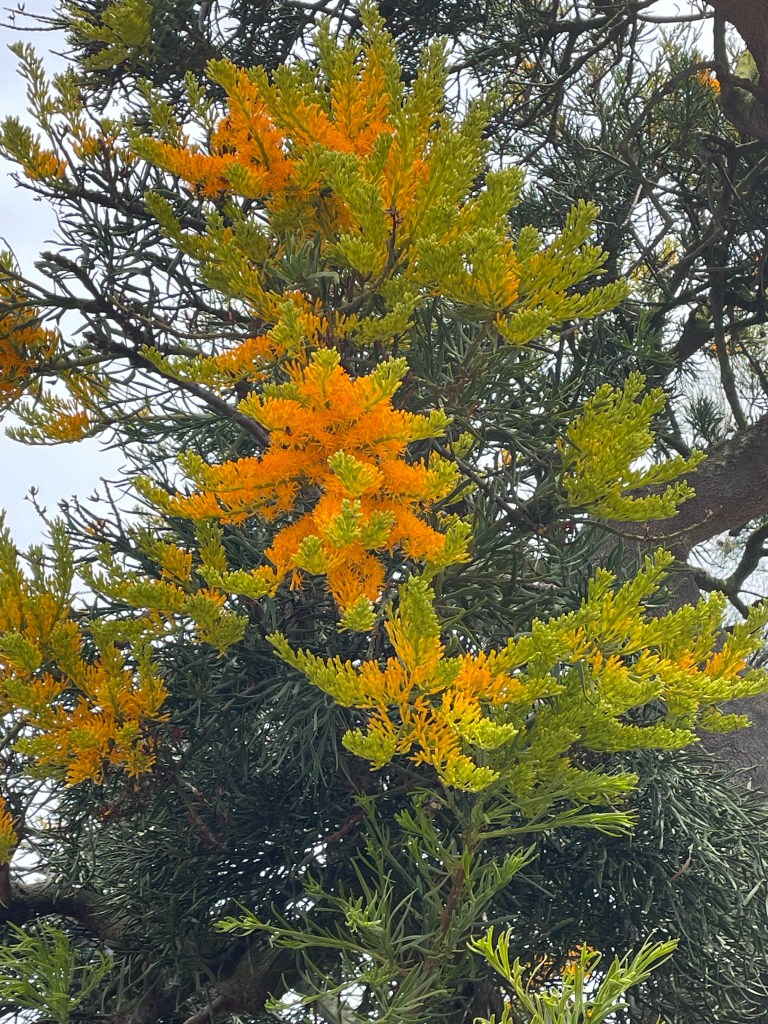
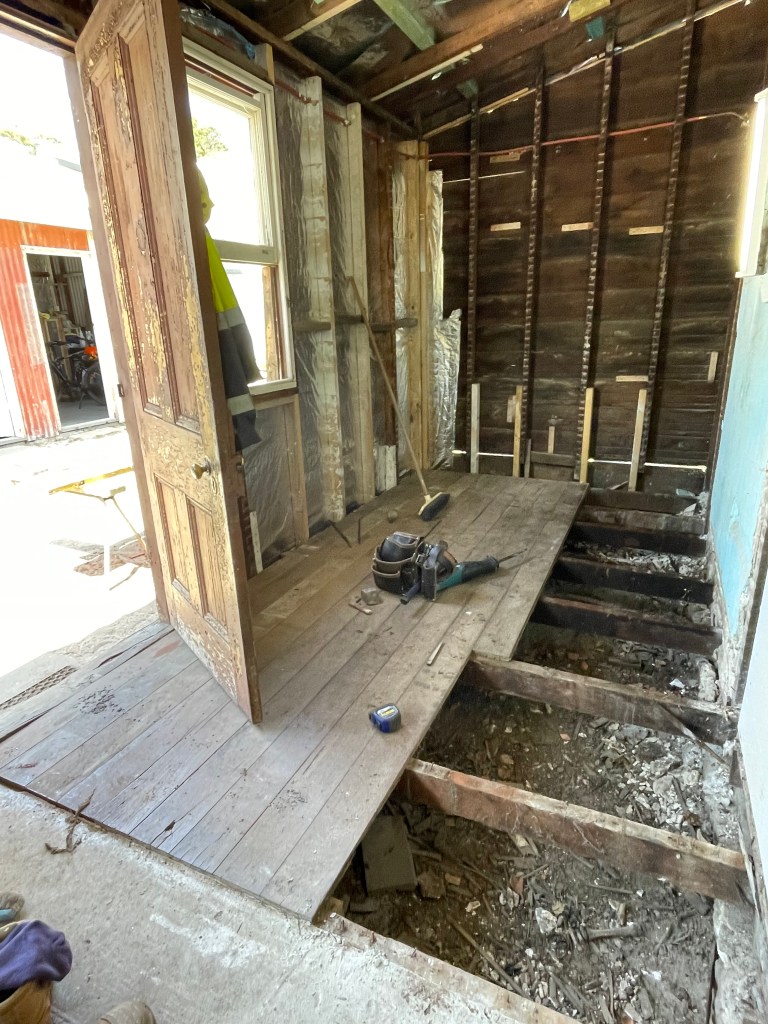
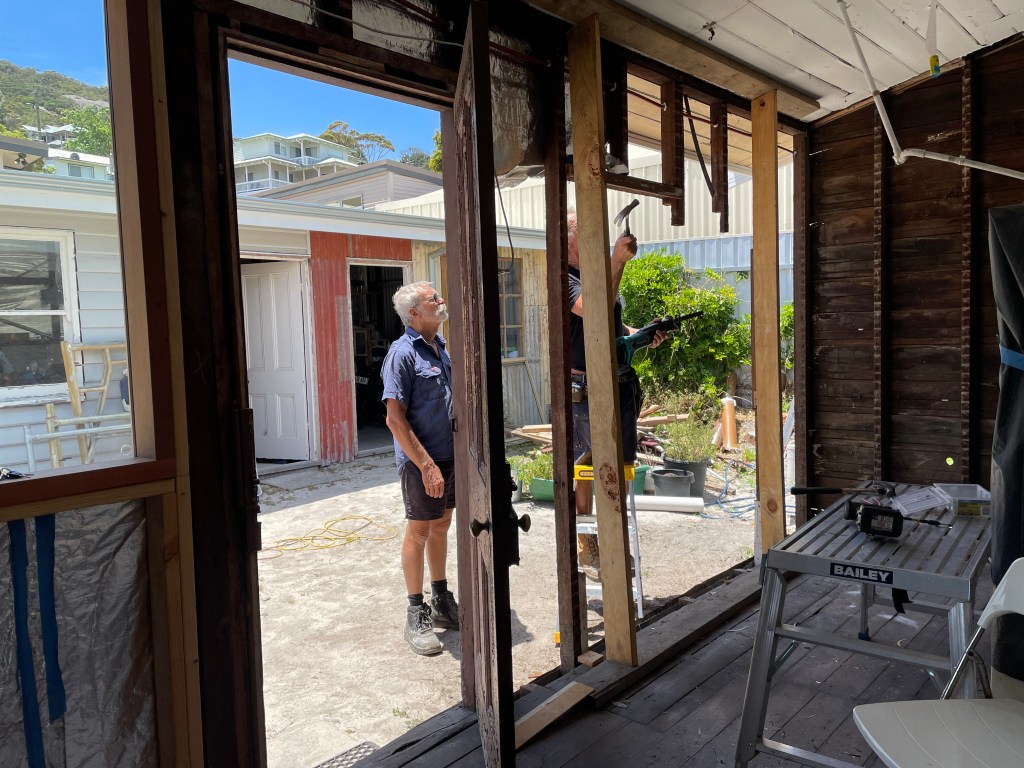
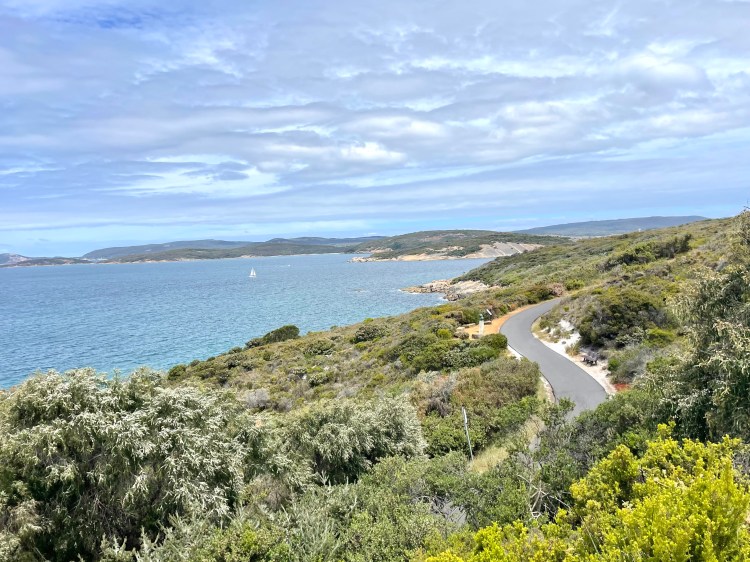
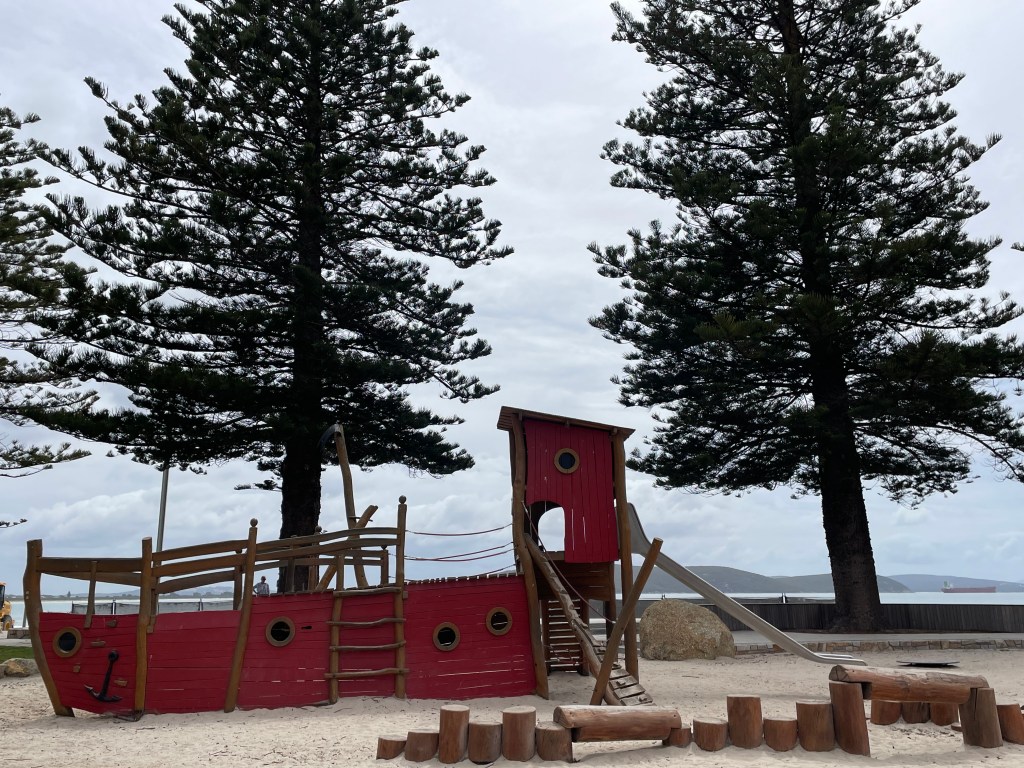
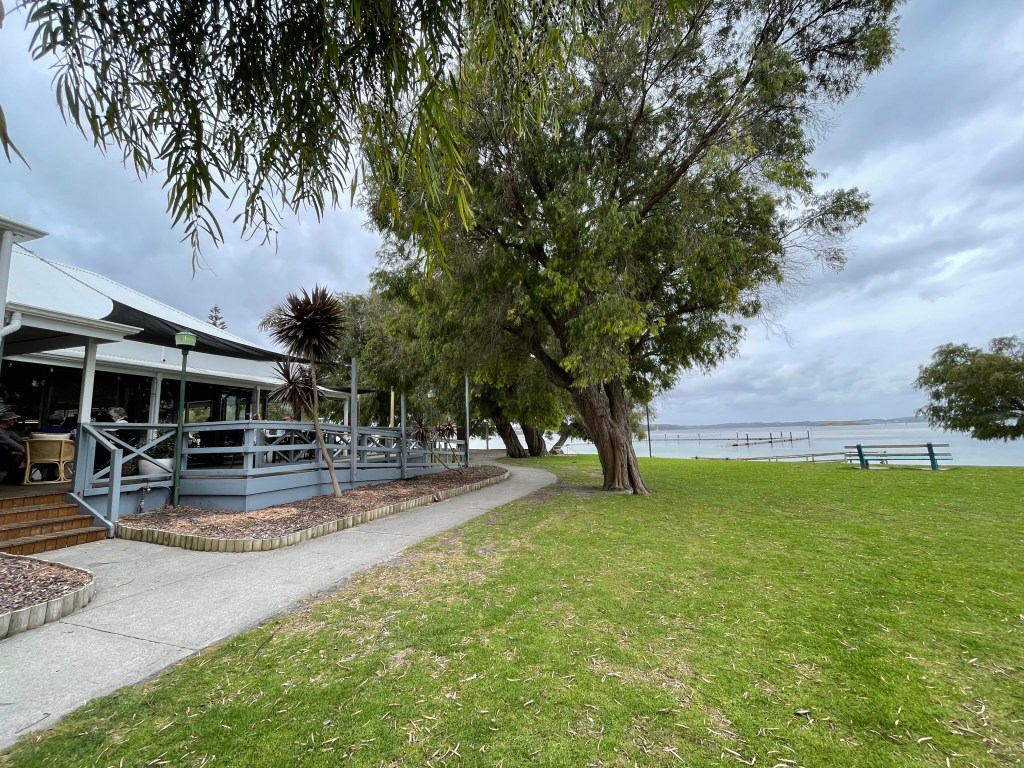
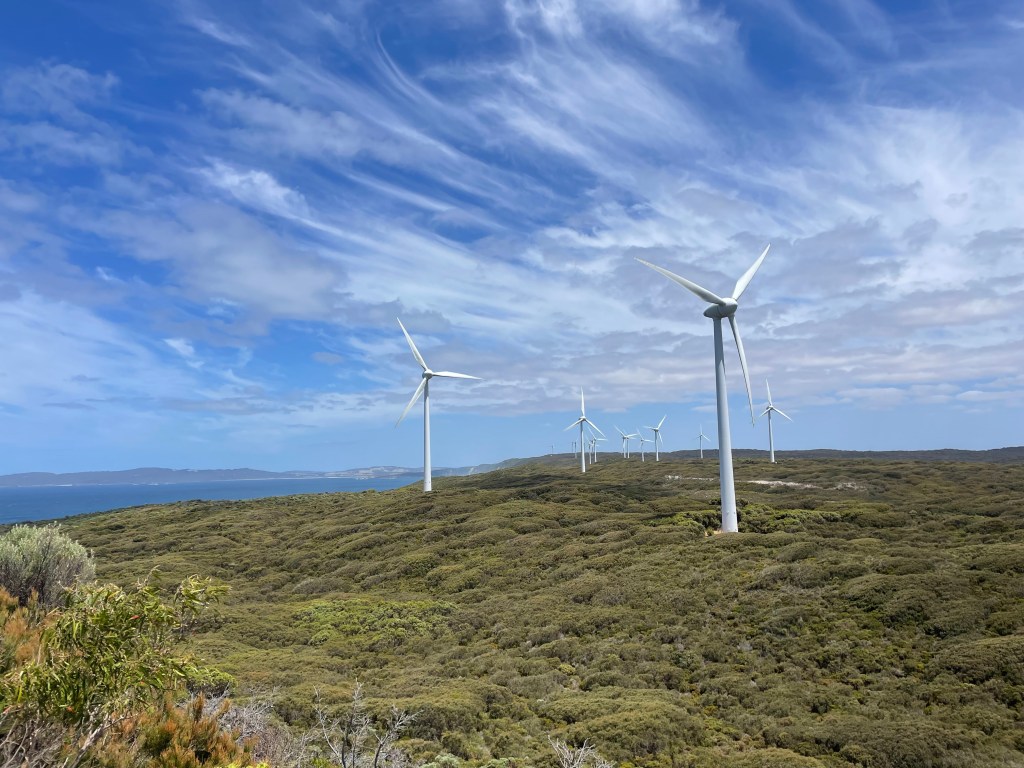
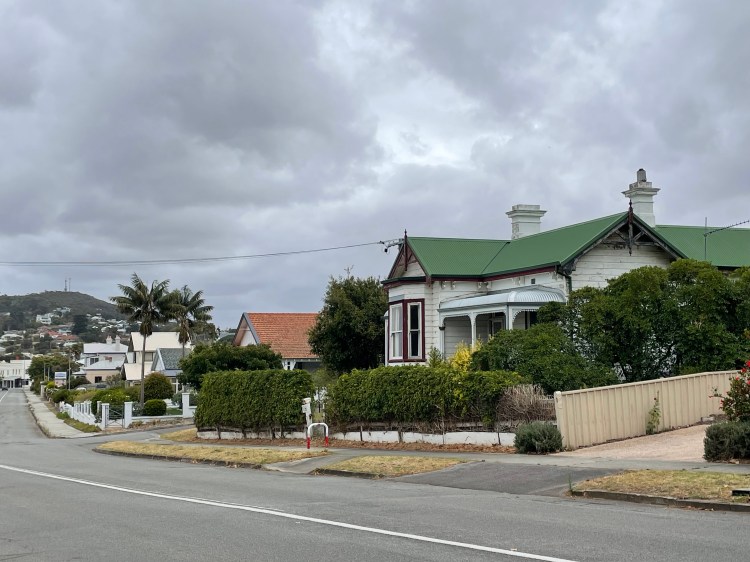
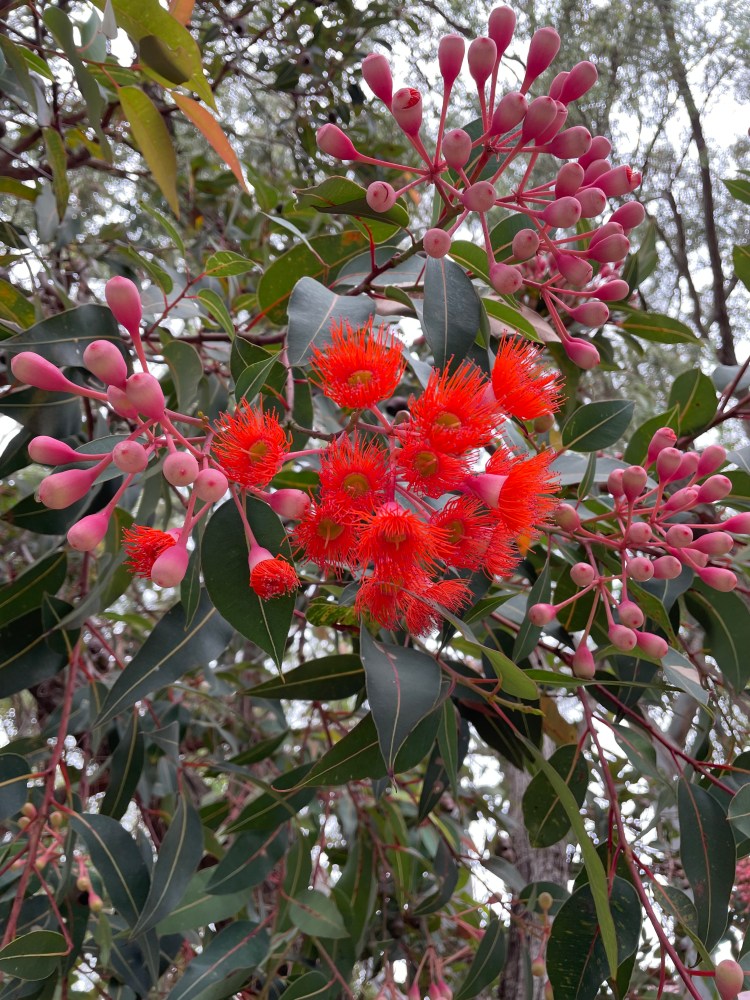
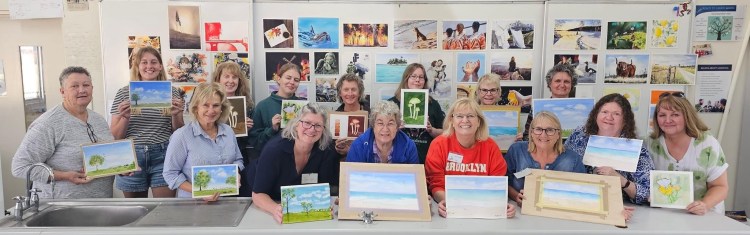
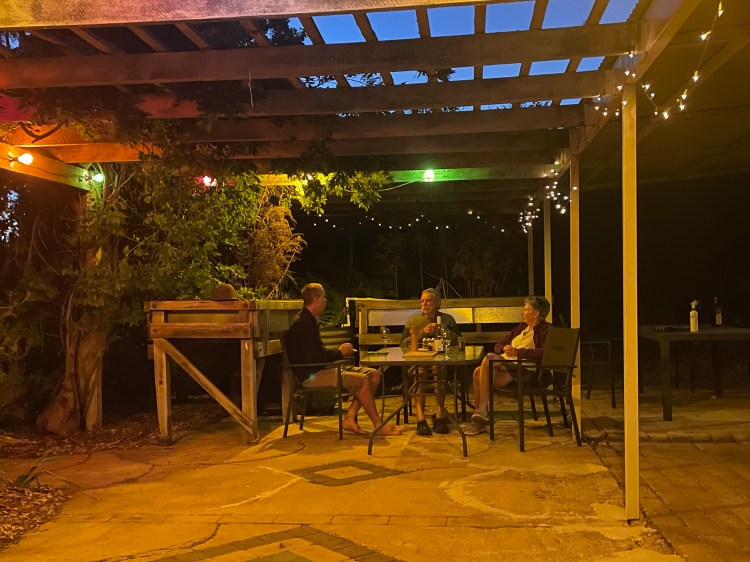
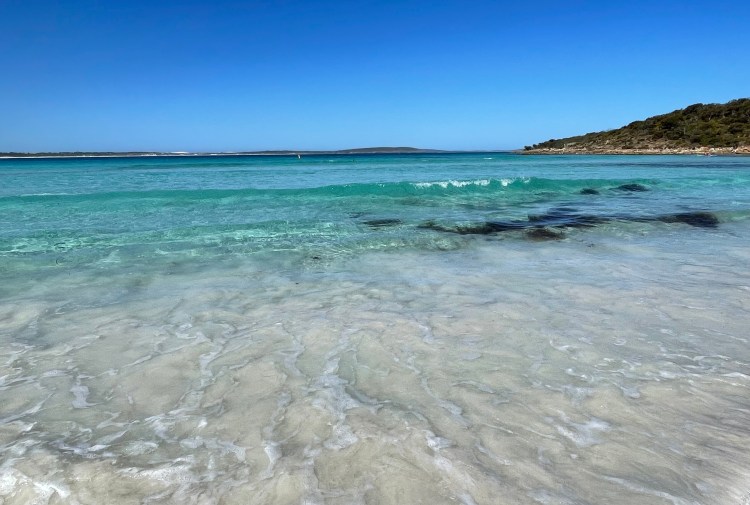
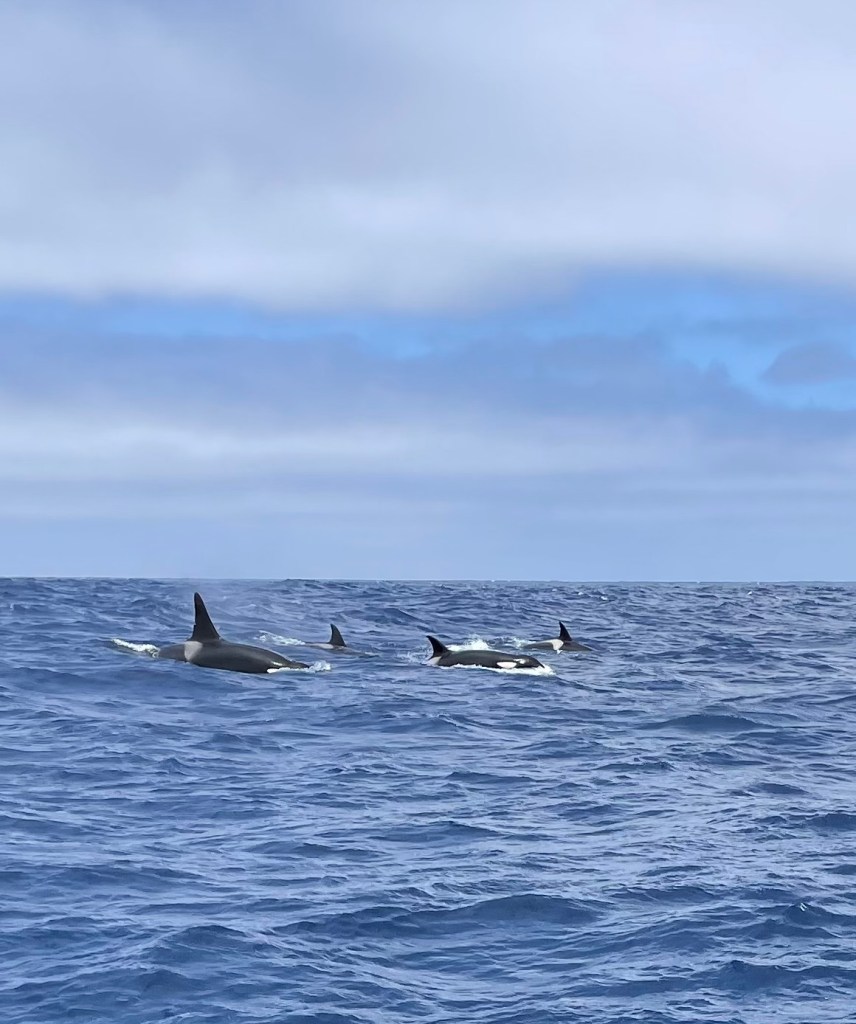
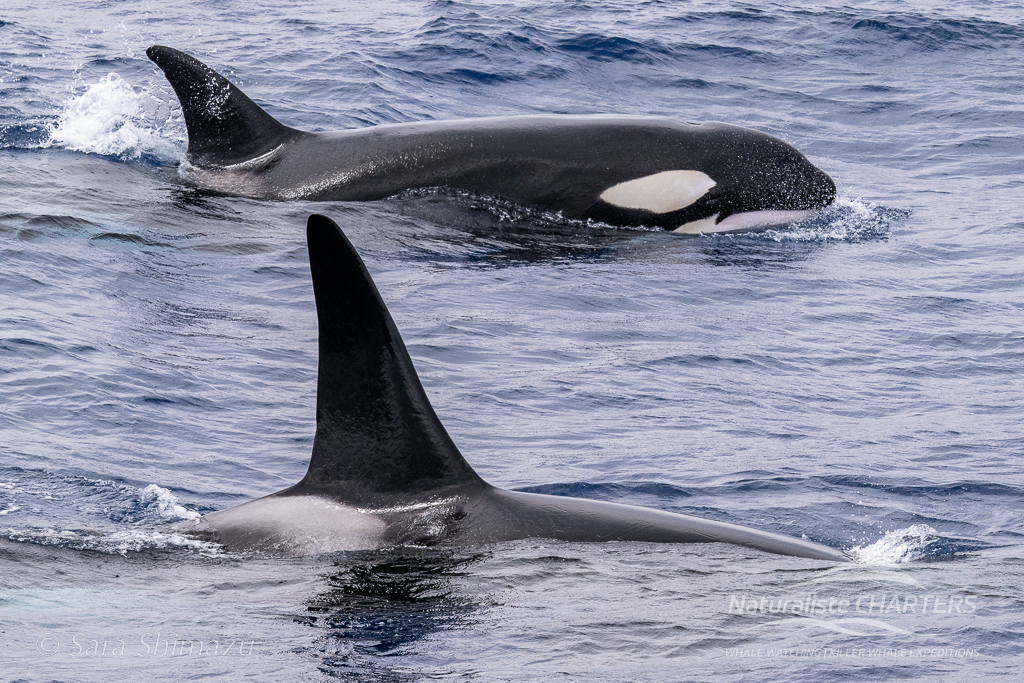
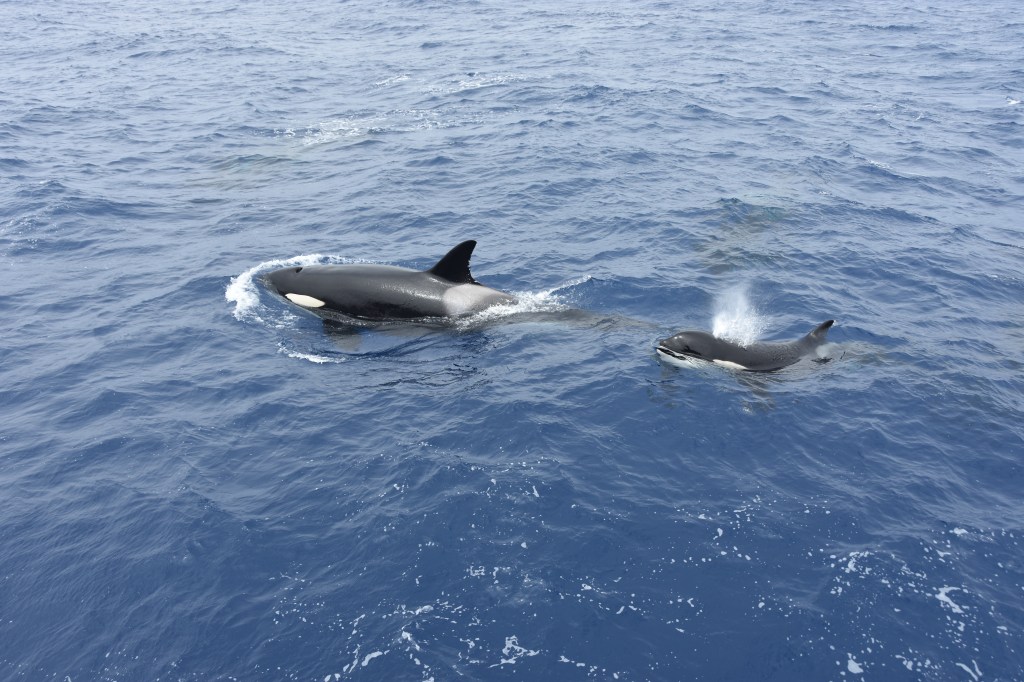
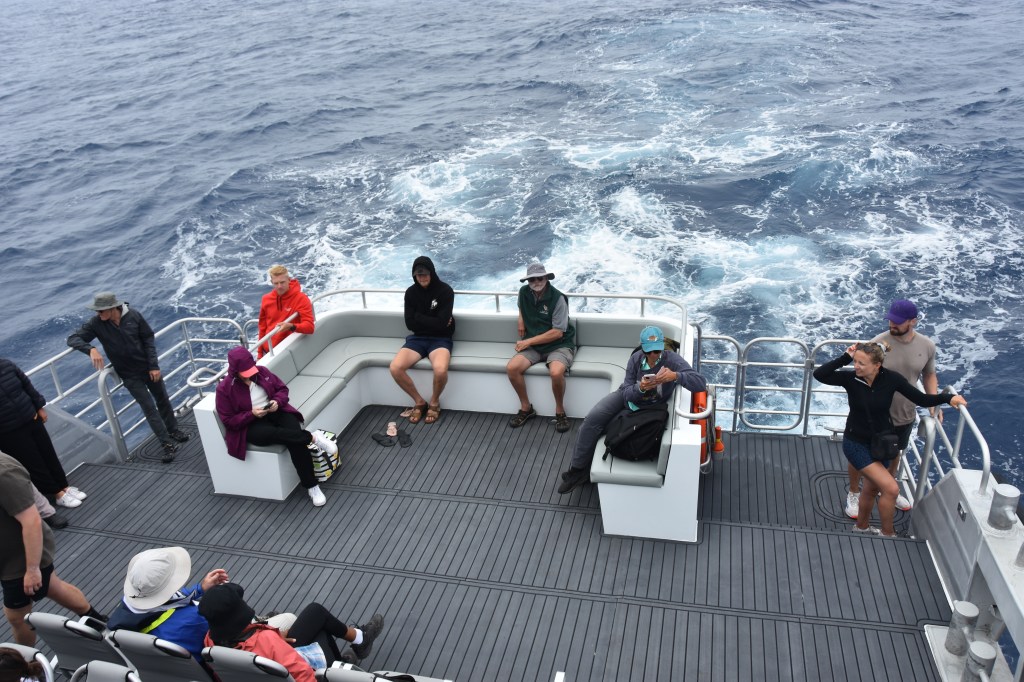
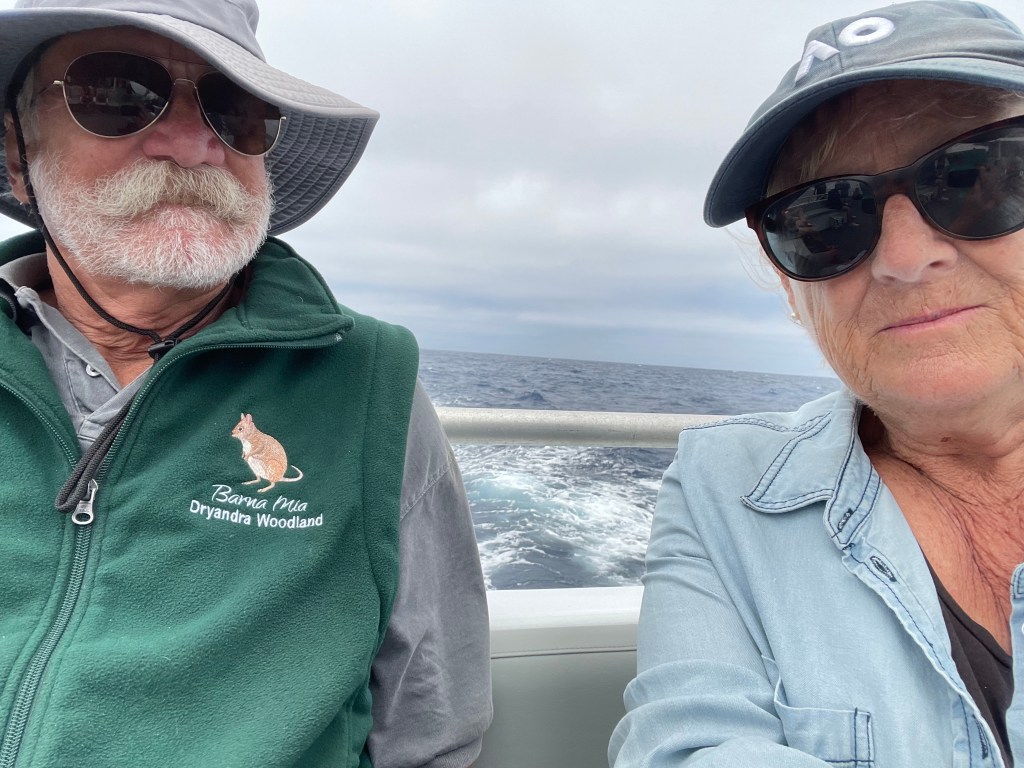
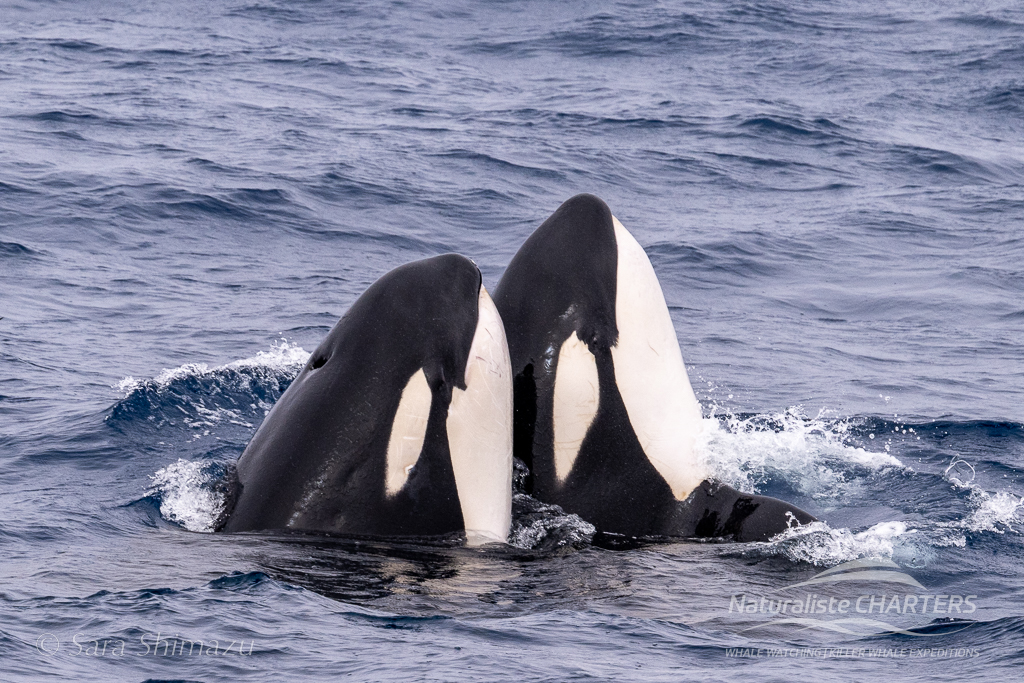
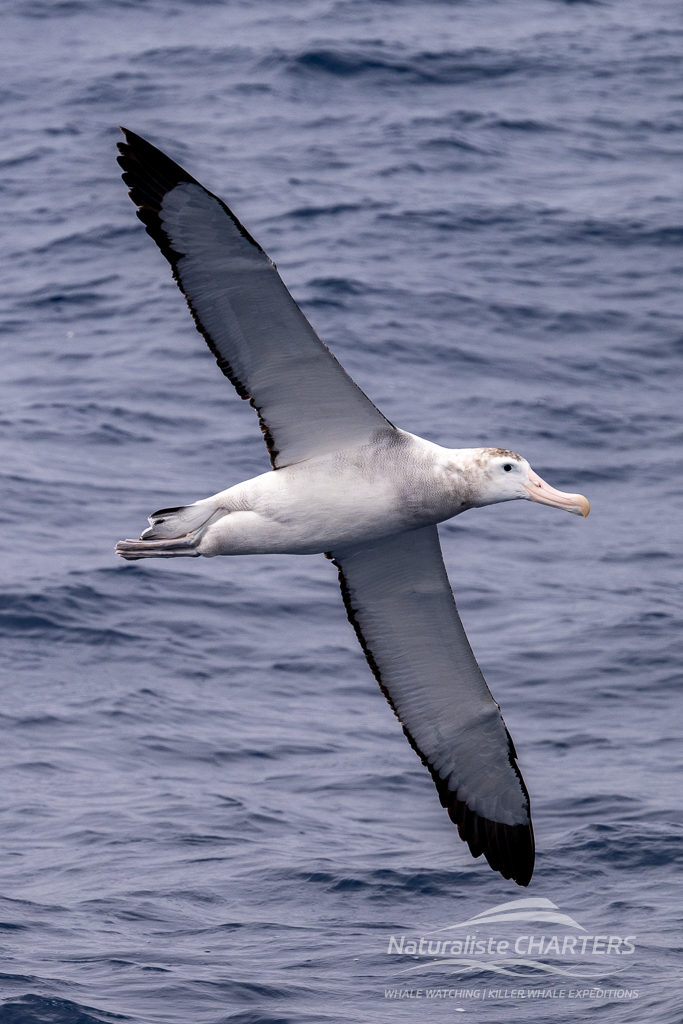
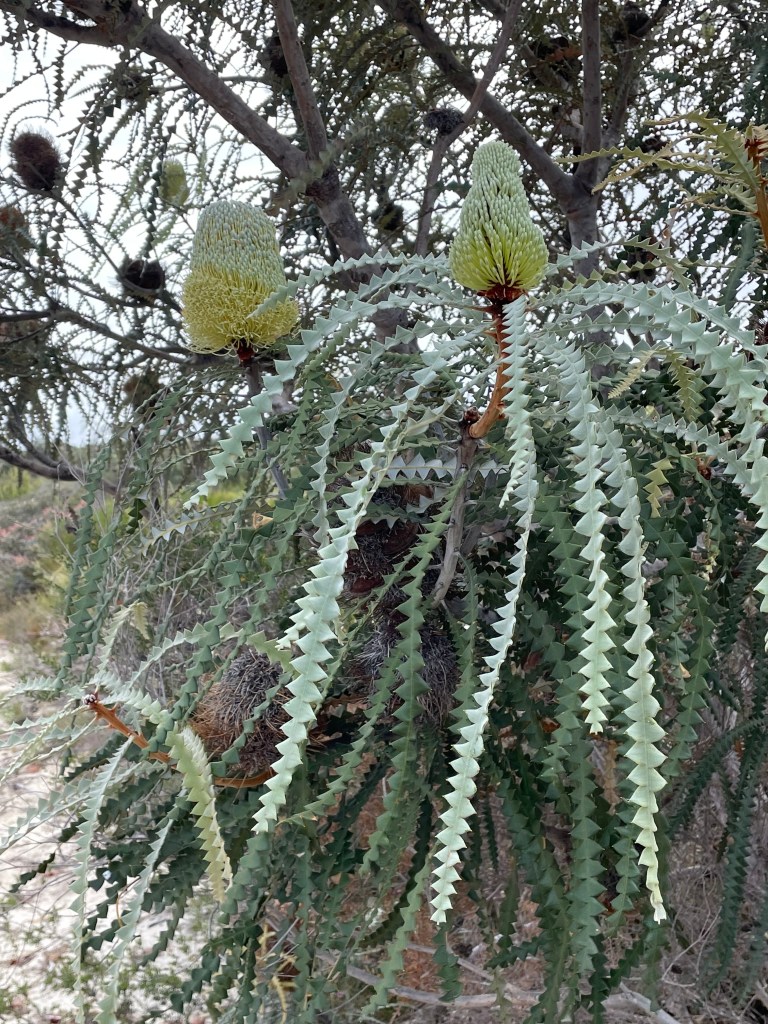
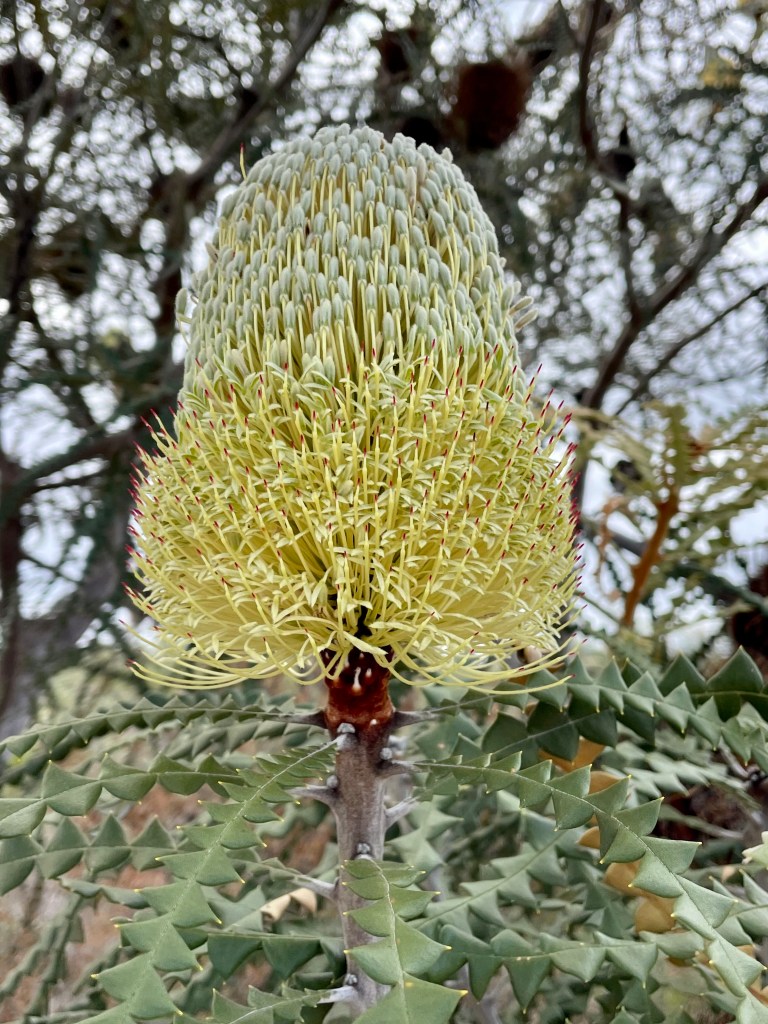
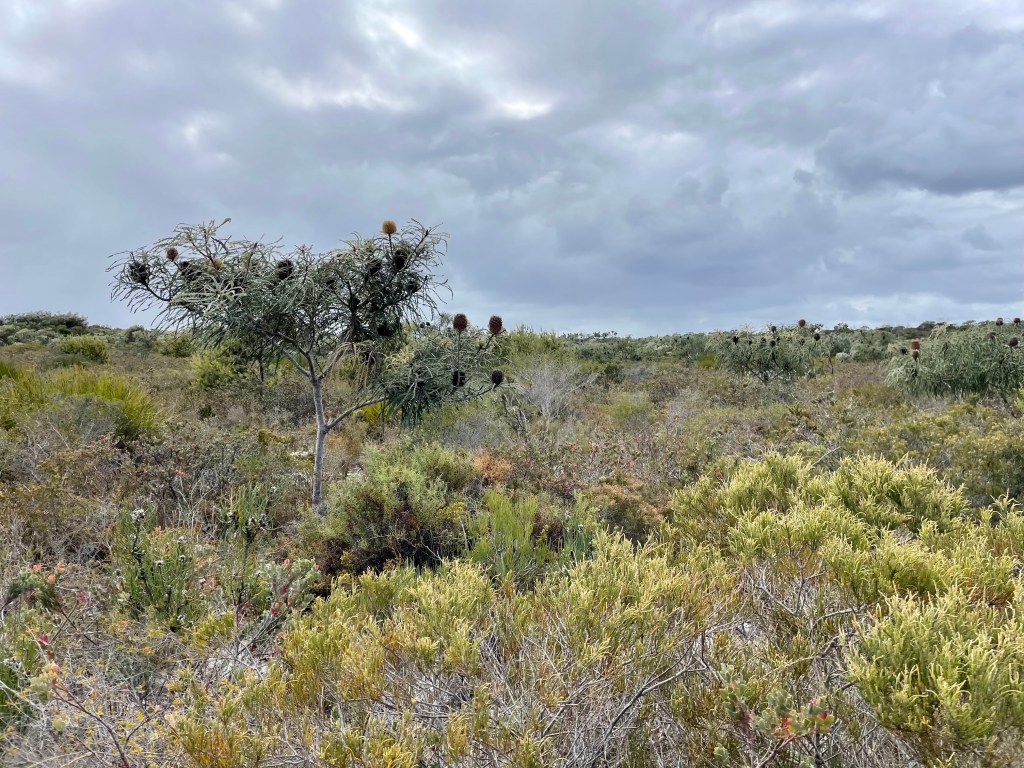
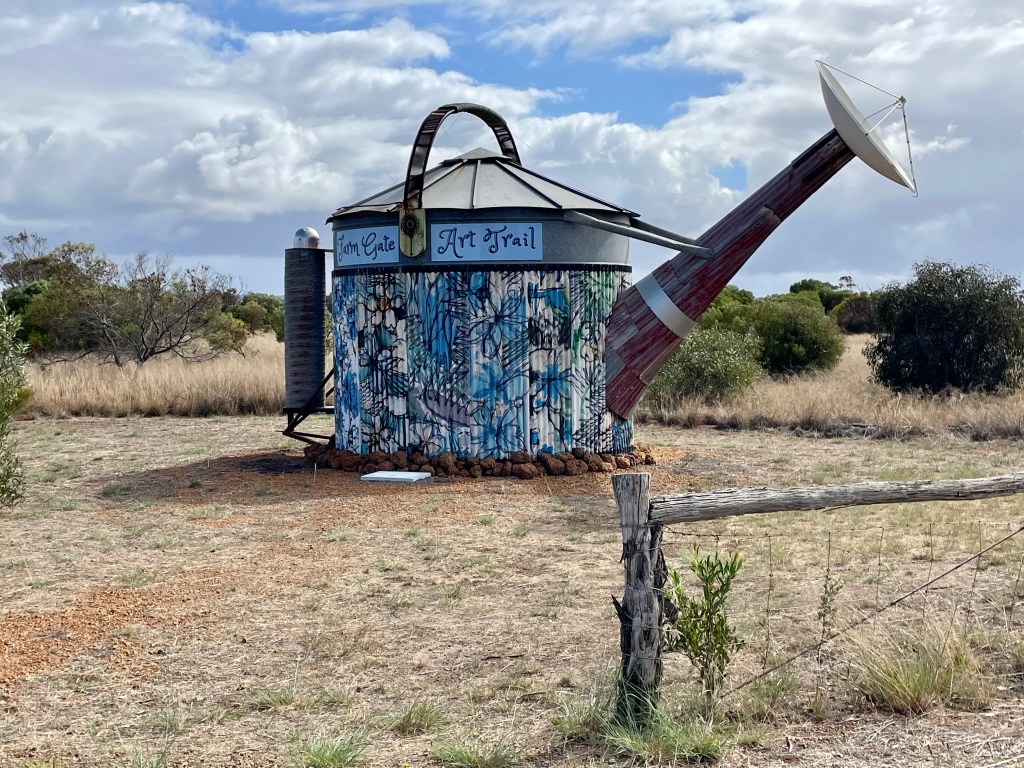
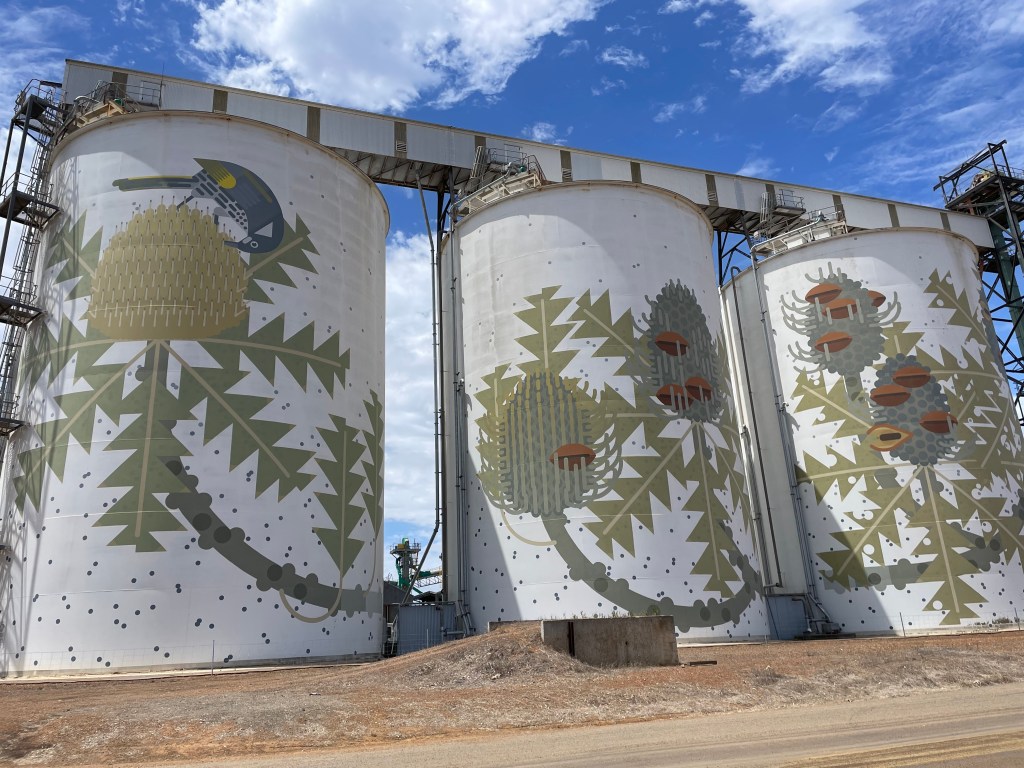
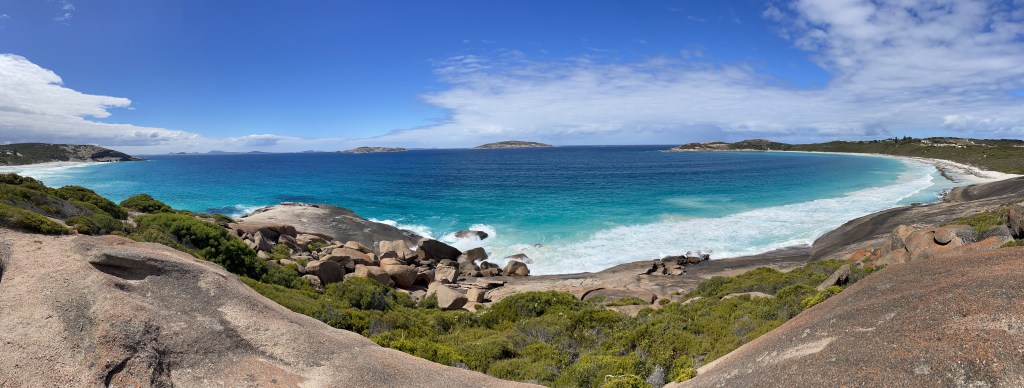
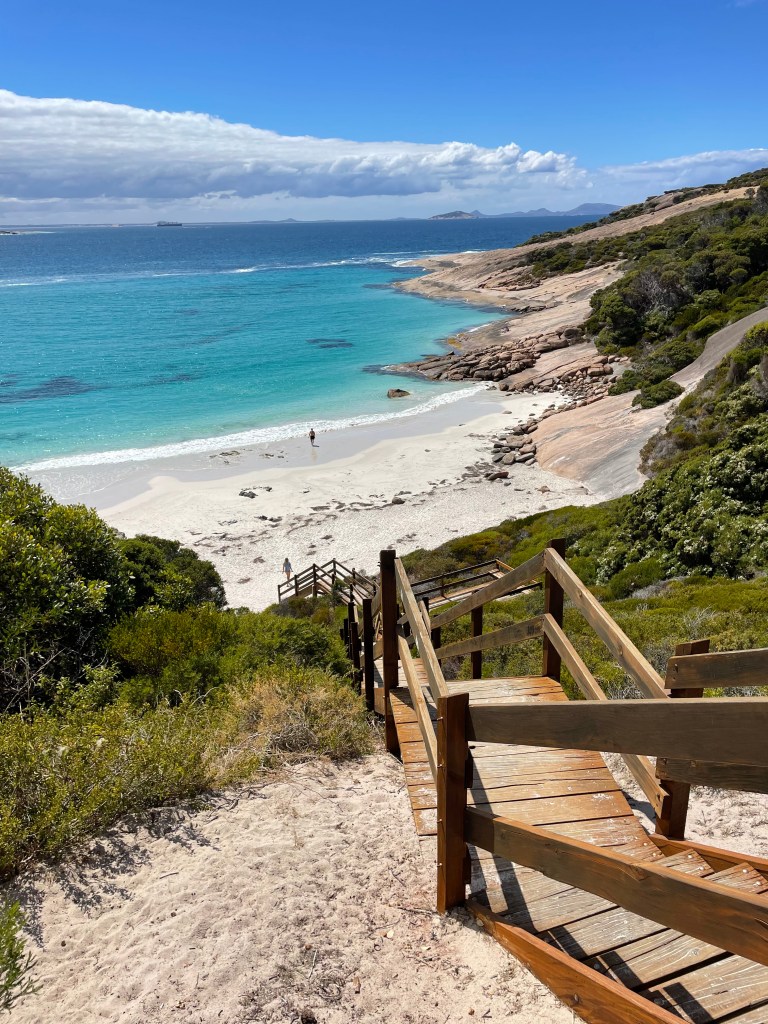
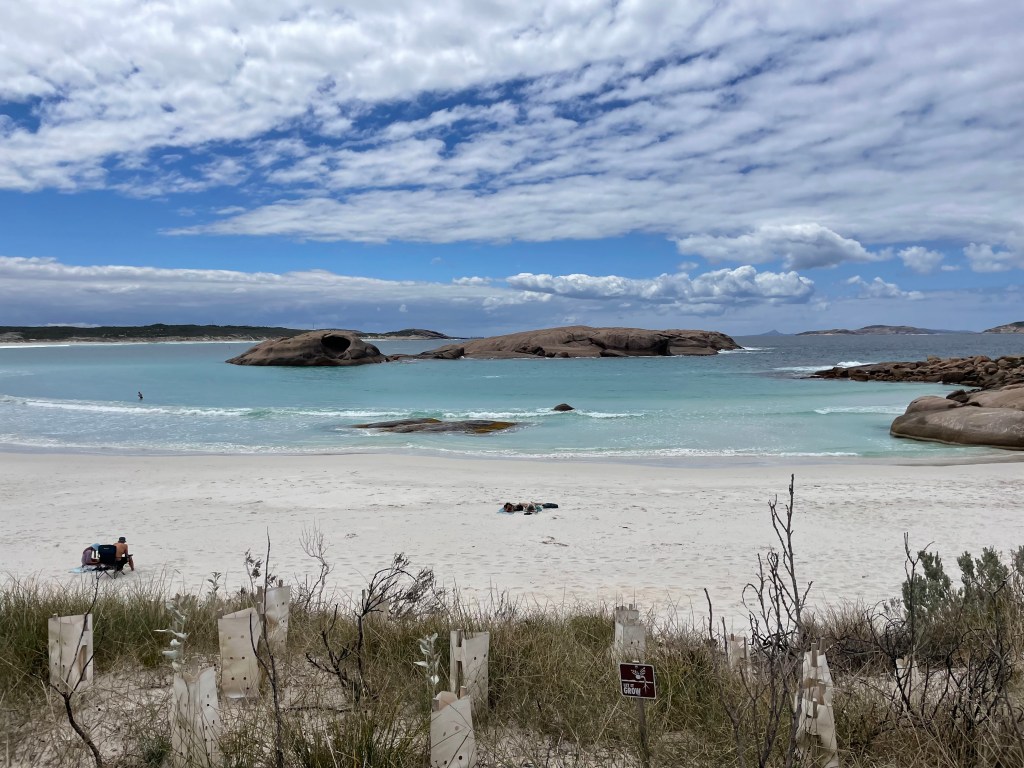
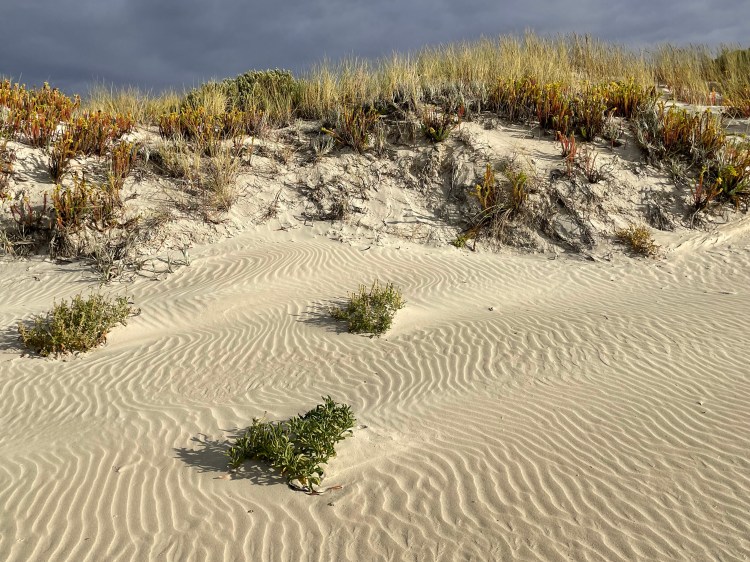


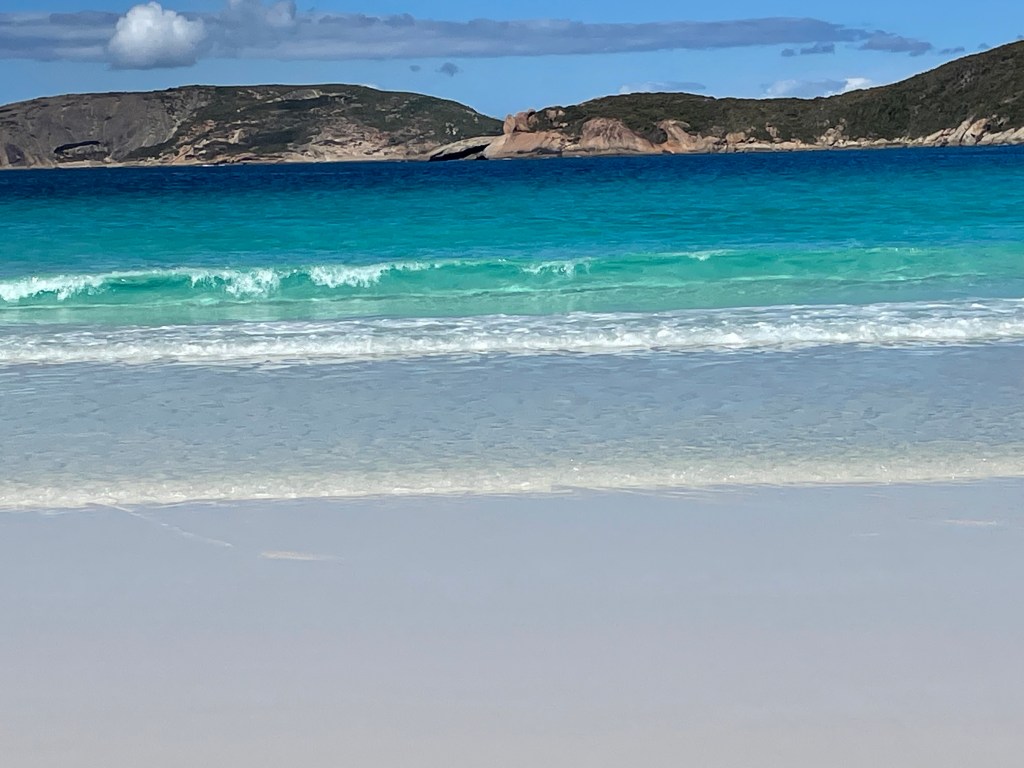
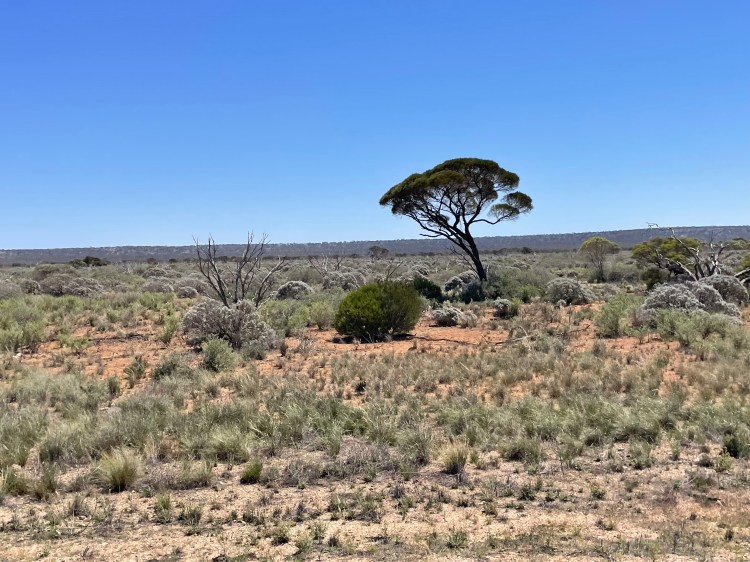
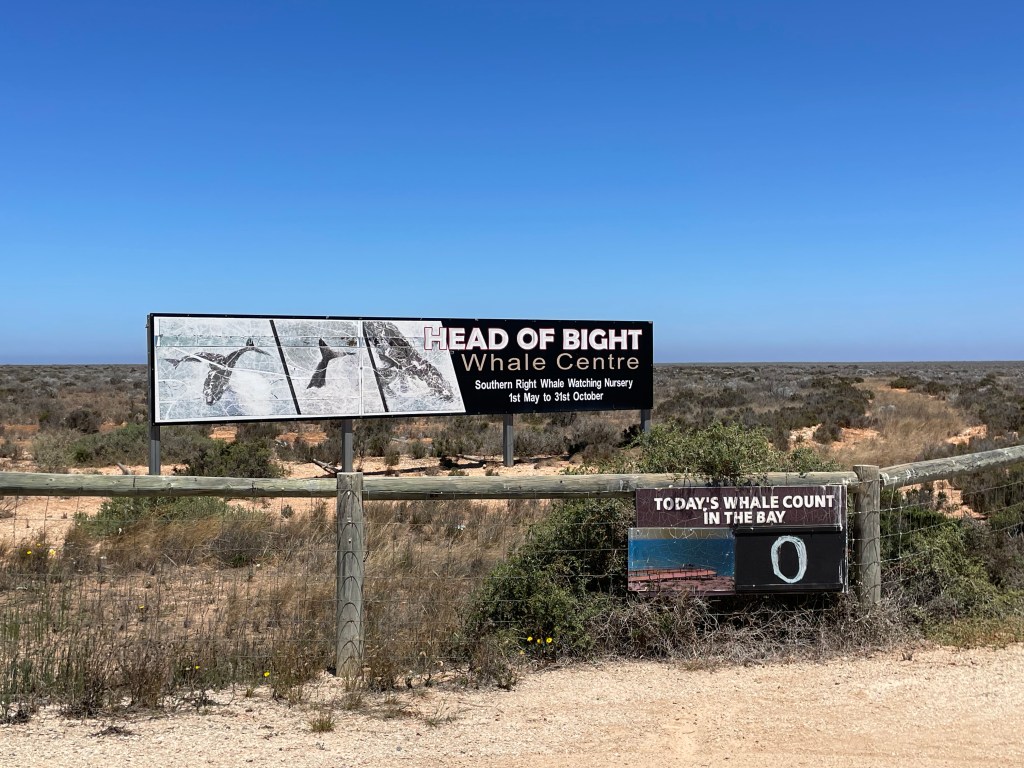
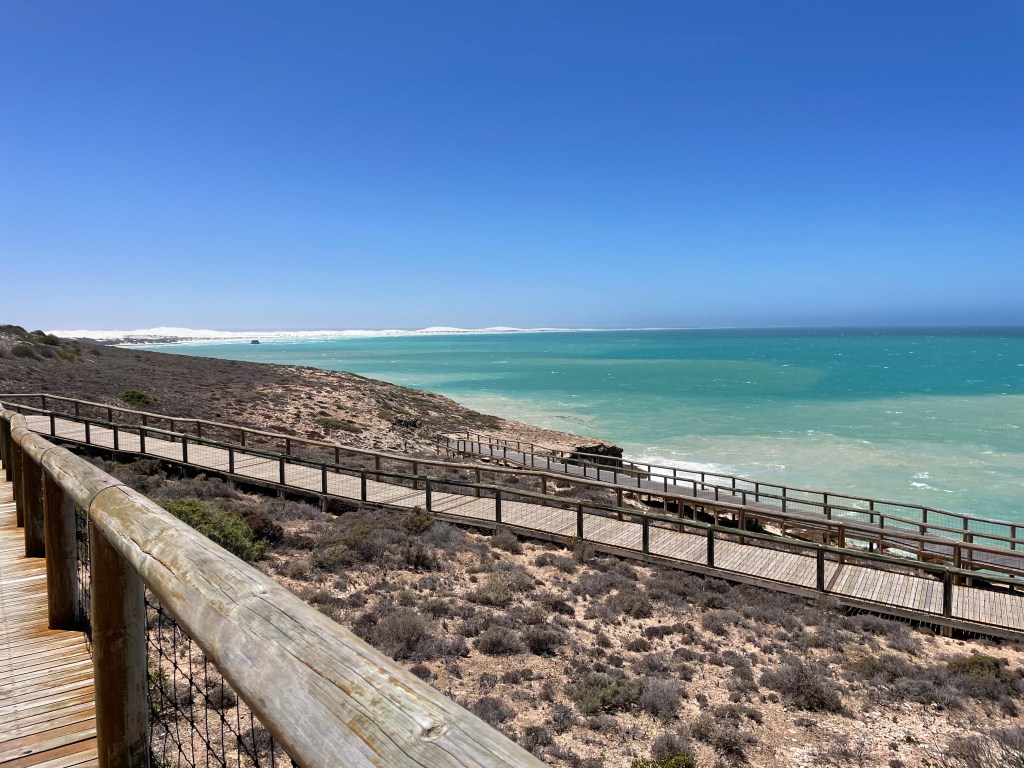
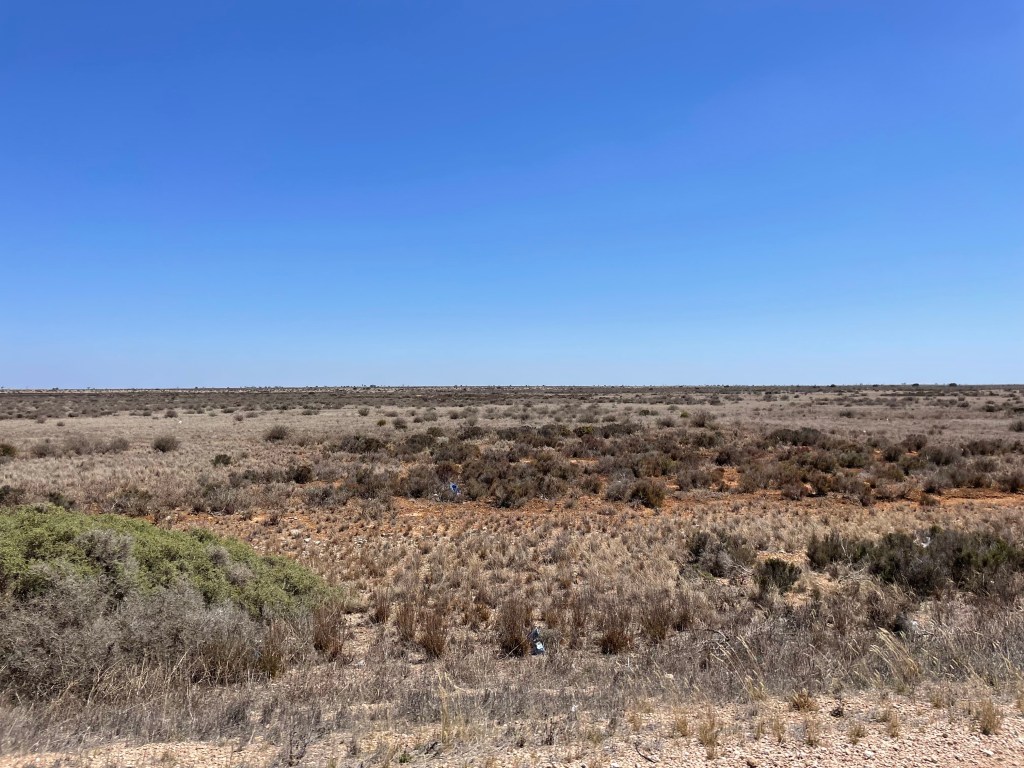
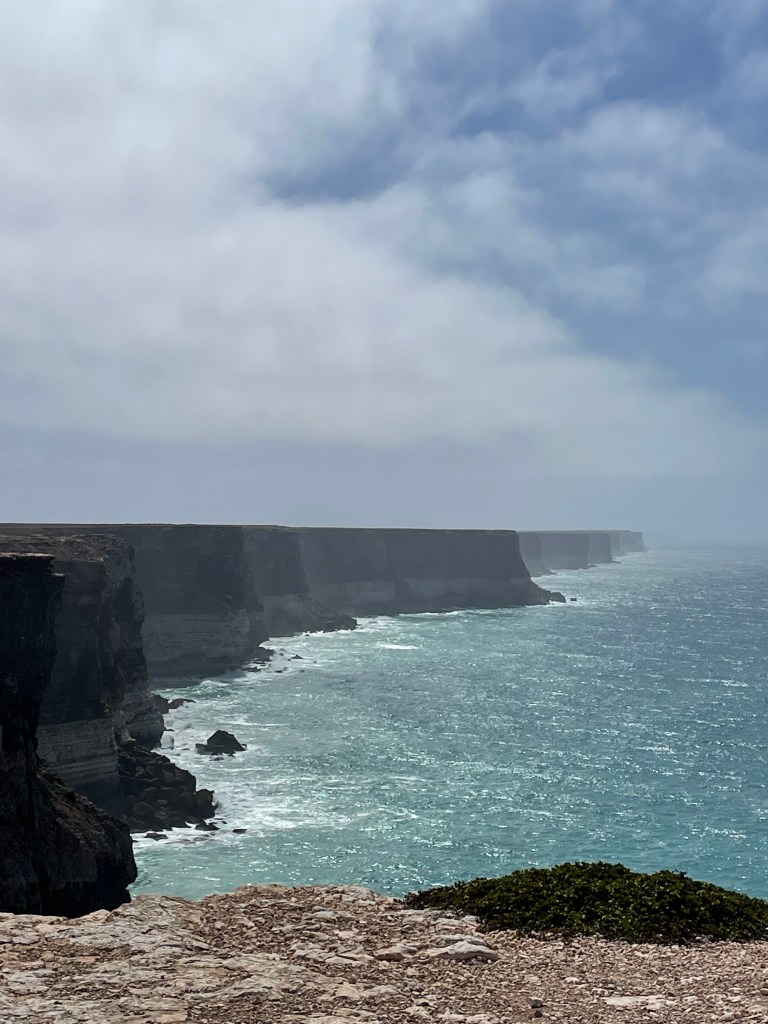
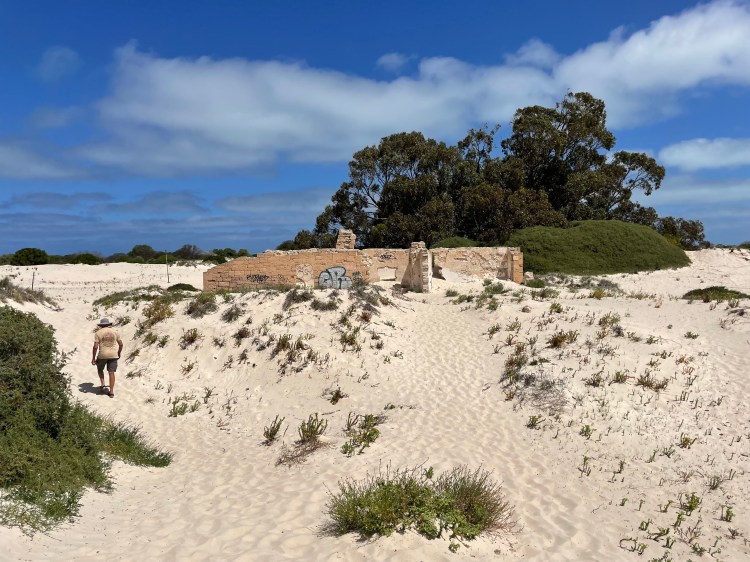
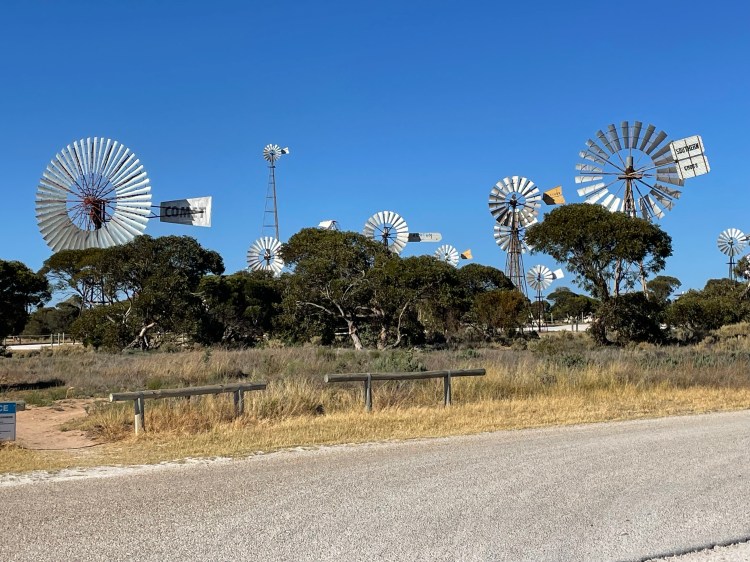
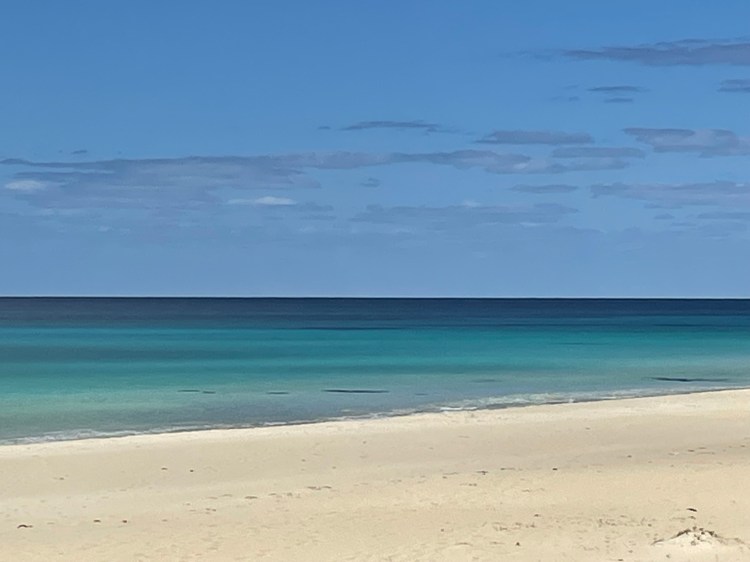
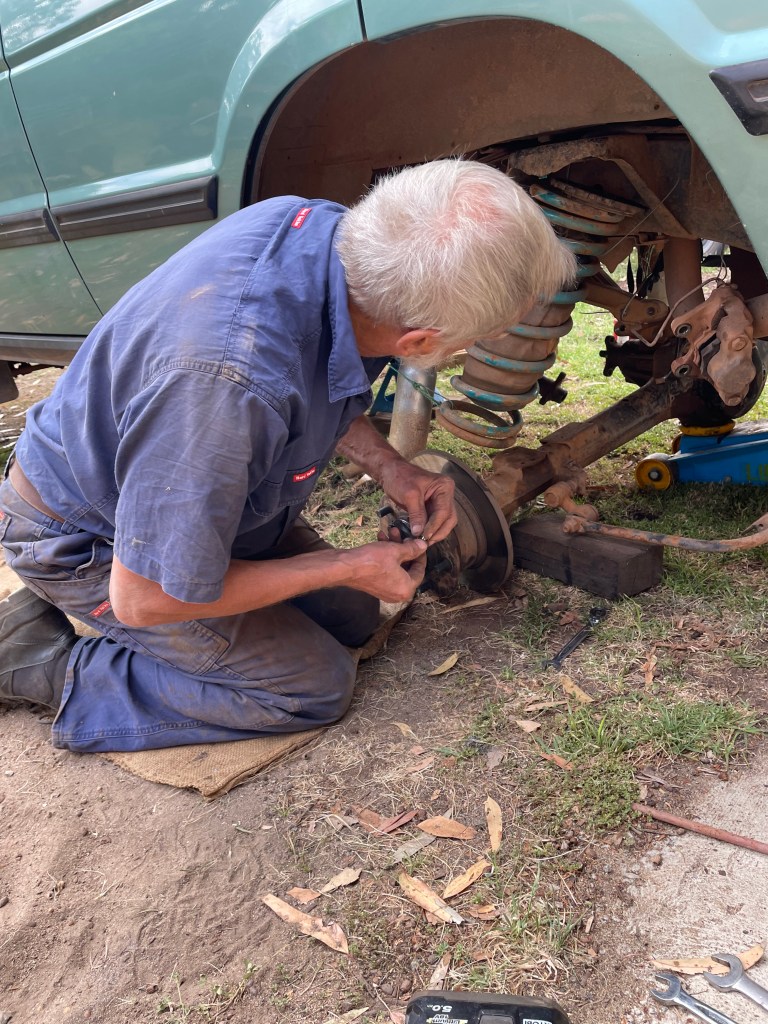

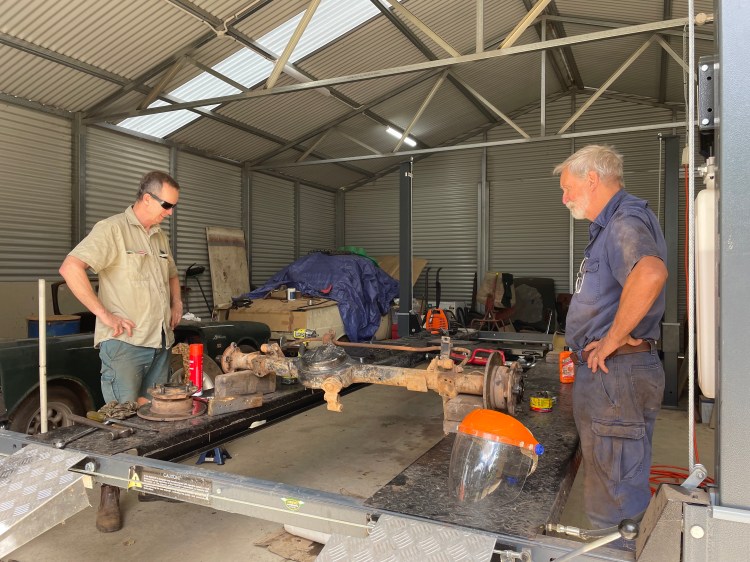
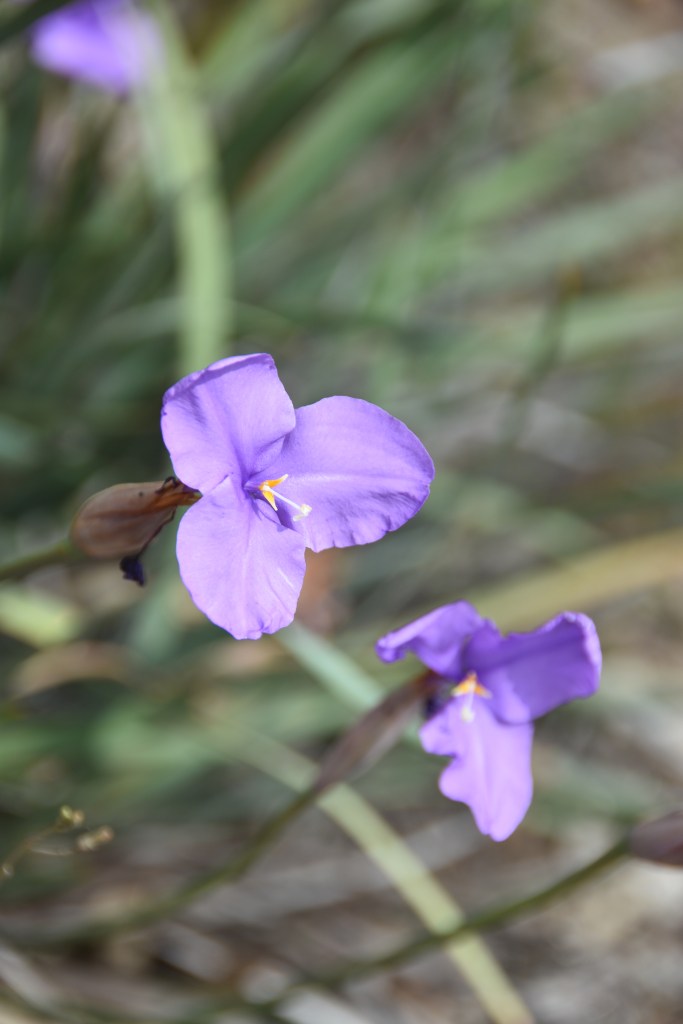
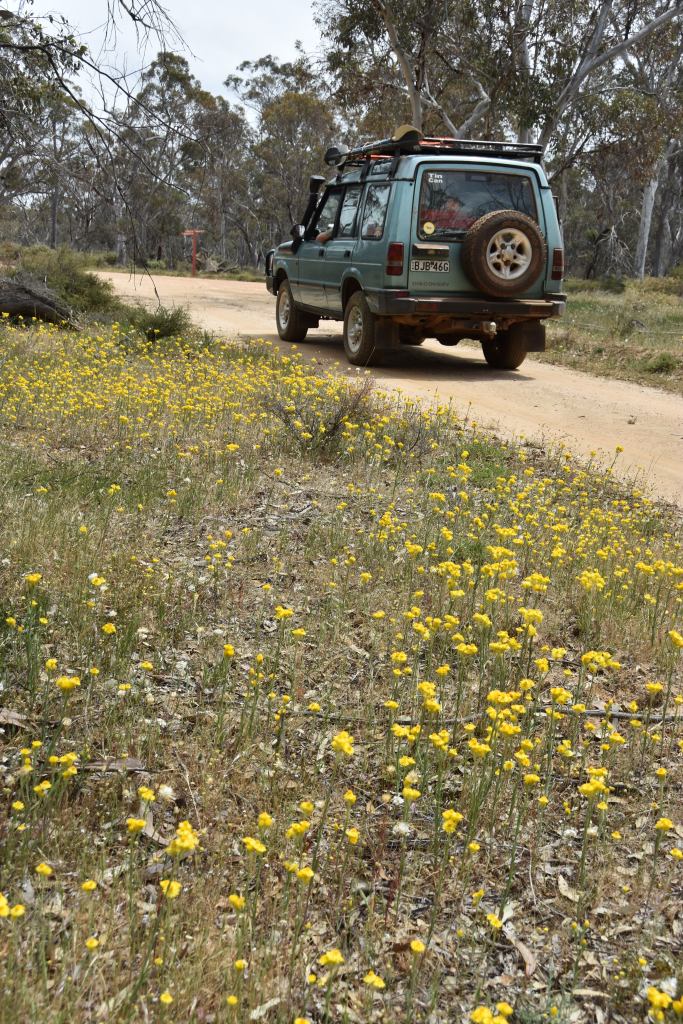
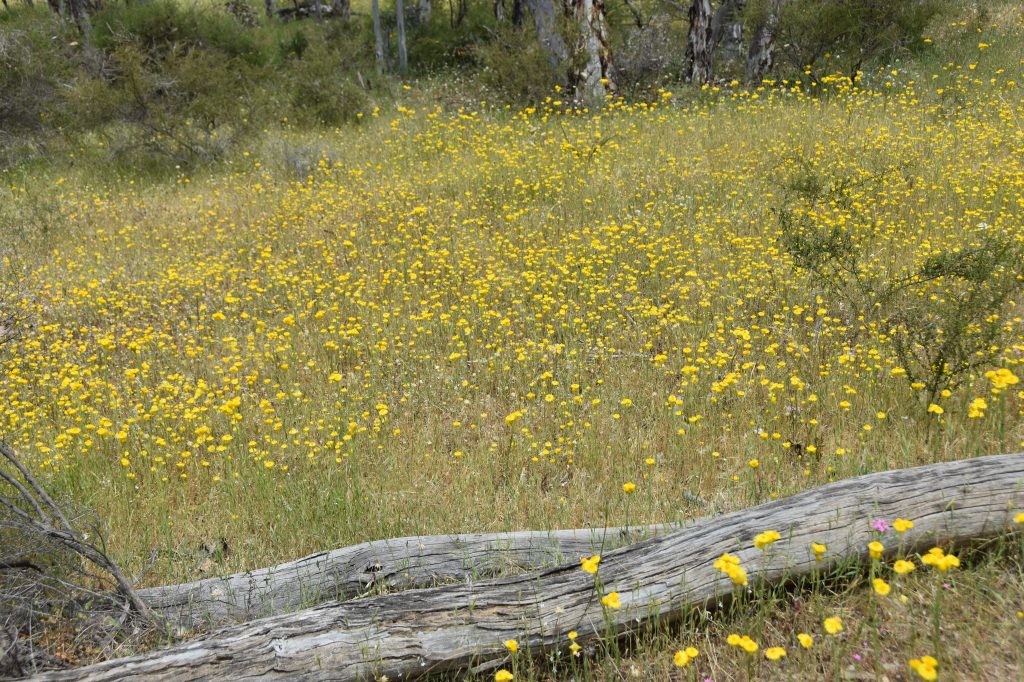
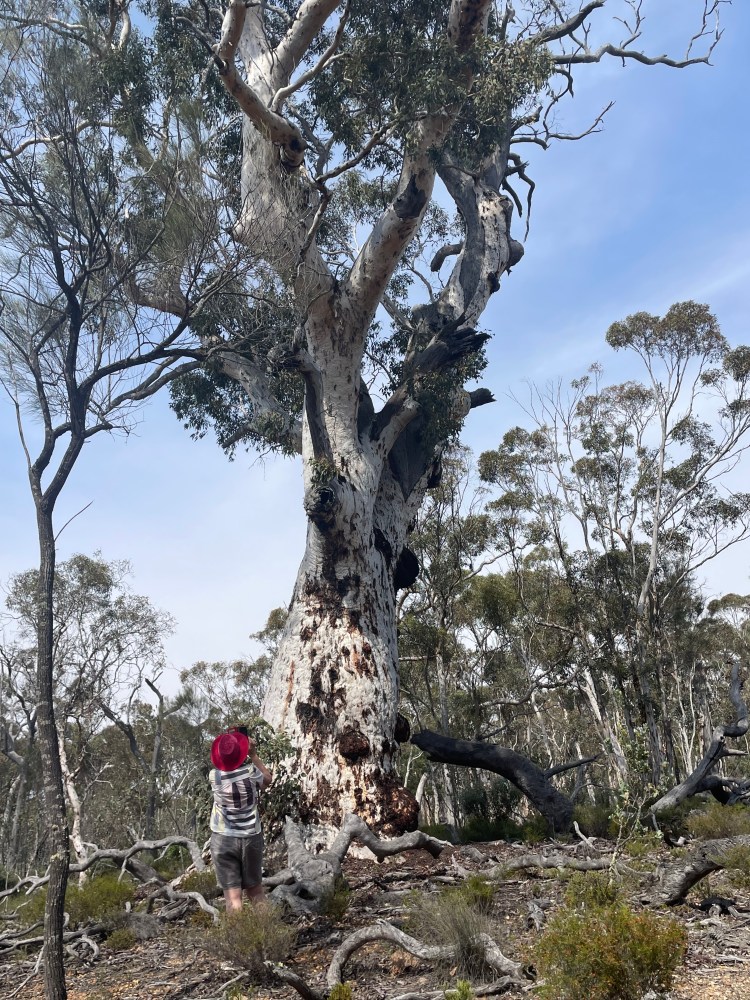
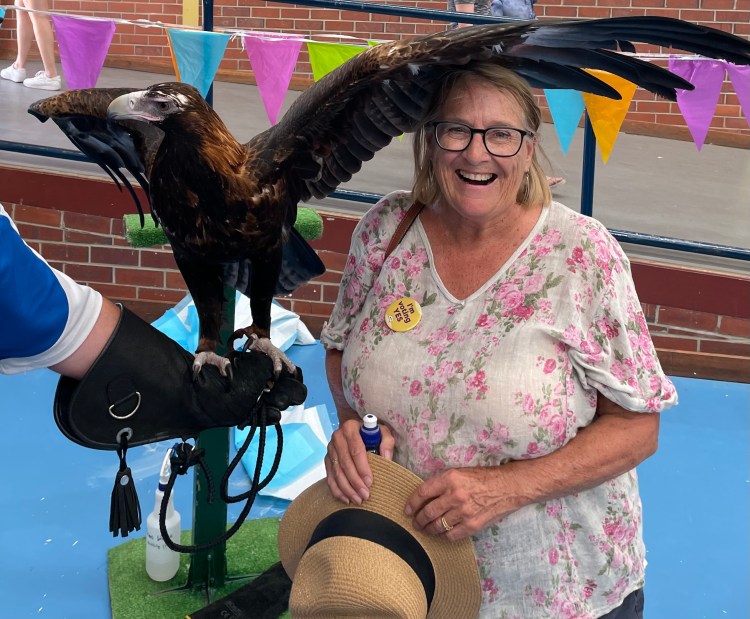
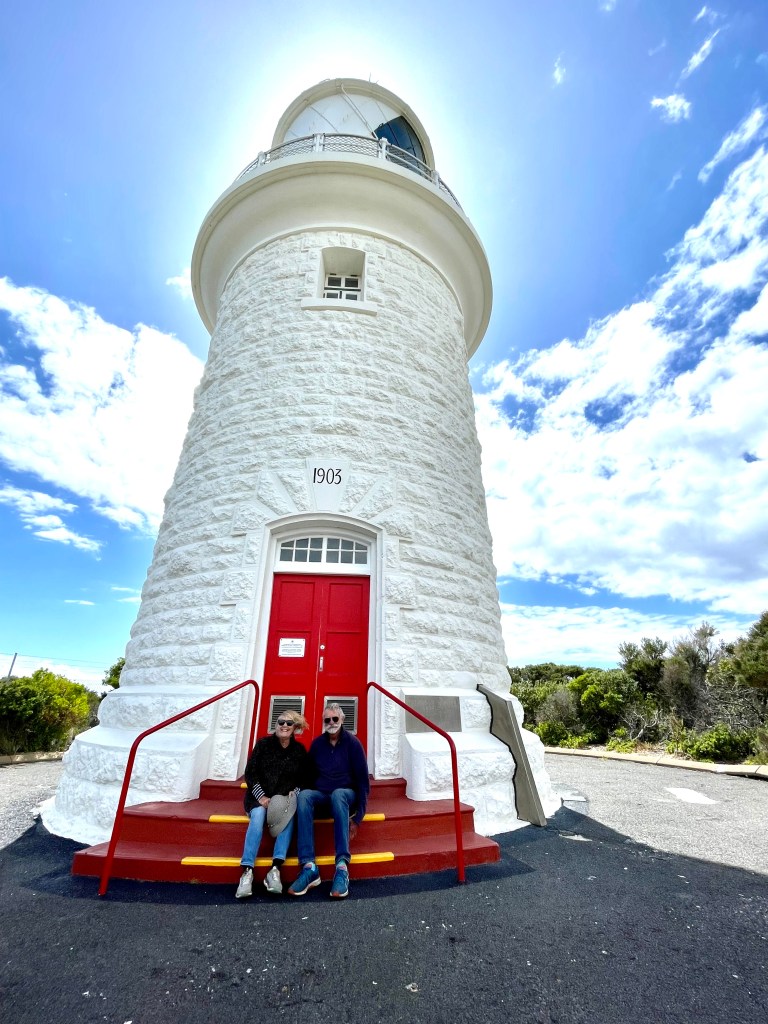
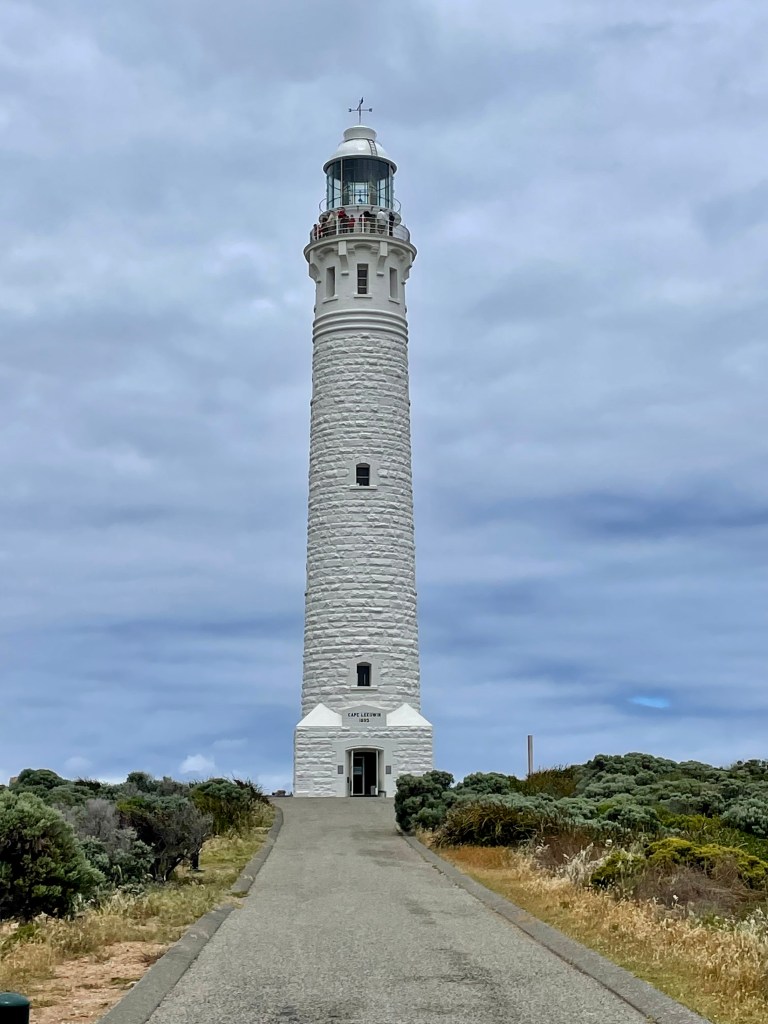
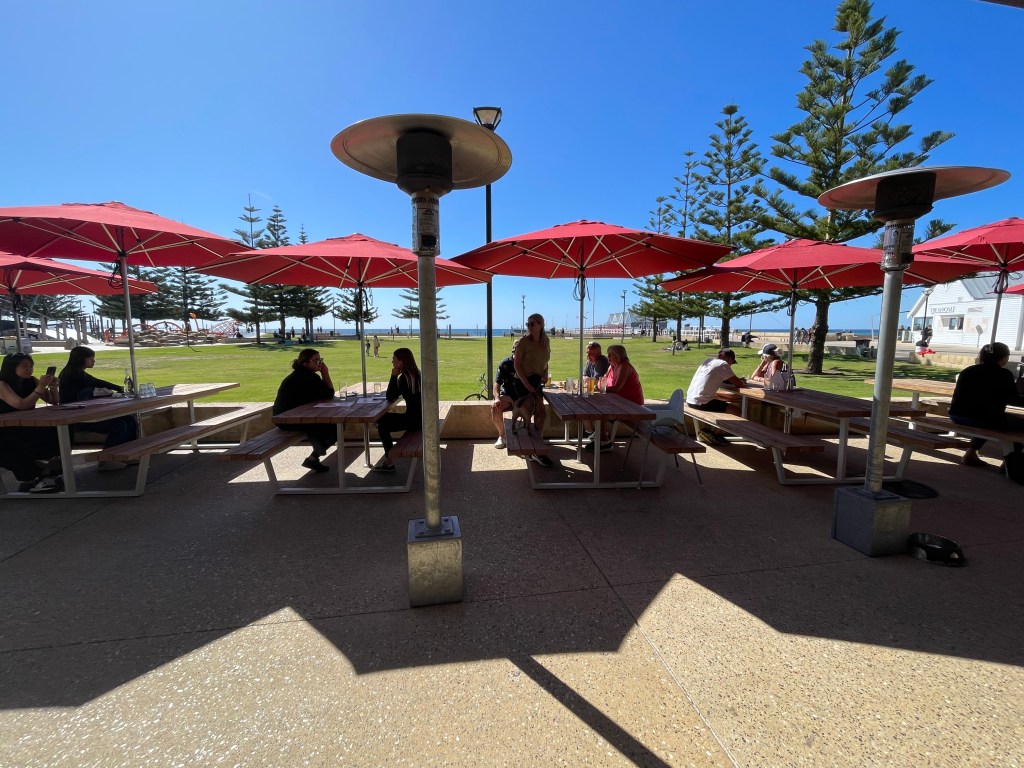
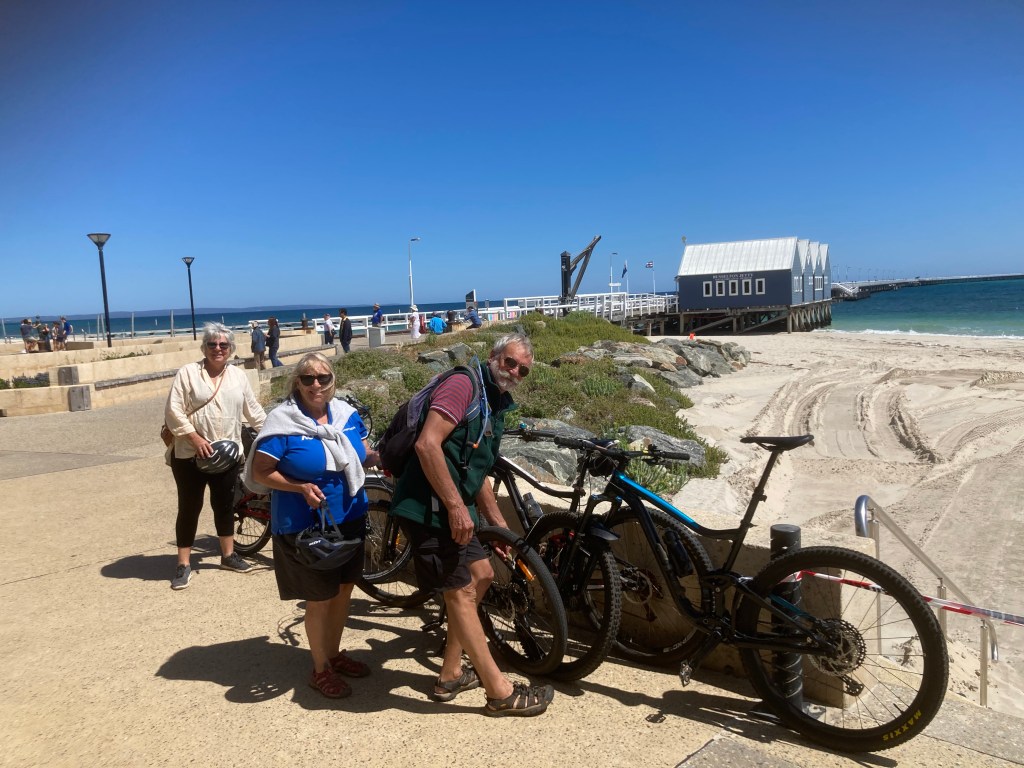

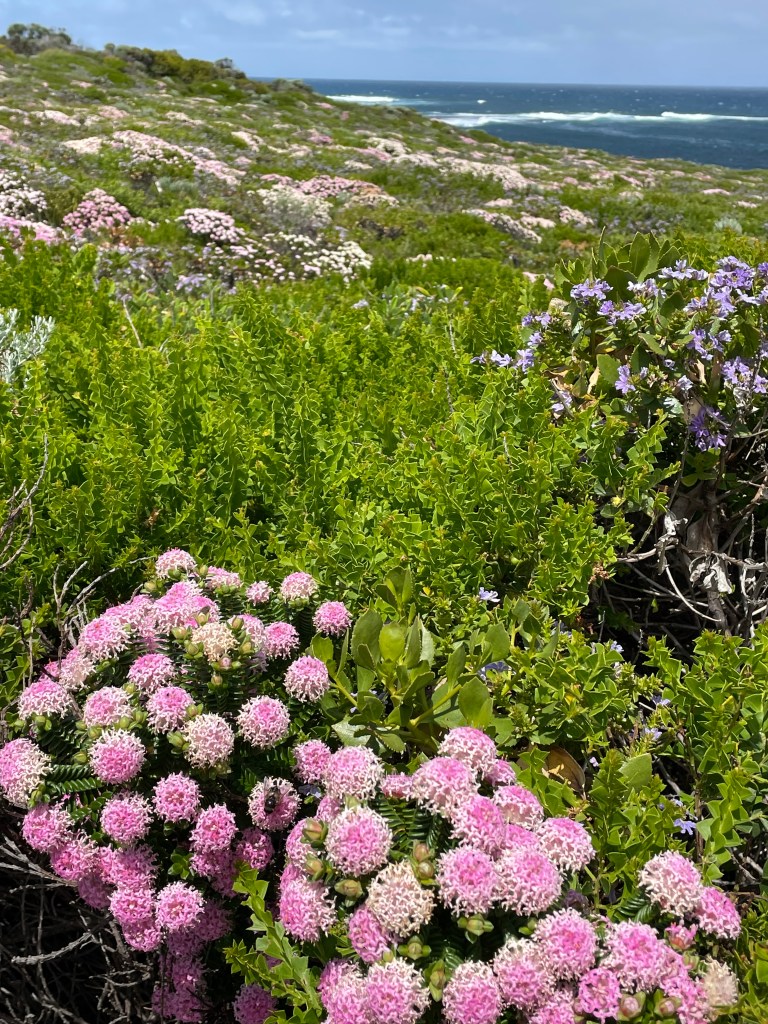
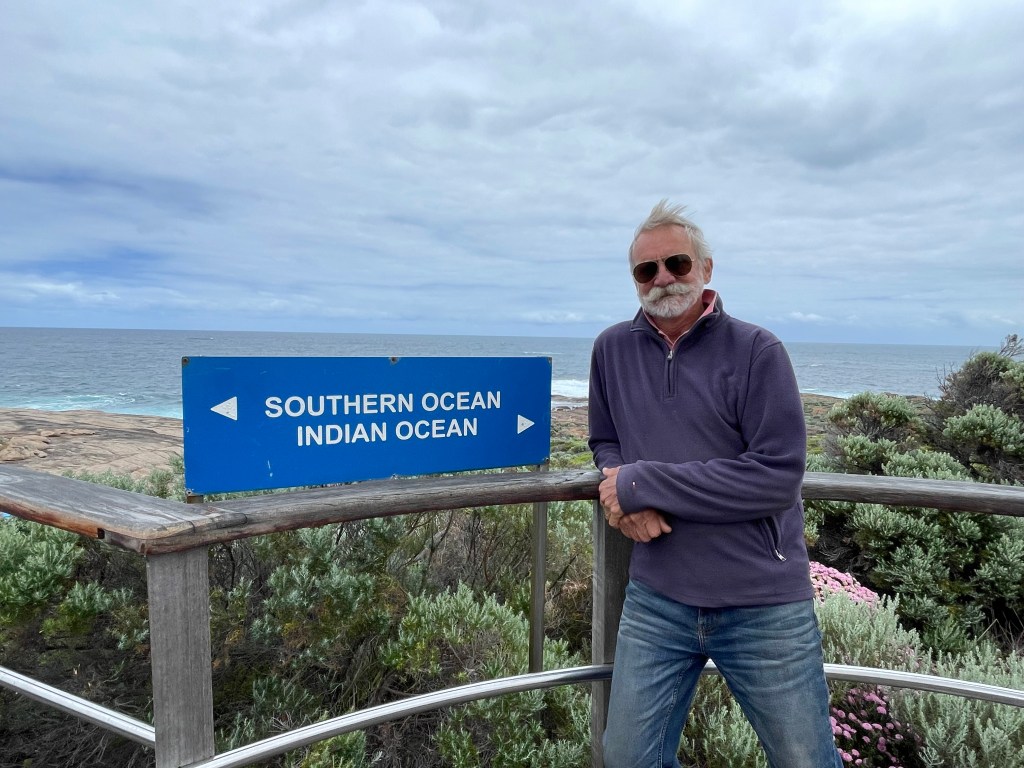
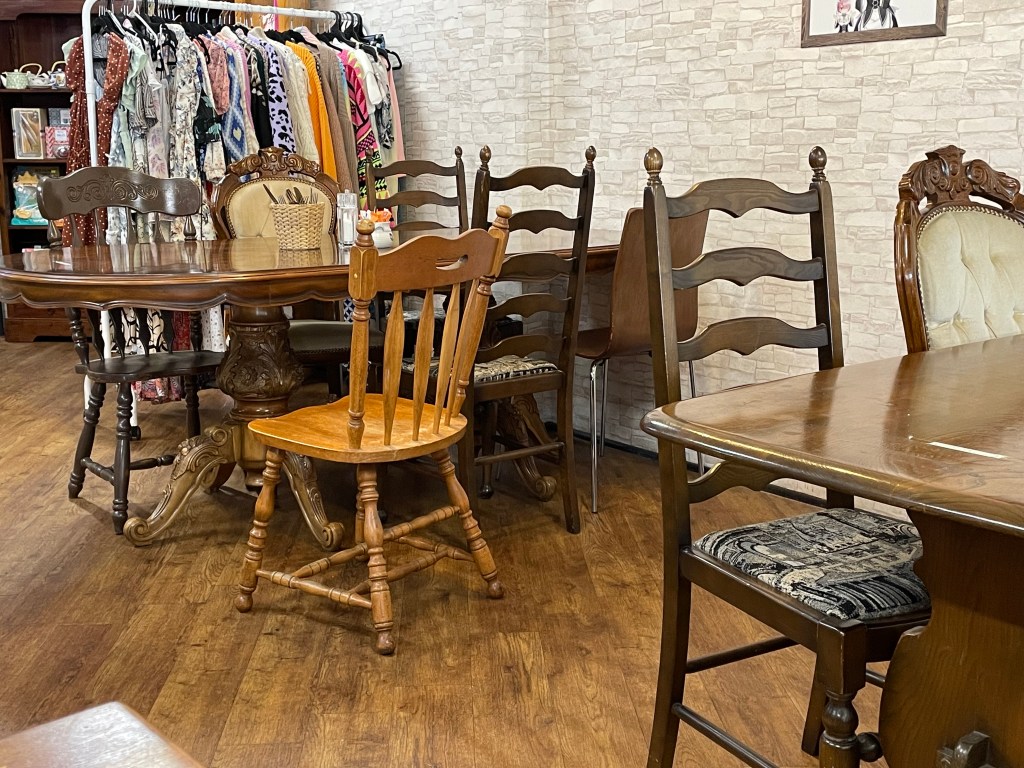
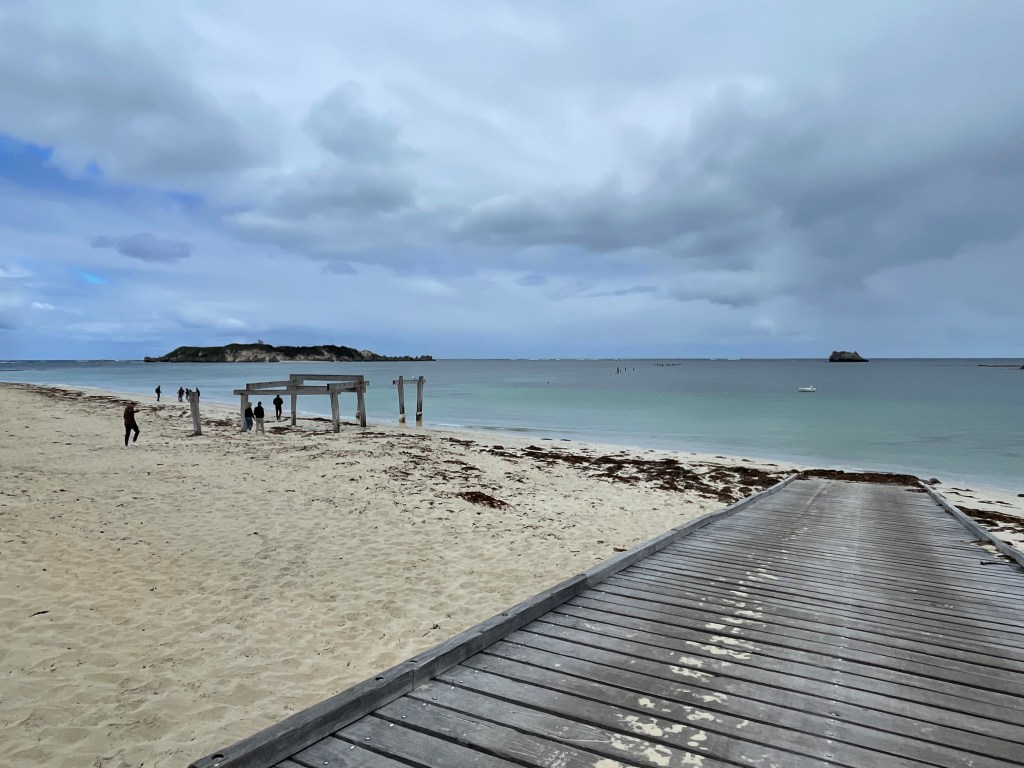
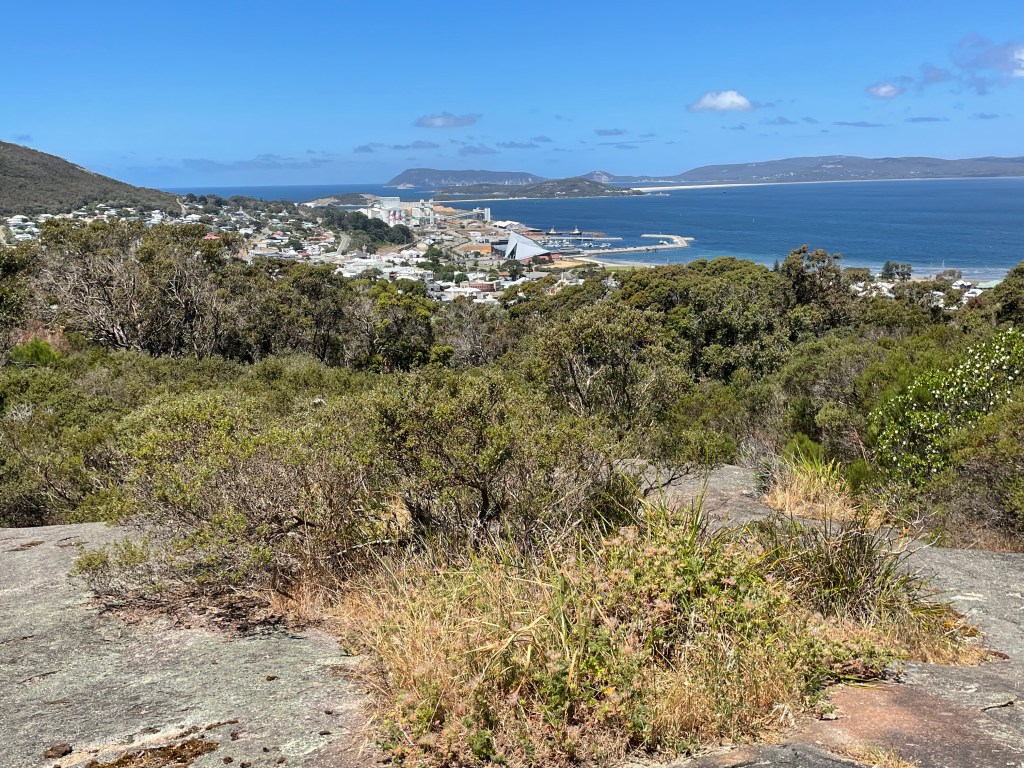
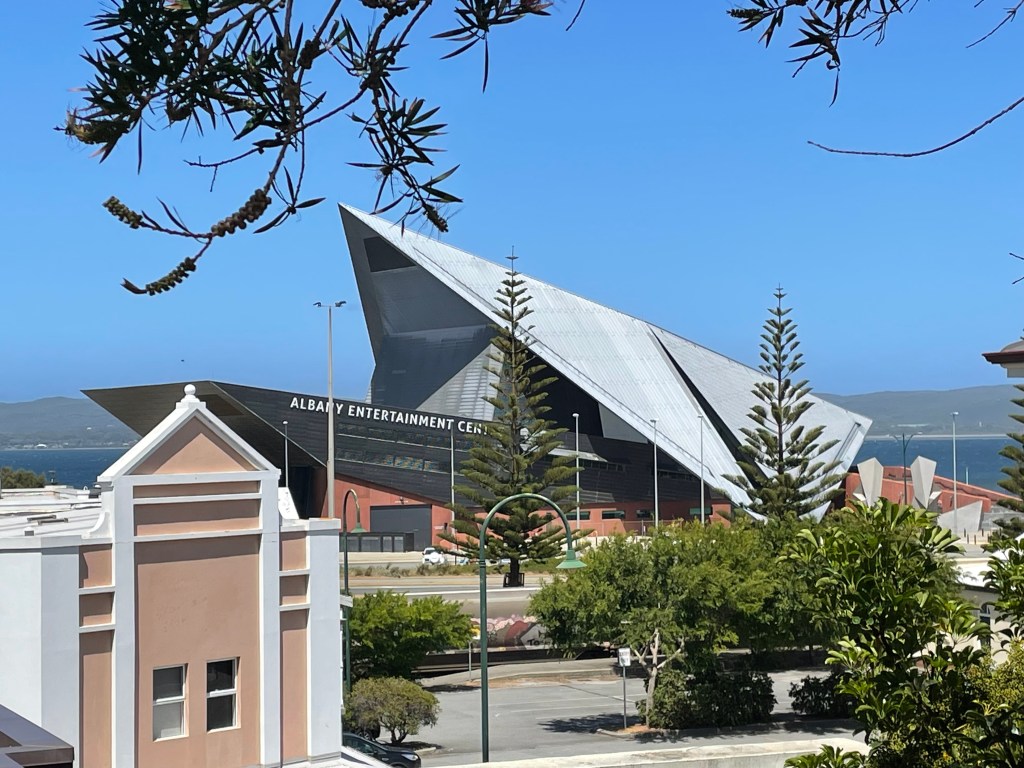
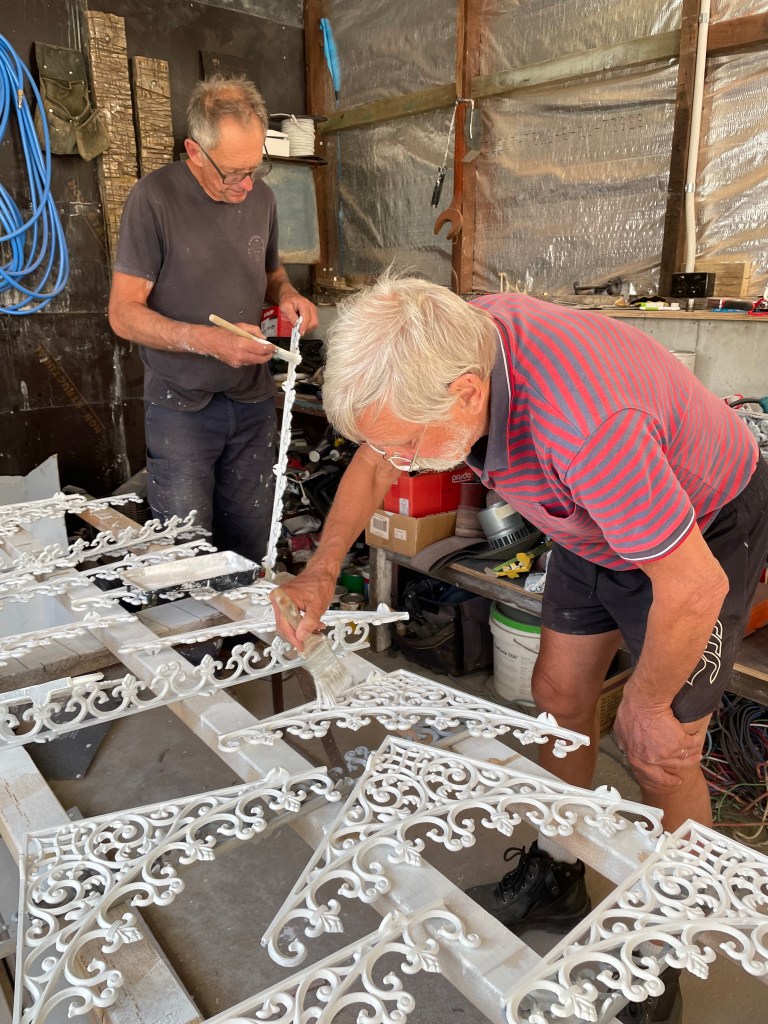

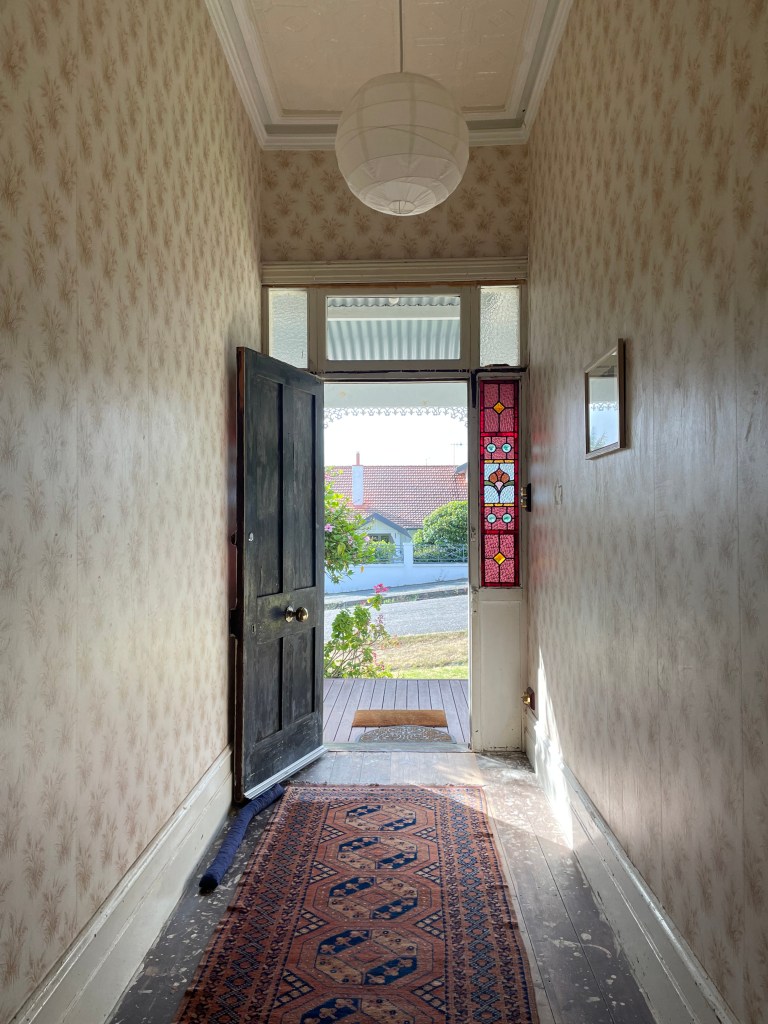
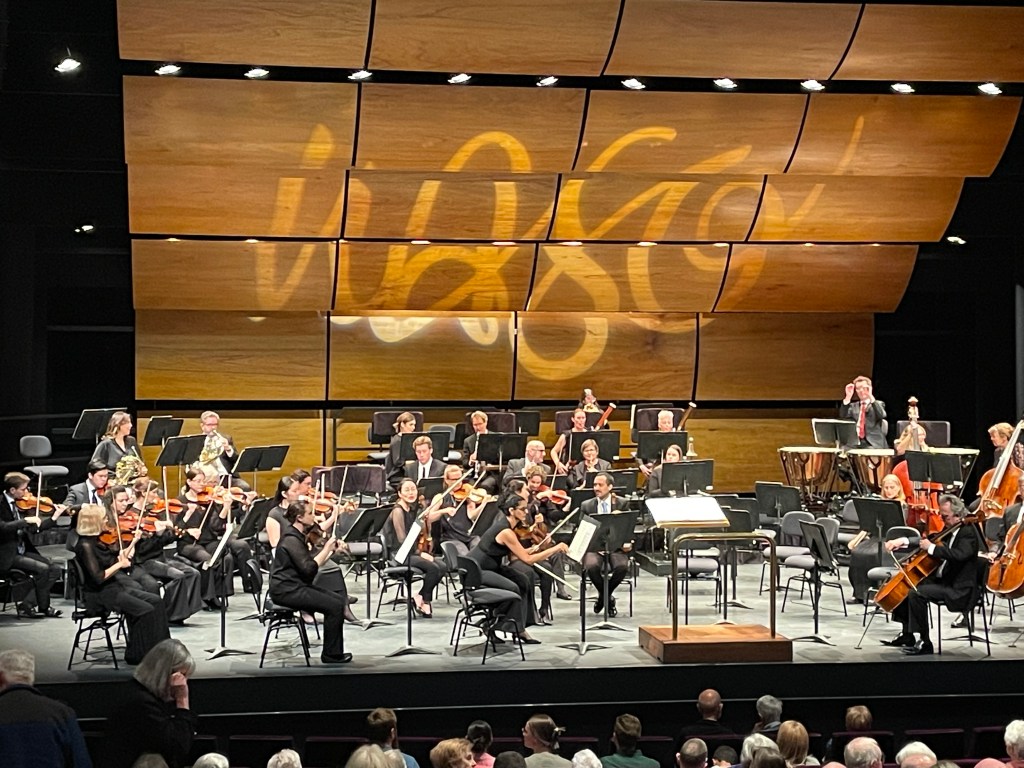
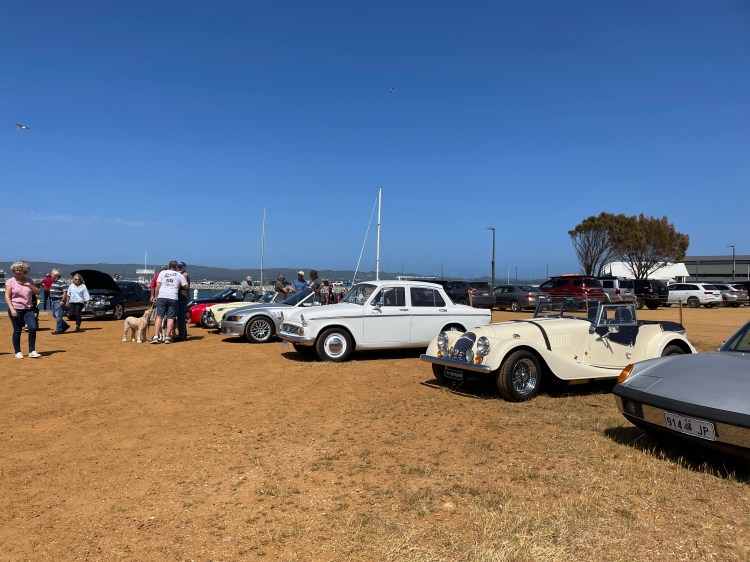
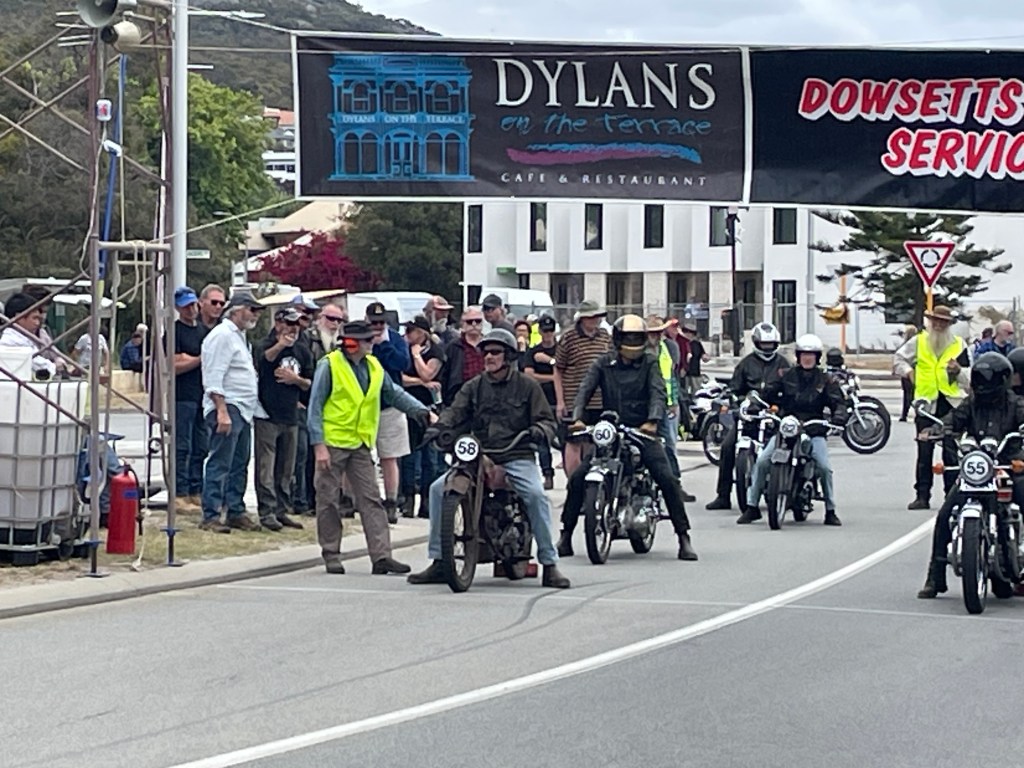
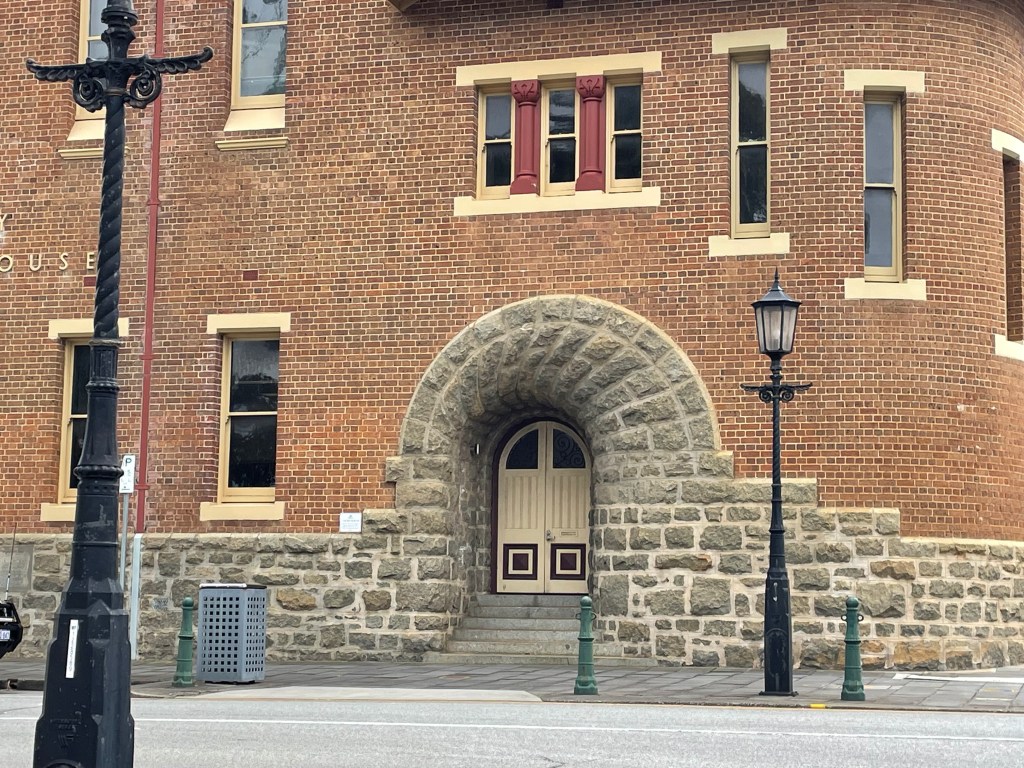


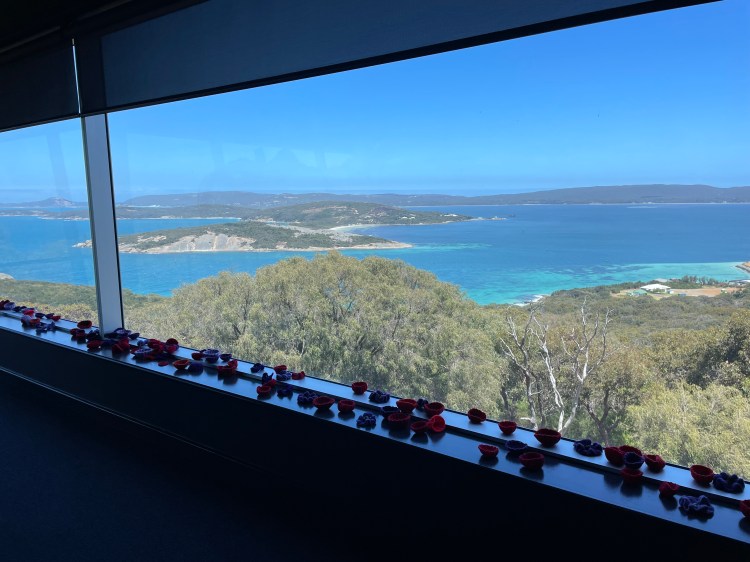
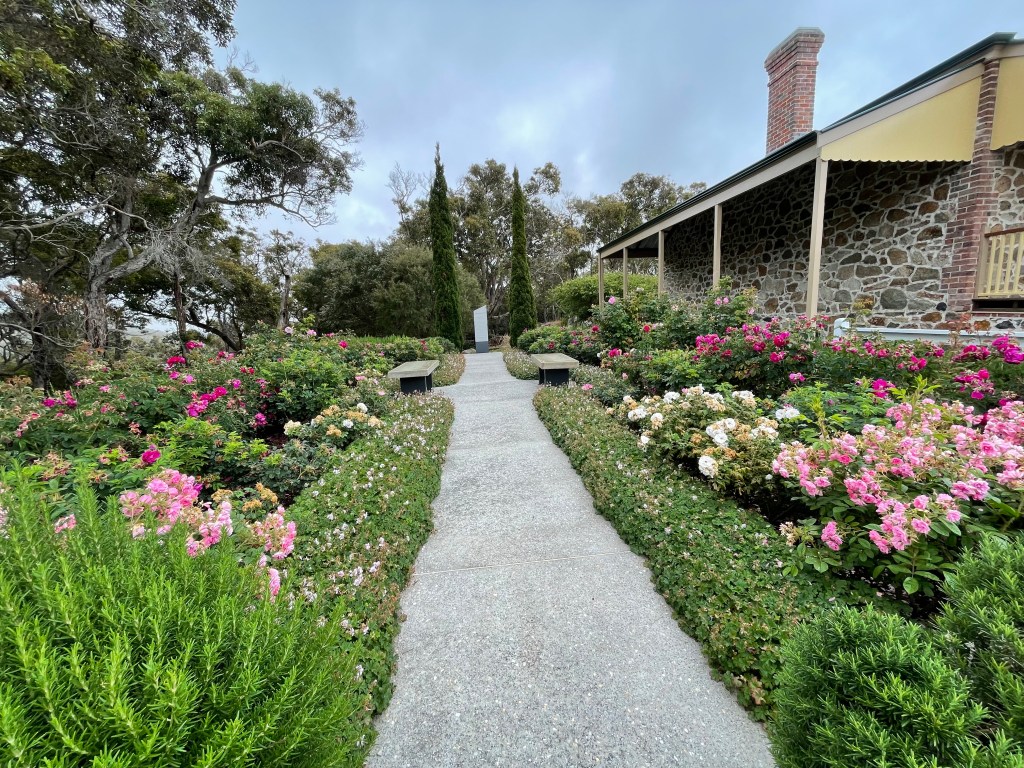
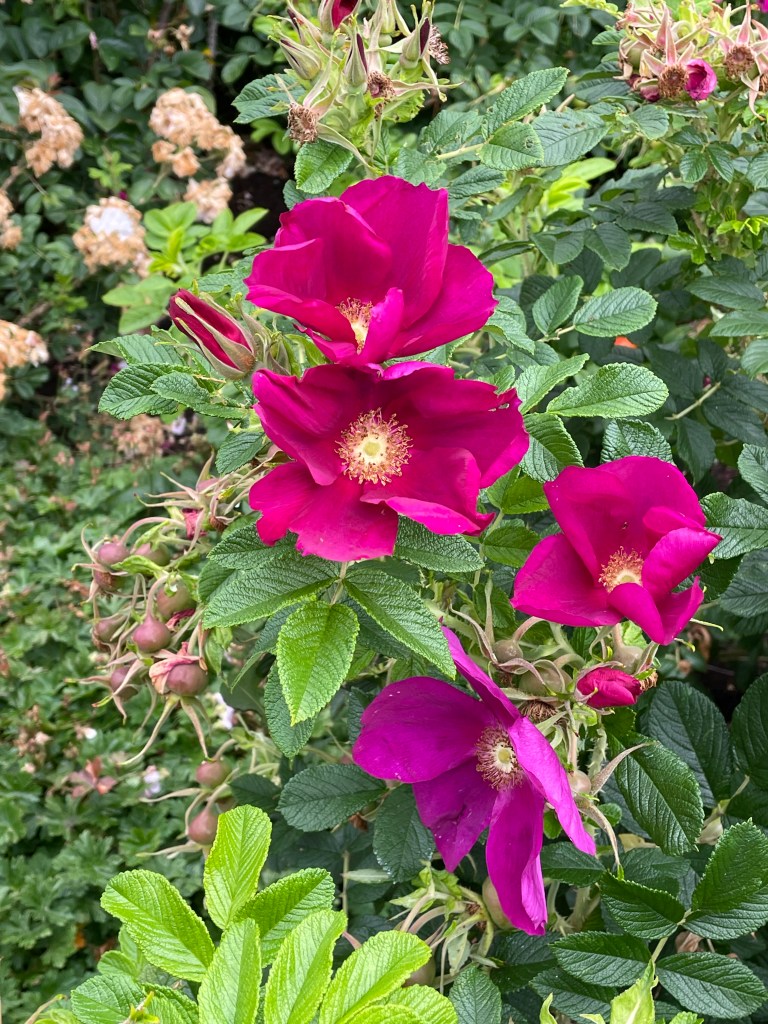
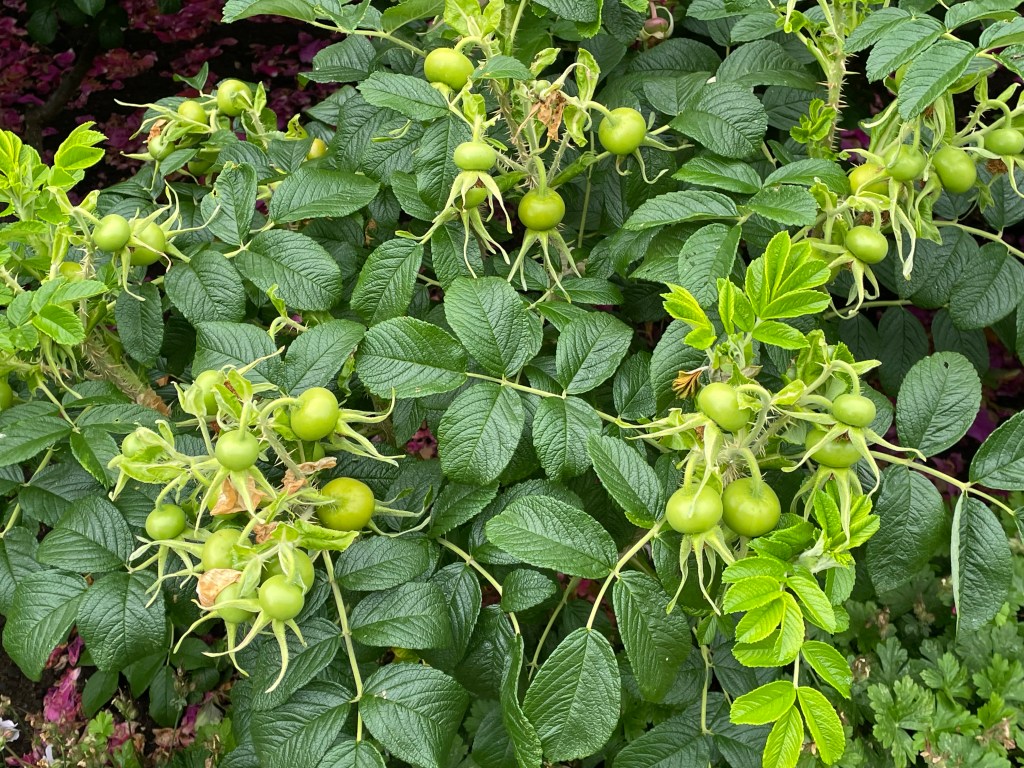
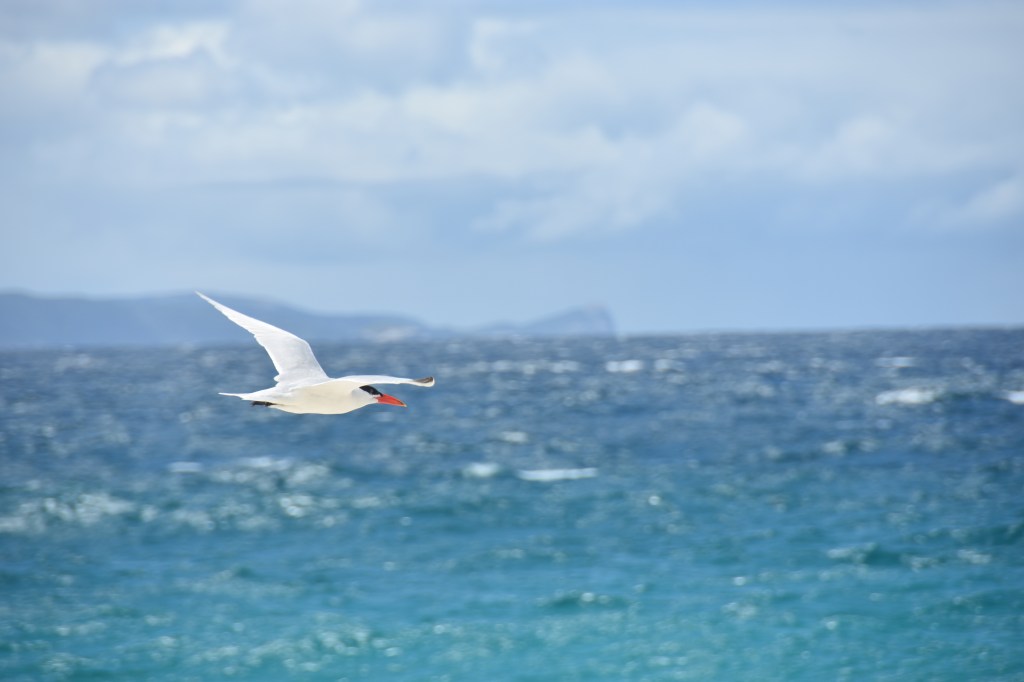
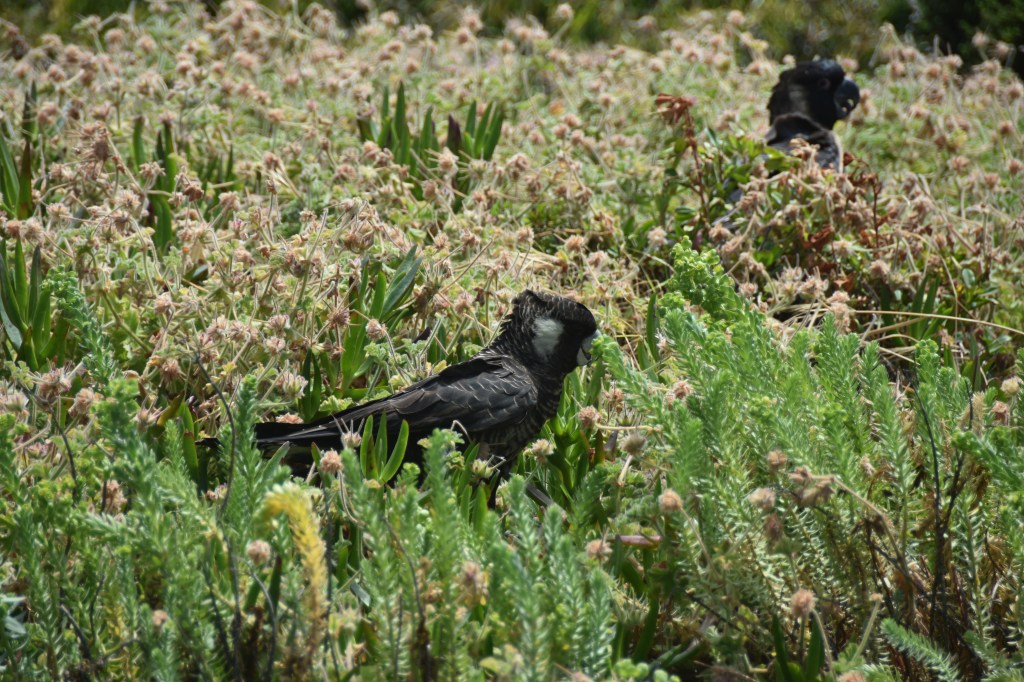
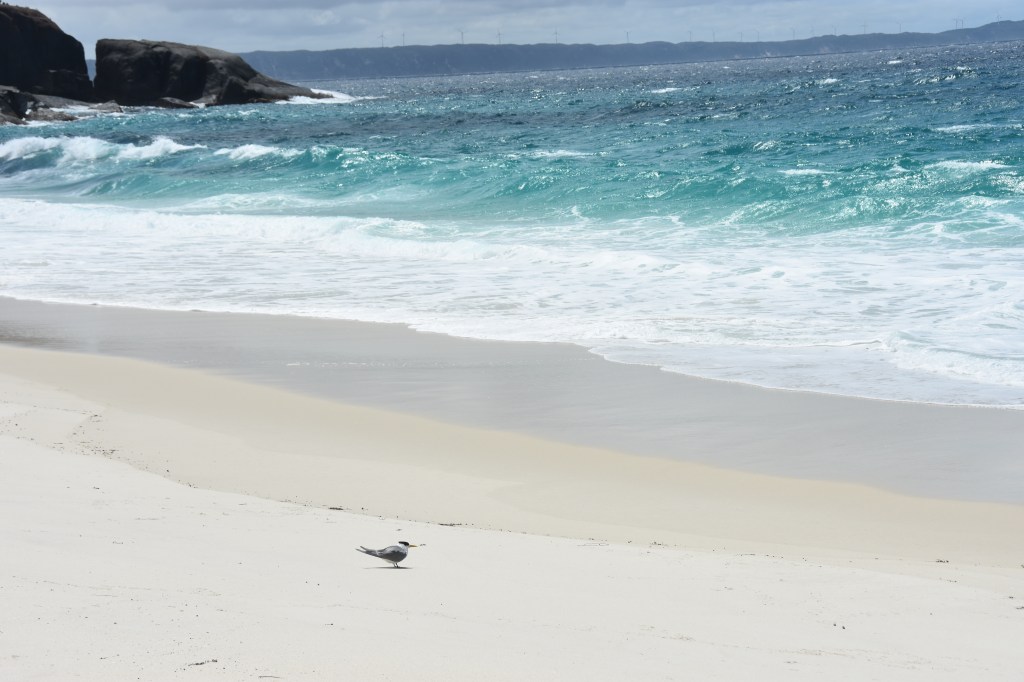
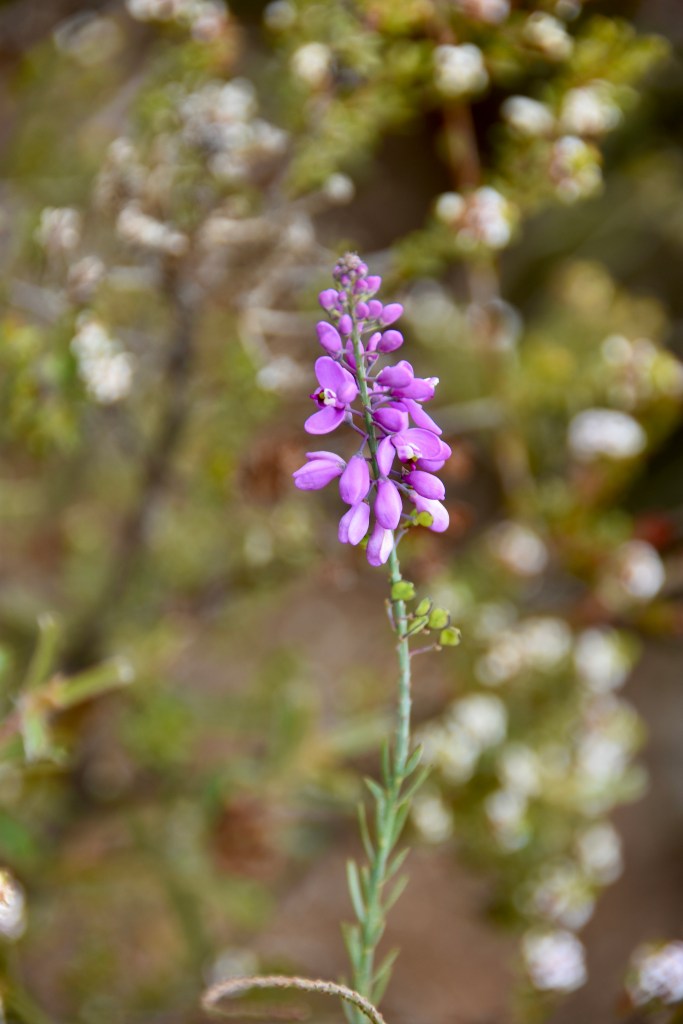

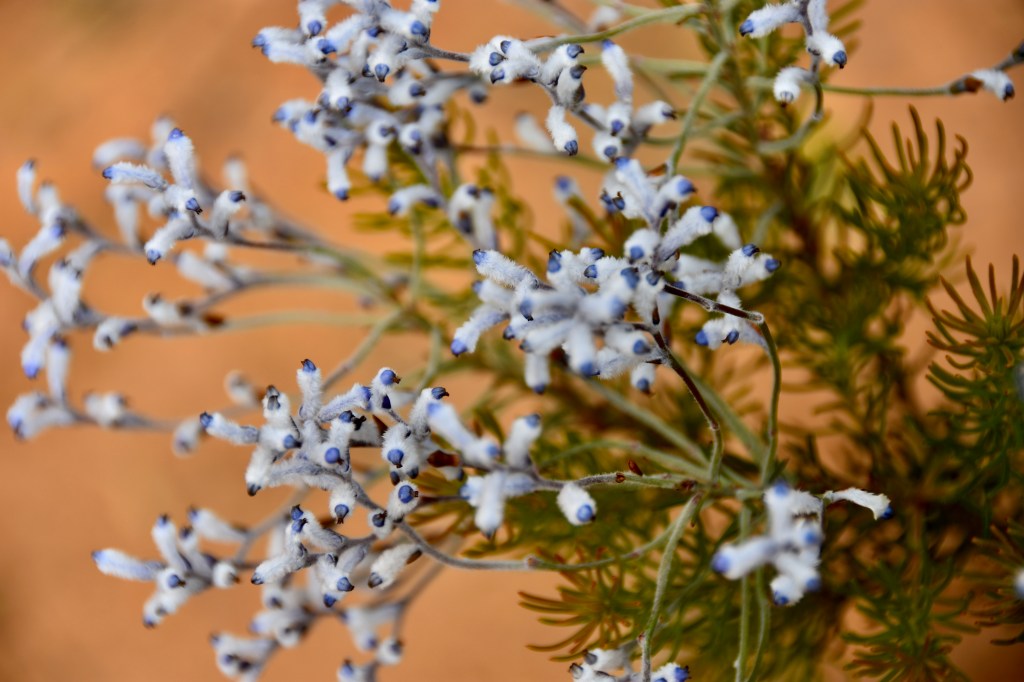
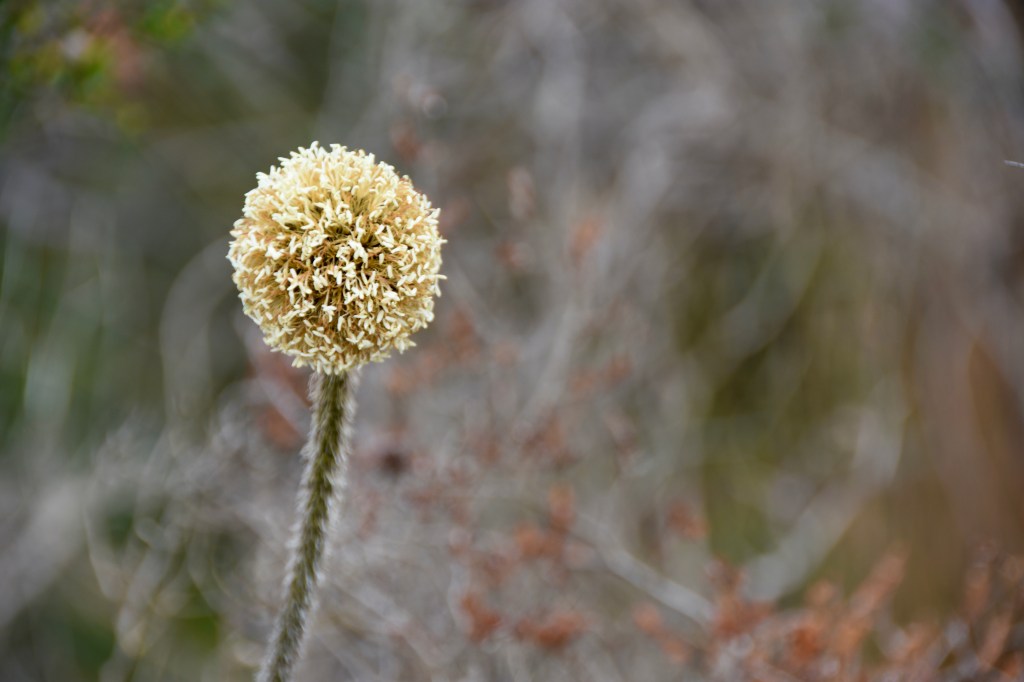
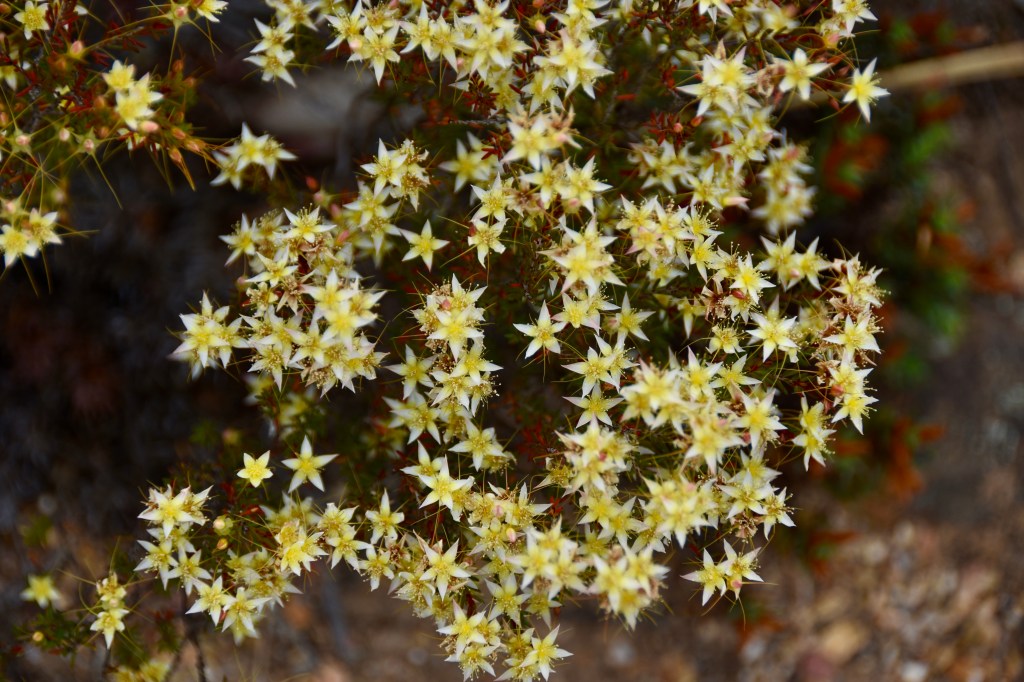
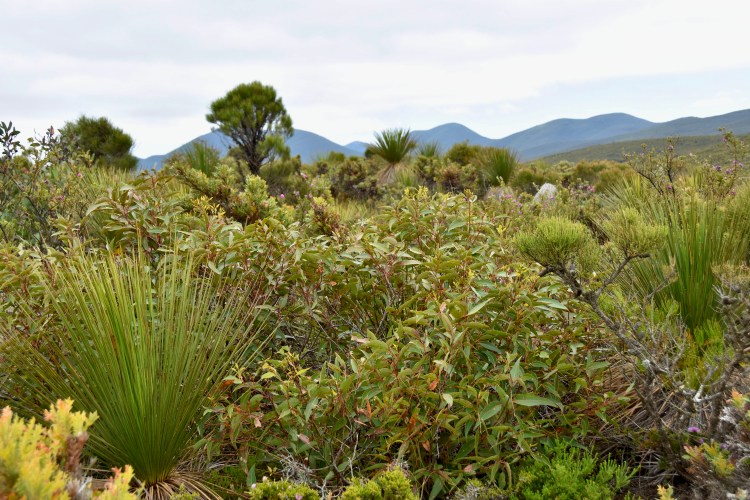
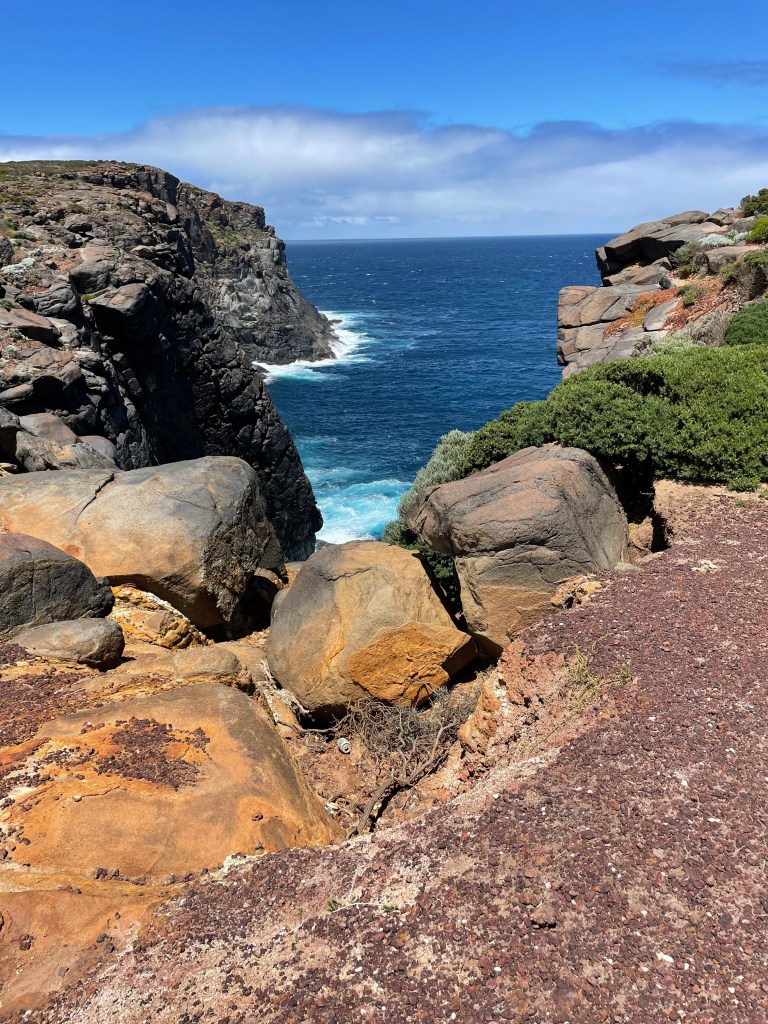

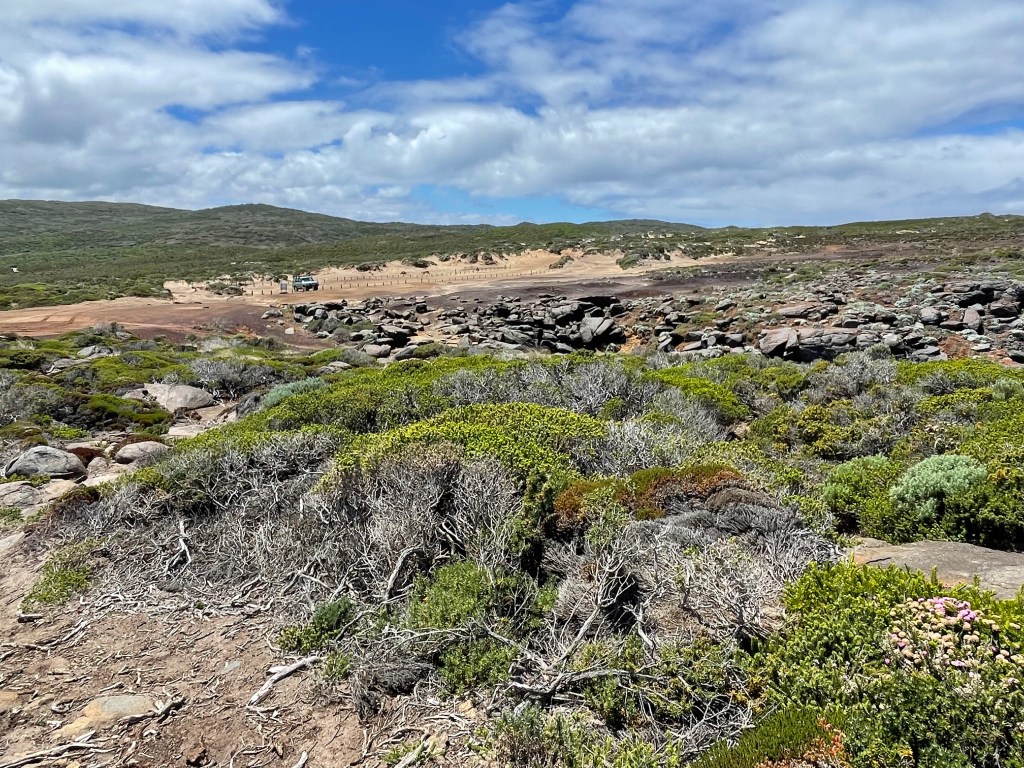
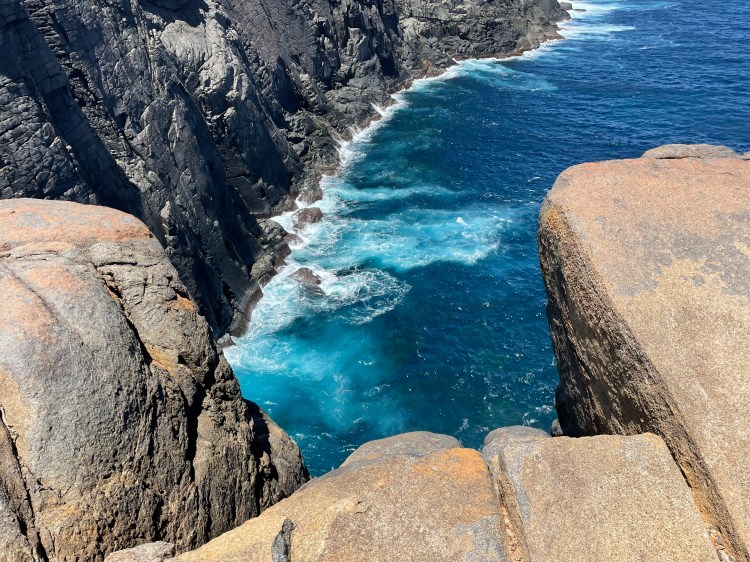

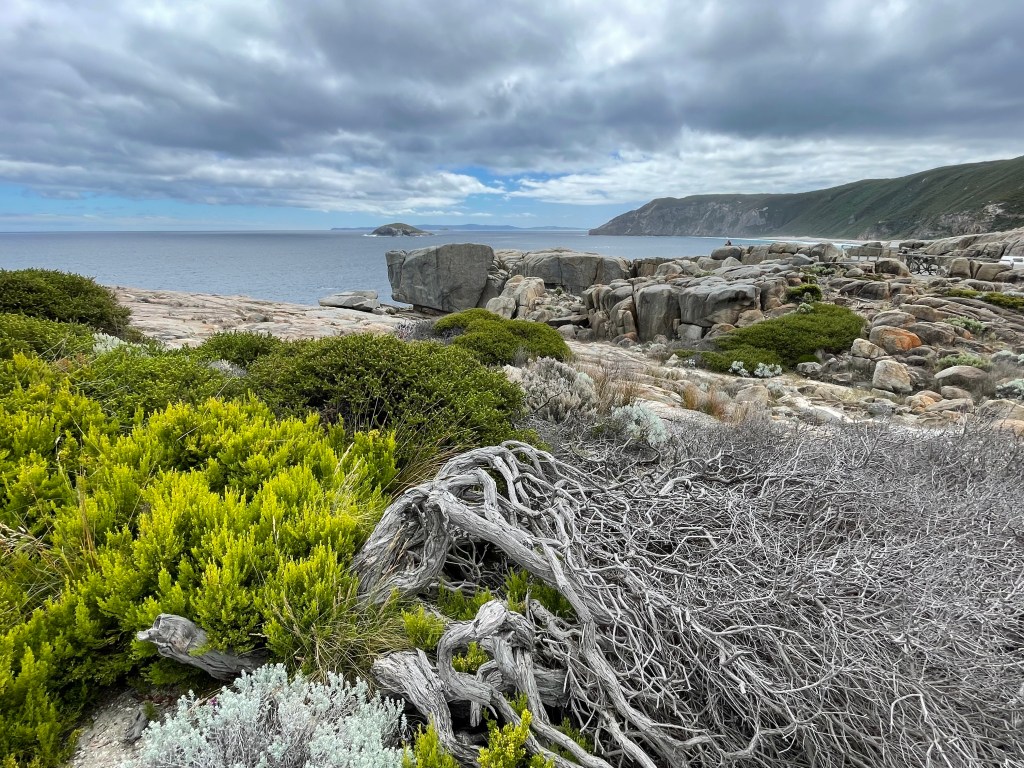
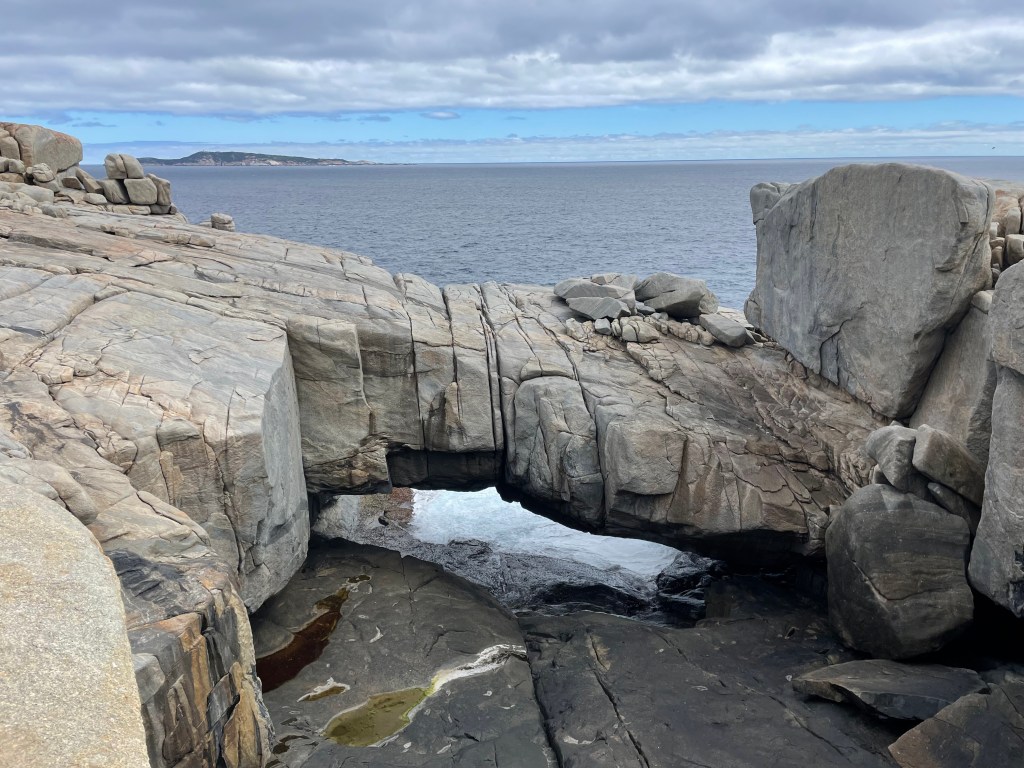
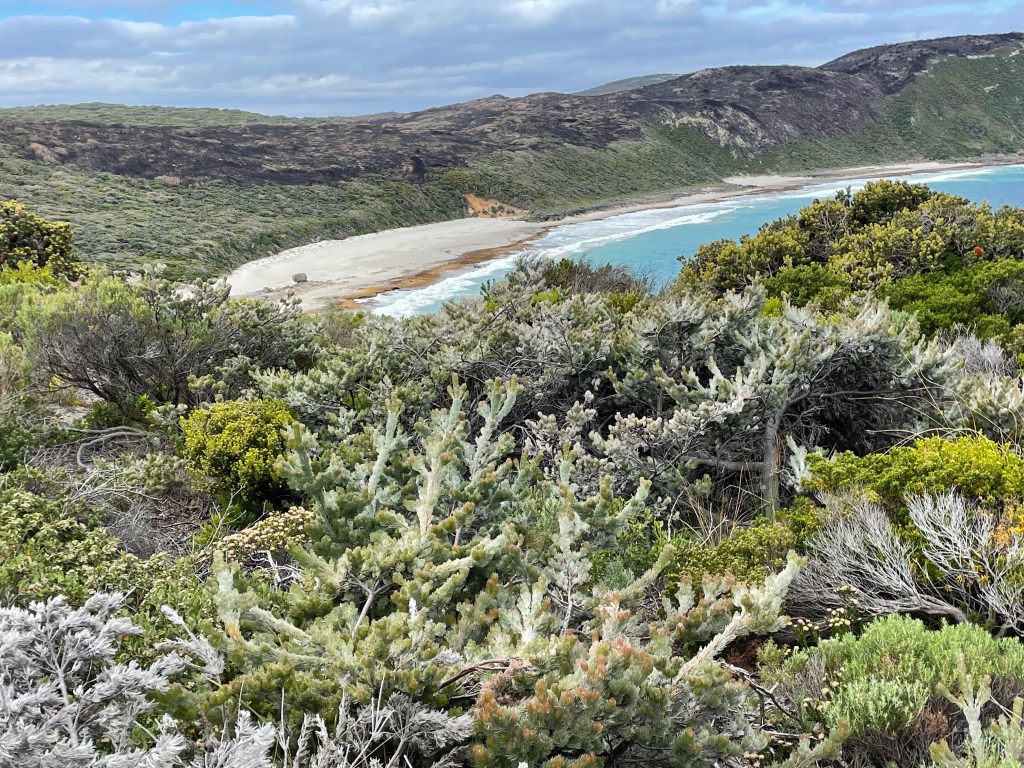
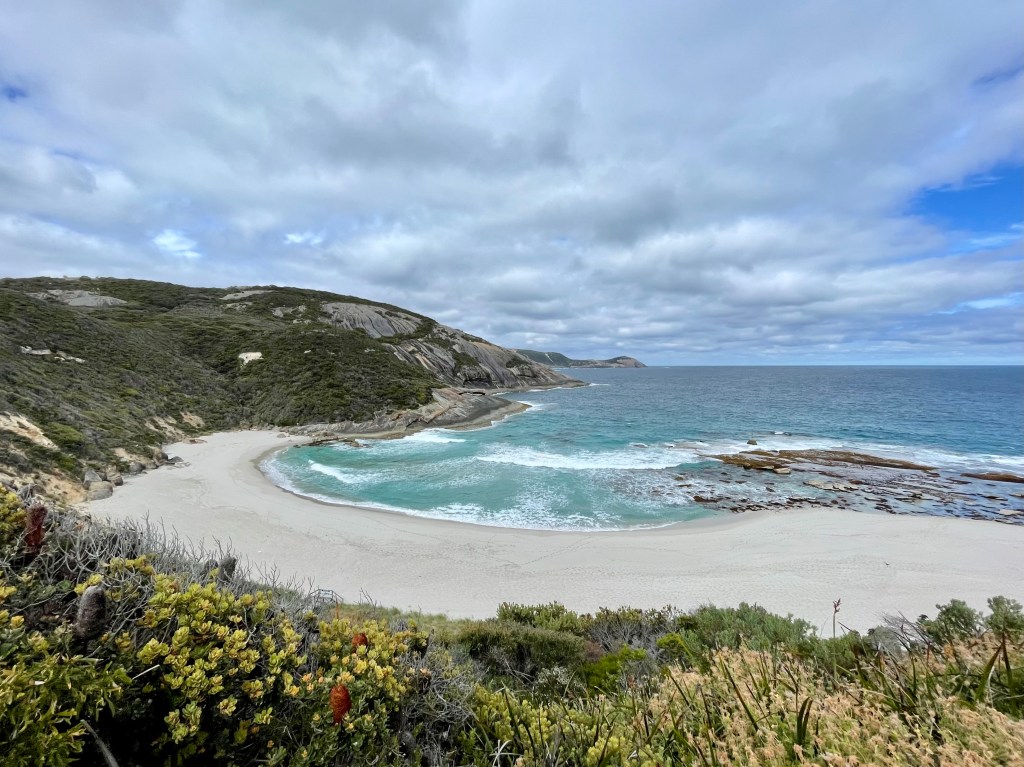
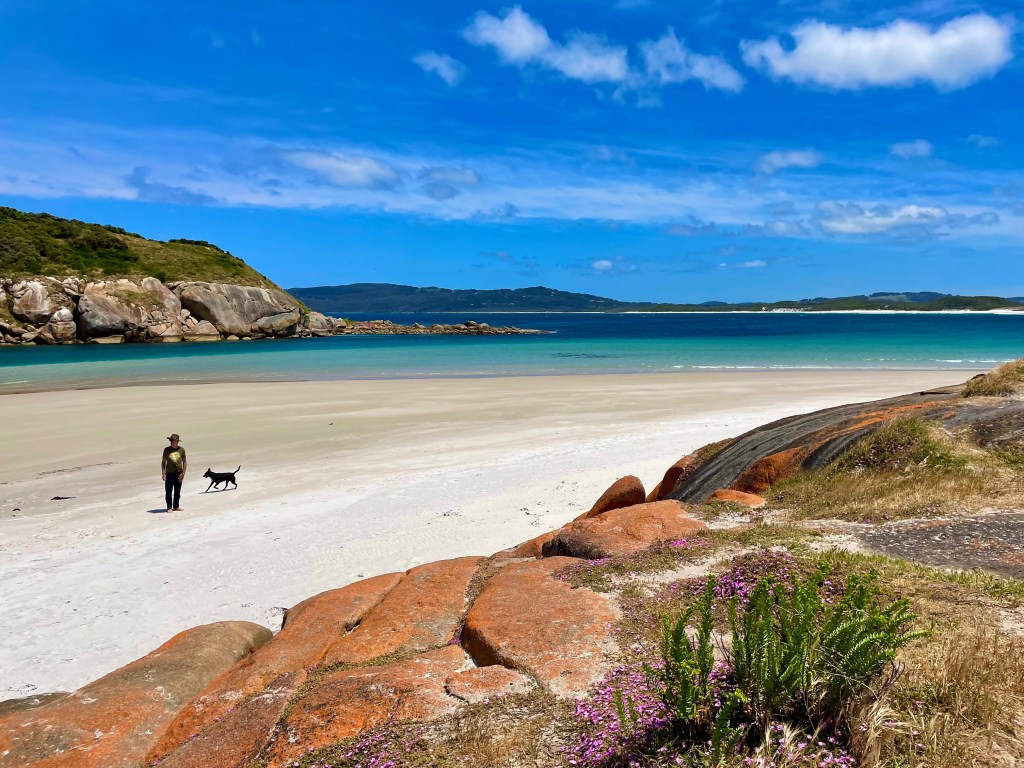
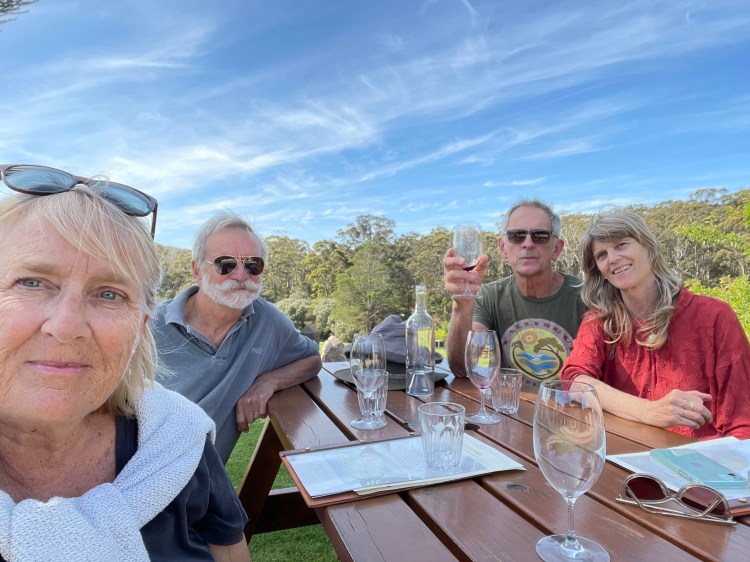
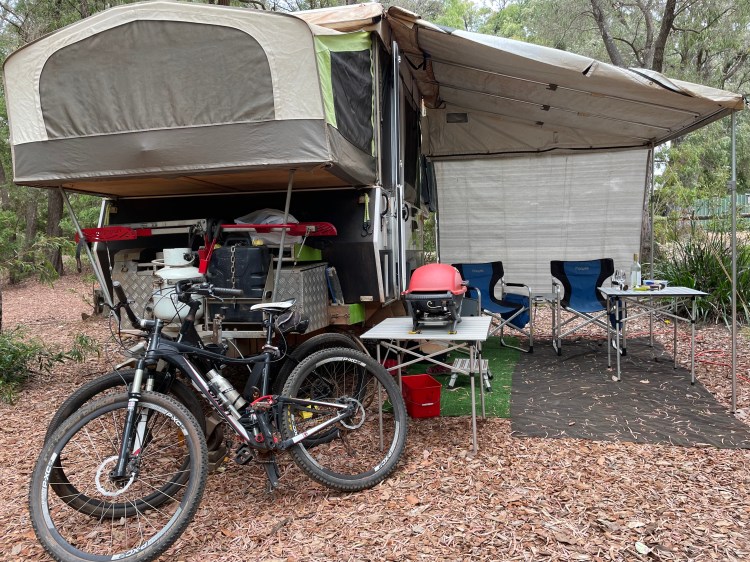
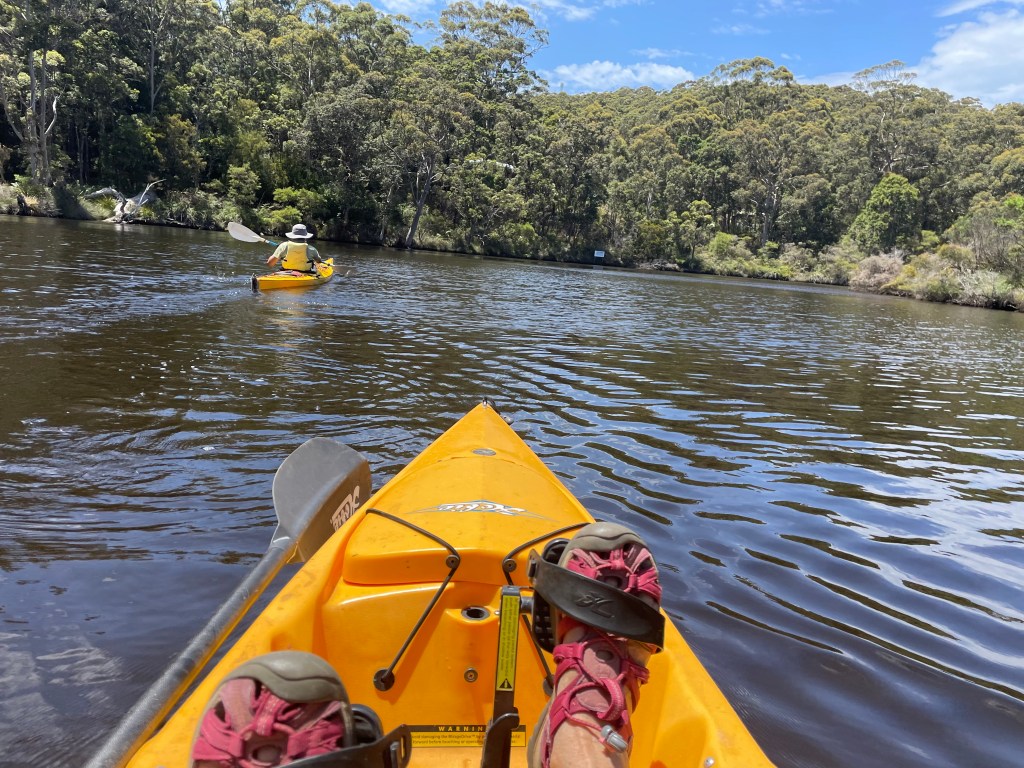
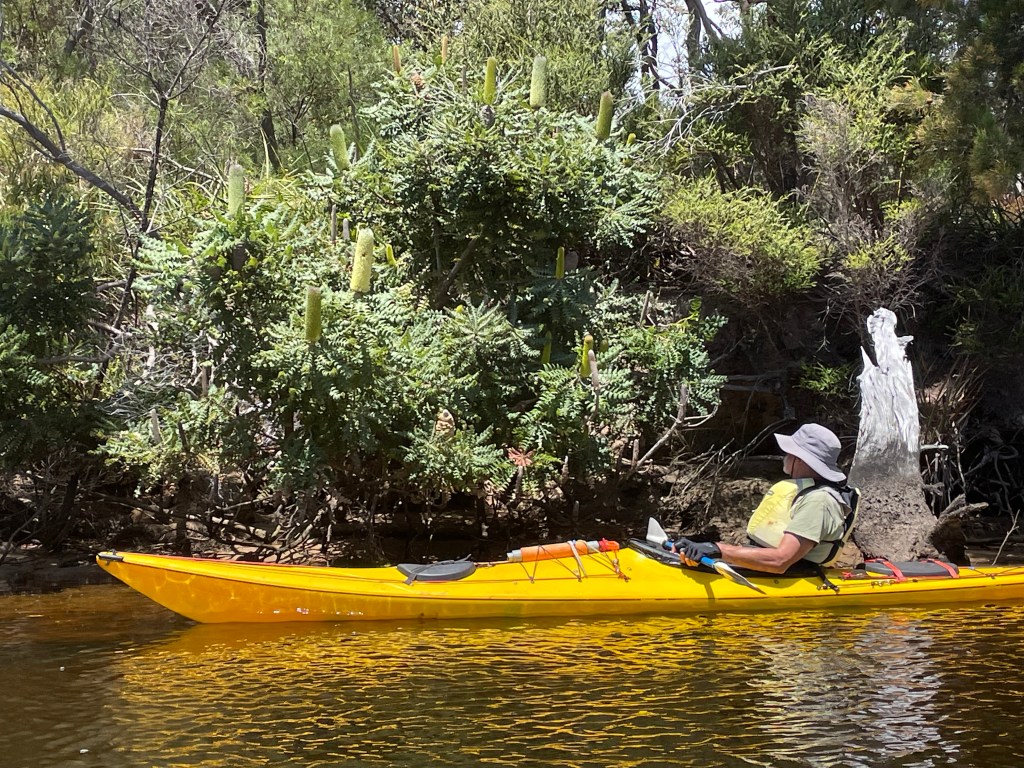
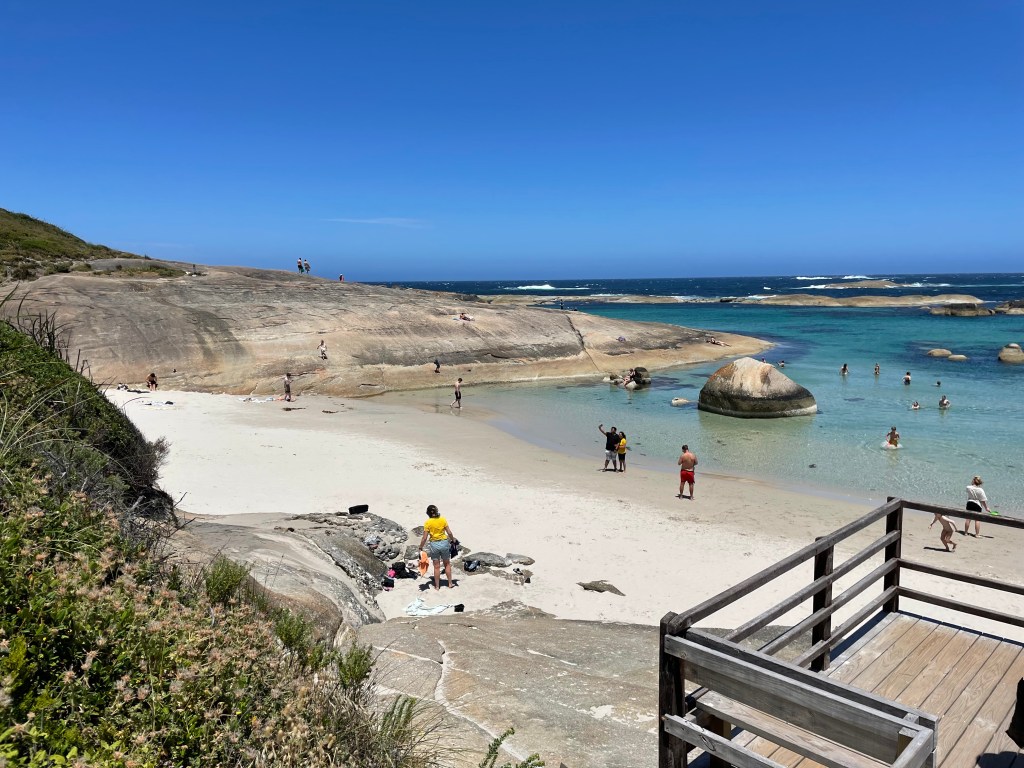
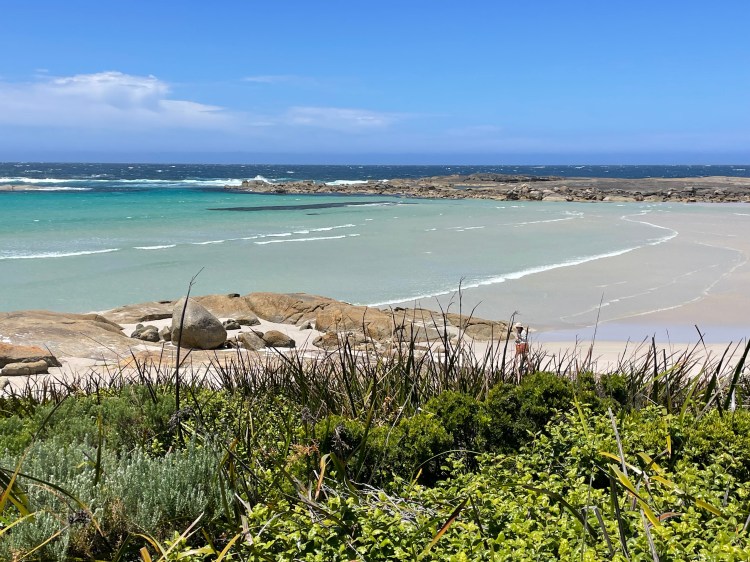
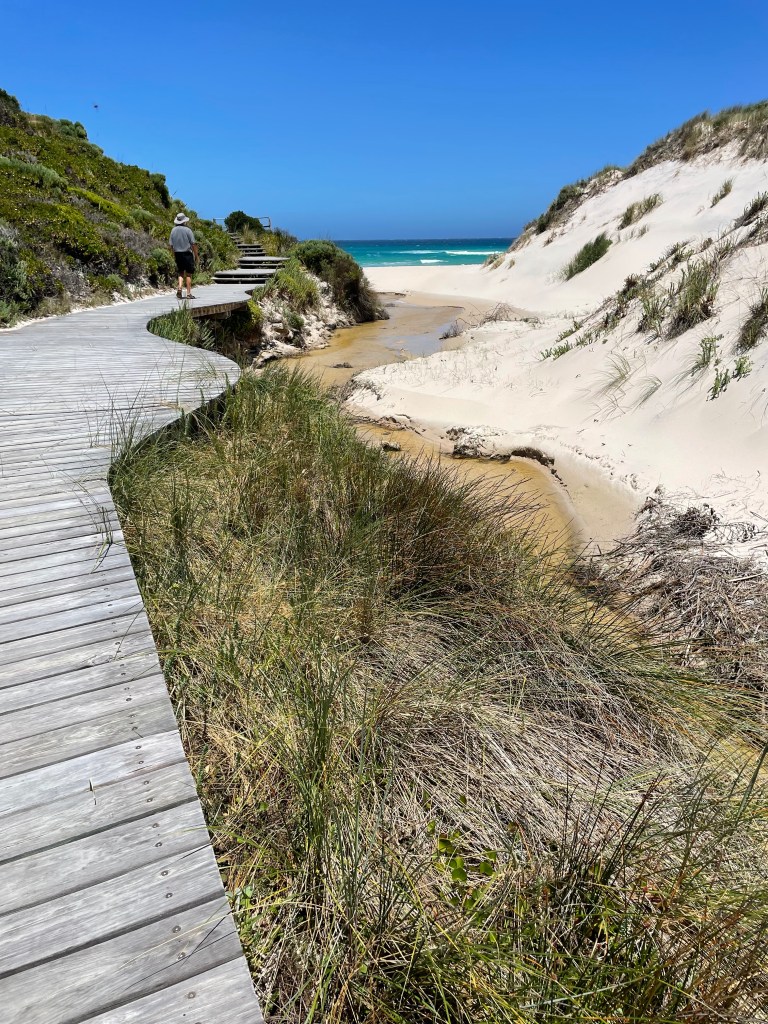
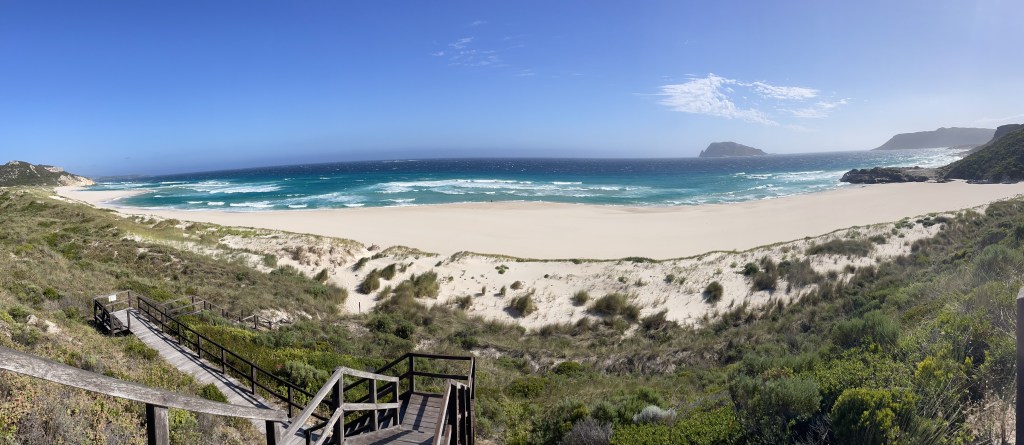
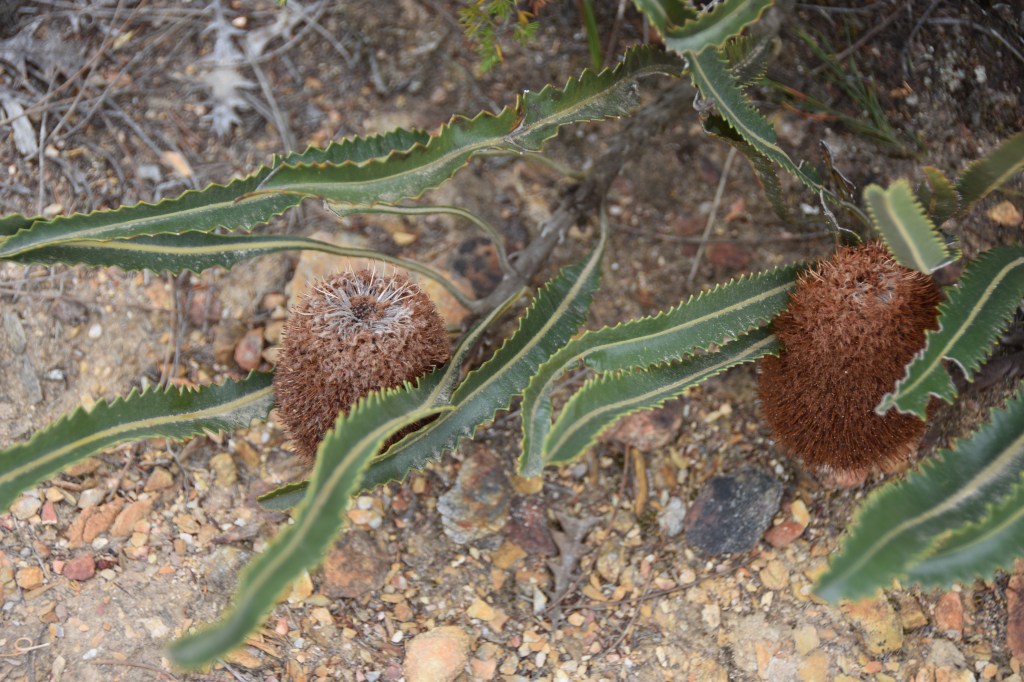
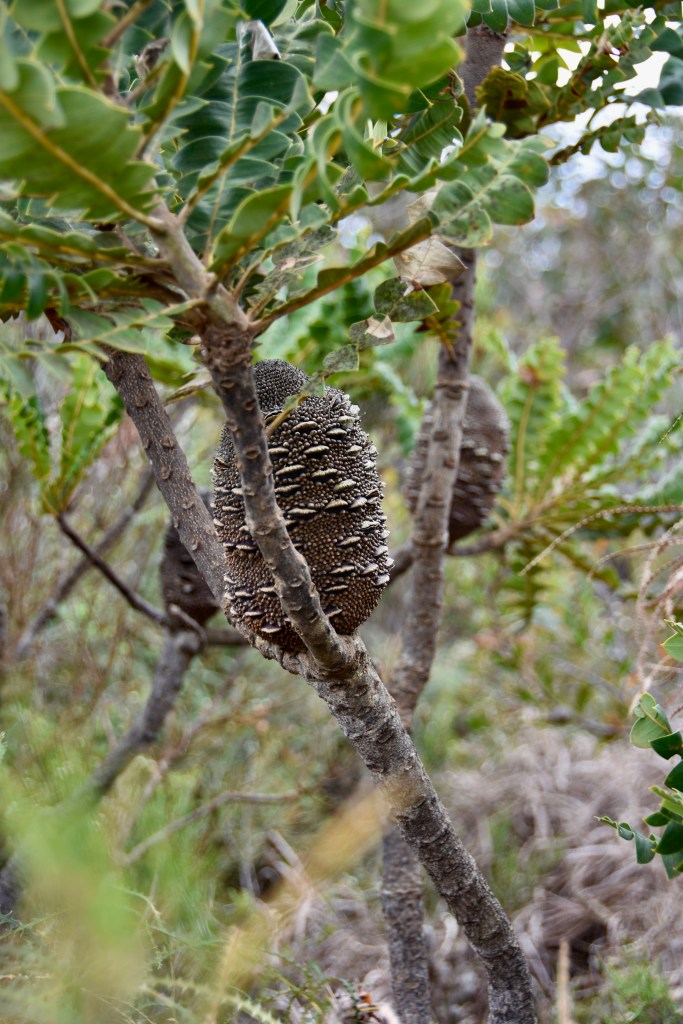
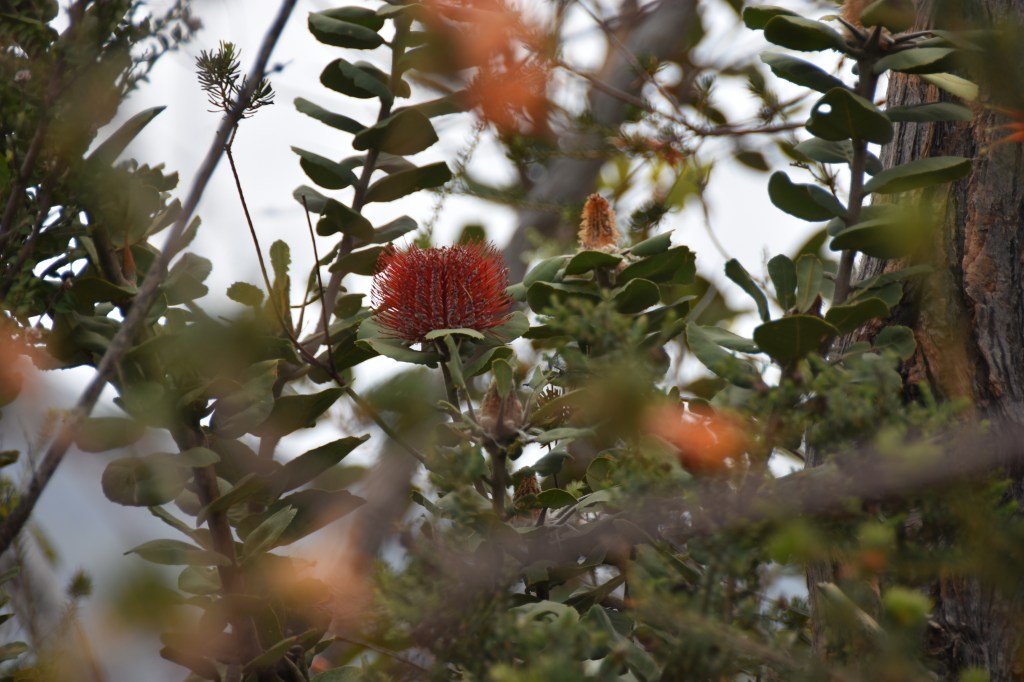
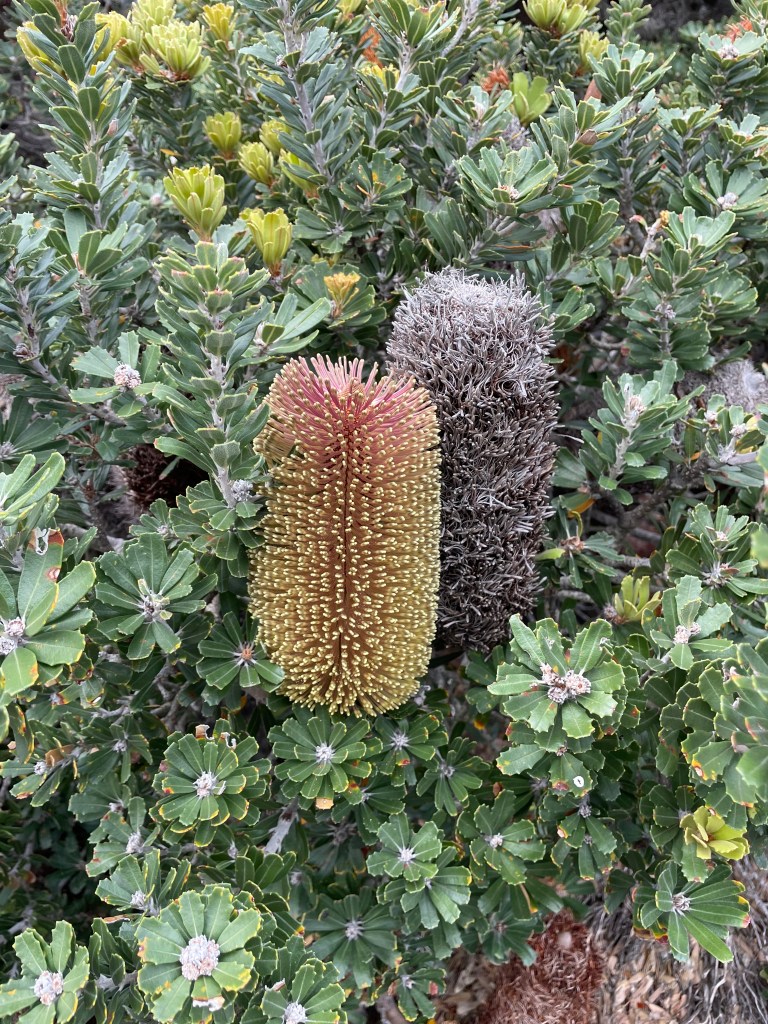
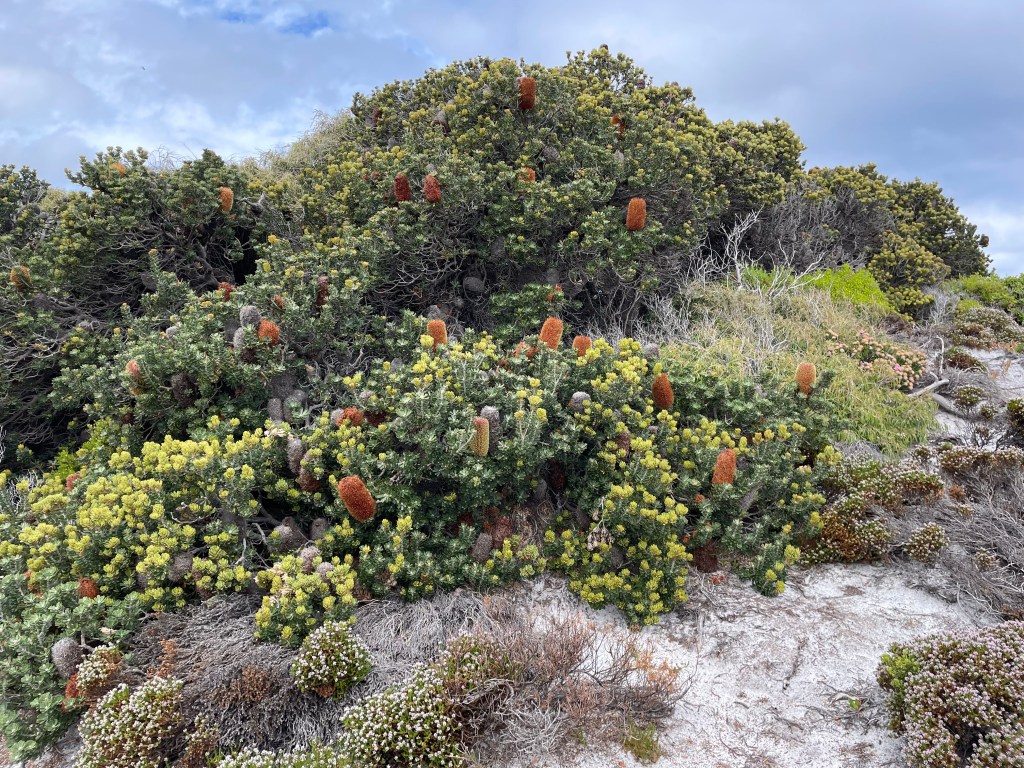
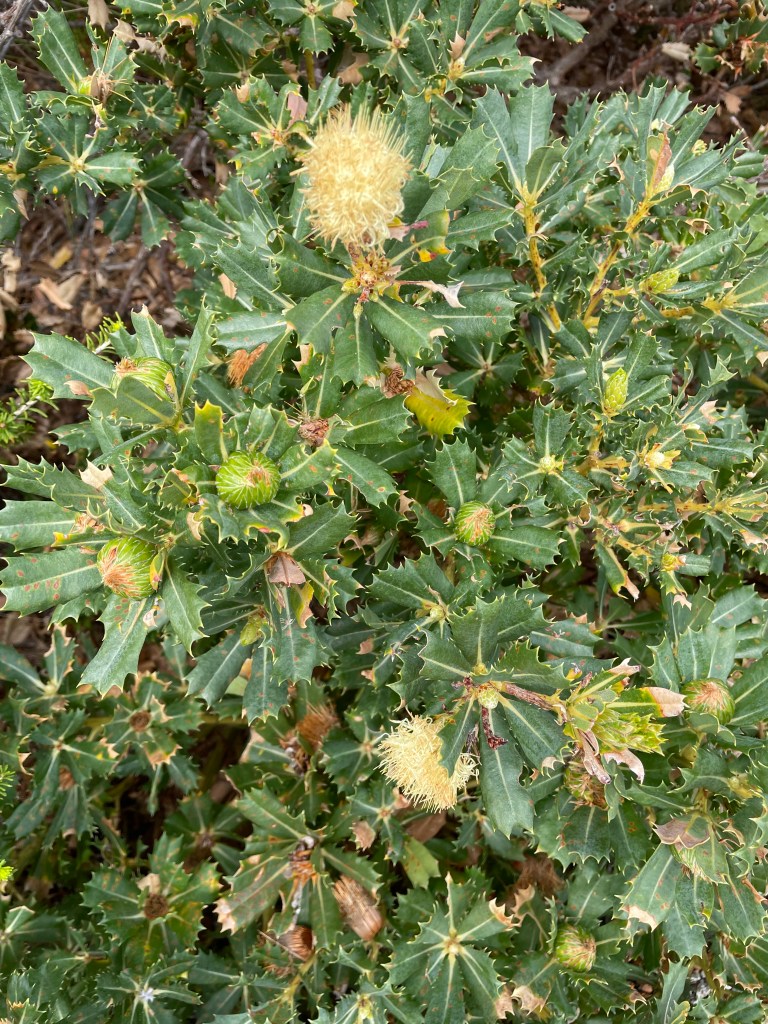
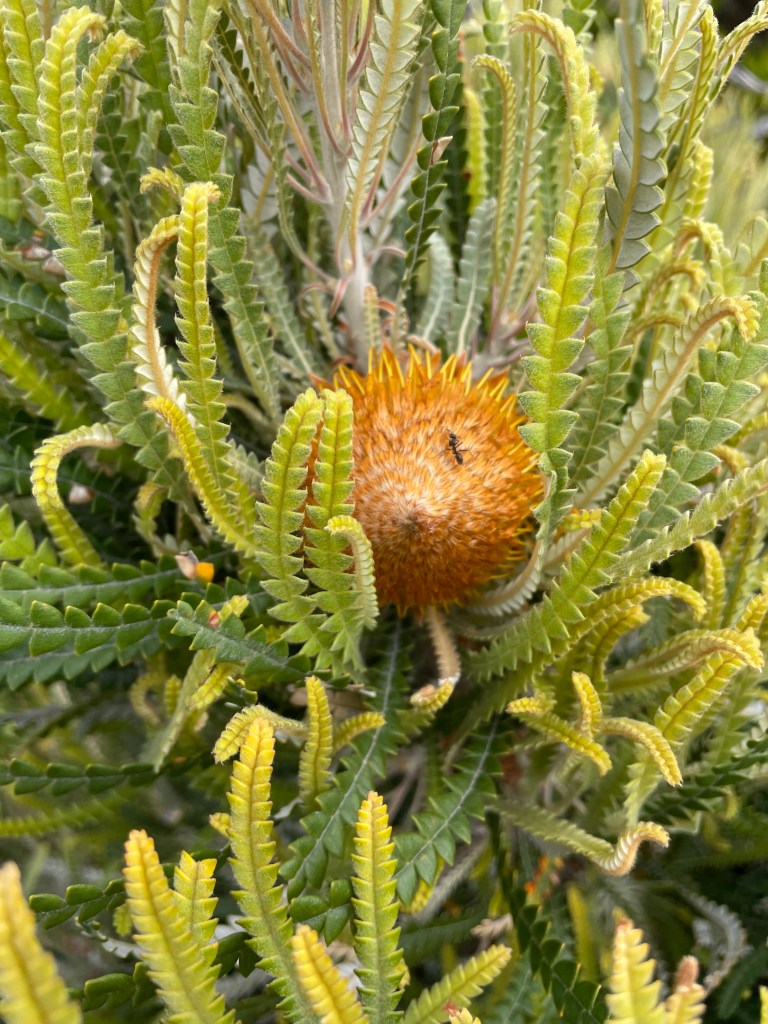

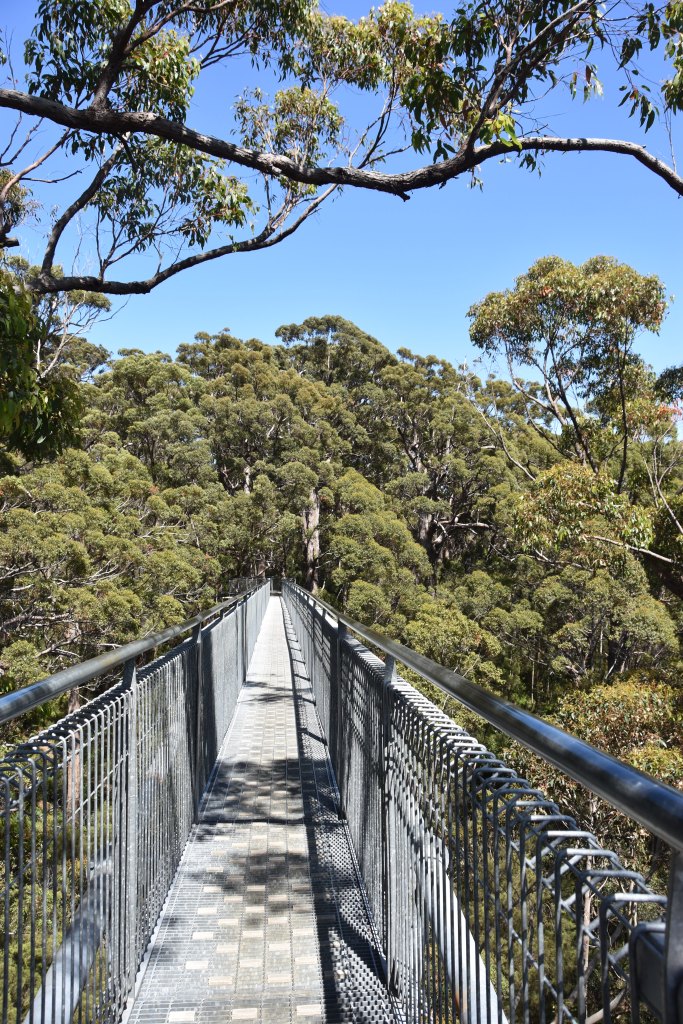
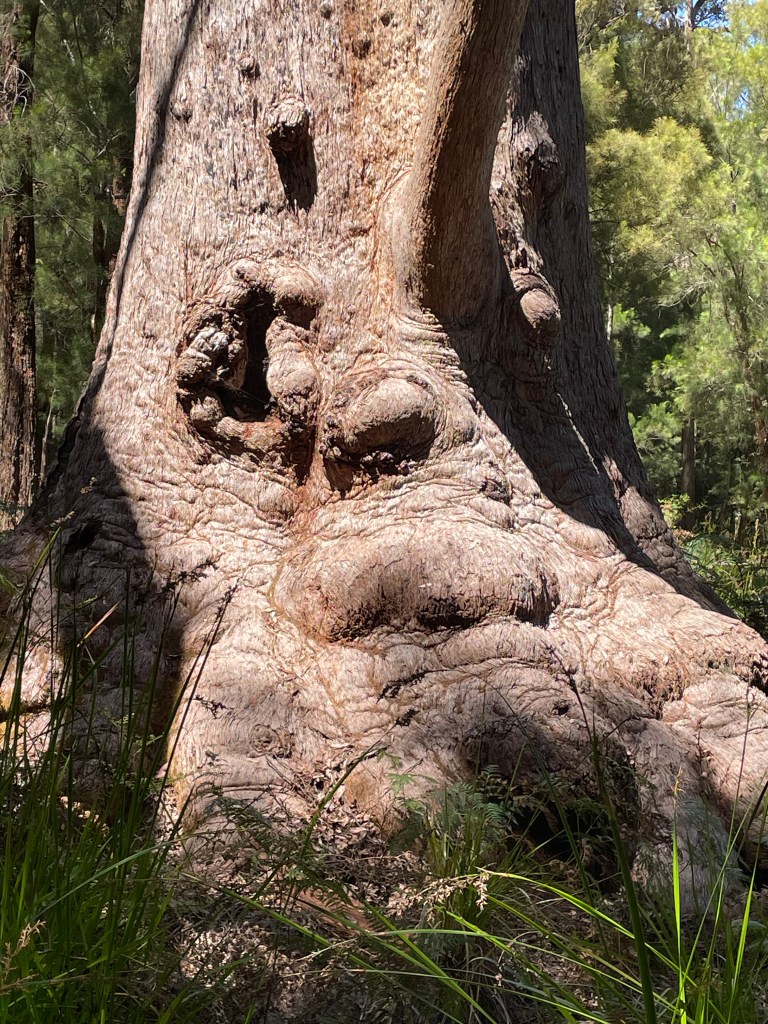
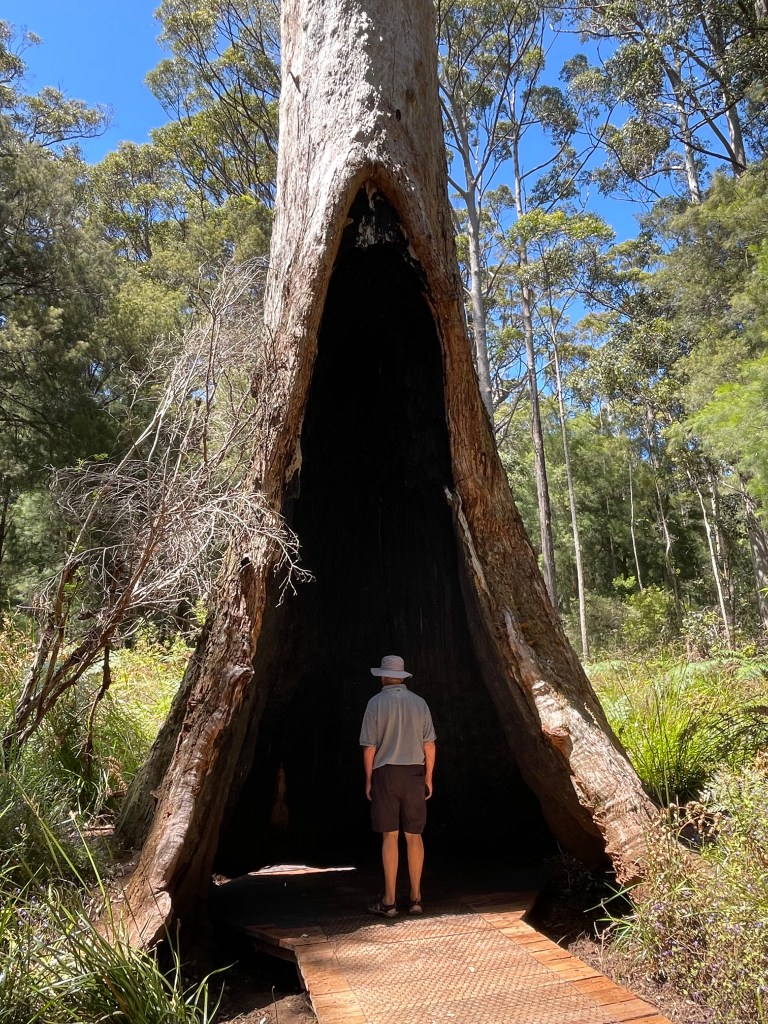
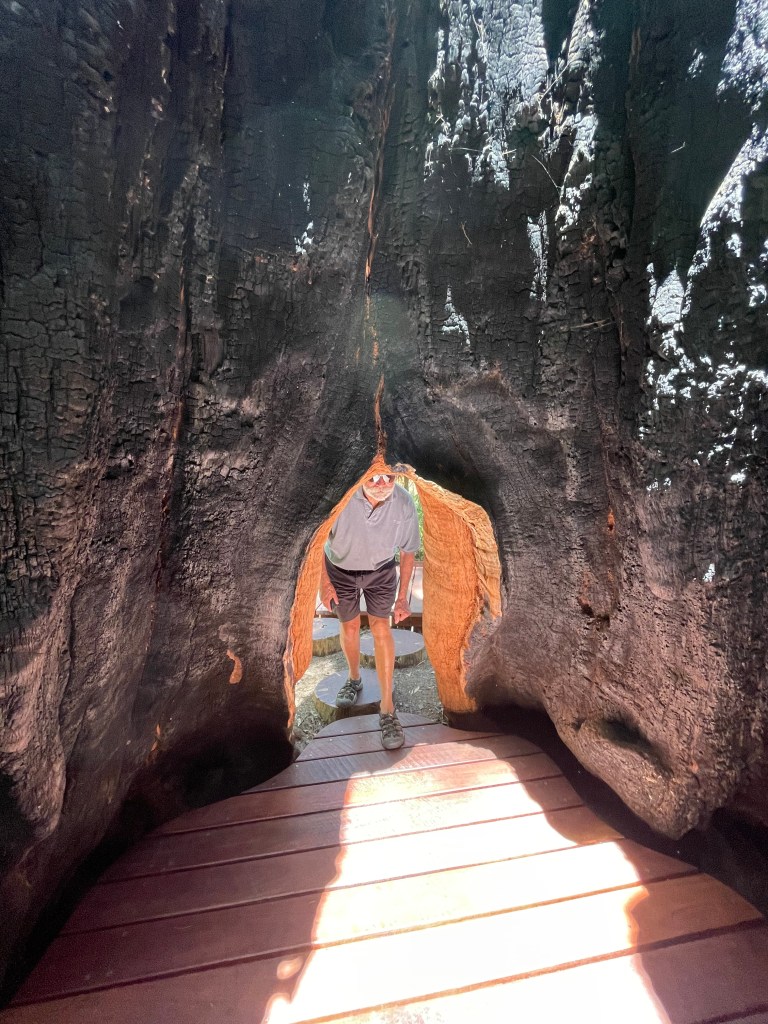
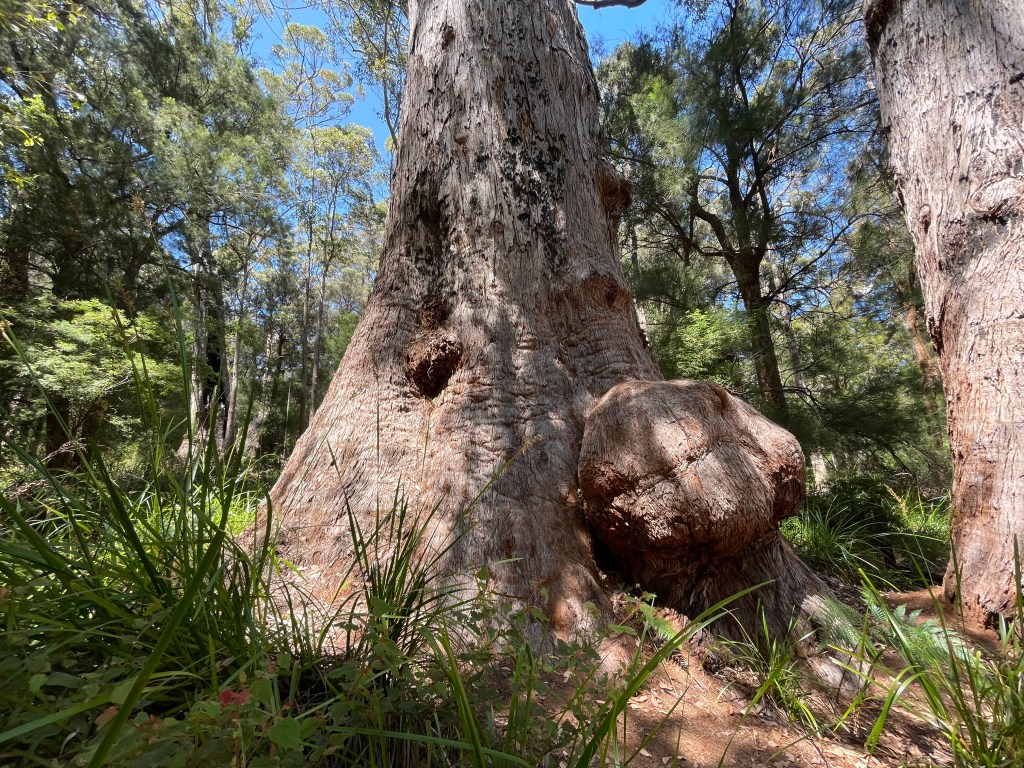
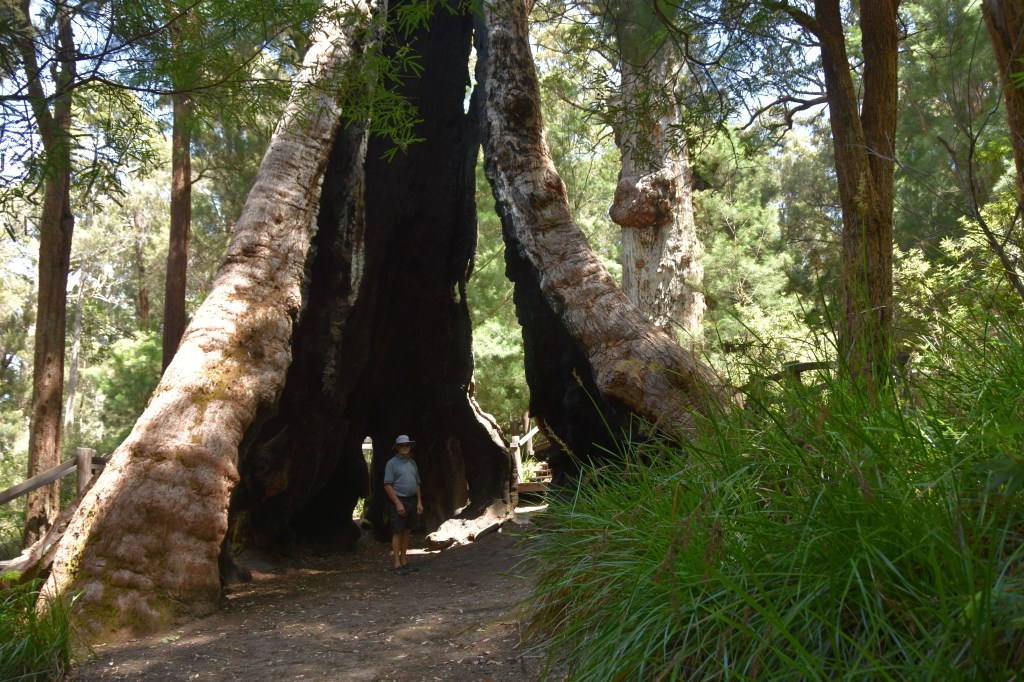
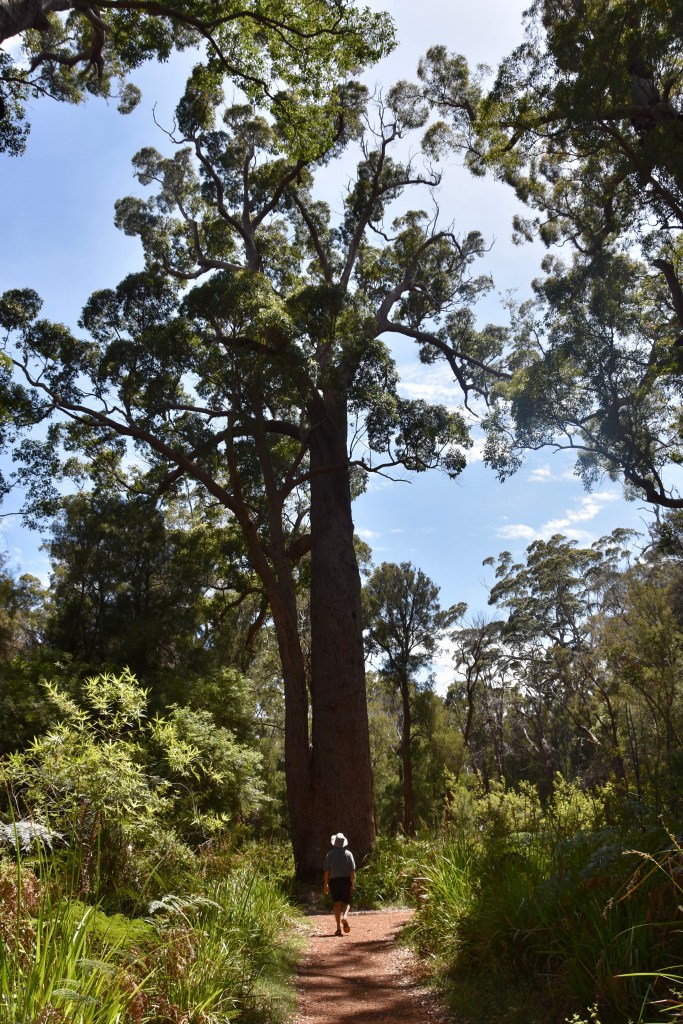

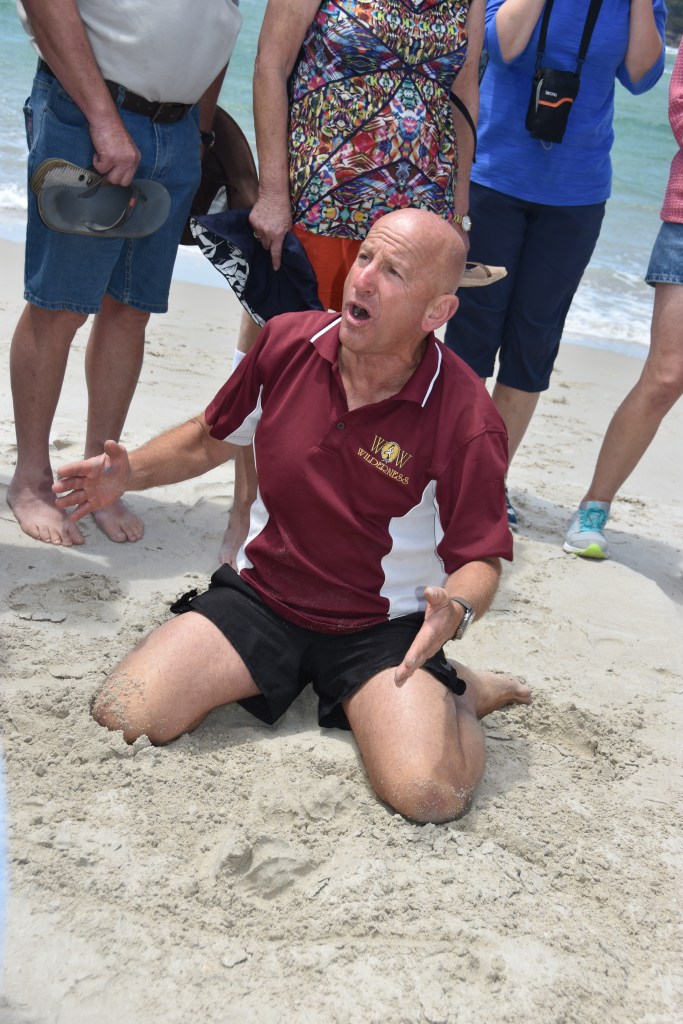
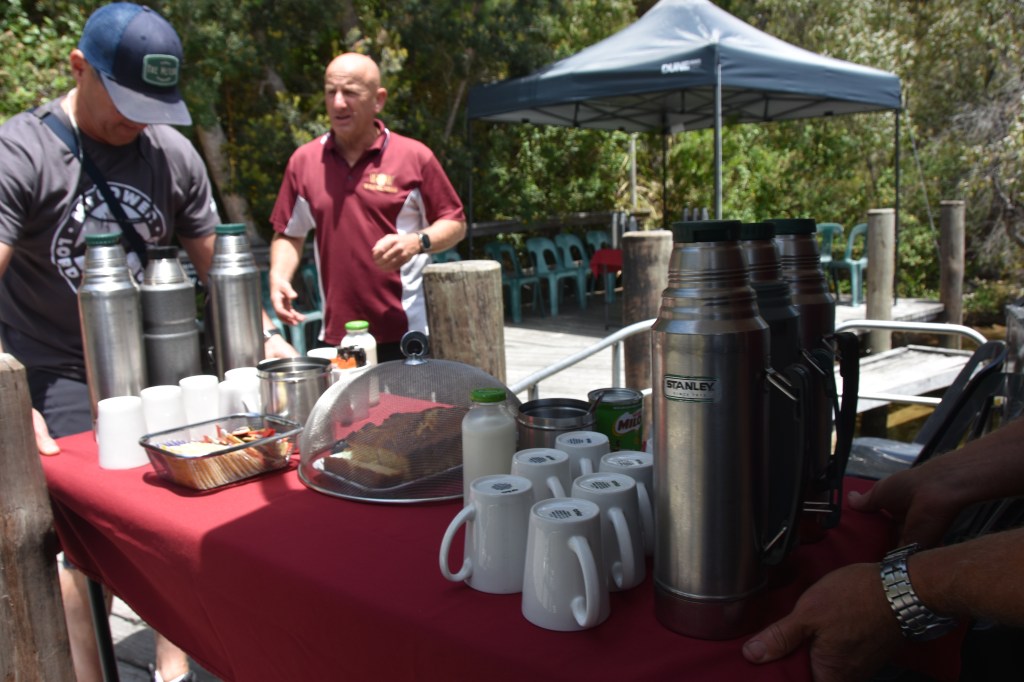
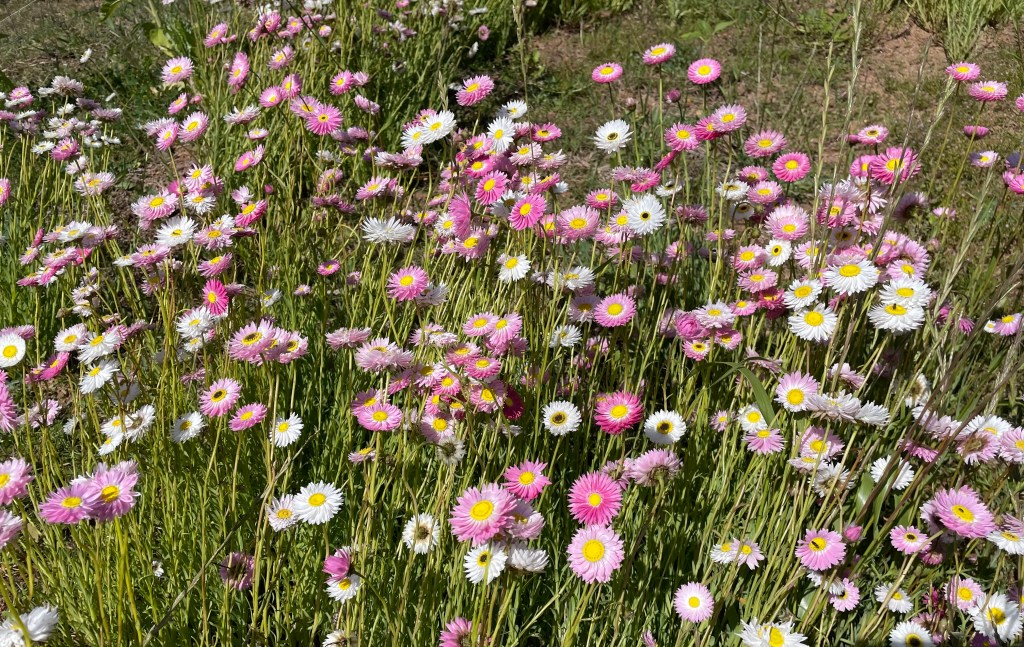
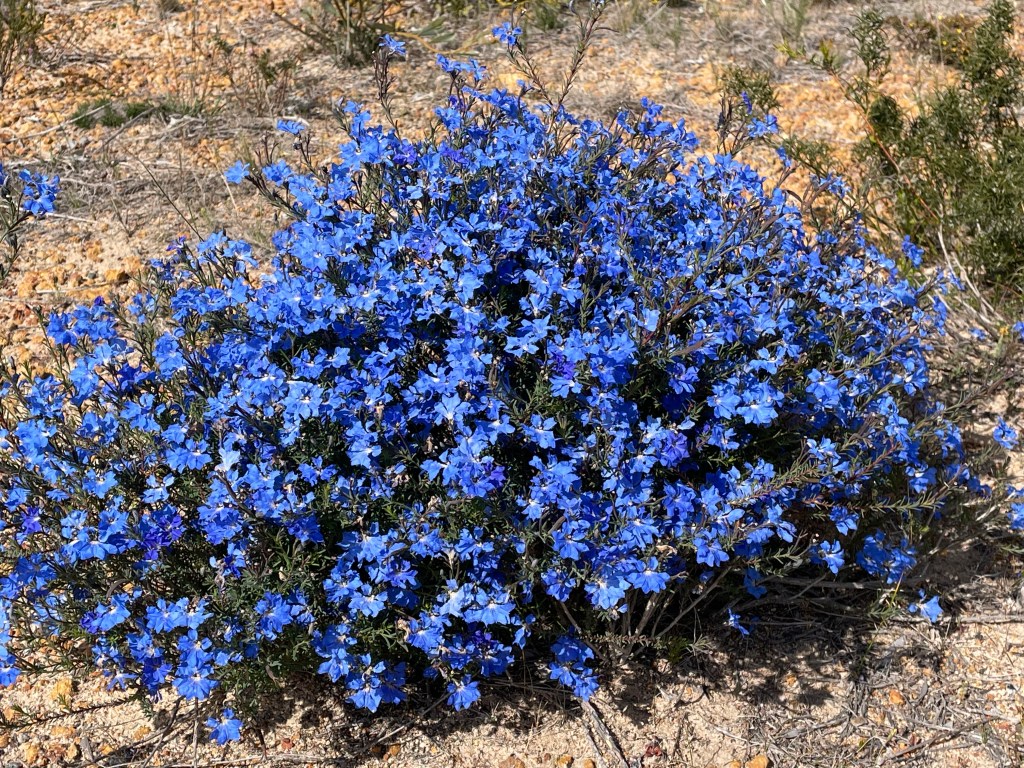

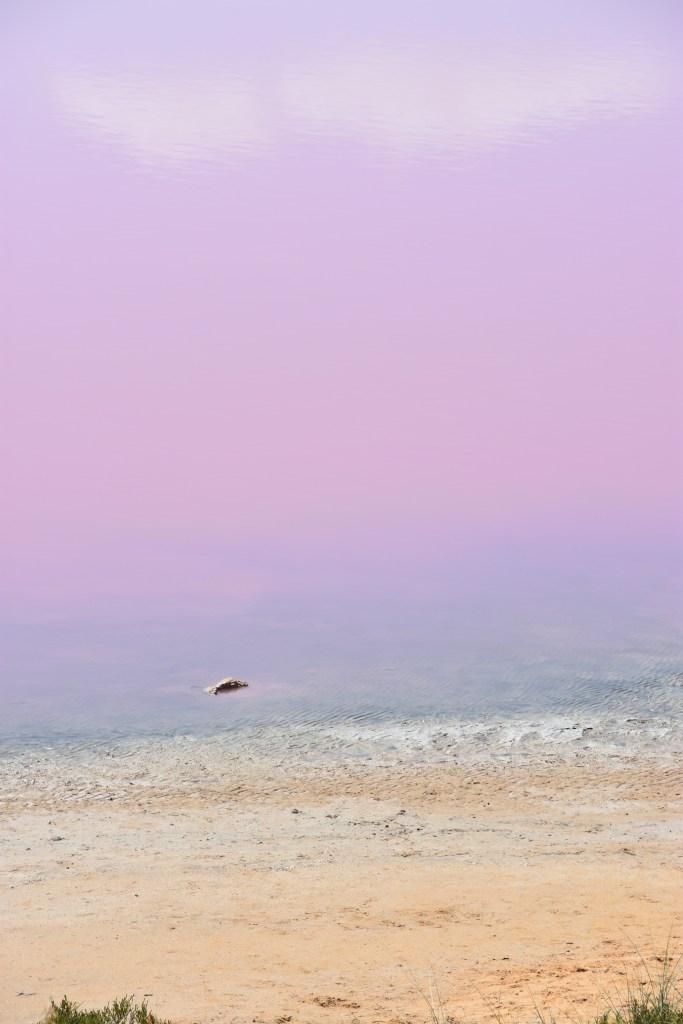
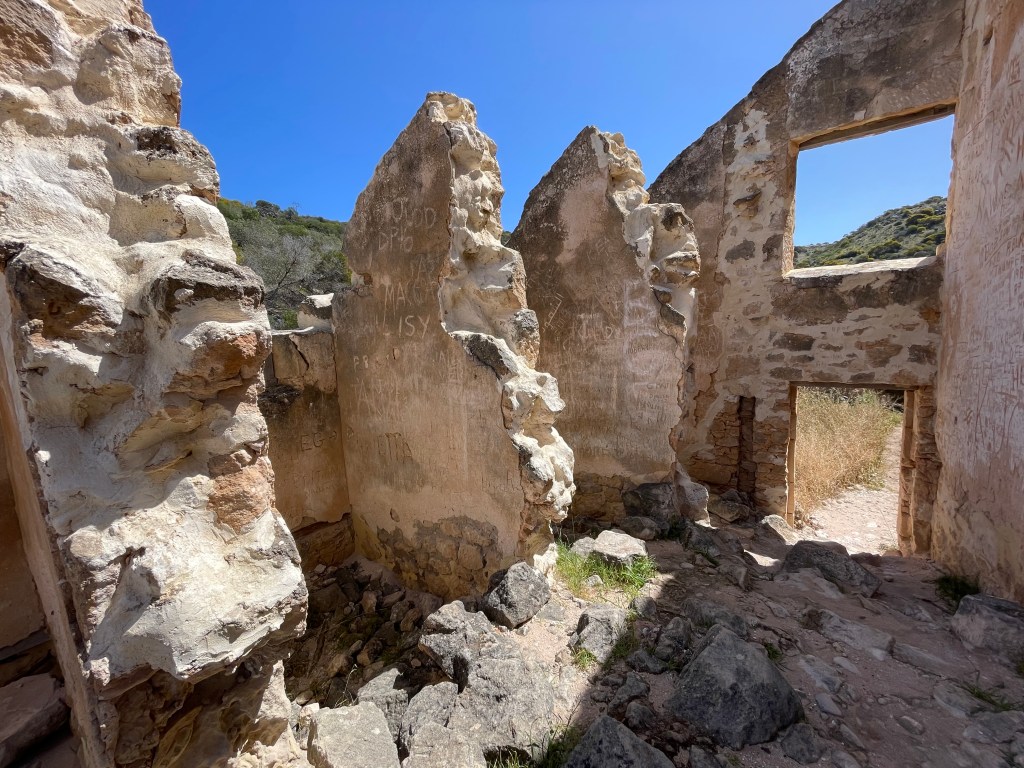
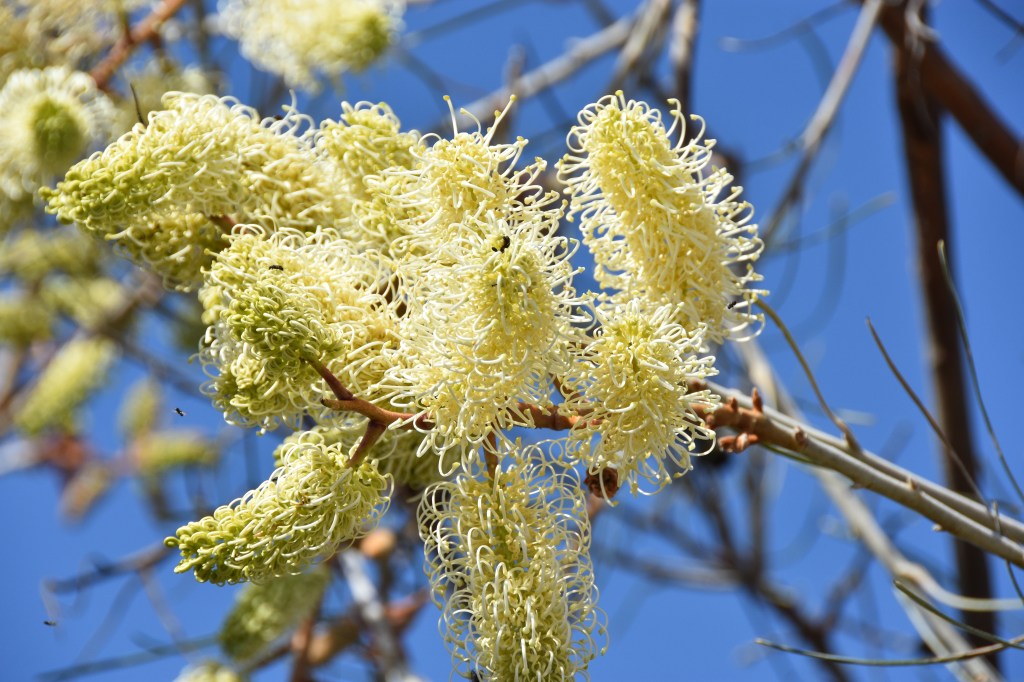
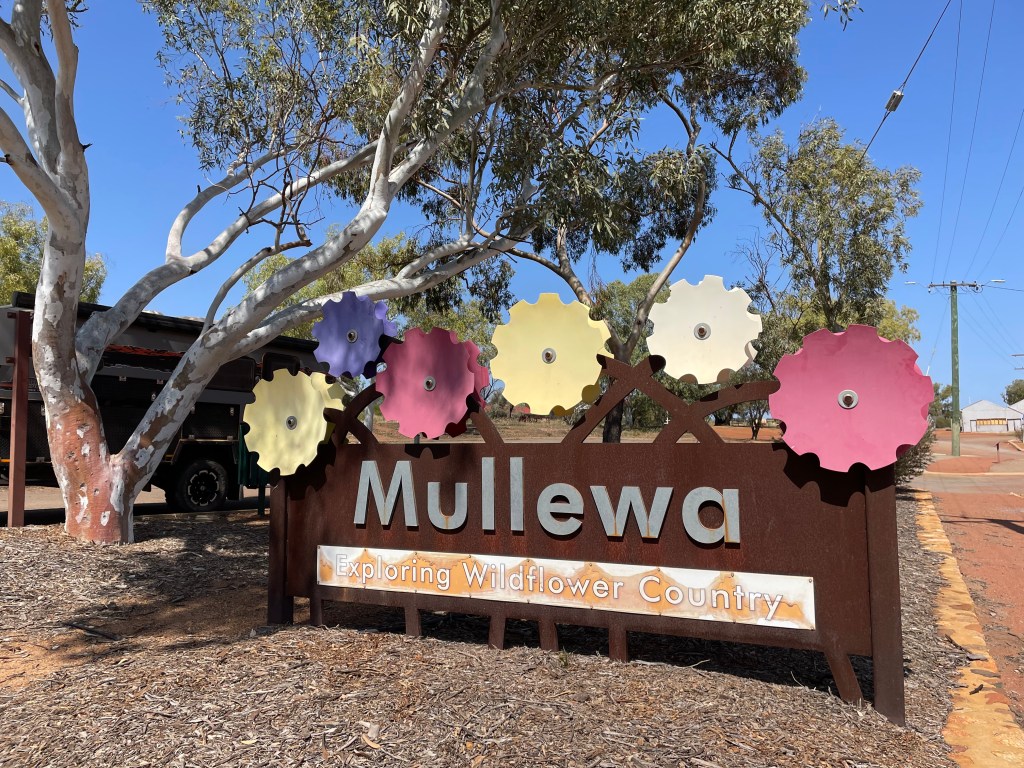
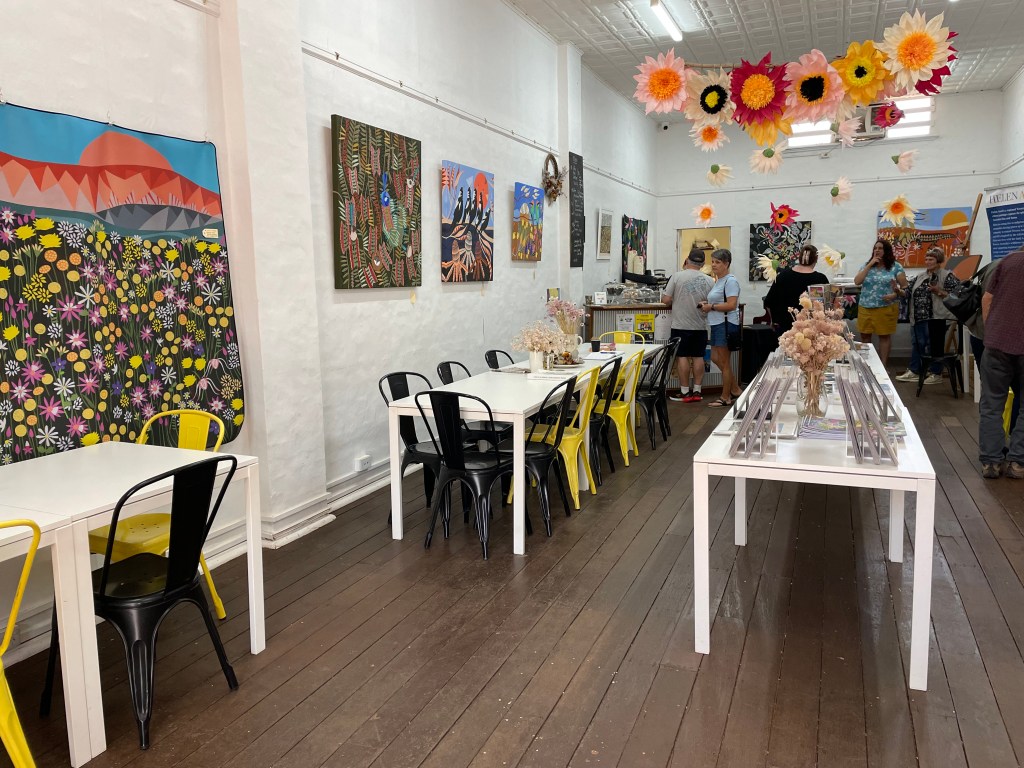
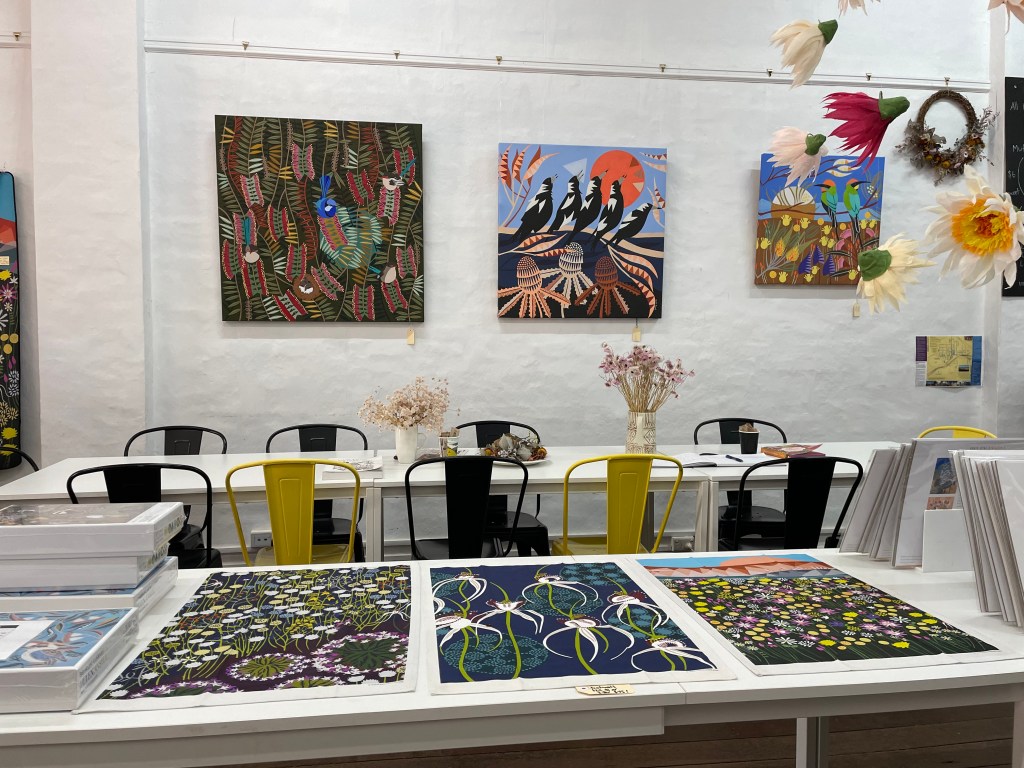
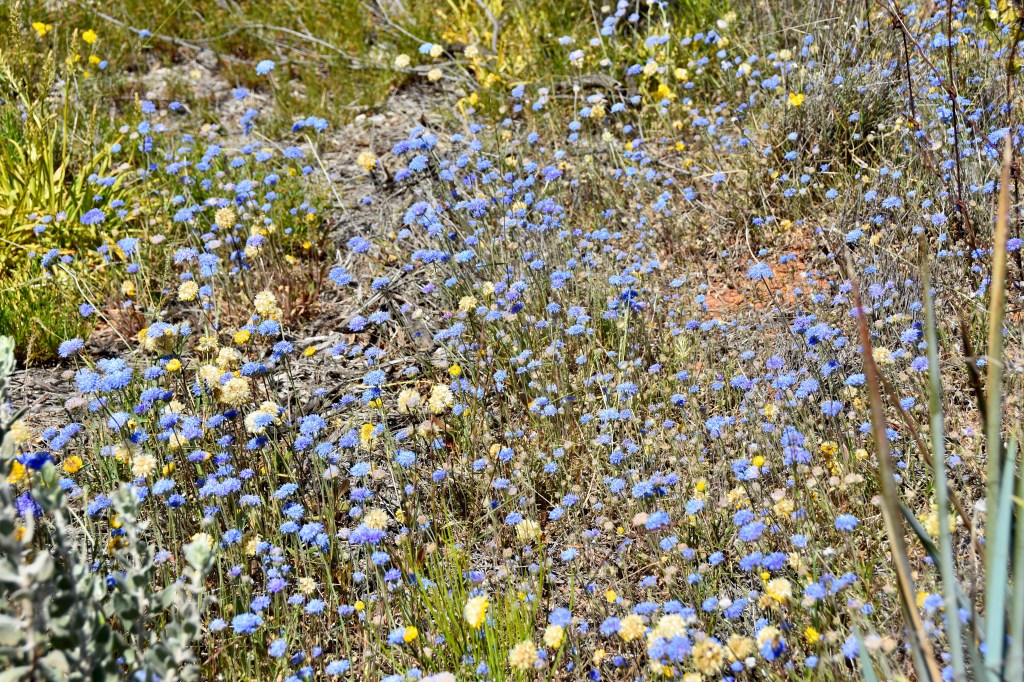
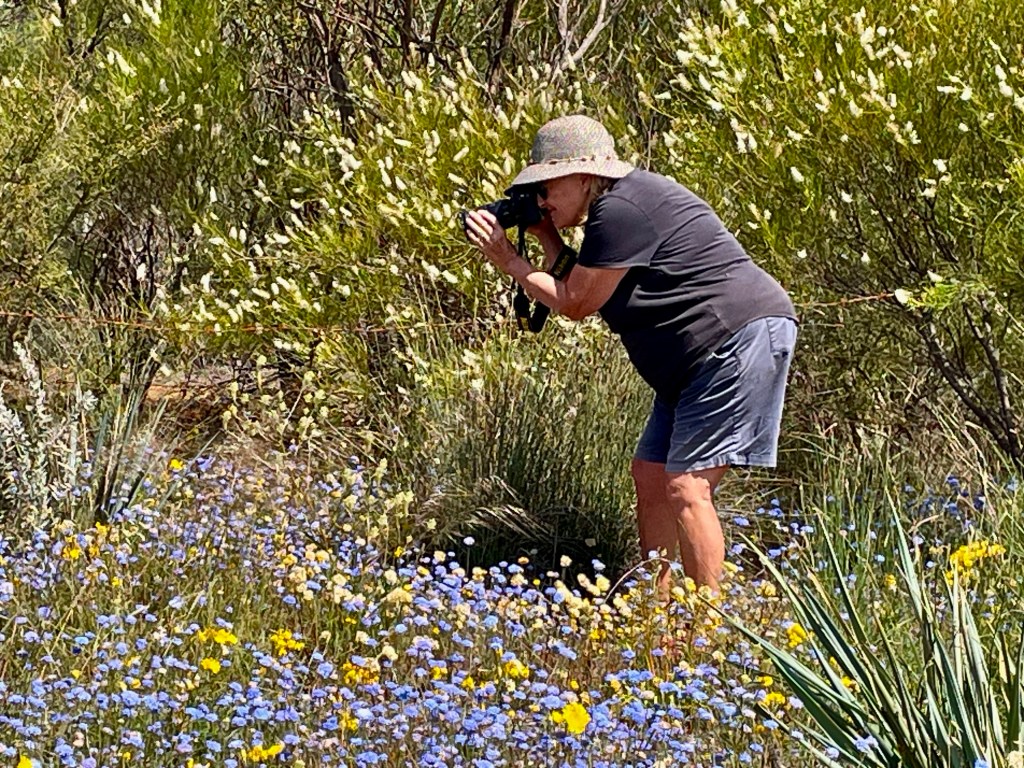
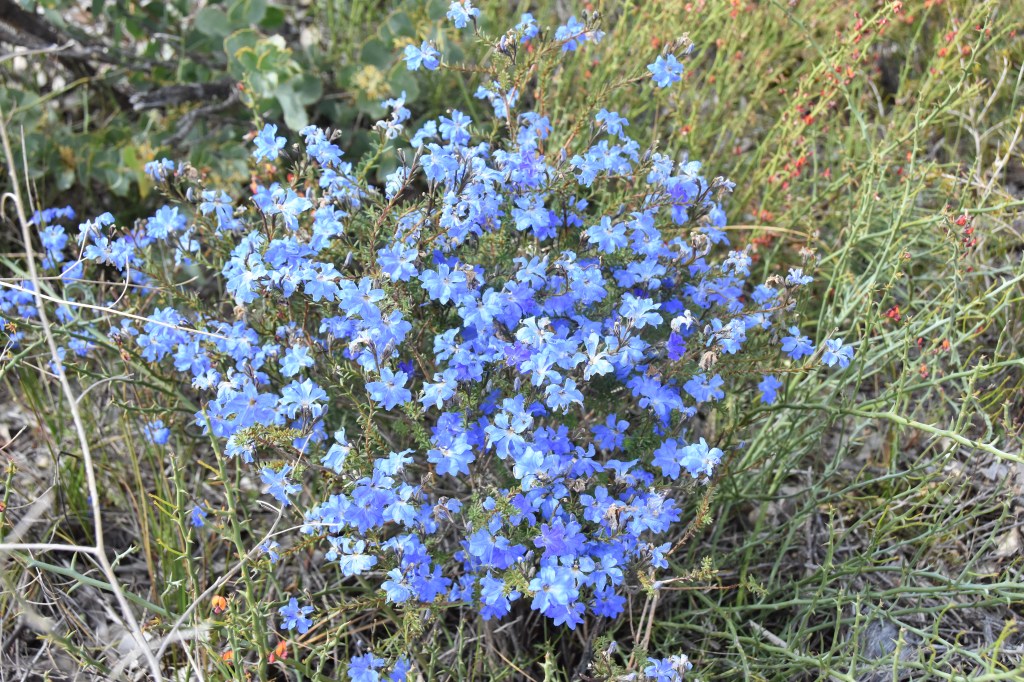
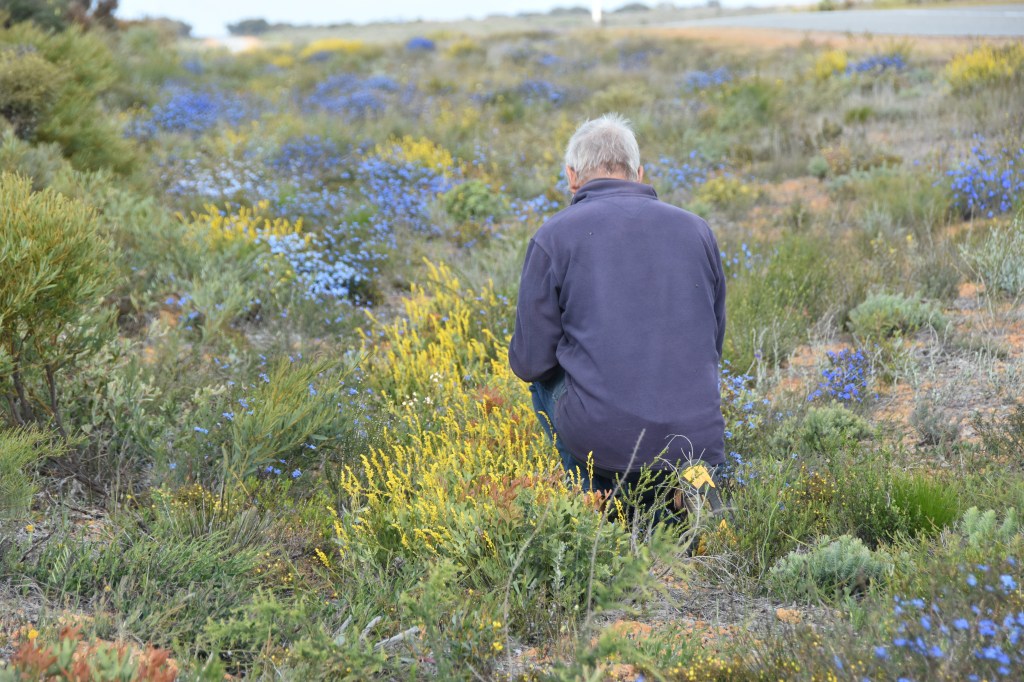
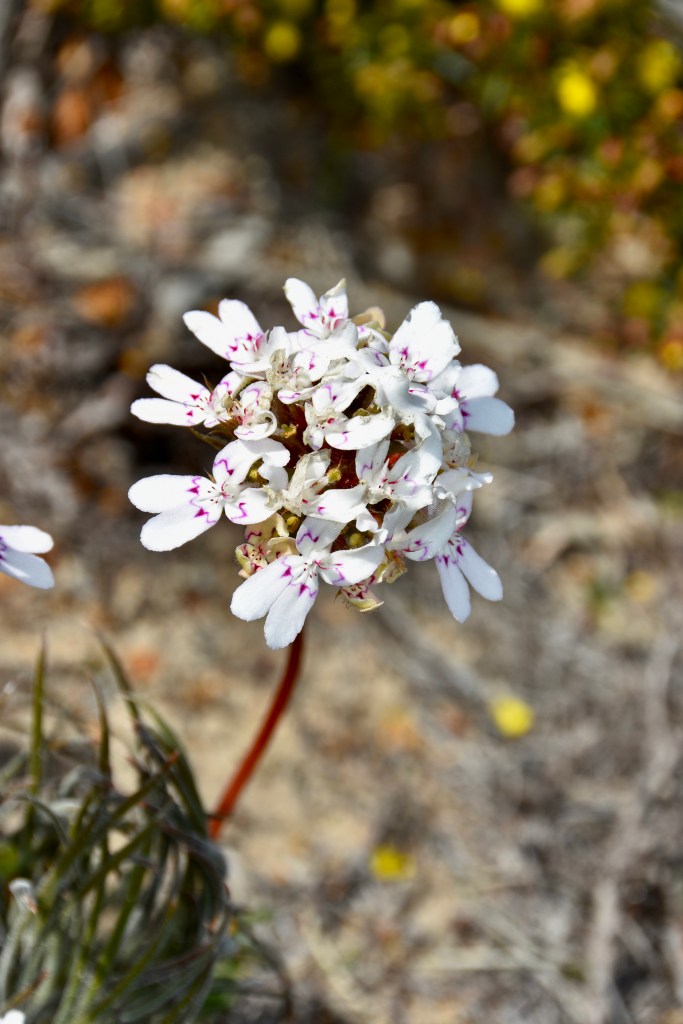
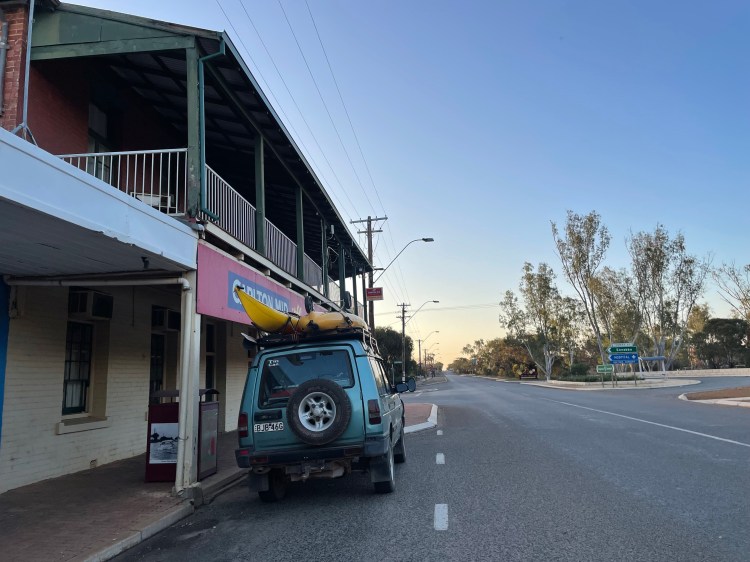
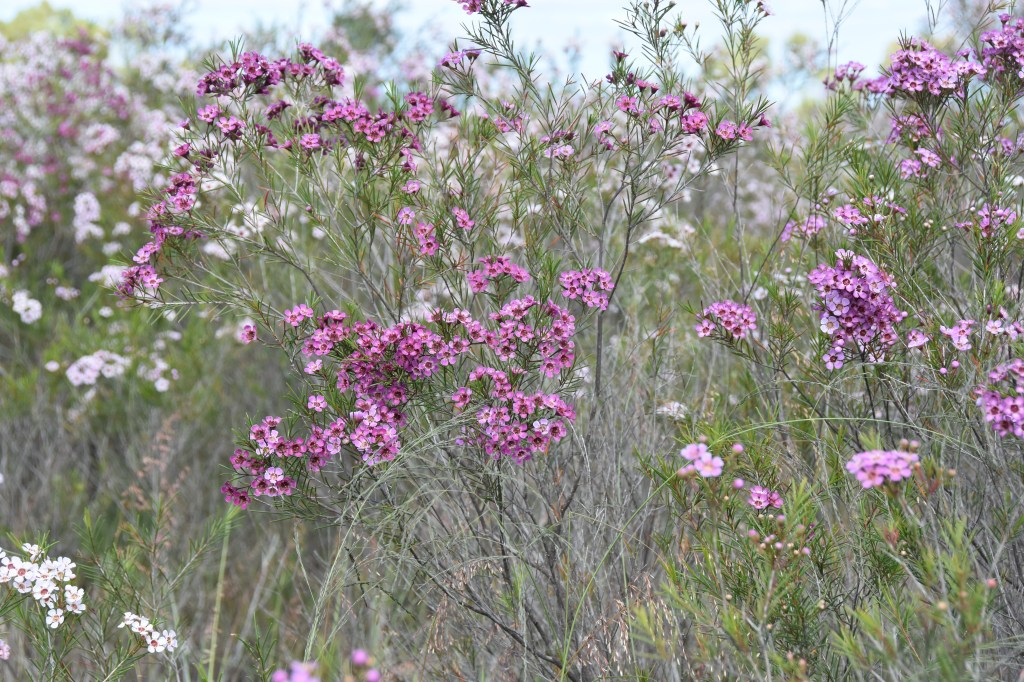
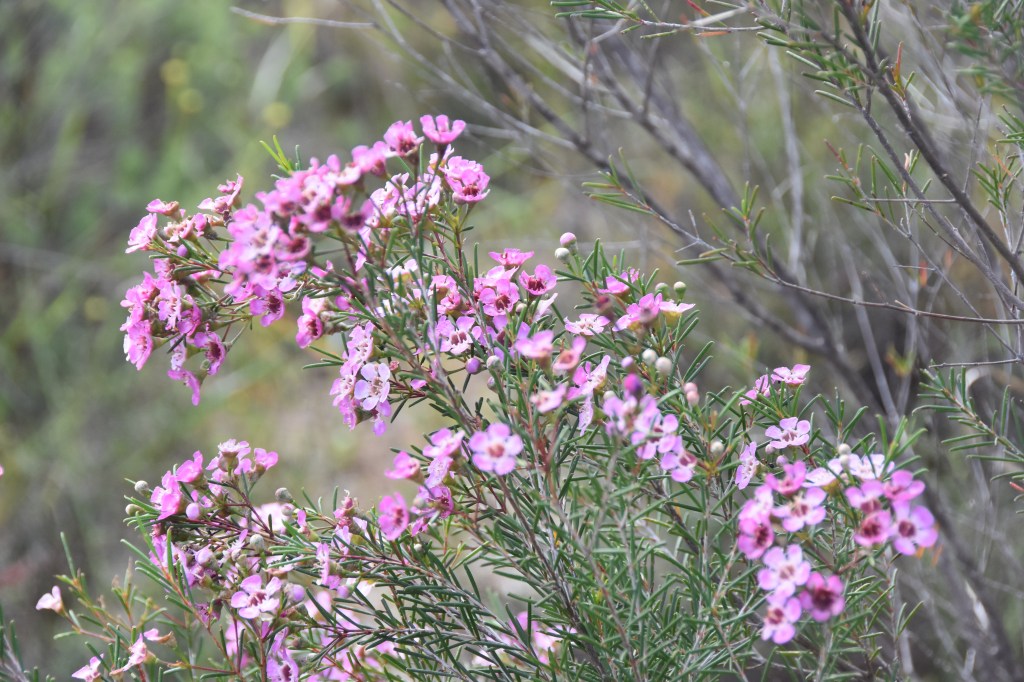
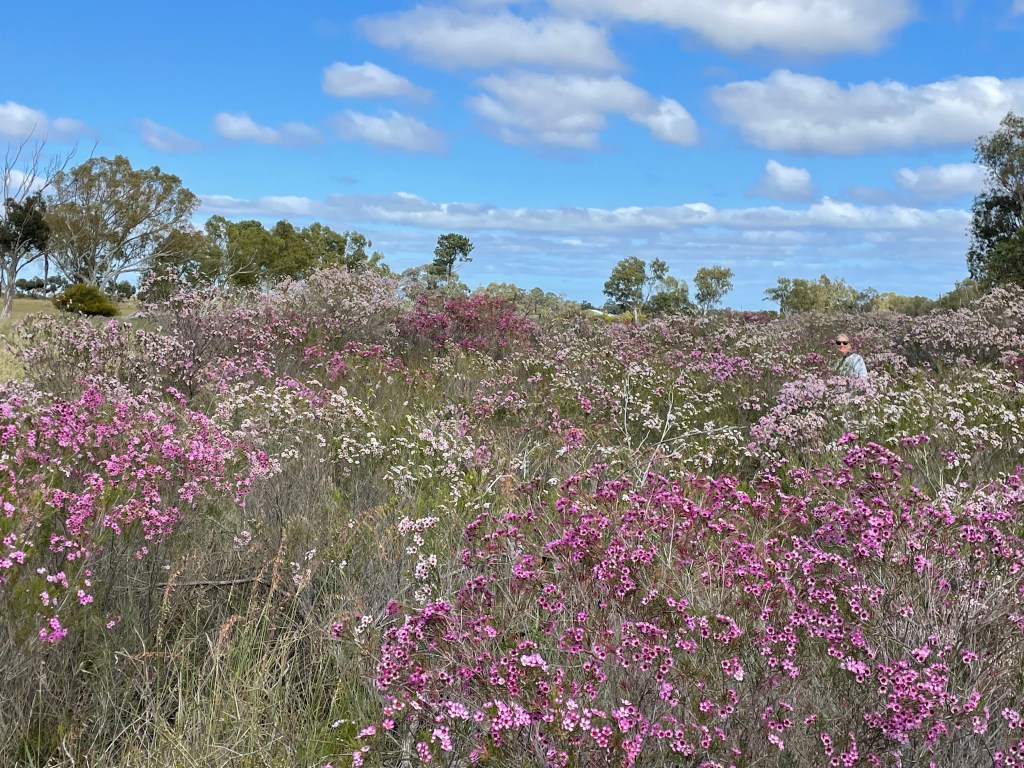
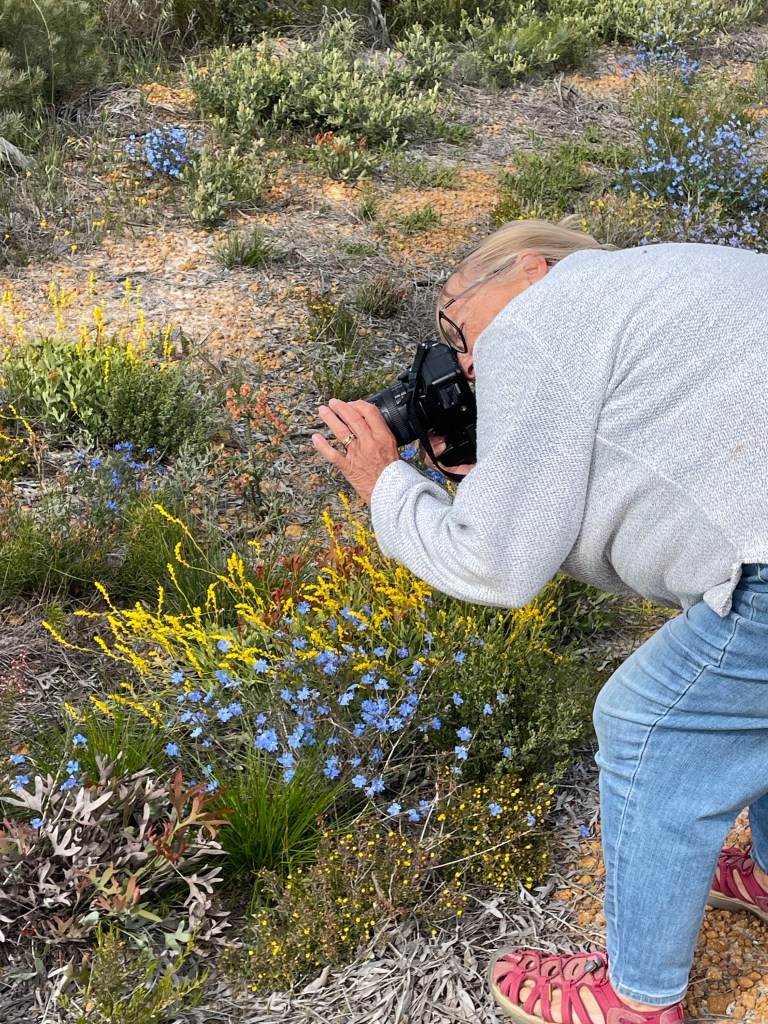

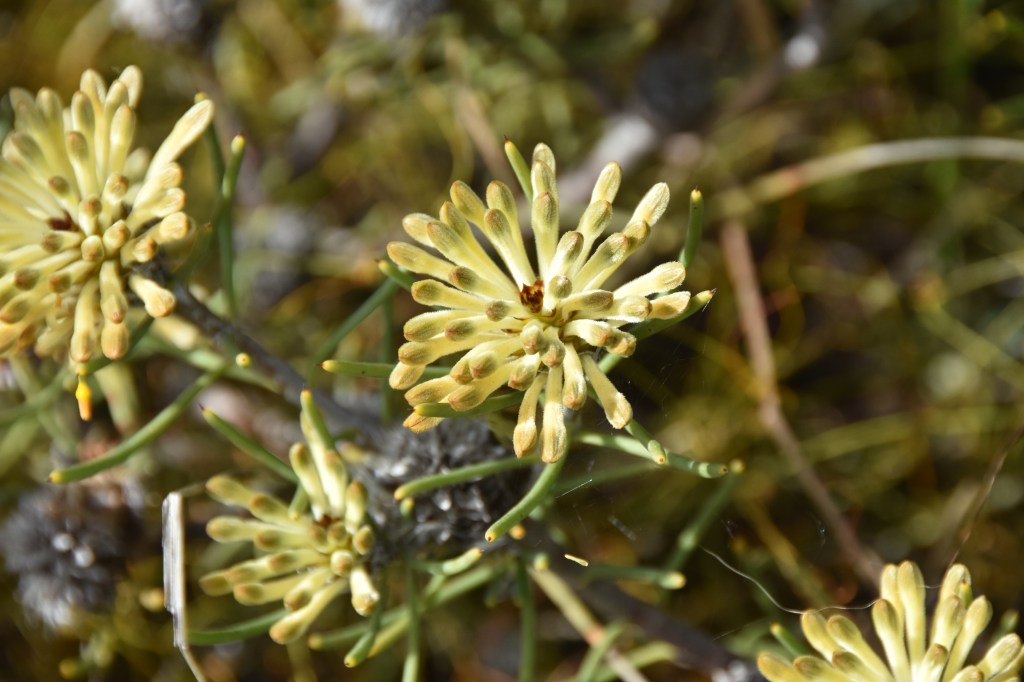
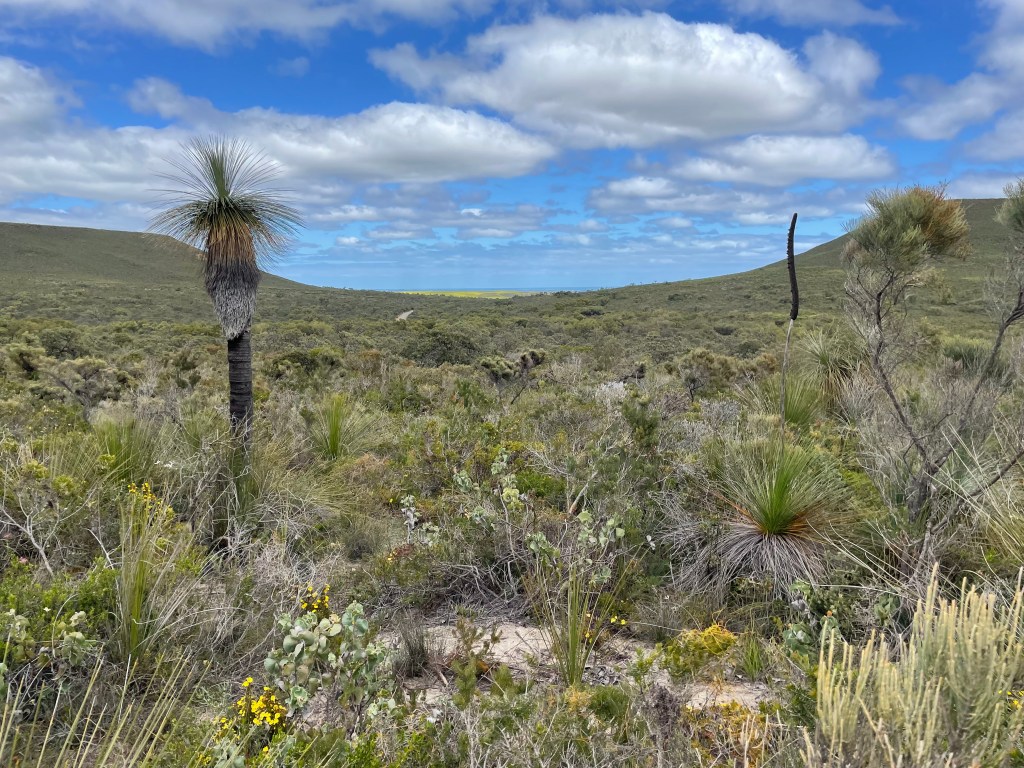
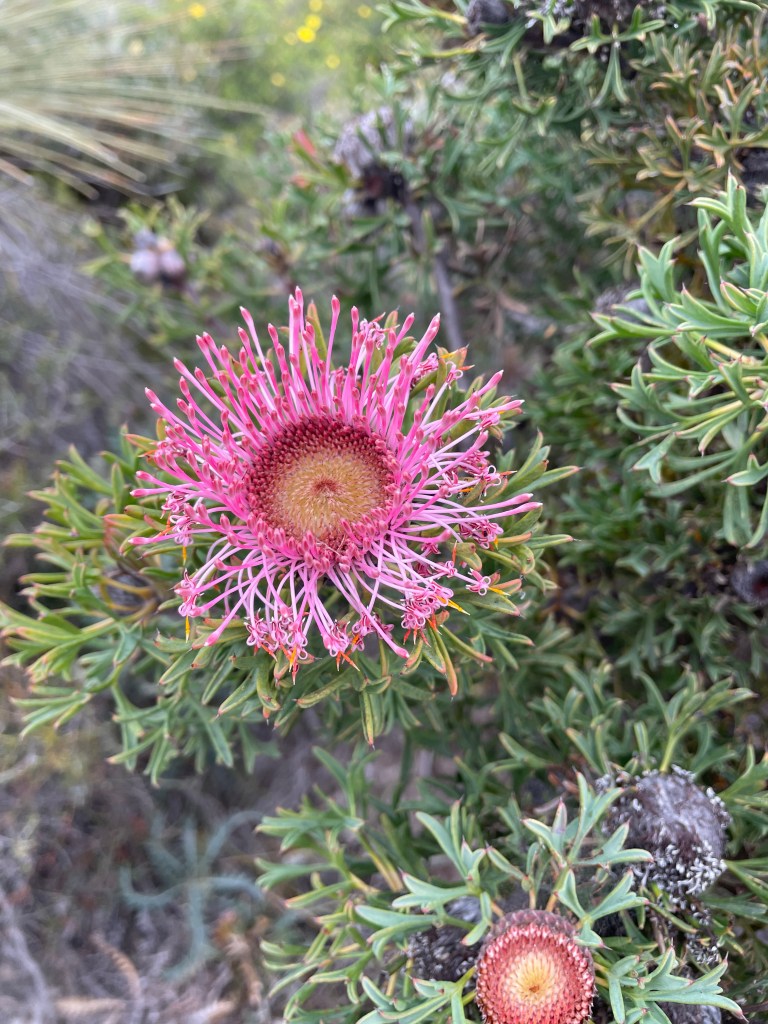
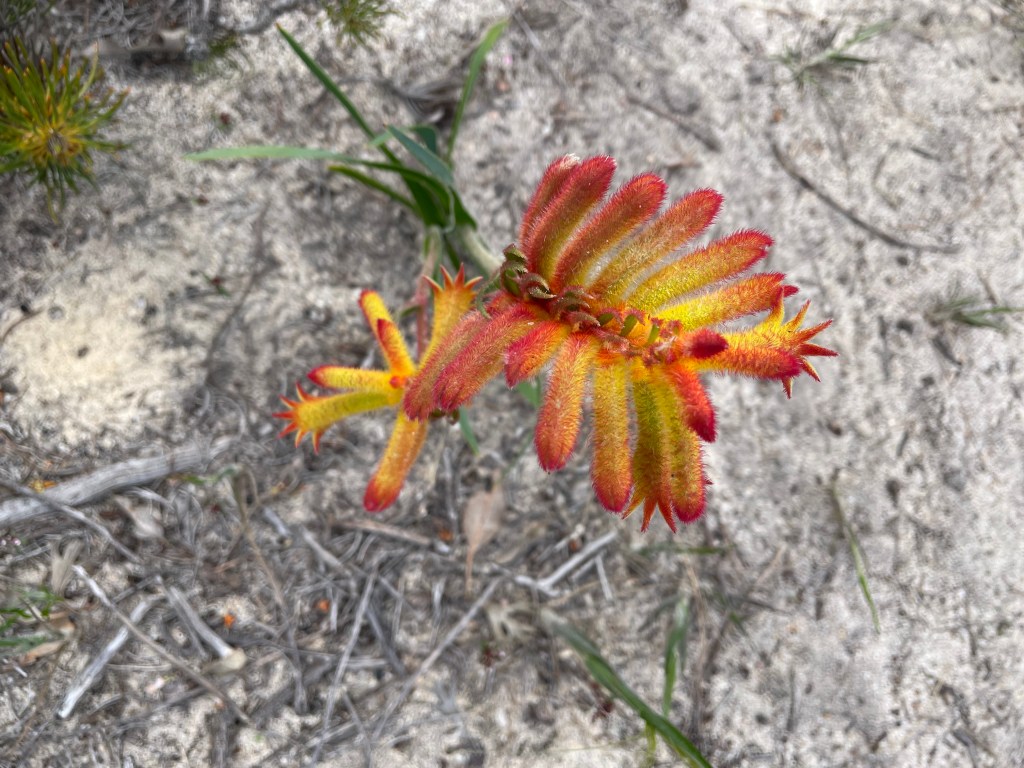
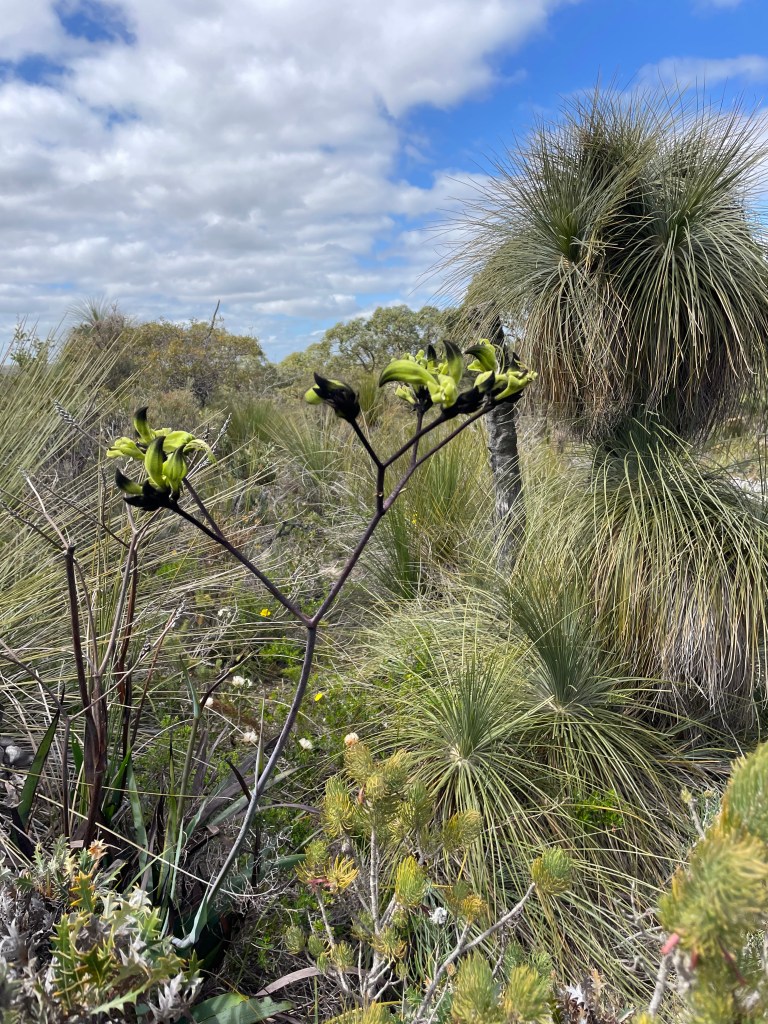
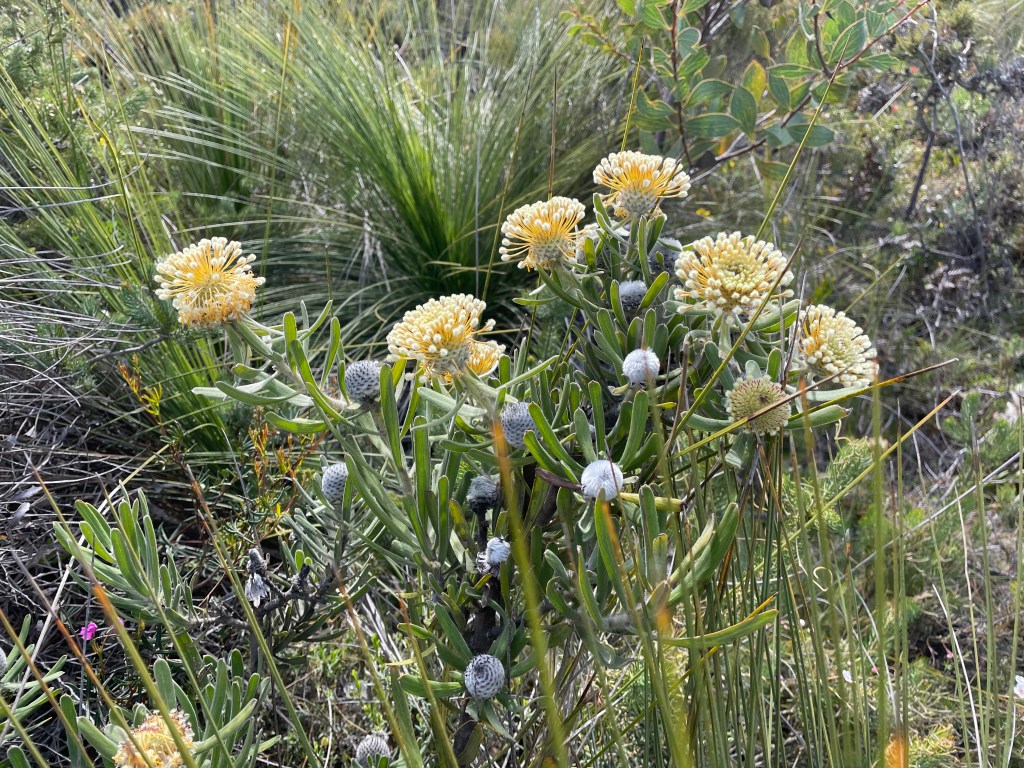

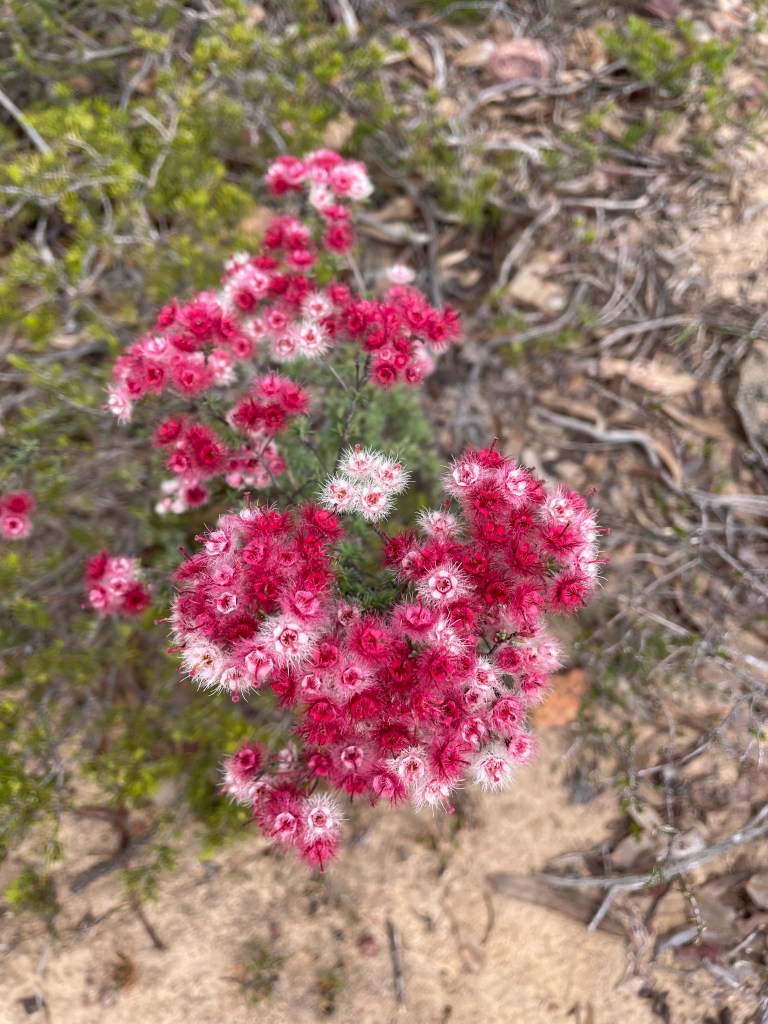
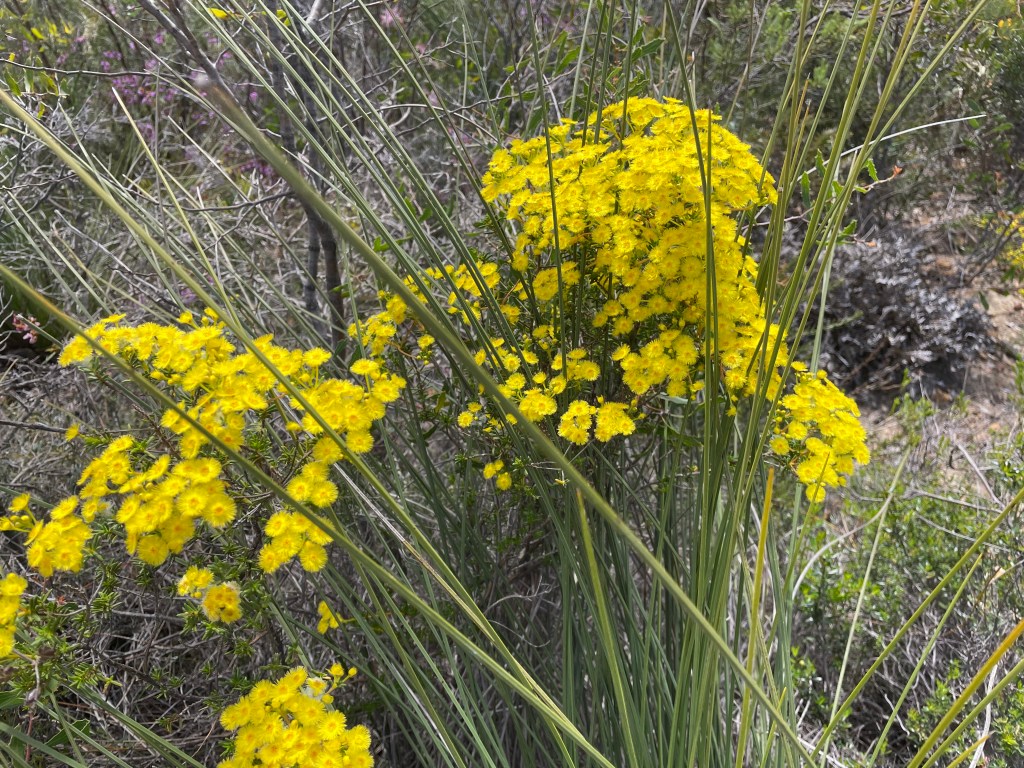
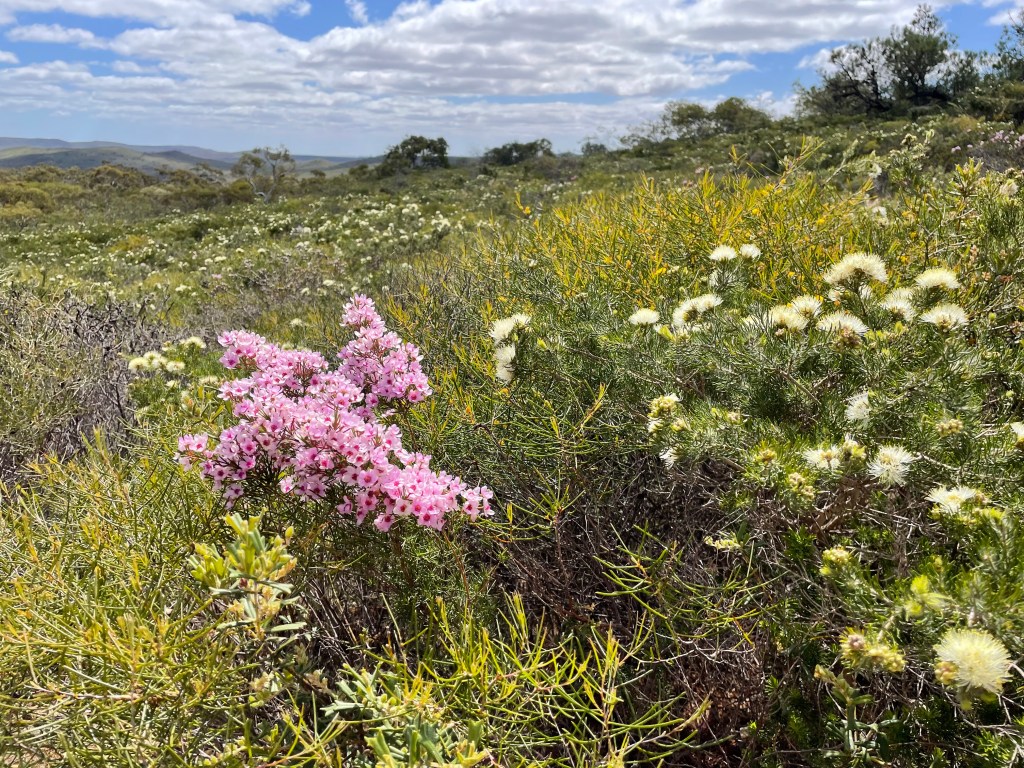
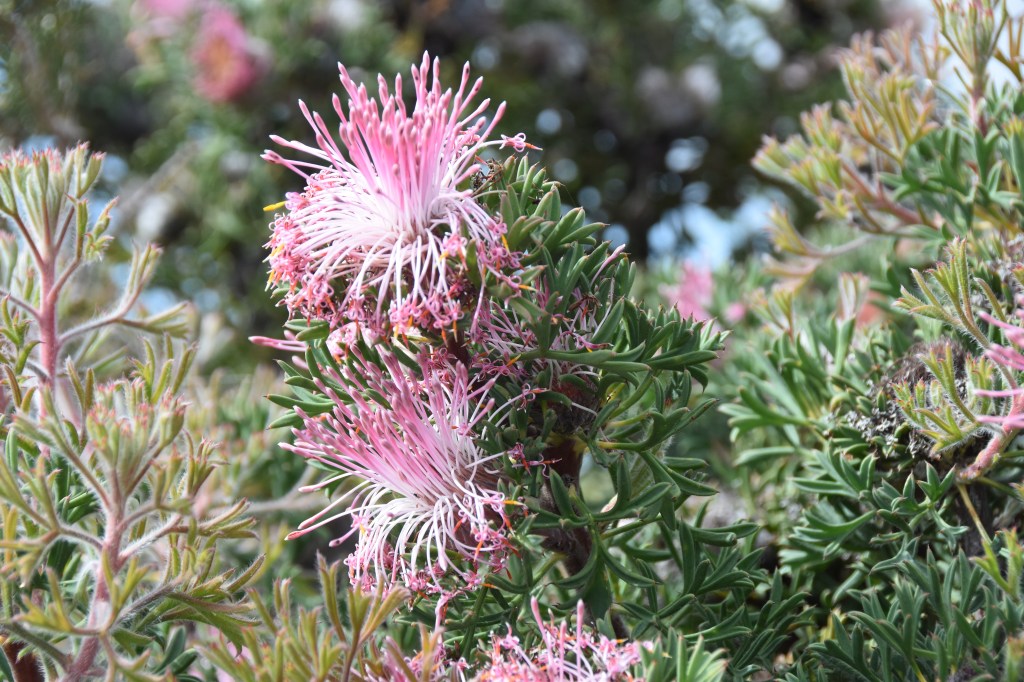
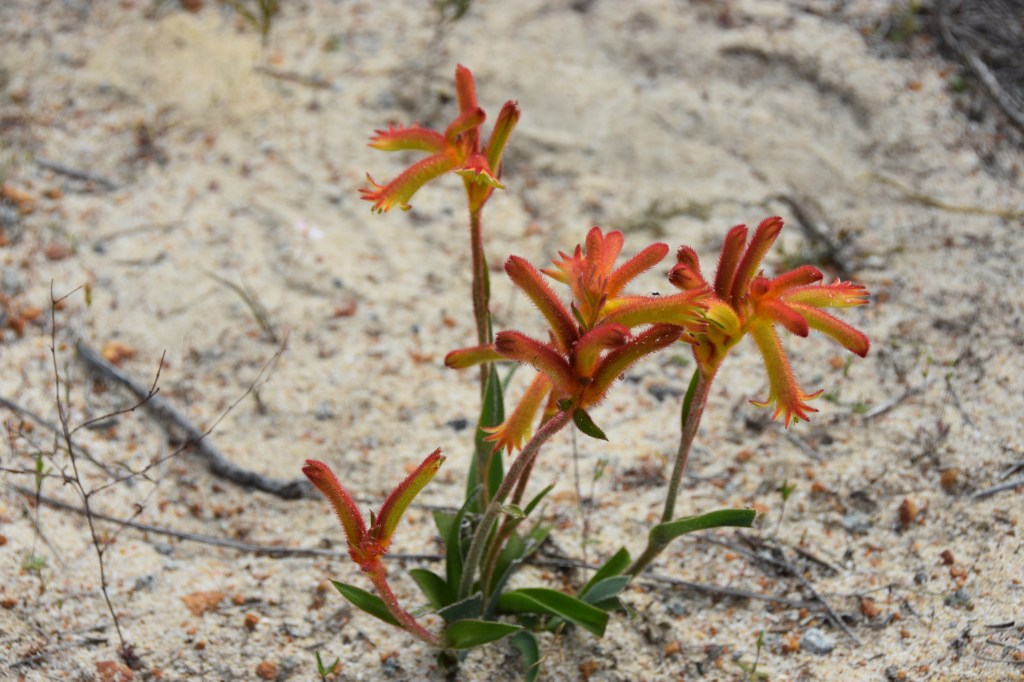
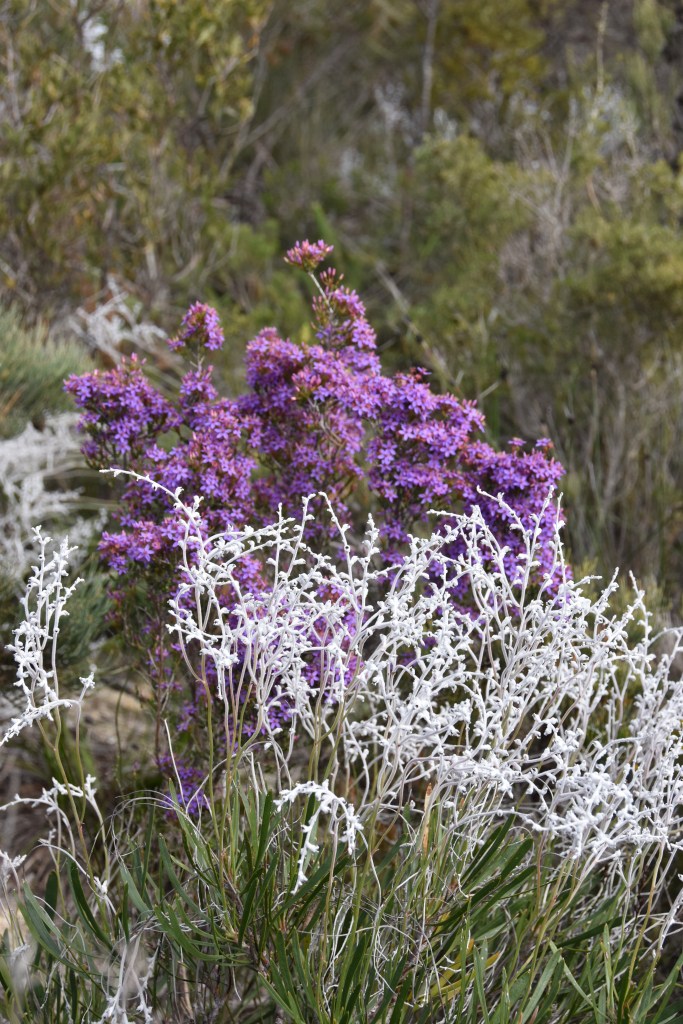

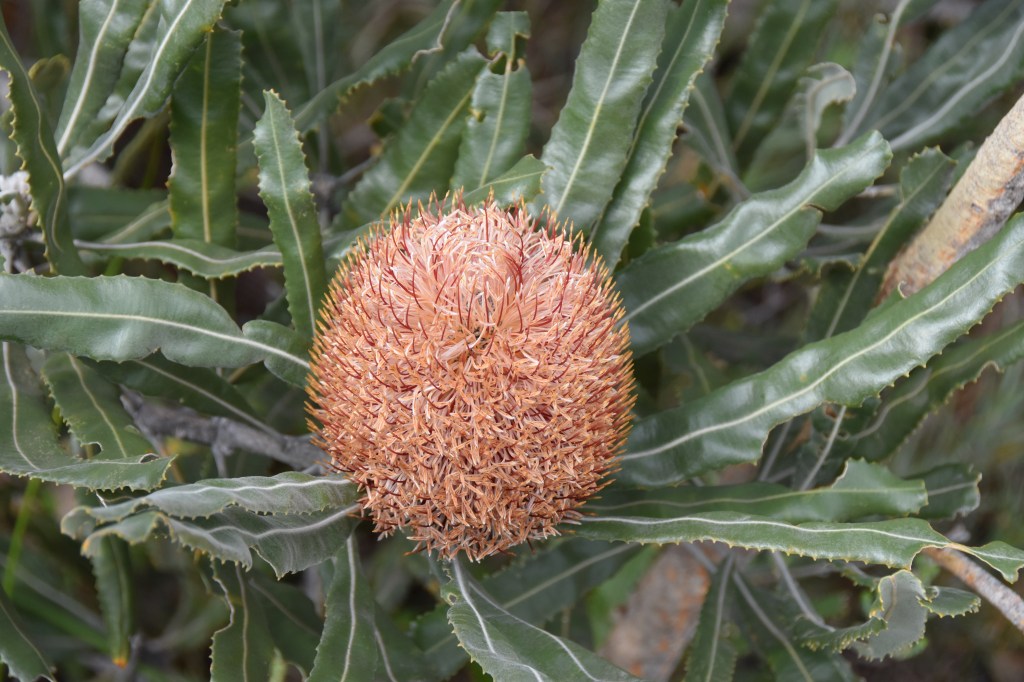
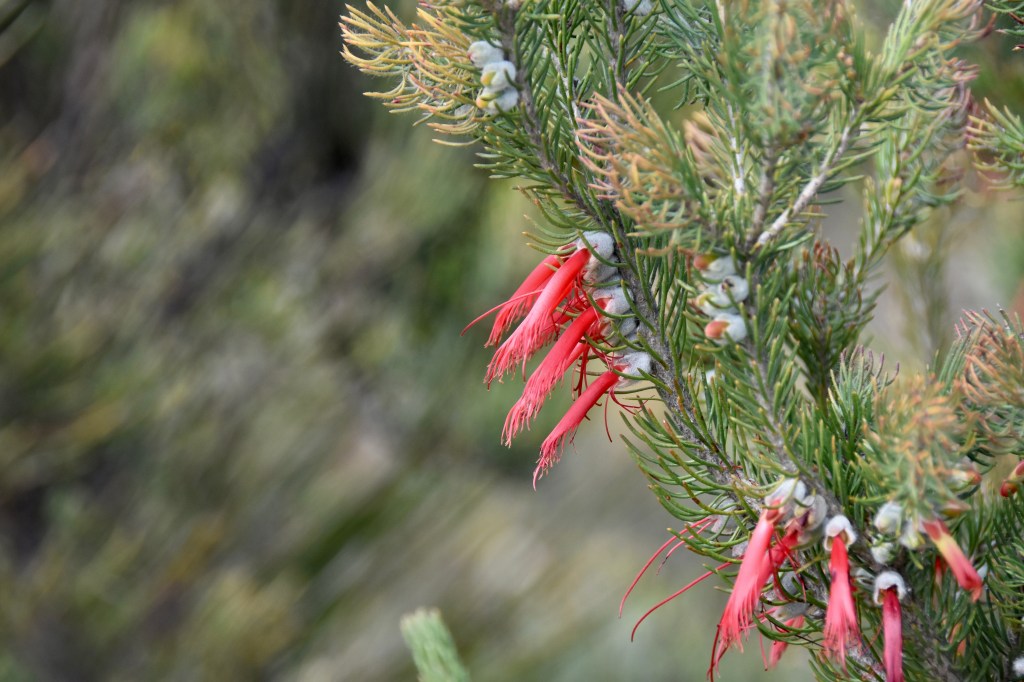
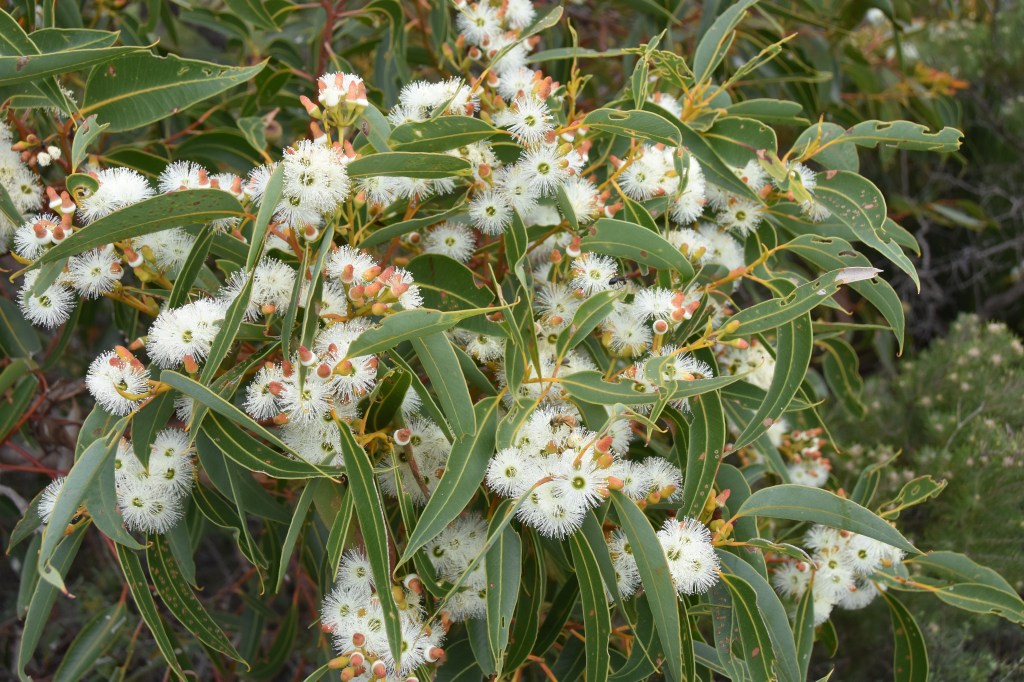

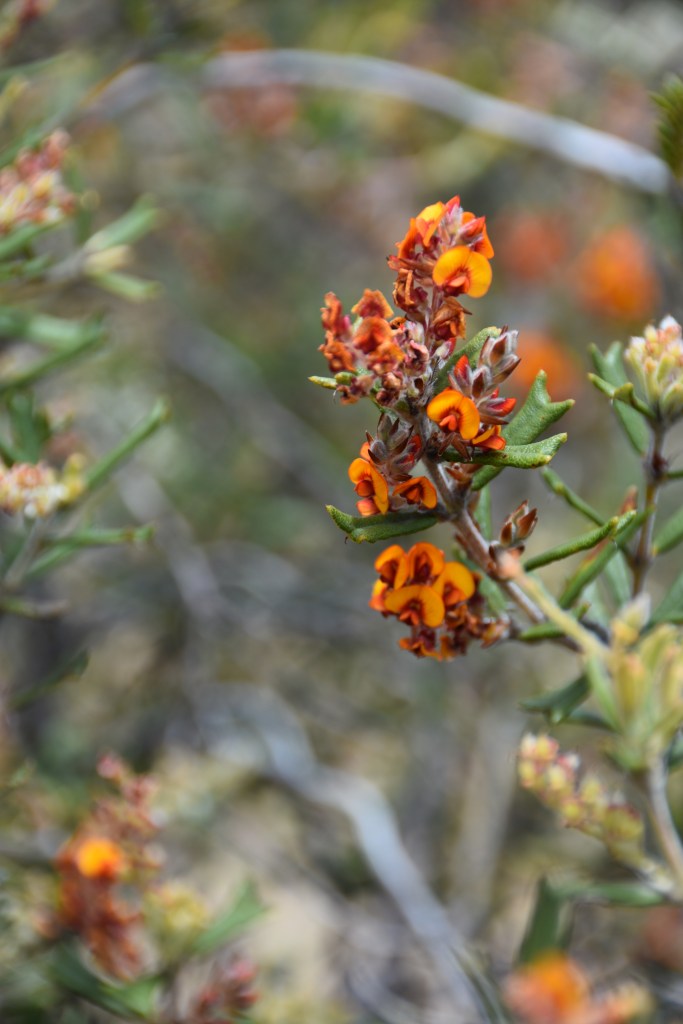
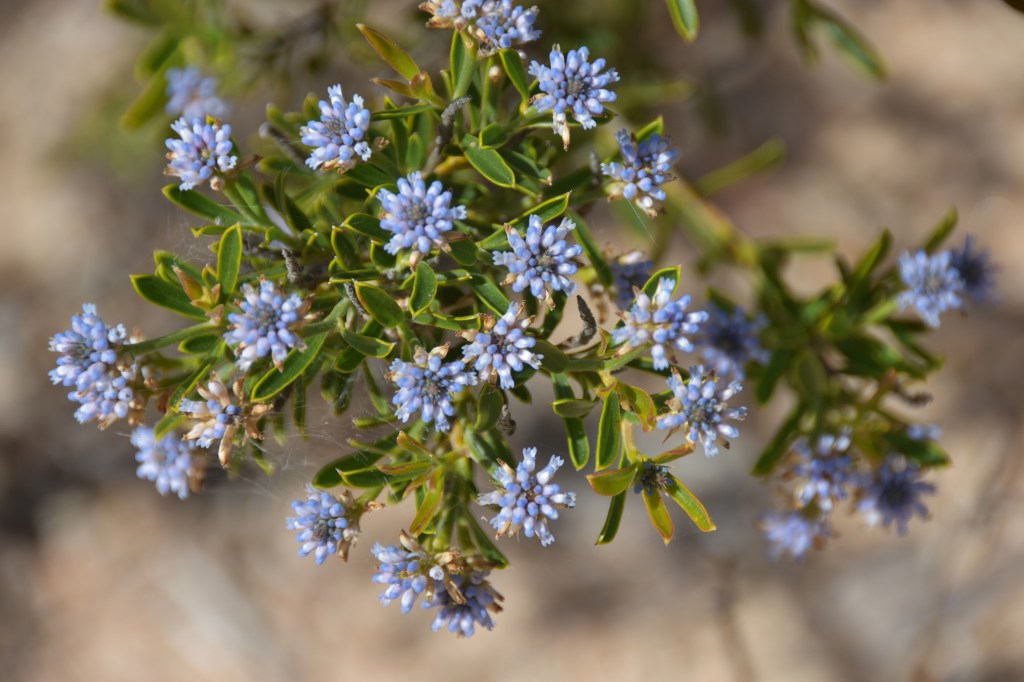
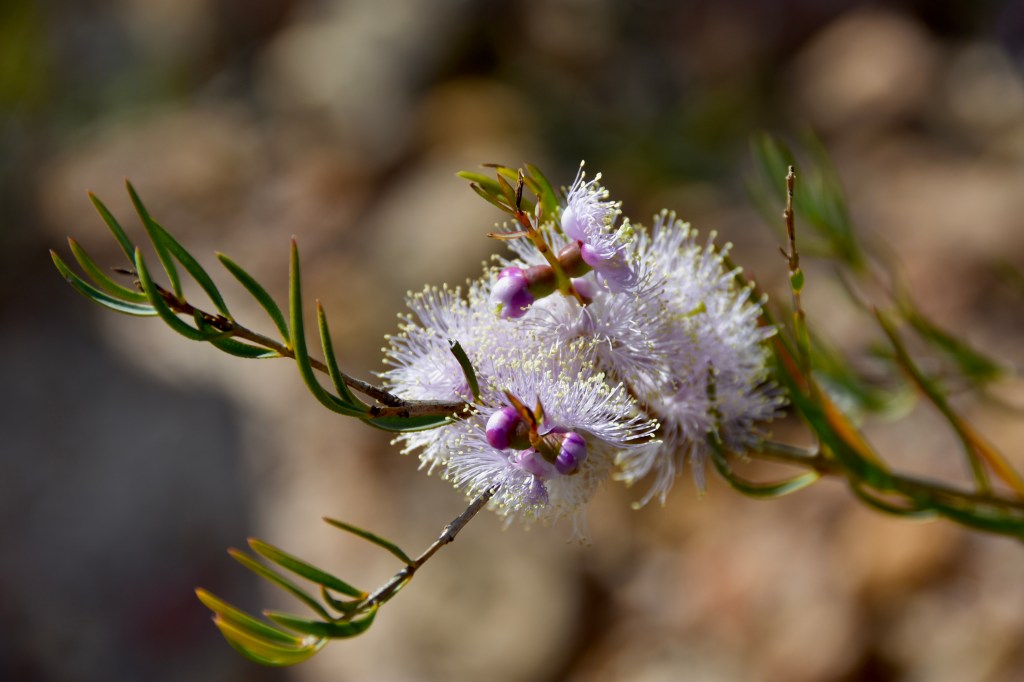
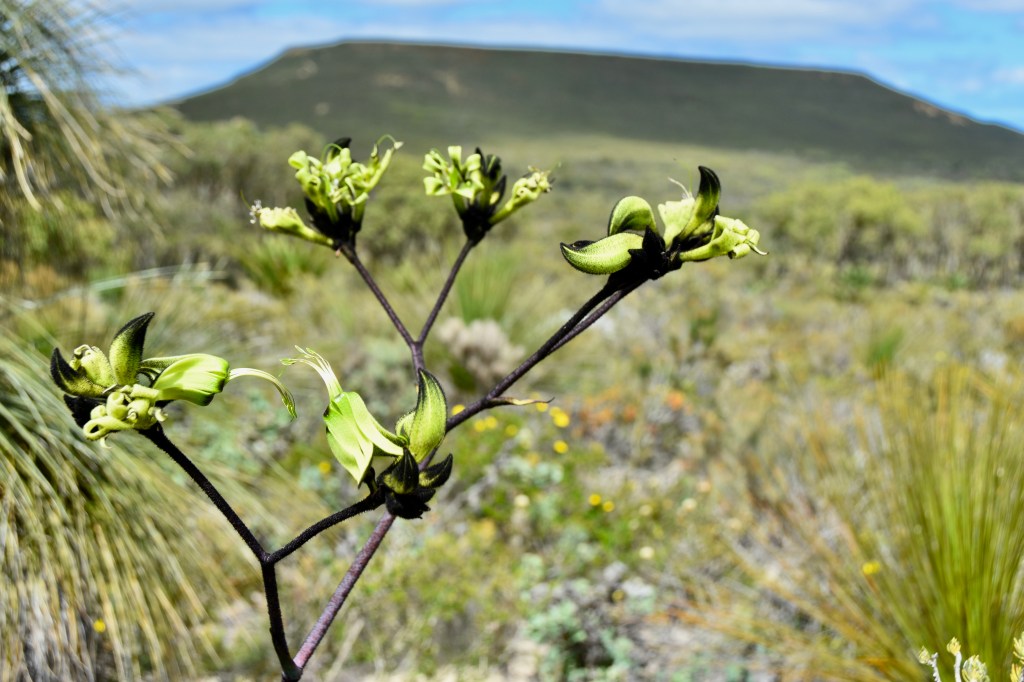
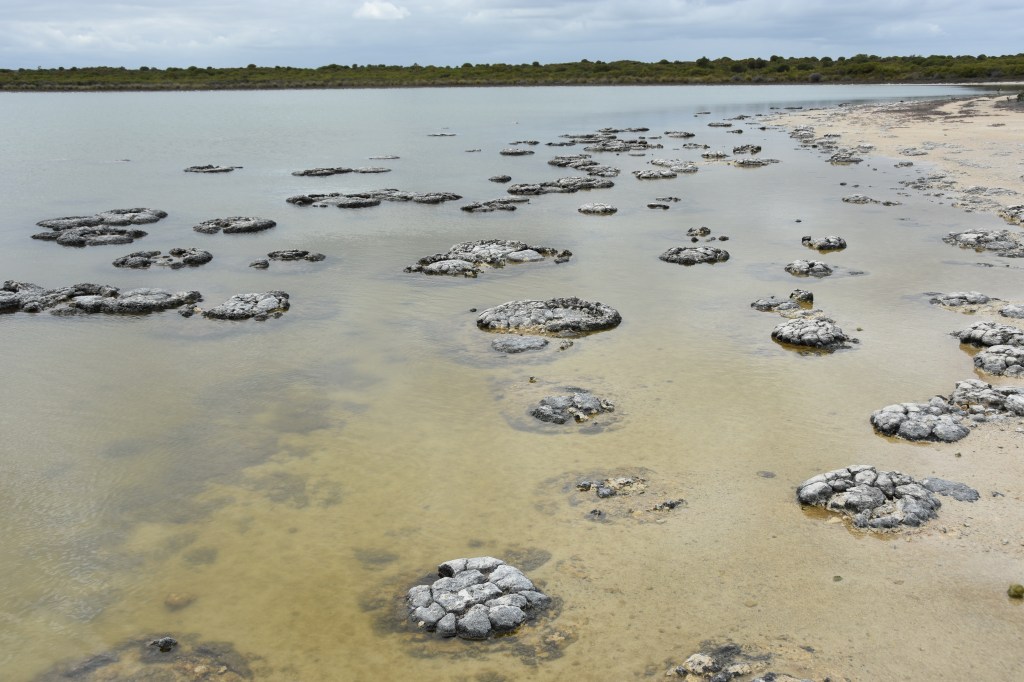

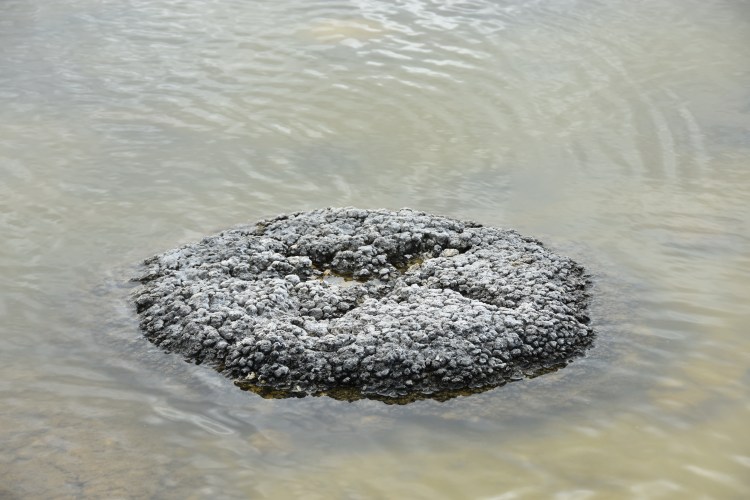
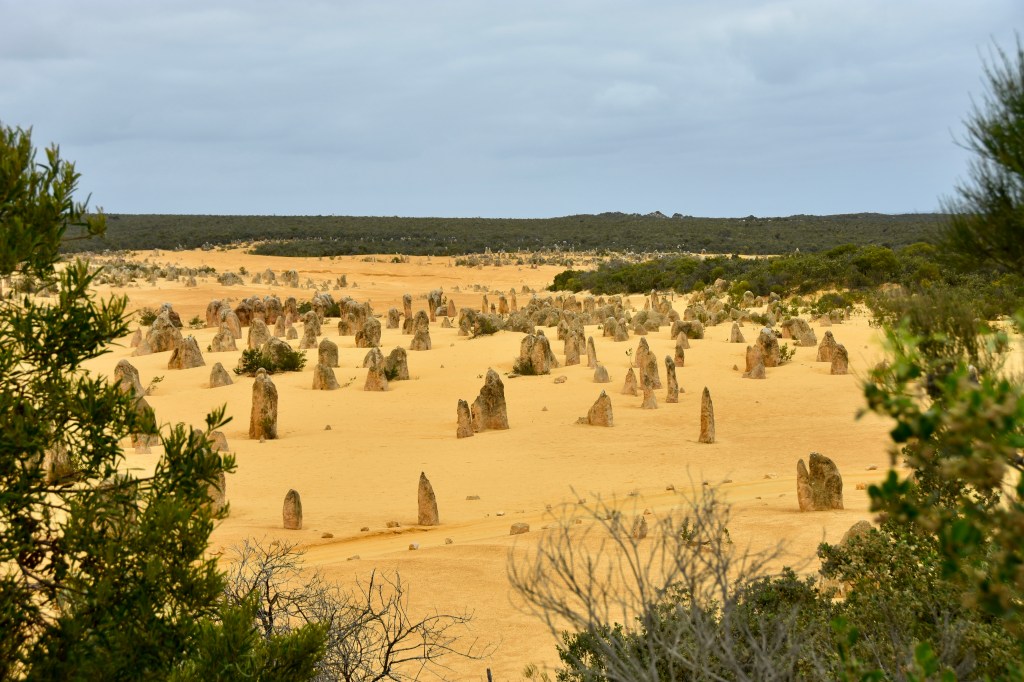
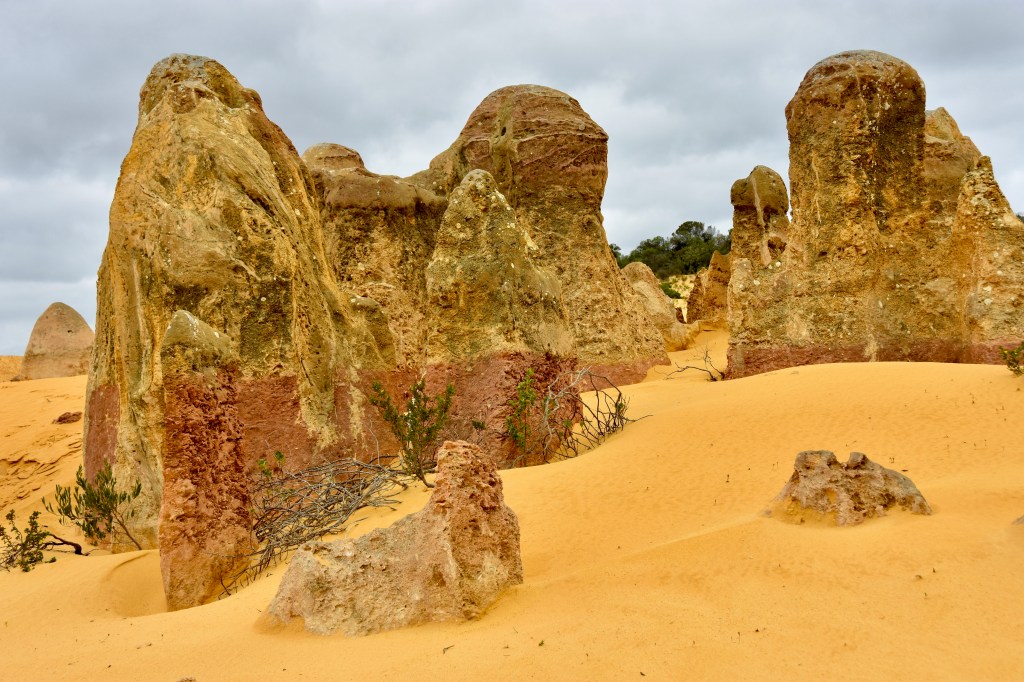
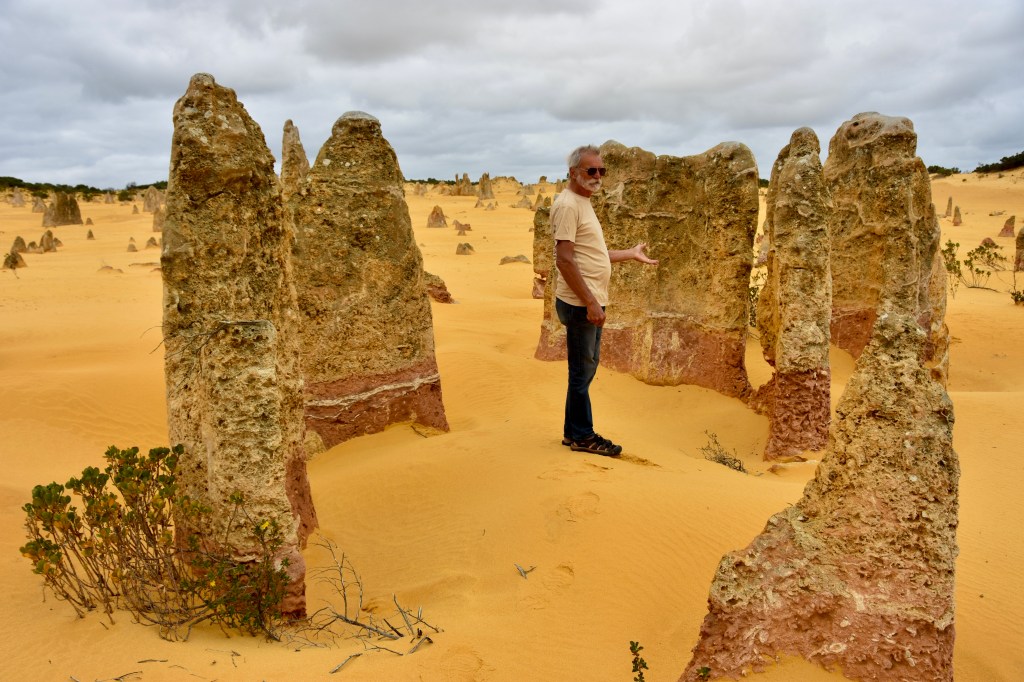
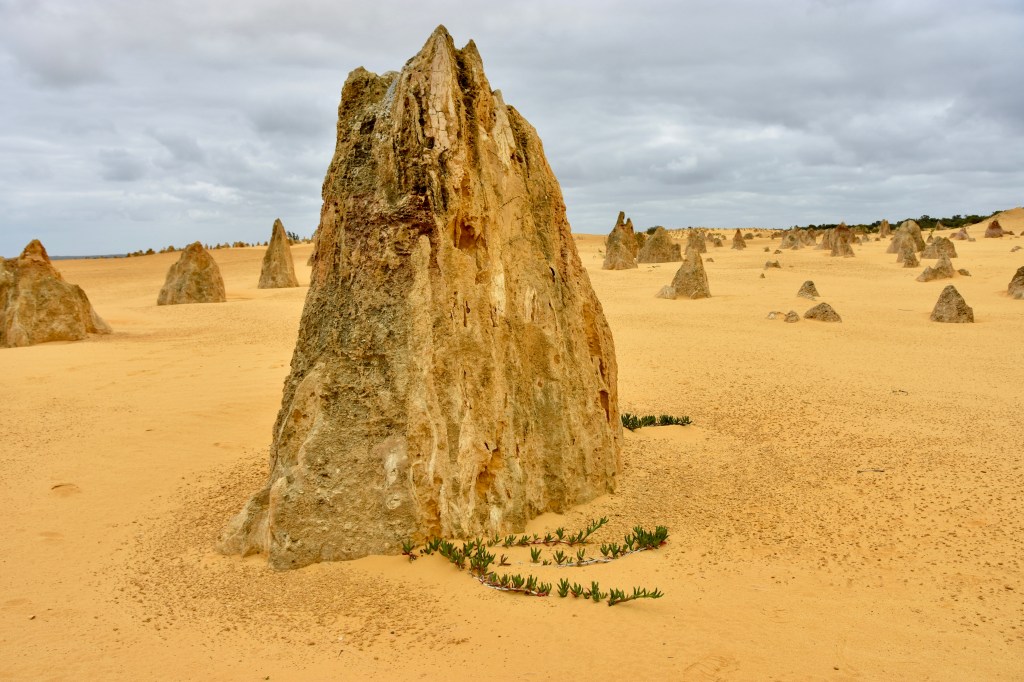
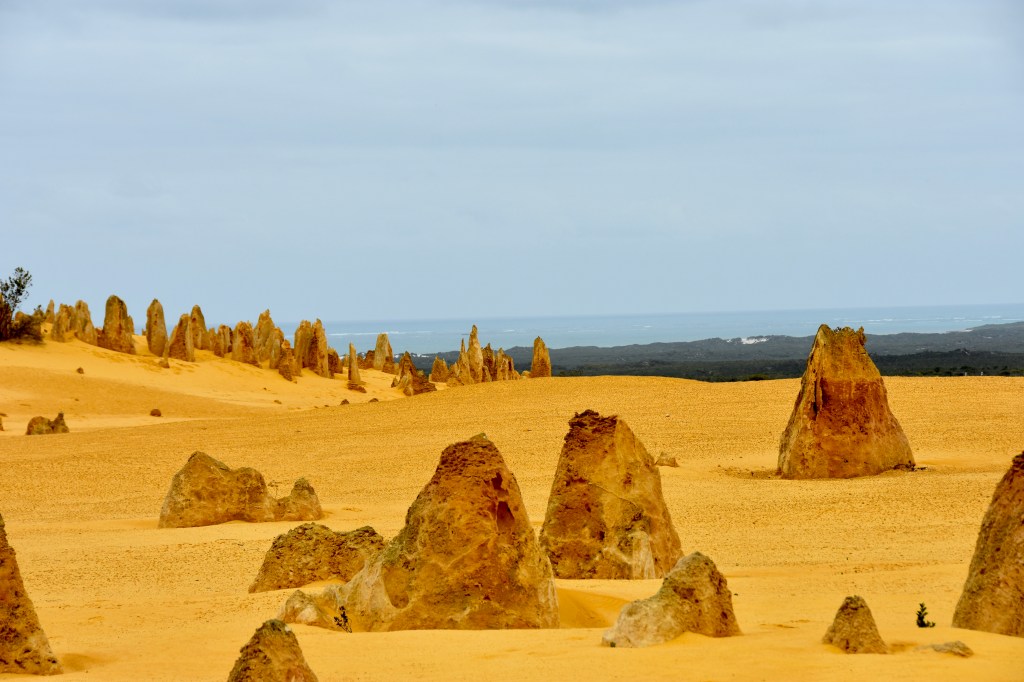
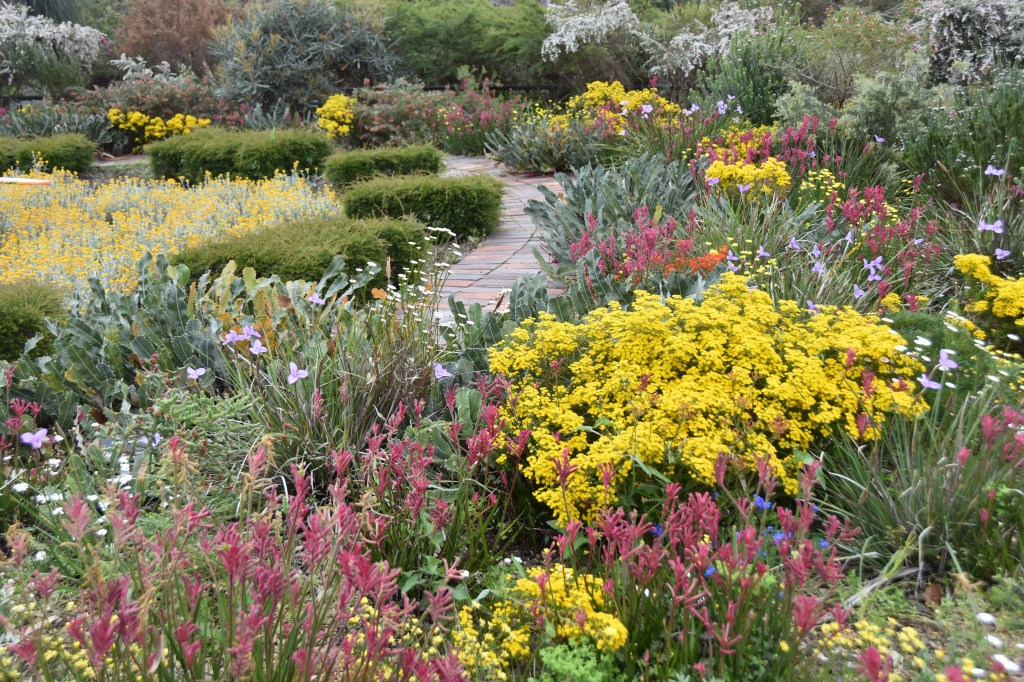

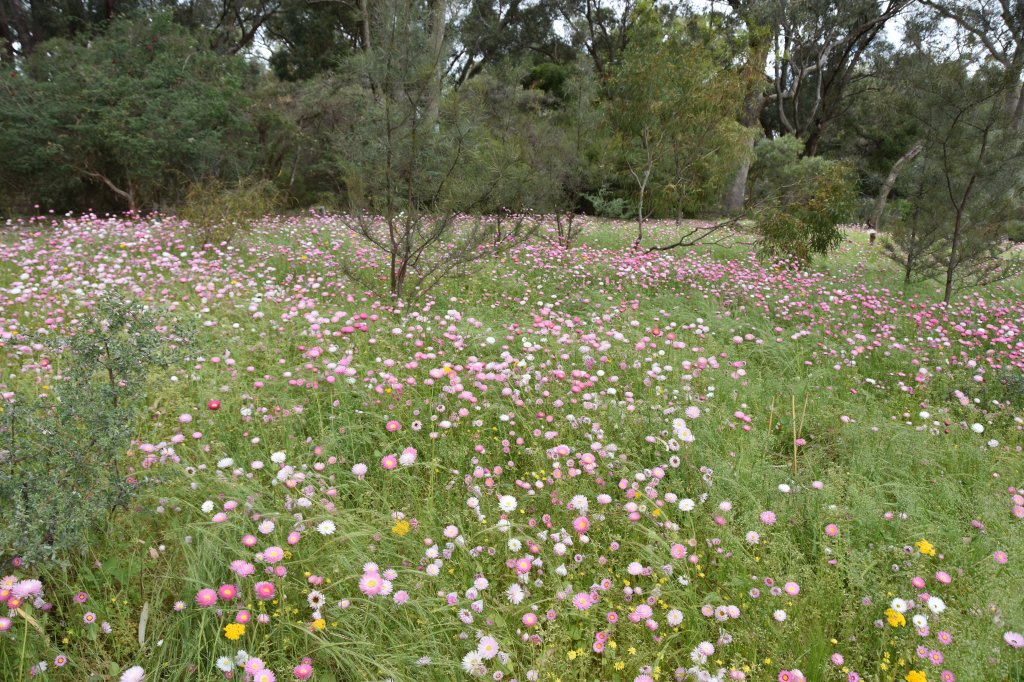
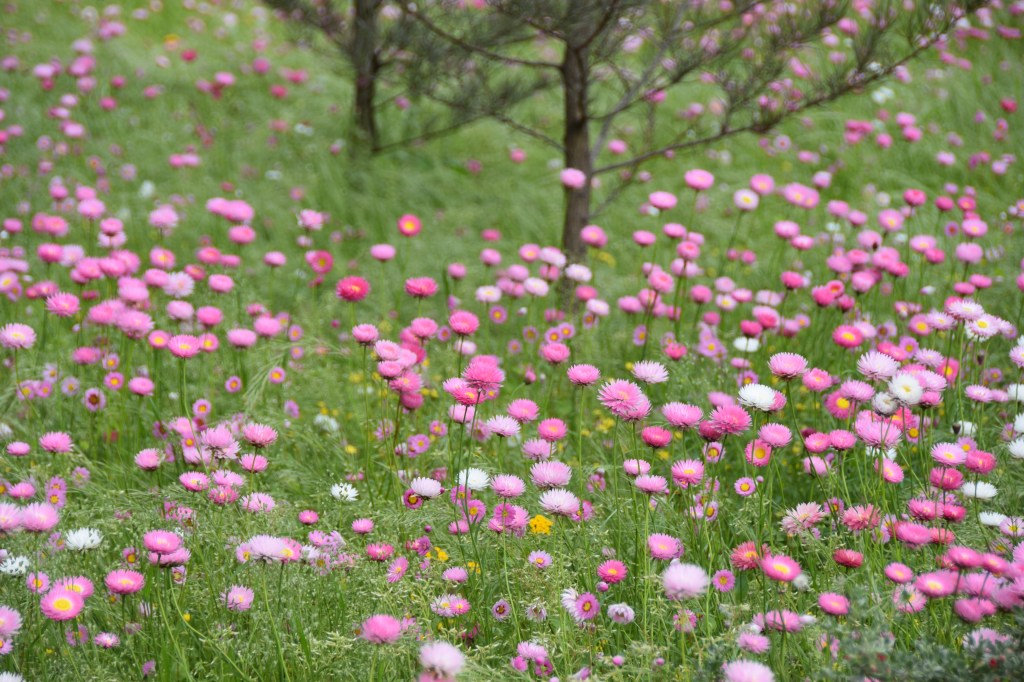
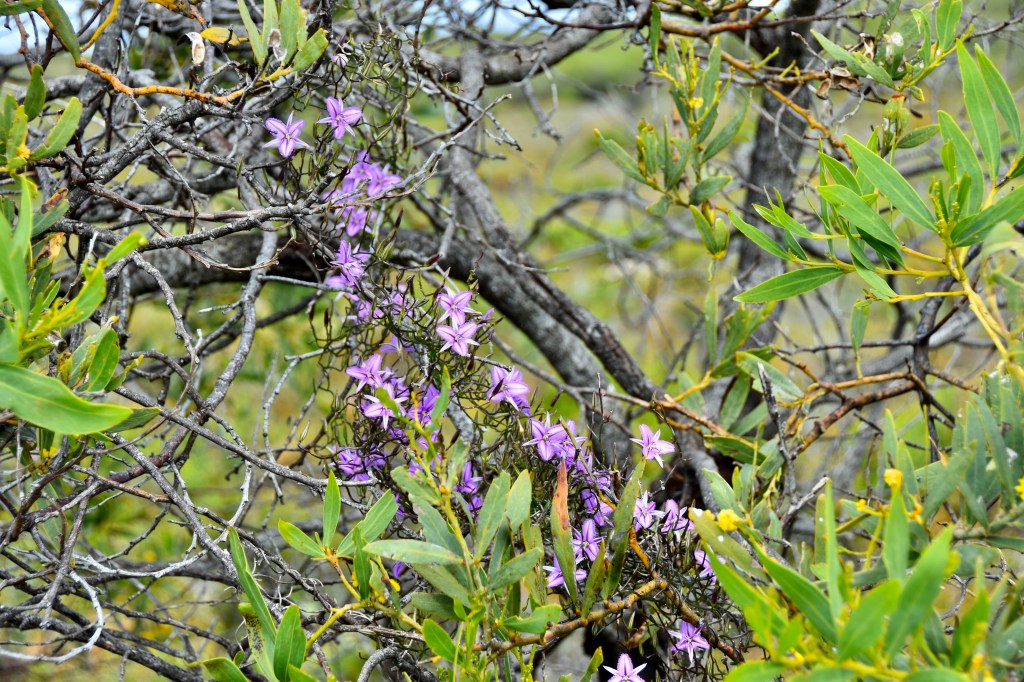
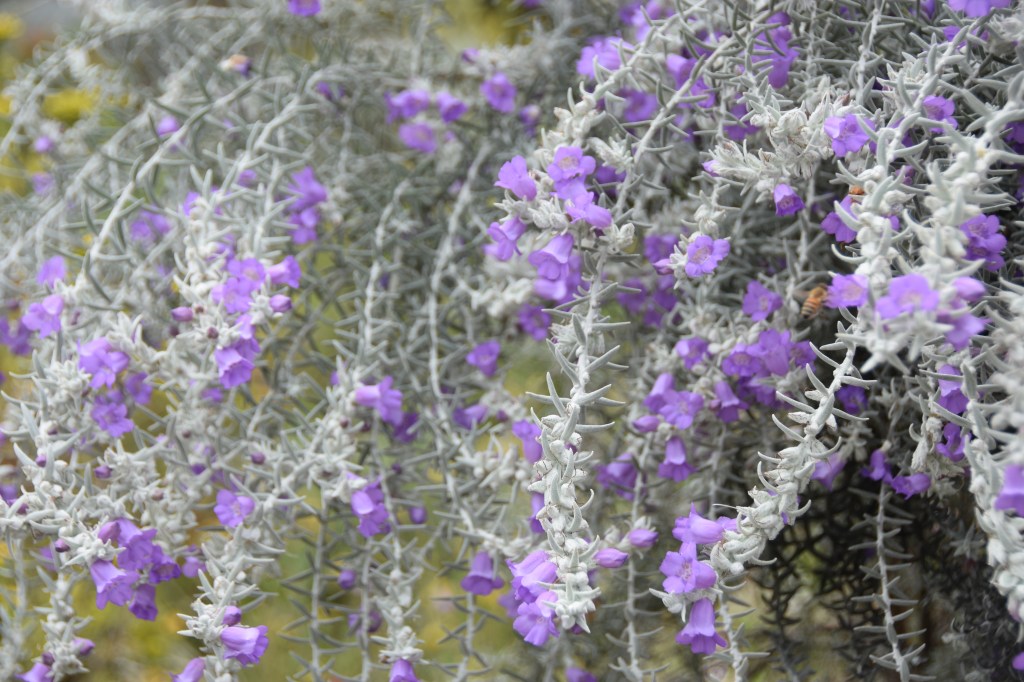
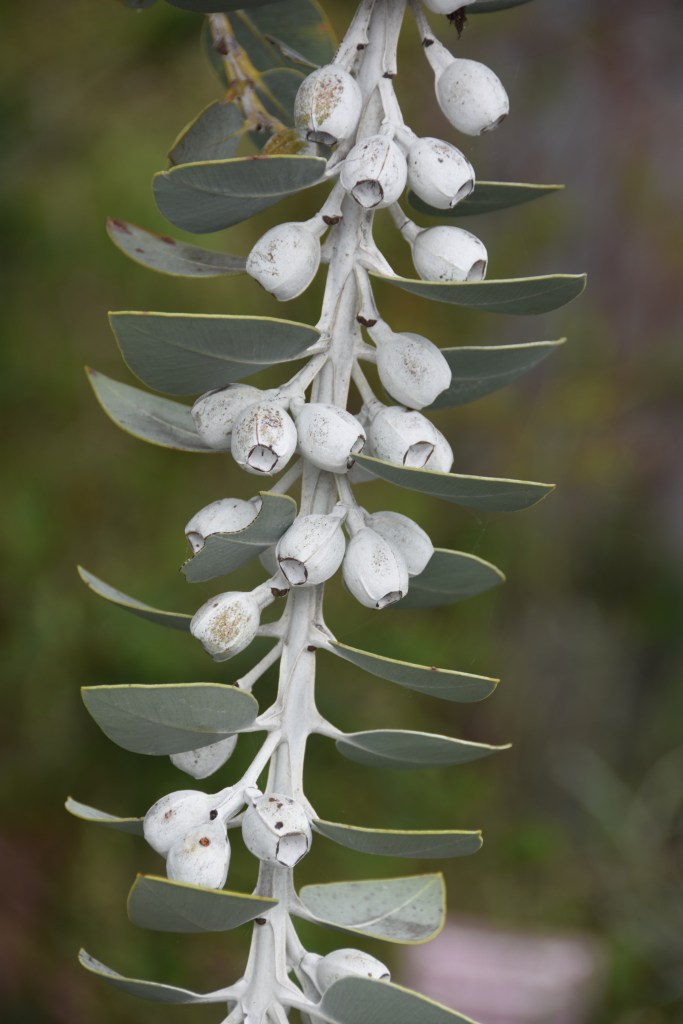
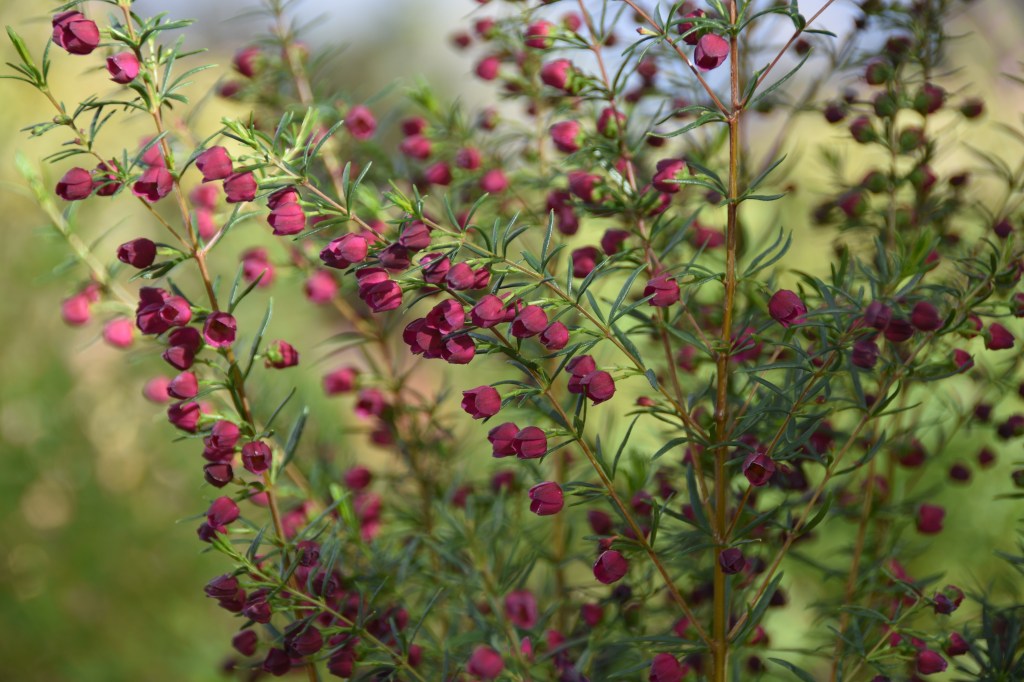
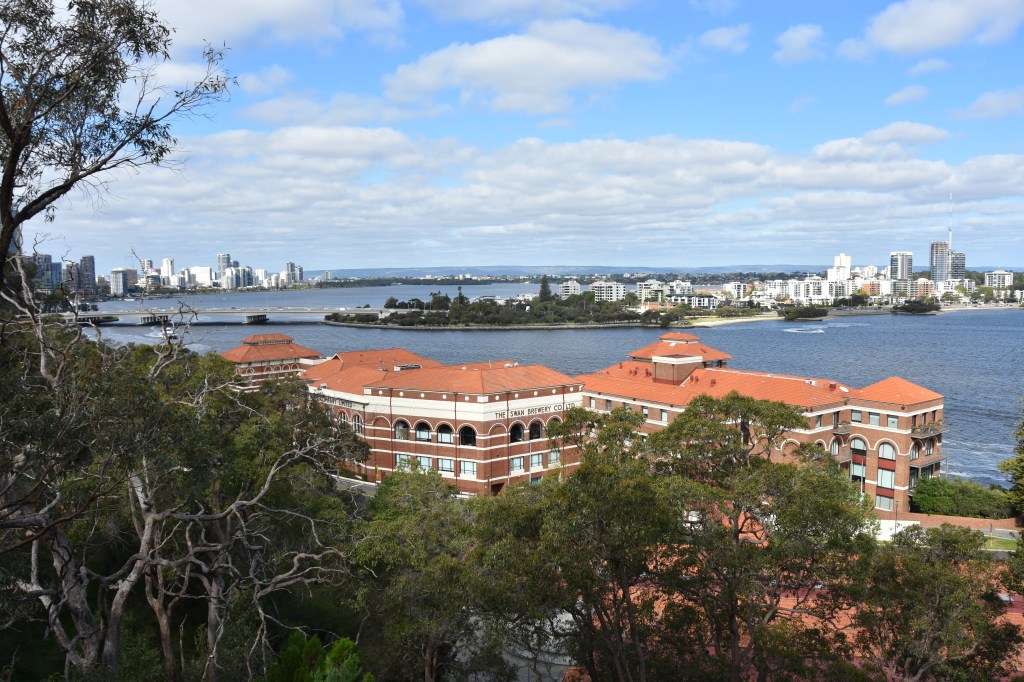
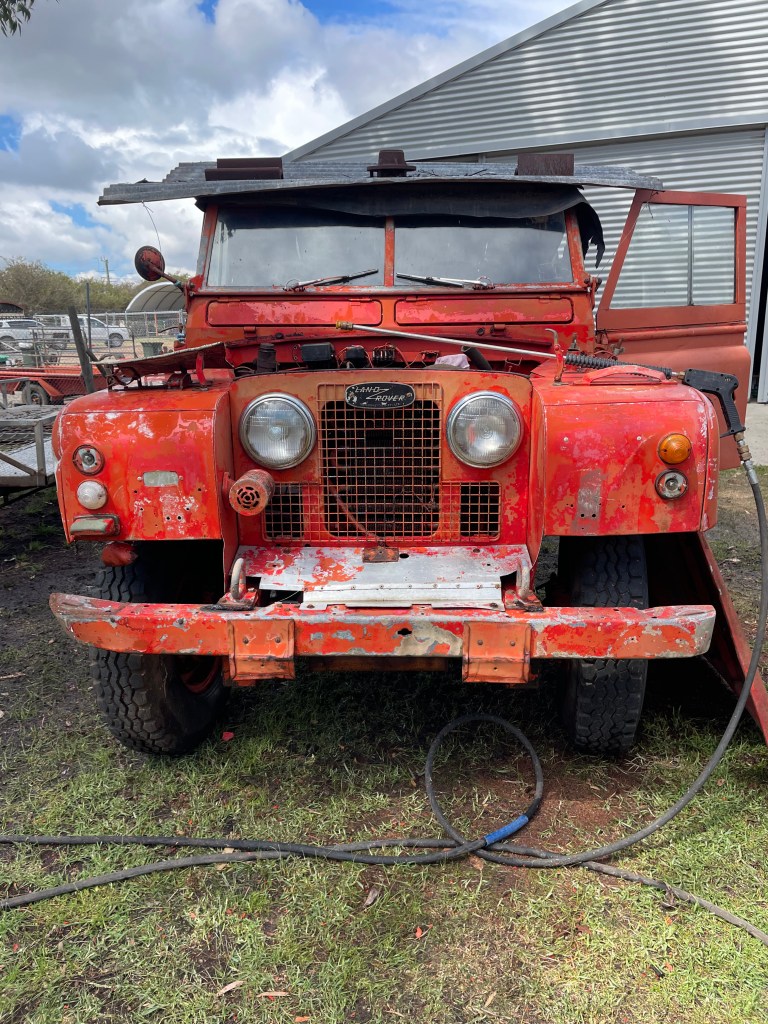
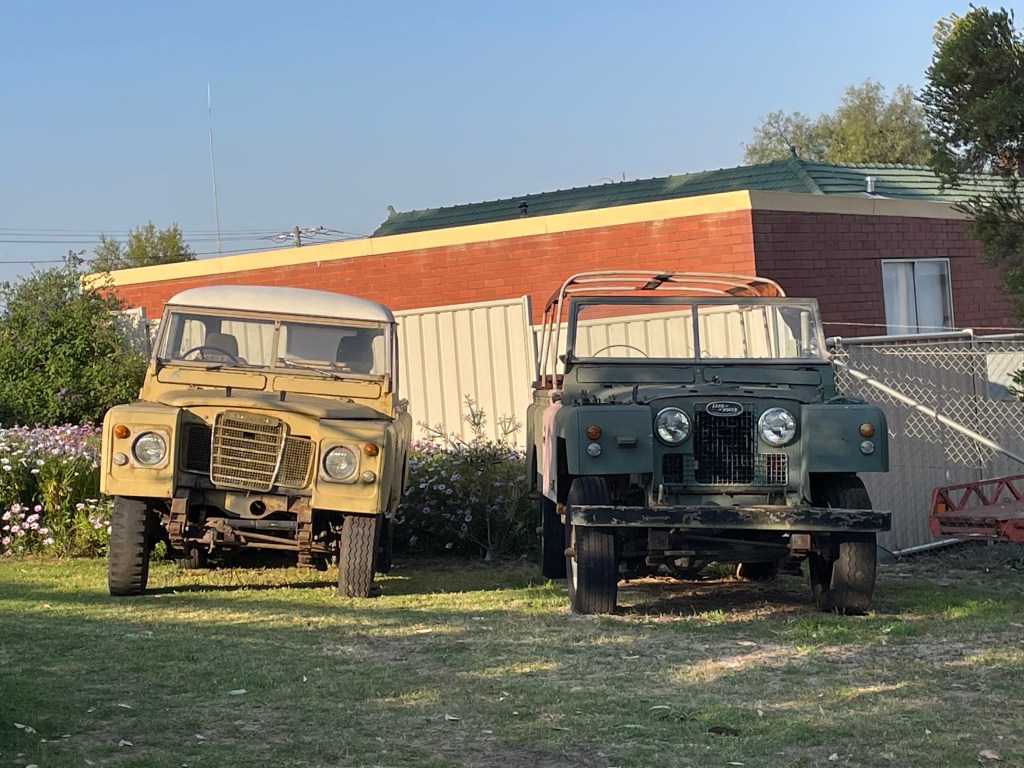
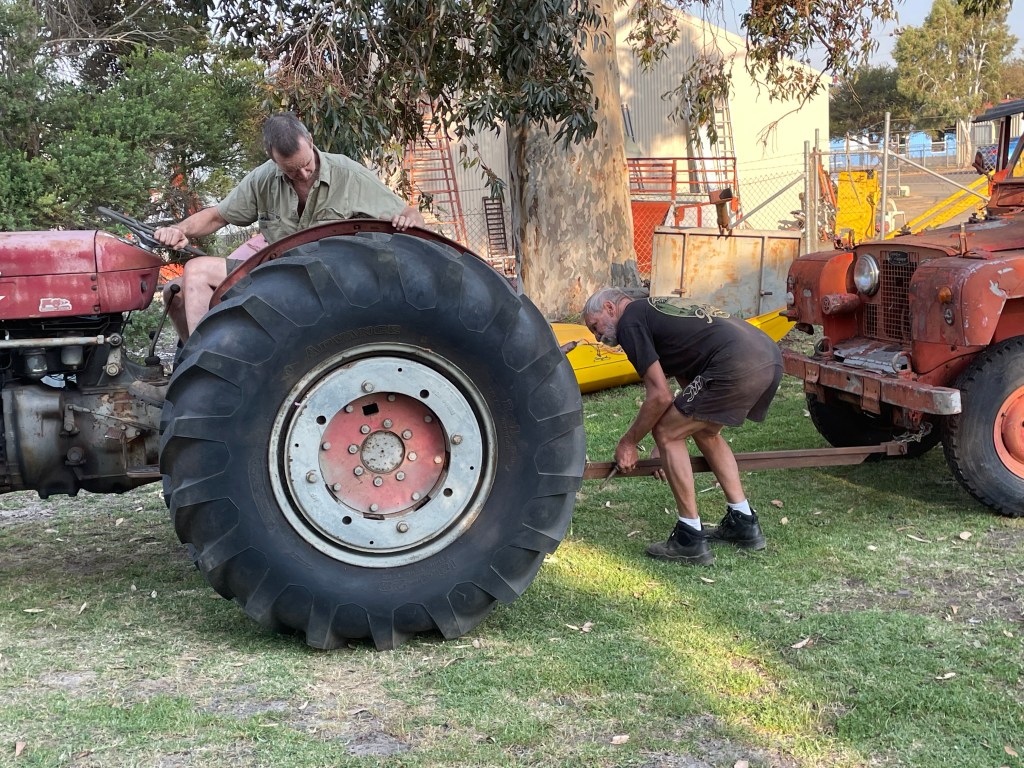
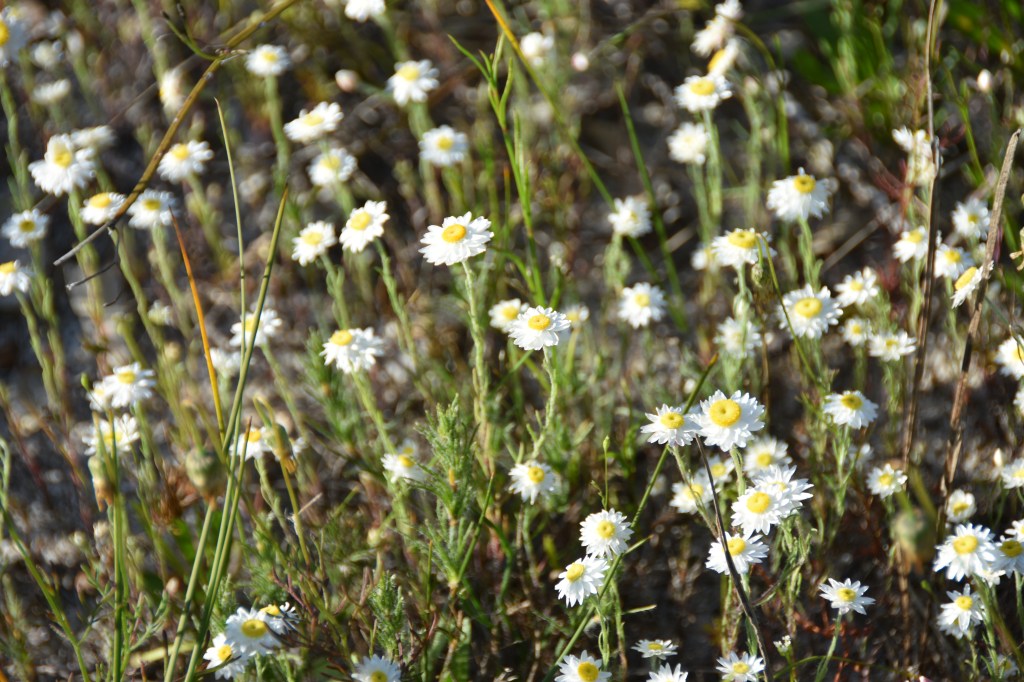
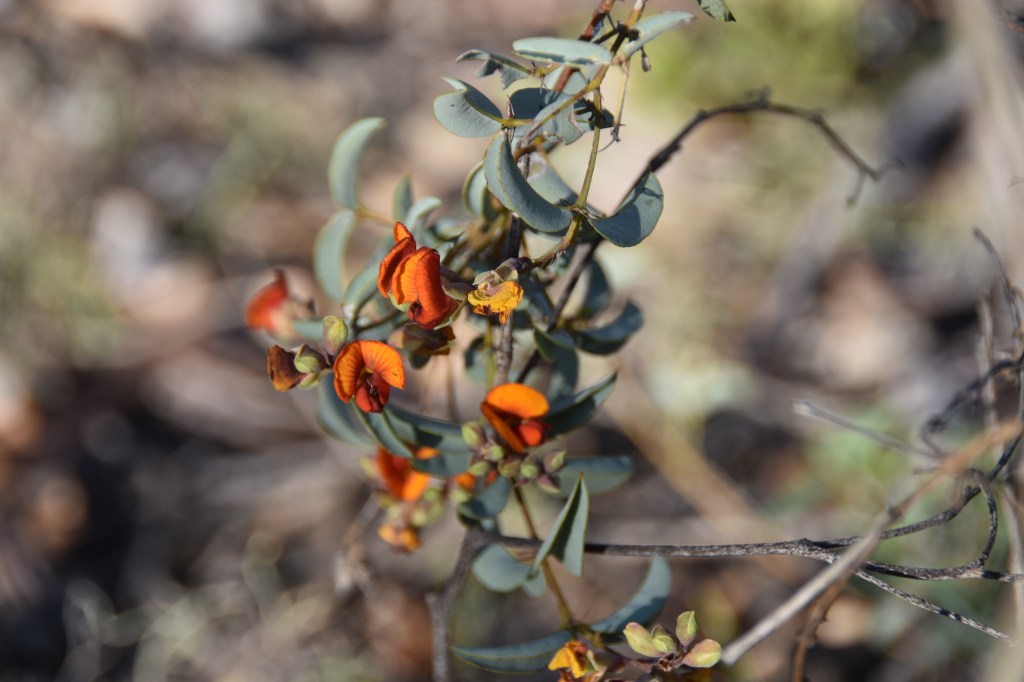
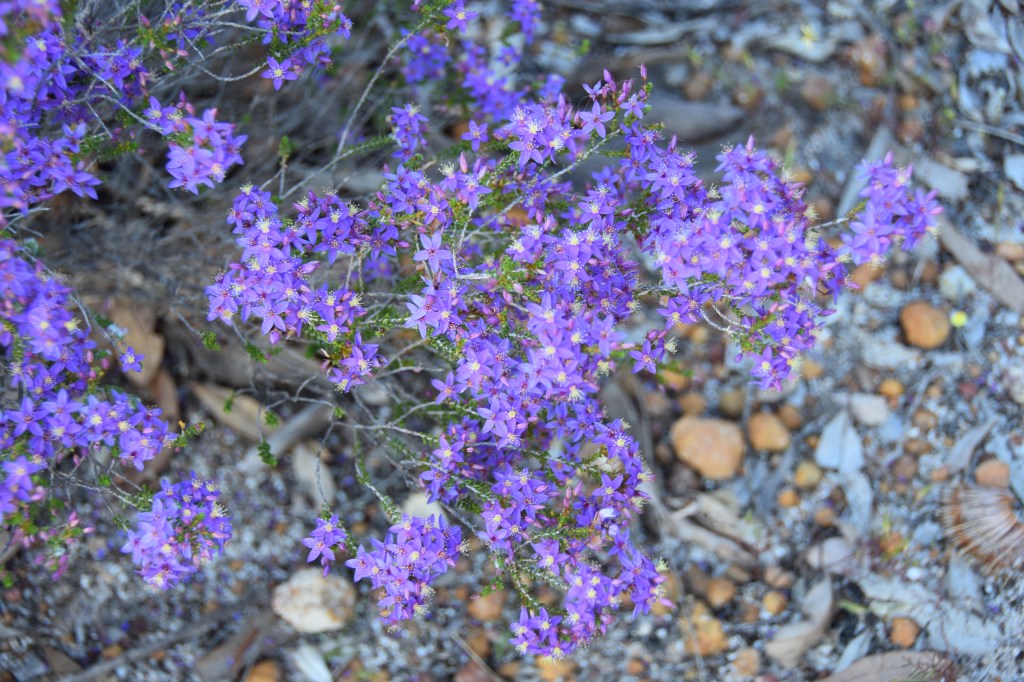
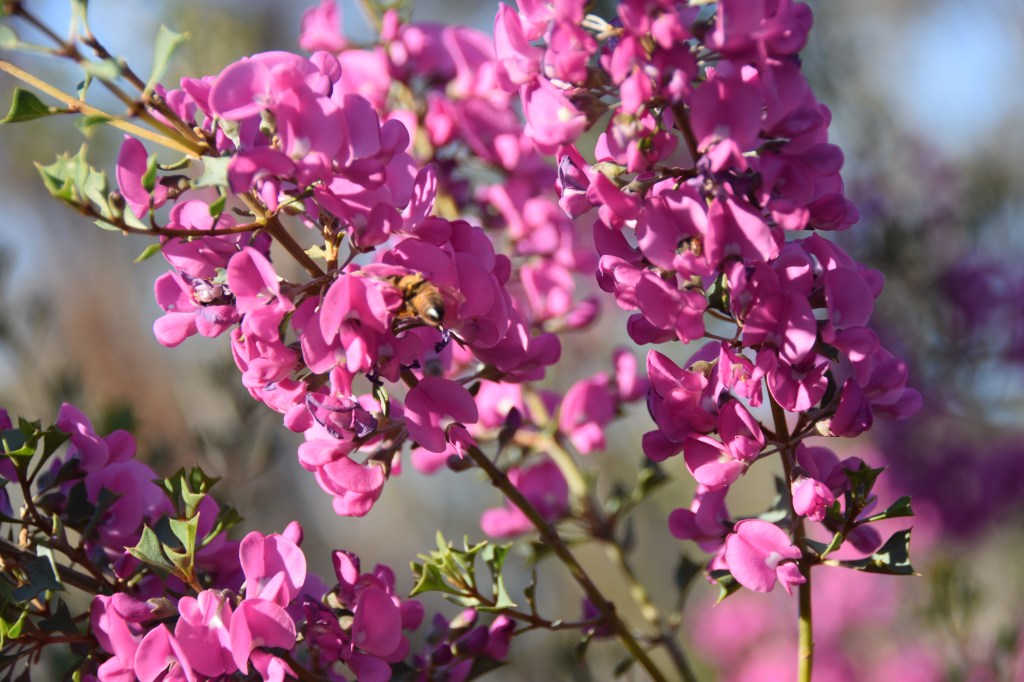
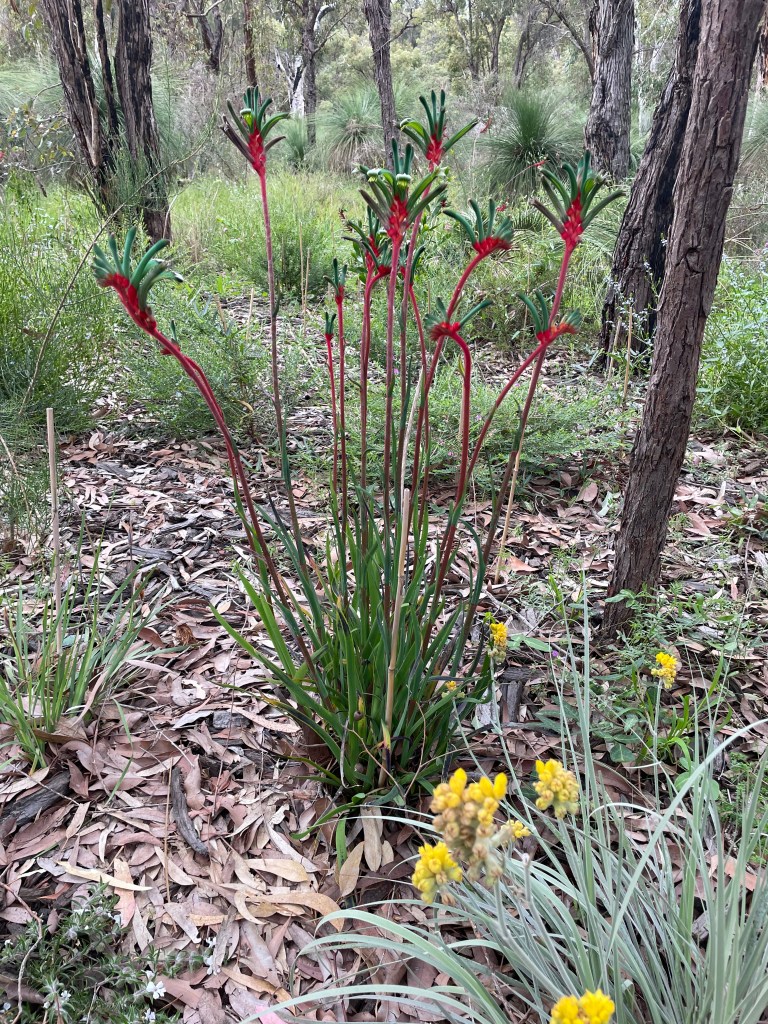
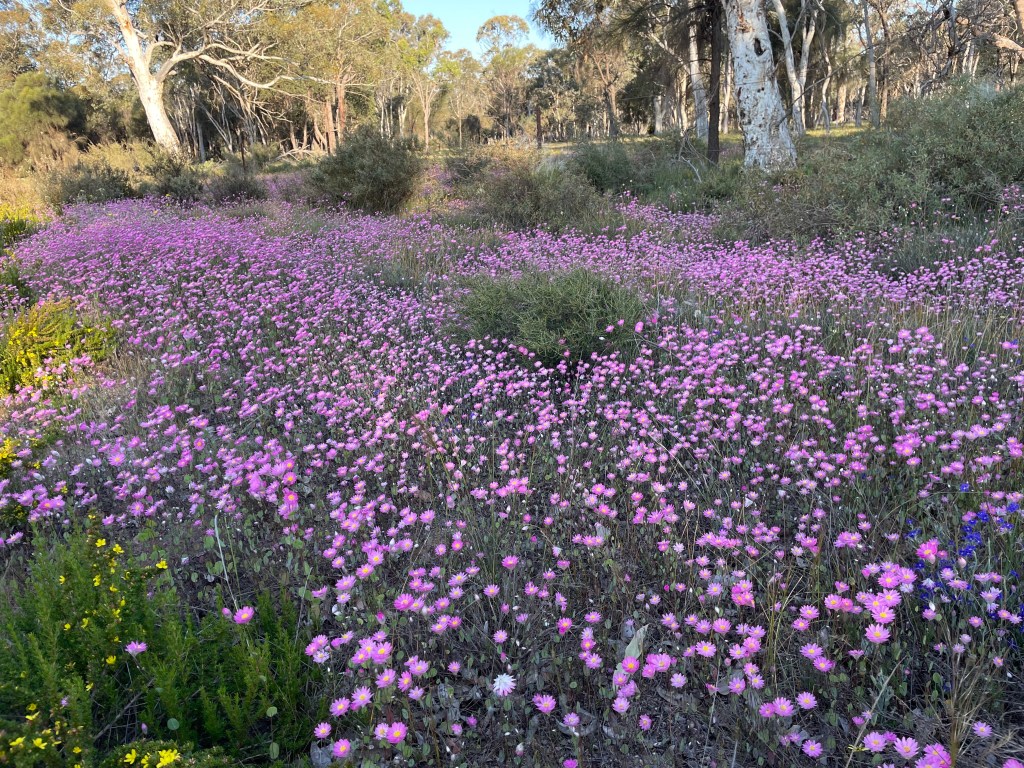
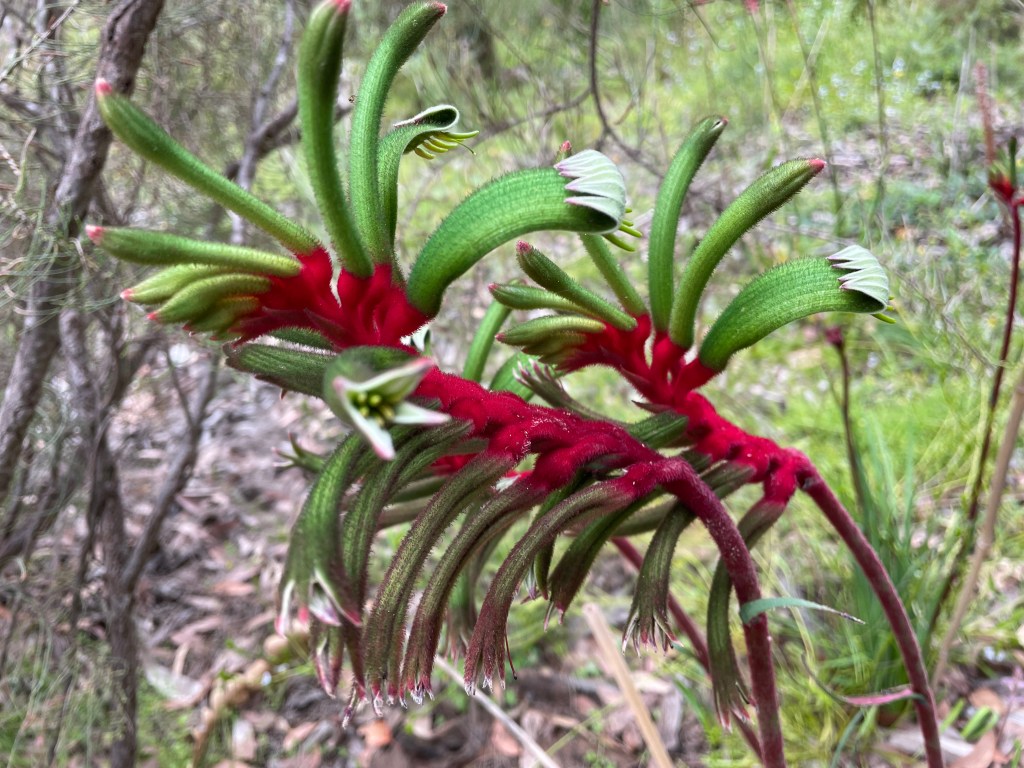
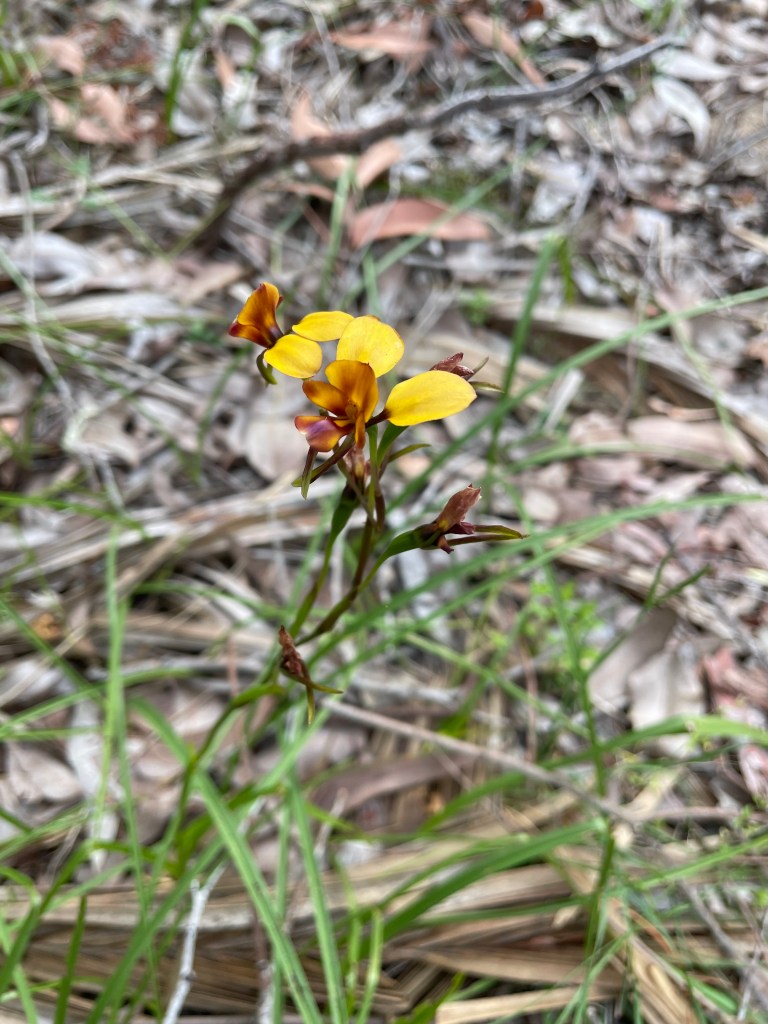
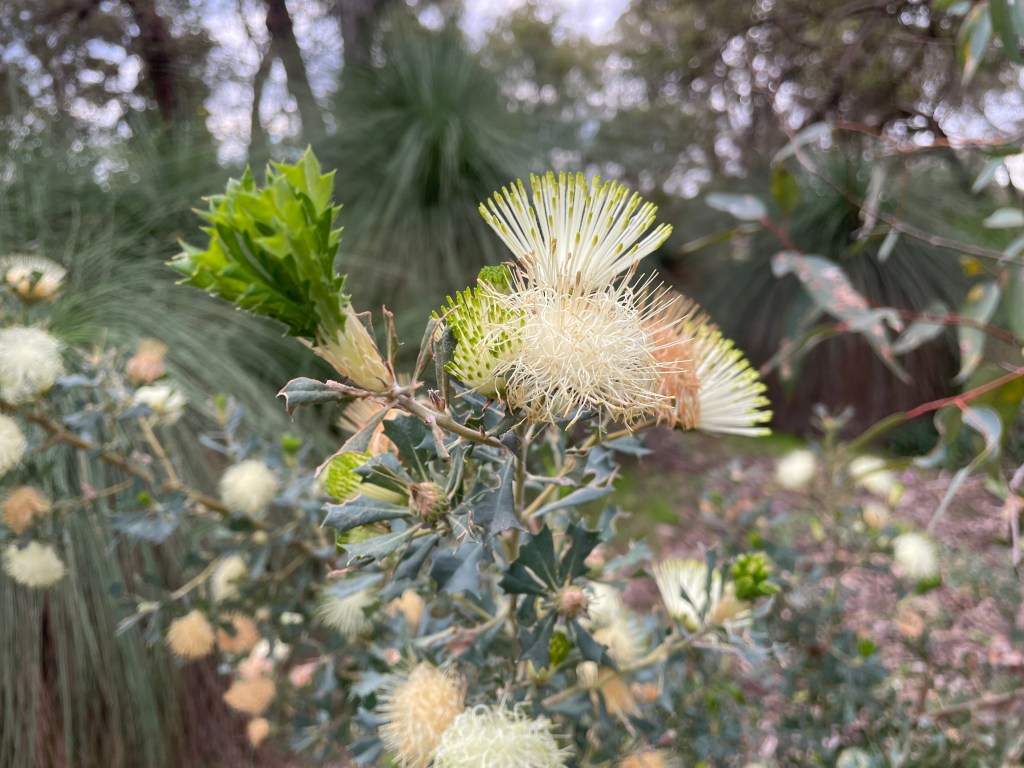
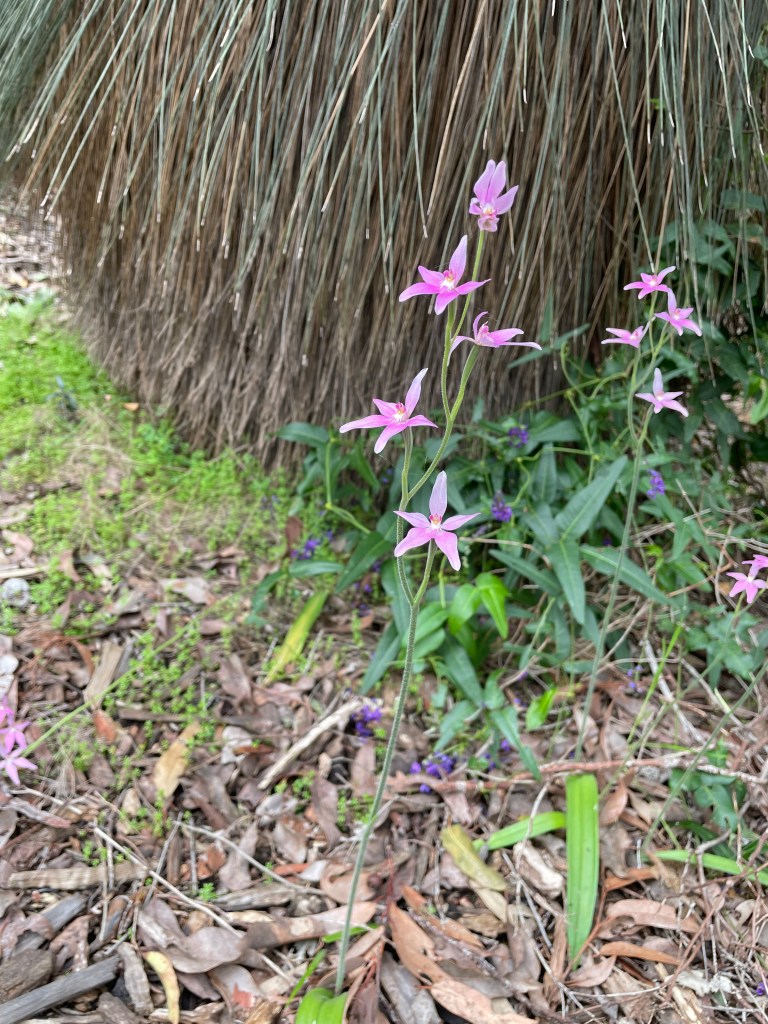
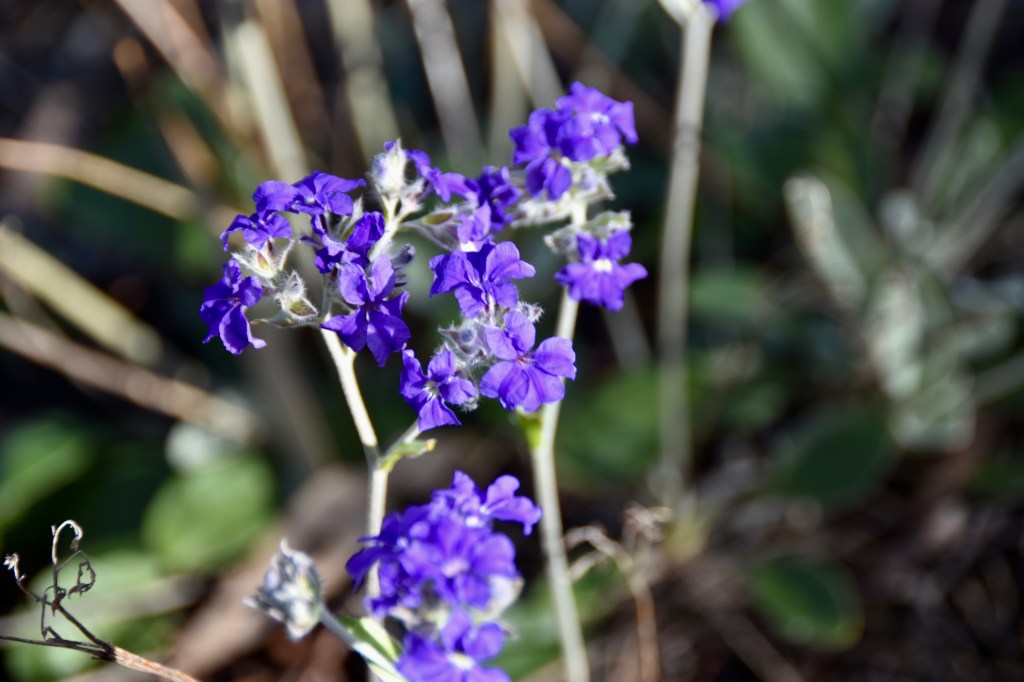
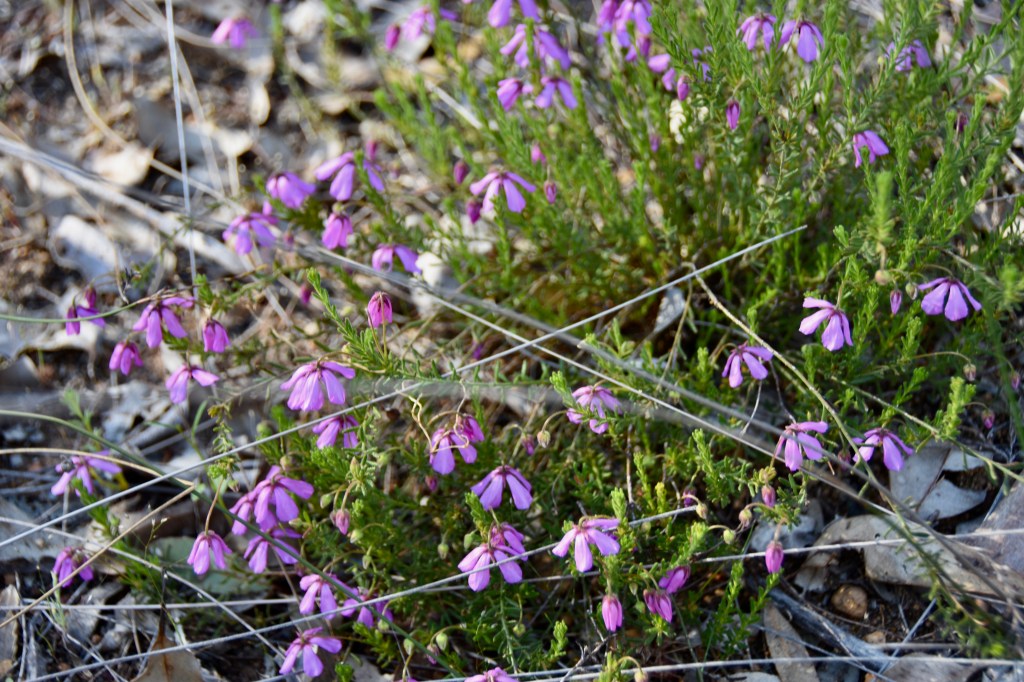
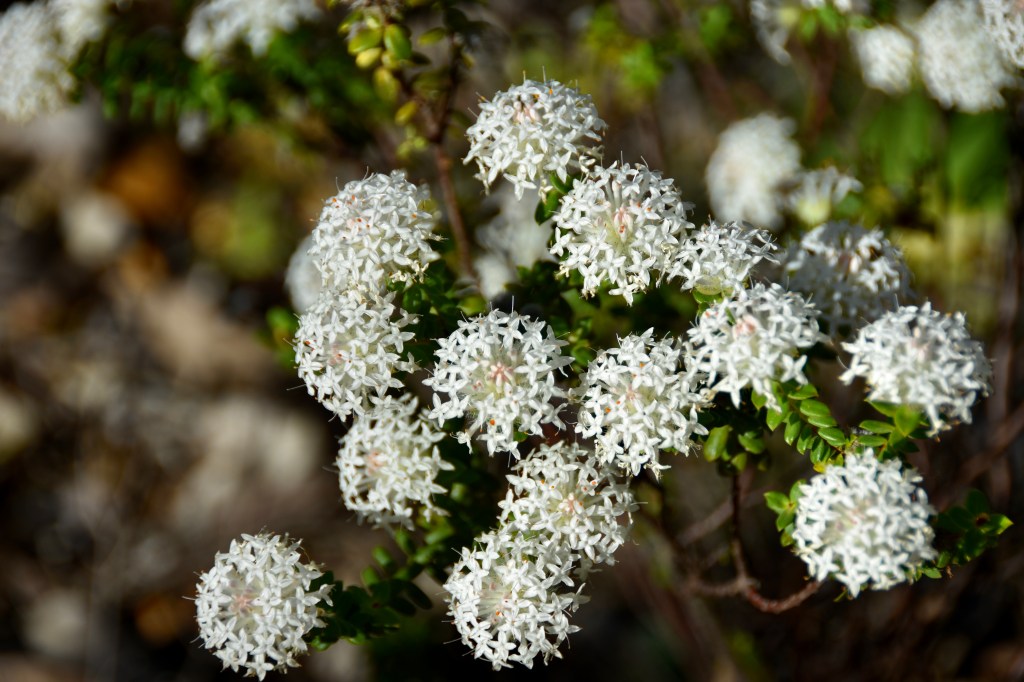
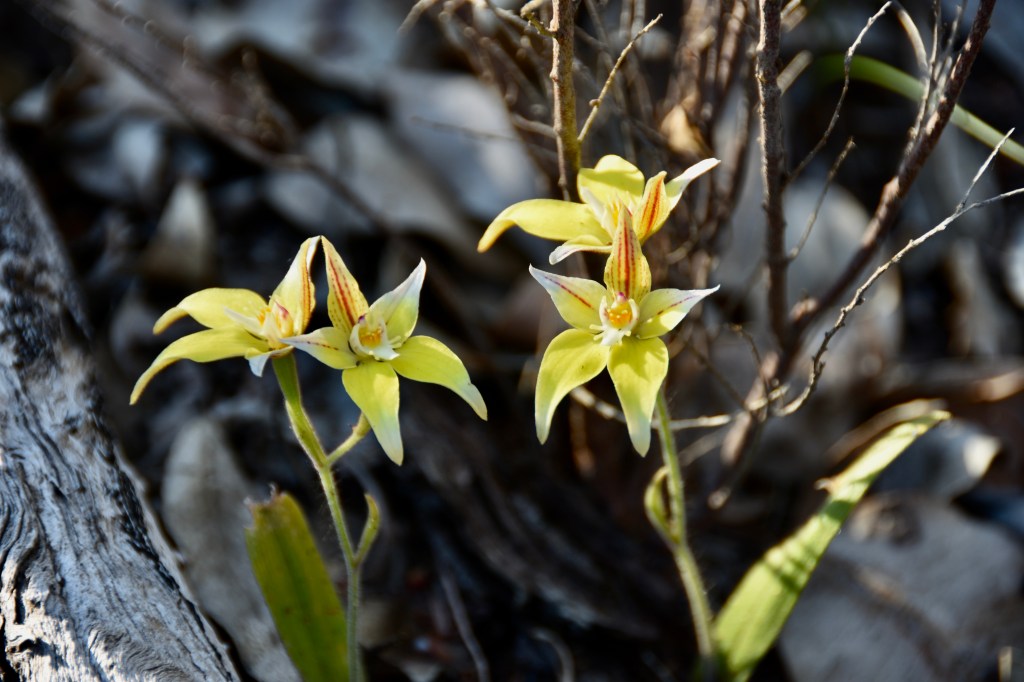
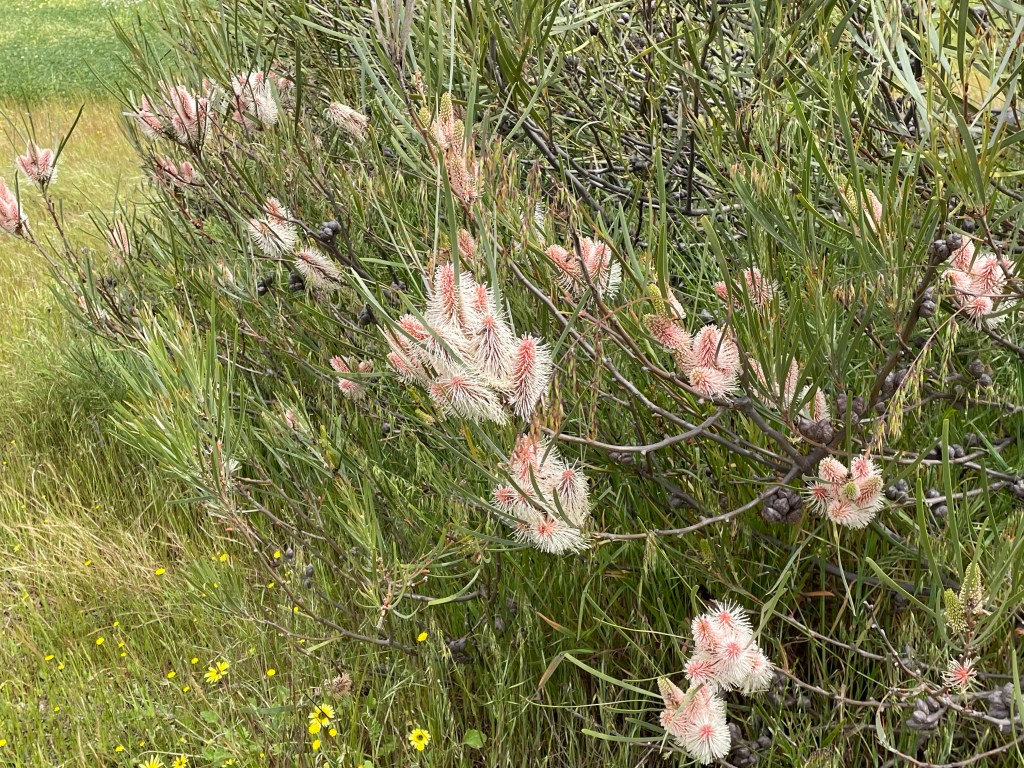
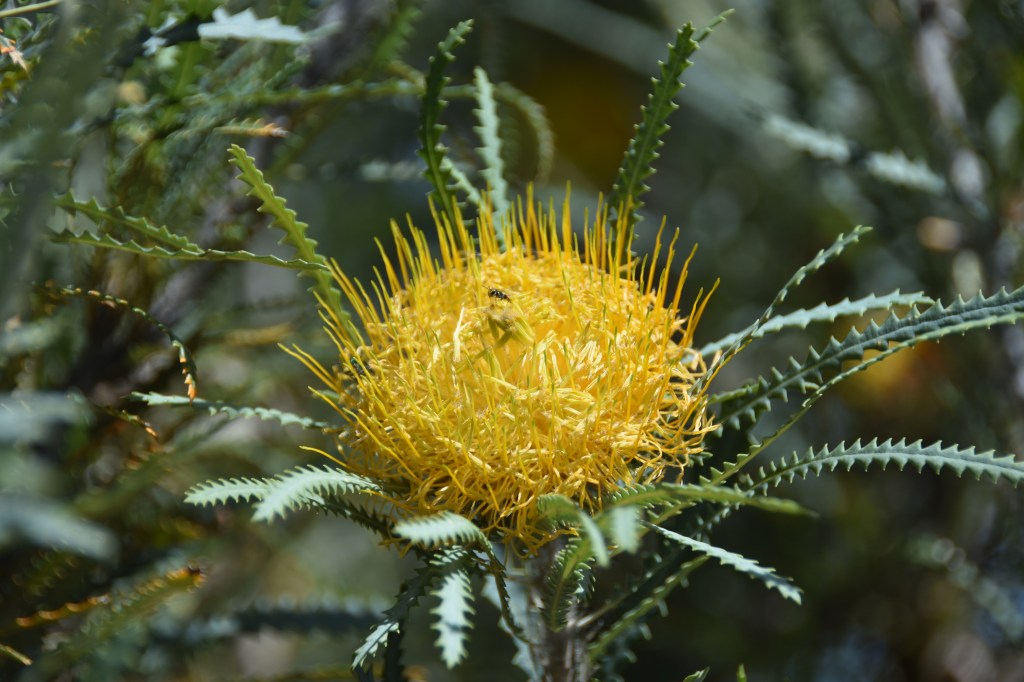
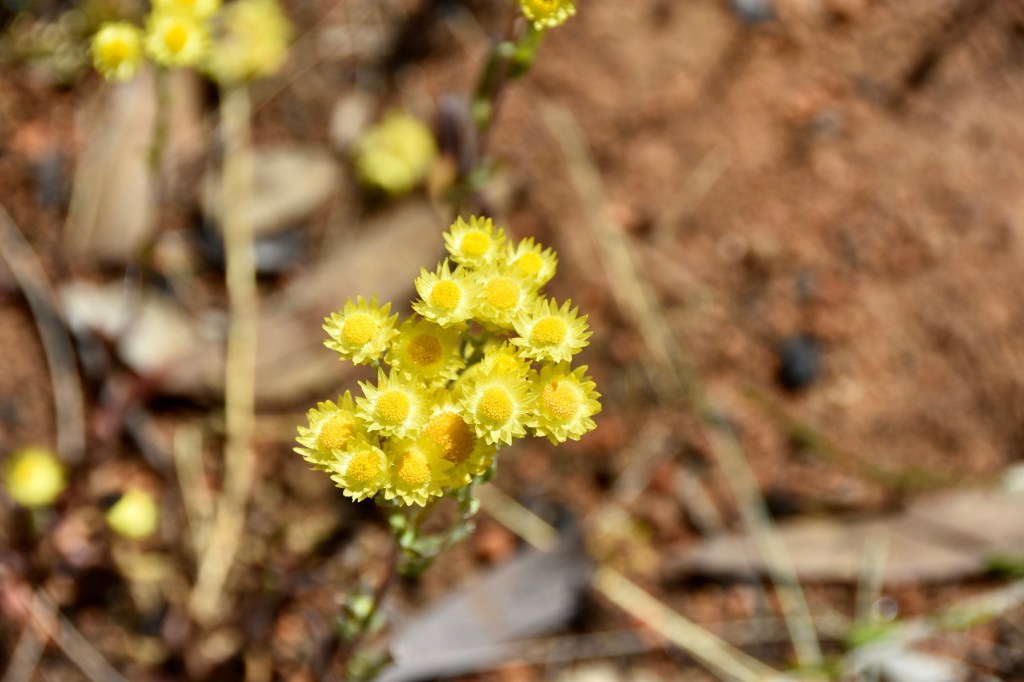
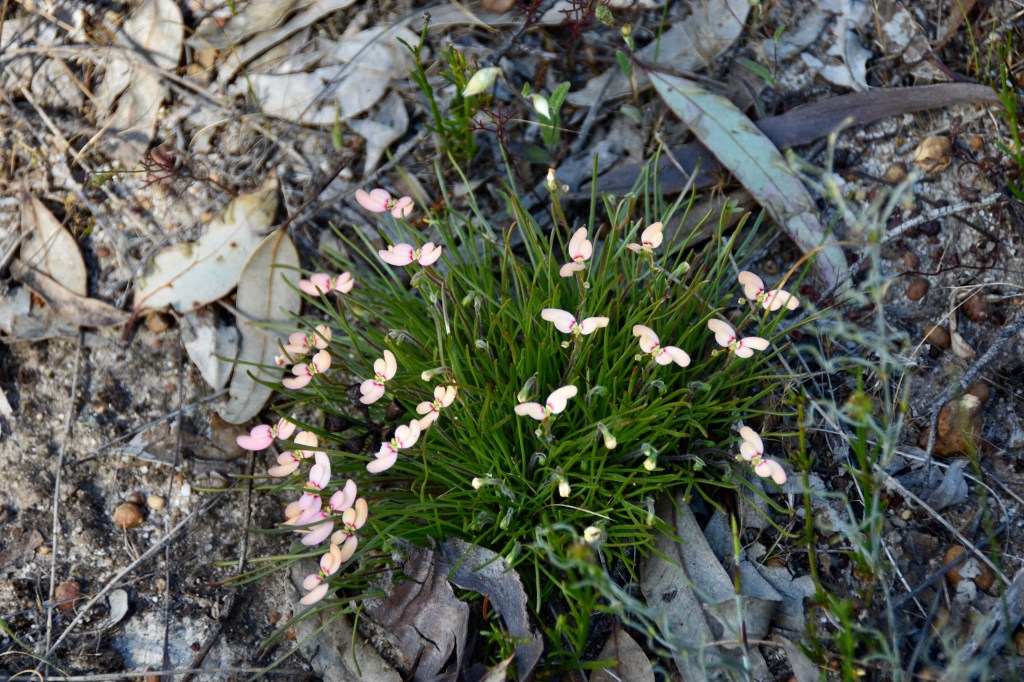
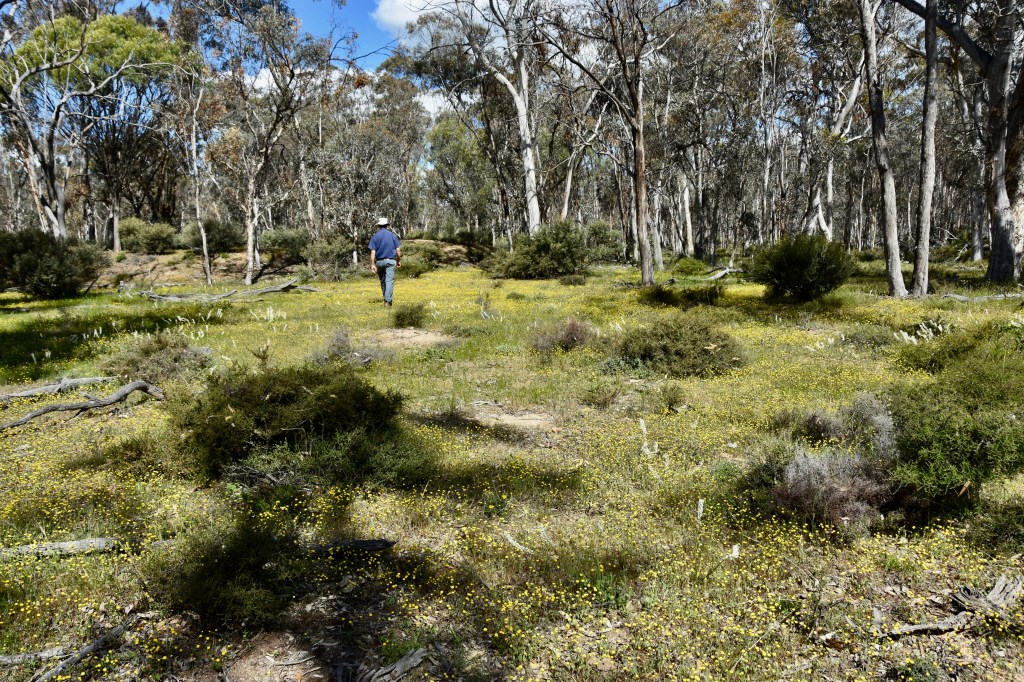
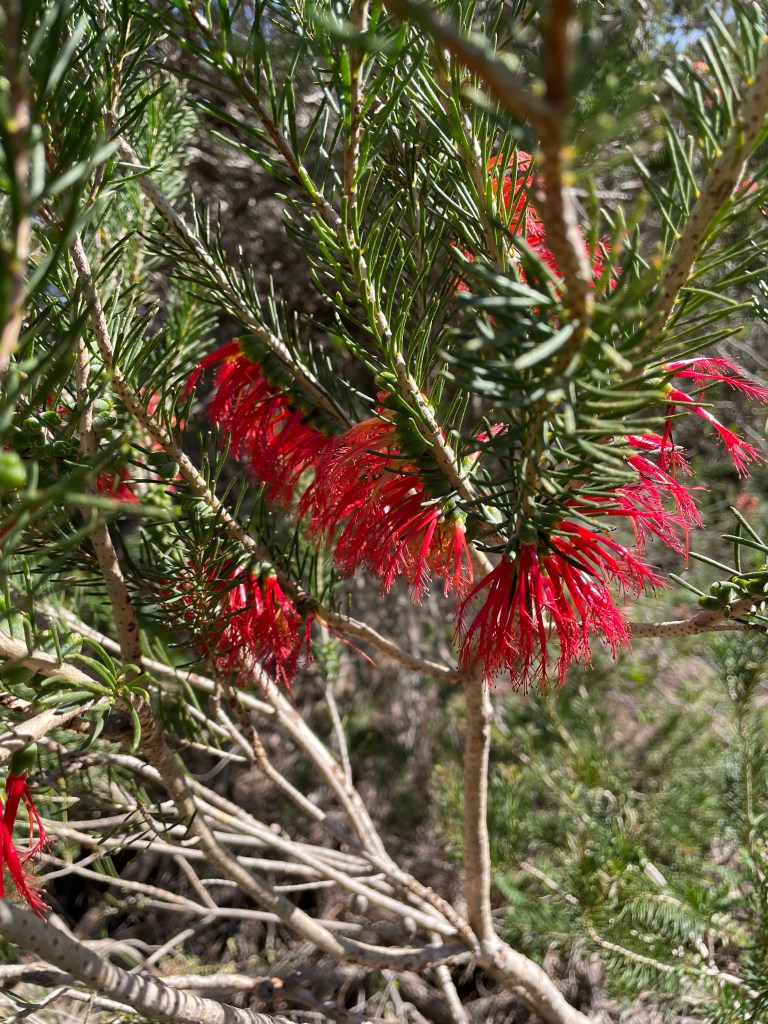
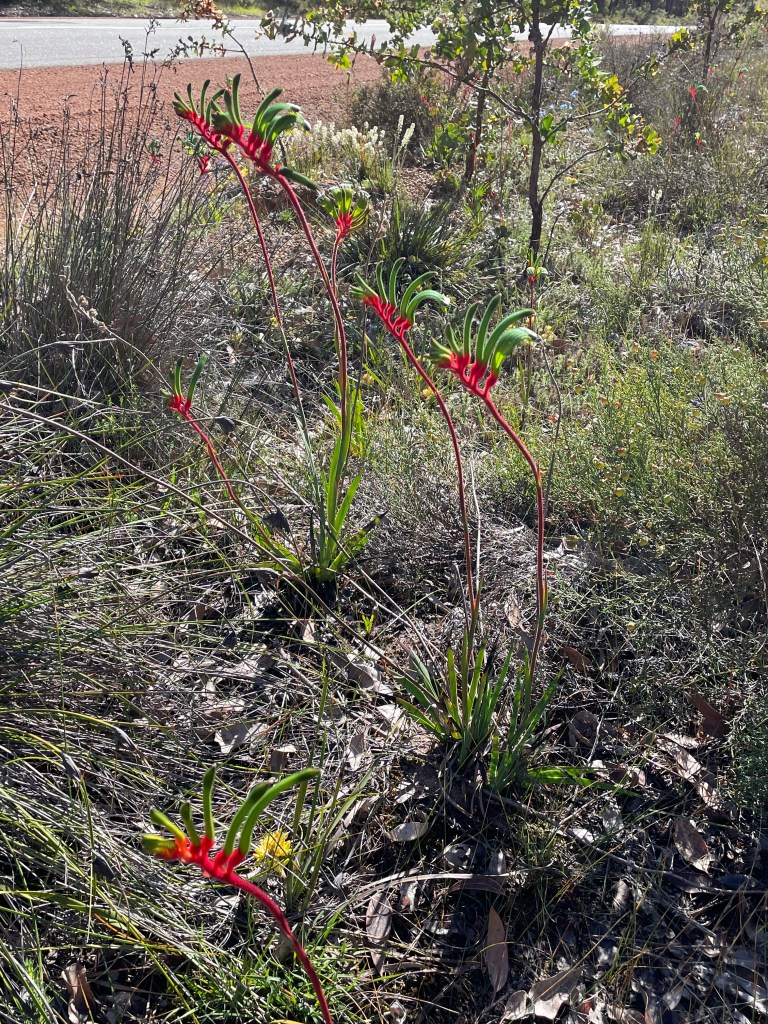
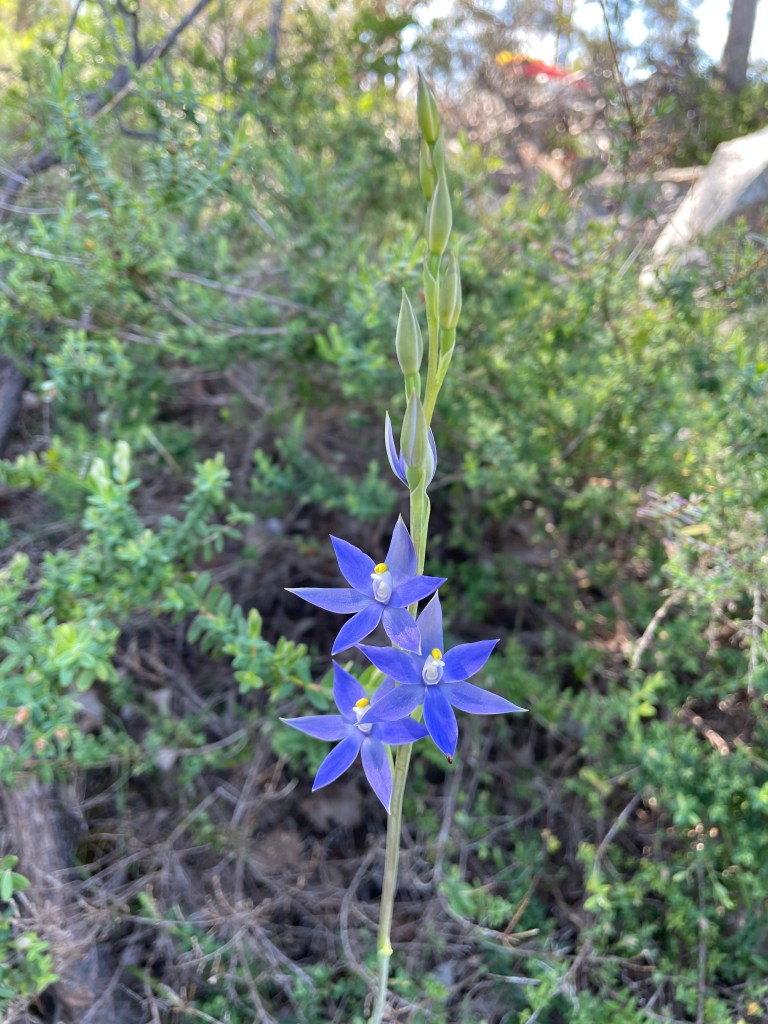
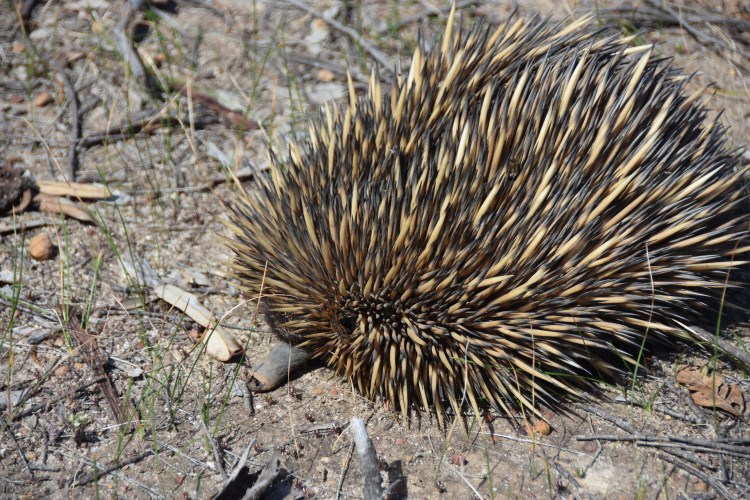
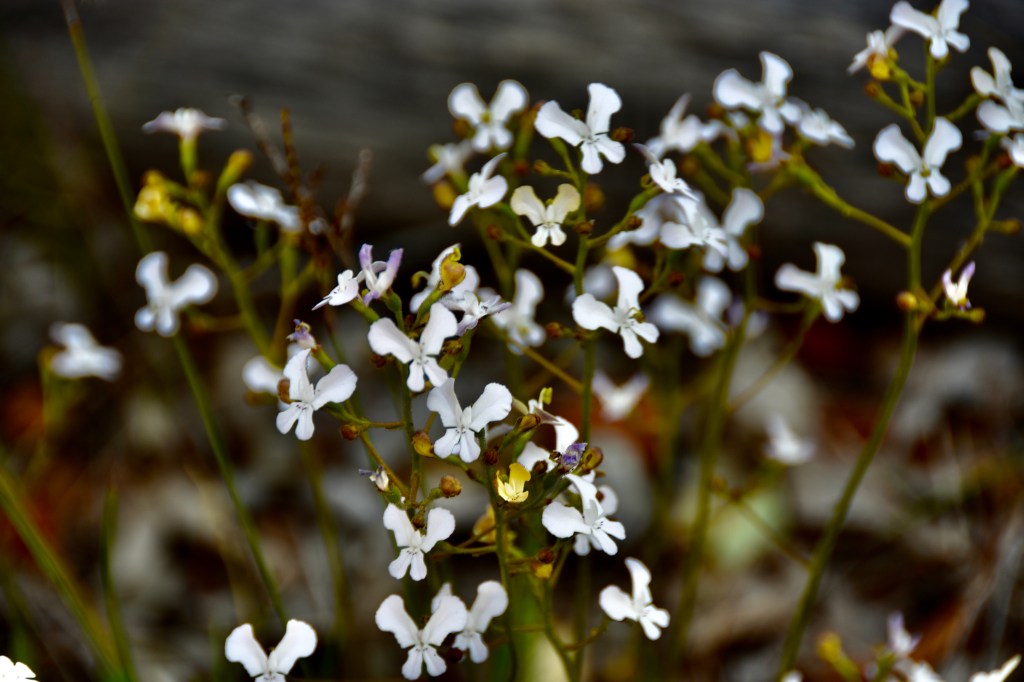
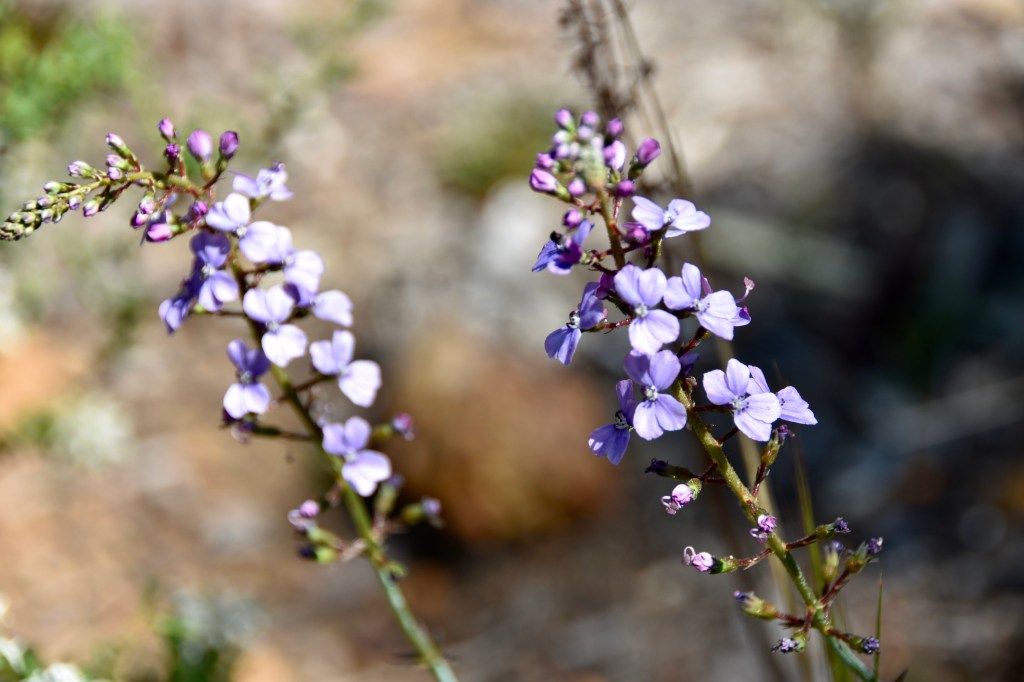
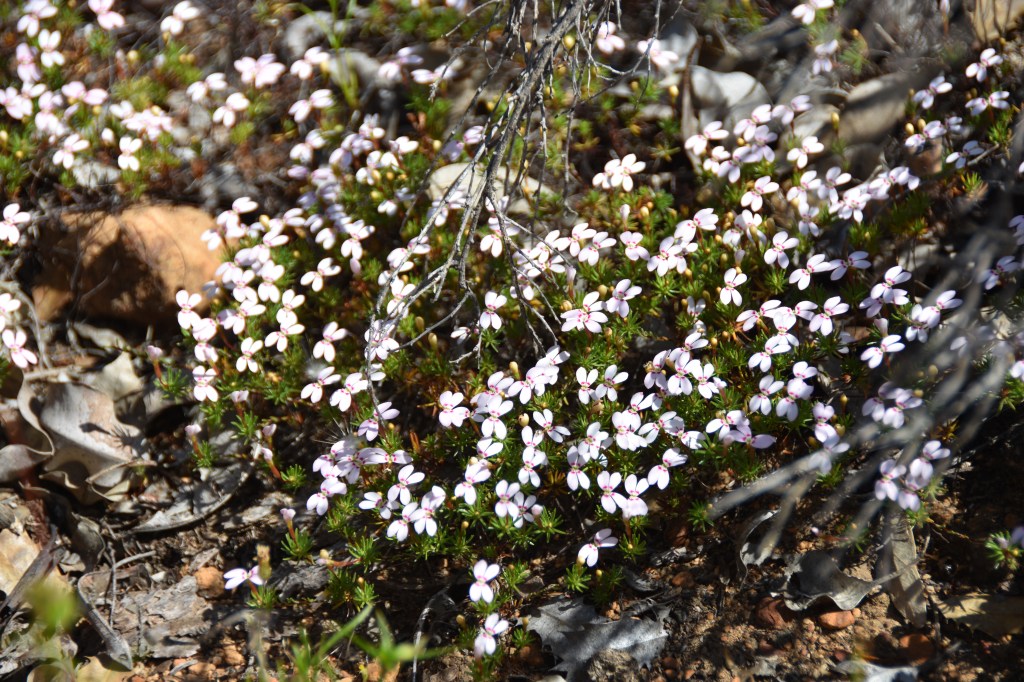
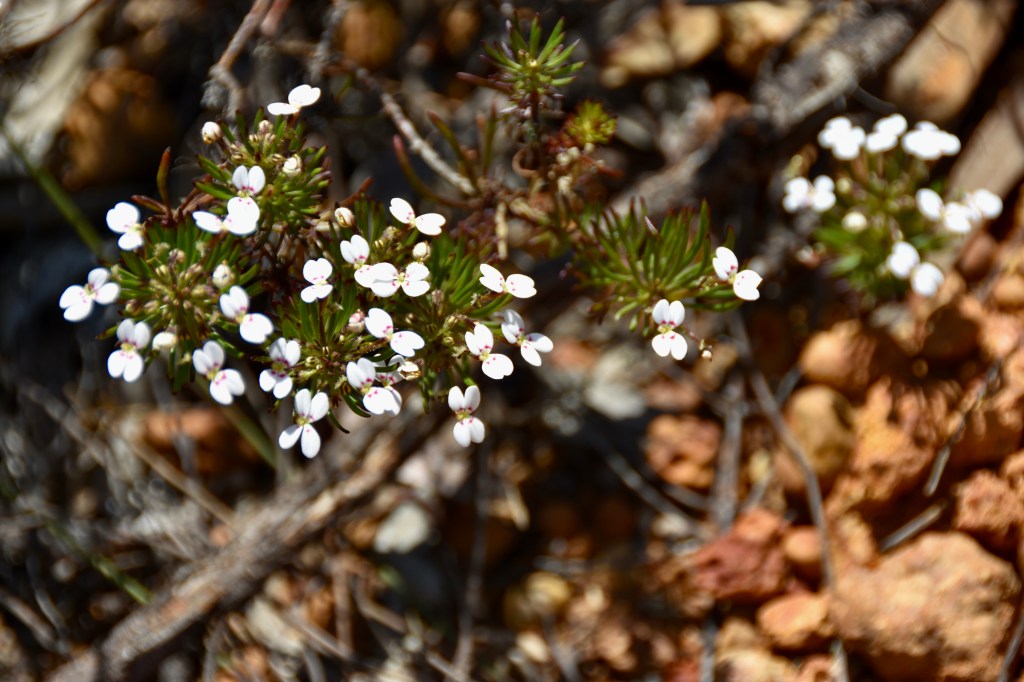
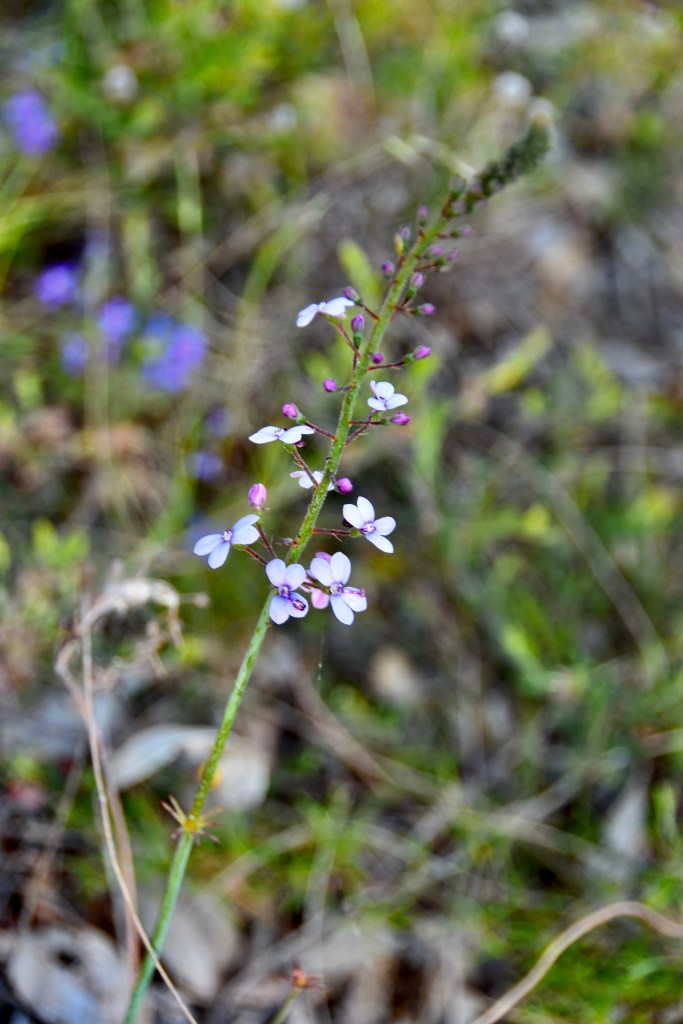
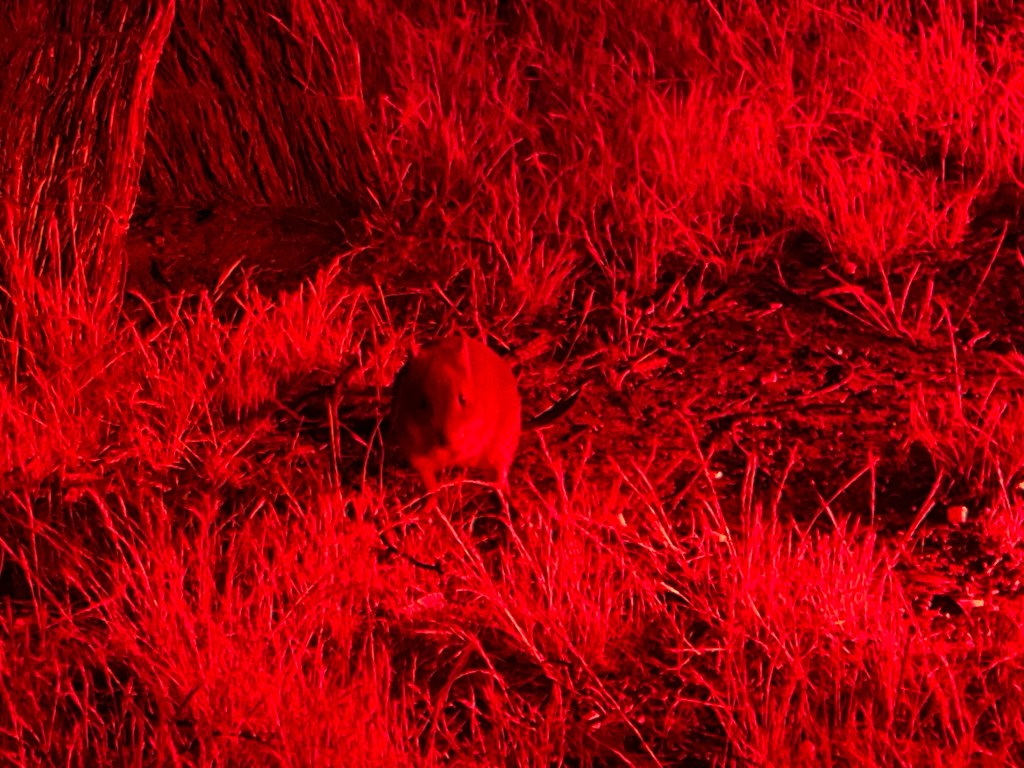
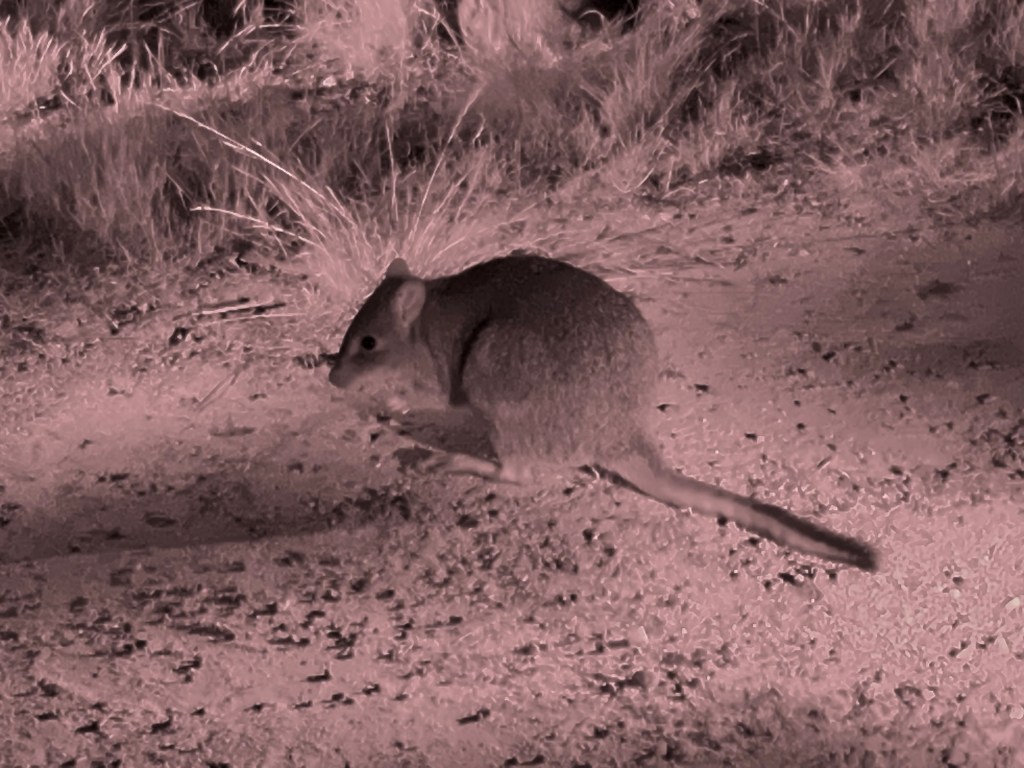

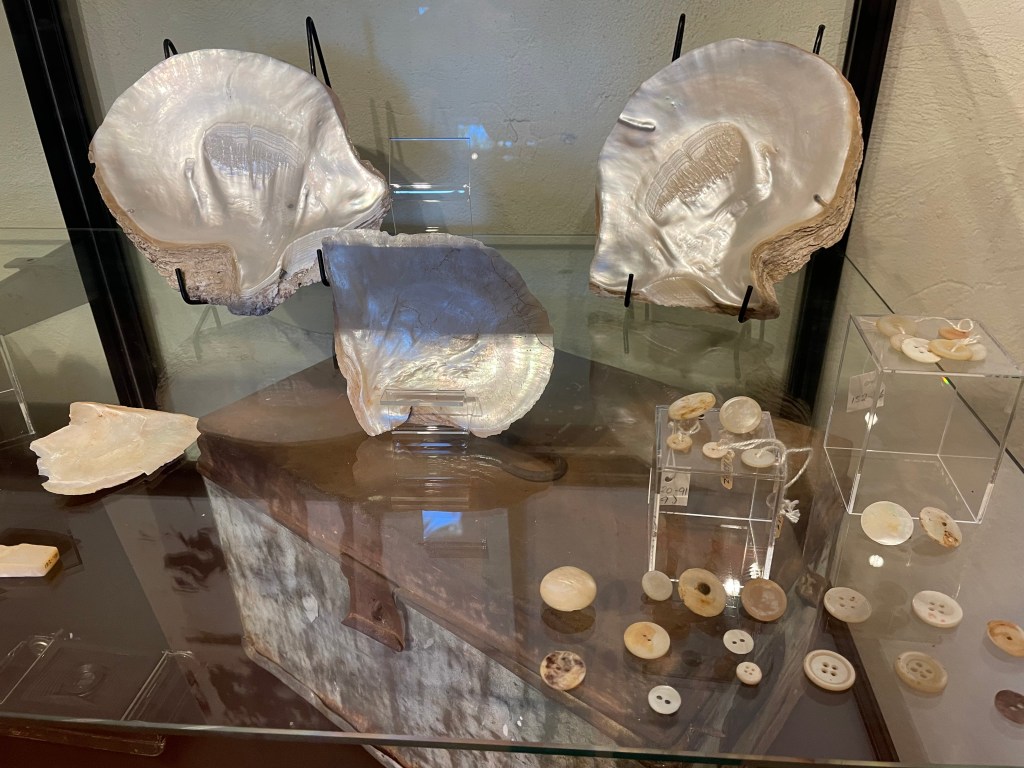
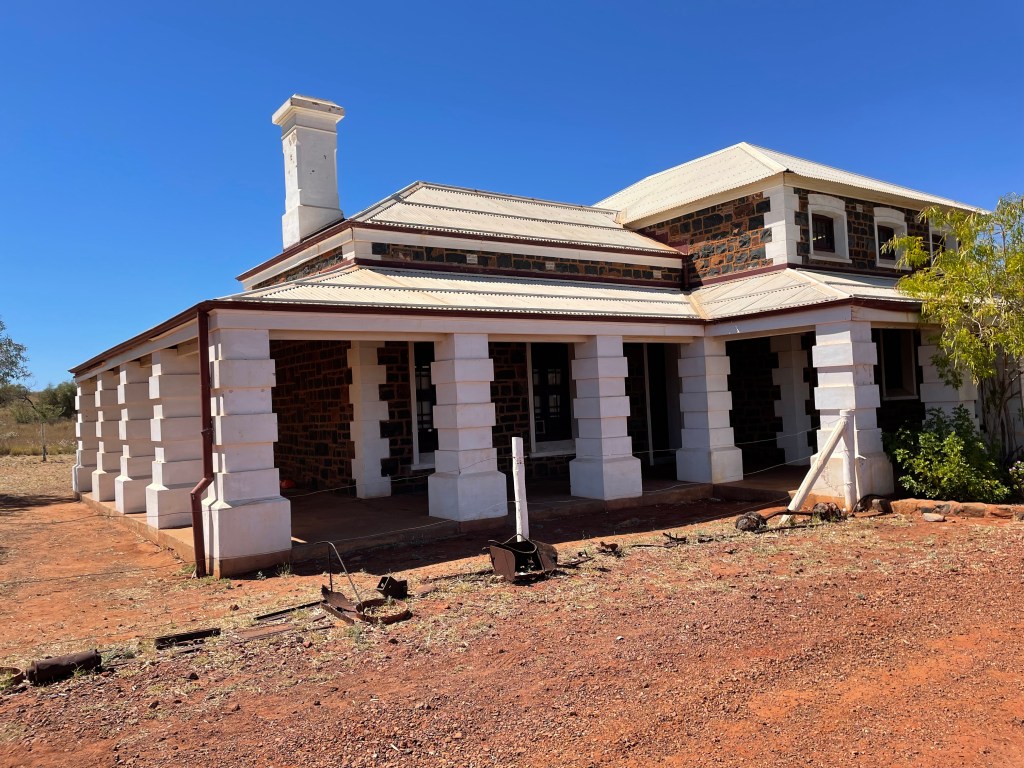
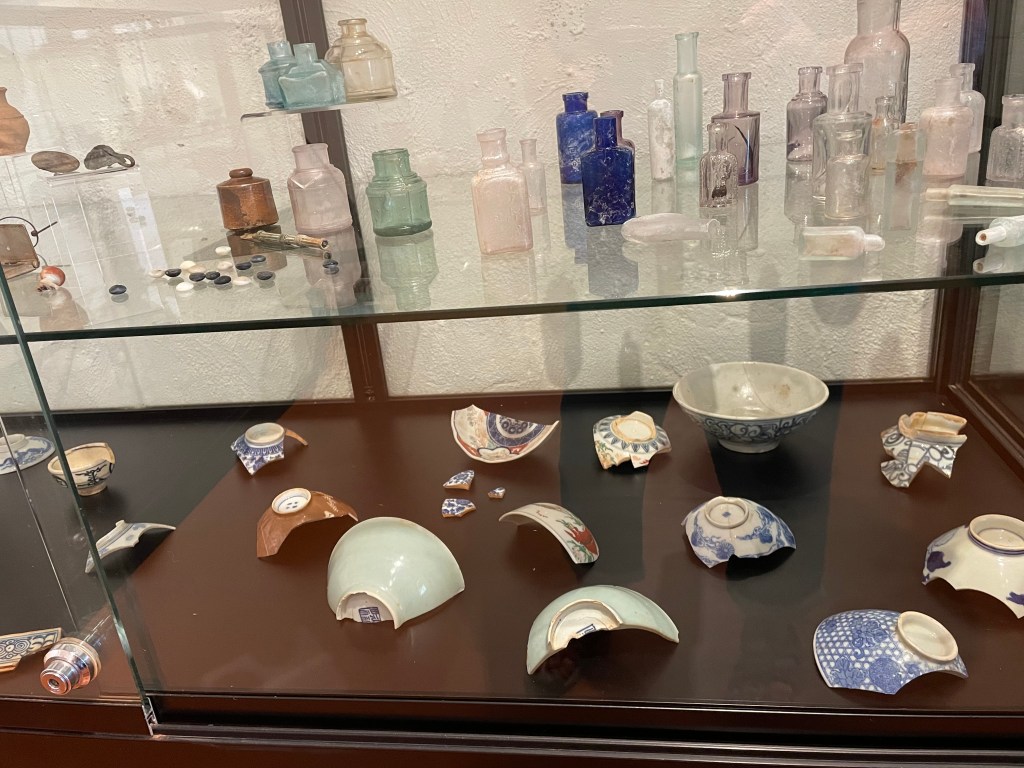

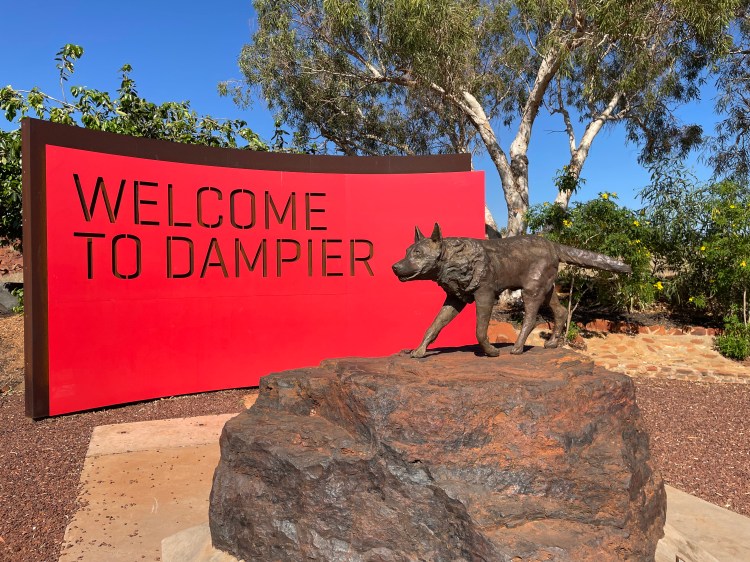
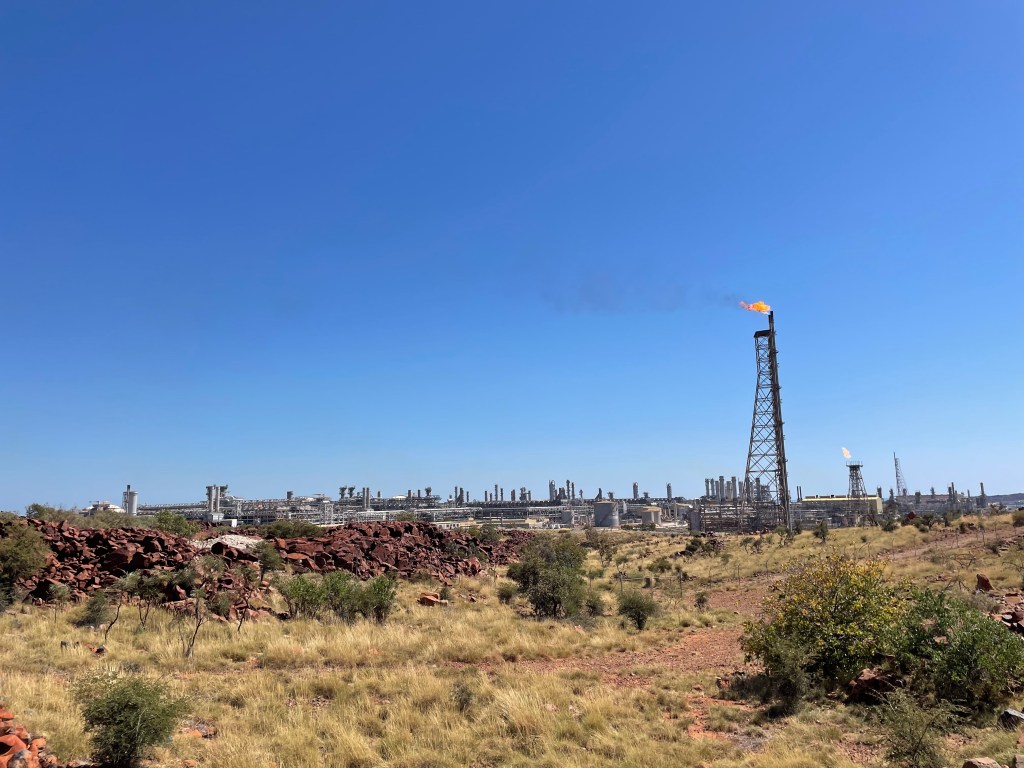

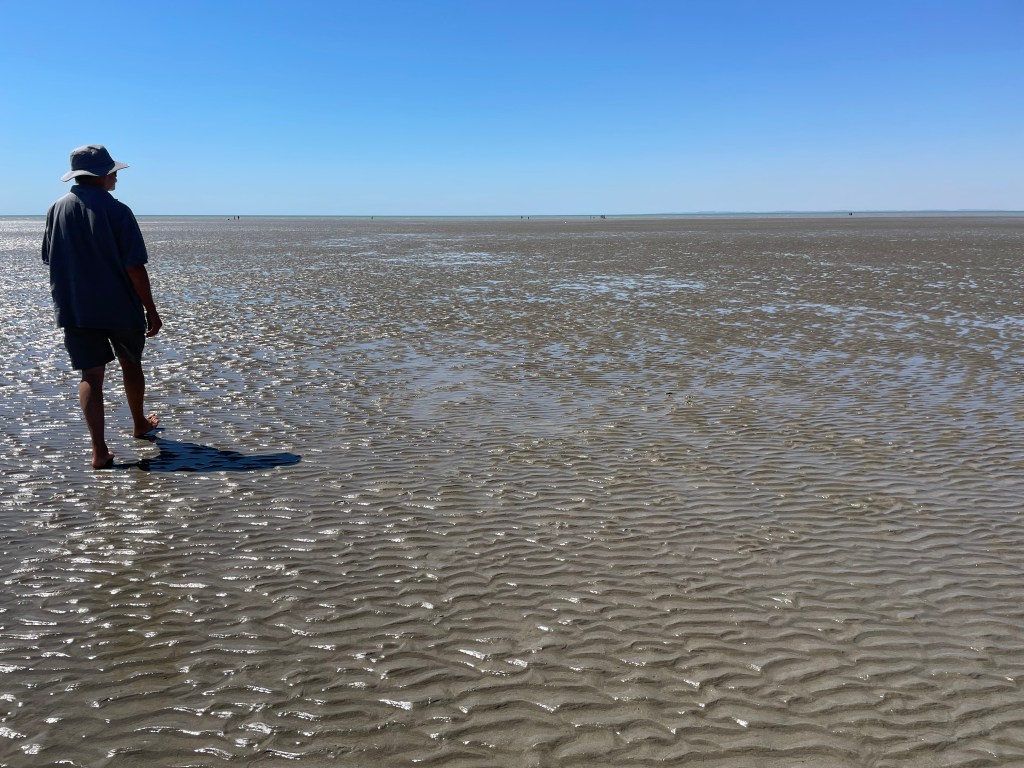
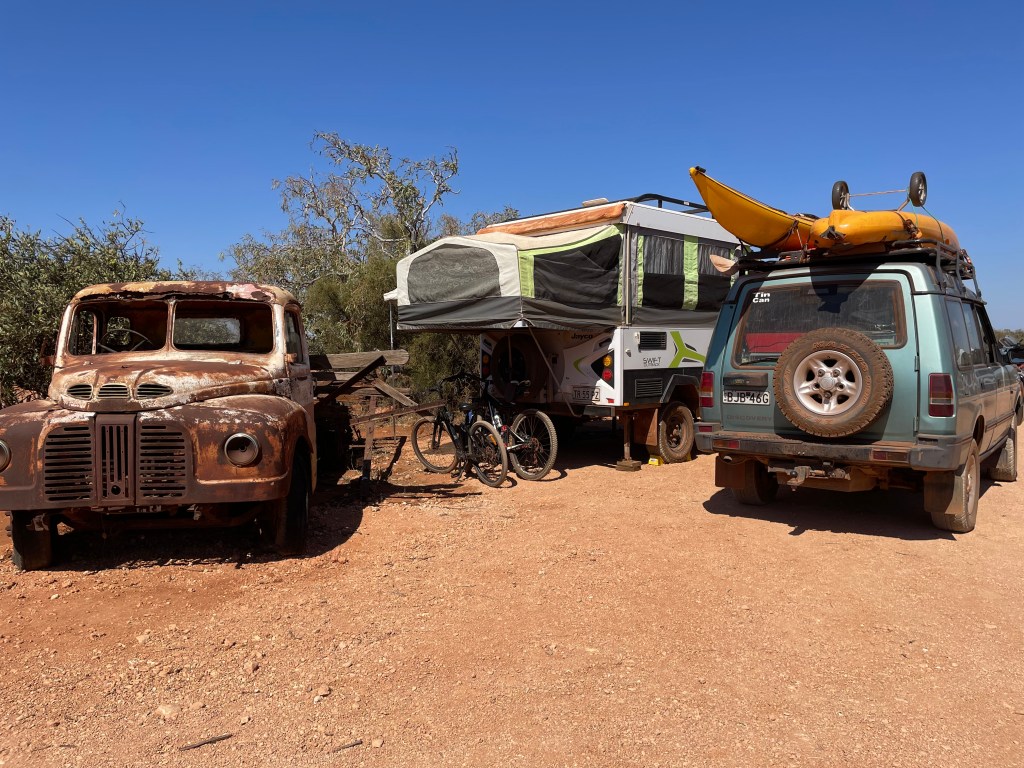

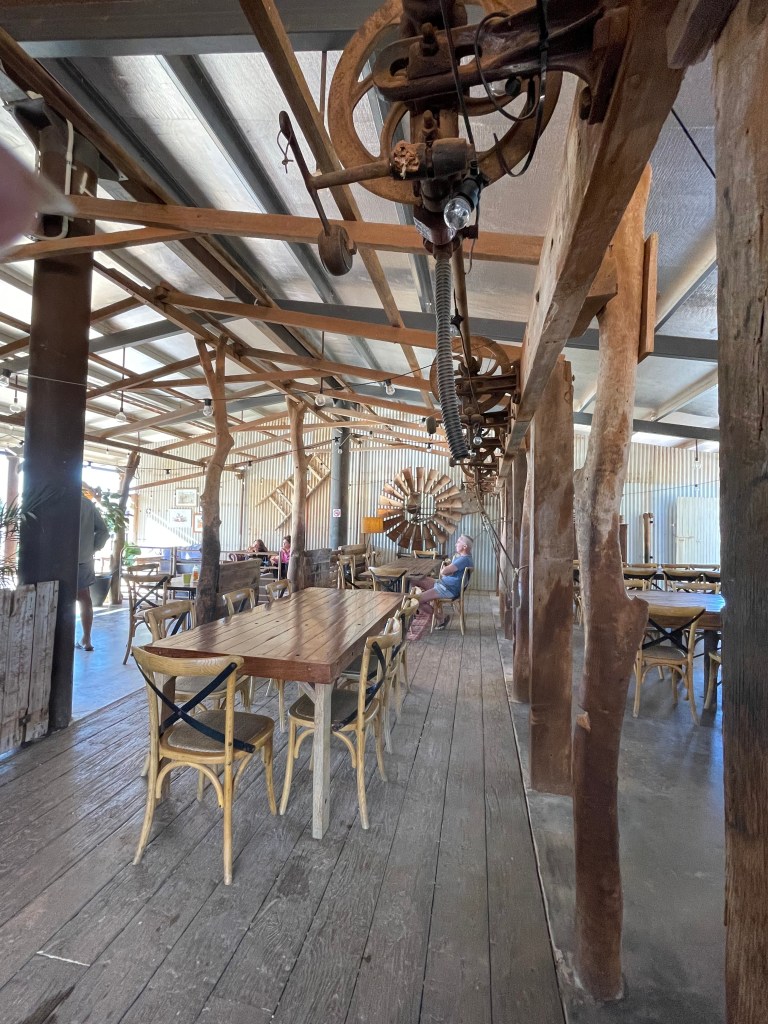

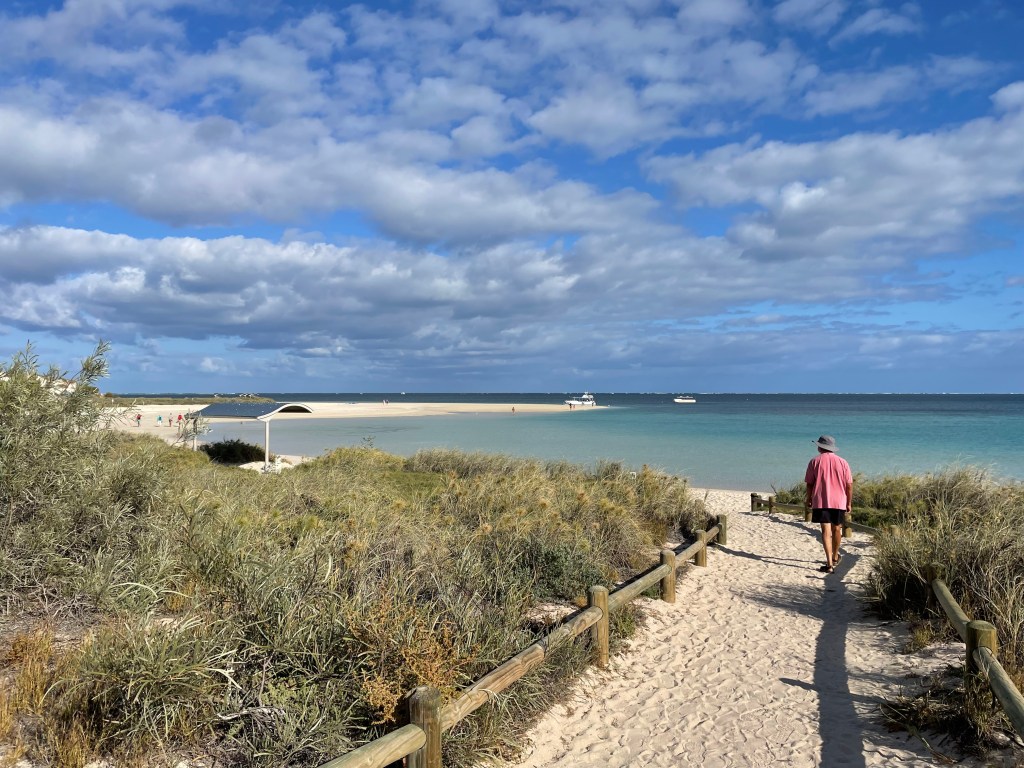
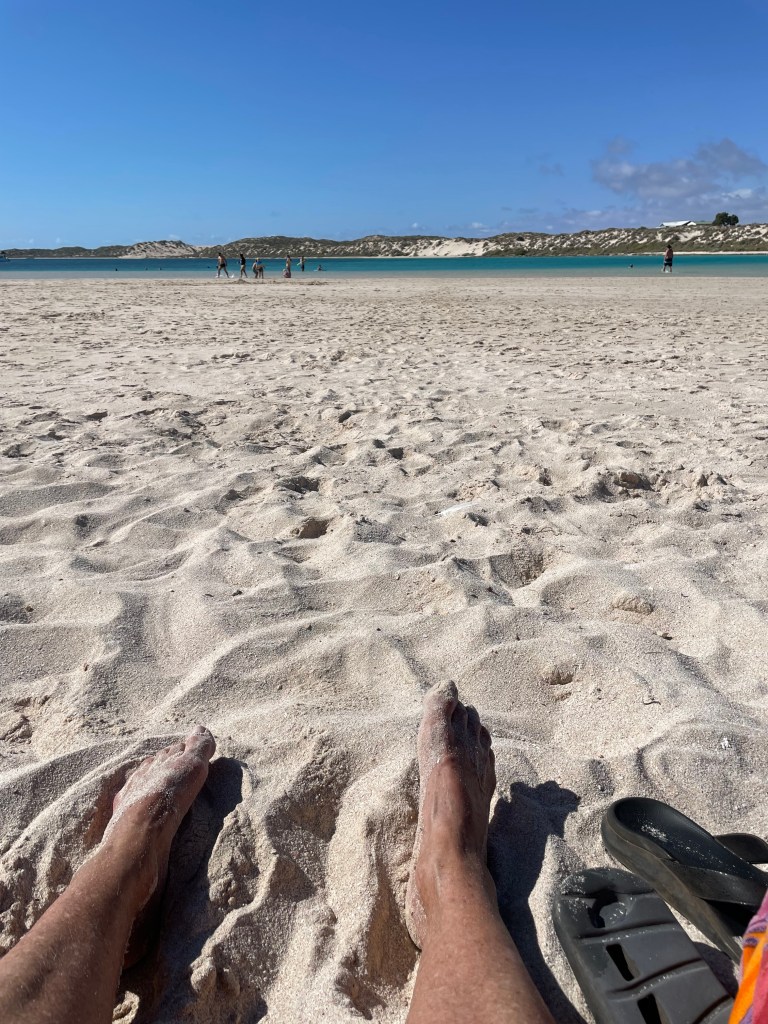
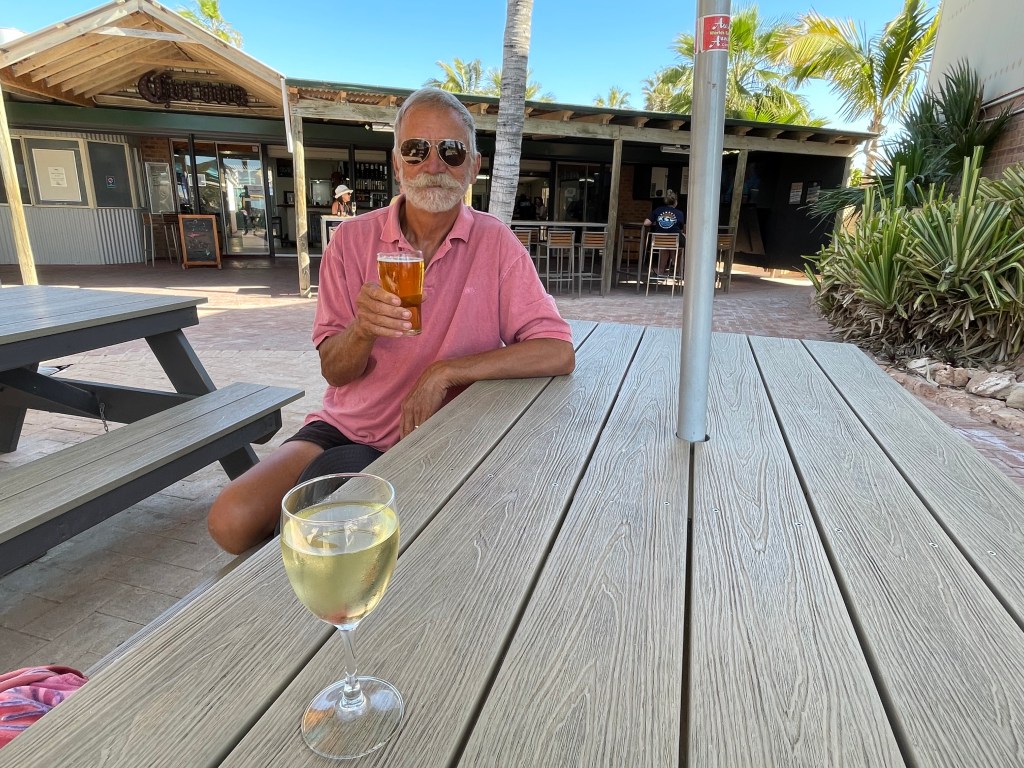
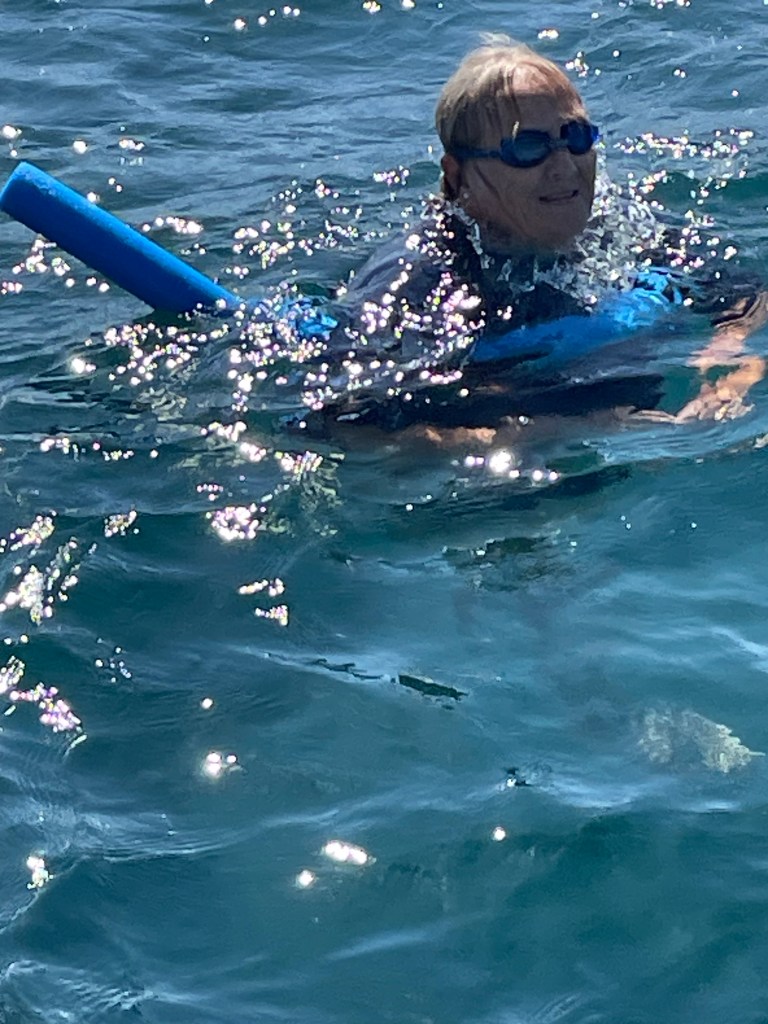
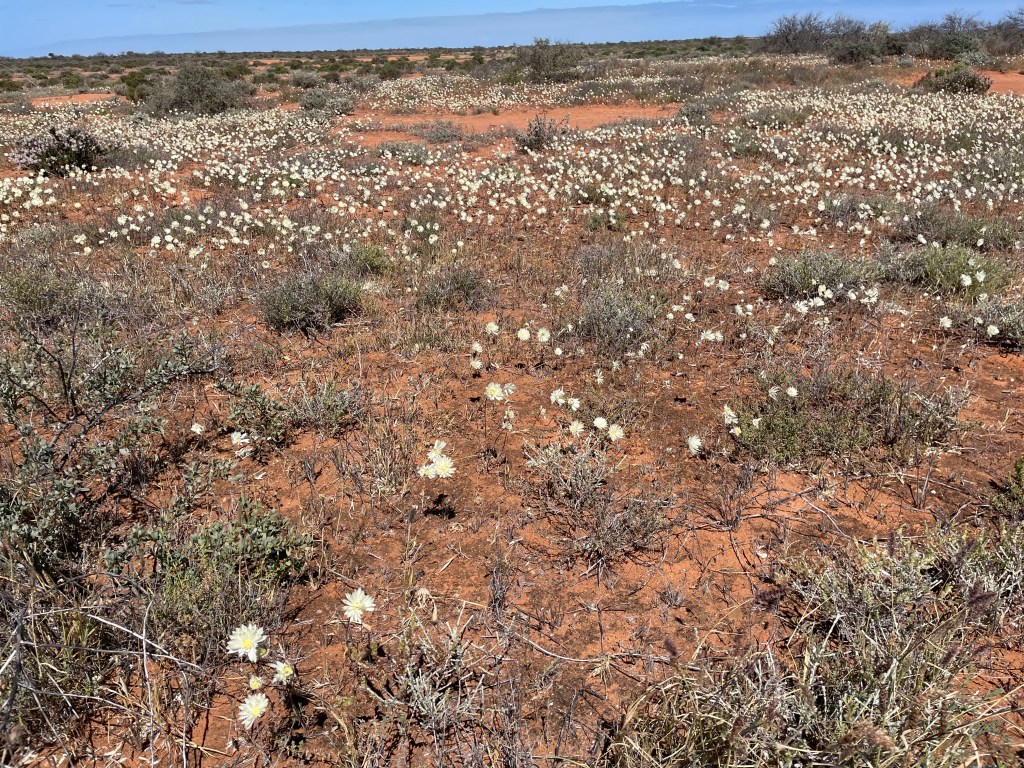
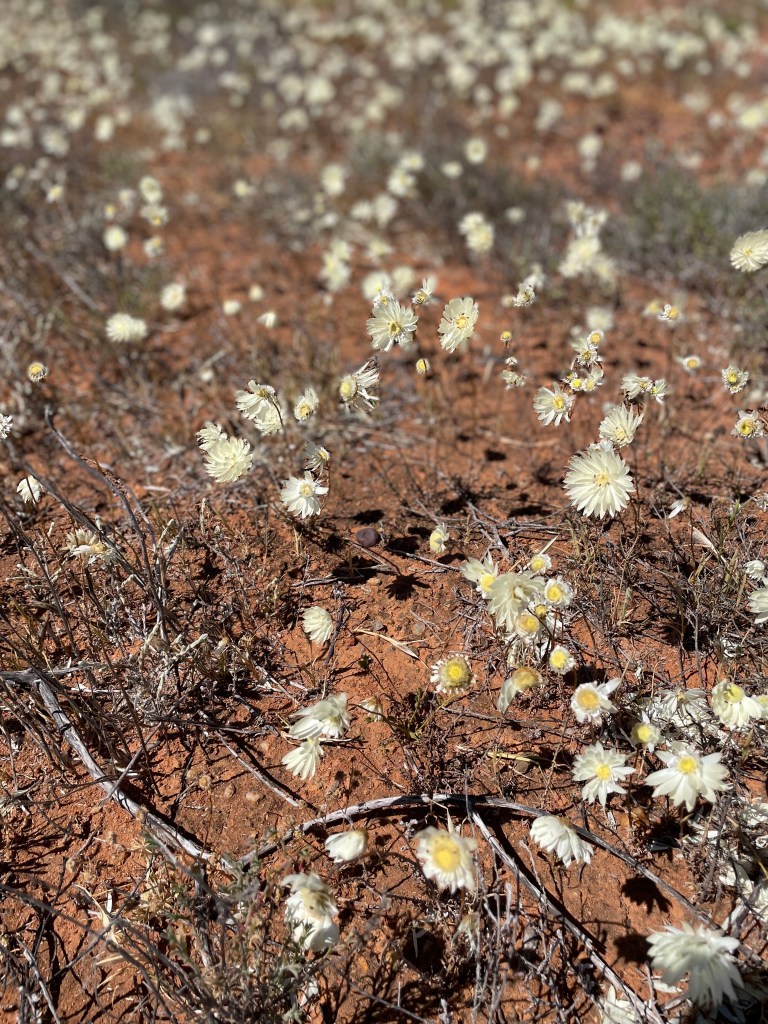
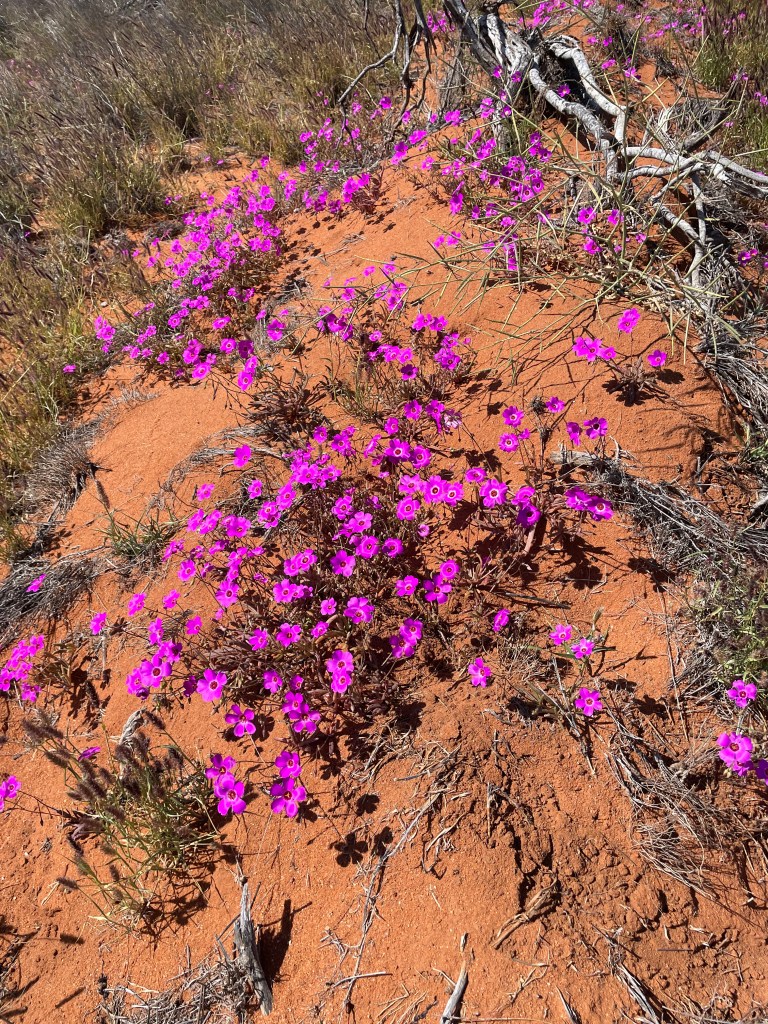
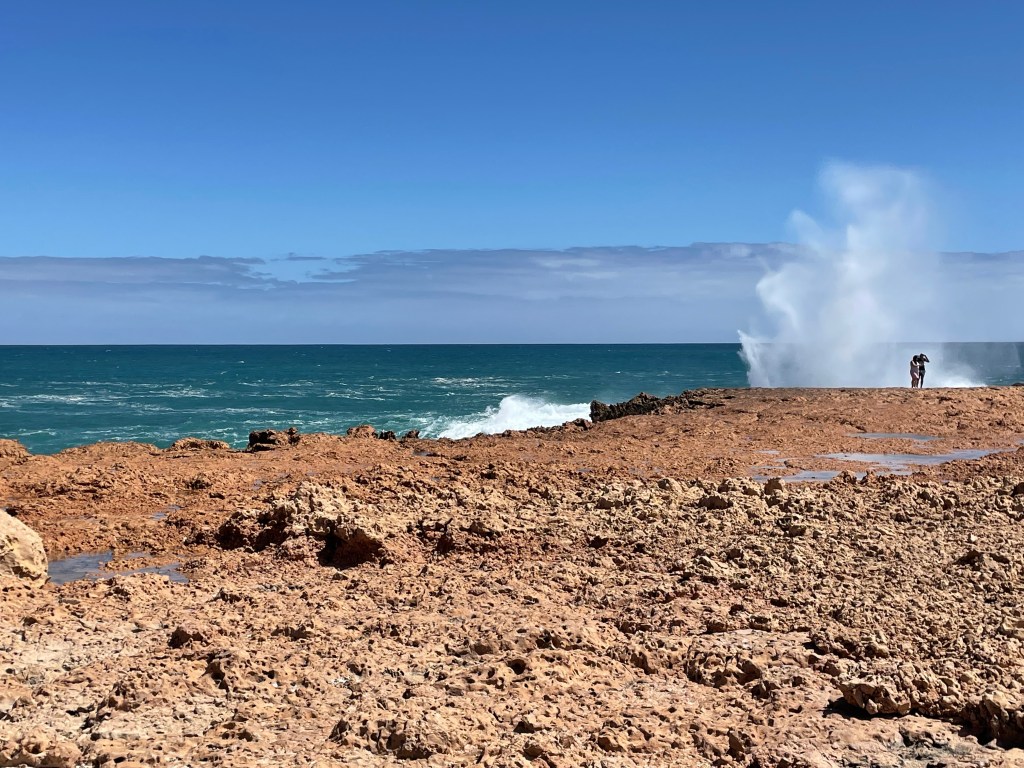
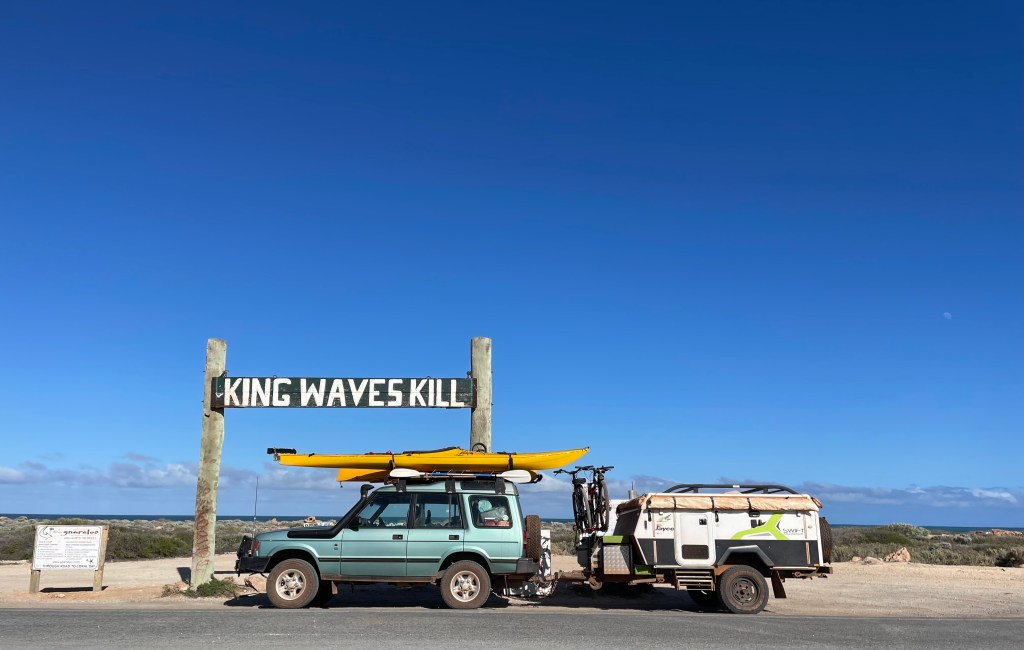
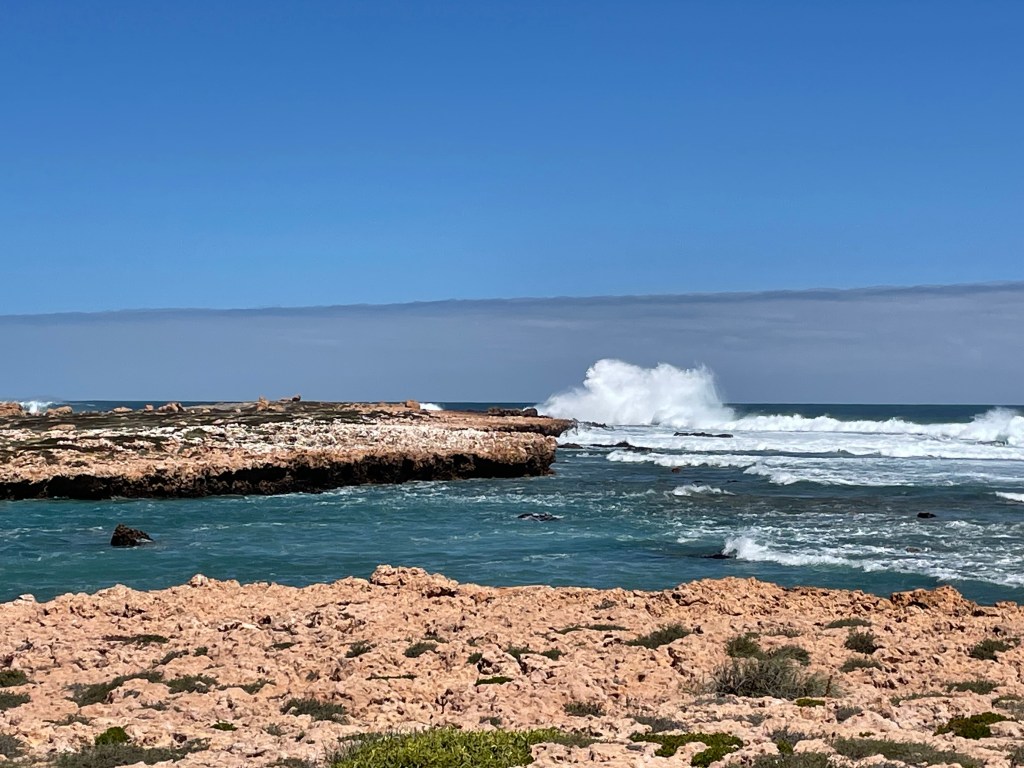
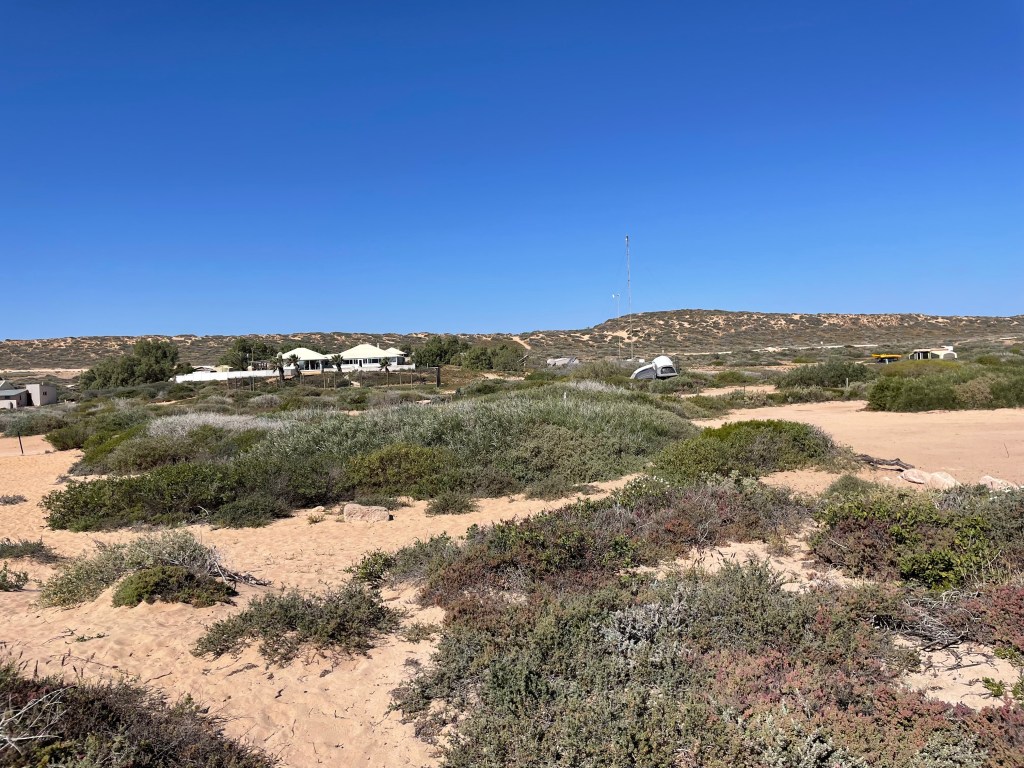
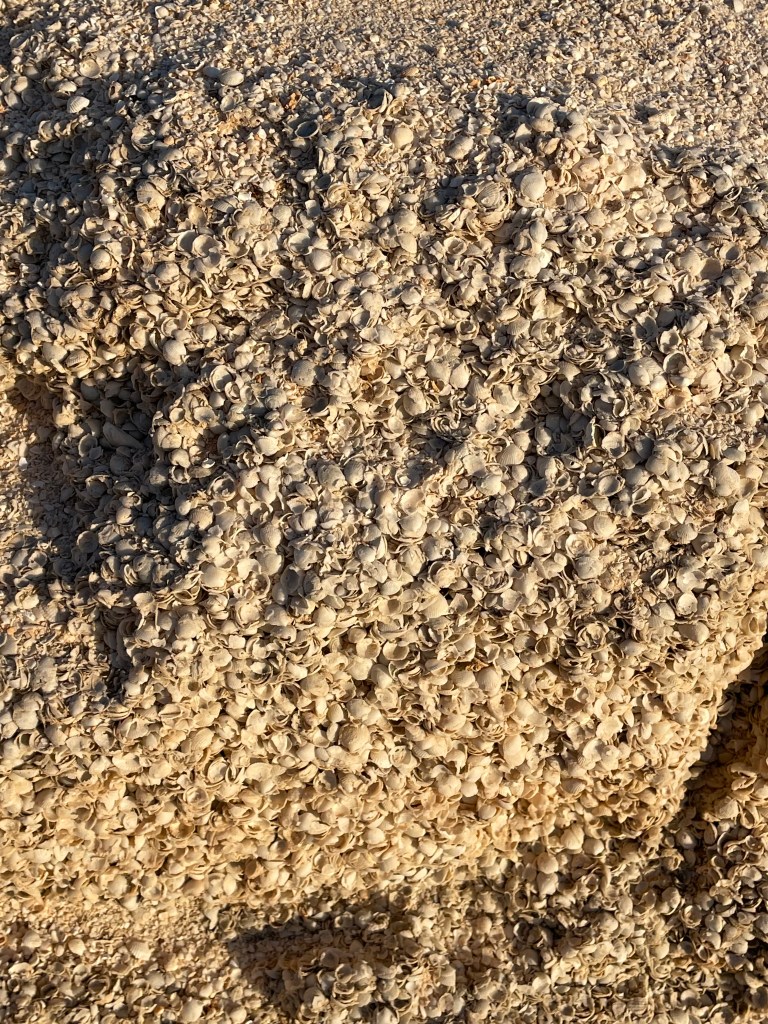
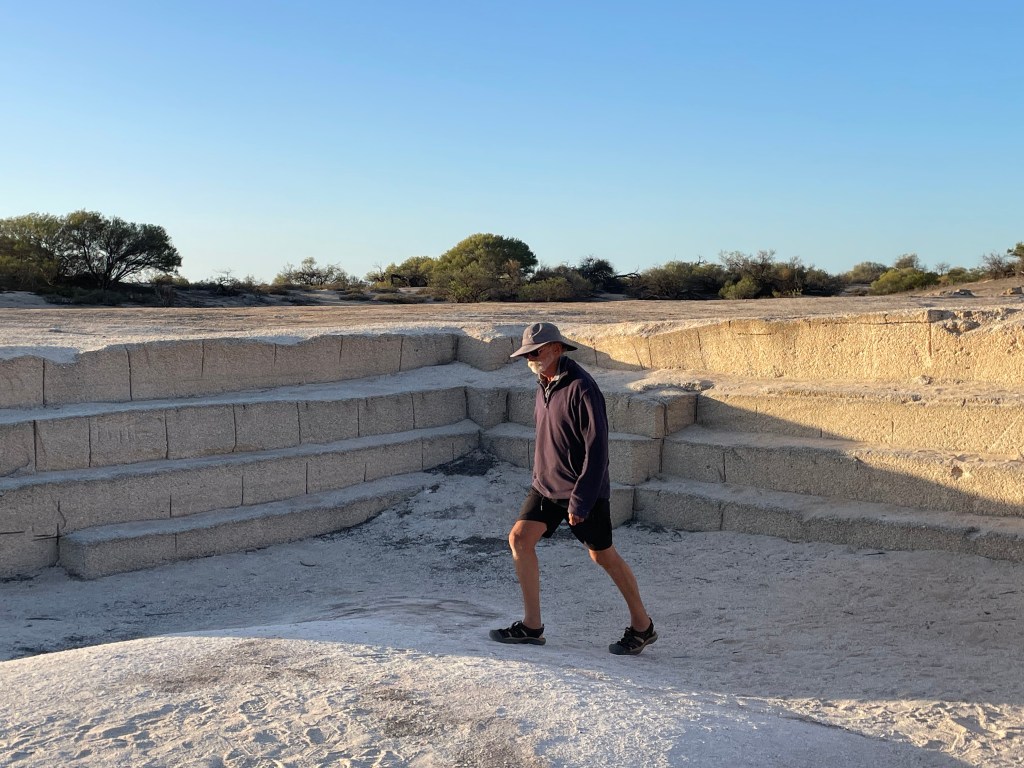

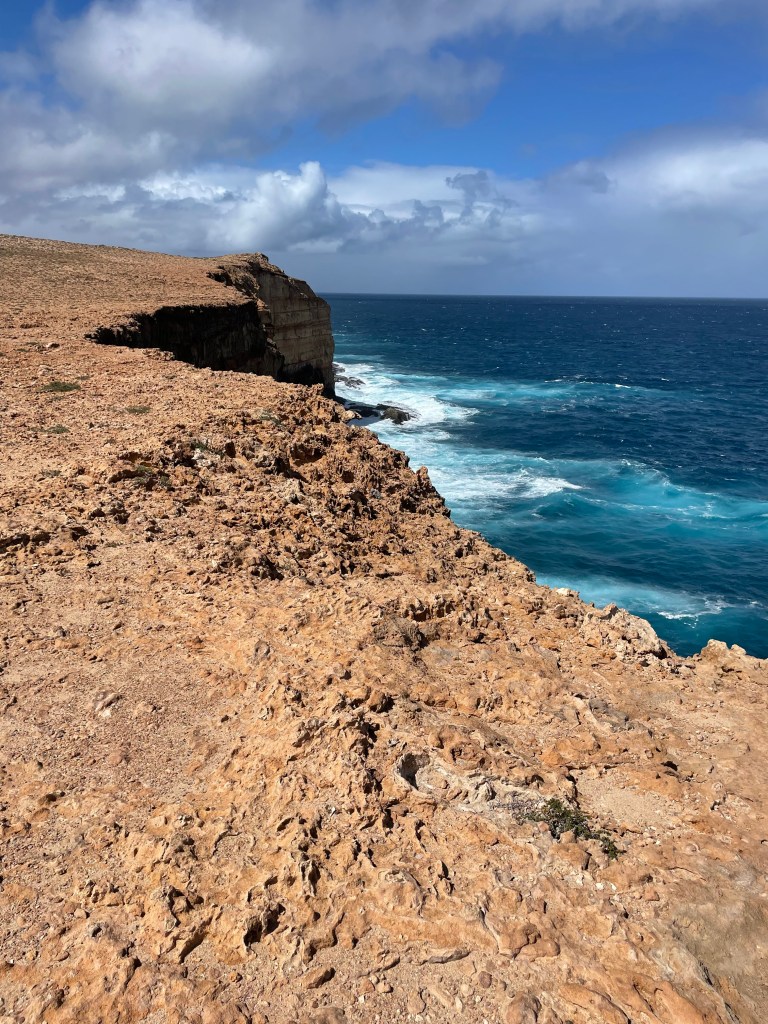
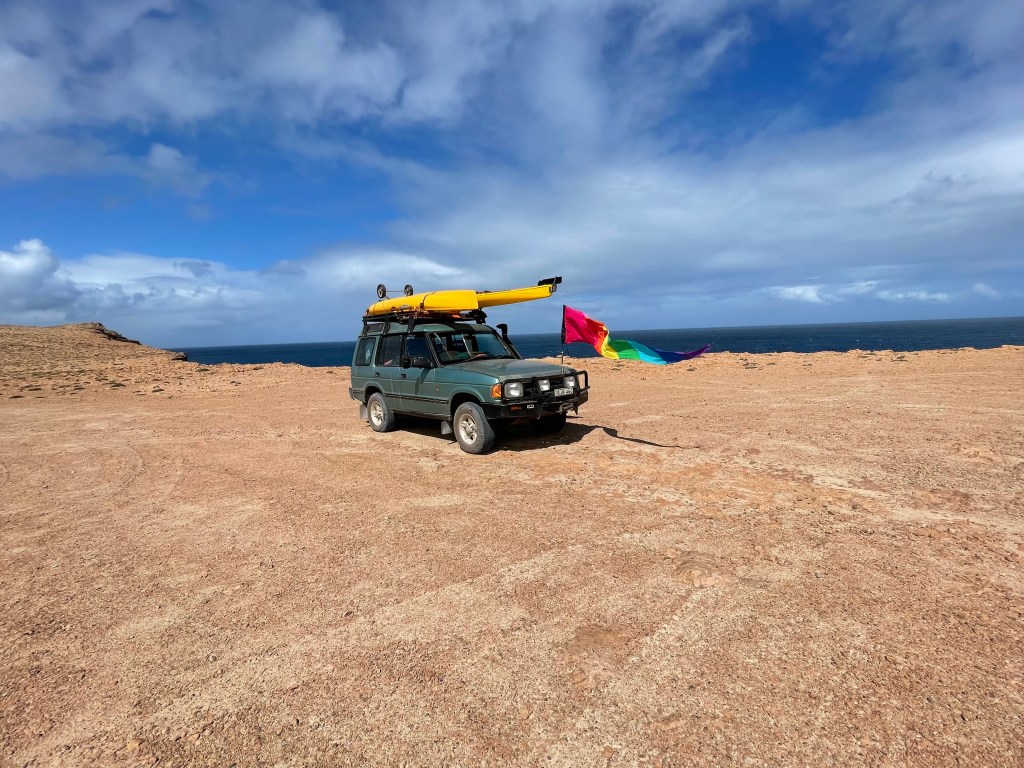


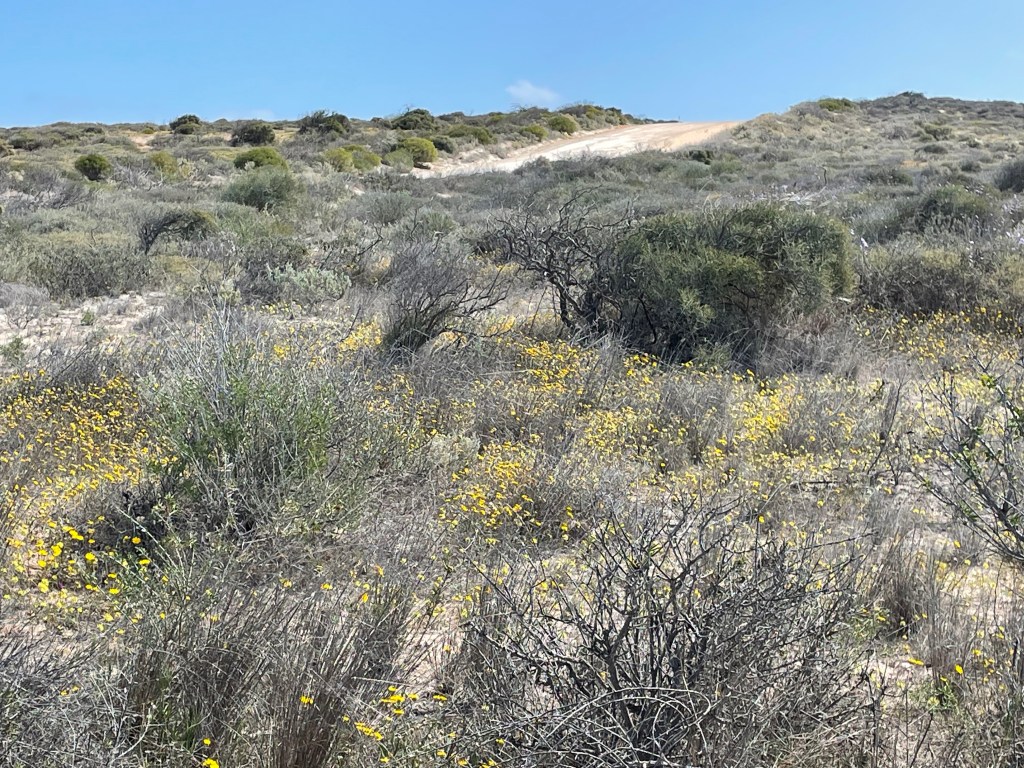
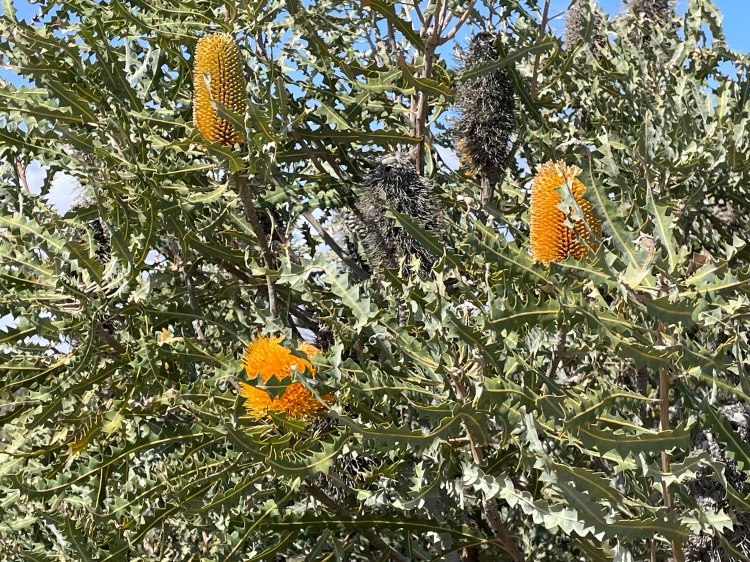
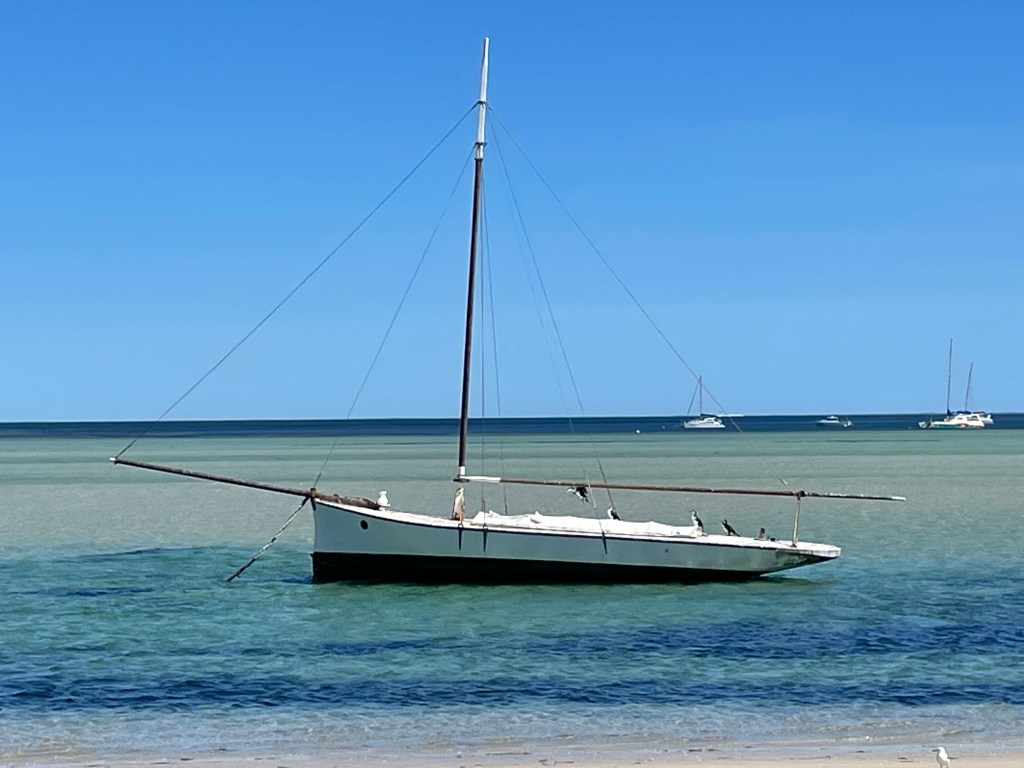
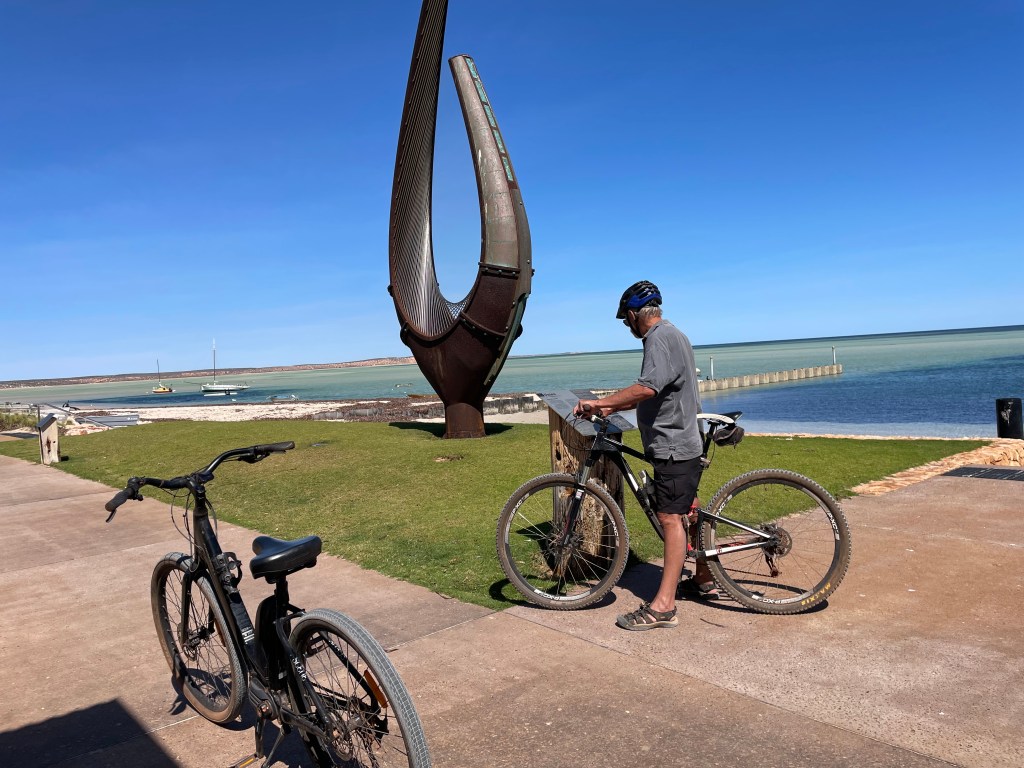
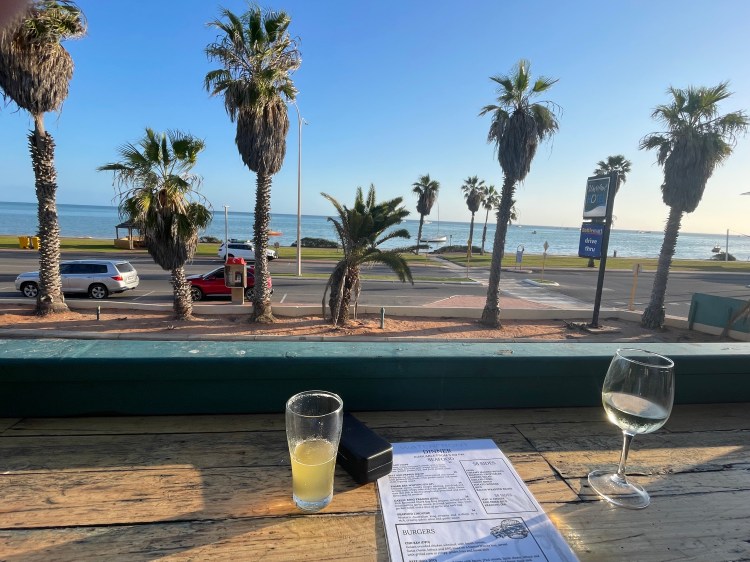
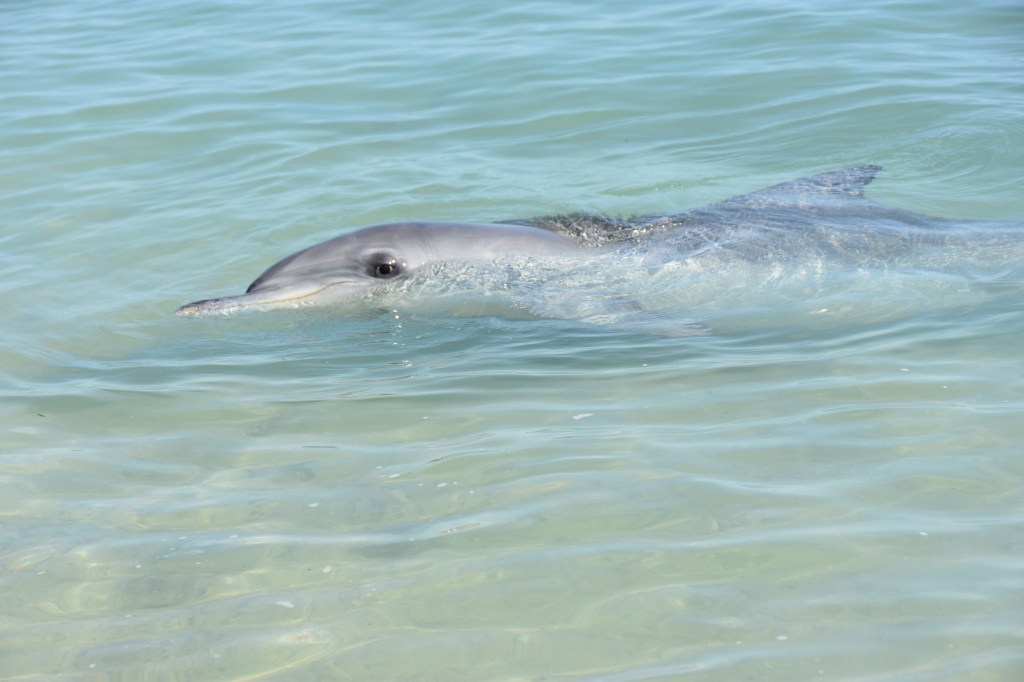
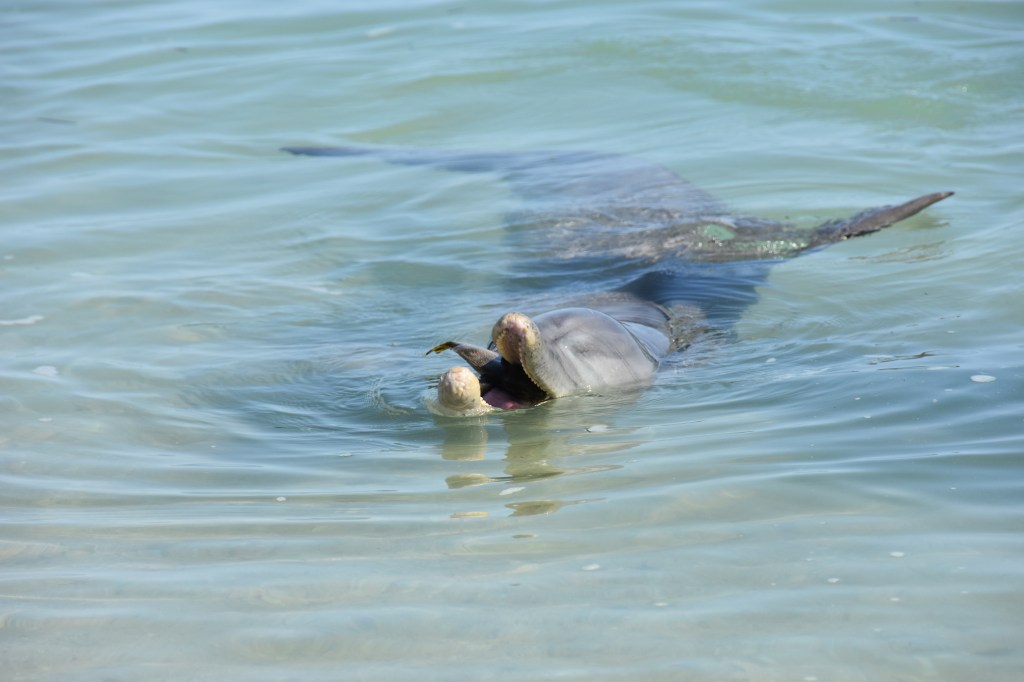
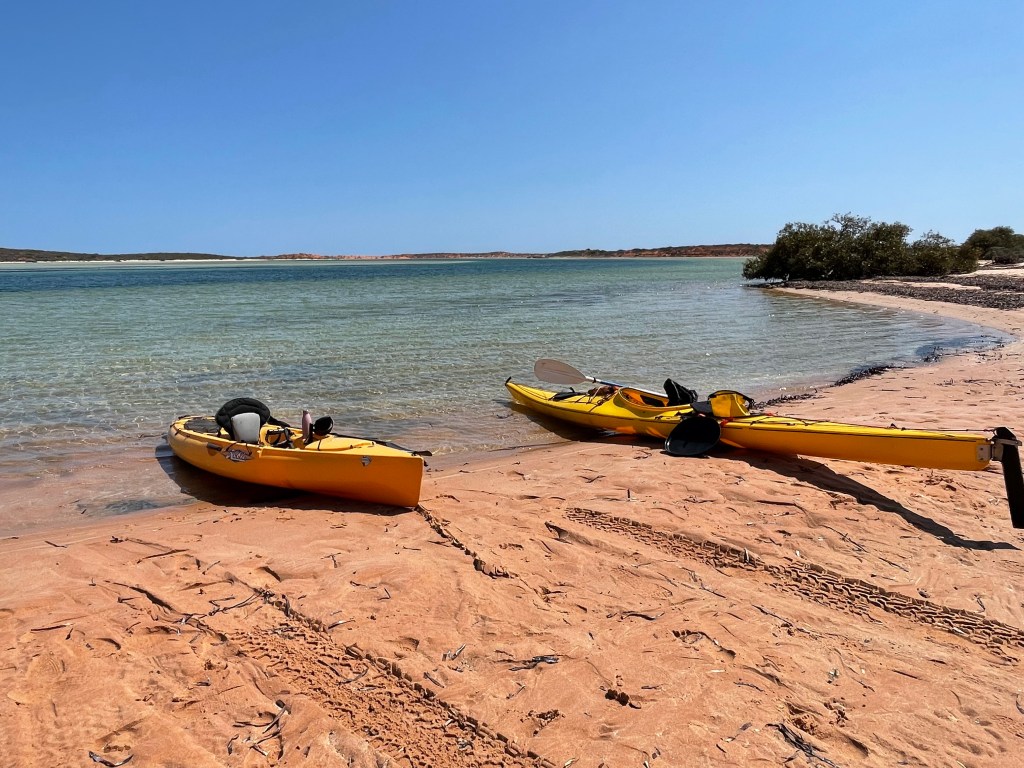
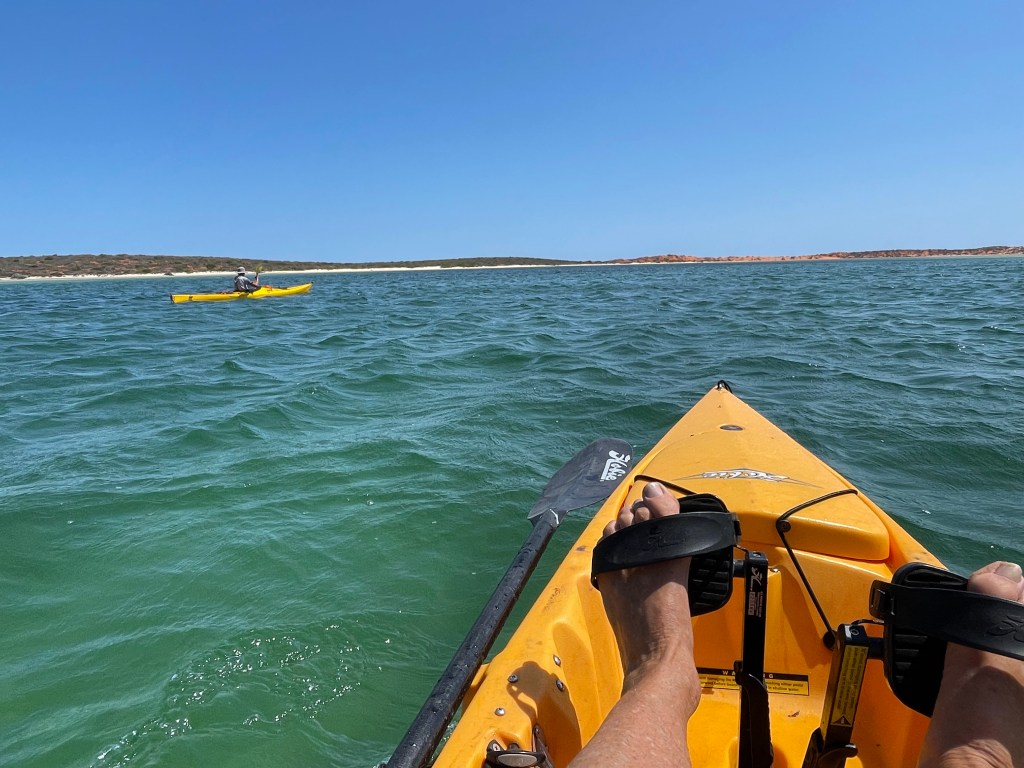
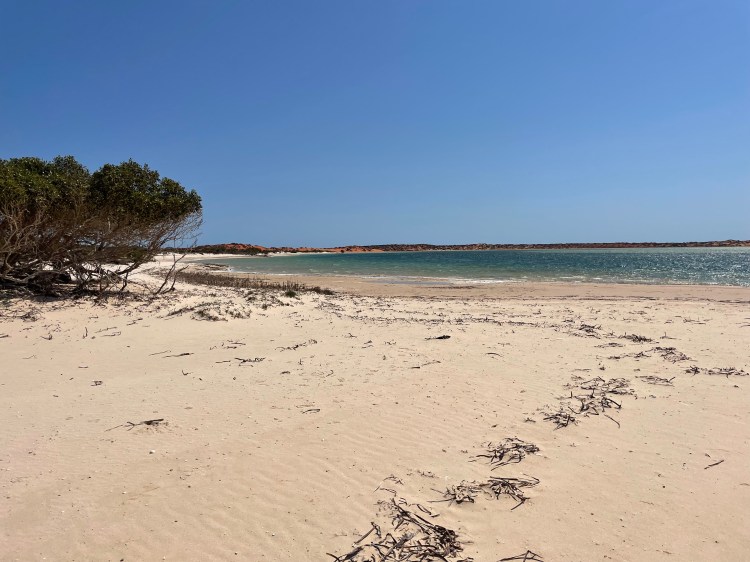
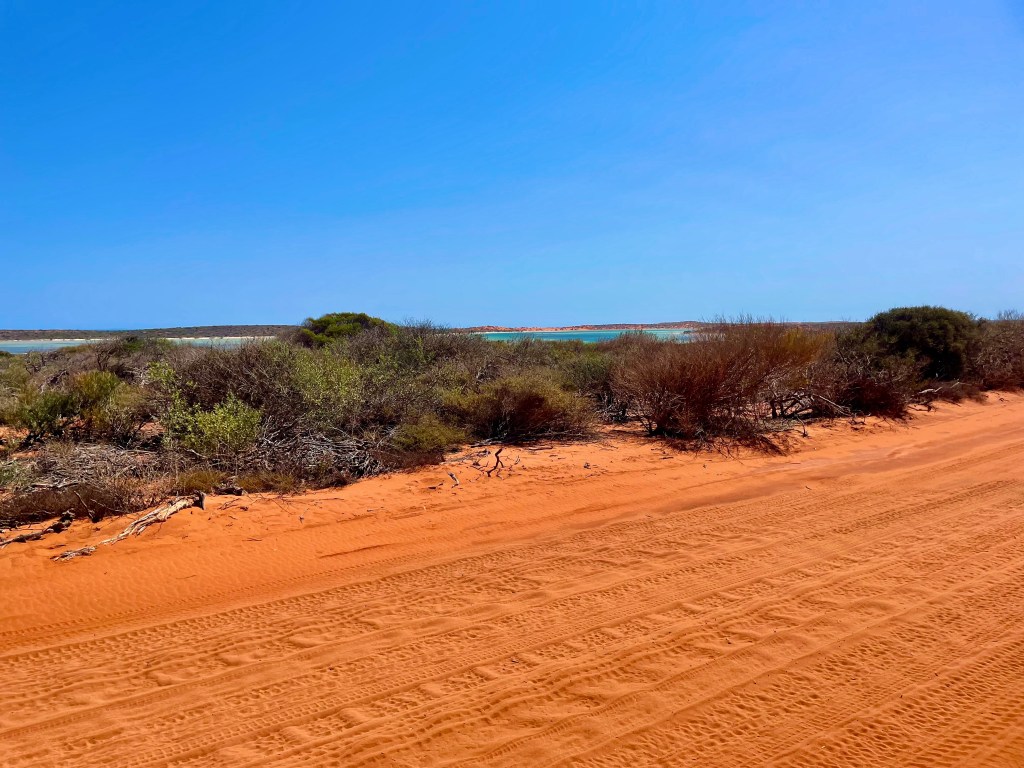
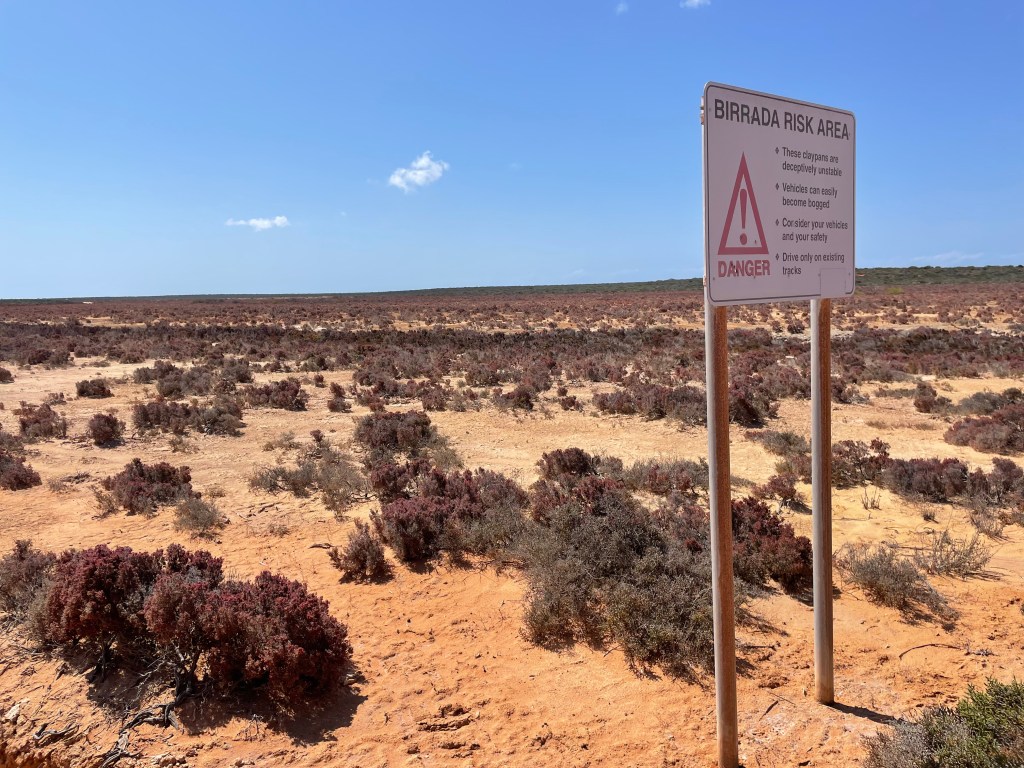
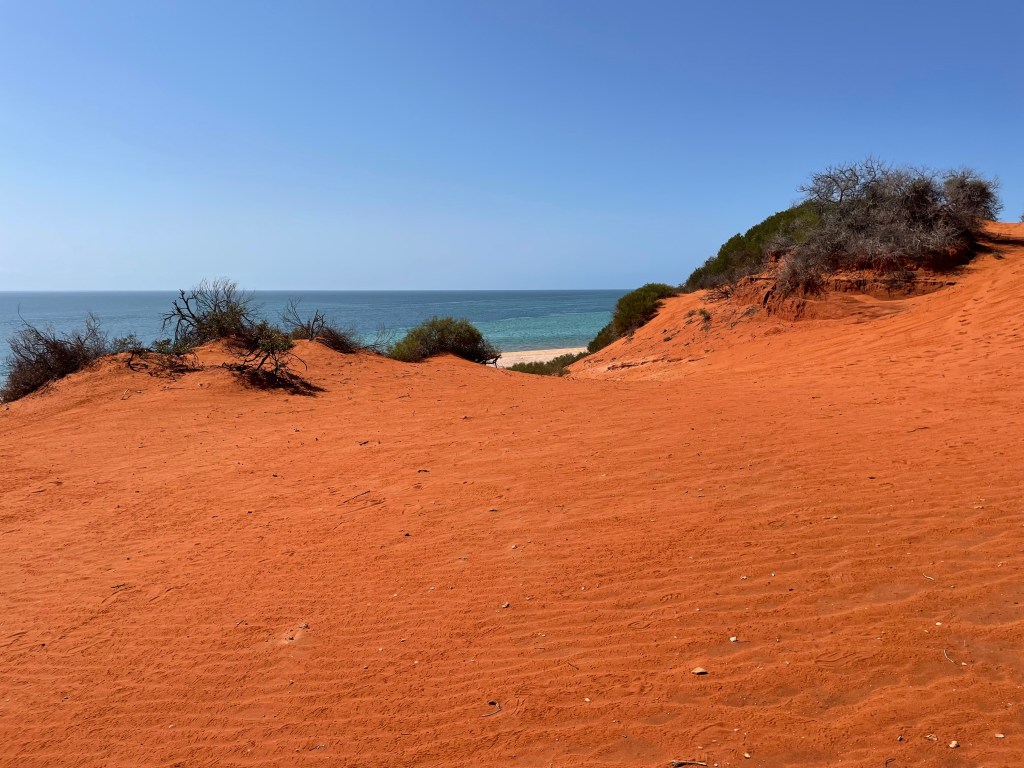

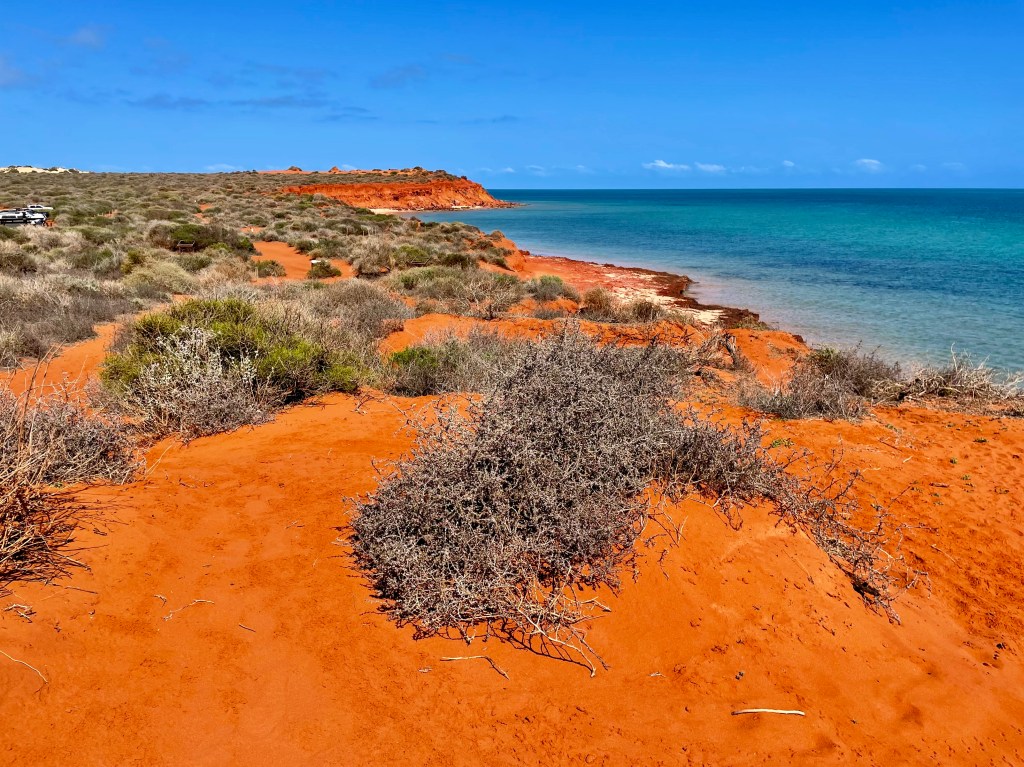
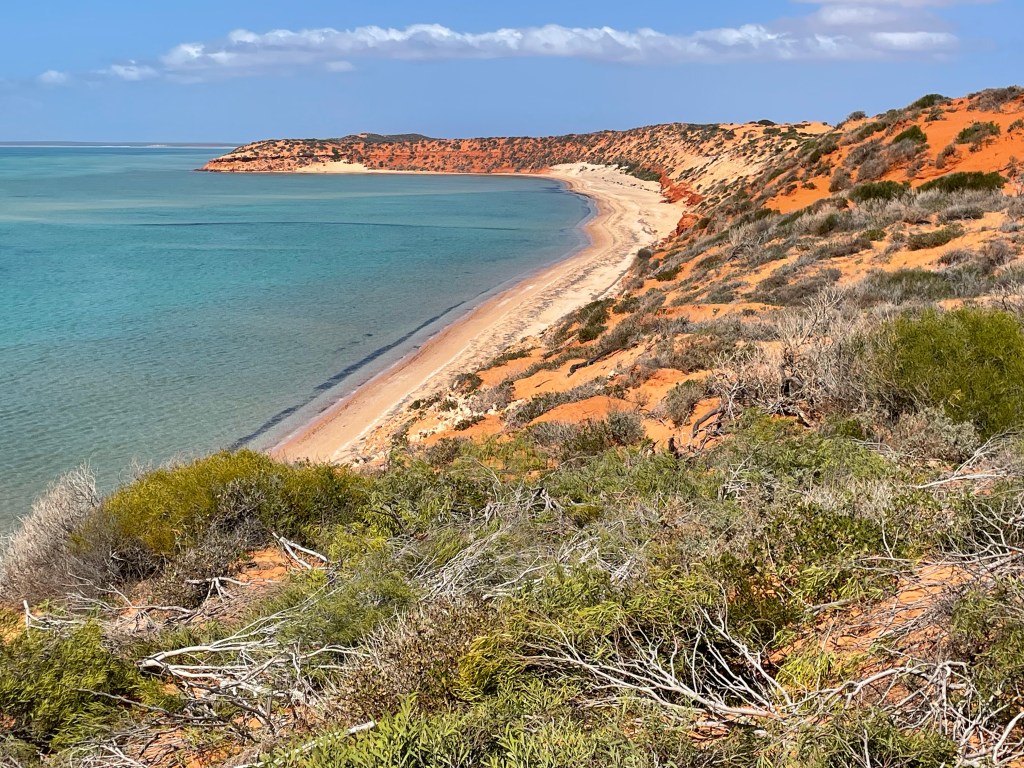
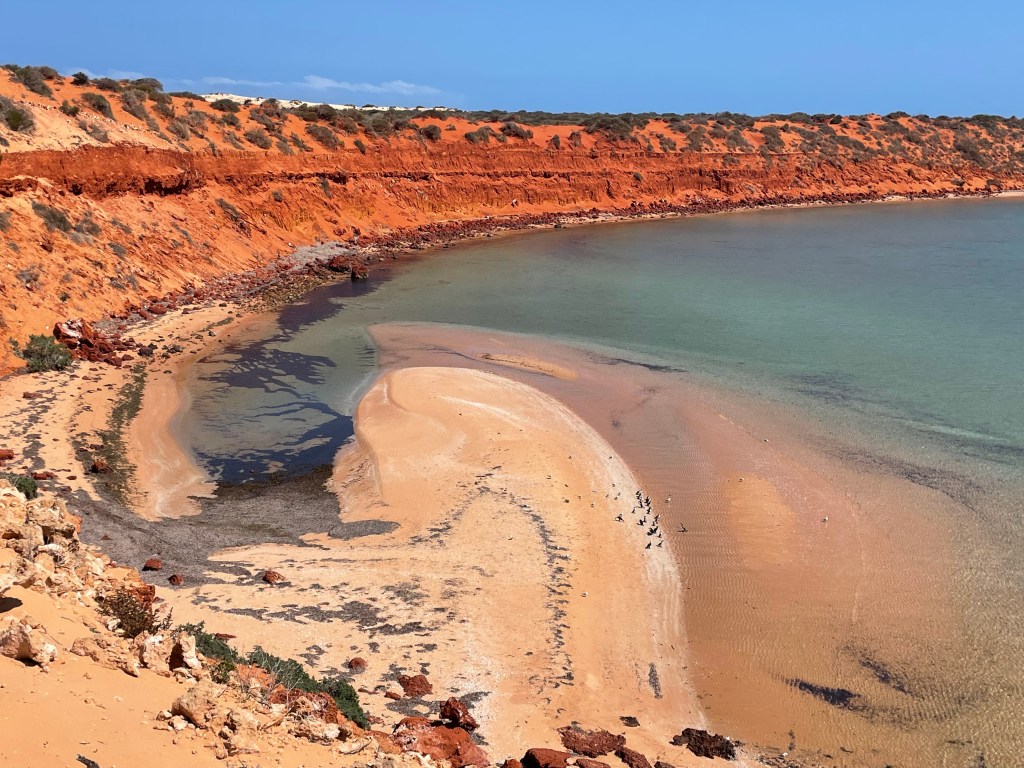
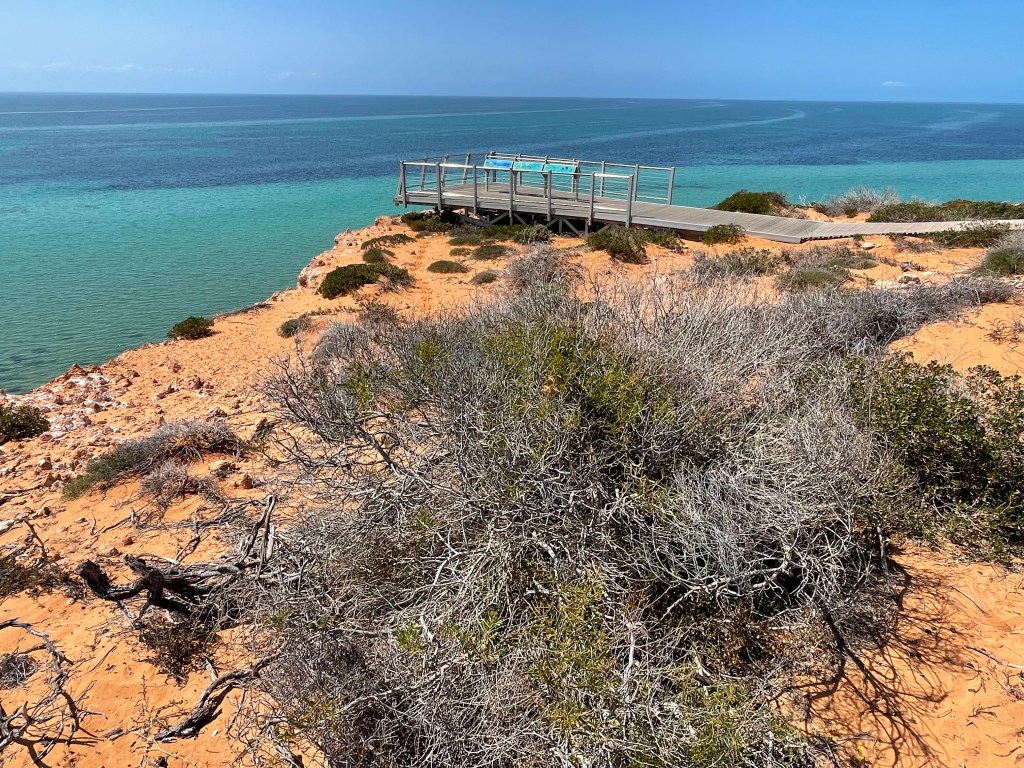
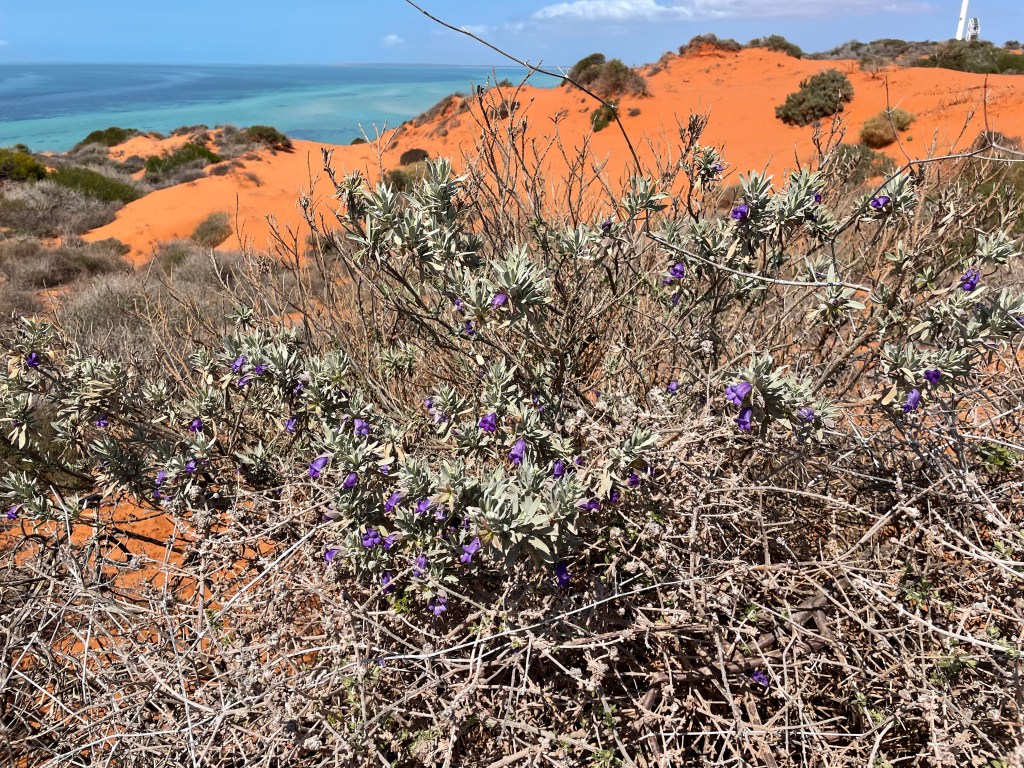
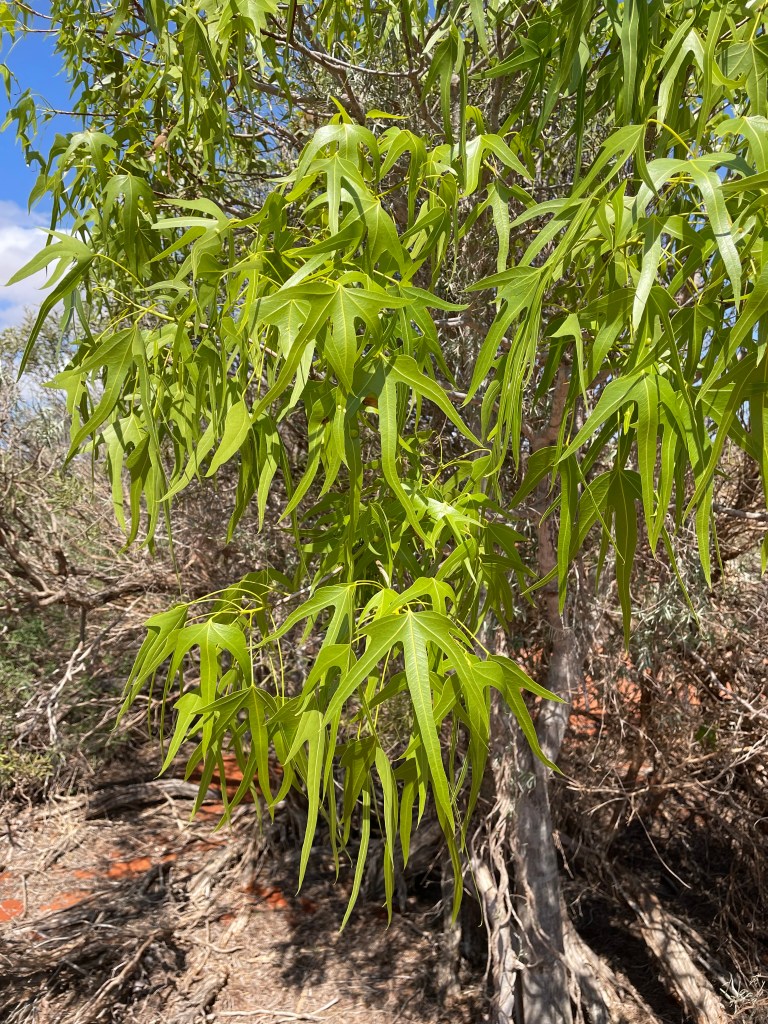
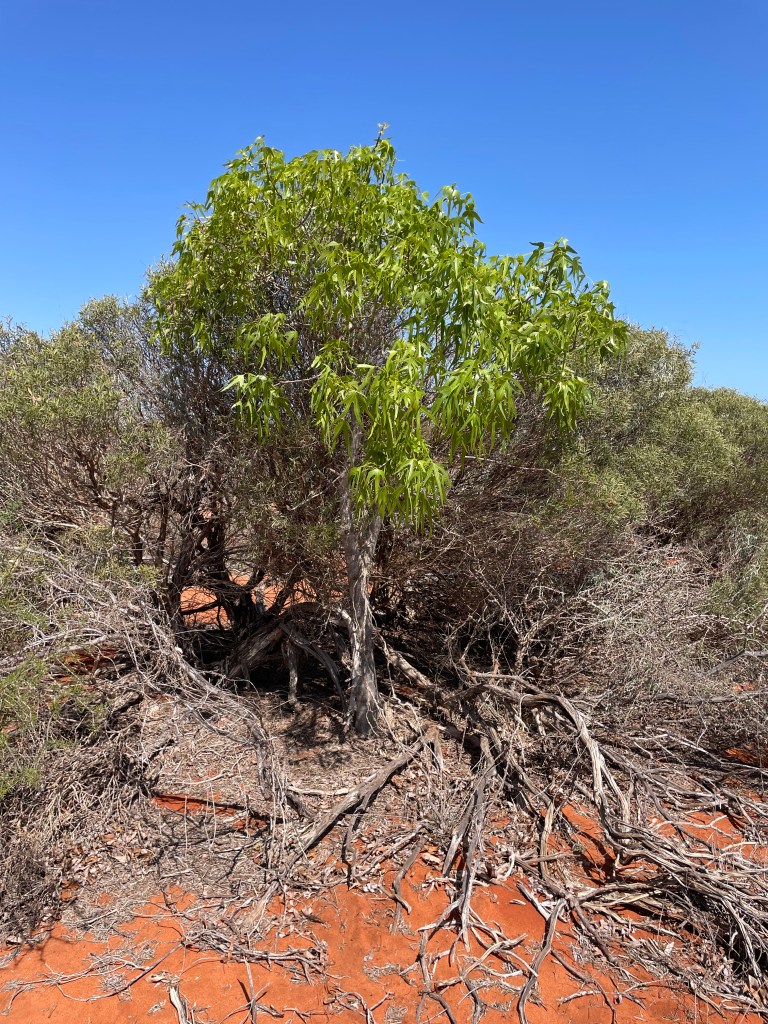
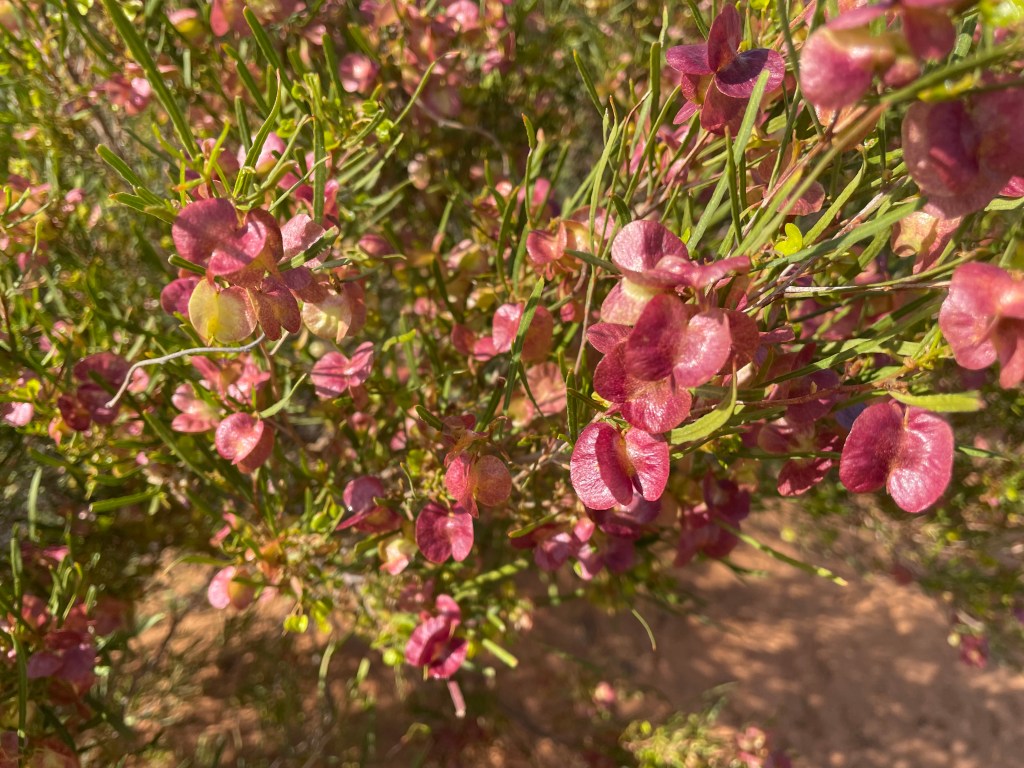
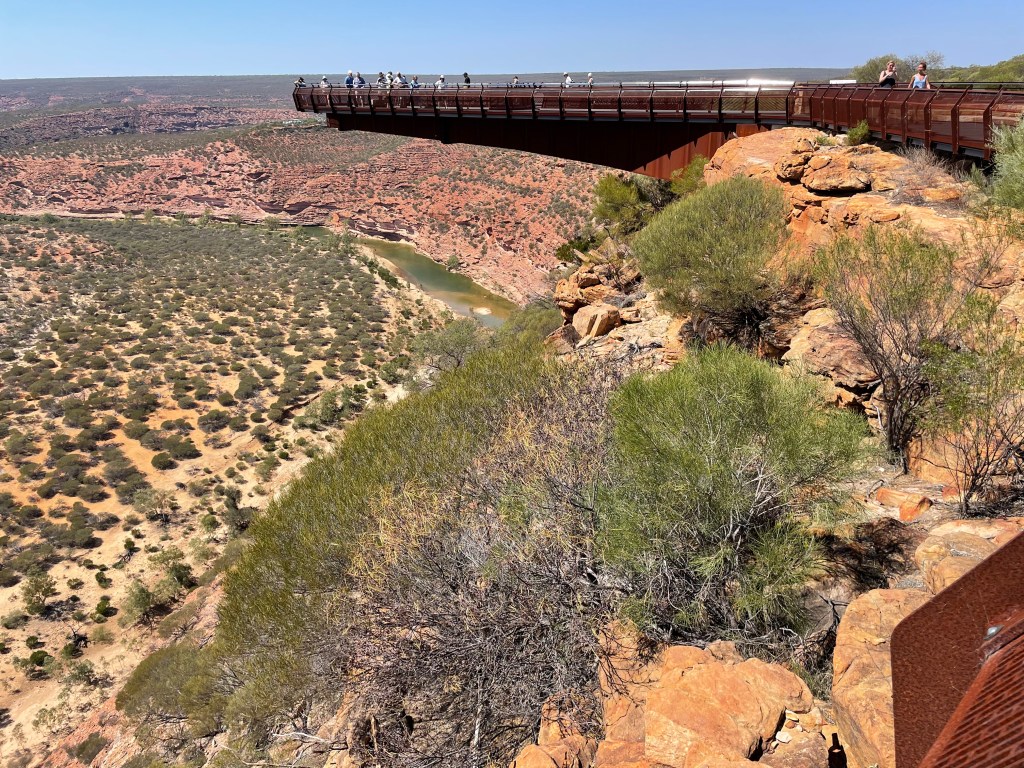
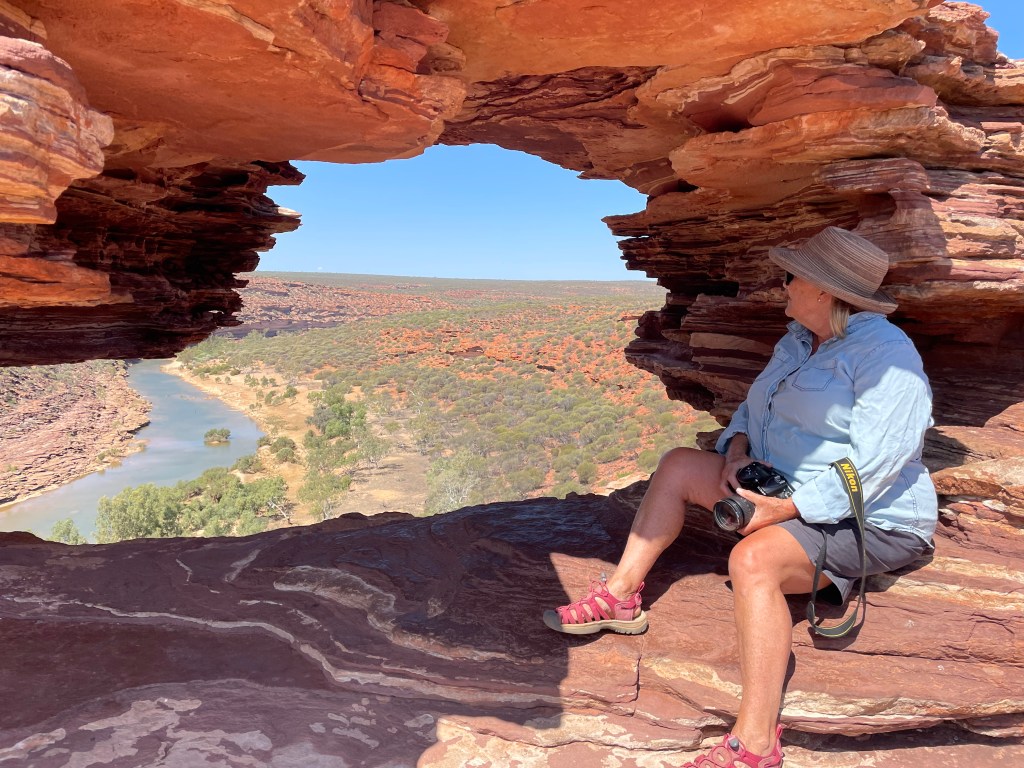
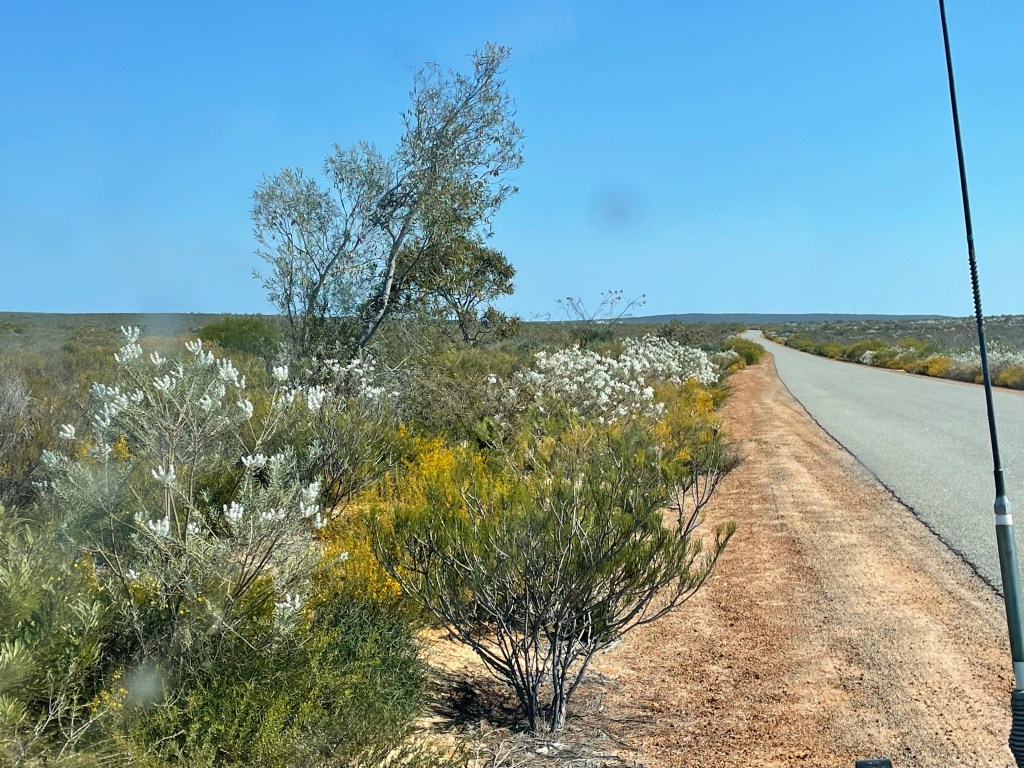
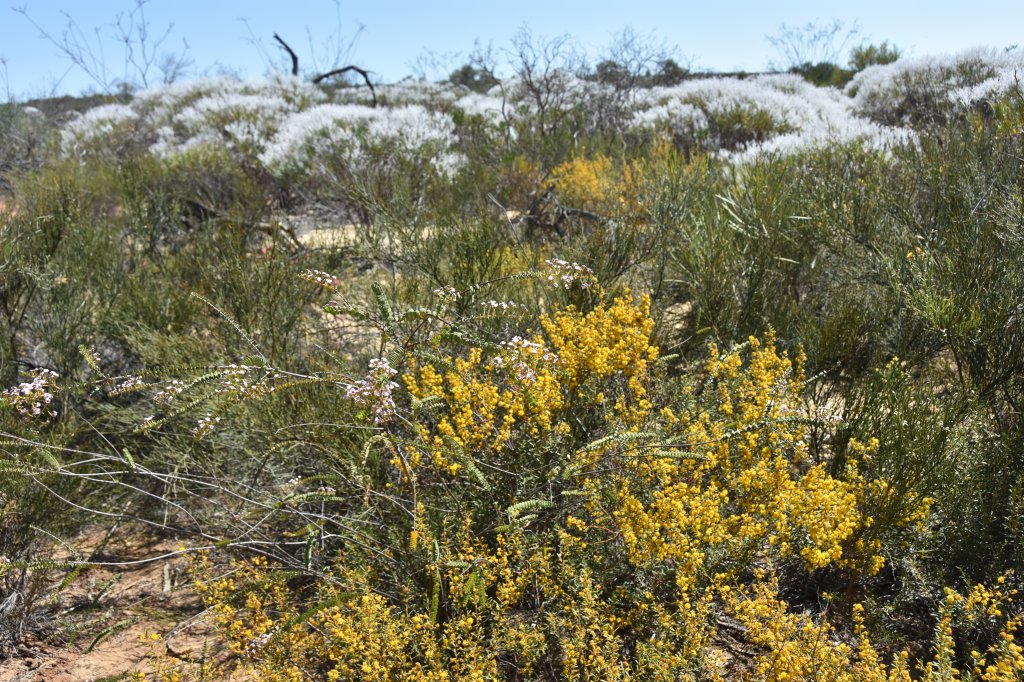
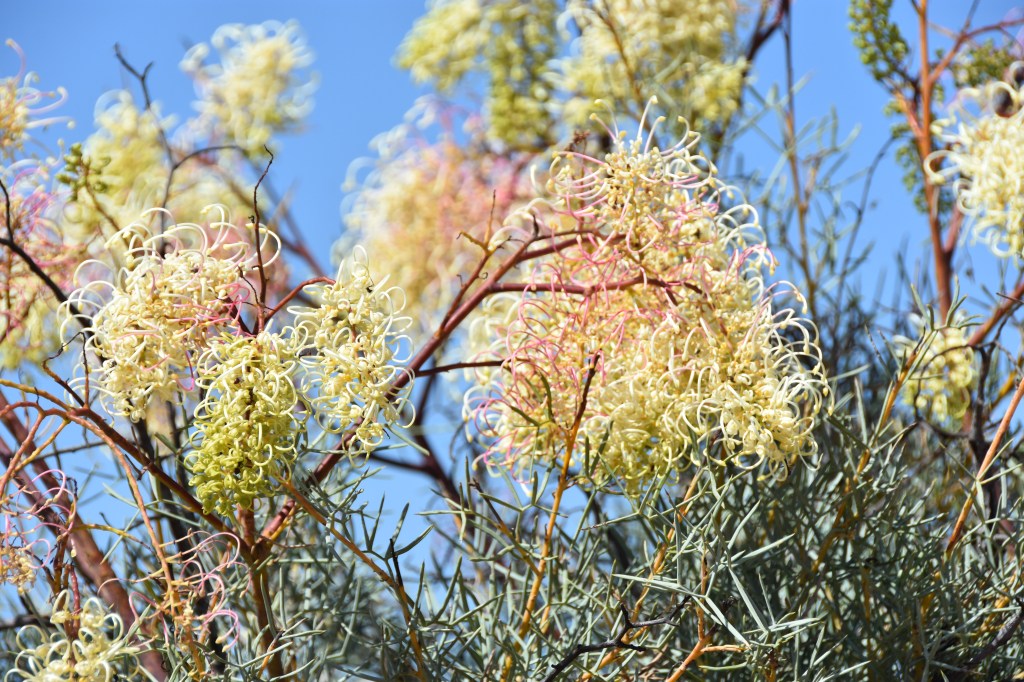
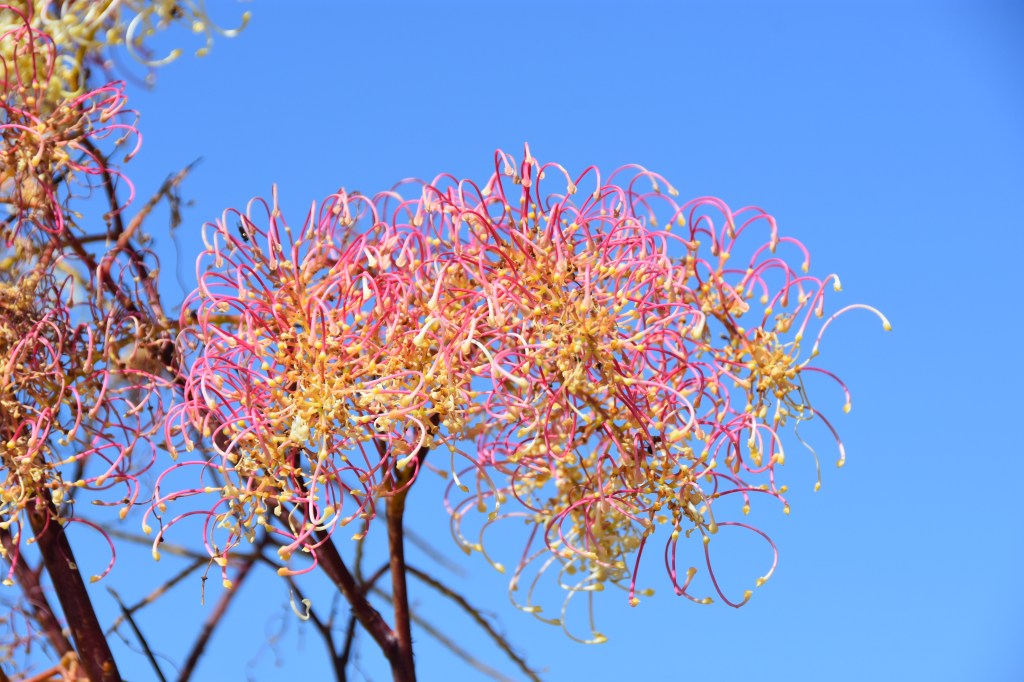
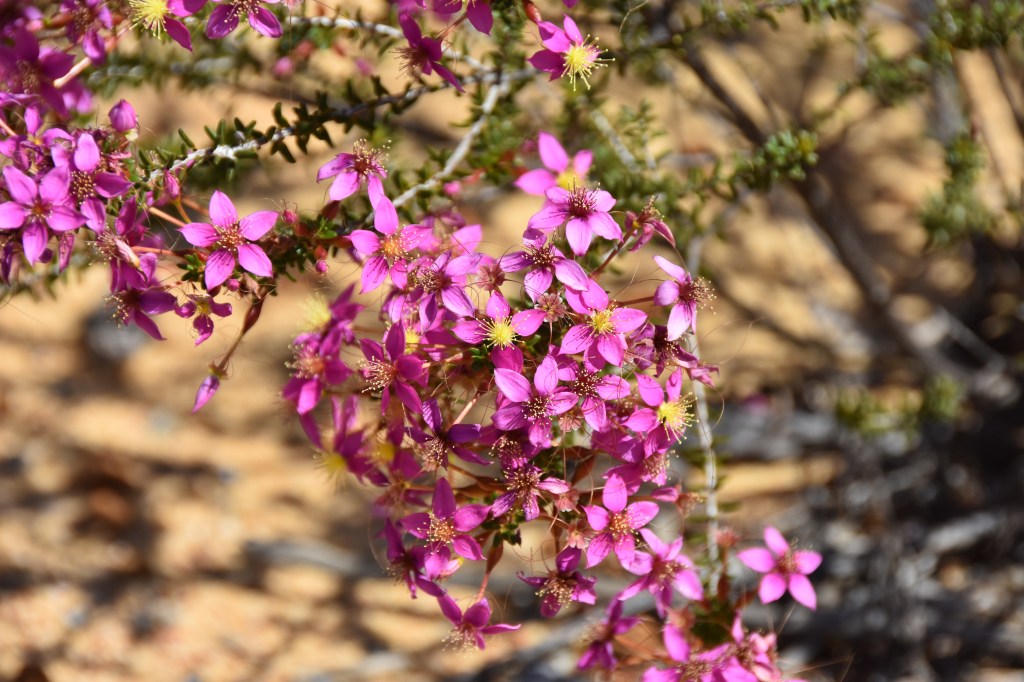

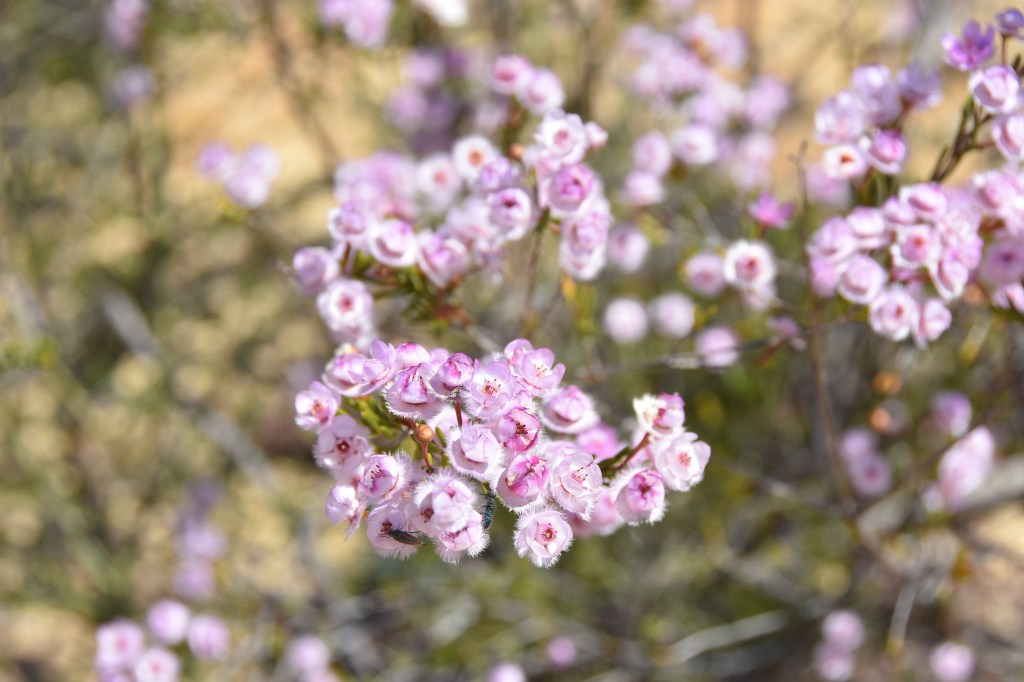
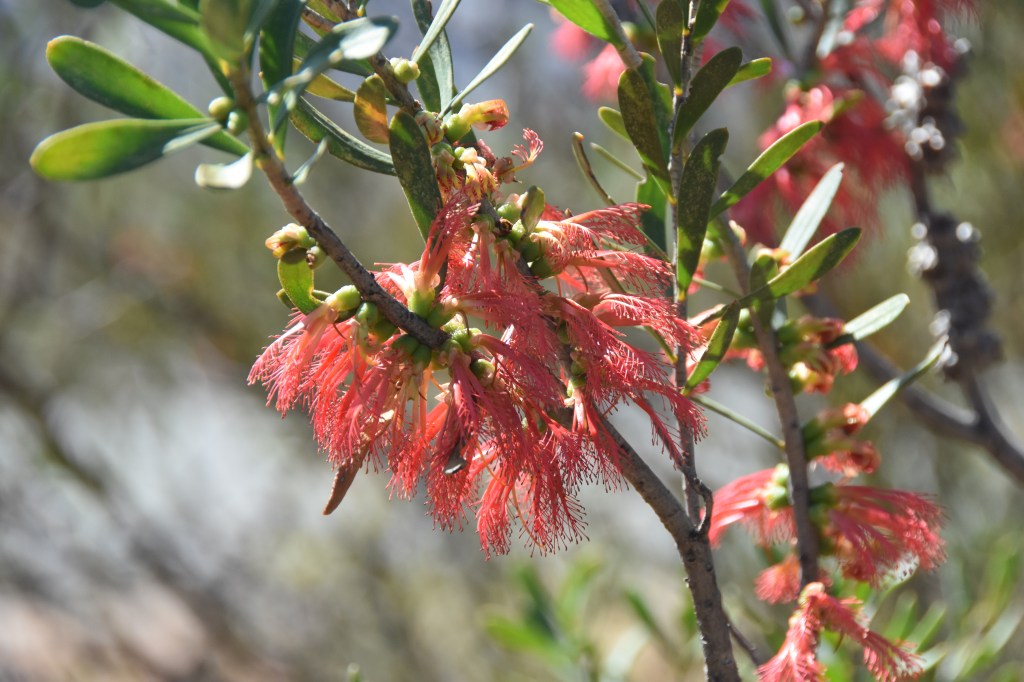
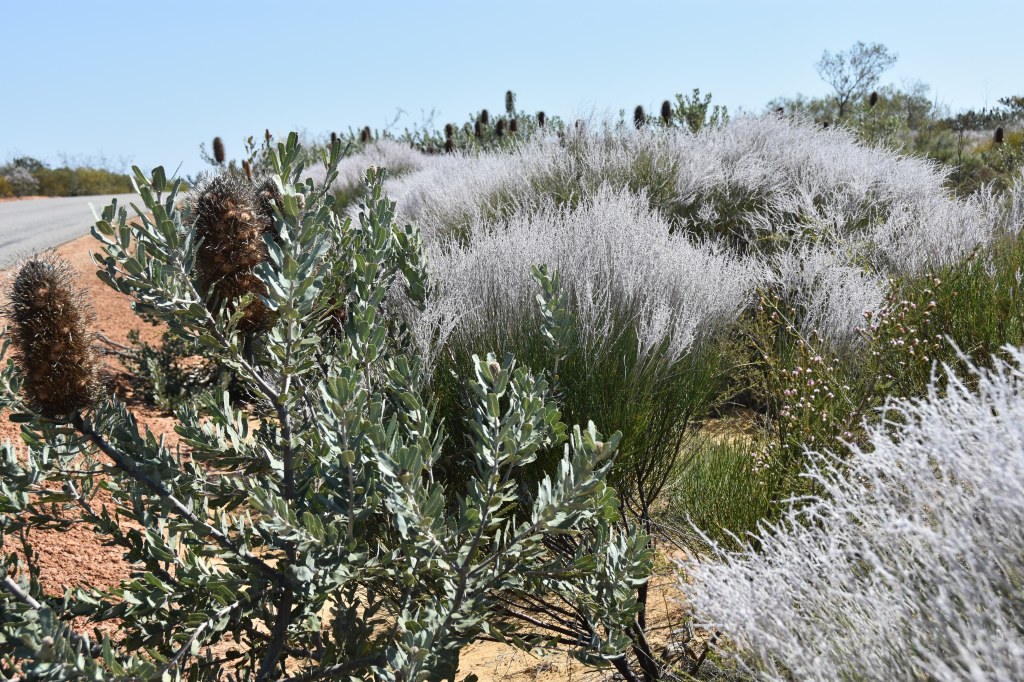
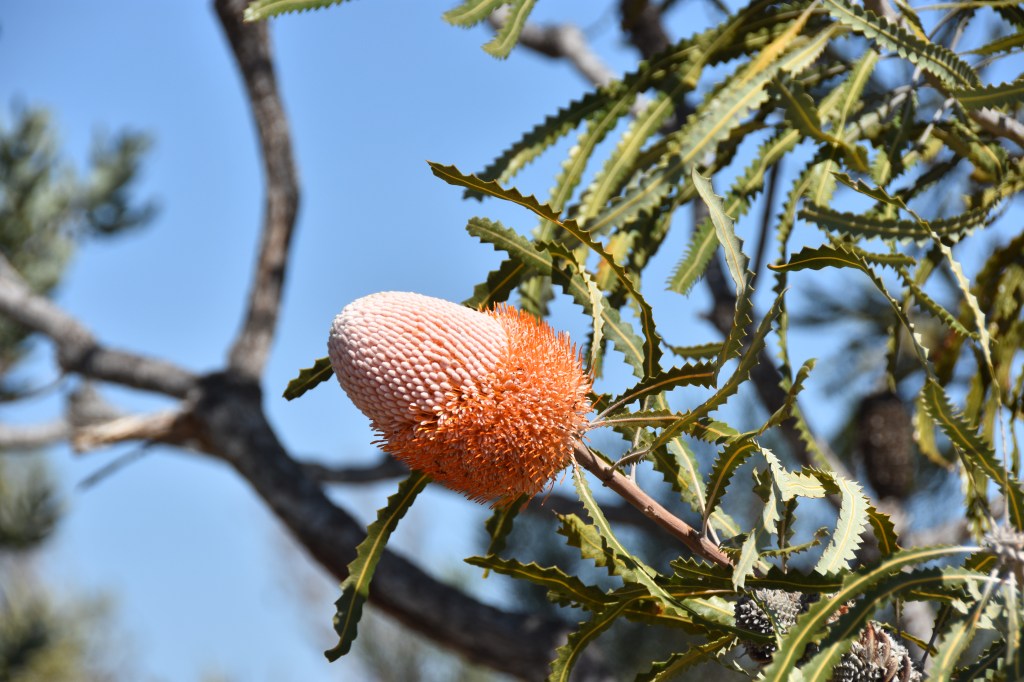
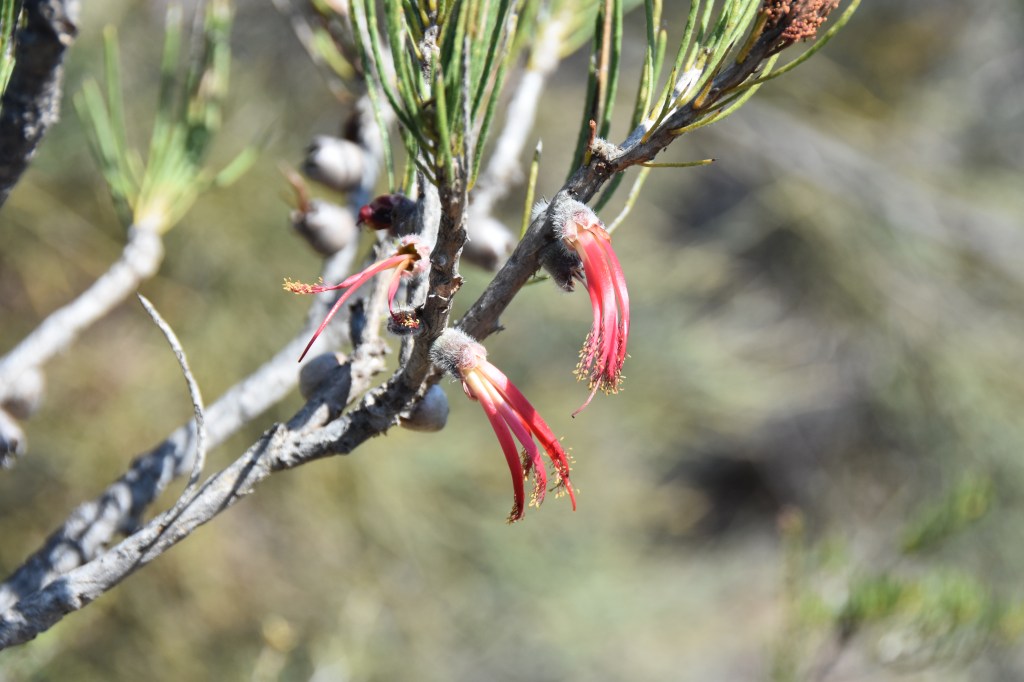
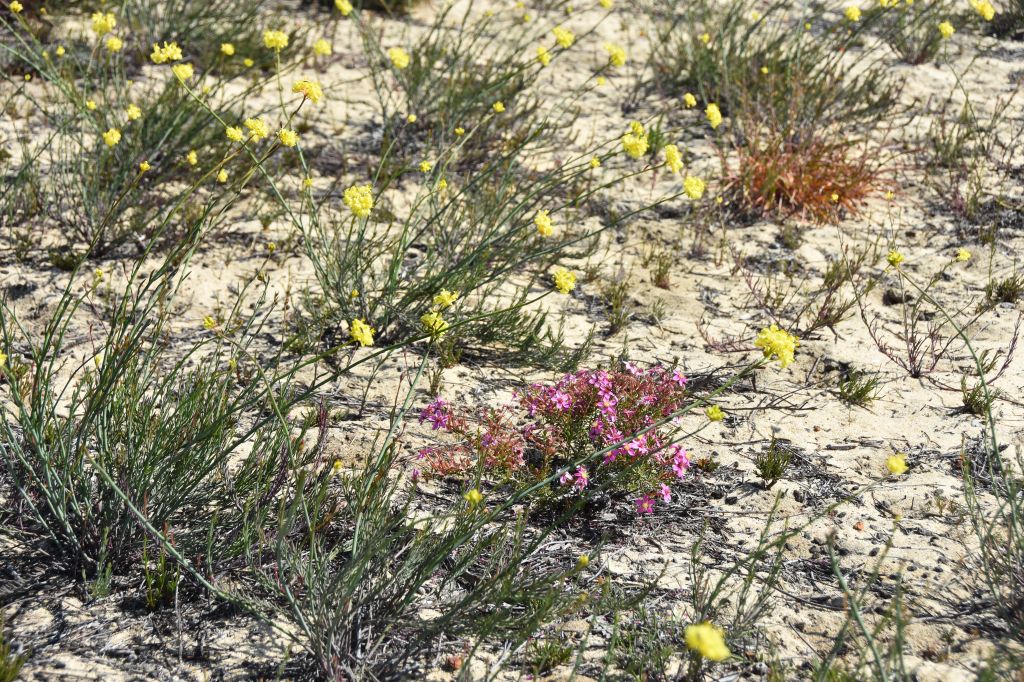
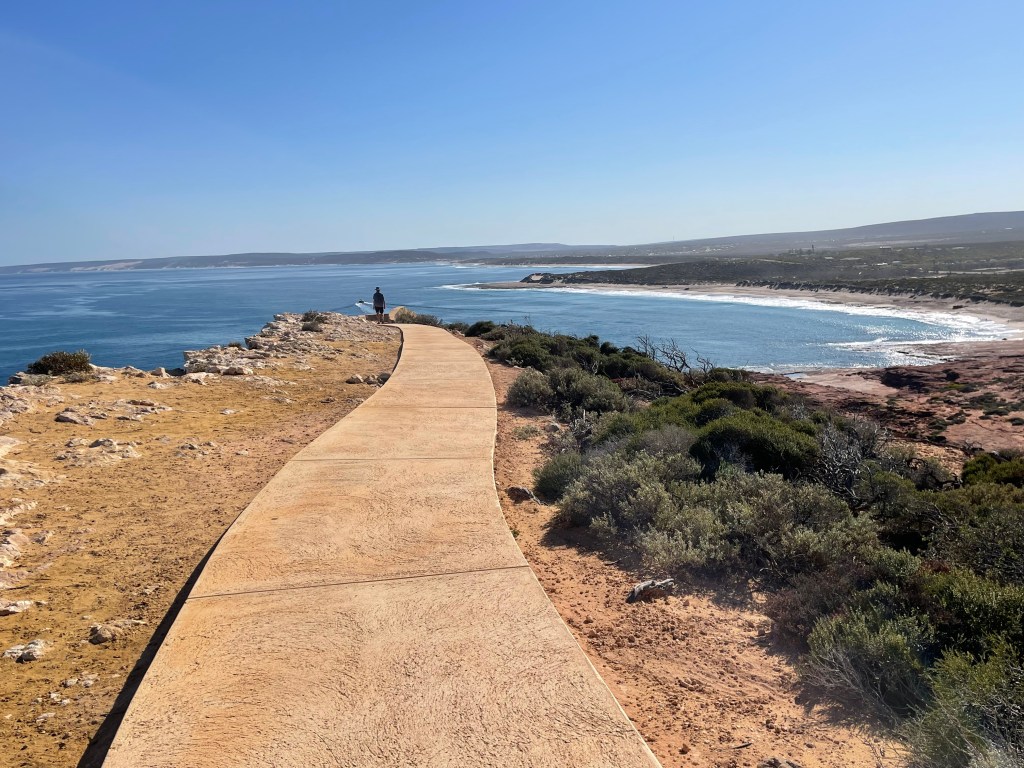
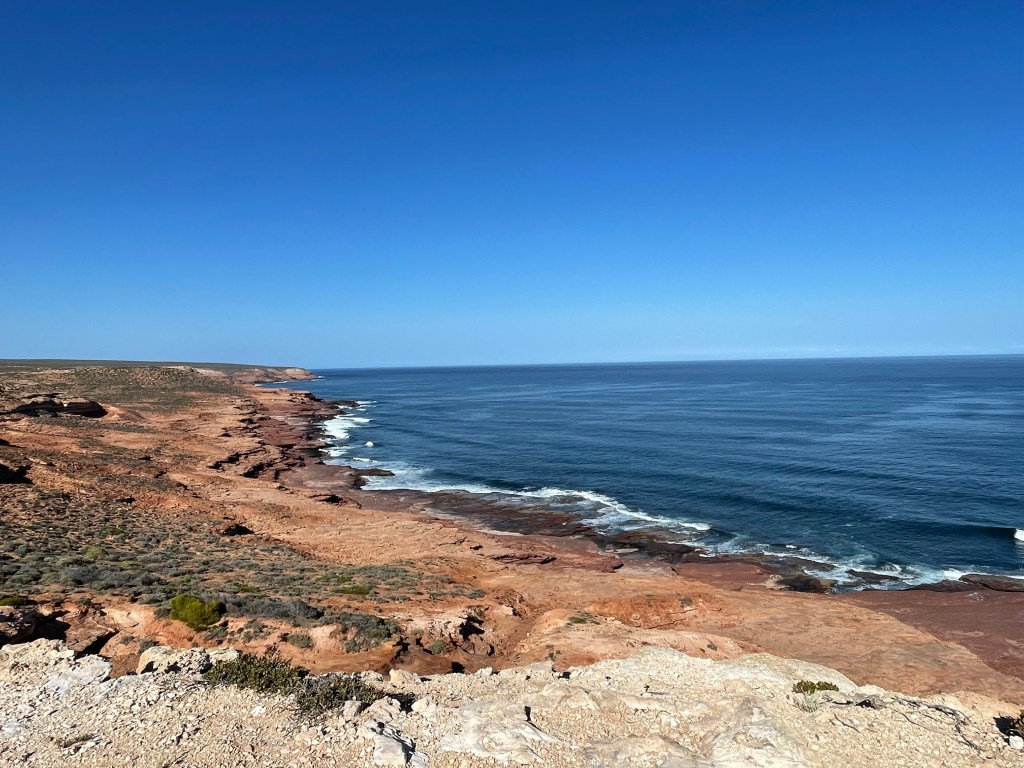
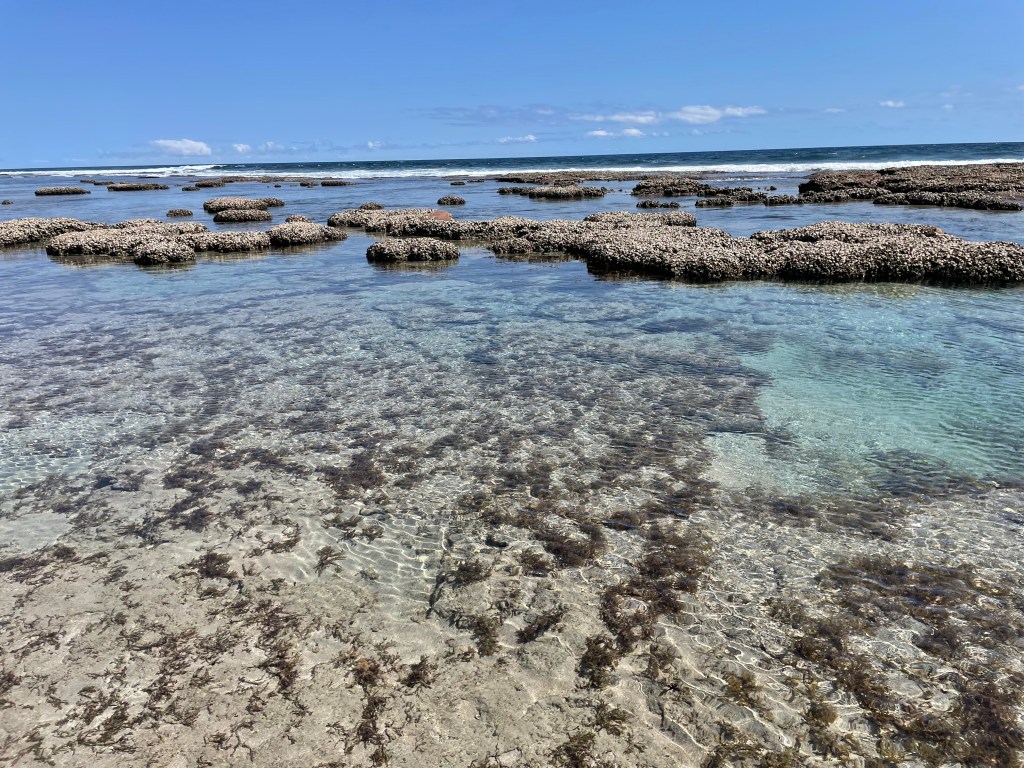
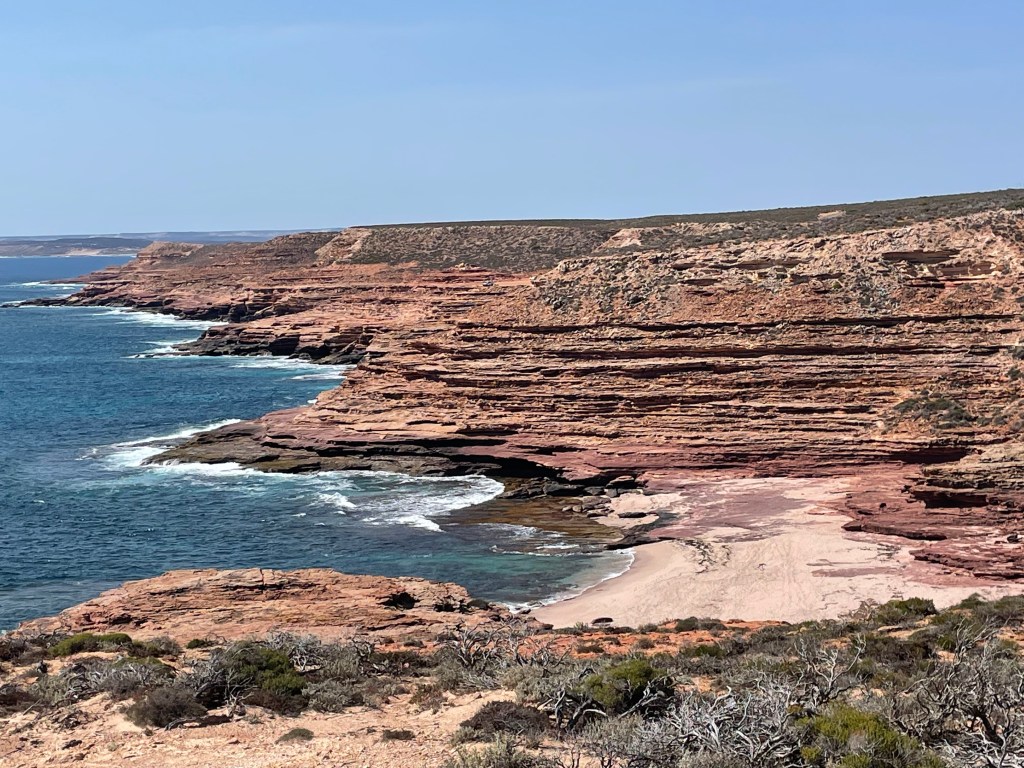
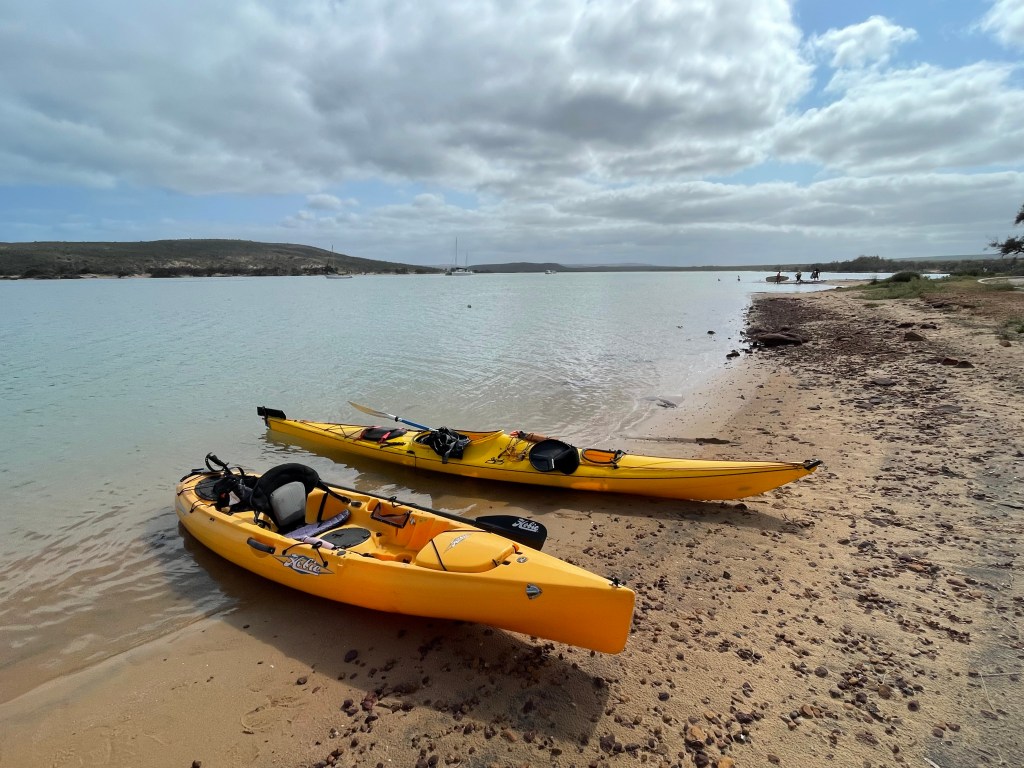
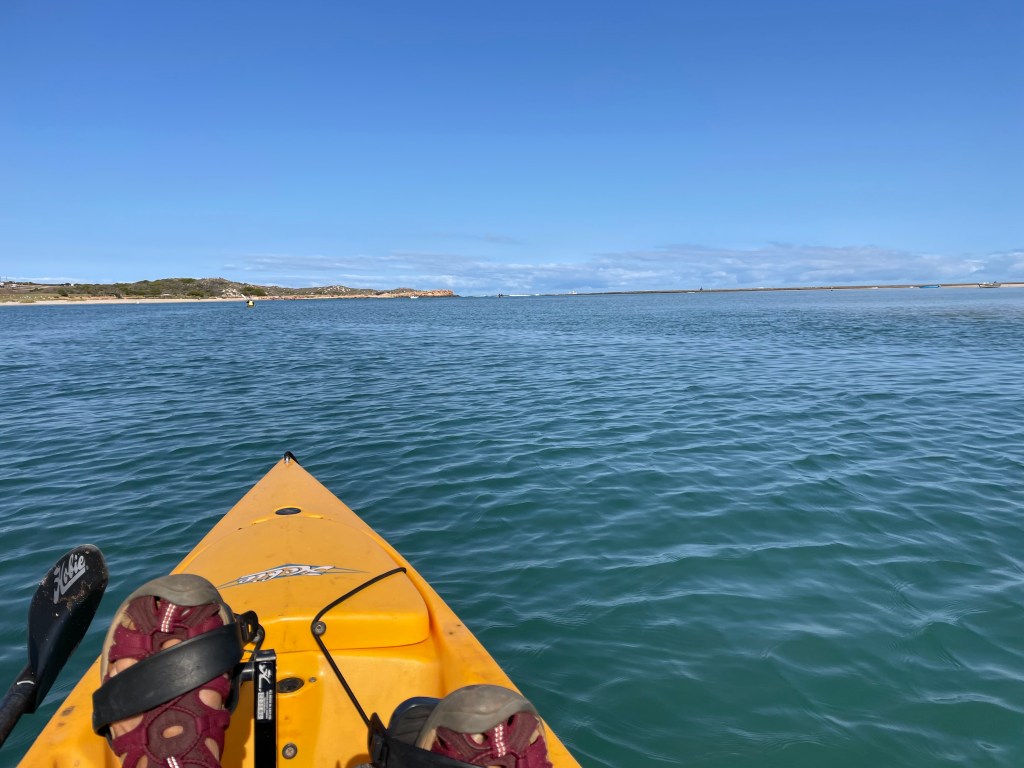
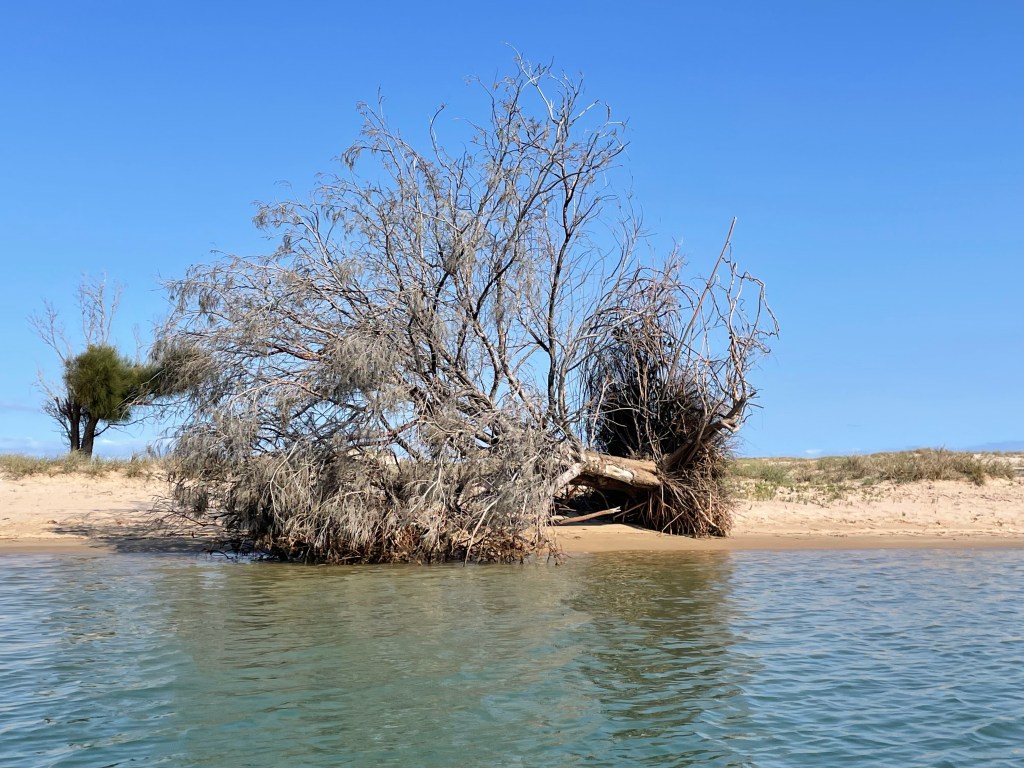
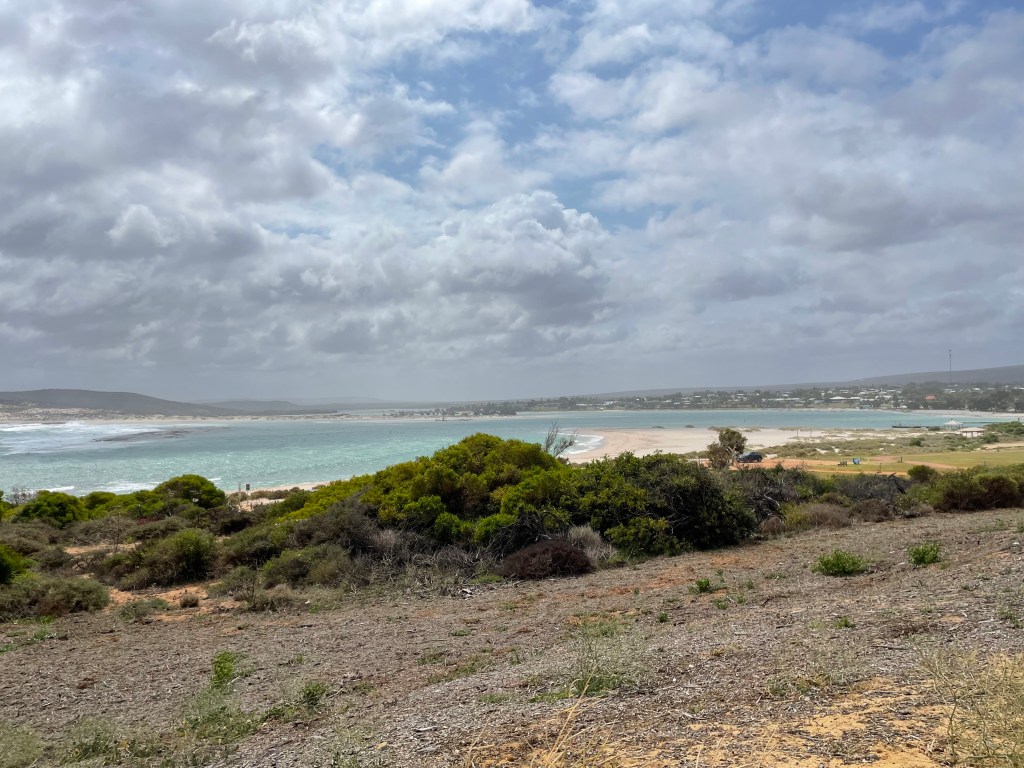
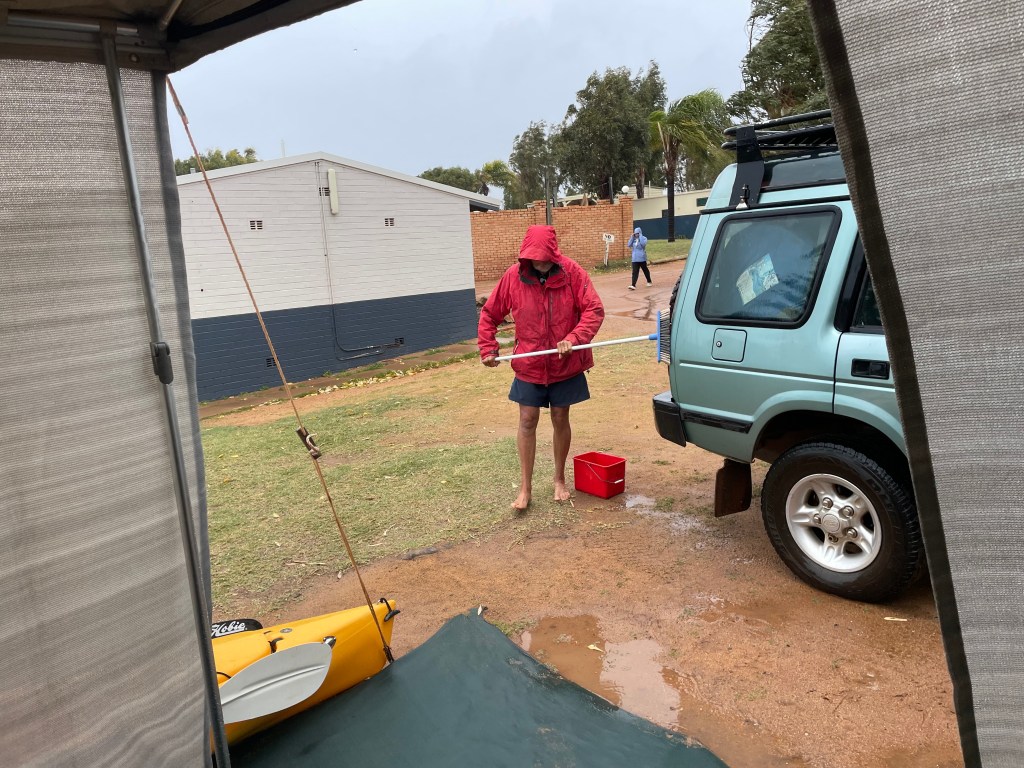
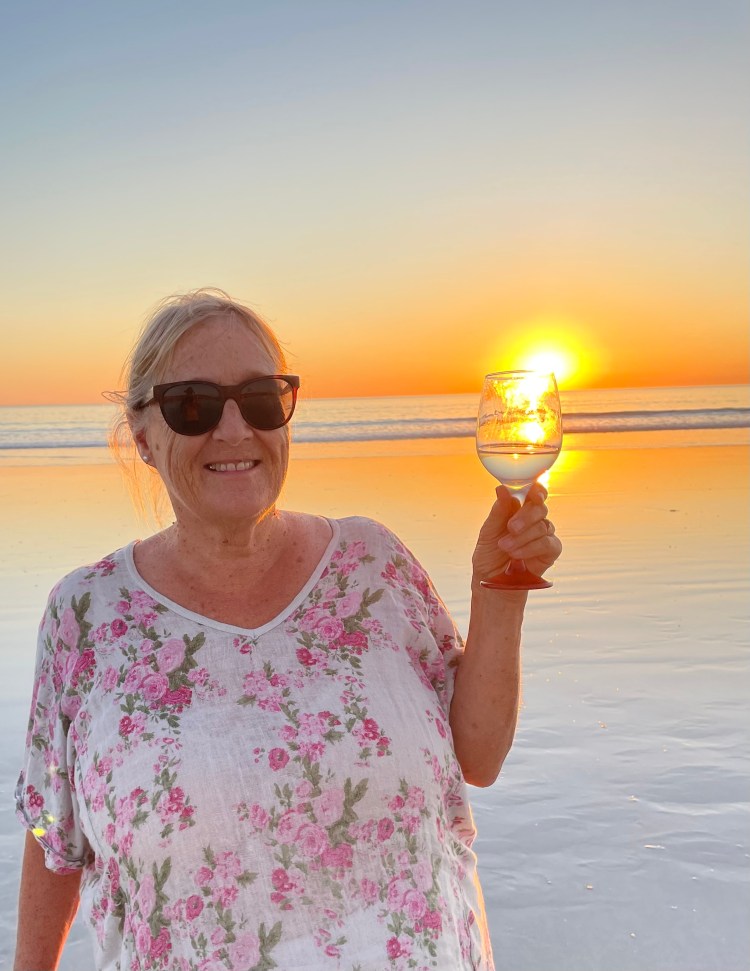
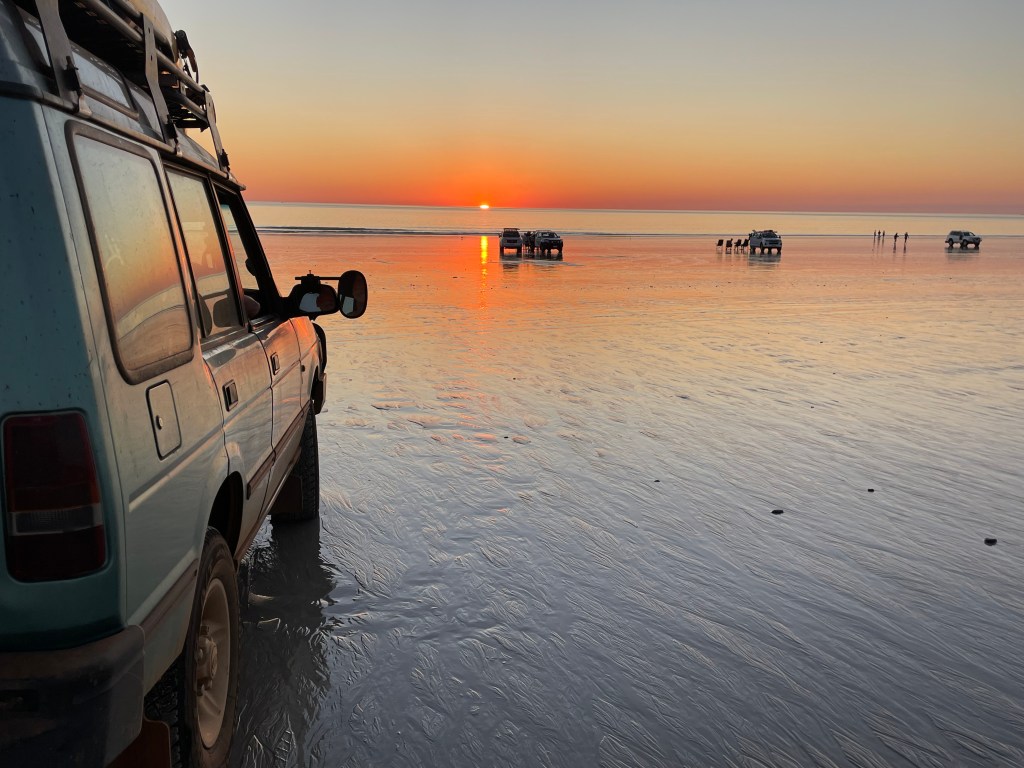
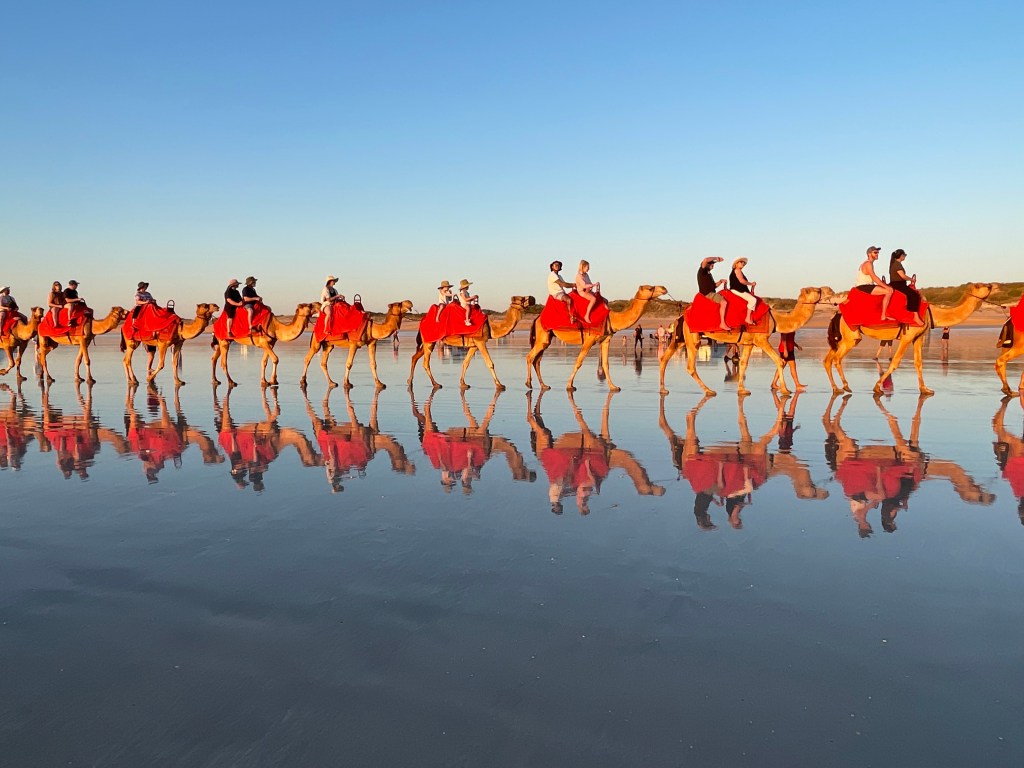


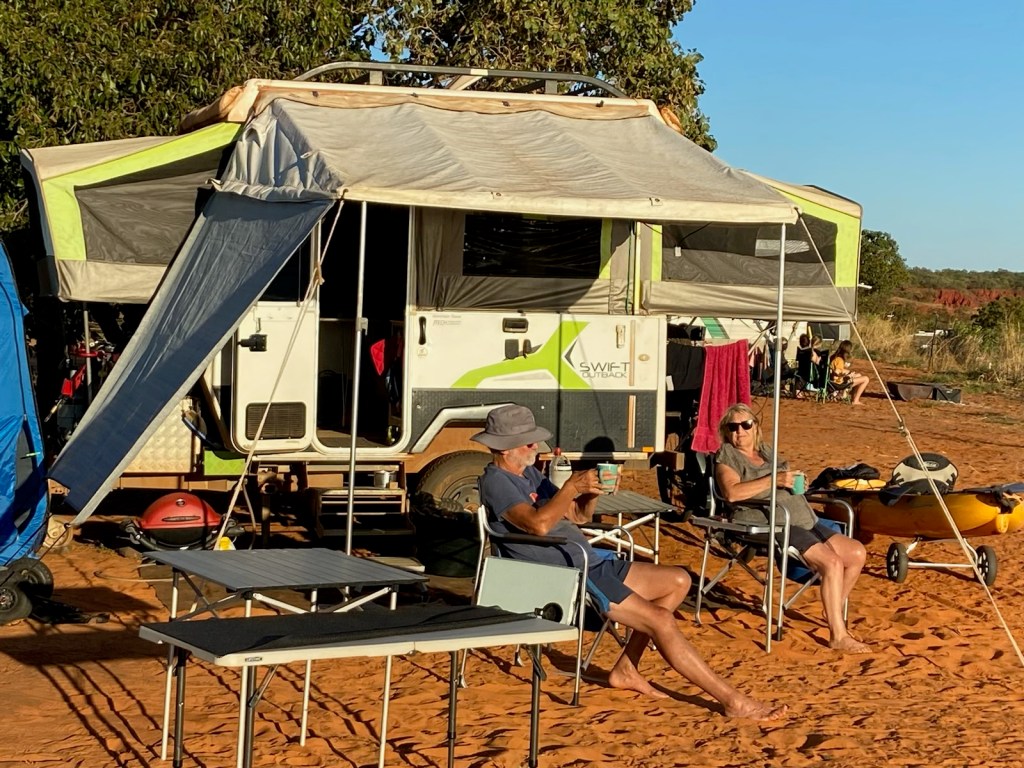
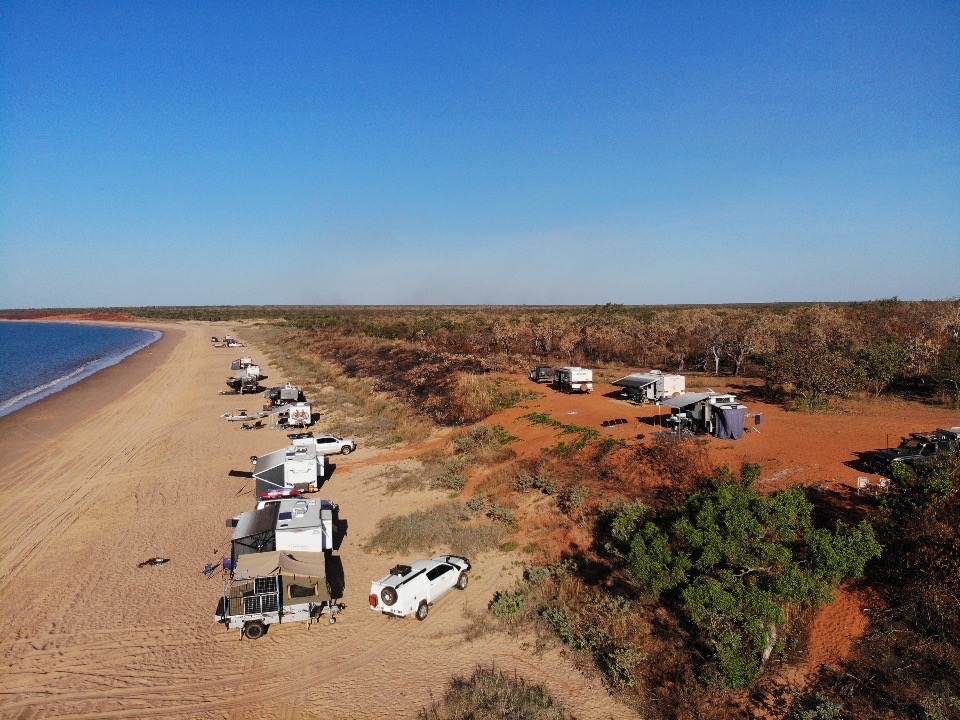

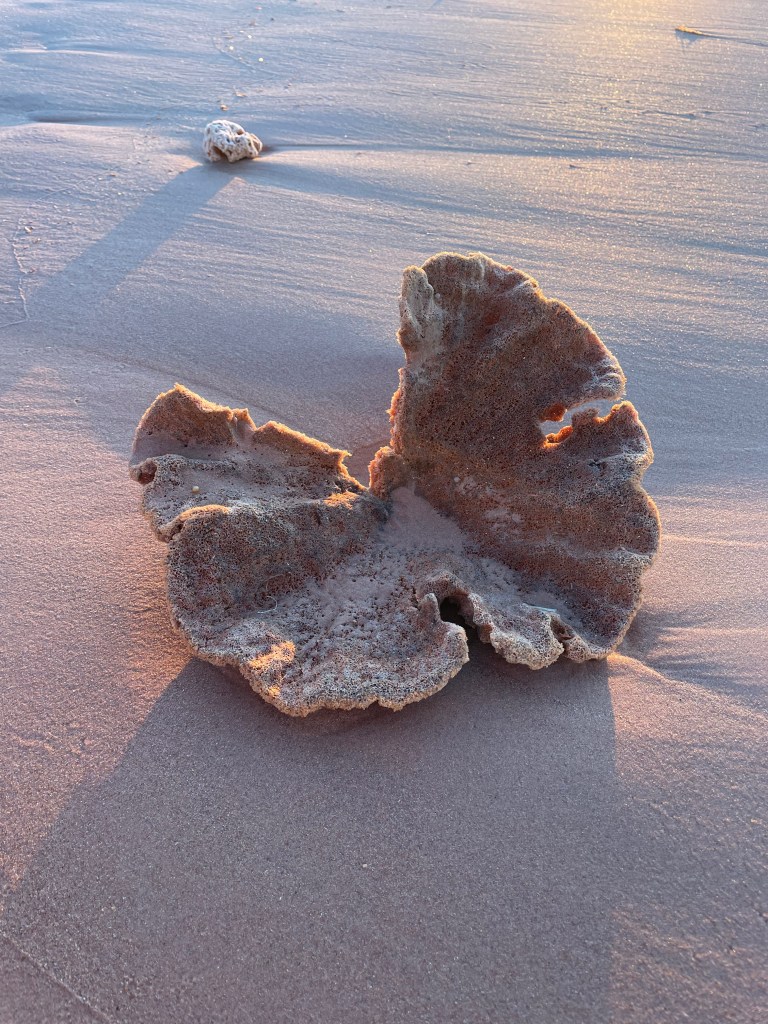
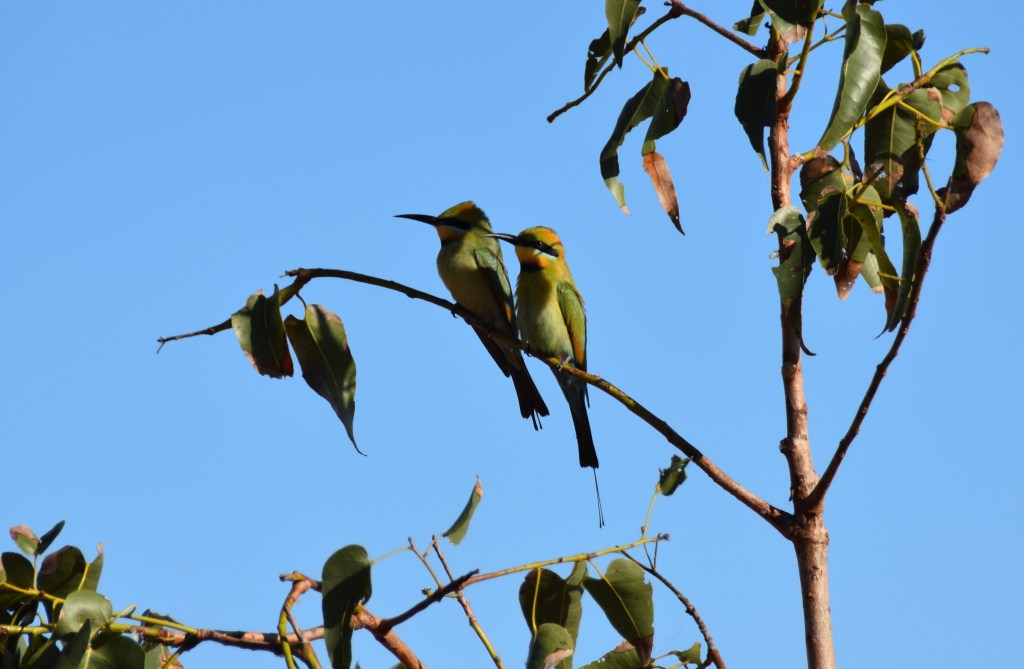


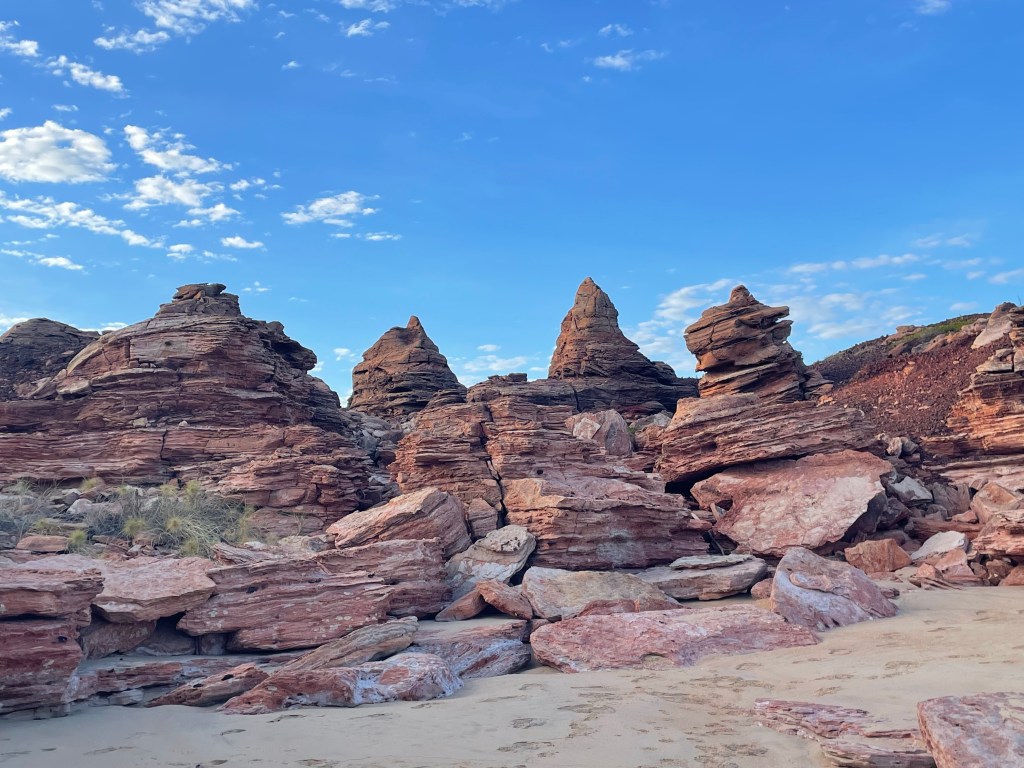
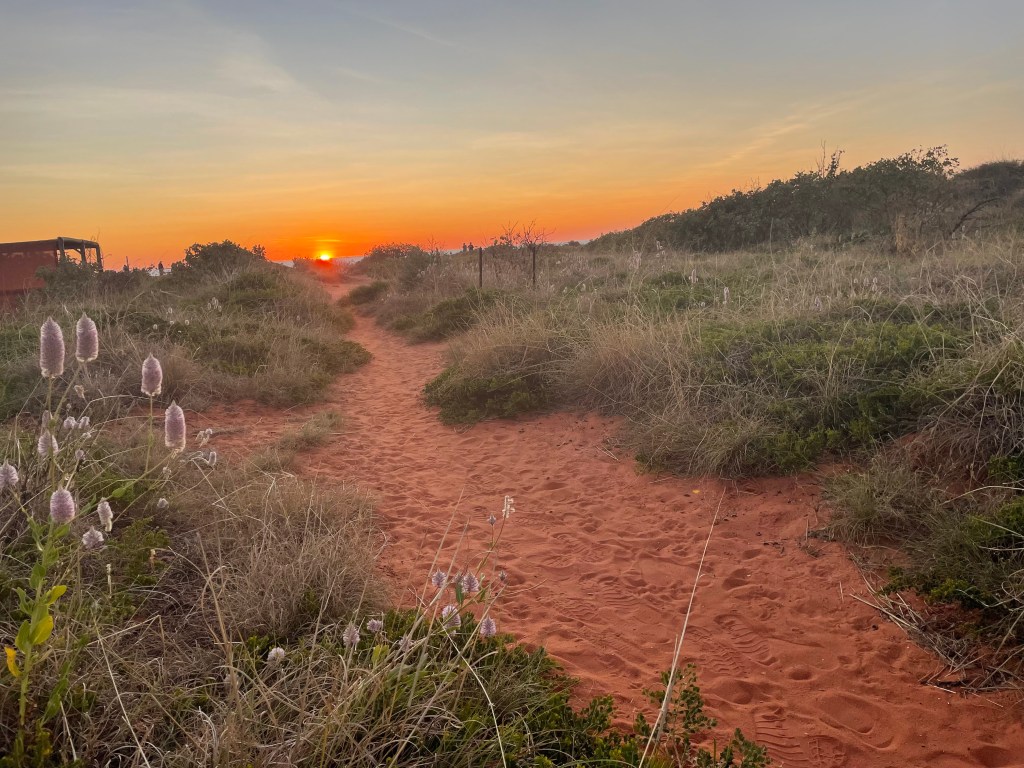
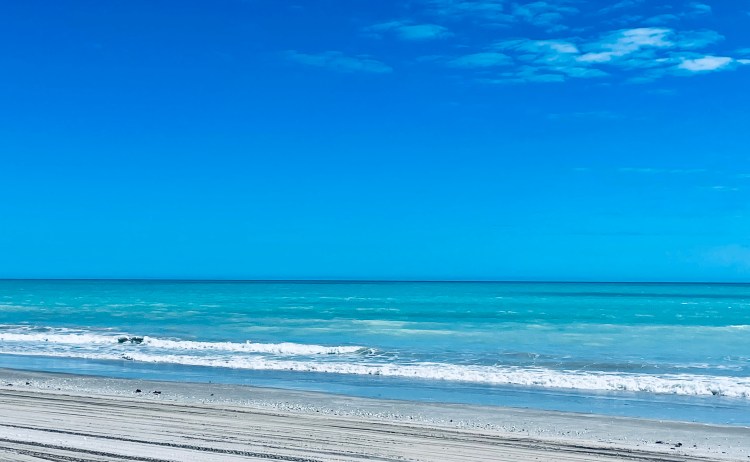
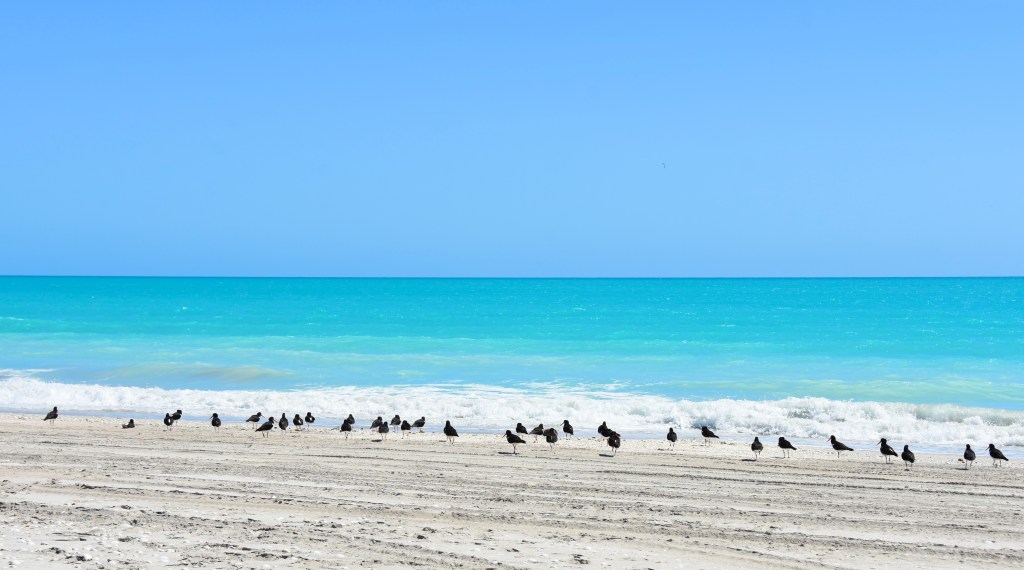
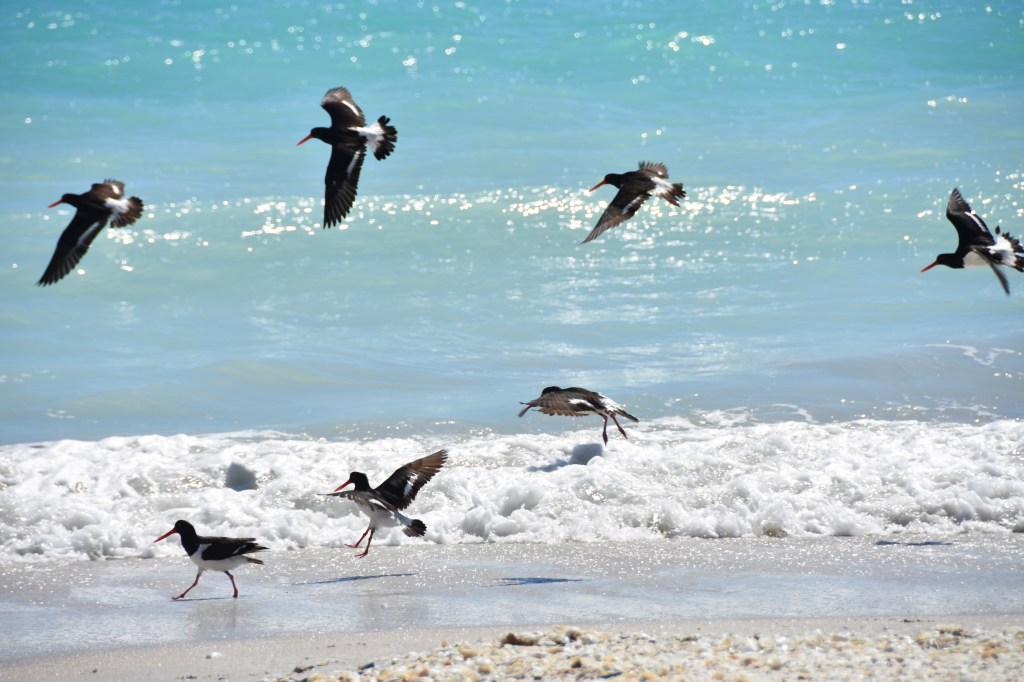
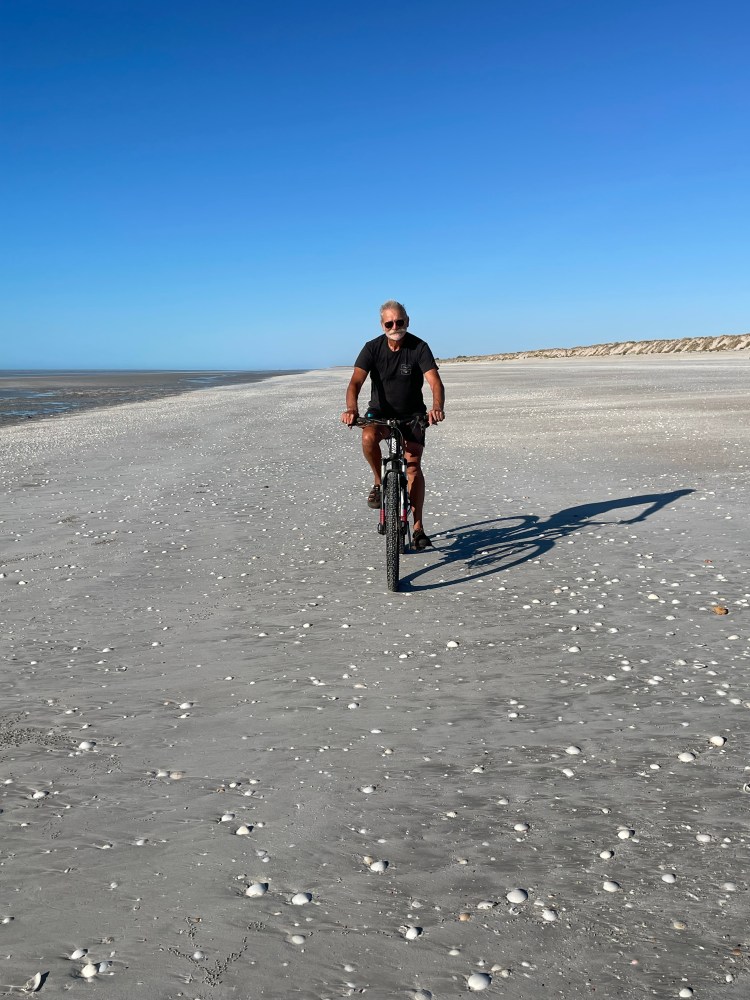

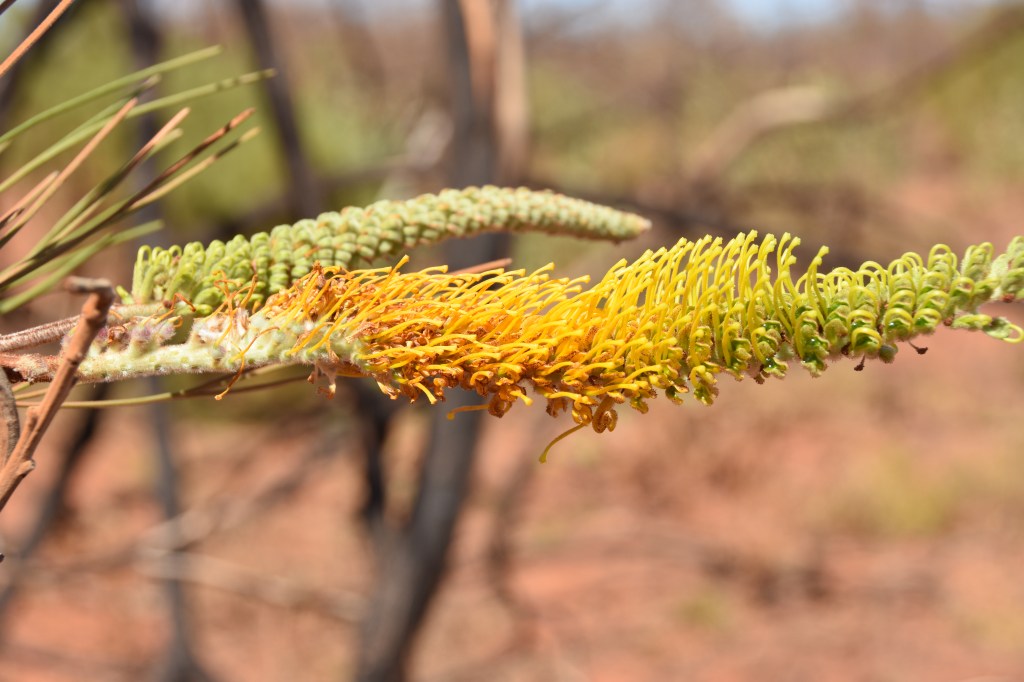
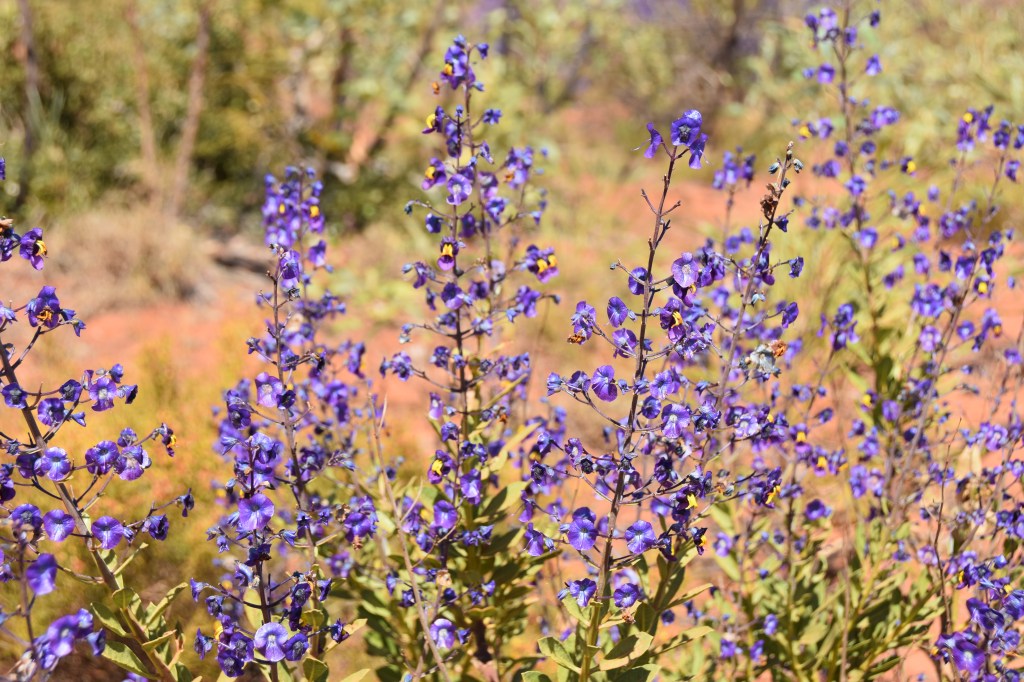
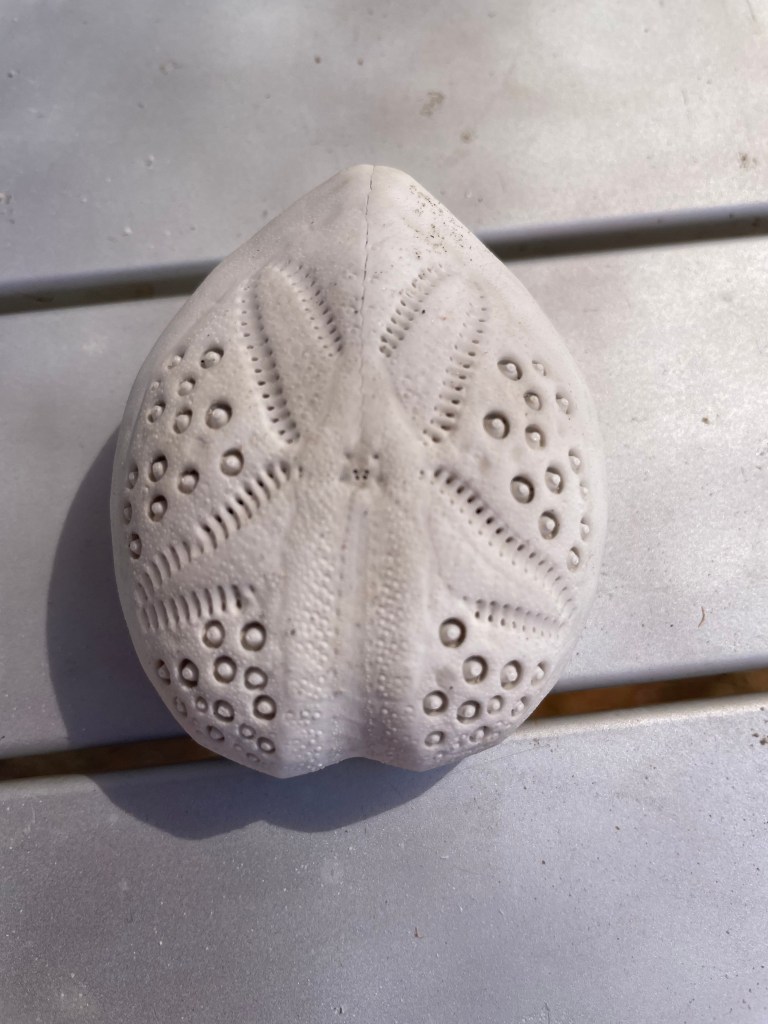
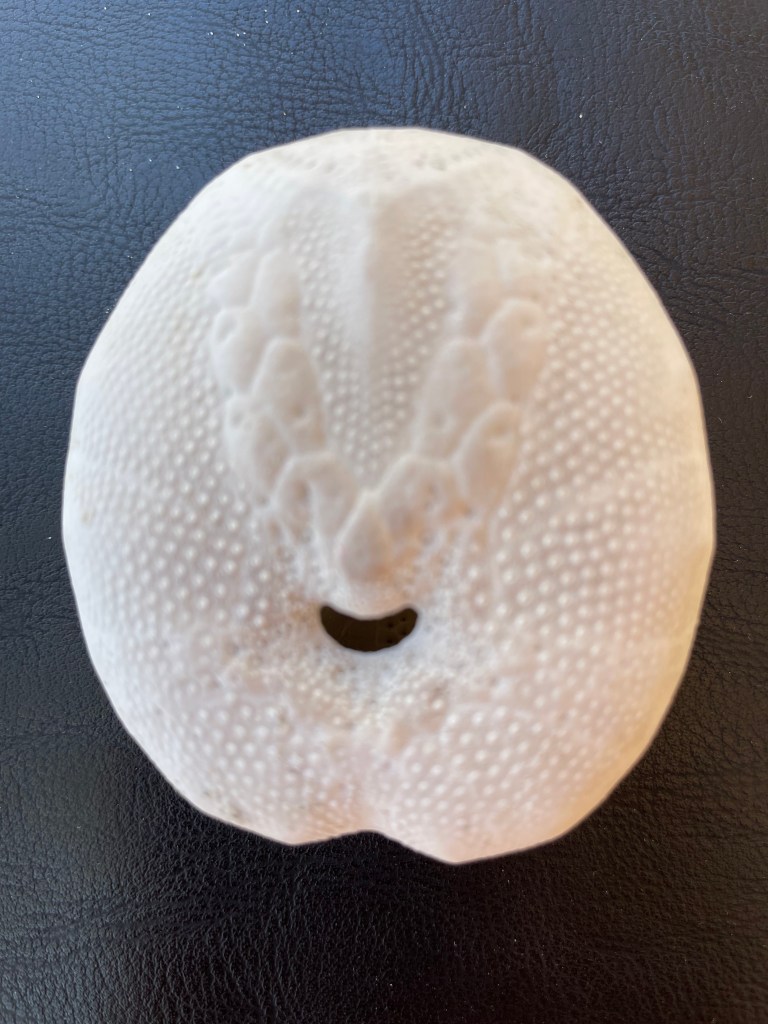
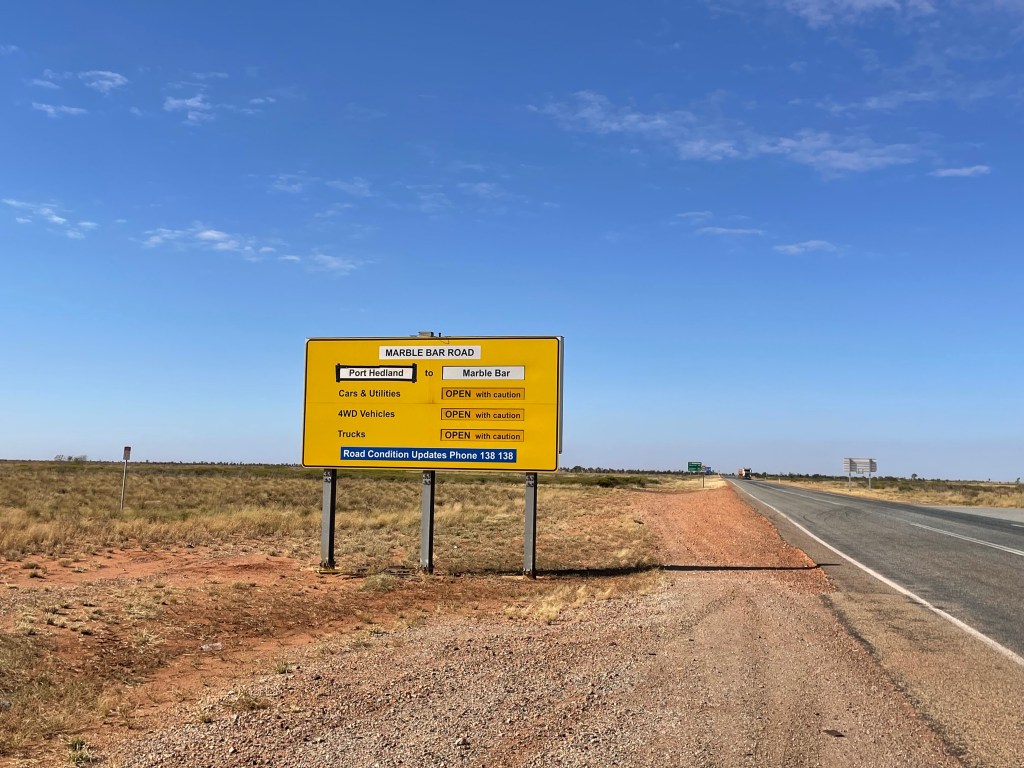
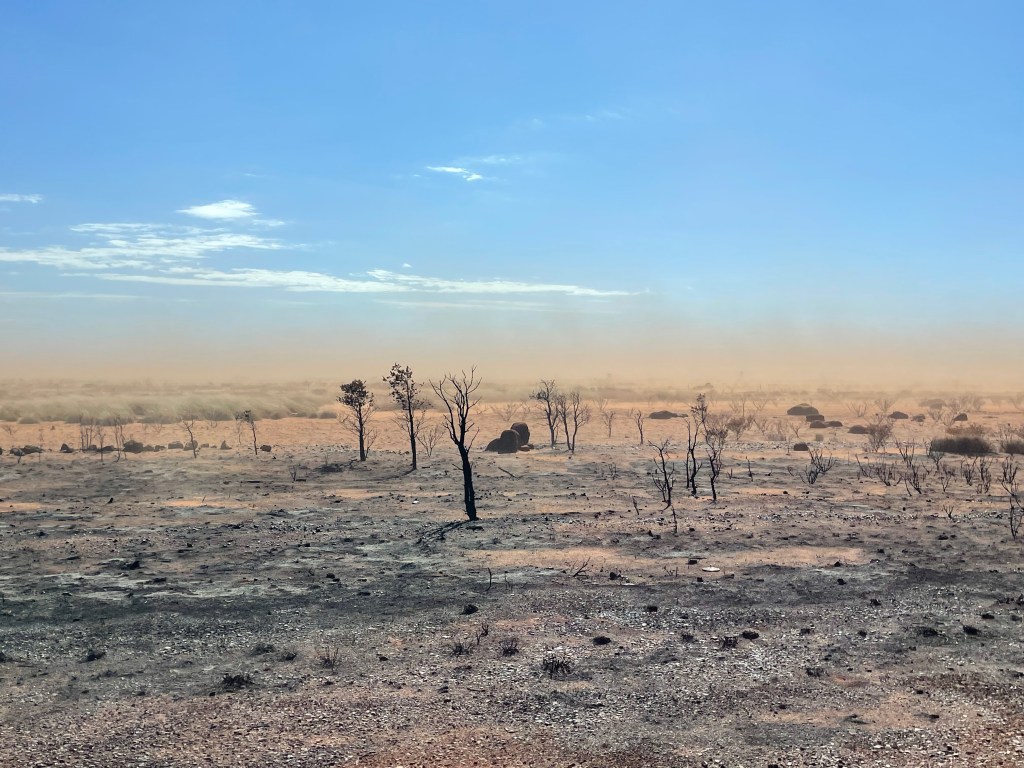
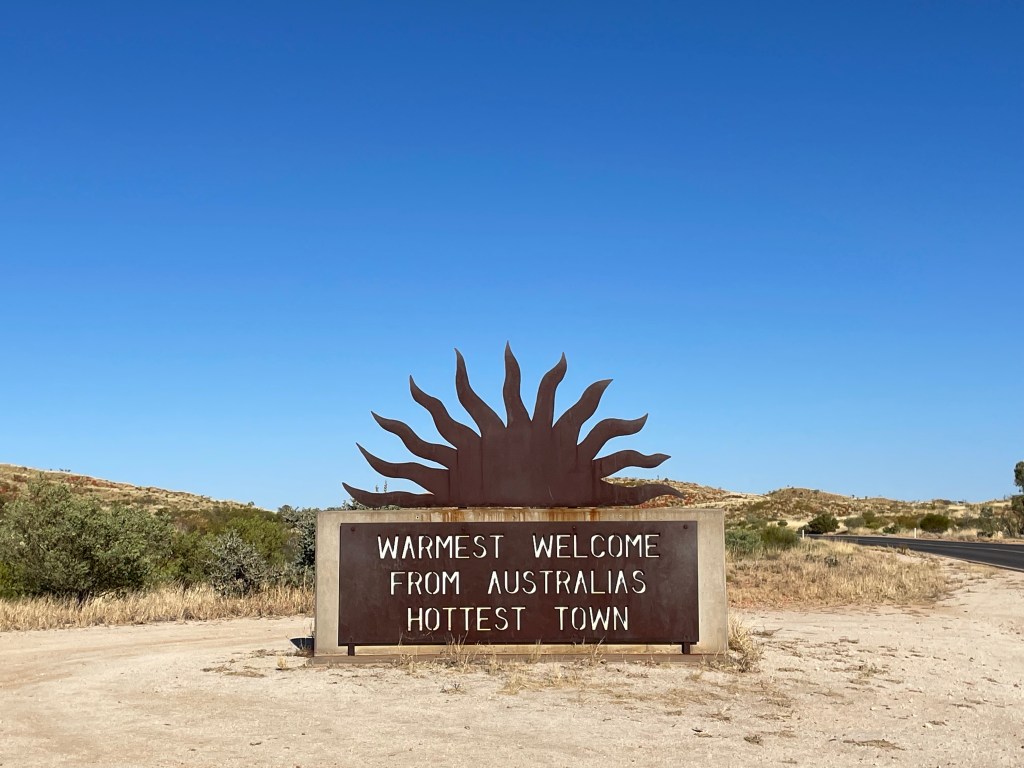
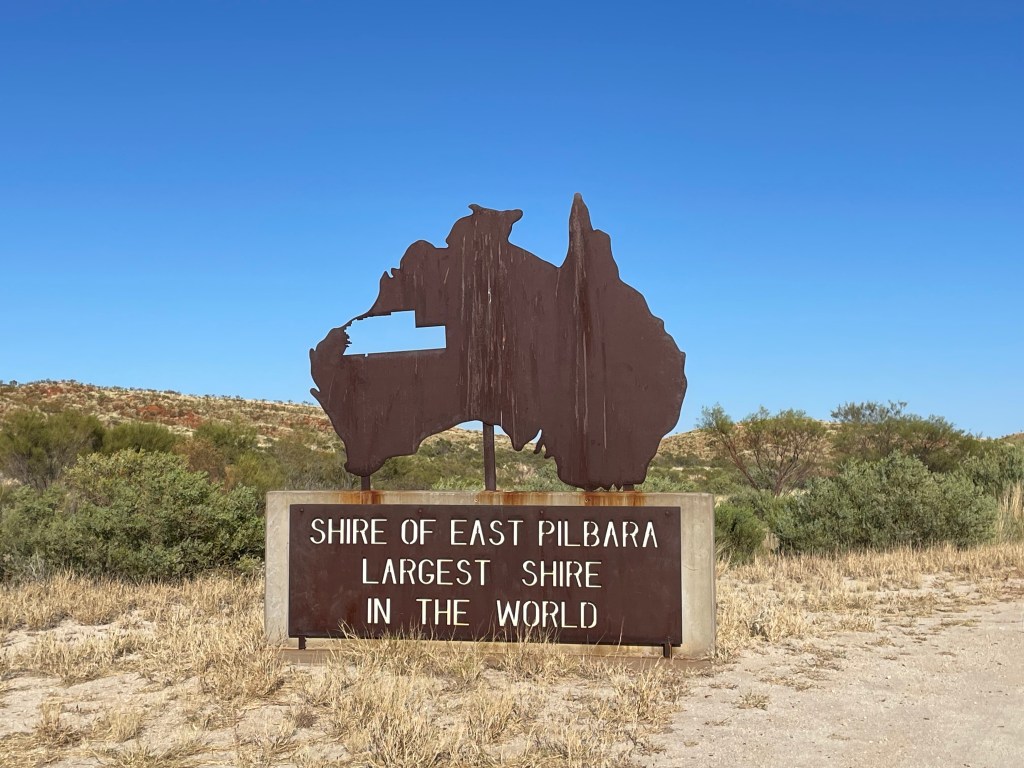
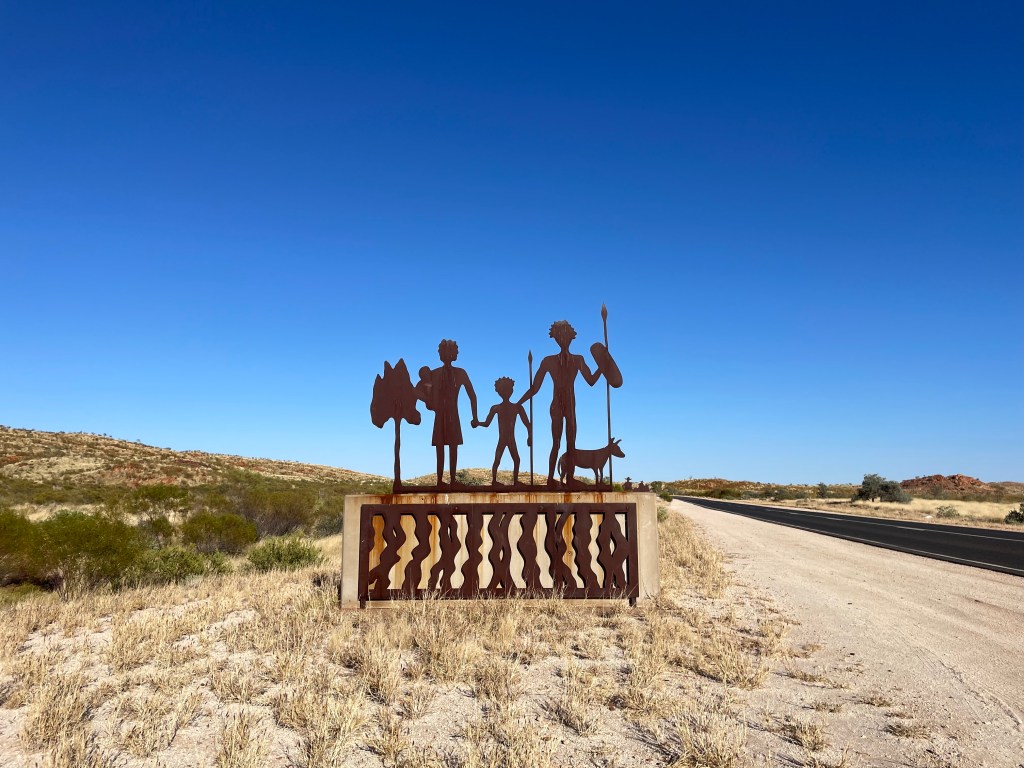
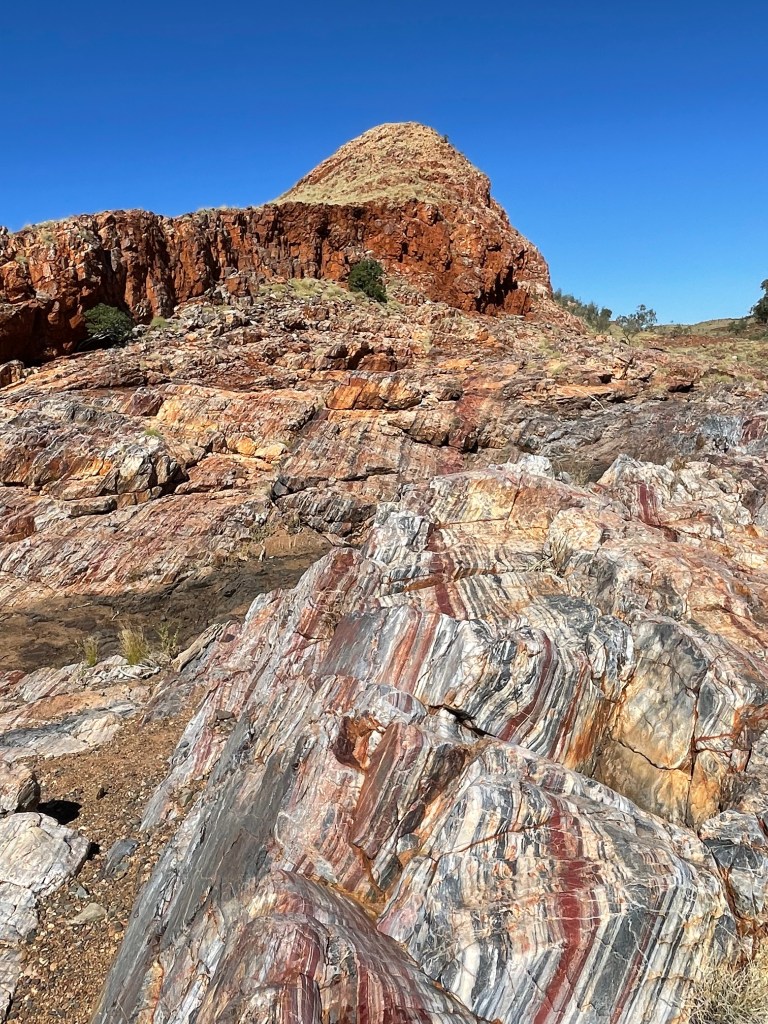
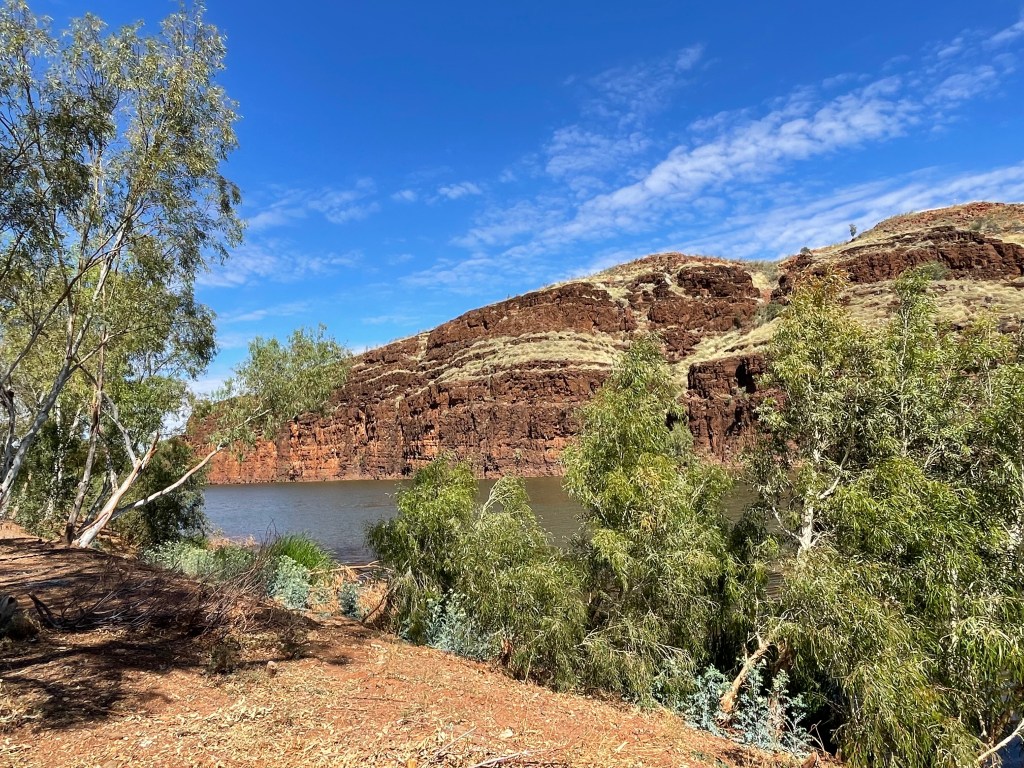
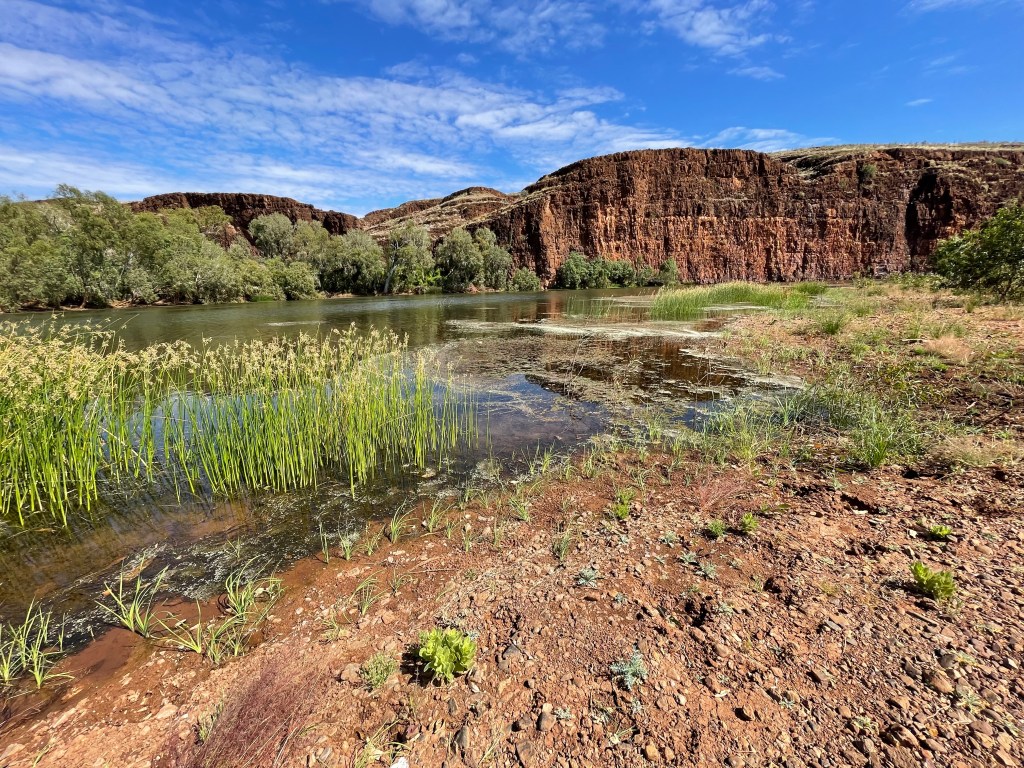
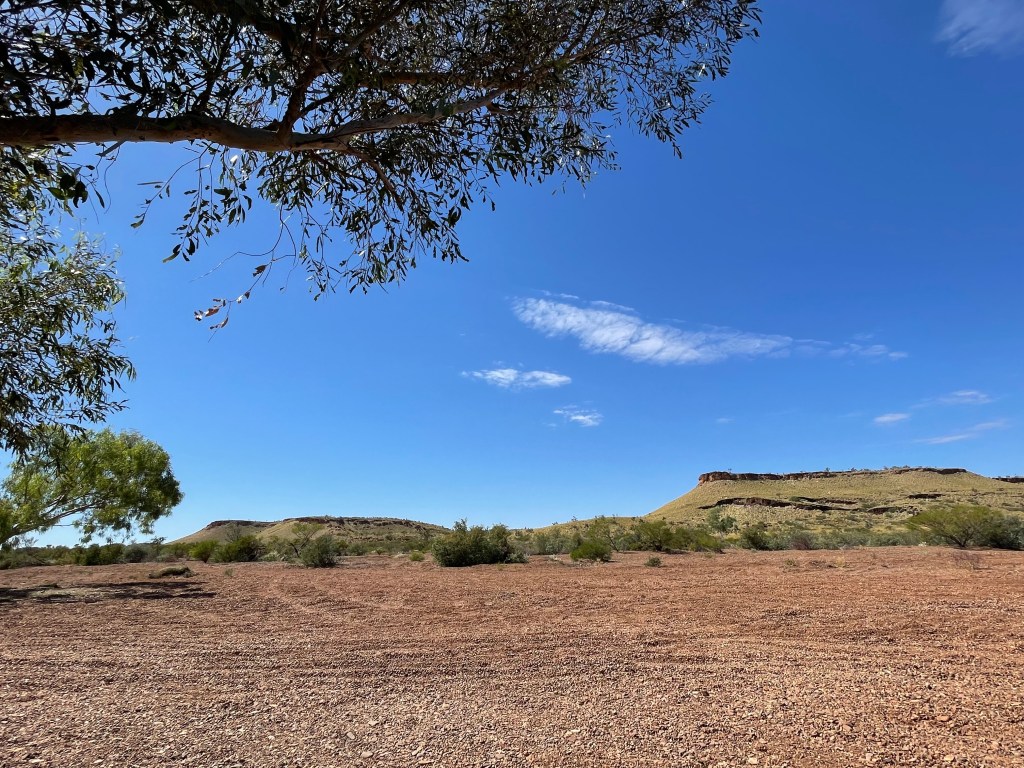

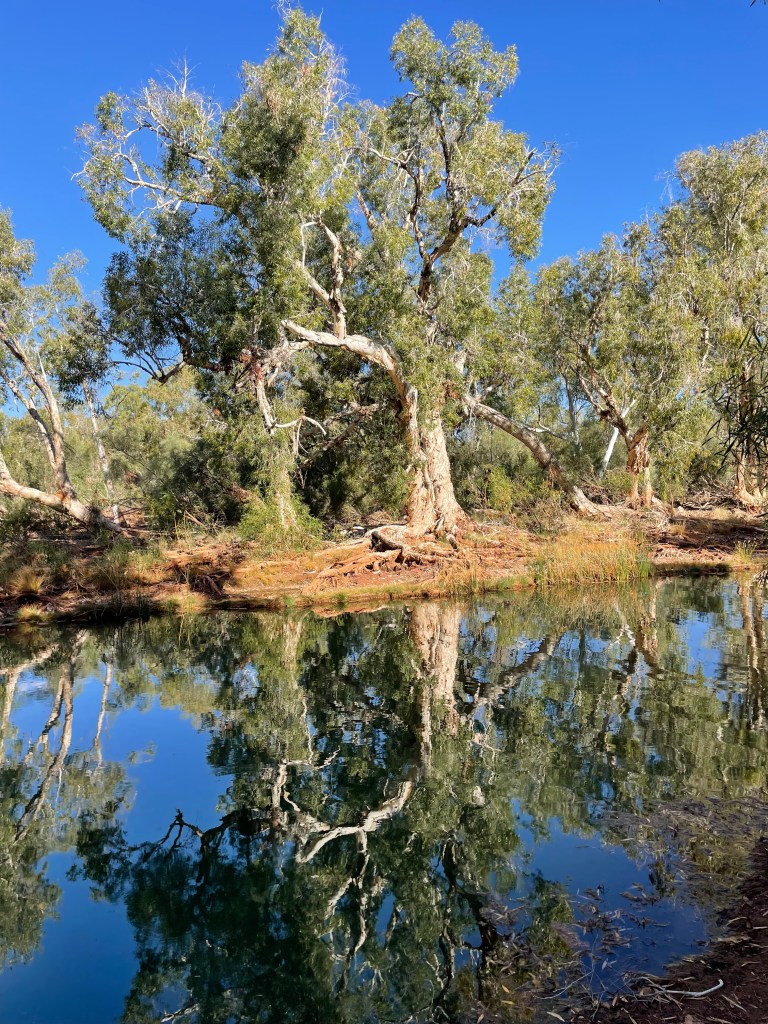

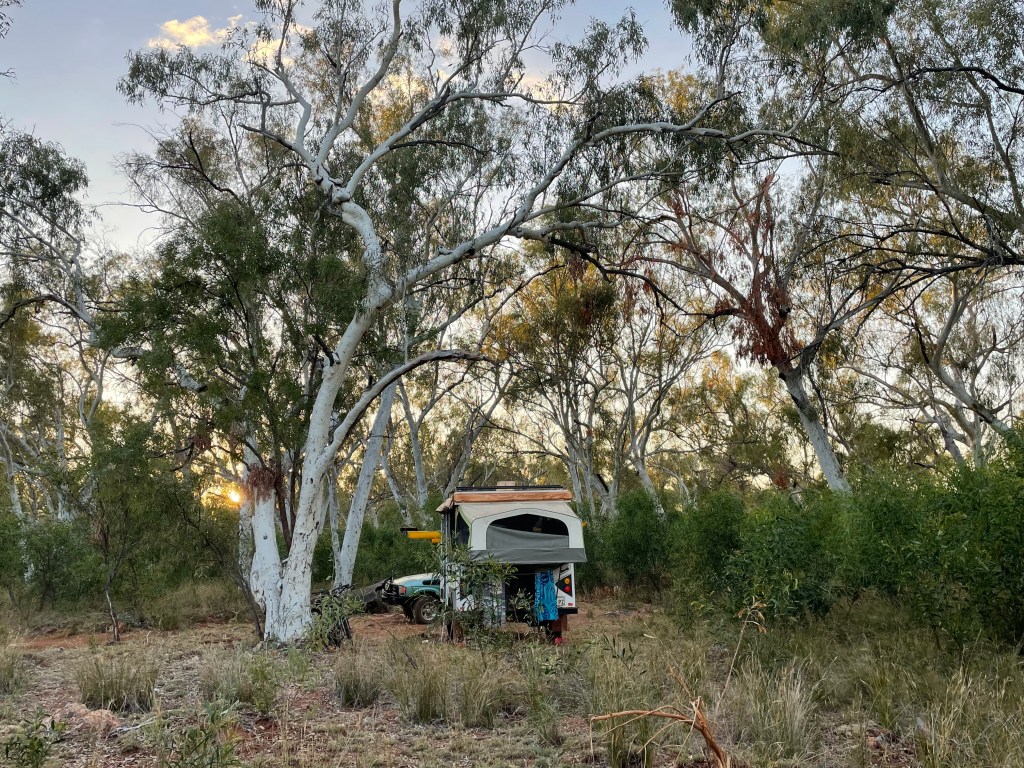
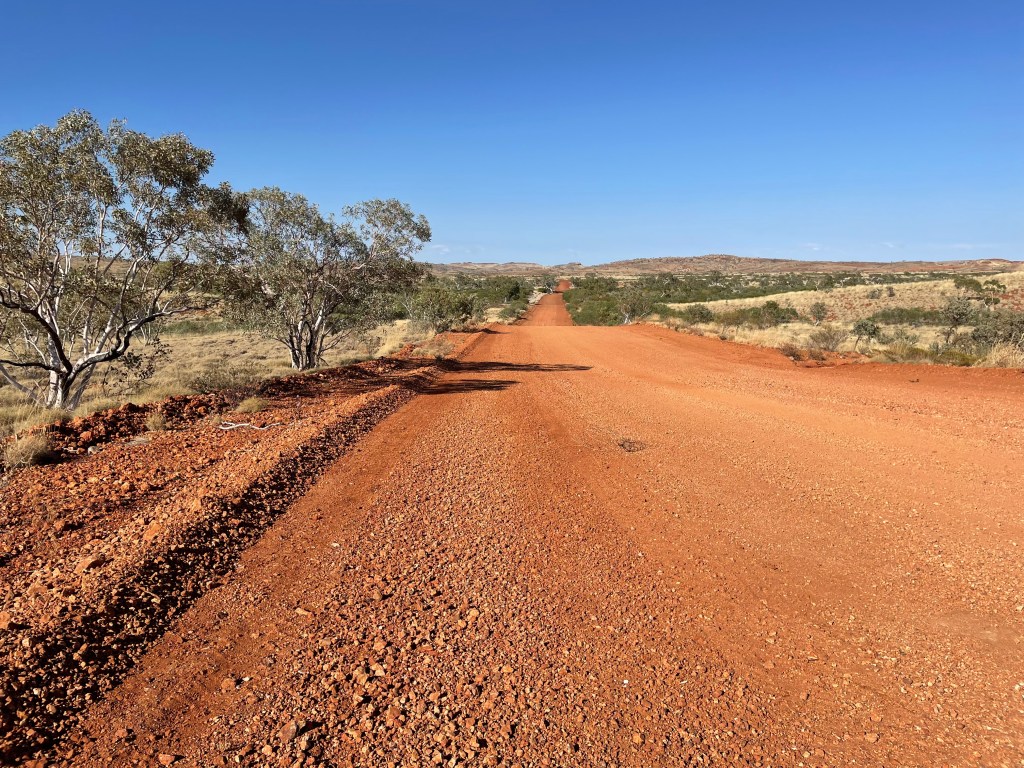
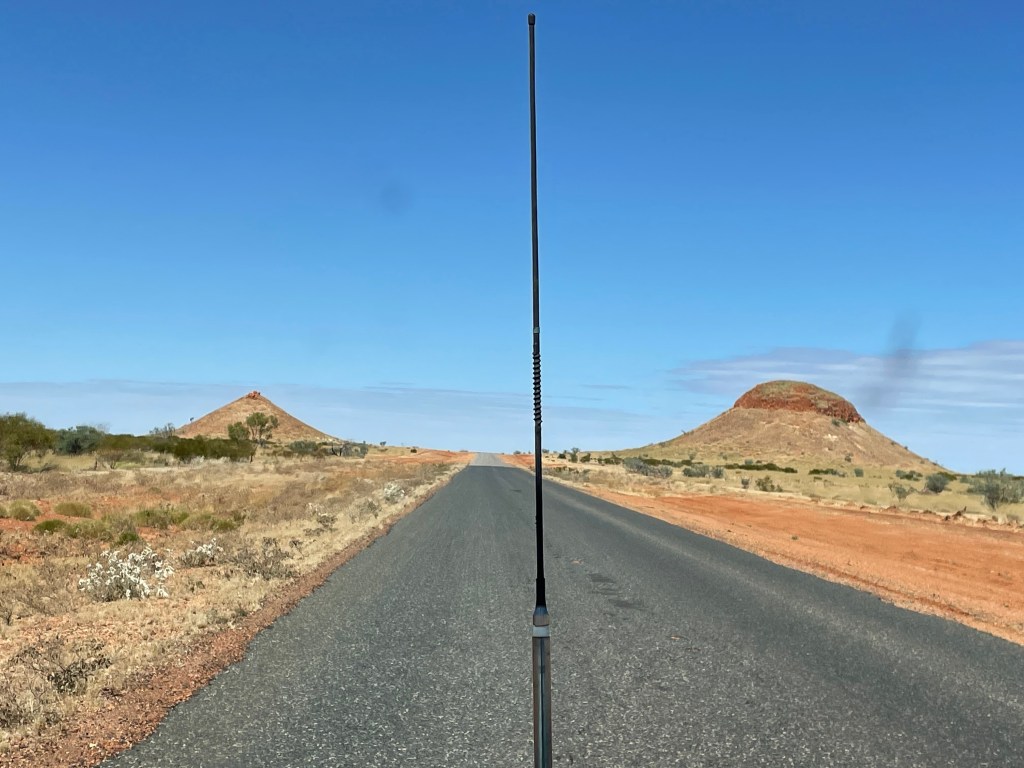

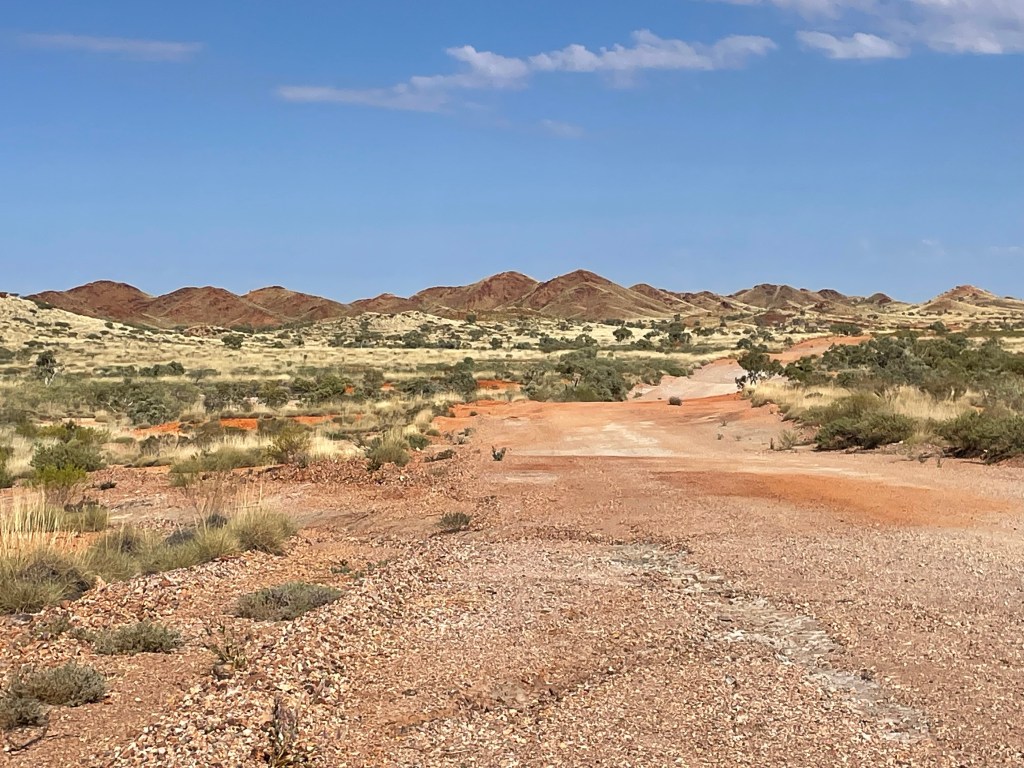
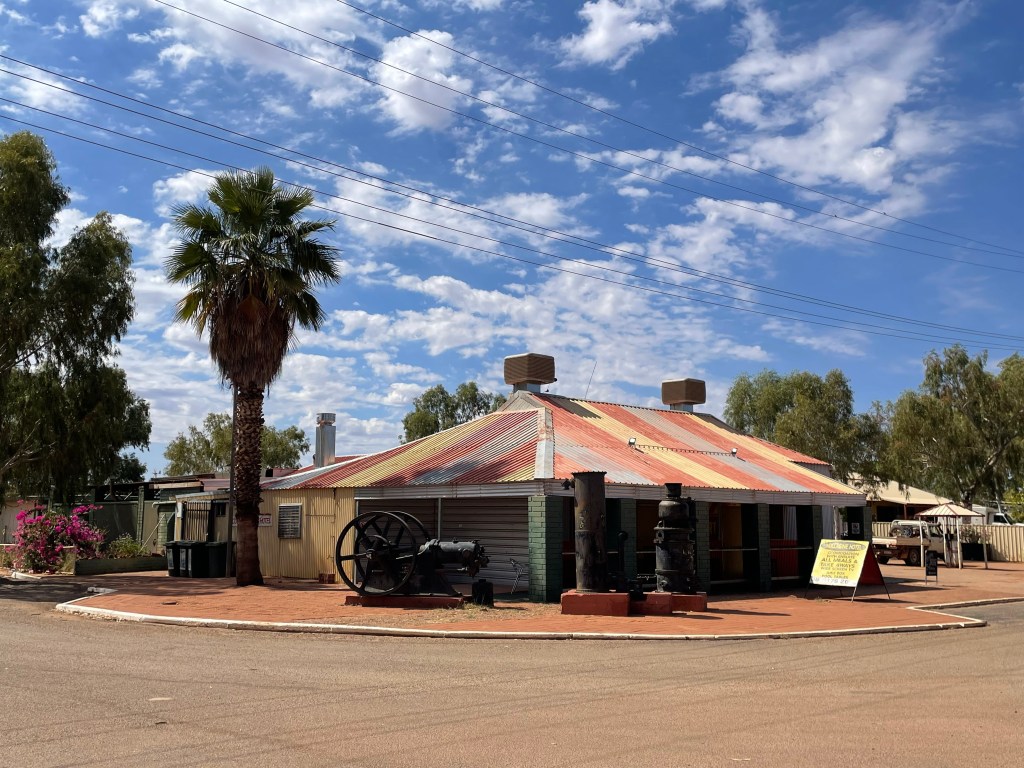
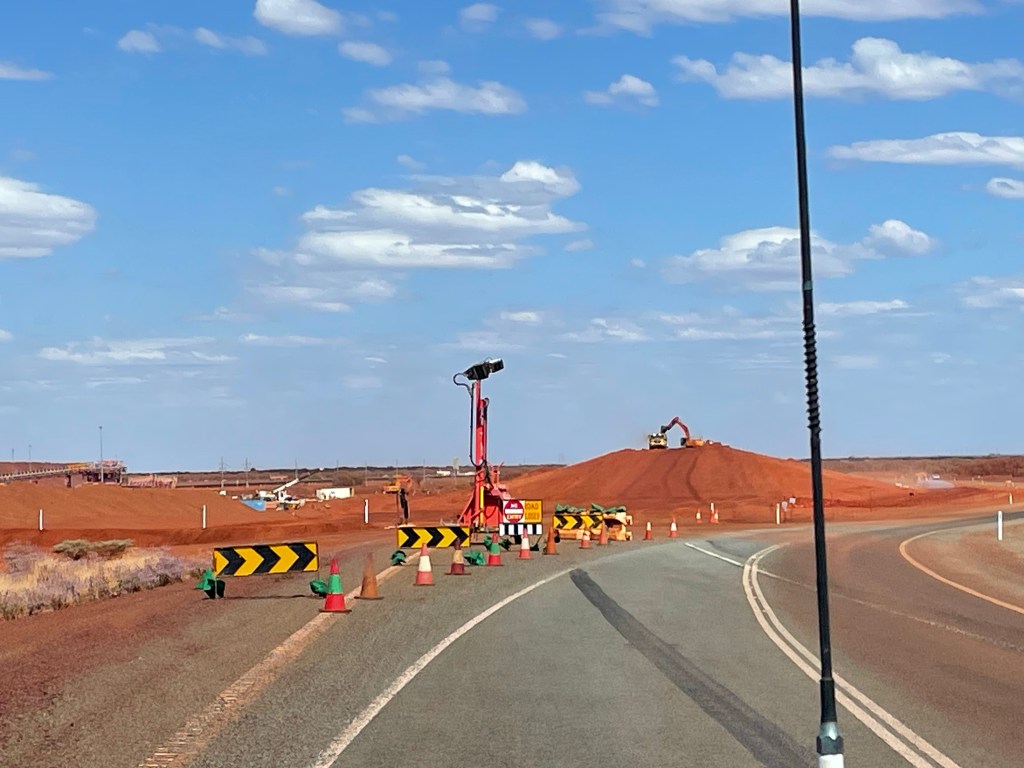
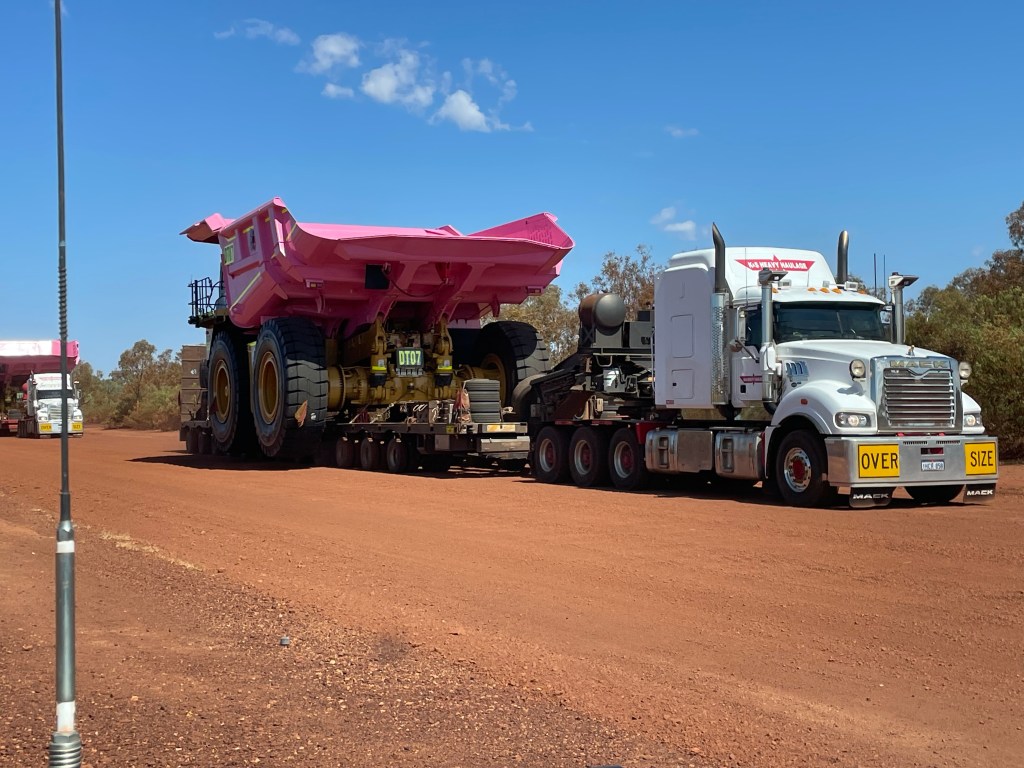
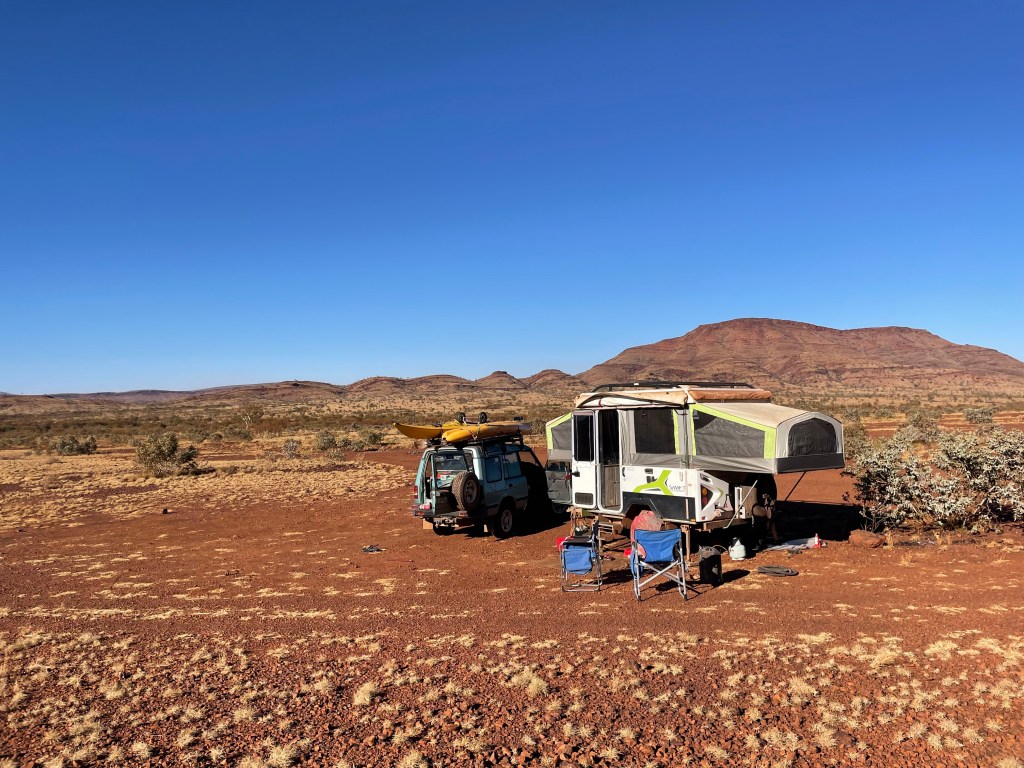
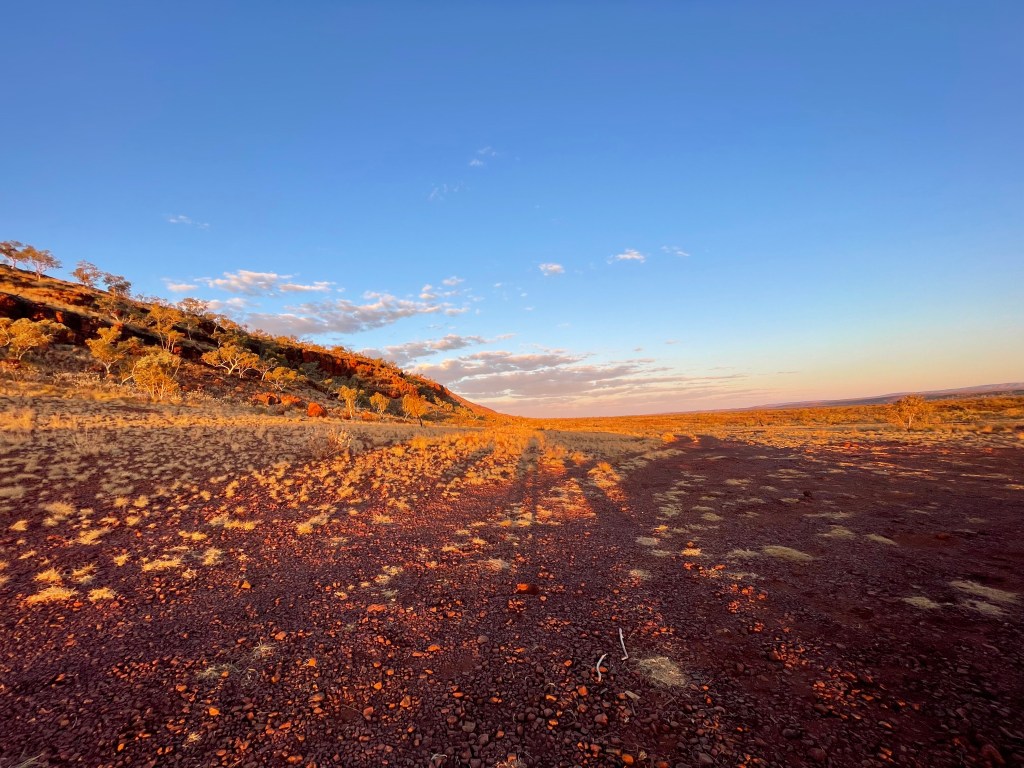
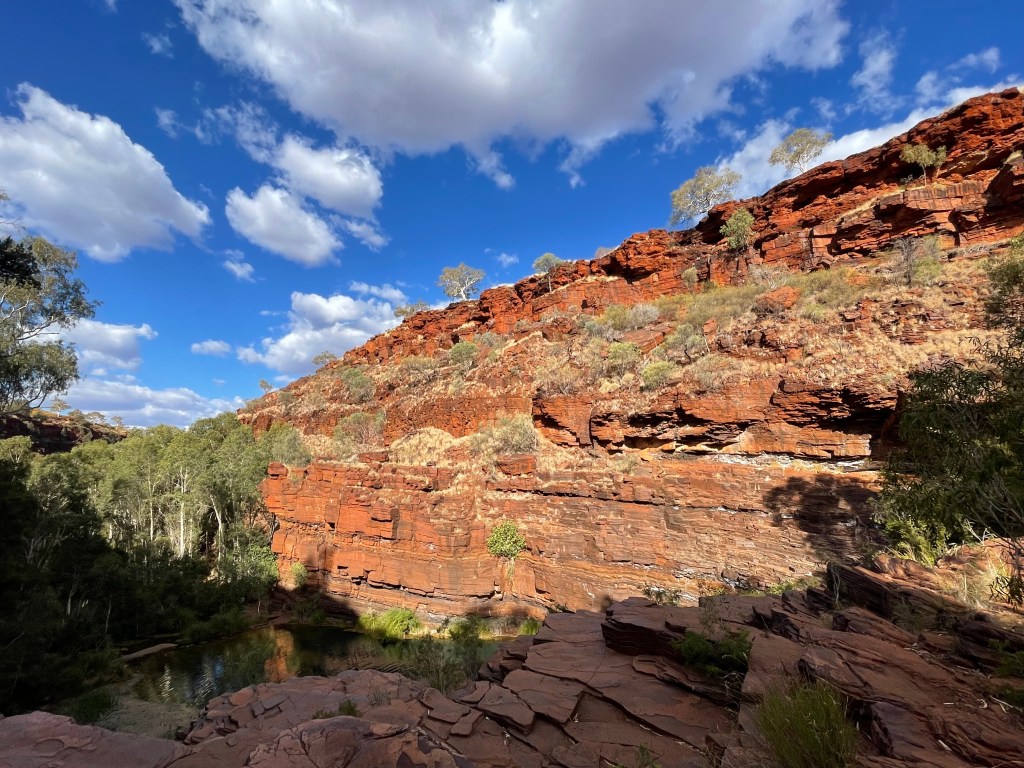
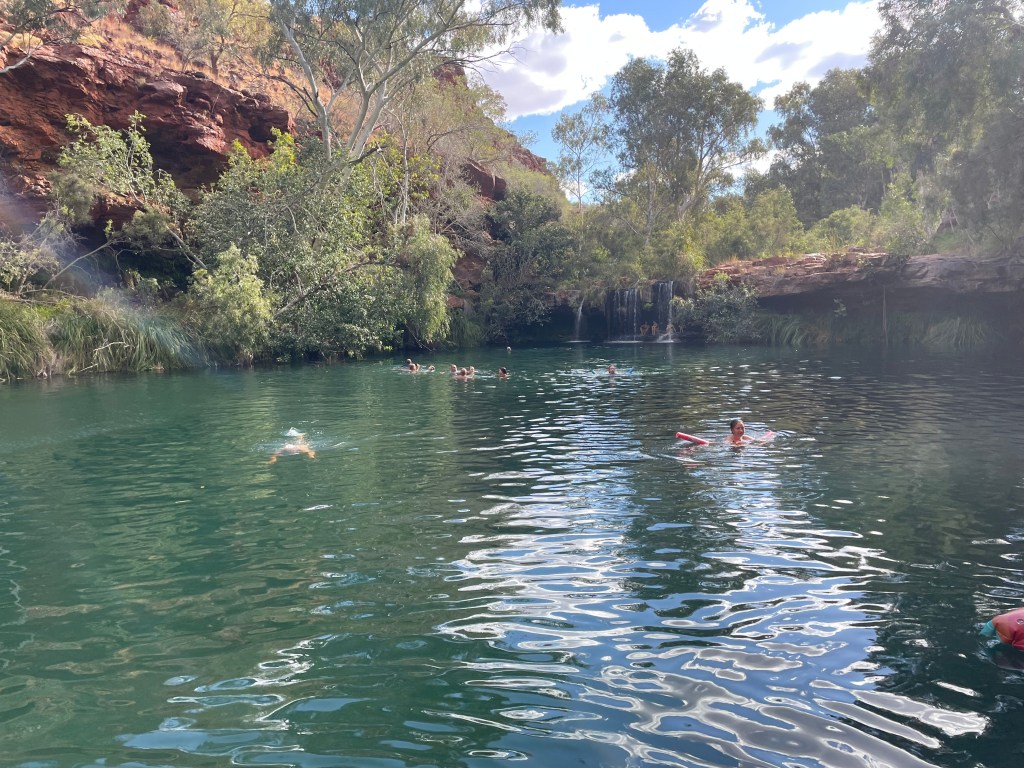

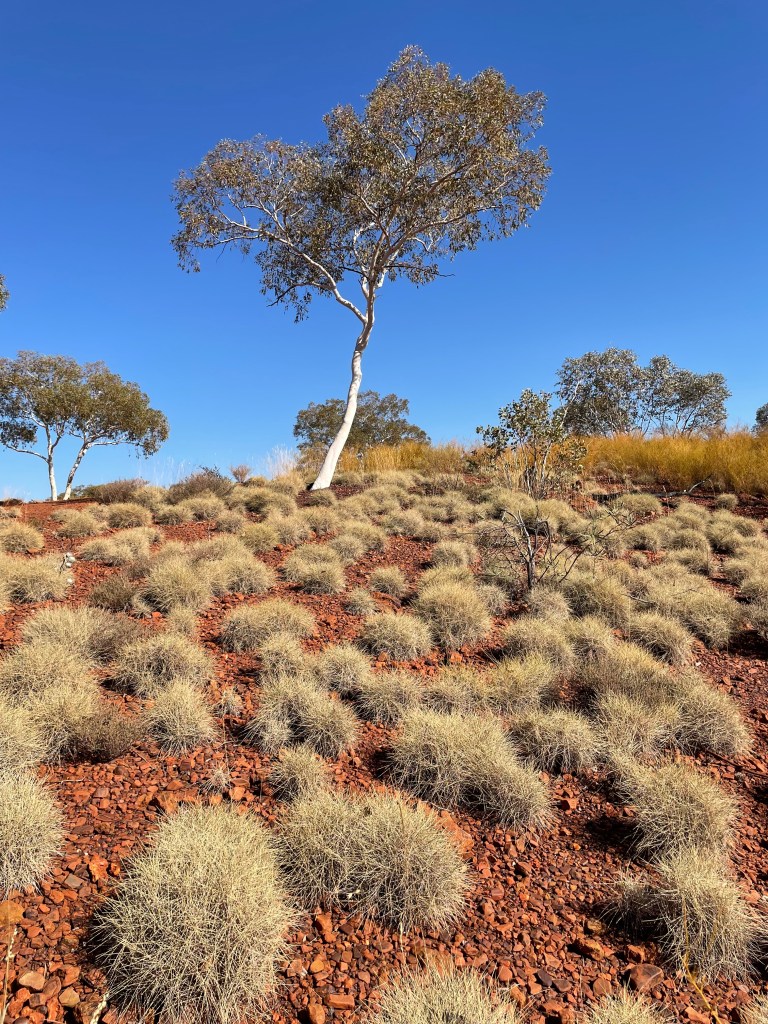
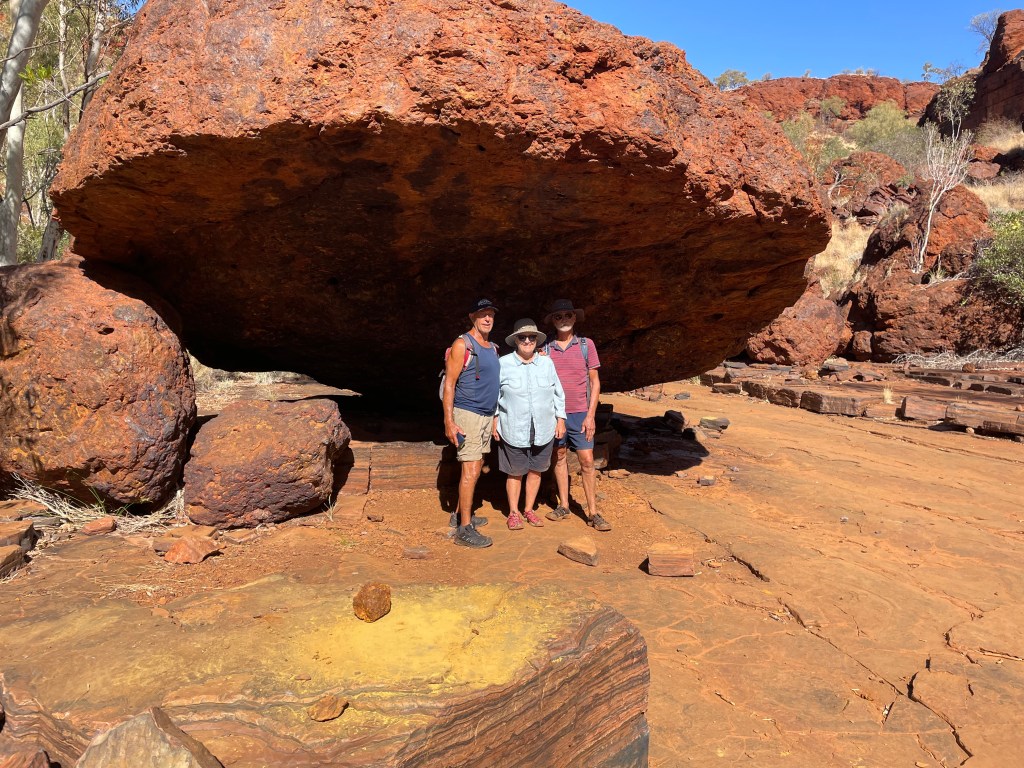
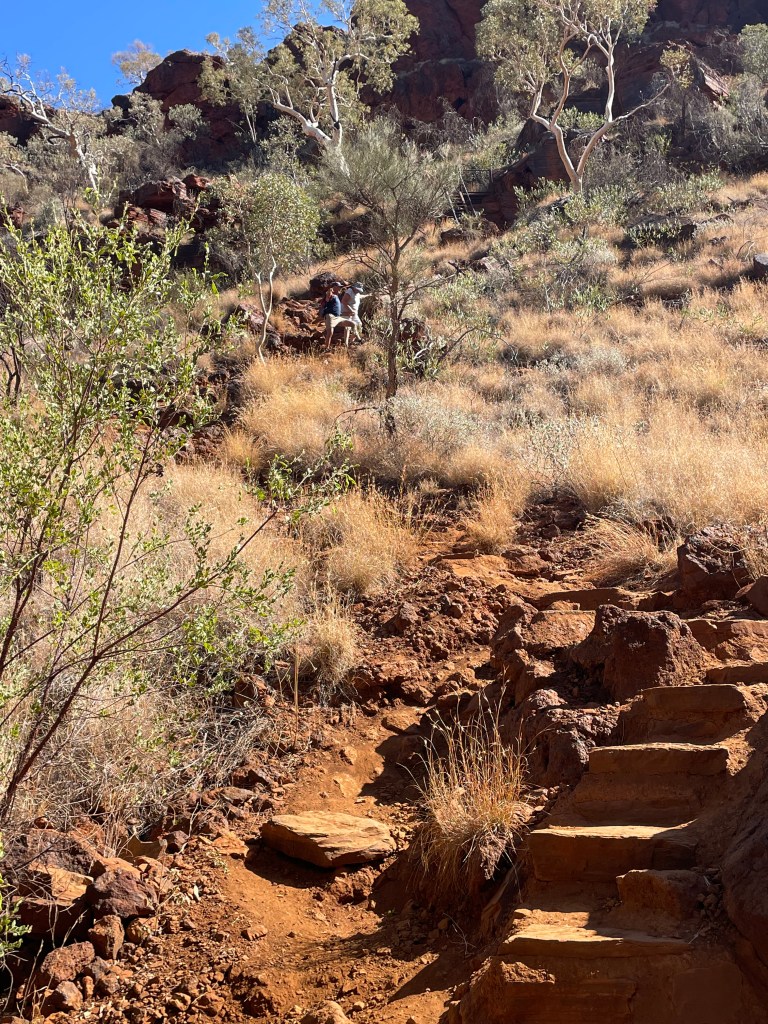
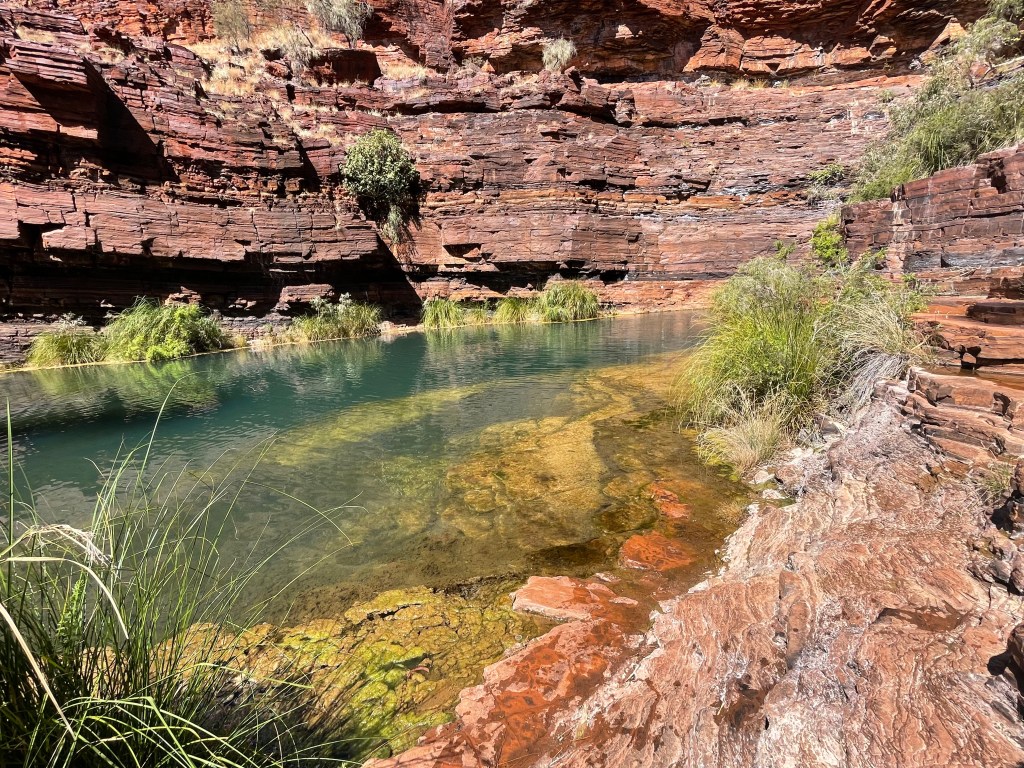
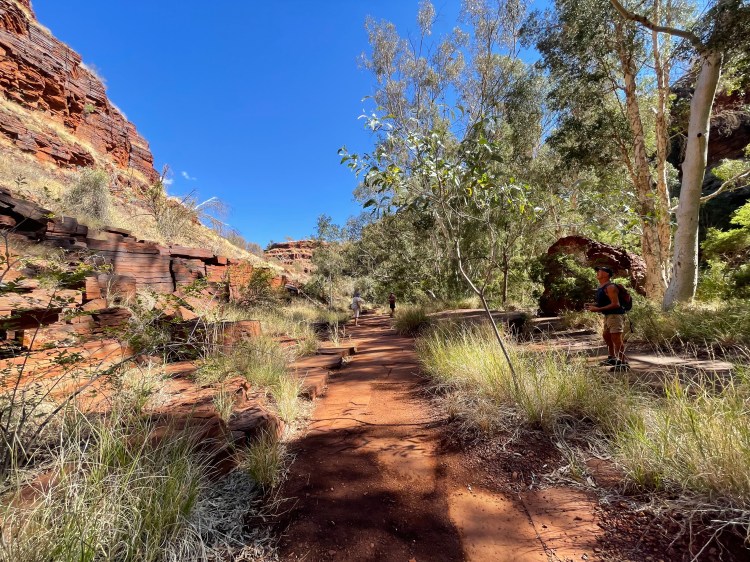
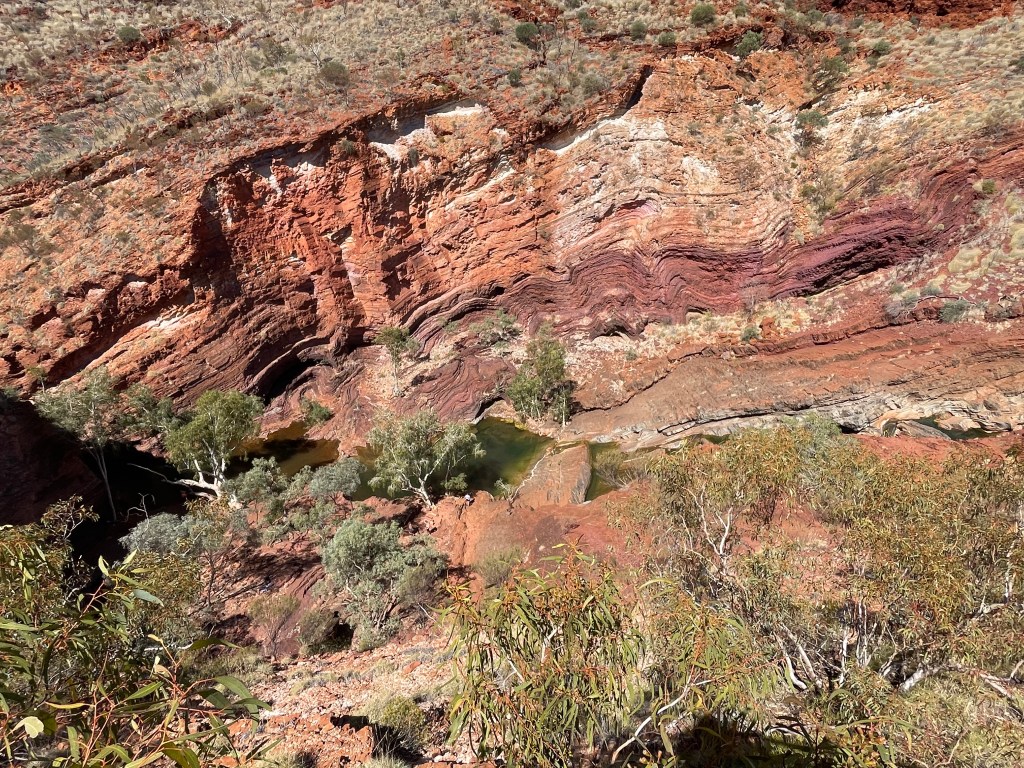
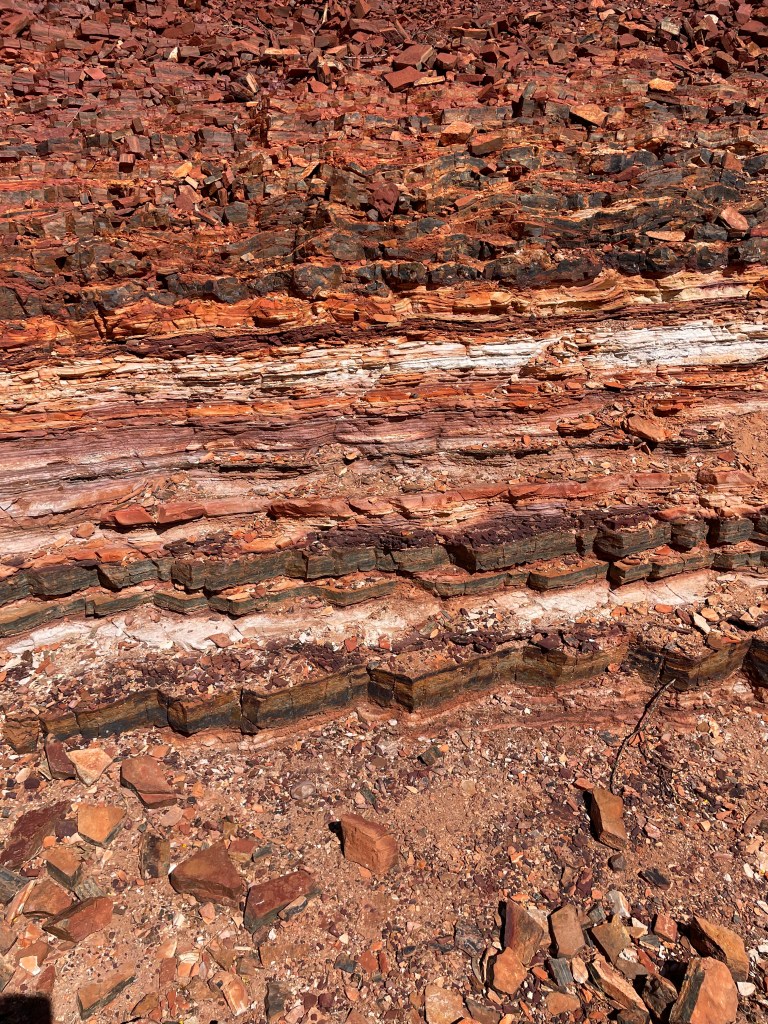
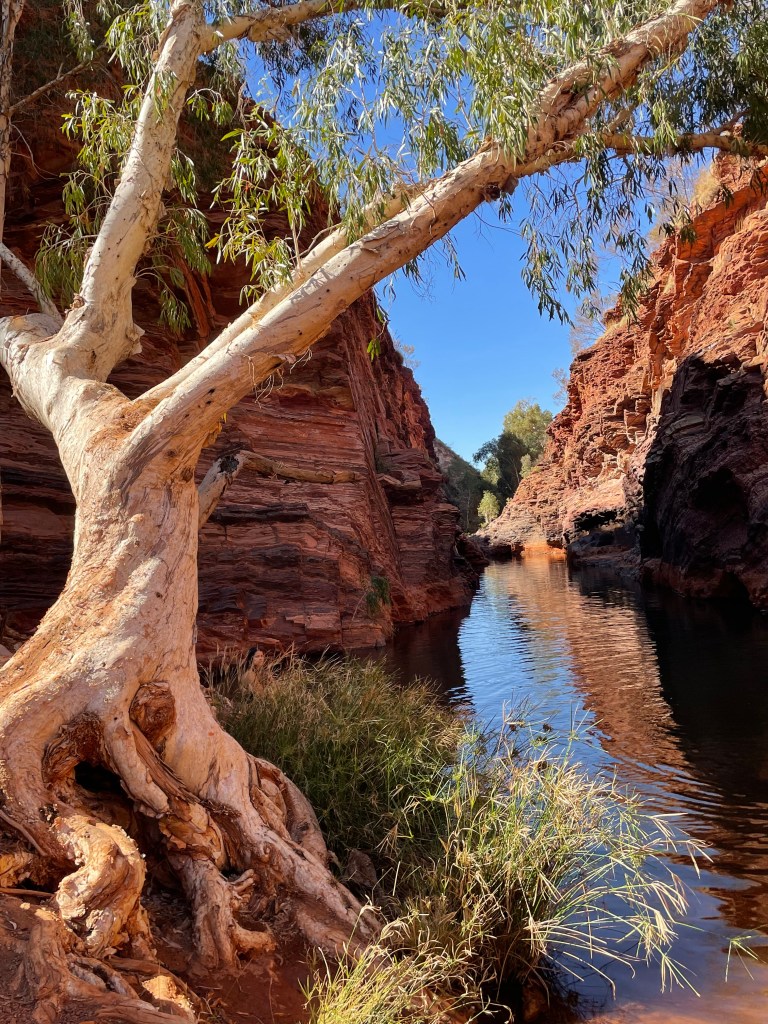
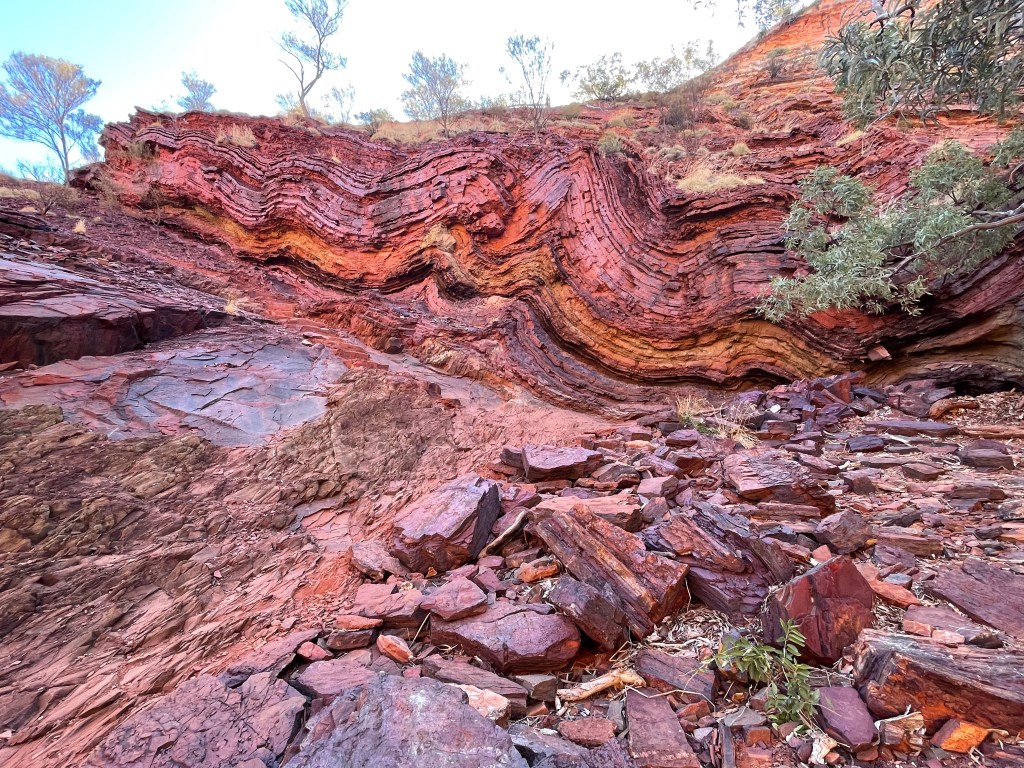
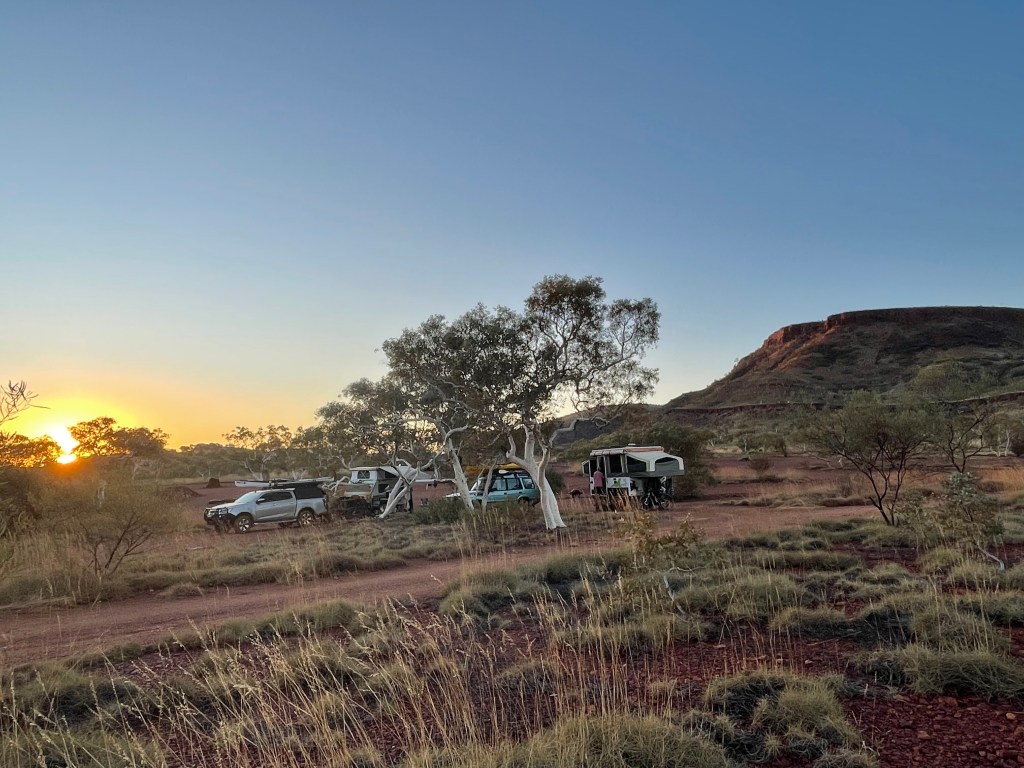
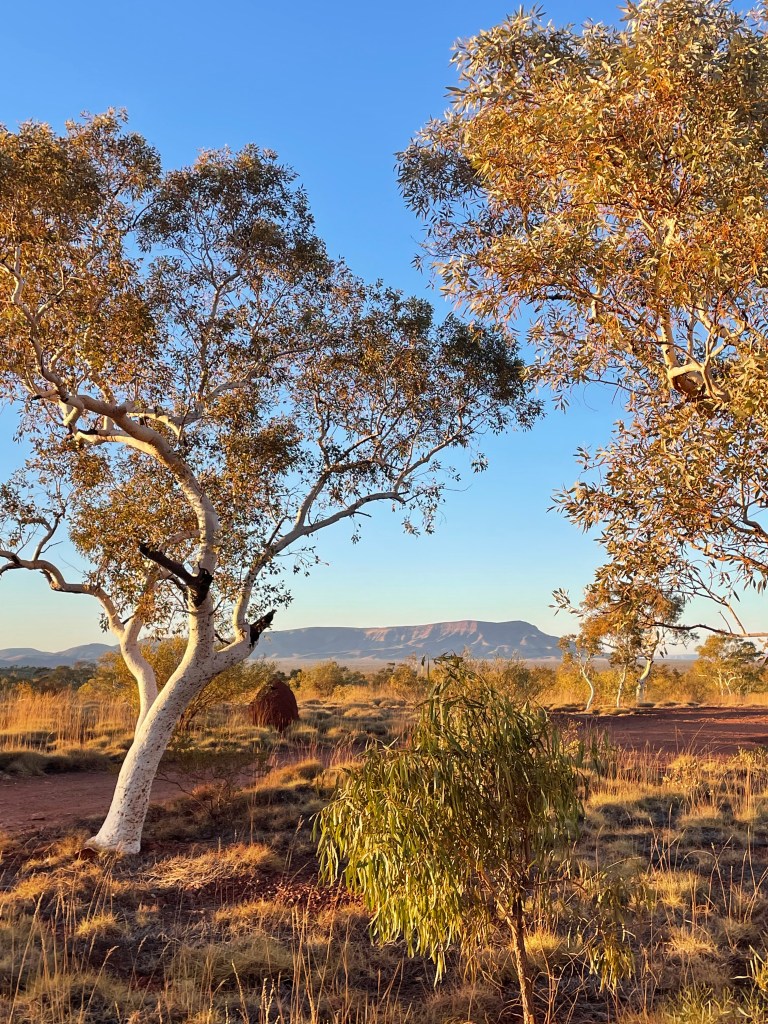
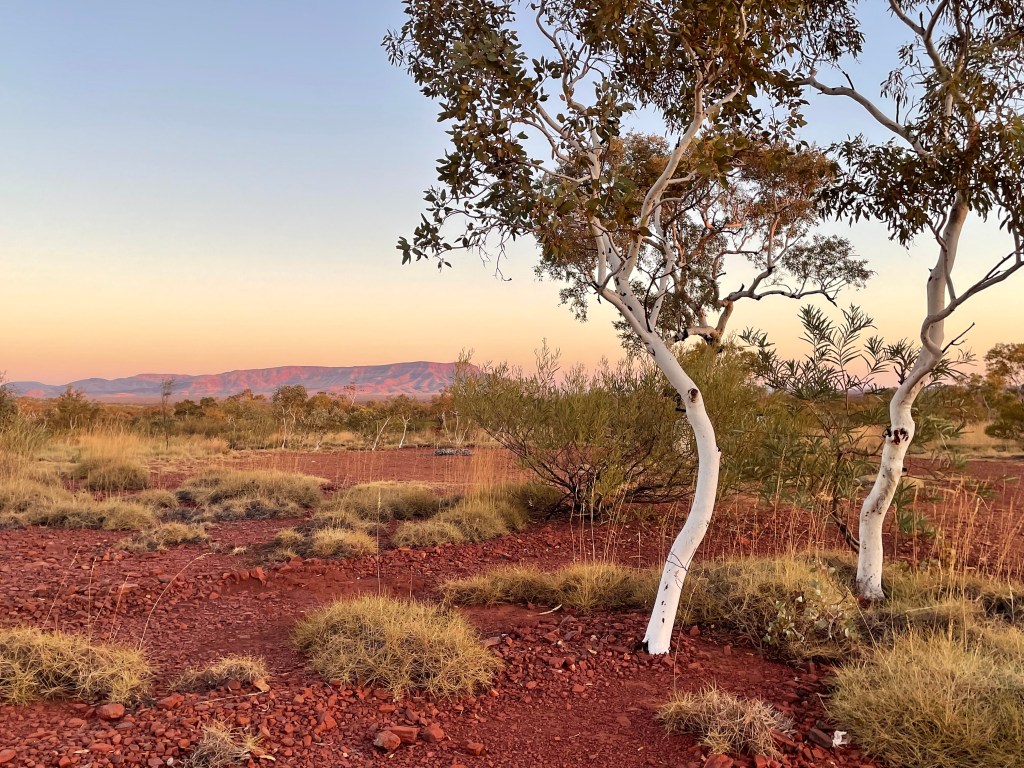
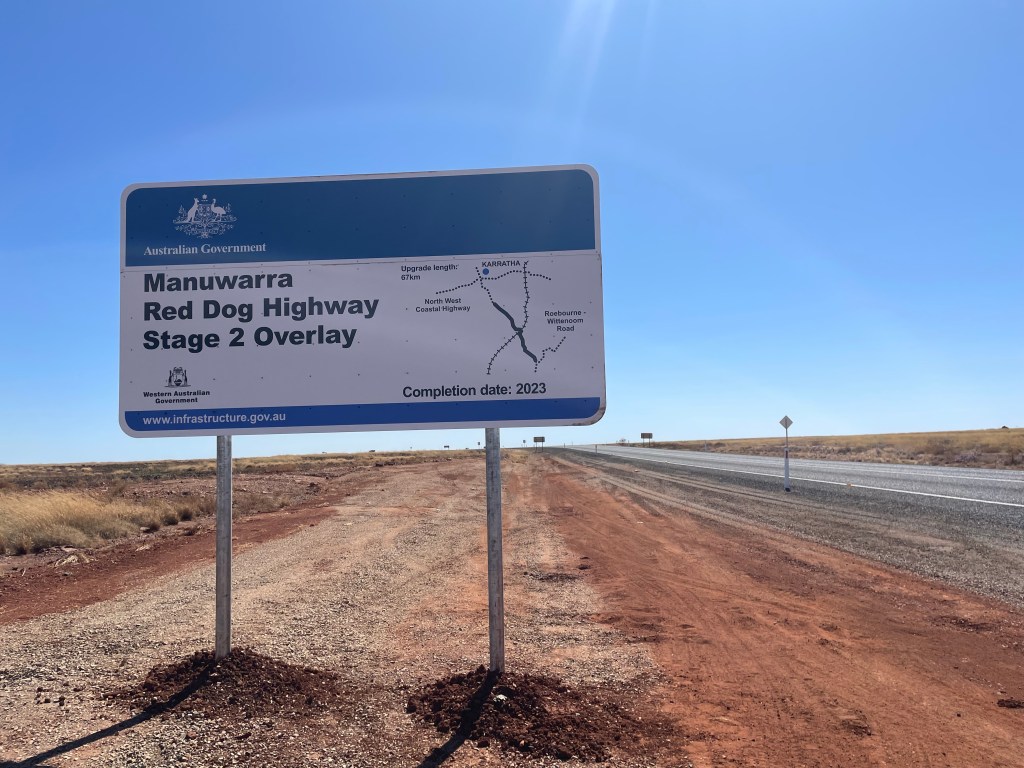
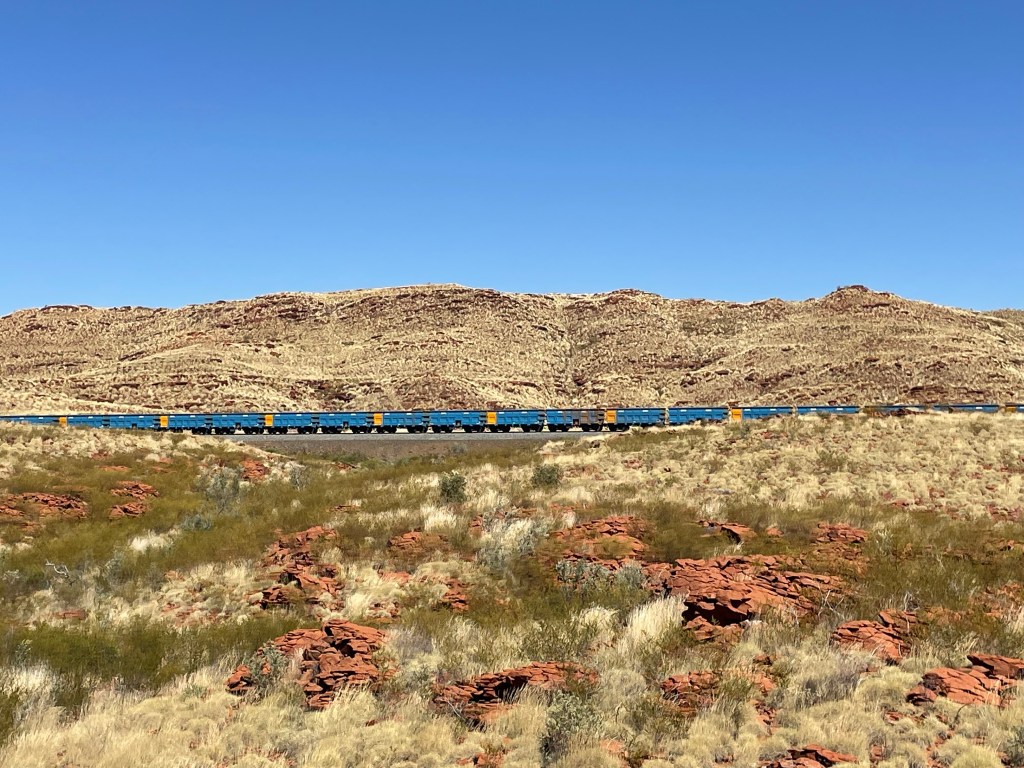
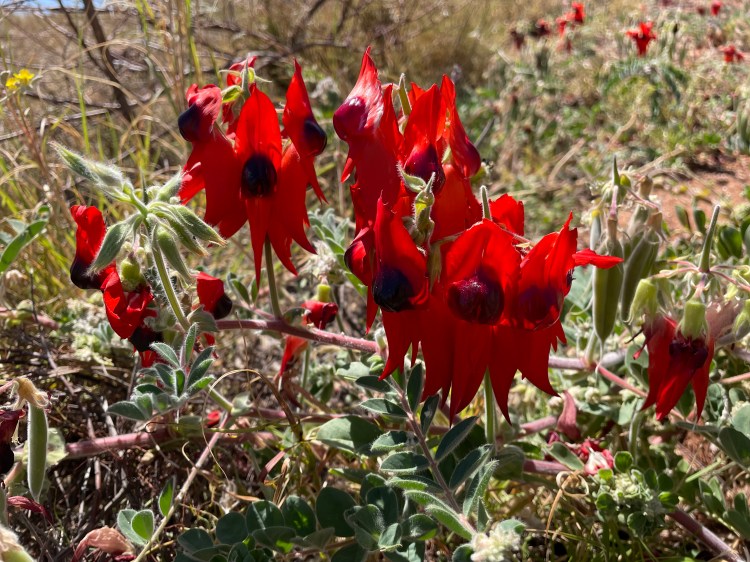
 COME AWAY WITH ME